
Home » Discrimination
Category Archives: Discrimination
Crime I: Nature or Nurture?
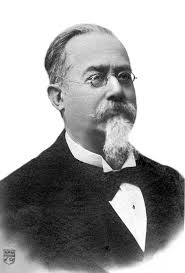
This is a two-part blog on embracing some of the criminological theory origin stories in the Western hemisphere. Is crime the product of bad genes or bad society? Are we born or made criminal?
In this week we shall be exploring our understanding of biological theories originating back in the 19th century with the “born criminal”. The following week we will look at the role of the environment.
The born criminal.
In 1871 Cesare Lombroso became the director at the Pesaro Mental Health Hospital (asylum) that housed the clinically insane. In that environment he examined the anatomical anomalies of residents in laboratory conditions. The era of the scientific exploration of deviance had begun. These meticulous explorations of bodily features and skulls formed the basis for his later thesis on The Born Criminal. The basis of his criminal population were residents of the asylum. His control group (i.e. those deemed non-criminal) were soldiers. Later, these were combined with the population of inmate prison population Lombroso and his associates visited. As he assumed an academic role in one of the finest Italian universities the world read his seminal publication of L’uomo delinquente {The Born Criminal] .Which in 1876 became one of the publications that influence the work of its contemporaries. In later years studied in exactly the same way. criminality in women using sex workers and prisoners as his research population cumulating into the 1893 publication of La Donna Delinquente: La prostituta e la donna normale [The Criminal Woman: The Prostitute and the Normal Woman.
His theoretical reach transcended borders and became widely read in the English-speaking world. This is an origin story according to numerous textbooks about the biological understanding of criminality. When embellished with some of the original quotes this becomes a theory of crime that explains different criminalities and makes the most significant leap that combines scientific rationale with crime. The methodology of anthropometry is a careful measuring of human features, prominently skulls! The main theoretical “innovation” was the recognition of a state of atavism; a regression onto a prior evolutionary stage for those engaged in crime.
A theory of crime on the born criminal seemed as a logical step at a time hailed as an era of discovery and exploration. A time that social and political movements in Europe asked profound questions about self and society. This narrative of course largely overlooks that whilst West European and US philosophers are posing these questions their elites and establishment are preoccupied with colonialism and dominance. In fact, it is the time European conflict around the world for dominance intensified. By the late 19th century, the European powers will try to manage their dominance in other continents by carving the world according to their own interests. The Berlin conference of 1884-85 is the culmination of such European competition and led to the split of Africa into zones of colonial influence.
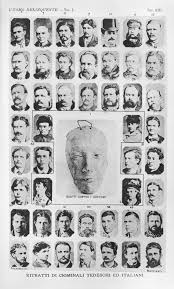
In what way is The Born Criminal related with colonialism?
The theory of the “born criminal” breaks down humanity into two; the “normals” and the “atavists” which conveniently separates us from them. The criminal becomes the outcome of a lack of civilisation that can be seen in their physical features. There is history in separating people for the sake of exploitation, subjugation and even genocide. In this context of using civilisation (solely European) as the feature of separation is something previously seen in the colonisation of the Americas. When the European explorers landed in a new (for their map’s) continent the question of whom it belongs to was answered using religious decree. Several popes described the native population of these “discovered lands” as uncivilised and unworthy of human rights. It was the papal “Doctrine of Discovery” that denied the indigenous people rights to their land because uncivilised, faithless people (calling it terra nullus or empty land) do not count. Therefore, this separation for discrimination is not new, but Lombroso brought some scientific veneer to it.
It is important to remind all that “the born criminal” theory was widely discredited already in the early 20th century, when data analysis found no support for atavism and the biological features seemingly associated with criminality. Yet still this approach seems to capture even today some interest in the collective criminological imagination. Can you tell the prospective criminality reflected in someone’s gaze? It is a question that people still wonder, despite any lack of empirical or scientific data. The line of separating criminals from non-criminal provides an arbitrary differentiation that offers some clarity of how criminals should look, in a similar fashion to separating the “civilised” from the “savages”. In this overreaching correlation crime becomes the act of the uncivilised. It can also be flipped over and the uncivilised are the criminals contributing to the continuous fear of those who see the foreigner with suspicion.
A theory about the biological origins on crime that has offered us an explanation of the born criminal that has no scientific evidence but carries populist imagination because we take comfort in differentiating people. Next week we shall be exploring a theory that explores of the environmental factors of crime.
Share this:


A year on… semantics, semantics and semantics?

In October 2024, I wrote a blog on the recently opened Secure School- Oasis Restore. The shiny new edition to the Children and Young People Secure Estate (CYPSE) in England and Wales. In the introduction I pondered on whether this would bring about change within the CYPSE or if this was more of the same. There were lots of positives to consider with the resources, ethos and style of the new Secure School but I, and many others, had concerns that these changes were just words and would amount to little substance. Serious issues within the YJS such as the use of remand, the increasing number of Black and dual heritage children in the CYPSE (despite the overall downwards trend), the continued use of isolation and the high rates of self-harm all appeared to be forgotten with the unveiling of the new Secure School. However, a year on, and the CYPSE failing children appears to be continuing.
Oasis Restore had to ‘temporarily’ close in the summer of 2025 over safety concerns (BBC, 2025). Upon closer reading, and looking at the Ofsted report from April 2025, the main issue is around doors not being able to close properly due to how they were initially made and the damage they have sustained. The Ofsted report (2025) also highlights the use of physical restraint but is positive in how this is only used as a last resort and recorded effectively. The report claims there is a nurturing environment at Oasis Restore, and is overall relatively positive (Ofsted, 2025). The concern is the harm the displacement will have on the children. And why, a CYPSE institution which has cost approximately £40million, was not built fit for purpose?
The children who are placed in CYPSE, for welfare or justice grounds, are incredibly vulnerable. They have often experienced trauma, oppression and isolation at various stages in their childhood from various people and institutions (especially care and CJS). The reality is, these children have been failed multiple times before their arrival in the CYPSE and these failures continue whilst they are there. Oasis Restore was supposed to be different: it was supposed to help, support, nurture and protect. And whilst that appeared to be very much on the agenda, the closing and displacement of these vulnerable children is going to add to being failed by society. I ended my previous blog, reflecting on John Rawls’ when thinking about justice, if an institution cannot be reformed then it should be abolished. I asked, if it was finally time to abolish the CYPSE. I whole heartedly believe it is.
Bibliography:
Askew, J. (2025) Young Offenders School Closes After Safety Concerns, BBC. [online] Available at: https://www.bbc.co.uk/news/articles/cde3g28gxp4o [Accessed 14.10.25]
End Child Imprisonment (2024) Why child imprisonment is beyond reform: A review of the evidence August 2024. [online] Available at: https://article39.org.uk/wp-content/uploads/2024/08/Why-child-imprisonment-is-beyond-reform.-A-review-of-the-evidence-August-2024.pdf
Share this:


What society do we want to live in?

Recently after using a service, I received an email to provide some online feedback. The questionnaire was asking about the services I received and to offer any suggestions on anything that could be done to improve services. This seems to become common practice across the board regarding all types of services and commercial interactions. This got me thinking…we are asked to provide feedback on a recent purchase, but we are not asked about issues that cut through the way we live our lives. In short, there is value in my opinion on a product that I bought, where is the value in my views of how I would want my community to be. Who’s going to ask me what society I want to live in!
Consumerism may be the reason we get asked questions about products but surely before and above being consumers, aren’t we all citizens? I can make helpful suggestions on what I would like to see in services/products but not on government. We profess democratic rule but the application of vote every now and then is not a true reflection on democracy. As we can offer online surveys for virtually everything, we have ways of measuring trends and reactions, why not use these to engage in a wider public discourse on the way to organise our communities, discuss social matters and engage in a public dialogue about our society.
Our political system is constructed to represent parties of different ideologies and practices offering realistic alternatives to governance. An alternative vision about society that people can come behind and support. This ideological diversion is essential for the existence of a “healthy political democratic process”. This ideological difference seems to be less prevalent in public dialogue with the main political parties focusing their rhetoric on matters that do not necessarily affect society.
Activism, a mechanism to bring about social change is becoming a term that sparks controversy whilst special interest groups maintain and even exert their influence on political parties. This allows private special interests to take the “ear of the government” on matters that matter to them, whilst the general public participate in social discourses that never reach the seat of power.
Asking citizens to be part of the social discussion, unlike customer service, is much more significant; it allows us to be part of the process. Those who have no other way of participating in any part of the system will be castigated to cast their vote and may participate in some party political activities. This leaves a whole heap of everyday issues unaddressed. In recent years the cost of living crisis pushed more people into poverty, food, housing and transport became issues that needed attention, not to mention health, post-covid-19.
These and many more social issues have been left either neglected only to be given the overhead title of crisis but with no action plan of how to resolve them. People affected are voiceless, having to pick up the injustices they suffer without any regard to the long term effects. Ironically the only plausible explanation given now that “Brussels’ rule” and “EU bureaucracy” are out of the picture, has become that of the immigrants. The answer to various complex problems became the people on the boats!
This is a simplification in the way social problems happen and most importantly can be resolved. Lack of social discourse has left the explanation and problem solving of said problems to an old rhetoric founded on xenophobia and discrimination. Simple explanations on social problems where the answer is a sentence tend to be very clear and precise, but very rarely can count the complexity of the problems they try to explain. There is a great disservice to our communities to oversimplify causes because the public cannot understand.
Cynically someone may point out that feedback from companies is not routed in an honest request to understand customer satisfaction but a veiled lip-service about company targets and metrics. So the customer’s response becomes a tradable figure of the company’s objectives. This is very likely the case and this is why the process has become so focused on particular parts of the consumer process. Nonetheless and here is the irony; a private company has some knowledge of a customer’s views on their recent purchase, as opposed to the government and people’s views and expectations on many social issues.
Maybe the fault lies with all of us. The presumption of democratic rule, especially in parliamentary democracies, a citizen is represented by a person they elect every four years. This representation detaches the citizen from their own responsibilities and obligations to the process. The State is happy to have citizens that engage only during elections, something that can be underscored by the way in recent years that protests on key social issues have been curtailed.
That does not sound right! I can provide an opinion over the quality of a chocolate bar or a piece of soap but I cannot express my views as a citizen over war, climate, genocide, immigration, human rights or justice? If we value opinion then as society we ought to make space for opinion to be heard, to be articulated and even expressed. In the much published “British Values” the right to protest stands high whilst comes in conflict with new measures to stop any protests. We are at a crossroads and ultimately we will have to decide what kind of society we live in. If we stop protests and we ban venues for people to express themselves, what shall we do next to curtail further the voices of dissent? It is a hackneyed phrase that we are stepping into a “slippery slope” and despite the fact that I do not like the language, there is a danger that we are indeed descending rapidly down that slope.
The social problems our society faces at any given time are real and people try to understand them and come to terms with them. Unlike before, we live in a world that is not just visual, it relies on moving images. Our communities are global and many of the problems we face are international and their impact is likely to affect us all as people, irrespective of background or national/personal identity. At times like this, it is best to increase the public discourse, engage with the voices of descent. Maybe instead of banning protests, open the community to those who are willing to discuss. The fear that certain disruptive people will lead these debates are unfounded. We have been there before and we have seen that people whose agenda is not to engage, but simply to disrupt, soon lose their relevance. We have numerous examples of people that their peers have rejected and history left them behind as a footnote of embarrassment.
Feedback on society, even if negative, is a good place to start when/if anyone wants to consider, what kind of society I want and my family to live in. Giving space to numerous people who have been vastly neglected by the political systems boosts inclusivity and gives everyone the opportunity to be part of our continuous democratic conversation. Political representation in a democracy should give a voice to all especially to those whose voice has long been ignored. Let’s not forget, representation is not a privilege but a necessity in a democracy and we ensure we are making space for others. A democracy can only thrive if we embrace otherness; so when there are loud voices that ask higher level of control and suppression, we got to rise above it and defend the weakest people in our community. Only in solidarity and support of each other is how communities thrive.
Share this:


Reflecting on Adolescence

This short series from Netflix has proven to be a national hit, as it rose to be the #1 most streamed programme on the platform in the UK. It has become a popular talking point amongst many viewers, with the programme even reaching into parliament and having praise from the government. After watching it, I can say that it is deserving of its mass popularity, with many aspects welcoming it to my interests.
It is not meant to be an overly dramatised show as we see from other programmes on Netflix. Whilst it fits in the genre of “Drama” it mainly serves itself as a message and portrayal of how toxic masculinity takes form at a young age. One episode was an hour long interrogation that became difficult to watch as it felt as if I was in the room myself, seeing a young boy turn from being vulnerable and scared to intimidating, aggressive and manipulative. As a programme, it does its job of engagement, but its message was displayed even better. Our society has a huge problem with perceptions of masculinity and how young men are growing up in a world that normalises misogyny. The microcosm that Adolescence shows encapsulates this problem well and highlights the problem of the “manosphere” that many young men and even children are turning to as they become radicalised online.
Commentators such as Andrew Tate have become a huge idol to his followers, which are often labelled as “incels”. Sine his rise in popularity in past years, an epidemic of these so called manosphere followers perpetuate misogyny in every corner of their lives, following and believing tales like the “80-20 rule” in which 80% of women are attracted to 20% of men. This kind of mindset is extremely dangerous and, as displayed in Jamie’s behaviour, leads to a feeling of necessity in regard to women liking them. This behaviour isn’t exactly new; it is a form of misogyny that has plagued society for as long as society has been around, however it has been perpetuated further by the “Commentaters”, as I call them.
As a fan of the Silent Hill series, I have always enjoyed stories that dive deep into the psyche and explore wider themes in ways that make the audience uncomfortable, yet willing, to confront. Adolescence does this in the form of a show not so disguised as an overarching message. I feel like it has done its job of making people reflect and critically think about what is wrong with society, and exposing those who do not think about the wider messages and only care about entertainment. I mean, people sit and question whether or not Jamie did the crime and argue that he is not guilty, when the show explicitly shows and tells you what happens through Jamie’s character, demeanour and interactions in the interrogations.
Misogyny and the forces that uphold it are not new concepts and nor will it be an ancient concept any time soon with the way contemporary society functions. Even as society may become more tolerant, there will always be a way for women to be disadvantaged. However, stories like Adolescence may provide a glimmer of hope in dissecting and being a piece of the puzzle that pieces together the wider branches of misogyny and allow for more people to explore its underpinnings.
Share this:


Concrete Jungle

The 6th February 2025 marked what would have been the 80th birthday of Bob Marley. Despite his passing at the age of 36, his iconic legacy remains through various means; from his music being played and passed down from generation to generation, to the work of his wife, children and grandchildren that work to keep his message and music alive.
I myself was introduced to the music of Bob Marley at a young age by my father. My father played bass guitar in a band and music in our household was very important and a way in which we bonded. My father also had the pleasure to watch Bob Marley play live in the 1970s.
Whilst Bob Marley and Bob Marley and the Wailers have a massive catalogue in which I have many favourites, I wanted to share a personal favourite that may be slightly less known.
I’ve been getting first year students to choose songs and then getting them to try to apply criminological theories that link to the song. I think this would be a good way of getting them thinking and applying their knowledge.
Concrete Jungle by Bob Marley and the Wailers
I love this song for many reasons which I will mention briefly.
Firstly, the lyrics are emotive and powerful. The introductory lyrics state:
No sun will shine in my day today.
The high yellow moon won’t come out to play.
Darkness has covered my light
and has changed my day into night!
These initial lyrics highlight the plight of many individuals living in Kingston, Jamaica at the time. It alludes to the lack of resources, opportunities and hope.
The song continues in this vein
Must be somewhere (sweet life) to be found (out there somewhere for me)
Instead of a concrete jungle
Where the living is harder
Oh man, you’ve got to do your best, yeah (concrete jungle)
No chains around my feet but I’m not free.
I know I am bound here in captivity.
And I’ve never known happiness.
The lyrics are deep and meaningful and Bob Marley sings them with such unrivalled conviction, pain and emotion.
Another poignant lyric in the song is:
I’ve got to pick myself from off the ground, yeah
In this yah concrete jungle
These lyrics highlight two things to me, the bitter feeling of knowing no one is there to help but themselves and second, the sheer resilience of individuals in such situations that pick themselves up from the disadvantage, poverty, and discrimination they face.
Whilst Bob Marley’s voice is unmatched, a moment must be spared to discuss the background vocals, the bass guitar and the guitar solos. Peter Tosh and Bunny Wailer’s background vocals are just as important and the higher key provides a great contrast.
Additionally, the bass guitar in this song is an important constant throughout the song, there in the background but still a key element. The guitar solo also adds an extra element to the song and arguably moves this song beyond the genre of reggae to the realm of rock and perhaps a new audience. It’s no wonder rock bands at the time were influenced by reggae music and vice versa. A good example being The Clash’s version of ‘Police and Thieves’, originally sung by Junior Murvin.
So if you have time, listen to the song, maybe a few tunes as each time you may hear and appreciate different elements of the song. I particularly encourage you to watch the performance of Concrete Jungle on The Old Grey Whistle Test, which can be found on YouTube. The live performance shows the emotion in a new way!
Share this:


Gypsy Roma Traveller History Month: A Romany Museum
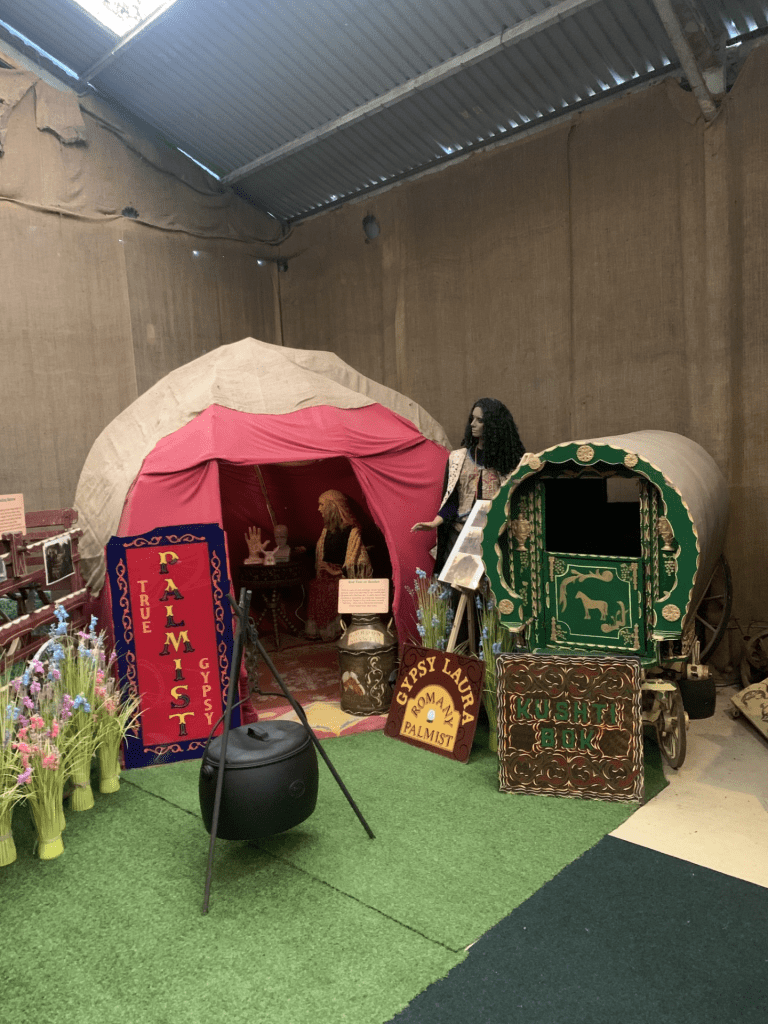
In April I visited the Gordon Boswell Romany Museum, museums in this country tend to operate under the guise of whiteness, but this one is different – it seems to be unapologetically and traditionally Romany.
The museum has an off grid feel to it, it appears after driving miles amongst countryside fields and if you would like to contact the museum staff, apparently telephone is best, not social media or email. This museum is also situated within what seems to be a Romany family home area and working scrapyard business. So even before entering the building, the culture of close family ties for building home and business that is outside of mainstream culture, are there.
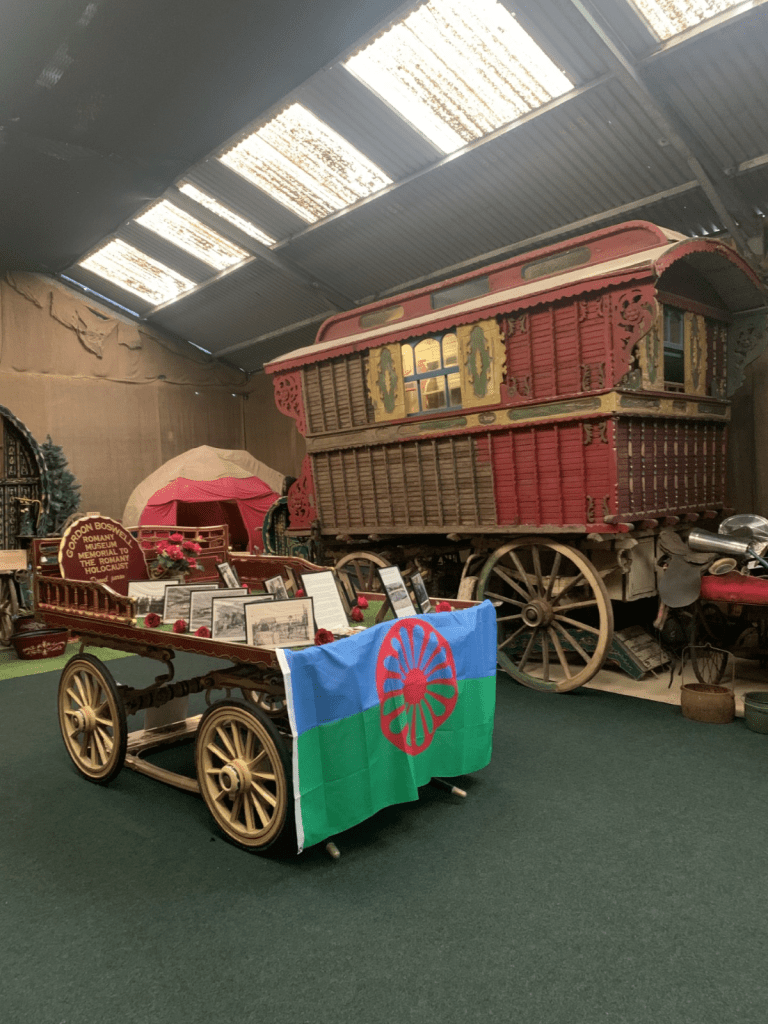
Inside the museum there are a variety of traditional Romany artefacts, which includes wagon, trailers, horse related items and handmade gifts, as well as other wagons curated by the owners and close contacts themselves. You will be pressed to find any written signage here, as in-line with tradition Romany history is passed on through verbal story telling. So if you want to know more about something you will need to ask those running the place, who are keen to have a chat with you.
I was surprised to see that the museum had a decent amount of visitors considering that this was a weekday and located in a lowly populated area in Spalding. The museum seems to be aimed at celebrating and illustrating traditions, instead of being motivated by profit. The visitors that were there also seemed to be touched by their visit, perhaps it is the attempt at preserving a traditional culture that has been under constant pressure, that makes this so meaningful. Or the memories of the past which the museum seems to hold onto.
Upon exiting the museum, seemingly Romany people pull up with a horse and cart near-by. A reminder of a slower paced yet hard working traditional life, where the outside world and mainstream culture does not matter so much as long as there is food on the table and supportive family near by. Although, I was left with more questions after the visit, such as where are the museums/spaces for other groups, such as Traveller culture? Where are the celebrations for more contemporary lives lived by Gypsy Roma and Traveller people?

This year the month in which I celebrated Romany culture the most was in April with a visit to The Gordon Boswell Romany Museum and I really did enjoy the visit. I have not done much to celebrate this month as I wonder – how do you to celebrate these specific History Month in a way that is meaningful and not performative?
Share this:


The racialised cost of e-waste
We are in a climate where electronic goods are the norm and the way ‘forward’ for the modern society in which we live. But what of the effects of living in a world with so much technology and a constant need to replace and upgrade our electrical goods? One of these effects is toxic waste and pollution. According to the Global E-Waste Monitor, of the 53.6 million metric tons of e-waste generated in 2019, only 17.4% was collected and recycled properly (ITU, 2020)
When you get rid of an old phone or laptop, where does it go? In some cases, it may be reused or recycled safely, but for many, they may end up in parts of Asia or on a site like Agbogbloshie in Accra, Ghana.

Agbogbloshie was one of the largest e-waste sites in the world, hundreds of thousands of tons of waste were dumped at this site. Workers at this site spent hours looking through the waste site for valuable parts and scrap metal they could sell. Doing this on a daily basis for years had adverse effects on the health of these workers: skin problems, headaches, stomach ulcers, and those are the health effects that are more easily identified, but what of those health defects not yet visible.
In July 2021, the Agbogbloshie site was demolished suddenly and without warning. Whilst some have heralded this as a great move, the way it was done was arguably inhumane and irresponsible. Workers at the site were not notified of the demolition and were forcibly removed from the site without time to take their belongings with them. They were not given the time or support to find alternative employment arrangements, leaving many in financial difficulty. For many, they have now moved to smaller waste sites, or they bring scrap metal into their homes and around their families as they no longer have a site to work from. Is this better? It could be argued that if the aim was to help these individuals minimise the health risks associated with working on the scrapyard, then they have failed. If the claim is that human rights were being violated by allowing individuals to work on the scrapyard, what of the human rights violations when the workers were forcibly removed?
I draw similarities to the aerial destroying of coca crops in countries such as Colombia. Hidden under the guise of the greater good and supporting the impoverished, why is it always those at the bottom of the ladder who are adversely affected. It is time for governments to be held accountable for the harms they cause and to start supporting and investing in their citizens.
To find out more: https://africanarguments.org/2022/07/agbogbloshie-a-year-after-the-violent-demolition/
Share this:


When will these issues be addressed?
In the realm of education, inclusivity and accessibility should be the foundation of any society aspiring for progress. However, in the case of special education schools in the United Kingdom, there exists a troubling narrative of systemic failings. Despite efforts to provide tailored education for students with diverse needs, the British educational system’s shortcomings in special education have cast a shadow over the pursuit of equal opportunities for all.
One of the main challenges facing special education schools in the UK is inadequate funding. These institutions often struggle with limited resources, hindering their ability to provide the necessary support for students with special educational needs. Insufficient funding results in larger class sizes, fewer specialized staff, and a lack of essential resources, all of which are detrimental to the quality of education these schools can offer. Furthermore, the heavy reliance on the UKs crumbling social care services and the overstretched NHS within special education settings exasperate poor outcomes for children and young people.
Special education students require a range of support services tailored to their individual needs. However, the inconsistency in the provision of support services across different regions of the UK is a glaring issue. Disparities in access to speech therapists, occupational therapists, and other essential services create an uneven educational landscape, leaving some students without the critical support they require to thrive.
Effective collaboration and communication between educators, parents, and support professionals are vital for the success of any special education school. Unfortunately, there is often a lack of seamless coordination. The lack of collaboration can and has result in fragmented support for the students, hindering their overall development and thus making it difficult to implement cohesive and effective educational plans.
The success of special education programs relies heavily on well-trained and empathetic educators. Unfortunately, the British educational system falls short in providing comprehensive training for teachers, working in special education schools. Many teachers express a lack of preparation to address the unique challenges posed by students with diverse needs, leading to a gap in understanding and effective teaching strategies. It is also important to note that many staff members that work within special education settings are not trained teachers, although they have been given the title of teachers. This further leads to inadequate education for children and young people. Moreover, post-covid has seen a high staff turnover within these settings. There have been many reports that have alluded to the notion that British schools are failing our children, but it seems that children from special education provisions are ignored, and families are dismissed when concerns are raised about the lack of education and preparation for the ‘real world’.
I am also critical of the overreliance of labelling students with specific disabilities. While categorization can be useful for designing targeted interventions, it can also lead to a narrow understanding of a student’s capabilities and potential. This labelling approach inadvertently contributes to stereotypes and stigmas, limiting the opportunities available to students with special needs….. There tends to be a focus on the troubling history of the way people with disabilities in the UK have been treated, but what I find interesting is there is a sense of disregard for the issues that are occurring in the here and now.
There is also a lack of special education provisions in the UK. This has led to many children with additional needs without a school place. And while a specific figure of the number of children being excluded from education has not been disclosed, West Northamptonshire, has awarded families over £49,000 over special education failings in 2023 (ITV, 2023). Furthermore, Education health care plan recommendations (EHCP) have not been followed within schools. These are legally binding documents that have been continuously dismissed which has led to further legal action against West Northants council in recent years (Local Government and Care Ombudsman, 2023).
The failings in special education schools have repercussions that extend beyond the classroom. Many students who leave these schools face challenges in transitioning to higher education, entering the workforce or living independently. The lack of adequately tailored support for post-education opportunities leaves these individuals at a disadvantage, perpetuating a cycle of limited prospects, which inevitably pull people with disabilities into a cycle of poor health and poverty (Scope, 2023). The disability employment gap in the UK is 29% and the average disabled household faces a £975 a month in extra costs (Scope, 2023) access to employment and financial independence is out of reach for disabled people due to failings within education because lack of preparation for life beyond school.
There needs to be reform in British schools from mainstream to special education. There are failings across the board. Adequate funding, improved teacher training, consistent support services, enhanced collaboration, and a shift away from overreliance on labelling are all crucial steps toward creating an inclusive educational environment. It is difficult to draw on optimism when the UK government continues to ignore age old concerns. This blog entry is to bring awareness to an issue, that may not be on your radar, but will hopefully get you to reflect on the copious barriers that people with disabilities face. Childhood should be a time when there is a fence built to protect children is schools. As we get older and face the challenges of the wider world, we should be equipped with some skills. Special education schools should not be used as a holding place until a child comes of age. There should be provisions put in place to give all young people an equitable chance.
Share this:


Reproductive Healthcare Ramblings

Reproductive health in England and Wales is a shambles: particularly for women and people who menstruate. The failings start early, where, as with most things, stereotypes and ‘norms’ are enforced upon children from GPs, schools, from parents/guardians who have experienced worse, or who do not know any different, which keep children from speaking up. These standards and stereotypes come from a male dominated health care system especially in relation to gynaecology, and our patriarchal society silences children without the children even realising they are being silenced. As a child, you are expected to go about your daily routine, sit your exams, look after your siblings, represent the school at the tournament of the week, and do all this while, for some, bleeding, cramping, being fatigued but not be expected to talk about it. After all, you are told time and time again: it’s normal.
Moving through life, women and people who menstruate face similar stigma, standards, assumptions during adulthood as they faced during childhood. There is more awareness now of endometriosis, adenomyosis, uterine fibroids, Polycystic Ovary Syndrome Condition (PCOS) to name but a few. But women and people who menstruate report feelings of being gaslighted by [male] gynaecologists, encouraged to have children in order to regulate their hormones (pregnancy and childbirth comes with a whole new set of healthcare problems and conditions), to take the contraceptive pill and deal with the migraines, mood swings, weight gain and depression which many women and girls report. Some of the above chronic illnesses impact fertility, so ‘try for a baby’ is not an easy, or even a wanted path. Diagnosis is also complex: for example a diagnosis for endometriosis takes on average 8 years (Endometriosisuk, 2023), and can only be confirmed with surgery. That relies on women and people who menstruate going to their GP, reporting their symptoms, listening to the ‘have you tried the pill’ or ‘having a baby will help manage your symptoms’: which relies on trust. Not everyone trusts the NHS, not everyone feels comfortable being dismissed by a nurse, or GP or then their gynaecologist. Especially when a number of these illnesses are framed and seen as a white-woman illness. Communities of women and people who menstruate remain hidden, dealing with the stigma and isolation that our reproductive health system carries in England and Wales. And this is not a new issue.
The reproductive healthcare for women and people who menstruate is dire. Just ask anyone who has experienced it. What then is it like for women in prison? The pains of imprisonment are well documented: deprivation of goods, loss of liberty, institutionalisation, no security, depreciation of mental health (Sykes, 1958; Carlen, 1983). The gendered pains, fears and harms less so, but we know women in prison are fearful about the deterioration of relationships (especially with children), lack of facilities to support new mothers, physical and sexual abuse, and poor mental and physical health support including reproductive health. The poor reproductive healthcare available to women and people who menstruate within society, is a grade above what is available in prisons. These women are quite literally isolated, alone and withdrawn from society (through the process of imprisonment), and for some, they will become further isolated and withdrawn via the pains of their chronic illness.
There isn’t really a point to this blog: more like a rambling of frustrations towards all the children who will journey through our subpar reproductive healthcare system, who will navigate the stigma and assumptions littered within society. To all the women and people who menstruate who are currently wading through this sh*t show, educating themselves, their family, their friends and in some cases their GPs, those people unable to speak out, not knowing how or simply not wanting to. And to those in the Secure Estate, grappling with the pains of imprisonment and having their reproductive healthcare needs ignored, overlooked or missed.
I haven’t even mentioned menopause…
References:
Carlen, P. (1983) Women’s Imprisonment, Abingdon: Routledge.
Corston, Baroness J. (2007) The Corston Report: A Review on Women with Particular Vulnerabilities in the Criminal Justice System, London: Home office.
Endometriosis UK (2023) Endometriosis Facts and Figures [online] Available at: https://www.endometriosis-uk.org/endometriosis-facts-and-figures#:~:text=Endometriosis%20affects%201.5%20million%20women,of%20those%20affected%20by%20diabetes.&text=On%20average%20it%20takes%208,symptoms%20to%20get%20a%20diagnosis. [Accessed 24th August 2023]
Sykes, G. (1958/2007) The Society of Captives: A Study of a Maximum Security Prison, Princeton: Princeton University Press.

Share this:


The Color Purple, The Musical: What in the Misogynoir?!

TW: mentions of rape, child rape, racism, and misogynoir.
Alice Walker’s novel The Color Purple is a story loved around the world. So, when I saw that it was adapted to stage and touring the UK, my interest was peaked just enough to consider a visit to my local theatre the Royal & Derngate in Northampton. A Curve and Birmingham Hippodrome co-production, it came to Northampton in the first week of October. Largely, audiences that frequent my local theatre are overwhelmingly white – thus, watching The Color Purple it was a joy to my heart to hear Black people in my community engaging with the arts, because the last time I heard so many Black people attended, was for Our Lady of Kibeho as part of the R&D’s Made in Northampton season. This dates back to 2019, a production I reviewed for The Nenequirer showing that Northampton(shire) arts has work to do.
Social media platforms like Twitter and Instagram showed me the pretty unanimous positive praise for the Leicester-Birmingham co-production, while local critics also enjoyed it – including reviews from The Chronicle & Echo and The Nenequirer as well as further reviews by The Real Chris Sparkle and Northampton Town Centre BID. However, there were elements of the show that caused me great distress, no less than the perpetuation of misogynoir and racist stereotypes against Black men. It was deeply triggering, showing how historical trauma and vicarious trauma are ever present, including when white organisations have not done the work of protecting Black mental health when producing “Black-centred media.”
At the head of this cast, Me’sha Bryan gives a knockout performance as Celie (previous played by Whoopi Goldberg in the film) accompanied by Aaliya Zhané as Nettie, with Bree Smith as Shug Avery, and brilliant musical numbers grounded in the traditions of blues music that finds its origins in the trauma of enslaved Africans in the American South. They sang when “they got the blues” … and as far as performance and the commitment from the cast, I couldn’t ask for better.
However, whilst I have praised the musical numbers above, I did not believe it fitted with the tones of The Color Purple curating a rift between what the actors were saying and doing on stage, and the intonations of the music – as well as the lighting design. And despite the directorial position deciding the rape of a child wasn’t musical material (rightly so), the choice to have it as a passing detail with no further discussion, I found particularly off-key. This is one of the moments that highlights that The Color Purple may not have been musical material and better considered as a serious drama. I did not walk away feeling that bleak, much ado with contradictory lighting choices to character moods. The characters were feeling one away and lights did something else. By the by, rather than skip over the rape to maintain “the musicalness”, it may have been more effective to have done this story as a stage drama (with musical elements, if at all). The horrors depicted at the beginning of the novel are pretty nonexistent in musical.
So, this recent adaptation was a disappointment. Not from an acting point of view but behind-the-scenes pre-production elements like direction. The start of story includes a fourteen year-old who births two children after being raped by her father. So, the amount of trauma that exists around child sexual abuse and rape appear unconsidered when they glossed over these parts of the story. Furthermore, I do question if they consulted with any survivors when doing research for this adaptation. A ‘sensitivity consultant’ would not have gone amiss either, further to considerations of intersectionality and how cultural nuances in global, but still different Black communities, will be interpreted by white people, especially in provincial Little England.
Blown away by the musical abilities of the cast, stage productions (like much art) are often labelled as “escapist” so is not afforded the same criticality as for example – policing, education, sport and so on – we are all guilty of this and we can do better. This may be art; there were no redeeming Black characters, and Black men calling Black women “ugly” (written into the script) in full face of a white audience is cultural violence. In Northampton, the large white audience laughed at this example of ableist misogynoir, and in many ways this production felt to be played up for white audiences. Lots of white people are not used to seeing Black people as full human beings, and I do feel the play draws out our humanity. And by proxy centres white comfort with a Black aesthetic reinforced by white supremacy in media.
Disability justice activist Talia Lewis has released definitions of ableism every year since 2019. In January 2022, she discussed ableism as a violent social discourse that values people’s bodies and minds according to societally constructed ideas of “normalcy, productivity, desirability, intelligence, excellence and fitness …” Lewis (2022) states that these ideas are embedded in other violent discourses such as eugenics, capitalism, misogyny and white supremacy. The adaptation of these characters is only part of this debate, where another part may want to consider how this play has informed everpresent white superemacism pervasive across Northamptonnshire. It may impact how local white audiences may view Black people when they perceive that in this cultural text – ‘this is how Black people talk and act around each other.’
“This systemic oppression leads to people and society determining people’s value based on their culture, age, language, appearance, religion, birth or living place, “health/wellness”, and/or their ability to satisfactory re/produce, “excel” and “behave.” You do not have to be disabled to experience ableism.”
Talia Lewis (2022)
In Homegrown (hooks and Mesa-Bains, 2017), bell hooks tell us “We have to constantly critique imperialist white supremacist patriarchal culture because it is so normalized by mass media and rendered unproblematic. The products of mass media offer the tools of the new pedagogy.” Theatre is no different to films, literature or television programmes. Watching the musical, it struck me how the numbers of people who haven’t done the work of unlearning their own white supremacy would be impacted by such an adaptation (yes, as we know all humans can reproduce these isms but in a global western context, however, white supremacy has put white people on the top of that racial hierarchy).
One instance of misogynoir and ableism was underpinned by the three Black women singers (their character names escape me) who were written as Sassy Black Women inherently “comedifying” Black womanhood. Brilliant singers, but were written lazily reinforcing a damaging cultural media narrative that diminishes the three-dimensional personhoods of Black women. This was offered with no alternative. The Hypersexual Jezebel (named after the “sinful” Biblical character) appears in numbers of characters while Sofia was written as the Strong Black Woman. Black men were then written as violent, comedic relief, illiterate, and other harmful stereotypes, and domestic abuser Mr Albert is redeemed to the sound of musical harmonies and joyful lighting.
At a Northampton level, the critics from local media revisited a culture of uncritically discussing art. Stories aren’t just stories but a product of the society that created them, and we are a society that finds it easier to challenge the criminal justice system than it does liberal arts institutions, in spite of both having a say in how Black people are viewed and treated. Despite “Black theatre” not being genre, we need more shows at the Derngate that centre Blackness in Britain. And whilst commissioning and hosting shows about ‘Black issues’ is not evidence of an anti-racist commitment, it would be nice to see more shows locally about Black people in the UK by Black people.
When we do get “Black stories”, they so often centre the US, most recently The Color Purple (Oct, 2022) and Two Trains Running (Sept, 2019) – denying local audiences a context for Blackness within the United Kingdom, while recentring American Blacknesses is gaslighting through art. In November, Dreamgirls centring American Blackness is coming to the Derngate. A co-production between The Curve and the Birmingham Hippodrome, this adaptation of The Color Purple was deeply problematic on many levels that local white critics may not have picked up on because of their whiteness – drawn in by a spectacle of a “Black show”, viewed through a white gaze that is unused to talking about white supremacy as a political structure.
The white audience for these misogynoir tropes specifically – largely one of laughter – reminded me of the white gaze, with white laughter as eased white supremacy. Whiteness continues to pervade through ‘acceptable racism’ where serious digs made at Black people in-text laughed at by white people may show how white people may think about Black people in designated white spaces. A Black man seriously calling a Black woman ugly and a white audience laughing at that is incredibly revealing – a comfortableness in spaces coded as white … and how white people may act when thinking and talking about Black people in private (i.e in spaces coded as culturally white and desgined to their comfort).
“I grew up in a culture of bantering and, ngl, I love a caustic riposte. And while in certain ways I resent the current policing of language, there is a distinction. I hate to break it to you, but a “joke” in which the gag is that the person is black isn’t a joke, it’s just racism disguised as humor. A joke told to a white audience where the punch line is a racist stereotype isn’t a joke, again it’s just racism; if there is only one black person present, it’s also cowardly and it’s bullying. Jokes of this nature probably aren’t funny for black people.”
Emma Dabiri (2021: 98)
Art imitating life is one thing, but when life imitates art is another. White laughter at Black people in cultural media texts goes back to the days when blackface was on the BBC (until 1978). To see this platformed by a local arts institution then profiting from it, is revealing of how whiteness is performed and profited from, when white people think they’re not being watched. Creatives have a responsibility and so do those institutions that platform them.
Myself and fellow blogger @haleysread discuss this further in our prior entries about the scandal surrounding Jimmy Carr and Netflix. On that October evening, being one of the few Black people in the audience, it was incredibly uncomfortable. To consider art uncritically is to be entertained from a vantage point of privilege (or ignorance). Attending with my friend, to see unanimous positive feedback from the public made us feel a way, no less than from many Black people. We must always be critical; being critical is not the same as criticising, and those who are critical only take the time to be so because we care.
It is not about individual actors but about the lack of critique of institutional platforming in producing “art” that goes on to cause harm. Another fellow blogger Stephanie @svr2727 talked about misogynoir and the media in her recent webinar with the Criminology Team and Black Criminology Network. Violent mistakes in arts productions show a need not for more historical consultants, but sensitivity readers and empathy viewers. One cannot teach empathy, you either have it or you do not. Extending this gaze to screen media texts as well like Bridgerton and others, it is a further reminder that social scientists are needed at the very top of media … especially those of us that research about race, racism, and other forms of violence.
These cultural texts are rehearsed, edited, and considered by multiple hands before any public audience sees them. So, why are we still having to challenge? Simple: misogynoir, ableism, and whiteness are institutionalised and normalised socially and culturally into our day-to-day practice. No less than in “liberal” arts institutions.
“Nothing but a circus, with clowns and all.” – Malcolm X

 Thoughts from the criminology team

