
Home » Discipline (Page 3)
Category Archives: Discipline
Questions, questions, questions…..
Over the last two weeks we have welcomed new and returning students to our brand-new campus. From the outside, this period of time appears frenetic, chaotic, and incredibly noisy. During this period, I feel as if I am constantly talking; explaining, indicating, signposting, answering questions and offering solutions. All of this is necessary, after all we’re all in a new place, the only difference is that some of us moved in before others. This part of my role has, on the surface, little to do with Criminology. However, once the housekeeping is out of the way we can move to more interesting criminological discussion.
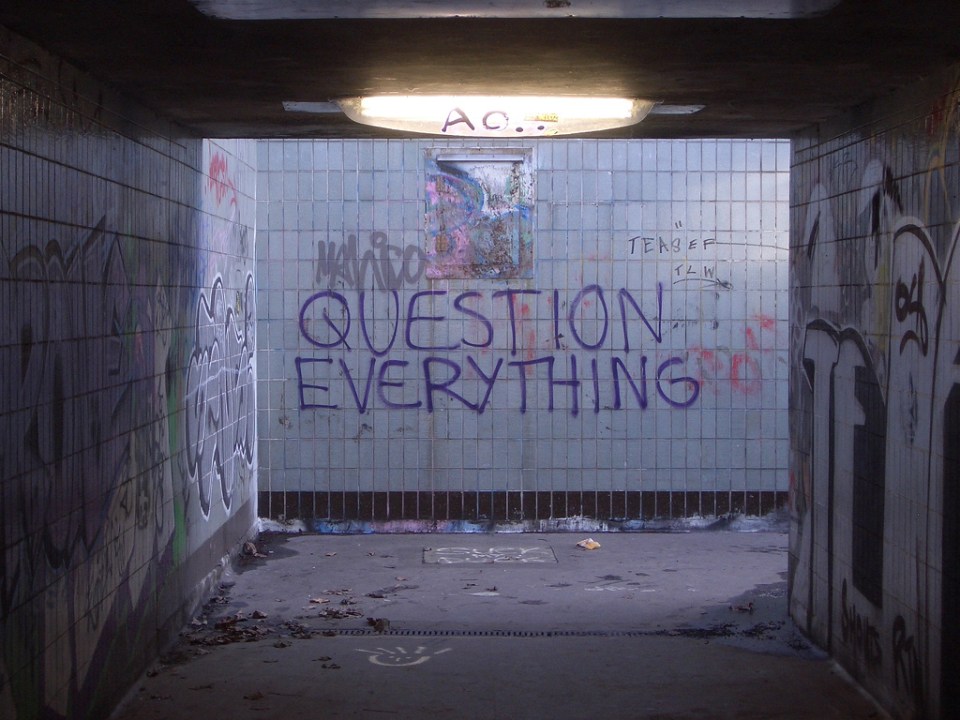
For me, this focuses on the posing of questions and working out ways in which answers can be sought. It’s a common maxim, that within academia, there is no such thing as a silly question and Criminology is no exception (although students are often very sceptical). When you are studying people, everything becomes complicated and complex and of course posing questions does not necessarily guarantee a straightforward answer. As many students/graduates over the years will attest, criminological questions are often followed by yet more criminological questions… At first, this is incredibly frustrating but once you get into the swing of things, it becomes incredibly empowering, allowing individual mental agility to navigate questions in their own unique way. Of course, criminologists, as with all other social scientists, are dependent upon the quality of the evidence they provide in support of their arguments. However, criminology’s inherent interdisciplinarity enables us to choose from a far wider range of materials than many of our colleagues.
So back to the questions…which can appear from anywhere and everywhere. Just to demonstrate there are no silly questions, here are some of those floating around my head currently:
- This week I watched a little video on Facebook, one of those cases of mindlessly scrolling, whilst waiting for something else to begin. It was all about a Dutch innovation, the Tovertafel (Magic Table) and I wondered why in the UK, discussions focus on struggling to feed and keep our elders warm, yet other countries are interested in improving quality of life for all?
- Why, when with every fibre of my being, I abhor violence, I am attracted to boxing?

3. Why in a supposedly wealthy country do we still have poverty?
4. Why do we think boys and girls need different toys?

5. Why does 50% of the world’s population have to spend more on day-to-day living simply because they menstruate?
6. Why as a society are we happy to have big houses with lots of empty rooms but struggle to house the homeless?

7. Why do female ballroom dancers wear so little and who decided that women would dance better in extremely high-heeled shoes?
This is just a sample and not in any particular order. On the surface, they are chaotic and disjointed, however, what they all demonstrate is my mind’s attempt to grapple with extremely serious issues such as inequality, social deprivation, violence, discrimination, vulnerability, to name just a few.
So, to answer the question posed last week by @manosdaskalou, ‘What are Universities for?’, I would proffer my seven questions. On their own, they do not provide an answer to his question, but together they suggest avenues to explore within a safe and supportive space where free, open and academic dialogue can take place. That description suggests, for me at least, exactly what a university should be for!
And if anyone has answers for my questions, please get in touch….
Share this:


Criminology: in the business of creating misery?

I’ve been thinking about Criminology a great deal this summer! Nothing new you might say, given that my career revolves around the discipline. However, my thoughts and reading have focused on the term ‘criminology’ rather than individual studies around crime, criminals, criminal justice and victims. The history of the word itself, is complex, with attempts to identify etymology and attribute ownership, contested (cf. Wilson, 2015). This challenge, however, pales into insignificance, once you wander into the debates about what Criminology is and, by default, what criminology isn’t (cf. Cohen, 1988, Bosworth and Hoyle, 2011, Carlen, 2011, Daly, 2011).
Foucault (1977) infamously described criminology as the embodiment of utilitarianism, suggesting that the discipline both enabled and perpetuated discipline and punishment. That, rather than critical and empathetic, criminology was only ever concerned with finding increasingly sophisticated ways of recording transgression and creating more efficient mechanisms for punishment and control. For a long time, I have resisted and tried to dismiss this description, from my understanding of criminology, perpetually searching for alternative and disruptive narratives, showing that the discipline can be far greater in its search for knowledge, than Foucault (1977) claimed.
However, it is becoming increasingly evident that Foucault (1977) was right; which begs the question how do we move away from this fixation with discipline and punishment? As a consequence, we could then focus on what criminology could be? From my perspective, criminology should be outspoken around what appears to be a culture of misery and suspicion. Instead of focusing on improving fraud detection for peddlers of misery (see the recent collapse of Wonga), or creating ever increasing bureaucracy to enable border control to jostle British citizens from the UK (see the recent Windrush scandal), or ways in which to excuse barbaric and violent processes against passive resistance (see case of Assistant Professor Duff), criminology should demand and inspire something far more profound. A discipline with social justice, civil liberties and human rights at its heart, would see these injustices for what they are, the creation of misery. It would identify, the increasing disproportionality of wealth in the UK and elsewhere and would see food banks, period poverty and homelessness as clearly criminal in intent and symptomatic of an unjust society.
Unless we can move past these law and order narratives and seek a criminology that is focused on making the world a better place, Foucault’s (1977) criticism must stand.
References
Bosworth, May and Hoyle, Carolyn, (2010), ‘What is Criminology? An Introduction’ in Mary Bosworth and Carolyn Hoyle, (2011), (eds), What is Criminology?, (Oxford: Oxford University Press): 1-12
Carlen, Pat, (2011), ‘Against Evangelism in Academic Criminology: For Criminology as a Scientific Art’ in Mary Bosworth and Carolyn Hoyle, (eds), What is Criminology?, (Oxford: Oxford University Press): 95-110
Cohen, Stanley, (1988), Against Criminology, (Oxford: Transaction Books)
Daly, Kathleen, (2011), ‘Shake It Up Baby: Practising Rock ‘n’ Roll Criminology’ in Mary Bosworth and Carolyn Hoyle, (eds), What is Criminology?, (Oxford: Oxford University Press): 111-24
Foucault, Michel, (1977), Discipline and Punish: The Birth of the Prison, tr. from the French by Alan Sheridan, (London: Penguin Books)
Wilson, Jeffrey R., (2015), ‘The Word Criminology: A Philology and a Definition,’ Criminology, Criminal Justice Law, & Society, 16, 3: 61-82
Share this:


The Criminology Toolbox

Whilst sitting at my desk at work recently I realised just how much I took away with me in my toolbox from my time studying Criminology. I wanted this blog to be about exactly how this discipline has helped me in my personal and working life and the transferable skills I acquired without even realising I was using them.
In 2011 I came to University an 18 year old with a very closed and one sided mind set and this is something I will openly admit to! A memory that I feel will stick with me forever is from a Crime and Society seminar in the first year with @manosdaskalou. I remember openly saying to him that I felt prisoners should not be allowed to have televisions whilst in prison and that they were there to do their sentence and not watch this week’s Hollyoaks (@manosdaskalou you may remember that sour faced girl sat in front of you, although the sour face is still very much there!). I am sure those of you reading will be cursing BUT my self-righteous opinions did change and the more I attended various lectures and seminars, the more I became open to listening to and respecting the opinions of my peers and became further educated about the impact rehabilitation and second chances have on lives.
In my second year I volunteered for an organisation focusing primarily on helping individuals who had been in the Criminal Justice System with gaining employment and education. As soon as I walked through those doors I saw first-hand the positive impact this organisation had on the lives of those using the service.
I had an opportunity to assist on a healthy living course for individuals recovering from drug and alcohol addictions. Some of those attending the course had never taken an exam before or even been in an educational setting and others struggled with reading. I quickly realised the privileged position I was in to be able to even be at University and do things I feel we all take for granted sometimes such as reading. I also provided some advice to a young female who completely freaked out at the idea of taking a multiple choice test. I gave her some tips before that I had acquired from my own experiences. She was so very thankful to me and I will always remember her.
In terms of the other skills I now have in my toolbox, the thought of standing up and presenting in front of my peers at University terrified me, however in doing that I can now confidently stand up in front of my colleagues and bosses to present information and contribute in meetings. I can also provide evidence in court thanks to learning about the criminal process.
Having the opportunity to debate certain issues within the criminological world and society has taught me to have a voice and provide my point in a professional manner whilst listening to others. From the assignments set, to working within a timetable, it has all enabled me to build upon my time management and organisational skills. Working to tight deadlines also does not daunt me especially when I now have work to them daily.
I think we can all be truthful here and say we did groan a little bit when we were given extra reading to do at home and to critically analyse various pieces of text for the next seminar (heaven forbid!). However, being able to analyse a piece of text is a skill I use every day in my job with Northamptonshire Police especially when building court files and reading the fibs and fairy tales that some of our customers can provide. Criminology taught me to be critical of everything around me, take on board criticism and ask questions. I now ensure I stick my head above the parapet and often put the police officers in their place, as they do need it sometimes!
On the whole, I am thankful for the transferable skills I acquired from studying Criminology despite using them daily and not realising until my desk epiphany! I graduated in 2014 with a toolbox of skills ready for the big wide world and I will cherish them always. Who knows, it may even help me with becoming a parent in November!

 Thoughts from the criminology team