
Home » Disability
Category Archives: Disability

What should criminologists talk about?

Recently, Criminology with Psychology graduate, now PhD student @zo3conneely wrote an entry focused on the rise of the Reform Party in British politics, which you can find here. In response, we received a comment via social media, asking what this entry had to do with Criminology. As we always say in Criminology, all questions are welcome and valid, after all, for many of us our mantra is ‘question everything’! From a lay perspective, the question indicates a particular understanding of academic disciplines, it presupposes that Criminology has a very narrow focus. In this view, criminologists should stay in their own lane and focus purely and simply on what is commonly understood as crime, i.e. actions which are against the law.
But hang on, doesn’t that fall under the purview of those who study or practice criminal law, something neither I not Zoe have undertaken? Alternatively, is it the business of those who work in the field of criminal justice, investigating and processing those believed to have been involved in law-breaking? Again, not something either Zoe or I have experience of. If my colleagues in law and criminal justice are the experts in actions against the law, where does Criminology fit in and why include a discussion on political parties such as Reform in a blog dedicated to the discipline?
However, the answer is more complex than the original question would indicate. The answer is also much longer than the question. Criminology has been described as a rendezvous or umbrella discipline, a space where everyone can gather to discuss crime from all perspectives. This includes disciplines as diverse as Drama, History, Literature, Philosophy, Psychology as well as many others, including Politics. It is therefore, expected that those who write for a Criminology blog will be drawn from a diverse range of academic backgrounds, for instance, whilst I have a BA and a PhD in Criminology, my MA is in the History of Medicine. For my fellow bloggers, their academic journeys will also be reflective of their curiosity and their developing academic knowledge and skills. It is therefore anticipated that each academic brings their own unique academic knowledge and personal experiences to the discussion table. It is this which enables Criminology to take a holistic approach, we don’t and should not seek consensus, but incorporate as many diverse views as is possible. Only then can we gain a real understanding of the phenomena we call crime, criminality, victimisation, and of course, the responses to such.
But what of crime itself? Do we all have a shared understanding of what ‘crime’ is? After all, much of the time we don’t see crime, only potentially some evidence that is has occurred. Furthermore, it depends very much on time and space. If we were living in 1960’s Britain, suicide, abortion and homosexuality would all feature heavily in our list of crimes. However, suicide was decriminalised in 1961, and abortion and homosexuality were partially decriminalised in 1967, with the latter further decriminalised in 2003. Likewise, if we were to look further afield we would crimes listed in statute books that we do not have here, for example adultery is a crime in Iran, Pakistan, Saudi Arabia, Somalia and was only repealed in Taiwan in 2020. Thus it is quickly evident that crime is not static, it can change drastically through time and place. We also have to recognise that crime can be decriminalised and recriminalised, for example the overturning of Roe vs Wade in the USA, removes the constitutional right for those pregnant to access abortions. If it taught us nothing else, the Covid-19 pandemic showed us rights can be granted and rights can be taken away, which means that criminologists need to keep a very careful eye on both the past and the present.
Whilst my colleagues in law have as their focus current legislation and how it is practised, and my colleagues in criminal justice seek to ensure that the law is enacted and used to the letter of that law, criminology is much freer. After all, we need to know who is making those laws and why. Whilst we can answer quite simply parliamentarians, this does not tell us very much. We also need to know who, for example only 14% of the current parliament belong to the Global Ethnic Majority, a smaller percentage than the population proportionately. Of these 90, 66 are drawn from the Labour Party, 15 Conservative and 5 Liberal Democrats. Likewise, at the 2024 election 40% of MPs are women, despite women making up over 50% of the UK’s population. Let’s not even get started on the disproportionate number of privately educated MPs, or the lack of visibility of disability, sexuality and so on…. Needless to say, the UK parliament does not look like the vast majority of the British public. Yet these are the people make our laws, and if we don’t understand that as a criminological issue, we will soon come unstuck.
We all need to understand what is happening once those laws have been passed, who is delivering justice for the UK? Whether we look at Judges, Barristers, Solicitors, we find a predominance of white men, only when we look at the magistracy we begin to find some real diversity. But don’t forget magistrates are unpaid, lay members of the judiciary, so it is perhaps unsurprising that women make up 57% of this particular field. So what about criminal justice practitioners? If we look at the police for England and Wales, over 91% are white, 65% are men. In relation to His Majesty’s Prison and Probation Service [HMPPS], over 54% are female, yet these are predominantly based within probation, not the prison service. So we begin to see that the people making, enacting and facilitation legislation and criminal justice do not look very much like the country’s population. Criminologically, this matters, how can we hope to tackle serious social harms like Violence Against Women and Girls [VAWG], homelessness, poverty etc when people have neither knowledge nor experience? Can we really talk achieve just outcomes if the people responsible do not look, sound like us, have very different, often privileged backgrounds which mean we have little shared experience?
Hopefully, this entry has gone a little way towards explaining why the discipline of Criminology (and of course, this blog) maintains an careful eye on politics, among a huge range of other interests. Don’t forget, Criminology is a positive discipline, focused on what could be, what ought to be, a fairer society for all of us.
Share this:

A Love Letter: in praise of board games
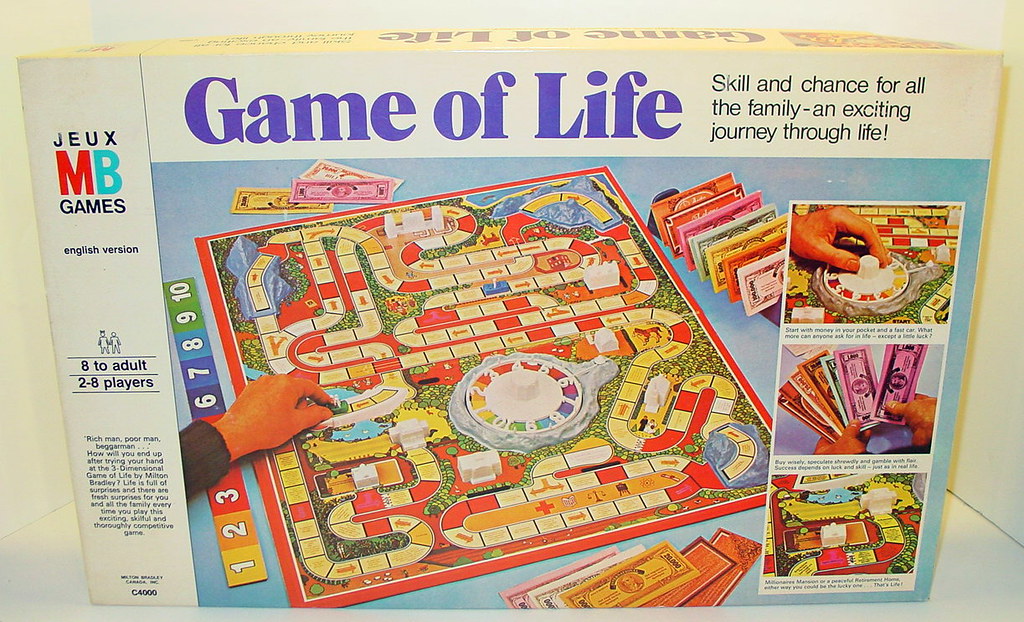
This my fifth love letter, previously I have written in praise of poetry, art, Agatha Christie and the Thoughts from the Criminology Team blog. Since early childhood, I have loved playing games and today’s entry is dedicated to this form of media. In the early years, the focus on fun is paramount, after all who wants to play a dull game? Equally important, the educational aim of games is sometimes explicit, other times less so. Nevertheless, they help us learn to match and sort colours and shapes, to develop our counting skills in an applied setting and improve our memory recall, as well as spelling. Games likes Snap, Happy Families, Hungry Hippos, Snakes and Ladders, Guess Who, Junior Scrabble offer a variety of different ways for children to learn important skills whilst playing. These games enable even very small children to share space, develop important interpersonal skills like taking turns and learn to deal with winning, and of course, losing. Often the latter is a very slow and painful lesson to learn….and one that isn’t always remembered into adulthood!
Of course, one of the most explicit part of playing games is learning the rules of the game, and of course, what happens when we deviate from those rules. It might lead to the loss of a turn or even forfeiture of the entire game. People interpret rules in different ways and families often develop their own “house” rules, but nevertheless there is always an agreed upon set of rules and a way of policing and punishing those who break them.
But once these lessons have been learned, what do games have to teach us as adults? I would say plenty! On a surface level, they offer an opportunity to relax and do something outside of our humdrum lives. Once the games have been purchased, they generally cost nothing to play unlike other forms of leisure time.1 Some can be played alone, others require competitors or even teams. They can aid our thinking, concentration and develop skills of strategy and tactics. They also have the general benefit of not being all consuming (unless at competition level), allowing for conversation to flow. The latter, conversing whilst doing something else, can often be useful for difficult emotional conversations, allowing people to open up without pressure (known colloquially as “health by stealth”).
But do board games have anything to offer to Criminology? Again, I would argue yes! Most games involve chance or luck, will you get the numbers you need, will you have the right pieces/cards in your hand, will the other person play their game in a way that benefits you? It is easy to recognise the role that luck or chance plays in games, but are we equally aware of their role in our lives. More importantly, as criminologists do we fully understand and acknowledge the role played by both in relation to criminality and victimisation?
We have no choice about whether we are born or not, when and where we arrive on the earth, who our parents are. These are all down to forces outside our individual and collective control. Our upbringing, our education, our employment opportunities are largely constrained by geography, money and influence. Compare the opportunities available to a baby born today in Sudan, with one born in the UK, another born in Palestine, and another born in Finland. Compare again, thinking about race, sex, class, disability, sexuality and so on. Very quickly you begin to understand the role played by chance and luck.
So if all of the above are imponderables, how much of a role does luck play in relation to criminality and victimisation? The regular publication of data relating to crime in postcodes, towns/cities and globally show huge diversity in the chance of victimisation. Lucky you, if you were born and live in the ‘Nordic countries of Europe (Norway, Sweden, Denmark, Iceland, and Finland) who rank among the 25 safest globally, most of them also being among the top 10 happiest nations worldwide’. Less fortunate, if you were born in Haiti, Ukraine, Palestine, Sudan or Iraq identified as some of the most dangerous places on earth currently. It is not very difficult to imagine the difference in opportunities in fundamental human rights; food, shelter, healthcare, education and so on. In war ridden nations it is incredibly difficult to separate different typologies of victimisation and for the individuals living under these conditions, it makes no meaningful difference who is/are the perpetrators.
Even if you are living in a “peaceful” state2 such as the UK, there are vast differences in the opportunities available. If you have money you can buy a car to get to work in your evening/night job, if you don’t, maybe you can take a bus, failing that you can walk. Each of those journeys carries its own risks. Your sex, your race, your ethnicity, your sexuality, your abilities/disabilities, your age add the aggravating/mitigating factors and see your risk increase/decrease. All a matter of chance and luck
What about criminality, is this, as the Classical School of Criminology would have us accept, a matter of free will, weighing up the pros and cons and making a deliberate and calculating choice to commit crime? Or can we also identify the same issues of luck and chance as shown above? If your family is loving, everyone has good health, housing is secure, food is plentiful and there are plenty of educational and employment opportunities in your area, would you still choose a life of crime? If there is violence at home, poverty impacts health, housing and regular meals, making it challenging to study or work, would you perceive crime to be a choice?
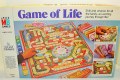
And what of those board game rules and consequences, real life has its own rules, some written in the forms of laws, others engrained via family, friends, institutions; the norms of our society. In the board game, these rules apply equally (aside from luck and chance) but in real life, not so much. Consider racial and ethnic disproportionality and the treatment of vulnerable women in the CJS, as just two examples. We may all be playing in the same “Game of Life”, but luck, chance and the rules we are subjected to are very different when it comes to criminality and victimisation.
- I appreciate that there are some very expensive board games out there, as well as expansion packs to enhance play. ↩︎
- There are lots of academic arguments around what constitutes a peaceful state, most agree that it more than just the absence of war. Whilst the UK has not seen active warfare on its shores for decades, its military has been involved in conflict throughout the world for more than a century. ↩︎
Share this:


Highlights and Hindsight: Reflections from a Final Year Student

Whilst I hope to continue writing beyond graduation, for my last blog post as a UON student, I’d like to share, for those at the beginning or early stages of their degree, some of the things I’m glad I did, and the things I wish I had done, maybe something will resonate with you.
I’m glad I…
Found opportunities to prove myself: Although I worked before doing my degree, being course representative, student voice as well as a research assistant have helped me build confidence and skills and given me so much more to talk about when I’m selling myself in both professional and academic applications.
Maintained my routine: I’ve never pulled an all-nighter or found myself regularly submitting at 11:58pm (just one exception!) I knew I couldn’t give my best when stressfully counting down the minutes to midnight and being sleep deprived. I tried different ways and routines of studying and found something that was sustainable. As far as possible I maintained boundaries so as not to put myself in a position where sacrificing sleep was a necessity.
Didn’t compare myself (often!): It’s easy to see other people getting higher grades, doing more things, doing ‘harder’ topics, and to feel inferior. We’re all on our own journeys, have our own interests, our own barriers and limitations and that’s ok. I never have been and probably never will be a ‘straight A’ student, but I’ve worked incredibly hard for the grades I have got. And truly, in all the interviews I’ve done in the last 4 months (lots), they’ve been more interested my grit and compassion than everything else!
I wish I had…
Connected more: I wish I’d pushed a little harder to make some friends or some more familiar faces. University can be really lonely, for so many reasons, and I think lots of students feel this way! Perhaps pushing through that fear of the unknown, and the social anxiety to talk to people on my course, having joined a society or attended more events might have alleviated some of this.
Taken what I needed: I spent years one and two determined not to use extensions, mitigating circumstances or office hours, anything that I perceived to be a setback or a silly question. This resulted in me running out of an exam before finishing, and completing a timed assignment the day after discharge from psychiatric hospital. I turned this around in year three and used what I needed, used extensions, booked in to office hours even if it was just for reassurance and actually felt like I had given my work my best (and this reflected in higher grades!)
Last Nuggets of Advice
Pay attention to what you enjoy: It’s easy to see it all as just hard work, rush to get it done and then feel lost in the end. I’ve now started on a masters degree towards a career path I never thought I’d pursue, focussing on something that isn’t even my strongest skill, but I’ve decided its worth the challenge for something I’m going to enjoy.
Reflect, reflect, reflect: I’ve learned so much by taking the time to reflect on what I’m experiencing or learning, how it makes me feel and why, why I do or don’t want to do it, where my thoughts are coming from. I wholeheartedly recommend regularly thinking about these things (or writing about them!) The ability to be reflective is assessed more than you might think, and you never know what it might reveal to you.
You are more than this: No matter what grades you get, how you handle uni life, if you make friends or not, do ‘extra’ stuff or not, do a masters, or not. You’re still… you, with so many good qualities, values and goals that are not tied to your achievements, it may or may not always be the life changing experience you hoped it would be. This is an important time, sure, but it’s not more important than your health, your values, your sense of self.
Remember, you can only do what you can, with what you have at the time. Take care.
Share this:


When will these issues be addressed?
In the realm of education, inclusivity and accessibility should be the foundation of any society aspiring for progress. However, in the case of special education schools in the United Kingdom, there exists a troubling narrative of systemic failings. Despite efforts to provide tailored education for students with diverse needs, the British educational system’s shortcomings in special education have cast a shadow over the pursuit of equal opportunities for all.
One of the main challenges facing special education schools in the UK is inadequate funding. These institutions often struggle with limited resources, hindering their ability to provide the necessary support for students with special educational needs. Insufficient funding results in larger class sizes, fewer specialized staff, and a lack of essential resources, all of which are detrimental to the quality of education these schools can offer. Furthermore, the heavy reliance on the UKs crumbling social care services and the overstretched NHS within special education settings exasperate poor outcomes for children and young people.
Special education students require a range of support services tailored to their individual needs. However, the inconsistency in the provision of support services across different regions of the UK is a glaring issue. Disparities in access to speech therapists, occupational therapists, and other essential services create an uneven educational landscape, leaving some students without the critical support they require to thrive.
Effective collaboration and communication between educators, parents, and support professionals are vital for the success of any special education school. Unfortunately, there is often a lack of seamless coordination. The lack of collaboration can and has result in fragmented support for the students, hindering their overall development and thus making it difficult to implement cohesive and effective educational plans.
The success of special education programs relies heavily on well-trained and empathetic educators. Unfortunately, the British educational system falls short in providing comprehensive training for teachers, working in special education schools. Many teachers express a lack of preparation to address the unique challenges posed by students with diverse needs, leading to a gap in understanding and effective teaching strategies. It is also important to note that many staff members that work within special education settings are not trained teachers, although they have been given the title of teachers. This further leads to inadequate education for children and young people. Moreover, post-covid has seen a high staff turnover within these settings. There have been many reports that have alluded to the notion that British schools are failing our children, but it seems that children from special education provisions are ignored, and families are dismissed when concerns are raised about the lack of education and preparation for the ‘real world’.
I am also critical of the overreliance of labelling students with specific disabilities. While categorization can be useful for designing targeted interventions, it can also lead to a narrow understanding of a student’s capabilities and potential. This labelling approach inadvertently contributes to stereotypes and stigmas, limiting the opportunities available to students with special needs….. There tends to be a focus on the troubling history of the way people with disabilities in the UK have been treated, but what I find interesting is there is a sense of disregard for the issues that are occurring in the here and now.
There is also a lack of special education provisions in the UK. This has led to many children with additional needs without a school place. And while a specific figure of the number of children being excluded from education has not been disclosed, West Northamptonshire, has awarded families over £49,000 over special education failings in 2023 (ITV, 2023). Furthermore, Education health care plan recommendations (EHCP) have not been followed within schools. These are legally binding documents that have been continuously dismissed which has led to further legal action against West Northants council in recent years (Local Government and Care Ombudsman, 2023).
The failings in special education schools have repercussions that extend beyond the classroom. Many students who leave these schools face challenges in transitioning to higher education, entering the workforce or living independently. The lack of adequately tailored support for post-education opportunities leaves these individuals at a disadvantage, perpetuating a cycle of limited prospects, which inevitably pull people with disabilities into a cycle of poor health and poverty (Scope, 2023). The disability employment gap in the UK is 29% and the average disabled household faces a £975 a month in extra costs (Scope, 2023) access to employment and financial independence is out of reach for disabled people due to failings within education because lack of preparation for life beyond school.
There needs to be reform in British schools from mainstream to special education. There are failings across the board. Adequate funding, improved teacher training, consistent support services, enhanced collaboration, and a shift away from overreliance on labelling are all crucial steps toward creating an inclusive educational environment. It is difficult to draw on optimism when the UK government continues to ignore age old concerns. This blog entry is to bring awareness to an issue, that may not be on your radar, but will hopefully get you to reflect on the copious barriers that people with disabilities face. Childhood should be a time when there is a fence built to protect children is schools. As we get older and face the challenges of the wider world, we should be equipped with some skills. Special education schools should not be used as a holding place until a child comes of age. There should be provisions put in place to give all young people an equitable chance.
Share this:


Public confidence in the CJS: ending on a high?

2022 has been a turbulent and challenging year for many. Social inequalities and disadvantage are rife, with those in power repeatedly making bad, inhumane decisions and with very little, to no, accountability or consequences (insert your favourite example from the sh** storm that is the Conservative Party here). Union after Union, across sectors, engage in industrial action in response to poor working conditions and pay, amidst a cost-of-living crisis. And although seemingly unconnected, as the year comes to a close, the Sentencing Guidelines (2022) report on Public Confidence in the Criminal Justice System (CJS) has got me feeling frustrated. My previous blog entries have often been ‘moans’. And whilst January is often dubbed the month of new beginnings and change for the year ahead: we’re not quite there yet so true to form here is my latest moan!
The report exists as one of many conducted by Savanta to collate data on public confidence, in terms of effectiveness and fairness, in the CJS and public awareness of the sentencing guidelines. The data collected in March 2022, was via online surveys given to a “nationally representative sample of 2,165 adults in England and Wales” (Archer et al., 2022, p.9). Some of their highlighted ‘Key Findings’ include that confidence levels in CJS remains relatively stable in comparison to 2018, on the whole, respondents viewed sentences as ‘too lenient’ however this varied based on offence, the existence of the sentencing guidelines improves respondent’s confidence in the fairness of sentencing, and that engagement with broadcast news sources was high across respondents (Archer et al., 2022). It is not the findings, per se, that I take umbrage with, but rather the claim it is a “nationally representative sample of adults in England and Wales” (Archer et al., 2022, p.9).
I take issue on two fronts. The first being that the sample size of 2,165 adult respondents is representative when the demographic factors included are: gender (male and female), age (18-34yo, 35-54yo and 55+), region, ethnicity (White, Mixed, Asian, Black and Other) and socio-economic grade. Now considering we are, thankfully, at the end of 2022 we should all be able to recognise that a sample which only includes cis-gendered options, narrows ethnicity down to 4 categories and the charming ‘other’, and does not include disabilities is problematic. There has been a large body of research done on people with disabilities and their experiences within the CJS, the lack of representation, the lack of accessibility to space and decisions, potentially impacting a defendant’s right to a fair trial, and a victim’s right to justice (Equality and Human Rights Commission, 2021; Hyun et al., 2013 ). So I ask, is this not something which needs considering when looking at public confidence in the CJS of a “nationally representative” sample?
In addition to this, I take issue with the requirement that the sample be “nationally representative”. We have research piece upon research piece about how Black men and Black boys experience the CJS and its various agencies disproportionately to their white counterparts (Lammy, 2017; Monteith et al., 2022; Parmar, 2012). Their experiences of stop and search, sentencing, bail, access to programmes within the Secure and Youth estate. There is nothing representative about our CJS in terms of who it processes, how this is done, and by whom. According to Monteith et al., (2022) 1% of Judges in the CJS are Black, and there are NO Black judges on the High Court, Court of Appeal of Supreme Court: this is not representative! Why then, are we concerned with a representative sample when looking at public confidence in CJS and the sentencing guidelines, when it is not experienced in a proportionate manner?
Maybe I’ve missed the point?
The report is clear, accessible, visible to the public: crucial concepts when thinking about justice, and measuring public confidence in the CJS is fraught with difficulties (Bradford and Myhill, 2015; Kautt and Tankebe, 2011). But this just feels like another nail being thumped into the coffin that is 2022. Might be the eagerness I possess to leave 2022 behind, or the impeding dread for the year to follow but the report has angered me rather than reassured me. As a criminologist, I am hopeful for a more inclusive, representative, fair and accountable CJS, but I am not sure how this will be achieved if we do not accept that the system disproportionately impacts (but not exclusively) Black men, women and children. Think it might be time for another mince pie…
Happy New Year to you all!
References:
Archer, N., Butler, M., Avukatu, G. and Williams, E. (2022) Public Knowledge of Confidence in the Criminal Justice System and Sentencing: 2022 Research. London: Sentencing Council.
Bradford, B. and Myhill, A. (2015) Triggers of change to public confidence in the police and criminal justice system: Findings from the crime survey for England and Wales panel experiment, Criminology and Criminal Justice, 15(1), pp.23-43.
Equality and Human Rights Commission (2021) Does the criminal justice system treat disabled people fairly? [Online] Available at: https://www.equalityhumanrights.com/en/inquiries-and-investigations/does-criminal-justice-system-treat-disabled-people-fairly [ Accessed 4th November 2021].
Hyun, E., Hahn, L. and McConnell, D. (2013) Experiences of people with learning disabilities in the criminal justice system, British Journal of Learning Disabilities, 42: 308-314.
Kautt, P. and Tankebe, J. (2011) Confidence in the Criminal Justice System in England and Wales: A Test of Ethnic Effects, International Criminal Justice Review, 21(2),pp. 93-117.
The Lammy Review (2017) The Lammy Review: An independent review into the treatment of, and outcomes for, Black Asian and Minority Ethnic Individuals in the Criminal Justice System, [online] Available at: https://assets.publishing.service.gov.uk/goverment/uploads/system/uploads/attachment_data/file/643001/lammy-review-final-report-pdf [Last Accessed 14th February 2021].
Monteith, K., Quinn, E., Dennis, A., Joseph-Sailsbury, R., Kane, E., Addo, F. and McGourlay, C. (2022) Racial Bias and the Bench: A Response to the Judicial Diversity and Inclusion Strategy (2020-2025), [online] Available at: https://documents.manchester.ac.uk/display.aspax?DOCID=64125 [Accessed 4th November 2022].
Parmar, A. (2012) Racism and ethnicity in the criminal justice process, in: Hucklesby, A. and Wahidin, A. (eds.) Criminal Justice, 2nd ed, Oxford: Oxford University Press, pp.267-296.
Share this:


I am not your “ally” (or am I?)

Today’s blog entry is a stream of consciousness rather than a finished entry with an introduction, middle and conclusion. It’s something that has been puzzling me for sometime, trying to work out why the term “ally” discomforts me and yet, not really coming to a firm conclusion. So I thought I’d explore it through a blog entry and would welcome anyone’s input to help me clarify and refine my own thinking and either embrace or reject the term.
Anyone that knows me, knows I love reading and of course, I love words. I love to play with them, say them, write them, discover new ones and trace the etymology as far as I can. Equally, I do not hide the fact that I try to understand the world through both pacifism and feminism. This makes me rather susceptible to interrogating and challenging the things that I see around me, including the written and spoken word.
The most obvious place to start when exploring words, is a dictionary, and this blog entry does similar. According to the Cambridge English Dictionary the term “ally” has three distinct definitions:
“a country that has agreed officially to give help and support to another one, especially during a war”
“someone who helps and supports someone else”
“someone who helps and supports other people who are part of a group that is treated badly or unfairly, although they are not themselves a member of this group”
Now for obvious reasons, I find the first definition problematic, put simply for me, war is a crime. The act of waging war includes multiple violences, some individual, some institutional, some structural and all incredibly harmful decades, or even centuries later. Definitions which have roots in the military and warfare leave me cold and I hate the way in which they infiltrate civilian discourse. For example “the war on drugs”, “the war on poverty”, “officer to the meeting” and the reshaping of the term “ally” for the twenty-first century” I definitely don’t want to be the “ally” described in that definition.
Definition two is also problematic, albeit for different reasons. This definition seems far too broad, if I hold the door open for you, is that me being an ally? If I help you carry your heavy bags, can I say I’m your ally? This seems a nonsensical way to talk about everyday actions which would be better described as common civility, helping each other along the way.Should I say “thank you kind ally” every time, someone moves out of my way, or offers their seat on the bus? It seems evident that this definition does not help me explore my reservations.
The third definition appears to come closest to modern usage of the term “ally”. This term can be applied to many different groups (as can be seen from the badges below and these are just some of the many examples). “whilst I identify as cisgender, I’m a trans ally”, whilst currently heterosexual, I’m a LGBTQ+ ally”, despite being white, I’m a BLM ally” and so on. On the surface this is very positive, moving society away from the nonsense of people describing themselves as “colour-blind”, “gender-blind” or such trite phrases as “we all bleed the same”, ignoring the lack of equity in society and pretending that everyone has the same lived experience, the same opportunities, the same health, wealth and happiness. Buying into the hackneyed idea that if only you work hard enough, you will succeed, that we live in a classless society and the only thing holding anyone back is their own inertia.

However, maybe my problem isn’t with the word “ally” but the word “I”, and the fact that the two words seem inseparable, After all who decides who is an ally or who is not, is there a organisation somewhere that checks your eligibility to be an ally? I’m pretty sure there’s not which means that that “ally” is a description you apply to yourself. After all you can buy the badge, the t-shirt, the mug etc etc, capitalism is on your side, provided the tills are ringing, there’s every reason to sign up. Maybe a tiny percentage of your purchases goes to financially benefit the people you aim to support, for example the heavily criticised Skittles Pride campaign which donated only 2p to LGBTQ+ charities (and stands accused of white supremacy and racism). Of course, once you have bought the paraphernalia, there is no need to do anything else, beyond carrying/wearing/eating your “ally” goods with pride.
All of the above seems to marketise and weaponise behaviour that should be standard practice, good manners if you like, in a society. Do we need a special word for this kind of behaviour or should we strive to make sure we make space for everyone in our society? If individuals or groups gain civil rights, I don’t lose anything, I gain a growing confidence that the society in which I live is improving, that there is some movement (however small) toward equity for all. Societies should not make life more difficult for the people who live in them, regardless of religious or spiritual belief, we have one opportunity to make a good life for ourselves and others and that’s right now, so why seek to dehumanise and disadvantage other humans who are on the same journey as we are.
Ultimately, my main concern with the use of term of “ally” is that it obscures incredibly challenging social harms, with colour and symbols hiding inaction and apathy. Accept the label of “ally”, wear the badge, if you think it has meaning, but if you do nothing else, this is meaningless. if you see inequality and you do not call it out, take action to remedy the situation, the word “ally” means nothing other than an opportunity to make yourself central to the discussion, taking up, rather than making, room for those focused on making a more just society.
I still remain uncomfortable with the term “ally” and I doubt it will ever appear in my lexicon, but it’s worth remembering that an antonym of ally is enemy and nobody needs those.
Share this:


The Color Purple, The Musical: What in the Misogynoir?!

TW: mentions of rape, child rape, racism, and misogynoir.
Alice Walker’s novel The Color Purple is a story loved around the world. So, when I saw that it was adapted to stage and touring the UK, my interest was peaked just enough to consider a visit to my local theatre the Royal & Derngate in Northampton. A Curve and Birmingham Hippodrome co-production, it came to Northampton in the first week of October. Largely, audiences that frequent my local theatre are overwhelmingly white – thus, watching The Color Purple it was a joy to my heart to hear Black people in my community engaging with the arts, because the last time I heard so many Black people attended, was for Our Lady of Kibeho as part of the R&D’s Made in Northampton season. This dates back to 2019, a production I reviewed for The Nenequirer showing that Northampton(shire) arts has work to do.
Social media platforms like Twitter and Instagram showed me the pretty unanimous positive praise for the Leicester-Birmingham co-production, while local critics also enjoyed it – including reviews from The Chronicle & Echo and The Nenequirer as well as further reviews by The Real Chris Sparkle and Northampton Town Centre BID. However, there were elements of the show that caused me great distress, no less than the perpetuation of misogynoir and racist stereotypes against Black men. It was deeply triggering, showing how historical trauma and vicarious trauma are ever present, including when white organisations have not done the work of protecting Black mental health when producing “Black-centred media.”
At the head of this cast, Me’sha Bryan gives a knockout performance as Celie (previous played by Whoopi Goldberg in the film) accompanied by Aaliya Zhané as Nettie, with Bree Smith as Shug Avery, and brilliant musical numbers grounded in the traditions of blues music that finds its origins in the trauma of enslaved Africans in the American South. They sang when “they got the blues” … and as far as performance and the commitment from the cast, I couldn’t ask for better.
However, whilst I have praised the musical numbers above, I did not believe it fitted with the tones of The Color Purple curating a rift between what the actors were saying and doing on stage, and the intonations of the music – as well as the lighting design. And despite the directorial position deciding the rape of a child wasn’t musical material (rightly so), the choice to have it as a passing detail with no further discussion, I found particularly off-key. This is one of the moments that highlights that The Color Purple may not have been musical material and better considered as a serious drama. I did not walk away feeling that bleak, much ado with contradictory lighting choices to character moods. The characters were feeling one away and lights did something else. By the by, rather than skip over the rape to maintain “the musicalness”, it may have been more effective to have done this story as a stage drama (with musical elements, if at all). The horrors depicted at the beginning of the novel are pretty nonexistent in musical.
So, this recent adaptation was a disappointment. Not from an acting point of view but behind-the-scenes pre-production elements like direction. The start of story includes a fourteen year-old who births two children after being raped by her father. So, the amount of trauma that exists around child sexual abuse and rape appear unconsidered when they glossed over these parts of the story. Furthermore, I do question if they consulted with any survivors when doing research for this adaptation. A ‘sensitivity consultant’ would not have gone amiss either, further to considerations of intersectionality and how cultural nuances in global, but still different Black communities, will be interpreted by white people, especially in provincial Little England.
Blown away by the musical abilities of the cast, stage productions (like much art) are often labelled as “escapist” so is not afforded the same criticality as for example – policing, education, sport and so on – we are all guilty of this and we can do better. This may be art; there were no redeeming Black characters, and Black men calling Black women “ugly” (written into the script) in full face of a white audience is cultural violence. In Northampton, the large white audience laughed at this example of ableist misogynoir, and in many ways this production felt to be played up for white audiences. Lots of white people are not used to seeing Black people as full human beings, and I do feel the play draws out our humanity. And by proxy centres white comfort with a Black aesthetic reinforced by white supremacy in media.
Disability justice activist Talia Lewis has released definitions of ableism every year since 2019. In January 2022, she discussed ableism as a violent social discourse that values people’s bodies and minds according to societally constructed ideas of “normalcy, productivity, desirability, intelligence, excellence and fitness …” Lewis (2022) states that these ideas are embedded in other violent discourses such as eugenics, capitalism, misogyny and white supremacy. The adaptation of these characters is only part of this debate, where another part may want to consider how this play has informed everpresent white superemacism pervasive across Northamptonnshire. It may impact how local white audiences may view Black people when they perceive that in this cultural text – ‘this is how Black people talk and act around each other.’
“This systemic oppression leads to people and society determining people’s value based on their culture, age, language, appearance, religion, birth or living place, “health/wellness”, and/or their ability to satisfactory re/produce, “excel” and “behave.” You do not have to be disabled to experience ableism.”
Talia Lewis (2022)
In Homegrown (hooks and Mesa-Bains, 2017), bell hooks tell us “We have to constantly critique imperialist white supremacist patriarchal culture because it is so normalized by mass media and rendered unproblematic. The products of mass media offer the tools of the new pedagogy.” Theatre is no different to films, literature or television programmes. Watching the musical, it struck me how the numbers of people who haven’t done the work of unlearning their own white supremacy would be impacted by such an adaptation (yes, as we know all humans can reproduce these isms but in a global western context, however, white supremacy has put white people on the top of that racial hierarchy).
One instance of misogynoir and ableism was underpinned by the three Black women singers (their character names escape me) who were written as Sassy Black Women inherently “comedifying” Black womanhood. Brilliant singers, but were written lazily reinforcing a damaging cultural media narrative that diminishes the three-dimensional personhoods of Black women. This was offered with no alternative. The Hypersexual Jezebel (named after the “sinful” Biblical character) appears in numbers of characters while Sofia was written as the Strong Black Woman. Black men were then written as violent, comedic relief, illiterate, and other harmful stereotypes, and domestic abuser Mr Albert is redeemed to the sound of musical harmonies and joyful lighting.
At a Northampton level, the critics from local media revisited a culture of uncritically discussing art. Stories aren’t just stories but a product of the society that created them, and we are a society that finds it easier to challenge the criminal justice system than it does liberal arts institutions, in spite of both having a say in how Black people are viewed and treated. Despite “Black theatre” not being genre, we need more shows at the Derngate that centre Blackness in Britain. And whilst commissioning and hosting shows about ‘Black issues’ is not evidence of an anti-racist commitment, it would be nice to see more shows locally about Black people in the UK by Black people.
When we do get “Black stories”, they so often centre the US, most recently The Color Purple (Oct, 2022) and Two Trains Running (Sept, 2019) – denying local audiences a context for Blackness within the United Kingdom, while recentring American Blacknesses is gaslighting through art. In November, Dreamgirls centring American Blackness is coming to the Derngate. A co-production between The Curve and the Birmingham Hippodrome, this adaptation of The Color Purple was deeply problematic on many levels that local white critics may not have picked up on because of their whiteness – drawn in by a spectacle of a “Black show”, viewed through a white gaze that is unused to talking about white supremacy as a political structure.
The white audience for these misogynoir tropes specifically – largely one of laughter – reminded me of the white gaze, with white laughter as eased white supremacy. Whiteness continues to pervade through ‘acceptable racism’ where serious digs made at Black people in-text laughed at by white people may show how white people may think about Black people in designated white spaces. A Black man seriously calling a Black woman ugly and a white audience laughing at that is incredibly revealing – a comfortableness in spaces coded as white … and how white people may act when thinking and talking about Black people in private (i.e in spaces coded as culturally white and desgined to their comfort).
“I grew up in a culture of bantering and, ngl, I love a caustic riposte. And while in certain ways I resent the current policing of language, there is a distinction. I hate to break it to you, but a “joke” in which the gag is that the person is black isn’t a joke, it’s just racism disguised as humor. A joke told to a white audience where the punch line is a racist stereotype isn’t a joke, again it’s just racism; if there is only one black person present, it’s also cowardly and it’s bullying. Jokes of this nature probably aren’t funny for black people.”
Emma Dabiri (2021: 98)
Art imitating life is one thing, but when life imitates art is another. White laughter at Black people in cultural media texts goes back to the days when blackface was on the BBC (until 1978). To see this platformed by a local arts institution then profiting from it, is revealing of how whiteness is performed and profited from, when white people think they’re not being watched. Creatives have a responsibility and so do those institutions that platform them.
Myself and fellow blogger @haleysread discuss this further in our prior entries about the scandal surrounding Jimmy Carr and Netflix. On that October evening, being one of the few Black people in the audience, it was incredibly uncomfortable. To consider art uncritically is to be entertained from a vantage point of privilege (or ignorance). Attending with my friend, to see unanimous positive feedback from the public made us feel a way, no less than from many Black people. We must always be critical; being critical is not the same as criticising, and those who are critical only take the time to be so because we care.
It is not about individual actors but about the lack of critique of institutional platforming in producing “art” that goes on to cause harm. Another fellow blogger Stephanie @svr2727 talked about misogynoir and the media in her recent webinar with the Criminology Team and Black Criminology Network. Violent mistakes in arts productions show a need not for more historical consultants, but sensitivity readers and empathy viewers. One cannot teach empathy, you either have it or you do not. Extending this gaze to screen media texts as well like Bridgerton and others, it is a further reminder that social scientists are needed at the very top of media … especially those of us that research about race, racism, and other forms of violence.
These cultural texts are rehearsed, edited, and considered by multiple hands before any public audience sees them. So, why are we still having to challenge? Simple: misogynoir, ableism, and whiteness are institutionalised and normalised socially and culturally into our day-to-day practice. No less than in “liberal” arts institutions.
“Nothing but a circus, with clowns and all.” – Malcolm X
Share this:


Food Banks: The Deserving vs Undeserving

A term that has been grating on me recently is ‘hard work’. I have had a recent bout of watching lots of television. From my observations it appears that more commentators within the media have grasped the idea that the continued need for Food Banks in the United Kingdom is awful. Yet commentators still continue with the same old deserving/undeserving tripe which has existed for centuries (which CRI2002 students are well-aware of). That being, that we should be concerned about food banks… ‘because now even hard-working people are using them!’, aka those within formal (preferably full-time) employment.
What is it that is not being said by such a statement? That being unable to survive off benefits is perfectly fine for people who are unemployed as they do not deserve to eat? If that is the case perhaps a reconsideration of the life experiences of many unemployed people is needed.
To provide some examples, a person might claim unemployment benefits because they are feeling mentally unwell or harmful to themselves but a variety of concerns have prevented them from seeking additional support and claiming sickness benefits, in this situation working hard on survival might be prioritised over formal employment. Another person might sacrifice their work life to work hard to unofficially care for relatives who have slipped through cracks and are unknown to social services, whilst not reaching out for support due to fear/a lack of trust social services – they have good reasons to be concerned. Some people might have dropped out of formal employment due to experiencing a traumatic life event(/s) which means that they now need to work hard on their own well-being. Or, shock-horror, people may be claiming unemployment benefits because they are working hard post-pandemic to find a job which pays enough for them to survive.

Let’s not forget that many of those who access Food Banks are on sickness benefits because they cannot work due to experiencing a physical and/or mental health disability. The underserving/deserving divide appears to be further blurred these days as those who claim sickness benefits are frequently accused of being benefits cheats and therefore undeserving of benefits and Food Bank usage. Even so, the acknowledgement of disability and Food Bank usage within the media is rare.
Is it really ok to perceive that the quality of a person’s life and deserved access to necessities should depend on their formal employment status?
There is twisted logic in the recent conservative government discourse about hard work. There is the claim that if we all work hard we will reap the rewards, yet in the same breath ‘deserving hard workers’ are living from payslip to payslip due to the cost of living crisis, poor quality pay and employment. Hence the need to use Food Banks.
The conservatives hard working mantra that all people can easily gain employment is certainly a prejudiced assumption. With oppressive, profit seeking, exploitative and poor quality employment there is little room allowed for humans to deal with their personal, family life pains and struggles which makes job retention very difficult. Perhaps the media commentators need a re-phrase: It is awful that any person needs to use a Food Bank!
Share this:

DIE in Solidarity with Diversity-Inclusion-Equality
As an associate lecturer on a casual contract, I was glad to stand in solidarity with my friends and colleagues also striking as part of UCU Industrial Action. Concurrently, I was also glad to stand in solidarity with students (as a recent former undergrad and masters student … I get it), students who simply want a better education, including having a curriculum that represents them (not a privileged minority). I wrote this poem for the students and staff taking part in strike action, and it comes inspired from the lip service universities give to doing equality while undermining those that actually do it (meanwhile universities refuse to put in the investment required). This piece also comes inspired by ‘This is Not a Humanising Poem’ by Suhaiymah Manzoor-Khan, a British author-educator from Bradford in Yorkshire.
Some issues force you to protest
the way oppression knocks on your front door
and you can’t block out the noise
“protest peacefully, non-violently”
I have heard people say
show ‘the undecided’, passive respectability
be quiet, leave parts of yourself at home
show them you’re just as capable of being liked
enough for promotion into the canteen,
protest with kindness and humour
make allusions to smiling resisters in literature
they’d rather passive images of Rosa Parks all honestly
but not her politics against racism, patriarchy, and misogyny
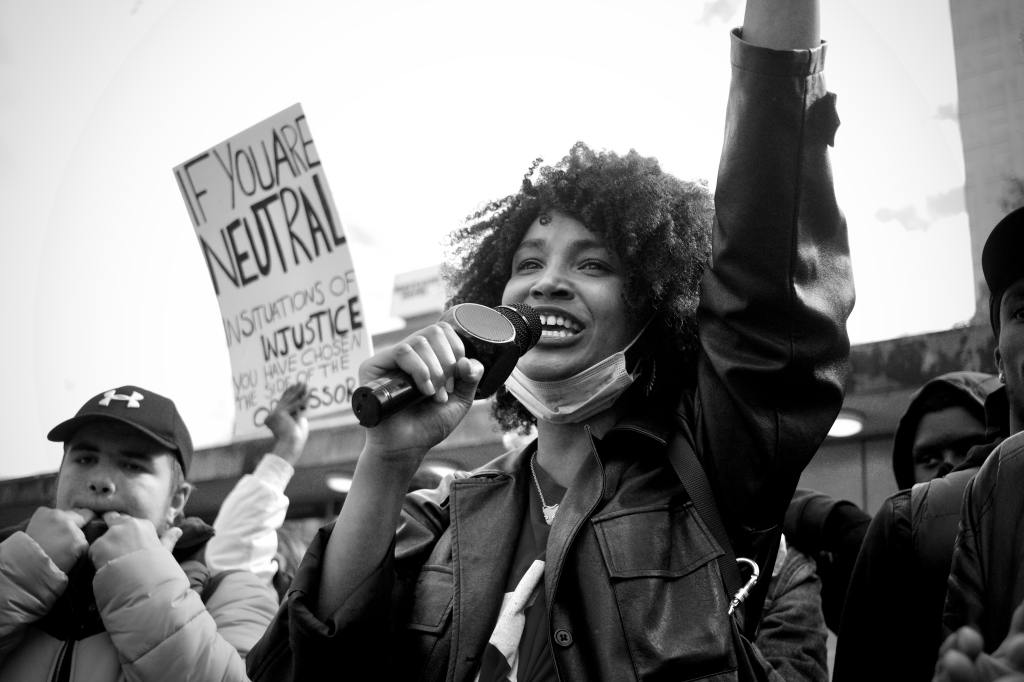
but I wanna tell them about British histories of dissent
the good and the bad – 1919 Race Riots
the 1926 general strikes, and the not so quiet
interwar years of Caribbean resistance to military conscription
I wanna talk about how Pride was originally a protest
I wanna talk about the Grunwick Strike and Jayaben Desai
and the Yorkshire miners that came to London in solidarity
with South Asian migrant women in what was 1980s austerity
I want to rant about Thatcherism as the base
for the neoliberal university culture we work in today
I want to talk about the Poll Tax Riots of 1990
and the current whitewashing of the climate emergency
they want protesters to be frugal in activism,
don’t decolonise the curriculum
they say decolonise
they mean monetise, let’s diversify …
but not that sort of diversity
nothing too political, critical, intellectual
transform lives, inspire change?
But no,
they will make problems out of people who complain
it’s your fault, for not being able to concentrate
in workplaces that separate the work you do
from the effects of Black Lives Matter and #MeToo
they make you the problem
they make you want to leave
unwilling to acknowledge that universities
discriminate against staff and students systemically
POCs, working-class, international, disabled, LGBT
but let’s show the eligibility of staff networks
while senior leaders disproportionately hire TERFs

staff and students chequered with severe floggings
body maps of indenture and slavery
like hieroglyphics made of flesh
but good degrees, are not the only thing that hold meaning
workers rights, students’ rights to education
so this will not be a ‘people are human’ poem
we are beyond respectability now
however, you know universities will DIE on that hill
instead,
treat us well when we’re tired
productive, upset, frustrated
when we’re in back-to-back global crises
COVID-19, Black Lives Matter, femicide,
failing in class, time wasting, without the right visas,
the right accents; Black, white, homeless, in poverty,
women, trans, when we’re not A-Grade students, when we don’t
have the right last name; when we’re suicidal
when people are anxious, depressed, autistic
tick-box statistics within unprotected characteristics
all permeates through workers’ and student rights
When you see staff on strike now,
we’re protesting things related to jobs yes,
but also, the after-effects
as institutions always protect themselves
so sometimes I think about
when senior management vote on policies…
if there’s a difference between the nice ones ticking boxes
and the other ones that scatter white supremacy?
I wonder if it’s about diversity, inclusion, and equality [DIE],
how come they discriminate in the name of transforming lives
how come Black students are questioned (under caution) in disciplinaries
like this is the London Met maintaining law and order …
upholding canteen cultures of policing
Black and Brown bodies. Decolonisation is more
than the curriculum; Tuck and Yang
tell us decolonisation is not a metaphor,
so why is it used in meetings as lip service –

why aren’t staff hired in
in critical race studies, whiteness studies, decolonial studies
why is liberation politics and anti-racism not at the heart of this
why are mediocre white men failing upwards,
they tell me we have misunderstood
but promotion based on merit doesn’t exist
bell hooks called this
imperialist heteropatriarchal white supremacy
you know Free Palestine, Black Lives Matter, and the rest
we must protest how we want to protest
we must never be silenced; is this being me radical, am I radical
Cos I’m tired of being called a “millennial lefty snowflake”, when I’m just trying not to DIE?!
Further Reading
Ahmed, Sara (2012) On Being Included: Racism and Diversity in Institutional Life. London: Duke.
Ahmed, Sara (2021) Complaint. London: Duke.
Bhanot, Kavita (2015) Decolonise, Not Diversify. Media Diversified [online].
Double Down News (2021) This Is England: Ash Sakar’s Alternative Race Report. YouTube.
Chen, Sophia (2020) The Equity-Diversity-Inclusion Industrial Complex Gets a Makeover. Wired [online].
Puwar, Nirmal (2004) Space Invaders: Race, Gender and Bodies Out of Place. Oxford: Berg.
Read, Bridget (2021) Doing the Work at Work What are companies desperate for diversity consultants actually buying? The Cut [online].
Ventour, Tré (2021) Telling it Like it is: Decolonisation is Not Diversity. Diverse Educators [online].
Share this:


Mobile-impaired drivers. #BlackenAsiaWithLove
Mobile-impaired drivers.
So, try to imagine a man driving a motorbike, a 5-year-old standing on the tiny platform between him and the handlebars, a tall toddler standing behind him on the seat, clinging round his neck, and a woman sitting side-saddle behind the baby. Both adults are bent over scrolling on the phone. In the middle of traffic. I see this every day, but a few days back, I saw a toddler playing peek-a-boo with his dad while he was driving. Interestingly, as he struggled to move the baby’s hands away, the man never shifted his eyes away from his phone.
Between the two adults described above, nobody had one good eye on the road. Said plainly, the man was impaired; he drove with one eye, one hand. Look around, so many are. All I could do was laugh. I didn’t find the spectacle funny. I chuckled to myself, mostly about my own helplessness. I feel like there’s nothing I can do about the risk they face, or the danger they place on others. Their kids are at a severe disadvantage, being precociously exposed to such mindlessness. Many of the motorists around here are similarly disabled. It’s a common affliction.

What if the baby decides it’s not time to stop peek-a-boo, as babies do, despite the man using his hand to wave him away in frustration? What if they hit a bump – because he wasn’t looking – and either child slipped? Or, what if some driver is speeds towards you in the exact same scenario? Or, what if either dropped their phone? We know that there is a strong impulse to reach for a falling object – even in traffic. Imagine dropping something that holds great value for you. Would instinct kick in? Could it be worse now since heavy social media usage paves neural pathways of impulsive behaviours?
As I move around on the streets, it’s as if most people have only one hand and one eye on the road. It’s nothing to see someone driving a motorcycle holding their phones to their ear, enthralled in conversation, just one hand guiding their vehicle through torrid traffic and very bumpy roads. Potholes and sewage covers, for example, are regularly too deep to tackle with two wheels, so drivers usually swiftly go around. A quick swerve. What’s more, it’s the normal thing to carry one’s entire family along on these adventure rides. Yet, even with two-to-three generations in tow, I’ve seen drivers driving around with their phone in one hand, dialing, texting or scrolling, lifted so they could see it.
I can count on one hand the number of moto-taxi drivers I’ve had with any hands-free brace to hold the phone as it displays our route. Some, at least, leave their devices in their pockets, and only check-in at stoplights. (I should start mentioning this in my ratings – not just stars.)

Devices? Mobile phones sold in this part of the world have two SIM card slots, but it’s also quite common to see people jostling two phones at a time. Perhaps one for private use, and the other professional, and so forth. It suggests a deeply entrenched mobile phone culture here, now.
In any public space, on any form of transportation, no matter what’s going on, you can look in any given direction and see most people glued to their phones. Alone, with friends, families, co-workers all are online. Face-to-face is never enough. The most distressing is seeing adults snub kids for their phones – or worse get them hooked early and stuff device in their hands, too. What’s a kid supposed to think if mommy and daddy drive while mobile impaired? Yes, kids, it’s not gone unnoticed that parents are spending more time with their phones than their own kids. Even during a commute. Ah, riding with my folks used to be such good quality time.
Smartphones are powerful. So, it comes to no surprise that folks would take to squeezing in every free moment to scroll through social media. If folks aren’t handling it directly, their phones are sitting right there in front of them, the perfect escape for even a moment’s silence, uncertainty, doubt, loneliness, longing, or even curiosity. The mobile provides it all. It has disabled our ability to focus, even when operating heavy machinery.
Why not take time during that long drive to pick and jive with friends on the net? What’s a matter with liking a few of my friends’ Facebook posts at the traffic light? It’s not like my kids have anything interesting to say. I can respond to a few work messages by the time I get to where I’m going; who cares if I slow-up traffic. Oh, let me stop right here, in the middle of the road, to finish this text. This has to be done now; I am unable to refuse. While cruising along, why not just let my friends know that I’m just a few minutes away (even if I’ve already shared my live locations and texted them just as I set off on my way).
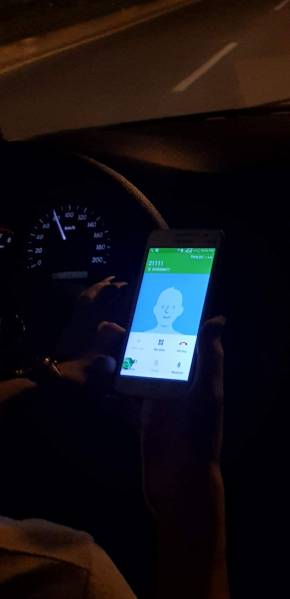
Though cognitively we know that we tend to overestimate the things that we can divide our attention between. Vehicles are keenly designed to allow drivers to focus on the road ahead, having a forward-facing display and any needed amenity at one’s fingertips. On two wheels, acceleration and brakes, blinkers and even widely used horns are all there at drivers’ fingertips. Cars compete for the easiest to reach radio, seat, and climate controls. In my last car, I could even do all these things and more from my steering wheel. Yet here, I even seen the biggest, most fully equipped cars being driven around by mobile disabled drivers. These brand-spanking new vehicles come with hands-free technology, but it’s a miss to me as to why there’s no widespread usage of these. Plus, no moto-makers have designed these two-wheelers for one-handed, one-eyed driving.

 Thoughts from the criminology team