
Home » Culture
Category Archives: Culture

Crime II: Nature and Nurture?
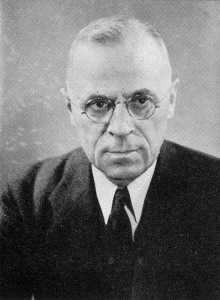
Fifty years after Lombroso’s theory of the “born criminal” an American criminologist explored the origins of criminality from a different perspective. For Edwin Sutherland people weren’t born criminal but more likely influenced by their environment. Differential association became a theory that changed the focus from biology to environment. This change signified the change of focus within criminology from biological attributes to social features.
This change, whilst it appears to have capture a wider social sciences debate at the time is also the outcome of trying to understand a world in motion. Sutherland’s theory comes in the early 20th century after the First World War and a massive economic crash. These placed in doubt the scientific and political economy of the time, putting many of these earlier ideas to the test. Popular movements challenged the authority of the state and the way hegemony suppressed people. Differential association was exploring how people learn crime by observing others; it becomes what Kornhouser called a ‘cultural deviance theory’.
What Sutherland articulated is that crime is learned through group conflict, again attempting to explain all types of crime like the biological theories before. The 20th century with its fast pace, European (World) wars, was the embodiment of modernity, progression and change. The world outside Europe began to rise against colonial rule, whilst civil rights became a rallying objective for many disenfranchised groups. In most countries worldwide women got the vote in the 20th century whilst, many countries recognised unions, and civil rights organisations, a consequence of people’s mobilisation.
It comes as no surprise then that differential association was a theory of crime that tried to account for social change and understand criminality as a process that moves within this change. The foundations of the theory in its simplest form are straightforward, covered in 9 main points:
1. Criminal behavior is learned from other individuals.
2. Criminal behavior is learned in interaction with other persons in a process of communication.
3. The principle part of the learning of criminal behavior occurs within intimate personal groups.
4. When criminal behavior is learned, the learning includes (a) techniques of committing the crime, which are sometimes very complicated, sometimes simple; (b) the specific direction of motives, drives, rationalizations, and attitudes.
5. The specific direction of motives and drives is learned from definitions of the legal codes as favorable or unfavorable.
6. A person becomes delinquent because of an excess of definitions favorable to violation of law over definitions unfavorable to violation of the law.
7. Differential associations may vary in frequency, duration, priority, and intensity.
8. The process of learning criminal behavior by association with criminal and anti-criminal patterns involves all of the mechanisms that are involved in any other learning.
9. While criminal behavior is an expression of general needs and values, it is not explained by those needs and values, since non-criminal behavior is an expression of the same needs and values.
The theory is more than a compilation of points and citing them is informative, but it doesn’t really explain the reach and extent. As a general theory of crime it can account for violent crime, theft and even white collar crimes. This reach of theory coincided with the wider discussion on “normative conflict” that focused on cultures. As discussions on cultural dominance, subcultures and the role of social groups became a sociological and criminological point these ideas introduced by Sutherland seemed to bare relevance.
There were questions already regarding the theory’s basis in terms of clarity as a cultural deviance theory, when culture focused away from poverty and social struggles. The cultural conflict seemed to resonate with certain crime categories, but it could not account for harm, leaving zemiologists to doubt the accuracy of its scope as theory. Furthermore, whilst the focus moved on from an arbitrary biology to the role of the environment some of the fundamental problems expected to be resolved in a general theory of crime remained unanswered.
So what is the answer? We can safely say that crime and most importantly criminality isn’t the product of a singularity nor its binary. How can we account for example for a social phenomenon whose definition of crime (in some instances) relies on law. A mechanism that the establishment uses to safeguard its privileges and position. The definitional factors therefore ought to transcend general conventions of biology or social interaction. Often they don’t, they merely describe the phenomenon but in closed cultural formats. There is a much more interesting and complex explanation that take us away from this binary. If you are more curious and you want to know more, why not join a criminology course and see if you can get the answer you expect or not. Criminology is a fascinating discipline not because we talk blood and bones but because we reflect on the current state of crime and imagine a world of crime (or free of crime) in the future. If you wish to share that imagination you can but join us!
https://www.northampton.ac.uk/courses/criminology-ba-hons/ https://www.northampton.ac.uk/courses/criminology-phd/ https://www.northampton.ac.uk/courses/criminology-with-psychology-ba-hons/ https://www.northampton.ac.uk/blog/why-i-chose-criminology/
Share this:


A thin veneer of respectability – management culture in uncertain times

I’ve long been interested in management culture in organisations, particularly policing and other organisations that provide a service, rather than a product per se. Although, management jargon might suggest that, in thinking outside the box, the service is a product, produced by a human resource, and therefore productivity is as easy to measure as that of a product coming off a conveyor belt; nothing like a bit of Neo-Taylorism (Pollitt, 1993) to get the party started.
Anyway, enough of that, the other day in a student discussion I was talking about policing and ethics and professionalism and all that stuff. Stuff that, I was trying to convey, was easier said than done because the social world is both complex and complicated. We happened to discuss the Mission and Vision of New York Police, and it reminded me of research carried out regarding how the New York Police recorded, or more to the point failed to record, crimes (Eterno and Silverman, 2012). Some of the crimes were very serious and at least one case led to an offender going on to commit more crime, when had the original crime been recorded, he might well have been caught before inflicting further serious harm.
This all occurred in the nineties at a time when crime in New York was through the roof and when Mayor Guiliani and Commissioner Bratton were at the helm. Under their stewardship, crime came down, detection rates went up, and Bratton was hailed as a hero with a suggestion that he could become the new commissioner of the Metropolitan Police in this country. Those of you that are old enough to remember will know it was more than just mooted by government sources. Zero Tolerance policing (based on the much-criticised Broken Windows Theory) had been forged in New York and Jack Straw our home secretary was talking about it being introduced here. The so-called success also lay in the fact that CompStat had been introduced in New York where borough commanders were publicly hauled over the coals and humiliated if their crime figures were not up to scratch. The fact that they had little or no control over crime (Hough, 1987), and the reduction of crime had more to do with the declining crack market (Bowling, 1999), was neither here nor there. What Bratton and Guiliani had done was to throw a thin veneer of respectability over the crime problem.
Eterno and Silverman (2012) through their research, however, threw a whole new light on what turned out to be corrupt practices and, research in England and Wales began to throw up the same issues in crime recording practices on this side of the ‘pond’ (Her Majesty’s Inspectorate of Constabulary, 1999; 2000). In this country the practices emanated from government’s preoccupation with statistics and the measurement of success through what can only be described as bean counting or what was officially known as objectives and Key Performance Indicators. The Audit Commission and Her Majesty’s Inspectorate of Constabulary (HMIC) applied pressure on forces to ‘perform’ and league tables were developed and published, the media love league tables. The ideal place to be; mid table. That way no-one scrutinised what you were doing. Crime figures were massaged to produce the desired results. There was a whole industry in examining and manipulating statistics. If you were at the bottom of the table, then interventions were put in place. An action plan was imposed, the rationale behind the figures was ignored, this was not about quality, although the action plans were dressed up as quality improvement, this was simply about applying sufficient pressure to get forces to produce pleasing statistics. The pressure was applied at the top, but very quickly through managerial manoeuvring, became a problem for those at the bottom. Chief constables were quick to point out the failures of departments and individuals in departments. CompStat but in a different guise came to the fore. What became clear was that those at the bottom were supposedly, both ‘lazy and incompetent’. If they weren’t, they were certainly made to feel that they were.
The corrupt practices that ensued (manipulation of crime statistics, misclassification of crimes, failure to record crimes, detection of crimes that were not really detected) were a direct consequence of overburdened frontline staff being charged with producing results that were not within their control and managers, rather than managing expectations, directing operations through innuendo and veiled threats. Or in some cases such as CompStat, very direct threats. Officers that were ignorant of the issues such practices might cause, obliged and were fêted as being exemplary, others that were not compliant, perhaps because they knew what the consequences were to the public, were shunned and humiliated, until they bowed to the inevitable. The bottom line was simply to cheat and not get caught, forget integrity and ethics, those values were just not worth the stress. Although of course, the cheats if caught, were on their own as managers pointed to current published policy and rules (not the real policy and rules though). Some forces ended up in deep water as whistle-blowers spilled the beans on what was going on and the press had a field day. Institutional reputations took a major blow and to this day the Office for National Statistics carries a rider about the validity of police statistics.
Over a period of time, to some extent, the issues of performance management were addressed at government level, but the culture had become so inculcated that problems continued and manifest themselves in different ways to this day.
What of this tale? My observations are that other organisations are not immune to this phenomenon particularly in times of financial stress and political uncertainty. A management culture that either wittingly or unwittingly pushes staff on the front line, to make unethical decisions may produce a thin veneer of respectability, but they fail society miserably and risk significant reputational damage whilst doing so.
It seems to me that organisations can learn a great deal from the historic mismanagement of policing and the lack of ethical leadership in uncertain times.
References
Bowling, B. (1999) The rise and fall of New York murder: Zero tolerance or crack’s decline? The British Journal of Criminology, 39 (4), p.p. 531–554.
Eterno, J. A. and Silverman E. B. (2012) The Crime Numbers Game: Management by Manipulation. Boca Raton: CRC Press
Her Majesty’s Inspectorate of Constabulary (1999) Police Integrity: securing and maintaining public confidence. London: Her Majesty’s Inspectorate of Constabulary.
Her Majesty’s Inspectorate of Constabulary (2000) On the Record: Thematic Inspection Report on Police Crime Recording, the Police National Computer and Phoenix Intelligence System Data Quality. London: Her Majesty’s Inspectorate of Constabulary.
Hough, M. (1987) Thinking About Effectiveness. In Reiner, R. and Shapland, J. (eds.), Why Police? Special Issue on Policing in Britain: British Journal of Criminology, 27, 1, p.p. 70-79
Pollitt, C. (1993) Managerialism and the Public Services: Cuts or Cultural Change in the 1990’s. 2nd edn. Oxford: Blackwell.
Share this:


#UONCriminologyClub: What should we do with an Offender? with Dr Paula Bowles
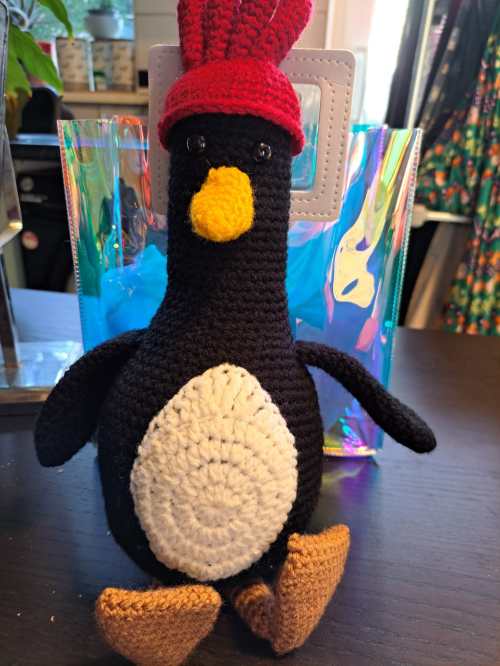
You will have seen from recent blog entries (including those from @manosdaskalou and @kayleighwillis21 that as part of Criminology 25th year at UON celebrations, the Criminology Team have been engaging with lots of different audiences. The most surprising of these is the creation of the #UONCriminologyClub for a group of home educated children aged between 10-15. The idea was first mooted by @saffrongarside (who students of CRI1009 Imagining Crime will remember as a guest speaker this year) who is a home educator. From that, #UONCriminologyClub was born.
As you know from last week’s entry @manosdaskalou provided the introductions and started our “crime busters” journey into Criminology. I picked up the next session where we started to explore offender motivations and society’s response to their criminal behaviour. To do so, we needed someone with lived experience of both crime and punishment to help focus our attention. Enter Feathers McGraw!!!
At first the “crime busters” came out with all the myths: “master criminal” and “evil mastermind” were just two of the epithets applied to our offender. Both of which fit well into populist discourse around crime, but neither is particularly helpful for criminological study, But slowly and surely, they began to consider what he had done (or rather attempted to do) and why he might be motivated to do such things (attempted theft of a precious jewel). Discussion was fast flowing, lots of ideas, lots of questions, lots of respectful disagreement, as well as some consensus. If you don’t believe me, have a look at what Atticus and had to say!
We had another excellent criminology session this week, this time with Dr Paula Bowles. I think we all had a lot of fun, I personally could have enjoyed double or triple the session time. Dr Bowles was engaging, fun and unpretentious, making Criminology accessible to us whilst still covering a lot of interesting and complex subjects. We discussed so many different aspects of serious crime and moral and ethical questions about punishment and the treatment of criminals. During the session, we went into some very deep topics and managed to cover many big ideas. It was great that everyone was involved and had a lot to say. You might not necessarily guess from what I’ve said so far, how we got talking about Criminology in this way. It was all through the new Aardman animations film Wallace and Gromit: Vengeance Most Fowl and the cheeky little penguin or is it just a chicken? Feathers McGraw. Whether he is a chicken or a penguin, he gave us a lot to discuss such as whether his trial was fair or not since he can’t talk, if the zoo could really be counted as a prison and, if so was he allowed to be sent there without a trial? Deep ethical questions around an animation. Just like last time it was a fun and engaging lesson that made me want to learn more and more and I can’t wait for next time. (Atticus, 14)
What emerged was a nuanced and empathetic understanding of some key criminological debates and questions, albeit without the jargon so beloved of social scientists: nature vs. nurture, coercion and manipulation of the vulnerable, the importance of human rights, the role of the criminal justice system, the part played by the media, the impetus to punish to name but a few. Additionally, a deep philosophical question arose as to whether or not Aardman’s portrayal of Feathers’ confinement in a zoo, meant that as a society we treat animals as though they are criminals, or criminals as though they are animals. We are all still pondering this particular question…. After deciding as group that the most important thing was for Feathers to stop his deviant behaviour, discussions inevitably moved on to deciding how this could be achieved. At this point, I will hand over to our “crime busters”!
What to do with Feathers McGraw?
At first, I thought that maybe we should make prison a better place so that he would feel the need to escape less. It wouldn’t have to be something massive but just maybe some better furniture or more entertainment. Also maybe make the security better so that it would be harder to break out. If we imagine the zoo as the prison, animals usually stay in the zoo for their life so they must have done some very bad stuff to deserve a life sentence! Is it safe to have dangerous animals so close to humans? Feathers McGraw might get influenced by the other prisoners and instead of getting better he might get more criminal ideas. I believe there should be a purpose-built prison for the more dangerous criminals, so they are kept away from the humans and the non-violent criminals. in this case is Feathers considered a violent or non-violent criminal? Even though he hasn’t killed anyone, he has abused them, tried to harm them, hacked into Wallace’s computer, vandalised gardens through the Norbots, and stole the jewel. So, I think we should get a restraining order against Feathers McGraw to stop him from seeing Wallace and Gromit. I also think we should invest in therapy for Feathers to help him realise that he doesn’t need to own the jewel to enjoy it, what would he even do with it?! Maybe socializing could also help to maybe take his mind of doing criminal things. He always seems alone and sad. I’m not sure whether he will be able to change his ways or not but I think we should do the best we can to. (Paisley, 10)
I think in order to stop Feathers McGraw’s criminal behaviour, he should go to prison but while he is there, he should have some lessons on how to be good, how to make friends, how to become a successful businessman (or penguin!), how to travel around on public transport, what the law includes and what the punishments there are for breaking it etc. I also think it’s important to make the prisons hospitable so that he feels like they do care about him because otherwise it might fuel anger and make him want to steal more diamonds. At the same time though, it should not be too nice so that he’ll think that stealing is great, because if you don’t get caught, then you keep whatever you stole and if you do get caught then it doesn’t matter because you will end up staying in a luxury cell with silky soft blankets.
After he is released from prison, I would suggest he would be held under house arrest for 2-3 months. He will live with Wallace and Gromit and he will receive a weekly allowance of £200. With this money, he will spend:
£100 – Feathers will pay Wallace and Gromit rent each week,
£15-he will pay for his own clothes,
£5-phone calls,
£10-public transport,
£35-food,
£5-education,
£15-hygiene,
£15- socialising and misc.
During this time, Feathers could also be home educated in the subjects of Maths, English etc. He should have a schedule so he will learn how to manage his time effectively and eventually should be able to manage his timewithouta schedule. The reason for this is because when Feathers was in prison, he was told what to do every day and at what time he would do it. He now needs to learn how to make those decisions by himself. This would mean when his house arrest is finished, he can go out into the real world and live happy life without breaking the law or stealing. (Linus, 13)
I think that once Feathers McGraw has been captured any money that he has on him will be taken away as well as any disguises that he has and if he still has any belongings left they will be checked to see whether he can have them. After that he should go to a proper prison and not a Zoo, then stay there for 3 months. Once a week, while he is in prison a group of ten penguins will be brought in so that he can be socialised and learn manners and good behaviour from them. However they will be supervised to make sure that they don’t come up with plans to escape. After that he will live with a police officer for 3 years and not leave the house unless a responsible and trustworthy adult accompanies him until he becomes trustworthy himself. He will be taught at the police officers house by a tutor because if he went to school he might run away. Feathers McGraw will have a weekly allowance of £460 that is funded by the government as he won’t have any money. Any money that was taken away from him will be given back in this time. Any money left over will be put into his savings account or used for something else if the money couldn’t quite cover it.
In one week he will give
£60 for fish and food
£10 for travel
£50 for clothing but it will be checked to make sure that it isn’t a disguise.
£80 for the police officer that looking after him
£15 for necessities (tooth brush, tooth paste, face cloth etc…)
£70 for his tutor
£55 for education supplies
£20 will be put in a savings account for when he lives by himself again.
And £100 for some therapy
After 1 year if the police officer looking after him thinks that he’s trustworthy enough then he can get a job and use £40 pounds a week (if he earns manages to earn that much.) as he likes and the rest of it will be put into his savings account. Feathers McGraw will only be allowed to do certain jobs for example, He couldn’t be a police officer in case he steals something that he’s guarding, He also couldn’t be a prison guard in case he helped someone escape etc… If at any point he commits another crime he will lose his freedom and his job and will be confined to the house and garden. When he lives by himself again he will have to do community service for 1 month. (Liv, 11).
Feathers McGraw has committed many crimes, some of which include attempted theft, abuse towards Wallace and Gromit, and prison break.
Here are some ideas of things that we can do to stop him from reoffending:
Immediate action:
A restraining order is to be put in place so he can’t come within 50m of Wallace and Gromit, for their protection both physical and mental. Penguins live for up to 20 years so seeing as he is portrayed as being an adult, my guess is he is around 10 years old. His sentence should be limited to 2 years in prison. Whilst serving his sentence he should be given a laptop (with settings so that he can’t use it to hack) so he can write, watch videos, play games and learn stuff.
Longer term solutions:
When Feathers gets out he will be banned from seeing the gem in museums so there will be less chance of him stelling it. He also will be given some job options to help him get started in his career. His first job won’t be front facing so Wallace and Gromit won’t have to be worried and they will get to say no to any job Feathers tries to get. If he reoffends, he will be taken to court where his sentence will be a minimum of 5 years in prison.
Rehabilitation:
I think Feathers should be given rehabilitation in several different forms, some sneakier than others! One of these forms is probation: penguins which are trained probation officers who will speak to him and try to say that crime is not cool. To him they will look like normal penguins, he won’t know that they have had training. He also should be offered job experience so he can earn a prison currency which he can use to buy upgrades for his cell (for example a better bed, bigger tv, headphones, an mp3 player and songs for said mp3 player) to give him a chance to get a job in the future. (Quinn, 12)
The “crime busters” comments above came after reflecting on our session, their input demonstrates their serious and earnest attempt to resolve an extremely complex issue, which many of the greatest minds in Criminology have battled with for the last two centuries. They may seem very young to deal with a discipline often perceived as dark, but they show us an essential truth about Criminology, it is always hopeful, always focused on what could be, instead of tolerating what we have.
Share this:


The power of collaboration in Higher Education

In today’s rapidly evolving landscape of higher education, interdepartmental collaboration and knowledge sharing are becoming increasingly vital. By rapid evolution, I mean the pressing challenges we face, including rising costs and finances, issues in student engagement and attendance, digital transformation and rise of new technologies, growing concerns about student wellbeing, and most importantly, the critical need to ensure a strong, positive student experience in the face of these challenges. While the idea of interdepartmental collaboration and knowledge sharing isn’t entirely new, its importance in addressing these complex issues cannot be overemphasised.
At my university, our faculty, the Faculty of Business and Law recently celebrated its ‘Faculty Best Practice Day’ on Wednesday, September 4th. This event, led by our deanery, was an opportunity for departments within the faculty to showcase their hard work, innovations, and fresh ideas across various areas – from teaching and research to employability and beyond. Personally, I view this day as an opportunity to connect with colleagues from different departments – not just ‘catch-up’ but to gain insight into their current activities, exchange updates and share ideas on developments within our sector and disciplines.
This event is particularly intriguing to me for three distinct reasons. Firstly, the ability for department representatives to present their activities to faculty members is invaluable. Departmental reps showcase their growth strategies, techniques for strengthening student engagement, and the support they provide for students after graduating. Some present their research and future directions for the faculty. Others present their external partnership growth, evidence-based teaching pedagogy, and other innovative approaches for enhancing student experiences. Also, these presentations often highlight advancements in technology integration and initiatives aimed at encouraging diversity and inclusion within the HE. All these presentations are not just impressive – they’re incredibly informative and inspiring. Secondly, the event regularly reinforces the need for collaboration between departments – a cornerstone of academia. After all, no single person or department is an island of knowledge. So the ability to collaborate with other faculty members is crucial as it provides opportunities for synergy and innovation, showcases our strengths. Thirdly, and on a personal level, the event fosters the need to learn best practices from others, and this is an aspect that has been tremendously helpful for my career. Such interactions provide opportunity for stronger collegiality, including insights into different approaches and methods that I can adapt and apply in my own work in ways that I can contribute to my professional growth and effectiveness.
In the most recent event, I attended a session on cultural literacy and awareness. Despite my years in higher education, I was particularly surprised to learn new things about cultural awareness that pertain not only to international students but to home students as well. This was an excellent session that also offered the opportunity to connect with colleagues from other departments whom you only know through email exchanges, but rarely see in person.
In sum, I strongly encourage everyone in academia to attend such events or create one if you can. Contribute to and engage with these events – for they equip us to break down traditional barriers between disciplines and provides us with an opportunity to learn from each other with an open mind. This is something I will continue to advocate for because fostering interdepartmental collaboration isn’t just beneficial – it’s essential. It is through these collaborative efforts that we can truly innovate, improve, and excel in our mission to educate and inspire the next generation.
Share this:


Gypsy Roma Traveller History Month: A Romany Museum
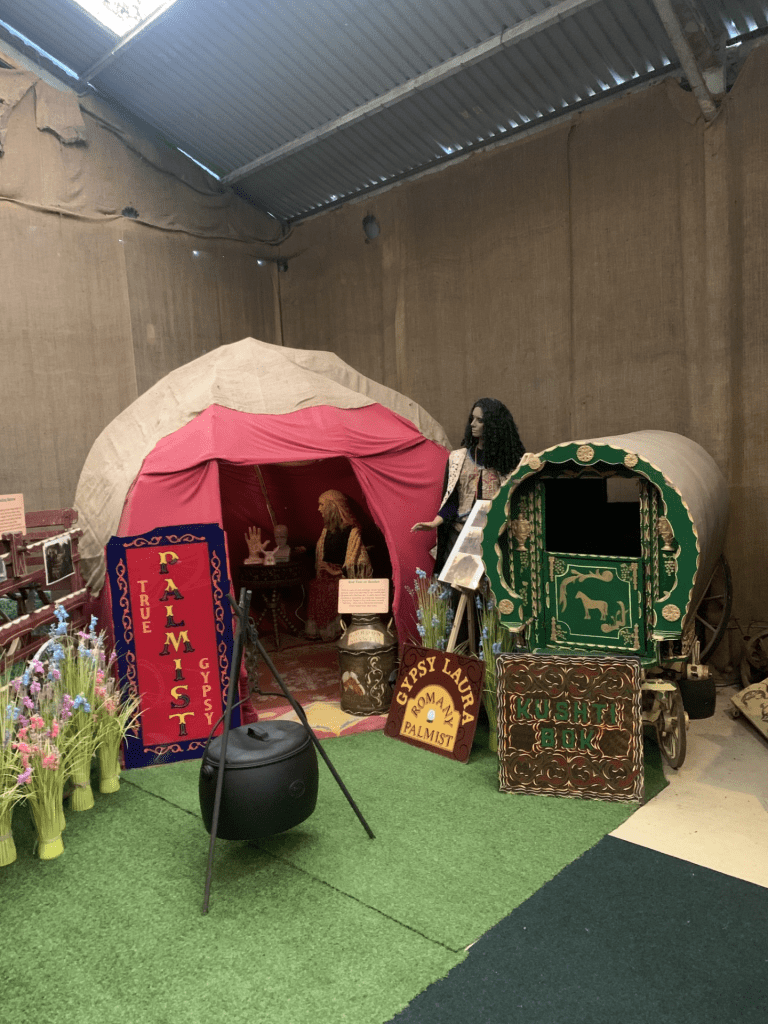
In April I visited the Gordon Boswell Romany Museum, museums in this country tend to operate under the guise of whiteness, but this one is different – it seems to be unapologetically and traditionally Romany.
The museum has an off grid feel to it, it appears after driving miles amongst countryside fields and if you would like to contact the museum staff, apparently telephone is best, not social media or email. This museum is also situated within what seems to be a Romany family home area and working scrapyard business. So even before entering the building, the culture of close family ties for building home and business that is outside of mainstream culture, are there.
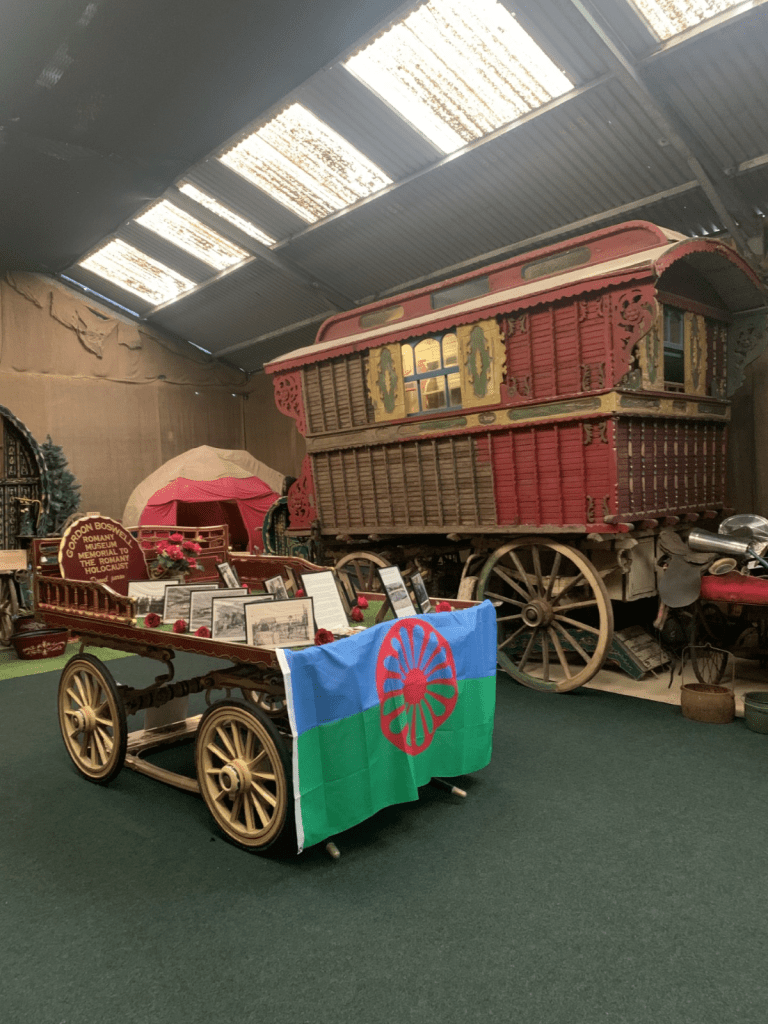
Inside the museum there are a variety of traditional Romany artefacts, which includes wagon, trailers, horse related items and handmade gifts, as well as other wagons curated by the owners and close contacts themselves. You will be pressed to find any written signage here, as in-line with tradition Romany history is passed on through verbal story telling. So if you want to know more about something you will need to ask those running the place, who are keen to have a chat with you.
I was surprised to see that the museum had a decent amount of visitors considering that this was a weekday and located in a lowly populated area in Spalding. The museum seems to be aimed at celebrating and illustrating traditions, instead of being motivated by profit. The visitors that were there also seemed to be touched by their visit, perhaps it is the attempt at preserving a traditional culture that has been under constant pressure, that makes this so meaningful. Or the memories of the past which the museum seems to hold onto.
Upon exiting the museum, seemingly Romany people pull up with a horse and cart near-by. A reminder of a slower paced yet hard working traditional life, where the outside world and mainstream culture does not matter so much as long as there is food on the table and supportive family near by. Although, I was left with more questions after the visit, such as where are the museums/spaces for other groups, such as Traveller culture? Where are the celebrations for more contemporary lives lived by Gypsy Roma and Traveller people?

This year the month in which I celebrated Romany culture the most was in April with a visit to The Gordon Boswell Romany Museum and I really did enjoy the visit. I have not done much to celebrate this month as I wonder – how do you to celebrate these specific History Month in a way that is meaningful and not performative?
Share this:

Gen Z’s gender divide
How can we help bridge Gen Z’s global gender divide as they negotiate for their futures? Unique to Gen Z, according to a recent study, women and men aged 16 to 29 diverge greatly on how they perceive existing inequality as well as assess their futures. That’s according to a widely-reported King’s College study, ‘Emerging tensions? How younger generations are dividing on masculinity and gender equality’, which also found:
- Men are around twice as likely as women to say doing housework and caring for family members are things that apply to both genders equally, despite evidence showing that in reality women do more of both on average. (See also: the Mental Load)
- A higher proportion of men also think there is no gender difference in likelihood of being a senior manager or earning a high income, yet research suggests these characteristics apply to men more than women in the UK. (See also: the UK government’s Gender Pay Gap index, and the Economist)
Family and parental leave – is just one way home and work lives overlap in policy, practice and legislation, acknowledging the importance of unpaid (domestic) labour. BBC news reports on one study that found, “men who take paternity leave do more childcare later.” How might these ‘emerging tensions’ impact the gender inequality in parental leave laws, policies, and practices?
One trend is for companies to create equal and pro-social family policies far beyond laws, not least of which is hybrid working. Flexible/hybrid work has been a lobbying target long before Covid by the Fawcett Society, which champions the Equal Pay Day campaign, and consults the government on the Gender Pay Gap. In 2023 their data highlighted that: “77% of women agreed that they would be more likely to apply for a job that advertises flexible working options.”
Other parental leave policies are gender-neutral, include IVF, adoptive and LGBTQAI+ parents, incentivise paternity leave, and host gendered employee networks. How else will these ‘emerging tensions’ show up in the workplace? One wonders how are other policies and practices promoting a fairer workplace and a healthier work/life balance?
It’s hard out here for…
Notably, all sorts of business news outlets have been reporting about this issue, and more recently about King’s College study, including Forbes, which found it curious that: “for those aged between 16 and 29…some 68% of women said that it was harder to be a woman, while only 35% of men agreed with that statement.” This article shines light on a gap and leaves it at that.
The Guardian has produced a series of articles and podcasts about the growing number of studies and polls reflecting this same cross-gender cultural rift: Here are a few headlines from just this past February:
1/2/24: Gen Z boys and men more likely than baby boomers to believe feminism harmful, says poll.
2/2/24: Friday briefing: Why the politics of young men and women are drifting further and further apart.
7/2/24: Why is generation Z so divided on gender? [Podcast]
Reporting on the study, The Independent headlines: “Of course Gen Z boys believe feminism is harmful – they’ve learnt it from the internet.” Indeed, the author reminds us that social media is quite apt at seeding and feeding division. “Algorithms often operate on extremes: because people tend to click on and engage with the most sensational, hyperbolic content, this is what the algorithm serves up.” Subsequently, young men and women grew up in two very different virtual worlds.

Feminism, the new F-word
According to the King’s College study: 42% of the public say, “equal rights … have had a positive impact on today’s young men.” This is acknowledged in the 2019 Government Equalities Office report, Changing Gender Norms: Engaging with Men and Boys, regarding the Advertising Standards Authority’s guidance on toxic masculine images, stating: “stereotypes implying that men should be physically strong, unemotional and family breadwinners are limiting and potentially damaging.”
Ironically, my career began in international development, which has long since addressed the role of boys and men in gender equality and masculinities, especially through the lens of sexual and reproductive health. In parallel, the work to decriminalise LGBTQAI+ communities simultaneously made alternative masculinities more visible to the wider society which lead even more to question, well frankly, patriarchy.
Still, in America, the majority, “whether they identify as feminists or not – say it is very important for women to have equal rights with men.” Could this be cognitive dissonance?
As these changes grow in wider society, we see organisations responding externally, e.g. virtue-signalling, diversity training, and rainbow advertising. How will organizations shift internally, e.g. in recruitment, retention, leadership, and reward?
Share this:


Christmas Toys

In CRI3002 we reflected on the toxic masculine practices which are enacted in everyday life. Hegemonic masculinity promotes the ideology that the most respectable way of being ‘a man’ is to engage in masculine practices that maintain the White elite’s domination of marginalised people and nations. What is interesting is that in a world that continues to be incredibly violent, the toxicity of state-inflicted hegemonic masculinity is rarely mentioned.
The militaristic use of State violence in the form of the brutal destruction of people in the name of apparent ‘just’ conflicts is incredibly masculine. To illustrate, when it is perceived and constructed that a privileged position and nation is under threat, hegemonic masculinity would ensure that violent measures are used to combat this threat.
For some, life is so precious yet for others, life is so easily taken away. Whilst some have engaged in Christmas traditions of spending time with the family, opening presents and eating luxurious foods, some are experiencing horrors that should only ever be read in a dystopian novel.
Through privileged Christmas play-time with new toys like soldiers and weapons, masculine violence continues to be normalised. Whilst for some children, soldiers and weapons have caused them to be victims of wars with the most catastrophic consequences.
Even through children’s play-time the privileged have managed to promote everyday militarism for their own interests of power, money and domination. Those in the Global North are lead to believe that we should be proud of the army and how it protects ‘us’ by dominating ‘them’ (i.e., ‘others/lesser humans and nations’).
Still in 2023 children play with symbolically violent toys whilst not being socialised to question this. The militaristic toys are marketed to be fun and exciting – perhaps promoting apathy rather than empathy. If promoting apathy, how will the world ever change? Surely the privileged should be raising their children to be ashamed of the use of violence rather than be proud of it?
Share this:


Saluting Our Sisters: A Reflection on the Living Ghost of the Past
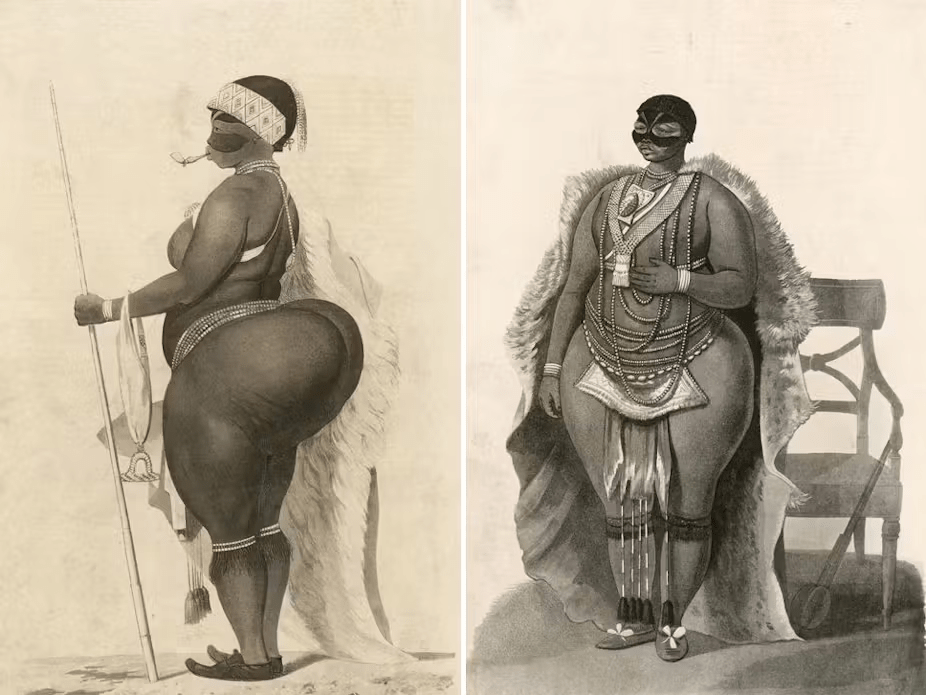
Sarah Baartman. Image source: https://shorturl.at/avLO4
In the 20th century, many groups of people who had been overpowered, subdued, and suppressed by imperialist expansionist movements under arbitrary boundaries began challenging their subjugation. These emancipation struggles resulted in the emergence of quasi-independent, self-governed African nation-states. However, avaricious socio-economic opportunists were aided into political leadership and have continued to perpetuate imperial interests while crippling their own emerging nations. Decades later, it has become clear that these ‘new states’ have become shackled under the grips of strong and powerful men who lead a backward and dysfunctional system with the majority of people impoverished while they enervate justice and political institutions.
Prior to this, the numerous nation states now recognised as African states had developed their distinct social, political, and economic systems which emerged from and reflected their distinctive norms and cultural values. Barring communal disputes and conflicts, robust inter-communal associations, interaction, and commerce subsisted amongst the nations, and paced socio-economic developments were occurring until external incursions under different guises began. Notably, the tripartite monsters of transatlantic slave trade, pillage of natural resources, and colonisation which not only lasted for centuries, disrupted the steady pace and development of these nations. It destroyed all existing social fabric and capital of the people, and forcefully installed a religious, socio-political, and economic systems that are alien to the people.
Ironically, while the transatlantic slave trade and colonialism were perpetuated under the guise of a “civilizing mission,” it took over three centuries for the “civilised” to realise that these abhorrent incursions were far from being civilising, and that they themselves required the civilisation they purported to be administering. However, while one might imagine that this awareness would lead to remorse and guilt-tripped sincere repentance for the pillage, pain, and atrocities, the abolition and relinquishing of political power to natives, the following events symbolized the contrary. Neo-colonialism was born, and international systems and conglomerates have continued the pillage on different fronts as aided by the greedy political class. Thus, it is unsurprising that yet again, strong, and powerful men are revolting against and deposing the self-perpetuating, avaricious socio-economic opportunists who wield political power against the interests of their nations in series of military coup d’état.
It is clear that the legacy of exploitation and subjugation has brought about a new set of challenges. Leaders entrusted with the responsibility of fostering prosperity in their nations often succumbed to personal gain, perpetuating a cycle of exploitation reminiscent of the imperialist era. This grim reality creates a stark contrast: while the majority of citizens are trapped in poverty, a powerful minority wields disproportionate influence, eroding the foundations of justice, economic prosperity, and political stability. As a result, for the vulnerable, seeking safety, economic freedom, and escaping from dysfunctional systems through deadly and illegal migration to other parts of the world becomes the only viable option. However, unbeknownst to many, the lands they risk everything to reach are grappling with their own challenges, including issues of acceptance and association with once labelled ‘uncivilized’ peoples.
Black History Month sheds light on these challenges faced by the black community and other marginalized ethnic groups globally. This year, the theme ‘Saluting our Sisters’ invites us to reflect on the contributions of Black women to society and the challenges they continue to face. It is also important to reflect deeply on how we consciously or unconsciously perpetuate rather than disprove, discourage, and distance ourselves from sustaining and growing the living ghost of the past. As Chimamanda urges, perhaps considering a feminist perspective in our actions, practices, and behaviour can be a powerful step toward recognizing and acknowledging how we perpetuate these problems. Dear Sister, I admire and salute you for your resilience and tenacity in making the world a better place.
Share this:


Media Madness

Unless you have been living under a rock or on a remote island with no media access, you would have been made aware of the controversy of Russell Brand and his alleged ‘historic’ problematic behaviour. If we think about Russell Brand in the early 2000s he displayed provocative and eccentric behaviour, which contributed to his rise to fame as a comedian, actor, and television presenter. During this period, he gained popularity for his unique style, which combined sharp wit, a proclivity for wordplay, and a rebellious, countercultural persona.
Brand’s stand-up comedy routines was very much intertwined with his personality, which was littered with controversy, something that was welcomed by the general public and bosses at big media corporations. Hence his never-ending media opportunities, book deals and sell out shows.
In recent years Brand has reinvented (or evolved) himself and his public image which has seen a move towards introspectivity, spirituality and sobriety. Brand has collected millions of followers that praise him for his activist work, he has been vocal on mental health issues, and he encourages his followers to hold government and big corporations to an account.
The media’s cancellation of Russell Brand without any criminal charges being brought against him raises important questions about the boundaries of cancel culture and the presumption of innocence. Brand, a controversial and outspoken comedian, has faced severe backlash for his provocative statements and unconventional views on various topics. While his comments have undoubtedly sparked controversy and debate, the absence of any criminal charges against him highlights the growing trend of public figures being held to account in the court of public opinion, often without a legal basis.
This situation underscores the importance of distinguishing between free speech and harmful behaviour. Cancel culture can sometimes blur these lines, leading to consequences that may seem disproportionate to the alleged transgressions. The case of Russell Brand serves as a reminder of the need for nuanced discussions around cancel culture, ensuring that individuals are held accountable for their actions while also upholding the principle of innocent until proven guilty in a court of law. It raises questions about how society should navigate the complex intersection of free expression, public accountability, and the potential consequences for individuals in the public eye.
There is also an important topic that seems to be forgotten in this web of madness……..what about the alleged victims. There seems to be a theme that continuously needs to be highlighted when criminality and victimisation is presented. There is little discussion or coverage on the alleged victims. The lack of media sensitivity and lay discussion on this topic either dehumanises the alleged victims by using lines such as ‘Brand is another victim of MeToo’ and comparing him to Cliff Richard and Kevin Spacey, two celebrities that were accused of sexual crimes and were later found not guilty, which in essence creates a narrative that does not challenge Brand’s conduct, on the basis of previous cases that have no connection to one another.
We also need to be mindful on the medias framing of the alleged witch hunt against Russell Brand and the problematic involvement that the UK government. The letter penned by Dame Dinenage sent to social media platforms in an attempt to demonetize Brand’s content should also be highlighted. While I support Brand being held accountable for any proven crimes he has committed, I feel these actions by UK government are hasty, and problematic considering there have been many opportunities for the government to step in on serious allegations about media personalities on the BBC and other news stations and they have not chosen to act. The step made by Dame Dinenage has contributed to the media madness and contributes to the out of hand and in many ways, nasty discussion around freedom of speech. The government’s involvement has deflected the importance of the victimisation and criminality. Instead, it has replaced the discussion around the governments overarching punitive control over society.
Brand has become a beacon of understanding to is 6.6 million followers during Covid 19 lockdowns, mask mandates and vaccinations. This was at a time when many people questioned government intentions and challenged the mainstream narratives around autonomy. Because Brand has been propped up as a hero to his ‘awakened’ followers the shift around his conduct and alleged crimes have been erased from conversation and debates around BIG BROTHER and CONTROL continue to shape the media narrative………
Share this:


The dance of the vampires

We value youth. There is greater currency in youth, far greater than wisdom, despite most people when they are looking back wishing they had more wisdom in life. Modernity brought us the era of the picture and since then we have become captivated with images. Pictures, first black and white, then replaced by moving images, and further replaced by colour became an antidote to a verbose society that now didn’t need to talk about it…it simply became a case of look and don’t talk!
The image became even more important when people turned the cameras on themselves. The selfie, originally a self-portrait of reclusive artists evolved into a statement, a visual signature for millions of people using it every day on social media. Enter youth! The engagement with social media is regarded the gift of computer scientists to the youth of today. I wonder how many people know that one of the first images sent as a jpeg was that of a Swedish Playboy playmate the ‘lady with the feathers’. This “captivating” image was the start of the virtual exchange of pictures that led to billions of downloads every day and social media storing an ever-expanding array of images.
The selfie, brought with it a series of challenges. How many times can you take a picture, even of the most beautiful person, before you become accustomed to it. Before you say, well yes that is nice, but I have seen it before. To resolve the continuous exposure the introduction of filters, backgrounds and themes seems to add a sense of variety. The selfie stick (banned from many museums the world over) became the equipment, along with the tripod, the lamp and the must have camera, with the better lens in the pursue of the better selfie. Vanity never had so many accessories!
The stick is an interesting tool. It tells the individual nature of the selfie. The voyage that youthful representation takes across social media is not easy, it is quite a solitary one. In the representation of the image, youth seem to prefer. The top “influencers” are young, who mostly like to pose and sometimes even offer some advice to their followers. Their followers, their contemporaries or even older individuals consume their images like their ‘daily (visual) bread’. This seems to be a continuous routine, where the influencer produces images, and the followers watch them and comment. What, if anything, is peculiar about that? Nothing! We live in a society build on consumption and the industry of youth is growing. So, this is a perfect marriage of supply and demand. Period!
Or is it? In the last 30 years in the UK alone the law on protecting children and their naivety from exploitation has been centre stage of several successive governments. Even when discussing civil partnerships for same sex couples, Baroness Young, argued against the proposed act, citing the protection of children. Youth became a precious age that needed protection and nurturing. The law created a layer of support for children, particularly those regarded vulnerable. and social services were drafted in to keep them safe and away from harm. In instances when the system failed, there has been public outrage only to reinforce the original notion that children and young people are to be protected in our society.
That is exactly the issue here! In the Criminology of the selfie! Governments introducing policies to generate a social insulation of moral righteousness that is predicated on individual – mostly parental – responsibility. The years of protective services and we do not seem to move passed them. In fact, their need is greater than ever. Are we creating bad parents through bad parenting or are people confronted with social forces that they cannot cope with? The reality is that youth is more exposed than ever before. The images produced, unlike the black and white photos of the past, will never fade away. Those who regret the image they posted, can delete it from their account, but the image is not gone. It shall hover over them for the eternity of the internet. There is little to console and even less to help. During the lockdown, I read the story of the social carer who left their job and opened an OnlyFans account. These are private images provided to those who are willing to pay. The reason this experience became a story, was the claim that the carer earned in one month of OnlyFans, more than their previous annual income. I saw the story being shared by many young people, tagging each other as if saying, look at this. The image that captures their youth that can become a trap to contain them in a circle of youth. Because in life, before the certainty of death there is another one, that of aging and in a society that values youth so much, can anyone be ready to age?
As for the declared care for the young, would a society that cares have been closing the doors to HE, to quality apprenticeships, a living wage and a place to live? The same society that stirs emotions about protection, wants young people to stay young so that they cannot ask for their share in their future. The social outrage about paedophiles is countered with high exposure to a particular genre in the movies and literature that promotes it. The vampire that has been fashioned as young adult literature is the proverbial story of an (considerably) older man who deflowers a young innocent girl until she becomes infatuated with him. The movies can be visually stunning because it involves the images of young beautiful people but there is hardly any mention of consent or care!
It is one of the greatest ironies to revive the vampire image in youth culture. A cultural representation of a male prototype that is manipulative, intruding into the lives of seemingly innocent young people who become his prey. There is something incredibly unsettling to explore the semiology of an immortal that is made through a blood ritual. A reverse Peter Pan who consumes the youth of his victims. The popularity of this Victorian literary character, originally conceived in the era of industrial advancement,at a time when modernity challenged tradition, resurfaces with other monsters at times of great uncertainty. The era of the picture has not made everyday life easier, and modernity did not improve quality of life to the degree it proclaimed. Instead, whilst people are becoming captivated by ephemera they are focused on the appearance and missing substance. An old experience man, dark, mysterious with white skin may be an appealing character in literature but in real life a someone who feeds on young people’s blood is hardly an exciting proposition.
The blood sacrifice demanded by a vampire is a metaphor of what our society requires for those who wish to retain youth and save their image into the ether of the cyberworld as a permanent Portrait of Dorian Gray. In this context, the vampire is not only a man in power, using his privilege to dominate, but a social representation of what a consumer society places as the highest value. It is life’s greatest irony that the devouring power of a vampire is becoming a representation of how little value we place on both youth and life! A society focused on appearance, ignoring the substance. Youth looking but not youth caring!

 Thoughts from the criminology team