
Home » Critical Race Theory (Page 2)
Category Archives: Critical Race Theory
My First Foreign Friend #ShortStory #BlackAsiaWithLove
I love school.
In the third grade, we had a foreign student named Graham. His parents had come over to our hometown from England with a job, and his family was to stay in our town for a year or two.
Other than Graham’s accent, at first he didn’t in anyway appear, or feel different.
The only time that Graham’s difference mattered , or that I knew Graham’s difference mattered, was on the spelling test. We had moved far away from three letter words, to larger words and sentences, and by fourth grade we were writing our own books.
But in the third grade, there was Graham on our first spelling test, and our teacher drilling words like color.
The teacher made it fun by using word association to aid in memory. Then, he paused to explain that Graham would be excused if he misspelled certain words because where he’s from, they spelt (spelled) things differently. Spell “color” differently, we all wondered?
Our teacher explained that there are many words where they add the letter U, that are pronounced in the same way. Anyway we have different accents in our own country. Heck, we had different ways of saying the word “colour” in our own city. Where does the extra-U go? Then of course, the teacher spelled out the word. He could not write it on the chalkboard because we were sitting in a circle on the area rug, on the library side of the classroom. It is then that I also realized that I had a visual memory, even visualizing words audible words, both the letters and images representing the meaning. I wanted to know why people in England spelled things differently than in America. Despite Graham’s interesting accent, and easy nature which got him along fine with everyone, he was going to have to answer some questions.
Though our teacher did not write the letters, in hearing them I could see them in my mind moving around. I started imagining how moving the different letters shifted – or did not shift – differences in sound, across distances, borders, and cultures. I started imagining how the sounds moved with the people. Irish? Scottish? People in our city claimed these origins, and they talk funny on TV. Britain has many accents, our teacher explained. “I’m English,” blurted Graham.
We didn’t know much, but we knew that except for our Jewish classmates, everyone in that room had a last name from the British Isles, which we took a few moments to discuss. Most our last names were English, like my maternal side. A few kids had heard family tales of Scottish or Irish backgrounds, German, too. One girl had relatives in Ireland. And wherever the McConnell’s are from, please come get Mitch. Hurry up!
How did we Blacks get our Anglicized names? Ask Kunta Kinte! And how did this shape Black thought/conscience, or the way we talk? I wanted to know MORE. I thought Jewish people were lucky: At least they knew who they were, and they were spoken of with respect. Since my dad is Nigerian, (and my name identifiably African) I had a slight glimpse of this. I knew I had a history, tied to people and places beyond the plantation, and outside of any textbook I’ve ever had (until now where I get to pick the texts and select the books).
My family is full of migrants, both geographically and socially, so homelife was riddled with a variety of accents. Despite migrating north, my grandparents’ generation carried their melodic Alabama accents with them their whole lives. Their kids exceeded them in education, further distancing our kin from cotton farming, both in tone and texture. This meant that my generation was the first raised by city-folk, and all the more distant from our roots since we came of age in the early days of Hip-Hop. At home, there were so many different kinds of sounds, music, talk and accents. Fascinating we can understand done another.
Our teacher also told us that Americans also used some of the same words differently. Now, I’ve lived here in the UK for a decade and I can’t be bothered to call my own car’s trunk a boot. Toilet or loo? Everybody here gets it. Unfortunately, Graham explained that he knew the British term for what we call ‘eraser’, which the teacher couldn’t gloss over because we each had one stashed in our desks, and he knew we’d have the giggles each time the word was mentioned.
I was still struck by the fact that in spite of all these differences and changes, meanings of words could shift or be retained, both in written and spoken forms. I wanted to know more about these words – which words had an extra U – and where had the British got their languages and accents. For me, Graham represented the right to know and experience different people, that this was what was meant by different cultures coming together.
“Here I am just drownin’ in the rain/With a ticket for a runaway train…” – Soul Asylum, 1992, senior year.
In retrospect it’s weird that Graham’s my first foreign friend. Both my father and godmother immigrated to America – initially to attend my hometown university. They’d come from Nigeria and China, respectively, and I’d always assumed that I’d eventually visit both places, which I have. Perhaps this particular friendship sticks with me because Graham’s the first foreign kid I got to know.
Through knowing Graham, I could for the first time imagine myself, in my own shoes, living in another part of the world, not as a young adult like my folks, but in my 8-year-old body. What interested me more was that I could also see Graham was not invested in the macho culture into which we were slowly being indoctrinated (bludgeoned). For example, Graham had no interest in basketball, which is big as sh*t in Kentucky. Nor did I. “Soccer is more popular over there,” our teacher explained, deflecting from Graham’s oddness. “But they call it football.” Who cares! I’d also seen Graham sit with his legs crossed, which was fully emasculating as far as I knew back then. The teacher defended him, saying that this also was different where Graham came from. I definitely knew I wanted to go there, and sit anyway I wanted to sit.
Share this:


‘White Women, Race Matters’: The White Saviour Industrial Complex
Chapter I: No More White Saviours
This post in-part takes its name from a book by the late Whiteness Studies academic Ruth Frankenberg (1993) while the subtitle is taken from a journal article by Brittany Aronson (2017), the first of three blogs that will discuss Whiteness, women, and racism.
In the middle of August 2021, I saw a Facebook post by an institution platforming one of their staff who happened to say that she helped build a playground in an African country. I shared this post with a gentle critique of Whiteness attached. In the comments some of my friends and colleagues gave their two cents, with comments such as ‘white privilege’ and ‘gap-year activism’. It would be useful to say this staff member was White. A week to ten days later I recieved of a hostile message from one of their friends claiming I had upset the person in question with the comments. In the conversation I had with the third party (over messenger), I was witness to the hostility that Black and Brown people often experience from White women via tone-policing and their emotions as weapons (Hamad, 2018; Phipps, 2021). Her friend thus began to lecture me on the work of East African Playgrounds and use the so-called ethnically diverse makeup of the group that built the playground as a cover for the friend’s participation. In short, “I have Black / Asian / POC friends so it’s all good” – not, let me check my White privilege.
After being called a “bully” I did apologise, as maybe some of the comments did make it about the individual in question. However, in hindsight I do not think I should have (I was manipulated). I do not think the comments were bullyish, but this was simply a response consistent with ‘White defense’ (Lewis, 2000; Gunaratnam, 2003; DiAngelo, 2019), and I was not as savvy because it happened online rather in person. I was bullied as a youth so I have done my utmost since to not be one of those people. However, in this first act of ‘White defense’ it brought me to think about charity as one of the sectors where Whiteness is most pervasive. As an undergrad, I remember attending a presentation evening at Park Campus aiming to convince students to do aid work in East Africa, presented as “good for the CV”. How HE works with charities to send students to these places is problematic revisiting violent histories of colonial paternalism and the place of Blackness and Browness in the White imagination. Or as one postcolonial theorist writes:
“The Orient is not only adjacent to Europe; it is also the place of Europe’s greatest and richest and oldest colonies, the source of its civilizations and languages, its cultural contestant, and one of its deepest and most recurring images of the Other. In addition, the Orient has helped to define Europe (or the West) as its contrasting image, idea, personality, experience.”
Said, 1978: 2
The “helping hand of the West” in countries that are seemingly presented as unable to help themselves (or so is the concept / idea that White Western Aid presents) is rooted in White supremacy. When White people go to these countries under the guise of “good intent”, it brings the histories of White supremacy in these nations back to the floor. For Black/Brown people, who do this work, irrespective of our ancestries in global southern countries, I have to ask myself if I’m wanted there. Although I’m racialised outside of Whiteness, I was still reared in Europe. It is also a reminder of the differences between race and culture, as a Black person that was raised in Britain compared to my grandfather, for example, who spent nearly all of his childhood in Grenada. “Aid” reminds me of Othering through how previously colonised nations “still apparently” need “the help” of the West, countries that were never able to realise their potentials because of colonial exploitation wrought by Europe (re: the plot to Black Panther) colonialisms they still continue to do through different means. i.e the Israeli state’s illegal occupation of Palestine. Colonialism never ended.
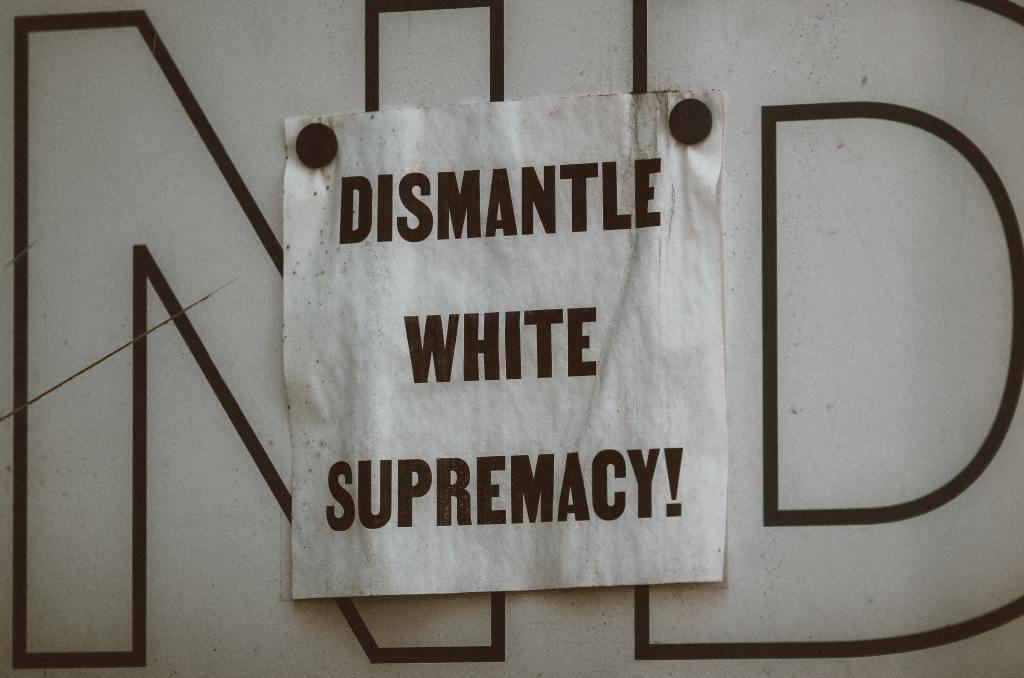
It reminds me of the so-called “inferiority” of countries in the Global South (what many sectors call developing nations) when westerners continue to go there in the name of aid, whilst at the same time not helping these countries to be self-sufficient. Simply we just send people there hoping that is enough. And we do this yearly without thinking about the broader problems. The roles of individuals in doing that, is really complicit into Whiteness through aid AKA White savourism. Short term, it feels good; long-term, this does more for the West than it does for those we want to help.
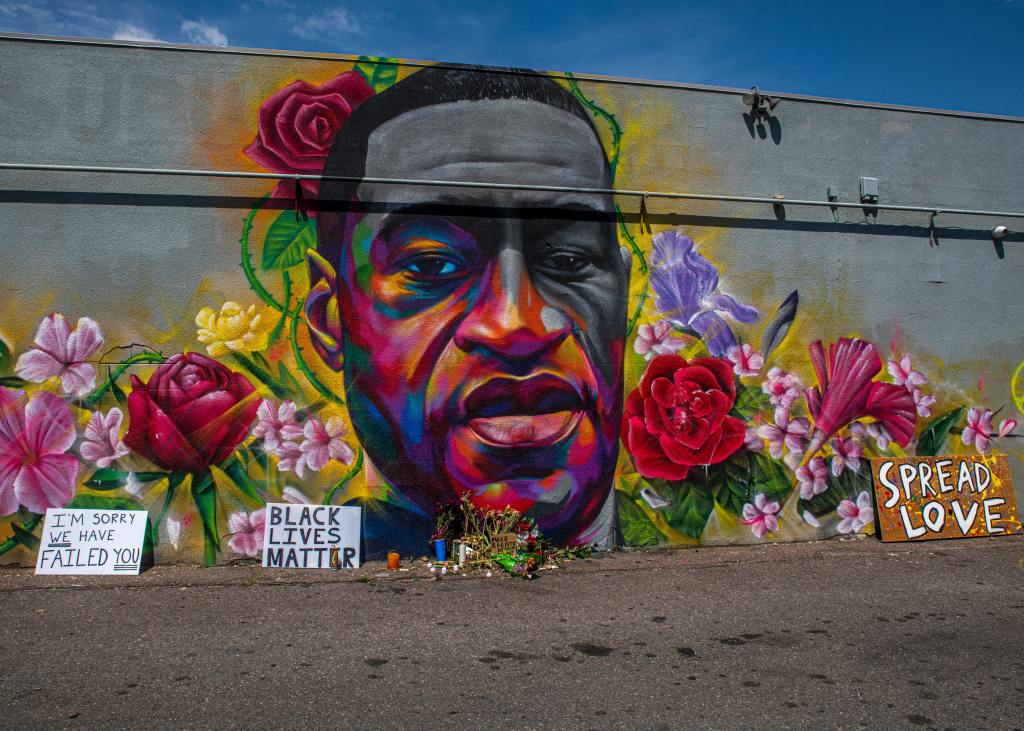
Aid aside, a comparison could be how following the Murder of George Floyd, lots of White people felt the euphoria of the protests and solidarity, but when it came to making good on pledging to dismantle systems of violence they benefit from, I could hear a pin drop. Seldom do we seek to empower these nations. What we frequently do is send westerners, often (but not always) for that feeling of goodness in building schools and their CVs, but at the end of it all, these tourists get to come back to the West. And when global sourthern nations have organised themselves historically, western governments have assasinated their leaders (i.e Belgium and Congo’s Patrice Lumumba).
What has become known as ‘poverty tourism’ is purported by not just White people from the Global North but also people like me who have ancestry in the Global South but were born and raised in the West. For those of us that do aid work, it would be worth thinking about how Whiteness can appear in the faces of Black and Brown people through the social, economic, and political investments institutions continue to have in these nations via the actions of individuals on the ground. That aside, it is seen as much more acceptable for a White person to do this work than it is for people of colour. When White people do “aid work” in previously colonised nations, it is viewed as “adventure” (i.e look at lit canon works of White westerners going to these nations). However, when Black and Brown people do this, in Northampton we just call it community work. To see an institution platform this ‘white saviourism’, it was insulting to many of my friends and colleagues, and their heritage, as descendants of indentured and enslaved labour.
Whilst I know there are many people ignorant to this history, I also know there are many people that know this and still continue to do it anyway. They may well go to countries in the African and Asian continents with good intentions, but those intentions are not divorced from histories of colonial exploitation these countries still haven’t recovered from. In seeing numbers of White people celebrating these “achievements” supported by White institutions, White privilege is evidently in-play in charity and in education, when the institutional thought plays into ‘institutional Whiteness’ because:
“the everyday work of establishing whiteness as a racialised enactment; of doing whiteness; of getting into it, is also institutional work. Whiteness is not just a personal investment practice it frames our chances for life or death, whether we are imprisoned or walk free, we are rich or poor, which university or not we attend, what marks we attain when we get there, if we do. The notion of institutional whiteness is a way of recognising the links between whiteness and institutional reproduction.”
White Spaces
In charity and by association third sector, this is an environment dominated by White middle-class women and White women are not divorced from histories of racism, in fact they are an important part of it (Ware, 1992). Rather than send students into these countries, I ask what global northern universities are doing with their global sourthern partner institutions to help on the ground. It is all very well sending students to build schools, but decolonisation is more than a curriculum-focussed endeavour. We must understand as Prof. Tao Leigh Goffe writes, “colonialism is ongoing … profound, sad, and beautiful because … decolonization is a prophecy and urgent call to action” Decolonisation requires colonisers to give the colonised their lands back and she goes on to say that “…decolonize is a a verb not a metaphor as Tuck and Yang teach us they wonder why Afro-Asian solidarity and Afro-Native coalition does not always exist in the world where it should or could.” I question if it is appropriate for higher education to send, often people who are westerners, to these countries, without any prior exploration of Whiteness nor the overarching system of White supremacy as a social and political system (Mills, 2003; 2004). My encounter with this White woman also saw her position bodies like mine in effort to cover Whiteness, but when we have a history/present of Black/Brown bodies being used as a flimsy cover for White supremacy (Ash Sakar in DDN, 2021), it makes sense that she would do this.
As a precedent, discourses around David Lammy and Stacey Dooley are worth looking at. Brittany Aronson (2017) argues that in the system of White supremacy, “we are falsely taught that being white is better so it makes sense why we would instill our white values upon students of color.” The hostility of this encounter in my direct messages reflects the ongoing systematic racism that people of colour face, via tone-policing because so often White people do not like how we experess ourselves, be it through speech or even in body language. For me, this has come more from White women than it has from White men. Today, I am still more conscious of them in anti-racism spaces than men. With the added intersection of womanhood, women of colour frequently experience this, with one of the most vivid examples of policing women of colour being when Matt Hancock tone-policed Dr Rosena Allin-Khan MP in May 2020.
When White people go into these countries to build schools, it makes many of us Black/Brown people uncomfortable when we as POCs have done this historically, only for these buildings to have been destroyed by White supremacists, or when we do like-for-like community work in the Global North … it is scorned. And whilst the woman in my messenger praised the diversity of this project, this revisits how Whiteness as an action can also be done by people that are not racialised as White (i.e The Sewell Report). So, although POCs took part, they are enacting the dominant thought of the institution which is the White institution. Seeing that western institutions are shaped by Euroecentricism AKA White thought / epistemologies, we can see regardless of how institutions can sometimes position POCs on these trips, they are in some ways doing the bidding of the institution really showing how Whiteness can appear with Black and Brown faces. The comments from the staff member’s friend in my messenger claimed the comments of my friends were “hateful” and “bullying”, this is a covert example of tone-policing when White people are held accountable.
After to-ing and fro-ing, this conversation ended with an obligation for the commenters and I to educate her and her friend. I’m not against aid work per sé, simply the lack of analysis or critique of aid work through a Whiteness lens by the institutions initiating those projects is troubling. Furthermore, I do not see White people that want to think about their own complicity in White supremacy in this work. If I saw more of an anti-racist commitment from aid institutions and so proclaimed White anti-racists, I would be less cynical about it. Yet, until that day comes, it will always be an uncomfortable topic especially when these countries only need aid namely because of colonialism and the postcolonial aftershocks countries like Britain left behind. It’s one thing saying these countries are “unstable” politically and socially as I am often told (but when you start asking why, it leads in one direction). It’s really an open secret that lots of White people, do emotionally benefit from this work (verily women), and that is Whiteness. This happens at the same time as White subjects really benefiting from Black/Brown trauma. If all of the above is acknowledged and explored in doing the work, then I might relax a bit more but it looks to me that the West is still profitting from the issues they create(d).
We said our goodbyes. Actually, I said goodbye, and that was that.
One thing is certain, this encounter for me, assured the everlasting relevance of Critical Race and Whiteness Studies further showing how Whiteness happens on social media. The microaggressions felt like bell hooks’ “white terror” (1992: 167) … it’s violence upon the body via stress. I’m tired now.
References
Aronson, B (2017) The White Savior Industrial Complex … Journal of Critical Thought and Praxis, 6(3), pp. 36-54.
DiAngelo, R (2019) White Fragility. London: Allen Lane.
[DDN] Double Down News (2021) The Alternative Race Report. YouTube.
Frankenberg, R (1993) White Women, Race Matters: The Social Construction of Whiteness. MI: UoM Press.
Gunaratnam, Y (2003) Researching ‘Race’ and Ethnicity: Methods, Knowledge and Power. London, Sage.
hooks, b. (1992) Black Looks: Race and Representation. MA: Southend Press.
Hamad, R (2018) How white women use strategic tears to silence women of colour. The Guardian.
Lewis, G (2000) Race, Gender, Social Welfare: Encounters in a Postcolonial Society. Oxford: Polity Press.
Mills, C. (2003) White Supremacy as a Sociopolitical System: A Philosophical Perspective. In: Doane, A and Bonilla-Silva, E (eds) White Out: The Continuing Significance of Racism. London: Routledge, pp. 35-48.
Mills, C. W (2004) Racial Exploitation and the Wages of Whiteness. In: Yancy, G (ed.) What White Looks Like: African-American Philosophers on the Whiteness Question. London: Routledge. pp. 25-54.
Phipps, A (2021) White tears, white rage: Victimhood and (as) violence in mainstream feminism. European Journal of Cultural Studies, 24(1), pp. 81-93.
Said, E (1978) Orientalism. London: Penguin.
Ware, V. (1992/2015) Beyond the Pale: White Women, Racism, and History. London: Verso.
White Spaces. Institutional Witnesses. White Spaces.

 Thoughts from the criminology team