
Home » Criminology (Page 7)
Category Archives: Criminology

What makes a good or bad society?: VIII

As part of preparing for University, new students were encouraged to engage in a number of different activities. For CRI1009 Imagining Crime, students were invited to contribute a blog on the above topic. These blog entries mark the first piece of degree level writing that students engaged with as they started reading for their BA (Hons) Criminology. With the students’ agreement these thought provoking blogs have been brought together in a series which we will release over the next few weeks.
Fundamentally, the requirements for a ‘good’ society should consist of several characteristics that contribute to a positive quality of life for all members of the community. There should be a basis in equality, fair judgment, and the ability for all people who are a part of that society to live without undue struggle or unnecessary discomfort, be it financial, emotional or physical. There are a lot of reasons why a society might be good, or bad, and fixing any one problem will not automatically allow us to call ourselves good, but any progress can be positive and may take us closer.
There are large steps towards equality that we as a society have taken in the last century, however this progress is not sustainable when there are many in positions of power who have no interest in changing the status quo. According to the European Commission, less than one in ten CEOs of major companies are women, and women are over represented in particular types of career, which is known as sectoral segregation. This leads to many viewing these sectors as overly feminine, and while this isn’t necessarily true, and shouldn’t affect how valued those careers are, careers viewed as feminine are systemically undervalued, and consistently lead to judgment for those choosing to follow those paths, leaving them underpaid and overworked. In 2021 there was still a gender pay gap of 12.7% in the European Union, with women on average earning almost 13% less than men hourly. Can a society that undervalues over half of its members truly be a good society?
In addition to this, there is a cycle of racial discrimination within this society’s judgment system. With systemic racism ingrained in society for years before legislation was introduced to prevent discrimination in terms of housing and hiring, the UK’s police force contained rampant racial bias for years, which perpetuates even today. Black people in the UK are stopped on the street up to seven times more frequently than white people. There is an undue fear within the public that black people are more dangerous, that they are more likely to commit crime, and statistics that seem to prove this correct are often taken out of context, or supplied without consideration for social factors which may cause this. There is often an aspect of moral panic, whereby the media and other agents of social control use isolated events to incite fear of a particular community, and this causes a dangerous cycle of self fulfilling prophecy, where that community appears to act as expected. After all, if an entire group of people are going to be treated badly, regardless of their actions, does it make any difference if they fulfil our expectations or not?
True equality within any society is impossible, as humans we have natural differences which prevent us from being exactly the same. If men and women participated equally in all sports, there would likely be more injuries simply from biological advantages. If everyone earned the same, and class differences did not exist, there would be no motivation or reward for going above and beyond in the search for success and improvement, and society would remain stagnant. However, we are failing in our most basic duty to protect people from unfair discrimination, and at least offer the opportunity to try for success. Many careers considered ‘too feminine’ to hold true value in society include those in education or healthcare, which are vital in ensuring the next generation can be better than we are, and in maintaining the wellbeing of current members of the community. We should be using the media to dismantle these prejudices, rather than using it to target other groups and spread fear and misinformation. These issues may persist due to a lack of awareness in the wider community, or maybe they exist due to higher powers encouraging that society remain as it is, with them benefiting at the cost of others suffering. I would prefer to assume ignorance over malice, but neither is an excuse. Until we can claim to be as equal a society as it is possible to be, respecting the contributions women offer to society and treating them with the respect they deserve, and not treating a different skin colours as a marker for antisocial behaviour, just to name a few, I cannot claim to live in a truly good society.
Share this:


Criminology for all (including children and penguins)!

As a wise woman once wrote on this blog, Criminology is everywhere! a statement I wholeheartedly agree with, certainly my latest module Imagining Crime has this mantra at its heart. This Christmas, I did not watch much television, far more important things to do, including spending time with family and catching up on reading. But there was one film I could not miss! I should add a disclaimer here, I’m a huge fan of Wallace and Gromit, so it should come as no surprise, that I made sure I was sitting very comfortably for Wallace & Gromit: Vengeance Most Fowl. The timing of the broadcast, as well as it’s age rating (PG), clearly indicate that the film is designed for family viewing, and even the smallest members can find something to enjoy in the bright colours and funny looking characters. However, there is something far darker hidden in plain sight.
All of Aardman’s Wallace and Gromit animations contain criminological themes, think sheep rustling, serial (or should that be cereal) murder, and of course the original theft of the blue diamond and this latest outing was no different. As a team we talk a lot about Public Criminology, and for those who have never studied the discipline, there is no better place to start…. If you don’t believe me, let’s have a look at some of the criminological themes explored in the film:
Sentencing Practice
In 1993, Feathers McGraw (pictured above) was sent to prison (zoo) for life for his foiled attempt to steal the blue diamond (see The Wrong Trousers for more detail). If we consider murder carries a mandatory life sentence and theft a maximum of seven years incarceration, it looks like our penguin offender has been the victim of a serious miscarriage of justice. No wonder he looks so cross!
Policing Culture
In Vengeance Most Fowl we are reacquainted with Chief Inspector Mcintyre (see The Curse of the Were-Rabbit for more detail) and meet PC Mukherjee, one an experienced copper and the other a rookie, fresh from her training. Leaving aside the size of the police force and the diversity reflected in the team (certainly not a reflection of policing in England and Wales), there is plenty more to explore. For example, the dismissive behaviour of Mcintyre toward Mukherjee’s training. learning is not enough, she must focus on developing a “copper’s gut”. Mukherjee also needs to show reverence toward her boss and is regularly criticised for overstepping the mark, for instance by filling the station with Wallace’s inventions. There is also the underlying message that the Chief Inspector is convinced of Wallace’s guilt and therefore, evidence that points away from should be ignored. Despite this Mukherjee retains her enthusiasm for policing, stays true to her training and remains alert to all possibilities.
Prison Regime
The facility in which Feathers McGraw is incarcerated is bleak, like many of our Victorian prisons still in use (there are currently 32 in England and Wales). He has no bedding, no opportunities to engage in meaningful activities and appears to be subjected to solitary confinement. No wonder he has plenty of time and energy to focus on escape and vengeance! We hear the fear in the prison guards voice, as well as the disparaging comments directed toward the prisoner. All in all, what we see is a brutal regime designed to crush the offender. What is surprising is that Feathers McGraw still has capacity to plot and scheme after 31 years of captivity….
Mitigating Factors
Whilst Feathers McGraw may be the mastermind, from prison he is unable to do a great deal for himself. He gets round this by hacking into the robot gnome, Norbot. But what of Norbot’s free will, so beloved of Classical Criminology? Should he be held culpable for his role or does McGraw’s coercion and control, renders his part passive? Without, Norbot (and his clones), no crime could be committed, but do the mitigating factors excuse his/their behaviour? Questions like this occur within the criminal justice system on a regular basis, admittedly not involving robot gnomes, but the part played in criminality by mental illness, drug use, and the exploitation of children and other vulnerable people.
And finally:
Above are just some of the criminological themes I have identified, but there are many others, not least what appears to be Domestic Abuse, primarily coercive control, in Wallace and Gromit’s household. I also have not touched upon the implicit commentary around technology’s (including AI’s) tendency toward homogeneity. All of these will keep for classroom discussions when we get back to campus next week 🙂
Share this:


Season’s Greetings

The Thoughts from the Criminology Team would like to wish all our readers and writers happy holidays. We’d also like to extend our thanks to everyone for your contributions, without you there would not be a blog and they are very much appreciated.
Wherever you are in the world and whether or not you celebrate Christmas, we extend our good wishes to you and wish you and yours a peaceful end to 2024. We’ll be back in 2025 with lots more criminological content, until then stay safe and well.
Share this:


Will Santa Visit?
For me Christmas always acts as a stark reminder of inequity, both past and present. I tend to remember television and music, stories of inequity between the haves and the have nots at Christmas time being told by the privileged few. Such as the Muppets Christmas Carol’s (1992) depiction of Tiny Tim, as being poor and disabled but ever so grateful for what he had. Quite recently I was doing some food shopping when I heard the Band Aid (1984) song, Do they know it’s Christmas playing on the tannoy. Despite the criticism relating to white privileged saviorism apparently still this song is popular enough to have a revival in 2024.
Christmas things cost money. So the differences between Christmas experiences of the haves and the have nots are drastic. Whilst many children are very aware that it is Christmas they might also be very aware of the financial constraints that their parents and/or guardians may be in. On the flip side there are other children who will have presents galore and are able to enjoy the festivities that Christmas bring.
This is also a time where goods are advertised and sold that are not needed and not recommended by healthcare professionals. Such as the sale of children’s toys that are dangerous for young children. For example, I was considering purchasing Water Beads as a fun crafting gift option for some children this year, until I was made aware that a children’s hospital and local playgroup are warning parents of the dangers of these as if swallowed can drastically expand in the body which could cause serious health complications.
It seems that social media also adds to the idea that parents and/or guardians should be providing more to enhance the Christmas experience. With posts about creating North Pole breakfasts, Christmas Eve boxes, matching Christmas family Christmas pajamas and expensive Santa visits. All of which come at a financial cost.

As well as this some toys that seem to be trending this year might be seen to misappropriate working class culture. For example, if your parents can afford to take you to Selfridges you can get a ‘fish and chip’ experience when buying Jelly Cat soft toys in the forms of items traditionally purchased from a fish and chip shop (see image above). This experience plus a bundle of these fish chips and peas soft toys cost £130 according to the Jelly Cat website. The profits gained for the Jelly Cat owners are currently being quoted in the news as being £58 million. Whilst at the same time some customers of these real life fish and shops will find it difficult to afford to buy a bag of chips. And some real life fish and chip businesses seem to be at risk of closure, in part due to high cost of living climate which impacts on cost of produce and bills.
Given the above issues it is not surprising that some children are worried that Santa won’t visit them this year.
Share this:

What makes a good or bad society?: VII
As part of preparing for University, new students were encouraged to engage in a number of different activities. For CRI1009 Imagining Crime, students were invited to contribute a blog on the above topic. These blog entries mark the first piece of degree level writing that students engaged with as they started reading for their BA (Hons) Criminology. With the students’ agreement these thought provoking blogs have been brought together in a series which we will release over the next few weeks.
What are some requirements to a good society? A good society makes us, as a community, feel secure. This is so incredibly important in making a society be considered good as it lowers the rates of criminality, thus improving the appearance of the area and reassurance of being a safe place. This will lead to a better world, given that it will promote positive behaviour, similar to the idea of positive reinforcement, if people were to act accordingly, they would be rewarded with a positive environment. Another requirement is the higher employment rates, the more success will be found within a society. Meaning, there will be less cases of homelessness, and considerably more wealth compared to if there were lower employment rates within a place. Higher employment rates also link into my next point of a fair education. A fair education is arguably one of the most important requirements of a good society, as it firstly links into high employment rates, if someone were to be in a position of having a better education, their IQ is likely to be higher which in most chances will lead to a very succeeding job. A fair education is very important as it allows everyone involved a fair chance and involves no bias, if this were the case it would lead to a bad society as the community are not promoting wealth for everyone involved, only for those they favour. Another requirement that makes up a good society is human rights. Similar to a fair education, human rights provide a chance for people and includes no favouritism. Human rights provide freedom which impact factors such as food and healthcare. These thrive to better societies given that people are not held back and can be free to do however they please in positive and safe ways. A final requirement I would suggest that makes a good society are basic human needs. It is crucial that humans are provided with our biological needs such as water, food, housing/shelter etc. This is due to the fact that we simply cannot live without it.
However, I do believe that we live in a bad society, for many reasons, including the reasons previously mentioned. To begin, there has been a lack of safety net from the police to the public, which leads to repeated cases of rape, police brutality etc. While it can be argued the police are trying to keep the public safe, they are simply causing more harm than good, and considering the police are meant to be role models to the public, the public have increased the rate of criminality with riots and protests against the police, not making our society a safe place. Our society has become let down in regard to basic human needs, although employments rates are high at 74.8% for those ages 16-64, in 2019 the homelessness statistic in the UK is significantly high at 219,000. Meaning the need for food, shelter and water has become at a higher demand.
It has been very clear in recent years that we do not live in a good society, due to the reasons of security within the police, employment rates, a fair education, human rights and basic human needs, all of which could easily make up a good society if it were taken seriously by the appropriate people.
Share this:

What makes a good or bad society?: VI
As part of preparing for University, new students were encouraged to engage in a number of different activities. For CRI1009 Imagining Crime, students were invited to contribute a blog on the above topic. These blog entries mark the first piece of degree level writing that students engaged with as they started reading for their BA (Hons) Criminology. With the students’ agreement these thought provoking blogs have been brought together in a series which we will release over the next few weeks.
I believe that the society we live in is good but has areas that need to be improved. One of the requirements that I think will make a good society is sympathy. I believe that if more people show sympathy towards the homeless, then it can help lower the homeless population and, therefore, lower the percentage of unemployment. This can also reduce the strain on charities, which in turn allows them to focus more help on the people who really need it.
Another requirement to make a good society is self-control. If the population practices self-control, then our society will start to have fewer incidents involving alcohol, such as drink driving and fewer aggressive assaults. One of the other outcomes of practising self-control is a decrease in the volume of visits to the NHS. This can be anything from A&E visits after a night out to health visits due to obesity, this decrease could majorly help the NHS and allow them to give more appointments to people with life-threatening conditions.
Another requirement to help make a good society is more successful and higher rehabilitation rates. If we as a society start to give more support to the members that have wronged then they will have a higher chance of being reformed, which will allow us to live in a society with a lower crime rate, therefore, giving us the opportunity to feel safer in our lives.
One of the other areas of our society that needs improvement is education. If the level of education and extra educational support is improved in areas of higher deprivation then it will help young people to move away from crime and bad role models, they may be able to get higher paying jobs, which will allow them to take care of their families and improve the areas that they have come from. This can give them security in their lives, which again will help them to turn away from criminal acts. If the extra educational support is increased then the young people who need extra support can improve on their studies and gain more confidence in themselves, which will help them to gain better grades.
Another requirement of a good society is lower unemployment levels. If we start to improve support for the unemployed, such as classes to help them improve on existing skills and to learn new skills. This can start to lower the unemployment rates and relieve some of the pressure on the government and the county and district councils.
One of the other areas that we could improve in our society to make it better is extra curricular activities for young people to get involved with. If there are more weekend and after school activities and workshops for our younger people to get involved with then it can help to stop them committing crimes. These activities can also help them to learn new skills to take forward in their lives, it can also help those who maybe aren’t as academic as others.
Share this:

Corruption: A Very Noble Pastime

Only a couple of months ago there was a furore about the current prime minister Sir Keir Starmer receiving gifts from Lord Alli. He wasn’t the only one to benefit but it rather tainted the Labour Party’s victory in the election and made a mockery of promises to clean up politics. Let’s not get too hung up about political parties though, there is plenty of previous evidence of other parties dabbling in, let’s call them, immoral practices that benefit the individual.
I shouldn’t have been surprised then to hear about some research carried out by Tortoise that suggested a quarter of the members of the House of Lords do two thirds of the work in the upper chamber. They found that approximately 210 members of a total of 830 are actively involved in the business of the upper chamber and the rest well, your guess is as good as mine. So what you might ask, we have some rather lazy nobles, but they don’t get paid unless they turn up. Well true, but then if you read some other research, it becomes apparent that there are vast sums of money being paid for doing nothing. Turning up is one thing, working is quite something else.
‘Over the course of the last parliament, £400,000 has been paid to 15 peers who have claimed attendance for at least 80 per cent of days in at least one month without any discernible activity in that time. Some have made repeated claims of this kind over the parliament’ (Tortoise, 2024).
Up till now I’ve always had a begrudging respect for the upper chamber, particularly when they have knocked back poor, ill thought out or inappropriate legislation conjured up by the government. That’s not to say I haven’t questioned the manner in which the chamber is constituted but I have felt a sense of relief when government have had a hard task railroading through some of their legislation. But it doesn’t seem to matter which chamber it is in parliament, there are a significant number of individuals in both houses whose actions can only be described as corrupt. From the expenses scandal in 2009 to the latest failures to declare interests, it becomes clear that corruption is endemic.
It seems to me during an era of cuts in public services, the withholding of funds to the most vulnerable designed to help them keep warm, and job losses in sectors where past and present policies make organisations unsustainable, the disregard for proper financial management and constraint in government is immoral. I will leave the debate about whether we should have governance in its current format to others who probably know better than I do but there is clearly a need to abolish the policies and processes that allow for what can only be described as a corrupt noble gravy train.
The Nolan Principles setting out the standards that those involved in public life should adhere to are still in existence and expected to be complied with and yet I fail to see how so many members of our great institutions have even come close to adherence. In case you are unsure what those principles are, I have listed them below and I will leave you to judge whether the nobility stand up to scrutiny.
- Selflessness
- Integrity
- Objectivity
- Accountability
- Openness
- Honesty
- Leadership
References
BBC (2019) MPs’ expenses: The Legacy of a Scandal [online] Available at https://www.bbc.co.uk/news/uk-politics-48187096 Accessed: 22/11/2024.
BBC (2024) Keir Starmer received more clothes worth £16,000 [online] Available at https://www.bbc.co.uk/news/articles/cdd4z9vzdnno Accessed: 22/11/2024.
Information Commissioner’s Office (ND) MP’s expenses scandal [online] Available at https://ico.org.uk/for-the-public/ico-40/mp-expenses-scandal/ Accessed: 22/11/2024
Tortoise (2024a) Lording it: some peers claim £400,000 for little discernible work, [online] available at https://www.tortoisemedia.com/2024/11/20/lording-it-some-peers-claim-400000-for-little-discernible-work/, Accessed: 22/11/2024
Tortoise (2024b) The Lords’ work: Tortoise’s Peer Review [online] available at https://www.tortoisemedia.com/2024/11/20/the-lords-work-tortoises-peer-review/, Accessed: 22/11/2024.
UK Parliament (ND) Standards, [online] available at https://www.parliament.uk/about/mps-and-lords/members/standards/, Accessed: 22/11/2024.
Share this:

What makes a good or bad society?: V
As part of preparing for University, new students were encouraged to engage in a number of different activities. For CRI1009 Imagining Crime, students were invited to contribute a blog on the above topic. These blog entries mark the first piece of degree level writing that students engaged with as they started reading for their BA (Hons) Criminology. With the students’ agreement these thought provoking blogs have been brought together in a series which we will release over the next few weeks.
Our society is created up by a system that fails it from the beginning it is supposed to make our society better, but in fact creates conflict and frustration and this would be the justice system. The justice system is put in place to allow people to live in a world that has rules and control to create this good society, however, is overwhelmed by the amount of crime.
A good society in my eyes would be one where people took accountability for their wrong doings, because as humans its unrealistic to ask there to be no mistakes we all are living life for the first time and therefor are bound to get things wrong, but being able to take accountability for our actions would be the first step to being able to have a good society. I don’t think it’s possible to ever have no crime or this pitch perfect world, but I believe that there’s things that can be put into place to make society better.
In my eyes change requires there to be understanding and accountability, we as people find it very easy to judge and come to assumptions instead of taking time to understand the issues at hand, and if we would just take a step back and try and see the bigger picture we may be able to come to a mutual ground of seeing why issues occur instead of simply judging. Helping us to understanding why things happen and reduce the resent that occurs is certain situations.
For a society to flourish and grow it needs to be nurtured in the right way this would include, having a fair justice system, things put into place to help guide those who have lost their way a bit and to provide a constant support system. I strongly think a society depends on the nurture around it and that widely impact the impact those are going to have on others.
An ideal good society would involve everyone coming together to support one and another being each other’s community instead of creating big segregations between races and cultures if we as human could learn to live and work together as one, we would solve a lot of issues across the world. War would not exist as our system would result in aiding everyone.
I still believe a good society needs a hierarchy system in terms of rules in place to ensure everyone’s safe as without a foundation of what’s right and wrong it allows people to think they can do as they please. Rules help put into perspective what’s not allowed as a collective thing that are unacceptable by knowledge and provide a punishment to fall upon if those rules are broken.
Overall, a good society needs to be built up of basic foundations of nature, understanding and accountability in my opinion to reduce the conflict that occurs in some cases. A good society needs to be open minded.
Share this:


A review of In-Extremis: The Life of War Correspondent Marie Colvin
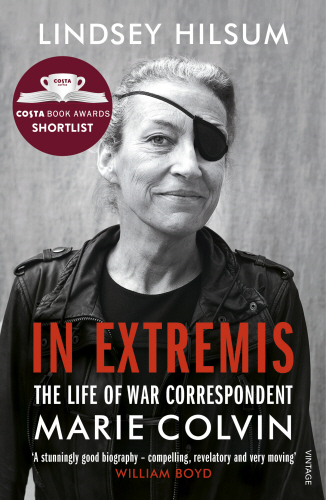
Recently, I picked up a book on the biography of Marie Colvin, a war correspondent who was assassinated in Syria, 2012. Usually, I refrain from reading biographies, as I consider many to be superficial accounts of people’s experiences that are typically removed from wider social issues serving no purpose besides enabling what Zizek would call a fetishist disavowal. It is the biographies of sports players and singers, found on the top shelves of Waterstones and Asda that spring to mind. In-Extremis, however, was different. I consider this book to be a very poignant and captivating biography of war correspondent Marie Colvin, authored by fellow journalist Lindsey Hilsum. The book narrates Marie’s life before her assassination. Her early years, career ventures, intimate relationships, friendships, and relationships with drugs and alcohol were all discussed. So too were the accounts of Marie’s fearless reporting from some of the world’s most dangerous conflict zones, including Sri-Lanka, Iraq, Lebanon, and Syria. Hilsum wrote on the events both before Marie’s exhilarating career and during the peak of her war correspondence to illustrate the complexities in her life. This reflected on Marie’s insatiability of desire to tell the truth and capture the voices of those who are absent from the ‘script’. So too, reporting on the emotions behind war and conflict in addition to the consistent acts of personal sacrifice made in the name of Justice for the disenfranchised and the voiceless.
Across the first few chapters, Hilsum wrote on the personal life of Marie- particularly her traits of bravery, resilience, persistence, and an undying quest for the truth. Hilsum further delved into the complexities of Marie’s personality and life philosophies. A regular smoker, drinker and partygoer with a captivating personality that drew people in were core to who Marie was according to Hilsum. However, the psychological toils of war reporting became clear, particularly as later in the book, the effects of Marie’s PTSD and trauma began to present itself, particularly after Marie lost eyesight in her left eye after being shot in Sri-Lanka. The eye-patch worn by Marie to me symbolised the way she carried the burdens of her profession and personal vulnerabilities, particularly between maintaining her family life and navigating her occupational hazards.
In writing this biography, Hilsum not only mapped the life of one genuinely awesome and inspiring woman, but also highlighted the importance of reporting and capturing the voices of the casualties of war. Much of her work, I felt resonated with my own. As an academic researcher, it is my job to research on real-life issues and to seek the truth. I resonated with Marie’s quest for the truth and strongly aligned myself to her principles on capturing the lived experiences of those impacted by war, conflict, and social justice issues. These people, I consider are more qualified to discuss these issues than those of us who sit in the ivory towers of institutions (me included!).
Moreover, I considered how I can be more like Marie and how I can embed her philosophies more so into my own research… whether that’s through researching with communities on the cost-of-living crisis or disseminating my research to students, fellow academics, policymakers, and practitioners. I feel inspired and moving forward, I seek to embody the life and spirit of Marie and thousands of other journalists and academics who work tirelessly to research on and understand the truth to bring forward the narratives of those who are left behind and discarded by society in its mainstream.
Share this:

What makes a good or bad society?: IV
As part of preparing for University, new students were encouraged to engage in a number of different activities. For CRI1009 Imagining Crime, students were invited to contribute a blog on the above topic. These blog entries mark the first piece of degree level writing that students engaged with as they started reading for their BA (Hons) Criminology. With the students’ agreement these thought provoking blogs have been brought together in a series which we will release over the next few weeks.
A good society can be defined as one with social cohesion with a safe, secure environment and a bad society as one lacking these qualities, when using this definition, we can look at if society is good or bad.
In the media there has been an increase in crimes reported, including individuals being caught and charged for their actions, which would have previously escaped the public eye. With an increase in media use from youths, it puts them at a risk to exploitation due to their vulnerability as young people. Social influencers have been able to exploit their own children through sexualising their actions to attract paedophiles and earn profit from these views. In this situation, parents fail to protect their children from the harmful environment the media can attract. Thus, social media is growing in its dangerous nature making it unsafe.
There has been an increase in violence in all aspects of society, such as shootings and wars. America holds the highest rate of school shootings and has failed to make schools a safe place for children. America suffers from violence due to the legalisation of guns which can be seen with many attempted assassinations of presidents, some of which have been successful. The latest attempt being Donald Trump in 2024, which shows how America has failed to provide people with security no matter their status in society.
Even outside of America there has been a failure to make society safe as seen in East Europe. The Russo Ukrainian war gained attention in 2022 over Russia’s failure to capture Ukraine. This caused anxiety as other countries could not fight due to being part of NATO, instead they provided aid for Ukraine. Despite this the war has continued, making Ukraine unsafe to live in, forcing many to immigrate. The Israel-Hamas war started in 2023 and as a result of this war, businesses who supported Israel were boycotted, which demonstrates the interests between businesses and the public not aligning, resulting in protests over powerful figures’ failure to speak up against the violence, thus there is a lack of social solidarity.
Human rights are not consistent within the world. This can be seen in Islamic countries making homosexuality forbidden, whereas in the West homosexuality can be acted upon in public without punishment. With women’s rights there has been recent debates about abortion and its legalisation within America. 17 states have banned abortion, which shows a lack of consensus between the states as the laws are not consistent throughout America. There has been widespread protests to bring back the right to an abortion to women. Additionally, in some countries women have fewer rights due the ideology of men as being superior. The exclusion to rights means women cannot work or get an education predominantly in the Middle East and Africa, whereas the West aim for equal opportunities, showing how politics between countries are not in agreement as to what is a human right.
Therefore, when looking at these events, there is a lack of social cohesion and safety between countries, and even within the same country there is little agreement, this results in a bad society.

 Thoughts from the criminology team