
Home » Criminology (Page 48)
Category Archives: Criminology

Can there be Justice for Benjamin Arum Izang? An Unfortunate Victim of Forum Shopping
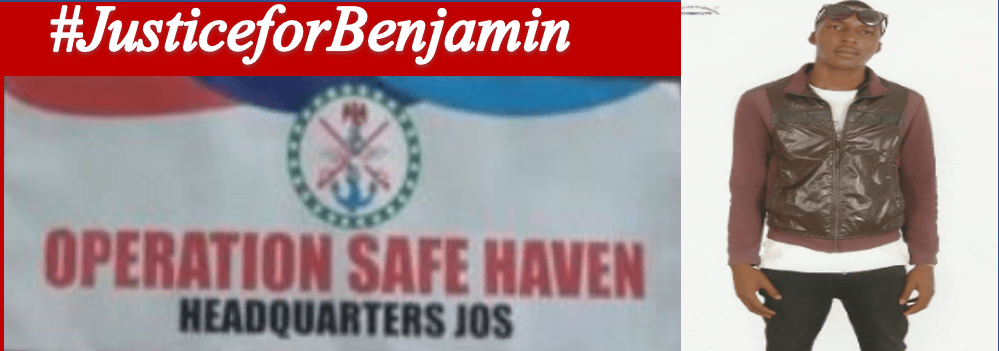
So Jos[1] tweeter community was agog with the scandal of the alleged torture of 31 year old Benjamin Arum Izang by personnel of the Operation Safe Haven (OPSH) Military Special Task Force (STF) conducting internal security operations in Plateau State. The family reported that the torture eventually led to Benjamin’s demise because of the fatality of the injury inflicted on him by the military personnel.
The sad event that led to this unfortunate incidence is reported to be an altercation over a fifty-naira egg (approximately 11 cents) between the deceased and a certain Blessing, an egg hawker whose egg was said to be broken by Benjamin. Failure to reach an understanding led Blessing to report the matter to the personnel of the STF, who quickly swung into action, albeit, one that involved the torture of Benjamin.
An investigation by Dickson S. Adama (a media correspondent) revealed that the Media Officer of the STF indicates not been aware of the incident. However, the family and the concerned public are crying for justice as this is not the first of such cases in the State. Rightfully so, scholars and practitioners of peace and conflict consider this incidence as forum shopping,[2] a decision by disputants to choose a security agency to intervene in their dispute, based on the expectation that the outcome will favour them, even if they are the party at fault. Studies[3] including my doctoral research on the military security operations in Plateau State indicates this as a recurring problem when the military conducts security operations in society.[4]
Often, when dispute ensues between two or more parties and both desire to emerge victorious or to exert their position on the other, desperate actions can be taken to ensure victory. One of such actions is the decision to invite a third party such as the military which is often not the suitable institution to handle matters of civilian disputes. In my doctoral research, I detailed the factors that makes the military the most unsuitable agency for this role, key among which is that they are neither trained nor indoctrinated for law enforcement duties. More so, the task and skill of law enforcement and managing civilian disputes which involves painstaking investigation and ascertaining guilt before conviction/serving punishment is the primary role of the police and the criminal justice system, which the military is not a part of. The military trains for war and combat mission, to kill and to obliterate and essentially, their culture and indoctrination is designed along these tenets.
Given this, when the military is involved internally as in the case of Benjamin and Blessing, it engenders numerous challenges. First, with the knowledge that the military dispenses ‘instant justice’ such as punishment before determining guilt, civilians such as Blessing will always seek this option. Tweeps such as @ByAtsen tweeted for instance that ‘same soldiers at the same outpost did this to another who, unlike Benjamin, is still alive nursing his wounds.’ One challenge is that where forum shopping denies justice, it breeds lawlessness and can further evoke public outrage against the military. In turn, this can erode the legitimacy of the security role of the military. Where this occurs, a more worrying challenge is that it can exacerbate rather than ameliorate insecurity, especially where civilians feel compelled to seek alternative protection from coercion from State forces and threats from the armed groups the military was meant to avert.
[1] Jos is the capital city of Plateau State Nigeria. The State was once the most peaceful State in Nigeria (arguable) but is now embroiled in intermittent and protracted violence, between the mostly Christian natives and Hausa/Fulani ‘settlers,’ and series of insurgent style attacks of rural farming communities by marauding herdsmen widely believed to be Fulani herdsmen.
[2] Keebet Von Benda-Beckmann, ‘Forum Shopping and Shopping Forums: Dispute Processing in a Minangkabau Village in West Sumatra’, Journal of Legal Pluralism, 19 (1981), 117–59.
[3] Judith Verweijen, ‘The Ambiguity of Militarization: The Complex Interaction between the Congolese Armed Forces and Civilians in the Kivu Provinces, Eastern DR Congo’ (Utrecht University, 2015).
[4] Sallek Yaks Musa, ‘Military Internal Security Operations in Plateau State, North Central Nigeria: Ameliorating or Exacerbating Insecurity?’ (Stellenbosch University, 2018) <https://scholar.sun.ac.za/handle/10019.1/104931> [accessed 14 March 2019].
Share this:

In Meghan, we must study the Black History of the British elite

Since Meghan Markle and Harry stepped back, the British media have talked about whether their treatment of Meghan Markle has been racist. A discussion has which has certainly produced its own irony and racism. The Royal Family is a historically White institution; however, in light of this, I think it needs to be acknowledged that Meghan Markle is not the first non-White member, but is part of a longer, subtler history of Black / biracial aristocracy in Britain.
When Meghan joined, it was lorded progress. Yet, is diversity progress if non-normative figures are being sent into already hostile environments? Is Britain a racist country? “Definitely, 100%” said Stormzy. Meghan coming from a country that is overtly racist in the tint of Jim Crow Laws, ICE and ALEC, to a country that’s more subtle… this brand of racism from the UK media was almost colonial, simply without the violence. From comments on her “exotic DNA” to descriptions of her being “(almost) straight outta Compton”, as well as comparing her newborn son to a chimpanzee.
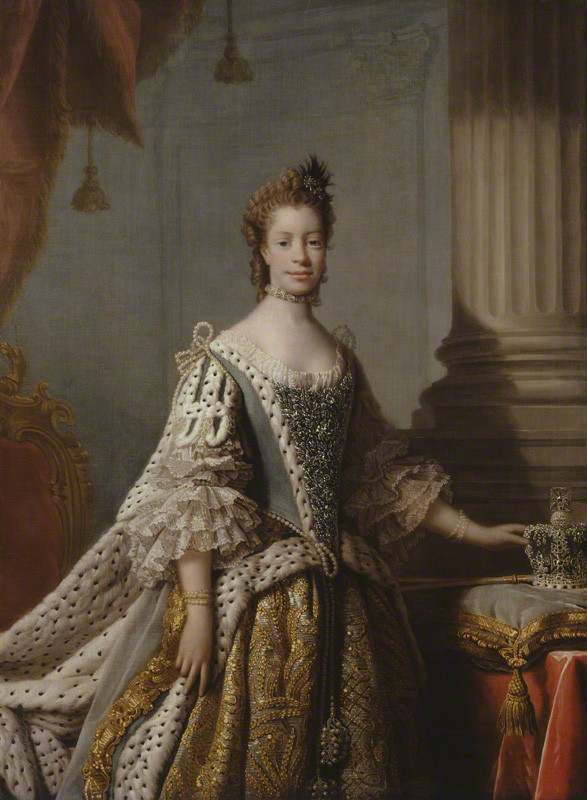
But Meghan wasn’t the first Black or biracial person to gain a pass into the British elite. German princess (Sophia Charlotte of Mecklenburg-Strelitz), who then became Queen of England on marrying King George III in 1761. Historian Mario de Valdes y Cocom thinks she was of the direct line from a Black Portuguese royal family, Alfonso III and his mistress, Ourana, a Moor.
In the BBC docuseries Black and British and the book of the same name, historian David Olusoga talks about a slave turned bare-knuckle boxer by the name of Bill Richmond. In Richmond Unchained, historian and Richmond’s biographer Luke Williams discusses Richmond’s pioneering achievements in boxing, winning 17 of 19 professional fights but also being a member of English aristocracy, an invitee to the Coronation of George IV.
What’s more, however, Bill was a member of eighteenth-century Britain and went on “to take Georgian Britain” by storm, says Olusoga. Originally from Staten Island, he came to this country as a young man, possibly a teenager. Born into slavery and somehow finding himself on the bloody battlefields in America’s War for Independence. Surviving the war, he made his way to Britain as a servant for Hugh Percy, Duke of Northumberland.

Whilst we had Bill Richmond in the thick of Georgian Britain, in the halls of Kenwood House lived a girl by the name of Dido Elizabeth Belle. Born to a slave, and Rear Admiral Sir John Lindsay, she lived the life of an heiress in London. Essentially, “too Black” for the social scene of Georgian Britain but “too elite” to live with the servants. Living in the late 1700s, she would have been witness to some of the landmark slave trade cases, including “The Zong” which was ruled on by her uncle, Lord Chief Justice Mansfield.
The slave ship Zong left Africa with 470 slaves. Slaves were not seen as people. They were material objects to be touched, poked and prodded at any White person’s choosing. Often raped by the slave masters, as shown with Patsy (Lupita Nyong’o) in 12 Years a Slave and Hilde (Kerry Washington) in Django Unchained, they were property, not people.
As with the Zong, many captains took more than ships could handle to ensure maximum profits. The Zong was overloaded. Many got sick and died from disease and malnutrition. Captain Collingwood is reported to have jettisoned some of the cargo in order to save the ship and provide the ship owners with insurance money. In total one hundred and thirty-three slaves were thrown overboard (chained together) for the seamen to try to claim back on the insurance, since slaves weren’t people, but property.

Though the film Belle is depicted as fiction, the Zong Case is not. The massacre and the court trial happened. Dido was real. Her love interest John Davinier was real. Lord Mansfield was real. Kenwood House still stands in London. The Zong was one of the many benchmark cases of the Slave Trade. Director Amma Asante puts these atrocities into a format that everyone can understand, not just people that understand legal jargon.
Not only were there Black Georgians in Britain, there were Black Victorians as well. But we’ll have more in that later.
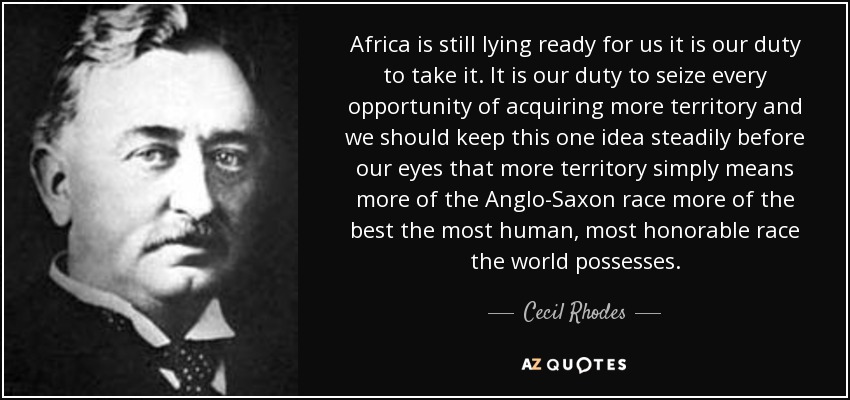
One of history’s most “important” businessmen (in my opinion) is not a household name but should be, His name was Cecil Rhodes: businessman, colonialist, and White Supremacist – believing in the superiority of Whites over everyone else. And he is in-part at least responsible for the apartheid regime in southern Africa, building its foundations in the 19th century.
Cecil Rhodes wanted to build a railway line from Cape Town in South Africa through Botswana and up to Cairo, Egypt
In the late 19th century, the Bechuanaland Protectorate (modern-day Botswana) was under threat of being forced to join what was then British South Africa Company under Cecil Rhodes. The “merger”, so to speak, would mean that the country would have no control of its own governance and would have to do everything Rhodes and the South Africa Company said.
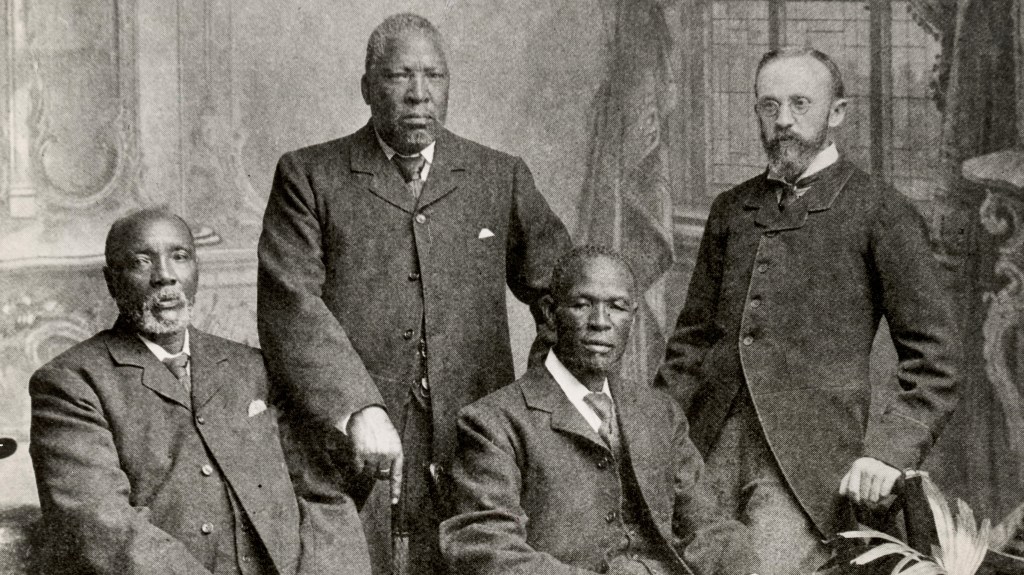
Looking at the threat this would bring to the their people, in 1895 the three chiefs (Kharma, Sebele and Batheon) went to the heart of Empire, to parlay with Queen Victoria. This soulless landgrabbing happened throughout Africa and Rhodes was instrumental in what became ‘The Scramble for Africa’, where European powers divided Africa among them. Exploiting it for its resources, the locals suffered in the next stage of colonisation.
King Kharma and the other chiefs knew that Cecil Rhodes’ railway was a pretext for colonisation. This was a protectorate – claimed by Britain by ruled by local leaders.
Constantly being fobbed off by the colonial secretary, they decided it was time to meet the British people. Running a propaganda campaign to rally people to their cause, they then got their meeting playing Rhodes, the colonial secretary and Queen Victoria off against each other with tact.

Unlike the other nations, this country’s deal was kind of unique. Most colonised countries entered into colonialism at the end of a gun. Under some sort of threat. These Black men came to the heart of Empire showing British aristocracy that these colonial racist stereotypes of Africa and Africans were falsehoods. They came to England, defeating Rhodes at his own game, contradicting his own views of Africa and Africans.
What this story says to me is:
1) It contradicts the racial thinking of the time – Black people to be stupid and savage. Shows us to be intelligent and with values.
2) That these kings had come to the heart of Empire, outwitting the seemingly “superior race”, Rhodes’ had been outmaneuvered.
3) They saw there were differing opinions in Britain, they knew that the British Empire was bureaucratic.
Queen Victoria’s goddaughter / protegé was a called Sarah Forbes Bonetta. A number of events involving a one Captain Forbes, his ship the Bonetta and King Gezo of the Dahomey saw Sarah (Aina) pass into the care of Queen Victoria. First living with Forbes and his wife, Sarah then lived with Victoria and Albert at Windsor Castle before marrying a Sierra Leonean called James Davies, having a daughter, who they named Victoria after the Queen.
It’s strange to think she would have walked many of the streets Black Britons walk today, just 150 years ago. That brief word on Sarah is a snapshot but she lived a remarkable life, returning to Africa to raise a family.
Watching the ITV adaptation of Thackeray’s Vanity Fair and then starting the book of the same name, we are introduced to a Bajan heiress called Rhoda Schwartz. Despite it being fiction, this inspiration for Thackeray to write this character must have come from somewhere. How many Dido Belles have been lost to history? And what of the Black African Tudors that inhabited the courts of both Henry VII and Henry VIII? What of the Black and brown people in Tudor England, irrespective of wealth, class or rank?
From John Blanke “[…] depicted with dark skin and wearing a turban […]” (Kaufmann, 2017, p7) – to Katherine of Aragon’s lady of the bed chamber who Olusoga says was “a North African Moor called Catalina” – to Prince Jaquoah, “christened John, after John Davies” (Kaufmann, 2017, p176) – to the African Roman general Septimus Severus, Britain’s Black History goes back centuries, including those today we’d say inhabit White spaces.

Despite this history being a lot of blanks and hypotheses, it’s sad that their words are almost lost to us looking back. No biographies. Simply moments in time. Nonetheless, the tide is turning against the naysayers.
And British history is not just White. It can’t only be White. We have always been multiracial and Meghan wasn’t the first, nor will she be the last, as the future is mixed-race.
Works of Note
Bidisha (2017). Tudor, English and black – and not a slave in sight. Guardian [online]. Available from: https://www.theguardian.com/world/2017/oct/29/tudor-english-black-not-slave-in-sight-miranda-kaufmann-history [Accessed 28 January 2020].
Brown, DeNeen L. (2018). Meghan Markle, Queen Charlotte and the wedding of Britain’s first mixed-race royal. Washington Post [online]. Available from: https://www.washingtonpost.com/news/retropolis/wp/2018/05/15/meghan-markle-queen-charlotte-and-the-wedding-of-britains-first-mixed-race-royal/ [Accessed 22 January 2020].
Clarke, S. (2019). British Presenter Fired After Posting Chimp Picture With Royal Baby Tweet. Variety [online]. Available from: https://variety.com/2019/tv/news/royal-baby-chimp-tweet-bbc-danny-baker-fired-prince-harry-meghan-markle-1203209699/ [Accessed 31st January 2020].
de Valdes y Cocom, M. (N/A). The Blurred Racial Lines of Famous Families. PBS Frontline [online]. Available from: https://www.pbs.org/wgbh/pages/frontline/shows/secret/famous/royalfamily.html [Accessed 28 January 2020].
Goodfellow, M. (2020). Yes, the UK media’s coverage of Meghan Markle really is racist. Vox [online]. Available from: https://www.vox.com/platform/amp/first-person/2020/1/17/21070351/meghan-markle-prince-harry-leaving-royal-family-uk-racism [Accessed 27 January 2020].
Jeffries, S. (2009). Was this Britain’s first black queen? Guardian [online]. Available from: https://www.theguardian.com/world/2009/mar/12/race-monarchy [Accessed from January 28 2020].
Johnson, R (2016). RACHEL JOHNSON: Sorry Harry, but your beautiful bolter has failed my Mum Test. Daily Mail [online]. Available from: https://www.dailymail.co.uk/debate/article-3909362/RACHEL-JOHNSON-Sorry-Harry-beautiful-bolter-failed-Mum-Test.html [Accessed January 26 2020].
Kaufmann, Miranda. (2017). Black Tudors: The Untold Story. London: Oneworld.
Myers Dean, W. (1999). At Her Majesty’s Request: An African Princess in Victorian England. New York: Scholastic Inc.
Olusoga, D. (2017). Black and British: A Forgotten History. London: Pan Macmillan.
Sawyer, P. (2017). Poignant note from Queen Charlotte to dead son’s nanny throws light on the sadness of George III. The Telegraph [online]. Available from: https://www.telegraph.co.uk/news/2017/01/28/poignant-note-queen-charlotte-dead-sons-nanny-throws-light-sadness/ [Accessed January 20 2020].
Stezano, M (2017/18). The 19th-Century Black Sports Superstar You’ve Never Heard Of. History [online]. Available from: https://www.history.com/news/the-18th-century-black-sports-superstar-youve-never-heard-of [Accessed January 28 2020].
Styles, R. (2020). EXCLUSIVE: Harry’s girl is (almost) straight outta Compton: Gang-scarred home of her mother revealed – so will he be dropping by for tea? Daily Mail [online]. Available from: https://www.dailymail.co.uk/news/article-3896180/Prince-Harry-s-girlfriend-actress-Meghan-Markles.html [Accessed January 24 2020].
Thackeray Makepeace, W. (1848). Vanity Fair. London: Macmillan.
Van der Kiste, J. (2018). Queen Victoria’s African Princess. Devon: A&F
Walk-Morris, T (2017). Five Things to Know About Queen Charlotte. Smithsonian [online]. Available from: https://www.smithsonianmag.com/smartnews-arts-culture/5-things-you-didnt-know-about-queen-charlotte-180967373/ [Accessed 28 January 2020].
Williams, L. (2015). Richmond Unchained. London: Amberley Publishing.
Share this:


Surviving Corona. #BlackenAsiaWithLove
In my Sabbatical year spent here in Vietnam, it would be disingenuous NOT to speak about the Coronavirus. Without being hyperbolic, this is a crisis of every proportion. Here are a few of my observations.
Today it was reported that the Whistle-blower, Dr. Li Wenliang, died of the virus. At the epicentre, Chinese health officials initially claimed the virus would peak and subside within a week’s time. There are claims that those predictions were made due to reticence to pass bad news up the political chain. Undoubtedly, we will celebrate him as a hero, for his efforts to alert the world while Corona was just an epidemic. For context: This same week, one of my state’s senators outed the whistle-blower who originally brought to light the massive corruption of the current White House occupant who was just acquitted. At the same time, in the middle of the (illegal) trade war between these two nations, Chinese health officials reference American health standards to legitimize their efforts to control this pandemic on the international stage – not the W.H.O. If my head weren’t spinning from all this news, then certainly even I am suspicious of my every cough or sneeze to the level of paranoia. Or, perhaps this pseudo-medical mask I am wearing is just rather annoyingly pinching my ears.
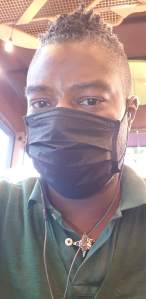
M-m-m-my Corona!
Sitting on the ground, people are handling it reasonably well. That is to say, no one is running around screaming or losing their heads. Logistically, the virus could hardly have come at a better time. The city was already emptied out by those who had returned home to celebrate the Lunar New year, known in Vietnam as Tet. The weekend folks were set to return, orders came from on high to close all educational institutions, due to the obvious fact that classrooms huddle groups of people into close, closed quarters – infection heaven. Heck, classrooms are built as fertile grounds! Morally, it’s the exact opposite: What an unsettling ending to the region’s most festive season!
Worse still, there is a travel ban from China, while estimating that “Chinese visitors comprised almost 30 percent of the approximate 15.5 million international travelers who arrived in either Hanoi or Ho Chi Minh City last year and translated into $30 billion from both the domestic and international market.” Who really can imagine the wider economic impact!?!
On my sabbatical, I am working in the language centre of a partner institution of my home university in the UK, which I got to know in my role as Senior Lecturer in International Business. Here, my desk is merely 15 feet away from the customer service desks where students come to register from the language classes, or any one of the ESL tests they must pass to graduate. Basically, at some point, every student at this university must come into this office. Additionally, we are a regional German-language testing centre, garnishing many folks from China (recall that travel ban!). While there are usually 6-7 ladies manning the kiosks, only two to three were called in the first few days to address students’ needs. Now, each day there is only one. Yesterday afternoon, it was announced again that all educational institutions would be closed for yet another week. Since I know that only a few of my colleagues are from Hanoi and are here with their parents, I suppose most of these ladies are home looking after their kids. I cannot imagine how other parents without grandparents nearby are dealing with this crisis.
A colleague told me last week that universities always reserve time within the term for such contingencies, but I imagine two full weeks of cancelled classes is a stretch. Certainly, my concerns have shifted towards the graduating seniors this term. Then, there are also the hourly-paid language teachers our/any centre hires. What about their labour? What’s more, our university is huge and sits next to at least 3 more universities, not to mention the 3 pre-schools I pass on my walk home. Again, all primary, secondary and tertiary schools are all closed for a second week after Tet. There are over 30,000 students, lecturers and staff. My husband has a similar gig down the road which boasts many, many more.
There are entire food and transportation economies woven around all these campuses. Most visibly, there are a host of corporate café chains, as well as typically Hanoian tea-stalls and street-food kiosks selling fast-food ranging from variations of noodle soups, to anything that can be deep-fried, steamed or cooked over a charcoal fire. Naturally, this Kentuckian spends way too much time at the grilled chicken lady. She does feet, as well as drumsticks and wings which she stretches out onto skewers and serves with hot sauce (so there’s no need to carry any in my bag). Most of these food outlets closed for Tet, but many simply have not re-opened since. The few that are open are virtually empty, save for the few pedestrians and commuters passing by, or the motorbike taxis that station themselves around each entrance to the campus alongside the tea-stalls. At least apparently, their persistence offers moral support, though it is possible that economically, there ain’t enough business between them. Enough?
Since the outbreak, I’ve regularly received text messages from the Ministry of Health, as has been widely reported in global media. The messages are in Vietnamese, which Google translates in 1-click just by copying the text. This is all –perhaps strangely- reassuring. No, it is very reassuring. The same messages are also sent straight to my phone via regionally popular chat programs such as Zalo. ‘Google Translate’ is integrated into that programme, too, like a virus. There, MoH’s chat messages include links to extended articles, especially details on how individuals can protect themselves, plus further info such as: “All hospitaliszation costs, medications, and testing costs for nCOV-positive patients are free.” There are layers of ways of spreading knowledge about the impact of potential outbreaks of disease, especially since SARS. It’s refreshing to see social media used so purposefully.
The streets are vacuous and quiet. Ordinarily, Hanoi is a loud, crowded, motorbike ridden city, so this peace is…(sigh)…morbid. Again, there are no visible signs of panic on the streets. It’s lunchtime here in the office. While I was engulfed in writing this blog-post, everyone else has quietly slipped away. This is the first time that I find myself alone in this building. All I hear are birds chirping outside, and a few horns blowing in the distance. The parking lot is empty. I’m going home.

For the courage of Dr. Li Wenliang (Photo from TheGuardian.com). May his family and friends at least know that his courage to speak truth to power has saved lives. May he Rest in Power.
Share this:

Criminology Society!
President: Natalie Humphrey
Secretary: Maisie Storr
Treasurer: Megan Petford
As many of you are aware, back at the beginning of the year, the Criminology was set up. However, I will admit we have been very lacking with content. I am writing this blog to try and get the word out and become proactive. This society could be something that bring all students studying criminology, joint and single honours, together. We have a few ideas in the works, with our first meet up being a movie night. This will be happening in the next few weeks, where we will be watching the new Ted Bundy film, with Zac Efron. Our other ideas include, visiting a court, an escape room and we are hoping for an abroad trip at some stage. However, we need many more suggestions from those who are part of the society. Please feel free to add our social media which I will leave at the end of this blog. We will be posting mainly on our Instagram where we have polls for you to partake in, asking you what you want from the society. If you haven’t already, and are interested, please visit Northampton’ Student Union website where you can officially join the society. Any suggestions would be really appreciated, so just contact us through social media to get your voice heard!
Twitter: @uon_criminology
Instagram: criminologysociety_uon
Share this:


Small island, smaller minds: it takes a village
“In times of crisis, the wise build bridges while the foolish build barriers. We must find a way to look after one another, as if we were one single tribe.” – King T’Challa, Black Panther
If you are White British, racism is not a narrative you would be familiar with, as far as your daily existence is concerned. Whilst racism has always been a day in the life for people of colour, there was a spike in hate crime in 2016 with the Brexit vote. Brexit was triggered on January 31 in the same way it began, in the tint of racism and violence. And that does not always mean physical pain on another. Violence can be verbal abuse, whether that’s direct from the horse’s mouth in terms like “Paki” and “nigger” , or on a note in a Norwich tower block.
On January 31, or Brexit Day, CBBC posted a video from its Horrible Histories TV show on Twitter. British comedian Nish Kumar preludes the clip with an introduction. What was meant to be a child-friendly look at British things, flag-waving Brexiteers turned into something else entirely. They don’t take to being told that tea, cotton and sugar aren’t British things, but products of a very British means of production called colonisation.
In 2018, we began to feel the quakes of the Windrush crisis, which is still happening today. When members of the Windrush Generation were / are being deported under then prime minister Theresa May’s hostile environment policy, Amber Rudd simply fell on her sword. Despite this scandal being buried by “other news”, this hysteria simply echoes that of when they first arrived, well-depicted in Pathé film reels.
In Andrea Levy’s Small Island, this is Britain at its bones. Britain as I know it. Little Britain. This text is about deception; and the biggest ruse is that Britain is a tolerant place and all are welcome. This was just after the Second World War. However, the stories of the working class is at its core, irrespective of skin colour. It has often been said that Britain is the least racist society in Europe, but this is only really if you happen to be born into the calm of being affluent, White and British. And the people publicising these opinions are from this same demographic, those born into privilege.

Brexit won’t only make us poorer economically, it’ll make us poorer spiritually. Smaller. Brittler. Littler. Alone. Isolated. No longer a nation others looked to, like in the postwar years – now little Britain drunk in jingoism and nationalism. As Nigel Farage waves his miniature union jacks in Brussels, I see bodybags. “Get Brexit Done” was the phrase; yes, Brexit is done and Britain with it. I feel tremors in Scotland and calls for independence will echo, as the Act of the Union (1707) will be undone.
In the years to come, will we still be Britain? Or will we go back to being England? Little old England in the vice of America. Pals with real British problems like institutional racism, austerity and auctioning off people’s health to American businessmen. A hopelessness, sledgehammered like Jeremy’s Labour by billionaire-owned media. 14m people currently live in poverty and it will only get worse, a Red Scare and Depression at dawn.
In this winter of discontent, we will see how art runs tandem with activism. The next ten years will do wonders for arts. Some of the greatest art came at times of hardship and oppression, from the Slave Trade to the Vietnam War. Charlie Chaplin in The Great Dictator will be a solace of sorts for me. His final speech at the end of that film is a call to humanity to find their humanity. “One does not have to be a Jew to be anti-Nazi” says Chaplin in his biography. One does not have to be Black to be anti-racism, or a woman to be a feminist or pro-choice, or gay or trans to be pro-LGBT rights.
Forty-seven years of membership put to bed because a portion of the country wanted to be independent. Independent from whom? A country with a history of colonisation and paternalism, who celebrate with the Commonwealth Games and say The Empire is no more. Whilst the Third Reich harked back to the Golden Age of the Roman Empire, Britain harks back to its nostalgia for Slavery and Suez, colonialism raised at half-mast.
Whilst many think The Empire to be a good thing, I picture images of my ancestors hanging from trees in the Caribbean. I think about pilgrims and preachers pontificating the word of God whilst raping Black women slaves throwing them down a hole. I think about how stop and search began way back in colonial times, and: Partition, Boer Concentration Camps, Opium Wars, Easter Risings, and the genocide of the indigenous American peoples.
In the mid-twentieth century, author James Baldwin spent time in Paris, fleeing the violent Jim Crow America. When the Brexit vote went through, I was in Hyderabad, India. Another former-British colony. Say Churchill in India and you’d lose a hand. That’s hyperbole, but he is not loved there. And in India, I felt more welcome than when I came home, told to go home the day after the vote. My cultural bond for Britain thawed, my patience with it.
Whiteness walks into a bar and waves his flag. If you are not rich, you are closer to the poverty line than owning a Lambo. If you could not afford rent if you lost your job, you have no business voting Conservative or cheering come our exit from the EU. Race, gender, sexuality, disability… what unites us all is class but these characteristics make those issues ten times worse.
To say I am nervous about Brexit would be an understatement. To the working class and people of colour that voted against the futures of their children and grandchildren by voting leave, and Tory, (in the last election), I am speechless. Whilst racism has always been part of the British way of life, I never used to look over my shoulder walking down Northampton streets.
But Hell is here and devils walks amongst us; a long winter has come, and we are a long way from dawn.
Share this:


“TW3” in Criminology
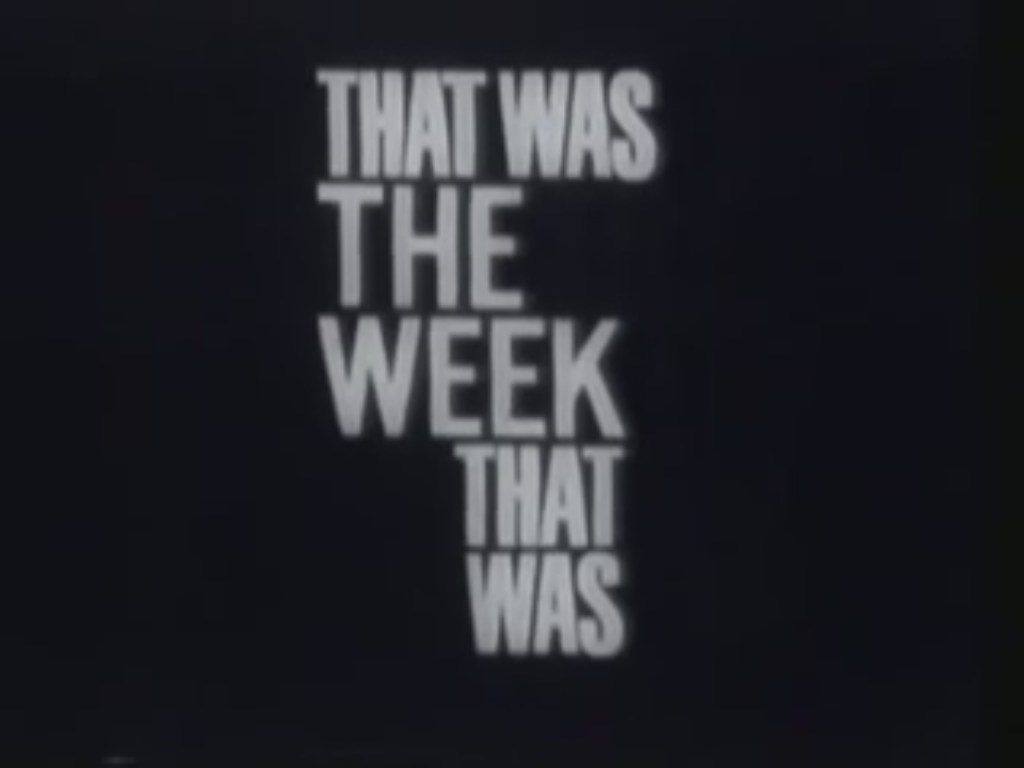
In the 1960s, or so I am told, there was a very popular weekly television programme called That Was The Week That Was, informally known as TW3. This satirical programme reflected on events of the week that had just gone, through commentary, comedy and music. Although the programme ended before I was born, it’s always struck me as a nice way to end the week and I plan to (very loosely) follow that idea here.
This week was particularly hectic in Criminology, here are just some of the highlights. On Monday, I was interviewed by a college student for their journalism project, a rather surreal experience, after all, ‘Who cares what I think?’
On Tuesday, @manosdaskalou and I, together with a group of enthusiastic third years, visited the Supreme Court in London. This trip enabled a discussion which sought to unpack the issue of diversity (or rather the lack of) within justice. Students and staff discussed a variety of ideas to work out why so many white men are at the heart of justice decisions. A difficult challenge at the best of times but given a new and urgent impetus when sat in a courtroom. It is difficult, if not impossible, to remain objective and impartial when confronted with the evidence of 12 Supreme Judges, only two of which are women, and all are white. Arguments around the supposed representativeness of justice, falter when the evidence is so very stark. Furthermore, with the educational information provided by our tour guide, it becomes obvious that there are many barriers for those who are neither white nor male to make their way through the legal ranks.

Wednesday saw the culmination of Beyond Justice, a module focused on social justice and taught entirely in prison. As in previous years, we have a small ceremony with certificate presentation for all students. This involves quite a cast, including various dignitaries, as well as all the students and their friends and family. This is always a bittersweet event, part celebration, part goodbye. Over the months, the prison classroom leaves its oppressive carceral environment behind, instead providing an intense and profound tight-knit learning community. No doubt @manosdaskalou and I will return to the prison, but that tight-knit community has now dissipated in time and space.

On Thursday, a similarly bitter-sweet experience was my last focused session this year on CRI3003 Violence: From Domestic to Institutional. Since October, the class has discussed many different topics relating to institutional violence focused on different cases including the deaths of Victoria Climbié, Blair Peach, Jean Charles de Menezes, as well as the horror of Grenfell. We have welcomed guest speakers from social work, policing and the fire service. Discussions have been mature, informed and extremely sensitive and again a real sense of a learning community has ensued. It’s also been my first experience of teaching an all-female cohort which has informed the discussion in a variety of meaningful ways. Although I haven’t abandoned the class, colleagues @manosdaskalou and @jesjames50 will take the reins for a while and focus on exploring interpersonal violence. I’ll be back before the end of the academic year so we can reflect together on our understanding of the complexity of violence.
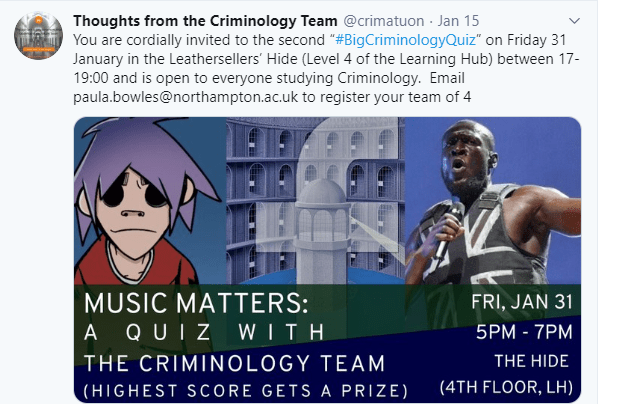
Finally, Friday saw the second ever #BigCriminologyQuiz and the first of the new decade. At the end of the first one, the participants requested that the next one be based on criminology and music. Challenge completed with help from @manosdaskalou, @treventoursu, @svr2727, @5teveh and @jesjames50. This week’s teams have requested a film/tv theme for the next quiz so we’ll definitely have our work cut out! But it’s amazing to see how much criminological knowledge can be shared, even when you’re eating snacks and laughing. [i]
So, what can I take from my criminological week:
- Some of the best criminological discussions happen when people are relaxed
- Getting out of the classroom enables and empowers different voices to be heard
- Getting out of the classroom allows people to focus on each and share their knowledge, recognising that
- A classroom is not four walls within a university, but can be anywhere (a coach, a courtroom a prison, or even the pub!)
- A new environment and a new experience opens the way for discord and dissent, always a necessity for profound discussion within Criminology
- When you open your eyes and your mind you start to see the world very differently
- It is possible (if you try very hard) to ignore the reality of Friday 31 January 23:00 ☹
- It is possible to be an academic, tour guide, mistress of ceremonies and quiz mistress, all in the same week!
Here’s looking forward to next week….not least Thursday’s Changemaker Awards where I seem to have scored a nomination with my #PartnerinCriminology @manosdaskalou.
[i] The first quiz was won by a team made up of 1st and 2nd years. This week’s quiz was won by a group of third years. The next promises to be a battle royale 😊 These quizzes have exposed, just how competitive criminologists can be….
Share this:

The Invisible Knapsack of Patriarchy: A Thought Experiment that totally plagiarises Peggy McIntosh. #BlackenAsiaWithLove
It’s frustrating dealing with liberals, fighting over the word ‘feminist’, when we’re all clearly united against patriarchy. Who are these man-hating feminists denouncers speak of? I have nothing against the term “womanist,” coined by my favourite novelist Alice Walker. This is especially true since I have familiarized myself with generations of earlier feminist work by elite, white women who seemingly ignored the women of colour whose labour gave them the leisure time to write and publish those works (for more on this, see bell hooks’ iconic 1984 Feminist Theory: From Margin to Center, or Patricia Hill Collins’ ground-breaking 2000 Black Feminist Thought: Knowledge, Consciousness, and the Politics of Empowerment ). Yet, why do we allow ourselves to be so split? As early as 1851, proto-feminist Sojourner Truth delivered the words ‘Ain’t I a Woman’ decades before Suffrage, yet we allow illiberals to divide-and-conquer – us! We, liberals, split hairs with one another at every turn, meanwhile right-wingers organise towards our total demise.
So, for your reading pleasure, I’ve totally copied Peggy McIntosh’s Invisible Knapsack of White Privilege (1989). I’ve inserted “gender” where she originally wrote “race,” inserted “patriarchy” to speak of culture, and used the F-word – “feminist” – where she speaks of people of colour. Here we go:
- I can turn on the television or open to the front page of the paper and see people of my gender widely represented. Unless the topic is gender, most of the coverage in entire sections is devoted to my gender, such as sports and economics.
- When I am told about our national heritage or about “civilization,” I am shown that people of my gender as leaders of policies and thought.
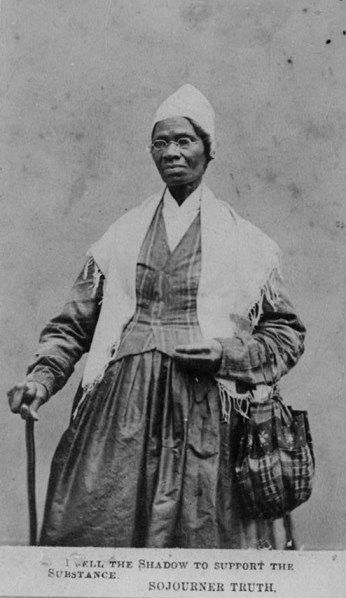
Sojourner Truth, proto-feminist!
- I can be sure that boys will be given curricular materials that testify to the existence, relevance, intelligence and dominance of their gender.
- I can be casual about whether or not to listen to a woman’s voice in a group in which she is the only member of her gender.
- I do not have to educate boys to be aware of systemic sexism for their own daily physical protection.
- I can be pretty sure that my male children’s teachers and employers will tolerate them if they fit school and workplace norms; my chief worries about them do not concern others’ attitudes toward their gender, because ‘boys will be boys’.
- I can talk with my mouth full and not have people put this down to my gender.
- I can swear, or dress in second hand clothes, or not answer letters, without having people attribute these choices to the bad morals, the poverty, illiteracy or lack of beauty of my gender.
- I can speak in public to a powerful male group without putting my gender on trial.
- I can remain oblivious of the language and customs of women who constitute the world’s majority without feeling in patriarchal culture any penalty for such oblivion.
- I am never asked to speak for all the people of my gender group.
- I can do well in a challenging situation without being called a credit to my gender.
- I can criticize our government and talk about how much I fear its policies and behavior without being seen as an outsider to patriarchal culture.
- I can be pretty sure that if I ask to talk to the “person in charge”, I will be facing a person of my gender.
- If I declare there is a sexist issue at hand, or there isn’t a sexist issue at hand, my gender will lend me more credibility for either position than a woman will have.
- I can choose to ignore developments in feminist writing and feminist activist programs, or disparage them, or learn from them, but in any case, I can find ways to be more or less protected from negative consequences of any of these choices.
- Patriarchal culture gives me little fear about ignoring the perspectives and powers of women.
- I can easily buy posters, post-cards, picture books, greeting cards, dolls, toys and children’s magazines featuring people of my gender in a non-sexual way.
- I can be pretty sure that an argument with a colleague of another race is more likely to jeopardize her chances for advancement than to jeopardize mine
- I am not made acutely aware that my shape, bearing or body odor will be taken as a reflection on my gender.
- I can worry about sexism without being seen as self-interested or self-seeking.
- I can take a job with an affirmative action employer without having my co-workers on the job suspect that I got it because of my gender.
- If my day, week or year is going badly, I need not ask of each negative episode or situation whether it had sexist overtones.
- I can think over many options, social, political, imaginative or professional, without asking whether a person of my gender would be accepted or allowed to do what I want to do.
- I can arrange my activities so that I will never have to experience feelings of rejection owing to my gender.
- If I have low credibility as a leader I can be sure that my gender is not the problem.
- I can easily find academic courses and institutions which give attention only to people of my gender.
- I can travel alone without expecting embarrassment or hostility in those who deal with me.
McIntosh notes, and I concur: My schooling gave me no training in seeing myself as an oppressor, as an unfairly advantaged person, or as a participant in a damaged culture. I was taught to see myself as an individual whose moral state depended on her individual moral will.
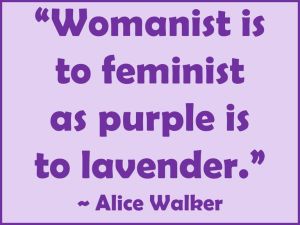
“Womanist is to feminist as purple is to lavender” affirms Alice Walker in acknowledging the interconnectedness of gender, race and class theory and oppression. Sit down when feminists rise at (y)our own peril. Please, dear liberals, let’s stop playing the who-more-woke game and get in-formation!
Share this:


“BAFTA stands for ‘Black actors fuck off to America'” – Gina Yashere
Performing Arts has been part of my life for as long as I can remember, and arts in general is something I’m passionate about, more specifically: literature, theatre and film / television. However, the recent awards scandal with BAFTA is really just one more example of how institutional violence is something Britain refuses to come to terms with. Whether we’re talking the education sector, or policing (Macpherson 1999), criminal justice (Lammy 2017), or in government (Windrush Crisis), or Britain’s film and television industry.

There’s twelve and half years between me and my brother. Yet, ever since he was born he has shown an aptitude for the arts and great promise in both stage and screen, having done work with Screen Northants and Royal & Derngate, as well as with the Royal Shakespeare Company (The RSC).
He really is very good, but how the UK treats Black actors is atrocious. I know from discussions that he wants to be a serious actor and I wonder if he will have to fight the same racism and implicit bias that David Oyelowo and Idris Elba did. When will Black British actors stop having to prove themselves abroad before they are taken seriously in their own country?
“BAFTA stands for ‘Black actors fuck off to America'” joked comedian Gina Yashere in docuseries Black is the New Black
It’s funny because it’s true. And Britain’s close-minded attitudes towards race and diversity does not help the cause. Over the years, Black British actors, and even Black and brown Brits from other non-UK backgrounds have gone to America in hoards and made it. Whilst America is not famous for its racial harmony, it is at least thirty years ahead when it comes to race. And when it comes to diversity within acting and the performing arts industry, they are better off. If Ashton decided he wanted to jump ship and move to Los Angeles, or NYC (for theatre), I would help him pack!

We are losing talent because of Britain’s inability to change: Nathalie Emmanuel, Freeman Agyeman, Dev Patel, John Boyega, Riz Ahmed, Henry Golding, Gemma Chan, Daniel Kaluuya and Gugu Mbatha-Raw are just a handful of our great actors that followed the likes of Idris Elba, David Oyelowo, and Naomi Harris to the United States, a country that we criticise for its racism. But what of racism at home? Is Britain racist? “Definitely, 100%” said Stormzy. And I would argue his misquote was also true.
Idris Elba made it as Stringer Bell in The Wire before the BBC picked him up for Luther and David Oyelowo has been in a number of high profile Hollywood films, including Last King of Scotland and Selma. Don’t misunderstand me, America is not perfect but at least it doesn’t put a blue plaster on a tumour and call it progress. Our diversity, the thing we boast about is leaving, meanwhile BAFTA celebrated its seventh consecutive year of no women in the Best Directors race, let alone nods to women of colour.
Black Americans make 13% of the US population (est. 48.4m), but Black Britons only make up 3% of the UK population (est. 1.9m), so I guess this shows why there’s more visibility for Black actors in the United States.
However, I’m by no means saying America is a utopia, I just believe America is better put-together where diversity is concerned. Hamilton, one of the biggest musicals ever is a global phenomenon made up of almost entirely Black and brown actors, as will be the new adaptation of In the Heights directed by American director Jon. M Chu (Crazy Rich Asians), with songs written by Lin Manuel-Miranda, the mastermind behind Hamilton.
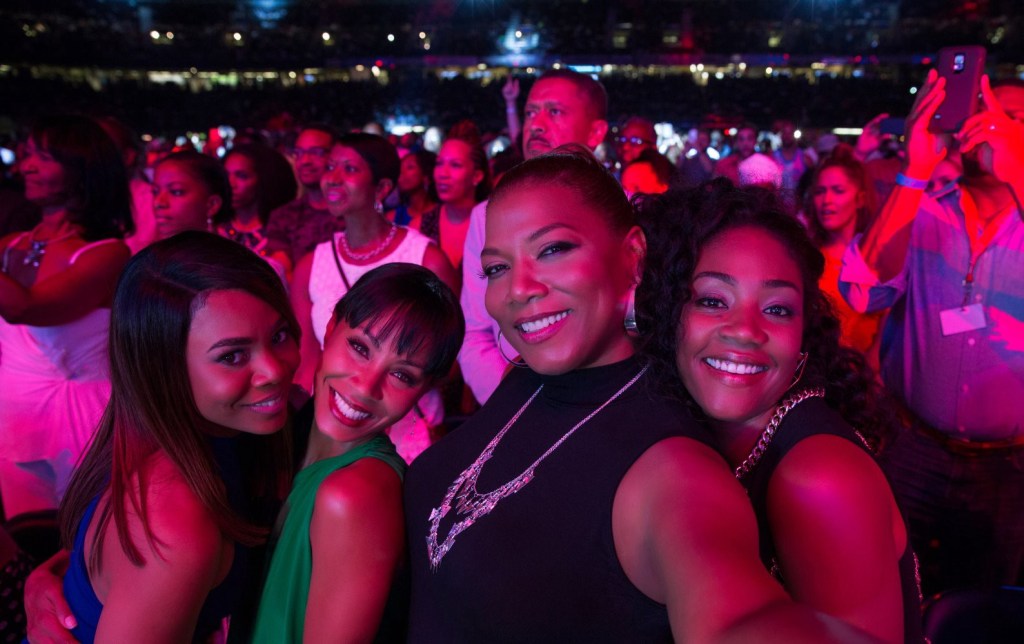
And America’s many sub-genres; from Spike Lee creating the Blaxploitation genre from the mid-80s to the world of Tyler Perry with Madea, and “Black” comedies like Girls’ Trip and Little, Black cinema is massive in the States. Whilst I don’t believe you can allot race to film and call it a genre, I do believe you can make films about Black lives and celebrate it. Whilst there is Black cinema in the UK, it’s a drop in the ocean and not mainstream.
My father named me for Tre from the classic 1991 film Boyz n the Hood, out of this film the world was shown a plethora of Black characters, including the mild-mannered Tre, but also his father played by an early career Laurence Fishburne. Black-led Rom-Coms like Girls’ Trip, most recently but even historically, such as Love and Basketball or even something more serious like Juice, or Poetic Justice, with musician-actor Janet Jackson.
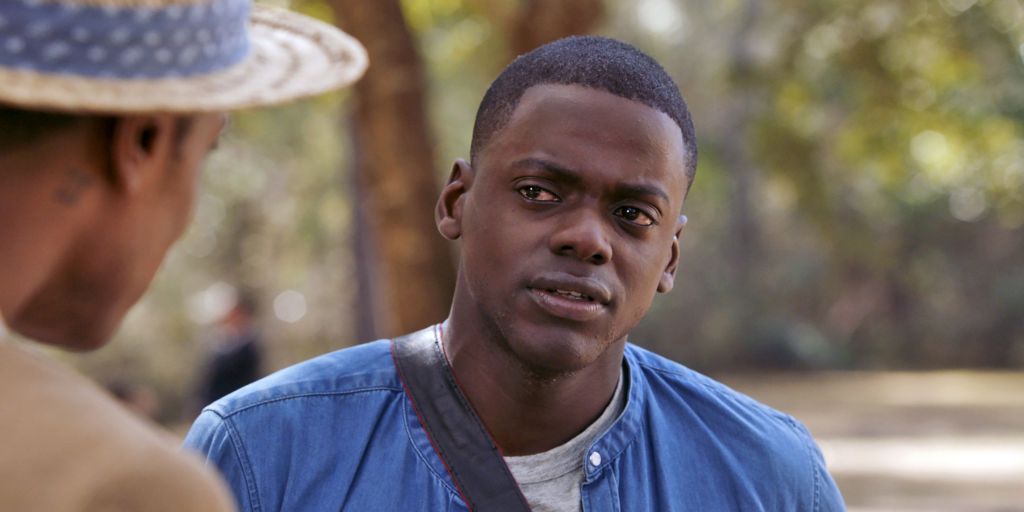
If my brother at seventeen or eighteen years old decided to try his luck in Los Angeles or New York, I wouldn’t blame him. Black British actors are making waves in America. Black Britain has faced criticism from the likes of Samuel. L Jackson, where he suggested Jordan Peele’s Get Out would have been better with a Black American lead. Yet, what both countries share is Black actors fighting for roles whilst their White colleagues (i.e Cumberbatch, Streep, Blunt, Fassbender) don’t have to, nor are their White colleagues under the same criticism from their peers and the establishment.

In the essay collection, The Good Immigrant, in his essay ‘Airports and Auditions’, actor-poet Riz Ahmed states “the reality of Britain is vibrant multiculturalism, but the myth we export is an all-white world of lords and ladies.” The period drama genre for example has been under scrutiny for being too white. The Britain we sell overseas is Jane Austen novels, The Crown and Middlemarch. It’s the stuff in canon literature, not Hollyoaks or our close to two thousand-year history of Black people in the British Isles.
The Britain we sell overseas is not the Britain my brother is growing up in. My generation, the Harry Potter Generation; we grew up with Hogwarts Tamagochis and Beyblade. I grew up with Pokémon and Yu-Gi-Oh. And even in Harry Potter, in this diverse Britain we celebrate, the lack of Black characters or characters who weren’t White is blinding. And even the Dean Thomases and Cho Changs of that world have few lines between them.
And Ashton is growing up with more knowledge (and pride) around being a Black Briton, in the tint of great influences, incl. Stormzy, Afua Hirsch, Santan Dave, David Olusoga, and Reni Eddo-Lodge, all of whom speak truth to the power.
I don’t want him to feel low, but you must wonder if it was designed against people like him from the start? If #DecoloniseHE in the education sector is anything to go by, the answer is yes. Will he find roles for him, or will he be one of those Black British actors that effs off to America? Will he have to do what Noel Clarke (Kidulthood) did and write, direct and produce his own films because Britain’s film industry does not cater for its diverse talent?
And that is a sad state of affairs indeed. Tyler Perry being the first Black American to own a film production studio is a testament to what is possible in America. It’s not uncommon to see a Black professor in an American university. There are only 85 Black British professors in UK universities. It’s not rare to see Black lawyers or Black teachers in the US but there’s an over-representation of White British teachers in UK secondary schools and in HE.
As a writer in Northamptonshire, a county wrapped in classism, you also have to think about race’s impact on class. To enjoy theatre, but only on occasion seeing people and stories that reflect Britain’s diversity. Whilst my vocation is not reliant on looks, the struggle for Black actors is really a struggle. It was never meant to be easy. To live in a Britain that pushes images of us that can only succeed in entertainment and sports, but seem nonexistent when it comes to discussing Black intellect and political ideas.
And it’s really a solemn thought that this happy boy might one day be forced to go to America because in British style, like all our structures, it caters for the few, not the many.
Works of Note
Adegoke, Y and Uviebinené, E. (2019). Slay in Your Lane. London: 4th Estate
Advance HE (2018). ‘Equality in higher education: statistical report 2018,’ ecu.ac.uk, [online]. Available from: https://www.ecu.ac.uk/publications/equality-higher-education-statistical-report-2018/ [Last accessed 30 December 2019]
Ahmed, S. (2018). Rocking the Boat: Women of Colour as Diversity Workers. In: Arday, J., Mirza, S. (eds). Dismantling Race in Higher Education: Racism, Whiteness and Decolonising the Academy. London: Palgrave Macmillan, pp. 331 –348
Home Office. (1999). The Stephen Lawrence Inquiry. (Chairperson: William Macpherson). London: TSO
Ministry of Justice (2017). The Lammy Review. (Chairperson: David Lammy MP). London: TSO
Share this:


20 years of Criminology

It was at the start of a new millennium that people worried about what the so-called millennium will do to our lives. The fear was that the bug will usher a new dark age where technology will be lost. Whilst the impending Armageddon never happened, the University College Northampton, as the University of Northampton was called then, was preparing to welcome the first cohort of Criminology students.
The first cohort of students joined us in September 2000 and since then 20 years of cohorts have joined since. During these years we have seen the rise of University fees, the expansion of the internet and google search and of course the emergence of social media. The original award was focused on sociolegal aspects, predominantly the sociology of deviance, whilst in the years since the changes demonstrate the departmental and the disciplinary changes that have happened.
Early on, as criminology was beginning to find its voice institutionally, the team developed two rules that have since defined the focus of the discipline. The first is that the subject will be taught in a multi-disciplinary approach, widely inclusive of all the main disciplines involved in the study of crime; so alongside sociology, you will find psychology, law, history, philosophy to name but a few. The impetus was to present these disciplines on an equal footing and providing opportunity to those joining the course, to discover their own voice in criminology. The second rule was to give the students the opportunity to explore contentious topics and draw their own perspective. Since the first year of running it, these rules have become the bedrock of UoN Criminology.
The course since the early years has grown and gone through all those developmental stages, childhood, adolescence and now eventually we have reached adulthood. During these stages, we managed to forge a distinctiveness of what criminology looks like; introducing for example a research placement to allow the students to explore the theory in practice. In later years we created courses that reflect Criminology in the 21st Century always relating to the big questions and forever arming learners with the skills to ask the impossible questions.
Through all these years students join with an interest in studying crime and by the time they leave us, to move onto the next chapter of their lives, they have become hard core criminologists. This is always something that we consider one of the course’s greatest contribution to the local community.
In an ordinary day, like any other day in the local court one may see an usher, next to a probation officer, next to a police officer, next to a drugs rehabilitation officer, all of them our graduates making up the local criminal justice system. A demonstration of the reach and the importance of the university as an institution and the services it provides to the local community. More recently we developed a module that we teach in prison comprised by university and prison students. This is a clear sign of the maturity and the journey we have done so far…
As the 21st century entered, twin towers fell, bus and tube trains exploded, consequent wars were made, riots in the capital, the banking crisis, the austerity, bridge attacks, Brexit, extinction rebellion, buildings burning, planes coming down, forest fires and #metoo, and we just barely cover 20 years. These and many more events keep criminological discourse relevant, increase the profile of the subject and most importantly further the conversation we are having in our society as to where we are heading.
As I raise my glass to salute the first 20 years of Criminology at the University of Northampton, I am confident that the next 20 years will be even more exciting. For those who have been with us so far a massive thank you, for those to come we are looking forward to discussing some of the many issues with you. We are passionate about criminology and we want you to infect you with our passion.
As they say in prison, the first 20 years are difficult the rest you just glide through…
Share this:

Someday at Christmas. #BlackenAsiaWithLove
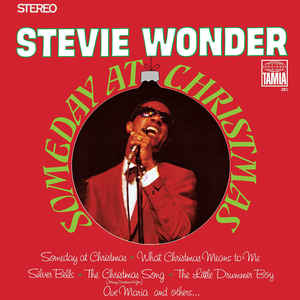
Now that folks have returned to their normal lives, and the Christmas credit card bills have arrived, let’s reflect on the reason for the season. To get you in the mood, the writer suggests listening to Stevie Wonder’s Someday at Christmas alongside this read; lyrics included here.
Someday at Christmas men won’t be boys
Playing with bombs like kids play with toys
Today’s divisions are so profound, and illiberal tribalism runs so deep, that I believe only art can speak to them – they not hearing me when people like me speak. I’m clearly not an illiberal tribe member, and as soon as I open my mouth, my ‘proper’ American English is dismissed alongside the liberal elite media, Hollywood, etc. The tribe dismisses us, I surmise, due to our training and faith in the transformative power of critical thinking.
“If Republicans ran on their policy agenda alone,” clarifies one article from a prominent liberal magazine, “they would be at a disadvantage. So they have turned to a destructive politics of white identity, one that seeks a path to power by deliberately dividing the country along racial and sectarian lines.” This is lit-er-ally happening right now as the presidential impeachment hearings follows party-not-morality lines. Conservatives are voting along their tribe to support the so-called leader of the free world. Are they free?
Words like ‘diversity’ sound threatening to today’s illiberal thinkers. Those who tout PC-culture as going too far may as well go ahead and admit that they are anti-evolution! Those who denounce implicit racial bias have little to say about any form of racism, save for its so-called ‘reverse’. Those who would rather decry ‘feminism’ as man-hating have little to say about actual misogyny. Yet, it is the liberal candidate/leader/thinker who is held to a higher standard. Are we free?
 Someday in a world where men are free
Maybe not in time for you and me
But someday at Christmastime
We are in an era of supreme conservative/illiberal tribalism. That’s the unique We are in an era of supreme conservative/illiberal tribalism. That’s the unique ties that bind America’s 45, to Britain’s BJ to Germany’s AFD, France’s infamous National Front (now in its second generation), Italy’s Lega Nord, Austria’s FPO– yes, the F is for ‘freedom’- all the way to India’s leading Islamaphobe. Let’s not forget Poland’s tiki-torch bearing PiS party that filthy-up the European Parliament joined by their brethren from Denmark to Estonia to Belgium and beyond.

EU’s Right-wingers!
Illiberal tribes are tricking masses of those inside cultures of power into voting against their own interests. This is not, as many commentators have noted, to suggest that their so-called liberal alternatives are virtuous. Of course not, but it’s clear that masses can be motivated through fear of the other, whereas organizing around widening the pool of cooperation and humane concern is simply not sexy.
Someday at Christmas there’ll be no tears
All men are equal and no men have fears
Today’s brand of conservatism is an entire illiberal ethic that clearly must be cultivated from birth. Either you get it, or you don’t. Imagine the folks they’re turning against, and tuning out in order to hold onto those values. Imagine the teacher, friend, colleague, schoolmate, neighbour of ‘foreign’ origin that a Brexiteer must wipe away from their consciousness in order to support the anti-EU migration that fueled the campaign. The ability to render folks as ‘other’ is not an instantaneous predicament. It’s well cultivated like a cash crop, say cotton, cane or tobacco! Going to the ballot box to support bigots can’t be an easy feat when we’re literally surrounded by the type of diversity we seek to eliminate.
Someday at Christmas man will not fail
Hate will be gone love will prevail
There are those who voted for Brexit under some false notion of British independence, despite clear and present evidence of British inter-dependence. Perhaps no nation has been more inter-dependent on its neighbors and former colonies than the British Isles. Yet this illiberal disease is global. Imagine the rich diversity of the Indian sub-continent, yet look squarely at the Hindu nationalism sweeping India right now (as if the Taj Mahal weren’t a global treasure that just happens to have a few mosques on board). Plus, I’m not the first to point out that the Jesus racists celebrate was Jewish and spent most of his life in what we now call the Arab world. No nativity scene without foreigners!
Maybe not in time for you and me
But someday at Christmastime
‘Someday at Christmas’ was written in 1967 for Stevie Wonder, then a 17-year-old bulwark of Motown. Wonder wasn’t yet writing all his songs, yet he was already introduced as the ‘Profit of Soul’. In 1980, he sang: “Why has there never been a holiday, yeah/Where peace is celebrated,” in a song aimed at getting Reagan to declare Rev. Dr. Martin Luther King Jr.’s birthday a national holiday. Wonder won. Happy MLK day!
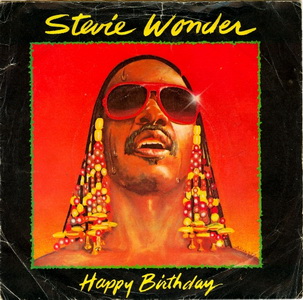
Naturally, looking back we have to wonder if one could have predicted the impact Wonder would soon have on American music. He’d dominate pop music once he set out on his own, set his fingers to funk instead of pop, and began to bare his soul.
Someday at Christmas we’ll see a Man
No hungry children, no empty hand
One happy morning people will share
Our world where people care
In the summer of ‘67, Wonder’d released another record, I Was Made to Love Her, featuring plenty of his infamous harmonica solos. ‘Someday at Christmas’ was released four years before the other most infamous Christmas message song, John Lennon’s War Is Over. SMH, I get goose-bumps hearing a kids’ chorus sing melancholically “War is over/If you want it.” Much of the world was at war then, struggling to comprehend the incomprehensible devastation meted out on the tiny southeast Asian nation of Vietnam, from where I pen this piece – a virtuoso clash of titans. It’s not surprising that those two troubadours began their careers in popcorn pop, yet had to leave the genre to deliver their most potent, fiercest messages.

Motown was decisively a Popular music machine, specifically crafted to appeal to the wider/whiter masses. Motown steered clear away from ‘message’ songs, a real keel in the heal of the likes of Stevie, Marvin Gaye and eventually Michael Jackson. Each of those Motown troubadours has penned plenty of songs of freedom and ecology, and the ethical interdependence between the two. Those guys must be liberals. Ugh!

 Thoughts from the criminology team