
Home » Criminology (Page 31)
Category Archives: Criminology

My new year nightmare: finance, political imperatives and a lack of strategy

The new year is here. At its last knockings, the previous year offered hope of some sort of return to normality. The second new vaccine was on its way, far easier to store and distribute, it offered hope. Unfortunately, the joy of the new year has been somewhat muted as we have witnessed Covid-19 cases rise to new heights. Talks of stricter measures have turned into our new reality, as one minute the government insisted on schools opening then the next a partial U-turn before a forced full-scale retreat. But as we watch all of this unfold, I am reminded of a comment I heard from a radio presenter on the lead up to Christmas. Her view was that there was much to be happy about, we know more about the virus now than we ever did and scientists have developed a vaccine, several vaccines, in record time. Over the Christmas and new year period I reflected on last year and tried to think about what we have learnt.
Brexit has just proved to be a complete farce. Promises of a good deal turn out to be not so good, ‘no deal is better than a bad deal’ the politicians said. And then in desperation, realising that any deal was better than no deal and that the best deal was the one where we were in the European Union they settled on something and thanked the gods that there was far more pressing bad news to hide their incompetence. So, we are now a ‘sovereign’ nation but poorer to boot and whilst we think we have regained control over our borders, it is only limited to bureaucratic, time consuming form filling, as we beg people to come here to work in our care homes and on the farms for a pittance. Perhaps the refugees that we have reluctantly accepted might help us out here. Brexit has been delivered but at what cost? No wonder Stanley wants to take up his opportunity for a French passport.
We are all equal its just that some are far more equal than others. We saw the rise of the Black Lives Matter movement and I have a feeling that I wouldn’t be able to do that discussion justice; I’ll leave that to others that are far more capable. It did have a profound impact on me though as a former serving police officer, I would like to think it had an impact on others both retired and serving, but I’m not so sure. I think that quite often the police are simply a reflection of our society and I’m not willing to bet much on that changing rapidly. I remember Michael Holding, a former West Indian cricketer, turned commentator, talking about ‘white privilege’ and he provided what I thought at the time was a good example. Now I’m not so sure, this so called ‘white privilege’, isn’t privilege at all, it’s rights. It’s the rights that white people avail themselves of everyday in a democratic society (well that’s what we are supposed to be in anyway) without a second thought. The problem isn’t that white people have those rights, it’s that Black and ethnic minority individuals don’t, or where they do, the rights are somehow conditional. I might be wrong in my thinking, but I know one thing, without some very clear leadership from government, institutions and general societal attitudes are unlikely to change sufficiently. Although footballers and staff take a knee before every match, I fear that the momentum is likely to be lost. By the way, I’m not holding out much hope on the leadership gambit.
Sticking to the we are all equal theme; the pandemic has shone a spotlight on poverty in this country. Yes, Mr high and mighty Reece-Mogg, there really are very poor people in this country and they do need a helping hand. The fact that food banks are even required is shameful. The fact that foodbanks rely on charity is an even more shameful indictment of our government. The fact that a senior politician can stand up in the house of commons and accuse a charity of political motives when distributing aid beggar’s belief. I find it extraordinary that pre pandemic, homeless people were left to their own devices on the streets, reliant on charity and handouts and yet as soon as we went into lockdown, the government found money from somewhere to house them. What changed? My worry is that when the pandemic is over, the government are going to be more concerned about balancing the books than they are about the pervasive poverty endemic in our nation.
Children returning to school has been a huge issue for government and they rely on evidence that suggests that the best place for children is at school. A headmaster reminded us in an interview on the radio that this ‘online learning’ phrase that trips off the tongue is far easier to talk about than to achieve. What hits home is the huge disparity in opportunity for children to avail themselves of online learning. Poorer families cannot provide the technology required. Poorer families are likely to live in cramped conditions making it impossible for children to concentrate on work as siblings run around trying to keep themselves amused. And let’s not forget the plight of the parents who are more likely to be in jobs that require them to be at work, not home. Then of course there are those children that are vulnerable where school is a safe haven from abuse, whether that’s physical or mental or simply because school is where they will be fed. So, in a sense for many, school is a better place than home, but we really ought to be asking why that is. What does that say about our society? If I were to hazard an educated guess, I’d say its broken. The return of children to school had wider implications. What about the teachers and staff? It seems to me that government have different standards of risk depending on what suits. I’ll come back to this in time but I think the closure of schools owes itself more to the action of teachers in their refusal to turn up to work in an unsafe environment than it does any sensible government strategy.
Sticking to the education theme, the pandemic shone a rather harsh spotlight on higher education too. What became increasingly obvious was that the return of students to campus was purely financially driven. At least one vice chancellor put his head above the parapet and stated as much. His university would fail if he did not fill the halls of residence. So here we had a situation where scientific advisors were stating it was folly to open universities and yet universities did so with the backing of government. The reason, we can’t put education on hold and yet how many students take a gap year, before going to university? Putting education on hold doesn’t appear to be that damaging to the individual, but it is very damaging to a morally corrupt educational business model that needs halls of residence to be filled to prop up the system. To make matters worse, students flocked to university only to find that face to face teaching was patchy, the university experience was not what they were promised or envisaged it would be, and more time was spent in isolation and lock down than was healthy. If education was supposed to be good for their mental health, it had the opposite effect for many. I don’t think it required a rocket scientist to work out that online teaching was really going to be a default position, so either management and government were very naïve and reckless, or they were somewhat economical with the truth. Time to revisit higher education, I think.
Talking about government advisors, what’s the point in having them? Everything I read suggests that government advisors say one thing and government does something else or dillies and dallies its way into a dead end where it finally admits the advisors are in some way right, hence another eleventh hour lock down. The advisor’s said universities should not go back, they did and is it coincidence it coincided with a rise in Covid-19 cases? Advisors were saying schools shouldn’t go back but the government insisted they should and many did for just one day. There is a saying about tactics and strategy. Strategy is unlikely to be achieved without tactics but tactics without a strategy are useless. I have yet to understand what the government strategy is, there is however a plethora of disparate (or is that desperate?) tactics . The result though, anguish and suffering to more than is necessary. Some of the tactics seem to be based on decision regarding who is most at risk. We hear that term an awful lot. I watched the prime minister at lunch time, the man who promised us a fantastic Brexit deal, as he explained how important it was that children went back to school. Children are at very little risk going to school he said and then added, and teachers are not at very much risk or at least at no more risk than they would be normally. He bumbled and blustered over the latter part; I wonder why? A few hours later he told us schools would be closed until at least the 15th February. What happened to ‘no risk’? When we talk about risk, there are a number of ways of viewing it. There is the risk of death, easily understood and most definitely to be avoided, but what seems to be neglected is the risk of serious illness or the risk of ‘long Covid’. By ordering schools to be opened or that universities resume face to face teaching, the policy seems to have been that as long as you are not at a high risk of death then it is an acceptable risk. Time for a bit of honesty here. Does the government and do managers in these organisations really think that a group of people in a room for a number of hours with inadequate ventilation is not a serious risk to the spreading of the disease? Maybe some of the managers could reassure us by doing most of the face to face teaching when we prematurely come out of lock down again.
It seems to me that much is being made, on the news in particular, about the effect a lock down has on mental health, especially children. And I do understand the mental health issues, I can’t help but think though that whilst this is a very valid argument there is the elephant in the room that is either ignored or conveniently understated. The elephant; the fear engendered by the virus, the fear and anguish of those that have had to face the loss of a loved one. Just to put that in perspective that’s over 70,000 people whose families and friends have had to go through firstly the fear and anxiety of a loved one being ill and then the additional fear and anxiety of having lost them. Add to this the fear and anxiety of those that have caught the virus and ended up in hospital coupled with the fear and anxiety of their loved ones. Now add to this the fear and anxiety of those who have to work in conditions where they are at serious risk of catching Covid and the fear and anxiety of their loved ones. And then of course there is the fear and anxiety caused to the general population as the virus spins out of control. Somehow I think a little perspective on mental health during lock down might be needed. Is it any wonder teachers decided that what they were being asked to do was unsafe and unnecessary?
And then I think about all of those parties and gatherings despite restrictions. The shopping trips from tier 4 areas into tier two areas to snap up bargains in the sales. The Christmas and New years eve parties that defy any logic other than pure self-indulgence. Just as we see all of those selfless people that work in organisations that care for others or keep the country running in some capacity, we see a significant number of selfish people who really don’t care about the harm they are causing and seem to be driven by hedonism and a lack of social values. Unfortunately, that accusation can also be aimed at some of the very people that should be setting an example, politicians.
We should of course be happy and full of hope. We have a new vaccine (that’s providing it still works on the mutated virus) and normality is around the corner, give or take a few months and a half decent vaccination strategy (that’s us done for). A vaccine that was found in an extraordinary time period. I wonder why a vaccine for Ebola wasn’t found so quickly? I agree with my colleague @paulaabowles when she says we all must do better but more importantly I think its about time we held government to account, they really must do better. After the second world war this country saw the birth of the NHS and the welfare state. What we need now is a return to the fundamental values that prompted the birth of those provisions. There are so many pressing needs and we really mustn’t allow them to be forgotten. A strategy to tackle poverty might just ameliorate a raft of other ills in our society and the cost of tackling it might easily be mitigated by a reduction in demand in the NHS and many other public services. I can but dream, but my reality envisages a nightmare world driven by finance, political imperatives and a lack of strategy.
Share this:


Christmas ’20: I Bought Presents for the First Time in a Decade
As someone that lives in the privilege of not actually had to experience Coronavirus (to my knowledge), I have spent a good portion of last year on the sidelines. Losing my auntie during my undergrad in January 2017, and then my cousin Steve at the start of 2020 (some of you may know him as the owner of Kettering Road’s Driver), I think many would agree with me when I say ‘grief makes you humble.’ In typical Caribbean fashion, Steve’s wake made me remember the importance of community and togetherness. He ran Drivers Menswear in Northampton and if you blinked you wouldn’t know it was there, a shop that had been there since the 1980s. With its closure in 2020, that marked the end of an era, and I will now have to find somewhere else to buy jeans!
Growing up here, many of the people I know in the community and work with have actually known me for years. And in some cases, have known me for all my life (basically), very much including staples of the West Indian community like at Inspiration FM
Some time after Steve’s funeral, we were thrust into Lockdown 1.0 by the Government and it was in those months between March and June that I saw that power of community again. Albeit a symbolic gesture, clapping for the National Health Service on Thursdays in some cases was the one thing keeping some people going. It was a recurrence that kept their mind at bay in the chaos of the pandemic. I ran events online too, and people were grateful. In that same breath, it is evident to see the number of people grassing up their neighbours for flouting the rules, or attacking people for criticising the police’s £10,000 fines for those that break the rules. Last year, I also watched a number of films, including a rewatch of Goodfellas. Even in a health crisis where people have broken the rules, Robert DeNiro’s voice as Jimmy Conway is in my head telling me “to never rat on your friends and always keep your mouth shut.” When in doubt, listen to Scorsese!

These people may be rule-breakers but I know if it comes to the wire, these are also the same people (not government) that would put people ahead of profit. Fellow blogger @drkukustr8talk wrote a Facebook post saying “If anything, Corona taught us____” and I commented “There is more of a community than I thought there was”, to which he replied “NOW, dear Tre, THAT is a LOT coming from you.” Yes, I’m sure @paulaabowles and @manosdaskalou will attest to that too, seeing from our number of conversations since meeting them in September 2019. Cynicism and realism are two sides of the same coin and I grew up in The Commmunity. However, not like I have seen this past year. My work as an educator engaging with people inside and outside Northamptonshire’s borders tied, with the Murder of George Floyd/the protests and the pandemic, it’s left me thinking that when I gave humanity chance, locally, humanity actually delivered.
November came and I was awarded ‘Northampton’s Male Role Model of the Year.’ That was humbling. It wasn’t the award that really got to me. It’s the love and respect of your neighbours, and that’s not something one can articulate in words. I thought about this feeling again when I found myself watching the 1970 adaptation of The Railway Children. Albert Perks has always been my favourite character, very much a man of his generation. Not taking charity but also respects his community. You do right to others, they do right to you. That sort of mentality. This is a character I came across at twelve years old and I have not been the same since. The award is second to the number of people that voted for me, and I will take that to my grave.

December came, and I bought Christmas presents. I am as surprised as you. For years, I have famously been a humbug inside and outside of my family. Forever anti-Christmas on the basis it was “a super-spreader of consumerism” (Ventour, 2010). My mother makes jokes about it, recalling to when I was kid walking around Abington Street in a hat with bah humbug on the side. The pandemic tied with BLM and meeting all the wonderful people at Amplified NN allowed me to break my “life rules.” Grief makes you humble. With the addition of Coronavirus, you could say it has made me soft (not that I was an awful person before). If the COVID pandemic and lockdowns have taught us anything, it’s that so many of us were living life on incompatible frequencies and were trying to make the parts fit. We also saw how kindness was a shock to the system, since in the words Tennessee Williams so few have ever “depended on the kindness of strangers.”
I bought presents for the first time in ten years; I have the love and respect of my neighbours and I started a Masters in September. I don’t spend my days waving at ‘kind old gentlemen’ on the trains going by, but I think in fifty years that there may be three children that may think of me as that old gentleman (but not that old of course), or by the time I’m forty-one… I’m not too different to Albert Perks and there is power in that.
Share this:


2020: A Year on “Plague Island”

Last year in this blog, I argued that 2019 had been a year of violence. My colleague, @5teveh provided a gentle riposte, noting that whilst things had not been that good, they were perhaps not as bad as I had indicated. Looking back at both entries it is clear that my thoughts were well-evidenced, but it is @5teveh‘s rebuttal that has proved most prescient in respect of what was to come….
The year started off on a positive, personally and professionally, when both @manosdaskalou and I were nominated for Changemaker Awards. Although beaten by some very tough competition, shortly before leaving campus we were both awarded High Sheriff Awards, alongside our prison colleagues, for our module CRI3006 Beyond Justice. As colleagues and students will know, this module is taught entirely in prison to year 3 criminology students and their incarcerated peers. Unfortunately, the awards took place in the last week on campus, but we are hopeful that we can continue to work together in the near future.
Understandably much of our attention this year has been on Covid-19 and the changes it has wrought on individuals, communities, society and globally. Throughout this year, the Thoughts from the Criminology Team have documented the pandemic in a variety of different ways. From my very early thoughts, written in the panic of abandoning campus for the experience of lockdown to entries from @helentrinder @treventoursu @jesjames50 @cherylgardner2015 @5teveh @manosdaskalou @anfieldbhoy @samc0812 @drkukustr8talk @zeechee @saffrongarside @svr2727 @haleysread The blog has explored Covid-19 from a variety of different angles reflecting on the unprecedented experience of living through a pandemic. It is interesting to see how the situation and our understanding and responses have adapted over the past 9 months.
Alongside the serious materials, it was obvious very early on that we also needed to ensure some lightness for the team and our readers. With this in mind, early in the first lock down, we created the #CriminologyBookClub. We’re currently on our 8th novel and we’ve been highly critical of some of the texts ;), as well as fallen in love with others. However, I know I speak for my fellow members when I say this has offered some real respite for what’s going on around us.
Another early initiative was to invite all our bloggers to contribute an entry entitled #MyFavouriteThings. We ended up with over twenty entries (which you’ll find via the link) from the criminology team, students, as well as a our regular and occasional contributors. Surprisingly we learnt a lot about each other and about ourselves. The process of something as basic as writing down your favourite things, proved to be highly cathartic.
Whilst supporting each other in our learning community, we also didn’t forget our friends and colleagues in prison. Although, the focus has rightly been on the NHS and carers, the pandemic has hit the prison communities very hard. Technology can solve some of the issues of loneliness, but to be locked in a small room, far away from family and friends creates additional problems. For the men and the staff, the last 9 months has brought challenges never seen before. Although, we could not teach the module, we did our best, along with colleagues in Geography and the Vice Chancellor @npetfo, to provide quizzes and competitions to help pass the hours.
In June, the world was shocked by the killing of George Floyd in the USA. For many of us, this death was one in a long line of horrific killings of Black men and women, whereby society generally turned a blind eye. However, in the middle of a pandemic, the killing of George Floyd meant that people could not turn away from what was playing on every screen and every platform. This lead to a resurgence of interest in Black Lives Matter and an outpouring of statements by individuals, organisations, institutions and the State.
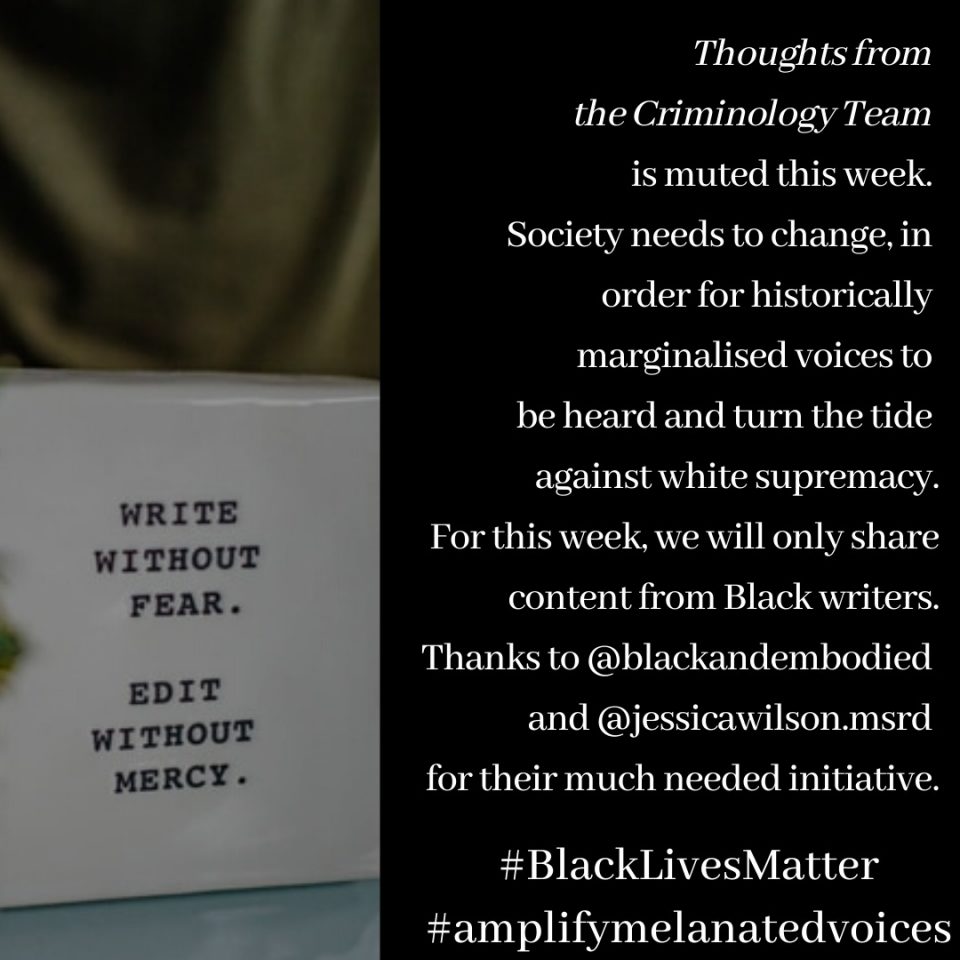
For a week in June, the Thoughts from the Criminology Team muted all their social media to make space for the #AmplifyMelanatedVoices initiative from Alishia McCullough and Jessica Wilson This was a tiny gesture in the grand scheme of things but refocused the team’s attention on making sure there is a space for anyone who wants to contribute.
Whether this new found interest in Black Lives Matters and discussions around diversity, racism, decolonisation and disproportionality continue, remains to be seen. Hopefully, the killing of George Floyd, alongside the profound evidence of privilege and need made evident by the pandemic, has provided a catalyst for change. One thing is clear, everyone knows now, we can no longer hide, there are no more excuses and we all can and must do better.
This year some old faces left for pastures new and we welcomed some new colleagues to the Criminology Team. If you haven’t already, you can read about our new (or, in some cases, not so new) team members’ – @jesjames50 @haleysread and @amycortvriend – academic journeys to becoming Lecturers in Criminology.
Finally, looking back over the last 12 months, certain themes catch my eye. Some of these are obvious, the pandemic and Black Lives Matter have occupied a lot of our minds. The focus has often been on high profile individuals – Captain Tom Moore, Joe Wickes, Marcus Rashford – but has also shone on teams/organisations/institutions such as the NHS, carers, shop workers, delivery drivers, the scientists working on the vaccines, the list goes on. Everyone has played a part, even if that is just by staying at home and out of the way, leaving space for those with a frontline role to play. Upon reflection it is evident that the over-riding themes (and why @5teveh was right last year) are ones of kindness, of going the extra mile, of trying to listen to each other, of reaching out to each other, acknowledging unfairness and privileges, recognising the huge loss of life and the impact of illness and bereavement and trying to make things a little better for all. Hope has become the default setting for all of us, hope that the pandemic will be over, alongside hopes that we can build a better world with its passing. It has also become extremely clear that critical thinking is at a premium during a pandemic, with competing narratives, contradictory evidence and uncertainty, testing all of our ability to cope with change and respond with humility and humanity.
There is no doubt 2020 has been an unprecedented year and one that will stay with us for ever in the collective memory. Going into 2021 it’s important that we remember to consider the positives and keep trying to do better. Hopefully, in 2021 we will get to celebrate Criminology’s 21st Birthday together
Remember to stay safe, strong and well and look out for yourself and others.

Share this:


Twenty Twenty Won: New Year, New MBE
Part 2 of a Two-Part Post
When I have had discussions with students and even academics about empire or the violence of the English state, it always interests me to hear the excuses as to why white people may have less of a reason to turn down a British Empire medal when it comes to the Queen’s Honours. There’s this idea that the violence of the British Empire only impacted those who were visibly not white. Whilst you cannot necessarily alot a skin colour to Ireland, it is a stereotypical white place, and hasn’t had Black populations for a long time (Dabiri, 2019). Ireland was also a testing ground for British colonialism. There is a very good reason why so many of my Irish colleagues are anti-imperialist. It’s almost as if, in discourses about not only the British Empire but the history of the English monarchy in relation to its neighbours (Scotland and Wales too), there is a historical amnesia, including the history in the title of the ‘ Prince of Wales’ dating back to the twelfth century.
In 2017 actor Michael Sheen quietly gave up his OBE so he could openly criticise the Royal Family without being labelled a hypocrite. Before the twelfth century, the title ‘Prince of Wales’ was held by native Welsh princes. Edward I, an English king, gave his son, Edward, the title, the first English prince of Wales in 1301. Sheen elected to give up his OBE after doing research for his 2017 Raymond Williams lecture. Learning about his native Welsh history, he saw he could not both do this lecture and hold on to his medal. In conversation with Owen Jones, Sheen talks about how in 2018 there was push to rename the second Severn Crossing the ‘Prince of Wales Bridge’, later recieving a petition against it garnering over 30,000 signatures. History holds power and the reason why Edward made his son Prince of Wales was to help quash the Welsh ‘rebellion.’
The reasons why some reject Honours are in many cases much ado with the British Empire but the violence committed by the Royal Family to its neighbours far predates our contemporary views of what defined the colonial project. Robert van Krieken (2011) states that looking at Irish history “makes it possible to see the extent to which the English conception of ‘the savage’ and indeed of the whole colonial project was anchored in the perception of the Irish and ‘Irishness’.” This dates back to the twelfth century and English encounters with the Irish, Welsh and Scots “constituted an important watershed in the development of what both civilization and barbarianism were…” So concepts that were donned on Black and Brown people during colonialism through racist science, actually originated with the othering of those also racialised as white.
In November 2020, activist Gina Martin declined an OBE concerned about its ties to oppression and the British Empire. She was being honoured for her activist work, namely the anti-upskirting campaign that lead to the construction of the Voyerusim (Offences) Act 2019. Over the years, many have declined honours, from Ken Loach and Nigella Lawson to Benjamin Zephaniah and Howard Gayle. Today, when ethnic minorities more generally accept or decline these awards, it is deeply politicised. In accepting one, you will be judged as ‘selling out’ to the establishment and in declining one, there is a possible interpretation of you being ‘too angry’ or ‘political’, and the worst of all ‘ungrateful’ to the country you live in. And the connotations of gratefulness in the context of Black people, Brown people and immigrants is a story also worth telling.
A good portion of the people I would call role models (to varying degrees) have them, from some of my favourite actors to empire historians, filmmakers and activists. In the New Year, Lewis Hamilton is set to add a knighthood to his MBE. Both my grandfather and Lewis Hamitlon’s grandfather grew up on the same hill in Grenada. As children, they would race carts down the hill together. Seeing Lewis Hamilton come out for the Black lives matter movement as he did during the summer was a positive. He already had an MBE at that point. However, now in seemingly accepting a knighthood as well for contributions to sport, I am asking more quesitons. Perhaps he’s virtue signalling off the back of this new pro-Black consciousness. In his knighthood, I am reminded of the stories of how Leapers’ Hill in Grenada gained its name… how the First People jumped from the hills to their deaths to avoid capture and/or enslavement. Or that’s the European version… seemingly if we knew the real details, this would be a gross understatement of what actually happened!

The Honours list raises more concerns for me about the face of Black activism in Britain, very much one that is establishment. Despite the success of Small Axe, Steve McQueen like Lewis, has two honours, a knighthood and a CBE. During the summer, we saw David Olusoga OBE deliver a brilliant MacTaggart lecture on race and representation in the media, and a video on white privilege by John Amaechi OBE went viral. I have also seen people awarded honours for contributions to equality, diversity and inclusion… oxymoron much? In Marcus Rashford, I see someone that was a victim of his MBE, with possible pressure from his family to accept at such a young age. Would he have had to campaign for free school meal vouchers for children, had it not been for the Government’s 19th century policies and ideologies? The answers I get to my dislike of the Honours system is that it allows change from within. But I wonder, how can you put a fire out from inside the house?
In the face of Black activism and those speaking out on television, there is a large whiff of Black exceptionalism and unsaid thoughts of them being “some of the good ones”… the voices of the Black working-class are lost, and a few Guardian articles isn’t enough.
The fact ‘British Empire’ is also in the title is another problem, linked to the idea that the Royal Family hand out these medals based on recommendations from Government. The most ironic one of late being Marcus Rashford, it almost feels like the powers that be had the last laugh. In discussions about the Honours system and change from within, I would ask you to think about Audre Lorde’s ideas about power as “the master’s tools will never dismantle the master’s house. They may allow us temporarily to beat him at his own game, but they will never enable us to bring about genuine change.” The tools of colonisers were not designed to liberate the colonised; Whiteness cannot be used to dismantle White supremacy; “this fact is only threatening to [those] who still define the master’s house as their only source of support.” (Lorde, continued). There is an African proverb that states “the child who is not embraced by the village will burn it down to feel its warmth.”
Those three letters after your name are one problem, historical amnesia is another; however, the biggest one of all is how activists and community campaigners still take emblems to empire undermining the integrity of all activist movements. Not every activist/campaigner with Honours feels disowned by their community, but we need to be careful in what local leaders accept from the local/national ivory towers, so those working to tackle inequalities in our communities do not end up looking like hypocrites.
Share this:


A Christmas blog
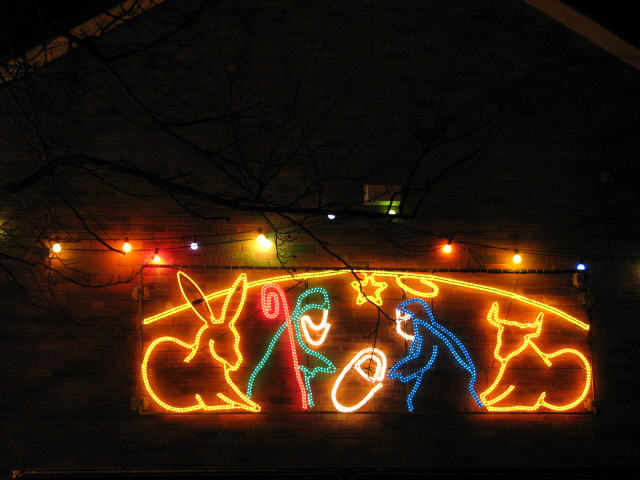
What is Christmas? A date in the calendar in winter towards the end of the year to celebrate one of the main religious festivals of the Christian calendar. The Romans replaced a pagan festival with the birth of the head of the, then new, religion. Since then as time progresses, more customs and traditions are added, to make this festival more packed with meaning and importance. The gift of the 20th century’s big corporations was the addition to the date, the red Santa Claus who travels the planet on his sledge from the North Pole in a single day, offering gifts to all the well-behaved kids. The birth of Christ is miles away from the Poles but somehow the story’s embellishment continues.
In schools, kids across the world will re-enact the nativity scene, a romantic version of the birth of Jesus, minus their flight to Egypt and the slaughter of the infants. The nativity, is for many, their first attempt at theatre and most educators’ worst nightmare, as they will have to include all children regardless of talent or interest to this production. The play consists mostly of male characters (usually baby Jesus is someone’s doll) except for one. That of the mother of Jesus. The virgin Mary is located centre stage, sitting quietly, the envy of all other parent’s that their kid was not cast in such a reverent role. In recent years, charlatans tried to add more female roles by feminising the Angels and even giving the Inn keeper a daughter or even a wife. In most cases it was the need of introducing more characters in the play. Most productions now include barn animals (cats and dogs included), reindeers, trees, villagers, stars and even a moon. All castable parts not necessarily with a talking part.
The show usually feels that it lasts longer than it does. The actors become nervous, some forget their lines, others remember different lines, the music is off key and the parents jostle to get to prime position in order to record this show, that very few will ever watch. The costumes will be coming apart almost right after the show and the props are just about holding on with a lot of tape and superglue. The play will signal the end of the school season carrying the joyful message from the carpark to the people’s homes. This tradition carries on regardless of religious sentiments and affiliations. People to commemorate the birth of a man that billions of people consider the head of their faith.
Nativity is symbolic but its meaning changes with the times, leaving me wondering what our nativity will be in the 21st century. Imagine a baby Jesus floating face down on torrential Aegean waters, a virgin Mary hoping that this will be the last client for the day on the makeshift brothel maybe today is the day she gets her passport back; Joseph a broken man, laying by the side of the street on a cardboard; the angel a wingless woman living alone in emergency accommodation, living in fear, the villagers stunned in fear and everyone carrying on . Not as festive as the school production but after all, people living for year in austerity, and a lockdown and post-referendum decisions make it difficult to be festive. Regardless of the darkness that we live in, the nativity has a more fundamental message: life happens irrespective of circumstances and nothing can stop the birth of a new-born.
Merry Christmas to all from the Criminology Team
Share this:


#CriminologyBookClub: The Strange Disappearance of a Bollywood Star
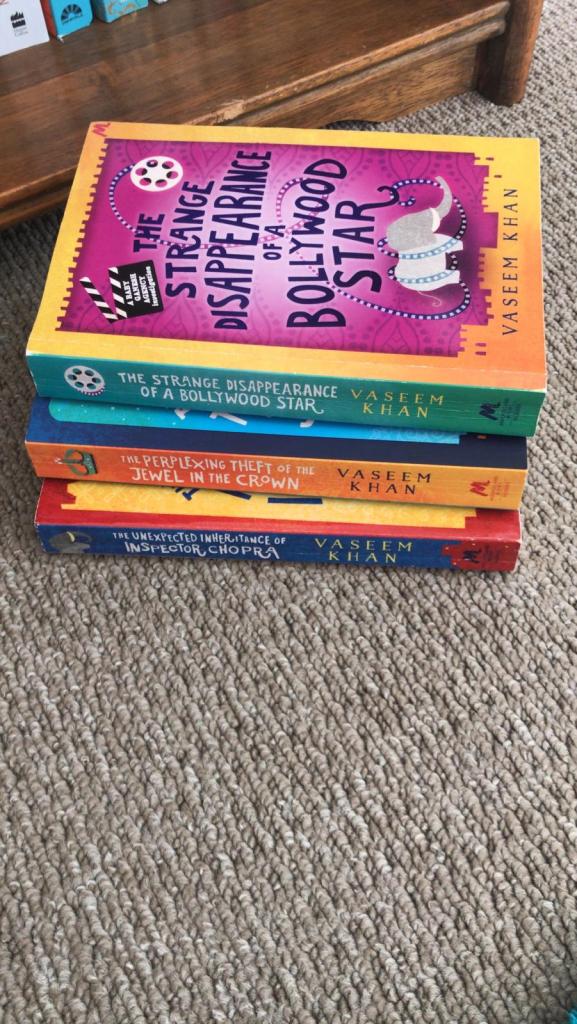
As you know from our last #CriminologyBookClub entry a small group of us decided the best way to thrive in lockdown was to seek solace in reading and talking about books. Building on on what has quickly become standard practice, we’ve decided to continue with all bloggers contributing! Our seventh book was chosen by all of us (unanimously) after we fell in love with the first and second instalment. While we struggled with fitting in the discussions of book club, due to the rigours of an academic term, we all found space for reading about the adventures of Inspector Chopra (retired) et al.:
I find the predictable happy endings of Vaseem’s novels to be quite comforting, especially during such an unprecedented time. What I enjoy mostly about these novels is that each has a moral message. In this novel it is characters like the blind homeless teacher, the prison inmates and the eunuchs that remind me that we should all try to be better people, as this will help to build a better society. The Chopra series continues to be a top lockdown read.
@haleysread

The 3rd mystery for Inspector Chopra brings him to the glittering world of Bollywood. An unusual place for the inspector and his pet elephant who seems to enjoy the attention conjuring images of other elephants working in the entertainment industry. This instalment of the crime mystery novels seemed to have matured the characters, giving their relationships more depth. Even the acerbic mother-in-law grows in ways to give us a greater understanding of their lives. The combination of the everyday with the obscure is done seamlessly and makes the surrealism even more profound. Even the pachyderm, gains more of a character reaching the intellectual age of a rebellious teenager. In the end, the mystery is solved, revealing some more social injustices behind the façade of the sparkling movie industry. As always we are left, wanting more.
@manosdaskalou
The third Chopra book was a welcome return to familiar and colourful characters. This was my favourite book in the series so far for its strong themes of kindness and reflections on what it means to be a good person. The subplot was just as gripping as the main story and lovely Ganesha kept me smiling throughout.
@saffrongarside
You could be forgiven for ignoring the plaudits on the first page of most novels, consigning them to the usual blurb written by reviewers that feel the need to say something nice to aid publicity and sales. In this case you would be foolish to ignore the plaudits, if anything they are somewhat understated. Having read the first two books in the series I picked this up with anticipation and excitement. I wasn’t disappointed. Transported to a world of vivid colour, pungent and aromatic smells and the hubbub of a bustling metropolis, the description of Mumbai and its citizens fuels the imagination and leaves the reader eagerly turning pages. The bifurcation of the storyline means there is never a dull moment, Insp. Chopra (retired) has his hands full and as a consequence ‘The Baby Ganesh Agency’ has to make use of its ever-increasing, albeit quirky staff and associates. And so Rangwalla, Chopra’s sidekick finds himself in a rather trying and unusual circumstance. Of course, what is now becoming the indomitable Ganesh gets his usual share of adventure and inevitably saves the day at some point aided by Poppy, Chopra’s wife and rock. The book is a triumph as it provides wonderful descriptions of both the lighter and darker side of the city and its residents. As usual good triumphs over evil but in the case of Chopra’s nemesis, ACP Rao, the door has been left firmly open for more mischief to come.
@5teveh
Rarely do I get the opportunity to read a book that I struggle to put down. A book that put a smile on my face and gave me a warm feeling at its conclusion.
The third instalment of Chopra and gang is just as delightful and entertaining as the previous novels. For me, the third story in the series has crossed over to the fantasy genre, whereas the previous two were toeing the line. I want to make it abundantly clear: this is not a criticism of the book. I still loved every page, as I have with the others. But for me, when reading I felt as if I was in a fantasy world with villains and heroines, magical elephants and mystical tales. The realism was somewhat lost on me this time around.
What I absolutely adored about ‘The Strange Disappearance of a Bollywood Star’ was how Vaseem Khan beautifully tackles the topic area of prejudices. Rangwalla’s journey in this book was possibly my favourite aspect of the Inspector Chopra series so far. Rangwalla attempts to face his prejudices; and in a way that mirrors reality. Vaseem has reminded us through Rangwalla’s experienced that our prejudices need to be constantly put in check, and this requires a conscious effort from us all. Roll on book number 4!
@jesjames50
If ever a year called for some escapism, 2020 certainly did. Fortunately, @vaseemk2’s tales of Inspector Chopra et al. have provided that, in bucket loads. The books transport me to a place I’ve never been, the heat, the colour and the vibrancy recreate India in front of my very eyes. The third volume in the series, is probably my favourite to date. The sparkling glamour of Bollywood, juxtaposed against dark issues of discrimination, prejudice and social injustice, creates a story which will stay with me. In particular, the bringing to life of the eunuch community and the recognition that prejudice is within us all and can be combatted, gave me a great deal of pause for thought. With it’s overarching themes of kindness and striving to do the right thing against all odds, this book captures the (hopefully) enduring lessons of lockdown, that we all need each other.
@paulaabowles

Share this:


Covid -19: An opportunity too good to miss
And so, vast swathes of the country have gone into a new lock down (tier 4). We all must have known in hearts that this was coming and those of us that are not in tier 4 will be wondering just when the new lock down will hit us. We can all moan about our ruined Christmas and feel bitterly disappointed about not seeing relatives and friends. We can blame Boris for this monumental cock up, but we have to face facts, Covid -19 is here and something has to be done to stop the spread of the disease.
I, like so many, am upset that I will not be able to see my family in person this Christmas but over the last few days I began to wonder just how much of a hardship that is. There was a man on the news the other day that was moaning about the Christmas restrictions, he and his wife had a 15 lb turkey that was now going to waste. My first thought was, so you’d rather catch Covid you *^&$£” **. But this morning I thought, aren’t you lucky to have a 15lb turkey and, as my wife and I discussed whether we will be having a roast on Christmas day and the Sunday after, I thought aren’t I lucky too. There are two things that strike me, I’m able to have what food I want on Christmas day and I’m saving a bloody fortune not having to have all the family round or take them out for Christmas dinner and drinks. The pandemic has some upsides.
But, this is the crux of the matter, how can I sit down to my Christmas lunch knowing that I have money I would have spent sitting in the bank when there are people out there who will be wondering right now, not about the massive turkey, or the family not coming round, or whether to have chicken on Christmas day and Sunday but, whether they can feed themselves and their family tomorrow, let alone Christmas day. We could of course blame Boris and his government (a very rational decision) but judging by Reece Mogg’s comments the other day, they have little interest. We could just ignore it, don’t think about it, pretend all is well and on Christmas day raise a glass to our nearest and dearest and those that we are missing. But as we must face facts that Covid – 19 is here, so must we face facts that people, real people, are starving in this country. It shouldn’t be like that, but it is.
So my wife and I have decided that we will work out how much extra we would have spent this Christmas, by going out, by going to parties, by catering for family and we will spend that money on food and give it to a food bank. It won’t be very much in the greater scheme of things, but it will be something. I’m not writing this blog to say how marvellous we are, far from it, but rather to challenge all of you to do the same. Even a little extra in your shopping before Christmas is going to make a huge difference. Let’s turn this Christmas into one we can remember for the right reasons and turn the Covid- 19 pandemic into an opportunity that we seized for the good.
Please see below for a list of local and national organisations helping families this Christmas and throughout the year:
AmplifiedNN Community Group
AmplifiedNN Festive Family Fundraiser
Northamptonshire Food Poverty Network
Share this:


Reality and the fairy tale world of policy and procedures

In the concept of managerialism, we see that both policy and procedures form part of the techniques employed to enhance productivity and cultural changes. These changes use a ‘calculative and rationalistic knowledge base’ which appears both ‘universalistic’, and [at first sight] ‘seems entirely good sense’ (Gilling, 2014:82).
However, this knowledge base is far from universalistic and to the ‘street level bureaucrat’ (Lipsky, 1980) often falls little short of complete naivety. Lipsky (2010) provides a valuable insight into how individuals in public service adapt unworkable policies and procedures as the idealistic meets the reality of overstretched resources and ever demanding and needy consumers of services.
Whilst both working in and studying the police as an organisation subjected to and adopting managerialist policies, I witnessed the nonsensical notions of measuring activities and the subjugation of professionalism to management ideals (Hallam, 2009). Perhaps, there could be no better example than the measurement of the length of time a call handler spent dealing with a call. This derived from the need to answer calls within a target time period. It all made sense until you begin to take into account reality – the lack of resources and the nature of calls which demanded that on some occasions operators ought to spend far longer on the phone to deal with more protracted matters, such as someone in crises who really needed help and a comforting voice whilst someone was on their way. The result of the measurements was often counterproductive, officers being sent to incidents that amounted to little more than a waste of time, ‘My Jimmy is missing and I haven’t seen him for three days’ – when the officers turn up, Jimmy turns out to be a cat or, officers being sent to locations where information regarding the incident is scant because little time has been spent on the phone to get sufficient details. In the clinical world of the policy maker, there are ideal call takers, those that have knowledge about every eventuality, and ideal call makers, those that are precise, unemotional and to the point. Nothing of course could be further from reality.
Disappointingly, I find little solace in academia. Policy and procedures abound. Teaching styles are based, not on the nuances of student types but on the ideal student. The student that has the requisite skills to read and write and think critically. The student that is always engaged and always turns up and above all else, teaching is based on idealistic (see Morse and Lewis for tutorial sizes) small student classes. Policies that are well meaning such as catering for additional needs, become unworkable in an environment where class sizes and teaching demands outstrip available resources. Like the call handler, for the lecturer, it becomes impossible to cater for those that need more attention and time. And like the call handler, lecturers are subjected to managerialist idealistic measurements of success and failure. I once heard of a manager that referred to academics as ‘slackademics’, I think is probably just an indication of how far removed from reality managers are. There are two worlds in organisations that provide a service to the public, one is based on reality the other, a fairy tale world of policies and procedures based on the ideal.
References
Gilling, D. (2014) Reforming police governance in England and Wales: managerialisation and the politics of organisational regime Change, Policing and Society, 24 (1): 81-101.
Lipsky, M. (2010) Street-Level Bureaucracy: Dilemmas of the Individual in Public Services. New York: Russell Sage Foundation.
Share this:


Don’t resign Steve McQueen’s ‘Education’ to history, the sector is still failing Black students
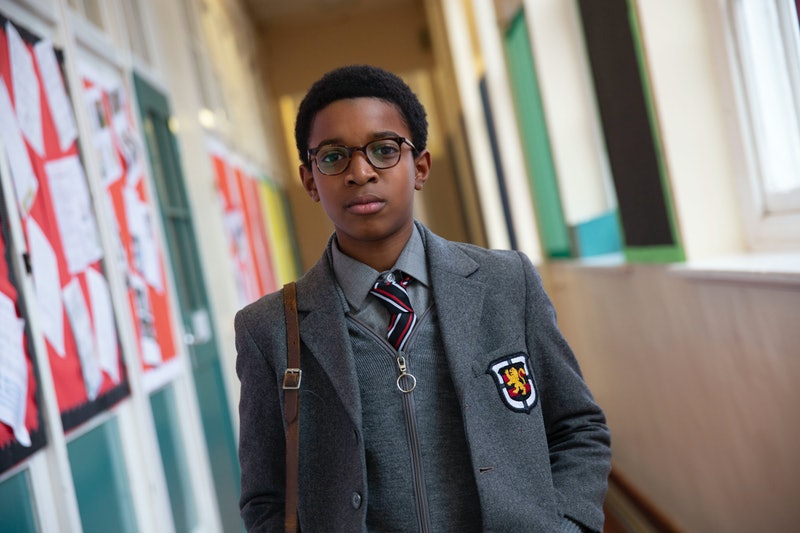
Watching last night’s finale to Steve McQueen’s Small Axe took me back to when I was at school. Unknown to many, I was a student that was considered Special Educational Needs [SEN]. Today, as a Black Caribbean SEN boy I would be 168 times more likely than my white counterpart to be excluded (Crenna-Jennings, 2017). I had extra classes and was in the minds of the white education system “educationally subnormal” [ESN]. How my experience of school differs to a good many Black students in this country though, in that I was at private school. Being the only Black student in the school to then need extra classes to keep up has a specific set of connotations. Looking back on this part of my personal history now, shows me that did I really need extra classes, or does education still not know how to treat students as individals? Moreover, is the system not designed for such an endeavour? The added invisible disability of dyspraxia also brought its own challenges. So, last night, I know if I was a boy in the 1970s, I would have been put in an ESN. No doubt about it.
McQueen’s picture has also cast my mind back to earlier on in the summer, when the cancelling of A-Level and GCSE examinations saw a resurgence of discussion about the embedded racism in the education system… when Race Equality specialist Sofia Akel wrote “predicted grades are a lottery of privilege where Black students almost always lose.” Unlike me, many Black students in this country, just like Kingsley go / went through the state system, just like my parents did during the 1980s. And I know my grandparents, also from Grenada, would remember the publication of Grenadian politician Bernard Coard’s seminal pamphlet How the West Indian Child is made Educationally Sub-normal in the British School System (1971).
Those schools no longer exist as those schools, they’re simply called “Pupil Referral Units”, or the same students that would be put into an ESN are today now excluded, Black Caribbeans disproportionately (Department of Education), along with Irish Traveller and Roma students, respectively… however, stats do not give you context.
Roma and Irish Traveller communities in Wales, for example, do not typically engage in the mainstream school system to the same levels as other ethnic groups (Fensham-Smith, 2014) and in the UK at large, we are some way from removing those barriers to this community (Hamilton, 2017). So, to see the data to also include this community despite so few of them in mainstream education, is a damning indictment as a whole. However, exclusion/isolation data for Black Caribbeans is also shocking and it has precedent going back 50 years.
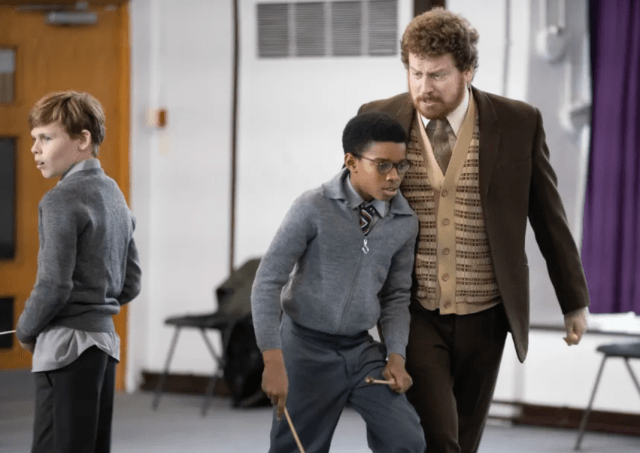
Growing up, my mother and godmother started the Garvey Saturday School (2010) to combat the barriers facing Black Caribbean students in Northamptonshire. Amongst Caribbean communities, especially women in my experience, education is thought of as vital part of life, much alike breathing. Especially being around my mother’s friends, my aunties, grandmothers, women cousins… the passion about education was at the centre of Caribbean matriarchs and I hold fond memories of them telling me to study. But above that, learn, and to find something I was passionate about. Akel goes on to discuss the long-held idea that Black people must “work twice as hard to get half as far, an adage that has very real implications in 21st century UK schooling.”
At the higher end of the educational chain at universities; as a sabbatical officer it was evident to see the number of Black students being pulled through disciplinary panels in both housing misdemeanors but also assessment offenses (academic misconduct). What were then called ESNs in the school system are now Pupil Referral Units that set up Black students for jail, whilst simultaneously those university disciplinary panels feeling a lot like what I believe a police custody interrogation to feel like. Schools set students up for prison, especially Black students, and higher education is simply another violent institution should that student avoid the jail cell schools set them up for. And the hegemonic processes at schools (and universities) “are based in assumption about what embodied discipline looks like” (Graham, 2019: 132).
By showing the trajectory that Black students go, from the moment they enter the education system, private included (it just has differences), we are able to see the nature of the beast of racism in the education sector to the point that my colleague Liz Pemberton AKA The Black Nursery Manager runs an establishment in Birmingham that prides itself around issues of race and culture, very much catering for Afro-Caribbean children. You would think there isn’t racism in Early Years, right? Wrong. Liz has been doing some sterling work and I recommend you all follow her on Instagram and LinkedIn, and it truly shows to critique racism in education we also need to look at Early Years.
Presented by David Harewood, in 2017, the BBC aired the documentary Will Britain Ever Have a Black Prime Minister? (above). It explored the chances of a Black British child progressing through life via the education system, from the biased marking of in-school test scores to university chances and independently-marked GCSEs (where markers don’t know the student’s ethnicity). This was backed by research from Professor Simon Burgess that shows teachers that know their students, have a clear bias (not that unconscious). The finale to Steve McQueen’s Small Axe makes me think to education and COVID and looking at the impact that predicted grades have on Black students in a system that is already rigged against them, even outside of the grades part.
Even after Black students slog through school fighting off all numbers of barriers, they then come to the ivory towers of academia and UCAS, very much following the tradition of structural racism entrenched in the education system, as Black students are also twenty-two times more likely to face investigation by UCAS’ verification services compared to their white counterparts (Busby, 2018). Despite slogging through Britain’s education system as I have, my struggle was less so without the added layer of class. Even in my experience, at that time, I drew the golden ticket of privilege of private education where my only challenge was racism. Classism was there, not in the barriers to access but more the prejudice because I came from that background.
Bernard Coard’s seminal pamphlet is as relevant now as it was in 1971; the ESNs have changed their face but Black students continue to be failed by the education system at every level, from Early Years and Primary, to Secondary, Further Education [FE] and universities, don’t even get me started on the experiences of Black educators in schools and higher education… that’s for another blog for another Monday. Indeed!
Referencing
Frensham-Smith, Amber (2014) Gypsy and Traveller Education: Engaging Families – A Research Report. Cardiff: Welsh Government. Available: https://dera.ioe.ac.uk/21443/1/141125-gypsy-traveller-education-engaging-families-en.pdf
Graham, Karen (2019) The British School-to-Prison Pipeline. In: Andrews, K and Palmer, Lisa Amanda. Blackness in Britain. London: Routledge. pp.130-142.
Hamilton, Paula (2017) Engaging Gypsy and Traveller pupils in secondary education in Wales: tensions and dilemmas of addressing difference. International Studies in Sociology of Education. 27(1). pp. 4-22. Available: https://www.tandfonline.com/doi/pdf/10.1080/09620214.2017.1377100?needAccess=true
Share this:


Black people have every right to question western science
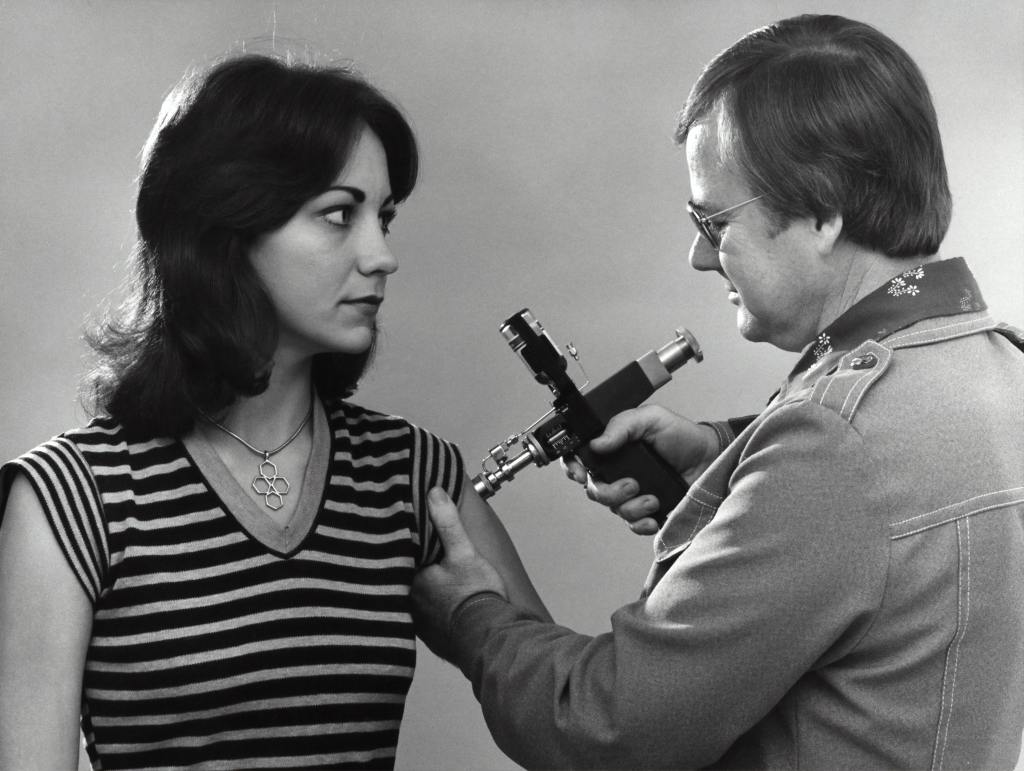
As vaccines are now being rolled out across the UK, Black people are questioning not only whether they should take it, but also the intergity of the vaccine. Does it have their welfare at heart? Whilst vaccines historically have done a lot of good for communities in battling against disease, it cannot be forgotten that science and medical trials under the umbrella of “colonial medicine” do not have a flattering past in the context of African diasporic peoples. However, we also know that for the vaccine to have maximum impact Black and Brown communities need to take part as well. We are the global majority and the vaccine will essentially fail without us. Coronavirus disproportionately impacts Black Africans and Caribbeans but also South Asians. Without everyone’s participation, there could come a day when people are laying blame for the continuation of Coronavirus in the UK on ethnic minority groups that don’t trust it.
Despite being tagged to a YouTube video (urgh), an ill-thoughtout tweet that went viral by Small Axe star Letitia Wright asked questions about the integrity of a vaccine, only for her to later delete the tweet/her account when the torrents of abuse came.
The disproportionate outcomes with the Coronavirus show Black people in the UK and the United States as part of the groups most likely to die from issues relating to the disease. In Britain, a Channel 4 documentary entitled Is COVID Racist? shows that it’s not the disease as a singular entity that is killing us off at a disproportionate rate, but entrenched inequality, including poverty and structural racism. The first ten NHS staff to die from COVID-related afflictions were from a Black, Brown or ethnic minority background. A 100% death rate is unheard of and now two thirds of NHS deaths from the virus are from a Black, Brown or ethnic minority background.
By itself, Coronavirus is not racist but the environmental factors that plague Black and Brown people are, which then adds to the biological weathering: from nearly 3 in 5 ethnic minority UK households in poverty, to being stopped and searched on the way to work, these are the sorts of things that consistently add to the biological weathering.
When we look at the history of science in the West, in the context of the Africann diaspora it is not pleasant reading. Surveys done in both the United States and England show a mistrust in this vaccine with Black and Brown groups, whilst white people seem more likely to get the vaccine at large. With specifically Black communities, why they are less likely to get the vaccine could be a whole number of factors: from the history of experimentation on Black people throughout the colonial era to how Black people have been treated during the pandemic and lockdowns by society as a whole. Really, to think (all) institutions have your best interest at heart comes with degrees of privilege. In this case, one could conclude, a white privilege.
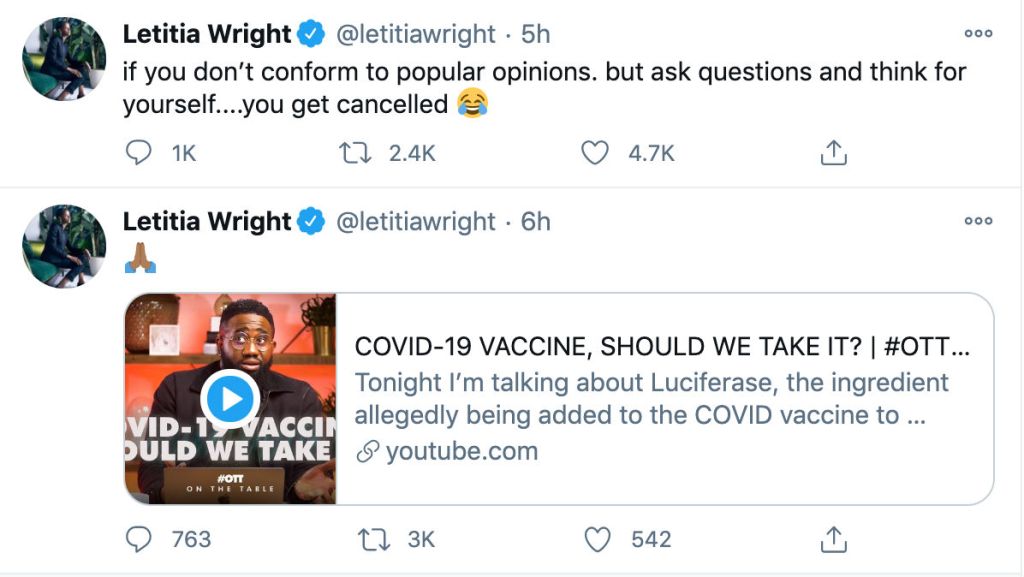
Growing up as I have, around Caribbeans who have a very real experience of white supremacy on those islands, but also when they came to this country as immigrants, it’s not really surprising to see vaccine scepticism. Caribbean interraction with white public bodies has rarely been positive. But vaccines have been one of the most effective things to help communities in the last century. However, there have been mistakes; and for Black communities, there have been outright acts of violence committed against us in the name of “science.” Despite a good safety record, there is a history of untold untaught horrors committed against Black people in the name of science and “public good.” It would do us well to not lump their scepticism of vaccinations with the anti-vaxxers that get their info from YouTube hacks. Black people asking questions about vaccines can be viewed as a Black lives matter issue, since there is a legacy of poor medical treatment and dubious practices.
To understand the roots of why there are activist movements to make Black lives matter, we need to understand the racial pseudoscience that underpinned racist colonial ideology. Even prior to colonialism as we know it, contempt for Black dignity is beyond reasonable doubt. Bristol University professor Olivette Otele writes about how European fourteenth century medical scholars drew on Aristotle’s ideas about blood and heat, arriving at the conclusion “that the milk of black women had more nutrients … the body heat of dark and dusky women rendered their milk more digestible and therefore better quality for the child” (2020: 28).
However, the thinker that has done untold damage to how Africans are seen was historian Edward Long, a slaveowner and the son of a slaveowner, with his ideas about Black people and Africa widely accepted as scientific fact in his day, even though he was not even a scientist. His book The History of Jamaica donned the African continent as “the parent of everything that is monstrous in nature” (p383) with many sections denouncing Blackness and Africanness as inferior and less than human. The fact he spent twelve years in the Caribbean gave the audiences of the 18th century some “certainty” he was credible. Echoes of his work can be seen in novels that came after him by writers, including Joseph Conrad, H.G Wells and Bram Stoker. Poisonous ‘race science’ was also perpetuated by medical professionals. In the late 1700s, an English physician by the name of Charles White (1799) provided empirical science for the hierachies of race, claiming Black people had a seperate origin to white people, namely Black people came from primates and white people did not.
In Black and British, Professor David Olusoga says that the first user of Victorian “new racism” (2017: 349) was an essayist and critic called Thomas Carlyle. In 1849, he pens an essay called ‘The Negro Problem’.
See this extract:
“…till the European white man first saw them, some three short centuries ago, those islands had produced mere jungle, savagery, poison reptiles and swamp malaria till the white European first saw them, they were, as if not yet created; their noble elements of cinnamon — sugar, coffee, pepper, black and gray, lying all asleep, waiting the white Enchanter, who should say to them, awake!” (Carlyle, 1849)
Another thinker in this field was French novelist Arthur de Gobineau (1853), writing “… the Polynesian negroes, the Samoyedes and others in the far north, and the majority of the African races, have never been able to shake themselves free from their impotence.”
According to Emma Dabiri (2019), he was famous for his views on Aryanism and the concept that Black people were privileged for being allowed to exist on the lowest rungs of the racial order. Additionally, he was an aristocrat most famous for helping to legitamise racism through the use of scientific theory and “racial demography”, moreover, developing the theory of the Aryan master race.
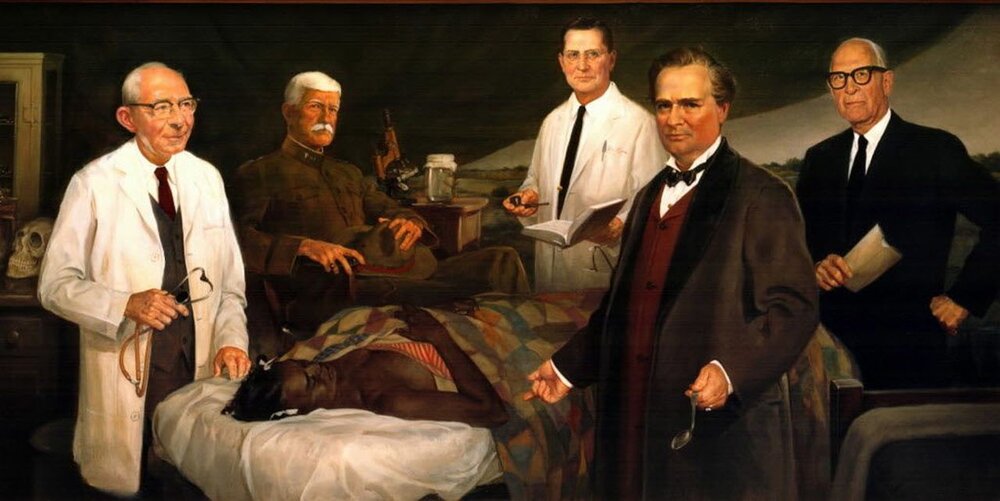
The ideas perpetuated by these academics, medical experts and so forth underpinned colonialism and enslavement. It put Black life at the bottom of the pile. We are still living with this legacy today… from overpolicing Black communities, to low expectations of Black students (Busby, 2018). This is what allowed J. Marion Simms to experiment on enslaved Black women in pursuit of what today is called gynaecology, with his unethical torturous practices. Yet, since there were intellectual justifications made by academics prior, these acts could be carried out without a thought. In the eyes of the law and in public consciousness, Black people were subhuman in colony and metropole.
The case of Henrietta Lacks and her family in the United States is another example of contempt for Black life; where her cells were taken from her before she died. They were used to study diseases without her permission and shared around the world. Moreover, in the years of French colonialism in Africa, what about the horrific experimentations carried out on Black African people? There is a precedent behind current mistrust.
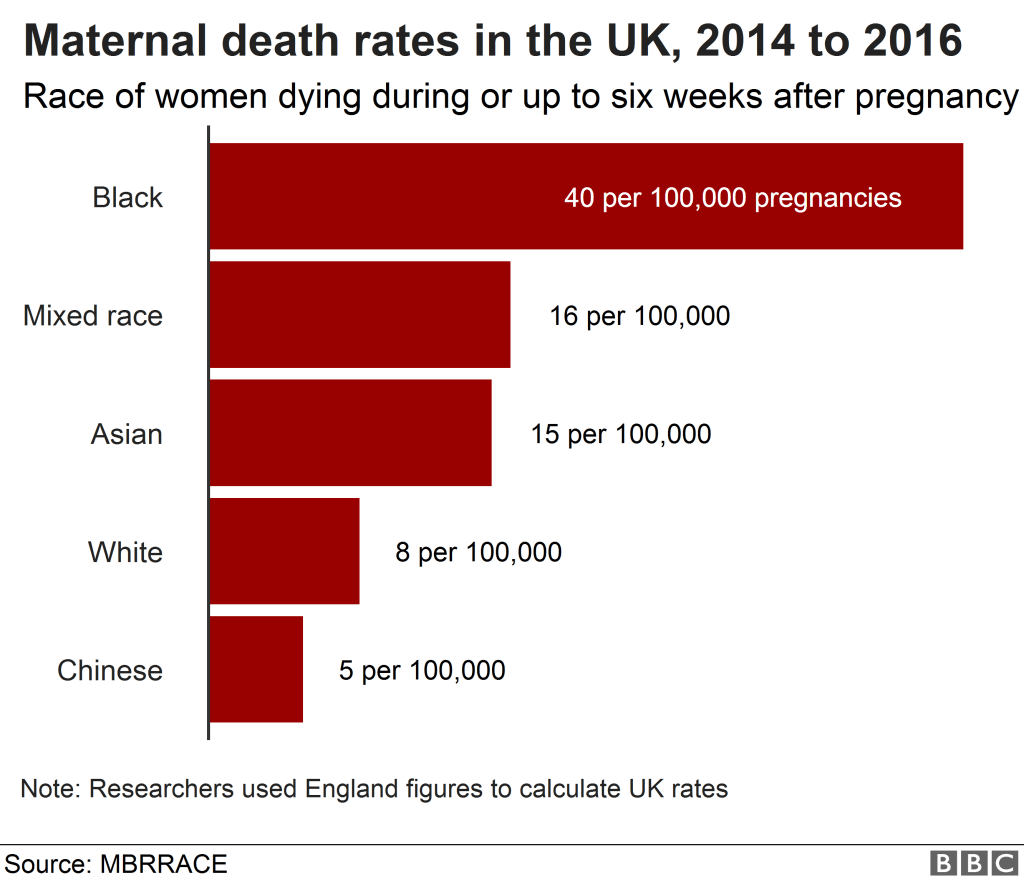
African diasporic vaccine scepticism may be inspired by the trend set by history but it also may have something to do with the present, where Black people continue to be treated with contempt by healthcare and medical services. Disproportionate deaths from Coronavirus is just one example. In the UK, Black people are four times more likely to be detained under The Mental Health Act (DoH, 2019/20) and Black women are five times more likely to die from childbirth or related complications (MBRRACE UK, 2019). Additionally, on the African continent itself, there has been discussion around concerns about a number of clinical trials such as the malaria trial by World Health Organization [WHO]. Furthermore, a legal battle between Pfizer, and Kano in Nigeria over the tests being done on Trovan, a drug to combat meningitis.
There is a Black history to clinical trials and science that isn’t being taught or widely known. This is the irony that the people disproportionately impacted by Coronavirus (significantly helped along by systemic inequality) are also the same people hesitant to take a vaccine. However, these same communities don’t trust the system because of history and a contemporary where the system has not worked for them. If the UK government wants Black people to take a vaccine (not necessarily this current one), they need to change the messaging around COVID, like government aides and advisors saying institutional racism doesn’t exist. Whilst the history articulated so far is damaging on racial grounds, there are also histories written in violence in the context of gender, class, sexuality and disability as well – from electrock therapy to eugenics.
The story of Black communities’ historic interactions with western science/scientists is damning; the present contemporary narrative of healthcare’s interactions with Black UK and Black American communities is also damning and both are well evidenced, there’s lots of improvements to made on both sides of the pond and we can do better.
Referencing
Carlyle, T (1849) “Occasional Discourse on the Negro Question” Fraser’s Magazine for Town and Country (London, Vol. XL., February 1849). Available from:
https://www.hetwebsite.net/het/texts/carlyle/carlyle1849negroquestion.htm
Dabiri, Emma (2019) Don’t Touch My Hair. London: Allen Lane.
De Gobineau, J, A (1853) The Inequality of Human Races. London: William Heinemann. Available: https://ia800501.us.archive.org/27/items/inequalityofhuma00gobi/inequalityofhuma00gobi.pdf
Long, E (1774/2002). The History of Jamaica, Volume 2: Reflections on its Situation, Settlements, Inhabitants, Climate, Products, Commerce, Laws, and Government. London: Ian Randle.
Olusoga, D (2017) Black and British: A Forgotten History. London: Pan Macmillan.
Otelle, Olivette (2020) African European. London: Hurst and Company, London.
White, C (1799) An account of the regular gradation in man, and in different animals and vegetables. Edinburgh: C, Dilly. Available: https://archive.org/details/b24924507/page/n3/mode/2up

 Thoughts from the criminology team