
Home » Criminology (Page 26)
Category Archives: Criminology

‘White Women, Race Matters’: The White Man’s Burden
This post in-part takes its name from a book by the late Whiteness Studies academic Ruth Frankenberg (1993) and is the final of three that will discuss Whiteness, women, and racism.
Chapter III: Your Problem but not Your Problem
Despite women’s investment in football, at least socially, in terms of Women’s Football (much better than the men’s game in my opinion), it was interesting to observe the reactions of White men that positioned themselves as progressives when I challenged the national response to racism in the game. When we realise that ‘football hooligans’ all have jobs across sector, I would bring people to consider this is not just a working-class issue, as football is a game that transcends socioeconomic lines. This post isn’t necessarily about the violence White women have commited against me but is certainly their problem, and they could have a deciding voice of how White men act at football matches. When we consider racial hiearchies, I am reminded of the gendered components of colonialism where White men are at the top of that hierachy followed by the White woman. In spite of White women’s complicity in those histories of racism (Ware, 1992), logic dictates that White women’s privilege will have some sway when White men act in hostility to people of colour. That said, still today I find White women all too happy to take on misogyny / patriarchy but not racism / White supremacy. In this blog, I will start with a Twitter encounter where I dared to say there isn’t a “racism-in-football-problem” but a more societal issue of White supremacy. Until we start thinking about White supremacy as a political system, just as women have done patriarchy (DeBeavoir, 1949; Friedan, 1963; Davis, 1981; hooks, 1991; Adichie, 2014) and others have done class (Marx and Engles, 1848; Chomsky, 1999; Tom Nicholas, 2020), we will never solve this racism issue.
When I challenged the concept of “racism in football” in July 2021, a local BBC journalist claimed I could make it both about ‘racism in football’ and in society. The problem with this is, dominant media discourses have already stitched it all up by relegating racism to specific spaces somewhat divorced from a global system of violence. At this time as well, I saw the term ‘football hooliganism’ being used as double talk for ‘working-class thuggery’. However, to understand how football got to where it is today, we need to know how football was not originally made by the working-class.
Much alike my favourite sport cricket (Tre Ventour Ed, 2021), football started as a sport for characteristically ‘English gentlemen’. It was made for the rich by the rich to really celebrate themselves. Their game by their rules. When the working-class started to advocate for players playing for money, in its day (so the late nineteenth century), it was thought controversial. Yet, the rich controlled the boards and they could afford to play for free, taking days off for matches. The proleterians could not. Here, then you see that it came down to money, where a game made by the wealthy for them and their friends was then changed forever by working people, no less than mill and factoryworkers.

Actions that society most associates with the working-class majority today – including public fights, vandalism, brawls, and riotting in Britain are not new phenomena but has a long history going back to even before 1900 uncoincidentally coinciding with the construction of London Metropolitan Police Service in 1829 (Storch, 1975). Following the signing of the Armistice in November 1918, for example, so-called ‘race riots’ took place in no fewer than nine port communities between January and August 1919 (Jenkinson, 1996: 92). However, media footage and pictures of British riots before the Second World War have rarely been seen by the public but “…individual memories of civil disorder [in those days were] surprisingly widespread” and when riotting did happen, “governments often denied they had, and censored the newsreel pictures” (Forbidden Britain). Historically speaking, these uprisings grew out of a response to state-sanctioned violence frequently mass unemployment and poverty. Under the threat of poverty, homelessness, or even death, groups will attack shops and other structures to acquire food where “the turbulence of the colliers is, of course, to be accounted for by something more elementary than politics: it was the instinctive reaction of virility to hunger” (Ashton and Sykes, 1967: 131). Yet, the male violence that occured at the England v Italy Euro finale football match in London July 2021 has a precedent going back to the days of Walter Tull where his biographer historian Phil Vasili writes:
“In 1919, working-class Britain was in a rebellious state. Whether the war created the mood of revolt among workers – sometimes taking a horribly distorted and misguided form as we saw with the race riots – or merely speeded up the process that had been years in fermentation, is not for debate here. The fact is it happened. Families, individuals, veterans were changed by the war, including Tull, his eagerness to enlist souring to a hatred for carnage.”
Vasili, 2010: 229
On the morning of the final, I saw evidence of local Northamptonians heading to the pubs to get their fill as early as 8AM before the game that evening at 8PM (@cllrjameshill). In London, however, White (let’s be honest of course dominantly heterosexual cisgendered) patriarchal violence, was in full swing on Leicester Square, described as a “fanzone for thousands of England fans” before even two o’clock. Furthermore, according to Hutchinson (1975), “riots, unruly behaviour, violence, assault and vandalism, appear to have been a well-established, but not necessarily dominant pattern of crowd behaviour at football matches, at least from the 1870s” (p11). Whilst football today has united people across racial and class lines, many Black men of my dad’s generation (born 1971) would not find themselves anywhere near a match when they were my age or even as teenagers purely for the fact that these crowds were frequently racist and the risk of violence was significant. Today, while racism in football is largely in response to the actions of White people against Black players, there is a further history of White racism against Black fans too.
As I do not doubt that there is racism in women’s football (there is racism at every level of society), I wonder why women’s sports (especially football) is not associated with violence. Heck, other men’s sports do not have these connotations attached. We do not see it in cricket, nor do we see it in rugby to these extremes or tennis. Looking at the conversations in what happened following the game, it seemed to me that people were trying so hard to divorce this male violence from the rest of society, as if it is only specific to football. I would argue this is Britain’s soul, an unfiltered and grandiose example of the gendered racial privilege that comes with being a White man in the UK. It is very easy to stigmatise the working-class in this instance and call them “thugs”, but when we know football unites across class divides, it would do us well to consider how lots of the perpetrators were also probably middle-class as well, with jobs that permeate every level of British society: from accounting to education to sports, unions and more. That while it is incredibly easy to scapegoat them as there are histories of working-class responding with riots against state violence (no less than sports riots), we must think about how for some reason, football in particular, turns lots of men feral.
I was talking to one family member who claimed this is where men get to claim their base instincts, that violence seems to come naturally. I would need to think more on this, but it must be said that many social settings condition violence out of us, from school to the workplace. Even so, that in schools violence is punished, many students (especially boys) being placed pupil referral units. Whilst society brutalises in many ways, the pugilistic scenes we are witness to at football matches is one that is considered unsavoury by most. Men gathering together at the football … does this flick a switch? In the late nineteenth century, polymath Gustave LeBon writes about what he called “the collective mind” (1896: 2) whilst another scholar later states “the natural crowd is the open crowd; there are no limits … it does not recognise houses, doors, or locks and those that shut themselves in are suspect” (Canetti, 1962: 16). Football matches may be an apt site to discuss what the psychology profession now calls ‘crowd theory’ which was further developed on by psychologist Neil Smelser analysing the American ‘race riots’ in the first half of the last century (1962: 253, 260-61).
In my last post, I talked about ‘Karen’ in relation to racist middle-aged White women that harrass Black people minding their business. Yet, one does not see White women congregating like this together in mass as instigators of violence, where if at all in my experience violence from White women has been more individualistic or covert. Though, if women friends/colleagues disagree and know more, I’m happy to be put right from their personal experience (and do more reading). Rioting, however, is frequently often hypermasculine (Gary Younge in: DDN, 2020) and so is the violence around football. The role of White women in racism can be more insidious but my encounter on Twitter with this White man comes after my many encounters with White men that think they know more than Black people about racism.
Both White men and women are complicit in White supremacy as aggressors and bystanders. To keep this on topic, every time a White woman watches a White man’s racism but stays silent, they are as bad as they are really showing how White supremacy is the symptom and racism is the problem.
Now, you have three entries. Have a think on them.
Reference
Adichie, C.N. (2014) We Should All Be Feminists. London: 4th Estate.
Ashton, T. S., and Sykes, J. (1967). The Coal Industry of the Eighteenth Century. 2nd ed. New York: A. M. Kelley.
Canetti, E. (1962) Crowds and Power. London: Gollancz.
Chomsky, N (1999) Profit over People. New York: Seven Story Press.
Davis, A. (1981) Women, Race, and Class. London: Penguin.
DeBeauvoir, S. (1949) The Second Sex. London: Vintage.
[DDN] Double Down News (2020) Black Lives Matter & The Question of Violence | Gary Younge. YouTube [online].
Forbidden Britain (1994) Riots Episode 3 [via YouTube]. London: BBC 2.
Frankenberg, R. (1993) White Women, Race Matters. MI: University Press.
Friedan, B (1963) The Feminine Mystique. London: Penguin.
hooks, b (1991) All About Love: New Vision. London: HarperCollins.
Hutchinson, J. (1975) Some aspects of football crowds before 1914. In. The Working Class. University of Sussex Conference Report.
Jenkinson, J (1996) The 1919 Riots. In: Panayi, P (ed) Racial Violence in Britain in the Nineteenth and Twentieth Centuries. Leicester: University Press, pp. 92-111.
Le Bon, G (1896) The Crowd: A Study of the Popular Mind. London: T. Fisher Unwin.
Marx, K and Engels, F. (1848/1967) The Communist Manifesto. London: Penguin.
Smelser, N. (1962/2011) Theories of Collective Behaviour. New Orleans, LA: Quid Pro.
Storch, R.D. (1975) The Plague of the Blue Locusts: Police Reform and Popular Resistance in Northern England, 1840–57. International Review of Social History, 20 (1), pp.61-90
Tom Nicholas (2020) Whiteness: WTF? White Privilege and the Invisible Race. YouTube.
Tre Ventour Ed. (2021) 22 Yards of Whiteness: ‘You Don’t Have to be Posh to be Privileged’. YouTube.
Vasili, P. (2010) Walter Tull, (1888-1918), Officer, Footballer: All the Guns in France Couldn’t Wake Me. London: Raw.
Ware, V. (1992/2015) Beyond the Pale: White Women, Racism, and History. London: Verso.
Share this:

‘White Women, Race Matters’: Fantasies of a White Nation
Chapter II: Moving Mad in these Streets
This post in-part takes its name from a book by the late Whiteness Studies academic Ruth Frankenberg (1993) and is the second of three that will discuss Whiteness, women, and racism.
If you grew up racialised outside of Whiteness in Britain or really any Anglo-European country, the chances are you will be asked “where are you from?” on a regular basis. After reading some poems on this very issue at a Northamptonshire arts and heritage festival, I was walking home only to be stopped in my tracks by a White woman probably in her late 40s / early 50s saying “people like you aren’t really British.” Whilst I have been asking myself similar questions, for a White person to do this so confidently is unsettling … they’re moving mad in these streets. In this blog post, I will discuss this racial micro-aggression, underpinned by racist epistemologies with us Black people viewed in this country as immigrant; interloper; Other, whilst simultaneously Whiteness being synonymous with “localness” (Brown, 2006). In this encounter just outside of Northampton, I was further reminded that to be Black and British in this country is to live in a perpetual state of “double consciousness” (DuBois, 1903: 1).
Rather than identify with “Black Britishness”, (a pigeon-hole in my opinion), the term ‘afropean’ (Philips, 1987; Pitts, 2020) feels much more appropriate and fluid. However, the term Karen is one I don’t particular enjoy, but the woman in question could be described as such. In using this label, I am trying to create a frame of reference for you (the audience), not allow the person in question to escape scrutiny. This woman was a Jane Bloggs, I had never seen her before and she felt entitled enough to stop me in the street and continually criticise my right to belong. For those of you local to Northampton, I was walking between that stretch of path on Wellingborough Road, between Weston Favell Centre and Aldi. This encounter reminded me of my place in Britain, where ‘British-Asianness’ (Shukla, 2016; Riz Ahmed, 2019; Shukla, 2021) and ‘Black Britishness’ have frequently been difficult to define (Rich 1986, Gilroy, 1987; Yeboah, 1988; Young, 1995; Christian, 2008; Olusoga, 2016; Hirsch, 2017, Ventour, 2020). Even amongst White subjects themselves, what it means to be British has often been a question of challenge (Fox, 2014), and when I articulated that both my parents were born in the UK (Lichfield City and Northampton), she was visiblely upset and put-out.
The term ‘Karen’ comes from a name that was frequent among middle-aged women who were born between 1957 and 1966 with its peak in 1965 (Social Security Data). The name is also the Danish rendition of Katherine associated with the Greek for pure. Yet, the meaning of the word has undergone pejoration. In sociolinguistics, ‘pejoration’ is when a positive word becomes negative over time. ‘Karen’ as it has come to be known today has uses as early as September 2016 and as we know now, Karen has become synonymous with racist middle-aged White women, often associated with their harrassment of Black people just minding their business. On my way home, this harrassment found me walking while Black. For others, it has occured shopping while Black; birdwatching while Black; jogging while Black; listening to music in their house while Black, and more. The encounters we know about are generally examples that make news headlines but there are far more examples that do not make the national press, because they are pervasive.
Writing my MA dissertation on the 1919 Race Riots, I saw even in Edwardian Britain the nationality and citizenship rights of Black people in this country were contested (Belchem, 2014: 56), both those born British subjects in parts of the British Empire and those that were in fact born and raised here (May and Cohen, 1974), in spite of their legal status under the 1914 British Nationality and Aliens Act. Today, we are asked “where you from?” underpinned by historical racist epistemologies that defined Englishness as White (Dabiri, 2021). However, even in the image of so-called multiculturalism in the UK, the Britishness of Black and Brown people still has qualifiers attached. Watching ‘Homecoming’, the finale of David Olusoga’s popular series Black and British, the historian claims “… there is one barrier that confronted the Windrush Generation that we have largely overcome, and that’s because there are few people these days who question the idea that it is possible to be both Black and British” (54:46-55:00).
My experiences as a child and as an adult still tell me that Black Britishness is an increasingly contentious question, but even more testing … to be Black and English. In August 2021, MP David Lammy defended his right to call himself Black English from a caller into his LBC show. Whilst he was later met with lots of support online, what is interesting was the numbers of Black people on Twitter that challenged him on his right to be Black and English. If English is a nationality, better yet, a “civic identity”, nobody should be argueing someone’s right to choose where they belong. Furthermore, David Olusoga’s comments in ‘Homecoming’ seem blinkered and out of touch with people on the ground that still experience this epistemic racism on a daily basis. Especially my generation navigating the superhighways of identity where as one scholar writes, “The BBC had a whole series dedicated to ‘Black Britishness’ [Olusoga’s], which essentially amounted to propaganda for the idea that we are now accepted as part of the nation …” (Andrews, 2019: xiii).
My encounter with the woman on the street is one more example of racial privilege knowing full well that her Whiteness protected her from repercussions. Furthermore, whilst the ‘Karen’ meme started as a commentary on racial privilege (Williams, 2020) and White women in histories of racism (Ware, 1992), it’s a shame that is has been co-opted by people as a catch-all term for any woman that happens to annoy them. I think my encounter is certainly definable under the remits of the original Karen mythology, but there are those out there who would also argue my thoughts as misogynistic, namely because of what the mythology has become. In the UK, this mythology is “more proof the internet speaks American” (Lewis, 2020). And how Black Lives Matter is still spoken about is a reminder of the divides between anti-Blackness in the US and anti-Blackness in Britain. Yet, discourses on “Karen spotting” online also speak an American voice even though equivalents exist in Britain – especially in schools, colleges / universities and healthcare.
Those interested in the cultures of Black and Brown people; it would be more useful to ask about heritage over the racist “where are you from?”, as for me at least the latter is underpinned by racist binaries that say POCs cannot relate to ‘Anglo-Europeanness’, whilst the former speaks to the fluidity of an individual’s relationship with Home.
References
Andrews, K (2019) Back to Black: Retelling Black Radicalism for the 21st Century. London: ZED Books.
Belchem, J (2014) Before the Windrush: Race Relations in 20th Century Liverpool. Liverpool: University Press.
Black and British (2016) Episode 4: Homecoming [BBC iPlayer]. London: BBC 2.
Brown, J.N. (2006) Dropping Anchor Setting Sail: Geographies of Race in Black Liverpool. NJ: Princeton University Press.
Christian, M. (2008) The Fletcher Report 1930: A Historical Case Study of Contested Black Mixed Heritage Britishness. Journal of HIstorical Sociology, 21(2-3), pp. 213-241.
Dabiri, E. (2021) What White People Can Do Next: From Allyship to Coalition. London: Penguin.
DuBois, W.E.B. (1903) The Souls of Black Folk. New York: Dover Thrift.
Fox, K. (2014) Watching the English: the hidden rules of English behaviour. London: Hodder & Stoughton.
Frankenberg, R. (1993) White Women, Race Matters: The Social Construction of Whiteness. MI: UoM Press.
Gilroy, P. (1987) There Ain’t No Black in the Union Jack. London: Routledge.
Hirsch, A. (2017) Brit(ish). London: Jonathan Cape.
Lewis, H. (2020) The Mythology of Karen. The Atlantic.
May, R and Cohen, R. (1974) The Interaction Between Race and Colonialism: A Case Study of the Liverpool Race Riots of 1919. Race and Class. 16(2), pp. 111-126.
Olusoga, D. (2017) Black and British: A Forgotten History. London: Pan.
Philips, C. (1987) The European Tribe. London: Faber & Faber.
Pitts, J. (2020) Afropean: Notes from Black Europe. London: Penguin.
Rich, P.B. (1986) Race and Empire in British Politics, Cambridge: Cambridge University.
Riz Ahmed (2019) Where You From? YouTube.
Shukla, N. (2016) The Good Immigrant. London: Unbound
— (2021). Brown Baby: A Memoir of Race, Family, and Home. London: Pan.
Social Security. Top 5 Names in Each of the Last 100 Years.
Ventour, T. (2020) Where Are You From? (For ‘Effing Swings & Roundabouts’ by Lauren D’Alessandro-Heath). Medium.
Ware, V. (1992) Beyond the Pale: White Women, Racism and History. London: Verso.
Williams, A. (2020) Black Memes Matter: #LivingWhileBlack With Becky and Karen. Social Media + Society. 6(4), pp. 1-14.
Yeboah, S.K. (1988) The Ideology of Racism, London: Hansib.
Young, R.J.C. (1995) Colonial Desire: Hybridity in Theory, Culture and Race, London: Routledge.
Share this:

‘White Women, Race Matters’: The White Saviour Industrial Complex
Chapter I: No More White Saviours
This post in-part takes its name from a book by the late Whiteness Studies academic Ruth Frankenberg (1993) while the subtitle is taken from a journal article by Brittany Aronson (2017), the first of three blogs that will discuss Whiteness, women, and racism.
In the middle of August 2021, I saw a Facebook post by an institution platforming one of their staff who happened to say that she helped build a playground in an African country. I shared this post with a gentle critique of Whiteness attached. In the comments some of my friends and colleagues gave their two cents, with comments such as ‘white privilege’ and ‘gap-year activism’. It would be useful to say this staff member was White. A week to ten days later I recieved of a hostile message from one of their friends claiming I had upset the person in question with the comments. In the conversation I had with the third party (over messenger), I was witness to the hostility that Black and Brown people often experience from White women via tone-policing and their emotions as weapons (Hamad, 2018; Phipps, 2021). Her friend thus began to lecture me on the work of East African Playgrounds and use the so-called ethnically diverse makeup of the group that built the playground as a cover for the friend’s participation. In short, “I have Black / Asian / POC friends so it’s all good” – not, let me check my White privilege.
After being called a “bully” I did apologise, as maybe some of the comments did make it about the individual in question. However, in hindsight I do not think I should have (I was manipulated). I do not think the comments were bullyish, but this was simply a response consistent with ‘White defense’ (Lewis, 2000; Gunaratnam, 2003; DiAngelo, 2019), and I was not as savvy because it happened online rather in person. I was bullied as a youth so I have done my utmost since to not be one of those people. However, in this first act of ‘White defense’ it brought me to think about charity as one of the sectors where Whiteness is most pervasive. As an undergrad, I remember attending a presentation evening at Park Campus aiming to convince students to do aid work in East Africa, presented as “good for the CV”. How HE works with charities to send students to these places is problematic revisiting violent histories of colonial paternalism and the place of Blackness and Browness in the White imagination. Or as one postcolonial theorist writes:
“The Orient is not only adjacent to Europe; it is also the place of Europe’s greatest and richest and oldest colonies, the source of its civilizations and languages, its cultural contestant, and one of its deepest and most recurring images of the Other. In addition, the Orient has helped to define Europe (or the West) as its contrasting image, idea, personality, experience.”
Said, 1978: 2
The “helping hand of the West” in countries that are seemingly presented as unable to help themselves (or so is the concept / idea that White Western Aid presents) is rooted in White supremacy. When White people go to these countries under the guise of “good intent”, it brings the histories of White supremacy in these nations back to the floor. For Black/Brown people, who do this work, irrespective of our ancestries in global southern countries, I have to ask myself if I’m wanted there. Although I’m racialised outside of Whiteness, I was still reared in Europe. It is also a reminder of the differences between race and culture, as a Black person that was raised in Britain compared to my grandfather, for example, who spent nearly all of his childhood in Grenada. “Aid” reminds me of Othering through how previously colonised nations “still apparently” need “the help” of the West, countries that were never able to realise their potentials because of colonial exploitation wrought by Europe (re: the plot to Black Panther) colonialisms they still continue to do through different means. i.e the Israeli state’s illegal occupation of Palestine. Colonialism never ended.
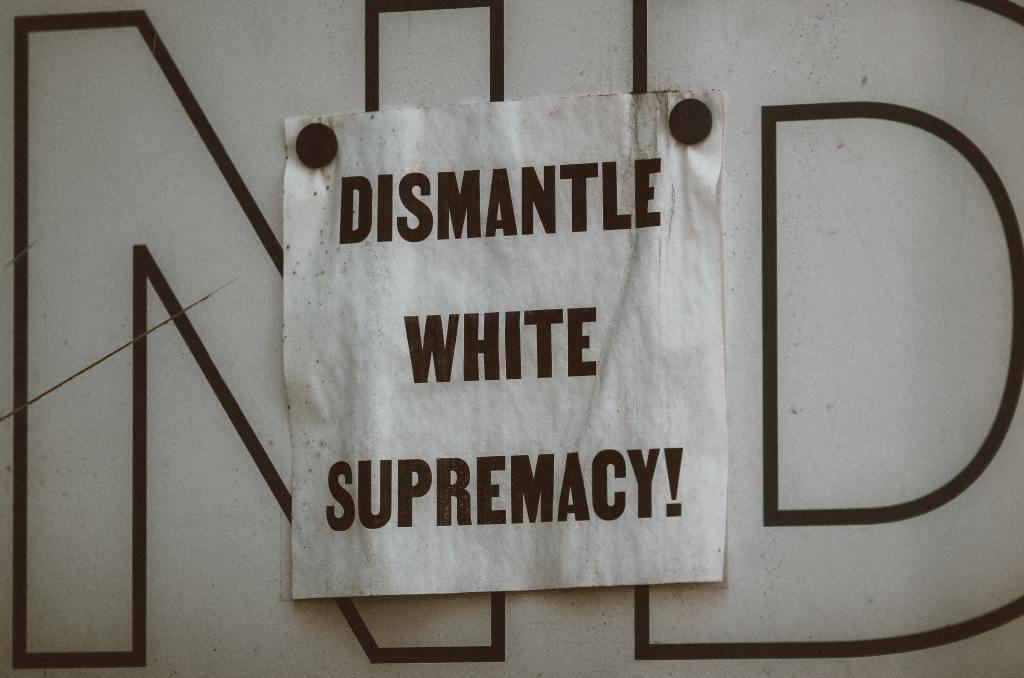
It reminds me of the so-called “inferiority” of countries in the Global South (what many sectors call developing nations) when westerners continue to go there in the name of aid, whilst at the same time not helping these countries to be self-sufficient. Simply we just send people there hoping that is enough. And we do this yearly without thinking about the broader problems. The roles of individuals in doing that, is really complicit into Whiteness through aid AKA White savourism. Short term, it feels good; long-term, this does more for the West than it does for those we want to help.
Aid aside, a comparison could be how following the Murder of George Floyd, lots of White people felt the euphoria of the protests and solidarity, but when it came to making good on pledging to dismantle systems of violence they benefit from, I could hear a pin drop. Seldom do we seek to empower these nations. What we frequently do is send westerners, often (but not always) for that feeling of goodness in building schools and their CVs, but at the end of it all, these tourists get to come back to the West. And when global sourthern nations have organised themselves historically, western governments have assasinated their leaders (i.e Belgium and Congo’s Patrice Lumumba).
What has become known as ‘poverty tourism’ is purported by not just White people from the Global North but also people like me who have ancestry in the Global South but were born and raised in the West. For those of us that do aid work, it would be worth thinking about how Whiteness can appear in the faces of Black and Brown people through the social, economic, and political investments institutions continue to have in these nations via the actions of individuals on the ground. That aside, it is seen as much more acceptable for a White person to do this work than it is for people of colour. When White people do “aid work” in previously colonised nations, it is viewed as “adventure” (i.e look at lit canon works of White westerners going to these nations). However, when Black and Brown people do this, in Northampton we just call it community work. To see an institution platform this ‘white saviourism’, it was insulting to many of my friends and colleagues, and their heritage, as descendants of indentured and enslaved labour.
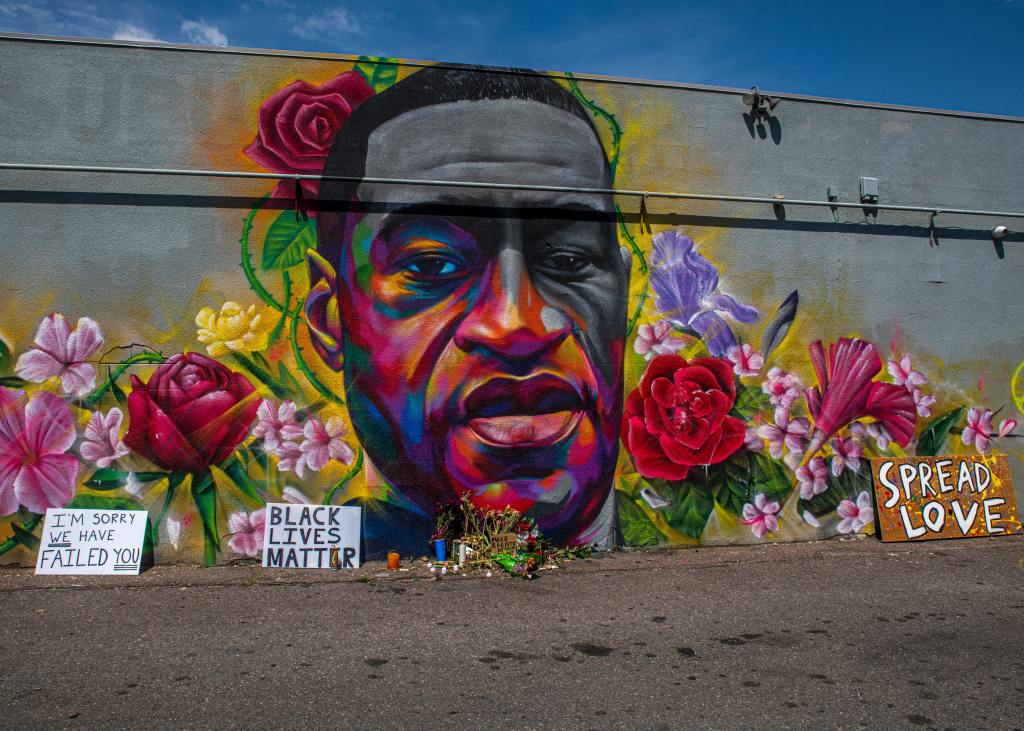
Whilst I know there are many people ignorant to this history, I also know there are many people that know this and still continue to do it anyway. They may well go to countries in the African and Asian continents with good intentions, but those intentions are not divorced from histories of colonial exploitation these countries still haven’t recovered from. In seeing numbers of White people celebrating these “achievements” supported by White institutions, White privilege is evidently in-play in charity and in education, when the institutional thought plays into ‘institutional Whiteness’ because:
“the everyday work of establishing whiteness as a racialised enactment; of doing whiteness; of getting into it, is also institutional work. Whiteness is not just a personal investment practice it frames our chances for life or death, whether we are imprisoned or walk free, we are rich or poor, which university or not we attend, what marks we attain when we get there, if we do. The notion of institutional whiteness is a way of recognising the links between whiteness and institutional reproduction.”
White Spaces
In charity and by association third sector, this is an environment dominated by White middle-class women and White women are not divorced from histories of racism, in fact they are an important part of it (Ware, 1992). Rather than send students into these countries, I ask what global northern universities are doing with their global sourthern partner institutions to help on the ground. It is all very well sending students to build schools, but decolonisation is more than a curriculum-focussed endeavour. We must understand as Prof. Tao Leigh Goffe writes, “colonialism is ongoing … profound, sad, and beautiful because … decolonization is a prophecy and urgent call to action” Decolonisation requires colonisers to give the colonised their lands back and she goes on to say that “…decolonize is a a verb not a metaphor as Tuck and Yang teach us they wonder why Afro-Asian solidarity and Afro-Native coalition does not always exist in the world where it should or could.” I question if it is appropriate for higher education to send, often people who are westerners, to these countries, without any prior exploration of Whiteness nor the overarching system of White supremacy as a social and political system (Mills, 2003; 2004). My encounter with this White woman also saw her position bodies like mine in effort to cover Whiteness, but when we have a history/present of Black/Brown bodies being used as a flimsy cover for White supremacy (Ash Sakar in DDN, 2021), it makes sense that she would do this.
As a precedent, discourses around David Lammy and Stacey Dooley are worth looking at. Brittany Aronson (2017) argues that in the system of White supremacy, “we are falsely taught that being white is better so it makes sense why we would instill our white values upon students of color.” The hostility of this encounter in my direct messages reflects the ongoing systematic racism that people of colour face, via tone-policing because so often White people do not like how we experess ourselves, be it through speech or even in body language. For me, this has come more from White women than it has from White men. Today, I am still more conscious of them in anti-racism spaces than men. With the added intersection of womanhood, women of colour frequently experience this, with one of the most vivid examples of policing women of colour being when Matt Hancock tone-policed Dr Rosena Allin-Khan MP in May 2020.
When White people go into these countries to build schools, it makes many of us Black/Brown people uncomfortable when we as POCs have done this historically, only for these buildings to have been destroyed by White supremacists, or when we do like-for-like community work in the Global North … it is scorned. And whilst the woman in my messenger praised the diversity of this project, this revisits how Whiteness as an action can also be done by people that are not racialised as White (i.e The Sewell Report). So, although POCs took part, they are enacting the dominant thought of the institution which is the White institution. Seeing that western institutions are shaped by Euroecentricism AKA White thought / epistemologies, we can see regardless of how institutions can sometimes position POCs on these trips, they are in some ways doing the bidding of the institution really showing how Whiteness can appear with Black and Brown faces. The comments from the staff member’s friend in my messenger claimed the comments of my friends were “hateful” and “bullying”, this is a covert example of tone-policing when White people are held accountable.
After to-ing and fro-ing, this conversation ended with an obligation for the commenters and I to educate her and her friend. I’m not against aid work per sé, simply the lack of analysis or critique of aid work through a Whiteness lens by the institutions initiating those projects is troubling. Furthermore, I do not see White people that want to think about their own complicity in White supremacy in this work. If I saw more of an anti-racist commitment from aid institutions and so proclaimed White anti-racists, I would be less cynical about it. Yet, until that day comes, it will always be an uncomfortable topic especially when these countries only need aid namely because of colonialism and the postcolonial aftershocks countries like Britain left behind. It’s one thing saying these countries are “unstable” politically and socially as I am often told (but when you start asking why, it leads in one direction). It’s really an open secret that lots of White people, do emotionally benefit from this work (verily women), and that is Whiteness. This happens at the same time as White subjects really benefiting from Black/Brown trauma. If all of the above is acknowledged and explored in doing the work, then I might relax a bit more but it looks to me that the West is still profitting from the issues they create(d).
We said our goodbyes. Actually, I said goodbye, and that was that.
One thing is certain, this encounter for me, assured the everlasting relevance of Critical Race and Whiteness Studies further showing how Whiteness happens on social media. The microaggressions felt like bell hooks’ “white terror” (1992: 167) … it’s violence upon the body via stress. I’m tired now.
References
Aronson, B (2017) The White Savior Industrial Complex … Journal of Critical Thought and Praxis, 6(3), pp. 36-54.
DiAngelo, R (2019) White Fragility. London: Allen Lane.
[DDN] Double Down News (2021) The Alternative Race Report. YouTube.
Frankenberg, R (1993) White Women, Race Matters: The Social Construction of Whiteness. MI: UoM Press.
Gunaratnam, Y (2003) Researching ‘Race’ and Ethnicity: Methods, Knowledge and Power. London, Sage.
hooks, b. (1992) Black Looks: Race and Representation. MA: Southend Press.
Hamad, R (2018) How white women use strategic tears to silence women of colour. The Guardian.
Lewis, G (2000) Race, Gender, Social Welfare: Encounters in a Postcolonial Society. Oxford: Polity Press.
Mills, C. (2003) White Supremacy as a Sociopolitical System: A Philosophical Perspective. In: Doane, A and Bonilla-Silva, E (eds) White Out: The Continuing Significance of Racism. London: Routledge, pp. 35-48.
Mills, C. W (2004) Racial Exploitation and the Wages of Whiteness. In: Yancy, G (ed.) What White Looks Like: African-American Philosophers on the Whiteness Question. London: Routledge. pp. 25-54.
Phipps, A (2021) White tears, white rage: Victimhood and (as) violence in mainstream feminism. European Journal of Cultural Studies, 24(1), pp. 81-93.
Said, E (1978) Orientalism. London: Penguin.
Ware, V. (1992/2015) Beyond the Pale: White Women, Racism, and History. London: Verso.
White Spaces. Institutional Witnesses. White Spaces.
Share this:


The crime of war

a depiction of Troy
Recently after yet another military campaign coming to an end, social media lit all over with opinions about what should and should not have been done as military and civilians are moving out. Who was at fault, and where lies the responsibility with. There are those who see the problem as a matter of logistics something here and now and those who explore the history of conflict and try to explain it. Either side however does not note perhaps the most significant issue; that the continuation of wars and the maintenance of conflict around the world is not a failure of politics, but an international crime that is largely neglected. For context, lets explore this conflict’s origin; 20 years ago one of the wealthiest countries on the planet declared war to one of the poorest; the military operations carried the code name “Enduring Freedom”! perhaps irony is lost on those in positions of power. The war was declared as part of a wider foreign policy by the wealthy country (and its allies) on what was called the “war on terror”. It ostensibly aimed to curtail, and eventually defeat, extremist groups around the world from using violence and oppressing people. Yes, that is right, they used war in order to stop others from using violence.
In criminology, when we talk about violence we have a number of different ways of exploring it; institutional vs interpersonal or from instrumental to reactive. In all situations we anticipate that violence facilitates more violence, and in that way, those experiencing it become trapped in a loop, that when repeated becomes an inescapable reality. War is the king of violence. It uses both proactive and emotional responses that keep combatants locked in a continuous struggle until one of them surrenders. The victory attached to war and the incumbent heroism that it breeds make the violence more destructive. After all through a millennia of warfare humans have perfected the art of war. Who would have thought that Sun Tzu’s principles on using chariots and secret agents would be replaced with stealth bombers and satellites? Clearly war has evolved but not its destructive nature. The aftermath of a war carries numerous challenges. The most significant is the recognition that in all disputes violence has the last word. As we have seen from endless conflicts around the world the transition from war to peace is not as simple as the signing of a treaty. People take longer to adjust, and they carry the effects of war with them even in peace time.
In a war the causes and the motives of a war are different and anyone who studied history at school can attest to these differences. It is a useful tool in the study of war because it breaks down what has been claimed, what was expected, and what was the real reason people engaged in bloody conflict. The violence of war is different kind of violence one that takes individual disputes out and turns people into tribes. When a country prepares for war the patriotic rhetoric is promoted, the army becomes heroic and their engagement with the war an act of duty. This will keep the soldiers engaged and willing to use their weapons even on people that they do not know or have any personal disputes with. Among wealthy countries that can declare wars thousands of miles away this patriotic fervour becomes even more significant because you have to justify to your troops why they have to go so far away to fight. In the service of the war effort, language becomes an accomplice. For example they refrain from using words like murder (which is the unlawful killing of a person) to casualties; instead of talking about people it is replaced with combatants and non-combatants, excessive violence (or even torture) is renamed as an escalation of the situation. Maybe the worst of all is the way the aftermath of the war is reflected. In the US after the war in Vietnam there was a general opposition to war. Even some of the media claimed “never again” but 10 year after its end Hollywood was making movies glorifying the war and retelling a different rendition of events.
Of course the obvious criminological question to be asked is “why is war still permitted to happen”? The end of the second world war saw the formation of the United Nations and principles on Human Rights that should block any attempt for individual countries to go to war. This however has not happened. There are several reasons for that; the industry of war. Almost all developed countries in the world have a military industry that produces weapons. As an industry it is one of the highest grossing; Selling and buying arms is definitely big business. The UK for example spends more for its defence than it spends for the environment or for education. War is binary there is a victor and the defeated. If a politician banks their political fortunes on being victorious, engaging with wars will ensure their name to be carved in statues around cities and towns. During the war people do not question the social issues; during the first world war for example the suffragettes movement went on a pause and even (partly) threw itself behind the war effort.
What about the people who fight or live under war? There lies the biggest crime of all. The victimisation of thousands or even millions of people. The civilian population becomes accustomed to one of the most extreme forms of violence. I remember my grandmother’s tales from the Nazi occupation; seeing dead people floating in the nearby river on her way to collect coal in the morning. The absorption of this kind of violence can increase people’s tolerance for other forms of violence. In fact, in some parts of the world where young people were born and raised in war find it difficult to accept any peaceful resolution. Simply put they have not got the skills for peace. For societies inflicted with war, violence becomes currency and an instrument ready to be used. Seeing drawings of refugee children about their home, family and travel, it is very clear the imprint war leaves behind. A torched house in a child’s painting is what is etched in their mind, a trauma that will be with them for ever. Unfortunately no child’s painting will become a marble statue or receive the honours, the politicians and field marshals will. In 9/11 we witnessed people jumping from buildings because a place crashed into them; in the airport in Kabul we saw people falling from the planes because they were afraid to stay in the country. Seems this crime has come full circle.
Share this:


It’s summer in America. #BlackenAsiaWithLove
It’s summer. I’ve returned to the UK, got vaccinated, continued to work online, kept calm and carried on. Away for nearly 2 years and so much has changed. Many have spent months on lockdown, clicking-n-collecting everything they need, when what they crave is companionship – non-digital human interaction. And fresh air. Worse, for many, pandemic-induced fear and social-distancing routines have festered into genuine social isolation and alienation. Here, please be mindful that social media cannot replace what we do IRL. A comment or thumbs-up cannot replace a real conversation (surprise!?!). Besides, life is short, speak to folks directly!
Across the pond, there are hundreds of prosecutions underway against individual January 6th insurrectionists. Plus, there’s a new congressional investigation into the the insurgency; the police officers’ testimonies are damning, exposing the ugliness of white supremacy and violence at the core. One particular insurgent’s hate crime against a Black Capitol Police officer really cuts to the core. Officer Harry A. Dunn said in interviews in the days after the attack, and repeatedly in his written and oral congressional testimonies:
One woman in a pink “MAGA” shirt yelled, “You hear that, guys, this nigger voted for Joe Biden!” Then the crowd … joined in screaming…”
At the same time, the traditional celebration of Emancipation is now a national holiday. All this during global outbreaks of an unprecedented worldwide pandemic, dramatizing both all our humanity and all our interconnectedness – irregardless of any social and political/politicized divisions. Diseases, like storms, don’t respect maps. All this, and still Mr. Backlash is right on time, thus Nina penned-n-crooned:
So, Mr. Backlash, Backlash
Who do you think I am?
You raise my taxes, freeze my wages
Send my son to Vietnam
It’s summertime, and the livin’ ain’t easy. CONservatives have set their sights (of their guns) on continuing to serve a bleached version of our history next to their bleached burgers in schools. Taken right out of the Jim Crow playbook, they’re not only suppressing votes by stoking fear of foreigners, CONservatives sit in congress and call the events of January 6th “peaceful protests” to the faces of officers giving testimony, who barely survived that day.
True to Jim Crow, they keep the masses ignorant by reducing Intersectionality to ‘Critical Race Theory’, and pitting that as the enemy of America. Yet, when you present them with the facts of our collective history, say, by simply acknowledging that many “founding fathers” were slave-owners-boasting-bout-freedom, they’re as silent as an electric car (shhhhhh).
Like zombies, CONservatives silently retreat to their narrow view of their Bible “and their bombs, and their guns.” It’s as if they don’t know we can learn how to have better conversations. To be sure, Intersectionality and CRT are inter-related enemies of fear, ignorance and therefore, crucially, white supremacy. It’s not in your head, they are fighting.
It’s now summer in America and three multi-billionaires are racing to go to space. At the same time, so much about our nation is broken: outdated and decaying schools, policing, healthcare and infrastructure… and now both our spirits and democracy are threatened. Insurrection betrays the very spirit of democracy – let’s not act new! Coupled with the empty shop shelves in a post-Brexit/mid-Covid Britain, this moment reminds me of something seminal spoken-word artist Gil Scott-Heron spat in 1970:

The man just upped my rent last night.
(’cause Whitey’s on the moon)
No hot water, no toilets, no lights.
(but Whitey’s on the moon)
I wonder why he’s upping me?
(’cause Whitey’s on the moon?)
I wuz already paying him fifty a week.
(with Whitey on the moon)
Taxes taking my whole damn check…
It’s summer, summer, summertime 2021 in America and we’re still asking, “what did it cost our nation to put whitey on the moon?” Is it summer in America, or is it winter? Can’t be, there ain’t no more glaciers. Happy MF’ing New Year. Have a great summer. See you on ‘the other side of the moon’.
P.S.
Did you catch all those space-billionaire and musical references? Despite all this sickness-n-division, near-n-far, yet-n-still, “music makes the people come together… yeah.”

PIX:
Gil Scott-Heron: https://genius.com/Gil-scott-heron-whitey-on-the-moon-annotated
Whitewash History, adapted from: https://www.evanstonian.net/archived-opinion/2014/10/05/history-lessons-whitewash-history/
Share this:


Taking a short break….back soon

The Covid-19 pandemic has taken its toll on everyone in a myriad of different ways. Nobody has escaped the impact of the last 16 months and we’re not out of the woods yet. Here at the Thoughts From the Criminology Team we’re no different. All of us are beginning to run out of steam and need a little break. Never fear, we’ll be back with lots of interesting entries from September. In the meantime, there’s plenty on the site to explore.
Enjoy your August whatever you are up to!
Share this:

#CriminologyBookClub: The Guest List
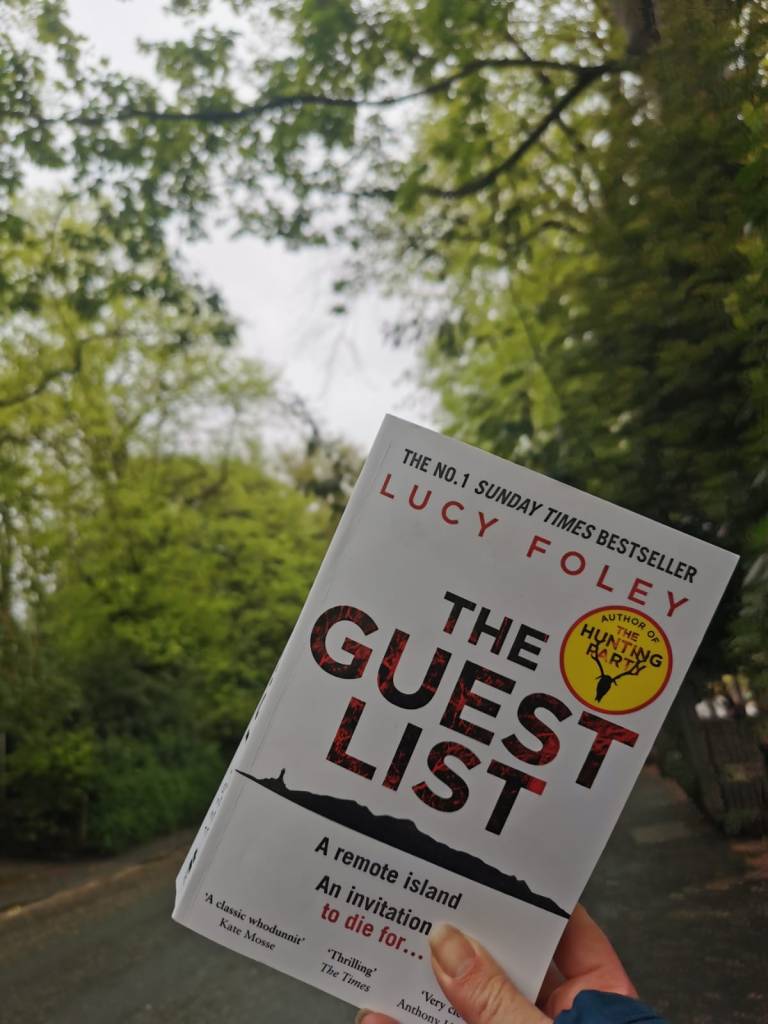
As you know by now, a small group of us decided the best way to thrive in lockdown was to seek solace in reading and talking about books. Hence the creation of #CriminologyBookClub! Building on on what has quickly become standard practice, we’ve decided to continue with all eight bloggers contributing! This title was chosen by @svr2727and is our 12th book. Read on to find out what we thought….
I took one look at the cover and didn’t think the book would be for me. The cover gave the impression it would be scary, and I don’t do scary. One of the reasons for book club is to read things we wouldn’t ordinarily go for so I started reading – and couldn’t stop. The bitesize chapters not only enabled me to pick the book up more frequently, but they also made me want to keep reading. I would tell myself ‘just one more, another, last one now, this is definitely the last one then I’ll make tea/go to sleep/get out of bed. The second thing I liked about it was that the narrative viewpoint changed each chapter, flitting between the perspectives of each character. However, what was odd that I felt no strong connection to any of the characters. I am a pacifist and would not wish anyone dead in real life, but I desperately wanted Will to be the one to die. It was quite obvious he was a wrong ‘un early on. Each of the characters had been victimised in one way or another by Will at some point in their lives but it was almost as if the author wrote in barriers to building empathy with them, either in their personality or their actions. Jules was stuck up and pretentious, her sister wouldn’t tell us what was wrong with her for a long time, Johnno was complicit in the death of a child and we didn’t know about Aoife’s connection until the end. I liked this. It ties in nicely with one of my favourite concepts in victimology, Christie’s (1986) theory of the ‘Ideal Victim’, the idea that people will not fully be accepted as a victim unless they exhibit particular characteristics and behaviours. The book therefore tied right into my criminological interests. They say never judge a book by its cover and in this case the phrase could not be more accurate.
Christie, N., 1986. The Ideal Victim. In: Fattah, E. (Ed.), 1986. From Crime Policy to Victim Policy: Reorienting the Justice System. Basingstoke: Macmillan
@amycortvriend
The most recent read for Book Club was very hard to put down, and equally difficult to pick up. Let me explain. Once reading, the story is interesting, swapping between narratives is ingenious but also frustrating as you don’t ever get a full picture. The characters are vile, so once the book was put down, I wasn’t in a hurry to get back to them: I did not warm to any of them, even the ones I think I was supposed to like. However the story was well worked, I did not see the many twists coming and I was exceptionally satisfied with who the unfortunate ‘victim?’ was. Overall it was a brilliant, fast-past read: I just wished I liked the characters! Looking forward to reading more of her work!
@jesjames50
The Guest List is a good book for those that enjoy reading books of the thriller genre. Whilst reading this book you really feel that anticipation that you get from wanting to know what will happen next. The book illustrates some interesting themes about wealth and privilege. This is not really a book that is suited to my own tastes, as I tend to read books where the characters are likeable. Although, with a thriller, disliking the characters means that its feels ok if any of these dreadful characters are then brutally murdered.
@haleysread
The story is told from the point of view of several different characters and has some clever twists that keep the reader guessing until near the end. Whilst I liked the style of writing, I wasn’t as enamoured with the storyline or the characters who seemed to display some very stereotypical traits. An enjoyable book but it just wasn’t different enough for me to consider it a ‘must read’.
@5teveh
This is a proper old school “whodunnit”, reminiscent of Agatha Christie, particularly in terms of tying up most of the loose ends. The atmospheric island, full of dangerous hazards and damaged people takes you on a journey. Clues aplenty abound and you get the chance to explore each of the characters in terms of their back story. Like many of the others in the Criminology Book Club, I didn’t like the individual characters, far too reminiscent of the Bullingdon Club. and other arrogant influencers…. Nevertheless, I enjoyed using my wits to follow the clues and work out who was going to be murdered and who did the deed. Ideal reading for holidays, or during a pandemic lockdown!
@paulaabowles
I really enjoyed losing myself in this story and read it very quickly. It was very atmospheric and I could really picture the island and the venue and the stormy weather. It all added up to create a real sense of foreboding. I enjoyed the way the story was paced – the flashes of the present interspersed with the back stories and leading up to the conclusion. It was also interesting to be trying to solve the crime and figure out who was the victim simultaneously (I didn’t solve it, I’m terribly bad at whodunnits but I still really enjoy them anyway!). I didn’t feel much empathy towards any of the characters however, and so by the end I didn’t really mind who did it!
@saffrongarside
This was an enjoyable read. We follow a group of characters that are going on a very secluded island, off the coast of Ireland to attend a super exclusive and lavish wedding. The groom is portrayed as handsome charismatic man and he is also a reality TV star. The bride is portrayed as a smart, successful, and rich women……It appears they have everything one would desire.
The story is regressive as it starts with a murder at their wedding, but then you are quickly thrust back to the events leading up to the point of the murder. Each chapter is written as a point of view from the guests at the wedding. This is a great addition, as you see the development of the characters and the secrets, mysteries, and tensions between them. I would like to point out that none of the characters were particularly likeable. I won’t give away any spoilers, but based on their behaviour throughout the book, I would not have felt sad if any of them were the victims of the murder and it seemed they were all capable of being the murderer. However, you will be kept guessing, and you won’t find out until the last few chapters of the book.
I loved that you are pulled in the weary atmosphere of the story, and at times I could almost feel the cold air and hear the waves crashing on the rocks. This mystery thriller definitely whisks you away.
If you are looking for some light summer reading, I would highly recommend, you will not be disappointed.
@svr2727
You are invited to a friend’s wedding in a remote island off the cost of Ireland and with the group of people that one is more obnoxious than the other, would you consider going? This was the question playing at the back of my head whilst I am reading this fast-moving whodunit thriller. The scenery is very pulpable and quite reminiscent of the Victorian crime novels; the mist that covers everything allowing crimes to happen whilst the guests look on terrified. Is this an accident or one of many to come? This is a tried and tested recipe brought into the 21st century, although I wonder if anyone can survive this long anymore without Wi-Fi! The story for the fans of the genre is culminating to an expected end with some interesting twists and turns. In the end I was just left wondering, why I did not care for any of the characters!
@manosdaskalou
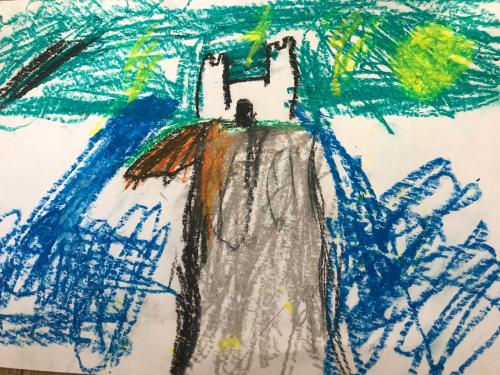
In case you struggle to imagine the island at the centre of The Guest List…thanks to Quinn and Paisley for their fabulous works of art.

Share this:


Do we have to care?

In recently published The end-to-end rape review report on findings and actions the responsible minister admitted that “victims of rape [are] being failed”. This stark admission is based on data that indicates that the current situation on dealing with rape is far worst than 5 years ago. The ministers are “ashamed” of the data but luckily in their report they offer some suggestions on how to improve things; what to do to bring the conviction rates to the 2016 level and to move more cases forward for trial, leading to successful convictions. At that point, the report presents the Criminal Justice System [CJS] as a singular entity that needs to address the issue collectively. This, in part, is a fair assessment although it ignores the cultural differences of the constituent parts of the system. Nonetheless, the government has identified a problem, commissioned a report and has a clear “ambitious” plan of how to address it.
The report indeed presents some interesting findings and I urge people to review it whenever they can (https://www.gov.uk/government/publications/end-to-end-rape-review-report-on-findings-and-actions). We know for example already that the number of cases that went into prosecution were low; in the last years this has become even lower. That despite the prevalence rate remaining more or less the same. Victims report that they are treated poorly, not believed arguing that the investigative model needs changing. No wonder the ministers appear apologetic of the situation. A headline crime category that is likely to cause an uproar and whilst thinking of the political fallout they come out in support of the victims! Who wouldn’t? Supporting a victim of crime, any crime is one of the main objectives of the CJS; once they have handed out retribution and prioritised on making an example of specific crimes and focusing on particular criminals, then their focus is on the victims! The findings were expected, but even so when reading about the higher vulnerability of disabled women to rape and sexual abuse, underscores the systemic failure to deal with this crime. It does not read like care!
If I was an agitator, I would say that a criminal committing rape has less chance (statistically) to be convicted than someone who commits theft; but then I will be making a criminological cardinal sin; conflating criminalities and confusing the data. In our profession we deal with data all the time. Many of them come in the form of metrics looking at the way different crimes are reported, recorded etc. We also know that context gives a perspective to these data. Numbers may look the same, but that is arguably part of the problem. It does not take into account the source of the data and their circumstances. Not all numbers are the same and most importantly they do not measure similar trends. The way the success rates are to be measured is not dissimilar from before and without owning a magic ball, it can be foreseen that rape will remain as is. Of course, the metrics may change colour to signal improvement, but that will not alter the fundamental issues.
On the day, one may have their car broken into, to report the incident can be a requirement from their insurance if they are to cover the cost. On the day, the said person got raped by a current/former partner the matter is not about insurance. These acts are not similar and to treat criminality as a singularity draws up uneven comparisons. In this case we have a list of recommendations trying to ameliorate the bad metrics. What are the recommendations? The focus is again on the police and the Crime Prosecution Service [CPS] and the court experience the victims will have. Again, indicates that these institutions have been criticised before for similar failings. The change of practices in the police does not go as far as exploring the institutional culture. The CPS’s requirement to do more is tied with the successful cases they will prosecute. The need for the two organisations to work together more closely has been a discussion point for the last 20 years; as for the better experience in courts, it is definitely welcomed but in recent years, Victim Support as an organisation was stripped bare, the additional services cut and the domestic violence shelters disappearing. The call for more services was continuously met with the offer of voluntary organisations stepping in, into such a complex area to provide help and support. One may think that if we are to prioritise on victim experience these services may need to become professional and even expand the current ones.
Lastly in this document the tone is clear; the focus yet again is reactionary. We have some bad data that we need to change somehow; we have got some clear action plans and we can measure them (as the report intimates) at regular times. This approach is the main problem on dealing with rape! It does not offer any interventions prior to the crime. There is nothing to deal say with rape culture, the degradation of women, the inequality and the rape myths that women are still subjected to. Interestingly there are mention of empathy toward the rape victim but there is not a plan to instil empathy for people more widely. No plan to engage the educational system with respect for the other (whoever the other is; a woman, a person of colour, disability, different origin) regarding sexual behaviours. The report tenuously mentions consent (or lack of understanding it) instead of making plans how it can be understood across. Unfortunately, this crime reveals the challenges we face in the discipline but also the challenges we face as a society that has traded care for metrics and the tyranny of managerialism.
Share this:


Mentally ill people are the “normal” ones
One of the most horrifying thing about Coronavirus, aside from the deaths (in excess of 100,000 people that needlessly died), is the underpinning mental health crisis we were actually in the vice of before March 2020. UK universities, for example, saw 95 students commit suicide in the 2016/17 academic year with ten deaths also in the space of eighteen months being at Bristol (Kwakye and Ogunbiyi, 2019: 109). For those of us that have any experience of institutional life, very much so in education, I know most will have experience with mental illness. We are told that we need to get used to it and we are made into the problems rather than putting the onus on institutions to change how they operate, and as Sara Ahmed (2018) writes “how feminist complaint becomes a form of institutional disloyalty. You are not being affected in the right way. Not be happy and positive is to become difficult; to become a problem” (p337). Still today, I am told mental health is “all in your head.” Whilst in the literal meaning, that may be true, the crux of it is how society has normalised things like inequalities that in-part create these issues. Those making those assumptions, do they ever ask why so many people have mental health problems? We are made to feel that we are broken for simply having a mental illness. Honestly, if I could be so bold, I would ask why all people don’t feel mental ill-health. I think there is something wrong when a person has normalised the goings-on of an evidently sick world. When you think about the nature of our environment in a matter-of-fact manner, you begin to realise that your pain makes sense.
“If you’re depressed and anxious, you’re not a machine with broken parts. You’re a human being with unmet needs. You need food, … water, [and] clean air. You need warmth. If I took those things away from you, you would go haywire really quickly.” – Johann Hari
Many months ago I watched the above video constructed by Double Down News (please subscribe) presented by Johann Hari. It really changed my outlook on my own mental health. He articulates something I have thought for over a decade but really struggled to articulate. As someone that is neurodivergent, I am not sure I know anyone with autism, ADHD, dyslexia, dyspraxia or other neurodiverse conditions that also do not suffer from mental health problems, maybe because we also don’t necessarily see the world in the ways neurotypical people do. Simply, rather than see the world (which we do), I’m more inclined to say that we feel the world. Many of us are also Highly Sensitive People [HSPs] which is that we feel emotions much more deeply than our non-HSP and / or in some cases neurotypical friends and colleagues. We feel things everyone does, simply those feelings are amplified tenfold than non-HSPs.
As humans we are encouraged to live in destructive ways, simply that are incompatible for us to function and that is violence, since many of us are also dying early because of it (i.e the Windrush Scandal). I have been told countless times that mental health issues, (especially depression) are about a chemical imbalances (debunked) in the brain and the people telling me this turn it into an isolated academic matter, often completely detached from what that “science” does to people. Poor mental health is a response to psychological needs not being met by our lived environment. The Coronavirus pandemic is awful for all of us. However, the pre-COVID world was not great nor should it have been normal. Hari states that “our ancestors were really good at one thing … banding together and cooperating. Often they were not bigger or stronger than the kind of beasts they took down and ate. What they were was incredibly good at was cooperating compared to other species.” Today, this culture of neoliberalism promotes individualistic thinking over community organising and family-centric cohesion. There is a reason why in Northamptonshire, community groups have a better trackrecord than local authorities and big institutions when engaging communities, because these community-focused groups are about banding together and cooperating. Other institutions are not.
During the pandemic, many of us have had to rely on the kindness of our neighbours who in some cases were also strangers. I was quite fortunate that my neighbourhood is quite pleasant and we have a good relationship with our neighbours. Not everyone is so lucky. Charities like Happy Hood have been doing this sort of work for a while (check out their Instagram @thehappyhood), along with Creating Equalz, NorFAMtoN, Northamptonshire Rights and Equality Council, Eve and others. Speaking with friends and colleagues, I think there are many out there now that would sooner call local charities and their friends to solve problems, rather than engage with local authorities or even the judgement of local police departments. Since the invention of capitalism in the days of colonial expansions, and the eventual versions of this since, “we are the first human beings to ever try to disband our tribes and live alone where the high priestess of neoliberalism Margaret Thatcher told us, ‘there’s no such thing as society. There are individual men and women and there are families'” (Johann Hari). Should the British public (not the Government) have followed Thatcher’s ethos in response to Coronavirus, we would be staring into a greater abyss, and many more hundreds of thousands of corpses than we already are. At the start, communities came out for each other helping each other in accordance to human need. But you know “your pain is just some unexplainable chemical imbalance in the brain, right?”
I’m no medical doctor, however, my academic experience / writing does delve into the social sciences. Whilst myths of debunked chemical imbalances float around, if you are not asking questions about what is happening in peoples’ lives, are you really asking the right questions? For many of us, we have been victims of institutions and structures: economic violence, racial capitalism, hate crimes, poverty, domestic abuse and others. Plus, through COVID under a government that used a pandemic for profit and practicing forms of neocolonial eugenics in its herd immunity tactics to throw swathes of the British public under the bus. A lot of the things causing mental health problems were in full force before Coronavirus arrived. Hari states “a lot of the factors that are causing depression and anxiety had already been rising before the internet came along, we were becoming much lonelier.” My parents tell me stories about when they were growing up, that although neoliberalism was a thing, they still knew who their neighbours were and it was still possible to make real human physical connections with people in your vicinity.
My parents were teenagers in the 1980s where despite that decade’s woes, this was a world before Facebook and TikTok, and before the internet. My father now works in IT and knows his way round computers – from coding to website-building and lots in between. He taught it to himself when computers were in their infancy, yet in knowing that, he also sees their flaws and how they’re not a replacement for humans. I did not get a Facebook account until I was 16 and schoolchildren bullied me for it. However, now I know what he was protecting me from … the need to fill an emotional hole. The want for human contact … and in the pandemic now, people are now feeling the blight of this hole in the image of constant calls on Zoom, Microsoft Teams and social media, where people just want to see their friends again; a hug from grandma and granddad; a conversation with their cousins they have not seen in over 18 months. Bosnian writer Alexander Haman said that “home is where people notice when you’re not there.” For those of us with mental health problems, many just want to feel that we belong somewhere and what is happening with this mental health crisis, is a wider symptom of a society that has normalised suffering, everything including and in between the overworked educators in schools and HE to settler colonialism in the illegal occupation of Palestine by the Israeli state.
Looking back on my life now, it never occured to me that I was depressed as a thirteen year-old from not only the systematic racist and ableist bullying I experienced from other children, but that causes of my depression were not that something was wrong with me. I was a troubled child rejecting the social conditions of the society he lived in. Many of us have looked for and found solutions in medications, and there is nothing wrong with this. They have helped countless people I know. However, I don’t believe it can be the only solution to a problem that has its roots in violent social conditions. What made us ill in the first place? What caused those so-debunked imbalances in the brain? Whilst they are useful, there are other antidepressants that are also useful. Lots of my neurodivergent friends are creative and they have used different artforms including poetry, filmmaking, photography and fine art to find their tribe and somewhat give their lives meaning. Those of us that work in institutions, how many hours of the day do we have a boss looking over our shoulder, physically or virtually? It doesn’t always feel very nice, especially when you are being micro-managed. The biological weathering that happens in institutional workspaces impacts mental health too, very much so in the lives of POCs. That’s why I like to work with community-focused charities, in that language of collectivism.
When you talk to people in your community, you realise there are more like you than not. And struggling with mental health is not something to be ashamed of. This is what I take from the work I do in education, that people who don’t struggle with their mental health (or don’t think they do / never have struggled) are who I would like to ask questions to, since I feel it is a sign of ill mental health “to be well adjusted to a sick society.” When we follow the neoliberalist playbook verbatim, this is where the powers that be want us. Isolated. Confused. Disorientated. Medications may take the edge off (good). However, solving systemic issues really shakes those in power to the core. What’s more, when communities stick and stay together, making demands for the better, the powerful don’t actually look that powerful.
Referencing
Ahmed, Sara (2018). ‘Rocking the Boat: Women of Colour as Diversity Workers’. Dismantling Race in Higher Education: Race, Whiteness and Decolonising the Academy, eds. Jason Arday and Heidi Safia Mirza. London: Palgrave.
Kwakye, Chelsea and Ogunbiyi, Ore (2019). Taking Up Space: The Black Girl’s Manifesto for Change. London: Merky
Share this:


Vaccine day
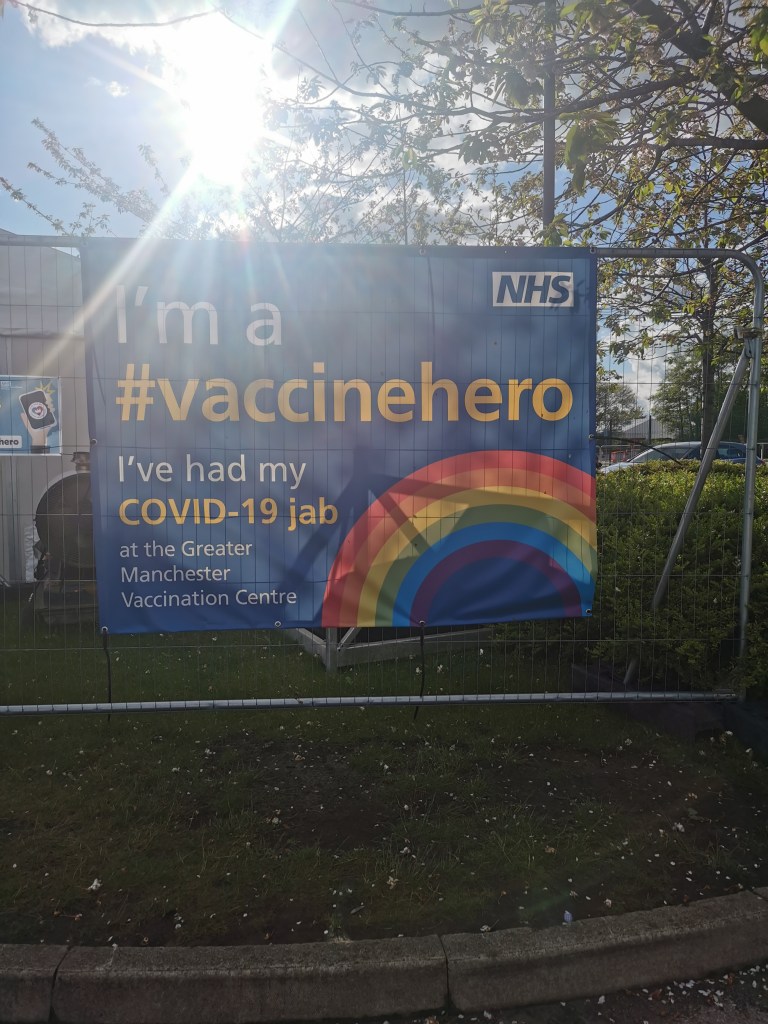
I had my first Covid-19 vaccine recently and the day was emotional, to say the least. I am 99% compliant with Covid-19 restrictions, partly because it is the law but primarily because I believe it is the right thing to do to protect others. In fact, there have been many times over the last 15 months where I have avoided the news for my own sanity so half the time, I do not exactly know what the latest rules are. I am guided by my own risk assessments and am probably more restrictive than the law in most scenarios. Up until vaccine day I thought that I wasn’t scared of contracting Covid-19, that I was complying as an act of altruism and that I would not be able to live with myself if I unwittingly passed the virus on to somebody vulnerable to severe illness and death.
Back in March 2020 when infections then the death toll started to rise, and the NHS became increasingly overwhelmed I would watch what my daughter and I called ‘the Boris show’ where the Prime Minister and the scientists would recall the daily death data, hospitalisations and cases. Each ‘next slide please’ bringing more bad news. Each day I would think about the families of every single one of those people who had died. It was quite overwhelming, and I eventually had to limit the information I ingested, living in both a physical and informational bubble. I recall the death toll announcements were met with responses from the covid-deniers, ‘but they’re old or ill anyway’, and ‘but they could have been hit by a bus and still counted as a covid death’. As a victimologist, this infuriated me. Who were these people to flippantly dismiss right to life based on age or health? It frustrated me that people with no knowledge of statistics, medicine or science were making assumptions based on anecdotal evidence from Bob on Facebook. But then again perhaps these are the tales people told themselves to get through. If they deny it, they have nothing to fear.
A few months later in June 2020, my somebody close to me contracted Covid-19. I was told they were doing well and seemed to be recovering from the virus. They died more than 28 days after having first being diagnosed with Covid-19, but it was Covid-19 that killed them. I know because I saw them to say goodbye a couple of hours before they died. This person who was always so full of life, love and who saw the good in everyone and everything, was now fading away. But what haunts me to this day was the sound of their lungs. The sound I’d heard people talk about on the news. Crisp packet lungs. And it was that sound that was like an earworm in my head on my way to the vaccination centre.
I’ve been looking forward to getting vaccinated since vaccines were on the horizon so I was excited when I received the text invitation. I booked to attend the Greater Manchester vaccination centre at the Etihad stadium, the home of Manchester City Football Club. It was well organised, despite the large numbers of people coming through. First, I was required to check in and was allocated the Moderna vaccine and a green sticker which ensured staff could direct me to the correct queue. Then I checked in at another desk where I was given some information, asked some health questions and, most importantly, I was asked, ‘do you want the vaccine?’. Those who have sat one of the research methods modules I have taught this year will have heard me discuss the importance of informed consent and this also applies to real life situations such as this. After this I joined another queue and finally reached the vaccination point, had the jab, waited for 15 minutes and left. Just like that. The whole thing took about an hour and given the volume of people being vaccinated (the site is a mass vaccination hub for a large area), I found it to be incredibly efficient. Every staff member I met was informative and did what they could to put people at ease.
From the moment I left home to go to the vaccination centre, to the moment my head hit the pillow that evening, I couldn’t help reflecting on the last 15 months. I felt a wave of emotions. I felt extreme sadness and sorrow at all the lives lost and all the families and friends left behind. It has been a traumatic time for so many of us. Getting the vaccine, I felt some sort of release from this, like it was nearly over. I have worked from home throughout and have had little social interaction, except when the gyms have been open or I have undertaken caring responsibilities for various friends and family. There were also a few weeks towards the end of lockdown 1 where my sister came to stay after returning from India. Overall, I have been alone with a teenager at a desk in my living room. It’s been awful. I’m tired and I need a break. I am well overdue a mum-cation. I felt some hope that sometime soon I might be able to get a parenting break and that my daughter can also get a break from me. I said earlier how I believed I had not feared contracting covid but having the vaccine and the relief I felt made me realise that I was more scared than I would care to admit. I am young(ish) and extremely healthy and I would probably be at low risk of developing serious symptoms but what if I was an unlucky one?
Aside from my personal experiences, I felt a collective relief. The global pandemic has created global trauma. There are still countries being ravished by the virus without the resources to operate mass vaccination of entire populations. I worry for the world and wonder what borders will look like after, if there ever is an after but I’ll ponder this further in another blog later. Getting vaccinated and being part of a mass vaccination programme made me feel cautiously optimistic. However, a few weeks on and we are now in a situation where the Delta variant is spreading like wildfire. Deaths have risen by 42.5% in the last week and hospital admissions by 44.7%. The numbers are still incredibly low in comparison to the first and second wave but every one of those deaths and hospitalisations matter. They are not a number on a presentation slide. They are people who have families and friends, who are cared for by the NHS. Every one of the deaths is a loss to these people, and has a butterfly effect in terms of the impact each death has.
Restrictions are set to lift imminently I believe (still avoiding the news) and it makes me feel uneasy to say the least. I’ve seen experts whom I trust argue on both sides of the fence. Some say this is dangerous, others suggest summer is the best opportunity to lift restrictions. It sometimes feels like we are living in some kind of twisted experiment. Regardless, I will continue to assess and manage the risk to myself and those around me. I’ll probably wear masks way after it is legal to do so and expect I will still be cautious about who I am physically close to and how I socialise. There’s things that I love and miss such as the theatre, cinema and the occasional gig but I don’t feel ready. I have a feeling this pandemic is far from over.

 Thoughts from the criminology team