
Home » Criminology (Page 25)
Category Archives: Criminology

A microcosm of deviancy

A little over a week ago our university introduced the compulsory wearing of face masks indoors. This included wearing of masks in classrooms as well as common areas and offices. Some may argue that the new rules were introduced a little too late in the day, whilst I’m sure others will point to the fact that government guidance is that the wearing of face masks is advisory and therefore the introduction of the new rules was unwarranted. Let’s be honest the government and their political party haven’t set much of an example regarding the basic safety ideas, let alone rules, as evidenced by the recent Conservative party conference. The new rules at the university, however, are not enforced, instead there is a reliance that students and staff will comply. This of course creates several dilemmas for students and staff where there is a failure to comply and it makes for some interesting observations about general human behaviour and deviance. To that extent, university life might be viewed as a microcosm of life in the general population and this lends itself quite nicely to the analogy of behaviours whilst driving on a road.
Driving behaviours vary, from those drivers that consistently and diligently stick to the speed limit despite what others may be doing, to those that have complete disregard for limits or indeed others including those that police the roads. Let us be quite clear at this stage, speed limits are nearly always there for a reason. There is ample research that speed kills and that reductions in speed limits injuries and saves life. Whilst those drivers that drive over the speed limit will not always be involved in a collision and that a collision will not always result in serious injury or death, there is a much greater potential for this. The risks of course are spread across the population in the locality, the impact is not just felt by the speeding driver but other drivers and pedestrians as well. To some extent we can make the comparison to the risks associated with catching Covid and the wearing of masks and social distancing, failure to comply increases risks to all. As a quick reminder, the wearing of masks is to protect others more so than it is to protect the individual mask wearer.
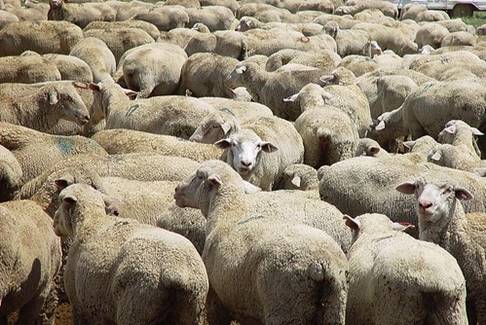
Observations of behaviours regarding staff and students wearing masks at the university are interesting. There are those that comply, regardless of what others are doing, some of these will have been wearing masks indoors before the new rules came in. Not dissimilar to the careful driver, sticking to the speed limit but also prepared to drive slower where they perceive there is a greater risk. Then there is the well-intentioned mask wearer, the one that knows the rules and will stick to them but through absent mindedness or through some of life’s many distractions, they fail to wear their masks at various points of the day. As with the well-meaning driver, they are easily reminded and often apologetic, even if it is only to themselves. Of course, there is the ‘follow the flock’ wearer, the person that could quite easily be persuaded to not wear their mask by the rest of the flock as they fail to wear theirs. The driver that joins the rest and drives at 40mph in a 30mph limit because the rest of the traffic is doing so. Next is the deviant that has disregard for the rules as long as no one in authority is looking. The person that keeps their mask handy, probably under their chin and then when challenged in some way, perhaps by a disapproving look from a member of staff or by a direct challenge, puts their mask on but only for the duration they are under observation. Not dissimilar to the speedster that slows down when they see a police vehicle or a static speed camera only to speed up again when the danger of being caught and sanctioned has passed. Finally, there is the person that has complete disregard for any rules, they will blatantly fail to wear a mask and wave away with complete disdain any attempt by student ambassadors positioned at the door to offer them a mask. They like the speeding driver that fails to obey any of the rules of the road have complete disregard for the rules or indeed any rules.
Whilst we may lament the fact that some people forget, are distracted but are generally well meaning, we probably wouldn’t want to impose any sanction for their deviance. But what of those that have complete disregard for the rules? It is worth returning here to the general ethos of wearing masks; to protect others. The disregard for the rules is inter alia a disregard for the safety of others. Whilst we might observe that the deviancy is apparent amongst several students (a problem that might be generalised to society), it is somewhat disconcerting that there are a significant number of staff who clearly do not think the rules apply to them. They seem to neither care about their colleagues nor the students and it would seem consider themselves above the rules. Another comparable trait in general society where those in positions of power seem to have a disregard for rules and others. Finally, we might consider how we could police these new rules as clearly our university society of students and staff are unable to do so. I can hear the cries now, haven’t you got anything better to do, this is a sledgehammer to crack a nut and all the usual rhetoric endured by the police across the land. If you make a rule, you must be prepared to enforce it otherwise there’s no point in having it. Imposing an unenforceable rule is simply playing politics and attempting to appease those that question the conditions in which students and staff work. Imagine speed limits on the road but no enforcement cameras, no police and no sanctions for breaches. It will be interesting to see how long the general population at the university follow the new rules, recent observations are that the flock of sheep mentality is starting to come to the fore. As a parting thought, isn’t it amazing how easy it is to study crime and deviance.
Share this:


On doing a Masters degree in a year that felt like the last level of Jumanji
For the short time I have been writing on this blog (thanks @paulaabowles and @manosdaskalou for the first invite), I am certain I have said before that I never expected to go to university. At school, I was not particularly ‘academically gifted’ and was treated differently to the other children. Not only because I was a Black child in an almost homogenously white mass, but also because I was neurodivergent. Back then, I did not know terms like ‘neurodiversity’ or ‘disability‘ but I knew I was different because the teachers went out of the way to treat me differently (and not in the best way). It was only recently that I saw my school experience was intersectional, and how I was treated was traumatisingly ableist. At sixteen, I was forced to go to college to retake my GCSEs (or the equivalent), where I retook English and Maths while doing a BTEC Level 2 qualifiaction. Going on to do A-Levels at seventeen years old, I realised I did not exam well.
There, I saw I did well in coursework which I could do at home in an environment I was comfortable in, with time to mull things over and think. I also realised I did well in things I enjoyed. When it came to coursework, I almost sailed through it all, but exams that relied on memory tests … here, I struggled exponentially. Particularly as my dyspraxia impacts memory. As part of a longer thread on children’s education, Professor David Bowles tweeted
“Do you want kids to learn?
Here’s something we’ve discovered.
Kids learn things that matter to them, either because the knowledge and skills are “cool,” or because …
… they give the kids tools to liberate themselves and their communities.
Maintaining the status quo? Nope.”
@DavidOBowles (2020)
When people talk to me now, they have this belief that I have always been collected and together. And when people come to my sessions, or even came to see me when I was an SU sabbatical officer, they did not believe that I got into my undergraduate course (Creative Writing) via clearing. The fact I struggle (and still struggle) with exams is unbelievable to them. To them, I do not fit the picture (built on media-made stereotypes) of what is now called Special Educational Needs [SEN]. As a child, I had a Maths and English tutor in school (Mrs Thomas) and outside of school (JJ, who I’m still in contact with now … great human). It’s only now that I’m seeing that due to the institutionalisation of education, seeing students as individual learners is a challenge for many. One size does not fit all, and now I’m imagining that if autistic children, for example, were able to learn in the system via our special interests, how different things would be for those of us that learn in less conventional ways.
Doing my undergraduate degree, then graduating in July 2019 (mere months prior to the outbreak of COVID in March 2020), I am seeing I did well because I was in a discipline I liked. But more than that, because I was writing about things that mattered to me. The university’s creative writing course did not show me anything about Black British writing, so just as I recommend to all students I meet now (particularly those from historically excluded backgrounds), make two sets of notes: do your own reading as well as those your lecturer gives you. From late summer of 2019, I was in conversation with Criminology’s Stephanie Richards @svr2727 about masters programmes and she of course had all the solutions! Off the back of years of being interested in issues pertaining to racial inequalities and like-issues, I signed on to Leeds Beckett University’s MA in Race, Education, and Decolonial Thought.
Since then, my life has not been the same. Unknown at the point of signing up in the January/February of 2020 for the coming autumn, that we would be in intermittent lockdowns during my study time, I guess this worked out in the end. Yet, following Bowles’ points about learning, I was in an academic discipline that mattered to me (Critical Race/Whiteness Studies) and my final grades reflected the passion I have for these subjects and how courses like mine give students some of the tools to liberate themselves and their communities. My modules were in Research Methods; Decolonial Thought and Critical Race Theory; Race, Identity, and Culture in the Black Atlantic; Children’s Cultural Worlds (elective); Diverse Childhoods (elective), and Critical Whiteness Studies. They also offered Critical Ethnic Studies and Critical Discourses as electives. These modules (minus Research Methods) gave students free reign to write what they wanted as long as it tied into the topic in some way. e.g., in Children’s Cultural Worlds I wrote a postcolonial analysis of the classic C.S Lewis Narnia text The Horse and His Boy, with further comments on how the implementation of canonical texts on the English curriculum is not the problem, the issue is our gaze (later turning the essay into an online talk, which helped teachers inside and outside of my community).
The Coronavirus pandemic was stated to be ‘unprecedented’ but I would argue otherwise, as many generations before us all experienced pandemics. From the Plague to the Spanish Flu, there is a precedent. Yet, when disease has impacted countries in the Global South, countries like Britain have turned the other cheek. Ironically, it is also some of the countries in the Global South that have showed better preparation in fighting COVID-19. Doing my MA, the events of the last 18+ months are also things that lend themselves so appropriately to the course content. In discussions about colonialism and empire, this is not a conversation one can have without thinking about disease historically nor current climate change or capitalism. The nature of my masters was not only relevant to COVID, disproportionality, and others, but also the events in society following the Murder of George Floyd and the subsequent discourses around race equity/equality and anti-racism. One cannot pioneer anti-racism whilst ignoring the destructive nature of capitalism and how racial capitalism functions in our society.
Between September 2020 and September 2021, I did this degree online without setting foot in Leeds. Our lectures were pre-recorded and our seminars were on Microsoft Teams. There was something lost online, but the nature of the discussions was excellent. The fact I was the youngest in my cohort (25) was also welcome, so I was happy to learn from those often over ten years older than me, with many of them doing this course whilst also working in schools as teachers and senior leaders. Listening to their lives and stories was as sombre as they were enlightening. Teachers doing this degree whilst being treated ambominably in schools, we must consider how personal experience is also researchable (as I found doing an autoethnographic dissertation)

As someone that is neurodivergent, my ability to hyperfocus on subjects that interest me (even to the point where I forget to eat/sleep … quite typical of many neurodivergents I know), whilst previously was stigmatised in school, with Leeds it was actually encouraged. Not the not sleeping/eating part, but the critical analysis and taking those ideas further part. To overanalyse in my essays and take it that step further was a real boost for my confidence, to then be invited to make contributions to the primary education teacher training course as well. With lots of my colleagues being based in the North of England, it struck me when I also visited Manchester and Lancaster this year to meet two of my new friends, that there’s something in the northern air that quite agrees with me. It’s something that does not exist in the Midlands or the South. I cannot place it, but I want to inquire! My lockdown experience is very different to most students as my course was previously designed to be mixed-mode. Furthermore, my introverted nature means I can also be happy in my own space for long periods. Whilst my extroverted friends get their dopamine from being around others, those encounters when I do have them require me to be alone for long periods to get the same feelings.
What I do miss is the feeling of being on campus, while simultaneously being in a solitary corner of the library. However, our MA WhatsApp chat has bee invaluable, further to discourses on #AcademicTwitter. Whilst my undergrad often positioned lecturers as a bit more ‘us and them’ (almost like the schoolteacher-student relationship), my MA lecturers positioned themselves as mentors and more human who also love to tweet. Frequently, particularly Shona, would be tagging us in things useful to our interests which I still greatly enjoy. On my MA, I also got the opportunity to write a book chapter on empire, racism, corruption, and COVID-19 for an upcoming anthology (to be published by June 2022) in addition to be part of Leeds Beckett’s CRED paper series where I wrote a paper on how we can better teacher Black history as something that is multidisciplinary. Not looking at history through a tunnel.
In a year or nearly two years, that has felt like fourth level of Jumanji, my masters experience has been invaluable in keeping me grounded. Leeds Beckett gave me something that Northamptonshire (the place I grew up in) has not, and is still unable to give me, and it did so without even having to go there. I have still never been to Leeds, but hopefully I get to visit for graduation next year.
As this level of Jumanji continues, who knows what the future holds? Both COVID-19 and the reinterest in Black Lives Matter have shown us that society needs to be redesigned in a way that benefits the many not the few. The lockdowns have shown that those of us with disabilities were needlessly suffering under institutional violence from employers and education providers, and post-lockdown many employers are shifting back to those ableist ways of functioning. And doing my MA in one of the most interesting (yet bleak) years since 1919 is a reminder of what I am capable of. I just needed some coaxing into it!
Share this:


Kisses from Granny Don’t Count! #BlackenAsiaWithLove #ShortStory
In America, and most certainly in the land of Dixie and cotillions, at the end of junior high school year we have a tradition of getting our senior class rings. By “getting,” I mean individually buying a ring from the same one or two companies in our city who cash in on this ritual annually. We knew that many of us had to foot the bill with our own after-school jobs, while others’ parents could virtually write a blank check! (Hopefully, at least, or perhaps most assuredly, somebody in the school system gets a kickback from all this cash flow.)
While class rings appeared personalized, the rings – and the ritual – were effectively mass manufactured, complete with standardized shapes and design features: school’s name and mascot – in our case a bear – class year (1993!), and maybe our initials inscribed inside. Oh, and a heteronormative adolescent sexualized ritual to which I shall return shortly.
Rings are generally presented at a school ceremony. Until graduation, class rings are worn facing the wearer as motivation towards the ultimate achievement, after which it is worn outward as a badge of pride and honor. A graduating class could all agree to the same design – usually the school colors – which I believe the majority of my class did. While I prefer the look of silver against my dark skin, our school colors were royal blue and gold, so classes at our school often got blue sapphire set in the lowest Karat gold available that didn’t look cheap. For such a notoriously liberal school (i.e., gender and racially/geographically* integrated by design), this was one of the few explicit acts of conformity.
‘You Wear it Well’ – DeBarge, 1985
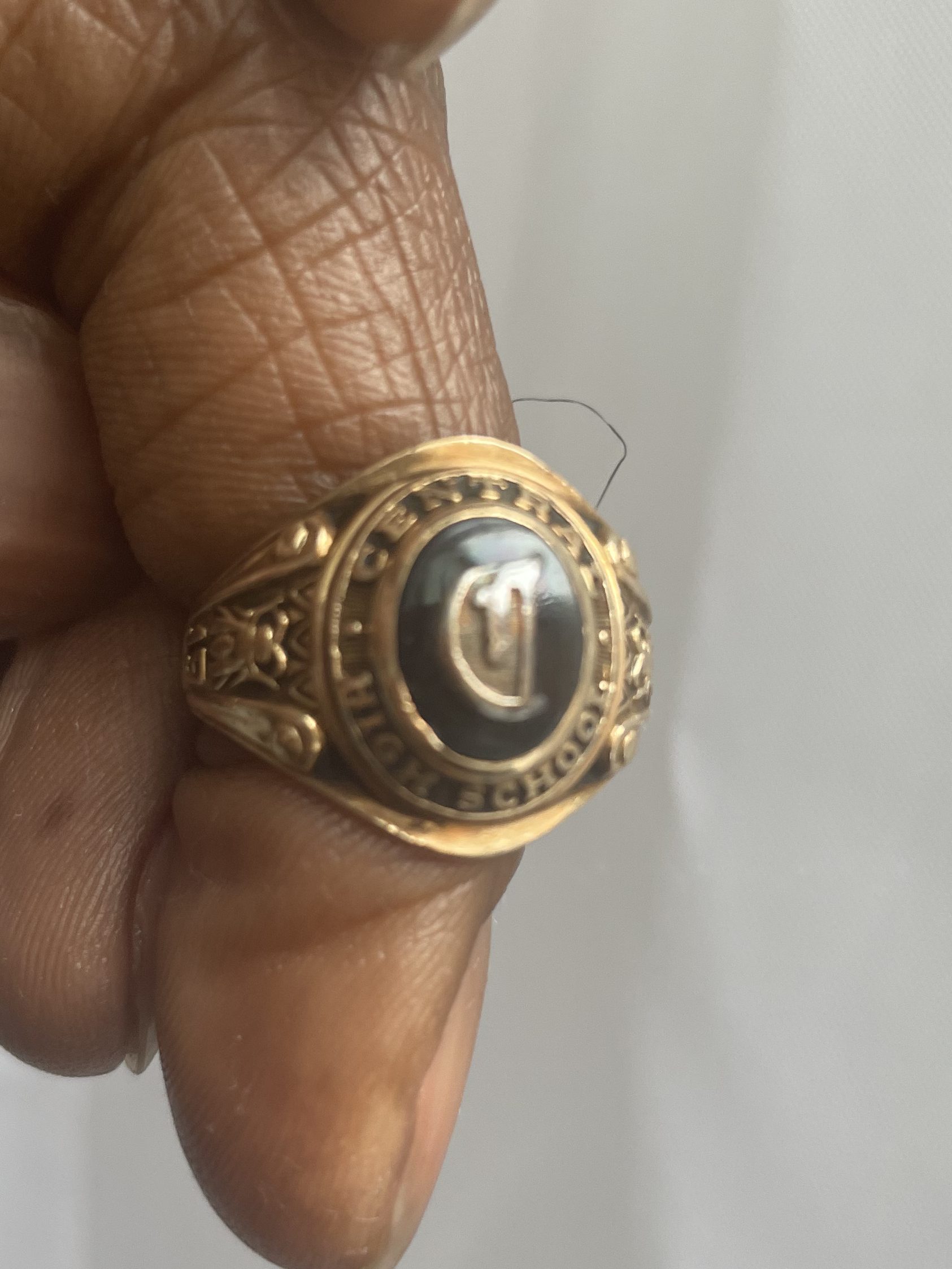
The next part of the tradition is having 100 different people turn the ring, as sort of an acknowledgement of becoming a senior. The first 99 turn it in one direction, while the final person reverses the order. This clockwise/counter-clockwise turn seals the deal. Yet get this, you’re supposed to kiss the hundredth person who turns the ring. You say the word “kiss” in front of most any group of adolescents and they’ll giggle. We knew what kind of kiss was meant. FRENCH like fries! Somehow becoming a senior in high school had been coopted by this hetero-ritual, a hetero-rite of passage (het-or-no-rites!).
I am troubled that this academic milestone is linked to gender. Worse, the ritual is predictably a performance act that fixes gender to normative sexual roles; yes, heteropatriarchy. Worse still, this binary gender performance is discrete, couched in achieving a basic education.
The ring dealer comes to school and makes a sales pitch to the class, and sets up a booth in the lobby after school. In his pitch, he promises a ‘free’ glossy little form to collect all the signatures. It was a bait and switch. These dealers sold us the rings but gave us the forms, the evidence we needed to prove we’d passed another stage towards adulthood. And what were we supposed to do with the blank glossy forms? Come back to school and boast?
The first 50 or so signatures were just us. Our own schoolmates turning each other’s rings, filling in each other’s forms on the very day the rings arrived. Family filled in a lot, too. I distinctly remember a teacher or two requesting to be excluded from the tradition, or take part in the ring ritual of becoming a senior, else we whittle their fingers away.
We all know everybody only wanted to see who signed the final line – a prompt to incite heteronormalizing speech-acts. Well, a few folks weren’t single and already had that 100th spot reserved and filled by sundown. Needless to say, kisses from granny don’t count! I’m pretty sure this wasn’t written on the dealer’s well-crafted sheet. Our market dominated, heteronormative introduction to adulthood for all to see.
I’d attended the same school since second grade so I’d seen people celebrate this class ring ritual for years, and even attended several graduations. I’d watched the “Senior run” year after year – a day at the end of school, when the graduating class runs through all the halls, cheering, banging on lockers as all the kids in all the classes rush out to line the hallways and egg them on. I loved school, adored our school, adored my classmates, and even looked forward to our turn, though parting so bittersweet.
At 16, I was only starting to be able to fully disidentify with the barrage of heterosexualized norms that engulfed me. I had to disentangle heterosexuality from virtually every facet of life – even finishing high school, a normal step we’re all expected to take. It’s as if to gain access to what bell hooks calls ‘the good life’ one had to signify alignment with compulsory heterosexuality.
I knew that I could not even turn my ring 100 times without kissing a girl. No way I’d risk putting a guy’s name at the end of that glossy list – someone I’d actually dreamt of French-kissing. Not like I knew any guy who’d be game. Damn. This was a lot of pressure. This junior prom was forcing me to make all kinds of adult decisions.
“The more I get of you, the stranger it feels…”
I was 16, and wasn’t out yet. Unlike at twelve when these feelings first bubbled over, by 16 I was on the cusp of self-acceptance, and preparing to face this possibility that I was gay. Perhaps it was pure timing. By the 11thgrade I knew for sure I’d be leaving home months after graduation, which was suddenly within reach. I could chart my own homo path. But still, at that age, I had doubts. I tried seriously dating a young woman as my last-ditch effort to see if I was straight or (at least) bisexual.
Kaye wasn’t a classmate, which wouldn’t have worked anyway because in retrospect all my classmates already knew, and had decided to accept me without question. Kaye attended an all-girls’ school, so we’d met through an extracurricular, Black youth empowerment program. Kaye was clearly college bound. She had her own dreams and ambitions, and pursued them – an ideal mate for me. She was the most attractive woman I knew, both inside and out, both to me and others. Yes, THAT sister who is not invulnerable, but has it all together. If she didn’t do, then dammit I was gay!
Fortunately, my girl was smart. And by smart, I mean that she was intelligent, real smart as in NOT clueless at all. We agreed to a kiss on the cheek, and she’d sign the last line on my glossy form. And by ‘agreed to’, I mean that this is what Kaye put on the table as her firm and final offer. She also had the good sense to let me turn her ring, too, but she reserved the 100th signature for someone special. I respected that. This clarified our plutonic status – no Facebook updates needed: I’m gay.
“Gotta find out what I meant to you…You were sweet as cheery pie/ Wild as Friday night”
Share this:


Black History Month: A Final Thought

As we come to the end of Black History Month it is important to shine a light on the Black Lives Matters Movement and highlight the historical significance to the problematic discourse of racialisation.
Black history month is an opportunity for people from the various pockets of the Black community to learn about our own history and educate those who are not from the Black community, in order to decolonise our institutions and our society. As Black people we have our own history formed by systemic oppressions and great triumphs. While it is easy (and lazy) for institutions to use terms such as BAME and People of Colour (POC) these problematic uses of language oppress blackness. We are not a monolith of coloured people. Different racialised groups have and will experience, and uphold difference, harms and achievements within society. Furthermore, it would be naïve to ignore the narrative of anti-blackness that people from racialised groups uphold. Therefore, it is important for us and people that look like us, to continue to have the space to talk about our history and our experiences.
For many people in the UK and indeed around the world BLM became a mainstream topic for discussion and debate following the murder of George Floyd. While the term BLACK LIVES MATTER is provocative and creates a need for debate, it signifies the historical ideology that black lives haven’t mattered in historical and in many ways, contemporary terms.
While it is easy to fall into the trap of describing the Black experience as an experience of victimhood, Black history months allows us to look deep at all our history and understand why and where we are as a society.
The UK is one of the most diverse places in the world, yet we continue to fall prey to the Eurocentric ideology of history. And while it is important to always remember our history, the negativity of only understanding black history from the perspective of enslavement needs to be questioned. Furthermore, the history of enslavement is not just about the history of Black people, we need to acknowledge that this was the history of the most affluent within our society. Of course, to glaze over the triangle trade is problematic as it allows us to understand how and why our institutions are problematic, but it is redundant to only look at Black history from a place of oppression. There are many great Black historical figures that have contributed to the rich history of Britain, we should be introducing our youth to John Edmonstone, Stuart Hall, Mary Prince and Olive Morris (to name a few). We should also be celebrating prominent Black figures that still grace this earth to encourage the youth of today to embrace positive Black role models.
Black history for us, is not just about the 1st-31st of October. We are all here because of history we need to start integrating all our history into our institutions, to empower, educate and to essentially make sense of our society.
Share this:


Meet the Team: Stephanie Richards, Associate Lecturer in Criminology

A Warm Welcome
Hello all! I would like to introduce myself. My name is Stephanie Richards and I am your Student Success Mentor (SSM). Some of the criminology and criminal justice students would have already had the opportunity to meet me, as I was their Student Success Mentor previously. So, it will be great to touch base with you all and it would also be great for the new cohorts to say hi when you see me on campus.
It is that time of the year when we see new students and our existing students getting ready to tackle the trials of higher education. Being a SSM I am fully aware of the challenges that you will face, and I am here to support you throughout your time at UON. As a previous student I can testify that studying at university is incredibly challenging. The leap from school/ college can be daunting at first. A new building that seems like a maze or the idea of being surrounded by strangers that you probably think you have nothing in common with can be enough to encourage you to run for the hills….stepping into a workshop for the first time can give you a stomach flip, but once you take that first seat in class you will come to realise it does get easier.
Upon reflection of my experience as a new undergraduate student I would have to be honest and express the difficulties that I suffered adjusting to my new way of life. I could not keep my head above the masses of reading, and when I did manage to get some of the seminar prep completed, most of the time I struggled with the new questions and concepts that were posed to me. This will be the experience of most, if not all the new students starting out on their university education. This is part of the complex journey of academia. My advice would be to pace yourself, time management is key, if you struggle to understand the work that has been set, ask for clarity and develop positive relationships with your peers and the staff at UON…………..being part of a strong community will get you through a lot!
My role is not just about assisting the new students that have started their university journey, I am also here to help UONs existing students. Getting back into the swing of studying can be daunting after the summer break. Adjusting to face-to-face education can be an overwhelming process but one that should be embraced. We will all miss our pyjama bottoms and slippers but being back on campus and getting some normality back in your day is worth the sacrifice.
The team of SSM’s are here to support you throughout your journey so please get in touch if you require our assistance. We never want you to feel alone in this journey and we want to assist you the best ways we can. We want you to progress and meet your full learning potential, and to get the most out of your university experience.
Share this:


Meet the Team: Francine Bitalo, Associate Lecturer in Criminology

Hi everyone! My name is Francine Bitalo and I will be your new Student Success Mentor for this year. I am looking forward to meeting and assisting you all in your academic journey. Feel free to contact me for any support.
Being a graduate from the University of Northampton I can relate to you all, I know how challenging student life can be especially when dealing with other external factors. You may go through stages where you doubt your creativity, abilities and maybe even doubt whether the student life is for you. When I look back at when I was a student, I definitely regret not contacting the Student Success Mentors that were available to me or simply utilising more of the university’s support system. It is important for you seek support people like myself are here to help and recommend you to the right people.
Besides everything, Criminology is such an interesting course to study if you are anything like me by the end of it all you won’t view the world the same. Many of you have probably already formed your views on life especially when it comes to understanding crime. Well by the end of it all your ways of viewing the world will enhance and become more complex, theoretical and constructive. The advice I give you all is to enjoy the journey, be open minded and most importantly prepare for exciting debates and conversations.
Look forward to meeting you all.
Share this:


Looking in all the wrong places and finding no answers
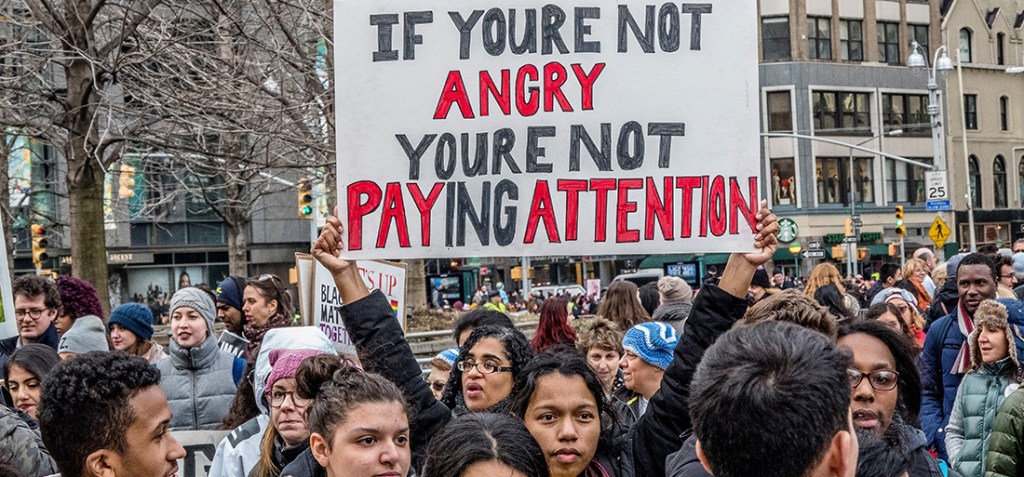
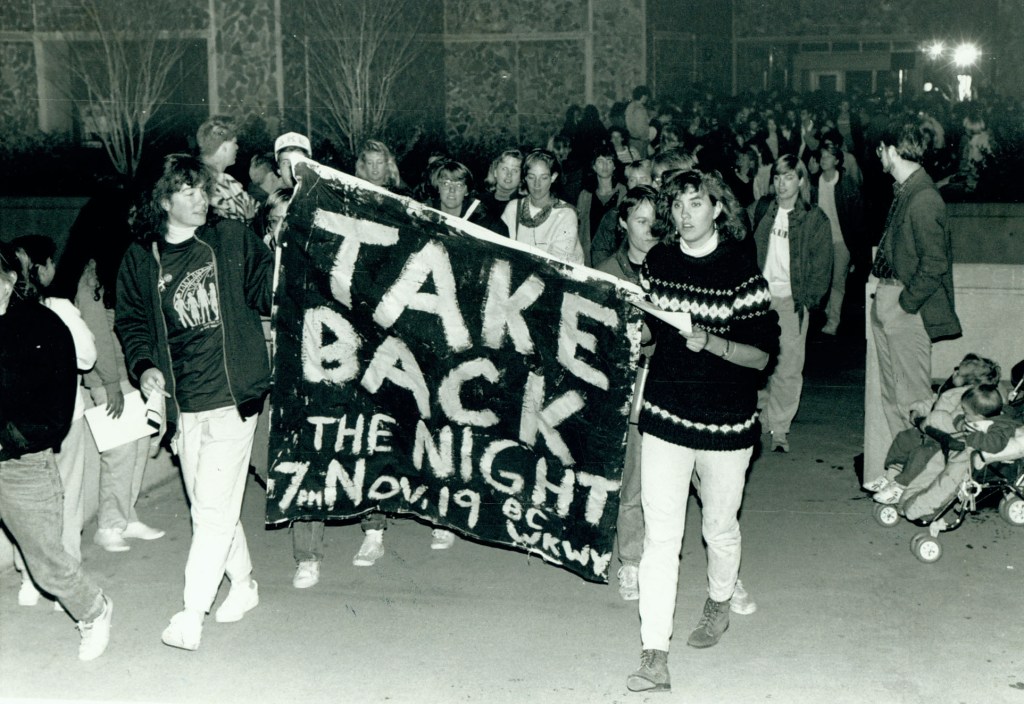
Recently we saw the killer of Sarah Everard receive a whole life sentence for her murder and with the sentence came the usual rhetoric from the politicians and media alike. I could tell you how I feel as a former police officer, but I just don’t think that really matters, others have said it but what they say, undoubtedly with conviction, seems rather hollow. What matters is that another life has been taken as a result of male violence, not just violence, male violence. I don’t disagree with those that want to make the streets safe for women, reclaim the streets, I don’t disagree with the ‘me too movement’, but somehow, I feel that the fundamental issue is being missed. Somehow, I think that all the rhetoric and calls for action concentrate too much on women as victims and looking for someone or some organisation to blame. There seems to be a sense created that this is a problem for women and in doing so concentrates on the symptoms rather than the cause. This is a problem for men and our society. Let’s not dress it up, pretend it could be something else, use terms like ‘not all men’, it is a fact nearly all violence, whether that be against women or men is perpetrated by … you guessed it, men.
I was watching a tv programme the other day about migraines and as it transpires there are millions of migraine sufferers around the world, most are women. It seems as a man I’m in the minority. One of the interviewees, a professor was asked why so little had been done in terms of research and finding a cure. He was frank, if it had been a male problem then there would have been more done. I’m not sure I totally subscribe to that because there are lots of other factors, after all prostate cancer a major cause of male deaths seems to have received comparatively little coverage until recently. But he made me think, if men, particularly those of influence accepted there was a problem would they be inclined to act? We call for more females in policing, we call for more females in the boardroom, predominately because we want to make things look a little fairer, a bit more even. We still have a massive gender pay gap in so many businesses and the public sector, we still have accusations and proven cases of sexual harassment. We still have archaic attitudes to women in so many walks of life, including religion. Words are great, useless but great. If you own the problem, you find solutions, men don’t own the problem and that is a problem.
So, it seems to me, that we are looking in the wrong place. Removing Cressida Dick as the head of the Metropolitan Police service isn’t going to change things. Blaming the police as an organisation isn’t going to change things. Look around you, look at all the scandals, all the sexual offences against women, against children. Look at where the perpetrators are placed in society, in positions of trust, as members of a variety of organisations, organisations that traditionally we thought we could turn to in our need. And look at the gender of those that commit those crimes, almost always men.
The solution to all of this is beyond me. As a criminologist I know of so many theories about why people commit crime or are victims of crime. Some are a little ridiculous but are a product of their time, others fit quite nicely into different circumstances, but none fully explain why. There are no real certainties and predicting who and where is almost impossible. Somehow, we need our leaders, predominately men, to grasp the mettle, to accept this a problem for men. If we owned the problem, we might start to tackle the causes of male violence, whatever they might be. Maybe then we might start to address the symptoms, society will be a safer place, and nobody will need to reclaim the streets.
https://www.theloquitur.com/get-educated-and-be-aware-sexual-assault-will-affect-your-life/
Share this:


Criminology First Week Activity (2020)

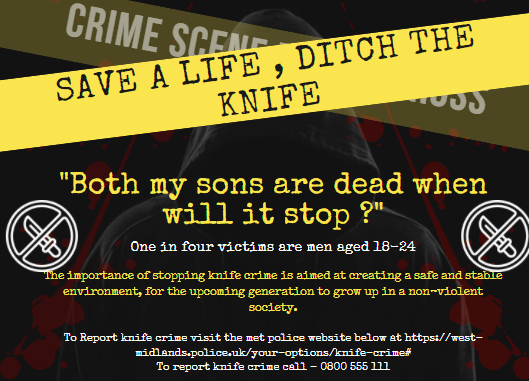
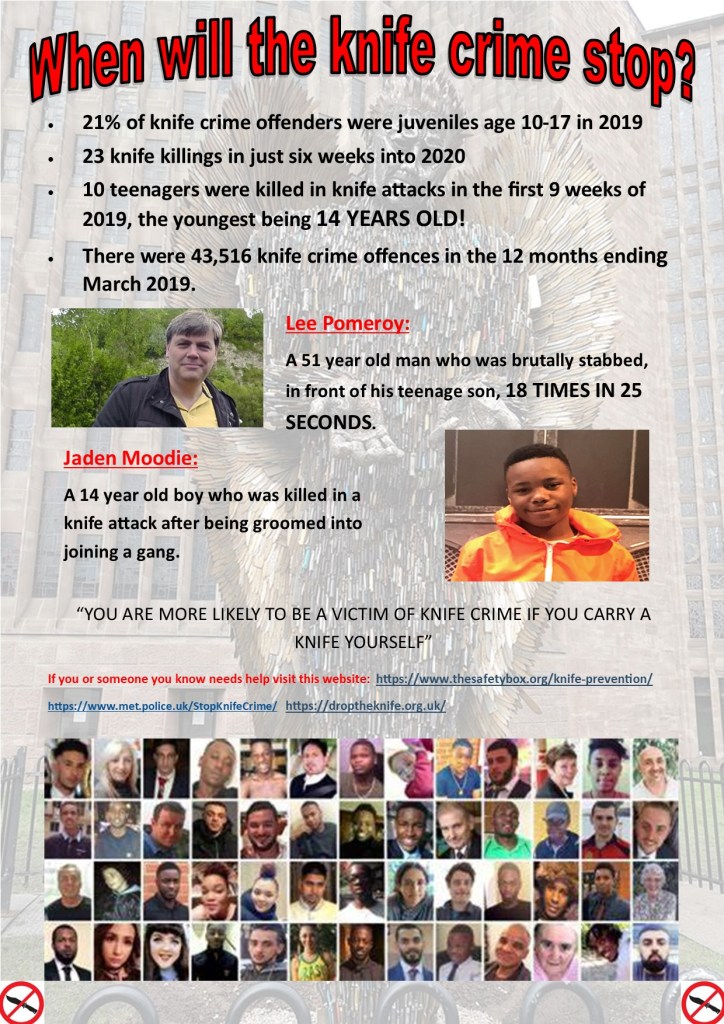
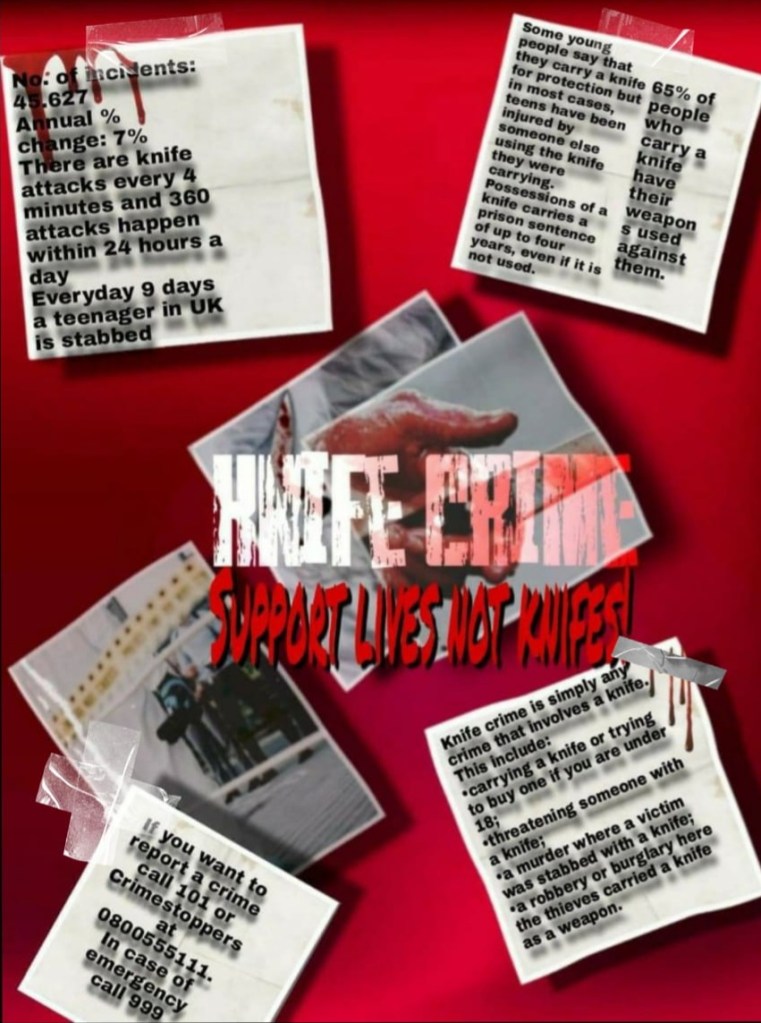
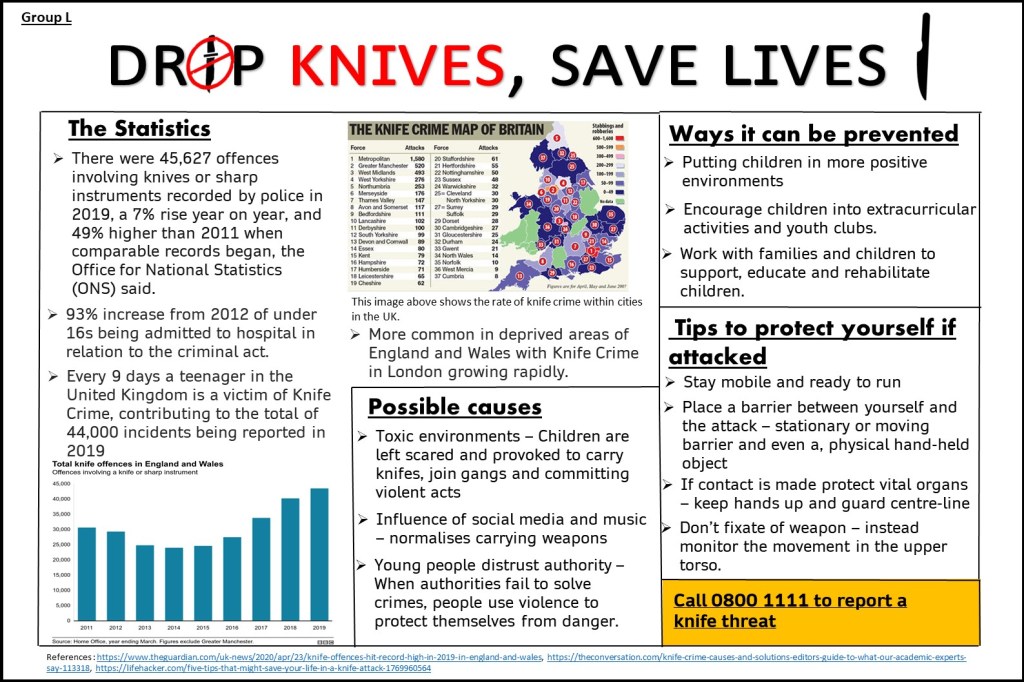
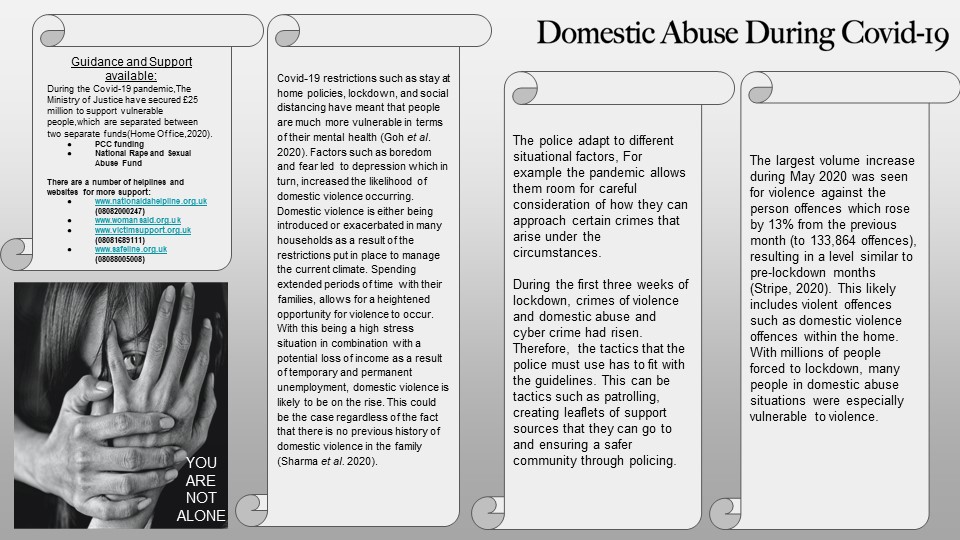
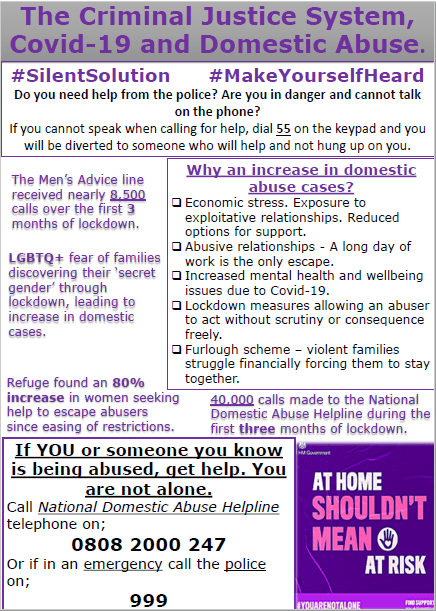
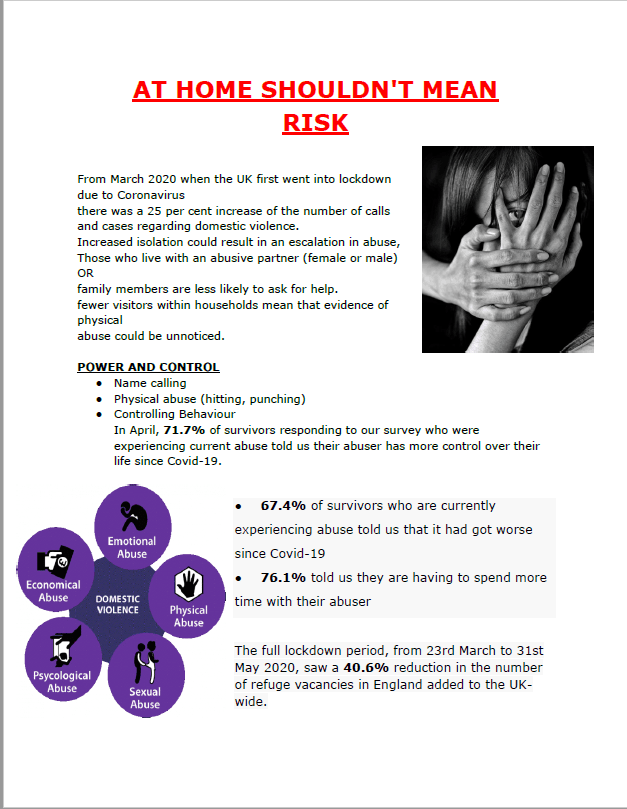
As we prepare to start the new academic year, it is worth reflecting on the beginning of the last one. In 2020 we began the academic year with a whole cohort activity designed to explore visual criminology and inspire the criminological imagination. Students were placed into small (socially distanced) groups, provided with a very short prompt and limited guidance as to how best to tackle the project. The prompts were as follows:
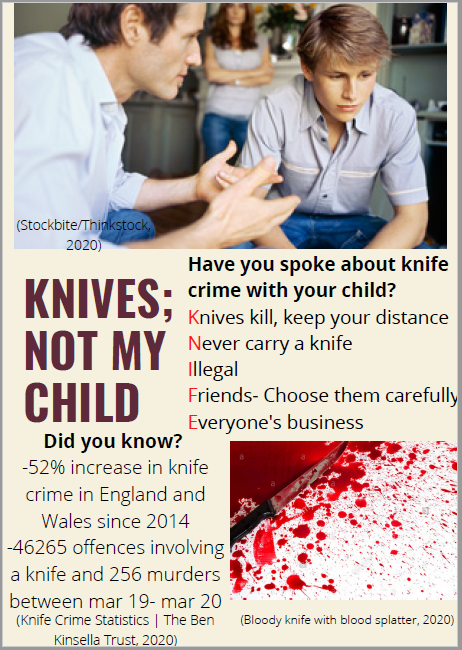
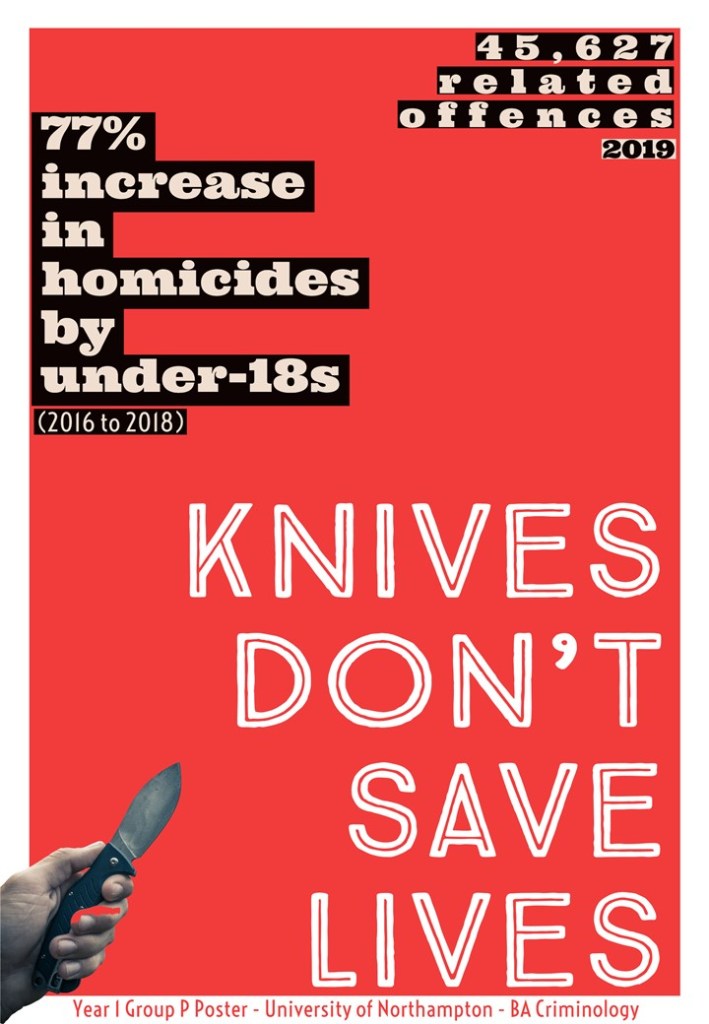
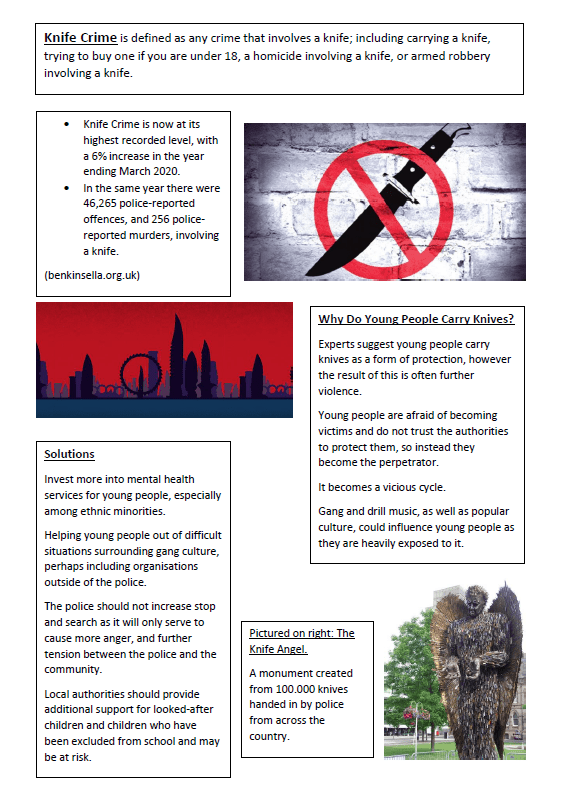
Year 1: Knife Crime
Year 2: Policing Protest (e.g. Black Lives Matter, Extinction Rebellion and so on)
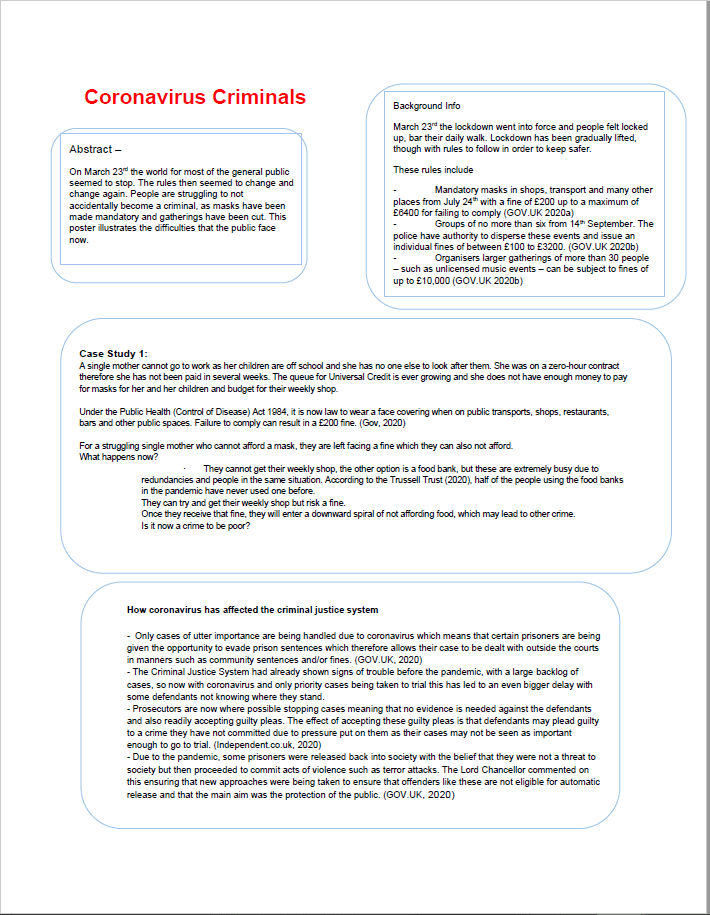
Year 3: Creating Criminals: the CJS during the Covid-19 pandemic
Many of the students had never physically met, yet managed to come together in the midst of a pandemic, negotiate a strategy, carry out the work and produce well designed and thoughtful, criminological posters.
As can be seen from the collage below, everyone involved embraced the challenge and created some remarkable posters. Some of these have been shared previously across social media but this is the first time they have all appeared together in one place.
I am sure everyone will agree our students demonstrated knowledge, understanding, resilience and stamina. We will be running a similar activity for the first week of the academic year 2021-2022, with different prompts to provoke thought and encourage dialogue and team work. Who knows what exciting ideas and posters will be demonstrated this time, but one thing is for sure Criminology students have the opportunity to campaign for social justice becoming real #Changemakers.


















Share this:


Prison education: why it matters?

Five year ago, Dame Sally Coates released an independent report on prison education. Recently the Chief Inspector for Ofsted, Amanda Spielman and The HM Inspectorate of Prisons, Charlie Taylor, made a joint statement reflecting on that report. Their reflections are critical on the lack of implementation of the original report, but also of the difficulties of managing education in prison especially at a time of a global pandemic. The lack of developing meaningful educational provision and delivering remote teaching led to many prisoners without sufficient opportunity to engage with learning.
In a situation of crisis such as the global pandemic one must wonder if this is an issue that can be left to one side for now, to be reviewed at a later stage. At the University of Northampton, as an educational institution we are passionate about learning opportunities for all including those incarcerated. We have already developed an educational partnership with a local prison, and we are committed to offer Higher Education to prisoners. Apart from the educational, I would add that there is a profound criminological approach to this issue. Firstly, I would like to separate what Dame Coates refers to as education, which is focused on the basic skills and training as opposed to a university’s mandate for education designed to explore more advanced ideas.
The main point to both however is the necessity for education for those incarcerated and why it should be offered or not. In everyday conversations, people accept that “bad” people go to prison. They have done something so horrible that it has crossed the custody threshold and therefore, society sends them to jail. This is not a simple game of Monopoly, but an entire criminal justice process that explores evidence and decides to take away their freedom. This is the highest punishment our society can bestow on a person found guilty of serious crimes. For many people this is appropriate and the punishment a fitting end to criminality. In criminology however we recognise that criminality is socially constructed and those who end up in prisons may be only but a specific section of those deemed “deviant” in our society. The combination of wrongdoing and socioeconomic situations dictate if a person is more or less likely to go to prison. This indicates that prison is not a punishment for all bad people, but some. Dame Coates for example recognises the overrepresentation of particular ethnic minorities in the prison system.
This raises the first criminological issue regarding education, and it relates to fairness and access to education. We sometimes tend to forget that education is not a privilege but a fundamental human right. Sometimes people forget that we live in a society that requires a level of educational sophistication that people with below basic levels of literacy and numeracy will struggle. From online applications to job hunting or even banking, the internet has become an environment that has no place for the illiterate. Consider those who have been in prison since the late 1990s and were released in the late 2010s. People who entered the prison before the advancement of e-commerce and smart phones suddenly released to a world that feels like it is out of a sci-fi movie.
The second criminological issue is to give all people, regardless of their crimes, the opportunity to change. The opportunity of people to change, is always incumbent on their ability to change which in turn is dependent on their circumstances. Education, among other things, requires the commitment of the learner to engage with the learning process. For those in prison, education can offer an opportunity to gain some insight that their environment or personal circumstances have denied them.
The final criminological issue is the prison itself. What do we want people to do in them? If prison is to become a human storage facility, then it will do nothing more than to pause a person’s life until they are to be released. When they come out the process of decarceration is long and difficult. People struggle to cope and the return to prison becomes a process known as “revolving doors”. This prison system helps no one and does nothing to resolve criminality. A prison that attempts to help the prisoners by offering them the tools to learn, helps with the process of deinstitutionalisation. The prisoner is informed and aware of the society they are to re-join and prepares accordingly. This is something that should work in theory, but we are nowhere there yet. If anything, it is far from it, as read in Spielman and Taylor’s recent commentary. Their observations identify poor quality education that is delivered in unacceptable conditions. This is the crux of the matter, the institution is not really delivering what it claims that is does. The side-effect of such as approach is the missed opportunity to use the institution as a place of reform and change.
Of course, in criminological discourse the focus is on an abolitionist agenda that sees beyond the institution to a society less punitive that offers opportunities to all its citizens without discrimination or prejudice. This is perhaps a different topic of conversation. At this stage, one thing is for sure; education may not rehabilitate but it can allow people to self-improve and that is a process that needs to be embraced.
References
Coates, S. (2016), Unlocking Potential: A review of education in prisons, https://www.gov.uk/government/publications/unlocking-potential-a-review-of-education-in-prison
Spielman, A. and Taylor, C. (2021), Launching our Prison Education Review, https://www.gov.uk/government/speeches/launching-our-prison-education-review
Originally published here
Share this:


#CriminologyBookClub: The Hundred-Year-Old Man Who Climbed Out of the Window and Disappeared

As you know by now, a small group of us decided the best way to thrive in lockdown was to seek solace in reading and talking about books. Hence the creation of #CriminologyBookClub! Building on on what has quickly become standard practice, we’ve decided to continue with all eight bloggers contributing! This title was the second chosen by @paulaabowles and is our 13th book. Read on to find out what we thought….
I chose this book on the strength of its quirky title. In terms of quirkiness, it didn’t disappoint. What’s not to like about the adventures of a centenarian? Part history lesson, part Forrest Gump, the cast of characters includes Stalin, Chiang Kai-shek and Harry Truman, alongside Allan, Beauty and an elephant called Sonya (seems Criminology Book Club cannot escape elephants from our reading diet…)! The story, despite including all manner of improbable deaths, is a gentle read. In many ways, it reminded me of Leslie Thomas’ The Adventures of Goodnight and Loving and I do have to say I prefer that story. Nevertheless, it was lovely to see the representation of older characters in an adventurous tale.
@paulaabowles
A centenarian is the most unlikely hero! Their mortality alone makes them too frail and fragile to be featured in a movie where villains end up dead in a path of carnage. In this book, the title is not a metaphor but most literal. A century old man is running away in his slippers dragging a stolen suitcase; somehow the story of what happens next, becomes compelling in this fast-paced action-packed adventure. The old man is carrying with him also a century of stories involving “who’s who” of the 20th century! At some point you are wondering if this is a comedy of errors, a farce or a spy thriller. The old man, in his back and forth stories, is bringing to light the absurdity of the 20th century, the political and ideological conflict of the time. This part of the story becomes a bit of a parody and the flashbacks become a bit tiresome as they seem to take us away from the main story, as you are left wondering will the old man live another day?
@manosdaskalou
I found this book an absolute joy to read, laughing out loud throughout. The book was about a centenarian who gets into all kinds of adventures and has done throughout his life. Each story of how he accidentally fell into situations with various historical political figures made me chuckle. What I also liked was that the book was devoid of any emotion. The love stories were quite clinical, the life and death situations fearless but this is just what I needed, and I think it made the book even more funny. More slapstick humour than romcom, it was completely ridiculous and an unlikely tale but because of this I could laugh at the dinners with murderous war mongers and the protagonist’s penchant for blowing stuff up.
@amycortvriend
We’ve come full circle in relation to book choices: it is Paula’s choice once again! And in all fairness, this book was more enjoyable than the Yellow Room. The Hundred-Year-Old Man Who Climbed Out the Window and Disappeared, was a book of two halves for me. The first half was witty, quick paced, and not like anything I had read before. However the second half of the book, was repetitive and without giving away any spoilers, the characters did not develop into the loveable rogues I thought they were. They remained quite stagnant. Nevertheless, I did really enjoy the book and found myself chuckling away at various points. Something which none of the other choices (excluding Inspector Chopra) have done. Good choice, @paulaabowles: I wonder how @manosdaskalou’s second choice will fare?
@jesjames50
The 100 Year Old Man was a novelty for me. Prior to this I had never encountered a book where the main character at 100 years old gets up to all kinds of unintended mischief. The sense of adventure included within the book was something that I needed at the time, although I found that the appeal of the book began to wear off at the half-way point. I also found some descriptions to be problematic from my own point of view, but overall I enjoyed the book!
@haleysread
I don’t suppose you get to be a hundred years old without having a few tales to tell. Allan’s life appears to have been a little more adventurous than most and his absconding from an old people’s home seems to be a continuation of mishaps and mayhem. A delightfully funny book, cleverly written to incorporate some historic characters into the narrative. The chapters jump from the past to the present and back again, sometimes leaving you wanting to skip a chapter to continue the narrative of the past or to find out what happens next in this tale of murder and destruction. Its amazing what you can get away with when you are a hundred years old. I can’t wait to get my hands on the next book.
@5teveh
I haven’t read a book like this before and really enjoyed the whole concept of a much older than average ‘hero’ and their adventures both past and present. The glimpses into his colourful past and the famous faces from throughout history that he met along the way gave this book an interesting sense of time and place – both completely fictional and yet almost plausible in the real world. The writing style was also different from the other books we have read as a group and I found it very funny in places. Overall I found the book slightly too long – the novelty began to wear off and I found myself a little fed up with the alternating chapters between past and present ( I preferred those set in the present, though I know others in the group preferred those set in the past) but am still excited to find out what happens to him and his friends in the next book!
@saffrongarside
I was not expecting what I was going to read….elephants, gangsters and men locked in freezers. This book is a light and easy read. It centres around the very colourful life of 100 year old Alan Karlsson. Throughout the book Alan takes you on a journey to meet some interesting historical figures such as Stalin and President Truman. In many ways Alan influences these characters, which in essence shapes events that have happened in history.
We also follow Alan’s life in present day, in which we follow outlandish characters through a very humorous story. Overall, I really enjoyed this book. It kept me entertained and wanting more. Although some parts of the book were about some dark things, such as Eugenics and abuse under the guise of ‘medicine’ the humorous present-day story of Alan’s journey balanced this book out, making it a light hearted tale.
@svr2727

 Thoughts from the criminology team