
Home » Criminology (Page 16)
Category Archives: Criminology

Maybe HE Needs Damaging: The EDI-fication of Institutional Violence

The business case for diversity initiatives, unconscious bias training, cultural sensitivity workshops, and more are some of the things that come under institutional focuses on Equality, Diversity and Inclusion, known more commonly as EDI. These are then applied to numbers of protected characteristics named in the Equality Act 2010. In addition to EDI being difficult to measure, insurgents have spoken out against it, as it seems to have taken many for fools as a phantom limb of the Anti-Racism Industrial Complex. As white people co-opt and profit from concepts and traditions of thought that Black and Brown people created and developed. For example, “identity politics” was coined in the 1970s by the Combahee River Collective to talk about their experiences of classism, lesbophobia and misogynoir. Meanwhile, the term has been co-opted by the political right in their war against equality.
As a freelancer invited into organisations to “raise awareness” on issues pertaining to racial inequality and more, I am asked to do one-time events … but never long-term interventions that shifts the scales of power and privilege. On a basic level, institutions like schools and universities can say look how much we are doing while actually not doing anything at all. Those who lose are the students and employees from historically excluded backgrounds including Black, Asian, LGBTQ+, disabled and other violently exploited groups. So, EDI then claims to want to end inequality while actually upholding it.
***
During the COVID-19 lockdowns, I read a poetry collection called Postcolonial Banter by Bradford-based spoken word poet and educator Suhaiymah Manzoor-Khan. Her poem “Decentring Diversity” illustrates the issues with more Black/Brown faces in high places as somewhat being interchangable with anti-racism: “Just because they give you a seat at the table doesn’t mean they want you to speak at the table” (p81). As expected, this reaffirmed my own suspicions about the EDI agenda: simply having more Black and Brown people as managers will not solve our problems. Encouraging more Black and Brown people to inhabit these institutions to be part of the labour force, while well-intentioned, will not solve our problems when there is little want to change working conditions (i.e racism at universities).
As universities continue to exploit international students (i.e through extortionate tuition fees and precarious visas … in partnership with the Home Office), these same institutions employ EDI “initiatives” to protect these power structures. Meanwhile, Black and Brown asylum seekers drown at sea.
Having more Black and Brown faces in high places continues be a harmful tactic in EDI discourse, as we saw with their deployment in The Sewell Report. Here the UK Government – a white instituton – curated a panel of Black and Brown “experts” in their fields (but not in racism) to conduct an inquiry that told us institutional racism doesn’t exist. As the same government continues with its “anti-woke” nonchalance in its attacks on Critical Race Theory. I want to see more people that look like me in spaces I inhabit. But at what cost? As political commentator Ash Sarkar states, “I mean, this idea that all you need is brown faces in high places is just absolutely for the birds. […] That just because somebody shares some of your identity attributes, it doesn’t mean that they are going to be organising in your interests” (DDN, 2021).
Increasingly, organisations illustrate their “commitment” to Equality & Diversity by creating a diversity role within senior leadership for a Black or Brown person, only to leave this person unsupported. These staff members become tokenised and end up speaking through whiteness (as per #FloellaGate during The Coronation, and The Sewell Report). This is what happens when you project Black and Brown people into jobs within organisations, unsupported, in places that were not designed for us in the first place. Black and Brown people should certainly consider these roles if offered (and if in an emotionally healthy position to do so), but organisations need to support them. Otherwise, we are being set up to fail.
“The concept of diversity only exists if there is an assumed neutral point from which ‘others’ are ‘diverse.’ Putting aside for now the straight, male, middle-classness of that ‘neutral’ space, its dominant aspect is whiteness. Constructed by a white establishment, the idea of ‘diversity’ is neo-liberal speak. It is the new corporatized version of multiculturalism. It is about management, efficiency, box-ticking.”
Kavita Bhanot (2015)
When “diversity” is called for in organisations, it is useful to remember “diversity” is often just euphemistic language for marked difference, often Blackness and Brownness. In saying “diversity”, organisations are also telling us who institutions are designed by and who they work for. As scholar-activist Muna Abdi stated, “Diversity work is about manging the racial optics of a space. It is about bringing together people who are marked as ‘different’ into spaces that remain designed for those with power.”
In doing so, thus, some “differences” are then seen as neutral differences (i.e white; man; cisgender; ; heterosexual; neurotypical), and some are seen as Other (i.e Black; Asian; Muslim; woman; gay; neurodivergent; transgender). In giving specific groups power in a world that thrives on hierarchy and social order, historically excluded groups always lose … including racialised wo/men and people that reject all gender binaries. These groups are also some of the worse impacted by state-manufactured violence i.e how police departments treat some humans like objects to moved out of the way.
Under the “protected characteristics” named in the Equality Act 2010, in concept being victim of racism should be threaded through all of them. i.e Black women who are more likely to die in childbirth than their white counterparts. This is a very specific experience situated under “misogynoir” (Bailey, 2010), where anti-Blackness and misogyny join hands – exclusive to Black women in their position as Black women. Since 2010, the Equality Duty has largely been understood by organisations as somewhat positive:
“The general equality duty therefore requires organisations to consider how they could positively contribute to the advancement of equality and good relations. It requires equality considerations to be reflected into the design of policies and the delivery of services, including internal policies, and for these issues to be kept under review.”
Public Sector Equality Duty
Within higher education, gender equality frameworks like Athena Swann continue to privilege gender over race (Bhopal and Henderson, 2021). One must ask why? In short, some academics would say that with white experiences as the default setting (even in women’s experiences of misogyny), there is no priority for Black and Brown women to be included. So, for Black and Brown people, “progress” only tends to happen within a white supremacist system when those interests are conjoined with the goals of whiteness. In Critical Race Theory, we call this “interest convergence” (Bell, 1980). With the logic of diversity as a euphemism for Black / Brown (Bhanot, 2015), these initiatives also continue to omit the role of colour-conscious racism. This recentres white people as the “common sense” or universal worldview.
***
Often, I recieve emails from schools and others asking for EDI training; I don’t do EDI work, I do disruption work – with much of it challenging dominant power structures! EDI work in my experience has been about reform, not reparations: it has been about firefighting within institutions and managing acceptable levels of violence (i.e through resilience / “cultural sensitivity” workshops, and unconscious bias training … ugh).
In her thread about ‘unconscious bias training’, Muna Abdi also reminds us that this not something to ignore as a “tick-box exercise, it is a deliberate organisational decision and originally implemented to limit corporate risk. Furthermore, Muna tells us how it diverts attention from a needed focus on institutional and structural violence into a focus on individual violence between people.
The Equality, Diversity and Inclusion agenda has been one of the biggest traps to hit education in decades. In March, I got into a discussion with a teacher on Twitter about this. Her tweet suggested that anybody against the EDI agenda’s concepts were probematic, when in truth there is a lot wrong with EDI because it doesn’t do what it says. And in fact, in being designed around giving institutions plausible deniability and limiting corporate risk it keeps the violence going.
In late 2022, I made a complaint about a university conference. The event was situated around anti-racism in education (or so it claimed), but the event reproduced racism and whiteness in different ways. I was horrified. What struck me is how “good white people” (Sullivan, 2014) had psyologically distanced themselves from “bad supremacists.” In my complaint, it reasserted how power works and that white “anti-racists” can be some of the most racist people to challenge. As Sara Ahmed writes, “To compain at the university is to be treated as ungrateful for the benefits you have recieved from the university: the freedom to make your own interpretation, the freedom to be critical, academic freedom” (p135).
For me, EDI has been about boxticking and efficiency, using the “racial optics” of Black and Brown people for university brochures, working groups, “race equality centres” and so forth, while campus police and security continue to harrass Black students. Universities draw on the language of EDI to encourage students and staff to study/work there: “non-performativity” (Ahmed, 2018: 333). But language does not translate to transforming hostile spaces into safe ones (better yet, less hostile … in academia, safe spaces do not exist for Black and Brown staff unless we make them ourselves). Thus the brochures, and other forms of marketing are used to create the appearance without action (Ahmed and Swann, 2006).
Or as Nirmal Puwar (2004) writes,
“In policy terms, diversity has overwhelmingly come to mean the inclusion of different bodies. It is assumed that, once we have more women and racialised minorities, or other groups, represented in the hierarchies of organisations (government, civil service, judiciary, police, universities and the arts sector), especially in the élite positions of those hierarchies, then we shall have diversity. Structures and policies will become much more open when these groups enter and make a difference to organisations.”
Nirmal Puwar
Too much and often, I see organisations framing their equality ‘commitments’ as diversity strategies sidestepping the violence of patriarchy, white supremacy, ableism, and cis-heteronormativity culture. In their bums on seats approach (also centring capitalism), they fail to recognise the violence of Equality and Diversity on the people they “intend” to help. We then see term like “decolonisation” used interchangably with EDI, when in fact they are more likely opposites; EDI keeps the violence going, decolonisation roots it out – literally attacks it at the stem! Intersectionality has also been used to give EDI more credibility or kudos, of course co-opted by white institutions trying to remain relevant.
“The easy adoption of decolonizing discourse by educational advocacy and scholarship, evidenced by the increasing number of calls to “decolonize our schools,” or use “decolonizing methods,” or, “decolonize student thinking”, turns decolonization into a metaphor” (p1).
Eve Tuck and K. Wayne Yang
As useful as EDI may be to some, its ethos in large, conflicts with both anti-racist work and decolonisation as a practice. Frequently, EDI work within institutions avoids looking at racialisation, thus centring whiteness as sameness and avoiding systemic oppression altogether. It does the work of the corporate agenda, hence “nonperformativity” (Ahmed, 2006). In this lack of intentional work (also supported by universities), racial literacy is sidelined. The late Lani Guinier (2004) defines racial literarcy as “the capacity to decipher the durable racial grammar that structures racialized hierarchies” (p100).
The power of white supremacy illustrates that those not racialised as white are not able to bring their full authentic selves into a space. For example, in my experience at work – I am either Black or disabled – but simultaneously policed from being both. This is how whiteness maintains its power in diversity work because EDI only allows us to look at one identity position at a time. Whiteness, thus reproduces itself in spaces where it is also being interrogated (Ahmed, 2021: 158). When you question the questioning, and the thinking behind the questions, you are then placed under surveillance:
“… the [w]hite eye only, an eye that constantly has the [Black] … academic body – individual, collective, epistemological – under surveillance for any sign of trouble, any possibility of claim of racism to break the uneasy [w]hite [friendliness] of academia” (p59).
Shirley Anne Tate
Whiteness by care is still whiteness. Neoliberals would say relationships between humans are now transactional and purely economic in hope of monetary exchange. Violence by EDI is still violence. EDI keeps the violence going and is the neoliberal’s equality. It’s an empty gesture that gives institutions (like universities) plausible deniability and limits corporate risk. It is not the job of HR departments to look after employee welfare, but to limit corporate risk (i.e complaints about racism, sexual harrasssment etc etc). It just so happens the former informs the latter, and HR exists to protect reputational damage.
Indeed, EDI is full of empty promises that lumps the experiences of people whose daily lives are encompassed with being on the recieving end of extreme violence … with the same people who talk about this “journey of learning” we are all on … from a vantage point of privilege. The institutional equality agenda make me feel unsafe at work. Institutions enjoy talking up policy, but not the culture of terror that exists in the workplace. Not because of the dangerous potential of bad policymaking (though that also exists), but the dangerous potential of employees who fail upwards into unaccountable power.
“Things might appear fluid if you are going the way things are flowing. When you are not going that way, you experience the flow … [a]s a wall” – Sara Ahmed
Share this:


Here to serve but not your slave

My wife and I were fortunate enough to go on holiday this year to a beautiful island in the Caribbean. Palm Island, a stone’s throw, well 10-minute boat ride (I’m not prone to exaggeration you understand) from Union Island, and some 45 minutes by plane to Barbados is a unique paradise described as the Maldives in the Caribbean.
The circumstances of the people that work on Palm Island (and history) are perhaps not too dissimilar to those that work in Cape Verde, a subject of a previous blog. Wages are poor, the staff are not exactly affluent, and work is hard to come by. Many have gravitated to Palm Island from nearby islands to find work and have subsequently stayed on Union Island, commuting every day after a long shift. Others stay on Palm Island in staff accommodation, returning home to their families every few months in St. Vincent and elsewhere. Whilst guests enjoy luxurious accommodation, great food and plentiful drinks, the workers receiving low wages, relying on a percentage of the service charge and tips, do not even have the luxury of a constant water supply on Union Island. Palm Island has its own water processing plant, Union Island does not. Hence the gardener telling me he had to pay $250 dollars to have water delivered to his home; £100 for the water and $150 for the delivery. The dry season is hard going and financially precarious.
The Island shut down during Covid and many of the workers returned home with no wages for the duration. Poverty is not an alien concept to them. Their lives and that of the visitors couldn’t be further apart and yet are intertwined by capitalism in the form of tourism. They need the tourists to sustain the jobs, the more tourists, the more in service charges and tips. Of course, the owners of the island want more tourists because it brings in more revenue. A moral dilemma for some perhaps, well for me anyway. I won’t be pretentious and state that I go to the island to support the local economy, vis-a-vie the poor people, I go there for a really good holiday. But here is the crux of the matter, and hence the title, I try my utmost to treat the staff with respect. I recognise that they are paid to serve me and other guests, and they do a brilliant job, but they are not my servants or slaves (the historical significance should be obvious). And yet I have witnessed people demanding drinks without a please or thank you, “give me a vodka”, “she wants a rum and coke”. I have seen people coming off yachts with day passes for the island, they came, they saw, they made a complete mess and they left…. You can clear up our mess! Glasses left all over the beach, beach towels left wherever, they last used them. “What did your last servant die of”, I ask, as they slope off into the rum filled sunset? “It certainly wasn’t old age” I shout after them. But it just seems lost on them.
I ask myself would they have treated me like that had I been the one behind the bar? I think not, perhaps the lighter colour of my skin may have persuaded them that I am worthy of some courtesy. But then who knows, it seems that some people that have money have a certain arrogance and disregard for anyone else.
Not all of the customers were like that, most were polite and some very friendly with the staff. But we shouldn’t forget the power dynamics, and above all else the privilege that some of us enjoy. Above all else it is a useful reminder that when people are there to serve, they are not your servant nor your slave and they and the job they do deserves respect.
Share this:


The decline of social interaction

I am writing about the decline of social interaction today – not because of my interest in sociological interactionist perspectives but because of the declining state of social interactions and the general lack of engagement in societies lately. Additionally, as we come to the end of Mental Health Awareness Week, it is important to reflect on the relationship between social interaction and mental health.
Previously, I have written about the students’ lack of engagement in classrooms and their unwillingness to participate and commit to their studies. In that blog, I tried to understand why students are becoming increasingly disinterested in their studies and why attendance has plummeted. I identified some interconnected issues that might be causing these problems, including anxiety, financial difficulties, lack of sense of belonging and the difficulties of readjusting to life after the pandemic. Furthermore, I have also tried to proffer some solutions for how I think students can resolve these challenges and detailed the importance of being part of a community. However, upon reflection, I realised that I might have underestimated the impact of social interactions in societies today.
First, I’d like to define social interactions as a meaning-making process. It is a process through which individuals exchange ideas, relate, manage information, and react to each other’s dealings. Of course, social interaction encompasses communication but constitutes characteristics like mannerisms, gesticulations, eye contact, smiling, slang, etc. Blumer (1969) lays bare the fundamental premise of this approach (and for the sociologists reading, I recognise the work of Mead, so don’t worry) by exploring some basic premises through which interactions form human character. While these characteristics are more appreciated physically, even though they may be passive sometimes, they create a different feel and richness for socialisation, relationships, and interaction. Not only that, they all constitute the genetic makeup of our social behaviour which invariably translates to our social character. However, in recent times, the nuances that we enjoy being physically engaged with one another seem to be slowly disappearing. Our digital presence, emoticons, Gifs, stickers and memes have replaced many of these characteristics and nuances.



It is important to note, though, that being among people, participating in discussions physically and forming peer relationships all provide us with a good recipe through which we can use to improve our psychological well-being, social interactions and skills. Take a ride on the underground trains in London during peak periods, for example, and you will hear how loud the silence is despite the crowded setting.
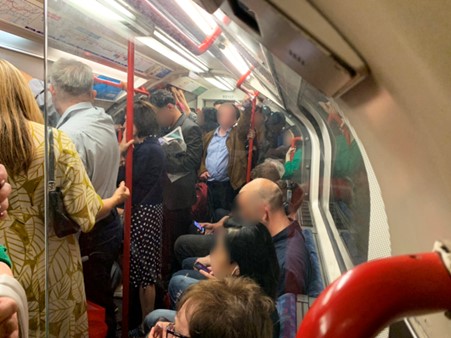
I believe that we are living in a time when people are becoming more and more disconnected from one another, and part of the problem also has to do with the consequences of the pandemic social distancing/quarantine rules – which was a necessary evil.

While the social distancing guidance may have been withdrawn, I think there seems to be a continuous trend where people keep each other’s distance even after the pandemic. Loneliness is becoming more perverse; people are becoming removed from social life, and procrastination seems to have taken centre stage.
Again, the rise and usage of multiple social media platforms have also put us where we are slowly replacing our physical presence with our digital presence. We can easily sit behind our WhatsApp, Twitter or TikTok for hours without speaking – but submerged in this digital world. While I am not in any way condemning the use of social media, I think we risk our physical interactions being replaced with digital interactions, which I also consider a contributing factor to the decline of social interactions we face today.

I agree that we all must move with time; we have to adjust ourselves to this new world, or else we will be left behind. However, I suggest not letting our physical engagement dissipate, nor should we allow our digital presence to become more important than our in-person presence. As indicated earlier, we are witnessing a decline in social interactions, but the task ahead of us as a society is to begin to consider ways to ameliorate this problem. There is value in social interaction, even if some might not see the benefits of it. Some studies in the past have found that ensuring good social interactions can improve psychological well-being. Thus, my assignment for everyone reading this blog today is to pick up your phone and check up on a loved one! The sun is out (well, for now); take a break and go out with your friends, have some food and drinks over the weekend, exchange some jokes, and smile!
Life, indeed, is a beautiful thing to have.

Reference
Blumer, H. (1969). Symbolic interactionism: Perspective and methods. Englewood Cliffs, NJ: Prentice Hall.
Share this:


If I had a time machine…which coronation would I see?
If I had a time machine…which coronation would I see?
If I had a time machine, I would most certainly travel back in time…to witness some great moments in history.
The birth of Jazz in Congo Square in New Orleans, or
Martin Luther King deliver that great speech in Memphis the eve of his assassination, or
The moment the first white man set shore upon the Niger Delta.
Would I go back and see
The crowing of King George, or
Queen Victoria’s coronation, or
Would I be wicked enough to sneak into the palace of the tiny Spanish queen Anne who gave permission and cash to ‘explorers’ who’d cast caste onto the dark skins of every ‘native’ they encountered.
Caste. And race.
Without imperialism, there’d be no black stain upon my skin against which my ancestors resisted.
Without the profit of human trafficking, there’d be no need for labels like Black or white, nor
Racism, nor patriarchy for that matter, a concept squarely meant to trace intergenerational wealth Black folks have been robbed in these United States and upon these British Isles.
See, my mother tongue is English –
The language my Black mother spoke to me came through colonialism.
We were enslaved and inherited names and customs that are easily recognizable to Brits today.
This language limits how I discuss these events, and
Unless I try really hard, and make concerted efforts,
This language limits how I think about these concepts.
You heard that? The English language limits places I take myself in my own mind!
These facts are maddening.
If I describe the Spanish explorers as conquerors, and
Tell you that virtually every pope was a sinner not a saint, and
If I could go back in time, I’d slit the throat of that young Spanish queen, and
If I admit that I have nothing but disdain for every English man, woman and child who’s held that orb Charlie held this past Saturday, then
Even by my own standards, I question if I’d be the hero of my own history.
If I were to go back in time and arm Nat Turner with weapons, or
Help Harriet Tubman guide folks along the underground railroad north to freedom, or
Go further back and try, try, try to stop the entire triangular slave trade altogether, then
I must accept that I’d be erasing myself.
I’d risk robbing Congo Square of its famed place in history, and
I might not be able to hear the pop, Rock, Hip-Hop and House music blasting out of this tawdry bar’s speakers right now.
I’d risk not even being me.
This does not make me grateful for the crown, nor
Does it reduce me to resentment and rage.
It’s complicated.
I’m proud of the New World cultures Africa and her Diaspora have made from our mangled past.
My identity?
It’s layered.
As layered and, again, as complicated as all the fates of all the peoples of the Commonwealth to whom I am now tied due to, dare I say, the golden and bejeweled crown
Carefully placed upon your king’s head.
Long may he reign.
Not.
We all want our histories repaired.
And an end to monarchy.
The End.
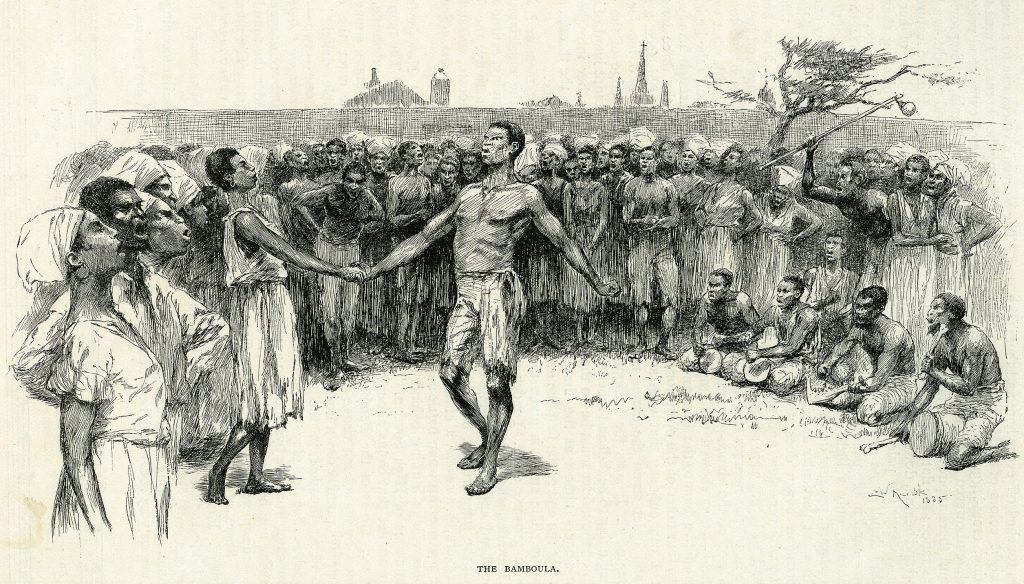
Dancing in Congo Square, AKA The Queens and Kings of Jazz
Share this:


Brought to You by Tampax
Whilst social media platform Twitter is routinely criticised for being a toxic cesspit of trolls, racism and discrimination, there is an opposing story: commentators like Kelechi have used their platforms to mock power. To the untrained eye, her tweet appears random but it is actually referencing #TamponGate – a scandal that was picked up by the British press in 1993 when Charles confessed to Camilla he wanted to “live inside” her trousers, joking that he might be reincarnated in the life after death as tampon.
Discourses to tampons aside, potential of solidarity and coalition in our shared trauma under the British Crown will be manifestly apparant this bank holiday weekend – just as it was during the scenes on social media during the Commonwealth Games, Jubilee and Queen’s Funeral. Black Twitter, Irish Twitter, and Indian Twitter alongside Scouser Twitter and Celtic Fans Twitter will probably be linking up. Edutainment and memes aplenty. With the long bank holiday weekend, I know other political commentators will take to Twitter, Instagram, TikTok and Tumblr to vent their frustrations.
Potential for coalition and solidarity presents itself in the deep space of the interweb. Under the thinking of the social media posts, there sits an exhaustion from groups that have long been exploited by the monarchy. Audre Lorde (1984) once termed racism and sexism as “grown up words” (p152) revisiting how victims often acquire the language to articulate their experience after the experience. In her blog post ‘Feminism and Fragility’, sociologist Sara Ahmed (2016) further states “Once we have the words, you are putting a sponge to the past: mopping things up, all that spillage.” So, this experience revisits the bit bitting at institutional violence and how actions become institutionalised by repeated behaviours.
As Bob Marley said
“So if you are the big tree
Small Axe, (Burnin’, 1973)
We are the small axe
Ready to cut you down (well sharp)
To cut you down”
Meanwhile, I must ask ‘did Tesco actually call [redacted] a [redacted]?
Whilst the pomp of the coronation is absorbed into the brains of millions of people around the world, this is happening during a Cost of Capitalism crisis, paid for at the taxpayers’ expense. Sounds of abolish the monarchy can be heard around the world. I do wonder what Britain would like without this mafia institution. When you do start looking at these systems more closely, you begin to see how entangled the monarchy is with other institutions – police, prisons, and many more – including entities like Honours committees, the privy council and House of Lords too. To abolish the monarchy is also linked with other abolitionist narratives.
Like every other criminology blog entry, now let’s discuss Guy DeBord’s theory of ‘the spectacle’. ‘The spectacle’, said French Marxist Guy DeBord, is a system of domination that claims your attention and then your attention faciliates your subjugation. So, the irony is that even with my dislike of the monarchy – I’m doomed if I do, and doomed if I don’t talk about it – because within the advertised life of the spectacle, there’s nothing I can say that doesn’t make the spectacle stronger.
Meanwhile, the appeal of Harry & Meghan in this case act as a violent juxtaposition to a British public who in many ways still see “good” and “bad” royalty, not The Crown as a wholly imperialistic violent construct. To me things like coronations, jubilees keep us distracted. Even when trying to avoid such nonsense, our world has become so saturated by media. As Guy DeBord writes “There is no place left where people can discuss the realities which concern them, because they can never lastingly free themselves from the crushing presence of media discourse and the various forces organised to relay it” (DeBord, 1998: 19).
Anyhow, now as all of us are immersed in the spectacle, we may as well stay implicated. In the 1960s, it was possible to think critically. Now, being a philisopher just means you have watched Inception!
Share this:


Rise of the machines: fall of humankind

May is a pretty important month for me: Birthdays, graduations, what feels like a thousand Bank Holidays, marking deadlines, end of Semester 2 and potentially some annual leave (if I haven’t crashed and crumbled beforehand). And all of the above is impacted by, or reliant on the use of machines. Their programming, technology, assistance, and even hindrance will all have a large impact on my month of May and what I am finding, increasingly so, is that the reliance on the machines for pretty much everything in relation to my list above is making my quite anxious for the days to come…
Employment, education, shopping, leisure activities are all reliant on trusty ol’ machines and technology (which fuels the machines). The CRI1003 cohort can vouch, when I claim that machines and technology, in relation to higher education, can be quite frustrating. Systems not working, or going slow, connecting and disconnecting, machines which need updates to process the technology. They are also fabulous: online submissions, lecture slides shown across the entirety of the room not just one teeny tiny screen, remote working, access to hundreds of online sources, videos, typing, all sorts! I think the convoluted point I am trying to get too is that the rise of the reliance on machines and technology has taken humankind by storm, and it has come with some frustrations and some moments of bliss and appreciation. But unfortunately the moments of frustration have become somewhat etched onto the souls of humankind… will my laptop connect? Will my phone connect to the internet? Will my e-tickets download properly? Will my banking app load?
Why am I pondering about this now?
I am quite ‘old school’ in relation to somethings. I am holding on strong to paper books (despite the glowing recommendations from friends on Kindles and E-readers), I use cash pretty much all the time (unless it is not accepted in which case it is a VERY RARE occasion that the business will receive my custom), and I refuse to purchase a new phone or update the current coal fuelled device I use (not literally but trying to be creative). Why am I so committed to refusing to be swept along in the rise of the machines? Simple: I don’t trust them.
I have raised views about using card/contactless to purchase goods elsewhere and I fully appreciate I am in a minority when it comes to the reliance on cash. However, what happens when the card reader fails? What happens when the machine needs an update which will take 40mins and the back up machine also requires an update? Do traders and businesses just stop? What happens when the connection is weak, or the connection fails? What happens when my e-tickets don’t load or my reservation which went through on my end, didn’t actually go through on their end? See, if I had spoken to someone and got their name and confirmed the reservation, or had the physical tickets, or the cash: then I would be ok. The reliance on machines removes the human touch. And often adds an element of confusion when things go wrong: human error we can explain, but machine error? Harder to explain unless you’re in the know.
May should be a month of celebrations and joy: Birthdays, graduations, end of the Semester, for some students the end of their studies. But all of this hinders of machines. Yes, it requires humans to organise and use the technology but very little of it is actually reliant on humans themselves. I am oversimplifying. But I am also anxious. Anxious that a number of things we enjoy, rely on and require for daily life is becoming more and more machine-like by the day. I have an issue, can I talk to a human- nope! Talk to a bot first then see if a human is needed. So much of our lives are becoming reliant on machines and I’m concerned it means more will go wrong…
Share this:


Sometimes it is very hard to find the words

This week our learning community lost one of our members; Kwabena Osei-Poku (known to his nearest and dearest as Alfred) who was killed on Sunday 23 April 2023. At such times, it is very difficult to find the right words, but to say nothing, would do a grave disservice.
The Thoughts from the Criminology Team would like to express our deepest condolences to the family, friends, and communities for whom Kwabena Osei-Poku (Alfred) was such an important person. We wish you time, space and peace to come together to mourn your terrible loss.
Share this:


The Moral Dilemma of Using Artificial Intelligence
Background
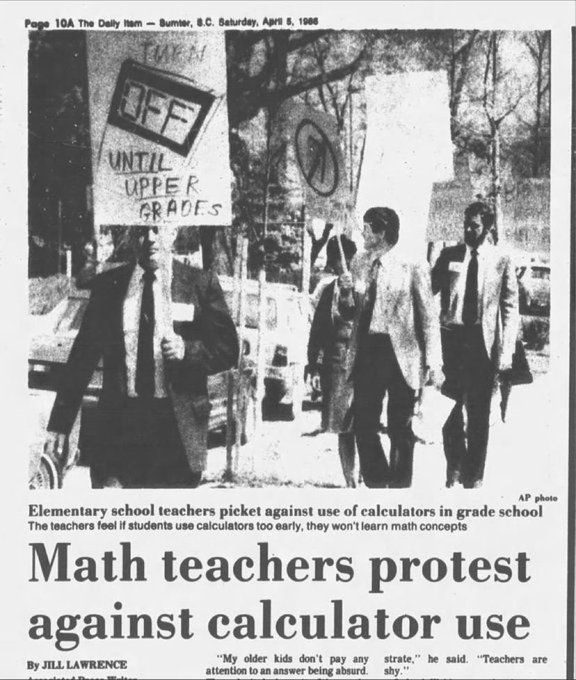
Many academics, students, and industry practitioners alike are currently faced with the moral dilemma of whether to use or apply artificial intelligence (AI) to different aspects of their work and assessments. However, this is not the first-time humans are faced with such a moral dilemma, particularly in academia. Between 2003 and 2005 when I wrote at least 3 entrance examinations administered by the Joint Admission Matriculation Board Examination for university admission seekers in Nigeria, the use of electronic or scientific calculators were prohibited. Few years afterwards, the same exam board that prohibited my generation from using calculators for our accounting and mathematics exams started providing the same scientific calculators to students registered for the same exam. Understandably, AI is significantly different from scientific calculators, but similar rhetoric and condemnation resulted from the introduction of calculators in schools, same as the emergence of Google with its search capabilities.
For the most part, ChatGPT, the free OpenAi model publicly released in November 2022 drew public attention to the use and capability of AI and is often considered as the breakthrough of AI. However, prior to this, humans have long embraced and used certain aspects of AI to perform tasks that normally require human intelligence, such as learning, reasoning, problem-solving, and decision-making. Many academics not only use reference managers, but also encourage students to do so. We also use and teach students how to use the numerous computer-aided data analysis software for statistical and qualitative data analysis given the potential and capability of these software to replicate tasks that would ordinarily take us longer to accomplish. These are but few examples of some of the AI tools we use, while many others exist.
Types and examples of AI
There are several types of AI, including machine learning, natural language processing, expert systems, robotics, and computer vision. Machine learning is the commonly used type of AI. It involves training algorithms to learn from data and improve their performance over time, typical examples include Google Bard which performs similar tasks as ChatGPT. Natural language processing allows machines to understand and interpret human language, while expert systems are designed to replicate the decision-making capabilities of human experts. Robotics involves the development of machines that can perform physical tasks, and computer vision focuses on enabling machines to interpret and analyse visual information. Other common examples of AI include virtual personal assistants like Siri and Alexa, self-driving cars, and facial recognition software. With the wide array of AI tools, it is obvious that AI can be applied in different fields of human endeavour.
Application of AI
AI is currently being used in various institutions of society, including healthcare, finance, education, transportation, and the military. In healthcare, AI is being used to develop personalized treatment plans, predict disease outbreaks, improve medical image analysis, and carebots consultations is a near possibility. In finance, AI is being used for fraud detection, risk management, and algorithmic trading. In transportation, self-driving cars and drones are being developed and currently tested using AI, while in the military, AI is being used for autonomous weapons systems and intelligence gathering. In education, AI is being used for personalized learning, student assessment, referencing, and teacher training through the help of numerous AI tools. I recently responded to reviewer feedback on a book chapter and in doing so, I noticed my reference list which was not spotted by my reviewers was not appropriately aligned with the examples provided from the publisher. It would take me 2 hours to format the list despite already having the complete information of sources I cited. Interestingly, I did not spend half of this time on the reference list of my doctoral thesis because I used a reference manager.
Benefits of AI
Clearly, AI has many potential benefits. It has the potential to improve efficiency and accuracy in various industries, leading to cost savings and improved outcomes. AI can also provide personalized experiences for users, such as in the case of virtual assistants and personalized learning platforms. More so, where properly applied, it would not only improve productivity and save time, but result in increased efficiency. Researchers would appreciate the ability to make sense of bulky data using clicks and programmed controls in graphical, visual, or even coded formats. In healthcare, AI can improve diagnosis and treatment, leading to better patient outcomes. In addition, AI can be used for environmental monitoring and conservation efforts. The benefits from the use and application of AI across human endeavours are legion and I would be understating the significance if I attempt to elaborate further.
Shortcomings of AI, Concerns, and Reactions
Nonetheless, AI evokes certain concerns. New York City education department reportedly blocked ChatGPT on school devices and networks, and in respond to a tweet on this, Elon Musk replied, ‘it’s a new world. Goodbye homework.’ Musk’s reply reflects the array of reactions and responses emanating from the understanding of society with the capability of AI tools. And without a doubt, machine learning AI tools such as ChatGPT and Google Bard can be used to generate essay contents, likewise content for academic work. I imagine students have already began taking advantage of the capabilities of these tools, including others capable of summarising articles. Some Tweeps who regularly tweet about the capability and how to use AI tools have experienced astronomical growth in the number of their followers and engagement with such tweets over the past few months.
Without a doubt, academics have reasons to be concerned, particularly because AI undermines learning and scholarship by offering easy alternatives to reading, learning, and engaging with course materials. Students could generate essays with AI and gain unfair advantage over non-users and although the machine learning models do generate false, bias, and discriminatory results, they could over time generate the capability to overcome these. Claims have also been made that automation using AI has the potential to result in job losses for academics and other professionals, but beyond this, concerns over data safety and regulation are rife.
AI Regulation
Some tech leaders including Elon Musk recently signed a statement urging that further development of AI beyond the capability of ChatGPT 4 should be halted until adequate regulations are put in place as it portends profound risks to society. The Turnitin plagiarism software provider which acclaims itself as ‘the leading provider of academic integrity solutions’ introduced and integrated the Turnitin’s AI writing detection tool for their service users. Universities and other users may likely adopt this to discourage students from using AI for assessments. However, the practicability of this enforcement is still challenging as issues around real-world false-positive report rates have been observed. An alternative approach adopted by some publishers including Taylor & Francis, Sage, and Elsevier is that authors declare the use of AI in their work with justification. Italy recently blocked ChatGPT over privacy concerns prompting the significance of AI regulation.
Conclusion
AI has the potential to improve efficiency and accuracy in various industries, leading to cost savings and improved outcomes, however, it is important to be aware of the potential risks associated with the technology. While AI has significant benefits, such as improved efficiency and accuracy, it also has drawbacks that must be considered. Academics must find ways to balance the benefits and drawbacks of AI to ensure that learning and scholarship are not undermined. It is important to recognize that AI is not a substitute for reading, learning, and engaging with course materials, and it should be used as a tool to augment human intelligence rather than replace it. Equally, it is also important to ensure that AI is used in a responsible and ethical manner. By carefully considering the pros and cons of AI, we can ensure that it is used to its full potential while minimizing the risks.
PS. Some parts of this blog were edited/generated by AI.
Share this:


“My Favourite Things”: Paul

My favourite TV show - I prefer a movie any day.. episodes are draining

My favourite place to go - Home

My favourite city - London, Zanzibar, and Lagos... Ain’t no party like a Lagos party!

My favourite thing to do in my free time - Bonding with my toddler

My favourite athlete/sports personality - – BOXING: The Special One! Kell Brook

My favourite actor - Joe Pesci

My favourite author - Sidney Sheldon

My favourite drink - Depends.. Red wine after work or Whiskey for the Weekends

My favourite food - Medium Rare Steak, Lasagne (only from Rodizio Rico, O2 arena), or Egusi & Pounded Yam (Authentic)

My favourite place to eat - As long as the wine is delightful and the food is delicious, I don’t mind

I like people who - are generous & helpful

I don’t like it when people - don’t mind their business

My favourite book - The Doomsday Conspiracy

My favourite book character - Who has time to read fiction?

My favourite film - The Goodfellas, of course!

My favourite poem - 'The Second Coming' by William B Yeats

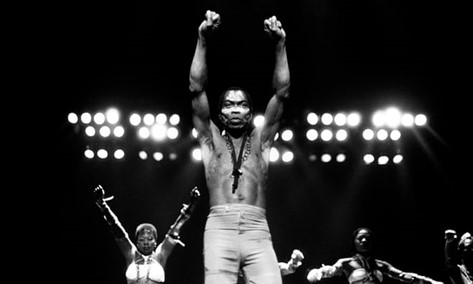
My favourite artist/band -  FELA!

My favourite song - 1. Coffin for Head of State by Fela
 2.  The soundtrack of the Sound of Music – that’s one album I can listen to without skipping a track (My wife thinks I’m weird)

My favourite art - Jean Basquiat: GOD, LAW – an exceptional piece full of symbolism. I need to write a blog on this painting at some point!

My favourite person from history - My favourite person from history – Too many to name just one – but for the sake of this blog, I’ll go with Patrice Lumumba of the Democratic Republic of Congo


Share this:


Is Easter relevant?

What if I was to ask you what images will you conjure regarding Easter? For many pictures of yellow chicks, ducklings, bunnies, and colourful eggs! This sounds like a celebration of the rebirth of nature, nothing too religious. As for the hot cross buns, these come to our local stores across the year. The calendar marks it as a spring break without any significant reference to the religion that underpins the origin of the holiday. Easter is a moving celebration that observers the lunar calendar like other religious festivals dictated by the equinox of spring and the first full moon. It replaces previous Greco-Roman holidays, and it takes its influence for the Hebrew Passover. For those who regard themselves as Christians, the message Easter encapsulates is part of their pillars of faith. The main message is that Jesus, the son of God, was arrested for sedition and blasphemy, went through two types of trials representing two different forms of justice; a secular and a religious court which found him guilty. He was convicted of all charges, sentenced to death, and executed the day after sentencing. This was exceptional speed for a justice system that many countries will envy. By all accounts, this man who claimed to be king and divine became a convicted felon put to death for his crimes. The Christian message focuses primarily on what happened next. Allegedly the body of the dead man is placed in a sealed grave only to be resurrected (return from the death, body and spirit) roamed the earth for about 40 days until he ascended into heavens with the promise to be back in the second coming. Christian scholars have been spending time and hours discussing the representation of this miracle. The central core of Christianity is the victory of life over death. The official line is quite remarkable and provided Christians with an opportunity to admire their head of their church.
What if this was not really the most important message in the story? What if the focus was not on the resurrection but on human suffering. The night before his arrest Jesus, according to the New Testament will ask “Father, if thou be willing, remove this cup from me” in a last attempt to avoid the humiliation and torture that was to come. In Criminology, we recognise in people’s actions free will, and as such, in a momentary lapse of judgment, this man will seek to avoid what is to come. The forthcoming arrest after being identified with a kiss (most unique line-up in history) will be followed by torture. This form of judicial torture is described in grim detail in the scriptures and provides a contrast to the triumph of the end with the resurrection. Theologically, this makes good sense, but it does not relate to the collective human experience. Legal systems across time have been used to judge and to punish people according to their deeds. Human suffering in punishment seems to be centred on bringing back balance to the harm incurred by the crime committed. Then there are those who serve as an example of those who take the punishment, not because they accept their actions are wrong, but because their convictions are those that rise above the legal frameworks of their time. When Socrates was condemned to death, his students came to rescue him, but he insisted on ingesting the poison. His action was not of the crime but of the nature of the society he envisaged. When Jesus is met with the guard in the garden of Gethsemane, he could have left in the dark of the night, but he stays on. These criminals challenge the orthodoxy of legal rights and, most importantly, our perception that all crimes are bad, and criminals deserve punishment.
Bunnies are nice and for some even cuddly creatures, eggs can be colourful and delicious, especially if made of chocolate, but they do not contain that most important criminological message of the day. Convictions and principles for those who have them, may bring them to clash with authorities, they may even be regarded as criminals but every now and then they set some new standards of where we wish to travel in our human journey. So, to answer my own question, religiosity and different faiths come and go, but values remain to remind us that we have more in common than in opposition.

 Thoughts from the criminology team