
Home » Criminology toolbox (Page 9)
Category Archives: Criminology toolbox

Meet the Team: Paul Famosaya, Lecturer in Criminology
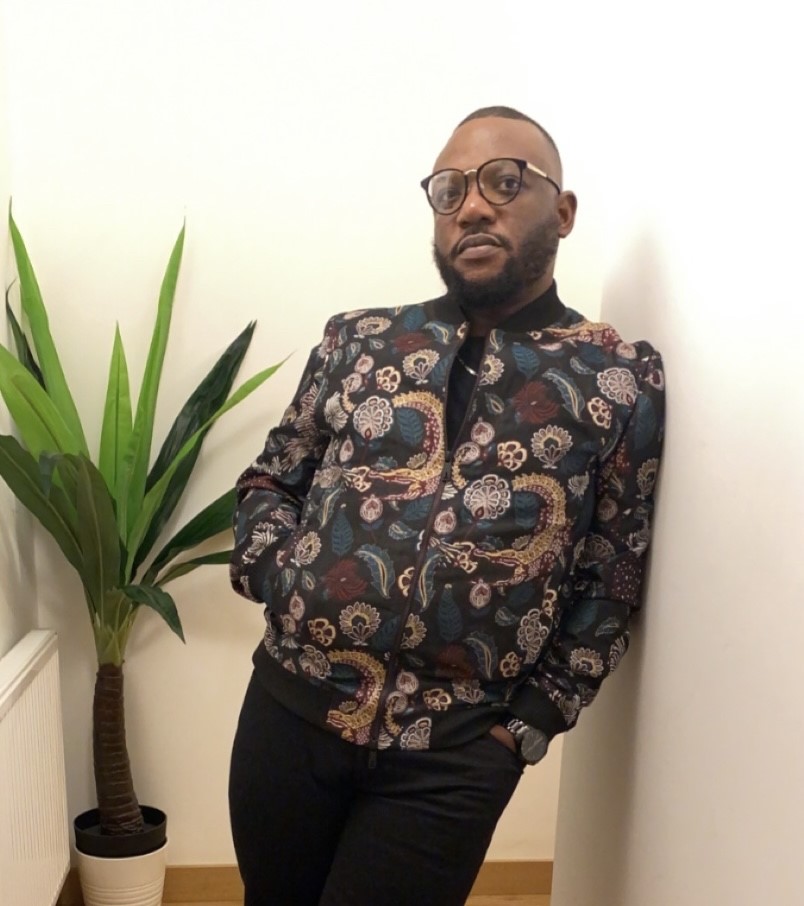
Hi all! My name is Dr Paul Famosaya and I have just joined UoN as a Lecturer in criminology. Prior to joining UoN, I have taught as a Lecturer in criminology and policing at the University of Cumbria – where I contributed to the development and running of modules at both Undergraduate and Masters level. In addition, I have taught criminology at Middlesex University, London as an HP Lecturer (during my PhD days). So, over the years really, I have developed and taught a variety of modules around the theories of crime, the crimes of the powerful, global dimensions of crime, policing, new ideas in criminology, crimes & deviance, social exclusion, criminological frameworks etc. I also serve as a reviewer of a few international reputable journals.
In terms of my academic background, I completed my undergraduate degree in Nigeria, 2010 and then went straight on to complete my Masters in Criminology at Middlesex University, London. I then dived straight in to my PhD, which I completed also at Middlesex in 2019 – with my thesis focusing on police experiences, actions and practices.
I came into the world of Criminology simply for my interest in understanding the logic of corruption and the network of greed. I realised that these two components are largely the foundational problems of my home country Nigeria, and many other countries. So, the plight to unravel these dynamics from both institutional and personal level triggered my interest in the discipline. To a large extent, this interest has continued to strengthen my area of specialisation which concentrates largely on the areas of Critical and Theoretical criminology, Police culture, Social harms and Injustice. Criminology is something I’ve really enjoyed doing and while I have taught it for many years, I still consider myself to be a student of Criminology really.
I am currently completing another article on pandemics and criminology – so it’ll be cool to chat with colleagues looking at similar area(s). Looking forward to meeting everyone soon!
Share this:


The strikes and me: never going back!

I woke up this morning, at 4am to be precise, with a jumble of thoughts going through my mind. In my bleary eyed, docile state I wondered whether the cats’ body clocks had gone awry, and they thought it was breakfast time (I don’t need an alarm clock) or whether it was an age thing and I shouldn’t have had that cup of tea at 10 o’clock last night (I hate getting old), but no, it’s strike day again and it weighs heavy on my mind.
Don’t get me wrong, I’m not wavering, far from it, but I do reflect on the impact, and it bothers me, and I know it bothers my colleagues. It bothers me that the students are caught up in this and I have been at pains to explain to my classes why we are on strike and to try to mitigate some of the impact, but I know I cannot mitigate all of it. The business we are in is education and that education relies on lecturers, surprisingly enough, take away the lecturers and there is no education. I know that every day I’m on strike, there are topics that I’m not covering in class and there is no one else to cover them; no I’m not irreplaceable but I do add real value.
I struggle with the concept of ASOS and once again I am not alone. ASOS has meant that things are just not getting done, even though I’m still working at least a couple of hours a week over my contracted hours. Not strictly ASOS I know, but it’s difficult to stick to the rules when doing so would cause everything to grind to a halt. I still have to do my teaching and marking and second marking and look at draft dissertations and have meetings with dissertation students and spend what seems like an interminable amount of time on emails (which by diktat have to be answered in two days). I still have to prepare for my classes as I’m not a performing seal and do have to think about it before hand. I still have to communicate with my colleagues and with the less experienced provide a guiding hand and I’m sure there are a myriad of other things I do that I haven’t mentioned.
But I have not wavered and nor will I. When I hear management talking about the cost of fuel going up, the state of the sector’s finances, the value of student fees compared to a few years ago, woe is me, when I see how management can treat their workers (P&O Ferries comes to mind alongside some of the other horror stories affecting both higher and further education), it simply reminds me of two things; they are out of touch and they don’t care. Insulated from the real world, their response to our very real concerns about workloads and our ever-diminishing pay, is that they’ll look into it. Looking into it isn’t doing anything about it. Looking into it doesn’t fix my workload and, in the meantime, I’m still dealing with the aftermath of new IT systems that don’t work properly and cause significant extra work (maybe someone should have looked into that before foisting it upon the unsuspecting student and lecturer body). I knew there was something I’d left out in the above paragraph.
One thing ASOS has taught me, there is too much to do nearly every week. I look at the things that are not done and I lament when I see that it has impacted on students. My PDR means nothing if I haven’t the time to achieve the objectives, the mandatory training (so important that’s it’s done by eLearning; that’s another story), sits waiting to be done when I have time; and I’m constantly playing catchup. I work in a system that thrives on making me feel guilty for not achieving. My reality though is so far removed from the workload plan that the plan has no meaning, other than to serve as a tool to beat me up with.
I am angry. I am angry that I have been forced to go on strike. I am angry about the way that I have been treated in the past and I am angry that there has been little progress made. I am angry about the impact that all of this is having on my students. ASOS though has taught me one thing, there is such a thing as work/life balance and when the strikes are over, I am never going back to working the way I did before. I have a contract and I’m sticking to it. None of this is my fault, I didn’t invent this system and I’m not the one out of touch with reality. I’m not wavering in my resolve, regardless of any future ballot, the principles of ASOS are here to stay.
Share this:


Days to mark on our calendar!

It is common practice to have a day in the year to commemorate something. In fact, we have months that seemed to be themed with specific events. I look at the diary at the days/months which are full of causes, some incredibly important, others commemorating and then there are those more trivial. Days in a year to make a mark to remind us of things. An anniversary of events that brings something back to a collective consciousness. Once the day/month is over, we busily prepare for the next event, month and somehow between the months and days, I cannot help but wonder; what is left after the day/month?
When International Women’s Day was originally established, at the beginning of the 20th century, socialism was a driving political movement and women’s suffrage was one of the main social issues; since then other issues have been added whilst the main issue of equality remains on the cards. Has women’s movement advanced through the commemoration of International Women’s Day? Debatable if it had an impact. Originally the day was a call for strikes and the mobilisation of women workers. Today it is a day in the calendar that allows politicians to utter platitudes about how important the day is, and of course how much we respect and love women these days! It is hardly a representation of what it was or set out to be. Like so many, numerous other events are marked on our calendar, but wehave lost sight of what they were originally set out to be.
Consider the importance of a day to commemorate the Nazi Holocaust. Never again! The promise that such a mass crime should never happen; the recognition that genocide has no place in our respective societies. Since that genocide, numerous others have taken place, not to mention the mass murder, violent relocations, and the massacres and ethnic cleanings that have happened since. Somehow the “never again”, to people in Biafra, East Timor, Rwanda, Darfur, former Yugoslavia, Afghanistan, Iraq, Syria, Libya, and many other places simply sounds ironic! We commemorate the day, but we do not honour the spirit of that day.
In this mixture of days and months we also have days for mothers, fathers, lovers, friends, hugs, happiness, and many other national and international events. To commemorate or to offer a moment of reflection. Somehow the reflection is lost and for some of these days, millions of people are required to purchase something to demonstrate that they care or worst still, to make something! How many mothers worldwide have had to admire badly made pottery or badly drawn cards from kids who wanted to say “I love you” on one specific day. Leaves me to wonder what they would want to say on all other days!
So, is it better to forget them? Get rid of these days and if anyone suggests the creation of another, we feed them to crocodiles? It would have been easy from one point to end them all. Social issues are never easily resolved so we can recognise that a day or a month does not resolve them! It raises awareness but it’s not the solution. In the old days when the Olympics started there was a call for truce. They did not allow for the games to take place whilst a war was happening. Tokenism? Perhaps, but also the recognition that for events to have any credibility they need to go beyond words; they must have actions associated with them. What if those actions go further than the day/month of the commemoration? Imagine if we respect and honour women, not only on IWD but every day, imagine if we treat people with the respect, they deserve beyond BHM, LGBTQ+ months? Maybe it is difficult but if we recognise it to be right, we ought to try. We know that the Holocaust was a bad thing so lets not just remember it…lets avoid it from happening …Never again!
Share this:

Higher education, students, the strikes and me*
It was somewhat disappointing to read some of the comments purportedly from a university student in our local newspaper the other week. Critical of the current UCU industrial action and its impact on students, the student suggested that lecturers knew what they were signing up for and should just get on with it. I found it interesting and somewhat incongruent with what the national student union stance is (actually, I was livid). I know there has been a response to the article from the local union representative and other comments perhaps suggesting that my previous blog should be read (I wouldn’t think anyone in their right mind would have signed up for what I described). But just to be clear, I signed (or my union did on my behalf) a contract that states I am required to work 37 hours a week with the occasional evening or weekend work and that the normal working week is Monday to Friday. I take the meaning of ‘occasional’ as the definition found in the English dictionary (take your pick as to which one you’d like to use), which is not ‘permanently’ or ‘all of the time’ or ‘ad infinitum’. I can only speak for myself and not for my colleagues, but I don’t mind working a little longer at times and working the weekend to do marking or open days, but I didn’t sign up to be working all of the time. So, for me the industrial action is not just about my working conditions but about a contract, a legal obligation, which I am fulfilling but my employer seems to suggest that I am not because I am not working far in excess of my contracted hours. That to me, is illogical.
I remember a discussion where a senior manager stated that bullying included giving someone excessive workloads. I wonder whether that means that most lecturers are being bullied by management, isn’t there a policy against that? And then I seem to recall that there is some legislation against inequality, would that not include paying lower wages to women, disabled staff and people from minority ethnic groups? Systemic bullying and discrimination, not a pretty picture in higher education.
But perhaps the most important point is that as lecturers we don’t want to impact our student’s education, and this shouldn’t be about us versus the students. It’s what management would like because it detracts from so many issues that plague our higher education system. Students should quite rightly be unhappy with their lot. A system that plunges students into a lifetime of debt that they will rarely if ever be able to repay and at the same time lines the pockets of private companies seems to me to be immoral. A system that requires students to pay extortionate fees for accommodation is completely bonkers especially when it means the less affluent students have to work to afford to live. A system that requires students to study for approximately 46 hours per week in semester time (If we accept that they are entitled to holiday time) seems overly punitive. Couple this with the need to work to afford to live and it becomes unsustainable. Add to that any caring responsibilities or anything else that complicates their lives, and it starts to look impossible. I and my colleagues are not really surprised that so many fail to properly engage, if at all, and that there are so many stressed students and students with mental health issues. Of course, if we add to that individual capabilities, think unconditional offers and low school grades and let’s be honest widening participation becomes simply a euphemism for widening deBt, misery and, more importantly establishment profit.
The students were on strike for one day the other week, someone asked me why, well I rest my case. Whilst I understand student anger about the strikes, that anger is directed at the wrong people. We all signed up for something different and it’s simply not being delivered.
*The first part of this entry can be found here.
Share this:


Growth comes from discomfort

Getting closer to 30 has been really difficult. I had set goals for myself and I have not accomplished most of them.
I thought I had everything all planned out and I knew what I wanted. However, life comes at you fast. I honestly wonder how our parents made this look so easy.
The pandemic has also knocked us back a couple of years. Instead of focussing on goals and thinking about the future; we are simply trying our hardest to stay sane and survive each day. Remembering to breathe became the new main task. Making our mental health a priority has become the most important thing.
Trying to balance ‘living in the moment’ and thinking about the future is hard. My plans have changed so much over the last couple of years. I have more questions than answers. But I’m slowly learning not every question has to be answered straightaway.
The pressure I feel being a first generation immigrant is enormous. I believe that every generation has to show a level of socioeconomic improvement. Finding a way to achieve this, whilst in a foreign land is extremely overwhelming. You are constantly reminded close to each day that you are an outsider and you do not belong here.
Nonetheless, my mother did not work two jobs and not have any days off for me not to make it. This has always been my driving force. My mom always tells me I am being too hard on myself. She had the support from her relatives when she was home in our home country (Zimbabwe) and I don’t have the same luxury, as such I shouldn’t penalise myself for not achieving everything I want to achieve… yet. (The key word is ‘yet’). Just because it has not happened yet doesn’t mean it will not happen in the future. Delay does not mean denial.
Facing career challenges based on your race is a hard pill to swallow. Not knowing who to turn to for advice is even more frustrating. I used to think all women regardless of race would empathise and they would want to help. As we all have one struggle in common; being a woman. At least that should unify us… (so you would think). However, I have realised at times your level of ambition can be deemed as a threat. The same people might have experienced a glass ceiling can be the very same ones who add to your oppression because you are seen as ‘competition’. One of my mentors recently told me to relax in relation to my job searching as all institutions are not used to “aggressive job searches”. I find it pretty funny that the term “aggressive” will always be the main word used to describe Black people. How can a job search ever be aggressive?! Unless I’m standing outside your office threatening you to give me a job then yes, that’s aggressive. However, sending an email reminding a company to send me the new job specification they stated over the phone is not aggressive. In that moment, I knew she is an enemy of my progress.
I used to calculate my career progression based on if I have moved up to a certain level or my pay grade has increased. But I am starting to learn the skills I have acquired over the years are far more valuable. My confidence has grown incredibly. I have found my voice. That is something that cannot be taken from me. I am proud of my level of courage and perseverance. These are qualities not a lot of people have.
I am excited to see what 30 has in store for me. I have learnt so much. But there are a lot of skills I look forward to gaining in the upcoming years. I am slowly learning not to be so hard on myself.
Note to self – do not forget who you are… You are destined for greatness. Everything you want is coming. Do not compare your journey to others. Even if others are not willing to help you; there is always a way forward. Go back to the drawing board and restrategise. No one owes you anything. So do not expect anything from anyone.
“Remember diamonds are created under pressure so hold on, it will be your time to shine soon.” – Sope Agbelisi
Share this:


A Love Letter: in praise of the blog

This is my fourth “love letter”, it follows on from personal dedications to art, poetry and the writing of Agatha Christie. This one is the newest of my “loves” and also marks a celebration.
Yesterday marked the 5th birthday of the Thoughts From the Criminology Team blog. I’ve documented our history before, so don’t want to go over the same ground. However, it is worth mentioning that very soon we will have reached over 50,000 views across 129 countries. (Interesting fact, after the UK and the USA, our next biggest group of readers is based in Hong Kong). We’ve come a very long way from our first cautious forays into the blogsphere and today I want to celebrate the things that I love most about our blog.
First, it provides accountability, it means that even in the most difficult times when writers’ block hits, I have to write. It may not be my best writing, at times it is very loosely structured and when I look back I do wonder what was in my mind. Nevertheless, something was written, which means that something else can be written. It means my ideas are captured and can be explored further, combined with other ideas or even abandoned. Over time it has also enabled me to see what reoccurs enabling me to develop my academic and personal passions.
Second, it provides a refuge and solace for writers (and hopefully readers). This was most obvious during the first year of the Covid-19 pandemic when we were rapidly releasing entries, sometimes on a daily basis. In total in 2020, the blog published 222 separate entries containing 190,226 words. To put that into context, in an “ordinary” year, we generally manage around 90 entries a year. It is fair to say our bloggers have explored this unprecedented time in many different way. This place of refuge and solace has also been very apparent in entries centred on Black Lives Matter. Most recently in can be observed in entries around the recent UCU industrial action, see here, here, here. here and here.*
In August 2011, following soon after the police shooting of Mark Duggan, riots broke out in many of our inner cities. I desperately wanted to discuss what was happening with my colleagues and students, but alas it was peak summer and everyone was away. This brings me to my third point, the blog allows writers to respond quickly to events happening, both in the UK and globally, in a way that isn’t always possible in the classroom (timing, constraints of the timetable and curriculum). For instance, responses to the sexual allegations against Prince Andrew, the Windrush scandal, the murder of George Floyd, and Russia’s invasion of Ukraine to name but a few. It also allows us to take part in national and global initiatives such as Gypsy Roma Traveller History Month and Amplify Melanated Voices giving more space to those too often excluded.
Fourth, it allows writers to focus on issues that are very close to them. For instance, the Hillsborough and Grenfell disasters and Black history. These are extremely difficult to address in a single blog entry, hence they are discussed by a variety of different authors approaching them in diverse ways. What is more important than answers is the space to explore these issues, without censorship and with room for others to also contribute an alternative perspective.
Fifth, the blog provides a place to showcase student and graduate excellence outside of institutional paremeters. For example our now annual ‘First Week Activity‘ offers the opportunity for students to work together to create posters on very current issues. in 2020/21 the criminological issues discussed were Knife Crime, Policing Protest and Creating Covid Criminals and our students demonstrated their criminological knowledge and understanding to a very high standard. The blog also provide a space for our newest (or soon to be) graduates to write about their dissertations as well as students and graduates to write about the things that excite their criminological imagination.
Sixth, it provides space for debate, discussion and most importantly, disagreement. A beautiful example of this is the two entries focusing on policing and racism, here and here. Similarly, discussions around misogyny, femicide and the murders of Sarah Everard and so many other women, here, here and here. Only through thoughtful and empathetic dialogue and exposure to different standpoints can we hope to gain the holistic understanding so imperative to criminology.
Seventh, there are no rules around blog writing, only the constraints provided by the medium. Those that write for the blog are provided with very generic guidance to allow them to decide how best to explore their subject, maybe through a short essay, complete with references, maybe in the style of a news article with lots of images, or perhaps through poetry. The choice is down to the individual blogger and very little in the way of copy editing, beyond the occasional correction of typo goes on behind the scenes.
By now it should be clear that my love for the blog is strong and unwavering. From the smallest of ideas, the blog has grown into something beautiful and inspiring, beyond my imagination in 2017. It has attracted a wonderful collective of very different people coming from all different standpoints and perspectives. Equally important there is space for many more voices to contribute. For sure, there is plenty more we can do, to provide space for more subjects, more bloggers, more perspectives, more initiatives and we will keep striving to offer this. Nevertheless, I am incredibly proud to have played a part and to continue to be involved in this joint enterprise as partners in criminology. Our blog is definitely something worth celebrating and not just on its birthday. To my fellow bloggers, I raise a glass, may we never lose the desire to argue, debate, discuss and continue to learn from each other.

*It is worth noting that in discussions around what constituted Action Short of a Strike [ASOS], the Criminology Team decided that the blog was too important to each of us to consider abandoning it, even for a short period time while industrial action is ongoing.
Share this:


Higher education, the strikes and me
I joined the UCU last year, the first time I’d ever been a member of a union in my 43 years of working life. Admittedly, thirty years of that working life was spent in policing where membership of a union was unlawful. Yes, there was the Police Federation but to be honest it was a bit of a toothless tiger. During my career I saw successive governments hack away at pay and conditions in policing, sometimes only to be halted from catastrophic changes when they thought there might be an all-out mutiny, an example of which was the reaction to the Sheehy Inquiry in the early 1990s. In that policing career I was called upon to be involved in policing of pickets, sometimes peaceful, sometimes not. I never thought about joining a union or being part of a picket and when I started a second career in Higher Education, I didn’t think about it then. But my experiences in higher education over the last few years has driven me to join a union, mismanagement in various guises, has driven me to join.
I thought it somewhat ironic when I first saw the UCU posters declaring ‘we are at breaking point’; too late I thought, I’ve already been broken, and whilst I may have recovered, the scars are still there. Thirty years of policing, with all the horrors, the stresses and the strains didn’t break me, but 7 years of higher education managed to do so.

A couple of years ago, having been ill, resulting a short stay in hospital, I found myself on a farcical fast track of phased return to work. I managed to get back to some form of normality with the help of my colleagues, who took the brunt of my workload; I will return to that later. The new normality was however short lived, Covid hit, and we all went into lockdown and teaching online. It seemed that we might weather the storm and later the same year, amidst reported complaints from students about lockdowns, teaching online and mental health, our institution like nearly every other university in the country vowed there would be face-to-face teaching. And of course, if you promise it, you have to deliver it, particularly if you are under pressure from national student bodies about refunds and the like. As Covid took hold in earnest, as reports came in about people dying in the thousands, as the proliferation of news suggested who were the most vulnerable, and as we saw 50% of our team leave to join other institutions, our managers continued to insist that we do face to face teaching. Three members of staff could work 5 days a week, teaching over 250 students. The maths was confounding, the incredibility of it all was only surpassed by the staggering management determination to ensure that at least 2 hours of face-to-face teaching took place. The breath-taking simple-mindedness saw suggestions of cramming students, 40 at time into hired, poorly ventilated, venues. The risks were quite simply ignored, government guidelines were side-lined as were the university’s promises of a Covid secure environment. It was apparent, nobody cared; all that mattered was delivery of 2 hours of face-to-face teaching. The university had decreed it and so it had to be done.
If that wasn’t bad enough, our team had to endure machinations around how many new staff to advertise for. Three had left to be replaced by two because of the uncertainty around student recruitment. Even when we had ridden the wave of Covid, if we survived it unscathed, we were to be worked to the bone. The fifty to sixty odd hours a week would have to be increased. Nobody cared, just do what you are told and get on with it. Make use of associate lecturers, we were told, when we had very few and they were threatening to leave. Recruit more, from where we asked and what about their training? Such trivial matters were met with stony silence, face to face teaching, that was the mantra.
I remember one meeting, my colleagues will tell you about one meeting, where enough was enough. I was done and I couldn’t do anymore, I didn’t argue, I didn’t get cross, I just stopped, numbed by the sheer callousness and stupidity of it all. Signed off sick with work related stress I was told I was mentally burnt out. I was asked whether I ever switched off from work, the answer was no. Not because I didn’t want to, of course I did. But with lectures to prepare and deliver, with modules to manage, with Blackboard sites to build, with expectations of visiting schools and working open days, with expectations of helping with validations, with the incessant marking and second marking with dissertation tutorials and personal academic tutorship and the myriad of other tasks, I couldn’t switch off. Working evenings and weekends to keep up has been the norm, working even harder to buy space to take annual leave became unmanageable. Hollow words from management suggesting we have to take our annual leave. Hollow because they do not give you the time to do it. An extra closed day was the reward for our hard work, thank you, I worked that day as well. And after my absence from work, another attempt at fast tracking my phased return. And a return to full time work just meant a continuation of the fifty hours plus working week. My colleagues took a lot of work, too much work, to try to help manage workloads. So not just a return to challenging workloads for me but a guilt trip as well, as I felt I hadn’t been pulling my weight. On the one hand the institution makes the right noises, Covid safe environments and occupational health assistance and on the other its managers give scant regard for the human beings that work for them. Utilising outdated and unfathomable workload management tools, they manipulate data to provide a thin veneer of logic and fairness. If ever there were a good example of neo-Taylorism, look no further than higher education.
I’ve been on strike because of what happened to me and because of what is happening to my colleagues across the country. A failure to acknowledge working conditions, a failure to treat staff with dignity and respect and a failure to provide equal opportunity shows how little managers care for higher education vis-a-vis profit. I’ve been on strike because I don’t want my colleagues to be burnt out. I’ve been on strike because I don’t know how else to try to change the future for those that work in higher education. I don’t want to strike, I don’t want to impact my student’s education, but my colleagues are at breaking point, what else should we do?
Share this:


Meet the Team: Hannah Smith, Associate Lecturer in Criminology

Making that choice…
As semester two is now upon us, I thought it would be a nice time to introduce myself to you all.
My name is Hannah Smith and I started at UoN in 2015, although I began my degree in Criminology in 2014. I completed my first year at Sheffield Hallam University and then transferred to UoN to complete my final two years and graduated in 2017.
To be honest, when I graduated, I was not ready to give up studying. I enjoyed reading, analysing topics, and debating for hours in seminars. I really enjoyed Criminology as it gave me the passion to ask why and look deeper into issues. Because of this, I carried on my studies and completed a Master’s degree in International Criminal Law and Security at UoN, as I wanted to learn more about the legal aspects of certain areas such as migration and I felt this was a sensible step with my knowledge from Criminology.
Since graduating from my Master’s degree, I began an internship at a local anti-poverty charity where I learned lots about voluntary sector working, governance, as well as working on some of the matters we talked about a lot in Criminology. After a year, I decided to take a leap into the world of migration and began working for a regional organisation who works in partnership with the Home Office and local authorities. I spend my days challenging practices, influencing policy, and working to try and help people who experience isolation, victimisation, discrimination and much more resettle and integrate into the UK. I also joined the UoN Criminology team at the end of 2020 and support the team as an Associate Lecturer.
One thing I have learnt along my short career journey so far is that it is not always about having the bit of paper that counts. Don’t get me wrong, it helps to have it written down on your CV, but it ultimately is about what you do with it and what you do with the skills you develop along the way. I never thought that a Criminology degree would lead me to a career in migration, but each and every day I use the skills I gained. Being analytical, being able to have the confidence to have a debate, working on my own to deadlines, working in groups, presenting to professionals and lots more.
So, if there is any advice I could give to you, it would be to focus on what you want to get from your degree rather than where you want to be. I remember being asked ‘what do you want to do when you leave university’, which was so much pressure as I just didn’t know! But there is no harm in not knowing. I would say enjoy and embrace the moment you are in and also get stuck in. Try new things, challenge yourself and enjoy learning all the new concepts and ideas that come your way. Keep using those the skills that feel natural to you as these will just strengthen and challenge yourself with the ones that need some extra attention! Because one day it will help out and pay off. You won’t know when that will be until a time of reflection in a few years’, similar to my time of reflection right now.
& When that happens – I would love to see a blog from you on this page!
Look forward to seeing you all on campus this semester!

Share this:


Meet the Team: Tré Ventour, Associate Lecturer in Criminology
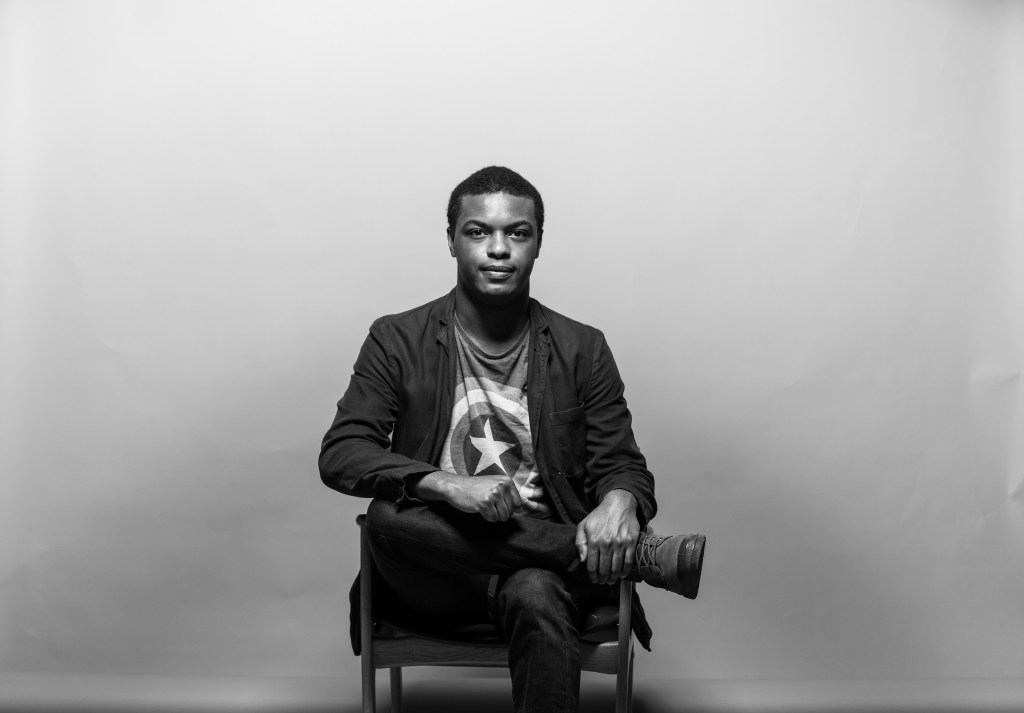
Hello everyone. My name is Tré and I will be one of the student success mentors [SSMs] starting from December 2021. Some of the now third-year criminology students reading this may remember me from when I attended some sessions within my role as a student union sabbatical officer (2019-2020) in their first year. However, as an SSM, I have previously been in some of the same situations many students have as I was also a student at the university (2016-2019).
The BTEC / A-Level-to-University pipeline can be challenging, but not impossible to navigate while the transition from school to university, is a social and cultural change that takes getting used to. Particularly the codes of acting and being so ingrained in university learning and working cultures.
I did my undergraduate degree in Creative Writing at Northampton. But I did my postgraduate degree in a completely different area of study — reading Race, Education, and Decolonial Thought within Leeds Beckett’s Centre for Race, Education, and Decoloniality. My academic interests are in race and social inequalities (but I previously used creative writing to discuss it), with my undergraduate dissertation being Permission to Speak: On Race, Identity, and Belonging. Furthermore, lots of my experience comes from the many talks I have done on Black history and race (including whiteness), further to the social investments I have in the local Northampton community where I grew up. Most recently, I am co-leading a Windrush project with a charity called NorFAMtoN built off an earlier largely Black community-led response to inequalities exasperated from issue relating to the COVID-19 pandemic (a project that is ongoing).
In 2018, I started using my knowledge on race to help organisations and that started with a theatre company called Now and Then Theatre where I was consultant on their play about Walter Tull. This took place in Buckingham and Northants. I became a student union sabbatical officer for Global Majority students in June 2019 where more questions about race occured. Leaving that role in July 2020, the overlap with the murder of George Floyd also saw more questions. And though I had done this sort of work prior to that summer, this time saw me and many of my colleagues being asked to do things where I have been freelancing as a race and Black history educator more consistently since September 2020.
Yet, I fell into criminology (as a sabbatical officer) when criminology programme leads @manosdaskalou and @paulaabowles contacted me to discuss my SU role, possibly in the July or August 2019. Unknown to me then, lots of the work I had done in the community including the types of poetry events I did (could be considered criminological). Over my year in the student union, I did think a lot about what my life would have been like had I done a creative writing-criminology joint honours degree rather than single honours creative writing. Anyhow, enough of whatifs. My life with the team since meeting Paula and Manos has not been the same, as they and Stephanie (@svr2727) convinced to go for my MA.
I didn’t study criminology in a formal capacity, but in terms of understanding crime — race and thus whiteness certainly have roles (which is my area). Criminology via many conversations with the team, pertinently interacting with Paula’s module on violence (and engaging with these students when I was sabb), showed me a context for my institutional experiences at university and elsewhere. Criminology simply added more layers to my understandings of the world. As an artist, I find criminology to be multidisciplinary informing some of my poetry as what happened when I went to Onley Prison in February 2020 showing criminology’s relevance in life beyond theory (as valuable as theory is).
As an artist, I try to approach as much as possible with an open-mind. Yet, as an academic as well, I also try my best to think how the issues we teach also have a human cost. For example, we must not only talk about violence as a purely academic matter. The decisions we make can have consequences. So, here then in your study time, I encourage you to think about the human cost of research (as there is both good and bad). Remember, there is no such thing as ‘being objective’ (there’s always a perspective or an agenda … see what I did there?). Debate with your lecturers, but more importantly debate with each other.
As an SSM, my role is about helping all students. Those that are just starting and also students that have been here for a while. I am here to help students that study at Northampton, including those who came straight from school all the way to those that came to university after a working career before going back to study. However, as an associate lecturer, I’m here specifically for criminology students.
My name is Tré and will be back at the university on a part-time basis starting from December 2021, and I look forward to meeting you all very soon! 😀
More on me here – https://linktr.ee/treventoured
Share this:


#CriminologyBookClub: Dying in Brighton
As you know by now, a small group of us decided the best way to thrive in lockdown was to seek solace in reading and talking about books. Hence the creation of #CriminologyBookClub! Building on on what has quickly become standard practice, we’ve decided to continue with all eight bloggers contributing! This title was the second chosen by @manosdaskalou and is our 14th book. Read on to find out what we thought….
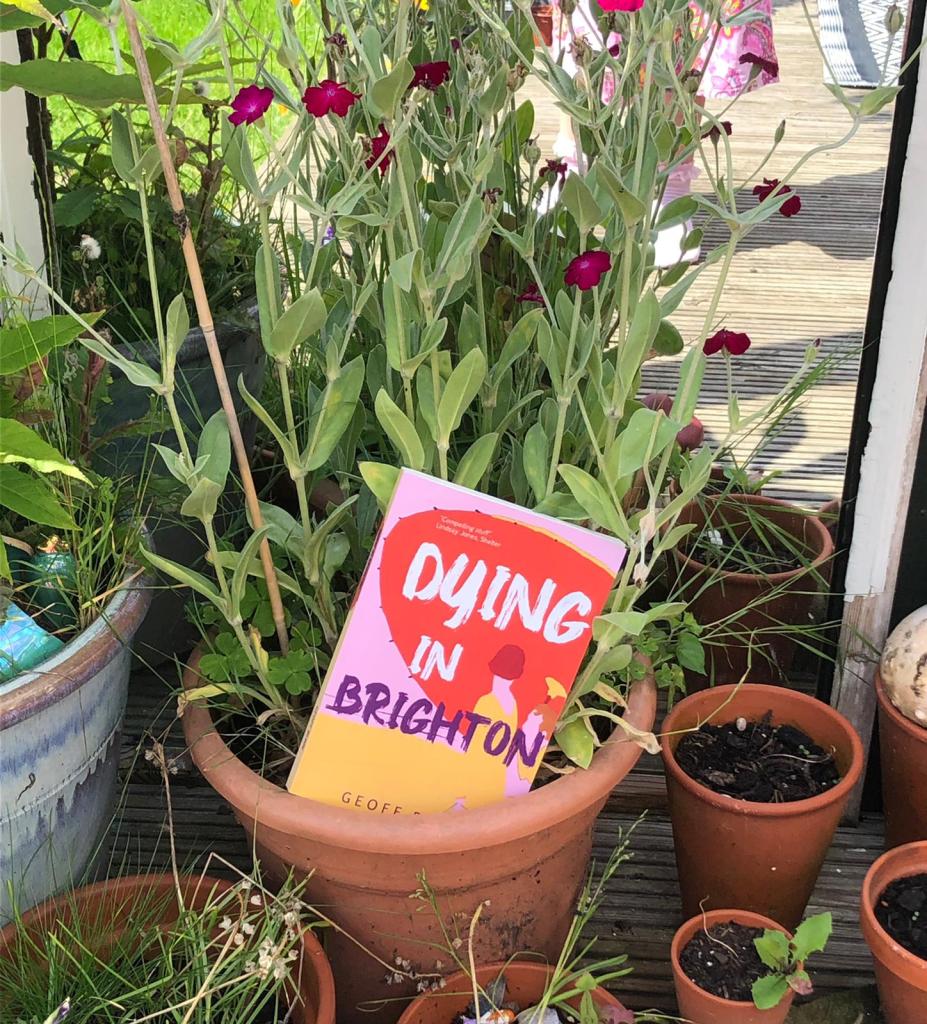
I have no profound objection to self-published books but have read only one other. The rationale for reading the first one was to proof-read/copy edit for the author. That can’t really be called reading, because you miss the story by studying the text so closely. However, I digress. The blurb for this book sounded fascinating, individual narratives heading toward one place: Brighton. Unfortunately, whilst the idea for the book was clever, the writing was overly descriptive and at times, turgid. There is no space for the reader to imagine the characters or the places, everything is told in minute detail. There is a clear attempt to be inclusive with the choice of characters, but they are largely one-dimensional and lack authenticity. The final character talks about his supposed lack of representation as a white man in Brighton (with a white population of 90%) and at that point, I lost what little interest remained. In feminist circles, the question “what would a mediocre white man do?” is prevalent, a possible response could be; write this book. The only positive I have to offer is the support offered by sales to Shelter.
@paulaabowles
The format and style of the book was unlike anything I had read before: and I really liked it. The characters were full of life: a life riddled with inequalities, harm and pain. Unlike other reads where I have failed to feel anything for the characters (or anything other than a serious dislike), Dying in Brighton evoked a number of emotions from myself towards the people in the book. However these emotions were left in a sort of vacuum, with myself feeling very ‘meh’ at the end of the book. I was disappointed with the final chapter. Whilst I can appreciate the ending and the manner in which it is told, I did not like it. I wanted to know more about how Akeem, Nicola, Wasim, Lori and Paul got to the end they got to. Considering the ‘end result’ and my emotions from the previous chapters, I feel I should have had a more powerful response to the end: but I did not. The short snippets were not enough for me: and I feel that the last chapter does not do their stories or their lives justice. Despite this, I would recommend!
@jesjames50
The title Dying in Brighton does not leave much to the imagination. I am glad that the purchase of this book supports a charity. Unfortunately, I found this book to be problematic. I did not understand his selection of characters or how their stories linked. The book reads as though a heterosexual white man who is not disabled is congratulating the white men characters within the book for being friends with people who are migrants or LGBT. There is even a point where a character feels ‘underrepresented’ as a white man…I skimmed the book as I am sick of hearing similar to this in reality.
@haleysread
This is a book that definitely divided the book club and I have to say the comments were by far more negative than positive. For my part, I found the narrative interesting in a strange sort of way. I didn’t find myself labouring on the description and attributes of the characters but rather took in an overall sense of ordinary people that were troubled and in trouble for some reason or another and therefore found themselves gravitating to Brighton; in fairness they could have gone anywhere. The book didn’t take long to read, and the narrative ends rather abruptly but I think that is probably the point. The book left me with a sense of sadness, and it reminded me that homeless people are real people with real lives and yet are very often invisible in our society. Would I read something from the same author again, probably not? Would I recommend the book, probably not, but it did hit a mark somewhere along the line?
@5teveh
This book was a very quick read. Each chapter presented a very stereotypical view of a member of every marginalised group you can think of – a refugee, a trans woman, a troubled teenage girl. The book ended with a chapter about a rich white man with houses all over the world, finding himself feeling like he wasn’t represented. It turns out – spoiler alert – that all the marginalised people went to Brighton, became homeless and died. At the end a woman was selling craftwork with each of the dead, marginalised homeless person’s face. Now I can see how, to a critical criminologist, all this is problematic to say the least. However, the book carried a message that homeless people are invisible. People walk past them every day without a second glance. The author also donated profits of the book to Shelter so it was for a good cause. So, although the book was heavily criticised during our discussion, for people in many walks of life I’d like to think the book would quite literally open their eyes and say hello to a person living on the streets.
@amycortvriend
This book centres around 5 different characters and their life experiences and choices that lead them to Brighton. When I first read the blurb, I assumed this book would take me on a thought-provoking journey about individuals that could be seen as outsiders within society, and how their stories are interwoven. What was thought provoking for me was how the representation of individuals can be so wrong. Throughout the book I was distracted by the problematic ways in which the characters were portrayed. I didn’t like the hyper sexualisation of Lori, I felt like this was an attempt to explore transgender issues without any understanding of transgender issues… it was tasteless and done from a male gaze. I also didn’t like the lack of context and understanding of refugees, this exploration was very tone deaf and seemed informed by how the ‘Western world’ views refugees. Usually when reading a book I have some emotion to the characters, however I felt far removed from all the characters and their stories. At the end of the book I also felt like the stories of the five individuals were rushed, there was no back story to why or how they had died in Brighton just that they were dead. I don’t know what angle the author was going for but for me the ending fell flat.
@svr2727
This book sounded very promising and I usually really enjoy short stories about very different characters and their experiences and how they converge but this book was disappointing in so many ways. Obviously being self-published meant that it wasn’t as polished as it could’ve been and I find little mistakes to spelling and punctuation really distracting from a story. I wish this was my only complaint! The characters were badly written caricatures – you got the sense that the author had never spent any time with anyone from those backgrounds and that perhaps he wasn’t the right person to be telling these stories. The most authentic chapter of the book was the final one where the narrator (a successful white man) feels that he isn’t represented! Easily the worst book I’ve ever read.
@saffrongarside
This is an anthology of different stories of people in very adverse circumstances all of whom are heading to Brighton. In most cases it is not clear why they are heading that way and what they hope from their move there. The short stories are independent from each other and there is no obvious connection between them. Each story explores a different character faced with different issues from abuse, sexuality and substance use. It sends out a signal of some of the social vulnerabilities people are exposed; this however is done as a matter of fact not exploring the social dimensions of the situation. The end brings the stories together but for me this was unsatisfactory. This book has a great idea, an interesting layout but its execution does not meet the goal. The stories are interesting but some of them feel a bit rushed; more character development would have allowed the reader to get closer to the situation and the social issues the author wants to alert people to. As I read it, I thought that some of the stories read more like vignettes that we use in exercises or training for making people aware of certain problems. In terms of literary merit, these are not quite there.
@manosdaskalou


