
Home » Criminology toolbox (Page 5)
Category Archives: Criminology toolbox

2024: the year for community and kindness?



The year 2023 was full of pain, loss, suffering, hatred and harm. When looking locally, homelessness and poverty remain very much part of the social fabric in England and Wales, when looking globally, genocide, terror attacks and dictatorships are evident. Politics appear to have lost what little, if any, composure and respect it had: and all in all, the year leaves a somewhat bitter taste in the mouth.
Nevertheless, 2023 was also full of joy, happiness, hope and love. New lives have been welcomed into the world, achievements made, milestones met, communities standing together to march for a ceasefire and to protest against genocide, war, animal rights, global warming and violence against women to name but a few. It is this collective identity I hope punches its way into 2024, because I fear as time moves forward this strength in community, this sense of belonging, appears to be slowly peeling away.
When I recollect my grandparents and parents talking about ‘back in the day’ what stands out most to me is the community identity: the banding together during hard times. The taking an interest, providing a shoulder should it be required. Today, and even if I think back critically over the pandemic, the narrative is very singular: you must stay inside. You must be accountable, you must be responsible, you must get by and manage. There is no narrative of leaning on your neighbours, leaning on your community to the extent that, I’m under the impression, existed before. We have seen and felt this shift very much so within the sphere of criminal justice: it is the individual’s responsibility for their actions, their circumstances and their ‘lot in life’. And the Criminologists amongst you will be uttering expletives at this point. I think what I am attempting to get at, is that for 2024 I would like to see a shared identity as humankind come front and central. For inclusivity, kindness and hope to take flight and not because it benefits us as singular entities, but because it fosters our shared sense of, and commitment to, community.
But ‘community’ exists in so much more than just actions, it is also about our thoughts and beliefs. My worry: whilst kindness and support exist in the world, is that these features only exist if it does not disadvantage (or be perceived to disadvantage) the individual. An example: a person asks me for a sanitary product, and having many of them on me the vast majority of the time, means I am able and happy to accommodate. But what if I only had one left and the likelihood of me needing the last one is pretty high? Do I put myself at a later disadvantage for this person? This person is a stranger: for a friend I wouldn’t even think, I would give it to them. I know I would, and have given out my last sanitary product to strangers who have asked on a number of occasions. And if everyone did this, then once I need a product I can have faith that someone else will be able to support me when required. The issue, in this convoluted way of getting there, is for most of us (including me as evidenced) there is an initial reaction to centralise ‘us’ as an individual rather than focus on the community aspect of it. How will, or even could, this impact me?
Now, I appreciate this is overly generalised, and for those that foster community to all (not just those in their community and are generally very selfless) I apologise. But in 2024, I would like to see people, myself included, act and believe in this sense of community rather than the individualised self. I want people to belong, to support and to generally be kind and not through thinking about how it impacts them to do so. We do not have to be friends with everyone, but just a general level of kindness, understanding and a shared want for a better, inclusive, and safe future would be great!
So Happy New Year to everyone! I hope our 2024 is full of peace, prosperity, community, safety and kindness!

Share this:


Christmas Toys

In CRI3002 we reflected on the toxic masculine practices which are enacted in everyday life. Hegemonic masculinity promotes the ideology that the most respectable way of being ‘a man’ is to engage in masculine practices that maintain the White elite’s domination of marginalised people and nations. What is interesting is that in a world that continues to be incredibly violent, the toxicity of state-inflicted hegemonic masculinity is rarely mentioned.
The militaristic use of State violence in the form of the brutal destruction of people in the name of apparent ‘just’ conflicts is incredibly masculine. To illustrate, when it is perceived and constructed that a privileged position and nation is under threat, hegemonic masculinity would ensure that violent measures are used to combat this threat.
For some, life is so precious yet for others, life is so easily taken away. Whilst some have engaged in Christmas traditions of spending time with the family, opening presents and eating luxurious foods, some are experiencing horrors that should only ever be read in a dystopian novel.
Through privileged Christmas play-time with new toys like soldiers and weapons, masculine violence continues to be normalised. Whilst for some children, soldiers and weapons have caused them to be victims of wars with the most catastrophic consequences.
Even through children’s play-time the privileged have managed to promote everyday militarism for their own interests of power, money and domination. Those in the Global North are lead to believe that we should be proud of the army and how it protects ‘us’ by dominating ‘them’ (i.e., ‘others/lesser humans and nations’).
Still in 2023 children play with symbolically violent toys whilst not being socialised to question this. The militaristic toys are marketed to be fun and exciting – perhaps promoting apathy rather than empathy. If promoting apathy, how will the world ever change? Surely the privileged should be raising their children to be ashamed of the use of violence rather than be proud of it?
Share this:


Festive messages, a legendary truce, and some massacres: A Xmas story

Holidays come with context! They bring messages of stories that transcend tight religious or national confines. This is why despite Christmas being a Christian celebration it has universal messages about peace on earth, hope and love to all. Similar messages are shared at different celebrations from other religions which contain similar ecumenical meanings.
The first official Christmas took place on 336 AD when the first Christian Emperor declared an official celebration. At first, a rather small occasion but it soon became the festival of the winter which spread across the Roman empire. All through the centuries more and more customs were added to the celebration and as Europeans “carried” the holiday to other continents it became increasingly an international celebration. Of course, joy and happiness weren’t the only things that brought people together. As this is a Christmas message from a criminological perspective don’t expect it to be too cuddly!
As early as 390 AD, Christmas in Milan was marked with the act of public “repentance” from Emperor Theodosius, after the massacre of Thessalonica. When the emperor got mad they slaughtered the local population, in an act that caused even the repulson of Ambrose, Bishop of Milan to ban him from church until he repented! Considering the volume of people murdered this probably counts as one of those lighter sentences; but for people in power sentences tend to be light regardless of the historical context.
One of those Christmas celebrations that stand out through time, as a symbol of truce, was the 1914 Christmas in the midst of the Great War. The story of how the opposing troops exchanged Christmas messages, songs in some part of the trenches resonated, but has never been repeated. Ironically neither of the High Commands of the opposing sides liked the idea. Perhaps they became concerned that it would become more difficult to kill someone that you have humanised hours before. For example, a similar truce was not observed in World War 2 and in subsequent conflicts, High Commands tend to limit operations on the day, providing some additional access to messages from home, some light entertainment some festive meals, to remind people that there is life beyond war.
A different kind of Christmas was celebrated in Italy in the mid-80s. The Christmas massacre of 1984 Strage Di Natale dominated the news. It was a terrorist attack by the mafia against the judiciary who had tried to purge the organisation. Their response was brutal and a clear indication that they remained defiant. It will take decades before the organisation’s influence diminishes but, on that date, with the death of people they also achieved worldwide condemnation.
A decade later in the 90s there was the Christmas massacre or Masacre de Navidad in Bolivia. On this occasion the government troops decided to murder miners in a rural community, as the mine was sold off to foreign investors, who needed their investment protected. The community continue to carry the marks of these events, whilst the investors simply sold and moved on to their next profitable venture.
In 2008 there was the Christmas massacre in the Democratic Republic of Congo when the Lord’s Resistance Army entered Haut-Uele District. The exact number of those murdered remains unknown and it adds misery to this already beleaguered country with such a long history of suffering, including colonial ethnic cleansing and genocide. This country, like many countries in the world, are relegated into the small columns on the news and are mostly neglected by the international community.
So, why on a festive day that commemorates love, peace and goodwill does one talk about death and destruction? It is because of all those heartfelt notions that we need to look at what really happens. What is the point of saying peace on earth, when Gaza is levelled to the ground? Why offer season’s wishes when troops on either side of the Dnipro River are still fighting a war with no end? How hypocritical is it to say Merry Christmas to those who flee Nagorno Karabakh? What is the point of talking about love when children living in Yemen may never get to feel it? Why go to the trouble of setting up a festive dinner when people in Ethiopia experience famine yet again?
We say words that commemorate a festive season, but do we really mean them? If we did, a call for international truce, protection of the non-combatants, medical attention to the injured and the infirm should be the top priority. The advancement of civilization is not measured by smart phones, talking doorbells and clever televisions. It is measured by the ability of the international community to take a stand and rehabilitate humanity, thus putting people over profit. Sending a message for peace not as a wish but as an urgent action is our outmost priority.
The Criminology Team, wishes all of you personal and international peace!
Share this:


A visual walk around a panopticon prison in the city of “Brotherly Love”
Conferences…people even within academia have views on them. This year the American Society of Criminology hosted its annual meeting in Philadelphia. In the conference we had the opportunity to talk about course development and the pedagogies in criminology. Outside the conference we visited Eastern State Penitentiary one of the original panopticon prisons…now a decaying museum on penal philosophy and policy.

The bleak corridors of a panopticon prison

the walls are closing in and there is only light from above

these cells smell of decay; they were the last residence of those condemned to death

the old greenhouse; now a glass/concrete structure…then a place to plant flowers. Even in the darkest places life finds a way to persevere

isolation: a torture within an institution of violence. The people coming out will be forever scared as time leaves the harshest wounds

a place of worship: for some the only companion to abject desperation; for those who did not lose their minds or try to end their lives; faith kept them at least alive.

the yard is monitored by the guards at the core; the chained prisoners will walk outside or get some exercise but only if they behave. To be outside in here is a privilege

the corridors look identical; you become disoriented and disillusioned

everything here conjures images of pain

an ostentatious building, build back in the 19th century to lock in criminals. It housed a new principled idea, a new system on penal reform. the first penitentiary of its kind. Nonetheless it never stopped being an institution of oppression…it closed in 1970.
The role of the criminologist (among others) is to explain, analyse and discuss our responses to crime, the systems we use and the strategies employed. So before a friendly neighbour tells you that sending people to an island or arming the police with guns or giving juveniles harsher penalties, they better talk to a criminologist first.
As a final thought, I leave you with this…there are people who left the prison broken but there are those who died in this prison. Eleven people tried to escape but were recaptured. Once you are sent down, the prison owns you.
Share this:


Navigating the Realm of Harm Reduction in the Midst of Chaos
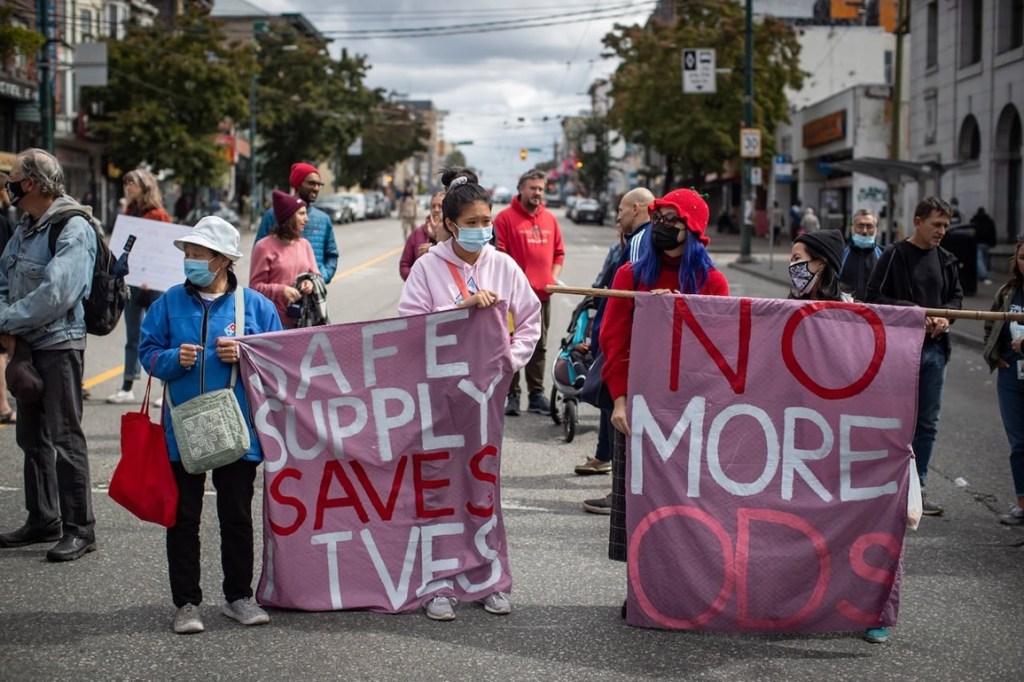
In recent years, Canada has emerged as a trailblazer in progressive drug policy by embracing a bold approach to decriminalization. This paradigm shift represents a departure from the traditional punitive stance toward drug offenses, instead prioritizing harm reduction strategies. As the nation navigates the complex terrain of drug policy reform, it becomes evident that this move holds the promise of addressing public health issues more effectively.
The decriminalization of drugs in Canada is rooted in a recognition of the failure of punitive measures to curb substance abuse. Rather than treating drug addiction as a criminal issue, the emphasis is now on approaching it as a public health concern. By lifting criminal penalties for possession of small amounts of drugs, the Canadian government aims to break the cycle of imprisonment and provide individuals struggling with addiction access to the help they need.
At the core harm reduction is a guiding principle in Canada’s evolving drug policy. Instead of focusing solely on preventing drug use, the emphasis has shifted to minimizing the negative consequences associated with it. This approach includes the distribution of clean needles, supervised injection sites, and access to overdose-reversing medications. By adopting harm reduction strategies, Canada aims to protect the well-being of both individuals using drugs and the broader community.
The decision to decriminalize drugs draws inspiration from the success of Portugal’s approach. In 2001, Portugal decriminalized the possession and use of all drugs, opting for a health-focused model. Over the years, Portugal has witnessed a decline in drug-related deaths, HIV infections, and problematic drug use. Canadian policymakers are eager to replicate these positive outcomes and shift the narrative around drug use from punishment to rehabilitation.
Despite the potential benefits, the decriminalization of drugs in Canada has sparked debates and concerns. Many people have argued that lenient drug policies may contribute to increased drug use, while others worry about the potential strain on public resources for addiction treatment. Furthermore, investigative reporter Tyler Oliveira has demonstrated the damaging effects of drug misuse and homelessness in Vancouver. From watching his investigation, I wonder whether the Canadian government could better use their resources to tackle issues pertaining to homelessness, rather than creating a wider problem of social ills. While there are calls to treat people with issues of addiction more humanely in Canada, Oliveira’s documentary is shocking and, in many ways, frightful. With images of large amounts of methamphetamine users unable to walk and becoming extremely violent to healthcare workers and the general public I wonder if this more towards progressive policy has gone too far (I don’t know how I would feel inhaling meth fumes on my way to my local shop).
Striking a balance between personal freedom and public welfare remains a challenge, but advocates believe that the emphasis on harm reduction will ultimately lead to better outcomes for everyone….
Decriminalization opens the door for more community involvement in addressing drug-related issues. Local initiatives, grassroots organizations, and community outreach programs gain significance as they become crucial players in the broader strategy of harm reduction. By empowering communities, Canada aims to foster a collaborative and compassionate approach to tackling the complex issue of drug addiction.
Canada’s journey toward the decriminalization of drugs represents a paradigm shift in the global war on drugs. By embracing harm reduction as a cornerstone of its strategy, the nation aims to prioritize the health and well-being of its citizens over punitive measures. The lessons learned from Portugal and other progressive models underpin the potential for positive change. As Canada continues to navigate the complexities of drug policy reform, the emphasis on harm reduction holds the promise of transforming the narrative around drug use and addiction. Only time will tell if this bold approach will lead to a healthier, more compassionate society.
Share this:


In Praise of Howard S. Becker (1928-2023)

Three months ago, Howard S. Becker died at the age of 95, some of the Criminology Team reflect below on his impact.
I re-read Becker’s Outsider’s during the covid-19 pandemic. It reminded me of how Becker’s critical take on criminology helped me to understand and articulate the world in which I grew up in. Yes, street crime happens, and yes it causes victims to suffer but street crime seemed to be a survival response from the powerless aka ‘the deviants’ who were oppressed by the disciplining State and its police force. Becker’s work must have been groundbreaking at the time that it was published, and it continues to resonate within more contemporary critical theories surrounding intersectional oppressions that I am most interested in today…what a game changer!
@haleysread
I first encountered Becker’s (1963) Outsiders as an undergraduate, since then I have revisited many times. The book and the ideas within are so well-written, so accessible, allowing the reader to see criminality and criminal justice from an entirely different perspective. Although profound, it is not this Becker text which is closest to my heart, for that we go to 1967 and the publication of his article ‘Whose Side Are We On?‘ It is this succinct piece of writing that allowed me to understand that criminologists can never be neutral, they have to take a side. Furthermore, they must always be on the side of the powerless and never the powerful. The Criminal Justice System [CJS] and all of the agents within it, are working within and for the State and thus have plenty of supporters. Individuals in their engagement with the CJS, do not have the same support or protection, they are always outnumbered and out resourced. If we truly want to gain a holistic understanding of deviance and criminality, Becker (1967) is very helpful.
Alongside, his writing around crime and deviance, Becker also identifies the importance of language and writing style, to research practice. In Writing for Social Scientists (1986) and Tricks of the Trade (1998) and Telling About Society (2007) offers clear, practical guidance and comfort for uncertain scholars (whatever level of study).
Finally, we need to mention Becker’s music, his beloved jazz which provides the soundtrack to a scholarly life well lived, which means you can study his life’s work (both written and aural) simultaneously. A unique man, whose impact will be felt by criminologist and other social scientists for a very long time.
@paulaabowles
In 2006, during my undergraduate studies in sociology, I was introduced to Howard Becker’s labelling theory. While it marked a significant departure from the traditional explanation of deviance, it sparked lively debates among my peers. I distinctly recall vehemently opposing the theory’s practical application in Nigeria, my home country. Some of my peers argued passionately, citing numerous examples of deviance, including instances of crimes of the powerful. They contended that corruption and the misappropriation of public funds in Nigeria were products of eroding social values, driven by immense societal pressure on political officeholders to maintain an image of ‘big men.’ No doubt, Becker had a point on this and despite my initial reservations about labelling theory, Becker’s scholarly contributions have undeniably been influential in shaping both my sociological imagination and my criminological lenses. So long to a respected scholar!
@sallekmusa
It is impossible to list eminent criminologists without at least giving a nod to Howard Becker, although I would suggest a nod is far from sufficient. Becker it seems to me had the ability to write meaningful texts that could be understood by all. Of course his narrative in Outsiders is a product of its time but much of it is still applicable today. I first read Outsiders as part of my undergraduate degree and much of resonated and yet as with all great work, it doesn’t explain everything. What it does though is provide a very different perspective on deviance and society as a whole. In his later work Becker discussed labelling stating it wasn’t a theory. Well worth returning to the book then just to understand that statement alone.
@5teveh
This August 16, 2023, Howard Becker died. He was a 95 years old social scientist/sociologist (depending on who you will ask) with a long and significant legacy on his tome of work. My colleagues above predictably chose Outsiders as representative sample of his work. Not surprising really considering this was one of his seminal pieces of work that articulated the basis of theories that sociologists, criminologists and other social scientists based their own theories and understanding on social reality. His work on labelling theory became a significant influence on criminologists who tried to understand the relationship between postmodernity and deviance. It comes as no surprise that his influence to those who followed him in academia was so important.
What I thought most fitting was to concentrate on one of his latest papers written a few years ago when he was 91. In the midst of the pandemic with the lockdown and the great uncertainty it ensued Howard retreats to what he knows best; to be a social scientist and contextualise his observations the best way he knows. The paper in a praise of neighbourhood spirit and collective consciousness under the guise of urban sociology. Howard Becker is very reflective of his location, the history of the place and its social development and it is a testament of the importance of interactionism and positionality.
Using personal experience his paper “In San Francisco, when my neighborhood experiences pandemics” Becker retains his criticality as a social scientist, using observations and personal narratives to humanise an inhuman and repressive situation. People around him become actors in the crisis especially to those who as more in need and his impressions give us a snapshot of the time. In his own words “Those of us who do social science to be ready to observe life around us” a legacy to all of us that social situations continuously challenge us to explore things differently. That is because “social life does the experiment for us”. One of his last lessons on “life goes on” is so important to the sociology of everyday life.
This paper may not have the significance of some of his earlier work but it is a testament of what a restless mind can produce. He was able to record a situation that in years, decades to come, people will write about it and its impact. Yet, despite his age, his writing remained fresh, current and relevant. In academic terms he was the eternal teenager. Solon of Athens once said “Γηράσκω αεί διδασκόμενος” “I grow old while always learning” projecting that the pursue of knowledge is continuous and lifelong. In Howard Becker this seemed to have been the case. Thank you for your company all those years in the libraries, the seminars, the essays that we read you, thought of your ideas and talk about them. Goodbye to the social scientist, the thinker, the philosopher, the person.
@manosdaskalou
Share this:


What cost justice? What crisis?
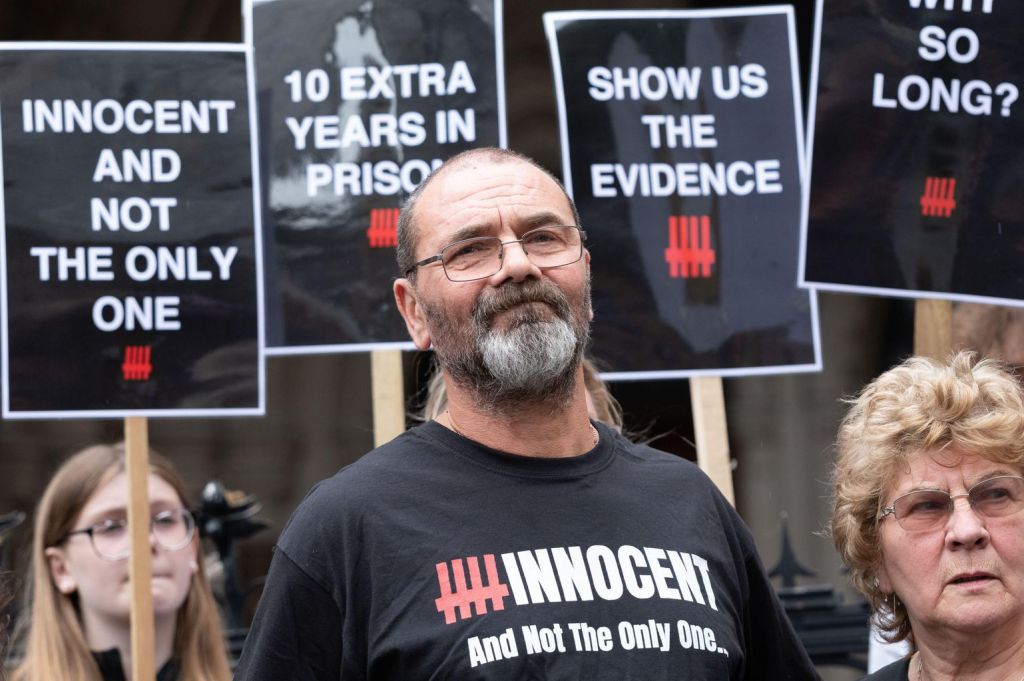
The case of Andrew Malkinson represents yet another in the long list of miscarriages of justice in the United Kingdom. Those that study criminology and those practitioners involved in the criminal justice system have a reasonable grasp of how such cases come about. More often than not it is a result of police malpractice, negligence, culture and error. Occasionally it is as a result of poor direction in court by the trial judge or failures by the CPS, the prosecution team or even the defence team. The tragic case of Stefan Kiszko is a good example of multiple failures by different bodies including the defence. Previous attempts at addressing the issues have seen the introduction of new laws such as the Police and Criminal Evidence Act 1984 and the Criminal Procedure and Investigations Act 1996. The former dealing in part with the treatment of suspects in custody and the latter with the disclosure of documents in criminal proceedings. Undoubtedly there have been significant improvements in the way suspects are dealt with and the way that cases are handled. Other interventions have been the introduction of the Crown Prosecution Service (CPS), removing in part, charging decisions from the police and the introduction of the Criminal Cases Review Commission (CCRC) to review cases where an appeal has been lost but fresh evidence or information has come to light.
And yet, despite better police training regarding interviews and the treatment of suspects, better training in investigations as a whole, new restrictive laws and procedures, the independence of the CPS, the court appeal system and oversight by a body such as the CCRC, miscarriages of justice still occur. What sets the Malkinson case aside from the others appears to be the failure of the CCRC to take action on new information. The suggestion being that the decision was a financial one, with little to do with justice. If the latter is proved to be true, we will of course have to wait for the results of the inquiry, then how can anyone have any confidence in the justice system?
Over the years we have already seen swingeing cuts in budgets in the criminal justice system such that the system is overloaded. Try to pop into the local police station to make a complaint of a crime, you won’t find a station open to the public. Should you have been unfortunate enough to have been caught for some minor misdemeanour and need to go to magistrates’ court for a hearing, you’ll be lucky if you don’t have to travel some considerable distance to get there, good luck with that if you rely on public transport. Should you be the victim of a more serious crime or indeed charged with a more serious offence, triable in crown court, then you’ll probably wait a couple of years before the trial. Unfortunate if you are the alleged offender and on remand, and if you are the victim, you could be forgiven for deciding that you’d rather put it all behind you and disengage with the system. But even to get to that stage, there has to be sufficient evidence to secure a prosecution and it has to be in the public interest to do so. Your day in court as a victim is likely to be hang on the vagaries of the CPS decision making process. A process that has one eye on the court backlog and another on performance targets. Little wonder the attrition rate in sex offences is so high. Gone are the days of letting a jury decide on occasions where the evidence hangs on little more than one person’s word against the other.
Andrew Malkinson and his legal representative have called for a judicial review, a review where witnesses can be compelled to attend to give evidence and documentary evidence can be demanded to be produced. Instead, the government has said there will be an independent inquiry. On a personal note, I have little faith in such inquiries. My experience is that they are rarely independent of government direction and wishes. Andrew Malkinson’s case is a travesty and the least that can be done is to have a proper inquiry. I suspect though that the Malkinson case might just be the tip of the iceberg. The Criminal Justice System is in crisis but budgetary restraint and political whim seem to be far more important than justice. We can look forward to more finger pointing and yet more reorganisation and regulation.
Share this:


The True Crime Genre and Me

I have always enjoyed the true crime genre, I enjoyed the who dunnit aspect that the genre feeds into, I also enjoyed “learning” about these crimes, and why people committed them. I grew up with an avid interest in homicide, and the genre as a result. So, studying criminology felt like it was the best path for me. Throughout the three years, this interest has stayed with me, resulting in me writing my dissertation on how the true crime genre presents homicide cases, and how this presentation influences people’s engagement with the genre and homicides in general.
With this being my main interest within the field of criminology, it was natural that True Crime and Other Fictions (CRI1006) module in first year caught my attention. This module showed me that my interest can be applied to the wider study of criminology, and that the genre does extend into different areas of media and has been around for many years. Although this module only lasted the year, and not many other modules- at least of the ones that I took- allowed me to continue exploring this area, the other modules taught me the skills I would need to explore the true crime genre by myself. Something- in hindsight- I much prefer.
I continued to engage with the wider true crime genre in a different way than I did before studying criminology- using the new skills I had learnt. Watching inaccurate and insensitive true crime dramas on Netflix, watching YouTubers doing their makeup whilst talking about the torture of a young girl, podcasts about a tragic loss a family suffered intercut with cheery adverts. This acts as a small snapshot of what the genre is really like, whereas when I originally engaged with it, it was simple retellings of a range of cases, each portrayed in slightly different ways- but each as entertaining as the next. To me, I think this is where the genre begins to fall apart, when the creators see what they are producing as entertainment, with characters, rather than retellings of real-life events, that affects real people.
Having spent so much time engaging with the genre and having the skills and outlook that comes with studying criminology, you can’t help but to be critical of the genre, and what you are watching. You begin to look at the reasoning behind why the creators of this content choose to present it in such ways, why they skip out on key pieces of information. It all makes a bit more sense. Its just entertainment. A sensationalist retelling of tragic events.
Although studying criminology may have ruined how I enjoy my favourite genre of media, it also taught me so many skills, and allowed me to develop my understating in an area I’ve always been interested in. These skills can be applied in any area, and I think that is the biggest take away from my degree. Considering I now work as the Vice President of Welfare at the Students Union– and getting some odd looks when I say what my degree was- I have no regrets. Even if I walk away from my time at university and never use the knowledge I gained from my studies, I can walk away and know that my time was not wasted, as the skills I have learnt can be applied to whatever I do moving forward.
Share this:


Reproductive Healthcare Ramblings

Reproductive health in England and Wales is a shambles: particularly for women and people who menstruate. The failings start early, where, as with most things, stereotypes and ‘norms’ are enforced upon children from GPs, schools, from parents/guardians who have experienced worse, or who do not know any different, which keep children from speaking up. These standards and stereotypes come from a male dominated health care system especially in relation to gynaecology, and our patriarchal society silences children without the children even realising they are being silenced. As a child, you are expected to go about your daily routine, sit your exams, look after your siblings, represent the school at the tournament of the week, and do all this while, for some, bleeding, cramping, being fatigued but not be expected to talk about it. After all, you are told time and time again: it’s normal.
Moving through life, women and people who menstruate face similar stigma, standards, assumptions during adulthood as they faced during childhood. There is more awareness now of endometriosis, adenomyosis, uterine fibroids, Polycystic Ovary Syndrome Condition (PCOS) to name but a few. But women and people who menstruate report feelings of being gaslighted by [male] gynaecologists, encouraged to have children in order to regulate their hormones (pregnancy and childbirth comes with a whole new set of healthcare problems and conditions), to take the contraceptive pill and deal with the migraines, mood swings, weight gain and depression which many women and girls report. Some of the above chronic illnesses impact fertility, so ‘try for a baby’ is not an easy, or even a wanted path. Diagnosis is also complex: for example a diagnosis for endometriosis takes on average 8 years (Endometriosisuk, 2023), and can only be confirmed with surgery. That relies on women and people who menstruate going to their GP, reporting their symptoms, listening to the ‘have you tried the pill’ or ‘having a baby will help manage your symptoms’: which relies on trust. Not everyone trusts the NHS, not everyone feels comfortable being dismissed by a nurse, or GP or then their gynaecologist. Especially when a number of these illnesses are framed and seen as a white-woman illness. Communities of women and people who menstruate remain hidden, dealing with the stigma and isolation that our reproductive health system carries in England and Wales. And this is not a new issue.
The reproductive healthcare for women and people who menstruate is dire. Just ask anyone who has experienced it. What then is it like for women in prison? The pains of imprisonment are well documented: deprivation of goods, loss of liberty, institutionalisation, no security, depreciation of mental health (Sykes, 1958; Carlen, 1983). The gendered pains, fears and harms less so, but we know women in prison are fearful about the deterioration of relationships (especially with children), lack of facilities to support new mothers, physical and sexual abuse, and poor mental and physical health support including reproductive health. The poor reproductive healthcare available to women and people who menstruate within society, is a grade above what is available in prisons. These women are quite literally isolated, alone and withdrawn from society (through the process of imprisonment), and for some, they will become further isolated and withdrawn via the pains of their chronic illness.
There isn’t really a point to this blog: more like a rambling of frustrations towards all the children who will journey through our subpar reproductive healthcare system, who will navigate the stigma and assumptions littered within society. To all the women and people who menstruate who are currently wading through this sh*t show, educating themselves, their family, their friends and in some cases their GPs, those people unable to speak out, not knowing how or simply not wanting to. And to those in the Secure Estate, grappling with the pains of imprisonment and having their reproductive healthcare needs ignored, overlooked or missed.
I haven’t even mentioned menopause…
References:
Carlen, P. (1983) Women’s Imprisonment, Abingdon: Routledge.
Corston, Baroness J. (2007) The Corston Report: A Review on Women with Particular Vulnerabilities in the Criminal Justice System, London: Home office.
Endometriosis UK (2023) Endometriosis Facts and Figures [online] Available at: https://www.endometriosis-uk.org/endometriosis-facts-and-figures#:~:text=Endometriosis%20affects%201.5%20million%20women,of%20those%20affected%20by%20diabetes.&text=On%20average%20it%20takes%208,symptoms%20to%20get%20a%20diagnosis. [Accessed 24th August 2023]
Sykes, G. (1958/2007) The Society of Captives: A Study of a Maximum Security Prison, Princeton: Princeton University Press.

Share this:


Navigating Clearing: What’s next?

Today marks the second day of clearing at our prestigious University of Northampton. Firstly, I’d like to congratulate those who have secured a place in the university to study their dream course, and to other applicants that are currently navigating their way through clearing, I wish you the best of luck.
Clearing may seem quite overwhelming – many of us have been there – but as you may know, it provides an alternative route for first-time applicants, those who may have missed out on offers, and those that may have missed their required grades or other reasons. For those at this stage, this blog is to provide some tips on how you can make the most of clearing:
- First, try not to panic if you have not met the grade threshold. Panic will only cause more anxiety – so relax. Remember, clearing offers plenty of opportunities – so when you make that call – ask as many questions as possible. Remember the saying, closed mouths don’t get fed. Ask for your options, think it through before you decide, and ensure a plan B.
- Make sure to have done your research about the course you are applying for. Demonstrate enthusiasm, passion, and motivation for the course during your interview (if any). Look at the university websites and academic staff profiles to see what they offer and where graduate testimonies are.
- I’m sure this is no news to you – but remember that popular courses like Criminology, Psychology, Law and others fill up fast through clearing. Wake up early, get on the call queue and maximise your choices. The admissions team at the University of Northampton is one of the quickest when it comes to processing applicants’ offers. These emails are sent within an hour after you have made your call – so ensure to set up email alerts so you don’t miss communications.
- You may find it beneficial to keep an open mind about other courses. This is so because you don’t get disappointed if you don’t get a place on your desired course or if what you are looking for is not for you after speaking to an academic. Again, ask questions.
- As I pointed out earlier, the university website should be your first call, where you will find all the necessary information regarding clearing. On the website, there is lots of support available – so make the most out of it.
- Generally, clearing often turns into a great university experience. Focus on the opportunity ahead; your effort will pay off with time, and don’t give up if your first plans don’t work out. Remain optimistic, be thorough, and embrace this next step towards your future.
Remember that the transition into higher education takes time and adjustment. Overcoming obstacles will build resilience. Progress may feel slow, but your growth is constant. Embrace uncertainty, connect with others, and take chances. By doing so, you will gain skills, knowledge, memories, and relationships to last a lifetime. Your adventure begins now – enjoy it!

 Thoughts from the criminology team