
Home » Criminology Team (Page 15)
Category Archives: Criminology Team

Intolerance, frustration and stupidity
‘Stupid is, as stupid does’ a phrase that many people will recall from that brilliant film Forrest Gump, although as I understand the phrase was originally coined in the 19th century. I will return to the phrase a little later but my starting point for this blog is my colleague @jesjames50’s self-declared blog rant and an ensuing WhatsApp (other media are available) conversation resulting in a declaration that ‘maybe we are becoming less tolerant’.
So, I ask myself this, what do we mean by tolerant or intolerant and more importantly what behaviours should we tolerate? To some extent my thoughts were driven by two excellent papers (Thomson, 1971, 1985) set as reading for assessment questions for our first-year criminology students. The papers describe ethical dilemmas and take us through a moral maze where the answers, which are so seemingly obvious, are inevitably not so.
As a starting point I would like you to imagine that you frequent a public house in the countryside at weekends (I know that its not possible at the moment, but remember that sense of normality). You frequently witness another regular John drinking two to three pints of beer and then leave, getting into his car and driving home. John does not think he is incapable of driving home safely. John may or may not be over the proscribed limit (drink driving), but probably is. Would you be able to make some excuse for him, would you tolerate the behaviour?
Let us imagine that John had a lot to drink on one night and being sensible had a friend drive him and his car home. The next morning, he wakes up and drives to work and is over the proscribed limit, but thinks he’s fine to drive. Would you be able to make some excuse for him, would you tolerate the behaviour?
Of course, the behaviour becomes absolutely intolerable if he has a collision and kills someone, I think we would all agree on that. Or even if he simply injures someone, I think we would say we cannot tolerate this behaviour. Of course, our intolerance becomes even greater if we know or are in somehow related to the person killed or injured. Were we to know that John was on the road and we or someone we know was also driving on the same road, would we not be fearful of the consequences of John’s actions? The chances of us coming across John are probably quite slim but nonetheless, the question still applies. Would we tolerate what he is doing and continue with our own journey regardless?
Now imagine that John’s wife Jane is driving a car (might as well keep the problems in one family) and Jane through a moment of inattention, speeds in a residential street and knocks over a child, killing them. Can we make excuses for Jane? How tolerant would you be if the child were related to you? Inattention, we’ve all been there, how many times have you driven along a road, suddenly aware of your speed but unsure as to what the speed limit is? How often have you driven that all familiar journey and at its end you are unable to recall the journey?
The law of course is very clear in both the case of John and Jane. Driving whilst over the proscribed limit is a serious offence and will lead to a ban from driving, penalty points and a fine or even imprisonment. Death by dangerous driving through drink or drugs will lead to a prison sentence. Driving without due care and attention will lead to a fine and penalty points, death by careless driving is likely to result in a prison sentence.
So I ask this, what is the difference between the above and people’s behaviours during the Covid-19 pandemic?
Just to be clear, contracting Covid-19 may or may not kill you, of course we know the risk factors go up dependant on age, ethnicity and general health but even the youngest, healthiest have been killed by this virus. Covid-19 can cause complications, known as long Covid. Only now are we starting to see its long-term impact on both young and old people alike.
Now imagine that Michael has been out to the pub the night before and through social contact has contracted Covid but is unaware that he has the disease. Is it acceptable him to ignore the rules in the morning on social distancing or the wearing of a mask? What is the difference between him and John driving to work. What makes this behaviour more acceptable than John’s?
Imagine Bethany has symptoms but thinks that she may or may not have Covid or maybe just a cold. Should you tolerate her going to work? What if she says she must work to feed her family, can John not use the same excuse? If John’s behaviour is intolerable why should we tolerate this?
If people forget to move out of the way or get too close, what makes this behaviour any different to Jane’s? Of course, we see the immediate impact of Jane’s inattention whereas the actions of our pedestrians on the street or in a supermarket are unseen except by those close to the person that dies resultant of the inattention. Should we tolerate this behaviour?
To my colleagues that debated whether they have become less tolerant I say, no you have not. There are behaviours that are acceptable and those that are not, just because this is a new phenomenon does not negate the need for people to adhere to what are acceptable behaviours to protect others.
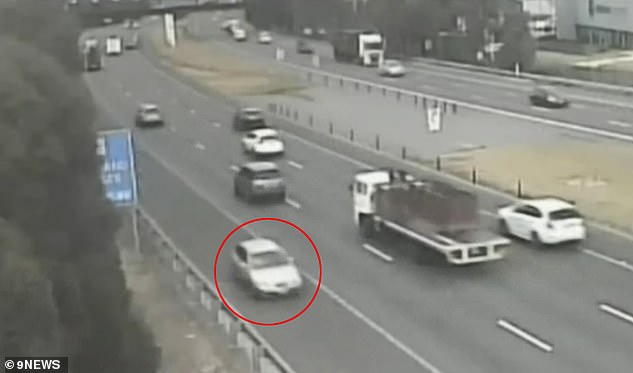
To those of you that have thought it was a good idea to go to a party or a pub before lockdown or do not think the rules need apply to you. You are worse than John and Jane combined. It is akin to getting drunk, jumping in your cars and racing the wrong way down a busy motorway. ‘Stupid is as stupid does’ and oh boy, some people really are stupid.
References
Thomson, Judith Jarvis, (1971), ‘A Defense of Abortion,’ Philosophy & Public Affairs, 1, 1: 47-66
Thomson, Judith Jarvis, (1985), ‘The Trolley Problem,’ The Yale Law Journal, 94, 6 : 1395-1415,
Share this:


Step the **** back!

This blog entry comes with a content warning. This is not an eloquently written, or question raising blog post. Instead, this is what can only be described as a rant post. Sometimes its’ important for us to offload on to our friends, family, the wider public about some of the things that are getting to us. For me, it’s the small differences between Lockdown and Lockdown 2.0 which are driving my slightly mad. I wish to share an example of things that have changed between the two lockdowns we have experienced this year, and why I am offloading to you kind and wonderful readers. Although if you find you have been guilty of either of the behaviours in the example provided, please ‘step the **** back’.
The first example I wish to focus on relates to when I have been out and about running. In the first lockdown I was running regularly: those glorious heatwaves meant I ran either very early or very late. Originally I started running around some of the parks, however these soon became infested with people (regardless of what time you visited), so I began running ‘road routes’: as I like to call them. There was not much traffic during the lockdown, although still a fair amount of pedestrians to contend with. However, whenever I approached a person or pair, we made a big effort of maintaining a solid distance between us. Sometimes this meant going on the grass (thankfully dry because of the sunny sunny sun), and other times it meant me going on the road (which had little if any traffic on it). Pairs or adults with children always went in single file, and I always made an effort to smile. I did not feel at risk running during the first lockdown when I switched to the ‘road routes’ and kept it up all the way through to September. Then term started and all got a bit crazy!
However we are only a week in to Lockdown 2.0 and I am not a happy bunny! I have started running again over the past week, and on multiple occasions I have returned more frustrated and annoyed then when I left because people are not ‘stepping the **** back’. Naturally, traffic has increased (again regardless of what time I run), and the ground it wet and slippery thanks to the wet, wet rain! Therefore when it comes to approaching single pedestrians or pairs it is a bit more challenging to maintain a safe distance between us, without slipping on the grass or potentially be hit by a car. But I am not approaching single pedestrians or pairs, I’m approaching groups of people or pairs who are refusing to walk in single file despite the fact they can clearly see me approaching (I wear high vis for a reason)! I have to stop and jog on the spot in front of them just for them to pass without me slipping in the mud, or take a risk with the traffic which is not fun or safe! I’m breathing heavily, puffing away clearly not wearing a mask: why the hell won’t you step away and give me space? I’m literally breathing on you: this is not ok! We are in a pandemic!
On top of this is the even more alarming experience of visiting the post office only a few days into lockdown 2.0. I have my face covering, I have sanitised upon entering, and I go and join the queue and stand on the nice red stickers that have been laid out for us. But wait! What is this? I turn around and literally jump forwards as a person is on my shoulder! They are not standing on the red stickers which mark out where it is safe to stand, they are so close! Not ok! So I step forward, cautious of approaching the person in front and not keeping a safe distance with them. Phew, this is ok. I turn around and BAM: there they are again. SO rather than ask them to step back (they have headphones in and are staring at their phone), I construct a text message to my partner that read:
Made it to the po fine: bit of a que so might be a little while. There is a woman who is literally stood on my shoulder and keeps moving forward with me. So close she can probably read this text message. Hi, STEP BACK PLEASE! ….
I left the message up for a minute or two as I continued constructing the rest of the text. I hear a gruff grunt, I turn and the person behind me takes a HUGE step back and shoots me daggers. I smile appreciatively. Surely if you can read my message you are WAY too close! Why did you not stick to the red stickers in the first place? Lockdown 2.0 still requires us to maintain social distancing when visiting the essential shops or when out getting fresh air, yet some seem to have forgotten this. Eugh!!!
Share this:


Meet the team – Amy Cortvriend, Lecturer in Criminology
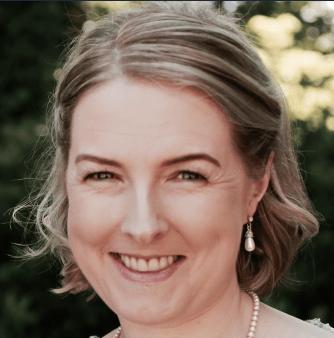
I am one of the new members of the criminology team at UoN and have joined from the University of Manchester where I have been a teaching assistant (probably the equivalent of associate lecturer at UoN) for the last couple of years while I’ve been working on my PhD. I’m looking forward to my new role as lecturer in criminology and hopefully at some point meeting students in real life, face to face. It’s a bit strange starting a new job in a new town when I’m still sat in my living room in Manchester, but the rest of the team have made me feel welcome regardless.
My journey into criminology is a funny one. I did life the opposite to many people, having my first child at 16. When my second child went to school I decided to return to education and as I didn’t have A-levels I has to undertake an Access diploma to get into university. I was required to choose three subjects and at first, I opted for English literature because I love(d) reading (I’m sure I still love reading but I’ve not read anything non-work related for a long time). I picked sociology because it sounded interesting and the same with history. At the last minute I swapped history to criminology and never looked back. From my first lesson I knew this was my future, although at that point I wasn’t sure how.
I always had imposter syndrome and never thought my work was good enough (still do today but we’ll save that for another blog post), but my Access tutor believed in me and suggested I apply to the University of Manchester. As I was a mature student, I had to attend an interview with two of the lecturers. I was super nervous, but I got a place and never left. The undergraduate degree was difficult at times because there were only a couple of mature students and they eventually dropped out. I wasn’t in halls and had kids at home, so I didn’t have the same student experience as many of my cohort, however I made some great friends particularly those who stayed to undertake our MRes.
I finished my undergraduate degree with a first and was awarded a scholarship for my research Masters’ then luckily got another studentship for my PhD which is near completion and here I am. Since I’m teaching research methods modules this year my students will be pleased to know that my BA (Hons) and MRes were heavily focussed on research methods and my PhD has given me three years of real-life research experience. My dissertations and thesis have all followed my research interests in the psychology of victimisation and border criminology. My PhD thesis explores the victimisation of refugees and how they cope. That’s all I will say about my research right now, but I will write another blog about it at some point. Probably when I’ve finished writing it and the hard work is a distant memory.
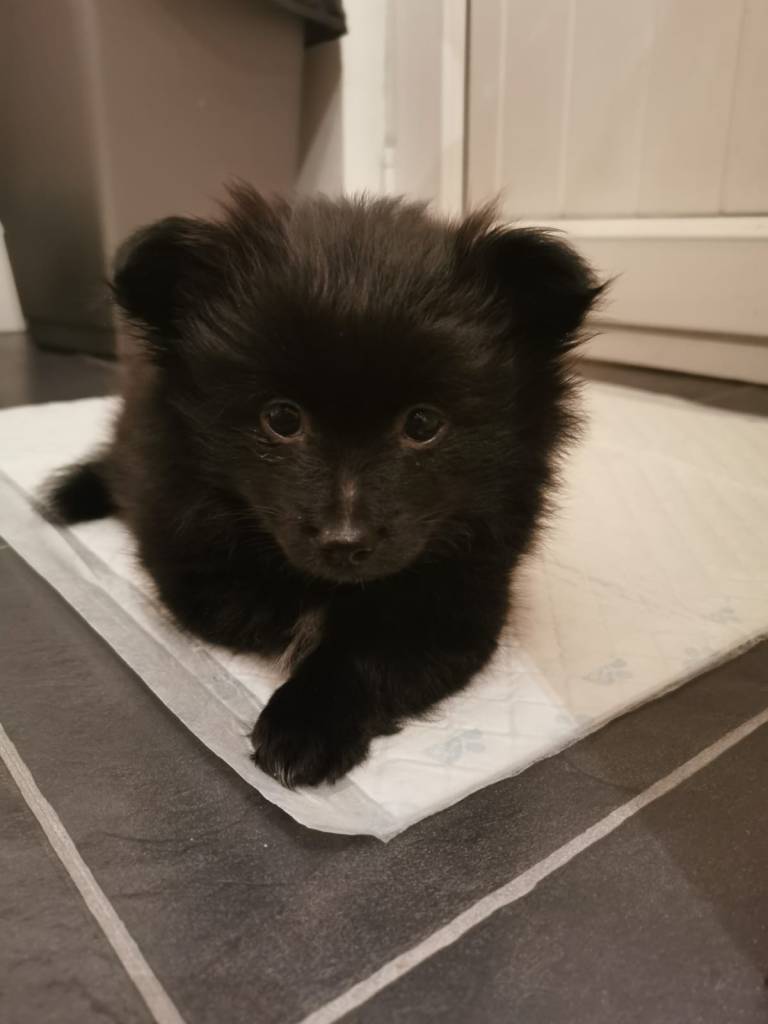
On a personal note, the daughter I had at 16 is now grown up and lives on her own and my youngest is a sassy 14-year-old girl. We have also just got our Pomeranian puppy Prince. In my free time I’m usually doing something active. I’m a Crossfitter and many of my closest friends are gym friends so the gym is both my mental health crutch and my social life. When I do eventually sit down, I love a good box set. I’m currently watching The Morning Show with Jennifer Aniston and Reese Witherspoon. Recommendations via email are welcome.
Now you know a little bit about me. I’ll look forward to getting to know all the criminology students soon, either virtually or face to face. Hopefully some of you will put your cameras on at least for a day so that when we eventually meet, I’ll know who you are.
Share this:


The industry of hope
There is expectation in hope that things will change. Every personal and social issue that is not going according to plan, all the adversities and the misfortunes, are placed on the anticipation that eventually, things will change. The conviction for the change is hope. Hope is a feeling based on emotions, irrational and inexplicable.
Hope is a refuge for those whose lives are wronged and feel unable to do anything but to hope. Millions of people hope for better days, better health, better relationships, better lives. This hope keeps expectations high even when you are told of the opposite.
Consider the following dialogues:
“The environment is changing, global warming, the pandemic and the economic recession. It looks like we’ve had it! We are one meteor away from a catastrophic event”. “I agree with what you say, but I hope that despite all these we will find a way out of all these.”
“Your crime is too serious; looks like you are going to jail”. “I hope the judge is lenient and maybe I will not go to prison”
“The tests indicate that your health has deteriorated, it is unlikely to change; I am afraid you have only a few months to live”. “I hope that God will listen to my prayer and cure me”.
“I do not love you anymore, I want to leave you! “Don’t break my heart; I hope you change your mind.”
All these have one thing in common. The respondent’s hope for something, despite the overwhelming evidence to the contrary. This unwavering conviction comes at a price! The entire world is built on an industry of hope. Institutions, systems, “experts” and many more who profit from the misfortune of others. One of the main benefactors in this industry is undoubtedly religious institutions and belief experts.
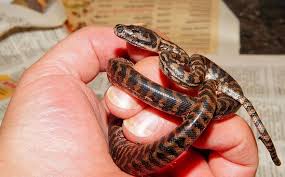
Some years ago, in one of my trips, in found myself in a monastery that has a tradition of snakes appearing on the day of the ascension of the Virgin Mary. The revellers regard it as a sign of good fortune and favour from her grace. I was in the monastery on a different day, when a group of boisterous Russian tourists were trying to buy some grace. The lady in the church was clear; a small bottle of holy water 3 euros, a small bottle of oil 5 euros. There were bigger sizes and of course for more certainty of hope, a purchase of both is indicated. Since then, it got me thinking; what is the price of hope?
Faced with a terminal disease, how much would any of us will pay to live a little bit longer? The question is merely rhetorical, because each of us is likely to pay according to what they can afford. There are those who may care less for themselves, but are willing to sacrifice anything for someone special; or a great idea.
Since the discovery of electricity, Victorian scientists dispelled the expertise of those charlatans that spoke with the dead and commuted with the spirits. Even though there have been mounting evidence against them, their industry of hope is still booming. People like to hope. They embrace its positive message. After all Dum Spiro Spero.*
There is of course the other side; Nikos Kazantzakis famously said; “I hope for nothing. I fear nothing. I am free.” It is liberating not to hope, but it is very difficult to achieve. Personally, despite experiencing negative situations, and even after meeting some naysayers armed with a sour face in life, I will never stop hoping that people are better inside and they can change and embrace their better selves. My hope, I fear, is incurable.
*While I breathe, I hope
Share this:


My Criminology Journey: Haley

The start of my criminology journey is not very exciting. I am not fully sure of how or why I ended up studying the subject. I was advised to study hairdressing at school as my predicted grades were not good enough for university, but the idea of trusting myself with a pair of scissors was very unnerving. I had a dilemma at college as I was unable to decide whether I wanted to study healthcare or construction – two courses which bore no similarity. In the end I give up trying to make decisions and studied A Levels because that was what my friends were doing.
University may as well have been on Mars at this point, as it was completely mysterious and unknown to me. Whilst at college, I was asked by my tutor to go to an open day at Oxford University. I saw this as an opportunity to unmask this university ‘thing’ for what it really was, so I agreed to go. I felt completely out of place throughout the day and found myself gobsmacked by the sheer privilege of the place, the culture and the students etc. At the same time, I was fascinated by the available courses, so I decided to continue my studies into higher education.
My first attempt at university did not go as well as I had intended it to. I had other issues to contend with at the time, so I dropped out after two weeks. However, in 2010 I enrolled at the UoN and never really left. I had a great time studying criminology at UoN as I thought that my course was very interesting and the teaching staff (aka @paulaabowles and @manosdaskalou) were spectacular.
I did not realise this it at the time but I was well prepared for critical criminological discussions because I came from a background where people would be demonized for a whole host of social problems – it was clear to me at the time that this was unfair. Whilst enjoying the course content I did have to make a considered effort to improve on my writing skills, but it was worth the effort as this improvement worked wonders on my grades. As an undergraduate, I used my overdraft and savings from working part-time jobs to go travelling at the end of each academic year, this was beneficial for helping me to understand criminological issues outside of the UK.
In 2015 I began teaching as an associate lecturer at UoN and I really enjoyed it. I also completed an MA degree in Social Research. To fast-forward to today, I now work as a lecturer in criminology – and this really is, beyond my wildest dreams!
Studying is not always a smooth ride for some, but if you work hard, you never know where you might end up.

Share this:

A grand day out
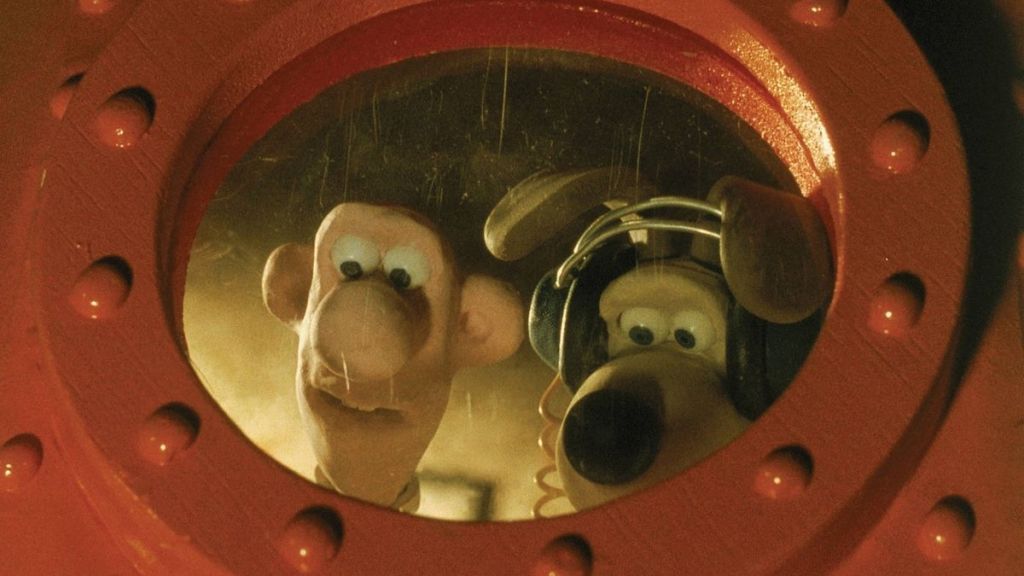
Have you noticed how the news is reported these days in respect of Covid-19? Gone are the individualised and personalised stories of the casualties of this awful virus. Gone are the stories of individual and collective heroism of ordinary, actually extraordinary, people. Gone is the mention of the R rate and the discussion around it. Gone are those pictures of the people that died. No longer the headline, Covid- 19 is reduced to the middle order and consists predominately of the number of cases and the number of deaths. We watch these figures rise on a daily basis and we hear discussion about local lockdowns and areas with high incidents. We hear confusing stories about lockdown and then no lock down and then lockdown or is it partial lockdown and where exactly does it apply? We hear about areas that have high incidents where no action is being taken, well not yet anyway. And companies that remain open despite outbreaks only to be forced to close, let’s be honest, because of media scrutiny. We hear more from Nicola Sturgeon the first minister of Scotland than we do from our own prime minister.
We are sucked into a world of tourism, safe corridors and safe countries, lists and the plight of the aviation industry. We hear tourists moaning about self-isolation (I constantly scream at the tv you made that choice you ****). We are sucked into the debacle around schools and qualifications and returning to school. And we are told by Boris that we should all go back to work, back to the office. We hear of tourists returning on flights having contracted Covid-19 and passengers not wearing masks on flights. At the same time, we are told by bosses in the aviation industry that the industry is doomed unless something is done about it, this self-isolation malarkey really isn’t good for business. Once again, I shout at the tv (I don’t suppose you’ll be getting on one of those cattle trucks in a hurry you ***). Do I sound angry, I guess I am?
When the virus first struck, whenever that was, we all probably didn’t take it that seriously, serious but you know, not that serious. Then there was the lockdown, now that was serious, and it hit home how serious it was. Then we watched the tv and that reinforced how serious it was and if you weren’t a little concerned for yourself, your friends and your loved ones then you really weren’t in touch with reality. And then the economic costs started to rack up and that became really serious. And then, the government decided that since the NHS hadn’t been overwhelmed it was now permissible to open things up. And then, the government decided that it would pass the responsibility for the management of Covid to local authorities. And somewhere along the line, the responsibility for ensuring my safety, and yours became that of business. As long as businesses could assure us that they were Covid safe then we could go back to work and go shopping and eat out. In fact, you could eat out for 50% less in some places aided by a government scheme. A scheme to get businesses back on their feet which of course involved packing people in. Just how Covid secure are these places, well you take your chance, but you can feel assured.
I decided to venture out with my wife to get ourselves a new mattress. The old one has had its day, we meet in the middle of the bed every night, whether we want to or not, the only solution, to try to sleep as close to the edge as you can and if possible somehow cling on. Time for a new mattress. I’m not sure about these new-fangled mattresses (you know, the ones that come in a box and then pop out never to be returned to the box) and so rather than shopping on line we went to a store. We entered the store, masked up as is required, to be greeted by an assistant who pointed to the hand sanitiser. “oh, that bottle doesn’t work”, she says, “try the other but you’ll have to hit it quite hard”. Oh well, at least she’s wearing a face shield and I notice the other assistants are doing the same, except that theirs are up, a bit like a visor really, as they hang about talking to each other. One saunters over to us and after a brief conversation leaves us to look at and try the mattresses. Now that sounds alright doesn’t it, except that not only was his face shield not down, he’d taken it off altogether and thrown it onto the bed. We kept our distance. So, the markings on the floor suggesting 2 metre distance and the hand sanitiser at the entrance and the issue of face shields to staff are all Covid compliant but in operation, not really. Still we had a grand day out and felt quite assured.
As we hear the clamour to get schools back up and running, we hear about the plight of the school children and as a consequence, the voices and concerns of the teachers are drowned out. As we hear the concerns of lecturers from their union, the lecturers themselves and even the medical profession, their voices are drowned out. The only thing that seems to matter now is the economy and business. Those that run it are not on the coal face and will not be putting themselves at risk, but they tell us how we must all do our bit and return to work. If you wonder how getting children back to school fits in, well parents caring for children at home are not in the office working.
I selected some passages from the government guidelines regarding Covid 19.
“The more people you have interactions with, the more chance the virus has to spread. Therefore, try to limit the number of people you see – especially over short periods of time”
“limit the number of different activities which you partake in succession to reduce the potential chain of transmission”
“group size should be limited to the minimum which allows the activity to take place”
Now isn’t that confusing. We must all get back to work and back to the offices and, yet the government’s own guidelines seem to suggest this should not happen unless absolutely necessary. How exactly does this fit with teaching and class sizes and the number of students that teachers interact with? The same applies to lecturers at university, of course they have the added problem that the students will have come from all over the country and then come together in a Covid -19 cauldron. Pack them all in but you can feel assured that schools and campuses are Covid safe (a bit like those planes returning from foreign climes).
I feel like I am in a socio-economic experiment. An experiment where I see the disadvantaged and weak in our society put at risk for the sake of business. Where the older generation are made to feel dispensable and unimportant. Where figures are manipulated to downplay the seriousness of the problem. Die on day 29 after infection and you won’t be included in the Covid statistics. I see an experiment where facts are bent, ignored, and a narrative that subjugates the truth to management and business ideals. It looks like I’m going to be shouting at the tv for a very long time and I must be honest I really don’t feel very assured.

Share this:


Covid-Universities and what if
Over the past week or so there have been some mutterings about whether it is safe to open up universities. There is the advice from the scientific advisors (Universities get some Indie SAGE advice on reopening campuses in September) and some thoughts from academics ‘Why universities must move all teaching online this autumn’.
As we move closer to the start of term, so my dread of what is ahead comes into sharper focus. I try to imagine what it would be like and try to reassure myself that the risk assessments have been done and the reassurances that the universities are Covid safe are true rather than simply fantasy and wishful thinking.
In this safe environment I imagine that the number of students and staff on campuses will be carefully managed as it is with many large stores.
I imagine that all staff and students will be wearing face coverings. This is not for protection of themselves, as the use of coverings is a somewhat altruistic venture, I cover my face and protect you and you cover yours and protect me.
I imagine that all thoroughfares will be marked and monitored. Social distancing is important, and we need to be at least a metre apart.
I imagine that the classrooms will be laid out in such a way that social distancing can be maintained and that the classrooms will be well ventilated, even in the middle of winter. I imagine all the chairs and desks and any other equipment will be wiped down after each session.
I imagine that face to face teaching will be limited and interactions with multiple groups of students will be severely curtailed to ensure lecturers are not put at unnecessary risk. I imagine each class will comprise only a few students to minimise risk.
I imagine that anyone who is symptomatic will not attend a university and will after being tested self-isolate. I imagine that all the people they have been in contact with will do the same for a whole, boring, 14 days.
I imagine that the universities’ management will be at each university, leading from the front. They will be checking to ensure the safety of students and staff. They will be mixing with staff and students, receiving feedback and continuously monitoring. I imagine the safety of the students and staff is paramount.
And then I think, what if…
What if campuses are a free for all. Students can come and go as they please, there is no monitoring of volumes. Or what if there is, but it is impossible to enforce with limited staff to do so. And those staff tasked with this endeavour are at greater risk due to the proximity with large volumes of students.
What if people decide not to wear face coverings or having got into the building decide to take them off or several people are exempt for some reason or another. Altruism has gone out of the window. I’m a criminologist and I know that people break the rules for all sorts of reasons and the only certainty is that some people will break the rules.
What if social distancing becomes all too difficult. Many of us have experienced it in stores. A one-way system works for most, but a significant number just don’t abide by it, for whatever reason. People break rules.
What if the social distancing in classes is impossible, there just isn’t enough classes to maintain it with the volume of students on the course. What if ventilation is impossible, other than air conditioning, some classes are in the middle of buildings. Who will clean the chairs and equipment after each class? Go to a restaurant and tables and chairs are wiped down after each use so who will do it at a university?
What if lecturers have to teach multiple groups face to face as there are not enough staff to spread the load. Teaching in a classroom for two hours multiple times in a day with different groups each time must surely expose lecturers to much greater risk.
What if students are of the age group where they are more likely to be asymptomatic? How many that are infected might be at a university, spreading the virus around campus and around the locality. Even if they are symptomatic, how likely are they to self-isolate? Judging by the street parties and illegal raves reported on the news, there is a good chance that some will break the rules. Let’s be realistic, if you are only likely to suffer affects akin to a cold, why would you be that bothered about social distancing or self-isolation?
And finally, what if all managers avail themselves of the much-vaunted government advice, work from home if you can. Leadership from the rear, the bottom line is more important than the safety of others. We can of course dress this up in management psychobabble about what the students need.
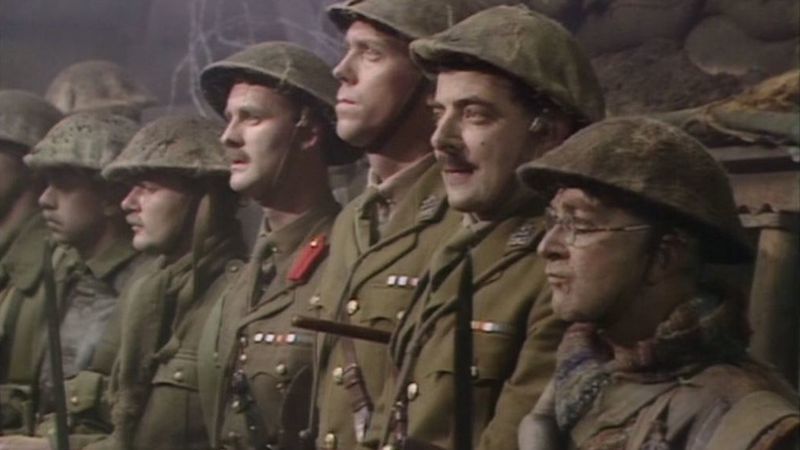
Never mind, ‘Tally ho and all of that sort of thing and over the top we go’*.
* For those of you that are lost at this point it might be worth a visit to the last episode of Blackadder Goes Forth.
Share this:


Imagine and what if…

‘Imagine’, a simple word and one that evokes memories of a song written by John Lennon and released in 1971. In that song we are asked to think about ideas that would perhaps lead us into notions of utopia, if only the ideas were true. Though, often what we see as a simple solution proves to be far from simple and in each solution, lies a paradox that gives lie to the fact that our solution was a solution at all. If we imagine a solution or a scenario we should also ask ourselves ‘what if’. ‘What if’ that were true, what would it look like and what would the consequences be? I like the idea of ‘what if’. ‘What if’ allows me to jump ahead, ‘what if’ allows me to see whether a solution would work, ‘what if’ allows me to play out various scenarios in my mind and ‘what if’ causes me more trouble than imagine. In imagine I can dream, in ‘what if’, I tear those dreams apart, dissecting each bit into practical reality. A reality that has its basis in science and my limited knowledge of human nature. And so, I’d like to begin my journey of ‘imagine’ and ‘what if’.
I suppose my thinking behind this short piece was to set the scene for a number of other pieces without trying to explain the background and rationale of each piece. ‘Imagine’ and ‘What if’ are the rationale. Perhaps the idea might provide a spark for other bloggers, I hope so. And so, I begin….
Imagine a chain of nice restaurants (not the greasy spoon type but perhaps not the Michelin star type either), each restaurant with its own chef. Imagine the work that goes into running a restaurant*, for those of you that watch MasterChef, ‘it isn’t hard to do’. Let’s start with the basics.
Well of course there is the food. Decent food, requires decent ingredients. So, sourcing the ingredients is important, a fair amount of research required to do this and then of course there is the logistics of purchasing the food at the right time in the right quantities and ensuring the quality at the same time.
Then there is the menu, what is put onto the menu is carefully planned around what ingredients are available, what the chef wants to produce and what the customer might want. If the theme of the restaurant is Vegetarian cuisine, there is little point in putting a chicken Balti on the menu. The actual menu needs to be produced, not some scrap of paper, it needs to be carefully planned, printed and delivered. The food then needs to be cooked and served. There is a lot of planning and careful consideration that goes into this. Dishes are tried and tried again until they are right and are aesthetically pleasing on the plate. The customers need to be looked after in the restaurant, shown to their tables, their orders taken, and drinks served.
Imagine how the restaurant is advertised, perhaps on Facebook, maybe its own website and imagine what the advertising would promise. Perhaps a congenial atmosphere, good food and fine service. Imagine you can book online. Imagine the amount of work that goes into building that website or Facebook page. Imagine the work that goes into servicing the bookings. Imagine the organisation of running a restaurant. So, what if…
The chef was responsible for:
- The design and implementation of the website or Facebook page
- The planning, sourcing and cooking of the food
- The design and printing of the menu
- The taking of the orders and the delivery of the food to the customers
- In fact, the chef was responsible for delivering just about everything.
What if…
The customers that came to the restaurant decided they don’t like Vegetarian cuisine and are more at home with burgers and chips, but somebody told them it was a good idea to try the restaurant, or maybe they didn’t have anything better to do on the day.
The restaurant chain managers decided that more customers were better for business and they crammed in as many as they could each day, whilst berating the chef for not servicing the website bookings in line with published timelines.
The restaurant managers decided that the chef could run it all on their own as it is better for the bottom line.
What if…
The feedback from customers is filled with complaints about the untimely service, the crammed conditions and the fact they don’t like Vegetarian food and couldn’t understand why burgers and chips weren’t on the menu as well.
The management scrutinise the restaurant Facebook page or website looking for inaccuracies or areas that don’t fit the restaurant chain’s USP and appear to have little interest in the food produced or the service given to customers.
The management introduce new policies to ‘ensure better customer service and a better customer experience’. The policies increase the workload for the chef.
Just imagine you are that chef ….
NB I apologise to all chefs out there. As with anything in life we have little idea of the amount of work something involves until we have to do it ourselves.
Share this:


“I can’t breathe”: Criminology, Science and Society
Sometimes the mind wanders; the associations it produces are random and odd, but somehow, they connect. In the book of Genesis, there is reference to the first murder. Cain murdered Abel with a stone making it the original murder weapon. After some questioning from God, who acted as an investigating officer, and following a kind-of admission, God then assumed the role of the judge and jury, sentencing him to wander the earth. This biblical tale is recounted by all three main monotheistic religions, a what to do in the case of murder. The murderer is morally fallen and criminally dealt by with a swift punishment.
There is no reason to explore the accuracy of the tale because that is not the point. Religion, in the absence of science, acted as a moral arbitrator, sentencing council and overall the conscience of society. In a society without science, the lack of reason allows morality to encroach on personal choices, using superstition as an investigative tool. As scientific discovery grew, the relevance of religion in investigation was reduced. The complexity of society required complex institutions that cared for people and their issues.
When the Normans landed in England, they brought with them a new way of dealing with disputes and conflict. Their system of arbitration, using the King as a divine representative, was following Roman tradition and theology but it soon became apparent that a roaming court may not be as efficient. The creation of the magistrates and the statutes on legal representation introduced the idea of bringing professionals into justice. The creation of new institutions fostered the age of the scholar, who uses evidence-based practice.
This new approach removed more religious practices, instead favouring the examination of facts, the investigation of testimony and the study of law. It was a long way away from the system we know now as the witch trials can attest to; a number of whom took place in East Anglia (including Northampton). In the end the only thing that has been left from the early religious trials is the oath witness take when they submit their testimony.*
The more we learn the better we become in understanding the world around us. The conviction that science can resolve our problems and alleviate social issues was growing and by the 19th century was firm. The age of discovery, industrialisation and new scientific reasoning introduced a new criminal justice system and new institutions (including the police). Scientific reasoning proposed changes in the penal code and social systems. Newly trained professionals, impervious to corruption and nepotism, were created to utilise a new know-how to investigate people and their crimes.
Training became part of skilling new mandarins in a system that reflected social stratification and professionalism. The training based on secular principles became focused on processes and procedures. The philosophy on the training was to provide a baseline of the skills required for any of the jobs in the system. Their focus on neutrality and impartiality, seemed to reflect the need for wider social participation, making systems more democratic. At least in principle that was the main idea. Over centuries of public conflict and social unrest the criminal justice system was moving onto what people considered as inclusive.
Since then the training was incorporated into education, with the new curriculum including some BTECs, diplomas, foundation studies and academic degrees that take on a variety of professions from investigative fields to law enforcement and beyond. This academic skilling, for some was evidence that the system was becoming fairer and their professionals more educated. Police officers with knowledge of the system, akin to lawyers to the probation service and so on. So far so good…but then how do we explain the killing of George Floyd? Four officers trained, skilled, educated and two of them experienced in the job.
If this was a one, two three, four, -offs then the “bad apple” defence seems to be the most logical extrapolation on what went wrong. If, however this is not the case, if entire communities are frightened of those who allegedly serve and protect them, then there is “something rotten in the state of Denmark”. Whilst this case is American, it was interesting to read on social media how much it resonated, in communities across the globe of those who felt that this was nothing more than their own everyday experience with law enforcement. For them, police is merely a mechanism of repression.
Since the murder I have read a number of analyses on the matter and maybe it worth going a bit further than them. In one of them the author questioned the validity of education, given than two of the officers in the Floyd case hold a criminal justice and a sociology degree respectively. There is a vein of truth there; educators have some responsibility to forge and promote professional conduct and ethical practice among their alumnus. There are however some other issues that have not been considered and it is time for these to be brought to the surface.
Education or training alone is not adequate to address the complexities of our society. Social awareness, cultural acceptance and the opportunity to reflect on the rules using problem solving and insight are equally important. Foucault has long argued that the justice system is inherently unfair because it preserves privileges and blocks anyone outside from challenging it. Reflecting on that, all major constitutional changes took place after a revolution or a war, indicating the truism in his observation.
If we are to continue to train people on procedures and processes the “bad apples” are likely to strike again. The complexity of social situations requires an education that ought to be more rounded, critical and evaluative. If a doctor takes an oath to do no harm, then so should every other professional who works in their community. If the title of the office is more appealing than the servitude, then the officer is not fulfilling their role. If we do not recognise equality among all people, then no training will allow us to be fair. Suddenly it becomes quite clear; we need more education than less, we need knowledge instead of information and we need more criminology for those who wish to serve the system.
*Even that can now be given as an affirmation

Share this:


How I became an evil man
My love of poetry came in my sleep like a dream, a fever I could not escape and in little hours of the day I would read some poetry from different people who voice the volume of their emotions with words. In one of those poems by Elleni Vakalo How he became a bad man, she introduced me to a new understanding of criminological thinking. The idea of consequences, that lead a seemingly good person to become bad, without the usual motivational factors, other than fear. This was the main catalyst that became the source of this man’s turn to the bad.
This almost surrealistic description of criminal motivation has since fascinated me. It is incredibly focused, devoid of social motivations and personal blame. In fact, it demonstrates a social cognition that once activated is powerful enough to lead a seemingly decent person to behave in uncharacteristic moves of violence. This interesting perspective was forged during the war and the post war turmoil experienced. Like Camus, the act of evil is presented as a matter of fact and the product of thoughts that are originally innocent and even non-threatening.
The realisation in this way of thinking, is not the normalisation of violence, but the simplicity that violence in innate to everyone. The person who commits it, is not born for it, does not carry an elaborate personal story or trauma and has no personal compulsion to do it. In some ways, this violence is more terrifying, as criminality can be the product of any person without any significant predispositions, an everyday occurrence that can happen any time.
The couple that will meet, fall in love, cohabit, and get married, starting a family, follow all the normal everyday stages that millions of people follow or feel socially obliged to follow. In no part of this process do they discuss how he will control her, demean her, call her names, slap her, hit her or kick her. There is no plan or discussion of how terrified she will become, socially isolated and humiliated. At no point in the planning, will she be thinking of ways to exit their home, access helplines or spend a day in court. It happens, as a product of small thoughts and expressed emotions, that convert into micro aggressions, that become overt hostility, that leads to violence. No significant changes, just a series of events that lead to a prolonged suffering.
In some way, this matter of fact violence explains the confusion the victims feel, trapped in a relationship that they cannot recognise as abusive, because all other parts fall under the normality of everyday life. Of course, in these situations, emotion plays a key role and in a way that rearranges logic and reason. We are driven by emotion and if we are to leave criminological theory for a minute a series of decisions, we will make daily take a journey from logic to emotions and back.
This emotional change, the manifestation of thoughts is not always criminal nor destructive. The parents who are willing to fight an entire medical profession so that their newborn has a fighting chance are armed with emotion. Many stories come to mind of those who owe their lives to their determination of their parents who fought logic and against the odds, fought to keep them alive. Friends and partners of people who have been written off by the criminal justice system that assessed them as high risk for society and stuck with them, holding on to emotion as logic departs.
In Criminology, we talk about facts and figures, we consider theories and situations, but above all as a social science we recognise that we deal with people; people without emotions do not exist. So how do you/how do I become a bad man? Simple…the same way you are/I am a good man.
This is the poem by Eleni Vakalo, with my painful translation:
How He Became A Bad Man

I will tell you how it happened
In that order
A good little man met on his way
a battered man
the man was so close from him laying
he felt sad for him
He was so sad
That he became frightened
Before approaching him to bend down to
help him, he thought better
“What do you want, what are you looking for”
Someone else will be found by so many around here,
to assist this poor soul
And actually
I have never seen him
And because he was scared
So he thought
Would he not be guilty, after all no one is hit without being guilty?
And they did him good since he wanted to play with the nobles
So he started as well
To hit him
Beginning of the fairy tale
Good morning

 Thoughts from the criminology team
