
Home » Criminologist (Page 3)
Category Archives: Criminologist

Empathy Amid the “Fake Tales of San Francisco”*

This time last week, @manosdaskalou and I were in San Francisco at the American Society of Criminology’s conference. This four-day meeting takes place once a year and encompasses a huge range of talkers and subjects, demonstrating the diversity of the discipline. Each day there are multiple sessions scheduled, making it incredibly difficult to choose which ones you want to attend.
Fortunately, this year both of our two papers were presented on the first day of the conference, which took some of the pressure off. We were then able to concentrate on other presenters’ work. Throughout discussions around teaching in prison, gun violence and many other matters of criminological importance, there was a sense of camaraderie, a shared passion to understand and in turn, change the world for the better. All of these discussions took place in a grand hotel, with cafes, bars and restaurants, to enable the conversation to continue long after the scheduled sessions had finished.
Outside of the hotel, there is plenty to see. San Francisco is an interesting city, famous for its Golden Gate Bridge, the cable cars which run up and down extraordinarily steep roads and of course, criminologically speaking, Alcatraz prison. In addition, it is renowned for its expensive designer shops, restaurants, bars and hotels. But as @haleysread has noted before, this is a city where you do not have to look far to find real deprivation.
I was last in San Francisco in 2014. At that point cannabis had been declassified from a misdemeanour to an infraction, making the use of the drug similar to a traffic offence. In 2016, cannabis was completely decriminalised for recreational use. For many criminologists, such decriminalisation is a positive step, marking a change from viewing drug use as a criminal justice problem, to one of public health. Certainly, it’s a position that I would generally subscribe to, not least as part of a process necessary to prison abolition. However, what do we really know about the effects of cannabis? I am sure my colleague @michellejolleynorthamptonacuk could offer some insight into the latest research around cannabis use.
When a substance is illegal, it is exceedingly challenging to research either its harms or its benefits. What we know, in the main, is based upon problematic drug use, those individuals who come to the attention of either the CJS or the NHS. Those with the means to sustain a drug habit need not buy their supplies openly on the street, where the risk of being caught is far higher. Thus our research population are selected by bad luck, either they are caught or they suffer ill-effects either with their physical or mental health.
The smell of cannabis in San Francisco is a constant, but there is also another aroma, which wasn’t present five years ago. That smell is urine. Furthermore, it has been well documented, that not only are the streets and highways of San Francisco becoming public urinals, there are also many reports that public defecation is an increasing issue for the city. Now I don’t want to be so bold as to say that the decriminalisation of cannabis is the cause of this public effluence, however, San Francisco does raise some questions.
- Does cannabis cause or exacerbate mental health problems?
- Does cannabis lead to a loss of inhibition, so much so that the social conventions around urination and defecation are abandoned?
- Does cannabis lead to an increase in homelessness?
- Does cannabis increase the likelihood of social problems?
- Does the decriminalisation of cannabis, lead to less tolerance of social problems?
I don’t have any of the answers, but it is extremely difficult to ignore these problems. The juxtaposition of expensive shops such as Rolex and Tiffany just round the corner from large groups of confused, homeless people, make it impossible to avoid seeing the social problems confronted by this city. Of course, poor mental health and homelessness are not unique to San Francisco or even the USA, we have similar issues in our own town, regardless of the legal status of cannabis. Certainly the issue of access to bathroom facilities is pressing; should access to public toilets be a right or a privilege? This, also appears to be a public health, rather than CJS problem, although those observing or policing such behaviour, may argue differently.
Ultimately, as @haleysread found, San Francisco remains a City of Contrast, where the very rich and the very poor rub shoulders. Unless, society begins to think a little more about people and a little less about business, it seems inevitable that individuals will continue to live, eat, urinate and defection and ultimately, die upon the streets. It is not enough to discuss empathy in a conference, no matter how important that might be, if we don’t also empathise with people whose lives are in tatters.

*Turner, Alex, (2006), Fake Tales of San Francisco, [CD]. Recorded by Arctic Monkeys in Whatever People Say I Am, That’s What I’m Not, The Chapel: Domino Records
Share this:


Visa by Impression, Atavism or Exploitation?
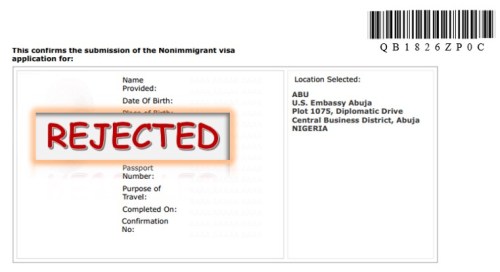
My paper, ‘beyond institutional autonomy: a quadrumvirate interaction theory of civil-military relations’ was accepted for presentation at the 2019 Biennial International Conference of the Inter-University Seminar on Armed Forces and Society scheduled for November 8-10, 2019 at the Hyatt Regency, Reston, Virginia. However, I am unable to attend the conference because I was denied visa at the US Embassy in Abuja, Nigeria. In this entry, I wish to highlight and add my voice to the concerns academics and non-academics, especially those from the ‘Global South’ face in securing visas to enable them attend conferences in the supposed ‘developed world.’ Hence, this entry is a personal reflection on the US visa regime in Nigeria, and its nexus with criminology.
Individual visas are often issued based on the merit of an application and the adequacy of the supporting documents submitted by applicants who are also required to pay certain fees and charges for the application. The issuing authorities would normally consider the criminal background record of an applicant, their previous travel history and the adequacy of funds to cover for the cost of the trip. In some cases, as typical with the US visa regime in Nigeria, applicants are required to present themselves before a consular officer for a visa interview and the decision to issue a visa is at the discretion of the consular officer.
Given this, one would expect that the consular officer would in the least, view/review the supporting documents of an applicant, in addition to asking some pertinent questions. The rationale being that the US visa web-application platform does not provide a link/option for submitting the supporting system prior to the interview. However, this was not the case when I was denied a visa. In fact, the interview barely lasted two minutes, and the following was the ‘interview’ conversation I had with the male consular officer:
Why do you want to go to Reston Virginia? To attend a conference.
What do you intend to do in the conference? I will be presenting a paper, a theory from my PhD research.
Who would pay for the conference and travel fee? The conference organisers and (he interjects with the next question, but I told him I still have another source of income, but he replied saying I had told him enough and that I should answer the next question).
What is your highest academic qualification? A PhD from the University of Stellenbosch, South Africa, I just concluded last December.
What do you do for a living? I just concluded a Postdoctoral Fellowship with the University of Stellenbosch and I have just accepted an appointment with the University of Jos as a Lecturer.
Do you have a family? Yes, a wife and a child, and we are expecting another.
For how long have you been married? 3 years
How old is your child? 1 year and 8 months
What does your wife do for a living? She is a housewife, she looks after the family
Are you travelling alone? Yeah (At this point, he faced his computer keyboard, typed some few words, then turned to me and told me, unfortunately we cannot issue you the visa while handing over a pre-printed form containing the reasons for visa denials).
From this ‘interview’ conversation, two things stood out for me. One is the fact that the consular officer made his decisions without viewing or considering any of my supporting documents and the second was the question, what did I do, say, or answer wrongly?
In terms of the latter, I found nothing wrong with my responses, but I found a huge systemic fault with regards to the former. The internet is rife with complaints from individuals, organisations and recently countries accusing the US of implementing a harsh visa regime which deliberately frustrates and traumatises visa applicants. My web application process in Nigeria is nothing short of this, in fact, I thought it was easier to make heaven than to obtain the US visa from Nigeria.
Having carefully thought about the visa regime in the light of my ‘interview,’ I concluded that the US visa regime is anachronistically atavistic, an exploitative business strategy, or both. My opinion is simply that I was denied visa not because of my responses to the questions but because the consular officer found a questionable impression through observing my face as he had not viewed or considered my supporting documents. For this, I appreciate Cesare Lombroso and one needs not be a Criminologist before knowing that facial impression and appearance are never better yardstick than considering the merits of the supporting documents.
A fair and equitable visa system will consider the merit of an application, the travel history of an applicant (which I have a reasonable one), whether the supporting documents are convincing, the criminal record background, purpose of travel, sufficiency of funds, and the existence of a strong tie with one’s origin. However, this was not the case, and this led me to the business exploitation opinion.
Customarily, when one pays for a service, the norm is to provide quality and effective service worth the value of the money paid or promised, anything short of this is clear exploitation – unfortunately, this is how the US visa regime operates in Nigeria. On the day of my interview, there were at least seventy (70) persons queuing up for theirs early in the morning, but it is not my intention to analyse how much income the US derives from this.
Share this:


A month of Black history through the eyes of a white, privileged man… an open letter
Dear friends,
Over the years, in my line of work, there was a conviction, that logic as the prevailing force allows us to see social situations around (im)passionately, impartially and fairly. Principles most important especially for anyone who dwells in social sciences. We were “raised” on the ideologies that promote inclusivity, justice and solidarity. As a kid, I remember when we marched as a family against nuclear proliferation, and later as an adult I marched and protested for civil rights on the basis of sexuality, nationality and class. I took part in anti-war marches and protested and took part in strikes when fees were introduced in higher education.
All of these were based on one very strongly, deeply ingrained, view that whilst the world may be unfair, we can change it, rebel against injustices and make it better. A romantic view/vision of the world that rests on a very basic principle “we are all human” and our humanity is the home of our unity and strength. Take the environment for example, it is becoming obvious to most of us that this is a global issue that requires all of us to get involved. The opt-out option may not be feasible if the environment becomes too hostile and decreases the habitable parts of the planet to an ever-growing population.
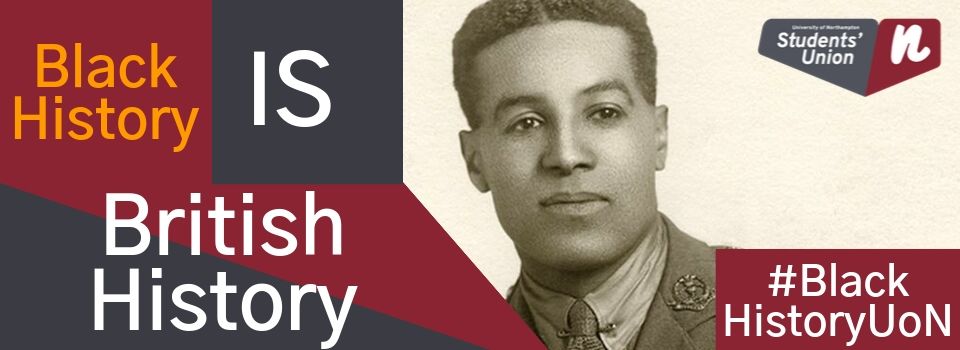
As constant learners, according to Solon (Γηράσκω αεί διδασκόμενος)[1] it is important to introspect views such as those presented earlier and consider how successfully they are represented. Recently I was fortunate to meet one of my former students (@wadzanain7) who came to visit and talk about their current job. It is always welcome to see former students coming back, even more so when they come in a reflective mood at the same time as Black history month. Every year, this is becoming a staple in my professional diary, as it is an opportunity to be educated in the history that was not spoken or taught at school.
This year’s discussions and the former student’s reflections made it very clear to me that my idealism, however well intended, is part of an experience that is deeply steeped in white men’s privilege. It made me question what an appropriate response to a continuous injustice is. I was aware of the quote “all that is required for evil to triumph is for good men to do nothing” growing up, part of my family’s narrative of getting involved in the resistance, but am I true to its spirit? To understand there is a problem but do nothing about it, means that ultimately you become part of the same problem you identify. Perhaps in some regards a considered person is even worse because they see the problem, read the situation and can offer words of solace, but not discernible actions. A light touch liberalism, that is nice and inclusive, but sits quietly observing history written in the way as before, follow the same social discourses, but does nothing to change the problems. Suddenly it became clear how wrong I am. A great need to offer a profound apology for my inaction and implicit collaboration to the harm caused.
I was recently challenged in a discussion about whether people who do not have direct experience are entitled to a view. Do those who experience racism voice it? Of course, the answer is no; we can read it, stand against it, but if we have not experienced it, maybe, just maybe, we need to shut up and let other voices be heard and tell their stories. Black history month is the time to walk a mile in another person’s shoes.
Sincerely yours
M
[1] A very rough translation: I learn, whilst I grow, life-long learning.
Share this:


“Truth” at the age of uncertainty

Research methods taught for undergraduate students is like asking a young person to eat their greens; fraught with difficulties. The prospect of engaging with active research seems distant, and the philosophical concepts underneath it, seem convoluted and far too complex. After all, at some point each of us struggled with inductive/deductive reasoning, whilst appreciating the difference between epistemology over methodology…and don’t get me stated on the ontology and if it is socially proscribed or not…minefield. It is through time, and plenty of trial and error efforts, that a mechanism is developed to deliver complex information in any “palatable” format!
There are pedagogic arguments here, for and against, the development of disentangling theoretical conventions, especially to those who hear these concepts for the first time. I feel a sense of deep history when I ask students “to observe” much like Popper argued in The Logic of Scientific Discovery when he builds up the connection between theory and observational testing.
So, we try to come to terms with the conceptual challenges and piqued their understanding, only to be confronted with the way those concepts correlate to our understanding of reality. This ability to vocalise social reality and conditions around us, is paramount, on demonstrating our understanding of social scientific enquiry. This is quite a difficult process that we acquire slowly, painfully and possibly one of the reasons people find it frustrating. In observational reality, notwithstanding experimentation, the subjectivity of reality makes us nervous as to the contentions we are about to make.
A prime skill at higher education, among all of us who have read or are reading for a degree, is the ability to contextualise personal reality, utilising evidence logically and adapting them to theoretical conventions. In this vein, whether we are talking about the environment, social deprivation, government accountability and so on, the process upon which we explore them follows the same conventions of scholarship and investigation. The arguments constructed are evidence based and focused on the subject rather than the feelings we have on each matter.
This is a position, academics contemplate when talking to an academic audience and then must transfer the same position in conversation or when talking to a lay audience. The language may change ever so slightly, and we are mindful of the jargon that we may use but ultimately we represent the case for whatever issue, using the same processes, regardless of the audience.
Academic opinion is not merely an expert opinion, it is a viewpoint, that if done following all academic conventions, should represent factual knowledge, up to date, with a degree of accuracy. This is not a matter of opinion; it is a way of practice. Which makes non-academic rebuttals problematic. The current prevailing approach is to present everything as a matter of opinion, where each position is presented equally, regardless of the preparation, authority or knowledge embedded to each. This balanced social approach has been exasperated with the onset of social media and the way we consume information. The problem is when an academic who presents a theoretical model is confronted with an opinion that lacks knowledge or evidence. The age-old problem of conflating knowledge with information.
This is aggravated when a climatologist is confronted by a climate change denier, a criminologist is faced with a law and order enthusiast (reminiscing the good-old days) or an economist presenting the argument for remain, shouted down by a journalist with little knowledge of finance. We are at an interesting crossroad, after all the facts and figures at our fingertips, it seems the argument goes to whoever shouts the loudest.
Popper K., (1959/2002), The Logic of Scientific Discovery, tr. from the German Routledge, London
Share this:


Thinking “outside the box”
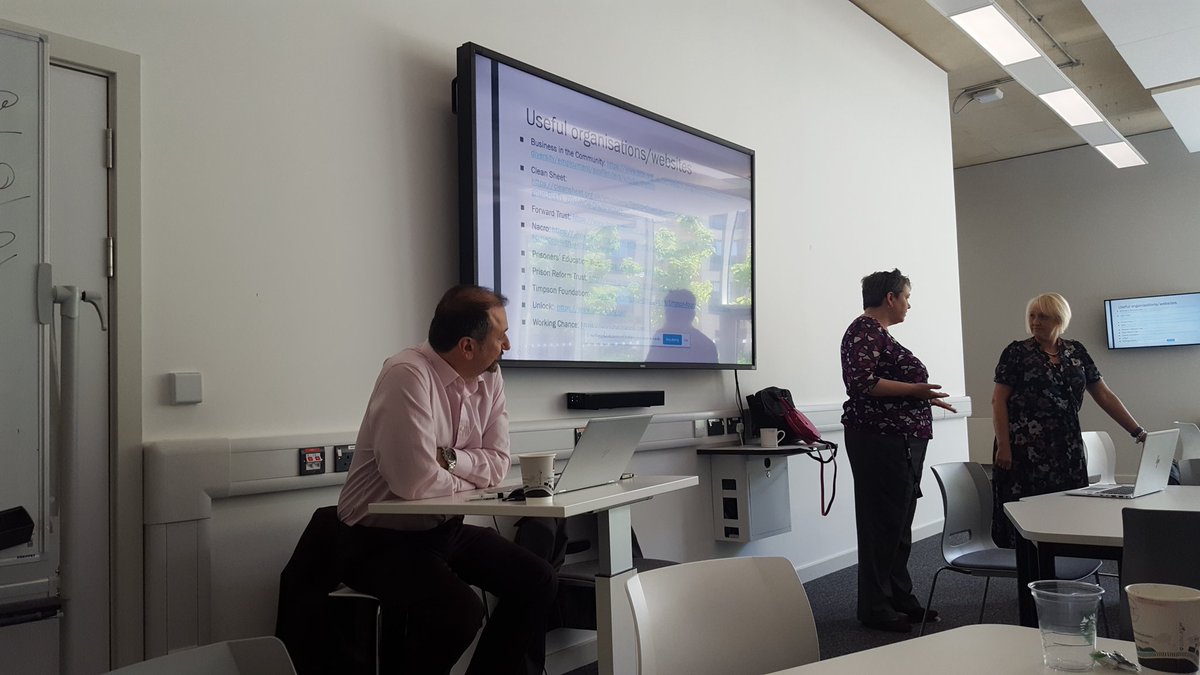
Having recently done a session on criminal records with @paulaabowles to a group of voluntary, 3rd sector and other practitioners I started thinking of the wider implications of taking knowledge out of the traditional classroom and introducing it to an audience, that is not necessarily academic. When we prepare for class the usual concern is the levelness of the material used and the way we pitch the information. In anything we do as part of consultancy or outside of the standard educational framework we have a different challenge. That of presenting information that corresponds to expertise in a language and tone that is neither exclusive nor condescending to the participants.
In the designing stages we considered the information we had to include, and the session started by introducing criminology. Audience participation was encouraged, and group discussion became a tool to promote the flow of information. Once that process started and people became more able to exchange information then we started moving from information to knowledge exchange. This is a more profound interaction that allows the audience to engage with information that they may not be familiar with and it is designed to achieve one of the prime quests of any social science, to challenge established views.
The process itself indicates the level of skill involved in academic reasoning and the complexity associated with presenting people with new knowledge in an understandable form. It is that apparent simplicity that allows participants to scaffold their understanding, taking different elements from the same content. It is easy to say to any audience for example that “every person has an opinion on crime” however to be able to accept this statement indicates a level of proficiency on receiving views of the other and then accommodating it to your own understanding. This is the basis of the philosophy of knowledge, and it happens to all engaged in academia whatever level, albeit consciously or unconsciously.
As per usual the session overran, testament that people do have opinions on crime and how society should respond to them. The intriguing part of this session was the ability of participants to negotiate different roles and identities, whilst offering an explanation or interpretation of a situation. When this was pointed out they were surprised by the level of knowledge they possessed and its complexity. The role of the academic is not simply to advance knowledge, which is clearly expected, but also to take subjects and contextualise them. In recent weeks, colleagues from our University, were able to discuss issues relating to health, psychology, work, human rights and consumer rights to national and local media, informing the public on the issues concerned.
This is what got me thinking about our role in society more generally. We are not merely providing education for adults who wish to acquire knowledge and become part of the professional classes, but we are also engaging in a continuous dialogue with our local community, sharing knowledge beyond the classroom and expanding education beyond the campus. These are reasons which make a University, as an institution, an invaluable link to society that governments need to nurture and support. The success of the University is not in the students within but also on the reach it has to the people around.
At the end of the session we talked about a number of campaigns to help ex-offenders to get forward with work and education by “banning the box”. This was a fitting end to a session where we all thought “outside the box”.
Share this:


How to boil an egg…A criminological issue?

Another academic year is coming close to an end. After the plans and the changes made there is always a little time for reflection to ask what is in a year? The rhetorical question implies that there is an expected answer and that is true, well sometimes! After years serving HE it is becoming clear that things change “τα πάντα ρει”, everything flows as Heraclitus once said. Education is about knowledge and as it progresses, we progress with it.
In previous posts the value of education and reading for a subject like criminology has been argued, but ultimately what does it really mean to complete one year of education in HE? Well if you are on your first year it is the recognition that you can do this! The first step in many more to follow on the road to academic understanding. If you are on your second year you demonstrate perseverance, sticking with the subject you chose, and you continue to read more of it. Finally, if you are on your third year it is the anticipation of completion of a course of study. The successful conclusion of studies that will award you with a title.
This end for some is the end of the formal part of their higher education, whilst for others it is simply the beginning of the end of a longer and more arduous journey in learning. An exam board shall mark this end when all colleagues will read name after name, grade after grade, but this is only part of that story. The other part is the memories on learning that it will launch. I still hear stories of students remembering a lecture with a slide title “Lesbian Vampire Killers” on a session on media and crime which seems to tickle our alumni, or a phrase used in a class again and again for emphasis. Using a metaphor or an example that takes you away from the prescribed values. Some of the readers may remember my question “How long to hard boil an egg?” A question that revealed some of us have limited culinary skills, but the intended purpose was to allow us to look at the question of positionality and context. It only takes a couple of pre vs post- war Italian cookbooks to realise that the question can be answered considering the social situation and the energy requirements of its time. A country famed for its culinary status, but also broken from a second world war that decimated infrastructures and harmed population. Poverty, theft, antisocial behaviour, violence but also recriminations for the incurred destruction became the other effects hidden behind a seemingly random change in a number on a cookbook. *
My personal favourite was going over a criminal profiling case with students of the wrong year who were looking at me rather confused on the content. I shall never of course forget my sex offenders lecture to accounting students (I got the place and time wrong) which according to my bemused colleague who was watching me from the corner an interesting interlude from his session! These little anecdotes do not sustain knowledge, but they remind us how we got to be in that place.
Regardless of the subject of study or its level, all “participants” who engage in higher education gain one significant attribute, that of perspective. The ability to look closely of a idea through the disciplinary lens but also to zoom out and look at the bigger picture, thus making perspective more relevant. Perspective is distance and as we gain more knowledge, the better our judgement becomes in using this lens to zoom in and out. This is what we acquire as we progress through higher education.
*I could also point out the existential symbolism of the egg as the representation of the soul and the time to boil it is a metaphor for torment in the proverbial purgatory…but I will not
Share this:


Teaching Criminology….Cui Bono?

Following several conversations with students and reflecting on another year of studying it got me thinking, what is or can be the quintessentially criminological issue that we can impart onto them? It is always interesting to hear from others how your ideas are transferred into their notes, phrases and general understanding. I think that there are a few things that are becoming clear early on, like the usual amazement of those outside the discipline who hear one studying criminology; a reverence as if the person reading the subject is on a par with those committing the deed. There is a natural curiosity to crime in all walks of life and those seen closer to the topic, attract part of that curiosity.
There are however some more profound issues relating to criminology that are neither clear nor so straightforward. The discipline is an amalgamation of thoughts and theories making it incredibly difficult to pinpoint a generic appreciation for the discipline. Some of us like the social discourses relating to social injustice, a matter traditionally closer to sociology or social work, while others ponder the conceptual dynamics of human behaviour, mostly addressed in philosophical debates, then there are those who find the individual characteristics and personality socio-dynamic dimensions intriguing. These distinct impressions will not only inform our understanding but will also provide each of us with a perspective, a way of understanding criminology at a granular level.
In criminological discourses, informed by law, I used to pose the old Latin question: Cui bono (who benefits)? A question posed by the old legal experts to trace liability and responsibility of the act committed. Obviously in their view crime is a choice committed freely by a deviant mind. But then I was never a legal expert, so my take on the old question was rather subversive. The question of who benefits can potentially lay the question of responsibility wide open, if it is to be looked from a social harm perspective. The original question was incredibly precise to identify a person for the benefit of a trial. That’s the old criminal evidence track.
Taking this question outside the forensic setting and suddenly this becomes quite a loaded query that can unpack different responses. Cui bono? Why are we talking about drug abuse as a crime and not about tax avoidance? Why is the first regarded a crime, whilst the second is simply frowned upon? Cui bono? When we criminalise the movement of people whose undocumented by we have very little information for those who have procured numerous properties in the country? If our objection is on transparency of movement then there is clearly a difference of how this is addressed. Cui bono? When we identify violence at interpersonal level and we have the mechanisms to suppress it, but we can engage in state violence against another state without applying the same mechanisms? If our objection is the use of violence, this is something that needs to be addressed regardless of the situation, but it is not. Ironically some of the state violence, may contribute to the movement of people, may contribute to the exploitation of population and to the use of substances of those who returned home broken from a violence they embraced.
Our criminology is merely informed from our perspective and it is my perspective that led me to those thoughts. I am very sure that another colleague would have been making a series of different connections when asked “Cui Bono?”
Share this:


Celebrations and Commemorations: What to remember and what to forget

Today is Good Friday (in the UK at least) a day full of meaning for those of the Christian faith. For others, more secularly minded, today is the beginning of a long weekend. For Blur (1994), these special days manifest in a brief escape from work:
Bank holiday comes six times a year
Days of enjoyment to which everyone cheers
Bank holiday comes with six-pack of beer
Then it’s back to work A-G-A-I-N
(James et al., 1994).
However, you choose to spend your long weekend (that is, if you are lucky enough to have one), Easter is a time to pause and mark the occasion (however, you might choose). This occasion appears annually on the UK calendar alongside a number other dates identified as special or meaningful; Bandi Chhorh Divas, Christmas, Diwali, Eid al-Adha, Father’s Day, Guys Fawkes’ Night, Hallowe’en, Hanukkah, Hogmanay, Holi, Mothering Sunday, Navaratri, Shrove Tuesday, Ramadan, Yule and so on. Alongside these are more personal occasions; birthdays, first days at school/college/university, work, graduations, marriages and bereavements. When marked, each of these days is surrounded by ritual, some more elaborate than others. Although many of these special days have a religious connection, it is not uncommon (in the UK at least) to mark them with non-religious ritual. For example; putting a decorated tree in your house, eating chocolate eggs or going trick or treating. Nevertheless, many of these special dates have been marked for centuries and whatever meanings you apply individually, there is an acknowledgement that each of these has a place in many people’s lives.
Alongside these permanent fixtures in the year, other commemorations occur, and it is here where I want to focus my attention. Who decides what will be commemorated and who decides how it will be commemorated? For example; Armistice Day which in 2018 marked 100 years since the end of World War I. This commemoration is modern, in comparison with the celebrations I discuss above, yet it has a set of rituals which are fiercely protected (Tweedy, 2015). Prior to 11.11.18 I raised the issue of the appropriateness of displaying RBL poppies on a multi-cultural campus in the twenty-first century, but to no avail. This commemoration is marked on behalf of individuals who are no longing living. More importantly, there is no living person alive who survived the carnage of WWI, to engage with the rituals. Whilst the sheer horror of WWI, not to mention WWII, which began a mere 21 years later, makes commemoration important to many, given the long-standing impact both had (and continue to have). Likewise, last year the centenary of (some) women and men gaining suffrage in the UK was deemed worthy of commemoration. This, as with WWI and WWII, was life-changing and had profound impact on society, yet is not an annual commemoration. Nevertheless, these commemoration offer the prospect of learning from history and making sure that as a society, we do much better.
Other examples less clear-cut include the sinking of RMS Titanic on 15 April 1912 (1,503 dead). An annual commemoration was held at Belfast’s City Hall and paying guests to the Titanic Museum could watch A Night to Remember. This year’s anniversary was further marked by the announcement that plans are afoot to exhume the dead, to try and identify the unknown victims. Far less interest is paid in her sister ship; RMS Lusitania (sank 1915, 1,198 dead). It is difficult to understand the hold this event (horrific as it was) still has and why attention is still raised on an annual basis. Of course, for the families affected by both disasters, commemoration may have meaning, but that does not explain why only one ship’s sinking is worthy of comment. Certainly it is unclear what lessons are to be learnt from this disaster.
Earlier this week, @anfieldbhoy discussed the importance of commemorating the 30th anniversary of the Hillsborough Disaster. This year also marks 30 years since the publication of MacPherson (1999) and Monday marks the 26th anniversary of Stephen Lawrence’s murder. In less than two months it will two years since the horror of Grenfell Tower. All of these events and many others (the murder of James Bulger, the shootings of Jean Charles de Menezes and Mark Duggan, the Dunblane and Hungerford massacres, to name but a few) are familiar and deemed important criminologically. But what sets these cases apart? What is it we want to remember? In the cases of Hillsborough, Lawrence and Grenfell, I would argue this is unfinished business and these horrible events remind us that, until there is justice, there can be no end.
However, what about Arthur Clatworthy? This is a name unknown to many and forgotten by most. Mr Clatworthy was a 20-year-old borstal boy, who died in Wormwood Scrubs in 1945. Prior to his death he had told his mother that he had been assaulted by prison officers. In the Houses of Parliament, the MP for Shoreditch, Mr Thurtle told a tale, familiar to twenty-first century criminologists, of institutional violence. If commemoration was about just learning from the past, we would all be familiar with the death of Mr Clatworthy. His case would be held up as a shining example of how we do things differently today, how such horrific events could never happen again. Unfortunately, that is not the case and Mr Clatworthy’s death remains unremarked and unremarkable. So again, I ask the question: who decides what it is worthy of commemoration?
Selected Bibliography:
James, Alexander, Rowntree, David, Albarn, Damon and Coxon, Graham, (1994), Bank Holiday, [CD], Recorded by Blur in Parklife, Food SBK, [RAK Studios]
Share this:


The Unbreakable Bond of Criminology

Every student has a different experience in their studies, be it through what they have studied, who they studied with or even where they studied. “Team Cops and Robbers” studied the same degree, the same modules at UON, yet we had different experiences. However what we share (and are all very fond of) is how positive the experience was, tackling the stresses (and joys) of the degree as a trio. We each offer a brief overview of our experience as a member of “Team Cops and Robbers”, who graduated in 2015 and still remain very involved in each other’s lives…
Jes: I was a late comer to Team Cops and Robbers, as Emma and Leona had already bonded without me (rude I know!). We were thrown together in Drew’s 2nd year History module, where there were only a few Crim students – so they didn’t get much of a choice with regards to me joining, the then, duo. And the rest as they say is history! What stemmed from there is quite remarkable; we all had own our strengths when it came to Crim. My recollection is Emma knew everything about everything, Leona kept us all motivated and on top of our seminar preparation and I kept us glued to the library and bossed us around -especially with group work (my car Geoffrey was an unofficial member of the gang taking us to and from Park campus). Although we took the same modules, due to our differing interests, we all did different assignment questions and had very different ways of writing and tackling assessments. In my third year, I distinctly remember Emma and Leona reminding me to take time to myself and to not live 24/7 in the library; and had they not been there to encourage me to breathe, it is likely I would have burned out! They were not afraid to question my views, or understanding, or challenge my bossy attitude when it came to group work, for which I am very grateful! And still today, even though we are no longer studying together, they keep me motivated with the MSc, sending me motivational gifts as a reminder that even though they are not studying with me, I am not alone! My academic journey would have been very different had it not been for our trio, and likely would not have been as successful.
Leona: Sometimes being in class with friends can be detrimental as you end up spending so much time having fun, you end up forgetting the work side of uni. However when you meet friends who are so determined to do well and hard-working, it can really motivate you to push yourself. Myself, Jes and Emma became a power trio; encouraging each other, motivating each other and always making sure we were working together for group projects. We are all completely different when it comes to learning but I think these differences really helped us. Learning from them really helped me to improve my own standard of work, and having the girls’ input and guidance throughout, really encouraged me and helped me gain confidence in my own voice. Plus it made doing all the studying we did much more bearable. I’m sure sometimes it took us longer to get through everything as we would be half working, half chatting, but as a trio it meant we could help each other if we got stuck or go for coffee breaks if we were bored or unmotivated. Having Jes and Emma there with me meant there was always someone there to go through notes with, always someone to explain something in a different way if I didn’t fully understand something, always someone to motivate me when I was exhausted and didn’t feel like working any more. It meant that my viewpoint expanded as I learned from their experiences and that once we had all finished writing our essays we could share them with each other to check, critique and make suggestions for improvement. But more than all that, it meant there was always someone there to help you balance the workload, someone to tell you when to take a break, and to “day drink” in the SU, explore winter wonderland, or have a Disney film day. During my time at uni these girls inspired me to work harder, and to really challenge myself to improve on everything I was doing. Without them there to encourage me and spur me on, I don’t think I would have come out with the grade I did, and I am certain that my uni experience wouldn’t have been half as memorable.
Emma: Meeting Jes and Leona was one of the best things about university. Not just because they are now two very dear friends of mine, but because we were vital to each other’s sanity at uni. I met Leona first in welcome week with a very interesting exchange asking if I was at the right seminar and proceeding to tell her my name, that I was from the south west and that I liked reading about serial killers. Leona reciprocated with the main difference being that she was from the north and from there our friendship blossomed. Jes was some girl who sat with another group of people. It wasn’t until 2nd year that Jes really came into our friendship group and “Cops and Robbers” was formed. We all had strengths and weaknesses that helped us when it came to group work. Jes was always super, super organised, having her essays completed with weeks to go. Leona was always bubbly and would follow Jes with completing her essay with time to spare. Me… I would research and collect quotes and references and then write my essays with 48-24hrs to go, as I liked the time pressure. This changed in my 3rd year though as being around Leona and Jes, they moulded me and proof read my concepts and challenged me back on things. Any time we had group work, I knew we would do well because as a trio we kicked ass! We did not always have the same views in our seminars and would often debate but we would always leave as friends. Best advice for getting through university sane, is to find people who are fun, you get on with and drive you to be the best.
Hopefully what is clear from each of our perspectives is how important we were to keeping each other (relatively) sane! Your friendship groups during your studies are essential to keeping you happy, but also keeping you motivated! Whilst it is independent studies, and at the end of the day is YOUR degree; the input from friends and family will shape your own ability and attitude. If you find the right group, hopefully you will find that they push you, support you and challenge you!
Share this:


Am I a criminologist? Are you a criminologist?

I’m regularly described as a criminologist, but more loathe to self-identify as such. My job title makes clear that I have a connection to the discipline of criminology, yet is that enough? Can any Tom, Dick or Harry (or Tabalah, Damilola or Harriet) present themselves as a criminologist, or do you need something “official” to carry the title? Is it possible, as Knepper suggests, for people to fall into criminology, to become ‘accidental criminologists’ (2007: 169). Can you be a criminologist without working in a university? Do you need to have qualifications that state criminology, and if so, how many do you need (for the record, I currently only have 1 which bears that descriptor)? Is it enough to engage in thinking about crime, or do you need practical experience? The historical antecedents of theoretical criminology indicate that it might not be necessary, whilst the existence of Convict Criminology suggests that experiential knowledge might prove advantageous….
Does it matter where you get your information about crimes, criminals and criminal justice from? For example, the news (written/electronic), magazines, novels, academic texts, lectures/seminars, government/NGO reports, true crime books, radio/podcasts, television/film, music and poetry can all focus on crime, but can we describe this diversity of media as criminology? What about personal experience; as an offender, victim or criminal justice practitioner? Furthermore, how much media (or experience) do you need to have consumed before you emerge from your chrysalis as a fully formed criminologist?
Could it be that you need to join a club or mix with other interested persons? Which brings another question; what do you call a group of criminologists? Could it be a ‘murder’ (like crows), or ‘sleuth’ (like bears), or a ‘shrewdness’ (like apes) or a ‘gang’ (like elks)? (For more interesting collective nouns, see here). Organisations such as the British, European and the American Criminology Societies indicate that there is a desire (if not, tradition) for collectivity within the discipline. A desire to meet with others to discuss crime, criminality and criminal justice forms the basis of these societies, demonstrated by (the publication of journals and) conferences; local, national and international. But what makes these gatherings different from people gathering to discuss crime at the bus stop or in the pub? Certainly, it is suggested that criminology offers a rendezvous, providing the umbrella under which all disciplines meet to discuss crime (cf. Young, 2003, Lea, 2016).
Is it how you think about crime and the views you espouse? Having been subjected to many impromptu lectures from friends, family and strangers (who became aware of my professional identity), not to mention, many heated debates with my colleagues and peers, it seems unlikely. A look at this blog and that of the BSC, not to mention academic journals and books demonstrate regular discordance amongst those deemed criminologists. Whilst there are commonalities of thought, there is also a great deal of dissonance in discussions around crime. Therefore, it seems unlikely that a group of criminologists will be able to provide any kind of consensus around crime, criminality and criminal justice.
Mannheim proposed that criminologists should engage in ‘dangerous thoughts’ (1965: 428). For Young, such thinking goes ‘beyond the immediate and the pragmatic’ (2003: 98). Instead, ‘dangerous thoughts’ enable the linking of ‘crime and penality to the deep structure of society’ (Young, 2003: 98). This concept of thinking dangerously and by default, not being afraid to think differently, offers an insight into what a criminologist might do.
I don’t have answers, only questions, but perhaps it is that uncertainty which provides the defining feature of a criminologist…
References:
Knepper Paul, (2007), Criminology and Social Policy, (London: Sage)
Lea, John, (2016), ‘Left Realism: A Radical Criminology for the Current Crisis’, International Journal for Crime, Justice and Social Democracy, 5, 3: 53-65
Mannheim, Hermann, (1965), Comparative Criminology: A Textbook: Volume 2, (London: Routledge and Kegan Paul)
Young, Jock, (2003), ‘In Praise of Dangerous Thoughts,’ Punishment and Society, 5, 1: 97-107

 Thoughts from the criminology team