
Home » Criminological theory
Category Archives: Criminological theory

Not reading criminology? That’s criminal!

There are two kinds of criminology conversations I get embroiled in these days! Those with people who read criminology where we discuss many social/cultural phenomena under a specific lens or those with people who find criminology interesting, but consume popular crime instead. The first group with varying level of engagement is beginning to decode some tell-tell signs in current events, using their knowledge of the discipline, as a deciphering mechanism. The second group is quite different. Their understanding of crime is based on dramatisations and literary conventions around plots and characters. Even real crime is harbouring under the guise of some “exclusive” journalistic exposé…far from any basic criminological understanding.
Years ago, a colleague from Sociology told me a story regarding a family event. They were completing their PhD in the discipline, and they were questioned by an elderly person, as to what they would do when they finished their thesis. They responded in the usual way many graduate students tend to, about hoping to get into academia or get some funding for some further research. The elderly person didn’t seem satisfied…. they prompted further. What will be your specialism? What will you be able to tell people that you are proficient in? Society and people, the colleague replied! That’s hardly a skill, the old relative replied; we all live in society! The colleague was equally intrigued and offended. They thought that by offering a succinct response it would have helped their relative to understand without being confounded with notions on symbolic interactionism and ethnomethodology. This was a little anecdote that resonates with many social scientists, criminologists included, that whilst they try to explore people and culture around them, they are becoming distant to the actual people around them.
The degree of challenge in recent years seems to increase for disciplines where people in general have a vague idea of what it is. Many try to use psychological terms to explain other people’s behaviours, without realty appreciating, the clinical and scientific conditions of the term. That is relevant to criminology too. The representation of crime for public consumption has introduced some of the discipline’s terms into everyday parlance. From forensic terms on profiling, to the origins of criminality, expectations on crime are forged. A criminologist’s reaction to popular criminology pundits tends to be, well not quite, only to be met with disbelief of the criminology they know!
One of the ways to appeal to those interested in popular criminology and take them to the discipline will be to add some facts and figures that promote reality. Perhaps but that has been done before but only to give a gloss of “legitimacy” in fiction. It makes it more compelling, but it doesn’t really offer the depth of knowledge. To understand criminology, one must read criminology. The history is filled with colleagues who brought their imagination to the discipline. From Bonger’s Criminality and Economic Conditions to Jock Young and The Criminological Imagination there are books and papers that are waiting to be read by a new audience to try to figure out these ideas.
Maybe we all live in society and heard about crime and even experienced it, but to understand it we need some criminology. The discipline, as with all social sciences, is a dialogue between people ready to carry forward the next constructs that shall appear as crimes. If we read them and take part in these conversations maybe the area of harsh punishments, exclusion and persecution may not be as appealing. We are an academic discipline but at the same time we open the discussion to our community. So if you are neither a student, graduate, nor fellow academic and you are interested in criminology, why don’t you come to visit? https://www.northampton.ac.uk/about-us/contact-us/open-days/
Share this:


Crime II: Nature and Nurture?
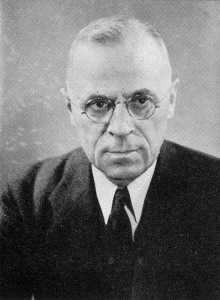
Fifty years after Lombroso’s theory of the “born criminal” an American criminologist explored the origins of criminality from a different perspective. For Edwin Sutherland people weren’t born criminal but more likely influenced by their environment. Differential association became a theory that changed the focus from biology to environment. This change signified the change of focus within criminology from biological attributes to social features.
This change, whilst it appears to have capture a wider social sciences debate at the time is also the outcome of trying to understand a world in motion. Sutherland’s theory comes in the early 20th century after the First World War and a massive economic crash. These placed in doubt the scientific and political economy of the time, putting many of these earlier ideas to the test. Popular movements challenged the authority of the state and the way hegemony suppressed people. Differential association was exploring how people learn crime by observing others; it becomes what Kornhouser called a ‘cultural deviance theory’.
What Sutherland articulated is that crime is learned through group conflict, again attempting to explain all types of crime like the biological theories before. The 20th century with its fast pace, European (World) wars, was the embodiment of modernity, progression and change. The world outside Europe began to rise against colonial rule, whilst civil rights became a rallying objective for many disenfranchised groups. In most countries worldwide women got the vote in the 20th century whilst, many countries recognised unions, and civil rights organisations, a consequence of people’s mobilisation.
It comes as no surprise then that differential association was a theory of crime that tried to account for social change and understand criminality as a process that moves within this change. The foundations of the theory in its simplest form are straightforward, covered in 9 main points:
1. Criminal behavior is learned from other individuals.
2. Criminal behavior is learned in interaction with other persons in a process of communication.
3. The principle part of the learning of criminal behavior occurs within intimate personal groups.
4. When criminal behavior is learned, the learning includes (a) techniques of committing the crime, which are sometimes very complicated, sometimes simple; (b) the specific direction of motives, drives, rationalizations, and attitudes.
5. The specific direction of motives and drives is learned from definitions of the legal codes as favorable or unfavorable.
6. A person becomes delinquent because of an excess of definitions favorable to violation of law over definitions unfavorable to violation of the law.
7. Differential associations may vary in frequency, duration, priority, and intensity.
8. The process of learning criminal behavior by association with criminal and anti-criminal patterns involves all of the mechanisms that are involved in any other learning.
9. While criminal behavior is an expression of general needs and values, it is not explained by those needs and values, since non-criminal behavior is an expression of the same needs and values.
The theory is more than a compilation of points and citing them is informative, but it doesn’t really explain the reach and extent. As a general theory of crime it can account for violent crime, theft and even white collar crimes. This reach of theory coincided with the wider discussion on “normative conflict” that focused on cultures. As discussions on cultural dominance, subcultures and the role of social groups became a sociological and criminological point these ideas introduced by Sutherland seemed to bare relevance.
There were questions already regarding the theory’s basis in terms of clarity as a cultural deviance theory, when culture focused away from poverty and social struggles. The cultural conflict seemed to resonate with certain crime categories, but it could not account for harm, leaving zemiologists to doubt the accuracy of its scope as theory. Furthermore, whilst the focus moved on from an arbitrary biology to the role of the environment some of the fundamental problems expected to be resolved in a general theory of crime remained unanswered.
So what is the answer? We can safely say that crime and most importantly criminality isn’t the product of a singularity nor its binary. How can we account for example for a social phenomenon whose definition of crime (in some instances) relies on law. A mechanism that the establishment uses to safeguard its privileges and position. The definitional factors therefore ought to transcend general conventions of biology or social interaction. Often they don’t, they merely describe the phenomenon but in closed cultural formats. There is a much more interesting and complex explanation that take us away from this binary. If you are more curious and you want to know more, why not join a criminology course and see if you can get the answer you expect or not. Criminology is a fascinating discipline not because we talk blood and bones but because we reflect on the current state of crime and imagine a world of crime (or free of crime) in the future. If you wish to share that imagination you can but join us!
https://www.northampton.ac.uk/courses/criminology-ba-hons/ https://www.northampton.ac.uk/courses/criminology-phd/ https://www.northampton.ac.uk/courses/criminology-with-psychology-ba-hons/ https://www.northampton.ac.uk/blog/why-i-chose-criminology/
Share this:

Crime I: Nature or Nurture?
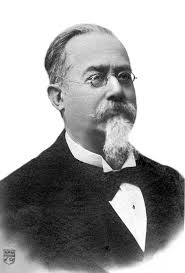
This is a two-part blog on embracing some of the criminological theory origin stories in the Western hemisphere. Is crime the product of bad genes or bad society? Are we born or made criminal?
In this week we shall be exploring our understanding of biological theories originating back in the 19th century with the “born criminal”. The following week we will look at the role of the environment.
The born criminal.
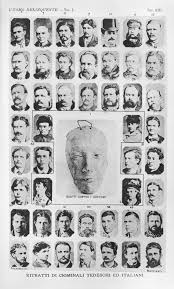
In 1871 Cesare Lombroso became the director at the Pesaro Mental Health Hospital (asylum) that housed the clinically insane. In that environment he examined the anatomical anomalies of residents in laboratory conditions. The era of the scientific exploration of deviance had begun. These meticulous explorations of bodily features and skulls formed the basis for his later thesis on The Born Criminal. The basis of his criminal population were residents of the asylum. His control group (i.e. those deemed non-criminal) were soldiers. Later, these were combined with the population of inmate prison population Lombroso and his associates visited. As he assumed an academic role in one of the finest Italian universities the world read his seminal publication of L’uomo delinquente {The Born Criminal] .Which in 1876 became one of the publications that influence the work of its contemporaries. In later years studied in exactly the same way. criminality in women using sex workers and prisoners as his research population cumulating into the 1893 publication of La Donna Delinquente: La prostituta e la donna normale [The Criminal Woman: The Prostitute and the Normal Woman.
His theoretical reach transcended borders and became widely read in the English-speaking world. This is an origin story according to numerous textbooks about the biological understanding of criminality. When embellished with some of the original quotes this becomes a theory of crime that explains different criminalities and makes the most significant leap that combines scientific rationale with crime. The methodology of anthropometry is a careful measuring of human features, prominently skulls! The main theoretical “innovation” was the recognition of a state of atavism; a regression onto a prior evolutionary stage for those engaged in crime.
A theory of crime on the born criminal seemed as a logical step at a time hailed as an era of discovery and exploration. A time that social and political movements in Europe asked profound questions about self and society. This narrative of course largely overlooks that whilst West European and US philosophers are posing these questions their elites and establishment are preoccupied with colonialism and dominance. In fact, it is the time European conflict around the world for dominance intensified. By the late 19th century, the European powers will try to manage their dominance in other continents by carving the world according to their own interests. The Berlin conference of 1884-85 is the culmination of such European competition and led to the split of Africa into zones of colonial influence.
In what way is The Born Criminal related with colonialism?
The theory of the “born criminal” breaks down humanity into two; the “normals” and the “atavists” which conveniently separates us from them. The criminal becomes the outcome of a lack of civilisation that can be seen in their physical features. There is history in separating people for the sake of exploitation, subjugation and even genocide. In this context of using civilisation (solely European) as the feature of separation is something previously seen in the colonisation of the Americas. When the European explorers landed in a new (for their map’s) continent the question of whom it belongs to was answered using religious decree. Several popes described the native population of these “discovered lands” as uncivilised and unworthy of human rights. It was the papal “Doctrine of Discovery” that denied the indigenous people rights to their land because uncivilised, faithless people (calling it terra nullus or empty land) do not count. Therefore, this separation for discrimination is not new, but Lombroso brought some scientific veneer to it.
It is important to remind all that “the born criminal” theory was widely discredited already in the early 20th century, when data analysis found no support for atavism and the biological features seemingly associated with criminality. Yet still this approach seems to capture even today some interest in the collective criminological imagination. Can you tell the prospective criminality reflected in someone’s gaze? It is a question that people still wonder, despite any lack of empirical or scientific data. The line of separating criminals from non-criminal provides an arbitrary differentiation that offers some clarity of how criminals should look, in a similar fashion to separating the “civilised” from the “savages”. In this overreaching correlation crime becomes the act of the uncivilised. It can also be flipped over and the uncivilised are the criminals contributing to the continuous fear of those who see the foreigner with suspicion.
A theory about the biological origins on crime that has offered us an explanation of the born criminal that has no scientific evidence but carries populist imagination because we take comfort in differentiating people. Next week we shall be exploring a theory that explores of the environmental factors of crime.
Share this:


The future of criminology

If you have an alert on your phone then a new story may come with a bing! the headline news a combination of arid politics and crime stories. Sometimes some spicy celebrity news and maybe why not a scandal or two. We are alerted to stories that bing in our phone to keep ourselves informed. Only these are not stories, they are just headlines! We read a series of headlines and form a quick opinion of anything from foreign affairs, transnational crime, war, financial affairs to death. We are informed and move on.
There is a distinction, that we tend not to make whenever we are getting our headline alerts; we get fragments of information, in a sea of constant news, that lose their significance once the new headline appears. We get some information, but never the knowledge of what really happened. We hear of war but we hardly know the reasons for the war. We read on financial crisis but never capture the reason for the crisis. We hear about death, usually in crime stories, and take notice of the headcount as if that matters. If life matters then a single loss of life should have an impact that it deserves irrespective of origin.
After a year that forced me to reflect deeply about the past and the future, I often questioned if the way we consume information will alter the way we register social phenomena and more importantly we understand society and ourselves in it. After all crime stories tend to be featured heavily in the headlines. Last time I was imagining the “criminology of the future” it was terrorism and the use of any object to cause harm. That was then and now some years later we still see cars being used as weapons, fear of crime is growing according to the headlines that even the official stats have paused surveying since 2017! Maybe because in the other side of the Atlantic the measurement of fear was revealed to be so great that 70% of those surveyed admitted being afraid of crime, some of whom to the extent that changes their everyday life.
We are afraid of crime, because we read the headlines. If knowledge is power, then the fragmented information is the source of ambiguity. The emergence of information, the reproduction of news, in some cases aided by AI have not provided any great insight or understanding of what is happening around us. A difference between information and knowledge is the way we establish them but more importantly how we support them. In a world of 24/7 news updates, we have no ideological appreciation of what is happening. Violence is presented as a phenomenon that emerges under the layers of the dark human nature. That makes is unpredictable and scary. Understandably so…
This a representation of violence devoid of ideology and theory. What is violence in our society does not simply happens but it is produced and managed through the way it is consumed and promoted. We sell violence, package it for patriotic fervour. We make defence contracts, selling weapons, promoting war. In society different social groups are separated and pitted against each other. Territory becomes important and it can be protected only through violence. These mechanisms that support and manage violence in our society are usually omitted. A dear colleague quite recently reminded me that the role of criminology is to remind people that the origins of crime are well rooted in our society in the volume of harm it inflicts.
There is no singular way that criminology can develop. So far it appears like this resilient discipline that manages to incorporates into its own body areas of work that fiercely criticised it. It is quite ironic for the typical criminology student to read Foucault, when he considered criminology “a utilitarian discipline”! Criminology had the last laugh as his work on discipline and punishment became an essential read. The discipline seems to have staying power but will it survive the era of information? Most likely; crime data originally criticised by most, if not all criminologists are now becoming a staple of criminological research methods. Maybe criminology manages to achieve what sociology was doing in the late 20th century or maybe not! Whatever direction the future of criminology takes it will be because we have taken it there! We are those who ought to take the discipline further so it would be relevant in years to come. After all when people in the future asked you what did you do…you better have a good answer!
Share this:


Criminology in the neo-liberal milieu

I do not know whether the title is right nor whether it fits what I want to say, but it is sort of catchy, well I think so anyway even if you don’t. I could never have imagined being capable of thinking up such a title let alone using words such as ‘milieu’ before higher education. I entered higher education halfway through a policing career. I say entered; it was more of a stumble into. A career advisor had suggested I might want to do a management diploma to advance my career, but I was offered a different opportunity, a taster module at a ‘new’ university. I was fortunate, I was to renew an acquaintance with Alan Marlow previously a high-ranking officer in the police and now a senior lecturer at the university. Alan, later to become an associate professor and Professor John Pitts became my mentors and I never looked back, managing to obtain a first-class degree and later a PhD. I will be forever grateful to them for their guidance and friendship. I had found my feet in the vast criminology ocean. However, what at first was delight in my achievements was soon to be my Achilles heel.
Whilst policing likes people with knowledge and skills, some of the knowledge and skills butt up against the requirements of the role. Policing is functional, it serves the criminal justice system, such as it, and above all else it serves its political masters. Criminology however serves no master. As criminologists we are allowed to shine our spotlight on what we want, when we want. Being a police officer tends to put a bit of a dampener on that and required some difficult negotiating of choppy waters. It felt like I was free in a vast sea but restrained with a life ring stuck around my arms and torso with a line attached so as to never stray too far from the policing ideology and agenda. But when retirement came, so too came freedom.
By design or good luck, I landed myself a job at another university, the University of Northampton. I was interviewed for the job by Dr @manosdaskalou., along with Dr @paulaabowles (she wasn’t Dr then but still had a lot to say, as criminologists do), became my mentors and good friends. I had gone from one organisation to another. If I thought I knew a lot about criminology when I started, then I was wrong. I was now in the vast sea without a life ring, freedom was great but quite daunting. All the certainties I had were gone, nothing is certain. Theories are just that, theories to be proved, disproved, discarded and resurrected. As my knowledge widened and I began to explore the depths of criminology, I realised there was no discernible bottom to knowledge. There was only one certainty, I would never know enough and discussions with my colleagues in criminology kept reminding me that was the case.
Why the ‘neo-liberal milieu’ you might ask, after all this seems to be a romanticised story about a seemingly successful transition from one career to another. Well, here’s the rub of it, universities are no different to policing, both are driven, at an arm’s length, by neo liberal ideologies. The business is different but subjugation of professional ideals to managerialist ideology is the same. Budgets are the bottom line; the core business is conducted within considerable financial constraints. The front-line staff take the brunt of the work; where cuts are made and processes realigned, it is the front-line staff that soak up the overflow. Neo-Taylorism abounds, as spreadsheets to measure human endeavour spring up to aide managers both in convincing themselves, and their staff, that more work is possible in and even outside, the permitted hours. And to maintain control, there is always, the age-old trick of re-organisation. Keep staff on their toes and in their place, particularly professionals.
The beauty of being an academic, unlike a police officer, is that I can have an opinion and at least for now I’m able to voice it. But such freedoms are under constant threat in a neo-liberal setting that seems to be seeping into every walk of life. And to be frank and not very academic, it sucks!
Share this:


Concrete Jungle

The 6th February 2025 marked what would have been the 80th birthday of Bob Marley. Despite his passing at the age of 36, his iconic legacy remains through various means; from his music being played and passed down from generation to generation, to the work of his wife, children and grandchildren that work to keep his message and music alive.
I myself was introduced to the music of Bob Marley at a young age by my father. My father played bass guitar in a band and music in our household was very important and a way in which we bonded. My father also had the pleasure to watch Bob Marley play live in the 1970s.
Whilst Bob Marley and Bob Marley and the Wailers have a massive catalogue in which I have many favourites, I wanted to share a personal favourite that may be slightly less known.
I’ve been getting first year students to choose songs and then getting them to try to apply criminological theories that link to the song. I think this would be a good way of getting them thinking and applying their knowledge.
Concrete Jungle by Bob Marley and the Wailers
I love this song for many reasons which I will mention briefly.
Firstly, the lyrics are emotive and powerful. The introductory lyrics state:
No sun will shine in my day today.
The high yellow moon won’t come out to play.
Darkness has covered my light
and has changed my day into night!
These initial lyrics highlight the plight of many individuals living in Kingston, Jamaica at the time. It alludes to the lack of resources, opportunities and hope.
The song continues in this vein
Must be somewhere (sweet life) to be found (out there somewhere for me)
Instead of a concrete jungle
Where the living is harder
Oh man, you’ve got to do your best, yeah (concrete jungle)
No chains around my feet but I’m not free.
I know I am bound here in captivity.
And I’ve never known happiness.
The lyrics are deep and meaningful and Bob Marley sings them with such unrivalled conviction, pain and emotion.
Another poignant lyric in the song is:
I’ve got to pick myself from off the ground, yeah
In this yah concrete jungle
These lyrics highlight two things to me, the bitter feeling of knowing no one is there to help but themselves and second, the sheer resilience of individuals in such situations that pick themselves up from the disadvantage, poverty, and discrimination they face.
Whilst Bob Marley’s voice is unmatched, a moment must be spared to discuss the background vocals, the bass guitar and the guitar solos. Peter Tosh and Bunny Wailer’s background vocals are just as important and the higher key provides a great contrast.
Additionally, the bass guitar in this song is an important constant throughout the song, there in the background but still a key element. The guitar solo also adds an extra element to the song and arguably moves this song beyond the genre of reggae to the realm of rock and perhaps a new audience. It’s no wonder rock bands at the time were influenced by reggae music and vice versa. A good example being The Clash’s version of ‘Police and Thieves’, originally sung by Junior Murvin.
So if you have time, listen to the song, maybe a few tunes as each time you may hear and appreciate different elements of the song. I particularly encourage you to watch the performance of Concrete Jungle on The Old Grey Whistle Test, which can be found on YouTube. The live performance shows the emotion in a new way!
Share this:


25 years of Criminology

When the world was bracing for a technological winter thanks to the “millennium bug” the University of Northampton was setting up a degree in Criminology. Twenty-five years later and we are reflecting on a quarter of a century. Since then, there have been changes in the discipline, socio-economic changes and wider changes in education and academia.
The world at the beginning of the 21st century in the Western hemisphere was a hopeful one. There were financial targets that indicated a raising level of income at the time and a general feeling of a new golden age. This, of course, was just before a new international chapter with the “war on terror”. Whilst the US and its allies declared the “war on terror” decreeing the “axis of evil”, in Criminology we offered the module “Transnational Crime” talking about the challenges of international justice and victor’s law.
Early in the 21st century it became apparent that individual rights would take centre stage. The political establishment in the UK was leaving behind discussions on class and class struggles and instead focusing on the way people self-identify. This ideological process meant that more Western hemisphere countries started to introduce legal and social mechanisms of equality. In 2004 the UK voted for civil partnerships and in Criminology we were discussing group rights and the criminalisation of otherness in “Outsiders”.
During that time there was a burgeoning of academic and disciplinary reflection on the way people relate to different identities. This started out as a wider debate on uniqueness and social identities. Criminology’s first cousin Sociology has long focused on matters of race and gender in social discourse and of course, Criminology has long explored these social constructions in relation to crime, victimisation and social precipitation. As a way of exploring race and gender and age we offered modules such as “Crime: Perspectives of Race and Gender” and “Youth, Crime and the Media”. Since then we have embraced Kimberlé Crenshaw’s concept of intersectionality and embarked on a long journey for Criminology to adopt the term and explore crime trends through an increasingly intersectional lens. Increasingly our modules have included an intersectional perspective, allowing students to consider identities more widely.
The world’s confidence fell apart when in 2008 in the US and the UK financial institutions like banks and other financial companies started collapsing. The boom years were replaced by the bust of the international markets, bringing upheaval, instability and a lot of uncertainty. Austerity became an issue that concerned the world of Criminology. In previous times of financial uncertainty crime spiked and there was an expectation that this will be the same once again. Colleagues like Stephen Box in the past explored the correlation of unemployment to crime. A view that has been contested since. Despite the statistical information about declining crime trends, colleagues like Justin Kotzé question the validity of such decline. Such debates demonstrate the importance of research methods, data and critical analysis as keys to formulating and contextualising a discipline like Criminology. The development of “Applied Criminological Research” and “Doing Research in Criminology” became modular vehicles for those studying Criminology to make the most of it.
During the recession, the reduction of social services and social support, including financial aid to economically vulnerable groups began “to bite”! Criminological discourse started conceptualising the lack of social support as a mechanism for understanding institutional and structural violence. In Criminology modules we started exploring this and other forms of violence. Increasingly we turned our focus to understanding institutional violence and our students began to explore very different forms of criminality which previously they may not have considered. Violence as a mechanism of oppression became part of our curriculum adding to the way Criminology explores social conditions as a driver for criminality and victimisation.
While the world was watching the unfolding of the “Arab Spring” in 2011, people started questioning the way we see and read and interpret news stories. Round about that time in Criminology we wanted to break the “myths on crime” and explore the way we tell crime stories. This is when we introduced “True Crimes and Other Fictions”, as a way of allowing students and staff to explore current affairs through a criminological lens.
Obviously, the way that the uprising in the Arab world took charge made the entire planet participants, whether active or passive, with everyone experiencing a global “bystander effect”. From the comfort of our homes, we observed regimes coming to an end, communities being torn apart and waves of refugees fleeing. These issues made our team to reflect further on the need to address these social conditions. Increasingly, modules became aware of the social commentary which provides up-to-date examples as mechanism for exploring Criminology.
In 2019 announcements began to filter, originally from China, about a new virus that forced people to stay home. A few months later and the entire planet went into lockdown. As the world went into isolation the Criminology team was making plans of virtual delivery and trying to find ways to allow students to conduct research online. The pandemic rendered visible the substantial inequalities present in our everyday lives, in a way that had not been seen before. It also made staff and students reflect upon their own vulnerabilities and the need to create online communities. The dissertation and placement modules also forced us to think about research outside the classroom and more importantly outside the box!
More recently, wars in Europe, the Middle East, Africa and Asia have brought to the forefront many long posed questions about peace and the state of international community. The divides between different geopolitical camps brought back memories of conflicts from the 20th century. Noting that the language used is so old, but continues to evoke familiar divisions of the past, bringing them into the future. In Criminology we continue to explore the skills required to re-imagine the world and to consider how the discipline is going to shape our understanding about crime.
It is interesting to reflect that 25 years ago the world was terrified about technology. A quarter of a century later, the world, whilst embracing the internet, is worriedly debating the emergence of AI, the ethics of using information and the difference between knowledge and communication exchanges. Social media have shifted the focus on traditional news outlets, and increasingly “fake news” is becoming a concern. Criminology as a discipline, has also changed and matured. More focus on intersectional criminological perspectives, race, gender, sexuality mean that cultural differences and social transitions are still significant perspectives in the discipline. Criminology is also exploring new challenges and social concerns that are currently emerging around people’s movements, the future of institutions and the nature of society in a global world.
Whatever the direction taken, Criminology still shines a light on complex social issues and helps to promote very important discussions that are really needed. I can be simply celebratory and raise a glass in celebration of the 25 years and in anticipation of the next 25, but I am going to be more creative and say…
To our students, you are part of a discipline that has a lot to say about the world; to our alumni you are an integral part of the history of this journey. To those who will be joining us in the future, be prepared to explore some interesting content and go on an academic journey that will challenge your perceptions and perspectives. Radical Criminology as a concept emerged post-civil rights movements at the second part of the 20th century. People in the Western hemisphere were embracing social movements trying to challenge the established views and change the world. This is when Criminology went through its adolescence and entered adulthood, setting a tone that is both clear and distinct in the Social Sciences. The embrace of being a critical friend to these institutions sitting on crime and justice, law and order has increasingly become fractious with established institutions of oppression (think of appeals to defund the police and prison abolition, both staples within criminological discourse. The rigour of the discipline has not ceased since, and these radical thoughts have led the way to new forms of critical Criminology which still permeate the disciplinary appeal. In recent discourse we have been talking about radicalisation (which despite what the media may have you believe, can often be a positive impetus for change), so here’s to 25 more years of radical criminological thinking! As a discipline, Criminology is becoming incredibly important in setting the ethical and professional boundaries of the future. And don’t forget in Criminology everyone is welcome!

Share this:


Criminology for all (including children and penguins)!

As a wise woman once wrote on this blog, Criminology is everywhere! a statement I wholeheartedly agree with, certainly my latest module Imagining Crime has this mantra at its heart. This Christmas, I did not watch much television, far more important things to do, including spending time with family and catching up on reading. But there was one film I could not miss! I should add a disclaimer here, I’m a huge fan of Wallace and Gromit, so it should come as no surprise, that I made sure I was sitting very comfortably for Wallace & Gromit: Vengeance Most Fowl. The timing of the broadcast, as well as it’s age rating (PG), clearly indicate that the film is designed for family viewing, and even the smallest members can find something to enjoy in the bright colours and funny looking characters. However, there is something far darker hidden in plain sight.
All of Aardman’s Wallace and Gromit animations contain criminological themes, think sheep rustling, serial (or should that be cereal) murder, and of course the original theft of the blue diamond and this latest outing was no different. As a team we talk a lot about Public Criminology, and for those who have never studied the discipline, there is no better place to start…. If you don’t believe me, let’s have a look at some of the criminological themes explored in the film:
Sentencing Practice
In 1993, Feathers McGraw (pictured above) was sent to prison (zoo) for life for his foiled attempt to steal the blue diamond (see The Wrong Trousers for more detail). If we consider murder carries a mandatory life sentence and theft a maximum of seven years incarceration, it looks like our penguin offender has been the victim of a serious miscarriage of justice. No wonder he looks so cross!
Policing Culture
In Vengeance Most Fowl we are reacquainted with Chief Inspector Mcintyre (see The Curse of the Were-Rabbit for more detail) and meet PC Mukherjee, one an experienced copper and the other a rookie, fresh from her training. Leaving aside the size of the police force and the diversity reflected in the team (certainly not a reflection of policing in England and Wales), there is plenty more to explore. For example, the dismissive behaviour of Mcintyre toward Mukherjee’s training. learning is not enough, she must focus on developing a “copper’s gut”. Mukherjee also needs to show reverence toward her boss and is regularly criticised for overstepping the mark, for instance by filling the station with Wallace’s inventions. There is also the underlying message that the Chief Inspector is convinced of Wallace’s guilt and therefore, evidence that points away from should be ignored. Despite this Mukherjee retains her enthusiasm for policing, stays true to her training and remains alert to all possibilities.
Prison Regime
The facility in which Feathers McGraw is incarcerated is bleak, like many of our Victorian prisons still in use (there are currently 32 in England and Wales). He has no bedding, no opportunities to engage in meaningful activities and appears to be subjected to solitary confinement. No wonder he has plenty of time and energy to focus on escape and vengeance! We hear the fear in the prison guards voice, as well as the disparaging comments directed toward the prisoner. All in all, what we see is a brutal regime designed to crush the offender. What is surprising is that Feathers McGraw still has capacity to plot and scheme after 31 years of captivity….
Mitigating Factors
Whilst Feathers McGraw may be the mastermind, from prison he is unable to do a great deal for himself. He gets round this by hacking into the robot gnome, Norbot. But what of Norbot’s free will, so beloved of Classical Criminology? Should he be held culpable for his role or does McGraw’s coercion and control, renders his part passive? Without, Norbot (and his clones), no crime could be committed, but do the mitigating factors excuse his/their behaviour? Questions like this occur within the criminal justice system on a regular basis, admittedly not involving robot gnomes, but the part played in criminality by mental illness, drug use, and the exploitation of children and other vulnerable people.
And finally:
Above are just some of the criminological themes I have identified, but there are many others, not least what appears to be Domestic Abuse, primarily coercive control, in Wallace and Gromit’s household. I also have not touched upon the implicit commentary around technology’s (including AI’s) tendency toward homogeneity. All of these will keep for classroom discussions when we get back to campus next week 🙂
Share this:

A Love Letter: in praise of board games
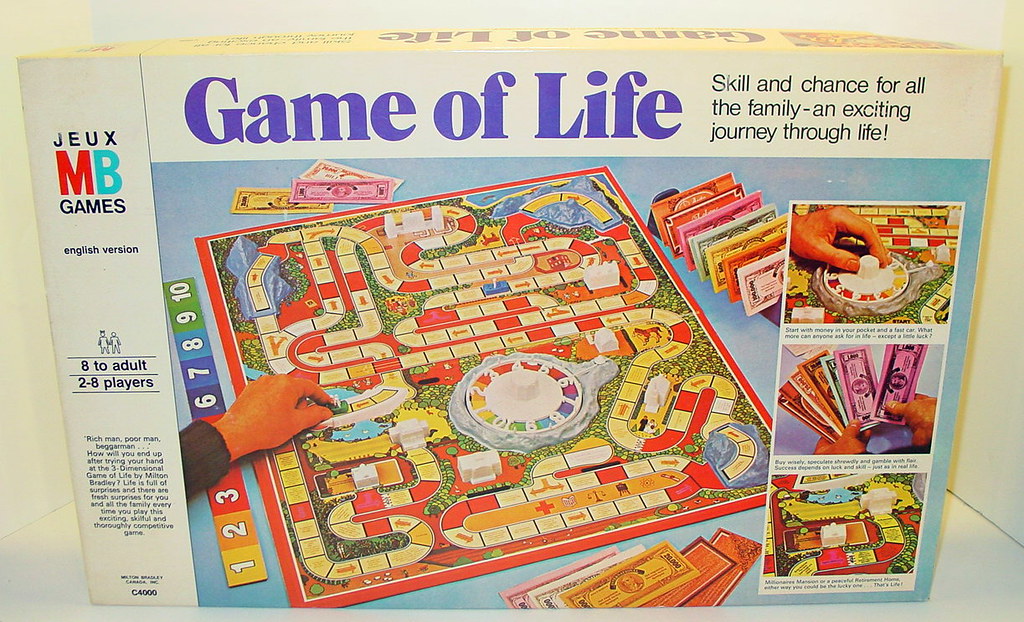
This my fifth love letter, previously I have written in praise of poetry, art, Agatha Christie and the Thoughts from the Criminology Team blog. Since early childhood, I have loved playing games and today’s entry is dedicated to this form of media. In the early years, the focus on fun is paramount, after all who wants to play a dull game? Equally important, the educational aim of games is sometimes explicit, other times less so. Nevertheless, they help us learn to match and sort colours and shapes, to develop our counting skills in an applied setting and improve our memory recall, as well as spelling. Games likes Snap, Happy Families, Hungry Hippos, Snakes and Ladders, Guess Who, Junior Scrabble offer a variety of different ways for children to learn important skills whilst playing. These games enable even very small children to share space, develop important interpersonal skills like taking turns and learn to deal with winning, and of course, losing. Often the latter is a very slow and painful lesson to learn….and one that isn’t always remembered into adulthood!
Of course, one of the most explicit part of playing games is learning the rules of the game, and of course, what happens when we deviate from those rules. It might lead to the loss of a turn or even forfeiture of the entire game. People interpret rules in different ways and families often develop their own “house” rules, but nevertheless there is always an agreed upon set of rules and a way of policing and punishing those who break them.
But once these lessons have been learned, what do games have to teach us as adults? I would say plenty! On a surface level, they offer an opportunity to relax and do something outside of our humdrum lives. Once the games have been purchased, they generally cost nothing to play unlike other forms of leisure time.1 Some can be played alone, others require competitors or even teams. They can aid our thinking, concentration and develop skills of strategy and tactics. They also have the general benefit of not being all consuming (unless at competition level), allowing for conversation to flow. The latter, conversing whilst doing something else, can often be useful for difficult emotional conversations, allowing people to open up without pressure (known colloquially as “health by stealth”).
But do board games have anything to offer to Criminology? Again, I would argue yes! Most games involve chance or luck, will you get the numbers you need, will you have the right pieces/cards in your hand, will the other person play their game in a way that benefits you? It is easy to recognise the role that luck or chance plays in games, but are we equally aware of their role in our lives. More importantly, as criminologists do we fully understand and acknowledge the role played by both in relation to criminality and victimisation?
We have no choice about whether we are born or not, when and where we arrive on the earth, who our parents are. These are all down to forces outside our individual and collective control. Our upbringing, our education, our employment opportunities are largely constrained by geography, money and influence. Compare the opportunities available to a baby born today in Sudan, with one born in the UK, another born in Palestine, and another born in Finland. Compare again, thinking about race, sex, class, disability, sexuality and so on. Very quickly you begin to understand the role played by chance and luck.
So if all of the above are imponderables, how much of a role does luck play in relation to criminality and victimisation? The regular publication of data relating to crime in postcodes, towns/cities and globally show huge diversity in the chance of victimisation. Lucky you, if you were born and live in the ‘Nordic countries of Europe (Norway, Sweden, Denmark, Iceland, and Finland) who rank among the 25 safest globally, most of them also being among the top 10 happiest nations worldwide’. Less fortunate, if you were born in Haiti, Ukraine, Palestine, Sudan or Iraq identified as some of the most dangerous places on earth currently. It is not very difficult to imagine the difference in opportunities in fundamental human rights; food, shelter, healthcare, education and so on. In war ridden nations it is incredibly difficult to separate different typologies of victimisation and for the individuals living under these conditions, it makes no meaningful difference who is/are the perpetrators.
Even if you are living in a “peaceful” state2 such as the UK, there are vast differences in the opportunities available. If you have money you can buy a car to get to work in your evening/night job, if you don’t, maybe you can take a bus, failing that you can walk. Each of those journeys carries its own risks. Your sex, your race, your ethnicity, your sexuality, your abilities/disabilities, your age add the aggravating/mitigating factors and see your risk increase/decrease. All a matter of chance and luck
What about criminality, is this, as the Classical School of Criminology would have us accept, a matter of free will, weighing up the pros and cons and making a deliberate and calculating choice to commit crime? Or can we also identify the same issues of luck and chance as shown above? If your family is loving, everyone has good health, housing is secure, food is plentiful and there are plenty of educational and employment opportunities in your area, would you still choose a life of crime? If there is violence at home, poverty impacts health, housing and regular meals, making it challenging to study or work, would you perceive crime to be a choice?
And what of those board game rules and consequences, real life has its own rules, some written in the forms of laws, others engrained via family, friends, institutions; the norms of our society. In the board game, these rules apply equally (aside from luck and chance) but in real life, not so much. Consider racial and ethnic disproportionality and the treatment of vulnerable women in the CJS, as just two examples. We may all be playing in the same “Game of Life”, but luck, chance and the rules we are subjected to are very different when it comes to criminality and victimisation.
- I appreciate that there are some very expensive board games out there, as well as expansion packs to enhance play. ↩︎
- There are lots of academic arguments around what constitutes a peaceful state, most agree that it more than just the absence of war. Whilst the UK has not seen active warfare on its shores for decades, its military has been involved in conflict throughout the world for more than a century. ↩︎
Share this:


Just semantics?

This summer has seen the opening of the first secure school in England and Wales. The idea of secure schools was first introduced in 2016 in line with reforming the youth secure estate given a wide range of failings across institutions and harms experienced by children placed in there. The original proposed date for opening one of the schools was 2020; but what is a four-year delay? In 2022 the National Audit Office reported the refurbishment of Medway Secure Training Centre (closed down in March 2020 following the harrowing findings by Panorama), where the new secure school would be, was costing approximately £36.5 million (National Audit Office, 2022). But will this new secure school actually change something within the youth secure estate, or this is more of the same but with a new sparkly name?
Oasis Restore (the first secure school in England and Wales) opened this summer and can hold up to 49 children. It is registered jointly as a Secure Children’s Home (SCH) and a secure academy which has raised concerns by Ofsted due to difference in size of Oasis Restore in comparison to other SCHs. Education is central to the secure school (although haven’t we heard this before with Secure Training Centres), with comments from Youth Justice Board (YJB) Chief Executive Steph Roberts-Bibby comparing Oasis Restore with University accommodation (Youth Justice Board, 2024). Apparently, the new secure school is a far cry from the unsafe, violent, prisons which already exist in the youth secure estate (SCT and YOIs). On a tour of the secure school earlier in the year, the Chief Executive was very positive about the physical environment and philosophies underpinning Oasis Restore where ‘strong relationships between staff and children are at the heart of the Oasis model’ and the importance of ‘having a space promoting learning, togetherness and care’ as being essential in line with rehabilitation (Youth Justice Board, 2024). So far, so good. The right words are being uttered, changes appear to have been made, but… we have been here before. The same rhetoric of the child’s best interests being promoted and being seen as ‘children first’: which is good. But is this round of reform just more of the same with different semantics?
End Child Imprisonment (2024) demonstrates how child imprisonment, which Oasis Reform still is, is beyond reform. There are ample examples of how the Youth Secure Estate has historically, and remains, a harmful unsafe environment which does not address the needs of the children they come into contact with. Missing from the positive comments from the Chief Executive of the YJB is the highlighting that the children who come into contact with the YJS are incredibly vulnerable and have often experienced traumas before their incarceration. The language is still all wrong: the myriad of challenges these children have already faced and will face within the YJS remain overlooked. In 2023 the United Nations Committee on the Rights of the Child urged the UK to introduce legislation directly prohibiting the use of solitary confinement, due the continuing harms/findings of its use: but so far, no comment from the UK Government. Time and time again, we see reforms brought in but with little to no actual change or improvement. Will Oasis Restore be the face of change of just another failure in a long line of failing reforms?
Something which rings true: “A recurrent theme in the history of child imprisonment is that evidence of failure and maltreatment is met with promises of reform which too frequently involve semantic amendment rather than changes of substance” (End Child Imprisonment, 2024, p.28). And as John Rawls argues when thinking about justice, if an institution cannot be reformed then it should be abolished. Is it finally time to abolish the child prisons which exist within society?
References:
End Child Imprisonment (2024) Why child imprisonment is beyond reform: A review of the evidence August 2024. [online] Available at: https://article39.org.uk/wp-content/uploads/2024/08/Why-child-imprisonment-is-beyond-reform.-A-review-of-the-evidence-August-2024.pdf [Accessed 14th October 2024].
Monster Ztudio/Shutterstock (2017) Change. [Online] Available at: https://ziplinelogistics.com/blog/navigating-change/ [Accessed 21.10.24].
National Audit Office (2022) Children in custody: secure training centres and secure schools. [online] London: National Audit Office. Available at: https://www.nao.org.uk/wp-content/uploads/2022/04/Children-in-custody-secure-training-centres-and-secure-schools.pdf [Accessed 17.10.24].
Rawls, J. (1971/1999) A Theory of Justice. Oxford: Oxford University Press
Youth Justice Board (2024) Inside the Oasis Restore Secure School. GOV.UK [online]. Available at: https://www.gov.uk/government/news/inside-the-oasis-restore-secure-school [Accessed 17.10.24]

 Thoughts from the criminology team

