
Home » Criminological imagination
Category Archives: Criminological imagination

Not reading criminology? That’s criminal!
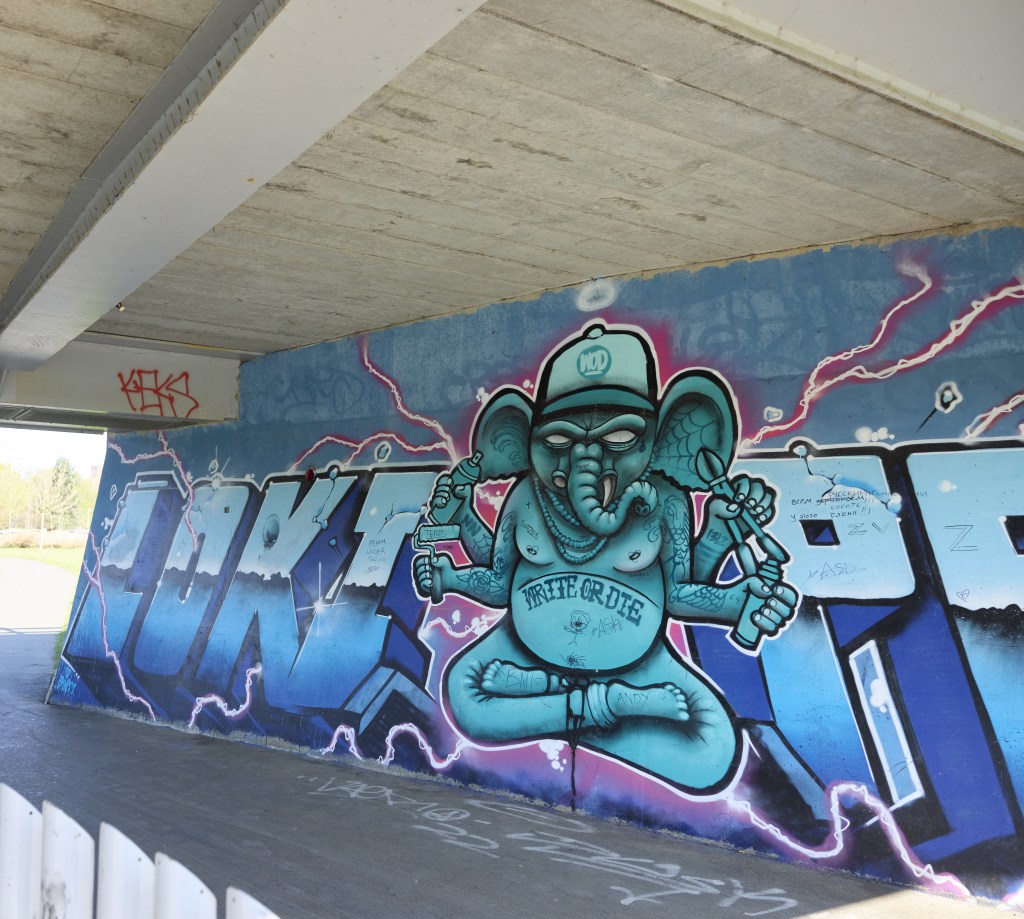
There are two kinds of criminology conversations I get embroiled in these days! Those with people who read criminology where we discuss many social/cultural phenomena under a specific lens or those with people who find criminology interesting, but consume popular crime instead. The first group with varying level of engagement is beginning to decode some tell-tell signs in current events, using their knowledge of the discipline, as a deciphering mechanism. The second group is quite different. Their understanding of crime is based on dramatisations and literary conventions around plots and characters. Even real crime is harbouring under the guise of some “exclusive” journalistic exposé…far from any basic criminological understanding.
Years ago, a colleague from Sociology told me a story regarding a family event. They were completing their PhD in the discipline, and they were questioned by an elderly person, as to what they would do when they finished their thesis. They responded in the usual way many graduate students tend to, about hoping to get into academia or get some funding for some further research. The elderly person didn’t seem satisfied…. they prompted further. What will be your specialism? What will you be able to tell people that you are proficient in? Society and people, the colleague replied! That’s hardly a skill, the old relative replied; we all live in society! The colleague was equally intrigued and offended. They thought that by offering a succinct response it would have helped their relative to understand without being confounded with notions on symbolic interactionism and ethnomethodology. This was a little anecdote that resonates with many social scientists, criminologists included, that whilst they try to explore people and culture around them, they are becoming distant to the actual people around them.
The degree of challenge in recent years seems to increase for disciplines where people in general have a vague idea of what it is. Many try to use psychological terms to explain other people’s behaviours, without realty appreciating, the clinical and scientific conditions of the term. That is relevant to criminology too. The representation of crime for public consumption has introduced some of the discipline’s terms into everyday parlance. From forensic terms on profiling, to the origins of criminality, expectations on crime are forged. A criminologist’s reaction to popular criminology pundits tends to be, well not quite, only to be met with disbelief of the criminology they know!
One of the ways to appeal to those interested in popular criminology and take them to the discipline will be to add some facts and figures that promote reality. Perhaps but that has been done before but only to give a gloss of “legitimacy” in fiction. It makes it more compelling, but it doesn’t really offer the depth of knowledge. To understand criminology, one must read criminology. The history is filled with colleagues who brought their imagination to the discipline. From Bonger’s Criminality and Economic Conditions to Jock Young and The Criminological Imagination there are books and papers that are waiting to be read by a new audience to try to figure out these ideas.
Maybe we all live in society and heard about crime and even experienced it, but to understand it we need some criminology. The discipline, as with all social sciences, is a dialogue between people ready to carry forward the next constructs that shall appear as crimes. If we read them and take part in these conversations maybe the area of harsh punishments, exclusion and persecution may not be as appealing. We are an academic discipline but at the same time we open the discussion to our community. So if you are neither a student, graduate, nor fellow academic and you are interested in criminology, why don’t you come to visit? https://www.northampton.ac.uk/about-us/contact-us/open-days/
Share this:


Is it time to unleash your criminological imagination?

In this blog entry, I am going to introduce a seemingly disconnected set of ideas. I say seemingly, because at the end, all will hopefully make sense. I suspect the following also demonstrates the often chaotic and convoluted process of my thought processes.
I’ve written many times before about Criminology, at times questioning whether I have any claim to the title criminologist and more recently, what those with the title should talk about. These come on top of hundreds of hours of study, contemplation and reflection which provides the backdrop for why I keep questioning the discipline and my place within it. I know one of the biggest issues for me is social sciences, like Criminology and many others, love to categorise people in lots of different ways: class, race, gender, offender, survivor, victim and so on. But people, including me, don’t like to be put in boxes, we’re complex animals and as I always tell students, people are bloody awkward, including ourselves! There is also a far more challenging issue of being part of a discipline which has the potential to cause, rather than reduce or remove harm, another topic I’ve blogged on before.
It’s no secret that universities across the UK and further afield are facing many serious, seemingly intractable challenges. In the UK these range from financial pressures (both institutional and individual), austerity measures, the seemingly unstoppable rise of technology and the implicit (or explicit, depending on standpoint) message of Brexit, that the country is closed to outsiders. Each of the challenges mentioned above seem to me to be anti-education, rather than designed to expand and share knowledge, they close down essential dialogue. Many years ago, a student studying in the UK from mainland Europe on the Erasmus scheme, said to me that our facilities were wonderful, and they were amazed by the readily available access to IT, both far superior to what was available to them in their own country. Gratifying to hear, but what came next was far more profound, they said that all a serious student really need is books, a enthusiastic and knowledgeable teacher and a tree to sit under. Whilst the tree to sit under might not work in the UK with our unpredictable weather, the rest struck a chord.
The world seems in chaos and war-mongers everywhere are clamouring for violence. Recent events in Darfur, Palestine, Sudan, Ukraine, Venezuela and many other parts of the world, demonstrate the frailty, or even, fallacy of international law, something Drs @manosdaskalou, @paulsquaredd and @aysheaobrien1ca0bcf715 have all eloquently blogged about. But while these discussions are important and pertinent, they cannot address the immediate harm caused to individuals and populations facing these many, varied forms of violence. Furthermore, whilst it’s been over 80 years since Raphäel Lemkin first coined the term ‘genocide’, it seems world leaders are content to debate whether this situation or that situation fits the definition. But, surely these discussions should be secondary, a humanitarian response is far more urgent. After all, (one would hope) that the police would not standby watching as one person killed another, all whilst having a discussion around the definition of murder and whether it applied in this context.
The rise of technology, in particular Generative Artificial Intelligence, has been the focus of blogs from Drs @sallekmusa, @5teveh and myself, each with their own perspective and standpoint. Efforts to combat the harmful effects of Grok enabling the creation of non-consensual pornographic images demonstrate both new forms of Violence Against Women and Girls [VAWG] and the limitations of control and enforcement. Whilst countries are rushing to ban Grok and control the access of social media for children under 16, it is clear that Grok and X are just one form of GAI and social media, there is seemingly nothing to stop others taking their place. And as everyone is well aware, laws are broken on a daily basis (just look at the court backlog and the overflowing prisons) and with no apparent way of controlling children’s access to technology (something which is actively encouraged in schools, colleges and universities) these attempts seem doomed to fail. Maybe more regulation. more legislation isn’t the answer to this problem.
Above I have briefly discussed four seemingly intractable problems. In each arena, we have many thousands of people across the globe trying to solve the issues, but the problems still remain. Perhaps we should ask ourselves the following questions:
- Maybe we are asking the wrong people to come up with the answers?
- Maybe we are constraining discussions and closing down debate?
- Maybe by allowing the established and the powerful to control the narrative we just continue to recycle the same problems and the same hackneyed solutions?
What if there’s another way?
And here we come to the crux of this blog, in Criminology we are challenged to explore any problem from all perspectives, we are continually encouraged to imagine a different world, what ought or could be a better place for all. I have the privilege of running two modules, one at level 4 Imagining Crime and one at Level 6 Violence. In both of these students work together to see the world differently, to imagine a world without violence, a world in which justice is a constant and reflection a continual practice. Walking into one of these classrooms you may well be surprised to see how thoughtful and passionate people can be when faced with a seemingly unsolvable problem when everything on the table is up for discussion. Although often misattributed to Einstein, the statement ‘Insanity is doing the same thing over and over again and expecting different results’ seems apposite. If we want the world to be different, we have to allow people to think about things differently, in free and safe spaces, so they can consider all perspectives, and that is where Criminology comes in.
Be fearless and unleash your criminological imagination, who knows where it might take you!
Share this:

Festive Frights

The festive season is almost upon us, and for many of us this means a well-deserved break! As the calendar wraps up and the holidays beckon, why not give your criminological mind a holiday, too? It’s the perfect opportunity to let your imagination soar and dive headfirst into the thrilling world of paranormal fiction.
Taking a temporary step away from cold, hard facts allows us to explore narratives that defy easy explanation, using different parts of our investigative minds. This shift from reality to the realm of the supernatural can be a refreshing break and a wonderful way to recharge before heading into a new year.
This year, something spooky happened! The core mission of the Kids’ Criminology Club, which focuses on expanding knowledge, logic, deduction, and evidence, was temporarily suspended. For a one-off Halloween-esque special, the club transformed into the Kids Paranormal Club.
I am a senior lecturer in Law with a keen interest in the paranormal, and I took our young investigators on a journey into the inexplicable. Together, we explored theories such as the Stone Tape Theory and shared accounts of supernatural phenomena. Following our fascinating session, I challenged the kids to channel their inner storytellers and enter a paranormal story writing competition, with a strict limit of no more than 500 words. The results were chilling, creative, and certainly a departure from Criminology and the Law! All entries, including the winning entry, can be found below.
As you settle in for your holiday break, we hope you’ll find inspiration in these young authors’ terrifying tales. Whether you’re investigating a fictional haunting or simply enjoying a peaceful evening, remember to let your mind wander beyond the police tape and evidence markers. Enjoy the comfort and quiet, and maybe keep an ear out for any strange sounds in your own home…
And finally, while you’re enjoying the comfort and safety of the season and your well-earned break from reality, spare a thought for those who may be facing their own real-life terrors, or simply without the security, warmth, company and peace we often take for granted at Christmas time.
🏆 The Winning Stories
Here are those standout entries that captured our imaginations and sent shivers down our spines.
🥇 Winner: The Radio in Number 13 by Paisley G., age 10
9th October 1967 11:00 pm I have been prompted to start this journal because of an experience I have had in which I don’t feel safe, so I am creating this just in case. My first experience was at night. I was listening to the radio like I always do before bed, there was some show on, I wasn’t really listening; I never really listen, it was just something to do, I suppose. I’m sitting at my desk when I hear footsteps. I live alone and don’t have any pets, that’s when I realised the voices had stopped with a shocking realisation. I knew that the footsteps were coming from the radio. It sounded like heavy boots on stone. I live in a large house with a stone road leading up to the front door. There was a static noise and then the voices were back. I was unsettled but didn’t think much about it. My wife had died only a couple of weeks ago, and I had an odd feeling that they were connected somehow. She was a lovely woman,n and she used to always wear a pair of big black boots.
10th October 1967 11:00 pm Slept uneasy last night – I had a nagging feeling of not being alone. I went about my usual business as normal and had the same experience again: same time, same show, same footsteps.
11th October 1967 11:00 pm Uneasy sleeping again. In the morning, when I left my house, I saw my neighbour Lucy. She is usually a lovely old lady, but when I walked past he house, she ran outside and grabbed me by the hands, looked right into my eyes and said ‘Don’t do it! Don’t open the door! They’re coming!’ Then she ran back inside. It was unsettling, but again didn’t think much of it. The noises were different tonight, footsteps and again they stopped, and I thought the talking would start again, but no, not yet there was the sound of knocking on a door, then it cut back to the show.
12th October 1967 11:00 pm Decided to test it tonight I don’t know what made me do it, but I left the front door open, brought the radio down and sat on a chair by the door. The old lady’s words were ringing in my head, but I had a weird feeling of wanting to prove her wrong. I turned on the radio there was more knocking th-
3:41 am I woke up in my bed, confused about what happened. I ran downstairs to check the door, but it was closed, the chair back in its place, the radio on my desk, as if it had never happened.
13th October 1967 I just turned on the radio the footsteps were going upstairs. They stopped, then the sound of a door rattling my my my door is being shaken help help please pleas ple-
Note from the doctor: The subject had no apparent injuries; they just… died.
Note from the builder: The walls have a trace of a type of mould that could lead to possible madness.
Ghost Mary by Riddhi P., age 11
Fourteen-year-old Isabel Smith and her best friend Anna Hazel live in Riverbend town. Isabel’s twin sister Mary had died two years ago from mysterious reasons, but when Isabel and Anna begin getting chilling messages from her, they find out, she had been taken by wicked blood ghosts that can only take souls on the Day of the Dead! The girls discover a book that says they may be able to bring Mary back by going to the ghost underworld. Desperate, the girls decide to do a ritual that can teleport them to the ghost world! They lit one hundred candles in a perfect circle,e and they both sat in the middle and whispered the forbidden words. When Isabel opened her eyes, she wasn’t in her room anymore; she was in a dark, gloomy place that looked like a graveyard. Fog pressed her skin, whispering, never lifting. Isabel and Anna looked around when Isabel froze. Her heart stopped! Mary was standing just a couple of feet away from them! Mary’s face looked white, her eyes were a pit of black, her clothes were torn and filthy, a black mist surrounded her body. Mary opened her mouth to say something, but before she could, the girls grabbed her hand and pulled her in the circle of candles. “We have to chant the forbidden words backwards fifteen times,” they told her. They began chanting the words once, twice, three times…. “Wait! We have to get the book and burn it, or the blood ghosts will be able to take me and many others again,” cried Mary. Anna dashed to grab the book, but in the shadows, she saw something terrifying – the blood ghosts! Their hollow eyes oozing blood staring at her, their skeleton hands reaching out trying to catch her. Anna grabbed the book and ran towards the circle where Isabel’s voice trembled as she started to chant the words for the tenth time. “Quick, burn the book!” yelled Mary. Just then, the blood ghosts lunged at them and grabbed Mary’s arm. Mary screamed; they were pulling her away from them! Isabel quickly grabbed Mary and dragged her back into the circle. As soon as she did, Anna threw the book in the flames. There was a gust of wind, a ball of energy cloaked the circle of candles like a shield, and the blood ghosts screamed in agony, fading to dust. Isabel finished chanting, the world flippe,d and they were back in Isabel’s room. “What just happened?” Whispered Mary. “It’s over. We’re home!” answered Isabel. They hugged. No more blood ghosts, underworlds or magic words. They were safe. Or were they?.
The Towers of Terror by Quinn G., age 12
Welcome to the Towers of Terror annual story release. Ok, I’m hoping you know what the stone tape theory is. If not, here is a quick rundown: basically, it is the theory that buildings or places have a memory and can replay it, hence ghosts. But what happens at sea? Well, I can tell you that they go to the nearest lighthouse house which then replays them through its beam, and it’s my job to tell the world the stories of wrecked ships, crashed planes and fallen sailors.
Southwold Lighthouse, Norfolk 31/10/2020 Keeper John 12:30 am I’m in for a night tonight with it being Halloween and all. 6:00 pm, just some light activity, a couple of fishing boats, S.S.Mary, an unnamed skipper, a rowboat and a cliff jumper who didn’t want to come to the surface. 7:00 pm, it’s weird that the projections have just stopped. 7:30 pm still nothing. Wait! It is back. No. It’s me, I’m on shore – wait – I’m crumpling to the ground, there is a figure behi-
That’s where his lighthouse log ends, when his colleague went up to take over and found him dead with his pen still clutched in his hand. It is not unusual for things to creep out of the projections. That is why he was there in the first place, to monitor the lighthouse. Even though it is not in operation for ships, you can’t have all those stories building up in such a small space because they will find a way out. But what happened that night was different. Never before has one of the projections interacted with the world outside the projections. There are several other accounts that all go the same way: projections stop, they start again, you see yourself crumble to the floor, and … dead, so we can’t just have people dropping like flies, someone will notice! But if we leave them unattended, they will cause more destruction. So, what would you do? Well, I will tell you what I did/am doing. Finding what came out and how to stop it from coming out again.
That was 5 years ago, and now I can bring you up to date: The entity that was coming out of the projections is now known as the Siren Reaper of the drowned and lost and cannot be explained away. Believe me, I’ve tried, but to no avail. Now to get on to the solution: the one thing that connects the deaths of those keepers was that they had all had a connection with the se, old captains, anglers, sea goers and other jobs that are to do with the sea. After years of contemplation, I have a theory. I think that the Reaper has killed these people because it thinks that they have escaped from it. The solution is to make the keepers not connected with the sea, because then the Reaper will have no business with them. But this does not explain why the projections just stop beforehand, or why the Reaper shows them their death….
Share this:


Is the UK a good place to live? VI

As part of preparing for University, new students were encouraged to engage in a number of different activities. For CRI1009 Imagining Crime, students were invited to contribute a blog on the above topic. These blog entries mark the first piece of degree level writing that students engaged with as they started reading for their BA (Hons) Criminology. With the students’ agreement these thought provoking blogs have been brought together in a series which we will release over the next few weeks.
My opinion on whether the UK is a good place to live or not is based on who you are, where you live, your values and your main source of income.
While our country offers free health care and financial support to those in need, it also faces serious issues including crime, protests against the government and housing shortages. These problems raise public concern and impact various groups across society. Addressing these concerns is easier said than done.
From my perspective, some main factors that make a country “good” are free health care and education, equality, economic opportunities and fair wages, freedom of speech, human rights and low crime rates. These are qualities that exist in many countries, but rarely all in one.
So, is the UK a good place to live?
I feel that it depends on what part of the UK you live in. I believe that the north of the UK has a lot of good qualities, that I mentioned previously, that are lacking in the south. One of the best places in the UK to live is Northern Ireland which, prioritises human rights, economic opportunities, free health care and education as well as equality. Despite these positives, there is still significantly unfair wages found as well as high hardcore drug use.
In recent months, there have been many protests in the southern region of the UK, focused on issues like immigration, housing shortages and Keir Starmer not recognising the Palestine state. These protests have caused significant disruption for both the police force and political parties, as these protests have shown they will not stop until something is done about these issues. Not only does this waste police time and cause friction in parliament, but it affects everyday people from getting to work to accessing basic essentials.
Crime is another key factor that makes the UK a difficult place to live. Crimes such as gang violence, knife crime, sexual assault, drug use and theft are some of the top crimes committed in the UK, making many women feel unsafe whilst walking alone at night and causing a lot of young men to become victims of violence or are drawn into crime themselves.
Overall, where you live in the UK plays a huge role in shaping your quality of life. As someone who lives in the south of the UK and has visited the north, I can honestly say that the north is far more appealing, to the point where I would like to move to Northern Ireland in the future. The UK can also be a difficult place for immigrants to live, due frequent protests against them. Not only is it difficult for immigrants, but it is also getting increasingly hard for young people as work is getting challenging to find in our country. Many of us are left unemployed and unable to save for a car, a hour or even general daily expenses, something that I have experienced personally.
Despite all of this, I think that being able to understand crime, inequality and justice for all will help shape better societies. In the end, whether the UK is a good place to live depends on your situation, but there’s definitely room for change.
Share this:

Is the UK a good place to live? V
As part of preparing for University, new students were encouraged to engage in a number of different activities. For CRI1009 Imagining Crime, students were invited to contribute a blog on the above topic. These blog entries mark the first piece of degree level writing that students engaged with as they started reading for their BA (Hons) Criminology. With the students’ agreement these thought provoking blogs have been brought together in a series which we will release over the next few weeks.
When asked whether or not the UK is a good country to live in, the answer will almost certainly
depend on what we think makes a country “good” in the first place. All countries have negatives
and positives, but there are some aspects that stand out above the rest as requirements for a fair
and functioning society which makes a country better to live in. These include the protection of
human rights, the presence of democracy, the rule of law, and access to essential services like free
healthcare. Considering the UK through these points can help us decide whether it can be
classified as a good place to live.
Human Rights
One of the most important measures of a country is whether its citizens have basic human rights
and freedoms. In the UK, the most fundamental piece of legislation protecting human rights is the
Human Rights Act 1998. It protects freedoms such as freedom of speech, freedom of assembly,
and the right to a fair trial. These rights give citizens the freedom to express their own opinions
freely and protest against government ideology without fear of repercussions and with the
knowledge that their voices will be heard. Of course, there are debates regarding the balance
between national security and freedom, but the fact that the rights are codified in UK primary
legislation makes it easier for citizens to invoke those rights in the UK courts.
Democracy
Another key aspect of a good country is democracy. In the UK, the citizens are eligible to vote for
parliamentarians, who in turn make decisions and pass legislations on their behalf. This is very
different from living under a dictatorship, where there is a single person or elite group with no one
else participating in the decision making process. The theory of parliamentary sovereignty holds
that the laws that the elected parliament enacts are paramount and no other body can question the
validity of the same. While others may resent that their own vote counts for nothing, the fact that
citizens collectively determine who governs them is fundamental to fairness and representation.
This ensures that individual citizens views are upheld by those representing them in parliament.
Rule of Law
The UK also upholds the rule of law. This concept means that no one is above the law, neither a
commoner nor a top politician. Everyone is answerable to the same rules, and this provides a
sense of justice and equality through society. A sound legal system guarantees the protection of
people from a misuse of authority and enables disputes to be resolved in a just way. This is one
principle that makes well-performing democracies distinguish from corrupt or autocratic
governments. The rule of law makes the UK a good place to live in because it ensures equality
amongst all individuals no matter their status or profession and ensures a compliant society.
The NHS
Lastly, another unique aspect that makes the UK stand out as an excellent place to reside is the
National Health Service (NHS). The NHS provides free healthcare at the point of need for UK
citizens and people can access medical care regardless of their earnings and socio-economic
background. This ensures that medical assistance is available in emergencies and day to day
without citizens worrying about how they can afford the fees. Access to medical care in most
countries is often very expensive and out of reach for people with modest earnings. The NHS,
although strained and tested, is still a symbol of compassion and equity and a service that people
in the UK have very strong affection for.
To conclude, it is clear when considering the UK in light of human rights, democracy, rule of law,
and the NHS, there are strong grounds which support the proposition that the UK is a good place
to live. There is no perfect country, but the aspects of the UK described above ensure that
individuals are protected, represented, treated equally, and cared for. These are the qualities of a
good society, and they suggest that, though it may not be perfect, the UK is a good nation to live in
overall.
Share this:

Is the UK a good place to live?: IV
As part of preparing for University, new students were encouraged to engage in a number of different activities. For CRI1009 Imagining Crime, students were invited to contribute a blog on the above topic. These blog entries mark the first piece of degree level writing that students engaged with as they started reading for their BA (Hons) Criminology. With the students’ agreement these thought provoking blogs have been brought together in a series which we will release over the next few weeks.
I believe that for a country to be a good place to live it would need to have 3 categories: good healthcare, a stable/reliable police force and a fairly good education. I think that the UK meets each of these categories to a certain extent due to the factors that would impact it.
The UK has great healthcare because due to the NHS. The NHS provides universal healthcare which would ensure that residents wouldn’t have to worry about the financial burden of medical treatment. This makes the UK a good place to live because it means that people are comforted by the fact that they are protected by NHS in regards to health. For instance, the healthcare system within America doesn’t provide free service to the citizens and is mostly used by those that have the insurance to pay for it. This would result in many people being unable to get the health service they need due to not having the money to pay for it, thus making America not a good place to live in. Therefore, in regards to healthcare the UK could be regarded as a good place to live.
The UK’s police force has been criticised for their inability to maintain justice within the past. This is because of moments of injustice that have existed in the police for quite some time. An example of this would be the Stephen Lawerence murder case where police have been accused of racism in the handling of the case. Furthermore, the CPS was criticised for not allowing the prosecution of certain cases and the handling of witnesses that have led to miscarriages of justice. An example of this would be the case of Damilola Taylor where the witness was proven to be lying which the CPS failed to check before the trial. This would suggest that the UK isn’t a good place to live as there are examples of police incompetence that causes failures in justice. However, in comparison to other countries the police in the UK can be seen to be useful in prevention of crime. For instance, the crime rate in America is 363.8 incidents per 100,000 people whereas in the UK the crime rate is 72 crimes per 1000 people. This would suggest that whilst the police may not be as effective in solving and preventing most crime, the crime is lower than other countries, suggesting that the UK would be a good place to live.
The UK’s education system is also a testament to whether it is a good place to live in. The UK is known for some of the world’s leading universities such as Oxford that cause young adults to thrive as well as mandatory primary/secondary education that gives most children access to schooling regardless of background. However, there is apparent inequalities that causes some pupils to underperform such as school preference to elaborated speech codes. The emphasis on education still makes me think of the UK as a good place to live in.
Share this:

Is the UK a good place to live?: III
As part of preparing for University, new students were encouraged to engage in a number of different activities. For CRI1009 Imagining Crime, students were invited to contribute a blog on the above topic. These blog entries mark the first piece of degree level writing that students engaged with as they started reading for their BA (Hons) Criminology. With the students’ agreement these thought provoking blogs have been brought together in a series which we will release over the next few weeks.
People have different views on whether the UK is a good place to live. Many people base their views on certain factors such as government, healthcare, housing, social benefits, work opportunities and a good environment to raise families.
Why is the United Kingdom a good place to live?
The United Kingdom is seen as good place because of many reasons, the main reason being that they provide services to those who need it, such as victims of war travelling to the UK. They receive free healthcare, housing, benefits to help live, by receiving these, it can help people build a new life and raise their families. Another reason is the healthcare, it is free meaning you do not have to pay insurance or hospital fees compared to if you were in countries like America. By being free, people move here so they have more access to the healthcare without paying for the services. Another reason is the cultural diversity, there are so many different things that embrace the different cultures such as restaurants, festivals etc. This encourages people to move to the United Kingdom to embrace and be educated on the different cultures and communities. There is also History and Culture which consists of a large variety of rich historical sites, museums, theatres, and architecture. There is also vibrant arts and music scenes. Another reason is the United Kingdom is a relatively safe and stable place to live in as the crime rates are quite low and decreasing, which encourages people to move here compared to other countries with higher crime rates. Additionally, there is a vast amount of Nature and Travel to explore, there is beautiful countrysides (e.g. Lake District, Scottish Highlands, Cornwall) and different public transport to use to get you to the many places.
Why is the United Kingdom a bad place to live?
- However, the United Kingdom can be seen as a bad place for many reasons, one of which is the weather, the weather is always dark, rainy, gloomy which can discourage those who prefer warmer weather. There is also Cost of Living, with prices increasing, cities like London are extremely expensive and there are rising housing costs, especially for renters. Prices in food shopping have also increased meaning that people living here may struggle to survive with the increased costs, especially those who don’t have a job or have travelled over for a safer place to live. Another reason is the NHS Strain, while it’s free, waiting times can be long and can be exhausting this is due to the underfunding and staff shortages have caused issues. Additionally, another reason is the Housing Crisis this is especially in big cities, a lack of affordable housing, long waiting lists for social housing which can cause an increase in homelessness.
Conclusion
Overall, I believe that the United Kingdom is a good place to live but could be improved to be a better place than it is now.
Share this:

Is the UK a good place to live?: II
As part of preparing for University, new students were encouraged to engage in a number of different activities. For CRI1009 Imagining Crime, students were invited to contribute a blog on the above topic. These blog entries mark the first piece of degree level writing that students engaged with as they started reading for their BA (Hons) Criminology. With the students’ agreement these thought provoking blogs have been brought together in a series which we will release over the next few weeks.
Whether the UK is a good place to live is up for debate in recent months, but some necessary requirements to ensure that it is include having access to democracy and free healthcare, but the rising cost of living in the UK can suggest the opposite; however, this is dependent on each individual.
On the one hand, the UK government has democracy, which allows for people to elect representatives to make and govern the laws. Allowing for democracy in society allows for more progressive and forward-thinking views, such as the legalisation of gay marriage in 2013. This benefits future generations as it reinforces the idea of equality and respect. In comparison to America, which can be argued to be under a dictatorship, as it severely limits the citizens’ freedom, such as by making abortion illegal. This is done to maintain a political belief that is thought to be superior. Therefore, democracy is beneficial and a requirement of a good country, as it sets a standard for elected representatives to uphold the key morals.
An opposing thought is that the UK has quite high living costs, with transportation rates, as an example, increasing, making it costly for students and workers to get to their destinations. Stagecoach have implemented a pay no more than £3 scheme recently as an effort to keep bus fare to a minimum. However, this is still ineffective. Students like myself that needed to take multiple buses to sixth form suffered from such high rates, costing around £60 a month towards bus fare. As a result of the high transportation rates, this can result in students in lower-income households missing out on their education due to prioritising money. Also, it can prevent people looking for employment from jobs that are further away, as a good portion of their salary would be going towards this. Therefore, this demonstrates that to ensure the stability of making the UK a good place to live, reforms need to be made in order to reduce the rising costs which dramatically impact the quality of life for people living here, as it still instils the priority of needing to survive first and delays employment and education.
Alternatively, the UK is a good place to live, as we have access to publicly funded healthcare regardless of your financial status. This relieves financial pressures of high medical costs without the need to sell assets, as patients are protected through the equal care being provided, which can be argued is a fundamental human right that everyone deserves to have. Ultimately, through having the NHS, it provides better economic benefits to the UK, as it reduces the strain of families going to be in poverty. Therefore, by having publicly funded healthcare, it has the ability to strengthen the country by promoting equality through equal care of each patient regardless of their financial status, which enhances the fact that the UK is a good place to live.
Living in the UK can come with many benefits, such as having democracy and access to free healthcare, but this shadows the negatives that it is becoming increasingly difficult to live here due to rising costs of living as well as the fact that the weather is not great.
Share this:

Is the UK a good place to live?: I
As part of preparing for University, new students were encouraged to engage in a number of different activities. For CRI1009 Imagining Crime, students were invited to contribute a blog on the above topic. These blog entries mark the first piece of degree level writing that students engaged with as they started reading for their BA (Hons) Criminology. With the students’ agreement these thought provoking blogs have been brought together in a series which we will release over the next few weeks.
The UK is widely favoured and known across the world due to its many attractions and key figures that reside in and outside of London, such as: the Harry potter franchise, the London eye, Buckingham palace, Shakespeare, Windsor castle, stone henge, big ben, and many more. But despite all of its magnificent attractions it raises the question “Is the UK actually a good place to live”?
What are the benefits of living in the UK?
- The NHS
- Education is free
- Diversity in culture
- Strong labour laws
In the UK we have something called the NHS (national health service), which allows UK residents to receive free healthcare when it’s needed due to it being primarily funded by general taxing and national insurance contributions. Although it’s important to note that the NHS isn’t subject to only the UK but also Scotland and Wales too.
Education is often looked at as one of the core necessities that a child must have, so it makes sense that it would be free right? Unfortunately, in many countries’ education is seen as a luxury (for certain demographics) rather than a need. Due to this, I would argue that it’s a benefit, no matter how obvious it may seem.
In the UK there are a variety of cultures and races which I personally believe is beautiful because not only are we able to enjoy the gift of multiple different cuisines, but we’re also able to grow up with the ideology that we’re not so different from one another even if we may appear that way (which is a valuable lesson for children to learn and cherish as they grow older).
The benefit of having strong labour laws also ties into my previous point about diversity since it protects citizens from discrimination (Equality act 2010) in the workplace. Not only that but it also ensures that workers are paid at least minimum wage, they don’t face unnecessary/unlawful wage deductions, they receive time off for holidays, workers will be protected if they report an incident at work, workers can’t be dismissed from work without good reason (Employments act 1966), and that they’re not overworked (48 hours a week max).
What are the disadvantages of living in the UK?
- Although most services are free, there are still charges that may apply to medications, prescriptions, dental treatment and eye care. However, it’s still important to note that if you’re in full education or you have other exemptions (such as universal credit or a disability) these may not apply; there are also other circumstances where they also may not apply.
- It’s true that the UK is incredibly diverse but that doesn’t mean there isn’t a constant problem of racism, it just means that there’s more people who can relate to the same issue. It goes without saying that even with labour laws in place, and the never ending resources that someone could use to educate themselves on a specific topic that is unique to a certain race, many people still experience discriminatory behaviours. While its understood that this is an issue everywhere in the world, I don’t think it should be normalised. Rather than dismissing it with a permissive attitude, I think everyone should work towards eradicating such ideologies and behaviours.
- The minimum wage isn’t enough to actually live on, which leaves multiple people homeless or struggling to stay afoot. Thus, leading to more unethical methods to gaining money or other necessities. It should go without saying that the minimum wage should be enough to be somewhat comfortable, or better yet survive on… which evidently isn’t the case for some.
What are the requirements for a good country? :
Those in power would have to love and care for their people. By that I mean- their own money shouldn’t be on the forefront of their mind when it comes to prioritising needs such as having a stable income to live on. Not only that but those in power shouldn’t have a secret racial or gender bias that peeks out whenever they’re trying to make a change. For obvious reason, this would be incredibly damaging to society on a whole, not just for those targeted. Last but not least, I believe that housing should be an option for everyone, even the less fortunate. It shouldn’t be a luxury to have a place to live, everyone deserves comfort, especially in their darkest moments; housing should be provided for those that need it, especially individuals with children.
Share this:


Sabrina Carpenter and Feminist Utopia
I have recently been introduced to Sabrina Carpenter via online media commentary about the image of her new album cover Man’s Best Friend. Whilst some claim the image is playing with satire, the image appears to have been interpreted by others as being hyper-sexual and pandering to the male gaze.

I am not sure why this specific album cover and artist has attracted so much attention given that the hyper-sexual depiction of women is well-represented within the music industry and society more generally. However, because Sabrina’s main audience base is apparently young women under 30 it did leave me thinking about the module CRI1009 and feminist utopia, as it left me with questions that I would want to ask the students like: In a feminist utopia should the hyper-sexualized imagery of women exist?
Some might be quick to point out that this imagery should not exist as it could be seen to contribute towards the misogynistic sexualisation of women and the danger of this, as illustrated with Glasgow Women’s Aid comments about Sabrina’s album cover via Instagram (2025)
‘Sabrina Carpenter’s new album cover isn’t edgy, it’s regressive.
Picturing herself on all fours, with a man pulling her hair and calling it “Man’s Best Friend” isn’t subversion. 😐
It’s a throwback to tired tropes that reduce women to pets, props, and possessions and promote an element of violence and control. 🚩
We’ve fought too hard for this. ✊🏻
We get Sabrina’s brand is packaged up retro glam but we really don’t need to go back to the tired stereotypes of women. ✨
Sabrina is pandering to the male gaze and promoting misogynistic stereotypes, which is ironic given the majority of her fans are young women!
Come on Sabrina! You can do better! 💖’
However, thinking about utopia is always complicated as Sabrina’s brand appears to some a ‘sex-positive feminism’ by apparently allowing women to be free to represent themselves and ‘feel sexy’ rather than being controlled by the rules and expectations of other people. For some this idea of sexual freedom aka ‘sex-positive feminism’ branded via an inequitable capitalistic male dominated industry and represented by an incredibly rich white woman would be a bit of a mythical representation. As while this idea of sexy feminism is promoted by the privileged few this occurs in a societal context where many feel that women’s rights are being/at risk of being eroded and women are being subjected to sexual violence on a daily basis.
I am not sure what a workshop discussion with CRI1009 students would conclude about this, but certainly there would need to be a circling back to more never- ending foundational questions about utopia: what else would exist in this feminist utopia? Whose feminist utopic vision should get priority? Would anyone be damaged in a utopic society that does promote this hyper-sexualization? If so, should this utopia prioritise individual expression or have collective responsibility? In a society without hyper-sexualisation of women would there be rule breakers, and if so, what do you do with them?

 Thoughts from the criminology team
