
Home » Criminality (Page 3)
Category Archives: Criminality

A Punky Reggae Party

In June 1977, 45 years ago, I saw the Queen, albeit fleetingly, being driven past Piccadilly Circus en-route to Buckingham Palace for the culmination of the Silver Jubilee celebrations. I wasn’t there for the party. I was making my way to Camden Town and the rehearsal studios used by the Punk-inspired band Subway Sect, who my friend from school had joined as their drummer. The studio, part of a crumbling yard of railway buildings, some still bombed out from the War, would soon begin its transformation into trendy Camden Market.
Punk shared an interesting crossover with Black music culture, in particular reggae. As teenagers, most of us growing up in the 70s were familiar with Blues and Tamala Motown, but reggae was new to me, especially the Heavy Dub style popular in the Jamaican community. The man largely responsible for my education was Don Letts, the House DJ at The Roxy in Neil St, Covent Garden. Originally a fruit and veg warehouse, between 1976 and 1978 the Club shot to fame/notoriety as the top Punk venue in London. The problem for the promoters was that in 1977 the scene was so embryonic there were as yet no home-grown punk records to play. So, in the gaps between live bands, Don played what he wanted, namely reggae, which went down well with the mostly white crowd. To quote from his website: “he came to notoriety in the late 70s as the DJ that single handedly turned a whole generation of punks onto reggae”. In fact, the combination became so popular that Bob Marley’s Punky-Reggae Party released in 1977 as a 12 inch (Jamaica only) and as the B-side to Jamming, reached number 9 in the UK singles charts. Don’s choice of tracks from his Roxy days are captured in the critically acclaimed compilation Dread Meets The Punk Rockers Uptown (Heavenly Records).
Scroll forward a couple of years and I’m working as assistant van driver to my boss Morris, a Jamaican-born reggae fan. He was involved in the local music scene and sometimes I would help him set up a Sound System for private house parties, in and around Brixton. We would use the work van, a sackable offence given the prestige brand name of our West End employer, but worth the risk. Think Small Axe: Lovers Rock, but with more sound gear and ganja-smoking Rastas, and you’ve got the picture. While sometimes out of my comfort zone, it was uplifting to witness first-hand a community at one with its own identity while lobbying for change in wider society that remained indifferent at best.
It was also a time in London when the Metropolitan Police stop and search “SUS” law reigned high. I witnessed several occasions where Morris was subject to blatant racial harassment. Once I was on a delivery to an exclusive residential part of Town. On these visits we played a game, coined by Morris, as Dropsy or Tipsy – would we be offered a Dropsy (cup of tea/coffee) or a cash tip for the delivery, typically a sofa or expensive Persian rug? The winner was the one who made the right call in advance. We parked in the street and as we got out several police officers on foot suddenly approached Morris and demanded to know what he was doing, despite the rather obvious fact he was at work. When they saw me, the situation cooled off, but the aggressive tone of the questioning was clear and present intimidation of a black man, whose only ‘offence’, while going about his legitimate business, was to be in a white, rich area. I wish I could say this was a one-off. Unfortunately, we all know that’s not the case. Another time relates to the shocking mistreatment he got crossing a picket line. The work van was kept in a British Road Services Depot at Elephant and Castle. We both turned up on the day a lightning strike had been called by the Transport and General Workers Union. I understand emotions can run high in these situations, but there was no excuse for the barrage of racial abuse he took from sections of the crowd. He brushed it off with characteristic good humour, but the episode tainted my view of trade unions ever since.
As this is a criminology blog I should probably throw in an example of real-life criminality. It happened mid-morning one Friday following a drop-off in busy Bishopsgate. Returning to the van I noticed a castor wheel on the pavement. “Looks like it’s come from one of our sofas” I remarked. It had. When we pulled back the shutter, the van was empty. Everything we’d loaded up an hour ago was gone. Sofas, walnut dressers, rugs, porcelain table lamps, all cleaned out. The castor was all that was left! Robbed in broad daylight, next to a bus stop. In panicked disbelief we asked those in the queue if they’d seen anything but we were wasting our breath. It was left to Mr Farooqui, the long-suffering Despatch floor manager, to take the heat from angry customers as he rang round to tell them the good news. Needless to say, management weren’t impressed and dished out first and final written warnings. Soon after we went our separate ways.
Meanwhile, the overlap between black and white youth culture in London was being fostered in creative ways. Rock Against Racism (RAR), founded in 1976 along with the Anti-Nazi League (ANL), a year later, were both set up to combat a surge in far-right extremism. Music, especially the cross-over between various genres including punk and reggae, was an important enabler in that it found common ground from which more overtly political discussions could take place. I was one of the many thousands who, in April 1978, joined The Clash, Steele Pulse and others at Victoria Park, Hackney, in what was RAR’s finest hour. Also in the audience that day was Gerry Gable, the veteran anti-fascist campaigner and founder of Searchlight magazine, whose archive is hosted here at the University. I spoke to Gerry about this and he has very fond memories of the day and his role in helping it come about through his associations with both RAR and the ANL.
So, in the year of the Platinum Jubilee, has popular music culture continued as a positive force for race integration since the punky-reggae days of 77? It’s probably a PhD project or two (dozen), but Bob Marley sums it up for me nicely:
What did you say?
Rejected by society
Treated with impunity
Protected by my dignity
I search for reality
If by the search for reality we mean certainty, then how certain are we things have changed for the better? My experience is that, on average, they have, and that music has played its precious role in bring people closer together. The key here is “on average”. If by reality we mean a search for legitimacy, there is evidence to the contrary. Differences of course remain, and there is no room for complacency. The one pledge we must agree on though is to never stop searching – for melody, for rhythm, for harmony.

Share this:


What’s happened to the Pandora papers?

Sometime last week, I was amid a group of friends when the argument about the Pandora papers suddenly came up. In brief, the key questions raised were how come no one is talking about the Pandora papers again? What has happened to the investigations, and how come the story has now been relegated to the back seat within the media space? Although, we didn’t have enough time to debate the issues, I promised that I would be sharing my thoughts on this blog. So, I hope they are reading.
We can all agree that for many years, the issues of financial delinquencies and malfeasants have remained one of the major problems facing many societies. We have seen situations where Kleptocratic rulers and their associates loot and siphon state resources, and then stack them up in secret havens. Some of these Kleptocrats prefer to collect luxury Italian wines and French arts with their ill-gotten wealth, while others prefer to purchase luxury properties and 5-star apartments in Dubai, London and elsewhere. We find military generals participating in financial black operations, and we hear about law makers manipulating the gaps in the same laws they have created. In fact, in some spheres, we find ‘business tycoons’ exploiting violence-torn regions to smuggle gold, while in other spheres, some appointed public officers refuse to declare their assets because of fear of the future. Two years ago, we read about the two socialist presidents of the southern Spanish region and how they were found guilty of misuse of public funds. Totaling about €680m, you can imagine the good that could have been achieved in that region. We should also not forget the case of Ferdinand Marcos and his wife, both of whom (we are told) amassed over $10 billion during their reign in the Philippines. As we can see below that from the offshore leak of 2013 to the Panama papers of 2016 and then the 2017 Paradise papers, data leaks have continued to skyrocket. This simply demonstrates the level to which politicians and other official state representatives are taking to invest in this booming industry.

These stories are nothing new, we have always read about them – but then they fade away quicker than we expect. It is important to note that while some countries are swift in conducting investigation when issues like these arise, very little is known about others. So, in this blog, I will simply be highlighting some of the reasons why I think news relating to these issues have a short life span.
To start with, the system of financial corruption is often controlled and executed by those holding on to power very firmly. The firepower of their legal defence team is usually unmatchable, and the way they utilise their wealth and connections often make it incredibly difficult to tackle. For example, when leaks like these appear, some journalists are usually mindful of making certain remarks about the situation for the avoidance of being sued for libel and defamation of character. Secondly, financial crimes are always complex to investigate, and prosecution often takes forever. The problem of plurality in jurisdiction is also important in this analysis as it sometimes slows down the processes of investigation and prosecution. In some countries, there is something called ‘the immunity clause’, where certain state representatives are protected from being arraigned while in office. This issue has continued to raise concerns about the position of truth, power, and political will of governments to fight corruption. Another issue to consider is the issue of confidentiality clause, or what many call corporate secrecy in offshore firms. These policies make it very difficult to know who owns what or who is purchasing what. So, for as long as these clauses remain, news relating to these issues may continue to fade out faster than we imagine. Perhaps Young (2012) was right in her analysis of illicit practices in banking & other offshore financial centres when she insisted that ‘offshore financial centers such as the Cayman Islands, often labelled secrecy jurisdictions, frustrate attempts to recover criminal wealth because they provide strong confidentiality in international finance to legitimate clients as well as to the crooks and criminals who wish to hide information – thereby attracting a large and varied client base with their own and varied reasons for wanting an offshore account’, (Young 2012, 136). This idea has also been raised by our leader, Nikos Passas who believe that effective transparency is an essential component of unscrambling the illicit partnerships in these structures.
While all these dirty behaviours have continued to damage our social systems, they yet again remind us how the network of greed remains at the core centre of human injustice. I found the animalist commandant of the pigs in the novel Animal Farm, by George Orwell to be quite relevant in this circumstance. The decree spells: all animals are equal, but some animals are more equal than others. This idea rightly describes the hypocrisy that we find in modern democracies; where citizens are made to believe that everyone is equal before the law but when in fact the law, (and in many instances more privileges) are often tilted in favour of the elites.
I agree with the prescription given by President Obama who once said that strengthening democracy entails building strong institutions over strong men. This is true because the absence of strong institutions will only continue to pave way for powerful groups to explore the limits of democracy. This also means that there must be strong political will to sanction these powerful groups engaging in this ‘thievocracy’. I know that political will is often used too loosely these days, but what I am inferring here is genuine determination to prosecute powerful criminals with transparency. This also suggests the need for better stability and stronger coordination of law across jurisdictions. Transparency should not only be limited to governments in societies, but also in those havens. It is also important to note that tackling financial crimes of the powerful should not be the duty of the state alone, but of all. Simply, it should be a collective effort of all, and it must require a joint action. By joint action I mean that civil societies and other private sectors must come together to advocate for stronger sanctions. We must seek collective participation in social movements because such actions can bring about social change – particularly when the democratic processes are proving unable to tackle such issues. Research institutes and academics must do their best by engaging in research to understand the depth of these problems as well as proffering possible solutions. Illicit financial delinquencies, we know, thrive when societies trivialize the extent and depth of its problem. Therefore, the media must continue to do their best in identifying these problems, just as we have consistently seen with the works of the International Consortium of Investigative Journalists and a few others. So, in a nutshell and to answer my friends, part of the reasons why issues like this often fade away quicker than expected has to do with some of the issues that I have pointed out. It is hoped however that those engaged in this incessant accretion of wealth will be confronted rather than conferred with national honors by their friends.
References
BBC (2021) Pandora Papers: A simple guide to the Pandora Papers leak. Available at: https://www.bbc.co.uk/news/world-58780561 (Accessed: 26 May 2022)
Young, M.A., 2012. Banking secrecy and offshore financial centres: money laundering and offshore banking, Routledge
Share this:


Colston, the toppling of a pejorative narrative

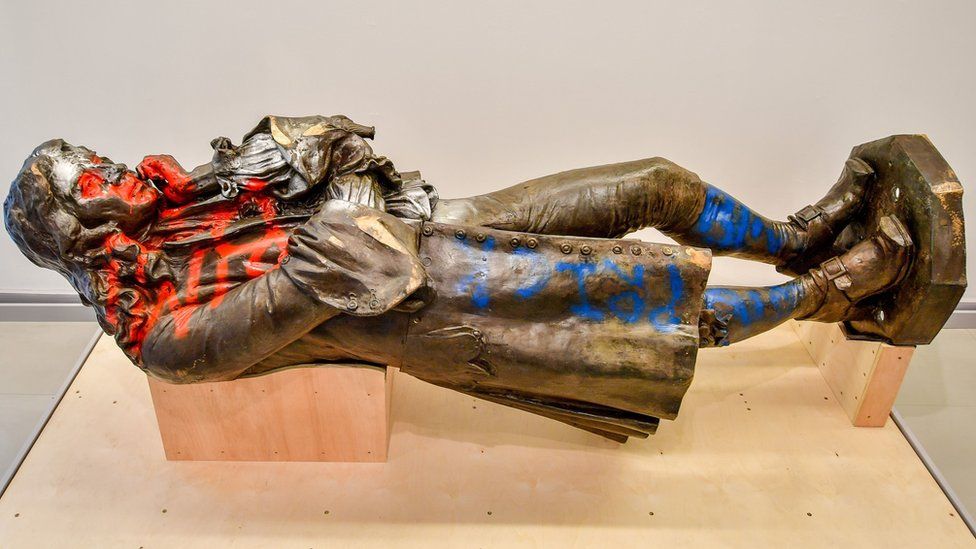
The acquittal of the four defendants for their role in the toppling of Edward Colston in Bristol has created an interesting debate and in some, more right-wing quarters, fury. In an interview following the verdict Boris Johnson stated we cannot seek to “retrospectively change our history“
But what history is he talking about, the one where this country was heavily involved in slavery or some other history around Empire and ‘jolly hockey sticks and all that sort of thing’?
History tells us that this country’s empire, like all empires significantly benefited from its conquests to the detriment of those conquered. Although if you watch the Monty Python film The Life of Brian, the right of the political spectrum might find some comfort in the sketch that starts with ‘What have the Romans ever done for us’? This country’s history is complex more so because it is a shared history with its own inhabits and those of other countries across most of the world. A history of slaves and slave traders. A history of rich and powerful and poor and powerless. A history of remapping of countries, redefining of borders, of the creation of unrest, uncertainty and chaos. A history of theft, asset stripping, taking advantage and disempowerment. As well as a history of standing up to would be oppressors. It is a complex history but not one that is somehow rewritten or removed by the toppling of a statue of a slave trader.
The tearing down of the statue is history. It is a fact that this country’s so called great and good of the time were tarnished by a despicable trade in human misery. The legacy of that lives on to this day. Great and good then, not so now, in fact they never were, were they? It may be questionable whether the circumstances of the removal of the statue were right, hence the charges of criminal damage. It might be questionable whether the verdict given by the jury was right, but surely this isn’t about changing history, it is about making it.
There are suggestions that the verdict may be referred to a higher authority, perhaps the Supreme Court. It appears right that there was a case to answer, and it seems right that the jury were allowed to deliver the verdict they did. There is nothing perverse in this, nothing to challenge, due process has taken place and the people have spoken. The removal of the statue was not criminal damage and therefore was lawful.
If a statue is an affront to the people of a locality, then they should be able to have it removed. If is such an affront to common decency, then the only people guilty of an offence are those that failed to remove it in the first place. Of course, it is more complex than that and perhaps the bigger question is why this didn’t happen sooner?
It would seem fitting to replace the statue with something else. Something perhaps that shows that slowly people of this country are waking up to the country’s past, well at least some of them. A statue that commemorates a new beginning, that acknowledges the country’s true past and points the way to a far more humane future for all. No Mr Johnson, we shouldn’t try to rewrite or obliterate history, we just need to change the way it written and stop ignoring the truth.
Share this:


A microcosm of deviancy

A little over a week ago our university introduced the compulsory wearing of face masks indoors. This included wearing of masks in classrooms as well as common areas and offices. Some may argue that the new rules were introduced a little too late in the day, whilst I’m sure others will point to the fact that government guidance is that the wearing of face masks is advisory and therefore the introduction of the new rules was unwarranted. Let’s be honest the government and their political party haven’t set much of an example regarding the basic safety ideas, let alone rules, as evidenced by the recent Conservative party conference. The new rules at the university, however, are not enforced, instead there is a reliance that students and staff will comply. This of course creates several dilemmas for students and staff where there is a failure to comply and it makes for some interesting observations about general human behaviour and deviance. To that extent, university life might be viewed as a microcosm of life in the general population and this lends itself quite nicely to the analogy of behaviours whilst driving on a road.
Driving behaviours vary, from those drivers that consistently and diligently stick to the speed limit despite what others may be doing, to those that have complete disregard for limits or indeed others including those that police the roads. Let us be quite clear at this stage, speed limits are nearly always there for a reason. There is ample research that speed kills and that reductions in speed limits injuries and saves life. Whilst those drivers that drive over the speed limit will not always be involved in a collision and that a collision will not always result in serious injury or death, there is a much greater potential for this. The risks of course are spread across the population in the locality, the impact is not just felt by the speeding driver but other drivers and pedestrians as well. To some extent we can make the comparison to the risks associated with catching Covid and the wearing of masks and social distancing, failure to comply increases risks to all. As a quick reminder, the wearing of masks is to protect others more so than it is to protect the individual mask wearer.
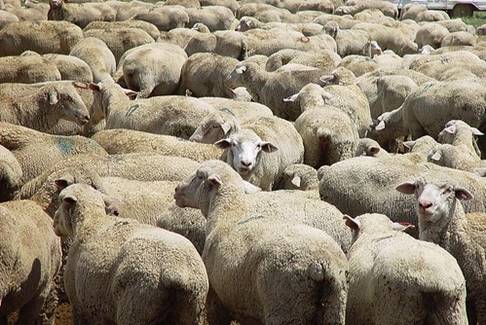
Observations of behaviours regarding staff and students wearing masks at the university are interesting. There are those that comply, regardless of what others are doing, some of these will have been wearing masks indoors before the new rules came in. Not dissimilar to the careful driver, sticking to the speed limit but also prepared to drive slower where they perceive there is a greater risk. Then there is the well-intentioned mask wearer, the one that knows the rules and will stick to them but through absent mindedness or through some of life’s many distractions, they fail to wear their masks at various points of the day. As with the well-meaning driver, they are easily reminded and often apologetic, even if it is only to themselves. Of course, there is the ‘follow the flock’ wearer, the person that could quite easily be persuaded to not wear their mask by the rest of the flock as they fail to wear theirs. The driver that joins the rest and drives at 40mph in a 30mph limit because the rest of the traffic is doing so. Next is the deviant that has disregard for the rules as long as no one in authority is looking. The person that keeps their mask handy, probably under their chin and then when challenged in some way, perhaps by a disapproving look from a member of staff or by a direct challenge, puts their mask on but only for the duration they are under observation. Not dissimilar to the speedster that slows down when they see a police vehicle or a static speed camera only to speed up again when the danger of being caught and sanctioned has passed. Finally, there is the person that has complete disregard for any rules, they will blatantly fail to wear a mask and wave away with complete disdain any attempt by student ambassadors positioned at the door to offer them a mask. They like the speeding driver that fails to obey any of the rules of the road have complete disregard for the rules or indeed any rules.
Whilst we may lament the fact that some people forget, are distracted but are generally well meaning, we probably wouldn’t want to impose any sanction for their deviance. But what of those that have complete disregard for the rules? It is worth returning here to the general ethos of wearing masks; to protect others. The disregard for the rules is inter alia a disregard for the safety of others. Whilst we might observe that the deviancy is apparent amongst several students (a problem that might be generalised to society), it is somewhat disconcerting that there are a significant number of staff who clearly do not think the rules apply to them. They seem to neither care about their colleagues nor the students and it would seem consider themselves above the rules. Another comparable trait in general society where those in positions of power seem to have a disregard for rules and others. Finally, we might consider how we could police these new rules as clearly our university society of students and staff are unable to do so. I can hear the cries now, haven’t you got anything better to do, this is a sledgehammer to crack a nut and all the usual rhetoric endured by the police across the land. If you make a rule, you must be prepared to enforce it otherwise there’s no point in having it. Imposing an unenforceable rule is simply playing politics and attempting to appease those that question the conditions in which students and staff work. Imagine speed limits on the road but no enforcement cameras, no police and no sanctions for breaches. It will be interesting to see how long the general population at the university follow the new rules, recent observations are that the flock of sheep mentality is starting to come to the fore. As a parting thought, isn’t it amazing how easy it is to study crime and deviance.
Share this:


Meet the Team: Stephanie Richards, Associate Lecturer in Criminology

A Warm Welcome
Hello all! I would like to introduce myself. My name is Stephanie Richards and I am your Student Success Mentor (SSM). Some of the criminology and criminal justice students would have already had the opportunity to meet me, as I was their Student Success Mentor previously. So, it will be great to touch base with you all and it would also be great for the new cohorts to say hi when you see me on campus.
It is that time of the year when we see new students and our existing students getting ready to tackle the trials of higher education. Being a SSM I am fully aware of the challenges that you will face, and I am here to support you throughout your time at UON. As a previous student I can testify that studying at university is incredibly challenging. The leap from school/ college can be daunting at first. A new building that seems like a maze or the idea of being surrounded by strangers that you probably think you have nothing in common with can be enough to encourage you to run for the hills….stepping into a workshop for the first time can give you a stomach flip, but once you take that first seat in class you will come to realise it does get easier.
Upon reflection of my experience as a new undergraduate student I would have to be honest and express the difficulties that I suffered adjusting to my new way of life. I could not keep my head above the masses of reading, and when I did manage to get some of the seminar prep completed, most of the time I struggled with the new questions and concepts that were posed to me. This will be the experience of most, if not all the new students starting out on their university education. This is part of the complex journey of academia. My advice would be to pace yourself, time management is key, if you struggle to understand the work that has been set, ask for clarity and develop positive relationships with your peers and the staff at UON…………..being part of a strong community will get you through a lot!
My role is not just about assisting the new students that have started their university journey, I am also here to help UONs existing students. Getting back into the swing of studying can be daunting after the summer break. Adjusting to face-to-face education can be an overwhelming process but one that should be embraced. We will all miss our pyjama bottoms and slippers but being back on campus and getting some normality back in your day is worth the sacrifice.
The team of SSM’s are here to support you throughout your journey so please get in touch if you require our assistance. We never want you to feel alone in this journey and we want to assist you the best ways we can. We want you to progress and meet your full learning potential, and to get the most out of your university experience.
Share this:


Meet the Team: Francine Bitalo, Associate Lecturer in Criminology

Hi everyone! My name is Francine Bitalo and I will be your new Student Success Mentor for this year. I am looking forward to meeting and assisting you all in your academic journey. Feel free to contact me for any support.
Being a graduate from the University of Northampton I can relate to you all, I know how challenging student life can be especially when dealing with other external factors. You may go through stages where you doubt your creativity, abilities and maybe even doubt whether the student life is for you. When I look back at when I was a student, I definitely regret not contacting the Student Success Mentors that were available to me or simply utilising more of the university’s support system. It is important for you seek support people like myself are here to help and recommend you to the right people.
Besides everything, Criminology is such an interesting course to study if you are anything like me by the end of it all you won’t view the world the same. Many of you have probably already formed your views on life especially when it comes to understanding crime. Well by the end of it all your ways of viewing the world will enhance and become more complex, theoretical and constructive. The advice I give you all is to enjoy the journey, be open minded and most importantly prepare for exciting debates and conversations.
Look forward to meeting you all.
Share this:


Criminology First Week Activity (2020)

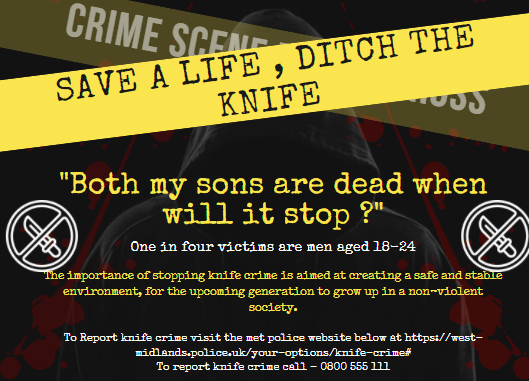
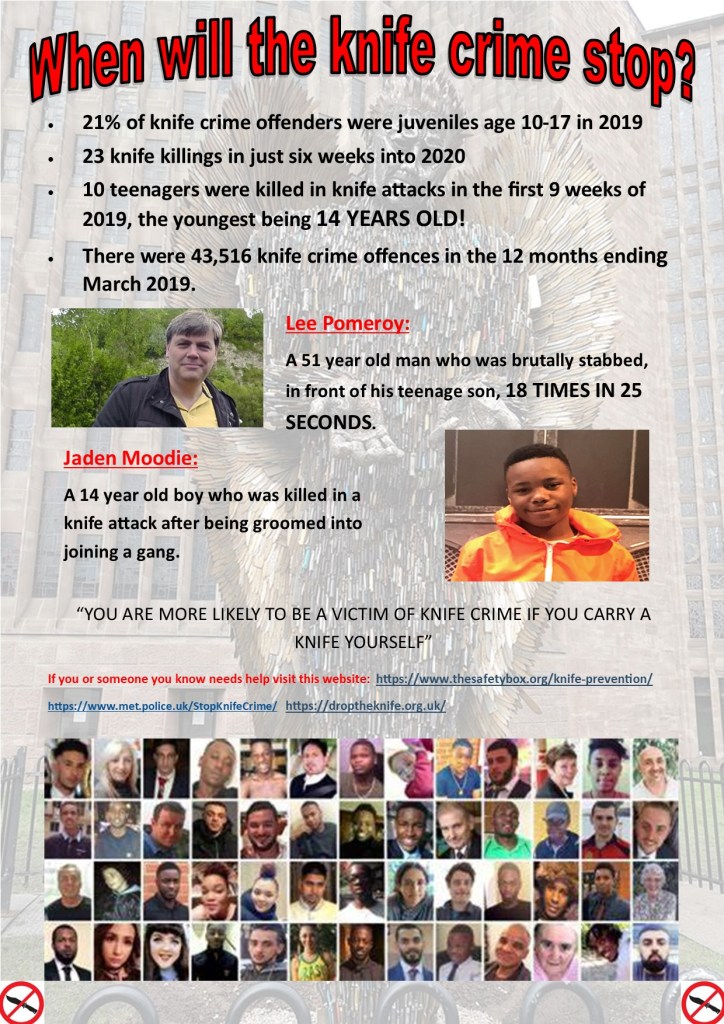
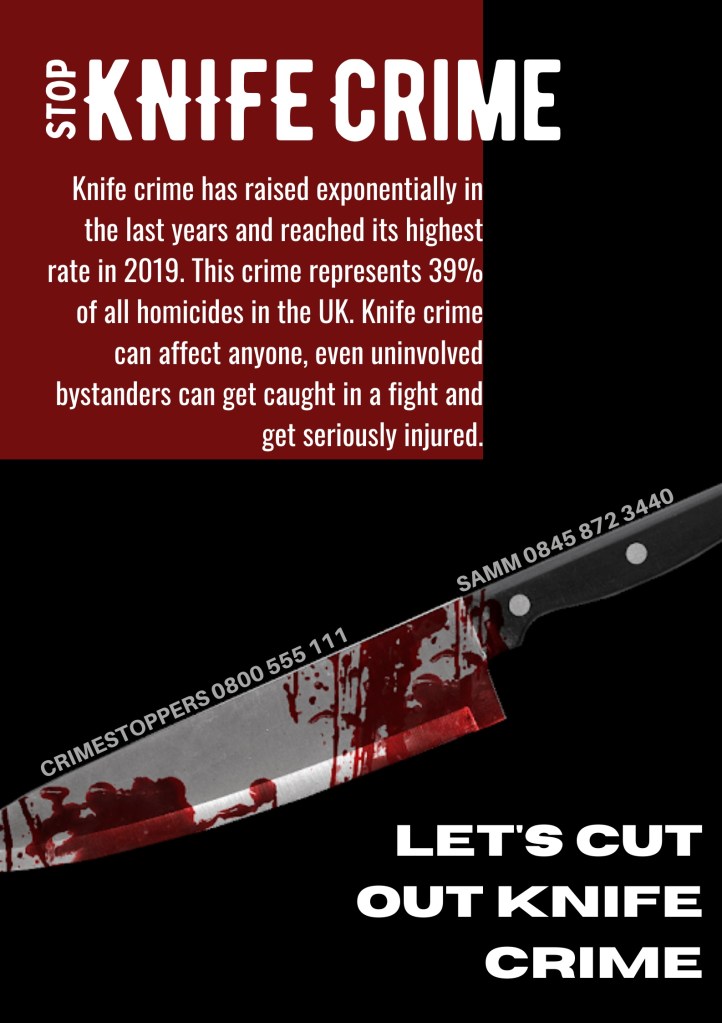
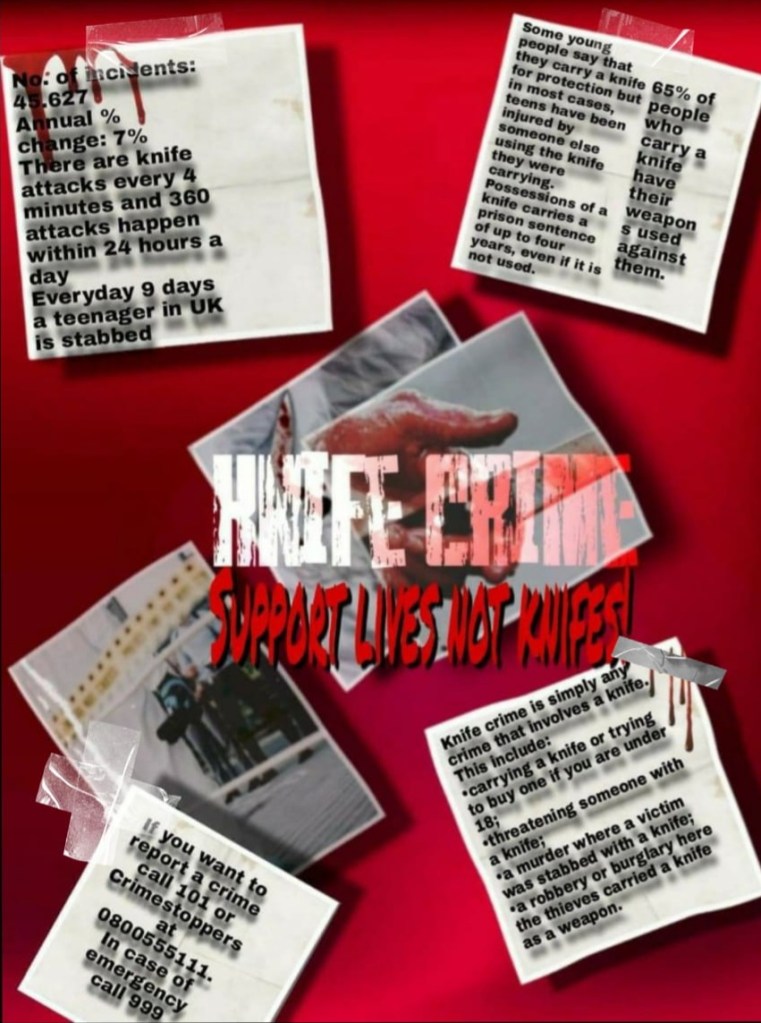
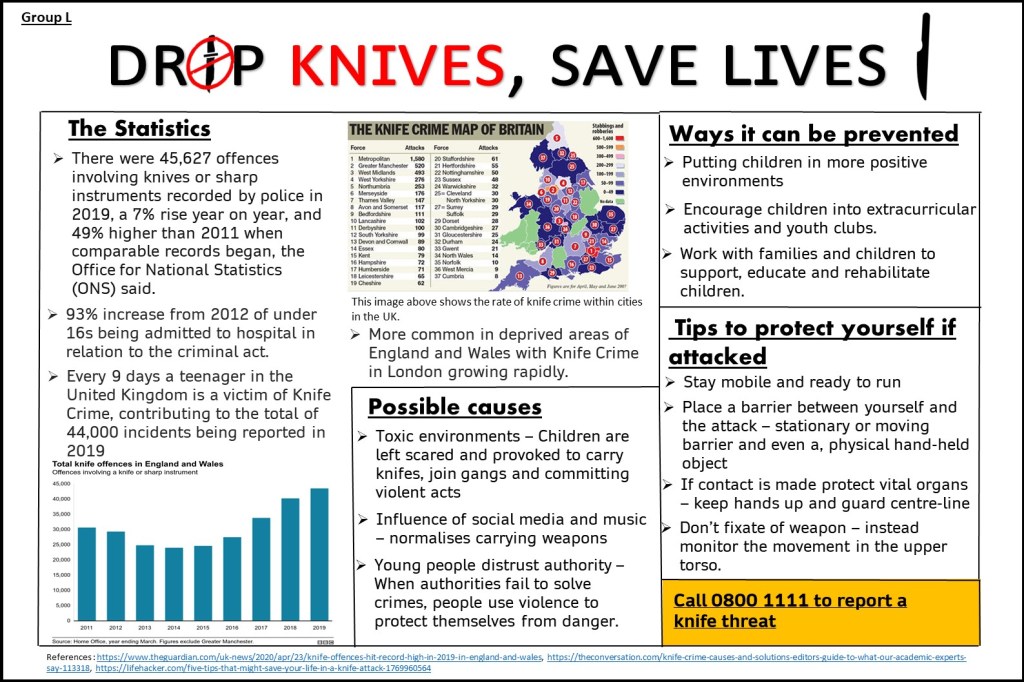
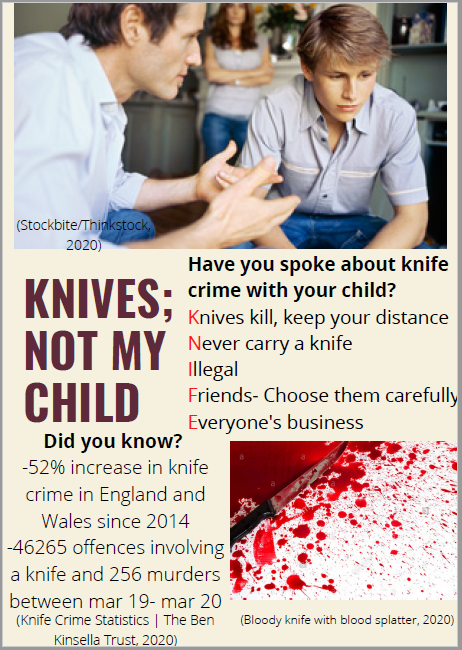
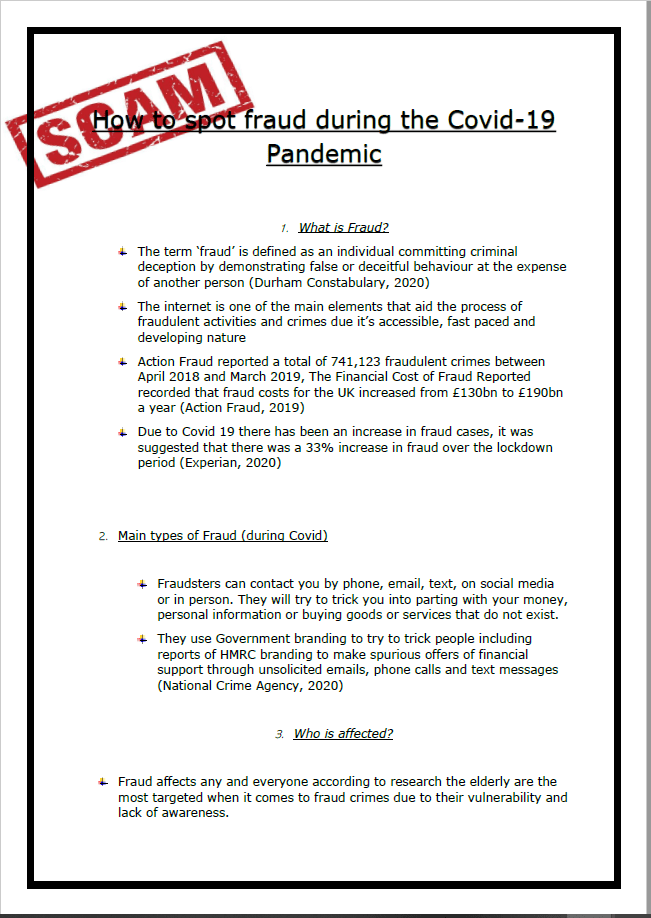
As we prepare to start the new academic year, it is worth reflecting on the beginning of the last one. In 2020 we began the academic year with a whole cohort activity designed to explore visual criminology and inspire the criminological imagination. Students were placed into small (socially distanced) groups, provided with a very short prompt and limited guidance as to how best to tackle the project. The prompts were as follows:
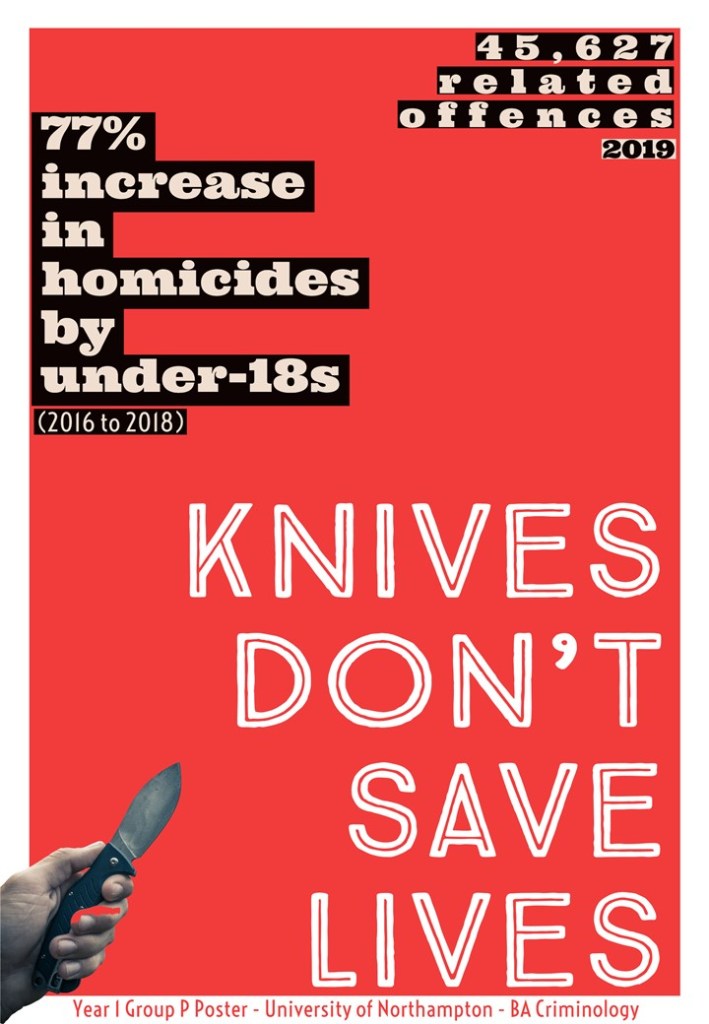
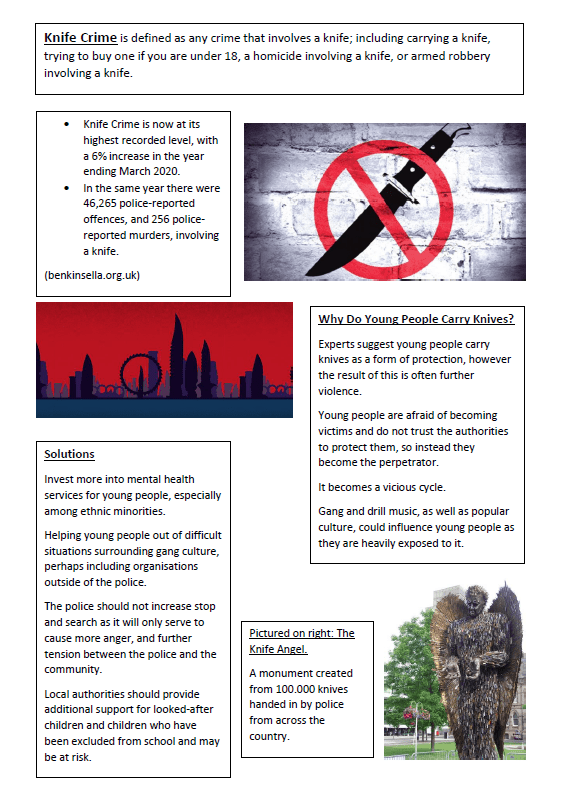
Year 1: Knife Crime
Year 2: Policing Protest (e.g. Black Lives Matter, Extinction Rebellion and so on)
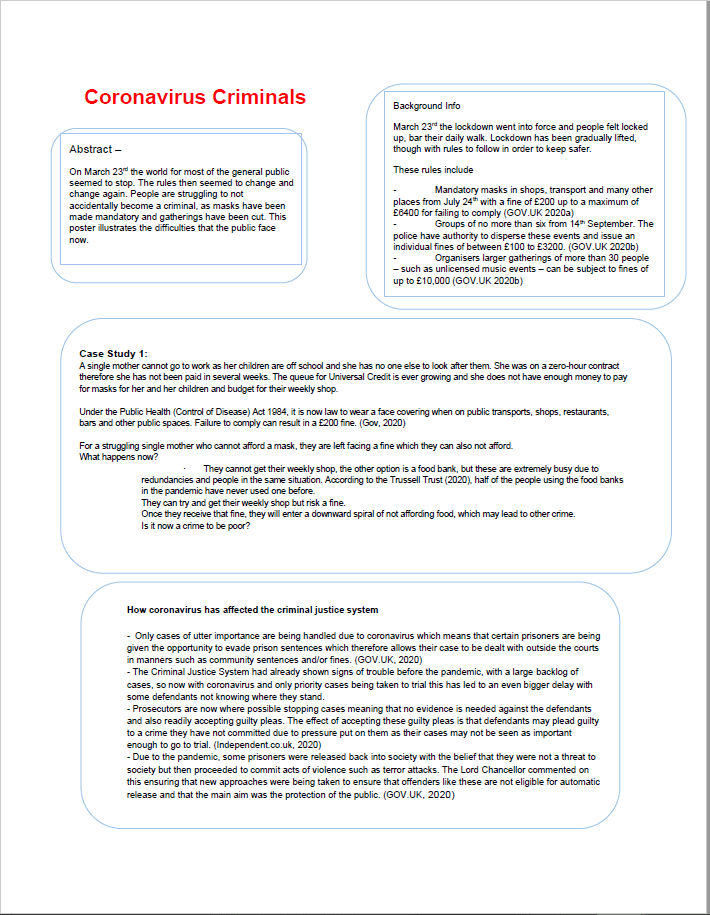
Year 3: Creating Criminals: the CJS during the Covid-19 pandemic
Many of the students had never physically met, yet managed to come together in the midst of a pandemic, negotiate a strategy, carry out the work and produce well designed and thoughtful, criminological posters.
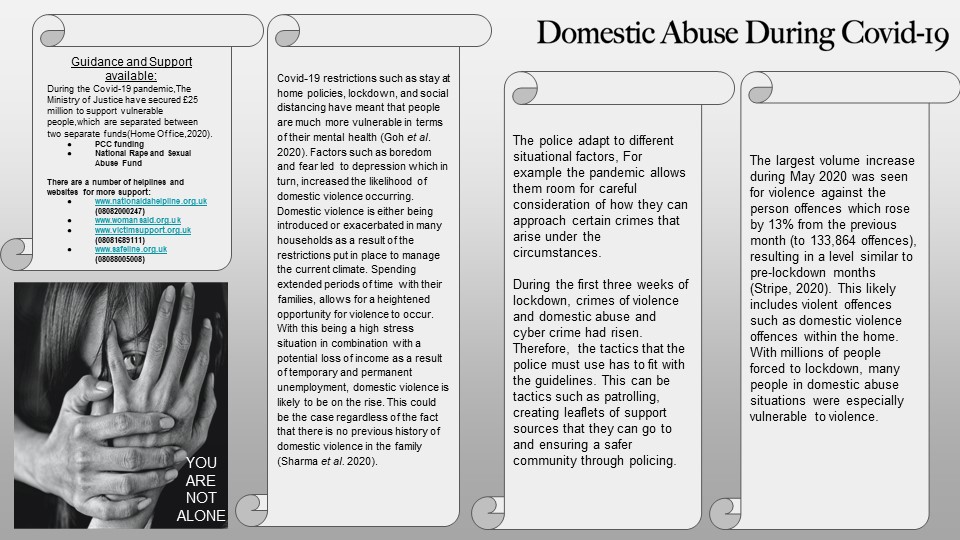
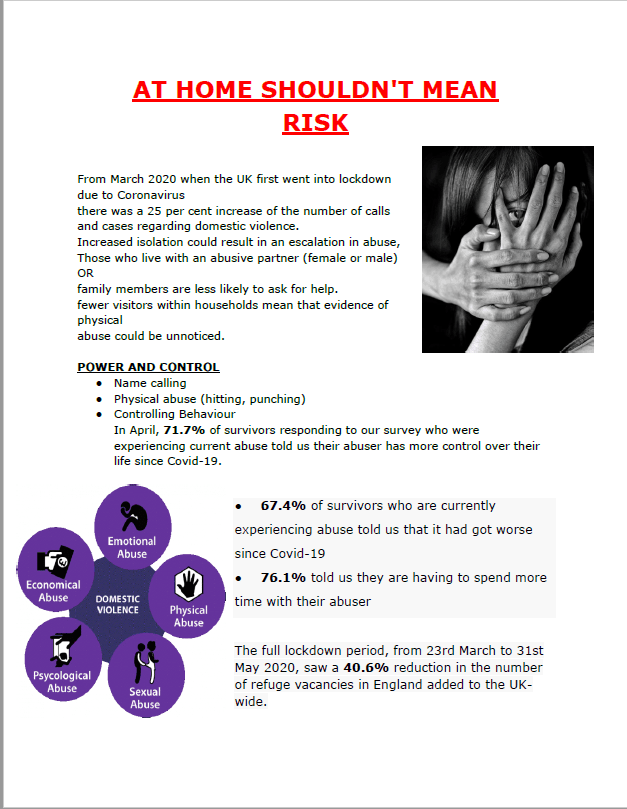
As can be seen from the collage below, everyone involved embraced the challenge and created some remarkable posters. Some of these have been shared previously across social media but this is the first time they have all appeared together in one place.
I am sure everyone will agree our students demonstrated knowledge, understanding, resilience and stamina. We will be running a similar activity for the first week of the academic year 2021-2022, with different prompts to provoke thought and encourage dialogue and team work. Who knows what exciting ideas and posters will be demonstrated this time, but one thing is for sure Criminology students have the opportunity to campaign for social justice becoming real #Changemakers.

















Share this:

Organisational reputation: A euphemism for institutional corruption and violence
The Independent Inquiry into Child Sexual Abuse published a damming report regarding child protection in religious organisations and settings. One of the findings was that ‘In many cases, concerns about external involvement are connected to a desire to protect the reputation of a religious organisation’. Of course, there are many other issues highlighted in the report, but I wanted to concentrate on this notion of protecting organisational reputation. When I hear the phrase ‘organisational reputation’ my blood generally runs cold because I know that behind these words lay a multitude of sins.
Companies and public sector bodies have policies that are designed, at least in part to protect organisational reputation. The rationale behind these policies often lacks transparency. It might be that the protection of the organisation’s reputation ensures it maintains its customer or client base, an enhanced reputation sees more customers or clients, a poor reputation might see this dwindle, to the detriment of the organisation and ultimately to the detriment of its employees and owners. It is difficult to recover from a poor reputation and in the case of business, this is sometimes catastrophic.
However, behind the notions of organisational reputation and policies lays a multi-layer of complex organisational and human behaviours which ultimately lead to institutional corruption and violence. Things will go wrong in organisations, whether that be as a result of human behaviour such as poor decision making or illegal activity or as a result of system failure, such as the failure of software or hardware. Any of these failures might harm the reputation of the organisation and herein lies the nub of the matter. When there are failures, because of organisational culture, which often finds its basis in finding someone to blame, there is a propensity to try to keep the issues ‘in house’, to protect the organisation. By doing so, managers and those in charge ensure that they are not scrutinised regarding the failure, be that individual failures, failures of policies or failures of systems and processes. So, the organisational reputation is not necessarily about protecting the organisation, it is more about avoiding scrutiny of those individuals in power. The mention of organisational reputation in policies and processes has another effect, it silences employees. Whistle blowing policies are subjugated to notions of organisational reputation and as a result silence is maintained for fear of some form of informal sanction. The maintenance of silence ensures organisational reputation, but this corruption also ensures continued institutional violence and corrupt practices. The longer it continues the more those in power have a vested interest in ensuring that the issues are not addressed, lest they are uncovered as offenders through their inaction. ‘We are all in this together’ takes on a new meaning. Thus, corrupt or criminal practices simply continue.
And if the wrongdoing is uncovered, becomes public, then the first reaction is to find a scapegoat thus avoiding the scrutiny of those in power. Rarely in these inquiries do we find that those put in the dock are the managing directors, the chief constables, the heads of children’s services, the archbishops or politicians. Rarely do we see those that caused the problem through inadequate or unworkable policies or strategies or working conditions are ever brought to book. Often its simply portrayed as one or two bad apples in the organisation. Thus, organisational reputation is maintained by further institutional violence perpetrated against the employee. That is not to say that in some cases, the employee should not be brought to book, but rarely should they be standing in the dock on their own.
For ‘organisational reputation, just read institutional corruption and violence.
Share this:


The crime of war

a depiction of Troy
Recently after yet another military campaign coming to an end, social media lit all over with opinions about what should and should not have been done as military and civilians are moving out. Who was at fault, and where lies the responsibility with. There are those who see the problem as a matter of logistics something here and now and those who explore the history of conflict and try to explain it. Either side however does not note perhaps the most significant issue; that the continuation of wars and the maintenance of conflict around the world is not a failure of politics, but an international crime that is largely neglected. For context, lets explore this conflict’s origin; 20 years ago one of the wealthiest countries on the planet declared war to one of the poorest; the military operations carried the code name “Enduring Freedom”! perhaps irony is lost on those in positions of power. The war was declared as part of a wider foreign policy by the wealthy country (and its allies) on what was called the “war on terror”. It ostensibly aimed to curtail, and eventually defeat, extremist groups around the world from using violence and oppressing people. Yes, that is right, they used war in order to stop others from using violence.
In criminology, when we talk about violence we have a number of different ways of exploring it; institutional vs interpersonal or from instrumental to reactive. In all situations we anticipate that violence facilitates more violence, and in that way, those experiencing it become trapped in a loop, that when repeated becomes an inescapable reality. War is the king of violence. It uses both proactive and emotional responses that keep combatants locked in a continuous struggle until one of them surrenders. The victory attached to war and the incumbent heroism that it breeds make the violence more destructive. After all through a millennia of warfare humans have perfected the art of war. Who would have thought that Sun Tzu’s principles on using chariots and secret agents would be replaced with stealth bombers and satellites? Clearly war has evolved but not its destructive nature. The aftermath of a war carries numerous challenges. The most significant is the recognition that in all disputes violence has the last word. As we have seen from endless conflicts around the world the transition from war to peace is not as simple as the signing of a treaty. People take longer to adjust, and they carry the effects of war with them even in peace time.
In a war the causes and the motives of a war are different and anyone who studied history at school can attest to these differences. It is a useful tool in the study of war because it breaks down what has been claimed, what was expected, and what was the real reason people engaged in bloody conflict. The violence of war is different kind of violence one that takes individual disputes out and turns people into tribes. When a country prepares for war the patriotic rhetoric is promoted, the army becomes heroic and their engagement with the war an act of duty. This will keep the soldiers engaged and willing to use their weapons even on people that they do not know or have any personal disputes with. Among wealthy countries that can declare wars thousands of miles away this patriotic fervour becomes even more significant because you have to justify to your troops why they have to go so far away to fight. In the service of the war effort, language becomes an accomplice. For example they refrain from using words like murder (which is the unlawful killing of a person) to casualties; instead of talking about people it is replaced with combatants and non-combatants, excessive violence (or even torture) is renamed as an escalation of the situation. Maybe the worst of all is the way the aftermath of the war is reflected. In the US after the war in Vietnam there was a general opposition to war. Even some of the media claimed “never again” but 10 year after its end Hollywood was making movies glorifying the war and retelling a different rendition of events.
Of course the obvious criminological question to be asked is “why is war still permitted to happen”? The end of the second world war saw the formation of the United Nations and principles on Human Rights that should block any attempt for individual countries to go to war. This however has not happened. There are several reasons for that; the industry of war. Almost all developed countries in the world have a military industry that produces weapons. As an industry it is one of the highest grossing; Selling and buying arms is definitely big business. The UK for example spends more for its defence than it spends for the environment or for education. War is binary there is a victor and the defeated. If a politician banks their political fortunes on being victorious, engaging with wars will ensure their name to be carved in statues around cities and towns. During the war people do not question the social issues; during the first world war for example the suffragettes movement went on a pause and even (partly) threw itself behind the war effort.
What about the people who fight or live under war? There lies the biggest crime of all. The victimisation of thousands or even millions of people. The civilian population becomes accustomed to one of the most extreme forms of violence. I remember my grandmother’s tales from the Nazi occupation; seeing dead people floating in the nearby river on her way to collect coal in the morning. The absorption of this kind of violence can increase people’s tolerance for other forms of violence. In fact, in some parts of the world where young people were born and raised in war find it difficult to accept any peaceful resolution. Simply put they have not got the skills for peace. For societies inflicted with war, violence becomes currency and an instrument ready to be used. Seeing drawings of refugee children about their home, family and travel, it is very clear the imprint war leaves behind. A torched house in a child’s painting is what is etched in their mind, a trauma that will be with them for ever. Unfortunately no child’s painting will become a marble statue or receive the honours, the politicians and field marshals will. In 9/11 we witnessed people jumping from buildings because a place crashed into them; in the airport in Kabul we saw people falling from the planes because they were afraid to stay in the country. Seems this crime has come full circle.
Share this:


A smorgasbord of thought (AKA a head full of magic)

Its been a few weeks since I’ve written a blog and whilst there are plenty of topics to pick from, I never quite got my head round writing about anything in depth. I’ve thought about a lot, I never stop thinking about a lot, some it meaningful and some of it not. I like to think that some of the stuff is quite profound but that’s just in my imagination, I think. Anyway, rather than trying to put together some deep and meaningful narrative about the state of the world I thought I’d provide a few highlights.
When I read Jes’ blog the other week about graffiti, I couldn’t help thinking that we do far too much to try to justify and somehow nullify the effects of criminality. For all our theorising and empathising as criminologists, we shouldn’t lose sight of the fact that crime results in victims and being a victim of crime is at best an unpleasant experience. So, I have to disagree with Jes on one point, grafitti is not art, its criminal damage, vandalism if you like. Very rarely have I ever gazed upon a graffiti covered bridge, wall, shop front, shutter, railway station siding or railway carriage and thought to myself, wow that’s nice. Let’s call it what it is.
I think it was the same week that I read a post on ‘LinkedIn’ about the silence surrounding the murder of Julia James, a 53-year-old Police Community Support Officer. The silence the author of the post was referring to was the contrast between the public response to Julia James’ death and that of Sarah Everard, a 33-year-old marketing executive. No vigil, no public outrage, no ‘claim the streets back’. I wondered what dictates the public response to such horrific events. Is it age, occupation, circumstance or just timing?
I watched the news this week somewhat bemused by the response of some industry chiefs and business owners. The airline industry is less than pleased with the government’s approach to relaxing of restrictions around travel and some business owners are apoplectic about the fact that the removal of restrictions might be delayed. It might be a bit simplistic to state this, but it seems that they value business more than lives.
As for those that went on holiday abroad, thinking they wouldn’t need to quarantine when they came back only to find that the rules changed, and they now have to. More fool you, maybe I’ve missed a trick here, but I don’t think the Covid virus and its mutations will wait for you to enjoy the rest of your holiday before spreading a little more. Don’t complain about quarantine nor the cost of testing, you put yourself in that position, now take some responsibility and suck it up instead of blaming someone else.
In a conversation, a friend of mine told me ‘the problem is people don’t like being told what to do’. This was said in the context of Covid and our discussion about the idiots that think any rules or guidance just doesn’t apply to them. The comment did however make me think about a paper I read some time ago by Storch (1975). When the new police were introduced into this country in 1829, there were few who looked upon them favourably. One of the main issues was simply that the populace did not like being restricted in their ‘immoral or illegal’ pastimes. We can have a debate about who makes the rules but it seems to me the most pressing point is that little has changed. Take off the rose-tinted glasses, there never was a golden era of policing, the police have never been liked and never will be. I wonder how the population would act if there were no police though?
I’m a little weary now, all of this thinking and writing has worn me out. Time for a lie down in a darkened room.


