
Home » Criminal justice (Page 3)
Category Archives: Criminal justice

Justice or Just Another One?

Luckily I’ve never been one for romantic movies. I always preferred a horror movie. I just didn’t know that my love life would become the worst horror movie I could ever encounter. I was only 18 when I met the monster who presented as a half decent human being. I didn’t know the world very well at that point and he made sure that he became my world. The control and coercion, at the time, seemed like romantic gestures. It’s only with hind sight that I can look back and realise every “kind” and “loving” gesture came from a menacing place of control and selfishness. I was fully under his spell. But anyway, I won’t get into every detail ever. I guess I just wanted to preface this with the fact that abuse doesn’t just start with abuse. It starts with manipulation that is often disguised as love and romance in a twisted way.
This man went on to break me down into a shell of myself before the physical abuse started. Even then, him getting that angry was somehow always my fault. I caused that reaction in his sick, twisted mind and I started to believe it was my fault too. The final incident took place and the last thing I can clearly recall is hearing how he was going to cave my head in before I felt this horrendous pressure on my neck with his other hand keeping me from making any noise that would expose him.
By chance, I managed to get free and RUN to my family. Immediately took photos of my injuries too because even in my state, I know how the Criminal Justice System would not be on my side without evidence they deemed suitable.
Anyway, my case ended up going to trial. Further trauma. Great. I had to relive the entire relationship by having every part of my character questioned on the stand like I was the criminal in this instance. I even got told by his defence that I had “Histrionic Personality Disorder”. Something I have never been diagnosed with, or even been assessed for. Just another way the CJS likes to pathologise women’s trauma. Worst of all, turns out ‘Doctor Defence’ ended up dropping my abuser as he was professionally embarrassed when he realised he knew my mother who was also a witness. Wonderful. This meant I got to go through the process of being criminalised, questioned, diagnosed with disorders I hadn’t heard of at the time, hear the messages, see the photos ALL over again.
Although “justice” prevailed in as much as he was found guilty. All for the sake of a suspended sentence. Perfect. The man who made me feel like he was my world then also tried to end my life was still going to be free enough to see me. The law wasn’t enough to stop him from harming me, why would it be enough to stop him now?
Fortunately for me, it stopped him harming me. However, it did not stop him harming his next victim. For the sake of her, I won’t share any details of her story as it is not mine to share. Yet, this man is now behind bars for a pretty short period of time as he has once again harmed a woman. Evidently, I was right. The law was not enough to stop him. Which leads me to the point of this post, at what stage does the CJS actually start to take women’s pleas to feel safe seriously? Does this man have to go as far to take away a woman’s life entirely before someone finally deems him as dangerous? Why was my harm not enough? Would the CJS have suddenly seen me as a victim, rather than making me feel like a criminal in court, if I was eternally silenced? Why do women have to keep dying at the hands of men because the CJS protects domestic abusers?”
Share this:


I’m not Black; my Friends and I are Brown, not Black

I recently began the process of preparing my child for the imminent transition to a new school situated in a diverse community. Despite being born into a similarly diverse environment, his early educational exposure occurred in an ethnically varied setting. Venturing into this new chapter within a racially diverse community has sparked a keen interest in him.
My child soon articulated a perspective that challenged conventional racial labels. He asserted that he and his friend Lucien are not accurately described as ‘black,’ rather he believes they are ‘brown.’ He went further to contest the classification of a lady on TV, who was singing the song “Ocean” by Hillsong, as ‘white.’ According to him, his skin is not black like the trousers he was wearing, and the lady is not white like the paper on my lap. This succinct but profound statement held more critical significance than numerous conversations I’ve encountered in my over five years of post-PhD lecturing.
The task at hand, guiding an under seven-year-old questioning the conventional colour-based categorisation, proved challenging. How do I convince an under seven-year-old that his knowledge of colours should be limited to abstract things and that persons with brown toned skin are ‘black’ while those with fair or light toned skinned are ‘white’? I found myself unprepared to initiate this complex conversation, but his persistent curiosity and incessant ‘why prompts’ compelled me to seek creative ways to address the matter. Even as I attempted to distract myself with a routine evening shower and dinner, my mind continued to grapple with the implications of our conversation.
Post-dinner, my attempt to engage in my usual political news catch-up led me to a YouTube vlog by Adeola titled ‘How I Almost Died!’ where she shared her pregnancy challenges. One statement she made struck a chord: ‘if you are a black woman and you are having a baby in America, please always advocate for yourself, don’t ever keep quiet, whatever you are feeling, keep saying it until they do something about it’ (18:39). This sentiment echoed similar experiences of tennis star Serena Williams, who faced negligence during childbirth in 2017.
The experiences of these popular ‘black’ women not only reminds me that the concept ‘black’ and ‘white’ are not only symbolic, but a tool for domination and oppression, and disadvantaging the one against the other. Drawing inspiration from Jay-Z’s ‘the story of O.J’, the song drew attention to the experiences of race, success, and the complexities of navigating the world as a ‘black’ individual. In the song, two themes stood out for me, the collective vulnerability to prejudice and the apparent bias in the criminal justice system towards ‘black’ people. In the UK, both proportional underrepresentation in staff number and proportional overrepresentation of minoritized groups in the criminal justice system and the consequences therefrom is still topical.
Jay-Z’s nuanced understanding of ‘black’ identity rejects simplistic narratives while emphasising its multifaceted nature. The verse, “O.J. ‘like I’m not black, I’m O.J.’ Okay” underscores the challenges even successful ‘black’ individuals face within racial systems. As criminologists, we recognize the reflection of these issues in daily experiences, prompting continuous self-reflexivity regarding our values, power positions, and how our scholarly practice addresses or perpetuates these concerns. Ultimately, the question persists: Can a post-racially biassed world or systems truly exist?
Share this:


2024: the year for community and kindness?



The year 2023 was full of pain, loss, suffering, hatred and harm. When looking locally, homelessness and poverty remain very much part of the social fabric in England and Wales, when looking globally, genocide, terror attacks and dictatorships are evident. Politics appear to have lost what little, if any, composure and respect it had: and all in all, the year leaves a somewhat bitter taste in the mouth.
Nevertheless, 2023 was also full of joy, happiness, hope and love. New lives have been welcomed into the world, achievements made, milestones met, communities standing together to march for a ceasefire and to protest against genocide, war, animal rights, global warming and violence against women to name but a few. It is this collective identity I hope punches its way into 2024, because I fear as time moves forward this strength in community, this sense of belonging, appears to be slowly peeling away.
When I recollect my grandparents and parents talking about ‘back in the day’ what stands out most to me is the community identity: the banding together during hard times. The taking an interest, providing a shoulder should it be required. Today, and even if I think back critically over the pandemic, the narrative is very singular: you must stay inside. You must be accountable, you must be responsible, you must get by and manage. There is no narrative of leaning on your neighbours, leaning on your community to the extent that, I’m under the impression, existed before. We have seen and felt this shift very much so within the sphere of criminal justice: it is the individual’s responsibility for their actions, their circumstances and their ‘lot in life’. And the Criminologists amongst you will be uttering expletives at this point. I think what I am attempting to get at, is that for 2024 I would like to see a shared identity as humankind come front and central. For inclusivity, kindness and hope to take flight and not because it benefits us as singular entities, but because it fosters our shared sense of, and commitment to, community.
But ‘community’ exists in so much more than just actions, it is also about our thoughts and beliefs. My worry: whilst kindness and support exist in the world, is that these features only exist if it does not disadvantage (or be perceived to disadvantage) the individual. An example: a person asks me for a sanitary product, and having many of them on me the vast majority of the time, means I am able and happy to accommodate. But what if I only had one left and the likelihood of me needing the last one is pretty high? Do I put myself at a later disadvantage for this person? This person is a stranger: for a friend I wouldn’t even think, I would give it to them. I know I would, and have given out my last sanitary product to strangers who have asked on a number of occasions. And if everyone did this, then once I need a product I can have faith that someone else will be able to support me when required. The issue, in this convoluted way of getting there, is for most of us (including me as evidenced) there is an initial reaction to centralise ‘us’ as an individual rather than focus on the community aspect of it. How will, or even could, this impact me?
Now, I appreciate this is overly generalised, and for those that foster community to all (not just those in their community and are generally very selfless) I apologise. But in 2024, I would like to see people, myself included, act and believe in this sense of community rather than the individualised self. I want people to belong, to support and to generally be kind and not through thinking about how it impacts them to do so. We do not have to be friends with everyone, but just a general level of kindness, understanding and a shared want for a better, inclusive, and safe future would be great!
So Happy New Year to everyone! I hope our 2024 is full of peace, prosperity, community, safety and kindness!

Share this:


A visual walk around a panopticon prison in the city of “Brotherly Love”
Conferences…people even within academia have views on them. This year the American Society of Criminology hosted its annual meeting in Philadelphia. In the conference we had the opportunity to talk about course development and the pedagogies in criminology. Outside the conference we visited Eastern State Penitentiary one of the original panopticon prisons…now a decaying museum on penal philosophy and policy.

The bleak corridors of a panopticon prison

the walls are closing in and there is only light from above

these cells smell of decay; they were the last residence of those condemned to death

the old greenhouse; now a glass/concrete structure…then a place to plant flowers. Even in the darkest places life finds a way to persevere

isolation: a torture within an institution of violence. The people coming out will be forever scared as time leaves the harshest wounds

a place of worship: for some the only companion to abject desperation; for those who did not lose their minds or try to end their lives; faith kept them at least alive.

the yard is monitored by the guards at the core; the chained prisoners will walk outside or get some exercise but only if they behave. To be outside in here is a privilege

the corridors look identical; you become disoriented and disillusioned

everything here conjures images of pain

an ostentatious building, build back in the 19th century to lock in criminals. It housed a new principled idea, a new system on penal reform. the first penitentiary of its kind. Nonetheless it never stopped being an institution of oppression…it closed in 1970.
The role of the criminologist (among others) is to explain, analyse and discuss our responses to crime, the systems we use and the strategies employed. So before a friendly neighbour tells you that sending people to an island or arming the police with guns or giving juveniles harsher penalties, they better talk to a criminologist first.
As a final thought, I leave you with this…there are people who left the prison broken but there are those who died in this prison. Eleven people tried to escape but were recaptured. Once you are sent down, the prison owns you.
Share this:


What cost justice? What crisis?
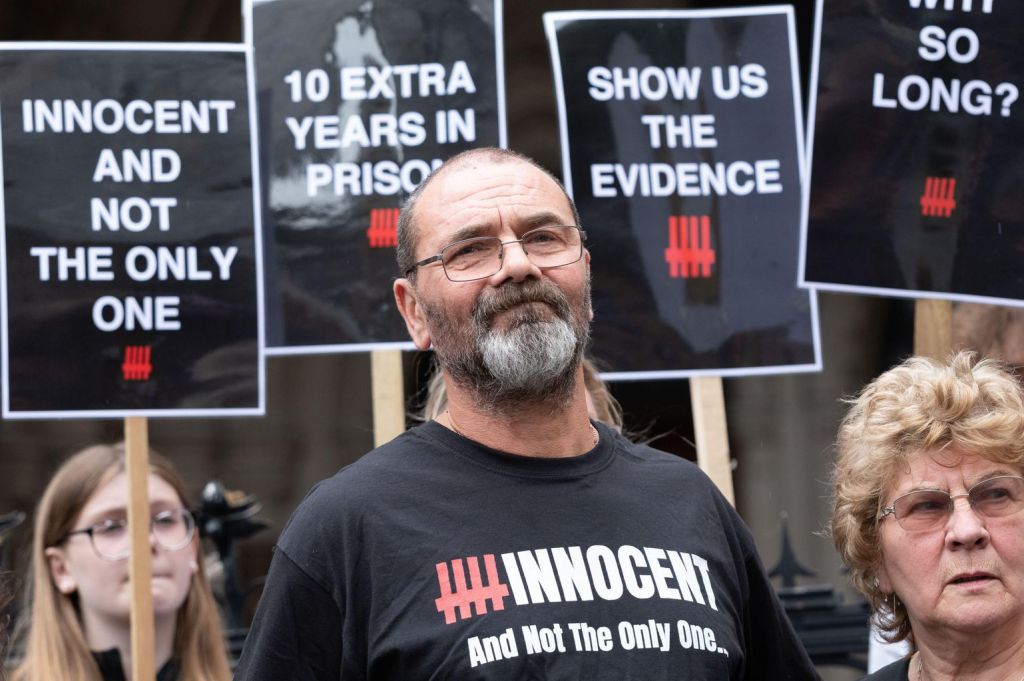
The case of Andrew Malkinson represents yet another in the long list of miscarriages of justice in the United Kingdom. Those that study criminology and those practitioners involved in the criminal justice system have a reasonable grasp of how such cases come about. More often than not it is a result of police malpractice, negligence, culture and error. Occasionally it is as a result of poor direction in court by the trial judge or failures by the CPS, the prosecution team or even the defence team. The tragic case of Stefan Kiszko is a good example of multiple failures by different bodies including the defence. Previous attempts at addressing the issues have seen the introduction of new laws such as the Police and Criminal Evidence Act 1984 and the Criminal Procedure and Investigations Act 1996. The former dealing in part with the treatment of suspects in custody and the latter with the disclosure of documents in criminal proceedings. Undoubtedly there have been significant improvements in the way suspects are dealt with and the way that cases are handled. Other interventions have been the introduction of the Crown Prosecution Service (CPS), removing in part, charging decisions from the police and the introduction of the Criminal Cases Review Commission (CCRC) to review cases where an appeal has been lost but fresh evidence or information has come to light.
And yet, despite better police training regarding interviews and the treatment of suspects, better training in investigations as a whole, new restrictive laws and procedures, the independence of the CPS, the court appeal system and oversight by a body such as the CCRC, miscarriages of justice still occur. What sets the Malkinson case aside from the others appears to be the failure of the CCRC to take action on new information. The suggestion being that the decision was a financial one, with little to do with justice. If the latter is proved to be true, we will of course have to wait for the results of the inquiry, then how can anyone have any confidence in the justice system?
Over the years we have already seen swingeing cuts in budgets in the criminal justice system such that the system is overloaded. Try to pop into the local police station to make a complaint of a crime, you won’t find a station open to the public. Should you have been unfortunate enough to have been caught for some minor misdemeanour and need to go to magistrates’ court for a hearing, you’ll be lucky if you don’t have to travel some considerable distance to get there, good luck with that if you rely on public transport. Should you be the victim of a more serious crime or indeed charged with a more serious offence, triable in crown court, then you’ll probably wait a couple of years before the trial. Unfortunate if you are the alleged offender and on remand, and if you are the victim, you could be forgiven for deciding that you’d rather put it all behind you and disengage with the system. But even to get to that stage, there has to be sufficient evidence to secure a prosecution and it has to be in the public interest to do so. Your day in court as a victim is likely to be hang on the vagaries of the CPS decision making process. A process that has one eye on the court backlog and another on performance targets. Little wonder the attrition rate in sex offences is so high. Gone are the days of letting a jury decide on occasions where the evidence hangs on little more than one person’s word against the other.
Andrew Malkinson and his legal representative have called for a judicial review, a review where witnesses can be compelled to attend to give evidence and documentary evidence can be demanded to be produced. Instead, the government has said there will be an independent inquiry. On a personal note, I have little faith in such inquiries. My experience is that they are rarely independent of government direction and wishes. Andrew Malkinson’s case is a travesty and the least that can be done is to have a proper inquiry. I suspect though that the Malkinson case might just be the tip of the iceberg. The Criminal Justice System is in crisis but budgetary restraint and political whim seem to be far more important than justice. We can look forward to more finger pointing and yet more reorganisation and regulation.
Share this:


Is Easter relevant?

What if I was to ask you what images will you conjure regarding Easter? For many pictures of yellow chicks, ducklings, bunnies, and colourful eggs! This sounds like a celebration of the rebirth of nature, nothing too religious. As for the hot cross buns, these come to our local stores across the year. The calendar marks it as a spring break without any significant reference to the religion that underpins the origin of the holiday. Easter is a moving celebration that observers the lunar calendar like other religious festivals dictated by the equinox of spring and the first full moon. It replaces previous Greco-Roman holidays, and it takes its influence for the Hebrew Passover. For those who regard themselves as Christians, the message Easter encapsulates is part of their pillars of faith. The main message is that Jesus, the son of God, was arrested for sedition and blasphemy, went through two types of trials representing two different forms of justice; a secular and a religious court which found him guilty. He was convicted of all charges, sentenced to death, and executed the day after sentencing. This was exceptional speed for a justice system that many countries will envy. By all accounts, this man who claimed to be king and divine became a convicted felon put to death for his crimes. The Christian message focuses primarily on what happened next. Allegedly the body of the dead man is placed in a sealed grave only to be resurrected (return from the death, body and spirit) roamed the earth for about 40 days until he ascended into heavens with the promise to be back in the second coming. Christian scholars have been spending time and hours discussing the representation of this miracle. The central core of Christianity is the victory of life over death. The official line is quite remarkable and provided Christians with an opportunity to admire their head of their church.
What if this was not really the most important message in the story? What if the focus was not on the resurrection but on human suffering. The night before his arrest Jesus, according to the New Testament will ask “Father, if thou be willing, remove this cup from me” in a last attempt to avoid the humiliation and torture that was to come. In Criminology, we recognise in people’s actions free will, and as such, in a momentary lapse of judgment, this man will seek to avoid what is to come. The forthcoming arrest after being identified with a kiss (most unique line-up in history) will be followed by torture. This form of judicial torture is described in grim detail in the scriptures and provides a contrast to the triumph of the end with the resurrection. Theologically, this makes good sense, but it does not relate to the collective human experience. Legal systems across time have been used to judge and to punish people according to their deeds. Human suffering in punishment seems to be centred on bringing back balance to the harm incurred by the crime committed. Then there are those who serve as an example of those who take the punishment, not because they accept their actions are wrong, but because their convictions are those that rise above the legal frameworks of their time. When Socrates was condemned to death, his students came to rescue him, but he insisted on ingesting the poison. His action was not of the crime but of the nature of the society he envisaged. When Jesus is met with the guard in the garden of Gethsemane, he could have left in the dark of the night, but he stays on. These criminals challenge the orthodoxy of legal rights and, most importantly, our perception that all crimes are bad, and criminals deserve punishment.
Bunnies are nice and for some even cuddly creatures, eggs can be colourful and delicious, especially if made of chocolate, but they do not contain that most important criminological message of the day. Convictions and principles for those who have them, may bring them to clash with authorities, they may even be regarded as criminals but every now and then they set some new standards of where we wish to travel in our human journey. So, to answer my own question, religiosity and different faiths come and go, but values remain to remind us that we have more in common than in opposition.
Share this:


Tyre Nichols’ last bird’s eye view.
[Spoken Word/Read aloud]

After my death, the New York Times reported that you all gave me “at least 71 commands.”
“Many were contradictory or impossible,” the Times tweeted.
In a mob frenzy throughout the whole ordeal, y’all kept shouting at me over each other.
When I couldn’t comply – and even when I did manage to obey– you…(SMH)
“Responded with escalating force.”
Hmph!
NYT’s tweet is cleverly crafted, with a photo – a bird’s eye view of us from the street camera.
There we see 4 of you hunched down on me, pressing my whole body against the ground.
The 5th thug is lunging toward me with a weapon.
After my death, I wonder how y’all will explain this footage –
Knowing the nature of these viral tweets?
I’ve personally reposted too many posts of Black bodies in my exact position to count.
I know I didn’t have to do anything to get here,
Knowing this brings me no comfort in this moment.
All of your commands ignore my humanity.
I am powerless and yet you persist.
In the many video angles of your fatal attack, we all see that…
Each of you had so many chances to just stop!
I’ve always tried to make sense of such lethal violence.
I try to understand the who, what and why of your attack that led to my death.
You had me pinned and pressed to the ground when you kept barking:
“Get on the ground.”
When you kept yelling, one after the other, “Give me your hands,”
Two or three of you were already bending my arms backward and forward with force.
I contort myself and try to comply, yet
You keep screaming “Stop resisting,” meanwhile,
At the same time, two or three of you are manhandling some part of me, at all times.
At the end when you leaned my beaten-up, bleeding, limp body against your car,
One of you snaps-n-shares pictures of me with colleagues and friends.
He’s proud and reaching out to folks who’ll pat him on the back for his latest accomplishment.
During the whole attack, I notice this is the only time he’s cool. He smiles.
He’s clearly used to this exact same rush, this exact same thrill.
I’m more disappointed than angered by his grin.
Mine is an all-American honor killing –
Most just get shot, but many have been tortured just like me.
We see this is how too many of his brethren defend their shield.
Where was I to go?
Appeal to the other officers on the scene whose negligence is pristine?
I tried to run, you captured me, which provoked more torture; nowhere feels safe.
Why was I being terrorized?
And by you, who’ve pledged to protect us from (this) terrorism and (this) thug behavior.
What was I to do?
Flight, freeze or fight.
I am tiny compared to any one of you, y’alls combat training and y’alls five big bodies built-up for battle.
I am a fly; you act like lords.
“Bruh,” you call me, but there is no evidence of brotherliness here.
Or, does your fraternity honor and practice such sadomasochistic rituals?
I like skateboarding and photography, another magazine writes, trying to digest my senseless murder.
Yet the videos of me captured for the world to see are
“…absent all beauty and sterilized of hope.”
When would this end?
Would I have to die for you to stop.
How had I possibly provoked this attack?
Who was I to obey?
You? You’re no good, like Linda Ronstadt said:
You’re no good. You’re no good. Baby, you’re no gooooooood…..
You’re no good.
Or perhaps good in your god’s eyes?
Or, are you God?
No.
You’re not anybody’s God, but…
You play one out here on these streets.
Now, you’re playing my God… my life is keenly in your fists.
Yes! These unceasing murders that I’ve seen – not just mine now–
Is what makes this place hell on Earth in the here and now.
So perhaps y’all’re just agents of the devil,
A force unleashed from the depths upon these streets.
“Momma,” I cry out as loud as I can, and you continue to holler obscenities at me.
Momma used to say all people are fundamentally good,
But lately, I’ve felt fundamentally unsure, and now I’m convinced.
“I didn’t do anything,” I plea, rolling on the ground with my hands behind my back.
Y’all kick me.
“Mom,” I cry out again.
I will die here alone.
No mother should lose her child like this.
The agony inside now, as I call out to my momma, is not for her help,
But because I can already feel her pain once she hears how I’m dying.
Since momma fought for the public release of the videos of my attack,
My name is a hashtag and we have been written about a plenty.
“Every Black mother knows she is a split second,” one newspaper writes,
“… a quirk of chance, from joining a lineage of suffering that stretches back through Mamie Elizabeth Till-Mobley…”
When she saw y’all in court for my kidnapping, assault, oppression, and murder,
Momma said you didn’t even have the courage to look her in the face.
Cowards.
Momma said you’re gonna see her each time you are called to see the judge.
-END-
Photo:
NPR OBITUARIES: “Tyre Nichols loved skateboarding. That’s how his friends say they’ll remember him.”
Share this:


“Over-policed and under-protected”- School children and policing: some criminological discussions

During the first week of Semester 2, the Criminology team put on a number of small sessions designed around topic areas to encourage some ‘radical’ discussion. Topic areas were designed to deliberately encourage debate and critical consideration. Due to the increasing use of police in schools, and relatively recent (within the past few years) issues around police stop and search in schools, disproportionately being used in schools with a majority Black and Brown cohort, often framed as ‘urban’ schools: it is an area of great interest for both Stephanie and myself. We were expecting some lively discussions around whether the Police should be in schools, and if so, in what capacity: and whilst the students did not disappoint in relation to this matter, they also raised some excellent points around the policing of school children and the control the school forces upon them. It is this area of the discussions that I would like to share with you.
Policing as a form of social control, exerted by schools, not necessarily the Police force, is rife within schools: something the students were quick to draw attention to. This was raised in relation to the policing of Black children’s hair. They are told to alter their appearances based on white standards, have been sent home for not conforming to the school dress code, sent to the back of classrooms for having distracting hair: in both primary and secondary school settings. This power over Black children’s hair, stands in contrast to the idea that children have no say over their hair, and are held to white westernised standards, yet can be held criminally responsible and subject to the force of the law as they are recognised as mature enough to understand crime and its consequences.
This baffling, controlling narrative is also evident in the use of school uniforms. Students raised the inappropriateness of some of the school uniforms in relation to the length of skirts, banning trainers, and piercings, which was a method of control which removed all sense of individuality and identity. It was recognised that children are encouraged to ‘grow up’ and ‘mature’ and ‘figure out’ what they want to do, but they had the methods of exploring this, especially in relation to their identity, restricted and policed. The limited autonomy over hair, clothes, piercings and children’s bodies stands in stark contrast to the legal discourse of children being criminally responsible at the age of 10years old in England and Wales. This was baffling to us!
A further way of policing students in school was through the surveillance the schools exerted over children. The use of CCTV, fingerprints as a method of purchasing lunch was originally considered as a form of security: the all seeing eye of big brother, oops sorry the school, and the attempt to reduce bullying by removing the carrying of cash was originally framed as a way of protecting children. However, the students were very critical of whether this surveillance was intended as protection, or rather as control. The idea of being deterred from delinquency through the use of CCTV, and preventing bullying by removing the possibility of money was considered, but again this refers back to the controlling of children’s behaviour.
There isn’t enough space to include all areas of the 2 hour discussion, and the time flew by quickly as the students and staff lost themselves in considering the role police play in schools, and the role schools play in policing children. The session concluded with us considering the school as an institution and whether its primary role was that of education, or of the creation of obedient bodies. I won’t tell you where we settled, but it is worth a ponder…
With thanks to all those who attended and stimulated the critical discussions around over-policed and under-protected: school children and policing: Gloria, Lucy, Kayode, Uche, Christivie, Joseph, Rosemary, Katya, Kayleigh, Chrissy, Diamante, Shola-Renee, Ellie, Sarah, Zoe, Stephanie and Jessica.
Share this:

A world without prisons follow-up. A student/staff reflection piece
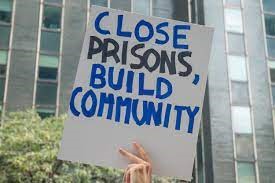
As a department Criminology has pushed the envelope in promoting discussions around the key disciplinary debates. @franbitalo and myself co-ordinated a conversation where the main focus was to imagine “a world without prisons”. The conversation was very interesting, and we decided to post parts of it as a legacy of the social debates we engage in. The discussion is captured as a series of comments made by the students with some prompts in bold.
The original question stands, can you imagine a world without prisons? First thing first, there is a feeling that prisons will always exist as mechanisms to control our society. Mainly because our society is too punitive and focused on punishment rather than rehabilitation. We live in a society that ideologically sees the prison as the representation of being hard on crime. Further to this point we may never be able to abolish the prison, so it can always remain as the last resort of what to do with those who have harm others. Especially for those in our society who deserve to be punished because of what they did. Perhaps we could reform it or extend the use of the probation service dealing with crime.
In an ideal world prisons should not exist especially because the system seems to target particular groups, namely minorities and people from specific background. It important to note that it does stop people seeking or taking justice into their hands and deflecting any need for vengeance “eye for an eye”. Prison is a punishment done in the name of society, but it does carry political overtones. There are parts of political ideology that support the idea that punishment is meant to make an example of those breaking the law. This approach is deeply rooted, and is impervious to reform or change. Which can become one of the biggest issues regarding prisons.
Then there is the public’s view on prisons. When people hear that prisons will go they will be very unhappy and even frightened. They will feel that without prisons people will go crazy and commit crimes without any consequences. Society, people feel, will go into a state of anarchy where vigilantism will become the acceptable course of action. This approach becomes more urgent when considering particular types of criminals, like sex offenders and in particular, paedophiles. Regardless of the intention of the act, these types of crime cause serious harm that the victim carries for the rest of their lives. The violation of trust and the lack of consent makes these crimes particularly repulsive and prison worthy. How about child abduction? Not sure if we should make prison crime specific. That will not serve its purpose, instead it will make it the dumping ground for some crime categories, sending a message that only some people will go to prison.
Will that be the only crime category worthy of prison? In an ideal world, those who commit serious financial crimes should be going to prison, if such a prison existed. Again, here if we are considering harm as the reason to keep prisons open these types of crime cause maximum harm. The implication of white-collar crime, serious fraud and tax evasion deprive our society of taxes and income that is desperately needed in social infrastructure, services and social support. Financial crime flaunts the social contract and weakens society. Perhaps those involved should be made to contribute reparations. The prison question raises another issue to consider especially with all the things said before! Who “deserves” to go to prison. Who gets to go and who is given an alternative sentence is based on established views on crime. There are a lot of concerns on the way crime is prioritised and understood because these prioritisations do not reflect the reality of social disorder. Prison is an institution that scapegoats the working classes. Systematically the system imprisons the poor because class is an imprisonable factor; the others being gender and race.
If we keep only certain serious crimes on the books, we are looking at a massive reduction in prison numbers. Is that the way to abolitionism? The prison plays too much of a role in the Criminal Justice System to be discounted. The Industrial Prison Complex as a criminological concept indicates the strengths of an institution that despite its failings, hasn’t lost its prominence. On the side of the State, the establishment is a barrier to any reform or changes to this institution. Changes are not only needed for prison, but also for the way the system responds to the victims of crime as well. Victims are going through a process of re-victimisation and re-harming them. This is because the system is using the victims as part of the process, in giving evidence. If there is concern for those harmed by crime, that is not demonstrated by the strictness of the prison.
As a society currently we may not be able to abolish prisons but we ought to reduce the harm punishment has onto people. In order to abolish prisons, the system will have to be ready to allow for the change to happen. In the meantime, alternative justice systems have not delivered anything different from what we currently have. One of the reasons is that as a society we have the need to see justice being served. A change so drastic as this will definitely require a change in politics, a change in ideology and a change in the way we view crime as a society in order to succeed. The conversation continues…
Thank you to all the participating students: Katja, Aimee, Alice, Zoe, Laura, Amanda, Kayleigh, Chrissy, Meg, and Ellie also thank you to my “partner in crime” @franbitalo.
Share this:


Public confidence in the CJS: ending on a high?

2022 has been a turbulent and challenging year for many. Social inequalities and disadvantage are rife, with those in power repeatedly making bad, inhumane decisions and with very little, to no, accountability or consequences (insert your favourite example from the sh** storm that is the Conservative Party here). Union after Union, across sectors, engage in industrial action in response to poor working conditions and pay, amidst a cost-of-living crisis. And although seemingly unconnected, as the year comes to a close, the Sentencing Guidelines (2022) report on Public Confidence in the Criminal Justice System (CJS) has got me feeling frustrated. My previous blog entries have often been ‘moans’. And whilst January is often dubbed the month of new beginnings and change for the year ahead: we’re not quite there yet so true to form here is my latest moan!
The report exists as one of many conducted by Savanta to collate data on public confidence, in terms of effectiveness and fairness, in the CJS and public awareness of the sentencing guidelines. The data collected in March 2022, was via online surveys given to a “nationally representative sample of 2,165 adults in England and Wales” (Archer et al., 2022, p.9). Some of their highlighted ‘Key Findings’ include that confidence levels in CJS remains relatively stable in comparison to 2018, on the whole, respondents viewed sentences as ‘too lenient’ however this varied based on offence, the existence of the sentencing guidelines improves respondent’s confidence in the fairness of sentencing, and that engagement with broadcast news sources was high across respondents (Archer et al., 2022). It is not the findings, per se, that I take umbrage with, but rather the claim it is a “nationally representative sample of adults in England and Wales” (Archer et al., 2022, p.9).
I take issue on two fronts. The first being that the sample size of 2,165 adult respondents is representative when the demographic factors included are: gender (male and female), age (18-34yo, 35-54yo and 55+), region, ethnicity (White, Mixed, Asian, Black and Other) and socio-economic grade. Now considering we are, thankfully, at the end of 2022 we should all be able to recognise that a sample which only includes cis-gendered options, narrows ethnicity down to 4 categories and the charming ‘other’, and does not include disabilities is problematic. There has been a large body of research done on people with disabilities and their experiences within the CJS, the lack of representation, the lack of accessibility to space and decisions, potentially impacting a defendant’s right to a fair trial, and a victim’s right to justice (Equality and Human Rights Commission, 2021; Hyun et al., 2013 ). So I ask, is this not something which needs considering when looking at public confidence in the CJS of a “nationally representative” sample?
In addition to this, I take issue with the requirement that the sample be “nationally representative”. We have research piece upon research piece about how Black men and Black boys experience the CJS and its various agencies disproportionately to their white counterparts (Lammy, 2017; Monteith et al., 2022; Parmar, 2012). Their experiences of stop and search, sentencing, bail, access to programmes within the Secure and Youth estate. There is nothing representative about our CJS in terms of who it processes, how this is done, and by whom. According to Monteith et al., (2022) 1% of Judges in the CJS are Black, and there are NO Black judges on the High Court, Court of Appeal of Supreme Court: this is not representative! Why then, are we concerned with a representative sample when looking at public confidence in CJS and the sentencing guidelines, when it is not experienced in a proportionate manner?
Maybe I’ve missed the point?
The report is clear, accessible, visible to the public: crucial concepts when thinking about justice, and measuring public confidence in the CJS is fraught with difficulties (Bradford and Myhill, 2015; Kautt and Tankebe, 2011). But this just feels like another nail being thumped into the coffin that is 2022. Might be the eagerness I possess to leave 2022 behind, or the impeding dread for the year to follow but the report has angered me rather than reassured me. As a criminologist, I am hopeful for a more inclusive, representative, fair and accountable CJS, but I am not sure how this will be achieved if we do not accept that the system disproportionately impacts (but not exclusively) Black men, women and children. Think it might be time for another mince pie…
Happy New Year to you all!
References:
Archer, N., Butler, M., Avukatu, G. and Williams, E. (2022) Public Knowledge of Confidence in the Criminal Justice System and Sentencing: 2022 Research. London: Sentencing Council.
Bradford, B. and Myhill, A. (2015) Triggers of change to public confidence in the police and criminal justice system: Findings from the crime survey for England and Wales panel experiment, Criminology and Criminal Justice, 15(1), pp.23-43.
Equality and Human Rights Commission (2021) Does the criminal justice system treat disabled people fairly? [Online] Available at: https://www.equalityhumanrights.com/en/inquiries-and-investigations/does-criminal-justice-system-treat-disabled-people-fairly [ Accessed 4th November 2021].
Hyun, E., Hahn, L. and McConnell, D. (2013) Experiences of people with learning disabilities in the criminal justice system, British Journal of Learning Disabilities, 42: 308-314.
Kautt, P. and Tankebe, J. (2011) Confidence in the Criminal Justice System in England and Wales: A Test of Ethnic Effects, International Criminal Justice Review, 21(2),pp. 93-117.
The Lammy Review (2017) The Lammy Review: An independent review into the treatment of, and outcomes for, Black Asian and Minority Ethnic Individuals in the Criminal Justice System, [online] Available at: https://assets.publishing.service.gov.uk/goverment/uploads/system/uploads/attachment_data/file/643001/lammy-review-final-report-pdf [Last Accessed 14th February 2021].
Monteith, K., Quinn, E., Dennis, A., Joseph-Sailsbury, R., Kane, E., Addo, F. and McGourlay, C. (2022) Racial Bias and the Bench: A Response to the Judicial Diversity and Inclusion Strategy (2020-2025), [online] Available at: https://documents.manchester.ac.uk/display.aspax?DOCID=64125 [Accessed 4th November 2022].
Parmar, A. (2012) Racism and ethnicity in the criminal justice process, in: Hucklesby, A. and Wahidin, A. (eds.) Criminal Justice, 2nd ed, Oxford: Oxford University Press, pp.267-296.


