
Home » Crime (Page 9)
Category Archives: Crime

“Things you need to know about criminology”: A student perspective – Natalie Humphrey, 1st Year student

We are all living in very strange times, not sure when life will return to normal...but if you're thinking about studying criminology, here is some advice from those best placed to know!

The most important module to my understanding of criminology is: At the beginning of the year I believed the True Crime module to be the most important in understanding why crimes are caused. However, I quickly learned that these are not always the best source of information! The Science module is the basis of Criminology in the first year, laying down where it emerged, with Lombroso and Bertillon. I believe these figures are important to understand to grasp criminology.


The academic criminology book you must read:
The SAGE dictionary of Criminology has helped me with the basics of the subject. If there was something I became stuck on, this book would usually have an explanation for it. It also has examples which make it much easier to apply

The academic journal article you must read:
Attitudes towards the use of Racial/Ethical Profiling to Prevent Crime and Terrorism, by Johnson, D et al.(2011)
I came across this article when researching my Independant Project on racial stereotyping. It goes into the systematic racism that black people face and how disproportionate racism truly is. With more recently, the George Floyd case, this is still a very prominent article that is true to date

The criminology documentary you must watch:
I am a lover of many true crime documentaries and am always first to watch the new one that has been added to Netflix! The famous ones, such as Ted Bundy’s confession tapes, are fascinating to me, Bundy especially. However, there are many injustices that need to be addressed, not just the notorious serial killers. Jeffrey Epstein’s new documentary is very important in understanding sexual abuse that happened to over 200 underage girls. Athlete A also shows the sexual abuse of underage girls who were part of USA gymnastics.

The most important criminologist you must read:
Becker stood out to me this year as a very important figure. Understanding how young people are so heavily influenced by the labels people and society give, so much so it can shape their lives. Even older people can be easily labelled. This was quite surprising to me at the beginning of my studies.

Something criminological that fascinates me:
DNA and fingerprinting are fascinating to me. I find the science behind the discovery of what occurred at a crime scene and how they unpick it very interesting. This is definitely something I would like to study further.

The most surprising thing I know about criminology is:
It is a much wider subject than I first thought, it involves so much more than you could imagine. It questions everything in society.

The most important thing I've learnt from studying criminology is:
I have learned how unjust our criminal justice system is and how much, we as individuals, stereotype every person we meet. I’ve become more aware of this and have a better understanding of what needs to change.

The most pressing criminological problem facing society is:
Racism is a massive problem today. The racism black people face, especially in the US, is hard to understand as a white woman, but difficult to even contemplate people are treated in such ways. George Floyd, as I mentioned before, was killed because of his race. Problems like this would not happen to a white male, especially when his alleged crime was not violent. Young black men are labelled by the media to be seen as a thug and dangerous, causing many to be assumed of acts they just would not commit. Jane Elliott’s experiment on racism and eye colour from the 1970s is still a lesson that needs to be learned today!

When family and friends ask, I tell them criminology is:
Its more than it seems. Most just think it's about crime, which yes it is, but there is so much more to it. It is not one subject, it is so many put together. Science, psychology, sociology for example.

Share this:


Take a leap…it might just be worth it!
When I was asked to write a blog about doing research for my dissertation, I immediately went to https://thoughtsfromthecriminologyteam.blog/category/first-class-dissertation/ to read what others had written before me. Previous entries covered race and discrimination, homelessness, hate crime, and working with sex offenders, among other things; all good meaty stuff that is highly relevant to the study of criminology, and to society.
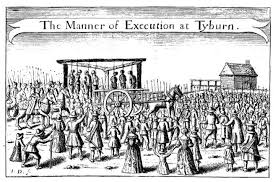
I knew I was taking a risk when I decided to mix it up and write a criminology dissertation that was based on historical crime and punishment, as there was the chance that it fell into neither camp. From a historian’s perspective, I wasn’t researching a primary source, per se, and from a criminologist’s perspective, would it have enough relevant criminological theory?
I just knew I wanted to do something to do with historical crime and punishment, but I didn’t know where to start. Eventually I came across two quotes that I thought were relevant to my subject area: ‘the rulers of eighteenth-century England cherished the death sentence’ (Hay, 1975:17), and; ‘a quasi-judicial role such as [the royal pardon] is not a suitable function for the executive’ (Travis, 2009:9). From these, my idea was firstly to examine who received the death penalty and why, and why some were pardoned while others were not. Secondly, when it came to pardoning, who had the power to pardon and what were the criteria used? I was also particularly interested in the political aspect of this.
What soon became obvious was that even 200 plus years ago, it was the same people committing crime as it is today: the working-class poor, the marginalised and the desperate. And just as today, when those with money, power and connections commit crime, it was not considered crime in the same way, and therefore, the punishment was not the same. I could see then, that I would be able to apply relevant criminological theory. I also needed to incorporate a fair bit of law and constitutional changes to the criminal justice system. As we were always being reminded that criminology is a ‘rendezvous’ subject that encompasses many other disciplines, this gave me the confidence to forge ahead!
I actually really enjoyed researching my dissertation, especially the case studies. After doing lots of research on the Old Bailey Online, I found 3 cases from 1789 which highlighted 3 different outcomes for the same crime, as a way of showing the criteria used for deciding who was pardoned and who was left to hang. I also examined several more recent death penalty cases from the 20th and 21st centuries, to show that the royal pardon is still an essential part of the criminal justice system, despite modernisations designed to replace it, like the introduction of the Criminal Cases Review Commission.
My advice to students in year 2 is: start thinking about your dissertation early! It took me a long, long time to decide what I wanted to research, and I researched a lot of stuff that I didn’t end up using. At one point I was so worried that I even talked to @paulaabowles about deferring my dissertation until next year! But I’m so glad I didn’t do that. I won’t lie to you, it is hard work and requires a lot of time and dedication, which is why it’s so important to pick something that interests you. In the end, though I still worried that it would be too ‘in the middle’ to please either camp, I thoroughly enjoyed doing this piece of work, and was quite sad when it was finished. To be rewarded with a First was beyond anything I could have hoped for, and I’d like to think that was due not only to my hard work, but also to the passion I had for the subject matter.
References:
Hay, D. (1975). Property, Authority and the Criminal Law. In: Hay, D., Linebaugh, J., Rule, J., Thompson, E. and Winslow, C. (Eds). Albion’s Fatal Tree: Crime and Society in Eighteenth-Century England. London: Verso. Pp. 17-63.
Travis, A. (2009). National: Royal Pardon: Legal Reform: I shouldn’t be able to make these decisions, says Straw (Guardian Homepages). The Guardian (London, England). P.9.
Share this:


Nothing is black and white: the intransigence of fools

One thing we criminologists know is that it is impossible to prevent crime. Many a great criminologist has tried to theorise why crime occurs (my shelves are full of their books) and whilst almost all have made valuable contributions to our understanding of crime, it is an unfortunate fact that crime continues. But then crime itself is difficult to define and has its basis in time, power, opportunity and social discourses. What is criminal today will not be criminal tomorrow and what is important today will lose its importance tomorrow, in favour of some new or maybe, old, manifestation of that elusive concept we call crime. Perhaps we should we grateful, for in the industry of crime lies mass employment. From criminologists to those that attempt to stem the tide of crime, those that deal with its aftermath and those that report on it or write about it (real or fictional), there is money to be made. If we stopped crime, we would all be out of a job.
Most, if not all of us have at some stage in our lives committed some sort of crime. Most crimes will fortunately be almost inconsequential, maybe a flouting of a law such as driving a car over the speed limit. Other crimes will be more serious and whilst some criminals will be brought to book most are not. The inconsequential crime of driving over the speed limit, albeit perhaps due to a lapse of concentration, can have dire consequences. There is clear evidence that the survival rates of pedestrians struck by cars has a direct correlation with speed. So the inconsequential becomes the consequential, the ephemerality of crime, the reality.
When we think of crime, we often have little concept of its reality. We apply labels and our own rules to that we know and find acceptable. Speeding is not criminal, well not generally, unless it’s a boy racer. Drink driving is a no-no, but we might take it to the alcohol limit when having a drink. Drugs (the criminalised type) are ok, well some are and some aren’t, it all depends on your viewpoint. Drugs (the prescription type) are ok, even if they impair our ability to drive. Alcohol, well that’s absolutely ok, even if the abuse of it leads to more deaths than drugs and the consequences of that misuse has a really significant impact on the NHS. Tax evasion, illegal if you get caught, ok if you don’t. A bit like fraud really, ok if you can get away with it but then maybe not, if the victim is a little old lady or me. Assault, well it depends on the seriousness and the situation and probably the victim. Robbery, not good to go into an off licence with a gun and threaten the shopkeeper, bullying if you take lunch money off the lad outside the school gates.
Criminals don’t walk around with a label that says ‘criminal’ and even if they did, there would have to be a method of bestowing the label in an instance. Nonsense of course, only a fool would suggest such a thing. What about the people that committed a crime but have changed their ways I hear my colleagues ask? What about those that haven’t, or have and then relapse, I reply.
Nothing is black and white; the concept of crime is elusive, as are criminals (both by concept and nature). And yet we happily castigate those that attempt to uphold the law on our behalf and in doing so view crime and criminals as clear concepts. Each has a clear label, each is clearly identifiable, so how can they get it so wrong so many times. Whilst criticising those that attempt, and let’s be quite honest, fail most of the time to stem this tide of crime, perhaps we might also think about the impossibility of the job in hand. That’s not to say that a lot of the criticisms are not justified, nor that things should not change, but if we only examine all that is wrong, we lose sight of reality and only an intransigent fool would continue an argument that sees the problems and solutions as simply black and white.
Share this:


“Things you need to know about criminology”: A student perspective – Mary Adams, recent Graduate and mature student.
We are all living in very strange times, not sure when life will return to normal...but if you're thinking about studying criminology, here is some advice from those best placed to know!

The most important module to my understanding of criminology is: I would have to say they are all equally important for understanding different aspects of Criminology. In first year I loved The Science of Crime which showed how things have evolved over time, and that what we now see as funny was actually cutting edge in its day. True Crime also makes you look beyond the sensational headlines and separate fact from fiction. In second year Crime & Justice gave a brilliant grounding in the inner workings, and failings, of the criminal justice system. And in third year, the Violence module explores personal and institutional violence, which is especially relevant in current times

The academic criminology book you must read: Becker’s Outsiders and Cohen’s Folk Devils and Moral Panics are a must. I also found Hopkins-Burke’s An Introduction to Criminological Theory and Newburn’s Criminology essential reading for first year as well as Finch & Fafinski’s Criminological Skills. For second year I recommend Davies, Croall & Tyrer’s Criminal Justice. If you choose the Violence module in third year you will be grateful for Curtin & Litke’s Institutional Violence. And don’t forget Foucault’s Discipline & Punish!

The academic journal article you must read:
There are so many excellent journal articles out there, it’s difficult to choose! Some of my favourites have been:
'Alphonse Bertillon & the measure of man' by Farebrother & Champkin;
'Bad Boys, Good Mothers & the ‘’Miracle’’ of Ritalin by Ilina Singh';
'Detainee Abuse & the Ethics of Psychology' by Kathryn French;
'Attachment, Masculinity & Self-control' by Hayslett-McCall & Bernard;
'Grenfell, Austerity & Institutional Violence' by Cooper & Whyte;
'The Phenomenology of Paid Killing' by Laurie Calhoun;
'A Utilitarian Argument Against Torture Interrogation of Terrorists' by J. Arrigo.

The criminology documentary you must watch:
Without a doubt, a must-see is the Panorama documentary London Tower Fire: Britain’s Shame. I would also highly recommend the movie The Stanford Prison Experiment

The most important criminologist you must read:
Of course you must read Lombroso, Beccaria & Bentham. I also enjoyed reading work by feminist criminologists like Pat Carlen, Carol Smart & Sandra Walklate. And of course, Angela Davis is a must!

Something criminological that fascinates me:
What fascinates me is how the powers that be, and a good proportion of the public, cannot seem to realise that social injustice is one of the major factors behind why people commit crime. And the fact that putting more & more people in prison is seen as a ‘good’ thing is mind-boggling!

The most surprising thing I know about criminology is:
The fact that it is such a diverse subject & incorporates so many other disciplines

The most important thing I've learnt from studying criminology is:
Question everything! Don’t take anything at face-value. Try to look beyond the attention grabbing headlines to find out the real story. Read, read, read!

The most pressing criminological problem facing society is:
Unfortunately I think there are many pressing problems facing society today, the main ones being social injustice & inequality, systemic racism, institutional violence, and mass incarceration


When family and friends ask, I tell them criminology is:
Some people joke that I’m learning how to be a criminal! Others think it’s all about locking people up! I tell them it’s all about looking at the mechanisms in-built in our society that disadvantage & discriminate against whole groups of people, and that, unless we are part of the rich & powerful elite, any one of us could find ourselves in the ‘out’ group at any time. I also tell them to stop reading The Daily Mail, vote Labour, and question everything!!
Share this:


A racist and no solution

I am a white, middle class some might say (well my students anyway), ageing, male. I wasn’t always middle class, I’m from working class stock. I’m a university lecturer now but wasn’t always. I spent 30 years in the police service in a small, ethnically diverse, county in England. I didn’t consider myself a racist when I was in the police service and I don’t consider myself a racist now. Nobody has called me a racist to my face, so why the title? It’s how I’m constantly labelled. Every time someone says the police are racist or the police are institutionally racist, they are stating that about me. Just because I have left the police organisation doesn’t change who I am, my beliefs or my values. So, if the police are racist, then by default, I must be.
I’m not suggesting that some police officers are not racist, of course some are. Nor am I denying that there has been and probably still is some form of institutional racism within the police service, perhaps as a whole or perhaps at a more localised or departmental level. But bad apples and poorly thought-out, naïve or even reckless policies, strategies and procedures are not enough to explain what is going on in policing and policing of ethnic minority groups in particular. I’m talking about policing in this country, not across the pond where policing is very different in so many ways that it is hard to even suggest a realistic comparison. That of course is the first problem, what happens in the United States of America is immediately translated into what happens here.
As a lecturer, I constantly hear from students and read students’ work about the racist and brutal police, often interchanging commentary from the United States with commentary here in the United Kingdom, whilst also failing to recognise that there is different policing in Scotland and Northern Ireland. Institutional racism, as defined by Macpherson, is now part of the lexicon, but it no longer has the meaning Macpherson gave it, it is now just another way of saying the police are and every police officer is racist. Some students on finding out that I was a police officer show an instant dislike and distrust of me and sometimes it can take the whole three years to gain their trust, if at all. Students have been known to request a different dissertation supervisor, despite the fact that their research subject is in policing. This is not a complaint, just a statement of facts, painful as it is.
As I try to make sense of it all, I have so many unanswered questions. What is exactly going on? What is causing this conflict between the police and ethnic minority groups? Why is there a conflict, why is there distrust? More importantly, how can it be fixed? Some of the answers may lay in what the police are asked to do, or at least think they are asked to do. Reiner suggests that policing is about regulating social conflict, but which conflict and whose conflict is it? Other authors have suggested that the police are simply a means to allow the rich and privileged to maintain power. There may be some merit in the argument, but most policing seems to take place in areas of deprivation where the disadvantaged are committing crimes against the disadvantaged. The rich and powerful of course commit crimes but they are nowhere near as tangible or easy to deal with. One the problems might be that the rich and powerful are not particularly visible to policing but the disadvantaged are.
Maybe some of the answers lay in notions of stereotyping, sometimes even unconsciously. Experience or narratives of experiences cause a wariness, even a different stance to one people might normally assume. Being thumped on the nose by a drunk, does tend to make a person wary of the next drunk they encounter. So, could stereotyping be a problem on both sides of the divide? My dissertation student that didn’t want me as a supervisor was later to reveal experiences of racist abuse aimed at the police officers she went out on patrol with. Policing is dominated by white males and despite recruitment drives to address the ethnicity gap, this really hasn’t been that successful. If it was meant to help solve a problem, it hasn’t.
I get the sense though that the problem is much deeper routed than policing. Policing and the problems of policing is just a sub plot in a much wider issue of a divided society and one that is in constant conflict with itself. If the police are guilty of racism, then it is society that has caused this. Our society’s values, our society’s beliefs. An unequal society where the poorest suffer the most and the rich get richer regardless. A society where we are all equal but only because someone somewhere said so at some time, it is not reality. I think of Merton’s ‘American Dream’, I don’t buy into the whole concept, but there is something about not having opportunities, equally when I think of Lea and Young and the concept of relative deprivation, whilst not explaining all crime, it has some merit in that notion that the disenfranchised have no voice.
As I write this I am conscious that I have commentated on a very emotive subject particularly at this time. As I watch the events unfold in America, I fear the worst, action followed by reaction. Both becoming increasingly violent and I see the possibility of it happening in this country. I fear that the term ‘police racism’ will become another convenient label. Convenient in the sense that the problems are seen solely as that of policing. If we examine it through a different lens though, we might just find that policing is simply part of the whole rotten tree, society. Fix society and you fix policing. If the label racist fits, it fits the society we live in.

Share this:


“Things you need to know about criminology”: A student perspective: ej213
We are all living in very strange times, not sure when life will return to normal...but if you're thinking about studying criminology, here is some advice from those best placed to know!

The most important module to my understanding of criminology is: True Crime - this module highlights the fact that cases you have seen in the media and in films may not be accurate due to the true crime genre exaggerating facts for entertainment. Whilst, this module does not cover quite as much theory as others, it gives the chance to explore cases and discover the truth underneath the exaggeration. Love this module.

The academic criminology book you must read:
The Oxford Handbook of Criminology (sixth edition) - I was recommended this book at an open day and there was rarely an assessment I couldn't find some background knowledge for in this book. It is a great tool.

The academic journal article you must read:
Testosterone and masculinity

The criminology documentary you must watch:
FBI: Cold Cases - it is a Netflix original I think but it shows how crimes committed 20 or 30 years ago can be solved due to modern technology. Really interesting especially if you have an interest in forensics.

The most important criminologist you must read:
Either Lombroso or Marx.

Something criminological that fascinates me:
The fact that crime is defined by the wealthy meaning that the prisons are mostly filled with the lower classes due to the upper classes' crimes being seen as victimless

The most surprising thing I know about criminology is:
That criminology is a relatively recent study

The most important thing I've learnt from studying criminology is:
There is rarely one answer so long as you can support your argument

The most pressing criminological problem facing society is:
This could be an essay in itself. I guess I would have to say poverty because 14 million people (2019/20) still live in poverty and these people are not going to have the same advantages or prospects in education or the workplace meaning they are more likely to commit crime in order to survive

When family and friends ask, I tell them criminology is:
Amazing and the most interesting course I have chosen to study because it never had a definite answer which I guess can make it complex however, the debates within the course are great to participate in because it is interesting to hear another's perspective but also voice my own. It is also very inclusive in its module content which is great

Share this:


“I can’t breathe”

George Floyd’s words: “I can’t breathe”, have awaken almost every race and creed in relevance to the injustice of systematic racism faced by black people across the world. His brutal murder has echoed and been shared virtually on every social media platform – Floyd’s death has changed the world and showed that Black people are no longer standing alone in the fight against racism and racial profiling. The death of George Floyd has sparked action within both the white and black communities to demand comprehensive police reforms in regards to police brutality and the use of unjust force towards ethnic minorities.
There have been many cases of racism and racial profiling against black people in the United Kingdom, and even more so in the United State. Research has suggested that there have been issues with police officers stereotyping ethnic minorities, especially black people, which has resulted in a vicious cycle of the stopping and searching of those that display certain physical features. Other researchers have expounded that the conflict between the police and black people has no correlation with crime, rather it is about racism and racial profiling. Several videos circulating on social media platforms depict that the police force does harbour officers who hold prejudice views towards black people within its ranks.
Historically, black people have been deprived, excluded, oppressed, demonised and brutally killed because of the colour of their skin. As ex-military personnel in Her Majesty’s Armed Forces and currently working as a custody officer, I can say from experience that the use of force used during the physical restraint on George Floyd was neither necessary nor proportionate to the circumstances. In the video recorded by bystanders, George Floyd was choked in the neck whilst fighting for his life repeating the words “I can’t breathe”. Perhaps the world has now noticed how black people have not been able to breathe for centuries.
The world came to halt because of Covid-19; many patients have died because of breathing difficulties. Across the world we now know what it means if a loved one has breathing issues in connection with Covid-19 or other health challenges. But nothing was done by the other police officers to advise their colleague to place Floyd in the recovery position, in order to examine his breathing difficulties as outlined in many restraint guidelines.
Yet that police officer did not act professional, neither did he show any sign of empathy. Breath is not passive, but active, breathing is to be alive. Racial profiling is a human problem, systematic racism has destroyed the world and further caused psychological harm to its victims. Black people need racial justice. Perhaps the world will now listen and help black people breathe. George Floyd’s only crime was because he was born black. Black people have been brutally killed and have suffered in the hands of law enforcement, especially in the United States.
Many blacks have suffered institutional racism within the criminal justice system, education, housing, health care and employment. Black people like my own wife could not breathe at their workplaces due to unfair treatment and systematic subtle racial discrimination. Black people are facing unjust treatment in the workplace, specifically black Africans who are not given fair promotional opportunities, because of their deep African accent. It is so naïve to assume that the accent is a tool to measure one’s intelligence. It is not overt racism that is killing black people, rather the subtle racism in our society, schools, sports and workplace which is making it hard for many blacks to breathe.
We have a duty and responsibility to fight against racism and become role models to future generations. Maybe the brutal death of George Floyd has finally brought change against racism worldwide, just as the unprovoked racist killing of black teenager Stephen Lawrence had come to embody racial violence in the United Kingdom and led to changes in the law. I pray that the massive international protest by both black and other ethnicities’ will not be in vain. Rather than “I can’t breathe” reverberating worldwide, it should turn the wheel of police reforms and end systematic racism.
“Restricting someone’s breath to the point of suffocation is a violation of their Human Rights”.
Share this:

“Things you need to know about criminology”: A student perspective – Bonnie Middleton (2017-2020)
We are all living in very strange times, not sure when life will return to normal...but if you're thinking about studying criminology, here is some advice from those best placed to know!

The most important module to my understanding of criminology is: All of them! Every module contributes to your understanding of Criminology and all are different and enjoyable. Personally, my favourite module was Violence: From Domestic to Institutional in Year 3; this module ties together everything you know about Criminology; the reasons why we are subjective as criminologists and our ability to look beyond the scope of what we know.

The academic criminology book you must read:
Outsiders: Studies in the sociology of deviance (1963) by Howard Becker. Albeit a dated book, its ideas are relevant and relate to many criminological such as; how and why criminals are labelled and stigmatised; why are the youth demonised; why people reject the norms and values of society and become criminals in doing so.

The academic journal article you must read:
This is a hard one. Articles are great for discovering new ideas and methodologically testing theories. I would recommend reading: Arrigo, J. (2004). A Utilitarian Argument Against Torture, Interrogation of Terrorists. Science and Engineering Ethics. 10(3), pp. 543-572. This article poses many questions for a criminologist which enlightens you to think subjectively and challenge your own views; which is what Criminology is all about. From reading this article you will learn to think critically when faced with a challenging dilemma; the rights of a terrorist and how can the law can be tailored to fit the crime.

The criminology documentary you must watch:
Where do I begin? Louis Theroux and Stacey Dooley are both great journalists and documentary makers. If I had to pick one, I would recommend watching the BBC’s documentary on Grenfell If you watch this documentary you must consider; the government’s response; who is accountable; why are the residents of Grenfell still in temporary accommodation. These are the sorts of questions you should be asking as someone studying Criminology.

The most important criminologist you must read:
Familiarise yourself with the ideas of Lombroso, this will aid your understanding on how criminological theory and ideas have developed overtime through biological, psychological and sociological standpoints.

Something criminological that fascinates me:
Domestic abuse. I had done my dissertation on this as I have a great interest in male dominance and power over women, especially in intimate relationships. Gender plays a key role in this which when examined in depth, will change your view on gender paradigms.

The most surprising thing I know about criminology is: Criminality was believed by Lombroso to be inherited and that criminals possessed physical defects, criminality would be measured by the size and shape of particular body parts; this was later discredited. I can remember learning this in first year and it fascinated me.

The most important thing I've learnt from studying criminology is:
To not judge a book by its cover and to not take everything at face value. Do not be afraid to challenge other’s standpoints and beliefs. Thinking critically is the most important skill to have, search deeper into issues and apply your own thoughts and experiences.

The most pressing criminological problem facing society is:
Mass incarceration and reoffending rates. The UK is yet to move away from the ‘tough on crime’ approach favouring law and order and punishment. The penal system needs to be reformed to ensure offenders are rehabilitated to break the cycle of criminality; definitely educate yourself on political party’s manifesto’s and what they say about crime and justice before voting.

When family and friends ask, I tell them criminology is: I tell family and friends that criminology is such a broad field of study; we look at law, psychology, science, sociology, politics, penal systems, criminal justice organisations, media and much more. From this, you attain the ability to think critically and reflect, it can help you in many situations not just criminological issues. It is an incredibly insightful and enlightening field to study; it opens up many opportunities.
Share this:


The pandemic and me – Lessons I’ve learnt from the #lockdown

This lockdown has certainly given us time to think and perhaps reflect on a variety of topics and situations. I’ve shared a few thoughts below and I wonder just how many are universal in some way.
I need to ensure I have a structure to my day and week. I think we all need some sort of structure to our lives and that structure is often given to us by work and perhaps other sociable events such as going to the gym or going to a coffee shop. It may be that the weekly shopping provides us with an anchor, Saturday may be a shopping day or religion might dictate a visit to a place of worship on a particular day. At times I’ve found myself getting confused about what day it is, Groundhog Day, I think. However, for the most part, I think I’ve got it sorted out. My wife and I discuss our schedule every morning over a cup of coffee. We have sorted out a routine of work, daily chores, fun bits and exercise.
My willpower is tested but I can be determined. I have never been a heavy drinker, the occasional binge, yes but then who hasn’t? It is however, quite easy to slip into the habit of having a glass or two of wine in the evening, every evening and perhaps a gin and tonic or two. I can’t go anywhere so thinking about having to drive the next day is not an issue. It’s not until you start totting up the consumption that you realise maybe you might have to reign this in. ‘School nights’ are back again, no drinking in the week. I make up for it at the weekend though.
I’m not risk adverse, I just like to think I’m logical. I don’t think it takes a rocket scientist or in fact any scientist to work out that the government (particularly a Conservative government) would not enforce the cessation of most business in the country without a very, very, very good reason. Stay in has been the mantra and of course we all know how difficult it is and we all know that as usual, the most vulnerable in society have been hit the hardest by this pandemic. Logic dictates, well at least to me, that going out to any store anywhere carries a risk. Some risks are necessary, for instance a trip to the chemist to pick up a prescription, but a trip to a DIY store, really? I’m sorry but given the risks, I think it’s a no brainer. Not only do I not want to catch the virus, but I would be distraught if I thought that through my own selfishness I had passed it onto someone else.
I never really thought about all those people that are truly special. We clap every week for the carers and the NHS and all those involved who are truly remarkable. I do ask myself though, would I want to turn up to work in a supermarket? Would I want to be out delivering parcels or the post? Would I be a NHS volunteer? Would I be happy working on public transport or emptying dust bins? There are so many people doing ordinary, even mundane jobs and volunteering roles that I now appreciate more than ever. And I would go far as to say I am humbled by what they do and continue to do despite the risks.
I appreciate the world around me. Not being able to go out and socialise in some way, be that work, or friends or family has provided more time for other activities. Our walks to the next village and back on roads devoid of most traffic has revealed an astonishing array of wildlife to be gazed upon and appreciated. That is of course if you’re not gasping for breath following a walk up a steep hill (well I call it steep but in a car its barely noticeable).
Some things don’t change. I’ve also noticed the gate to the footpath across the fields near our house has gone. A heavy wooden gate which, apparently has been stolen. On our walks we have noticed the increased number of cyclists whizzing along the road. Most give a wide birth, but some don’t seem to have a care for others, one nearly colliding with us as he flew around the corner. It seems with the reduction of cars; the idiotic driver has now given way to the idiotic cyclist.
What will a ‘new normal’ look like. At some stage we will get back to normal but its difficult to contemplate when that will be and what it will look like. Maybe getting back to the old normal is not what is needed. I’m trying to envisage how I will make changes in consideration of what I have learnt during this lockdown. What changes will you make?
Share this:


Criminology 2020 AD

2020 will be a memorable year for a number of reasons. The big news of course was people across the world going into lockdown and staying home in order to stop the transmission of a coronavirus Covid-19. Suddenly we started counting; people infected, people in hospitals, people dead. The social agenda changed and our priorities altered overnight. During this time, we are trying to come to terms with a new social reality, going for walks, knitting, baking, learning something, reading or simply surviving, hoping to see the end of something so unprecedented.
People are still observing physical distancing, and everything feels so different from the days we were discussing future developments and holiday plans. During the last days before lockdown we (myself and @paulaabowles) were invited to the local radio by April Dawn to talk about, what else, but criminology. In that interview we revealed that the course started 20 years ago and for that reason we shall be having a big party inviting prospective, current and old students together to mark this little milestone. Suffice to say, that did not happen but the thought of celebrating and identifying the path of the programme is very much alive. I have written before about the need to celebrate and the contributions our graduates make to the local, regional and national market. Many of whom have become incredibly successful professionals in the Criminal Justice System.
On this entry I shall stand on something different; the contribution of criminology to professional conduct, social sciences and academia. Back in the 1990s Stan Cohen, wrote the seminal Against Criminology, a vibrant collection of essays, that identified the complexity of issues that once upon a time were identified as radical. Consider an academic in the 1960s imagining a model that addresses the issue of gender equality and exclusion; in some ways things may not have changed as much as expected, but feminism has entered the ontology of social science.
Criminology as a discipline did not speak against the atrocities of the Nazi genocide, like many other disciplines; this is a shame which consecutive generations of colleagues since tried to address and explain. It was in the 1960s that criminology entered adulthood and embraced one of its more fundamental principles. As a theoretical discipline, which people outside academia, thought was about reading criminal minds or counting crime trends only. The discipline, (if it is a discipline) evolved in a way to bring a critical dimension to law and order. This was something more than the original understanding of crime and criminal behaviour and it is deemed significant, because for the first time we recognised that crime does not happen in a social vacuum. The objectives evolved, to introduce scepticism in the order of how systems work and to challenge established views.
Since then, and through a series of events nationally and internationally, criminology is forging a way of critical reflection of social realities and professional practices. We do not have to simply expect a society with less crime, but a society with more fairness and equality for all. The responsibilities of those in position of power and authority is not to use and abuse it in order to gain against public interest. Consider the current pandemic, and the mass losses of human life. If this was preventable, even in the slightest, is there negligence? If people were left unable to defend themselves is that criminal? Surely these are questions criminology asks and this is why regardless of the time and the circumstances there will always be time for criminology to raise these, and many more questions.


