
Home » Crime (Page 6)
Category Archives: Crime

Catalog of Negores, mules, carts and wagons to be sold
In September 2021, I visited the newly expanded Equal Justice Initiative’s Legacy Museum: From Enslavement to Mass Incarceration, in my maternal grandparents’ hometown, Montgomery, Alabama. I was struck by the range of artifacts used to chronicle each era. Consider these1854 slave market advertisements from the Montgomery Advertiser and Gazette – still the local newspaper!
Catalog of Negroes, mules, carts, wagons and Co., to be sold in Montgomery. Headlines included: Wenches and bucks, quality Negroes for sale.
Nancy – about 26, fieldhand, cannot recommend her particularly, complains of indisposition, but probably a proper master might cure her.
Ben – A strong and hearty man, about 30 years old, an excellent field hand, and a remarkably handy boy, in any use, being usually quick and intelligent; a No. 1 Negro.
Suckey, A remarkably intelligent Negro girl about 15 years of age, understands General house work well for her age; can sew tolerably, and is a most excellent nurse and attendant for children; has remarkable strength of constitution, and never known to have been complaining even for a moment; a pretty good field hand, and would make an excellent one.
Allison – about 15, fine body and house servant, carriage driver and Ostler, honest, steady, handy, healthy, smart, intelligent, and in all respects a choice and desirable boy.
Mary Jane – about 11.
Martha – about 10.
Louisa – about 7.
Old George – as faithful and honest an old African as ever lived.
His wife Judy, the same sort of character.
Henrietta – about 24… First-rate cotton picker.
One of the humans being trafficked recounted:
“To test the soundness of a male or female slave… They are handled in the grossest manner, and inspected with… disgusting minuteness… in the auction room where the dealer is left alone with the ‘chattels’ offered… God has recorded the wickedness that is done there, and punishment will assuredly fall upon the guilty.” -J. Brown.
The ebb and flow of freedom.
Each exhibit in the ‘Enslavement to Mass Incarceration’ museum takes visitors seamlessly through the Atlantic slave trade, past Jim and Jane Crow segregation, to a recorded face-to-face visit with a real-life, modern-day inmate. As you enter what seems like the final hall, you are confronted with an array of individual seats at a glass window/screen projecting an inmate calmly sitting, waiting. Like a real prison visit, there’s a telephone, which once lifted, the prisoner does the same, introduces themselves, and recounts their story. History confronts you in the present: The confederacy surrendered on April 9, 1865. By 1898, 73% of state revenue came from convict leasing. Now?
One explicit goal of the EJI project, reflected and reinscribed in the exhibits’ descriptions, is a shift in language from slavery and slaves to human trafficking and enslavement. Surely, one can feel the sublingual, subliminal shift from victimology to responsibility, and that implies accountability. To be clear, the entire economy centered around usurping land, driving-out or exterminating the indigenous people, human trafficking and slave labor, shredding the natural environment into farmland to produce cotton, cane and tobacco, manufacturing a range of commodities from these raw materials, trading around the world. Who got rich? Whose labor was exploited?
Who is accountable for giving birth to Jim Crow, if slavery died with ole Abe Lincoln’s Emancipation Proclamation? Who is accountable for cultivating chronic poverty and voter intimidation, if we’d exterminated white lynch mobs through the Civil Rights codes of the sixties? Who indeed is responsible for mass incarceration? The exhibits challenge language that focuses on the victim and remains hush about the status quo, masking the ensuing abuse of power needed for its maintenance, especially hidden from abusers who may themselves be exploited by the myth of meritocracy.
As a side note, perhaps people will not actually be able to reckon with this cognitive dissonance of heroic CONfederate generals and their cause to uphold each state’s right to let white men traffic and enslave Blacks. I’d truly like to see public statues of say, the valiant General Lee, standing next to two or three statues of enslaved people, and a few statues of the white people charged with the quotidian physical labor of enslavement, e.g., driving labor (whip crackers), capturing and punishing escapees (slave catchers, the original law-enforcement force), breaking in new arrivals (torture), breeding ((gang)rape), and general humiliation throughout these duties (sadomasochism). Perhaps the museum just needs to add another exhibit with busts of them.
With stark population stats posted big and bold as visitors transition from room to room, the exhibits chronologically shift through significant eras. Today in the prison industrial complex there are 8 million incarcerated. 10 million were segregated under Jim and Jane Crow until the Civil Rights movement. 9 million terrorized by lynching, accelerating the erosion of Reconstruction. The nation was born and raised with 12 million kidnapped and enslaved Africans. Dear reader, right now I ask, what precisely has our nation done to upend caste?
Share this:


Policy, procedures, processes, and failure

Examine any organisation and you will find a myriad of policy and procedures that are designed to inform its processes and guide employees. On paper, these formalised ideals and directions make absolute sense but frequently they bear no relationship to reality and rather than empowering, they constrain and often demoralise. These idealistic notions of how an organisation should function facilitate the dehumanising effects of managerial diktat and engender an internalisation of failure amongst employees.
By way of an example, in the 1990s police forces began to consider notions of Standard Operating Procedures (SOPs) in respect of crime investigation. These SOPs seemed on the face of it to be a good idea. The police service, driven by government notions of New Public Management, were being measured on crime reduction and crime detection. Performance indicators were propped up by idealistic notions coming out of government supported by HMIC and the now defunct Audit Commission that catching more criminals would engender a virtuous circle resulting in crime reduction. Nothing of course, was further from the truth. But the introduction of SOPs was meant to attempt to address police failings. These, certainly in one force, were at the outset seen as a guide, a minimum standard required in an investigation. They weren’t intended to constrain.
A small department was set up in this force to measure adherence to these SOPs and to report back where there were inherent failures. For example, on attending a house burglary, the attendant officers were required to take a statement from the householder, and they were required to carry out house to house enquiries in the vicinity. At the very least, they needed to knock on doors either side of the house that had been burgled and a couple of houses across the road. Frequently the statement wasn’t taken, or the house-to-house enquiries hadn’t been completed. It became clear that the officers were failing to carry out simple procedures. Measuring adherence to SOPs and providing feedback to promote improvement soon resulted in measuring adherence in order to enforce compliance.
In hindsight, there should have been a realisation that the SOPs, far from being helpful were in fact having a detrimental effect. Where officers could have carried out further investigations based on their professional judgement, they adhered to the minimum required in the SOPs or simply failed to comply with them fully. This was partially resultant of a notion amongst officers that discretion was being curtailed, but more notably it was driven by other processes and organisational priorities. These other processes were to do with attendance at other incidents. Graded as a priority by the control room, officers were being pulled off the burglary investigation and therefore couldn’t comply with the burglary investigation SOPs. Police forces were also being measured on how quickly they responded to and arrived at various calls for service. There was clearly a direct conflict between management ideals and reality with the officers being set up to fail in one aspect or another. There were simply not enough staff to do all the work and to manage the overwhelming demands at certain times.
One way of dealing with the failures was to link these to the performance and development review (PDR) process. The development aspect was a somewhat redundant term as the PDR was all about performance. Of course, each time the PDR came around the officers had failed to achieve their objectives. This provided lots of evidence of people not doing their job properly. In the wider gamut of crime figures officers at various levels began to realise that the only way to avoid accusations of poor performance was to manipulate the crime figures. In the meantime, those driving the behaviours, washed their hands of them whenever someone was found out, often hiding behind the SOPs and policy. The misuse of the PDR process and the consistent scrutiny of performance metrics resulted in the internalising of failure by staff. Whole systems and processes had been set up to measure failure, after all how could success be measured if it could never be achieved. Of course, it could never be achieved because the ambition and driving force behind this, government’s notions of crime control, were based on ideals and rhetoric not science. But the overriding fact was that it could never be achieved because there were never enough resources to achieve it.
The failure of course wasn’t in the officers that didn’t adhere to the SOPs or those that manipulated crime figures to try to avoid overbearing scrutiny, it was the failure of managers to provide adequate resources. It was a failure of managers to try to understand what reality looked like and it was a failure of managers to deal with the dehumanising effects of policy, procedure and processes.
Having left the police, I thought higher education would somehow be different. I don’t think I need to say anymore.
Share this:


Youth or Adult: can you tell?

This week’s blog begins with a game: youth or adult, secure estate in England and Wales. Below are some statements, and you simply need to guess (educated guesses please), whether the statement is about the youth, or adult secure estate. So, are the statements about children in custody (those under the age of 18 years old) or adults in custody (18+). When you’re ready…
- 70% decrease in custody in comparison to 10 years ago
- Segregation, A.K.A Solitary Confinement, used as a way of managing the most difficult individuals and those who pose a risk to themselves or others
- Racial disproportionality in relation to experiencing custody and being remanded to custody
- Self-harm is alarmingly high
- 1/3 have a known mental health disability
- Homelessness after release is a reality for a high proportion of individuals
- Over half of individuals released from custody reoffend, this number increases when looking at those sentenced to 6months of less
How many did you answer youth secure estate, and how many adult secure estate? Tally up! Did you find a 50/50 split? Did you find it difficult to answer? Should it be difficult to spot the differences between how children and adults are treated/experience custody?
All of the above relate specifically to children in custody. The House of Commons Committee (2021) have argued that the secure estate for children in England and Wales is STILL a violent, dangerous set of environments which do little to address the needs of children sentenced to custody or on remand. Across the academic literature, there is agreement that the youth estate houses some of the most vulnerable children within our society, yet very little is done to address these vulnerabilities. Ultimately we are failing children in custody! The Government said they would create Secure Schools as a custody option, where education and support would be the focus for the children sent here. These were supposed to be ready for 2020, and in all fairness, we have had a global pandemic to contend with, so the date was pushed to 2022: and yet where are they? Where is the press coverage on the positive impact a Secure School will make to the Youth estate? Does anyone really care? A number of Secure Training Centres (STCs) have closed down across the past 10 years, with an alarmingly high number of the institutions which house children in custody failing Ofsted inspections and HM Inspectorate of Prisons (2021) found violence and safety within these institutions STILL a major concern. Children experience bullying from staff, could not shower daily, experience physical restraint, 66% of children in custody experienced segregation which was an increase from the year prior (HM Inspectorate of Prisons, 2021). These experiences are not new, they are re-occurring, year-on-year, inspection after inspection: when will we learn?
The sad, angry, disgusting truth is you could have answered ‘adult secure estate’ to most of the statements above and still have been accurate. And this rings further alarm bells. In England and Wales, we are supposed to treat children as ‘children first, offenders second’. Yet if we look to the similarities between the youth and adult secure estate, what evidence is there that children are treated as children first? We treat all offenders the same, and we treat them appallingly. This is not a new argument, many have raised the same points and concerns for years, but we appear to be doing very little about it.
We are kidding ourselves if we think we have a separate system for dealing with children who commit crime, especially in relation to custody! It pains me to continue seeing, year on year, report after report, the same failings within the secure estate, and the same points made in relation to children being seen as children first in England and Wales: I just can’t see it in relation to custody- feel free to show me otherwise!
References:
House of Commons Committees (2021) Does the secure estate meet the needs of young people in custody? High levels of violence, use of force and self-harm suggest the youth secure estate is not fit for purpose [Online]. Available at: https://houseofcommons.shorthandstories.com/justice-youth-secure-estate/index.html. [Last accessed 4th April 2022].
HM Inspectorate of Prisons (2021) Children in Custody 2019-2020: An analysis of 12-18-year-old’s perceptions of their experiences in secure training centres and young offender institutions. London: Her Majesty’s Inspectorate of Prisons.
Share this:


Protect international law

In criminological discourses the term “war crime” is a contested one, not because there are no atrocities committed at war, but because for some of us, war is a crime in its own right. There is an expectation that even in a war there are rules and therefore the violation of these rules could lead to war crimes. This very focused view on war is part of a wider critique of the discipline. Several criminologists including, Ruggiero, DiPietro, McGarry and Walklate, to name a few, have argued that there is less focus on war as a crime, instead war is seen more as part of a metaphor used in response to social situations.
As far back as the 1960s, US President Johnson in his state of the union address, announced “The administration today here and now declares unconditional war on poverty in America”. What followed in the 1964 Economic Opportunity Act, was seen as the encapsulation of that proclamation. In some ways this announcement was ironic considering that the Vietnam war was raging at the time, 4 years before the well documented My Lai massacre. A war crime that aroused the international community; despite the numbers of soldiers involved in the massacre, only the platoon leader was charged and given a life sentence, later commuted to three and a half years incarceration (after a presidential intervention). Anyone can draw their own conclusion if the murder of approximately 500 people and the rape of women and children is reflected in this sentence. The Vietnam war was an ideological war on communism, leaving the literal interpretation for the historians of the future. In a war on ideology the “massacre” was the “collateral damage” of the time.
After all for the administration of the time, the war on poverty was the one that they tried to fight against. Since then, successive politicians have declared additional wars, on issues namely drugs and terror. These wars are representations of struggles but not in a literal sense. In the case of drugs and terrorism criminology focused on trafficking, financing and organised crimes but not on war per se. The use of war as a metaphor is a potent one because it identifies a social foe that needs to be curtailed and the official State wages war against it. It offers a justification in case the State is accused being heavy handed. For those declaring war on issues serves by signalling their resolve but also (unwittingly or deliberately) it glorifies war as an cleansing act. War as a metaphor is both powerful and dangerous because it excuses State violence and human rights violations. What about the reality of war?
As early as 1936, W.A Bonger, recognised war as a scourge of humanity. This realisation becomes ever more potent considering in years to come the world will be enveloped in another world war. At the end of the war the international community set up the international criminal court to explore some of the crimes committed during the war, namely the use of concentration camps for the extermination of particular populations. in 1944 Raphael Lemkin, coined the term genocide to identify the systemic extermination of Jews, Roma, Slavic people, along with political dissidents and sexual deviants, namely homosexuals.
In the aftermath of the second world war, the Nuremberg trials in Europe and the Tokyo trials in Asia set out to investigate “war crimes”. This became the first time that aspects of warfare and attitudes to populations were scrutinised. The creation of the Nuremberg Charter and the outcomes of the trials formulated some of the baseline of human rights principles including the rejection of the usual, up to that point, principle of “I was only following orders”. It also resulted in the Nuremberg Code that set out clear principles on ethical research and human experimentation. Whilst all of these are worthwhile ideas and have influenced the original formation of the United Nations charter it did not address the bigger “elephant” in the room; war itself. It seemed that the trials and consequent legal discourses distanced themselves from the wider criminological ideas that could have theorised the nature of war but most importantly the effects of war onto people, communities, and future relations. War as an indiscriminate destructive force was simply neglected.
The absence of a focused criminological theory from one end and the legal representation as set in the original tribunals on the other led to a distinct absence of discussions on something that Alfred Einstein posed to Sigmund Freud in early 1930s, “Why war?”. Whilst the trials set up some interesting ideas, they were criticised as “victor’s justice”. Originally this claim was dismissed, but to this day, there has been not a single conviction in international courts and tribunals of those who were on the “victors’” side, regardless of their conduct. So somehow the focus changed, and the international community is now engaged in a conversation about the processes of international courts and justice, without having ever addressed the original criticism. Since the original international trials there have been some additional ones regarding conflicts in Yugoslavia and Rwanda. The international community’s choice of countries to investigate and potentially, prosecute has brought additional criticism about the partiality of the process. In the meantime, international justice is only recognised by some countries whilst others choose not to engage. War, or rather, war crimes become a call whenever convenient to exert political pressure according to the geo-political relations of the time. This is not justice, it is an ad hoc arrangement that devalues the very principles that it professes to protect.
This is where criminology needs to step up. We have for a long time recognised and conceptually described different criminalities, across the spectrum of human deviance, but war has been left unaccounted for. In the visions of the 19th and 20th century social scientists, a world without war was conceptualised. The technological and social advancements permitted people to be optimistic of the role of international institutions sitting in arbitration to address international conflicts. It sounds unrealistic, but at the time when this is written, we are witness to another war, whilst there are numerous theatres of wars raging, leaving a trail of continuous destruction. Instead of choosing sides, splitting the good from the bad and trying to justify a just or an unjust war, maybe we should ask, “Why war”? In relation to youth crime, Rutherford famously pondered if we could let children just grow out of crime. Maybe, as an international community of people, we should do the same with war. Grow out of the crime of war. To do so we would need to stop the heroic drums, the idolisation of the glorious dead and instead, consider the frightened populations and the long stain of a violence which I have blogged about before: The crime of war
Share this:


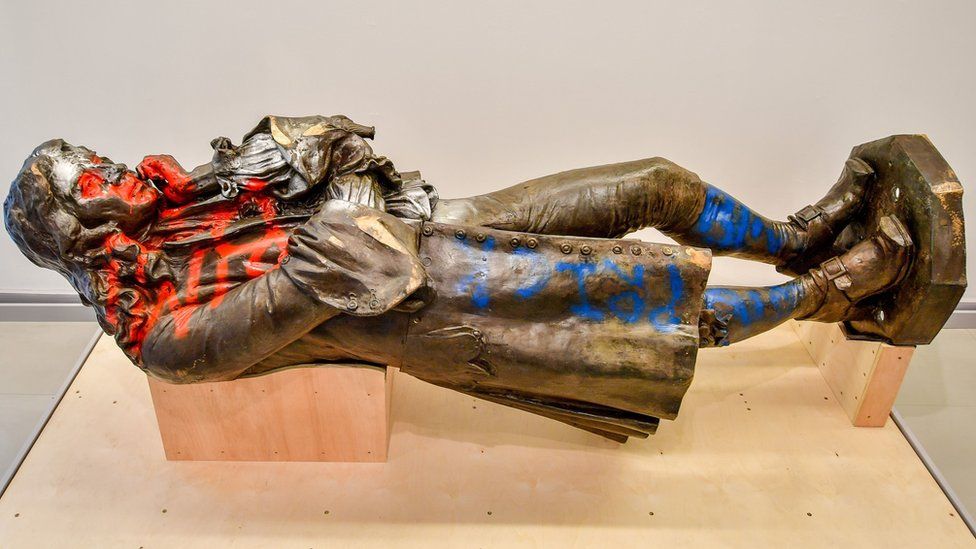
Colston, the toppling of a pejorative narrative

The acquittal of the four defendants for their role in the toppling of Edward Colston in Bristol has created an interesting debate and in some, more right-wing quarters, fury. In an interview following the verdict Boris Johnson stated we cannot seek to “retrospectively change our history“
But what history is he talking about, the one where this country was heavily involved in slavery or some other history around Empire and ‘jolly hockey sticks and all that sort of thing’?
History tells us that this country’s empire, like all empires significantly benefited from its conquests to the detriment of those conquered. Although if you watch the Monty Python film The Life of Brian, the right of the political spectrum might find some comfort in the sketch that starts with ‘What have the Romans ever done for us’? This country’s history is complex more so because it is a shared history with its own inhabits and those of other countries across most of the world. A history of slaves and slave traders. A history of rich and powerful and poor and powerless. A history of remapping of countries, redefining of borders, of the creation of unrest, uncertainty and chaos. A history of theft, asset stripping, taking advantage and disempowerment. As well as a history of standing up to would be oppressors. It is a complex history but not one that is somehow rewritten or removed by the toppling of a statue of a slave trader.
The tearing down of the statue is history. It is a fact that this country’s so called great and good of the time were tarnished by a despicable trade in human misery. The legacy of that lives on to this day. Great and good then, not so now, in fact they never were, were they? It may be questionable whether the circumstances of the removal of the statue were right, hence the charges of criminal damage. It might be questionable whether the verdict given by the jury was right, but surely this isn’t about changing history, it is about making it.
There are suggestions that the verdict may be referred to a higher authority, perhaps the Supreme Court. It appears right that there was a case to answer, and it seems right that the jury were allowed to deliver the verdict they did. There is nothing perverse in this, nothing to challenge, due process has taken place and the people have spoken. The removal of the statue was not criminal damage and therefore was lawful.
If a statue is an affront to the people of a locality, then they should be able to have it removed. If is such an affront to common decency, then the only people guilty of an offence are those that failed to remove it in the first place. Of course, it is more complex than that and perhaps the bigger question is why this didn’t happen sooner?
It would seem fitting to replace the statue with something else. Something perhaps that shows that slowly people of this country are waking up to the country’s past, well at least some of them. A statue that commemorates a new beginning, that acknowledges the country’s true past and points the way to a far more humane future for all. No Mr Johnson, we shouldn’t try to rewrite or obliterate history, we just need to change the way it written and stop ignoring the truth.
Share this:


Poetry on prisons

Recently in CRI3001 Crime and Punishment we’ve been exploring prison poetry drawn from the volumes published by the fantastic Koestler Arts (some examples and inspiration can be found here). Students were inspired by this to write their own poems on prison and you will find some excellent examples below.
Moonlight
I sing to all of the spiders on the wall
They comfort me from my fear of the unknown
All the sounds outside as I lay here petrified
Of the consequences that lay aheadTime is far behind my state of mind
Noran
Deprived myself of the will to fight
For peaceful nights
Moving on
Longing for the past,
Wanting to go back,
To change our future.
Living with regret,
Feeling sorry for hurting you,
Living in isolation,
Needing to hear from you.
Wondering if you’re doing well,
Do you remember me?
Are you moving on?
Do you like it?
Living on the outside?
Outside of these four walls.
These grey walls entrap me,
Every day I feel smaller.
Unimportant. I’m suffocating.
I hope the world hasn’t changed.
I hope everything stays the same.
So that one day, maybe
I could come back to you
Danique
Trapped,
Between four walls for life.
Non-existent,
I am but a shadow of my past self.
Detached,
No amount of WIFI can ever reconnect what was lost.
A
Prisoner’s Perspective
Prison is an escape, prison is a relief, prison is warm, prison is secure. Prison is easier than the cold, sleepless, torrid nights. Prison is not a punishment. Prison is a consolation.
Prison is lonely, prison is isolated. Prison does not help; it does not rehabilitate. Prison stops the time. Prison fails us.
Prison is opportunistic, prison allows me to be a leader, prison allows people to live in fear of me. Something I never was in the outside world.
Prison isn’t a one fits all, prison is individualised offender to offender. Does prison work? Is Prison effective? Is prison the way forward?
Saiya
I Created This
Pulled up and stopped
Big iron gates spiked with fear and dread
he shouts “Clear” and gates open
with rumbling vibration
Why does this feel like the beginning of the end
Queueing quietly waiting turn for changing clothing
Wishing the view was slightly different
This is my home, the world is now distant
Showers cold and beds so hard
Waiting for the order from the guards
“Dinner served” I hear them shout
Hoping it’s not just bland
Thinking about roast dinners
This is my life, I created this
Given the chance, time and again,
But now this is my life, I created this
SKM
Poetry and other forms of literature offer the opportunity to explore criminological issues in a different medium. They allow for ideas to develop in a more natural way than academic conventions usually allow. As you can see from the poems above, our students rose to the challenge and embraced the opportunity to think differently about Criminology.
Share this:


At The Mouth of ‘Bloody Sunday’ #Travel #Prose #History
At the Mouth of Bloody Sunday
I know the one thing we did right, was the day we started to fight. Keep your eyes on the prize…hold on. Hold on.
Bloody Sunday in Selma only highlighted the bloody Mondays, Tuesdays, Wednesdays, Thursdays, Fridays, and Saturdays that Black people in America have faced from the first time we laid eyes on these shores. It took people to gather and protest to change. In December ’64, the good Rev. Dr. King was awarded the Nobel Peace Prize for this movement. That spring in Selma, people marched across a bridge in order to highlight the normal voter suppression practices still happening throughout the south – and still in 2021.
“If you can’t vote, you ain’t free. If you ain’t free, well then you a slave.” –Intro interview to Eyes on the Prize part 6/8.
According to the National Park Service, who oversees the important civic monument now:
“On “Bloody Sunday,” March 7, 1965, some 600 civil rights marchers headed east out of Selma on U.S. Route 80. They got only as far as the Edmund Pettus Bridge six blocks away, where state and local lawmen attacked them with billy clubs and tear gas and drove them back into Selma.”
From my 7th grade social studies class circa ‘87, I would also add: The good white citizens of Selma gathered at the mouth of the bridge for the spectacle, to witness or probably participate in the oppression. We see them in the footage, films, pictures and media coverage of the events, and we know many are likely still alive. Black-n-white news footage of the days leading to Bloody Sunday show the sheriff and his angry henchmen prodding people with their clubs, plenty of ‘regular’ people watching in joy.
The people prodded? Well-dressed and behaved Black citizens of Selma and activists who’d come to support them. According to the footage, white citizens came out in droves for what they knew would be a bloody suppression of simple voting rights. As spectators, their presence made the massacre spectacular.

I’ve visited the National Voter Rights Museum and Institute at the mouth of the bridge, and there they have an actual jar of jellybeans used to test Black people coming to sign up to vote at the local government office. Yes, sitting behind that booth was a white man who demanded that a black person – any citizen of the darker complexion – accurately guess the number of jellybeans in a jar in order to be allowed – in order for him to allow them – to register to vote. I feel like I have to repeat that, or say it in different ways because it is so unbelievable.
This September, I visited a museum at the edge of the Edmund Pettus bridge in Selma, Alabama, on the way to Montgomery, the state capital. This historical museum marks local efforts to contest voter restriction practices. These practices were heinous in tone and texture, yet creative and cringe-worthy in nurture and nature. For example, consider the ingenious of these jellybean-counting white men in DC who created the separate-n-unequal space to inspire a variety of voter suppression taxes, tests and clauses throughout the south. It is these sorts of mad men who make decisions that impact the entire world as we have come to know and understand it now.
Yes, it is these sorts of men who send politicians to the state houses, and sent/send senators to Washington DC, to cajole politicians of every hue to compromise on their values. Now, we also know they send mobs to storm the capitol on the very day all the legislators gather to confirm the election results.
I know the one thing we did right, was the day we started to fight. Keep your eyes on the prize…hold on. Hold on.

Imagine yourself standing there in a museum, looking at a shelf, and there is a jar of jellybeans. There’s nothing spectacular about the jar, nor its contents. For any of us have seen something like this in virtually any kitchen, or supermarket. My granny grew, harvested and canned vegetables, so growing up I got to handle many mason jars first hand.
In fact, I love jellybeans. I used to visit the gourmet jellybeans shop in the mall after school when I was a kid. You could pick out any flavour that you liked, and I always went for blueberry, and cherry. I loved the contrast between the royal blue and Corvette red. It is a childhood fascination that my dentists still adore me for to this day. Naturally, these gourmet jellybeans were a little more expensive than the ones you get in the supermarkets, but I liked to save my money and treat myself sometimes. Plus, it felt very special being able to pick out the ones you like, and not have to discard the disgusting ones – who ever thought licorice or cola belonged on a jelly bean!?!
As a candy, jellybeans are so visually enticing. As you enter the shop, the walls are covered from floor to ceiling with all sorts of bright neon colors. Every shade of the rainbow grabs your eyes, calls to you. Between stacks of plastic bags and scoops, you are awed by the massive jars of each individual jellybean color ready for you to pick-and-mix. There are also tables with stacks of both empty and pre-filled jars. There are jars of all sizes filled with colorful patterns of jellybeans with matching ribbons tied in bows around the lids. Of course, the entire shop smells like fruit, all kinds of fruits, sweet, succulent fruits that you cannot even imagine. You are the customer, you are king. By virtue of entering the fancy shop, this is your kingdom.
Now take all of that and put it in a jar. To get to this jar, you have to enter an official government building in the town center. Next to the entrance stands an armed, uniformed white man who gives you a disgruntled look as you enter, signaling that he’s not there for your safety but aggravation. Now, as you approach, you see the jar, sitting on a counter, and behind it sits another white man. Try to imagine this white man, probably with a gun next to him or somewhere nearby, with nothing better to do than to threaten your life. Because the town is so small, he knows your last name, and may know of your family.
Since this is a small town, he knows your employer, he knows where you live as you’ve just written this down. He may even know your family, as the local history is so insidious, his family may have even owned or overseen yours at one time. Or, at that very moment, you or a family member may work for him or his kin. Your kids might play together. You may have played with him as a kid when, for example, your mother was his nanny (read-and-said-in-the-south: Mammy). Yet now, here in a free democracy, it is his job to register citizens to vote.
It is his prerogative, the birthright of this individual, plain (white) man on the other side of the glass to demand that you count the number of jellybeans in the goddamn jar. It is a privilege that no one anywhere near here has ever questioned. So, with a smile, he plops a big red “DENIED” stamp on your registration form. Of course yo’cain’t! A “killing rage” surges. Be glad you don’t have a gun with you.

Share this:


A microcosm of deviancy

A little over a week ago our university introduced the compulsory wearing of face masks indoors. This included wearing of masks in classrooms as well as common areas and offices. Some may argue that the new rules were introduced a little too late in the day, whilst I’m sure others will point to the fact that government guidance is that the wearing of face masks is advisory and therefore the introduction of the new rules was unwarranted. Let’s be honest the government and their political party haven’t set much of an example regarding the basic safety ideas, let alone rules, as evidenced by the recent Conservative party conference. The new rules at the university, however, are not enforced, instead there is a reliance that students and staff will comply. This of course creates several dilemmas for students and staff where there is a failure to comply and it makes for some interesting observations about general human behaviour and deviance. To that extent, university life might be viewed as a microcosm of life in the general population and this lends itself quite nicely to the analogy of behaviours whilst driving on a road.
Driving behaviours vary, from those drivers that consistently and diligently stick to the speed limit despite what others may be doing, to those that have complete disregard for limits or indeed others including those that police the roads. Let us be quite clear at this stage, speed limits are nearly always there for a reason. There is ample research that speed kills and that reductions in speed limits injuries and saves life. Whilst those drivers that drive over the speed limit will not always be involved in a collision and that a collision will not always result in serious injury or death, there is a much greater potential for this. The risks of course are spread across the population in the locality, the impact is not just felt by the speeding driver but other drivers and pedestrians as well. To some extent we can make the comparison to the risks associated with catching Covid and the wearing of masks and social distancing, failure to comply increases risks to all. As a quick reminder, the wearing of masks is to protect others more so than it is to protect the individual mask wearer.
Observations of behaviours regarding staff and students wearing masks at the university are interesting. There are those that comply, regardless of what others are doing, some of these will have been wearing masks indoors before the new rules came in. Not dissimilar to the careful driver, sticking to the speed limit but also prepared to drive slower where they perceive there is a greater risk. Then there is the well-intentioned mask wearer, the one that knows the rules and will stick to them but through absent mindedness or through some of life’s many distractions, they fail to wear their masks at various points of the day. As with the well-meaning driver, they are easily reminded and often apologetic, even if it is only to themselves. Of course, there is the ‘follow the flock’ wearer, the person that could quite easily be persuaded to not wear their mask by the rest of the flock as they fail to wear theirs. The driver that joins the rest and drives at 40mph in a 30mph limit because the rest of the traffic is doing so. Next is the deviant that has disregard for the rules as long as no one in authority is looking. The person that keeps their mask handy, probably under their chin and then when challenged in some way, perhaps by a disapproving look from a member of staff or by a direct challenge, puts their mask on but only for the duration they are under observation. Not dissimilar to the speedster that slows down when they see a police vehicle or a static speed camera only to speed up again when the danger of being caught and sanctioned has passed. Finally, there is the person that has complete disregard for any rules, they will blatantly fail to wear a mask and wave away with complete disdain any attempt by student ambassadors positioned at the door to offer them a mask. They like the speeding driver that fails to obey any of the rules of the road have complete disregard for the rules or indeed any rules.
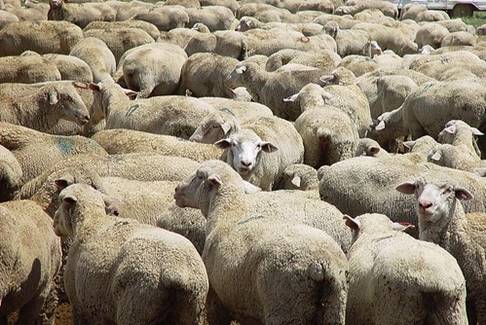
Whilst we may lament the fact that some people forget, are distracted but are generally well meaning, we probably wouldn’t want to impose any sanction for their deviance. But what of those that have complete disregard for the rules? It is worth returning here to the general ethos of wearing masks; to protect others. The disregard for the rules is inter alia a disregard for the safety of others. Whilst we might observe that the deviancy is apparent amongst several students (a problem that might be generalised to society), it is somewhat disconcerting that there are a significant number of staff who clearly do not think the rules apply to them. They seem to neither care about their colleagues nor the students and it would seem consider themselves above the rules. Another comparable trait in general society where those in positions of power seem to have a disregard for rules and others. Finally, we might consider how we could police these new rules as clearly our university society of students and staff are unable to do so. I can hear the cries now, haven’t you got anything better to do, this is a sledgehammer to crack a nut and all the usual rhetoric endured by the police across the land. If you make a rule, you must be prepared to enforce it otherwise there’s no point in having it. Imposing an unenforceable rule is simply playing politics and attempting to appease those that question the conditions in which students and staff work. Imagine speed limits on the road but no enforcement cameras, no police and no sanctions for breaches. It will be interesting to see how long the general population at the university follow the new rules, recent observations are that the flock of sheep mentality is starting to come to the fore. As a parting thought, isn’t it amazing how easy it is to study crime and deviance.
Share this:


Meet the Team: Stephanie Richards, Associate Lecturer in Criminology

A Warm Welcome
Hello all! I would like to introduce myself. My name is Stephanie Richards and I am your Student Success Mentor (SSM). Some of the criminology and criminal justice students would have already had the opportunity to meet me, as I was their Student Success Mentor previously. So, it will be great to touch base with you all and it would also be great for the new cohorts to say hi when you see me on campus.
It is that time of the year when we see new students and our existing students getting ready to tackle the trials of higher education. Being a SSM I am fully aware of the challenges that you will face, and I am here to support you throughout your time at UON. As a previous student I can testify that studying at university is incredibly challenging. The leap from school/ college can be daunting at first. A new building that seems like a maze or the idea of being surrounded by strangers that you probably think you have nothing in common with can be enough to encourage you to run for the hills….stepping into a workshop for the first time can give you a stomach flip, but once you take that first seat in class you will come to realise it does get easier.
Upon reflection of my experience as a new undergraduate student I would have to be honest and express the difficulties that I suffered adjusting to my new way of life. I could not keep my head above the masses of reading, and when I did manage to get some of the seminar prep completed, most of the time I struggled with the new questions and concepts that were posed to me. This will be the experience of most, if not all the new students starting out on their university education. This is part of the complex journey of academia. My advice would be to pace yourself, time management is key, if you struggle to understand the work that has been set, ask for clarity and develop positive relationships with your peers and the staff at UON…………..being part of a strong community will get you through a lot!
My role is not just about assisting the new students that have started their university journey, I am also here to help UONs existing students. Getting back into the swing of studying can be daunting after the summer break. Adjusting to face-to-face education can be an overwhelming process but one that should be embraced. We will all miss our pyjama bottoms and slippers but being back on campus and getting some normality back in your day is worth the sacrifice.
The team of SSM’s are here to support you throughout your journey so please get in touch if you require our assistance. We never want you to feel alone in this journey and we want to assist you the best ways we can. We want you to progress and meet your full learning potential, and to get the most out of your university experience.
Share this:


Meet the Team: Francine Bitalo, Associate Lecturer in Criminology

Hi everyone! My name is Francine Bitalo and I will be your new Student Success Mentor for this year. I am looking forward to meeting and assisting you all in your academic journey. Feel free to contact me for any support.
Being a graduate from the University of Northampton I can relate to you all, I know how challenging student life can be especially when dealing with other external factors. You may go through stages where you doubt your creativity, abilities and maybe even doubt whether the student life is for you. When I look back at when I was a student, I definitely regret not contacting the Student Success Mentors that were available to me or simply utilising more of the university’s support system. It is important for you seek support people like myself are here to help and recommend you to the right people.
Besides everything, Criminology is such an interesting course to study if you are anything like me by the end of it all you won’t view the world the same. Many of you have probably already formed your views on life especially when it comes to understanding crime. Well by the end of it all your ways of viewing the world will enhance and become more complex, theoretical and constructive. The advice I give you all is to enjoy the journey, be open minded and most importantly prepare for exciting debates and conversations.
Look forward to meeting you all.

 Thoughts from the criminology team