
Home » Crime and Punishment (Page 9)
Category Archives: Crime and Punishment

Criminology 2020 AD

2020 will be a memorable year for a number of reasons. The big news of course was people across the world going into lockdown and staying home in order to stop the transmission of a coronavirus Covid-19. Suddenly we started counting; people infected, people in hospitals, people dead. The social agenda changed and our priorities altered overnight. During this time, we are trying to come to terms with a new social reality, going for walks, knitting, baking, learning something, reading or simply surviving, hoping to see the end of something so unprecedented.
People are still observing physical distancing, and everything feels so different from the days we were discussing future developments and holiday plans. During the last days before lockdown we (myself and @paulaabowles) were invited to the local radio by April Dawn to talk about, what else, but criminology. In that interview we revealed that the course started 20 years ago and for that reason we shall be having a big party inviting prospective, current and old students together to mark this little milestone. Suffice to say, that did not happen but the thought of celebrating and identifying the path of the programme is very much alive. I have written before about the need to celebrate and the contributions our graduates make to the local, regional and national market. Many of whom have become incredibly successful professionals in the Criminal Justice System.
On this entry I shall stand on something different; the contribution of criminology to professional conduct, social sciences and academia. Back in the 1990s Stan Cohen, wrote the seminal Against Criminology, a vibrant collection of essays, that identified the complexity of issues that once upon a time were identified as radical. Consider an academic in the 1960s imagining a model that addresses the issue of gender equality and exclusion; in some ways things may not have changed as much as expected, but feminism has entered the ontology of social science.
Criminology as a discipline did not speak against the atrocities of the Nazi genocide, like many other disciplines; this is a shame which consecutive generations of colleagues since tried to address and explain. It was in the 1960s that criminology entered adulthood and embraced one of its more fundamental principles. As a theoretical discipline, which people outside academia, thought was about reading criminal minds or counting crime trends only. The discipline, (if it is a discipline) evolved in a way to bring a critical dimension to law and order. This was something more than the original understanding of crime and criminal behaviour and it is deemed significant, because for the first time we recognised that crime does not happen in a social vacuum. The objectives evolved, to introduce scepticism in the order of how systems work and to challenge established views.
Since then, and through a series of events nationally and internationally, criminology is forging a way of critical reflection of social realities and professional practices. We do not have to simply expect a society with less crime, but a society with more fairness and equality for all. The responsibilities of those in position of power and authority is not to use and abuse it in order to gain against public interest. Consider the current pandemic, and the mass losses of human life. If this was preventable, even in the slightest, is there negligence? If people were left unable to defend themselves is that criminal? Surely these are questions criminology asks and this is why regardless of the time and the circumstances there will always be time for criminology to raise these, and many more questions.
Share this:

#CriminologyBookClub: The Unexpected Inheritance of Inspector Chopra
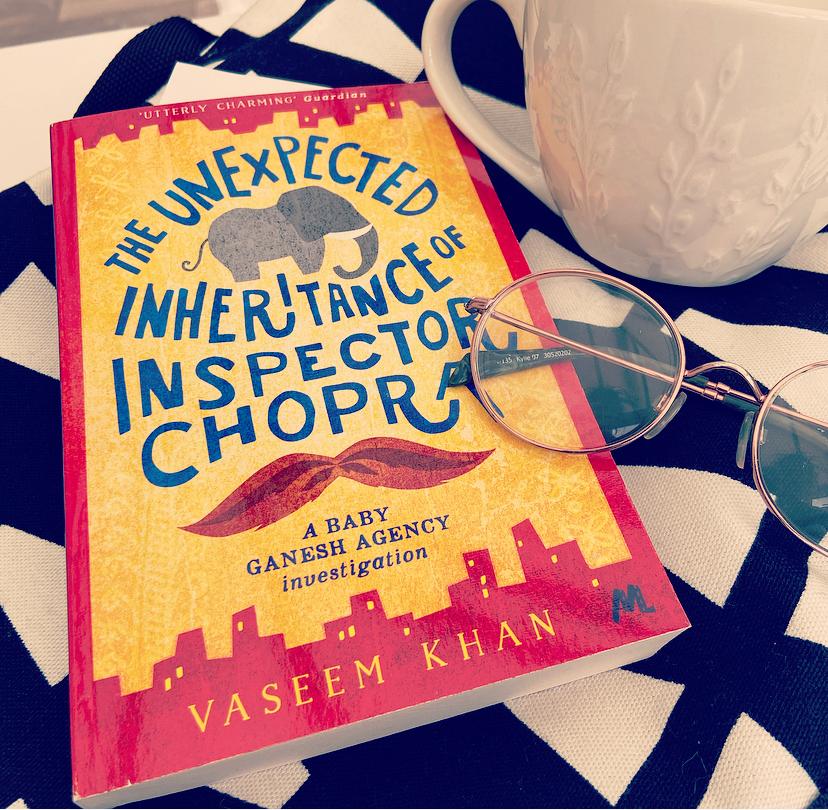
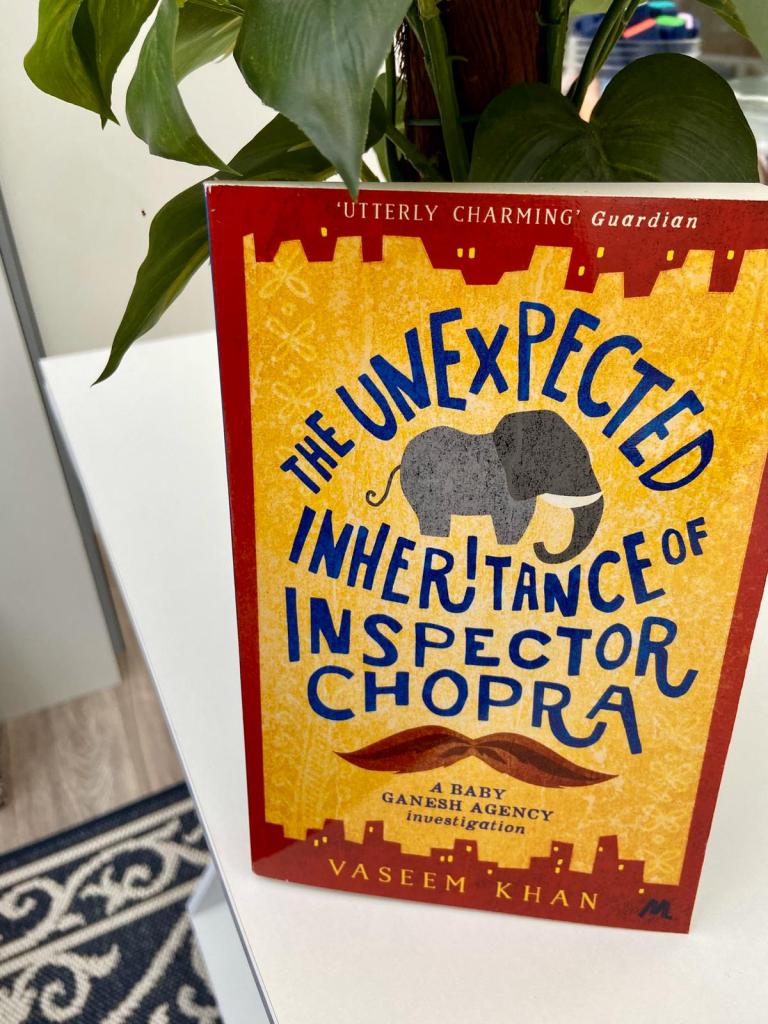
As you know from our last #CriminologyBookClub entry a small group of us decided the best way to thrive in lockdown was to seek solace in reading and talking about books. This blog entry is very different from any other we’ve published before, in that it has seven bloggers contributing! There is a very good reason why and that is because @manosdaskalou managed to choose a book that delighted all of us, and believe me, that is a challenge for a group of bibliophiles. Without more ado, let’s see what everyone thought:

“The second book of book club was a huge success- excellent choice @manosdaskalou! The Unexpected Inheritance of Inspector Chopra by Vaseem Khan was delightful! Whilst fulfilling all the ‘usual stuff’ associated with a crime novel, it also adds a layer of fantasy and wonder which is usually alien to crime fiction. As I raced through the novel, falling in love with characters- Poppy is kick ass, the complete opposite of drippy Carol (The Yellow Room) and safe to say I now want a baby Elephant; I was transformed into another world, something which crime fiction has never done for me before. It brought back feelings of nostalgia and memories of reading David Eddings and Derek Landy in the summer after GCSEs, when life was simpler and full of joy! A wonderful, intriguing and mysterious crime novel with a hint of fantasy, pulling you away to a different place. An enchanting and wonderful read which blends serious social injustices and issues with mystery, suspense and humour- I cannot wait to see what Inspector Chopra and Ganesha get up to next!”
@jesjames50

“The problem with writing a mere paragraph for a blog about a book that I really did enjoy is that I fear I won’t be able to do it justice. The story, well I’m sure others might tell you what the book is about but, if you want to know, really want to know, read it. Rarely can I say that I couldn’t wait to finish the book and yet didn’t want it to finish. The characters come to life, especially the elephant, in a way that makes it seem almost real, but not quite. The story moves on at a fast pace and yet has a steadiness to it. There are surprises along the way and, yet they are almost expected, it was always going to be that way. Within the narrative there is a demonstration of what we know to be good in humans and, yet it encompasses so much of what we know to be bad. How then can I have left the final page, sad that the book was finished, but uplifted by the narrative and almost salivating at the anticipation of reading the next in the series? The plaudits on the cover don’t do it justice, to answer my question, all I can reiterate is that you have to read it to understand.”
@5teveh
“When I first received this book, I was a bit sceptical, as I did not know how an elephant was going to be incorporated into a detective crime novel. However, I was pleasantly surprised. The first book in the series was a delight and a much-needed escape in these uncertain times. This book captured my attention very quickly and whisked me off on a colourful, picturesque adventure to Mumbai, with the amazing inspector Chopra and of course the star of the story, Ganesh the mysterious baby elephant. The book introduces you to an interesting plot. At first you are made to think that the focus of the book will be on Inspector Chopra investigating the murder of a young man. However, you are quickly introduced to the wider issues that sit at the heart of social and economic challenges present in India. Without leaving you glum, the book has a nice balance of crime and mystery, coupled with humour, great food, wonderful scenery and lovable characters. I liked this book as it was unique to any other books that I have read. I am looking forward to continuing the Baby Ganesh Detective Agency series.”
@svr2727
“Vaseem’s novel had me from to get-go. Set in bustling Mumbai this novel has more depth than the usual “whodunit” scenario. This book is a criminologist’s dream, as yes, we all find out who did it in the end, and yes the case is also solved but there are also issues of poverty and corruption to contend with. The story would not be complete without Ganesha the elephant who makes solving the case possible (and survivable). Ganesha goes through a lot in the story. From being depressed and chained up outside an apartment complex, to being mistakenly left to drown during heavy rain and fed chocolate. Despite all of this, Ganesha is often the hero of the hour, so for me the book symbolises the true greatness of animals: We do not deserve them.”
@haleysread
“I really enjoyed this book. It was great to lose myself in a different country and culture and to meet so many relatable characters there – even (especially?) the chocolate loving elephant! I can’t wait to find out what happens next…”
@saffrongarside
As well as having the joy of reading The Unexpected Inheritance of Inspector Chopra, we also had the very unexpected pleasure of welcoming the author Vaseem Khan to our book club meeting today. To be able to hear about Vaseem’s motivations for creating the colourful world in which Inspector Chopra and Ganesha work and play was fascinating. The opportunity to ask questions was fantastic and we’d like to say a big thank you to Vaseem for allowing us a peak inside his world of writing. It is now easy to see where Inspector Chopra gets his generosity of spirit from. And now we’ll leave the final word to @manosdaskalou….after all he did choose the book 😉
“What does a gang of criminologists do at lockdown? We read crime books and talk about them. On this occasion The Unexpected Inheritance of Inspector Chopra was a welcomed distraction from reality. The book introduces the retired inspector with a very unusual sidekick! The retired inspector is a very honourable, incorruptible professional whose investigation will bring him in conflict with the criminal underbelly of Mumbai. The retired inspector is not fazed, and he is determined to carry on regardless. The investigation takes inspector Chopra around the city; which gives the reader a unique opportunity to get to know a metropolitan megapolis.”
@manosdaskalou
Share this:


#CriminologyBookClub: The Yellow Room

In times of crisis it is beneficial to occupy yourself with things to do. This helps us to cope with boredom, and to distract us from the bleakness of reality. What better way to help with this than to start a book club? That’s right, whilst some of us were sitting at home twiddling our thumbs, @paulaabowles had sent us all a book that we were to read and discuss in virtual book club meetings. Little did we know that this book club was to be our very own ray of sunshine during such an unprecedented time.
Our first book is The Yellow Room by Mary Robert Rinehart (dubbed the American Agatha Christie by the blurb, which is generous). Set in Maine (USA) during WWII, this is a classic whodunit crime novel. With the wealthy Spencer family finding themselves tangled in a web of evidence that instigates their involvement with a dead woman that is found in the closet of their holiday home. The book is filled with intrigue and the plot thickens with each chapter, with more and more clues being thrown into the mix. Until too much is thrown in, and what is left of the book is quite simply… a mess.
The book consists of 30 chapters, and we think the club is in agreeance that the first 20-24 chapters are pretty great. Rinehart throws a number of spanners in the works, with near misses, burning hillsides, death by frights, illegitimate children and secret marriages. We all had our theories, some boarding on plagiarism (they know who they are!). However as it turns out a few of us were half right, and then so were some of the others. We will not give away any spoilers, but the ending, the answer we were all waiting for was disappointing and quite frankly we are still not 100% sure who did it, and what was actually done. The leading lady of the book Carol Spencer, dubbed drippy Carol by the club, because she is, well… DRIPPY, does nothing but smoke and drink coffee, whilst surrounded by crime and uncertainty. But, alas, when all is righted, she finds herself in the arms of an arrogant moody man, all happily engaged! Possibly a romance (although a bad one) or possible a classic whodunit (a half decent one), who can tell?
Overall the book was a success: it inspired intrigue and discussion! The virtual book club even more so! A bunch of misfits, gathered together (20minutes after the allotted time because one member of the group is late- @manosdaskalou), discussing the book, thinking about the social context, the characters, and how it is received today. It is a fantastic virtual club consisting of familiar suspects: the princess, the athlete, the criminal, the brain, the basket case, the parent and the “carol” (representations may not be literal or accurate). What will the misfits think of the next book? Will they all agree? Will one read ahead and sit silently and sheepishly, without the others knowing? Stay tuned…
@jesjames50 and @haleysread – founding members of the #CriminologyBookClub
Share this:


Within Grey Walls

“Waking up to gray walls and black bars…in the silence of ones own thoughts, leaves one to a feeling of somberness…as those around begin to stir and began their individual day, hope creeps into ones mind….as the discussions regarding legal strategies began, hope then becomes more than just a shadow…as guys began to discuss their potential future beyond prison and being locked in a cell for days at a time, hope becomes more than just a fleeting moment! Silence can sometimes be ones own enemy on death row:-…So I condition myself to discover the “why” I fight through the fits of depression and despair, instead of focusing on the “how’s”….because pursuit of the “why’s” bring about methods of finding a solution….encouragement to remain hopeful!”
Everyone has the right to life, liberty and security of person (1).
Without the right to life, we cannot enjoy the freedoms set forth in the Universal Declaration of Human Rights.
However, what if one’s life was imprisoned and waiting to be ended for crime? In addition, what if a person was to be put to death for associating with a particular demographic?
The death penalty is the authorization of the state to kill a citizen for a crime, whether it’s murder, rape, treason, or more severe crimes, such as crimes against humanity and genocide (2).
Whilst the death penalty can be a deterrent, provide justice, and be the ultimate punishment for a crime and justice for victims, it is also used in some countries to persecute minority groups, such as the LGBT community (3) (4). (In references, there is a link to an interactive map of countries that utilize the death penalty for LGBT groups).
According to the Death Penalty Information Centre (DPIC), around 82% of cases involving capital punishment, race was a determining factor of giving this punishment, in comparison to white counterparts (5). However, the justice system is far from perfect, and miscarriages of justice occur. Due to issues of racism and racial bias (particularly within the American Justice System), this has seen members of minority groups and innocent people put on death row whilst a criminal still walks free. A damning example of a miscarriage of justice, and a clear demonstration of racism, is the case of George Stinney, whom, at the age of 14, was wrongly accused of murdering 2 girls. He was taken to court, tried by an all white jury, and was given the electric chair (6).
This, ultimately, is the state failing to protect its citizens, and causing irreparable damage to others. The George Stinney case is a condemnatory example of this. On top of that, it is hard to measure deterrence, and whether capital punishment actually deters people from committing crime.
However, what is it actually like being on death row?
June 2017 saw the start of a new friendship – a unique friendship. What simply started out with me wanting to reach out and be a ray of light to someone on death row, turned into a wonderful experience of sharing, support and immeasurable beauty. In June 2017, I began writing to a man on death row, and simply wanted to be a ray of light to someone in a dark place.
He has shared some of his thoughts of what it is like to be on death row:
“Perseverance. This is key when facing a day in prison (physically and mentally) because is never “where” you are physically, but your ability and willingness took push through those times of adversity and overcome the very things that have the power to bring you down….such as evil”. BUT- when we examine the word “evil” look closely…. Do you see it yet? ….. It’s “LIVE” backwards and to me its when we lose our patience to “LIVE” that we have brushes with “evil”…no???? So within these walls I do my best to find the “silver lining” and develop the better aspects of me”.
Now, it may seem effortlessly -but- in all honestly….its very difficult to face each day with the uncertainty of knowing whether the presence I have is one that has significance….in here I have to prepare myself on a constant basis in order to be the best version of myself no matter what lays ahead.
Thankfully….I have met an incredible person, who guides me by way of her words…offers me comforts by way of her thoughts and prayer and encourages me through her never ending presence! She is beautiful in every aspect of the word…She has helped me to discover that EVERYTHING and NOTHING awaits beyond forever!
References
(1) Universal Declaration of Human Rights (UNDH) Article 1 Available online at: https://www.un.org/en/universal-declaration-human-rights/ Accessed on 21/01/2020
(2) Louise Gaille ’15 Biggest Capitol Pros and Cons’ Available online at: https://vittana.org/15-biggest-capital-punishment-pros-and-cons Accessed on 24/03/2020
(3) The Human Dignity Trust ‘Saudi Arabia: Types of Criminalisation’ Available online at: https://www.humandignitytrust.org/country-profile/saudi-arabia/ Accessed on 24/03/2020
(4) Death Penalty Information Centre ‘Executions By Race and Race of Victim’ Available online at: https://deathpenaltyinfo.org/executions/executions-overview/executions-by-race-and-race-of-victim
(5) Ibid
(6) Snopes Fact Check ‘Did South Carolina Execute 14-year-old George Stinney, then declare him innocent 70 years later?’ Available online at: https://www.snopes.com/fact-check/george-stinney-execution-exoneration/ Accessed on 24/03/2020
Other
Interactive map of countries where the death penalty is used against the LGBT community: https://www.humandignitytrust.org/lgbt-the-law/map-of-criminalisation/?type_filter=crim_gender_exp
Human Writes: https://www.humanwrites.org
Share this:


Hypocrites or just human?

At a time of a significant religious festival in the Christian calendar and at a time of global anxiety, sacrifice and distress, it seems apt to reflect on where we stand in it all.
Like most, I watch the television, listen to the radio, tap into social media (albeit only on limited occasions), receive emails and listen to family, friends and colleagues.
I am amazed by the sacrifice that some people make to protect or look after others and yet dismayed by the actions and comments of some. And yet as I ponder on the current situation I realise that it only brings into focus behaviours, actions and comments that were already there. Perhaps, the circumstances have allowed some to shine or provided more of a focus on those that already do outstanding things, and this is a good thing but human nature as it is, doesn’t really change. Here are a few examples, I’m sure if you reflect on these you will think of more.
- We lament at the inequality in the world, but we do little about it. Instead, we fight to buy up all the toilet rolls that we can, lest we run out.
- We complain the government haven’t done enough in the current crisis and then flout the guidelines they gave us on social gatherings and movement or cause others to do so (did you really need that Amazon order?)
- We complain about our work conditions, but we are content for the company or organisation to continue paying us, often saying they don’t pay us enough
- We are upset by colleagues who do us a disservice and then denigrate others because of their so-called ineptitude
- We complain about being bullied but go on to display the same bullying behaviours that we complained about
- We call people misogynistic but then in the same breath suggest that the world would be better without men or that women do a better job
- We accuse people of being racist but then use derogatory and stereotypical language to describe those that we accuse
- We condemn those that we see as privileged and suggest they should give up their wealth and status. And yet we fail to consider our own privilege and are not prepared to give up what we have (see the first comment re inequality)
- We see the criminal justice system as unfair but would be the first to complain if we were a victim of crime and the offender wasn’t brought to justice. What we see as justice is dependent on the impact the wrongful act has on us
- We commit crimes, albeit perhaps minor ones or committed crimes when we were younger and didn’t know better, yet we castigate others for being criminal. Welfare cheats are awful, but tax payments are to be avoided
I could go on, but I think by now you get the general idea. I’ll return to religion if I may, not that I’m religious, but I did start off the blog with an acknowledgement of the timing in line with the Christian calendar: “He that is without sin among you, let him cast the first stone at her”, (John, 8:7). Maybe we should be a little more honest with ourselves and think about what we say or do before we judge and condemn others. I do wonder though, are we all hypocrites, or is it part of the pathology of just being human?
Share this:


Can there be Justice for Benjamin Arum Izang? An Unfortunate Victim of Forum Shopping

So Jos[1] tweeter community was agog with the scandal of the alleged torture of 31 year old Benjamin Arum Izang by personnel of the Operation Safe Haven (OPSH) Military Special Task Force (STF) conducting internal security operations in Plateau State. The family reported that the torture eventually led to Benjamin’s demise because of the fatality of the injury inflicted on him by the military personnel.
The sad event that led to this unfortunate incidence is reported to be an altercation over a fifty-naira egg (approximately 11 cents) between the deceased and a certain Blessing, an egg hawker whose egg was said to be broken by Benjamin. Failure to reach an understanding led Blessing to report the matter to the personnel of the STF, who quickly swung into action, albeit, one that involved the torture of Benjamin.
An investigation by Dickson S. Adama (a media correspondent) revealed that the Media Officer of the STF indicates not been aware of the incident. However, the family and the concerned public are crying for justice as this is not the first of such cases in the State. Rightfully so, scholars and practitioners of peace and conflict consider this incidence as forum shopping,[2] a decision by disputants to choose a security agency to intervene in their dispute, based on the expectation that the outcome will favour them, even if they are the party at fault. Studies[3] including my doctoral research on the military security operations in Plateau State indicates this as a recurring problem when the military conducts security operations in society.[4]
Often, when dispute ensues between two or more parties and both desire to emerge victorious or to exert their position on the other, desperate actions can be taken to ensure victory. One of such actions is the decision to invite a third party such as the military which is often not the suitable institution to handle matters of civilian disputes. In my doctoral research, I detailed the factors that makes the military the most unsuitable agency for this role, key among which is that they are neither trained nor indoctrinated for law enforcement duties. More so, the task and skill of law enforcement and managing civilian disputes which involves painstaking investigation and ascertaining guilt before conviction/serving punishment is the primary role of the police and the criminal justice system, which the military is not a part of. The military trains for war and combat mission, to kill and to obliterate and essentially, their culture and indoctrination is designed along these tenets.
Given this, when the military is involved internally as in the case of Benjamin and Blessing, it engenders numerous challenges. First, with the knowledge that the military dispenses ‘instant justice’ such as punishment before determining guilt, civilians such as Blessing will always seek this option. Tweeps such as @ByAtsen tweeted for instance that ‘same soldiers at the same outpost did this to another who, unlike Benjamin, is still alive nursing his wounds.’ One challenge is that where forum shopping denies justice, it breeds lawlessness and can further evoke public outrage against the military. In turn, this can erode the legitimacy of the security role of the military. Where this occurs, a more worrying challenge is that it can exacerbate rather than ameliorate insecurity, especially where civilians feel compelled to seek alternative protection from coercion from State forces and threats from the armed groups the military was meant to avert.
[1] Jos is the capital city of Plateau State Nigeria. The State was once the most peaceful State in Nigeria (arguable) but is now embroiled in intermittent and protracted violence, between the mostly Christian natives and Hausa/Fulani ‘settlers,’ and series of insurgent style attacks of rural farming communities by marauding herdsmen widely believed to be Fulani herdsmen.
[2] Keebet Von Benda-Beckmann, ‘Forum Shopping and Shopping Forums: Dispute Processing in a Minangkabau Village in West Sumatra’, Journal of Legal Pluralism, 19 (1981), 117–59.
[3] Judith Verweijen, ‘The Ambiguity of Militarization: The Complex Interaction between the Congolese Armed Forces and Civilians in the Kivu Provinces, Eastern DR Congo’ (Utrecht University, 2015).
[4] Sallek Yaks Musa, ‘Military Internal Security Operations in Plateau State, North Central Nigeria: Ameliorating or Exacerbating Insecurity?’ (Stellenbosch University, 2018) <https://scholar.sun.ac.za/handle/10019.1/104931> [accessed 14 March 2019].
Share this:

20 years of Criminology

It was at the start of a new millennium that people worried about what the so-called millennium will do to our lives. The fear was that the bug will usher a new dark age where technology will be lost. Whilst the impending Armageddon never happened, the University College Northampton, as the University of Northampton was called then, was preparing to welcome the first cohort of Criminology students.
The first cohort of students joined us in September 2000 and since then 20 years of cohorts have joined since. During these years we have seen the rise of University fees, the expansion of the internet and google search and of course the emergence of social media. The original award was focused on sociolegal aspects, predominantly the sociology of deviance, whilst in the years since the changes demonstrate the departmental and the disciplinary changes that have happened.
Early on, as criminology was beginning to find its voice institutionally, the team developed two rules that have since defined the focus of the discipline. The first is that the subject will be taught in a multi-disciplinary approach, widely inclusive of all the main disciplines involved in the study of crime; so alongside sociology, you will find psychology, law, history, philosophy to name but a few. The impetus was to present these disciplines on an equal footing and providing opportunity to those joining the course, to discover their own voice in criminology. The second rule was to give the students the opportunity to explore contentious topics and draw their own perspective. Since the first year of running it, these rules have become the bedrock of UoN Criminology.
The course since the early years has grown and gone through all those developmental stages, childhood, adolescence and now eventually we have reached adulthood. During these stages, we managed to forge a distinctiveness of what criminology looks like; introducing for example a research placement to allow the students to explore the theory in practice. In later years we created courses that reflect Criminology in the 21st Century always relating to the big questions and forever arming learners with the skills to ask the impossible questions.
Through all these years students join with an interest in studying crime and by the time they leave us, to move onto the next chapter of their lives, they have become hard core criminologists. This is always something that we consider one of the course’s greatest contribution to the local community.
In an ordinary day, like any other day in the local court one may see an usher, next to a probation officer, next to a police officer, next to a drugs rehabilitation officer, all of them our graduates making up the local criminal justice system. A demonstration of the reach and the importance of the university as an institution and the services it provides to the local community. More recently we developed a module that we teach in prison comprised by university and prison students. This is a clear sign of the maturity and the journey we have done so far…
As the 21st century entered, twin towers fell, bus and tube trains exploded, consequent wars were made, riots in the capital, the banking crisis, the austerity, bridge attacks, Brexit, extinction rebellion, buildings burning, planes coming down, forest fires and #metoo, and we just barely cover 20 years. These and many more events keep criminological discourse relevant, increase the profile of the subject and most importantly further the conversation we are having in our society as to where we are heading.
As I raise my glass to salute the first 20 years of Criminology at the University of Northampton, I am confident that the next 20 years will be even more exciting. For those who have been with us so far a massive thank you, for those to come we are looking forward to discussing some of the many issues with you. We are passionate about criminology and we want you to infect you with our passion.
As they say in prison, the first 20 years are difficult the rest you just glide through…
Share this:


“Back to the future”: 2019 A Year of Violence?

When I was young, 2020 seemed like the stuff of science fiction. Programmes like Tomorrow’s World held the promise of a future full of leisure, with technology taking the strain in all aspects of human life. Now we’re in 2020 it appears we have plenty of technology, but whether it adds or subtracts from the lived human experience, is still very much up for discussion. Certainly, it is increasingly difficult to separate work from leisure with the liquidity technology brings.
As is traditional for this time of year, the mind turns to reflection on the year gone by. This year is no different, after all it, like many others, has been packed with both good and bad experiences. Personally, 2019 was challenging in a number of different arenas, my patience, temerity and resilience have been tested in many novel ways. Events have caused me to reflect upon my own values and philosophies and my moral and ethical compass has been and continues to be tested. I don’t intend to go into lots of detail here, but it feels to me as if violence is increasingly impinging on all aspects of life. The first few days of 2020 suggests this perception is likely to continue with Trump’s decision to assassinate ‘Iran’s top general and second most powerful official, Qassem Suleimani’.
In December, 2019 we saw yet another general election. Whatever your particular persuasion, it is difficult to view British politics as anything other than increasingly personalised and aggressive. Individuals such as David Lammy MP, Diane Abbott MP, Caroline Dinenage MP, as well as campaigners such as Gina Miller and Greta Thunberg are regularly attacked on twitter and through other media. However, it is not all one sided, as Drillminster showed us in 2018 with his artistic triumph Political Drillin. It is clear that these verbal attacks are beginning to become part and parcel of political life. Such behaviour is dangerous, on many levels, political discourse is a necessity in a mature democracy and shutting up discordant voices cannot lead to unity in the UK.
In November, we were shocked and horrified by the terrorist attack at Fishmonger’s Hall. This attack on colleagues involved in prison education, raised questions around individual and collective decisions to engage with criminology with convicted criminals. Nevertheless, despite such horrific violence, the principles and practice of prison higher education remain undaunted and potentially, strengthened.
October, saw the publication of Grenfell Phase 1. This document identifies some of the issues central to the horrific fire at Grenfell Tower in 2017. Whether this and later publications can ever really make sense of such complexity, offer the victims and survivors comfort and go some way to ensuring justice for all those involved, remains to be seen. Those who have studied CRI3003 Violence with me are likely to be cynical but it is early days.
For much of September, the focus was on the prorogation of parliament and the subsequent court case. As with December, there were many complaints about the violence of language used both inside and outside parliament. Particularly, notable was the attack on MP Jess Phillips’ constituency office and arguments around the inflammatory language used by PM Boris Johnson.
In August, the media published video footage of Prince Andrew with his friend, the convicted sex offender Jeffrey Epstein. This story rumbles to the end of the year, with more allegations made toward the prince, culminating in an infamous interview which threatens to continue unabated.
July saw the end of a trial into modern slavery, leading to prison sentences for 8 of those involved. The judge concluded that slavery was still thriving in the UK, often ‘hiding in plain sight’. What support is available to those subjected to this violence, is not clear, but prison sentences are unlikely to make any material benefit to their lives.
In June, shocking footage emerged of MP Mark Field forcibly removing a female protester. Strikingly his colleague, MP Johnny Mercer tweeted ‘if you think this is “serious violence” you may need to recalibrate your sensitivities’. After some years teaching around violence, I have no idea what Mr Mercer feels qualifies as violence, but putting your hands on another’s throat would seem to a reasonable starting point.
May saw attention drawn to the media, with the racism of Danny Baker and inherent cruelty of the Jeremy Kyle Show. Arguments which followed suggest that, for many, neither were seen as problematic and could be dismissed as so-called “entertainment”.
April saw the collapse of the first trial of David Duckenfield, police commander at the 1989 Hillsborough disaster. Although put on trial again, later in the year, he was found not guilty on the 28 November, 2019. The chair of the Hillsborough Family Support Group, Margaret Aspinall perhaps spoke for everyone involved when she asked ‘When 96 people – they say 95, we say 96 – are unlawfully killed and yet not one person is accountable. The question I’d like to ask all of you and people within the system is: who put 96 people in their graves? Who is accountable?’ After 30 years, it seems justice is still a long way away for the victims, survivors and their families.
After years of growth in life expectancy, in March the Institute and Faculty of Actuaries published data suggested that this was no longer the case in the UK. Although they offered no conclusions as to why this was the case, evidence indicating that the ideology of austerity costs lives, cannot be discounted.
In February, the Office for National Statistics announced homicidal knife crime was at the highest level for over 70 years. Despite harsher sentences for those carrying knifes, evidence from the College of Policing indicates that such penalties exacerbate rather than improve the situation.
The new year began with squabbling about Brexit and the expected impact on Northern Ireland. On the 20 January 2019 a bomb detonated in Londonderry, fortunately with no injuries. For those of us old enough to remember “The Troubles”, footage of the incident brings back many horrific memories. Nevertheless, discussions around Northern Ireland and Brexit continue throughout 2019 and into 2020, with little regard for the violence which has ensued in the past.
Many events have happened in 2019, as with every other year and what stays in the mind is an individual matter. I feel that my world has become more violent, or maybe I have just become more attuned to the violence around me. I make no apology for my adherence to pacifist ideology, but this perspective has been and no doubt, will continue to be challenged. I must consider whether there comes a time when ideology, values, philosophy, temerity and resilience, are little more than good old-fashioned stubbornness. Until that point of no return comes, I will stand my ground and for every violent action that occurs, I will try my best to work toward a better world, once in which equality, peace and social justice reign supreme.
Share this:

A Love Letter: in praise of Agatha Christie

For most of my life, I have been an avid reader of all types of books. As my family will confirm, from childhood, I was never without a book. As an adult, I have regularly selected coats with large pockets and bags purely on the basis that they can hold a book. As many students will attest, my answer to most academic questions is “read, read and read some more”. Despite the growth of the internet and other media, which as @drkukustr8talk has noted recently, diverts and subverts our attention and concentration, reading remains my first and truest love.
This, my third ‘Love Letter’, focuses on my favourite author, above all others, Agatha Christie. I have previously dedicated ‘Love Letters’ to poetry, and art. Both of these forms took a long time for me to develop my understanding of and my love for. This ‘Love Letter’ is slightly different.
I first discovered Christie’s novels when I was about 12, since then they have formed a regular backdrop to my life. They act as a comfort blanket when I am tired, stressed, sad or away from home. I have read and reread everything she wrote and know the stories inside and out. Despite my decades of adoration, it remains challenging to know exactly what it is that appeals to me so much about Christie’s novels.
Perhaps it is the symmetry, the fact that for Christie every crime has a solution. Conceivably, given my pacifist tendencies, it could be the absence of explicit violence within her books. Maybe it’s Christie use of stereotypical characters, who turn out to be anything but. You don’t have to look very far to find the oh-so suspicious foreigner, who turns out to be a caring father (Dr Jacob Tanois) or the shell-shocked former military man trained in violence, who metamorphosises into a rather lonely man, who suffers from epilepsy (Alexander Cust). In all these cases, and many others, Christie plays with the reader’s prejudices, whatever they might be, and with deft sleight of hand, reveals that bias as unfounded.
To be honest, until relatively recently, I did not think much about the above, reading Christie was so much part of my life, that I took it very much for granted. All that changed in 2017, when I spotted a ‘Call for Chapters’
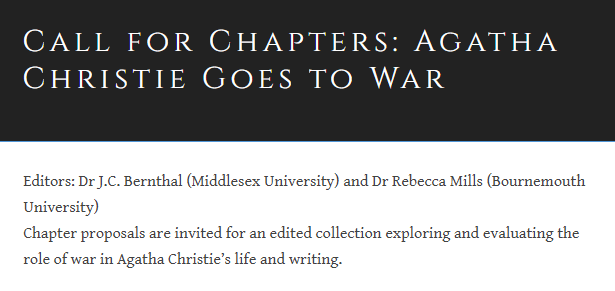
It seemed too good an opportunity to miss, after all I had spent a lifetime reading Christie, not to mention more than a decade studying war and crime. After all, what did I have to lose? I submitted an abstract, with no real expectation that someone who had never studied fiction academically, would be accepted for the volume. After all, who would expect a criminologist to be interested in the fictional writing of a woman who had died over 40 years ago? What could criminology learn from the “golden age” of “whodunnit” fiction?
Much to my surprise the abstract was accepted and I was invited to contribute a chapter. The writing came surprisingly easy, one of very few pieces of writing that I have ever done without angst. Once I got over the hurdle of forcing myself to send my writing to strangers (thank you @manosdaskalou for the positive reassurance and gentle coercion!) , what followed was a thoroughly pleasant experience. From the guidance of the volume’s editors , Drs J. C. Bernthal and Rebecca Mills, to the support from many colleagues, not mention the patience of Michelle (Academic Librarian) who restrained from strangling me whilst trying to teach me the complexities of MLA. Each of these people gave me confidence that I had something different to say, that my thinking and writing was good enough.
Last week, my copy of the book arrived. It was very strange to see my chapter in print, complete with my name and a brief biography. Even more surreal was to read the editors’ introduction and to see my work described therein, with its contribution to the volume identified. I doubt many people will ever read my chapter, it is published in a very expensive academic book destined for academics and libraries. Nevertheless, I have left the tiniest of marks in academic literature and perhaps more importantly, publicly acknowledged my love for the writing of Agatha Christie.
The finished article:
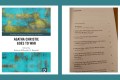
Bowles, Paula, (2020), ‘Christie’s Wartime Hero: Peacetime Killer’ in Rebecca Mills and J. C. Bernthal, Agatha Christie Goes to War, (Abingdon: Routledge): 28-45
Share this:


Empathy Amid the “Fake Tales of San Francisco”*

This time last week, @manosdaskalou and I were in San Francisco at the American Society of Criminology’s conference. This four-day meeting takes place once a year and encompasses a huge range of talkers and subjects, demonstrating the diversity of the discipline. Each day there are multiple sessions scheduled, making it incredibly difficult to choose which ones you want to attend.
Fortunately, this year both of our two papers were presented on the first day of the conference, which took some of the pressure off. We were then able to concentrate on other presenters’ work. Throughout discussions around teaching in prison, gun violence and many other matters of criminological importance, there was a sense of camaraderie, a shared passion to understand and in turn, change the world for the better. All of these discussions took place in a grand hotel, with cafes, bars and restaurants, to enable the conversation to continue long after the scheduled sessions had finished.
Outside of the hotel, there is plenty to see. San Francisco is an interesting city, famous for its Golden Gate Bridge, the cable cars which run up and down extraordinarily steep roads and of course, criminologically speaking, Alcatraz prison. In addition, it is renowned for its expensive designer shops, restaurants, bars and hotels. But as @haleysread has noted before, this is a city where you do not have to look far to find real deprivation.
I was last in San Francisco in 2014. At that point cannabis had been declassified from a misdemeanour to an infraction, making the use of the drug similar to a traffic offence. In 2016, cannabis was completely decriminalised for recreational use. For many criminologists, such decriminalisation is a positive step, marking a change from viewing drug use as a criminal justice problem, to one of public health. Certainly, it’s a position that I would generally subscribe to, not least as part of a process necessary to prison abolition. However, what do we really know about the effects of cannabis? I am sure my colleague @michellejolleynorthamptonacuk could offer some insight into the latest research around cannabis use.
When a substance is illegal, it is exceedingly challenging to research either its harms or its benefits. What we know, in the main, is based upon problematic drug use, those individuals who come to the attention of either the CJS or the NHS. Those with the means to sustain a drug habit need not buy their supplies openly on the street, where the risk of being caught is far higher. Thus our research population are selected by bad luck, either they are caught or they suffer ill-effects either with their physical or mental health.
The smell of cannabis in San Francisco is a constant, but there is also another aroma, which wasn’t present five years ago. That smell is urine. Furthermore, it has been well documented, that not only are the streets and highways of San Francisco becoming public urinals, there are also many reports that public defecation is an increasing issue for the city. Now I don’t want to be so bold as to say that the decriminalisation of cannabis is the cause of this public effluence, however, San Francisco does raise some questions.
- Does cannabis cause or exacerbate mental health problems?
- Does cannabis lead to a loss of inhibition, so much so that the social conventions around urination and defecation are abandoned?
- Does cannabis lead to an increase in homelessness?
- Does cannabis increase the likelihood of social problems?
- Does the decriminalisation of cannabis, lead to less tolerance of social problems?
I don’t have any of the answers, but it is extremely difficult to ignore these problems. The juxtaposition of expensive shops such as Rolex and Tiffany just round the corner from large groups of confused, homeless people, make it impossible to avoid seeing the social problems confronted by this city. Of course, poor mental health and homelessness are not unique to San Francisco or even the USA, we have similar issues in our own town, regardless of the legal status of cannabis. Certainly the issue of access to bathroom facilities is pressing; should access to public toilets be a right or a privilege? This, also appears to be a public health, rather than CJS problem, although those observing or policing such behaviour, may argue differently.
Ultimately, as @haleysread found, San Francisco remains a City of Contrast, where the very rich and the very poor rub shoulders. Unless, society begins to think a little more about people and a little less about business, it seems inevitable that individuals will continue to live, eat, urinate and defection and ultimately, die upon the streets. It is not enough to discuss empathy in a conference, no matter how important that might be, if we don’t also empathise with people whose lives are in tatters.

*Turner, Alex, (2006), Fake Tales of San Francisco, [CD]. Recorded by Arctic Monkeys in Whatever People Say I Am, That’s What I’m Not, The Chapel: Domino Records

 Thoughts from the criminology team