
Home » Crime and Justice (Page 9)
Category Archives: Crime and Justice

A racist and no solution

I am a white, middle class some might say (well my students anyway), ageing, male. I wasn’t always middle class, I’m from working class stock. I’m a university lecturer now but wasn’t always. I spent 30 years in the police service in a small, ethnically diverse, county in England. I didn’t consider myself a racist when I was in the police service and I don’t consider myself a racist now. Nobody has called me a racist to my face, so why the title? It’s how I’m constantly labelled. Every time someone says the police are racist or the police are institutionally racist, they are stating that about me. Just because I have left the police organisation doesn’t change who I am, my beliefs or my values. So, if the police are racist, then by default, I must be.
I’m not suggesting that some police officers are not racist, of course some are. Nor am I denying that there has been and probably still is some form of institutional racism within the police service, perhaps as a whole or perhaps at a more localised or departmental level. But bad apples and poorly thought-out, naïve or even reckless policies, strategies and procedures are not enough to explain what is going on in policing and policing of ethnic minority groups in particular. I’m talking about policing in this country, not across the pond where policing is very different in so many ways that it is hard to even suggest a realistic comparison. That of course is the first problem, what happens in the United States of America is immediately translated into what happens here.
As a lecturer, I constantly hear from students and read students’ work about the racist and brutal police, often interchanging commentary from the United States with commentary here in the United Kingdom, whilst also failing to recognise that there is different policing in Scotland and Northern Ireland. Institutional racism, as defined by Macpherson, is now part of the lexicon, but it no longer has the meaning Macpherson gave it, it is now just another way of saying the police are and every police officer is racist. Some students on finding out that I was a police officer show an instant dislike and distrust of me and sometimes it can take the whole three years to gain their trust, if at all. Students have been known to request a different dissertation supervisor, despite the fact that their research subject is in policing. This is not a complaint, just a statement of facts, painful as it is.
As I try to make sense of it all, I have so many unanswered questions. What is exactly going on? What is causing this conflict between the police and ethnic minority groups? Why is there a conflict, why is there distrust? More importantly, how can it be fixed? Some of the answers may lay in what the police are asked to do, or at least think they are asked to do. Reiner suggests that policing is about regulating social conflict, but which conflict and whose conflict is it? Other authors have suggested that the police are simply a means to allow the rich and privileged to maintain power. There may be some merit in the argument, but most policing seems to take place in areas of deprivation where the disadvantaged are committing crimes against the disadvantaged. The rich and powerful of course commit crimes but they are nowhere near as tangible or easy to deal with. One the problems might be that the rich and powerful are not particularly visible to policing but the disadvantaged are.
Maybe some of the answers lay in notions of stereotyping, sometimes even unconsciously. Experience or narratives of experiences cause a wariness, even a different stance to one people might normally assume. Being thumped on the nose by a drunk, does tend to make a person wary of the next drunk they encounter. So, could stereotyping be a problem on both sides of the divide? My dissertation student that didn’t want me as a supervisor was later to reveal experiences of racist abuse aimed at the police officers she went out on patrol with. Policing is dominated by white males and despite recruitment drives to address the ethnicity gap, this really hasn’t been that successful. If it was meant to help solve a problem, it hasn’t.
I get the sense though that the problem is much deeper routed than policing. Policing and the problems of policing is just a sub plot in a much wider issue of a divided society and one that is in constant conflict with itself. If the police are guilty of racism, then it is society that has caused this. Our society’s values, our society’s beliefs. An unequal society where the poorest suffer the most and the rich get richer regardless. A society where we are all equal but only because someone somewhere said so at some time, it is not reality. I think of Merton’s ‘American Dream’, I don’t buy into the whole concept, but there is something about not having opportunities, equally when I think of Lea and Young and the concept of relative deprivation, whilst not explaining all crime, it has some merit in that notion that the disenfranchised have no voice.
As I write this I am conscious that I have commentated on a very emotive subject particularly at this time. As I watch the events unfold in America, I fear the worst, action followed by reaction. Both becoming increasingly violent and I see the possibility of it happening in this country. I fear that the term ‘police racism’ will become another convenient label. Convenient in the sense that the problems are seen solely as that of policing. If we examine it through a different lens though, we might just find that policing is simply part of the whole rotten tree, society. Fix society and you fix policing. If the label racist fits, it fits the society we live in.

Share this:


“A small case of injustice”

Pride as a movement in the UK but also across the world signals a history of struggles for LGBTQ+ community and their recognition of their civil rights. A long journey fraught with difficulties from decriminalisation to legalisation and the eventual acceptance of equal civil rights. The movement is generational, and in its long history revealed the way social reactions mark our relationship to morality, prejudice, criminalisation and the recognition of individual rights. In the midst of this struggle, which is ongoing, some people lost their lives, others fell compelled to end theirs whilst others suffer social humiliation, given one of the many colourful pejoratives the English language reserved for whose accused or suspected for being homosexuals.
This blog will focus on one of the elements that demonstrates the relationship between the group of people identified homosexual and the law. In sociological terms, marginalised groups, has a meaning and signals how social exclusion operates against some groups of people, in these case homosexuals but it does apply to any group. These groups face a “sharper end” of the law, that presumably is equal to all. This is the fallacy of the law; that there are no inherent unfairness or injustice in laws. The contention for marginalised groups is that there are presumptions in the law on purported normality that disallows them to engage fully with the wider community in some cases forced to live a life that leads all the way to segregation.
Take for example “entrapment”. Originally the practice was used by law enforcement officers to identify counterfeit money, later to investigate the sales of untaxed tobacco or the use of unlicensed taxis. The investigation in law allows for the protection of the public, non uniform officers to pose as customers in order to reveal criminalities that occur in the dark corners of society. The focus predominantly was to protect consumers and the treasury from unpaid tax. So, from that how did the law enforcement officers use it to arrest homosexuals? It is interesting to note we can separate the letter of the law as opposed to the spirit of the law. This distinction is an important one criminologically whilst for the law enforcement agencies evidently there is no such distinction.
The most recent celebrity case led to the arrest of George Michael in Los Angeles, US; the operation led to the outing of the artist and his conviction. As a practice across many years, entrapment played a significant part in the way numerous homosexuals found themselves arrested given a criminal record, loss of employment and in some cases ending up in prison. It is important to note that prior to the Sexual Offences Act of 1967, the biggest sexual crime in England and Wales was that of homosexuality (recorded as indecency or buggery). It took decades for that statistic to change, although historically remains still the highest category.
The practice of entrapment employed by the police demonstrates the uphill struggle the LGBTQ+ community faced. Not only they had to deal with social repulsion of the wider community that detested, both their practices and their existence, but also with public officials who used entrapment to criminalise them. This was happening whilst the professionals were divided about the origins of homosexual “anomaly” and how to deal with it, the practice of entrapment added new convictions and supplied more humiliation to those arrested. For the record, the criminological community was split along theoretical lines on this; the classicists such as Bentham argued for the decriminalisation of sodomy whilst the positivists namely Lombroso considered homosexuals to be in the class of moral criminals (one of the worst because they are undeterred) .
The issue however is neither theoretical, nor conceptual; for those who were aware of their sexuality it was real and pressing. During the post WWII civil rights movement, people started taking note of individual differences and how these should be protected by privacy laws allowing those who do not meet the prescribed “normal” lifestyles to be allowed to live. It emerged that people who were successful in their professional lives, like Alan Turing, John Forbes Nash Jr, John Gielgud etc etc, found themselves facing criminal procedures, following string operations from the police. This injustice became more and more evident raising the profile of the change in the law but also in the social attitudes.
In 2001 Lord Nicholls of Birkenhead addressed the issue of entrapment head on. In his judgement in Regina v Looseley:
“It is simply not acceptable that the state through its agents should lure its citizens into committing acts forbidden by the law and then seek to prosecute them for doing so. That would be entrapment. That would be a misuse of state power, and an abuse of the process of the courts. The unattractive consequences, frightening and sinister in extreme cases, which state conduct of this nature could have are obvious. The role of the courts is to stand between the state and its citizens and make sure this does not happen.”
This was the most damming condemnation of the practice of entrapment and a vindication for all those who faced prosecution as the unintended consequence of the practise. For the record, in 2017 under the Policing and Crime Act, included the “Alan Turing law” that pardoned men who were cautioned or convicted for historical homosexual acts. The amnesty received mixed reviews and some of those who could apply for denied doing so because that would require admission of wrongdoing. The struggle continues…
Regina v Looseley, 2001 https://publications.parliament.uk/pa/ld200102/ldjudgmt/jd011025/loose-1.htm
Share this:


“Things you need to know about criminology”: A student perspective: ej213

We are all living in very strange times, not sure when life will return to normal...but if you're thinking about studying criminology, here is some advice from those best placed to know!

The most important module to my understanding of criminology is: True Crime - this module highlights the fact that cases you have seen in the media and in films may not be accurate due to the true crime genre exaggerating facts for entertainment. Whilst, this module does not cover quite as much theory as others, it gives the chance to explore cases and discover the truth underneath the exaggeration. Love this module.

The academic criminology book you must read:
The Oxford Handbook of Criminology (sixth edition) - I was recommended this book at an open day and there was rarely an assessment I couldn't find some background knowledge for in this book. It is a great tool.

The academic journal article you must read:
Testosterone and masculinity

The criminology documentary you must watch:
FBI: Cold Cases - it is a Netflix original I think but it shows how crimes committed 20 or 30 years ago can be solved due to modern technology. Really interesting especially if you have an interest in forensics.

The most important criminologist you must read:
Either Lombroso or Marx.

Something criminological that fascinates me:
The fact that crime is defined by the wealthy meaning that the prisons are mostly filled with the lower classes due to the upper classes' crimes being seen as victimless

The most surprising thing I know about criminology is:
That criminology is a relatively recent study

The most important thing I've learnt from studying criminology is:
There is rarely one answer so long as you can support your argument

The most pressing criminological problem facing society is:
This could be an essay in itself. I guess I would have to say poverty because 14 million people (2019/20) still live in poverty and these people are not going to have the same advantages or prospects in education or the workplace meaning they are more likely to commit crime in order to survive

When family and friends ask, I tell them criminology is:
Amazing and the most interesting course I have chosen to study because it never had a definite answer which I guess can make it complex however, the debates within the course are great to participate in because it is interesting to hear another's perspective but also voice my own. It is also very inclusive in its module content which is great

Share this:


“I can’t breathe”

George Floyd’s words: “I can’t breathe”, have awaken almost every race and creed in relevance to the injustice of systematic racism faced by black people across the world. His brutal murder has echoed and been shared virtually on every social media platform – Floyd’s death has changed the world and showed that Black people are no longer standing alone in the fight against racism and racial profiling. The death of George Floyd has sparked action within both the white and black communities to demand comprehensive police reforms in regards to police brutality and the use of unjust force towards ethnic minorities.
There have been many cases of racism and racial profiling against black people in the United Kingdom, and even more so in the United State. Research has suggested that there have been issues with police officers stereotyping ethnic minorities, especially black people, which has resulted in a vicious cycle of the stopping and searching of those that display certain physical features. Other researchers have expounded that the conflict between the police and black people has no correlation with crime, rather it is about racism and racial profiling. Several videos circulating on social media platforms depict that the police force does harbour officers who hold prejudice views towards black people within its ranks.
Historically, black people have been deprived, excluded, oppressed, demonised and brutally killed because of the colour of their skin. As ex-military personnel in Her Majesty’s Armed Forces and currently working as a custody officer, I can say from experience that the use of force used during the physical restraint on George Floyd was neither necessary nor proportionate to the circumstances. In the video recorded by bystanders, George Floyd was choked in the neck whilst fighting for his life repeating the words “I can’t breathe”. Perhaps the world has now noticed how black people have not been able to breathe for centuries.
The world came to halt because of Covid-19; many patients have died because of breathing difficulties. Across the world we now know what it means if a loved one has breathing issues in connection with Covid-19 or other health challenges. But nothing was done by the other police officers to advise their colleague to place Floyd in the recovery position, in order to examine his breathing difficulties as outlined in many restraint guidelines.
Yet that police officer did not act professional, neither did he show any sign of empathy. Breath is not passive, but active, breathing is to be alive. Racial profiling is a human problem, systematic racism has destroyed the world and further caused psychological harm to its victims. Black people need racial justice. Perhaps the world will now listen and help black people breathe. George Floyd’s only crime was because he was born black. Black people have been brutally killed and have suffered in the hands of law enforcement, especially in the United States.
Many blacks have suffered institutional racism within the criminal justice system, education, housing, health care and employment. Black people like my own wife could not breathe at their workplaces due to unfair treatment and systematic subtle racial discrimination. Black people are facing unjust treatment in the workplace, specifically black Africans who are not given fair promotional opportunities, because of their deep African accent. It is so naïve to assume that the accent is a tool to measure one’s intelligence. It is not overt racism that is killing black people, rather the subtle racism in our society, schools, sports and workplace which is making it hard for many blacks to breathe.
We have a duty and responsibility to fight against racism and become role models to future generations. Maybe the brutal death of George Floyd has finally brought change against racism worldwide, just as the unprovoked racist killing of black teenager Stephen Lawrence had come to embody racial violence in the United Kingdom and led to changes in the law. I pray that the massive international protest by both black and other ethnicities’ will not be in vain. Rather than “I can’t breathe” reverberating worldwide, it should turn the wheel of police reforms and end systematic racism.
“Restricting someone’s breath to the point of suffocation is a violation of their Human Rights”.
Share this:

“Things you need to know about criminology”: A student perspective – Bonnie Middleton (2017-2020)
We are all living in very strange times, not sure when life will return to normal...but if you're thinking about studying criminology, here is some advice from those best placed to know!

The most important module to my understanding of criminology is: All of them! Every module contributes to your understanding of Criminology and all are different and enjoyable. Personally, my favourite module was Violence: From Domestic to Institutional in Year 3; this module ties together everything you know about Criminology; the reasons why we are subjective as criminologists and our ability to look beyond the scope of what we know.

The academic criminology book you must read:
Outsiders: Studies in the sociology of deviance (1963) by Howard Becker. Albeit a dated book, its ideas are relevant and relate to many criminological such as; how and why criminals are labelled and stigmatised; why are the youth demonised; why people reject the norms and values of society and become criminals in doing so.

The academic journal article you must read:
This is a hard one. Articles are great for discovering new ideas and methodologically testing theories. I would recommend reading: Arrigo, J. (2004). A Utilitarian Argument Against Torture, Interrogation of Terrorists. Science and Engineering Ethics. 10(3), pp. 543-572. This article poses many questions for a criminologist which enlightens you to think subjectively and challenge your own views; which is what Criminology is all about. From reading this article you will learn to think critically when faced with a challenging dilemma; the rights of a terrorist and how can the law can be tailored to fit the crime.

The criminology documentary you must watch:
Where do I begin? Louis Theroux and Stacey Dooley are both great journalists and documentary makers. If I had to pick one, I would recommend watching the BBC’s documentary on Grenfell If you watch this documentary you must consider; the government’s response; who is accountable; why are the residents of Grenfell still in temporary accommodation. These are the sorts of questions you should be asking as someone studying Criminology.

The most important criminologist you must read:
Familiarise yourself with the ideas of Lombroso, this will aid your understanding on how criminological theory and ideas have developed overtime through biological, psychological and sociological standpoints.

Something criminological that fascinates me:
Domestic abuse. I had done my dissertation on this as I have a great interest in male dominance and power over women, especially in intimate relationships. Gender plays a key role in this which when examined in depth, will change your view on gender paradigms.

The most surprising thing I know about criminology is: Criminality was believed by Lombroso to be inherited and that criminals possessed physical defects, criminality would be measured by the size and shape of particular body parts; this was later discredited. I can remember learning this in first year and it fascinated me.

The most important thing I've learnt from studying criminology is:
To not judge a book by its cover and to not take everything at face value. Do not be afraid to challenge other’s standpoints and beliefs. Thinking critically is the most important skill to have, search deeper into issues and apply your own thoughts and experiences.

The most pressing criminological problem facing society is:
Mass incarceration and reoffending rates. The UK is yet to move away from the ‘tough on crime’ approach favouring law and order and punishment. The penal system needs to be reformed to ensure offenders are rehabilitated to break the cycle of criminality; definitely educate yourself on political party’s manifesto’s and what they say about crime and justice before voting.

When family and friends ask, I tell them criminology is: I tell family and friends that criminology is such a broad field of study; we look at law, psychology, science, sociology, politics, penal systems, criminal justice organisations, media and much more. From this, you attain the ability to think critically and reflect, it can help you in many situations not just criminological issues. It is an incredibly insightful and enlightening field to study; it opens up many opportunities.
Share this:


Criminology 2020 AD

2020 will be a memorable year for a number of reasons. The big news of course was people across the world going into lockdown and staying home in order to stop the transmission of a coronavirus Covid-19. Suddenly we started counting; people infected, people in hospitals, people dead. The social agenda changed and our priorities altered overnight. During this time, we are trying to come to terms with a new social reality, going for walks, knitting, baking, learning something, reading or simply surviving, hoping to see the end of something so unprecedented.
People are still observing physical distancing, and everything feels so different from the days we were discussing future developments and holiday plans. During the last days before lockdown we (myself and @paulaabowles) were invited to the local radio by April Dawn to talk about, what else, but criminology. In that interview we revealed that the course started 20 years ago and for that reason we shall be having a big party inviting prospective, current and old students together to mark this little milestone. Suffice to say, that did not happen but the thought of celebrating and identifying the path of the programme is very much alive. I have written before about the need to celebrate and the contributions our graduates make to the local, regional and national market. Many of whom have become incredibly successful professionals in the Criminal Justice System.
On this entry I shall stand on something different; the contribution of criminology to professional conduct, social sciences and academia. Back in the 1990s Stan Cohen, wrote the seminal Against Criminology, a vibrant collection of essays, that identified the complexity of issues that once upon a time were identified as radical. Consider an academic in the 1960s imagining a model that addresses the issue of gender equality and exclusion; in some ways things may not have changed as much as expected, but feminism has entered the ontology of social science.
Criminology as a discipline did not speak against the atrocities of the Nazi genocide, like many other disciplines; this is a shame which consecutive generations of colleagues since tried to address and explain. It was in the 1960s that criminology entered adulthood and embraced one of its more fundamental principles. As a theoretical discipline, which people outside academia, thought was about reading criminal minds or counting crime trends only. The discipline, (if it is a discipline) evolved in a way to bring a critical dimension to law and order. This was something more than the original understanding of crime and criminal behaviour and it is deemed significant, because for the first time we recognised that crime does not happen in a social vacuum. The objectives evolved, to introduce scepticism in the order of how systems work and to challenge established views.
Since then, and through a series of events nationally and internationally, criminology is forging a way of critical reflection of social realities and professional practices. We do not have to simply expect a society with less crime, but a society with more fairness and equality for all. The responsibilities of those in position of power and authority is not to use and abuse it in order to gain against public interest. Consider the current pandemic, and the mass losses of human life. If this was preventable, even in the slightest, is there negligence? If people were left unable to defend themselves is that criminal? Surely these are questions criminology asks and this is why regardless of the time and the circumstances there will always be time for criminology to raise these, and many more questions.
Share this:

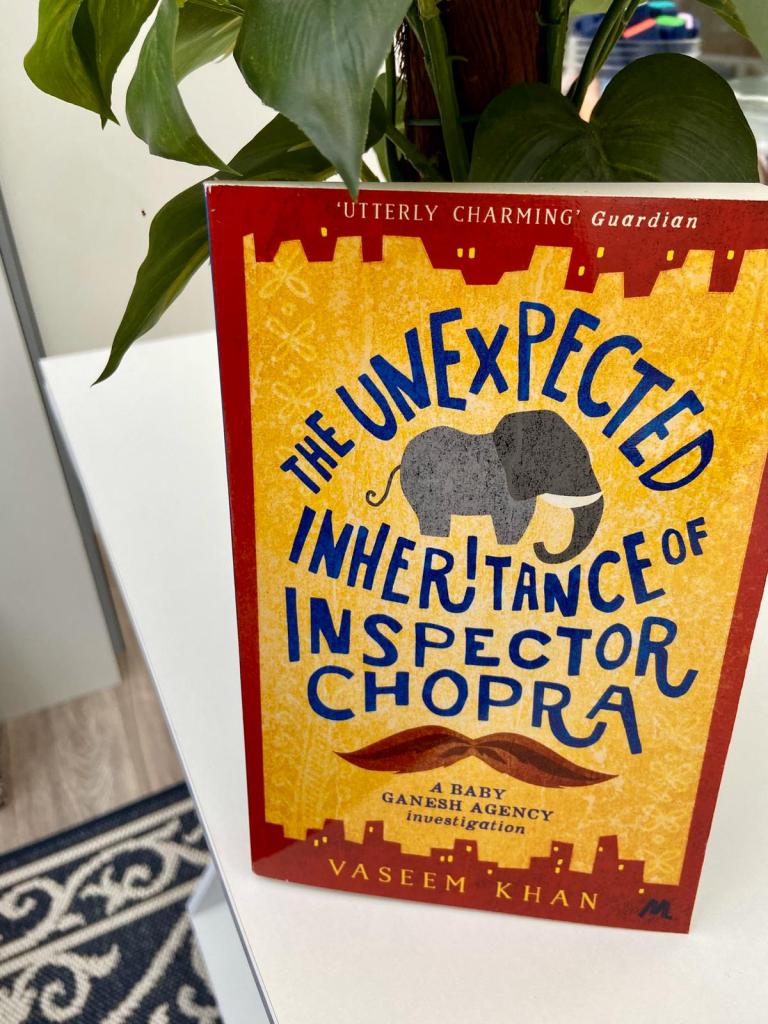
#CriminologyBookClub: The Unexpected Inheritance of Inspector Chopra
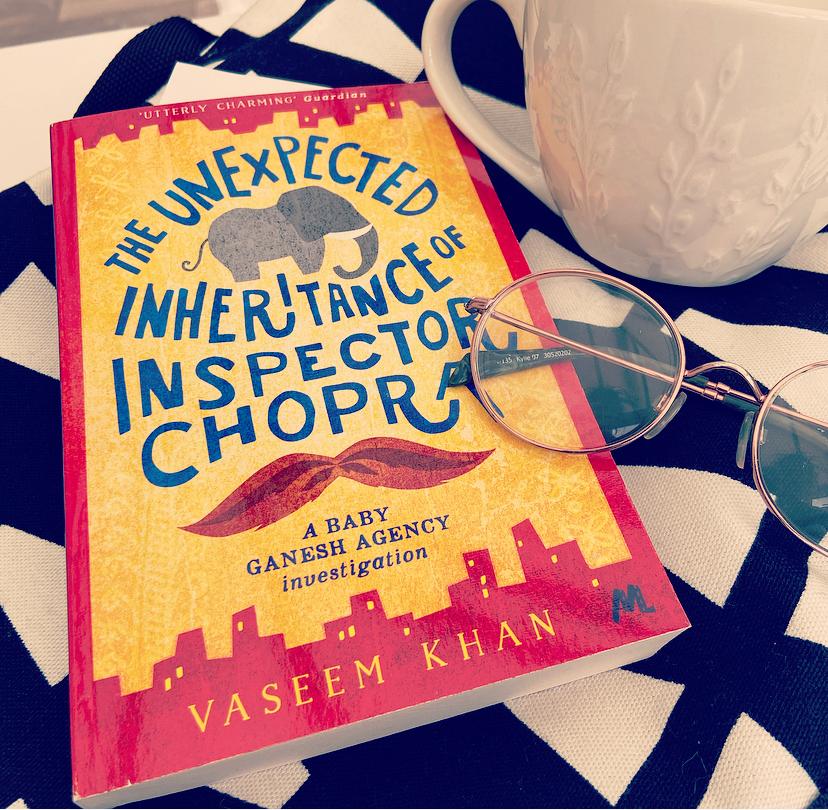
As you know from our last #CriminologyBookClub entry a small group of us decided the best way to thrive in lockdown was to seek solace in reading and talking about books. This blog entry is very different from any other we’ve published before, in that it has seven bloggers contributing! There is a very good reason why and that is because @manosdaskalou managed to choose a book that delighted all of us, and believe me, that is a challenge for a group of bibliophiles. Without more ado, let’s see what everyone thought:

“The second book of book club was a huge success- excellent choice @manosdaskalou! The Unexpected Inheritance of Inspector Chopra by Vaseem Khan was delightful! Whilst fulfilling all the ‘usual stuff’ associated with a crime novel, it also adds a layer of fantasy and wonder which is usually alien to crime fiction. As I raced through the novel, falling in love with characters- Poppy is kick ass, the complete opposite of drippy Carol (The Yellow Room) and safe to say I now want a baby Elephant; I was transformed into another world, something which crime fiction has never done for me before. It brought back feelings of nostalgia and memories of reading David Eddings and Derek Landy in the summer after GCSEs, when life was simpler and full of joy! A wonderful, intriguing and mysterious crime novel with a hint of fantasy, pulling you away to a different place. An enchanting and wonderful read which blends serious social injustices and issues with mystery, suspense and humour- I cannot wait to see what Inspector Chopra and Ganesha get up to next!”
@jesjames50

“The problem with writing a mere paragraph for a blog about a book that I really did enjoy is that I fear I won’t be able to do it justice. The story, well I’m sure others might tell you what the book is about but, if you want to know, really want to know, read it. Rarely can I say that I couldn’t wait to finish the book and yet didn’t want it to finish. The characters come to life, especially the elephant, in a way that makes it seem almost real, but not quite. The story moves on at a fast pace and yet has a steadiness to it. There are surprises along the way and, yet they are almost expected, it was always going to be that way. Within the narrative there is a demonstration of what we know to be good in humans and, yet it encompasses so much of what we know to be bad. How then can I have left the final page, sad that the book was finished, but uplifted by the narrative and almost salivating at the anticipation of reading the next in the series? The plaudits on the cover don’t do it justice, to answer my question, all I can reiterate is that you have to read it to understand.”
@5teveh
“When I first received this book, I was a bit sceptical, as I did not know how an elephant was going to be incorporated into a detective crime novel. However, I was pleasantly surprised. The first book in the series was a delight and a much-needed escape in these uncertain times. This book captured my attention very quickly and whisked me off on a colourful, picturesque adventure to Mumbai, with the amazing inspector Chopra and of course the star of the story, Ganesh the mysterious baby elephant. The book introduces you to an interesting plot. At first you are made to think that the focus of the book will be on Inspector Chopra investigating the murder of a young man. However, you are quickly introduced to the wider issues that sit at the heart of social and economic challenges present in India. Without leaving you glum, the book has a nice balance of crime and mystery, coupled with humour, great food, wonderful scenery and lovable characters. I liked this book as it was unique to any other books that I have read. I am looking forward to continuing the Baby Ganesh Detective Agency series.”
@svr2727
“Vaseem’s novel had me from to get-go. Set in bustling Mumbai this novel has more depth than the usual “whodunit” scenario. This book is a criminologist’s dream, as yes, we all find out who did it in the end, and yes the case is also solved but there are also issues of poverty and corruption to contend with. The story would not be complete without Ganesha the elephant who makes solving the case possible (and survivable). Ganesha goes through a lot in the story. From being depressed and chained up outside an apartment complex, to being mistakenly left to drown during heavy rain and fed chocolate. Despite all of this, Ganesha is often the hero of the hour, so for me the book symbolises the true greatness of animals: We do not deserve them.”
@haleysread
“I really enjoyed this book. It was great to lose myself in a different country and culture and to meet so many relatable characters there – even (especially?) the chocolate loving elephant! I can’t wait to find out what happens next…”
@saffrongarside
As well as having the joy of reading The Unexpected Inheritance of Inspector Chopra, we also had the very unexpected pleasure of welcoming the author Vaseem Khan to our book club meeting today. To be able to hear about Vaseem’s motivations for creating the colourful world in which Inspector Chopra and Ganesha work and play was fascinating. The opportunity to ask questions was fantastic and we’d like to say a big thank you to Vaseem for allowing us a peak inside his world of writing. It is now easy to see where Inspector Chopra gets his generosity of spirit from. And now we’ll leave the final word to @manosdaskalou….after all he did choose the book 😉
“What does a gang of criminologists do at lockdown? We read crime books and talk about them. On this occasion The Unexpected Inheritance of Inspector Chopra was a welcomed distraction from reality. The book introduces the retired inspector with a very unusual sidekick! The retired inspector is a very honourable, incorruptible professional whose investigation will bring him in conflict with the criminal underbelly of Mumbai. The retired inspector is not fazed, and he is determined to carry on regardless. The investigation takes inspector Chopra around the city; which gives the reader a unique opportunity to get to know a metropolitan megapolis.”
@manosdaskalou
Share this:


#CriminologyBookClub: The Yellow Room

In times of crisis it is beneficial to occupy yourself with things to do. This helps us to cope with boredom, and to distract us from the bleakness of reality. What better way to help with this than to start a book club? That’s right, whilst some of us were sitting at home twiddling our thumbs, @paulaabowles had sent us all a book that we were to read and discuss in virtual book club meetings. Little did we know that this book club was to be our very own ray of sunshine during such an unprecedented time.
Our first book is The Yellow Room by Mary Robert Rinehart (dubbed the American Agatha Christie by the blurb, which is generous). Set in Maine (USA) during WWII, this is a classic whodunit crime novel. With the wealthy Spencer family finding themselves tangled in a web of evidence that instigates their involvement with a dead woman that is found in the closet of their holiday home. The book is filled with intrigue and the plot thickens with each chapter, with more and more clues being thrown into the mix. Until too much is thrown in, and what is left of the book is quite simply… a mess.
The book consists of 30 chapters, and we think the club is in agreeance that the first 20-24 chapters are pretty great. Rinehart throws a number of spanners in the works, with near misses, burning hillsides, death by frights, illegitimate children and secret marriages. We all had our theories, some boarding on plagiarism (they know who they are!). However as it turns out a few of us were half right, and then so were some of the others. We will not give away any spoilers, but the ending, the answer we were all waiting for was disappointing and quite frankly we are still not 100% sure who did it, and what was actually done. The leading lady of the book Carol Spencer, dubbed drippy Carol by the club, because she is, well… DRIPPY, does nothing but smoke and drink coffee, whilst surrounded by crime and uncertainty. But, alas, when all is righted, she finds herself in the arms of an arrogant moody man, all happily engaged! Possibly a romance (although a bad one) or possible a classic whodunit (a half decent one), who can tell?
Overall the book was a success: it inspired intrigue and discussion! The virtual book club even more so! A bunch of misfits, gathered together (20minutes after the allotted time because one member of the group is late- @manosdaskalou), discussing the book, thinking about the social context, the characters, and how it is received today. It is a fantastic virtual club consisting of familiar suspects: the princess, the athlete, the criminal, the brain, the basket case, the parent and the “carol” (representations may not be literal or accurate). What will the misfits think of the next book? Will they all agree? Will one read ahead and sit silently and sheepishly, without the others knowing? Stay tuned…
@jesjames50 and @haleysread – founding members of the #CriminologyBookClub
Share this:


Hypocrites or just human?

At a time of a significant religious festival in the Christian calendar and at a time of global anxiety, sacrifice and distress, it seems apt to reflect on where we stand in it all.
Like most, I watch the television, listen to the radio, tap into social media (albeit only on limited occasions), receive emails and listen to family, friends and colleagues.
I am amazed by the sacrifice that some people make to protect or look after others and yet dismayed by the actions and comments of some. And yet as I ponder on the current situation I realise that it only brings into focus behaviours, actions and comments that were already there. Perhaps, the circumstances have allowed some to shine or provided more of a focus on those that already do outstanding things, and this is a good thing but human nature as it is, doesn’t really change. Here are a few examples, I’m sure if you reflect on these you will think of more.
- We lament at the inequality in the world, but we do little about it. Instead, we fight to buy up all the toilet rolls that we can, lest we run out.
- We complain the government haven’t done enough in the current crisis and then flout the guidelines they gave us on social gatherings and movement or cause others to do so (did you really need that Amazon order?)
- We complain about our work conditions, but we are content for the company or organisation to continue paying us, often saying they don’t pay us enough
- We are upset by colleagues who do us a disservice and then denigrate others because of their so-called ineptitude
- We complain about being bullied but go on to display the same bullying behaviours that we complained about
- We call people misogynistic but then in the same breath suggest that the world would be better without men or that women do a better job
- We accuse people of being racist but then use derogatory and stereotypical language to describe those that we accuse
- We condemn those that we see as privileged and suggest they should give up their wealth and status. And yet we fail to consider our own privilege and are not prepared to give up what we have (see the first comment re inequality)
- We see the criminal justice system as unfair but would be the first to complain if we were a victim of crime and the offender wasn’t brought to justice. What we see as justice is dependent on the impact the wrongful act has on us
- We commit crimes, albeit perhaps minor ones or committed crimes when we were younger and didn’t know better, yet we castigate others for being criminal. Welfare cheats are awful, but tax payments are to be avoided
I could go on, but I think by now you get the general idea. I’ll return to religion if I may, not that I’m religious, but I did start off the blog with an acknowledgement of the timing in line with the Christian calendar: “He that is without sin among you, let him cast the first stone at her”, (John, 8:7). Maybe we should be a little more honest with ourselves and think about what we say or do before we judge and condemn others. I do wonder though, are we all hypocrites, or is it part of the pathology of just being human?
Share this:


Can there be Justice for Benjamin Arum Izang? An Unfortunate Victim of Forum Shopping
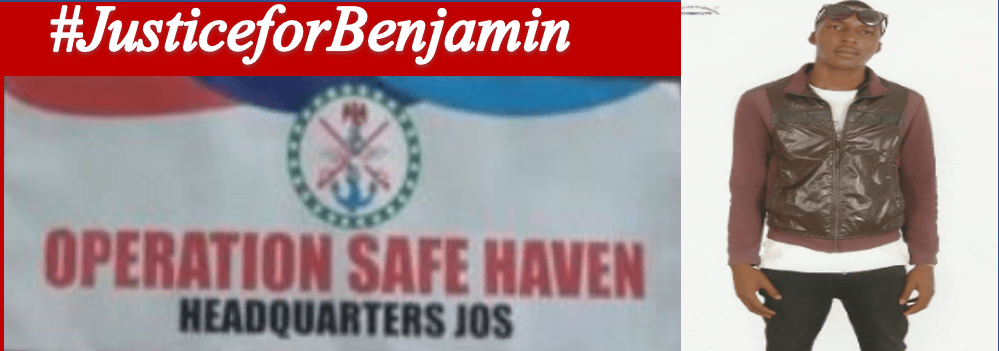
So Jos[1] tweeter community was agog with the scandal of the alleged torture of 31 year old Benjamin Arum Izang by personnel of the Operation Safe Haven (OPSH) Military Special Task Force (STF) conducting internal security operations in Plateau State. The family reported that the torture eventually led to Benjamin’s demise because of the fatality of the injury inflicted on him by the military personnel.
The sad event that led to this unfortunate incidence is reported to be an altercation over a fifty-naira egg (approximately 11 cents) between the deceased and a certain Blessing, an egg hawker whose egg was said to be broken by Benjamin. Failure to reach an understanding led Blessing to report the matter to the personnel of the STF, who quickly swung into action, albeit, one that involved the torture of Benjamin.
An investigation by Dickson S. Adama (a media correspondent) revealed that the Media Officer of the STF indicates not been aware of the incident. However, the family and the concerned public are crying for justice as this is not the first of such cases in the State. Rightfully so, scholars and practitioners of peace and conflict consider this incidence as forum shopping,[2] a decision by disputants to choose a security agency to intervene in their dispute, based on the expectation that the outcome will favour them, even if they are the party at fault. Studies[3] including my doctoral research on the military security operations in Plateau State indicates this as a recurring problem when the military conducts security operations in society.[4]
Often, when dispute ensues between two or more parties and both desire to emerge victorious or to exert their position on the other, desperate actions can be taken to ensure victory. One of such actions is the decision to invite a third party such as the military which is often not the suitable institution to handle matters of civilian disputes. In my doctoral research, I detailed the factors that makes the military the most unsuitable agency for this role, key among which is that they are neither trained nor indoctrinated for law enforcement duties. More so, the task and skill of law enforcement and managing civilian disputes which involves painstaking investigation and ascertaining guilt before conviction/serving punishment is the primary role of the police and the criminal justice system, which the military is not a part of. The military trains for war and combat mission, to kill and to obliterate and essentially, their culture and indoctrination is designed along these tenets.
Given this, when the military is involved internally as in the case of Benjamin and Blessing, it engenders numerous challenges. First, with the knowledge that the military dispenses ‘instant justice’ such as punishment before determining guilt, civilians such as Blessing will always seek this option. Tweeps such as @ByAtsen tweeted for instance that ‘same soldiers at the same outpost did this to another who, unlike Benjamin, is still alive nursing his wounds.’ One challenge is that where forum shopping denies justice, it breeds lawlessness and can further evoke public outrage against the military. In turn, this can erode the legitimacy of the security role of the military. Where this occurs, a more worrying challenge is that it can exacerbate rather than ameliorate insecurity, especially where civilians feel compelled to seek alternative protection from coercion from State forces and threats from the armed groups the military was meant to avert.
[1] Jos is the capital city of Plateau State Nigeria. The State was once the most peaceful State in Nigeria (arguable) but is now embroiled in intermittent and protracted violence, between the mostly Christian natives and Hausa/Fulani ‘settlers,’ and series of insurgent style attacks of rural farming communities by marauding herdsmen widely believed to be Fulani herdsmen.
[2] Keebet Von Benda-Beckmann, ‘Forum Shopping and Shopping Forums: Dispute Processing in a Minangkabau Village in West Sumatra’, Journal of Legal Pluralism, 19 (1981), 117–59.
[3] Judith Verweijen, ‘The Ambiguity of Militarization: The Complex Interaction between the Congolese Armed Forces and Civilians in the Kivu Provinces, Eastern DR Congo’ (Utrecht University, 2015).
[4] Sallek Yaks Musa, ‘Military Internal Security Operations in Plateau State, North Central Nigeria: Ameliorating or Exacerbating Insecurity?’ (Stellenbosch University, 2018) <https://scholar.sun.ac.za/handle/10019.1/104931> [accessed 14 March 2019].

 Thoughts from the criminology team