
Home » Crime and Justice (Page 8)
Category Archives: Crime and Justice

Is fake news a crime?

Perhaps this entry needs to start with a declaration; there is no novelty in the term fake news. In fact, fake news is not a term but a description. Odd to start with something as obvious as this but given the boastful claims for those inventing the (non) terms is only logical to start with that. It is true that in news, the term that usually relates to deliberate dissemination of information, is propaganda. It aims at misinformation and as it is reproduced over and over it can even become part of indoctrination.
The 20th century introduced the world to speed. Mass consumption, marketing and two world wars that devastated countries and populations. In the century of speed, mass media and the availability of information became a reality. The world heard, on the radio first and on the television later, world leaders making statements in what seemed to be the spectacle of politics. Interestingly some countries, political parties and professionals realised the value of controlling news, managing information. The representation of positions became an integral part of modern politics. Information became a commodity and the management of the news became big business with social implications.
When we talk deliberate misinformation, we are probably reminded of the Third Reich and the “ministry of public enlightenment and propaganda”. Even now media analysts consider the Nuremberg Rally a clear example of media manipulation and deliberate misinformation. This however was only one of many ministries around the world set up for that purpose. In some countries even censorship laws and restrictions emanate from a relevant ministry or department. The protection of the public was the main justification even when the stories promoted were wrong or even fictitious.
The need to set up some standards on journalism became apparent and awards like the Pulitzer Prize became ways of awarding those who hold journalistic values high. National broadcasting corporations became the voice of their nation and many adopted the voice of neutrality. Post war the crimes of the Nazi regime became apparent and the work of the propaganda machine in contract demonstrated how easy it was to misinform whilst committing atrocities. The United Nations even took a resolution on the issue “Condemns all forms of propaganda, in whatsoever country conducted, which is either designed or likely to provoke or encourage any threat to the peace, breach of the peace, or act of aggression” General Assembly, November 3 1947.
Unfortunately, this resolution remains mostly a paper exercise as the ideological split of the founding members led to a war of attrition of who tells the truth and who is using propaganda. Since then mass media became part of everyday life and an inseparable part of modern living. News became evidence and programmes presented decisive information in the court of public opinion. Documentaries claimed honest realism and news programmes set the tone of political and social dialogue.
In 1988 Chomsky and Herman in Manufacturing Consent: the political economy of mass media, proclaim that propaganda is not the reserve of a totalitarian state but of all states in their attempt to maintain order imposed by the establishment. Under this guise misinformation is part of the mass media’s raison d’etre. It can partly explain why the UN resolutions were not followed up further. So far, we are considering the sociological dimensions of news and information. Nothing thus far is clearly criminological or making the case for criminalising the deliberate misinformation in the news. (interestingly, the deliberate misinformation of a consumer is a criminal offence, well established).
One can ask rhetorically if it is so bad to misinform, spread fake news and manipulate the news through a systematic propaganda process. We presume that most citizens can find a variety of forums to be informed and the internet has democratised media even further. The reality however is quite different. People rely on specific sources even when they go online, finding voices that speak to them. In some ways this kind of behaviour is expected. Nothing wrong with that, is there? Back in the 1990s a radio station in Rwanda was talking about cockroaches and snakes; this led into a modern-day genocide, a crime that the UN aimed to extinguish. In the early 2000s the western world went into war on reports and news about weapons of mass destruction that did not exist, leaving thousands dead and millions displaced. In the mid-2010s a series of populist politicians got into office making claims on news, fake news, utilising their propaganda machine against anyone who tried to take them to account. More recently people, having felt deceived by mainstream media, do not believe anything, even the pandemic. The difficulty in critically evaluating information is obvious but it is also obvious how destructive it can be. In short, yes fake news should be a crime, because they cause lives in so many ways. Question is: Can we differentiate the truth from the fake or is it too late?
Share this:


Betty Broderick

I’m sure many of you are aware of the Dirty John series two, Betty Broderick. Although it has not had as much coverage as I’d have hoped. Now true crime documentaries are not always the best way to find out the truth, after delving deep into the history of this case, I found it does represent it well. If you haven’t given it a watch, I would definitely recommend it and would love to know your thoughts on the case.
Betty was married to Daniel Broderick, having 4 children and helping him become a doctor and then through law school. Of course, it all ended in 1989 when Betty had finally had enough of the torturous years with her husband’s affair with Linda Kolkena, killing them both. Not that I am condoning what she did at all, it was wrong for her to end his and Linda’s life. Although I do understand why she did do it and believe others in her situation could be led to this end too. After she kept them afloat with money while he went through law school, having his children and being the perfect housewife, he decided she was too old and needed a young wife to suit his new high class life-style.
This is not to say that Daniel was the sole person to blame, Betty was in the wrong too. However, taking a woman’s children away from her and brainwashing them tipped her over the edge, as it would do with many women. Betty brought the children up alone, with Daniel always too busy with his company to care about them. It seems Daniel did love Betty to begin with, but to me, it seems it became easy and stayed with her to do everything for him.
Daniel began socialising with his new girlfriend, rubbing his success in Betty’s face. This really does make me sad for Betty, she had no money because all her time was invested in her husband’s career. When it came to the divorce, it became a game for Daniel, trying to leave her with next to nothing and only supervised visits with her own children. He really did drive her to the point of destruction.
This woman is now 72 and has been in prison since 1989. I may be too generous, but I believe that this woman should be let to live her final years as a free woman. Free from having to fight for her children, fight for money to live and fight for her sanity. Daniel took all these away from her. And, although he did not get to live, Betty merely existed in the years of their divorce. She lost her spark and became depressed.
What do you believe?
Share this:


What price justice?

Having read a colleague’s blog Is justice fair?, I turned my mind to recent media coverage regarding the prosecution rates for rape in England and Wales. Just as a reminder, the coverage concerned the fact that the number of prosecutions is at an all-time low with a fall of 932 or 30.75% with the number of convictions having fallen by 25%. This is coupled with a falling number of cases charged when compared with the year 2015/16. The Victims’ Commissioner Dame Vera Baird somewhat ironically, was incensed by these figures and urged the Crown Prosecution Service to change its policy immediately.
I’m always sceptical about the use of statistics, they are just simple facts, manipulated in some way or another to tell a story. Useful to the media and politicians alike they rarely give us an explanation of underlying causes and issues. Dame Vera places the blame squarely on the Crown Prosecution Service (CPS) and its policy of only pursuing cases that are likely to succeed in court. Now this is the ironic part, as a former Labour member of parliament, a minister and Solicitor General for England and Wales, she would have been party to and indeed helped formalise and set CPS policy and guidelines. The former Labour Government’s propensity to introduce targets and performance indicators for the public services knew no bounds. If its predecessors, the Conservatives were instrumental in introducing and promulgating these management ideals, the Labour government took them to greater heights. Why would we be surprised then that the CPS continue in such a vein? Of course, add in another dimension, that of drastic budget cuts to public services since 2010, the judicial system included, and the pursuit of rationalisation of cases looks even more understandable and if we are less emotional and more clinical about it, absolutely sensible.
My first crown court case involved the theft of a two-bar electric fire. A landlady reported that a previous tenant had, when he moved out, taken the fire with him. As a young probationary constable in 1983, I tracked down the culprit, arrested him and duly charged him with the offence of theft. Some months later I found myself giving evidence at crown court. As was his right at the time, the defendant had elected trial by jury. The judicial system has moved a long way since then. Trial by jury is no longer allowed for such minor offences and of course the police no longer have much say in who is prosecuted and who isn’t certainly when comes to crown court cases. Many of the provisions that were in place at the time protected the rights of defendants and many of these have been diminished, for the most part, in pursuit of the ‘evil three Es’; economy, effectiveness and efficiency. Whilst the rights of defendants have been diminished, so too somewhat unnoticed, have the rights of victims. The lack of prosecution of rape cases is not a phenomenon that stands alone. Other serious cases are also not pursued or dropped in the name of economy or efficiency or effectiveness. If all the cases were pursued, then the courts would grind to a halt such have been the financial cuts over the years. Justice is expensive whichever way you look at it.
My colleague is right in questioning the fairness of a system that seems to favour the powerful, but I would add to it. The pursuit of economy is indicative that the executive is not bothered about justice. To borrow my colleague’s analogy, they want to show that there is an ice cream but the fact that it is cheap, and nasty is irrelevant.
Share this:


Is justice fair?

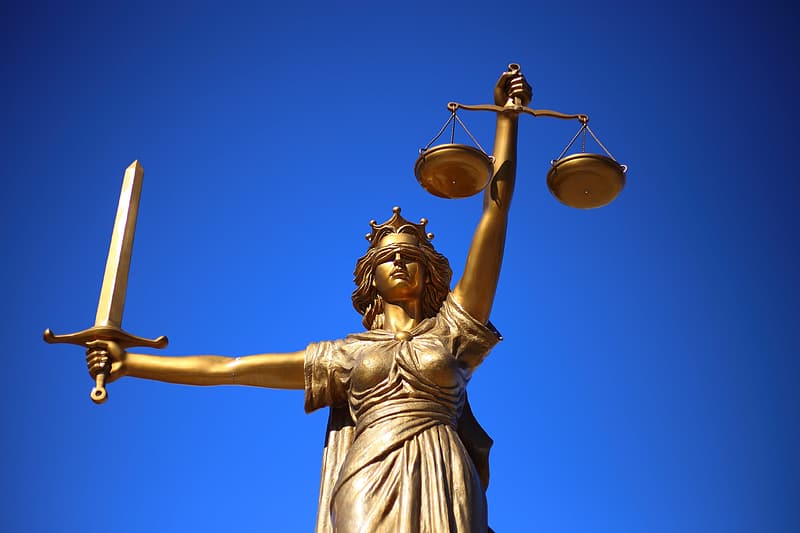
There is a representation of justice. A woman (lady justice) blindfolded holding the scales of justice in one hard and a sword in the other. This representation demonstrates a visualisation of the core principles of justice: blindfold for impartiality, the scales for weighting the evidence and the sword, the authority. The need for this representation is making the point that justice is fair. To all people justice is an equaliser that brings the balance back to everyday life. Those who break the natural order are faced with the consequences of the arbitration made by the system that assumes equality for all against the law.
The representation of justice must be convincing in order to be accepted by the public. The impartiality has to be demonstrable and the system forms a bond across all social strata. Well, at least in principle. There is a difference between representation and reality. This is something we learn from early on. As a kid, I remember a special ice-cream in a cup that had a little toy in the bottom of the cup. It looked so appealing, but the reality never met my expectations. Still, I continued to buy it, in anticipation that maybe the representation and the reality will meet. Like the ice cream, the justice system, has a beautiful packaging that makes it incredibly appealing.
Forged in the flames of the renaissance and the enlightenment, justice transformed from a convenient divinity to a philosophical ideal and a social need. It became a concept that reflected social changes and economic growth. Many of the principles of justice, like equality and fairness, carried forward from the classical era. Only at this time these concepts were enriched with philosophical arguments influenced by humanism. The age of exploration and knowledge added to the scientific rigour of forensic investigation and the procedures became standardised. Great minds conceptualised some of theoretical aspects and transferred them in everyday practice. Cesare Beccaria’s treatise On Crimes and Punishments demonstrated how humanist principles can affect procedure and sentencing.
This justice system was/is our social “ice cream”. Desirable and available to all citizens. A system beyond people and social status, able to call individuals to account. Unfortunately like my childhood “ice cream” equally disappointing, primarily because the reality is not even close to the representation. The principles of justice are all noble and inspiring. There is however something behind the systems that needs to be explored in order to understand why reality and representation are so far apart. The guiding principle of any justice system from inception to this day is not to restore the balance (as so beautifully demonstrated with the scales) but to maintain the established order or the social status quo.
On the occasions where societies broke down because of war or revolution, significant changes happened. Those allowed some reforms in different parts of the system allowing changes, sometimes even radical. Even at those situations the reforms were never too radical or too extensive. Regardless of the political system, tyrannical, dictatorial or democratic, the establishment is keen to maintain its authority over the people. For this to happen, the system must be biased in its inception about what we mean about justice. If the expectations of law and order are given a direction, then the entire system follows that direction and all changes are more cosmetic than fundamental. Quite possibly this explains what we recognise as miscarriages of justice as simply the inability of the system to be more tactful about its choices and arbitrations.
Therefore, tax avoidance and drug use take a different level of priority in the system. It is the same reason that people from different socioeconomic groups are seem differently, regardless of the system’s reassurance on equality and fairness. Maybe the biggest irony of all is that the representation of justice is a woman, in one of the most male dominated systems. From the senior judiciary to the heads of police and the prison systems, women are still highly underrepresented. Whilst the representation of ethnic minorities is even lower. Of course, even if it was to change in composition, that would be arguably a cosmetic change. Perhaps it is time as society to use consumer law and demand that our justice system is like it’s been advertised…fair.
Share this:


What is the value of your ‘yes’ when you never say ‘no’?

A good few years ago a senior colleague asked me that very question. It was more of a statement, than a question and it was designed to make me think about how I approached work and perhaps more importantly how others saw me in the workplace. It fits very nicely with another saying, ‘if you want the job done, give it to a busy person’. It seems there are those in the workplace that get the job done and those that don’t. There are those that always say ‘yes’ and others that often say ‘no’. There are those that solve problems and those that don’t. Another saying from a senior manager, ‘don’t bring me problems, just bring me solutions’ sums up the majority of relationships in organisations.
My experience of managers (both middle and upper) has been varied, but unfortunately most have fallen into the category of poor, bordering on awful. Perhaps that colours my judgement, but I do know that I’ve also had some very good managers. The good managers always made me feel like I was working in partnership with them and, yet I knew who was the boss. I always tried to find a solution to a problem but if I couldn’t then the boss knew that it was a problem he or she needed to deal with, they trusted my judgement. Often what appears to be the most trivial of problems can be a show stopper, a good boss knows this. If I said ‘no’ to a piece of work, then the boss negotiated which other piece of work would be set to one side for now. Sometimes everything is a priority, and everything is important, it is for those at the most senior level to make the decisions about what will or will not get done. Making no choice is an abrogation of responsibility, suggesting it is another person’s problem is just as bad if not worse.
Good managers understand how much work people are doing and trust their workers to get on with the job in hand. A good manager knows that even the most menial of tasks takes more time than might be imagined and that things rarely go exactly to plan. There is always an element of redundancy. When someone says ‘no’ to a piece of work they understand that there is a reason for that ‘no’ and rather than simply seeing that person as being difficult or lazy, they listen and seek solutions. More importantly, they take responsibility for the problem, ‘bring me the problem and I’ll help you find the solution’.
As we move into a summer of uncertainty where the ‘new normal’ is an anxious time for most, where the ‘yes’ people are needed more than ever, and the managers need to lead from the front, if you are a manager, what will you response be when your undervalued ‘yes’ person says ‘no’?
Share this:


How I became an evil man
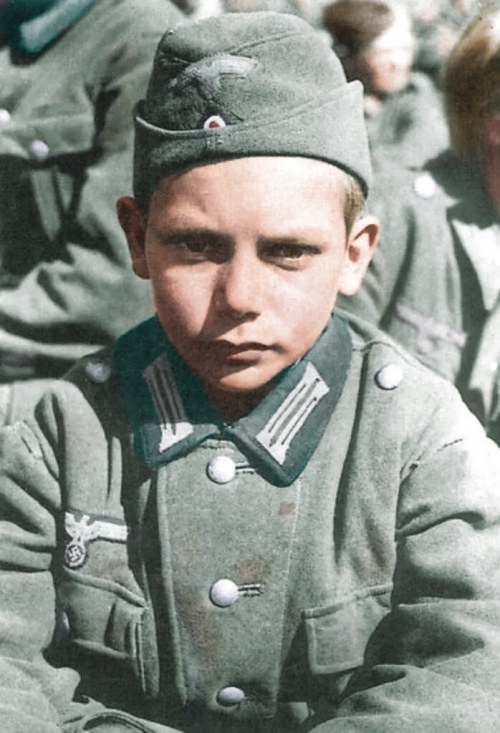
My love of poetry came in my sleep like a dream, a fever I could not escape and in little hours of the day I would read some poetry from different people who voice the volume of their emotions with words. In one of those poems by Elleni Vakalo How he became a bad man, she introduced me to a new understanding of criminological thinking. The idea of consequences, that lead a seemingly good person to become bad, without the usual motivational factors, other than fear. This was the main catalyst that became the source of this man’s turn to the bad.
This almost surrealistic description of criminal motivation has since fascinated me. It is incredibly focused, devoid of social motivations and personal blame. In fact, it demonstrates a social cognition that once activated is powerful enough to lead a seemingly decent person to behave in uncharacteristic moves of violence. This interesting perspective was forged during the war and the post war turmoil experienced. Like Camus, the act of evil is presented as a matter of fact and the product of thoughts that are originally innocent and even non-threatening.
The realisation in this way of thinking, is not the normalisation of violence, but the simplicity that violence in innate to everyone. The person who commits it, is not born for it, does not carry an elaborate personal story or trauma and has no personal compulsion to do it. In some ways, this violence is more terrifying, as criminality can be the product of any person without any significant predispositions, an everyday occurrence that can happen any time.
The couple that will meet, fall in love, cohabit, and get married, starting a family, follow all the normal everyday stages that millions of people follow or feel socially obliged to follow. In no part of this process do they discuss how he will control her, demean her, call her names, slap her, hit her or kick her. There is no plan or discussion of how terrified she will become, socially isolated and humiliated. At no point in the planning, will she be thinking of ways to exit their home, access helplines or spend a day in court. It happens, as a product of small thoughts and expressed emotions, that convert into micro aggressions, that become overt hostility, that leads to violence. No significant changes, just a series of events that lead to a prolonged suffering.
In some way, this matter of fact violence explains the confusion the victims feel, trapped in a relationship that they cannot recognise as abusive, because all other parts fall under the normality of everyday life. Of course, in these situations, emotion plays a key role and in a way that rearranges logic and reason. We are driven by emotion and if we are to leave criminological theory for a minute a series of decisions, we will make daily take a journey from logic to emotions and back.
This emotional change, the manifestation of thoughts is not always criminal nor destructive. The parents who are willing to fight an entire medical profession so that their newborn has a fighting chance are armed with emotion. Many stories come to mind of those who owe their lives to their determination of their parents who fought logic and against the odds, fought to keep them alive. Friends and partners of people who have been written off by the criminal justice system that assessed them as high risk for society and stuck with them, holding on to emotion as logic departs.
In Criminology, we talk about facts and figures, we consider theories and situations, but above all as a social science we recognise that we deal with people; people without emotions do not exist. So how do you/how do I become a bad man? Simple…the same way you are/I am a good man.
This is the poem by Eleni Vakalo, with my painful translation:
How He Became A Bad Man

I will tell you how it happened
In that order
A good little man met on his way
a battered man
the man was so close from him laying
he felt sad for him
He was so sad
That he became frightened
Before approaching him to bend down to
help him, he thought better
“What do you want, what are you looking for”
Someone else will be found by so many around here,
to assist this poor soul
And actually
I have never seen him
And because he was scared
So he thought
Would he not be guilty, after all no one is hit without being guilty?
And they did him good since he wanted to play with the nobles
So he started as well
To hit him
Beginning of the fairy tale
Good morning
Share this:


“Things you need to know about criminology”: A student perspective – Natalie Humphrey, 1st Year student

We are all living in very strange times, not sure when life will return to normal...but if you're thinking about studying criminology, here is some advice from those best placed to know!

The most important module to my understanding of criminology is: At the beginning of the year I believed the True Crime module to be the most important in understanding why crimes are caused. However, I quickly learned that these are not always the best source of information! The Science module is the basis of Criminology in the first year, laying down where it emerged, with Lombroso and Bertillon. I believe these figures are important to understand to grasp criminology.


The academic criminology book you must read:
The SAGE dictionary of Criminology has helped me with the basics of the subject. If there was something I became stuck on, this book would usually have an explanation for it. It also has examples which make it much easier to apply

The academic journal article you must read:
Attitudes towards the use of Racial/Ethical Profiling to Prevent Crime and Terrorism, by Johnson, D et al.(2011)
I came across this article when researching my Independant Project on racial stereotyping. It goes into the systematic racism that black people face and how disproportionate racism truly is. With more recently, the George Floyd case, this is still a very prominent article that is true to date

The criminology documentary you must watch:
I am a lover of many true crime documentaries and am always first to watch the new one that has been added to Netflix! The famous ones, such as Ted Bundy’s confession tapes, are fascinating to me, Bundy especially. However, there are many injustices that need to be addressed, not just the notorious serial killers. Jeffrey Epstein’s new documentary is very important in understanding sexual abuse that happened to over 200 underage girls. Athlete A also shows the sexual abuse of underage girls who were part of USA gymnastics.

The most important criminologist you must read:
Becker stood out to me this year as a very important figure. Understanding how young people are so heavily influenced by the labels people and society give, so much so it can shape their lives. Even older people can be easily labelled. This was quite surprising to me at the beginning of my studies.

Something criminological that fascinates me:
DNA and fingerprinting are fascinating to me. I find the science behind the discovery of what occurred at a crime scene and how they unpick it very interesting. This is definitely something I would like to study further.

The most surprising thing I know about criminology is:
It is a much wider subject than I first thought, it involves so much more than you could imagine. It questions everything in society.

The most important thing I've learnt from studying criminology is:
I have learned how unjust our criminal justice system is and how much, we as individuals, stereotype every person we meet. I’ve become more aware of this and have a better understanding of what needs to change.

The most pressing criminological problem facing society is:
Racism is a massive problem today. The racism black people face, especially in the US, is hard to understand as a white woman, but difficult to even contemplate people are treated in such ways. George Floyd, as I mentioned before, was killed because of his race. Problems like this would not happen to a white male, especially when his alleged crime was not violent. Young black men are labelled by the media to be seen as a thug and dangerous, causing many to be assumed of acts they just would not commit. Jane Elliott’s experiment on racism and eye colour from the 1970s is still a lesson that needs to be learned today!

When family and friends ask, I tell them criminology is:
Its more than it seems. Most just think it's about crime, which yes it is, but there is so much more to it. It is not one subject, it is so many put together. Science, psychology, sociology for example.

Share this:


Take a leap…it might just be worth it!
When I was asked to write a blog about doing research for my dissertation, I immediately went to https://thoughtsfromthecriminologyteam.blog/category/first-class-dissertation/ to read what others had written before me. Previous entries covered race and discrimination, homelessness, hate crime, and working with sex offenders, among other things; all good meaty stuff that is highly relevant to the study of criminology, and to society.
I knew I was taking a risk when I decided to mix it up and write a criminology dissertation that was based on historical crime and punishment, as there was the chance that it fell into neither camp. From a historian’s perspective, I wasn’t researching a primary source, per se, and from a criminologist’s perspective, would it have enough relevant criminological theory?
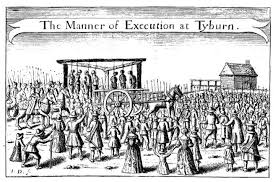
I just knew I wanted to do something to do with historical crime and punishment, but I didn’t know where to start. Eventually I came across two quotes that I thought were relevant to my subject area: ‘the rulers of eighteenth-century England cherished the death sentence’ (Hay, 1975:17), and; ‘a quasi-judicial role such as [the royal pardon] is not a suitable function for the executive’ (Travis, 2009:9). From these, my idea was firstly to examine who received the death penalty and why, and why some were pardoned while others were not. Secondly, when it came to pardoning, who had the power to pardon and what were the criteria used? I was also particularly interested in the political aspect of this.
What soon became obvious was that even 200 plus years ago, it was the same people committing crime as it is today: the working-class poor, the marginalised and the desperate. And just as today, when those with money, power and connections commit crime, it was not considered crime in the same way, and therefore, the punishment was not the same. I could see then, that I would be able to apply relevant criminological theory. I also needed to incorporate a fair bit of law and constitutional changes to the criminal justice system. As we were always being reminded that criminology is a ‘rendezvous’ subject that encompasses many other disciplines, this gave me the confidence to forge ahead!
I actually really enjoyed researching my dissertation, especially the case studies. After doing lots of research on the Old Bailey Online, I found 3 cases from 1789 which highlighted 3 different outcomes for the same crime, as a way of showing the criteria used for deciding who was pardoned and who was left to hang. I also examined several more recent death penalty cases from the 20th and 21st centuries, to show that the royal pardon is still an essential part of the criminal justice system, despite modernisations designed to replace it, like the introduction of the Criminal Cases Review Commission.
My advice to students in year 2 is: start thinking about your dissertation early! It took me a long, long time to decide what I wanted to research, and I researched a lot of stuff that I didn’t end up using. At one point I was so worried that I even talked to @paulaabowles about deferring my dissertation until next year! But I’m so glad I didn’t do that. I won’t lie to you, it is hard work and requires a lot of time and dedication, which is why it’s so important to pick something that interests you. In the end, though I still worried that it would be too ‘in the middle’ to please either camp, I thoroughly enjoyed doing this piece of work, and was quite sad when it was finished. To be rewarded with a First was beyond anything I could have hoped for, and I’d like to think that was due not only to my hard work, but also to the passion I had for the subject matter.
References:
Hay, D. (1975). Property, Authority and the Criminal Law. In: Hay, D., Linebaugh, J., Rule, J., Thompson, E. and Winslow, C. (Eds). Albion’s Fatal Tree: Crime and Society in Eighteenth-Century England. London: Verso. Pp. 17-63.
Travis, A. (2009). National: Royal Pardon: Legal Reform: I shouldn’t be able to make these decisions, says Straw (Guardian Homepages). The Guardian (London, England). P.9.
Share this:


Nothing is black and white: the intransigence of fools

One thing we criminologists know is that it is impossible to prevent crime. Many a great criminologist has tried to theorise why crime occurs (my shelves are full of their books) and whilst almost all have made valuable contributions to our understanding of crime, it is an unfortunate fact that crime continues. But then crime itself is difficult to define and has its basis in time, power, opportunity and social discourses. What is criminal today will not be criminal tomorrow and what is important today will lose its importance tomorrow, in favour of some new or maybe, old, manifestation of that elusive concept we call crime. Perhaps we should we grateful, for in the industry of crime lies mass employment. From criminologists to those that attempt to stem the tide of crime, those that deal with its aftermath and those that report on it or write about it (real or fictional), there is money to be made. If we stopped crime, we would all be out of a job.
Most, if not all of us have at some stage in our lives committed some sort of crime. Most crimes will fortunately be almost inconsequential, maybe a flouting of a law such as driving a car over the speed limit. Other crimes will be more serious and whilst some criminals will be brought to book most are not. The inconsequential crime of driving over the speed limit, albeit perhaps due to a lapse of concentration, can have dire consequences. There is clear evidence that the survival rates of pedestrians struck by cars has a direct correlation with speed. So the inconsequential becomes the consequential, the ephemerality of crime, the reality.
When we think of crime, we often have little concept of its reality. We apply labels and our own rules to that we know and find acceptable. Speeding is not criminal, well not generally, unless it’s a boy racer. Drink driving is a no-no, but we might take it to the alcohol limit when having a drink. Drugs (the criminalised type) are ok, well some are and some aren’t, it all depends on your viewpoint. Drugs (the prescription type) are ok, even if they impair our ability to drive. Alcohol, well that’s absolutely ok, even if the abuse of it leads to more deaths than drugs and the consequences of that misuse has a really significant impact on the NHS. Tax evasion, illegal if you get caught, ok if you don’t. A bit like fraud really, ok if you can get away with it but then maybe not, if the victim is a little old lady or me. Assault, well it depends on the seriousness and the situation and probably the victim. Robbery, not good to go into an off licence with a gun and threaten the shopkeeper, bullying if you take lunch money off the lad outside the school gates.
Criminals don’t walk around with a label that says ‘criminal’ and even if they did, there would have to be a method of bestowing the label in an instance. Nonsense of course, only a fool would suggest such a thing. What about the people that committed a crime but have changed their ways I hear my colleagues ask? What about those that haven’t, or have and then relapse, I reply.
Nothing is black and white; the concept of crime is elusive, as are criminals (both by concept and nature). And yet we happily castigate those that attempt to uphold the law on our behalf and in doing so view crime and criminals as clear concepts. Each has a clear label, each is clearly identifiable, so how can they get it so wrong so many times. Whilst criticising those that attempt, and let’s be quite honest, fail most of the time to stem this tide of crime, perhaps we might also think about the impossibility of the job in hand. That’s not to say that a lot of the criticisms are not justified, nor that things should not change, but if we only examine all that is wrong, we lose sight of reality and only an intransigent fool would continue an argument that sees the problems and solutions as simply black and white.
Share this:


“Things you need to know about criminology”: A student perspective – Mary Adams, recent Graduate and mature student.
We are all living in very strange times, not sure when life will return to normal...but if you're thinking about studying criminology, here is some advice from those best placed to know!

The most important module to my understanding of criminology is: I would have to say they are all equally important for understanding different aspects of Criminology. In first year I loved The Science of Crime which showed how things have evolved over time, and that what we now see as funny was actually cutting edge in its day. True Crime also makes you look beyond the sensational headlines and separate fact from fiction. In second year Crime & Justice gave a brilliant grounding in the inner workings, and failings, of the criminal justice system. And in third year, the Violence module explores personal and institutional violence, which is especially relevant in current times

The academic criminology book you must read: Becker’s Outsiders and Cohen’s Folk Devils and Moral Panics are a must. I also found Hopkins-Burke’s An Introduction to Criminological Theory and Newburn’s Criminology essential reading for first year as well as Finch & Fafinski’s Criminological Skills. For second year I recommend Davies, Croall & Tyrer’s Criminal Justice. If you choose the Violence module in third year you will be grateful for Curtin & Litke’s Institutional Violence. And don’t forget Foucault’s Discipline & Punish!

The academic journal article you must read:
There are so many excellent journal articles out there, it’s difficult to choose! Some of my favourites have been:
'Alphonse Bertillon & the measure of man' by Farebrother & Champkin;
'Bad Boys, Good Mothers & the ‘’Miracle’’ of Ritalin by Ilina Singh';
'Detainee Abuse & the Ethics of Psychology' by Kathryn French;
'Attachment, Masculinity & Self-control' by Hayslett-McCall & Bernard;
'Grenfell, Austerity & Institutional Violence' by Cooper & Whyte;
'The Phenomenology of Paid Killing' by Laurie Calhoun;
'A Utilitarian Argument Against Torture Interrogation of Terrorists' by J. Arrigo.

The criminology documentary you must watch:
Without a doubt, a must-see is the Panorama documentary London Tower Fire: Britain’s Shame. I would also highly recommend the movie The Stanford Prison Experiment

The most important criminologist you must read:
Of course you must read Lombroso, Beccaria & Bentham. I also enjoyed reading work by feminist criminologists like Pat Carlen, Carol Smart & Sandra Walklate. And of course, Angela Davis is a must!

Something criminological that fascinates me:
What fascinates me is how the powers that be, and a good proportion of the public, cannot seem to realise that social injustice is one of the major factors behind why people commit crime. And the fact that putting more & more people in prison is seen as a ‘good’ thing is mind-boggling!

The most surprising thing I know about criminology is:
The fact that it is such a diverse subject & incorporates so many other disciplines

The most important thing I've learnt from studying criminology is:
Question everything! Don’t take anything at face-value. Try to look beyond the attention grabbing headlines to find out the real story. Read, read, read!

The most pressing criminological problem facing society is:
Unfortunately I think there are many pressing problems facing society today, the main ones being social injustice & inequality, systemic racism, institutional violence, and mass incarceration


When family and friends ask, I tell them criminology is:
Some people joke that I’m learning how to be a criminal! Others think it’s all about locking people up! I tell them it’s all about looking at the mechanisms in-built in our society that disadvantage & discriminate against whole groups of people, and that, unless we are part of the rich & powerful elite, any one of us could find ourselves in the ‘out’ group at any time. I also tell them to stop reading The Daily Mail, vote Labour, and question everything!!

 Thoughts from the criminology team