
Home » Coronavirus (COVID-19) (Page 13)
Category Archives: Coronavirus (COVID-19)

“My Favourite Things”: Tré

My favourite TV show - my favourite television series at the moment (since 2016) is The Hollow Crown, the BBC's adaptation of Shakespeare's history plays. It's an unparalleled television experience that makes Game of Thrones look like a garden party.

My favourite place to go - I spend most Saturdays at the cinema, enjoying the art of storytelling. Film to me is what life is about. The person that doesn't engage in stories only lives one life. The person that reads, watches, writes, lives many.

My favourite city - I don't feel that I'm at all that well-travelled and compared to my academic friends, I feel like I've lived in a bubble. From the few places I have been, I don't think I can choose just one. Mississauga, Canada (2018) was marvellous. I also grew up visiting my paternal family in Birmingham. I love Birmingham, it's like London without all the faffing about.

My favourite thing to do in my free time - I live for films. I love watching old films, specifically films released pre-1970 where many were filmed in monochrome. I spend a lot of time at the cinema, even going to special event screenings of old films.

My favourite athlete/sports personality - again, I'm an old soul. I don't think I can choose just one, so I would have to go for the iconic West Indies cricket team of 1980/81 that left Botham's England in the dirt. WI 5 - ENG 0.

My favourite actor - Despite him doing some absolute oddballs these last few years, Robert DeNiro is still my favourite actor, being in some of the best films ever made, incl. The Godfather Part II, Once Upon a Time in America, Heat, Goodfellas and more.

My favourite author - until recently my favourite author was Kathryn Stockett (The Help). However, I've come to reflect on the problematicness of this book. I think I would have to choose the late Andrea Levy who was voice to a whole generation of Black British Caribbeans through books like Small Island and Every Light in the House Burnin'. Truly a marvel who gave a voice to the Black British working-class and an inspiration to me as well.

My favourite drink - It's been called an old man's drink but I'm an absolute sucker for a pint of IPA. If we were to go to the supermarket, I would go for Goose or Greene King. I guess it shows I have been spending too much time with my grandfather!

My favourite food - curry goat, rice and peas with mac n cheese. Nothing else comes remotely close. It's the dish I grew up with.

My favourite place to eat - Grandma's House. See above^^^

I like people who - who don't accept things at face value. Challenge themselves and their establishment. Ask the difficult questions and don't roll over. Many of my friends are activists and it shows, either through their writing as artists or taking it to the streets at anti-Brexit protests (for example).

I don’t like it when people - claim to be authorities on things they know nothing about. Stop stroking your ego and step back. It's okay to say "I don't know enough about this to comment." I would actually think more of people if they did this.

My favourite book - one of my favourite reads in the last few years is Carrie Pilby by Canadian novelist Caren Lissner. A charming young adult fiction story about a young woman trying to find her way in a world that doesn't relate to her.

My favourite book character - I don't read enough fiction to answer this question genuinely. Recently, I'm inclined to go with Jaime Lannister from George R. R. Martin's A Song of Ice and Fire the series of books that went on to "loosely inspire" the American HBO television series Game of Thrones (2011 - 2019).

My favourite film - Midnight in Paris, about an American writer stuck in what's called "Golden Age Thinking", the idea that a different time period is better than one you are living - and I don't think there's a person living that hasn't had this thought.

However, when I do look to history, I think this is the best time to be people of colour; a woman; lesbian, gay, bi or trans; less able-bodied; the further back in history you look, the worse it looks for people who are not able-bodied White, straight men.

My favourite poem - In recent years, I found Button Poetry where I was introduced to Canadian poet Sabrina Benaim. Her poem 'Explaining Depression to My Mother: A Conversation' struck a chord and continues to strike a chord to this day.

My favourite artist/band - Bob Marley. If he had lived he would have been Prime Minister of Jamaica. Writer, artist, poet political activist, revolutionary. Legend. If he lived today, he would be standing alongside Jeremy Corbyn, Bernie Sanders and Alexandra Ocasio-Cortez in solidarity. And as we fight COVID-19, I'm sure he'd have something to say! Every song is mega, and Natty Dread (1974) is one of the best albums ever made.

My favourite song - London Bridge (1980) by The Mighty Sparrow is certainly one of my favourite. Written in time of of unrest in England, this is a commentary on English history and society.

What's more, this is calypso music from my maternal grandparents' country, Grenada. Caribbean music is battlefield music and The Mighty Sparrow is one of our countrymen sticking it to our former-colonial masters in a way that's jovial and lively.

My favourite art - I'm partial to Vincent van Gogh's Sunflowers. Its stillness reminds me the world isn't all fast-paced and sometimes we have to take a moment to reflect.

My favourite person from history - one of my favourite historical figures is Black mixed-race footballer-turned-soldier Walter Tull. It is safe to say I would not be where I am had it not been for Walter Tull. He is a testament to what can be achieved, irrespective of hostile environments. Moreover, not only is he a testament to all men but is a role model to Black men in 2020.

Not only was he one of the first Black footballers in England, he was the first Black officer in the British Army at a time when it was illegal for "men of non-European descent" to lead White men. Walter is part of Black history, Northampton history, but above of all, my history and I am extremely proud of that.

Share this:

“My Favourite Things”: Paula
My favourite TV show - I am not really one for television, but I recently stumbled upon a 1960's series, called The Human Jungle, lots of criminological and psychological insight, which I adore. I also absolutely loved Gentleman Jack (broadcast on BBC1 last summer)

My favourite place to go - Wherever I go the first thing I look for are art galleries, so I would have to say Tate Modern. Always something new and thought provoking, alongside the familiar and oft visited treasures

My favourite city - I love cities and my favourite, above all others, is the place I was born, London. The vibrancy, the people, the places, the atmosphere....need I say more?

My favourite thing to do in my free time - Read, read, read, read, read, read, read, read......

My favourite athlete/sports personality - This is tricky, sport isn't really my thing. However, I do have a secret penchant for boxing,  which isn't brilliant for someone who identifies as pacifist, so I'll focus on feminism and pick Nicola Adams

My favourite actor - (Getting easier) Dirk Bogarde

My favourite author - (Too easy) Agatha Christie

My favourite drink - Day or night? If the former, tea....

My favourite food - Chocolate, always

My favourite place to eat - So many to choose from, but provided I am surrounded by people I love, with good food and drink, I'm happy

I like people who - read!

I don’t like it when people - claim to be gender/colour blind....sorry mate, check your privilege

My favourite book - (oooh very, very tricky) Virginia Woolf's A Room of One's Own primarily because of the profound effect it had and continues to have on my understanding

My favourite book character - (Easy, peasy) Hercule Poirot

My favourite film - (Despite my inner feminist screaming nooooooooo) The original Alfie with its wonderful swinging sixties' vibe

My favourite poem - (Decisions, decisions, so many wonderful poems to choose from) I'll plump for Hollie McNish's Mathematics

My favourite artist/band - The Beatles

My favourite song - (Given the previous answer) it has to be Dear Prudence

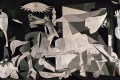
My favourite art - I love art, but hands down Picasso's Guernica is my favourite piece. To stand in front of that huge painting and consider the horror of war is profound

My favourite person from history - The pacifist, suffragette Sylvia Pankhurst, a beautiful example of the necessity to be confident in your own ethics and principles

Share this:


The logic of time
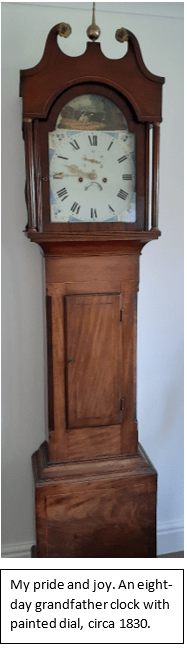
So why the love of clocks, well I’m sure some of it has to do with my propensity to logic. Old clocks are mechanical, none of this new fangled electronic circuitry and consequently it is possible to see how they operate. When a clock doesn’t work, there is always some logical reason why this is so, and a logical approach needed to fix it.
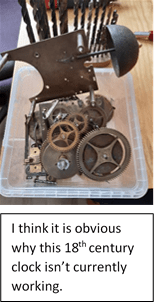
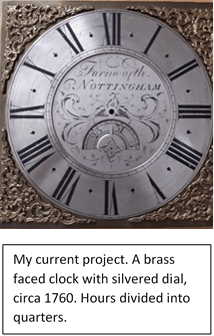
This then gives me the opportunity to investigate, explore the mechanics of the clock, work out how it ought to operate and set about repairing it. In doing so I am often handling a mechanism that is over a hundred years old, in the case of my current project, nearly three hundred years old.
There is a sense of wonderment in handling all the parts. Some appear quite rudimentary and yet other parts such as the cogs are precision pieces. Many of the parts are made by hand but clearly some are made by machines albeit fairly crude ones. How the makers managed the precision required to ensure that cogs mesh freely baffles me. What is clear though is that the makers of the clocks were skilled artisans and possessed skills that I dare say have all but been lost over the years.
Messing around with clocks (I can’t say I do more than that) also allows me to delve into history. The clock I’m currently tinkering with only has an hour hand, no minute or second hand. Whilst the hours and half hours are clearly marked on the dial, where you would normally expect to see minutes, the hours are simply divided up into quarters. A bit of social history, people didn’t have a need to know minutes, they were predominantly only concerned with the hour.
My pride and joy, a grandfather clock, dates to the 1830s. When I took it apart I found several dates and a name scratched into the back of the face plate. The dates related to when it had been serviced and by whom. I was servicing a clock that had been handled by someone over a hundred and fifty years previously. I bet they weren’t standing in a nice warm house drinking a hot cup of coffee contemplating how to service the clock. We take so much for granted and I guess the clocks allow me to reflect on what it was like when they were made and how lucky we are now. Although I do also wonder whether simple notions such as not having the need to concern ourselves with every minute might not be better for the soul.
Share this:


Social Psychology in a Time of Crisis

I am currently sitting in an empty classroom because, although face to face teaching is not officially suspended until tomorrow, none of my seminar students have turned up. In this rather depressing situation, however, there is much for a psychologist to reflect upon, particularly the process of social influence.
First there is the phenomenon of obedience to authority. In his seminal series of experiments, Milgram (1974) was trying to understand the destructive power of obedience; the tendency of people to do what they are told even when it is morally wrong and they know it to be so. The current situation is different. While it is always important to question science (as anyone who has studied CRI1007) should be well aware!) large scale public health measures have no hope of working unless everyone obeys. Milgram did not just explore how obedient people can be – he also investigated the conditions under which obedience is strongest. One of the factors that enhanced obedience was an aura of scientific authority. Participants were more likely to obey when they were instructed by a person in a white coat, who worked in a smart laboratory in a reputable university and who made reference to science, research and experiments, than when they were confronted by someone in scruffy clothes in a run-down building in a tatty back street. Boris Johnson has a poor record of telling the truth and inspiring trust. It is no coincidence that he is currently delivering his daily briefings flanked by his chief medical officer and chief scientific advisor.
Then there is the phenomenon of panic buying. There is probably a deep-seated evolutionary drive that causes us to hoard food in times of potential shortage. Just as the onset of autumn drives squirrels to bury hazelnuts, so the mention of self-isolation drives humans to buy pasta and tinned tomatoes (or potatoes in the case of one of my elderly relatives). My grandmother, who was her family’s main breadwinner through the Second World War, kept a stash of sugar under her bed until the day she went into a care home. And I guess Freud might have had something to say about the fact that the items we are hoarding most fervently are toilet rolls!
Evolutionary drives are, however, not the whole story and social influences play a part too. We panic buy because everyone else is panic buying. In his research on conformity, Asch (1956) identified two main reasons why people went along with the crowd: some just wanted to fit in and be socially accepted (compliance); others doubted their own judgment and believed that everyone else must be correct (conversion). The latter process is helping to drive the current retail crisis – people think “everyone else is panic buying, so there must be a good reason to do so, so I need to do it too!”
Asch was investigating the influence of majorities but minorities can be influential too, often for similar reasons (Moscovici, 1976). As if we didn’t have enough disease to worry about, I have just passed a screen warning students about outbreaks of mumps in British universities. The reason why mumps is on the rise among students is that 20 years ago, when the current generation of students were babies, a small minority of scientific opinion suggested a link between the MMR vaccine and autism. Backed by authoritative sounding research and confident and charismatic individuals, it led parents to doubt mainstream opinion and reject vaccination for their children.
Another topic which has puzzled social psychologists for many years is that of altruism. Are we ever truly, selflessly altruistic? Or are we good to others because it has rewards for us? Looking at the Facebook group for the village where I live, there are some heart-breaking accounts of selfishness over the last few days. The grandmother desperately appealing for Calpol for a 5-month-old baby with chicken pox, because every shop she has tried has been cleared out by panic buyers. And the farm that sells eggs by the side of the road with an honesty box that is now asking customers to phone with orders because someone has stolen all the eggs and all the cash. But there are some lovely examples of altruism too. People offering to shop or collect prescriptions for the elderly and vulnerable. People offering to cook meals for health professionals. People setting up Facebook and WhatsApp groups in order to maintain social contact. And the wonderful woman who offered free mango chutney to anyone in the village, just because she was making a batch and wanted to share the love!
We live in interesting times! Stay safe, keep calm and use this opportunity to read and reflect.
References
Asch, S.E. (1956) Studies of independence and submission to group pressure: 1 A minority of one against a unanimous majority. In Psychological Monographs, 70, (9) (Whole No. 416).
Milgram, S. (1974) Obedience to Authority. New York: Harper and Row.
Moscovici, S. (1976). Social influence and social change. London: Academic Press.
Share this:


Never fear…. Spring is almost here

https://shop.royalacademy.org.uk/david-hockney-arrival-of-spring-poster
There is no doubt, we are living in a time of crisis. Everywhere we look there are signs of disorder, disruption and chaos, impinging on our real and virtual lives. You can see it in the faces of family, friends, colleagues, the old and the young from children to pensioners, and everyone in between. There is nothing else on anyone’s lips beyond what they’ve heard, what they’ve seen, how they’ve prepared, or haven’t for this human disaster. Scientific words like Covid-19, Coronavirus, criminological words such as isolation, criminalisation and newly minted words; social distancing are being pushed into conversations. These appear alongside the more prosaic questions, which shops have bread? toilet rolls? milk? eggs? Is this open, is that open, can I get there, am I allowed to go out?
Over the past week I have seen this fear develop, evolve and spread. It threatens to swallow us all up in our panic. Many people, myself included, are desperately trying to maintain the everyday, the mundane, some routine, some semblance of normality. My institution is trying to be supportive, lots of extra email, how to move your teaching online, what advice to give students, how to look after your mental and physical health and that of others, at a time like this. All of this advice is well-intentioned and aims to alleviate fear, after all scientia potentia est, or so we are told.
The problem with trying to recreate our real lives in a virtual environment is far more profound than simply changing our modes of operation. When people are worried, frightened and saddened, no amount of pretending that it is “business as usual” will distract them from the everyday lived experience. We can pretend, but when you are worried about your own health, that of your family, when you don’t know where you are going to be able to get the basics of life from, and for many, how on earth you will be able to pay for it with limited or no income, everything else pales into insignificance.
So far we have seen so much evidence of privilege: those that aren’t worried because they’re healthy, those that stockpile food and other essential products, because they can afford to and those that isolate themselves in the lap of luxury, because they have access to money, property and contacts. All of which feeds the fear by the second, minute and hour. Competing with this negativity are the stories around kindness, the narratives from the NHS, the police, carers, shop workers, the list goes on showing that the human spirit is still burning strong, that we have a choice about our behaviour, our thoughts and our feelings. That we can make a difference, if only we want to.
This week has felt like a nightmare, so dark, so stressed, the walls are closing in on all of us, forcing us into confinement. We look out of the window and nobody is moving outside. It has all the ingredients of my favourite genre, dystopic fiction, but this time we’re all fully immersed and we have no idea how the novel ends. How many will die, how many will find their finances, relationships, employment, education disrupted and/or destroyed?
That changed for me yesterday, when I stumbled upon a message from the artist David Hockney. The message was incredibly simple ‘Do remember they can’t cancel the spring’. I should declare in advance, I am a little biased, he’s one of my favourite artists, but with Hockney’s simple statement he touched on a profound truth. We are humans, infinitely resourceful, extremely adaptable, incredibly social.
Look after yourselves and each other, if not face to face, then virtually. Check in, touch base and create a life line for each other. But also remember to take some time away from the screens, look out of the window and remember the world is still a beautiful place, filled with many wonders, including humankind.
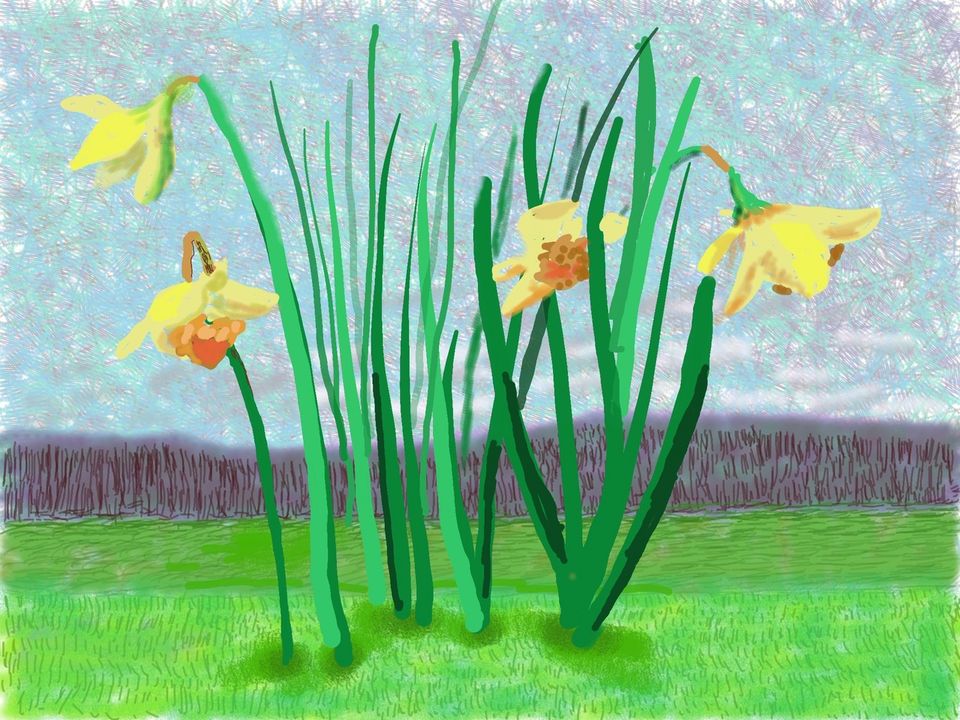
https://www.theartnewspaper.com/comment/a-message-from-david-hockney-do-remember-they-can-t-cancel-the-spring?fbclid=IwAR2iA8FWDHFu3fBQ067A7Hwm187IRfGVHcZf18p3hQzXJI8od_GGKQbUsQU

 Thoughts from the criminology team