
Home » Coronavirus (COVID-19) (Page 12)
Category Archives: Coronavirus (COVID-19)

Coronavirus (Covid-19): The greatest public health crisis in my lifetime
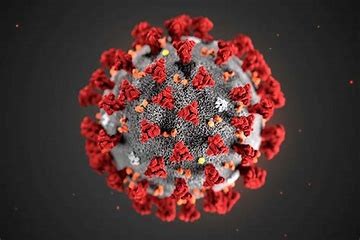
The coronavirus has caused an ongoing pandemic of coronavirus disease 2019 (COVID-19), caused by severe acute respiratory syndrome. The outbreak started in Wuhan, Hubei province, China, as early as November 2019. The World Health Organization (WHO) declared the outbreak to be a Public Health Emergency of International Concern on 30 January 2020 and recognized it as a pandemic on 11 March 2020. Whilst we all have an interest in the ongoing spread and consequence of the greatest public health crisis in generations it holds a specific interest for me given my visits to Wuhan and Hubei province whilst working for Coventry University. Wuhan is a massive city with over 11 million of a population, but little heard of until this outbreak. It is believed that its origins are most likely linked to the Huanan Seafood Wholesale Market, in Wuhan which also sold live animals, and one theory is that the virus came from one of these kinds of animals. The virus spread quickly through the population of Wuhan City which led to comprehensive lockdown to contain the virus. However, the virus spread beyond the city across China and into other countries. The scale of the spread has been significant and by the time the World Health Organisation declared the outbreak a full pandemic in March 2020 there were cases recorded in hundreds of countries.
Cases in the UK emerged on January 31st 2020, which prompted a government response to manage the outbreak. In the early stages there was some discussion about “taking it on the chin” and allowing the virus to spread through the population in order to gain “herd immunity”. However, the public health, medical and scientific experts at Imperial College London suggested that the death toll through their modelling exercises, if this strategy played out, could be in excess of 500,000. This was a situation that would be socially and politically unpalatable, and a change of thinking emerged with a combination of social distancing, public health advice on washing hands and a strategy to protect the capacity of the NHS to cope with escalating cases. A new lexicon emerged that we are now all familiar with: flattening the curve, delaying the spread, the peak of the infection and latterly the language of the health professionals in the frontline supporting and caring for people acutely ill with Covid-19; Personal Protective Equipment (PPE), Continuous Positive Airway Pressure (CPAP), ventilation and oxygen saturation and therapy. This is because the virus can attack the respiratory system leading to pneumonia and in several cases an immune response that leads to multi-organ shutdown. The media presentation of this crisis is all very frightening.
At the time of writing the pandemic has progressed relentlessly in the UK with currently over 65,000 people have tested positive and of those hospitalised nearly 8,000 patients have died. Some commentators have suggested that the UK was slow to recognise the seriousness of the virus and was slow to initiate the “lockdown” measures required to halt the spread. In addition, the UK’s position on testing for the virus has been criticised as slow, lacking preparation despite the global warnings from WHO and a shortage of the essential materials required. Whether these criticisms are valid only time will tell but the UK’s data on cases, hospitalisation, need for critical care and deaths is on a trajectory like other countries which could be described as liberal democracies. Here is the first clue to the timing of the response. The measures required to halt the spread of the virus have massive economic consequences. Balancing these two issues is incredibly difficult and has led to some commentators suggesting all liberal democracies will struggle to respond quickly enough.
What is now abundantly clear is that this is going to take some time for us to get through as a society and the consequences for large sections of our society are going to be devastating. However, what I’d like to discuss in the remainder of this blog are a number of early lessons and personal observations in terms of what we are seeing play out.
First, the data emerging indicates that the narrative about the “virus does not discriminate” is a false one. It is clear that health professionals are much more greatly exposed and that the data on cases and deaths indicate higher numbers of the socially deprived and BAME community. This should not be a surprise as the virus will be keenest felt in communities negatively impacted by health inequalities. This has been the case ever since we recognised this in the “Black Report” (DHSS 1980). The Report showed in detail the extent to which ill-health and death are unequally distributed among the population of Britain and suggested that these inequalities have been widening rather than diminishing since the establishment of the National Health Service in 1948. It is generally accepted that those with underlying health issues and therefore most at risk will be disproportionately from socially deprived communities.
Second, the coronavirus will force the return of big government. The response already supports this. In times of real crisis, the “State” always takes over. Will this lead to more state intervention going forward? If so then we will witness the greatest interventionist Conservative government in my lifetime.
Third, the coronavirus provides one more demonstration of the mystique of borders and will help reassert the role of the nation state. Therefore, the coronavirus is likely to strengthen nationalism, albeit not ethnic nationalism. To survive, the government will ask citizens to erect walls not simply between states but between individuals, as the danger of being infected comes from the people we meet most often. It is not the stranger but those closest to you who present the greatest risk.
Fourth, we see the return of the “expert”. Most people are very open to trusting experts and heeding the science when their own lives are at stake. One can already see the growing legitimacy that this has lent to the professionals who lead the fight against the virus. Professionalism is back in fashion, including recognition of the vital role of the NHS.
Fifth, the coronavirus could increase the appeal of the big data authoritarianism employed by some like the Chinese government. One can blame Chinese leaders for the lack of transparency that made them react slowly to the spread of the virus, but the efficiency of their response and the Chinese state’s capacity to control the movement and behaviour of people has been impressive.
Sixth, changing views on crisis management. What governments learned in dealing with economic crises, the refugee crisis, and terrorist attacks was that panic was their worst enemy. However, to contain the pandemic, people should panic – and they should drastically change their way of living.
Seventh, this will have an impact on intergenerational dynamics. In the context of debates about climate change and the risk it presents, younger generations have been very critical of their elders for being selfish and not thinking about the future seriously. Ironically the coronavirus reverses these dynamics.
Finally, I return to a point made earlier, governments will be forced to choose between containing the spread of the pandemic at the cost of destroying the economy or tolerating a higher human cost to save the economy. In conclusion, I have heard many say that this crisis is different to others we may have faced in the past 30 years and that as a result we can see society changing. Whilst I’m sure a number of the issues raised in this blog could potentially lead to society change it is also a truism that our memories are short, and we may return to life as it looked before this crisis quite quickly. Only time will tell.
Reference
“The Black Report” (1980): Inequalities in Health: Report of a Research Working Group. Department of Health and Social Security, London, 1980.
Share this:


“My Favourite Things”: Bethany

My favourite TV show - I have many. But if I must select just one... Fleabag. I have rewatched several times, I have even read the book (which is more of a script).

My favourite place to go - Peak district, I have several favourite spots within, but overall, it's my favourite place.

My favourite city - Cambridge. It may be more familiarity than anything else, but it does have a charm.

My favourite thing to do in my free time - READ. I have other loves, such as video games and walking. But reading is my everyday pastime.

My favourite athlete/sports personality - Hard one for me, as I'm not really into sports. The only sport I follow which may surprise some is body-building! There's an element of obsession, dedication and art that fascinates me.  So, I will say Kai Greene - but I'm not sure how many will know who this is.

My favourite actor - Tough one, I like most films/TV that has either Bill Hader or Meryl Streep in.

My favourite author - Tough one- Can I give 2 - is that cheating?  Margaret Atwood & Lucy Clarke

My favourite drink - Coca Cola - Full Fat - The good stuff

My favourite food - Bangers & Mash

My favourite place to eat - Anywhere with good food that I don't have to cook myself!

I like people who - Ask Questions. Questions are the stepping-stone before acquiring knowledge.

I don’t like it when people - Assume things stay the same. One of my pet peeves is "Well they should have thought of that before X happened". Things change, feelings change, people's finances change. Therefore, we should try withholding judgement and think how circumstances change.

My favourite book - This one is hard for me. The academic in me says Paul Willis' Learning to Labour, the book opened my mind and genuinely changed my life. But the child in me and the one who loves to explore... The Secret Garden

My favourite book character - This doesn't go in line with my favourite book, but I love the character Charmaine in The Heart Goes Last she's complex but she is also empathetic.

My favourite film - Hocus Pocus - More of a sentimental thing of carving pumpkins every year while watching it!

My favourite poem - While I am not one much for poetry, I adored Rupi Kaur's poetry book Milk and Honey

My favourite artist/band - I have a few, I like The 1975, Alicia Keys, Sam Smith and even some Billie Eilish

My favourite song - Not fitting at all to the above - But - It's Can't help falling in Love

My favourite art - I didn't actually know the name of it till now as I never really thought about it, but what I used to call 'Crazy Stairs' (apparently actually called Relativity by M.C.Escher). It used to be in my Art room at school, I remember thinking it seemed pointless, then I realised that was probably the point.

My favourite person from history - Angela Davis. After I read Women, Race & Class I wanted to explore more – This woman has had a fascinating, challenging, but above all, inspiring life.
… Side note: as I wasn’t asked … Maisie – My dog (pictured) is my favourite…of everything, really. Just look at her, she’s beautiful.

Share this:

“My Favourite Things”: anfieldbhoy
By way of introduction I always find the identification of any favourite things really challenging. However, I’m up for the challenge so here goes. My favourite TV show - I love great TV drama series especially the Saturday night BBC4 offerings. The Bridge, The Killing, Spiral etc. However, they really are not a patch on The Wire which was absolutely the best thing on TV ever! Last year I thoroughly enjoyed Chernobyl. My regular weekly watch includes University Challenge (we all test ourselves don’t we ?) and Newsnight My favourite place to go - Anfield, the home of Liverpool FC. Every time I visit it feels as exciting as the first time. The red set against the vivid green of the pitch, that moment when you ascend the steps and get that first glimpse of the pitch and the smell which is unique and so difficult to describe. It’s magical every time I experience it. No other football stadium compares My favourite city - Whilst Liverpool is very dear to me this would have to be Edinburgh. A great city with its old and new town. Great architecture, great museums and galleries. Cheapest taxis in any city in the UK, within striking distance of the coast, great countryside and it has some smashing hotels and bars. No visit these days would not be complete without a visit to the Oxford Bar My favourite thing to do in my free time - This largely relates to sport. In my youth I played football and cricket to a reasonable standard. Those days are past and so I play golf now with a great bunch of mates at Rutland Water Golf Club. I try to enter as many competitions as possible. It’s a great setting with stunning views across the water. It’s a real test and even if you play badly you are in good company and the walk is good for you. I do walk a lot these days and try to get out for an hour each day. Outside of sport I am very happy spending time with family. We are very close and I get enormous pleasure from my children and grandchildren My favourite athlete/sports personality - Whilst I have supported Liverpool FC all my days and it would easy to say Kenny Dalglish my all time favourite player, in terms of pure sports personality it has to be the genius that was Seve Ballesteros the Spanish golfer who played with his heart on his sleeve, continues to be an inspiration to modern day golfers and watching old footage of his antics on the course is simply magical. This iconic image on the 18th at St Andrews when he won the Open Championship will endure forever.My favourite actor - This one has challenged me the most but in the end, I’m going for Sir Ian McKellen who never lets you down whatever role he takes on. He was born to play “Gandalf” in The Lord of the Rings. The scene on the bridge where he shouts “fly you fools” is a great cinematic moment. His voice is superb, instantly recognised and from what I’ve seen on chat shows seems to be a really nice person My favourite author - Whilst I am reasonably well read and enjoy a range of genres my favourite author is the late Umberto Eco author of The Name of the Rose, Foucault’s Pendulum and my favourite book The Prague Cemetery. Umberto was an Italian novelist, literary critic, philosopher, semiotician, and university professor who worked at several universities across the world although at the time of his death he was professor emeritus at The University of Bologna ……..Never an easy read but really thought provoking with lots of historical references. The recent TV adaptation of The Name of the Rose shown on the BBC was excellent, and I would recommend this book as a way into his work. During the lockdown I have been listening to audiobooks on my daily walk and just listened to Sign of the Four by Arthur Conan Doyle. BBC Sounds is an excellent resource for books and drama My favourite drink - Coffee first thing and tea in the afternoon is my daily routine but when it comes to proper drinks then I love a good Argentinian Malbec, but if pushed it would certainly be Real Ale. We are now blessed with many ales to choose from. More recently I have really been enjoying the wide range of Craft IPAs and other “new world beers”. To sample some of the best locally I recommend a trip to “The Maule Collective” in Northampton or the “Tap and Kitchen” (Nene Valley Brewery) in Oundle. NVB’s “Release the Chimps” is a personal favourite. Whilst many Wetherspoons have a great selection of ales at very affordable prices their owner Tim Martin’s views on Brexit and his response to the lockdown in response to Covid-19 has led me to seriously consider a boycott post lockdown. Finally how could I not mention single malt whisky, especially those from Islay. If I had to choose one it would be have to be Lagavulin. Lagavulin distillery is a malt whisky distillery in the village of Lagavulin on the south of the island of Islay, Scotland My favourite food - Anyone who knows me can tell I love most foods. I have an ample girth as evidence! Very difficult to narrow this down but I do love seafood especially the way the Italians do it. Having lived in Scotland and near the coast we were spoilt with good seafood restaurants. When on holiday abroad fish tends to be my staple diet. Squid, Scallops and Langoustines would be top of the list My favourite place to eat - Again so many on the shortlist, but if I’m honest on a nice summer's day we (the family) love to go for Sunday lunch to Rutland Water Golf club. The food is always special, and the service is exceptional. For a quick lunch we love a pub in Stamford called the “Tobie Norris” where Matthew the landlord (who used to work at RWGC) always provides a warm welcome, good wine, excellent ales based on the season and the food is spot on I like people who - are honest, hardworking and are prepared to put their hand up when they make a mistake. I value those who have a sense of society and are prepared to work for the better of all. I would count myself as a socialist and have always migrated to the left in terms of my politics. I love the following quote from Bill Shankly the legendary manager of Liverpool FC. He stated; “The socialism I believe in isn’t really politics. It is a way of living. It is humanity. I believe the only way to live and to be truly successful is by collective effort, with everyone working for each other, everyone helping each other, and everyone having a share of the rewards at the end of the day. That might be asking a lot, but it’s the way I see football and the way I see life” (cited in Weber 2006, You'll Never Talk Alone, Liverpool: 21) I don’t like it when people - hide behind “window dressing” and therefore lack substance and too easily try to blind us with falsehoods and to use a modern parlance “fake news”. I detest it when people do not take responsibility for their words and actions. In recent times this has been best demonstrated with false slogans on red Buses, bluster about making America great again and social media posts with no regard for the feelings of those under attack. Manners, honesty and kindness are not weaknesses but essential strengths. My favourite book - already addressed above Umberto Eco’s The Prague Cemetery see The Guardian review here to get a sense of the novel My favourite book character - On the basis that would really love to walk in this persons shoes I am going to choose “Rebus” from the novels by Ian Rankin. Who wouldn’t want to live in Edinburgh, work for the police but be a complete maverick, rub shoulders with the underworld and drink in The Oxford Bar. Ok there are some downsides; he supports Hibs but better than supporting Hearts! My favourite film - I’m not a massive film enthusiast, preferring TV and theatre, so this choice is particularly difficult. I did however go to the cinema to watch the Oscar winning Parasite which was excellent and thoroughly deserving of the best picture Oscar. From a bit further back I loved Field of Dreams starring Kevin Costner, where an Iowa corn farmer, hearing voices, interprets them as a command to build a baseball diamond in his fields; he does, and the 1919 Chicago White Sox come. It’s a film that makes me cry every time I watch it mainly as a father son thing. My favourite poem - I really found it difficult to choose between “Easter 1916” by W.B Yeats with it’s famous final lines of; “Now and in time to be, Wherever green is worn, Are changed, changed utterly: A terrible beauty is born.” or “Digging” by Seamus Heaney and I finally chose the latter. Mainly because of the line; “By God, the old man could handle a spade.” My old man certainly could, god rest his soul. I recall him saying to me as a child that he didn’t want me, or my brothers for that matter, making a living with a pick and shovel as he had done all his days. He was the typical Irish navvy, who relocated from Northern Ireland in the 1950s for work and to distance himself and his future family from what was to come. The poem has a particular poignancy for me given my use of the pen in my academic career My favourite artist/band - When younger I migrated from an early love of Tamla Motown and soul music to Heavy rock (Uriah Heep, Led Zeppelin, Deep Purple ). However as I have grown older I have sort of turned into my parents. Brought up on classic Country and Western I now adore anything broadly classed as “Americana” or Alt Country. Richmond Fontaine, The National, Ryan Adams. Those of you who follow me on Twitter know that in 2020 I have been trying to expand my listening and so far I have definitely discovered the genius that is Stormzy and Dave. I do think I have a very broad taste in music and never thought I could appreciate “Hip Hop” but some of it is very good. My favourite song - La Cienga Just Smiled by Ryan Adams from his album “Gold” no contest.Lyrics mean a lot to me in songs especially when they paint pictures and stories. Extract from lyrics: And I hold you close in the back of my mind Feels so good but damn it makes me hurt And I'm too scared to know how I feel about you now La Cienega just smiled, "see you around" My favourite art - I Love the Surrealists, especially Salvador Dali and my absolute favourite is the Christ of Saint John of the Cross made in 1951 which is in the collection of the Kelvingrove Art Gallery and Museum, Glasgow.
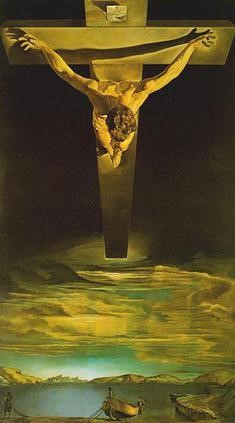
It depicts Jesus Christ on the cross in a darkened sky floating over a body of water complete with a boat and fishermen. Although it is a depiction of the crucifixion, it is devoid of nails, blood, and a crown of thorns, because, according to Dalí, he was convinced by a dream that these features would mar his depiction of Christ. It is genius. I had planned to visit to Kelvingrove art gallery the other week as part of a weekend in Glasgow to watch the famous “hoops” but Covid-19 put paid to that
My favourite person from history - Not necessarily a favourite but If I could go back in time I would want to sit down and have a conversation with this man.
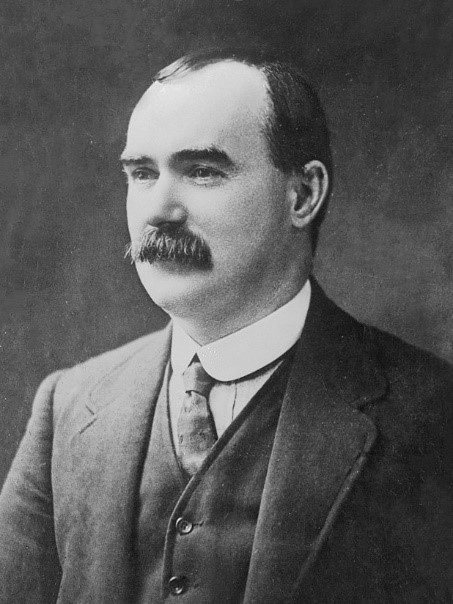
James Connolly was a Scottish-born Irish republican and socialist leader. Connolly was born in Edinburgh, Scotland, to Irish parents. He was a member of the Industrial Workers of the World and founder of the Irish Socialist Republican Party. He was centrally involved in the Dublin lock-out of 1913, as a result of he helped form the Irish Citizen Army that year. He opposed British rule in Ireland and was one of the leaders of the Easter Rising of 1916. He was executed by firing squad following the Rising. My Irish heritage is very important to me in terms of my identity and to be able to explore and understand what made men like Connolly rebels would be fascinating. What is it that makes men like him willing to die for his cause? Steadfast to the end the following quote sums it up;

“I said to him, "Will you pray for the men who are about to shoot you" and he said: "I will say a prayer for all brave men who do their duty.". His prayer was "Forgive them for they know not what they do" and then they shot him.”

Dr Stephen O’Brien
Visiting Professor: Faculty of Health, Education and Society
The University of Northampton
Share this:


A moment of volition and free will

On Good Friday, Christians will remember one of the most important covenants in their faith. The arrest, trial and execution of the head of their church. Jesus, an inspiring figure across centuries, will be in the garden of Gethsemane asking his father “to take this cup from me” (Luke 22:42), but finally accepting his fate. The significance of this self-sacrifice is the glue that connects the faith to its followers, because it is a selfless act, despite knowing in advance all that is to follow. The betrayal, the rejection, the torture, the humiliation and the eventual death. Even the resurrection, appears distant and therefore he will momentarily wish to abstain. Then, comes the thought; if not me, who? This act is conditional to all that will follow and so his free will ultimately condemn him.
These are steps that inspired many of his followers to take his word further across the world and subject themselves to whatever fate they were to suffer. The message rests in pure religious motives and motivations and over the years has eroded the implicit humanity that it contains. People have been able to demonstrate their destructive nature in wars, crime and continued injustices. Against them some people have taken exception and in acts of altruism willingly, sacrifice themselves for the greater good. People of, or without, faith, but with a firm conviction on the sacrament of humanity.
People stood up against oppression and faced the judgement of the apartheid regime that murdered them, like Steve Biko. People who spoke out against social injustice like Oscar Romero, who was shot during mass. Those who resisted fascism like Ilektra Apostolou, a woman tortured and executed by the Nazis, and countless others throughout time. These people maybe knew the “risks” of speaking out, of making a stand, but did it anyway. A free will that led them to their damnation, but for millions of others, they became an inspiration. At the worst of times, they shine and take their place in history, not for conquering and victories, but for reminding us all of the nobility in being principled.
Selflessness offers a signal to all, of how important it is, for all of us to be part of our society. It is when we dig deep on those qualities, that some may not even know that they have. I remember reading the interview of a person tortured during a dictatorship, being described as a hero; their response was incredibly disarming. “I am not a hero; I was just there”. I am quite aware that I write this blog at a time of self-isolation, lockdowns and the daily body count of the dead. Over a period of weeks, our lives have radically changed, and we live in self-imposed confinement. We are spectators in a medical drama with serious social implications. Those we do not quite know, but it looks very likely that these reverberations will last for at least a while.
It is interesting to see a renewed appreciation for professionals, namely health care and for those professions that we did not hold in high regard previously. Hero as a term seems to be rebranding itself and this may be one of those long-term effects afterwards. Just to remind us all that on this Good Friday, numerous professionals in the health care system, carers, teachers, public transport, logistics, council and retail workers will be going to work with their free will, knowing some of the risks for them and their families. This is their testament, this is their covenant and that forms part of our collective civilisation. Whilst people remind us to wash our hands, I kiss their hands for their altruism
Share this:


Hypocrites or just human?
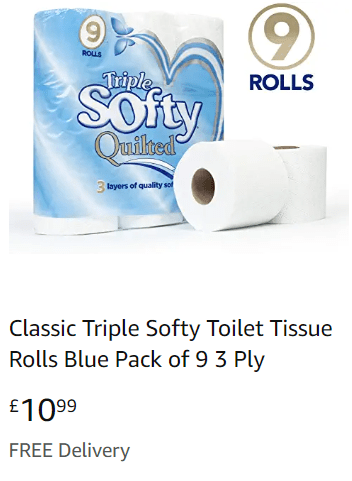
At a time of a significant religious festival in the Christian calendar and at a time of global anxiety, sacrifice and distress, it seems apt to reflect on where we stand in it all.
Like most, I watch the television, listen to the radio, tap into social media (albeit only on limited occasions), receive emails and listen to family, friends and colleagues.
I am amazed by the sacrifice that some people make to protect or look after others and yet dismayed by the actions and comments of some. And yet as I ponder on the current situation I realise that it only brings into focus behaviours, actions and comments that were already there. Perhaps, the circumstances have allowed some to shine or provided more of a focus on those that already do outstanding things, and this is a good thing but human nature as it is, doesn’t really change. Here are a few examples, I’m sure if you reflect on these you will think of more.
- We lament at the inequality in the world, but we do little about it. Instead, we fight to buy up all the toilet rolls that we can, lest we run out.
- We complain the government haven’t done enough in the current crisis and then flout the guidelines they gave us on social gatherings and movement or cause others to do so (did you really need that Amazon order?)
- We complain about our work conditions, but we are content for the company or organisation to continue paying us, often saying they don’t pay us enough
- We are upset by colleagues who do us a disservice and then denigrate others because of their so-called ineptitude
- We complain about being bullied but go on to display the same bullying behaviours that we complained about
- We call people misogynistic but then in the same breath suggest that the world would be better without men or that women do a better job
- We accuse people of being racist but then use derogatory and stereotypical language to describe those that we accuse
- We condemn those that we see as privileged and suggest they should give up their wealth and status. And yet we fail to consider our own privilege and are not prepared to give up what we have (see the first comment re inequality)
- We see the criminal justice system as unfair but would be the first to complain if we were a victim of crime and the offender wasn’t brought to justice. What we see as justice is dependent on the impact the wrongful act has on us
- We commit crimes, albeit perhaps minor ones or committed crimes when we were younger and didn’t know better, yet we castigate others for being criminal. Welfare cheats are awful, but tax payments are to be avoided
I could go on, but I think by now you get the general idea. I’ll return to religion if I may, not that I’m religious, but I did start off the blog with an acknowledgement of the timing in line with the Christian calendar: “He that is without sin among you, let him cast the first stone at her”, (John, 8:7). Maybe we should be a little more honest with ourselves and think about what we say or do before we judge and condemn others. I do wonder though, are we all hypocrites, or is it part of the pathology of just being human?
Share this:


“My Favourite Things”: Jes
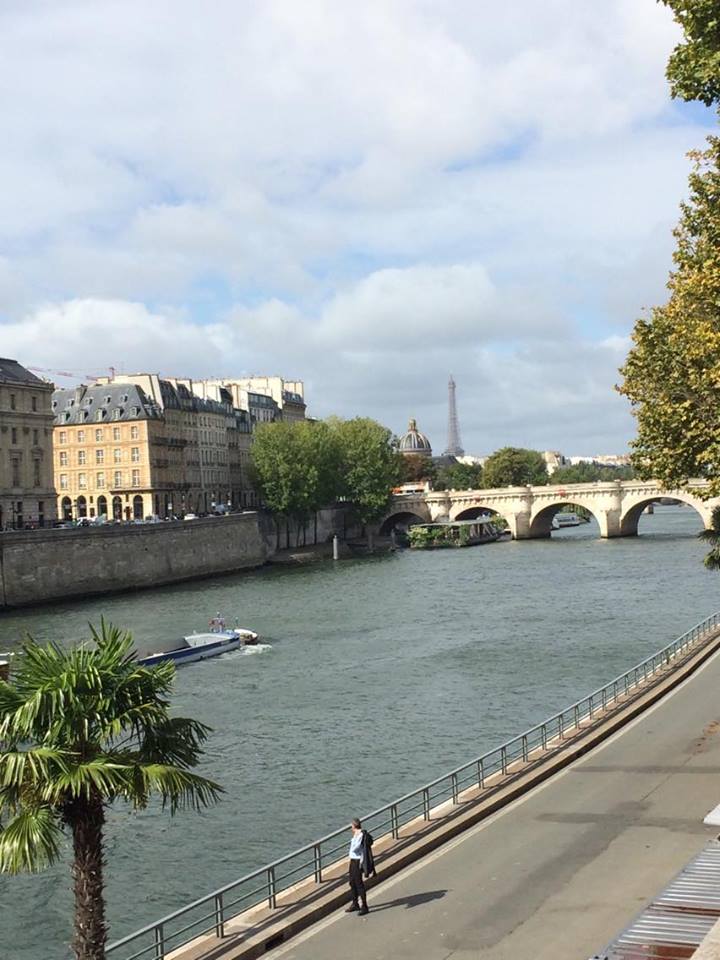
My favourite TV show - This varies, and often depends on what I am watching at the time. Currently I am watching The Blacklist, which is brilliant! However I have a few which I have re-watched and re-watched because I think they are fab! These include Friends, Rick and Morty and Blackadder. Whenever I am in a ‘meh mood’, I guarantee one of these will be put on and soon my ‘meh mood’ evaporates! My favourite place to go - Tolethorpe Hall- Stamford Shakespeare Company. Every summer the Company puts on 3 plays, they are delivered in an open air theatre in a beautiful and remote location in Little Casterton. My Dad booked tickets for us to see Much Ado About Nothing (my favourite Shakespeare play) back when I was studying the play for GCSE English, and we have been every year since. We are only allowed to watch the comedies by Shakespeare (Pa is not really a fan, but enjoys the comedies) or if they have a ‘different’ play on that is also an option such as Tom Jones What is special about this place is, it is set in the countryside on beautiful rolling hills surrounded by nature and in the summer, it is breath taking. Before the play, we go via Tesco to get a picnic which always consists of strawberries and cream (because we are the height of sophistication), and we watch predominately older couples bring wine/champagne, proper picnic gear with them. There sits us, on our picnic rug (the same age as me), with our make-shift picnic, bottles of fizzy pop, punnet of strawberries and pot of cream (which we drink if we cannot finish with the strawberries)! We look very out of place but it’s a wonderful! My favourite city - Paris! I love being a tourist, and I loved being a tourist in Paris! The city is beautiful, the monuments and art galleries/museums are wonderful, and the wine is also pretty top notch! We stayed in an air bnb, about a 30 minute walk from Notre Dame, and spent 4 wonderful days walking around Paris! Approximately 20,000 steps a day, during drizzly September, but it was amazing! So many hidden gems, as well as, the obvious beauties! I don’t think you could ever run out of things to see or do!My favourite thing to do in my free time - Reading! Or running! I am not very good at the latter but it does wonders for my mental health (not to mention counteracting the amount of c**p I eat)! My favourite athlete/sports personality- Honestly, I cannot believe I am putting this in writing as my partner will be overjoyed, but Ronnie O’Sullivan! I never used to like snooker, until my partner (who loves watching all sports) persuaded me to watch the Masters a few years back, and O’Sullivan is just brilliant! He is entertaining, talented and honest. He can be arrogant but justifiably so: he is brilliant. Novak Djokovic would be a very close second because I love his work ethic! My favourite actor - This is tricky, because I don’t think I have a favourite actor, however if pushed for an answer I would probably say David Tennant. I was a huge Dr Who fan with Christopher Eccleston, and the oldies too (Peter Davison, Tom Baker), but Tennant’s portrayal was something else! Since then, I tend to watch most things he is in, confident it will be a good watch! My favourite author - I cannot pick one! I have three: Jill Mansell, Tess Gerristen and David Baldacci. Mansell writes romantic comedies, which are witty, easy to read and normally read within a day- maybe two. She is the perfect author to read in the sun with a glass of wine! Gerristen is gritty, and graphic! Her ex-profession working in morgues adds a dimension to her detective/crime novels which are fascinating. She is also the mother to my favourite detective: Jane Rizzoli! Baldacci also writes detective/spy novels which are just first class! I own all of his books (except the new ones out in hardback- hardbacks suck, paperback all the way)! My favourite drink - Coffee (I’m a 6 cups a day gal!), Diet Coke: always in the mood for a cold Diet Coke! And finally, flavoured Gin! Although I also love water My favourite food - Mac 'n' Cheese, closely followed by pizza! (Nice healthy choices-oops) My favourite place to eat - Beckworth Emporium (Thank you @paulaabowles and @manosdaskalou for introducing me to the beautiful establishment). Whether it be Afternoon Tea, a Panni or a filled Jacket Potato: it is always a delicious success! And their Coleslaw is the BEST! Do not get my started on their cakes… I like people who - care - it is what makes us human I don’t like it when people - don’t say thank you: there is no need. I hold a door open for you: say thank you. I stop to let you go: say thank you. I buy you a drink: say thank you. It is not difficult: SAY THANK YOU! If you don’t, my friends and family will vouch; I’ll state YOU’RE WELCOME loudly and embarrassingly! You’ve been warned My favourite book - Jurassic Park by Michael Crichton, closely followed by The Lost World, also by Crichton My favourite book character - Jane Eyre! She inspires me, even if she is fiction! My favourite film - Now, this is very tricky: I have three ‘go to films’ which I have watched over and over again, regardless of mood. I have written assignments, dissertations and lectures to these films and are always guaranteed to be winners. These are: Jurassic Park (1993), The Little Mermaid (1989) and The Princess and the Frog (2009). However, my all-time favourite film is Dead Poets Society (1989); this film makes me cry, laugh and fall in love! My favourite poem - Variation on the Word Sleep by Margaret Atwood. This was read during our Wedding Ceremony and will forever be my favourite poem! My favourite artist/band -Phil Collins or Elton John (it is too close to call) My favourite song - This is hard but probably our first dance: Thousand Years Pt 2- Christina Perri ft. Steve Kazee My favourite museum/gallery - The Ipswich Transport Museum. I spent many summer holidays, running around the old open top busses, cars and fire engines with my younger brother, whilst my Grandma volunteered here. The history is fascinating, it is interactive for children and the gift shop was ACE. The staff used to let me help stock, clean the various exhibits and serve visitors when I visited. Pure childhood bliss! My favourite person from history - Got to be Elizabeth Fry!
Share this:


“My Favourite Things”: Shân
My favourite TV show - I’m excited for series 4 of The Good Fight about to start, spin off from The Good Wife. I felt like someone in my family had died at the end of the Good Wife series 7, and I couldn’t tell anyone because it seemed pathetic. The Wire was probably the greatest telly series I ever watched, but much too sad to watch again. I loved The Bridge, but it is also too sad and scary to rewatch

My favourite place to go - I run down the tow path from Hampton Court to Kingston Bridge, and it always makes me happy

My favourite city - London. Or Oxford.

My favourite thing to do in my free time - knitting and watching action films, or cooking and listening to audio books or R4. I totally switch off, and am totally happy

My favourite athlete/sports personality - Kath Grainger, awesome oarswoman, kind, and a tall woman superhero.

My favourite actor – at the risk of revealing myself as very shallow, Sandra Bullock

My favourite author - can I have a Playwright? Shakespeare. My husband and I are working through multiple productions of every play. It’s like he was born 500 years into the future and time travelled backwards

My favourite drink - I love coffee

My favourite food - homemade popcorn, in front of the telly, with my children

My favourite place to eat -The Trout, Godstow. Location for Phillip Pullman’s La Belle Sauvage, it overlooks the river where I rowed as a half blue, and is a walk across Port Meadows away from Oxford’s dreaming spires.

I like people who -are respectful to people who may not seem very important. That includes children

I don’t like it when people  - patronise me

My favourite book - Middlemarch, George Eliot, it gets better on every reading. Any of the Earthsea books = let’s say The Farthest Shore, by Ursula Le Guin, which I read first as an adult to my children, and is profoundly true and moving

My favourite book character - Sparrowhawk in Le Guin’s Earthsea books, my favourite literary leader, along with Cromwell, in Mantell’s trilogy. George Eliot’s Gwendolen Harleth, who survives what life throws at her, and walks away whole at the end of a book not named after her. Can I have a play character? Isabella from Measure for Measure. “Did I tell this, who would believe me?” Very #MeToo

My favourite film -Some Like it Hot. Not a single dud scene, not a dud line

My favourite poem -“God’s Grandeur”, by Gerard Manley Hopkins. The last two lines are a fine example in English of the Welsh verse form Cynghanedd, a kind of syllable patterning. “Because the Holy Ghost over the bent/World broods with warm breast and with ah! bright wings.” B…b/W..d..b..d..w..w…b..w..b..w

My favourite artist/band - Runrig maybe. I first heard their songs when I was a PGT and then PGR student at Strathclyde in Glasgow. Next time I heard them was 25 years later when my Scottish husband and I courted each other. Or Eurythmics. I love Annie Lennox’s voice

My favourite piece of music - Mozart’s Clarinet Concerto in A major. The second movement was the theme of Out of Africa, and now I think I love the 1st movement as much

My favourite art - Bridget Riley – explosions of shape and light channelled into structure and simplicity

My favourite person from history - I don’t know if it counts as history, but my College Principal, Baroness Daphne Park, was a spy in WW2, which was pretty impressive

Share this:


A utilitarian argument for human rights
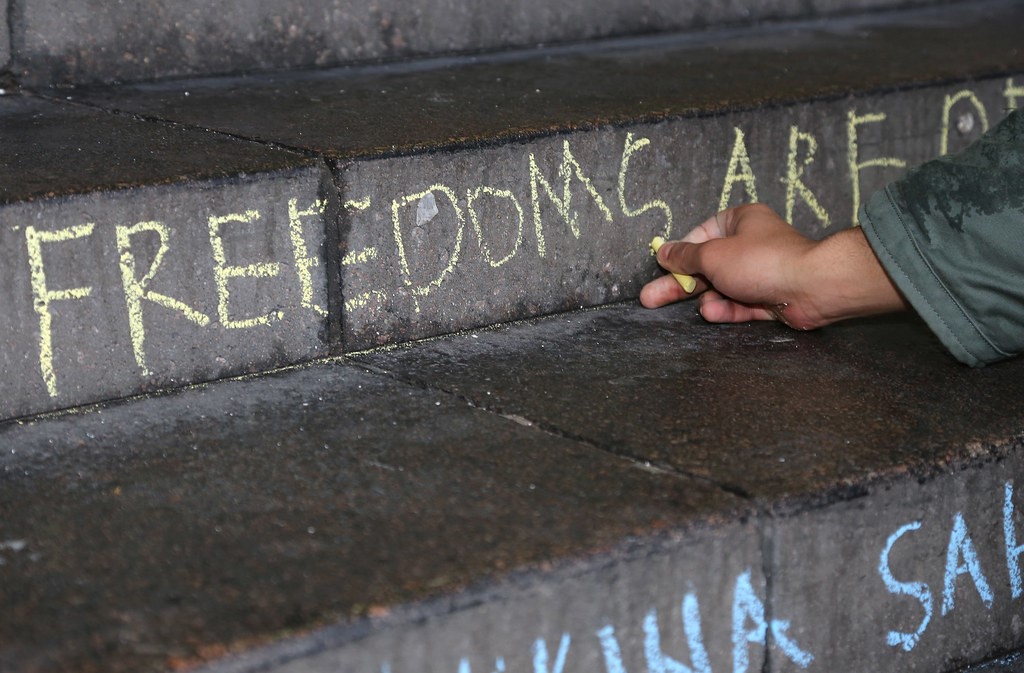
I am minded to write something about both utilitarianism and human rights as a consequence of watching the news the other night. Two separate but linked news articles struck a chord. The first about police being heavy handed in applying the emergency laws surrounding the restricting of movement and the second about the emergency laws being passed to suspend jury trials in Scotland. Both have an impact in respect of human rights.
Turning to the first, the complaint is that the police across England and Wales have in some cases been disproportionate in their dealing with the public when attempting to manage the restrictions around movement. The example shown was the uploading of videos onto social media depicting people walking around the Peak District. The captions simply asked whether the trip was necessary.
The government guidance is pretty clear regarding staying at home but perhaps is a little less clear about travelling to a location to partake in exercise. I must admit though I am a little perplexed at the accusation of heavy handedness. The Human Rights Act 1998 provides for a right to life and it has been held that the government and its agencies have a positive obligation to facilitate this. There are of course some caveats as it would be almost impossible to ensure this in all circumstances. There is no doubt that people are dying from Covid-19. The approach to enforce social distancing, presently predominantly through information and the reliance on responsibility and good will, seems to be the only current viable approach to combating this killer. The curtailment of some Human Rights is it seems necessary to ensure the greater good and to preserve life. The latter of course is a primary duty that most police officers would recognise. The greater good for the many is it seems compatible with a key principle of human rights.
Turning to the second news article. The right to a fair trial is a fundamental human right. The suspension of a jury may be against longstanding legal principles but, the Human Rights Act does not specify that the trial should be before a jury, merely an independent judge. The argument could be made that trials should be suspended but this might be impinging on rights in respect of defendants being held in custody awaiting trial. The convening of a jury would flout the rationale behind current legislation in place to enforce social distancing and would quite simply be contrary to obligations to protect life.
The notions of utilitarianism are often viewed as in conflict with individual rights and therefore the Human Rights Act. Many see the two as incompatible, one relates to the many and the other the individual. This argument though fails to have vision, it is not truly consequentialist. Human Rights are utilitarian in their very nature. Is it not to the greater good that people have a right to life, a right to freedom of association, a right to a fair trail to name but a few? Should it not be considered that every individual case that is examined under the Human Rights Act has consequences for the many as well as the individual? A breach of the Act if unchallenged opens the way for abuses by governments and their agencies, it is utilitarian in nature, it is there for the greater good, not just the individual circumstances that are being examined. But should we also not consider that there is a need to prioritise rights, particularly in the circumstances the country and world finds itself in? Some parts of the Act are in clearly on occasions, incompatible with others. Curtailment of some freedoms and rights is necessary for the greater good but more importantly, it is necessary to save lives, perhaps even the life of the individual complaining of the curtailment. We can but hope that amidst all of this, good sense prevails.
Share this:


Information overload

If you’re anything like me, the last few weeks you’ve probably found yourself fighting your way through a tsunami of information that’s coming from all directions. Notifications are going into overdrive with social media apps, news apps and browsers desperate to deliver more and more content, at ever increasing frequencies. Add to this all the stories, videos and memes friends and family are also sharing and it’s hard to know where to look first. The sheer volume of content makes it harder than ever to know what is fact, fake or opinion. In honesty, it can all be a bit overwhelming.
How do you even begin sorting the information that’s being thrown at you when you can’t keep up with how quickly your news feeds are moving
1. Sort the fact from the fiction
There’s nothing like a pandemic to send the fake news mills into overdrive. Many are easy to spot, the 2020 version of an urban myth (My neighbour’s, brother’s dog is a top civil servant and says….) others are much more sophisticated and purport to be from trusted sources. The Guardian (Mercier, 2020) reports on the danger of these stories and the tragic consequences that can occur when people believe them.
Why are we so susceptible to fake news stories though? They use “truthiness” to play on our fears and biases. If it sounds like something we think could be true, if it confirms our prejudices or worries, we’re more likely to believe it.
Fact checking is more important than ever. Take a moment to think before you share – what is the source? where are their sources? For more tips on spotting fake news check out this guide (IFLA, 2020) or use an independent reputable fact checking site such as Full Fact. This blog article from the Information Literacy Group (Bedford, 2020) pulls together a selection of reliable information sources related to Covid-19.
2. Bursting your bubble
Personalised content from news feeds can be useful, but we often don’t even realise the news stories and content we’re seeing in apps has been chosen by an algorithm. Their purpose is to feed us stories they think we will like, to keep us reading longer. This can be convenient, but it can also be misleading. We get trapped in a filter bubble that feeds us the type of content we like and usually from a perspective that agrees with our own way of thinking.
Sometimes we need to know what else is going on in the world outside our specific areas of interest though and sometimes we need to consider viewpoints we don’t necessarily agree with, so we can make an informed judgement.
These algorithms can also get things wrong. My own Google news feed weirdly seems to think I’m interested in anything vaguely related to British Airways, Coventry City Football Club and Meghan Markle (I’d like to state for the record I’m not particularly interested in any of these things). This is without considering the inherent biases they have built into them, before they even start their work (algorithm bias is a whole other blog article in itself).
It’s human nature to want to hear things that agree with our way of thinking and reinforce our own world view, we follow people we like and admire, we choose news sources that confirm our way of thinking, but there is a risk of missing the bigger picture when sat in our bubble. Rather than letting the news come to you, go direct to several news sources (maybe even some that have a different political leaning to you, if you feel like being challenged). Be active in seeking news stories, rather than passively consuming them.
3. Step away from the news feed (when you need to)
It’s a bit of a balancing act, we need to know enough to be informed and stay safe without spending 24/7 plugged in. We’re not superhuman though and sometimes we need to accept that just because it’s on our feed, we’re not obliged to engage. Give yourself permission to skip stories, mute notifications and be selective when you need to. We all have different saturation points, mine will vary day to day, but listen to yourself and know when it’s time to switch off. If it helps, set reminders on your apps to give you a nudge when you’ve spent a certain amount of time on them. The Mental Health Foundation (2020) have some tips for looking after your mental health in relation to news coverage of Covid-19.
If you need help finding information or want support evaluating sources the Academic Librarian team are offering online tutorials and an online drop-in service. You can also contact us by emailing librarians@northampton.ac.uk
Cheryl Gardner
Academic Liaison Manager, LLS
References
Bedford, D. (2020) Covid-19: Seeking reliable information in difficult times. Information Literacy Group [online]. Available from: https://infolit.org.uk/covid-19-seeking-reliable-information-in-difficult-times/ [Accessed 31/03/2020].
IFLA (2020) How to spot fake news. IFLA [online]. Available from: https://www.ifla.org/publications/node/11174 [Accessed 31/03/2020].
Mental Health Foundation (2020) Looking after your mental health during the Coronavirus outbreak. Mental Health Foundation [online]. Available from: https://mentalhealth.org.uk/publications/looking-after-your-mental-health-during-coronavirus-outbreak [Accessed 31/03/2020]
Mercier, H. (2020) Fake news in the time of coronavirus: how big is the threat? The Guardian [online]. 30th March. Available from: https://www.theguardian.com/commentisfree/2020/mar/30/fake-news-coronavirus-false-information [Accessed 31/03/2020].
Share this:


Some kind of normality in times of turmoil, or is it?

Way back when before we were in lockdown, social distancing and self-isolation, myself and my partner started to look for somewhere to move to. It wasn’t a decision made lightly, moving never is, but we had been in our current place of residency for 6 years and had got unlucky this year with the neighbours. Very unlucky! Fast forward to today, and we have signed contracts exchanged monies, and have received keys: a time to celebrate or a time of guilt?
Considering the circumstances we leave behind regarding neighbours, I am mostly happy, and grateful that the Government have stated moving is essential and still able to go ahead. The issues with this are as we have gone from a furnished property to an unfurnished property, we will be sleeping on a mattress until normalcy returns (or whatever that will look like when we are eventually through the end of the tunnel). Additionally we can’t help feeling guilty with being outside, packing/ unpacking cars, walking mattresses through the streets (because you cannot hire a van), and potentially increasing the risk of spreading anything. We are both fine, and have been in isolation since teaching moved online so we believe we are not carrying anything, but then I assume that is what everyone thinks.
So, it is an exciting time for us, but also a time filled with unease. What will people think of us moving in this time, should we have cancelled/pulled out? But then equally having this normal part of life during this time, I know, is making us happy: but is this selfish? My parents, whom I am contacting daily, and my grandparents are very excited and it seems to also be bringing them some kind of escape (not literally, they are isolating as hopefully we all are), so should I feel guilty?
Would this be something we could universalise? Is this absolutely wrong? I am not saying it is right, but knowing our previous circumstances and why we are moving, it is not a case of we want to live somewhere different (I would have stayed indefinitely – its home), but we were left with little choice, and the timing just outright sucks. But we will be sensible and get moved as soon as possible, and maintain social distancing whilst moving, and also fully submerge back into isolation when we are done!
Maybe I am being selfish, maybe us moving is wrong? What do you think?

 Thoughts from the criminology team
