
Home » Commodification
Category Archives: Commodification
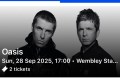
Extortionate Concert Tickets and the Cost of Access

In the realm of live music, few things can compare to the amazing feeling of a packed venue, a beloved band, and the shared energy of thousands of fans singing in unison. But for many, especially those from lower socio-economic backgrounds, this dream remains frustratingly out of reach not due to lack of passion, but because of skyrocketing ticket prices driven by monopolized ticketing systems. Using the example of the band Oasis and their upcoming tour.
The recent announcement of Oasis’ long-awaited reunion concerts sent shockwaves through the music world; particularly for fans who have waited over a decade to hear some of their classic songs sung live again. The excitement was quickly tempered by the reality of ticket prices and the process of getting tickets. Standard Oasis tickets before any premium charges were reportedly being resold for upwards of £300, with official prices starting around £75. For a band rooted in working-class Manchester, the irony is stark: the people who Oasis originally resonated with most are now priced out of seeing them live. Oasis is just an example of this, this can be seen with many different artists globally, and it raises a question of should something be done, and if so, who needs to make the first step and what should that first step be?
At the heart of this issue are ticketing giants who dominate the live event landscape. These companies often employ dynamic pricing models similar to airline pricing where ticket prices fluctuate based on demand. In theory, this aims to reflect market value. In practice, it frequently drives up costs to exploit fan enthusiasm, creating a system that prioritizes profit over accessibility. Worse still, these companies allow and often profit from reselling schemes that further inflate prices. It is only recently where some sites have now put procedures in place for tickets to be resold at the same value to which they were purchased. Additionally, there is the issue of bots buying hundreds of tickets during presales then relisting them on other sites for extortionate prices.
Now to put it into perspective, are there more pressing issues globally that need to be addressed, the answer is yes. However, in the world of criminology where we are constantly thinking about harm, what should be a crime or criminalised, it poses an interesting question and debate. The consequences are significant, particularly for lower-income individuals. Live music, once a unifying and accessible cultural experience, has become a luxury. For a working-class fan, spending £300 on a single concert excluding travel, accommodation, and other costs is unlikely. Add to this the current economic constraints they may be facing elsewhere, and it makes it even more unlikely.
In a world where there are so many pressures, restrictions, worries and concerns, music can be a form of escape and enjoyment. So, should ticket companies be held more accountable? Should there be stronger regulations to prevent price gouging and limit resale abuses? Governments could enforce price caps, mandate transparent pricing structures, or require a certain percentage of tickets to be sold at accessible prices. Additionally, artists themselves may have a role to play; by partnering with ethical ticket vendors or pushing for more equitable ticket distribution. I managed to get tickets at face value price after trying for the third time recently, this was through a process of receiving a unique code via email as a result of being identified as one of the many who had failed on previous occasions. In this sense, I may be classed as one of the lucky ones.
Oasis, a band that once embodied the voice of working-class Britain, now symbolizes a broader issue: the commercialisation of joy. Music should transcend economic boundaries rather than reinforcing them.
Share this:


The Problem with True Crime

There has been a huge spike in interest in true crime in recent years. The introduction to some of the most notorious crimes have been presented on Netflix and other streaming platforms, that has further reinforced the human interest in the gore of violent crimes.
Recently I went to the theatre to watch a show title the Serial Killer Next Door, which highlights some of the most notorious crimes to sweep the nation. From the Toy Box Killer (David Ray-Parker) and his most brutal violence against women to Ed Kemper and the continuous failing by the FBI to bring one of the most violent and prolific killers to justice. While I was horrified by the description both verbal and photographic of the crimes committed, by the serial killers. I was even more shocked at the reaction of the audience and how the cases were presented. The show attempted to sympathise with the victims but this fell short as the entertainment value of the audience was paramount and thus, the presenter honed in on the ‘comedic’ factor of the criminal and the crimes committed. Graphic pictures of the naked bodies of men, women and children brutalised at the hands of the most sadistic monsters were put on screens for speculation and entertainment. Audience members enjoyed popcorn and crisps while lapping up the horror displayed.
I did not stay for the full show…..
The level of distaste was too much for me but from what I did watch made me reflect deeply and led me to the age-old topic among criminologists and victimologists that question where the victims are and why do they continue to be dehumanised. Victims of these heinous crimes are rarely remembered and depicted in a way that moves them away from being viewed as human and instead commodities and after thoughts of crime.
The true crime community on YouTube has been criticized for the sensationalist approach crime. With niche story telling while applying one’s makeup and relaying the most brutal aspects of true crime cases to audiences. I ask the question when and how did we get to this point in society where entertainment trumps victims and their families. Later, this year I will be bringing this topic to a true crime panel to further explore the damage that this type of entertainment has on both the consumer and the victim’s legacy. The dehumanisation of victims and desensitisation of consumers for entertainment tells us something about the society we live in that should be addressed…..I am sure there will be other parts to this post that will explore the issues with true crime and its problematic and exploitative nature.
Share this:


Behind the Filter: Navigating the Fine Line Between Genuine Parenting and Child Exploitation in the World of Influencers

As the world of social media influencers continues to expand, certain high-profile cases have brought the issue of mum influencers exploiting their children into the spotlight. These cases serve as cautionary tales, highlighting the potential dangers and ethical pitfalls that come with blurring the lines between personal family life and commercial partnerships. It is important to note that while the spotlight has indeed centred on ‘mum’ influencers this discussion cannot go forward without acknowledging, that we should be shaping the discussion on the way PARENTS create content online.
Mum influencers have become a powerful force in the influencer landscape. They provide a glimpse into the daily lives of mothers, discussing topics such as parenting tips, family dynamics, and the challenges of balancing work and family life. Initially, many followers were drawn to these influencers for their relatability and authenticity. This has created an opportunity for dads to also partake in the ‘business’ of family influencing as many people yearn for the whole family picture, which brings a non-traditional demographic of followers and thus an expansion of interest and growth of followers, and thus bringing the allure of financial opportunities.
As followers increase, family influencers often receive offers from brands seeking to collaborate. This is where the ethical dilemma arises – how far is too far when it comes to integrating children into sponsored content? While some collaborations may involve innocent and genuine family moments, others might push the boundaries, putting children in situations that prioritize profit over their well-being. It is essential to differentiate between content that genuinely celebrates parenthood/ family and content that exploits it. Sharing heartfelt stories, documenting milestones, and discussing the challenges of parenthood and family dynamics can be informative and supportive for other parents. However, the line blurs when children are consistently used to endorse products and/ or services in a way that feels forced or invasive.
Children of influencers often have their lives documented from birth, which raises concerns about their privacy. As they grow older, they might not consent to having their childhood experiences permanently etched into the online realm. The potential impact on their mental and emotional well-being as they come to grips with their digital footprint is a significant consideration. We all have that embarrassing childhood picture that parents have on the wall or in a photo album, however that is in the confines of their home and whose eyes view them can be monitored. The tricky nature of the internet removes that possibility. With visibility comes risk. Publicly showcasing one’s life includes exposure to not only praise but also criticism and negativity. Children that have an online presence in the capacity of being influencers can become targets of online trolls or even predators, who might misuse their images or information. Protecting children from these potential dangers should be a priority for any parent, online or offline.
My previous point made on children of influencers being documented from birth begs reflection on the concept of consent. This can be viewed in many ways; however, the notion of consent becomes murky when children are too young to understand the implications of their online presence. While some influencers argue that their children enjoy being part of the content creation process, it is challenging to gauge how much choice a young child truly has. Blurring the lines between what is a personal family moment and what is a scripted advertisement can complicate this matter further.
As family influencers grapple with this dilemma, there’s an increasing call for responsible content creation, and thus drawing clear boundaries between what is acceptable and what crosses the line into exploitation. Making conscious decisions about the type and frequency of content involving children and avoiding situations that compromise their well-being for the sake of likes, shares, and sponsorship should be paramount, but in many ways, this does not always seem to be considered. There are many examples that come to mind, but for this blog entry I will use a particularly shocking case. In 2020 YouTubers Myka and James Stauffer faced backlash after publicly announcing the decision to “rehome” their adopted son with autism. The Stauffer family, known for their parenting content, had initially garnered support for their adoption journey. The family seemed like any other online family that people aspired to be like. They had four biological children and presented their happy loving family for all to see. However, the revelation that they had monetized the adoption process through sponsored content and merchandise raised concerns about the child’s well-being and whether he was being exploited for financial gain. The backlash following their announcement saw them lose thousands of followers. While there were numerous followers and news outlets that spoke out against the Stauffer’s actions, there was little commentary that focused on the impact that the ‘rehoming’ of their adopted son had on him or their other children. The children should have been at the centre of this story but instead they were pushed to the side.

This blog entry servers as poignant reminders of the potential pitfalls in the world of family influencers and their children. While some cases may involve genuine oversight, it’s essential for influencers and brands to exercise caution and ethical responsibility when involving children in their content.
As influencers strive to maintain authenticity while navigating commercial opportunities, it is crucial that they strike a balance between sharing genuine family moments and protecting the well-being, privacy, and dignity of their children. In a landscape where the line between public and private blurs, parent influencers must remember that their children’s well-being is paramount. Instead of exploiting their children for financial gain, fame and clout.
Share this:


Don’t I know you from somewhere? Online trolls and other fairytales

Recently there has been a discussion if the owner of one of the social media platforms will be changing its logo. The “iconic” image is to be replaced with something new; undoubtedly this will also change in due course for as long as the medium is still relevant. Whilst people feel strong about brand representation that is something peripheral to what social media represent in recent years. Social media for a long time have been accused of harboring the worst of human interaction, tolerating intolerable actions from hate speech to incitement to violence. Is this however a fair representation of social media?
We build/cultivate and imagine in social media. They are the key to our online identity and in some ways will explain our conduct with others. Some link different media together, so that you can check Facebook to get an idea of who they are, can check their LinkedIn on education and work experience, you can read their tweets/retweets, you can follow their conversations on yammer, you can get updates of their lives on Snapchat, check their Instagram to see their photos and for the more active ones TikTok where communication is encapsulated within small video fragments. If you were to combine these social media together you can get a very good idea about a person without ever knowing them in person. Social media have ushered the era of virtual representation and people becoming clearer of how this representation works. Clearly there are those who thrive in these and others who struggle.
The ones who manage to use social media effectively can develop a personal brand and even become “social influencers”. A person that has influence over others to promote goods and services…to do so they have to build a reputation and social media works towards establishing just that. Connecting different parts of social media works to their advantage as their profile works towards their credibility of being a “real” person. The people who make it become the protagonists assuming the role of a hero, a modern-day prince/princess with a back story that is endearing. Whilst they drip feed their story of adversity with personal details of some private aspects of their lives, they also provide their followers with the commodities that they promote. I lost someone important to me, had a terrible experience at school, faced health problems but look at my stylish hat. These are the cargo trousers I left an abusive relationship in, and my cropped t-shirt is a strong statement to being environmentally
sensitive. Obviously, I deliberately exaggerate the statements here and in fairness no one will be (at least I hope) so deliberate in their product placement. What is very clear is that our social media influencers spend a significant amount of time building content and by devoting more time to that they need the necessary financial support. The top influencers have millions of people following them, a reach that
very few people have ever had before. Never before, a young person offering make-up tips, a reality star or a dancer had so many people interested in their lives. The very top of them have more than 500 million followers and we are close to the point that some of them will be reaching over a billion! What started as a personal (cottage) industry of one topic issue, has evolved into an all-consuming enterprise. The more the followers, the greater the demand for additional information. The more information, the more exposed the influencer becomes. Then marketing follows as the reward. The heroes of social media have to find ways to make an income and endorsing products seems to be the main way to do so.
The kingdom of social media doesn’t only contain heroes; there are also villains in the story. The people whose profile is not personal, doesn’t include any private details and who seem to have as their main focus to attack others. The term troll appeared in the early 90s when online identities seemed to be separate from our social ones. It was expected in a new domain that people will assume roles and whilst some went for the hero of the community others took a different turn. The early trolls under the protection of cyber identities hid their frustrations and brought to the community something we have in the real world, bullying. The evolution of social media that requires a different presence and the rules the internet community tried to deal with them meant that some of the original forms of trolling started disappearing, but were never extinguished. In fact, they became an equally useful commodity, almost equal to the influencers. Our heroes play the part of the product promoter; they look good and provide us with goodwill stories; on occasion when the appeal of the hero wanes, and people try to use social media to mobilise on social issues or promote alternative stories that’s when the trolls come in!
Out of their caves they come, trying to shut down conversations, mislead people and even intimidate people into silencing them.
This brings me to the main point of this blog; originally the internet seemed to be a worldwide phenomenon that was all inclusive and slightly anarchical. People found on the internet a companion, an ally, an adversary. It became a foundation for a virtual ecumenical community. Well, that was until big business moved in and brought in their usual tactics. The cyber world became more like our physical world and the cyber identities were quickly replaced by professional ones. At this point the internet is much more regulated and monitored than ever before. Which begs the question; how come there are so many accusations of misinformation, and intimidation now? How come such a regulated medium allows bullying and intimidation to continue? I am astounded even now to see on social media reactions on social medial about stories that do not simply lack social sensitivity they are intentionally inflammatory to coax reactions and offend people. I am still astounded to see the political alliances of the troll army and their reactions to open conversations. Therefore, it is not surprising that several minority groups have accused social media of doing very little to protect them from attacks and the use of pejorative language that has its place in a history of shame. Maybe because social media provides a fairytale with princesses and trolls, they do not have the space for those who do not promote a marketed lifestyle. Life is surprisingly diverse, and marketing is only one side of it. Ignoring some of the bigger social issues, using
trolls to shut down the conversations our global community needs, will not do. In academia the sign of a good debate lies in the ability to bring in evidence and support all claims with accurate and relevant information. Some of our colleagues are trying to take some of their knowledge outside the classroom into social media; I salute them, as we have been trying to engage as much as we can, but I also worry that the actual model that social media is built upon also at fault. Maybe it needs some rethink; there is no question that we are all equal, but we do not all have the same knowledge.

Share this:

The ‘other’ BBC worldservice. #BlackenAsianWithLove
The ‘other’ BBC worldservice.
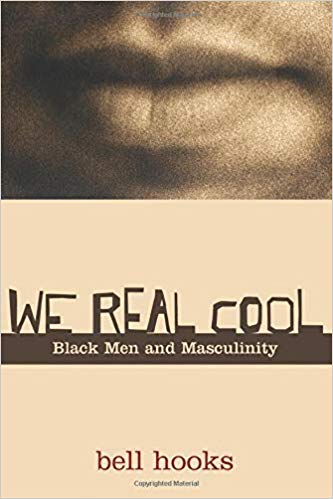
If you google “BBC+Mandingo,” please be aware that it is NSFW. Use your imagination. Now, imagine an auction block. Imagine a slave standing there. Breeding slaves underpinned the ‘white supremacist, capitalist, patriarchal’ system that placed their bodies upon that auction block. Hyper-sexualisation of Black bodies began right there. It is bell hooks’ Intersectionality lens that’s necessary for a holistic gaze upon consumer commodification.
Now, imagine that one Black boy in class, vying for attention just as any other adolescent, yet he’s got an entire multitude of hyper-sexualised images filling the heads of virtually everyone in the room. By the time they hit the locker-room, everyone is expecting to see this kid’s BBC. I’ve had many (non-Black) adults say that to me explicitly, inexplicably in any given situation where one might not otherwise imagine penis size would surface so casually in conversation. Hence, we can all imagine that with the crudeness of adolescent male vernacular: Your kid is asking my kid why his penis isn’t what all the rappers rap about. 
Why are so many commercially successful rappers’ fantasies reduced to “patriarchal f*cking?” Reading Michael Kimmel’s essay “Fuel for Fantasy: The Ideological Construction of Male Lust,” in her seminal book We Real Cool: Black Masculinity, bell hooks clarifies: “In the iconography of black male sexuality, compulsive-obsessive fucking is represented as a form of power when in actuality it is an indication of extreme powerlessness” (hooks: 67-8).
It’s auto-asphyxiation, a kind of nihilistic sadomasochism that says, if the world thinks of me as a beast, then a beast I shall be. Plenty of kids work this out by the time they hit the playground. “Patriarchy, as manifest in hip-hop, is where we can have our version of power within this very oppressive society,” explains writer/activist Kevin Powell (qtd. in hooks: 56). Ironically, Powell came to fame in the 90’s on MTV through the original reality show aptly entitled “The Real World.”
Plantation Politics 101
Since at least 2017, commercial rap has been the most widely sold musical genre; it’s pop. Beyond roughly 700,000 sales, Black people are not the primary purchasers of commercialised rap, as explained in the documentary Hip-Hop: Beyond Beats and Rhymes. It takes millions to earn ‘multi-platinum’ status. Yet, while created by and for Black and brown people in ghettoized communities, it has morphed into a transnational commodity having little to do with the realities of its originators, save for the S&M fantasies of wealth beyond imagination. And what do they boast of doing with that power, read as wealth? Liberating the masses from poverty? Intervening on the Prison Industrial Complex? Competing with the “nightmare” racist landlords like Donald Trump’s dad Fred? No! They mimic the very gangsters they pretend to be. Once Italian-Americans held hard that stereotype, but now it’s us. It’s always about power. Truly, ‘it’s bigger than Hip-Hop’.
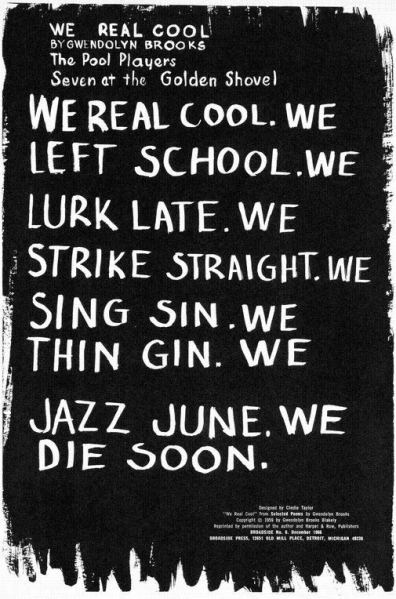 The more painful question few bother asking is why commercial rap music focuses so keenly on pimps, thugs, b*tches and whores? Like other commodities, commercial rap is tailored to the primary consumer base, which isn’t (fellow) Black people, but white youth. What is it about contemporary white youth that craves images of salacious, monstrous, licentious and violent Black people boasting about killing and maiming one another? Describing this mass commercial “Misogynistic rap music,” hooks states: “It is the plantation economy, where black males labor in the field of gender and come out ready to defend their patriarchal manhood by all manner of violence against women and men whom they perceive to be weak and like women” (hooks: 57-8). Plainly, the root of commercial rap’s global prominence is the reenactment of “sadomasochistic rituals of domination, of power and play” (hooks: 65).
Hyper-sexualisation is a form of projection onto Black people a mass white anxiety about our shared “history of their brutal torture, rape, and enslavement of black bodies” (hooks: 63). She goes on to explain: “If white men had an unusual obsession with black male genitalia it was because they had to understand the sexual primitive, the demonic beast in their midst. And if during lynchings they touched burnt flesh, exposed private parts, and cut off bits and pieces of black male bodies, white folks saw this ritualistic sacrifice as in no way a commentary on their obsession with black bodies, naked flesh, sexuality” (ibid). Hence the BBC obsession finds a consumer home safely in pop music!
“I am ashamed of my small penis,” a stranger recently mentioned to me in a grilled wing joint I happened upon here in Hanoi. The confession came from nowhere, having nothing to do with anything happening between us at the time. Is this the locker-room banter I always hear about? Are straight men really so obsessed with their penises? Given his broken English and my non-existent Vietnamese, I tried comforting him by explaining in the simplest terms the saying: “It’s not the size of the wave but the motion of the ocean.” Colloquialisms never translate easily, but I did at least deflect the subject away from ethno-sexual myths spread worldwide through contemporary consumer culture.
We’ve got to talk about ethno-sexual myths with openness, honesty and integrity. Silence is the master’s tool; silence = death! Further, echoing ‘black, lesbian, mother, warrior, poet’ Audre Lorde, ‘The master’s tools will never dismantle the master’s house”. I am Black in Asia, and there are perhaps no two groups of men at polar opposites of ethno-sexual myths. Like the hyper-sexualisation of women of colour, these myths reveal that neither Blackness nor Asianess is at the centre of these globally circulated myths. Hyper-sexual in comparison to who or what? Hegemonic heteronormative whiteness. Say it with me: Duh!
To get In-formation:
hooks, b. (2004) We Real Cool: Black Men and Masculinity. New York: Routledge.
Lorde, A. (1984) Sister Outsider: Essays and Speeches. Berkeley: Crossing Press.
Share this:


Who cares what I think?

Erzsébet Korb (1923) Girl’s Portrait (Thinker; Contemplation)
The other week, I went for a meal with a friend. The food was lovely, the staff and environment welcoming and friendly and company, fabulous. A couple of days later I was thinking about that evening and I wondered why I had not felt the need to write some positive feedback on google, or similar. The answer was because I felt that I and my dining companion, had expressed our pleasure both in word and deed (the plates were clean!). Thus, the relationship between diners and restaurant staff had been overwhelmingly positive and this had been expressed by both.
However, wherever we go nowadays, we are regularly confronted by requests for feedback; “how is my driving?”, “did you enjoy your meal?” “would you recommend our services to others”? Often these questions are accompanied by Likert scales, so we can record our opinion on almost everything. Sometimes we might take some time to consider the options, other times we might just tick random boxes, more usually (if I’m anything to go by) I just don’t engage with such requests. Despite their often-jolly appearance, these questions are not harmless, they have an impact, most usually to measure individuals’ performances.
Whether we engage with such requests or not, we do not question whether we are well-placed to judge. So, for instance, as a driver of probably one of the smallest cars on the market (that’s me!), I’m expected to be able to mark the driver of a lorry. Or someone, who has the cooking know-how of a small child (I speak for myself again!) is expected to form an opinion on a dish prepared by a trained chef, these questions are hardly fair. More importantly, my answers are meaningless; whilst I might respond “the lorry appeared to take the corner a bit wide”, I have neither knowledge or understanding of the turning circle of a 32-tonne lorry. Similarly, my thoughts about the heat of a Bangladeshi biryani or the sweetness of a mille-feuille is neither here nor there. Given I can neither drive a lorry nor cook these wonderful dishes, who am I to voice an opinion?
Of course, there are times when it is necessary to voice an opinion, the lorry driver is behaving in a dangerous manner liable to cause an accident, or the restaurant is serving rancid or rotten food; both scenarios likely to involve serious harm. However, these concerns would need to be raised immediately, either by alerting the police (in the case of the lorry) or the management of the restaurant. In the case of the latter, you may also feel it necessary to contact environmental health if you felt that your complaint had not been addressed or you had concerns about the hygiene of the restaurant in general. However, these types of problems are largely outside the feedback requested.
In many of the scenarios/environments we are asked to comment on, we are in a relationship with the other party. Take the restaurant; if I am friendly and polite to the staff, I can expect a reciprocal relationship. If I am rude and aggressive, is it any wonder staff behave in a different way. They are constrained by their professions to focus on customer service, but this should not lay them open to abuse. Whilst the old adage “the customer is always right” might be an excellent baseline, it is not possible for this always to be the case. As someone who has spent a previous lifetime working in retail, sometimes the customer can be obtuse, rude or even downright, ignorant and abusive. Adherence to such an adage, at all costs, can only open the way for abuse.
But what about those feedback forms? On a bad day, in a rash moment, or because I’m bored, I decide to complete one of these forms. The waiter kept me waiting, the food was too spicy, I didn’t like the feedback I was given on my job application, my essay was critiqued, my teeth haven’t been flossed regularly, I didn’t like the book recommended to me by the librarian or the book seller, I can’t believe my line manager has turned down my application for annual leave. I can easily demonstrate my unhappiness with the situation with a few judiciously placed ticks, circles or smiley/sad faces. Can I say the waiter, the chef, the HR professional, the lecturer, the dentist, the librarian, the book seller and my line manager are performing poorly? Can I say they are unprofessional, unprepared, untrained, lacking in knowledge or skills or just plain wrong? And if I do, is that fair or just? Furthermore, am I happy to be subject to the same judgement from people who do not share my experiences; professional or otherwise? Remember too much of this bad feedback, however flippant and lacking in evidence it may be, may lead to disciplinary action, including dismissal.
There is an oft-cited, albeit crude, truth: “Opinions are like arseholes; everyone has one”! Ultimately, whether we choose to share (either) in public is up to us! Think carefully before ticking those boxes and encourage others to do the same. Who knows, someone may well be ticking boxes about you!
Share this:


Damned if you do, damned if you don’t: it’s a funny old world.
“Did you just look at me?” says Queen Anne to the footman and, as he shakes his head staring into oblivion clearly hoping this was not happening, she shouts “Look at me”. He reluctantly turns his head, looking at her in obvious discomfort when she screams “how dare you; close your eyes?” A short vignette from the television commercial advertising the award-winning film ‘The Favourite’ and very much a case of damned if you do and damned if you don’t for the poor hapless footman.
A few weeks ago, I accompanied my wife to a bear fair in London; she makes vintage bears as a hobby and occasionally takes to setting up a stall at some fair to sell them. As I sat behind the stall navel gazing and wandering what the football scores were, when I was going to get something to eat and when would be an appropriate time to go for a wander without giving off the vibe that enthusiasm was now waning, my wife said, ‘did you see that’? ‘What’ I asked peering over a number of furry Ursidae heads (I’m told they don’t bite)? ‘That woman in the orange top’ exclaimed my wife. Scouring the room for a woman that had been Tango’d, I listened to her explaining that a 30ish year old woman had just come out of the toilets wearing a bright orange top and emblazoned across her generous chest were the words ‘eye contact’. ‘I suppose it’s a good message’ said my wife as I settled back down to my navel gazing.
I thought about the incident, if you can call it that, on the way home and that was when the film trailer came to mind as a rather good analogy. I get the message, but it seems a rather odd way to go about conveying it. From a distance we are drawn to looking but then castigated for doing so. A case of look at me, why are you looking at me? And so, it seems to me that the idea behind the message is somehow diluted and even trivialised. The top is no more than a fashion item in the sense of it being a top but also in a sense of the message. The message is commercialised; I wonder whether the top was purchased because of the seriousness of the message it conveyed or because it would look good and attract attention?
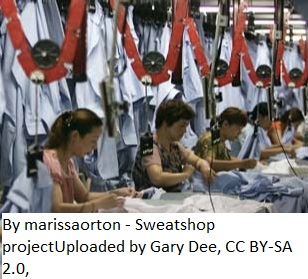
I discussed this with a colleague and she brought another dimension to the discussion. Simply this, where was the top made? Quite possibly, even likely, in a sweat shop in Asia by impoverished female workers. And so, a seemingly innocent garment symbolises all the wrong things; entrapment, commercialism and inequality. I can’t help thinking on this International Women’s Day that it’s a funny old world that we live in.
Share this:


Halloween Prison Tourism
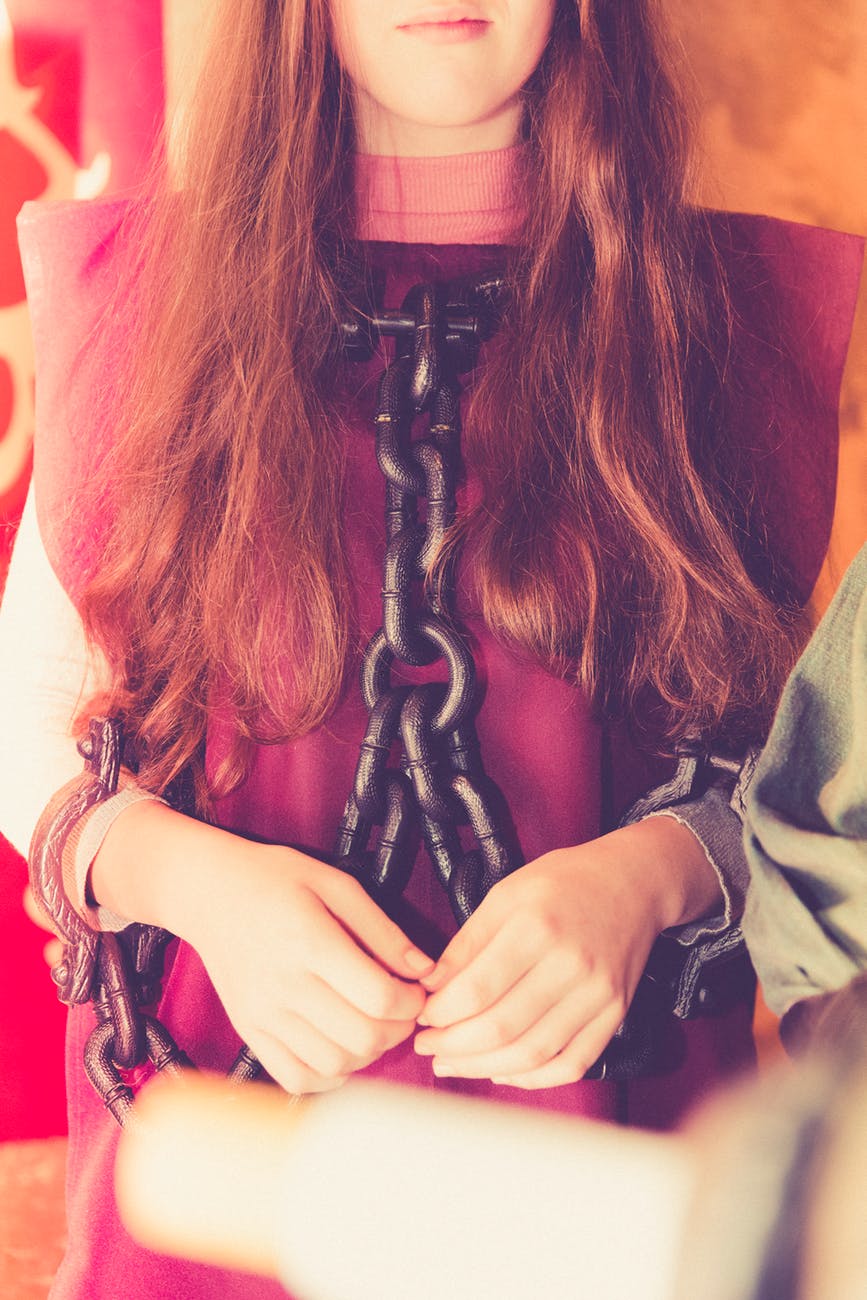
Haley Read is an Associate Lecturer teaching modules in the first and third years.
Yes, that spooky time of the year is upon us! Excited at the prospect of being free to do something at Halloween but deterred by the considerable amount of effort required to create an average-looking carved pumpkin face, I Google, ‘Things to do for Halloween in the Midlands’.
I find that ‘prison (and cell) ghost tours’ are being advertised for tourists who can spend the night where (in)famous offenders once resided and the ‘condemned souls’ of unusual and dangerous inmates still ‘haunt’ the prison walls today. I do a bit more searching and find that more reputable prison museums are also advertising similar events, which promise a ‘fun’ and ‘action packed’ family days out where gift shops and restaurants are available for all to enjoy.
Of course, the lives of inmates who suffered from harsh and brutal prison regimes are commodified in all prison museums, and not just at Halloween related events. What appears concerning is that these commercial and profit-based events seem to attract visitors through promotional techniques which promise to entertain, reinforce common sensical, and at times fabricated (see Barton and Brown, 2015 for examples) understandings of history, crime and punishment. These also present sensationalistic a-political accounts of the past in order to appeal to popular fascinations with prison-related gore and horror; all of which aim to attract customers.
The fascination with attending places of punishment is nothing new. Barton and Brown (2015) illustrates this with historical accounts of visitors engaging in the theatrics of public executions and of others who would visit punishment-based institutions out of curiosity or to amuse themselves. And I suppose modern commercial prison tourism could be viewed as an updated way to satisfy morbid curiosities surrounding punishment and the prison.
The reason that this concerns me is that despite having the potential to educate others and challenge prison stereotypes that are reinforced through the media and True Crime books, commercialised prison events aim to entertain as well as inform. This then has the danger of cementing popular and at times fictional views on the prison that could be seen as being historically inaccurate. Barton and Brown (2015) exemplify this idea by noting that prison museums present inmates as being unusual, harsh historical punishments as being necessary and the contemporary prison system as being progressive and less punitive. However, opposing views suggest that offenders are more ordinary than unusual, that historical punishments are brutal rather than necessary and that many contemporary prisons are viewed as being newer versions of punitive discipline rather than progressive.
Perhaps it could be that presenting a simplified, uncritical and stereotyped version of the past as entertainment prevents prison tourists from understanding the true pains experienced by those who have been incarcerated within the prison (see Barton and Brown, 2015, Sim, 2009). Truer prison museum promotions could inform visitors of staff corruption, the detrimental social and psychological effects of the prison, and that inmates (throughout history) are more likely to be those who are poor, disempowered, previously victimised and at risk of violence and self-harm upon entering prison. But perhaps this would attract less visitors/profit…And so for another year I will stick to carving pumpkins.
Photo by Markus Spiske temporausch.com on Pexels.com
Barton, A and Brown, A. (2015) Show me the Prison! The Development of Prison Tourism in the UK. Crime Media and Culture. 11(3), pp.237-258. Doi: 10.1177/1741659015592455.
Sim, J. (2009) Punishment and Prisons: Power and the Carceral State. London: Sage.
Share this:


Painting by numbers: The problem with HE.

Tillovision, http://www.Tillovision.com
I read a report the other week about concern over the number of 1st degrees that are being achieved within higher education in the UK (Richmond, 2018) and the fact that the volume of such achievements is devaluing university degrees. I juxtapose this with another report that states that 32% of students do not think they get value for money (Neves and Hillman, 2018) and the result is some soul searching about what it is I’m trying to achieve as a lecturer, aside from survival, and what higher education (HE) is about. A conversation with a friend who works in Information Technology muddies the water even more. He’s a high flyer, jetting backwards and forwards to the USA, solving problems, advising on, and implementing major change projects within large corporations and generally making a lot of money along the way. For him a degree is not as important as the ability to ‘think outside the box’, find solutions to problems and show leadership that enables change or fixes. If you have a degree then you ought to be able to do all these things to some extent, experience will then build on it. He lets on that his company will not touch graduates from certain universities, simply because they do not have the requisite skills or abilities, their degrees are effectively meaningless. A sad generalisation but one that is becoming increasingly prominent amongst employers. One other thing that he was quick to point out is that the ‘real world’ is highly competitive and his company are looking for the best potential.
So, what is higher education all about, higher than what? What is the benchmark and what is the end goal? I have always believed that higher education is about taking students beyond what can be read in books or can be followed in manuals. It is about enhancing the understanding of the world in which we operate, either professionally or socially and being able to redesign or reimagine that world. It is about leadership in its many guises, problem solving and the ability to use initiative and autonomy. It is about moving a student from being able to paint by numbers under supervision to a student that can paint free hand, understanding light and colours, understanding how to capture moods or how to be evocative, a student who uses materials that they want to use, and they are not frightened to do so. It stands to reason that not every student can achieve excellence. If the starting point is the ability to paint by numbers, then some will move only slightly beyond this and some will excel, but only a few will warrant a 1st degree. What is clear though is that the students really ought to be able to paint by numbers before they enter HE otherwise they will need to be taught that skill before they can move on. That then is no longer higher education but further education (FE) and more importantly, it sets students up to fail, if they are being measured against HE standards. An alternative to avoid this potential failure requires HE standards to be lowered to those of FE. In which case what is the point of HE?
So why would I be confused about HE? Well, when students are seen as cash cows, each being worth £9250 a year to an institution, being able to paint by numbers becomes a barrier to recruitment in a highly competitive market. Institutions can help students that do not have the requisite skills, but this requires either extra time before joining the HE course, this has funding implications, or a lot of extra work by the student during the HE course, and this means that students with limited academic ability struggle. A need to retain students over the three-year period of a degree, to ensure institutional financial stability or even viability, becomes problematic. Struggling students have a double whammy, they have to catch up to the starting point for each year, whilst also progressing through the year. The choices are stark for HE institutions, progress students by lowering standards or lose them.
HE institutions are measured on the number of good degrees and it makes for good advertising. There is enough literature around to suggest that such unsophisticated quantitative measures are never a good thing. The complexity of higher education, where there is a heavy reliance on students engaging in their studies (there is something to be said about reading for a degree), puts much of the achievement of grades beyond the control of lecturers or even institutions. The resultant solution appears to be the lowering of assessment standards and teaching to assessments. In effect, HE is falling in line with FE and teaching students to paint by numbers. It is easy to see why there is disquiet then about an increase in 1st degrees and more importantly, in a competitive world, why employers are becoming increasingly concerned about the value of a degree. As for value for money for students, for many, it’s a bit like being charged a fortune to race a Maserati round a track for a day but not being able to drive.
Neves, J. and Hillman, N. (2018) Student Academic Experience Survey report 2018 [online] available at https://www.heacademy.ac.uk/knowledge-hub/student-academic-experience-survey-report-2018 [accessed 20 June 2018]
Richmond, T. (2018) A degree of uncertainty: An investigation into grade inflation in universities. [online] available at, http://www.reform.uk/publication/a-degree-of-uncertainty-an-investigation-into-grade-inflation-in-universities/ [accessed 20 June 2018].
Share this:


The true message of Christmas

One of the seasonal discussions we have at social fora is how early the Christmas celebrations start in the streets, shops and the media. An image of snowy landscapes and joyful renditions of festive themes that appear sometime in October and intensify as the weeks unforld. It seems that every year the preparations for the festive season start a little bit earlier, making some of us to wonder why make this fuss? Employees in shops wearing festive antlers and jumpers add to the general merriment and fun usually “enforced” by insistent management whose only wish is to enhance our celebratory mood. Even in my classes some of the students decided to chip in the holiday fun wearing oversized festive jumpers (you know who you are!). In one of those classes I pointed out that this phenomenon panders to the commercialisation of festivals only to be called a “grinch” by one of the gobby ones. Of course all in good humour, I thought.
Nonetheless it was strange considering that we live in a consumerist society that the festive season is marred with the pressure to buy as much food as possible so much so, that those who cannot (according to a number of charities) feel embarrassed to go shopping; or the promotion of new toys, cosmetics and other trendy items that people have to have badly wrapped ready for the big day. The emphasis on consumption is not something that happened overnight. There have been years of making the special season into a family event of Olympic proportions. Personal and family budgets will dwindle in the need to buy parcels of goods, consume volumes of food and alcohol so that we can rejoice.
Many of us by the end of the festive season will look back with regret, for the pounds we put on, the pounds we spent and the things we wanted to do but deferred them until next Christmas. Which poses the question; What is the point of the holiday or even better, why celebrate Christmas anymore? Maybe a secular society needs to move away from religious festivities and instead concentrate on civic matters alone. Why does religion get to dictate the “season to be jolly” and not people’s own desire to be with the ones they want to be with? If there is a message within the religious symbolism this is not reflected in the shop-windows that promote a round-shaped old man in red, non-existent (pagan) creatures and polar animals.
According to the religious message about 2000 years ago a refugee family gave birth to a child on their way to exile. The child would live for about 33 years but will change the face of modern religion. He promised to come back and millions of people still wait for his second coming but in the meantime millions of refugee children are piling up in detention centers and hundreds of others are dying in the journey of the damned. “A voice is heard in Ramah, mourning and great weeping, Rachel weeping for her children, because her children are no more” (Jeremiah 31:15). This is the true message of Christmas today.
Happy Holidays to our students and colleagues.
FYI: Ramah is a town in war torn Middle East

 Thoughts from the criminology team