
Home » Coercion
Category Archives: Coercion

Changing the Narrative around Violence Against Women and Girls

For Criminology at UON’s 25th Birthday, in partnership with the Northampton Fire, Police and Crime Commissioner, the event “Changing the Narrative: Violence Against Women and Girls” convened on the 2nd April. Bringing together a professional panel, individuals with lived experience and practitioners from charity and other sectors, to create a dialogue and champion new ways of thinking. The first in a series, this event focused on language.
All of the discussions, notes and presentations were incredibly insightful, and I hope this thematic collation does it all justice.
“A convenient but not useful term.”
Firstly an overwhelming reflection on the term itself; ‘Violence Against Women and Girls’ – does it do justice to all of the behaviour under it’s umbrella? We considered this as reductionist, dehumanising, and often only prompts thinking and action to physical acts of violence, but perhaps neglects many other harms such as emotional abuse, coercion and financial abuse which may not be seen as, or felt as ‘severe enough’ to report. It may also predominantly suggest intimate partner or domestic abuse which may too exclude other harms towards women and girls such as (grand)parent/child abuse or that which happens outside of the home. All of which are too often undetected or minimised, potentially due to this use of language. Another poignant reflection is that we may not currently be able to consider ‘women and girls’ as one group, given that girls under 16 may not be able to seek help for domestic abuse, in the same way that women may be able to. We also must consider the impact of this term on those whose gender identity is not what they were assigned at birth, or those that identify outside of the gender binary. Where do they fit into this?
To change the narrative, we must first identify what we are talking about. Explicitly. Changing the narrative starts here.
“I do not think I have survived.”
We considered the importance of lived experience in our narratives and reflected on the way we use it, and what that means for individuals, and our response.
Firstly, the terms ‘victim’ and ‘survivor’ – which we may use without thought, use as fact, particularly as descriptors within our professions, but actually these are incredibly personal labels that only individuals with such experience can give to themselves. This may be reflective of where they are in their journey surrounding their experiences and have a huge impact on their experience of being supported. It was courageously expressed that we also must recognise that individuals may not identify with either of those terms, and that much more of that person still exists outside of that experience or label. We also took a moment to remember that some victims, will never be survivors.
Lived experience is making its way into our narratives more and more, but there is still much room for improvement. We champion that if we are to create a more supportive, inclusive, practical and effective narrative, we must reflect the language of individuals with lived experience and we must use it to create a narrative free from tick boxes, from the lens of organisational goals and societal pressure.
Lived experience must be valued for what it is, not in spite of what it is.
“In some cases, we allow content – which would otherwise go against our standards – if its newsworthy.”
A further theme was a reflection on language which appears to be causing an erosion of moral boundaries. For example, the term ‘misogyny’ – was considered to be used flippantly, as an excuse, and as a scapegoat for behaviour which is not just ‘misogynistic’ but unacceptable, abhorrent, inexcusable behaviour – meaning the extent of the harms caused by this behaviour are swept away under a ‘normalised’ state of prejudice.
This is one of many terms that along with things like ‘trauma bond’ and ‘narcissist’ which have become popular on social media without any rigour as to the correct use of the term – further normalises harmful behaviour, and prevents women and girls from seeking support for these very not normal experiences. In the same vein it was expressed that sexual violence is often seen as part of ‘the university experience.’
This use of language and its presence on social media endangers and miseducates, particularly young people, especially with new posting policies around the freedom of expression. Firstly, in that many restrictions can be bypassed by the use of different text, characters and emoji so that posts are not flagged for certain words or language. Additionally, guidelines from Meta were shared and highlighted as problematic as certain content which would, and should, normally be restricted – can be shared – as long as is deemed ‘newsworthy.’
Within the media as a whole, we pressed the importance of using language which accurately describes the actions and experience that has happened, showing the impact on the individual and showing the extent of the societal problem we face… not just what makes the best headline.
“We took action overnight for the pandemic.”
Language within our response to these crimes was reflected upon, in particular around the term ‘non-emergency’ which rape, as a crime, has become catalogued as. We considered the profound impact of this language for those experiencing/have experienced this crime and the effect it has on the resources made available to respond to it.
Simultaneously, in other arenas, violence toward women and girls is considered to be a crisis… an emergency. This not only does not align with the views of law enforcement but suggests that this is a new, emerging crisis, when in fact it is long standing societal problem, and has faced significant barriers in getting a sufficient response. As reflected by one attendee – “we took action overnight for the pandemic.”
“I’ve worked with women who didn’t report rape because they were aroused – they thought they must have wanted it.”
Education was another widely considered theme, with most talk tables initially considering the need for early education and coming to the conclusion that everyone needs more education; young and old – everything in between; male, female and everything in between and outside of the gender binary. No-one is exempt.
We need all people to have the education and language to pass on to their children, friends, colleagues, to make educated choices. If we as adults don’t have the education to pass on to children, how will they get it? The phrase ‘sex education’ was reflected upon, within the context of schools, and was suggested to require change due to how it triggers an uproar from parents, often believing their children will only be taught about intercourse and that they’re too young to know. It was expressed that age appropriate education, giving children the language to identify harms, know their own body, speak up and speak out is only beneficial and this must happen to help break the cycle of generational violence. We cannot protect young people if we teach them ignorance.
Education for all was pressed particularly around education of our bodies, and our bodily experiences. In particular of female bodies, which have for so long been seen as an extension of male bodies. No-one knows enough about female bodies. This perpetuates issues around consent, uneducated choices and creates misplaced and unnecessary guilt, shame and confusion for females when subjected to these harms.
“Just because you are not part of the problem, does not mean you are part of the solution.“
Finally, though we have no intention or illusion of resolution with just one talk, or even a series of them – we moved to consider some ways forward. A very clear message was that this requires action – and this action should not fall on women and girls to protect themselves, but for perpetrators for be stopped. We need allies, of all backgrounds, but in particular, we need male allies. We need male allies who have the education, and the words necessary to identify and call out the behaviour of their peers, their friends, their colleagues, of strangers on the bus. We asked – would being challenged by a ‘peer’ have more impact? Simply not being a perpetrator, is not enough.
Share this:


Criminology for all (including children and penguins)!

As a wise woman once wrote on this blog, Criminology is everywhere! a statement I wholeheartedly agree with, certainly my latest module Imagining Crime has this mantra at its heart. This Christmas, I did not watch much television, far more important things to do, including spending time with family and catching up on reading. But there was one film I could not miss! I should add a disclaimer here, I’m a huge fan of Wallace and Gromit, so it should come as no surprise, that I made sure I was sitting very comfortably for Wallace & Gromit: Vengeance Most Fowl. The timing of the broadcast, as well as it’s age rating (PG), clearly indicate that the film is designed for family viewing, and even the smallest members can find something to enjoy in the bright colours and funny looking characters. However, there is something far darker hidden in plain sight.
All of Aardman’s Wallace and Gromit animations contain criminological themes, think sheep rustling, serial (or should that be cereal) murder, and of course the original theft of the blue diamond and this latest outing was no different. As a team we talk a lot about Public Criminology, and for those who have never studied the discipline, there is no better place to start…. If you don’t believe me, let’s have a look at some of the criminological themes explored in the film:
Sentencing Practice
In 1993, Feathers McGraw (pictured above) was sent to prison (zoo) for life for his foiled attempt to steal the blue diamond (see The Wrong Trousers for more detail). If we consider murder carries a mandatory life sentence and theft a maximum of seven years incarceration, it looks like our penguin offender has been the victim of a serious miscarriage of justice. No wonder he looks so cross!
Policing Culture
In Vengeance Most Fowl we are reacquainted with Chief Inspector Mcintyre (see The Curse of the Were-Rabbit for more detail) and meet PC Mukherjee, one an experienced copper and the other a rookie, fresh from her training. Leaving aside the size of the police force and the diversity reflected in the team (certainly not a reflection of policing in England and Wales), there is plenty more to explore. For example, the dismissive behaviour of Mcintyre toward Mukherjee’s training. learning is not enough, she must focus on developing a “copper’s gut”. Mukherjee also needs to show reverence toward her boss and is regularly criticised for overstepping the mark, for instance by filling the station with Wallace’s inventions. There is also the underlying message that the Chief Inspector is convinced of Wallace’s guilt and therefore, evidence that points away from should be ignored. Despite this Mukherjee retains her enthusiasm for policing, stays true to her training and remains alert to all possibilities.
Prison Regime
The facility in which Feathers McGraw is incarcerated is bleak, like many of our Victorian prisons still in use (there are currently 32 in England and Wales). He has no bedding, no opportunities to engage in meaningful activities and appears to be subjected to solitary confinement. No wonder he has plenty of time and energy to focus on escape and vengeance! We hear the fear in the prison guards voice, as well as the disparaging comments directed toward the prisoner. All in all, what we see is a brutal regime designed to crush the offender. What is surprising is that Feathers McGraw still has capacity to plot and scheme after 31 years of captivity….
Mitigating Factors
Whilst Feathers McGraw may be the mastermind, from prison he is unable to do a great deal for himself. He gets round this by hacking into the robot gnome, Norbot. But what of Norbot’s free will, so beloved of Classical Criminology? Should he be held culpable for his role or does McGraw’s coercion and control, renders his part passive? Without, Norbot (and his clones), no crime could be committed, but do the mitigating factors excuse his/their behaviour? Questions like this occur within the criminal justice system on a regular basis, admittedly not involving robot gnomes, but the part played in criminality by mental illness, drug use, and the exploitation of children and other vulnerable people.
And finally:
Above are just some of the criminological themes I have identified, but there are many others, not least what appears to be Domestic Abuse, primarily coercive control, in Wallace and Gromit’s household. I also have not touched upon the implicit commentary around technology’s (including AI’s) tendency toward homogeneity. All of these will keep for classroom discussions when we get back to campus next week 🙂
Share this:


Justice or Just Another One?

Luckily I’ve never been one for romantic movies. I always preferred a horror movie. I just didn’t know that my love life would become the worst horror movie I could ever encounter. I was only 18 when I met the monster who presented as a half decent human being. I didn’t know the world very well at that point and he made sure that he became my world. The control and coercion, at the time, seemed like romantic gestures. It’s only with hind sight that I can look back and realise every “kind” and “loving” gesture came from a menacing place of control and selfishness. I was fully under his spell. But anyway, I won’t get into every detail ever. I guess I just wanted to preface this with the fact that abuse doesn’t just start with abuse. It starts with manipulation that is often disguised as love and romance in a twisted way.
This man went on to break me down into a shell of myself before the physical abuse started. Even then, him getting that angry was somehow always my fault. I caused that reaction in his sick, twisted mind and I started to believe it was my fault too. The final incident took place and the last thing I can clearly recall is hearing how he was going to cave my head in before I felt this horrendous pressure on my neck with his other hand keeping me from making any noise that would expose him.
By chance, I managed to get free and RUN to my family. Immediately took photos of my injuries too because even in my state, I know how the Criminal Justice System would not be on my side without evidence they deemed suitable.
Anyway, my case ended up going to trial. Further trauma. Great. I had to relive the entire relationship by having every part of my character questioned on the stand like I was the criminal in this instance. I even got told by his defence that I had “Histrionic Personality Disorder”. Something I have never been diagnosed with, or even been assessed for. Just another way the CJS likes to pathologise women’s trauma. Worst of all, turns out ‘Doctor Defence’ ended up dropping my abuser as he was professionally embarrassed when he realised he knew my mother who was also a witness. Wonderful. This meant I got to go through the process of being criminalised, questioned, diagnosed with disorders I hadn’t heard of at the time, hear the messages, see the photos ALL over again.
Although “justice” prevailed in as much as he was found guilty. All for the sake of a suspended sentence. Perfect. The man who made me feel like he was my world then also tried to end my life was still going to be free enough to see me. The law wasn’t enough to stop him from harming me, why would it be enough to stop him now?
Fortunately for me, it stopped him harming me. However, it did not stop him harming his next victim. For the sake of her, I won’t share any details of her story as it is not mine to share. Yet, this man is now behind bars for a pretty short period of time as he has once again harmed a woman. Evidently, I was right. The law was not enough to stop him. Which leads me to the point of this post, at what stage does the CJS actually start to take women’s pleas to feel safe seriously? Does this man have to go as far to take away a woman’s life entirely before someone finally deems him as dangerous? Why was my harm not enough? Would the CJS have suddenly seen me as a victim, rather than making me feel like a criminal in court, if I was eternally silenced? Why do women have to keep dying at the hands of men because the CJS protects domestic abusers?”
Share this:


Christmas Toys

In CRI3002 we reflected on the toxic masculine practices which are enacted in everyday life. Hegemonic masculinity promotes the ideology that the most respectable way of being ‘a man’ is to engage in masculine practices that maintain the White elite’s domination of marginalised people and nations. What is interesting is that in a world that continues to be incredibly violent, the toxicity of state-inflicted hegemonic masculinity is rarely mentioned.
The militaristic use of State violence in the form of the brutal destruction of people in the name of apparent ‘just’ conflicts is incredibly masculine. To illustrate, when it is perceived and constructed that a privileged position and nation is under threat, hegemonic masculinity would ensure that violent measures are used to combat this threat.
For some, life is so precious yet for others, life is so easily taken away. Whilst some have engaged in Christmas traditions of spending time with the family, opening presents and eating luxurious foods, some are experiencing horrors that should only ever be read in a dystopian novel.
Through privileged Christmas play-time with new toys like soldiers and weapons, masculine violence continues to be normalised. Whilst for some children, soldiers and weapons have caused them to be victims of wars with the most catastrophic consequences.
Even through children’s play-time the privileged have managed to promote everyday militarism for their own interests of power, money and domination. Those in the Global North are lead to believe that we should be proud of the army and how it protects ‘us’ by dominating ‘them’ (i.e., ‘others/lesser humans and nations’).
Still in 2023 children play with symbolically violent toys whilst not being socialised to question this. The militaristic toys are marketed to be fun and exciting – perhaps promoting apathy rather than empathy. If promoting apathy, how will the world ever change? Surely the privileged should be raising their children to be ashamed of the use of violence rather than be proud of it?
Share this:


Behind Closed Doors
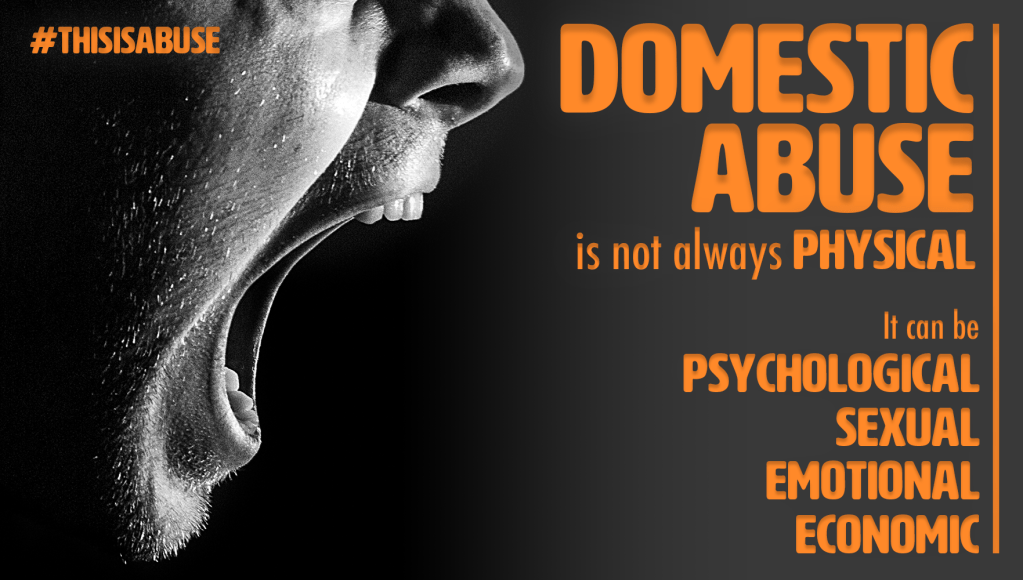
1 in 4 women will be affected by intimate partner violence (1).
I remember when I first heard that statistic in my teenage years, I thought to myself ‘that’s a lot of women! That’s a scary statistic!’ Having never been in a relationship till my mid-twenties, it was something I had never personally experienced, but saw it happen to some of my friends, and I know many people, and have met so may women, (and some men) who have been in violent and abusive relationships…
At the age of 17, whilst doing my A-levels, I saw some of my close female friends suddenly not show up to class. 6 months later, she came back and opened up about being in a violent relationship, and how her partner made her sick, and used to physically beat her.
When I was a university student, another friend of mine was in a violent relationship and struggled to cope with the ordeal whilst doing her degree. To this day, I still do not know how she pulled through being a university student whilst going through what she experienced.
At my local food bank, I have met many women who escaped violent relationships, and were living in supported accommodation. One lady I helped had even escaped honor based violence! She was no longer allowed to go back to her home country otherwise she would be killed for divorcing a violent man.
Following an event with the Himaya Haven (2) with a guest speaker talking about her experience of domestic violence, I was inspired and felt compelled to do more to help women affected by domestic abuse. After weeks of planning, praying, preparations and getting everything arranged, the event took place. October 25th 2018, with the help of a dear friend, we hosted and ran a domestic violence workshop, followed by a beauty therapy session to help women who had been affected by domestic violence. This was blogged about here: Incredible Women!
The types of domestic abuse I encountered was not just physical or psychological… I met women who were affected by financial domestic abuse, sexual violence and rape, honor based violence, coercion, possessiveness, controlling behavior, stalking, manipulation and gas-lighting, and some had even been banned from seeing family members and friends, and were not allowed to leave their homes unless their partners/husbands went with them….
Whilst I aim to raise awareness of this for International Women’s Day, let’s also highlight that women are extraordinary! All of my friends, family members and colleagues who have been affected by the scourge that is intimate partner violence, are still exceptional and exemplary human beings who are unique and amazing in their own special way.
Women are powerful – whatever is thrown at us, we will power through it and overcome it! Every single one of my friends and family members who have been affected by domestic abuse are powerful women who overcame all odds; regardless of the situation.
More statistics from Living Without Abuse and Office for National Statistics
- Domestic abuse will affect 1 in 4 women and 1 in 6 men in their lifetime
- 2 women are murdered each week and 30 men per year from domestic abuse
- Has more repeat victims than any other crime (on average there will have been 35 assaults before a victim calls the police) (3)
- The year ending March 2019, 2.4 million adults had experienced domestic abuse (1.6 million women and 786,000 men) (4)
References
(1) Living Without Abuse (LWA) Statistics Available online at: https://www.lwa.org.uk/understanding-abuse/statistics.htm Accessed on 08/03/2020
(2) Himaya Haven About Us Available online at: http://himayahaven.co.uk Accessed on 08/03/2020
(3) Living Without Abuse (LWA) Statistics Available online at: https://www.lwa.org.uk/understanding-abuse/statistics.htm Accessed on 08/03/2020
(4) Office for National Statistics ‘Analysis of Domestic Abuse Data’ Available online at: https://www.ons.gov.uk/peoplepopulationandcommunity/crimeandjustice/bulletins/domesticabuseinenglandandwalesoverview/november2019 Accessed on 08/03/2020
Share this:


Stop Protecting the #PervertPrince

In the past six months, I have been reflecting on recent stories that have hit media headlines. Although these topics are extremely important, in my opinion not enough “meaningful” discussion has been had. I’m referring to the sexual exploitation of children – the power imbalance, that powerful men within society have abused and have seeming got away with. I start with Jeffrey Epstein.
Although he was convicted of sexual crimes against children, his conviction is one of deceit. The American justice system let down his victims, disguising the severity of his crimes, allowing him to continue his abuse of power on vulnerable children. He was not charged with paedophilia or rape, the US legal system thought it would be fitting to charge him with solicitation of minors for prostitution.

There are various things that are problematic with this, but one of the biggest problems for me is using minors and prostitution in the same sentence. It annoys me that we tend to view our society as progressive and yet we still label children as prostitutes, forgetting that there is a legal age of consent and no child can be a prostitute as they cannot give consent, as much as the law would suggest. This is reminiscent of the Rotherham sex ring, where police labelled minors as prostitutes, forgetting that they are victims of coercion, exploitation and rape. This ideology quickly moves the emphasis away from the perpetrators of crime while negatively impacting the victim. It is time that we have compassion for the victims of such awful crimes and move away from labelling and blaming.
It makes my blood boil that people have the audacity to argue that the US legal systems failings can be used as an outlet of blame for the relationship that Epstein, Prince Andrew and President Clinton had. Lady Colin Campbell stated that if the US legal system had been more transparent Clinton and the shamed Prince would have made better judgements on their friendship with him. She and others have come to this defence of the ‘upper crust,’ using the American justice system failings as a crutch for their wrongdoings.
Although some may agree with her, I must highlight some glaring points that should be raised, before she states such ludicrous statements – such as: Prince Andrew and Bill Clinton’s advisors would have done thorough background checks on Epstein. This would have identified his crimes and his monstrous ways. They would have disclosed the information that was flagged to them and then warned them against forming relationships with the known predator. If these men had any shred of decency, then they would have kept a distance.
My conclusion as to why they did not, is because they feel they are above the law and do not have to conform to the norms that the rest of society subscribes too. It is all about money and status to them, if you are not one of them, you are not human. This notion was visible when Prince Andrew had his very uncomfortable interview with Emily Maitlis. During the interview he never displayed any kind of remorse for the victims. He didn’t even mention them or their harm. He used phrases like Epstein engaged in activity that is unbecoming rather than condemning his actions and showing any kind of emotion. This reaction, or lack of, has only stretched his credibility. He blazingly lied throughout the interview and his actions have made him look like a bumbling pervert.
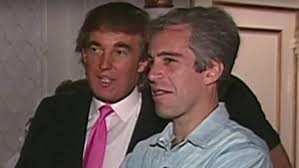
Even though Prince Andrew has demonstrated a lack of morality, the biggest discussion that surrounds this entity is whether he should step down from his royal duties. It seems everyone forgets that he has shown a lack of compassion, he has been pictured with young girls who have accused him and Epstein of violating them. But being a prince trumps all these facts, as he is let off lightly.
He is rich and powerful, and like Epstein, their status has sheltered them from real-world consequences. Epstein is now deceased, but it was all on his terms and once again the victimisation of children has been overshadowed by the circumstances of how he died. The salacious topic of how he managed to commit suicide and whether he was murdered is now big news. As for Prince Andrew, I cannot imagine he will be found guilty and he will not speak publicly about this topic again. Some may demand answers, but he will be protected from any real justice.
It is time that we start opening our eyes and acknowledging the victims of these crime. It is time to make it known that just because you are royalty, a billionaire or a socialite you are not above the law. We need to fight for the voiceless in our society, against the people who abuse their power and stop making excuses for them.

 Thoughts from the criminology team