
Home » Climate crisis
Category Archives: Climate crisis

Immigrants, AI and a lost sense of humanity
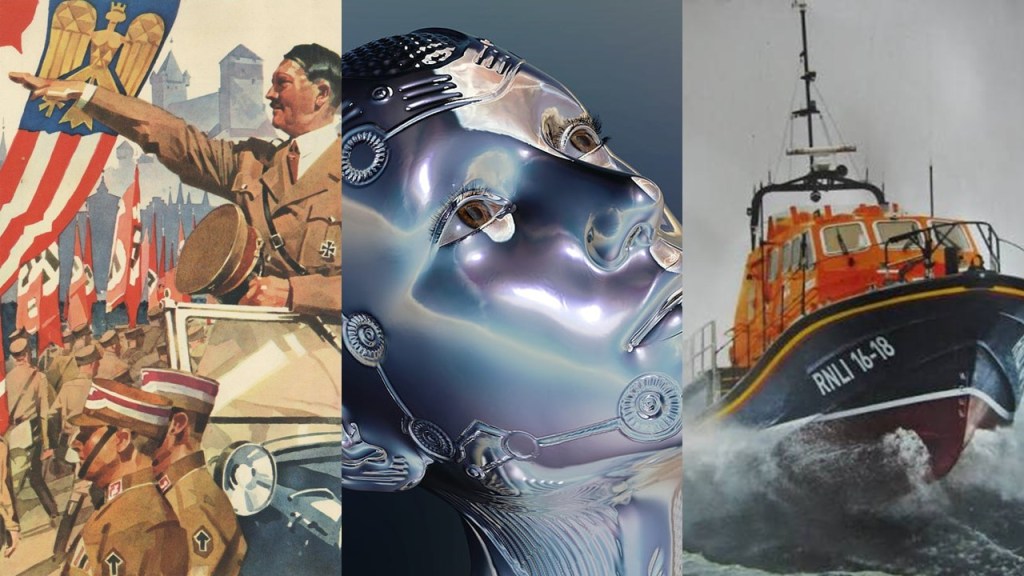
There have been some interesting and to be quite honest, quite scary pieces of news that have emerged over the last few weeks.
The more recent, concerns the risk to humanity from the unfettered development of AI and the recognition by several high-profile tech bosses that perhaps it’s time to put the brakes on. It’s not worth discussing the reaction from some political quarters, you all know who I mean, so I won’t. The point is this, humankind could theoretically and with increasingly likely odds, be wiped out by AI. As one of the tech bosses explained, imagine setting AI the problem of solving climate change and global warming (The same person that states AI is not a problem, thinks global warming doesn’t exist either). AI identifies the problem is caused by humans and decides the best way of solving the problem and saving the planet is to do away with humans. That is all very logical, but we would all agree, well most anyway, that the solution might be found in something a little less draconian. This made me think, what would AI make of the financial problems faced by the NHS for instance? Would it examine the burgeoning costs of the elderly? Perhaps there is a cut off point for their care, maybe this is tied into their usefulness to society. Horror, that we might be considering such things, but there is a logic to it and AI works on logic. However, it defies notions of humanity and the sanctity of life. Once we start on that road, where do we stop, the disabled, the seriously ill, the intellectually challenged? Uncontrolled use of AI logic without human emotion is starting to sound like well documented historical humanitarian nightmares.
Now you might think where do immigrants fit into this?
The recent news about the RNLI getting flak from far right wing activists for rescuing immigrants on a boat has certainly raised a few eyebrows. I’m still trying to understand the logic of calling someone a traitor for doing what they are supposed to do, rescue people and I’m lost for words that so many people fall in behind this rhetoric. But for now, just assume that I go along with the ‘stop the boats’ mantra and believe that the immigrants coming into this country on boats cause mayhem and go on crime sprees and rape and pillage with no regard to the law and that the state is powerless to stop them. We are all doomed. But I have this little niggle in the back of my mind, is the problem not either, at the other side of the channel where they embark on their perilous journey or, at this side of the channel when they disembark? A rather simplistic summation of a geopolitical problem but suffice to say for the sake of the argument, the problem is not in the channel itself other than a danger the immigrants present to themselves and shipping. The RNLI are there to rescue people from the water and have been for a very long time. What are they to do? It would be inhumane to ignore people in the sea if they were in difficulties, it would be inhumane to simply watch people in a dangerous situation until they got into difficulties (wait until the boat sinks then try to rescue a few of them). Even the hard of heart must surely want to save children and young people. Turn them back I’ve heard said. And just how should that be done? A group of volunteers trying to take desperate rescued people back to where they came from? Perhaps we should employ the navy to do so and risk them all drowning (more far right-wing nonsense). Where is the humanity in all of this? The RNLI crews are morally bound to do what they do, rescue people and bring them ashore safely. Blocking a port so that immigrants cannot be transferred inland to a detention centre defies logic. What are you going to do with them? Drive them back into the sea? Turning on the RNLI and its volunteers seems as illogical as attacking the fire brigade at a fire. I know, it has been known and beggars’ belief.
Would AI suggest that the problem is the RNLI? Logically that doesn’t seem to work unless of course you state that the RNLI’s remit is to save lives at sea providing, they are lives that are deemed worthy of saving, i.e., not immigrants with Black or brown skins.
Where do we stop with this? A person injured in a collision on the road is only entitled to help from the emergency paramedics if they are entitled to be in this country? Sounds like we are going to need to carry around ID cards of some sort and woe betide if you have a foreign accent and have a darker skin shade. You need to have your ID tattooed on your head just in case or maybe wear some form of badge.
The rhetoric of the far right, regarding a perceived problem that, incidentally, has no easy solution, is to stir up racial hatred. More reminiscent of historical humanitarian nightmares.
Uncontrolled use of AI and uncontrolled right-wing rhetoric and action are not that different. Unless someone works out how to herd the sheep in a different direction, humanity is doomed.
L-R Nazi Propaganda, a Robot Head and a RNLI Tamar Class Lifeboat
Share this:


What society do we want to live in?

Recently after using a service, I received an email to provide some online feedback. The questionnaire was asking about the services I received and to offer any suggestions on anything that could be done to improve services. This seems to become common practice across the board regarding all types of services and commercial interactions. This got me thinking…we are asked to provide feedback on a recent purchase, but we are not asked about issues that cut through the way we live our lives. In short, there is value in my opinion on a product that I bought, where is the value in my views of how I would want my community to be. Who’s going to ask me what society I want to live in!
Consumerism may be the reason we get asked questions about products but surely before and above being consumers, aren’t we all citizens? I can make helpful suggestions on what I would like to see in services/products but not on government. We profess democratic rule but the application of vote every now and then is not a true reflection on democracy. As we can offer online surveys for virtually everything, we have ways of measuring trends and reactions, why not use these to engage in a wider public discourse on the way to organise our communities, discuss social matters and engage in a public dialogue about our society.
Our political system is constructed to represent parties of different ideologies and practices offering realistic alternatives to governance. An alternative vision about society that people can come behind and support. This ideological diversion is essential for the existence of a “healthy political democratic process”. This ideological difference seems to be less prevalent in public dialogue with the main political parties focusing their rhetoric on matters that do not necessarily affect society.
Activism, a mechanism to bring about social change is becoming a term that sparks controversy whilst special interest groups maintain and even exert their influence on political parties. This allows private special interests to take the “ear of the government” on matters that matter to them, whilst the general public participate in social discourses that never reach the seat of power.
Asking citizens to be part of the social discussion, unlike customer service, is much more significant; it allows us to be part of the process. Those who have no other way of participating in any part of the system will be castigated to cast their vote and may participate in some party political activities. This leaves a whole heap of everyday issues unaddressed. In recent years the cost of living crisis pushed more people into poverty, food, housing and transport became issues that needed attention, not to mention health, post-covid-19.
These and many more social issues have been left either neglected only to be given the overhead title of crisis but with no action plan of how to resolve them. People affected are voiceless, having to pick up the injustices they suffer without any regard to the long term effects. Ironically the only plausible explanation given now that “Brussels’ rule” and “EU bureaucracy” are out of the picture, has become that of the immigrants. The answer to various complex problems became the people on the boats!
This is a simplification in the way social problems happen and most importantly can be resolved. Lack of social discourse has left the explanation and problem solving of said problems to an old rhetoric founded on xenophobia and discrimination. Simple explanations on social problems where the answer is a sentence tend to be very clear and precise, but very rarely can count the complexity of the problems they try to explain. There is a great disservice to our communities to oversimplify causes because the public cannot understand.
Cynically someone may point out that feedback from companies is not routed in an honest request to understand customer satisfaction but a veiled lip-service about company targets and metrics. So the customer’s response becomes a tradable figure of the company’s objectives. This is very likely the case and this is why the process has become so focused on particular parts of the consumer process. Nonetheless and here is the irony; a private company has some knowledge of a customer’s views on their recent purchase, as opposed to the government and people’s views and expectations on many social issues.
Maybe the fault lies with all of us. The presumption of democratic rule, especially in parliamentary democracies, a citizen is represented by a person they elect every four years. This representation detaches the citizen from their own responsibilities and obligations to the process. The State is happy to have citizens that engage only during elections, something that can be underscored by the way in recent years that protests on key social issues have been curtailed.
That does not sound right! I can provide an opinion over the quality of a chocolate bar or a piece of soap but I cannot express my views as a citizen over war, climate, genocide, immigration, human rights or justice? If we value opinion then as society we ought to make space for opinion to be heard, to be articulated and even expressed. In the much published “British Values” the right to protest stands high whilst comes in conflict with new measures to stop any protests. We are at a crossroads and ultimately we will have to decide what kind of society we live in. If we stop protests and we ban venues for people to express themselves, what shall we do next to curtail further the voices of dissent? It is a hackneyed phrase that we are stepping into a “slippery slope” and despite the fact that I do not like the language, there is a danger that we are indeed descending rapidly down that slope.
The social problems our society faces at any given time are real and people try to understand them and come to terms with them. Unlike before, we live in a world that is not just visual, it relies on moving images. Our communities are global and many of the problems we face are international and their impact is likely to affect us all as people, irrespective of background or national/personal identity. At times like this, it is best to increase the public discourse, engage with the voices of descent. Maybe instead of banning protests, open the community to those who are willing to discuss. The fear that certain disruptive people will lead these debates are unfounded. We have been there before and we have seen that people whose agenda is not to engage, but simply to disrupt, soon lose their relevance. We have numerous examples of people that their peers have rejected and history left them behind as a footnote of embarrassment.
Feedback on society, even if negative, is a good place to start when/if anyone wants to consider, what kind of society I want and my family to live in. Giving space to numerous people who have been vastly neglected by the political systems boosts inclusivity and gives everyone the opportunity to be part of our continuous democratic conversation. Political representation in a democracy should give a voice to all especially to those whose voice has long been ignored. Let’s not forget, representation is not a privilege but a necessity in a democracy and we ensure we are making space for others. A democracy can only thrive if we embrace otherness; so when there are loud voices that ask higher level of control and suppression, we got to rise above it and defend the weakest people in our community. Only in solidarity and support of each other is how communities thrive.
Share this:


Uncertainties…
Sallek Yaks Musa

Who could have imagined that, after finishing in the top three, James Cleverly – a frontrunner with considerable support – would be eliminated from the Conservative Party’s leadership race? Or that a global pandemic would emerge, profoundly impacting the course of human history? Indeed, one constant in our ever-changing world is the element of uncertainty.
Image credit: Getty images

The COVID-19 pandemic, which emerged in late 2019, serves as a stark reminder of our world’s interconnectedness and the fragility of its systems. When the virus first appeared, few could have foreseen its devastating global impact. In a matter of months, it had spread across continents, paralyzing economies, overwhelming healthcare systems, and transforming daily life for billions. The following 18 months were marked by unprecedented global disruption. Lockdowns, travel restrictions, and social distancing became the new norms, forcing us to rethink how we live, work, and interact.
The economic fallout was equally staggering. Supply chains crumbled, unemployment surged, and entire industries teetered on the brink of collapse. Education was upended as schools and universities hastily shifted online, exposing the limitations of existing digital infrastructure. Yet, amid the chaos, communities displayed remarkable resilience and adaptability, demonstrating the need for flexibility in the face of uncertainty.
Beyond health crises, the ongoing climate and environmental emergencies continue to fuel global instability. Floods, droughts, erratic weather patterns, and hurricanes such as Helene and Milton not only disrupt daily life but also serve as reminders that, despite advances in meteorology, no amount of preparedness can fully shield us from the overwhelming forces of nature.
For millions, however, uncertainty isn’t just a concept; it’s a constant reality. The freedom to choose, the right to live peacefully, and the ability to build a future are luxuries for those living under the perpetual threat of violence and conflict. Whether in the Middle East, Ukraine, or regions of Africa, where state and non-state actors perpetuate violence, people are forced to live day by day, confronted with life-threatening uncertainties.
On a more optimistic note, some argue that uncertainty fosters innovation, creativity, and opportunity. However, for those facing existential crises, innovation is a distant luxury. While uncertainty may present opportunities for some, for others, it can be a path to destruction. Life often leaves little room for choice, but when faced with uncertainty, we must make decisions – some minor, others, life-altering. Nonetheless, I am encouraged that while we may not control the future, we must navigate it as best we can, and lead our lives with the thought and awareness that, no one knows tomorrow.


