
Home » Chocolate
Category Archives: Chocolate

Festive messages, a legendary truce, and some massacres: A Xmas story

Holidays come with context! They bring messages of stories that transcend tight religious or national confines. This is why despite Christmas being a Christian celebration it has universal messages about peace on earth, hope and love to all. Similar messages are shared at different celebrations from other religions which contain similar ecumenical meanings.
The first official Christmas took place on 336 AD when the first Christian Emperor declared an official celebration. At first, a rather small occasion but it soon became the festival of the winter which spread across the Roman empire. All through the centuries more and more customs were added to the celebration and as Europeans “carried” the holiday to other continents it became increasingly an international celebration. Of course, joy and happiness weren’t the only things that brought people together. As this is a Christmas message from a criminological perspective don’t expect it to be too cuddly!
As early as 390 AD, Christmas in Milan was marked with the act of public “repentance” from Emperor Theodosius, after the massacre of Thessalonica. When the emperor got mad they slaughtered the local population, in an act that caused even the repulson of Ambrose, Bishop of Milan to ban him from church until he repented! Considering the volume of people murdered this probably counts as one of those lighter sentences; but for people in power sentences tend to be light regardless of the historical context.
One of those Christmas celebrations that stand out through time, as a symbol of truce, was the 1914 Christmas in the midst of the Great War. The story of how the opposing troops exchanged Christmas messages, songs in some part of the trenches resonated, but has never been repeated. Ironically neither of the High Commands of the opposing sides liked the idea. Perhaps they became concerned that it would become more difficult to kill someone that you have humanised hours before. For example, a similar truce was not observed in World War 2 and in subsequent conflicts, High Commands tend to limit operations on the day, providing some additional access to messages from home, some light entertainment some festive meals, to remind people that there is life beyond war.
A different kind of Christmas was celebrated in Italy in the mid-80s. The Christmas massacre of 1984 Strage Di Natale dominated the news. It was a terrorist attack by the mafia against the judiciary who had tried to purge the organisation. Their response was brutal and a clear indication that they remained defiant. It will take decades before the organisation’s influence diminishes but, on that date, with the death of people they also achieved worldwide condemnation.
A decade later in the 90s there was the Christmas massacre or Masacre de Navidad in Bolivia. On this occasion the government troops decided to murder miners in a rural community, as the mine was sold off to foreign investors, who needed their investment protected. The community continue to carry the marks of these events, whilst the investors simply sold and moved on to their next profitable venture.
In 2008 there was the Christmas massacre in the Democratic Republic of Congo when the Lord’s Resistance Army entered Haut-Uele District. The exact number of those murdered remains unknown and it adds misery to this already beleaguered country with such a long history of suffering, including colonial ethnic cleansing and genocide. This country, like many countries in the world, are relegated into the small columns on the news and are mostly neglected by the international community.
So, why on a festive day that commemorates love, peace and goodwill does one talk about death and destruction? It is because of all those heartfelt notions that we need to look at what really happens. What is the point of saying peace on earth, when Gaza is levelled to the ground? Why offer season’s wishes when troops on either side of the Dnipro River are still fighting a war with no end? How hypocritical is it to say Merry Christmas to those who flee Nagorno Karabakh? What is the point of talking about love when children living in Yemen may never get to feel it? Why go to the trouble of setting up a festive dinner when people in Ethiopia experience famine yet again?
We say words that commemorate a festive season, but do we really mean them? If we did, a call for international truce, protection of the non-combatants, medical attention to the injured and the infirm should be the top priority. The advancement of civilization is not measured by smart phones, talking doorbells and clever televisions. It is measured by the ability of the international community to take a stand and rehabilitate humanity, thus putting people over profit. Sending a message for peace not as a wish but as an urgent action is our outmost priority.
The Criminology Team, wishes all of you personal and international peace!
Share this:


Is Easter relevant?

What if I was to ask you what images will you conjure regarding Easter? For many pictures of yellow chicks, ducklings, bunnies, and colourful eggs! This sounds like a celebration of the rebirth of nature, nothing too religious. As for the hot cross buns, these come to our local stores across the year. The calendar marks it as a spring break without any significant reference to the religion that underpins the origin of the holiday. Easter is a moving celebration that observers the lunar calendar like other religious festivals dictated by the equinox of spring and the first full moon. It replaces previous Greco-Roman holidays, and it takes its influence for the Hebrew Passover. For those who regard themselves as Christians, the message Easter encapsulates is part of their pillars of faith. The main message is that Jesus, the son of God, was arrested for sedition and blasphemy, went through two types of trials representing two different forms of justice; a secular and a religious court which found him guilty. He was convicted of all charges, sentenced to death, and executed the day after sentencing. This was exceptional speed for a justice system that many countries will envy. By all accounts, this man who claimed to be king and divine became a convicted felon put to death for his crimes. The Christian message focuses primarily on what happened next. Allegedly the body of the dead man is placed in a sealed grave only to be resurrected (return from the death, body and spirit) roamed the earth for about 40 days until he ascended into heavens with the promise to be back in the second coming. Christian scholars have been spending time and hours discussing the representation of this miracle. The central core of Christianity is the victory of life over death. The official line is quite remarkable and provided Christians with an opportunity to admire their head of their church.
What if this was not really the most important message in the story? What if the focus was not on the resurrection but on human suffering. The night before his arrest Jesus, according to the New Testament will ask “Father, if thou be willing, remove this cup from me” in a last attempt to avoid the humiliation and torture that was to come. In Criminology, we recognise in people’s actions free will, and as such, in a momentary lapse of judgment, this man will seek to avoid what is to come. The forthcoming arrest after being identified with a kiss (most unique line-up in history) will be followed by torture. This form of judicial torture is described in grim detail in the scriptures and provides a contrast to the triumph of the end with the resurrection. Theologically, this makes good sense, but it does not relate to the collective human experience. Legal systems across time have been used to judge and to punish people according to their deeds. Human suffering in punishment seems to be centred on bringing back balance to the harm incurred by the crime committed. Then there are those who serve as an example of those who take the punishment, not because they accept their actions are wrong, but because their convictions are those that rise above the legal frameworks of their time. When Socrates was condemned to death, his students came to rescue him, but he insisted on ingesting the poison. His action was not of the crime but of the nature of the society he envisaged. When Jesus is met with the guard in the garden of Gethsemane, he could have left in the dark of the night, but he stays on. These criminals challenge the orthodoxy of legal rights and, most importantly, our perception that all crimes are bad, and criminals deserve punishment.
Bunnies are nice and for some even cuddly creatures, eggs can be colourful and delicious, especially if made of chocolate, but they do not contain that most important criminological message of the day. Convictions and principles for those who have them, may bring them to clash with authorities, they may even be regarded as criminals but every now and then they set some new standards of where we wish to travel in our human journey. So, to answer my own question, religiosity and different faiths come and go, but values remain to remind us that we have more in common than in opposition.
Share this:


The ‘Chocolate Cost-of-Living Crisis’
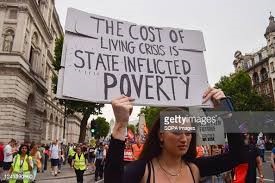
Despite the turmoil and mess the country is currently in, this week’s blog post is dedicated to chocolate, and how to maintain a very much needed chocolate fix during the cost-of-living crisis and the sh** storm which British Politics currently is. Do not even get me started on the Casey Review (2022) which has been overshadowed by that sh** storm I previously mentioned. So, in an attempt to address a serious concern plaguing us all, but disproportionately those most vulnerable, I would like to share some of my findings on the ‘chocolate cost-of-living crisis’.
Before the ‘official’ cost-of-living crisis hit, chocolate was seriously upping its price tag. What used to be 99p or £1 for branded ‘share’ bag (I mean who actually has the self-control to share a share bag?!), has now risen to a huge £1.25 per bag! Now this is for Cadbury’s ‘share’ bags (buttons, wispa bites, twirl pieces to name a few), you are looking at £1.35 for Mars products (Magic stars, Minstrels, Maltesers, MnMs)! Those of us that eat Vegan, lactose-free chocolate are looking at an even higher price tag for an even smaller product. Supermarket chocolate has also gone up in price, and remains nowhere near as scrumptious as the likes of Cadbury, Mars and even Nestle (although I myself am not a Nestle loving due to their questionable ethical practices*). But given the sh** storm the Country is currently in, and the impact of the cost-of-living crisis is having, we need chocolate more than ever! But do not fear: I have some handy tips when it comes to selecting the most reasonably priced and therefore affordable chocolate to help get us through these sh***y times.
The key when looking at the cost of chocolate, and all products, is to look at the price per g/kg. This is usually in teeny tiny writing at the bottom of the price tag on the shelves. Most chocolate (and because I am a self-proclaimed chocolate snob, I am discussing branded chocolate) is coming in around the 85p+ per 100g mark. But there are some sneaky little joys which are undercutting this, and I highly recommend stocking up!
Terry’s Milk Chocolate Orange: £1, (63p/100g): a clear winner! They have various types, dark chocolate, white chocolate and popping candy, and these vary in weights but come in between 63p/100g to 69p/100g!
Cadbury Dairy Milk (360g bar): £3, (83p/100g): the key to Cadburys is the bigger the cheaper! Do not be fooled by the smaller bars and their ‘cheaper’ price. They are not cheaper: and lets be honest who wouldn’t want 360g of chocolate over 150g?!
HOWEVER
Galaxy Caramel (135g bar): 99p (73p/100g): good news for caramel lovers! The smaller caramel bar is cheaper than the 360g Galaxy smooth milk bar (97p/100g), so in this case less is actually more!
Galaxy Minstrels ‘More to Share’ Bag: £1.99 (83p/100g): best value share bag out there at the moment. Again, do not be tricked by the smaller and what may seem like cheaper bags, because they are not!
Growing up with a single-parent father who worked the ‘mum’ shift in a warehouse meant we were very stringent and careful with money: mainly because we didn’t have much. This skill of checking value for money and the price per g/kg is something engrained within me, and something I am extremely grateful for! Check those £’s per g/kg people! It may mean you can have a treat at the end of the week, which doesn’t burn through your pockets, to help off-set the sh** we are currently dealing with.
*it has recently been brought to my attention, the unethical historical practices of Cadbury’s in relation to the Slave Trade, and their racist advertisements in the early 2000’s (not sure how I missed this)! Morally, as I try to avoid Nestle products due to their unethical practices, I will also attempt the same with Cadbury’s: but I fear this will not be an easy transition.
Share this:


Thank F**k it’s Easter!

A number of years ago I wrote a blog entitled: ‘Thank F**k it’s Christmas!’. In it, I had a general moan (nothing new there) about how exhausted the staff and students were in the first term of the new academic year: Christmas break felt desperately needed. At the time, I was still an Associate Lecturer but had just begun my MSc at Leicester as well as supporting my partner on the weekends. I felt burned out, overwhelmed, and ridiculously grateful that the Christmas break had arrived. I also commented on the importance and need for work-life balance for both staff and students, something which many of us have still not managed to achieve and something which appeared increasingly challenging during the various Lockdowns. Yes; a number of us have worked/studied from home, but that has blurred what used to be clear working hours (in theory), and home life. I honestly do not know where one ends and the other begins. Therefore, I find myself back in a head space which is screaming: ‘Thank F**k it’s Easter!’.
This term has been challenging, term 2 always is. We have navigated another lockdown, assessments, lectures, workshops, all sorts. Now, throw into the mix a cyber attack on the University and ‘Thank F**k it’s Easter’ rings louder. Staff and students have persevered in the name of education and demonstrated resilience. Something I think we should all be proud off. But the anxiety, frustrations and exasperation which the lack of IT services has generated, feels like it might take some time to overcome. I am cautious to advise us to consider work-life balance as we go into the Easter Break, as I fear I will sound hypocritical. I advised the need to take time to ourselves before, and to organise some kind of work-life balance, and in all fairness that went straight out the window once we returned from Christmas break (maybe a week of two after, I am sure I attempted a balance to begin with).
Nevertheless, I do think it is important to recognise our strengths, our achievements and to take time to breathe! For many of us, we have been without our families and friends for months. Lockdown is easing, and I am naively hopeful that this will mean we can see those who are dear to us again soon: safely and sensibly. But until we reach that point, I am also exceptionally grateful that the Easter weekend is upon us. Whether we celebrate the bringing of chocolate by the Easter Bunny, or the death and resurrection of Christ: we should all celebrate that we have made it to the end of term 2. Celebrate our achievements no matter how big or small, timetable some time to yourselves: read, run, drink gin, watch films, cross-stitch, do whatever brings you some kind of peace and most importantly: breathe. The University is closed from Friday 2nd April and re-opens on Wednesday 7th April. Lets all take some time for ourselves and breathe. Happy Easter Everyone!
Share this:


#CriminologyBookClub: The Unexpected Inheritance of Inspector Chopra
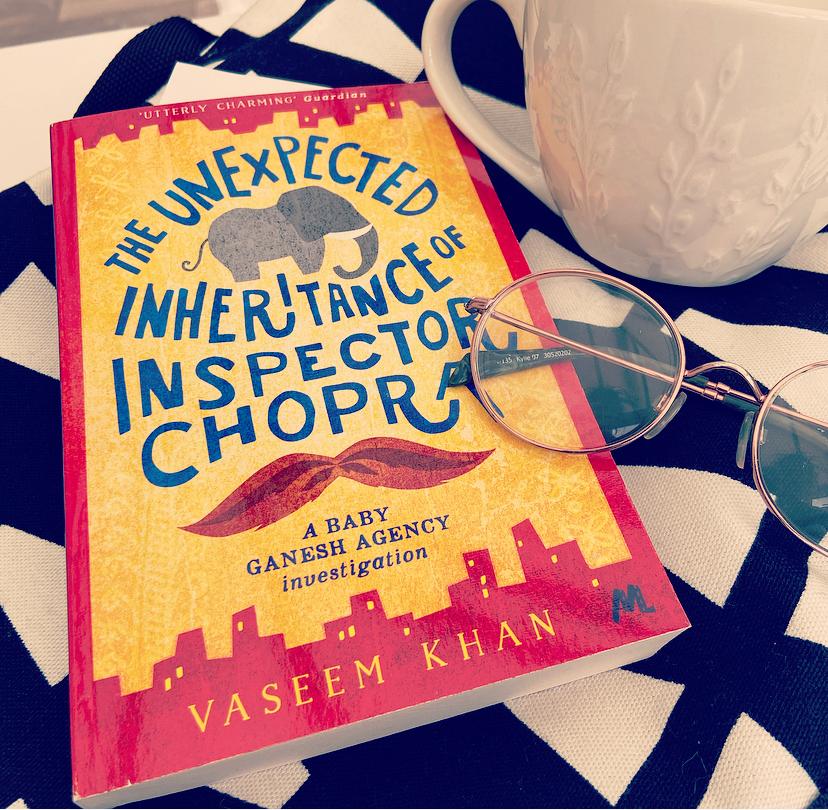
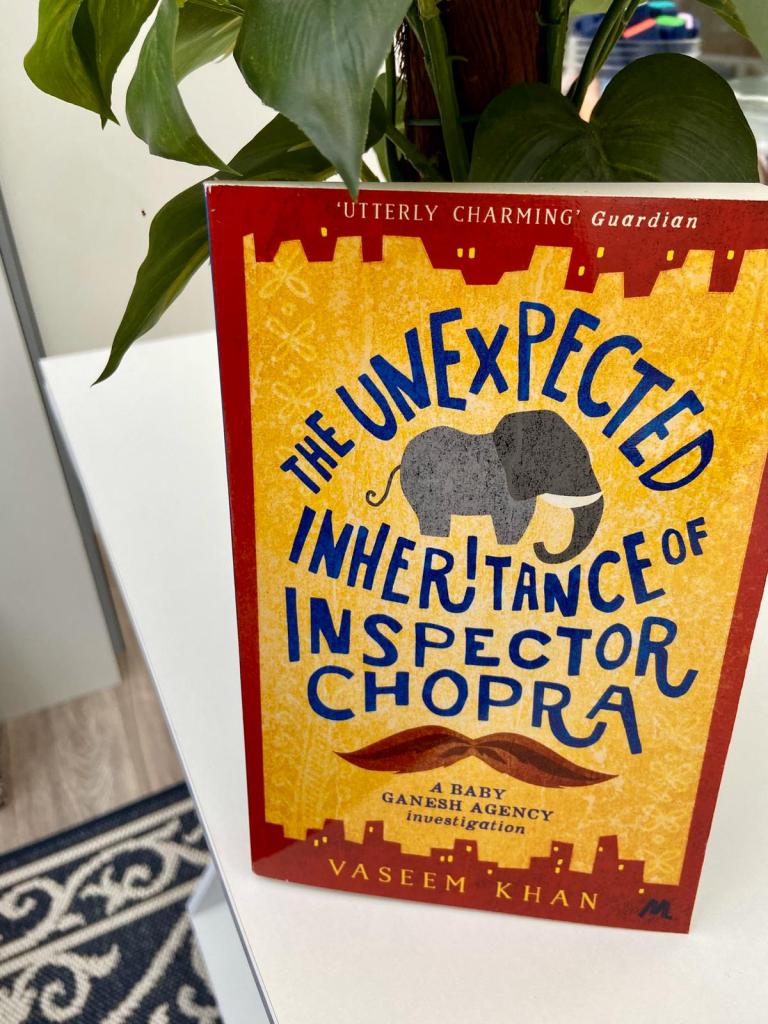
As you know from our last #CriminologyBookClub entry a small group of us decided the best way to thrive in lockdown was to seek solace in reading and talking about books. This blog entry is very different from any other we’ve published before, in that it has seven bloggers contributing! There is a very good reason why and that is because @manosdaskalou managed to choose a book that delighted all of us, and believe me, that is a challenge for a group of bibliophiles. Without more ado, let’s see what everyone thought:

“The second book of book club was a huge success- excellent choice @manosdaskalou! The Unexpected Inheritance of Inspector Chopra by Vaseem Khan was delightful! Whilst fulfilling all the ‘usual stuff’ associated with a crime novel, it also adds a layer of fantasy and wonder which is usually alien to crime fiction. As I raced through the novel, falling in love with characters- Poppy is kick ass, the complete opposite of drippy Carol (The Yellow Room) and safe to say I now want a baby Elephant; I was transformed into another world, something which crime fiction has never done for me before. It brought back feelings of nostalgia and memories of reading David Eddings and Derek Landy in the summer after GCSEs, when life was simpler and full of joy! A wonderful, intriguing and mysterious crime novel with a hint of fantasy, pulling you away to a different place. An enchanting and wonderful read which blends serious social injustices and issues with mystery, suspense and humour- I cannot wait to see what Inspector Chopra and Ganesha get up to next!”
@jesjames50

“The problem with writing a mere paragraph for a blog about a book that I really did enjoy is that I fear I won’t be able to do it justice. The story, well I’m sure others might tell you what the book is about but, if you want to know, really want to know, read it. Rarely can I say that I couldn’t wait to finish the book and yet didn’t want it to finish. The characters come to life, especially the elephant, in a way that makes it seem almost real, but not quite. The story moves on at a fast pace and yet has a steadiness to it. There are surprises along the way and, yet they are almost expected, it was always going to be that way. Within the narrative there is a demonstration of what we know to be good in humans and, yet it encompasses so much of what we know to be bad. How then can I have left the final page, sad that the book was finished, but uplifted by the narrative and almost salivating at the anticipation of reading the next in the series? The plaudits on the cover don’t do it justice, to answer my question, all I can reiterate is that you have to read it to understand.”
@5teveh
“When I first received this book, I was a bit sceptical, as I did not know how an elephant was going to be incorporated into a detective crime novel. However, I was pleasantly surprised. The first book in the series was a delight and a much-needed escape in these uncertain times. This book captured my attention very quickly and whisked me off on a colourful, picturesque adventure to Mumbai, with the amazing inspector Chopra and of course the star of the story, Ganesh the mysterious baby elephant. The book introduces you to an interesting plot. At first you are made to think that the focus of the book will be on Inspector Chopra investigating the murder of a young man. However, you are quickly introduced to the wider issues that sit at the heart of social and economic challenges present in India. Without leaving you glum, the book has a nice balance of crime and mystery, coupled with humour, great food, wonderful scenery and lovable characters. I liked this book as it was unique to any other books that I have read. I am looking forward to continuing the Baby Ganesh Detective Agency series.”
@svr2727
“Vaseem’s novel had me from to get-go. Set in bustling Mumbai this novel has more depth than the usual “whodunit” scenario. This book is a criminologist’s dream, as yes, we all find out who did it in the end, and yes the case is also solved but there are also issues of poverty and corruption to contend with. The story would not be complete without Ganesha the elephant who makes solving the case possible (and survivable). Ganesha goes through a lot in the story. From being depressed and chained up outside an apartment complex, to being mistakenly left to drown during heavy rain and fed chocolate. Despite all of this, Ganesha is often the hero of the hour, so for me the book symbolises the true greatness of animals: We do not deserve them.”
@haleysread
“I really enjoyed this book. It was great to lose myself in a different country and culture and to meet so many relatable characters there – even (especially?) the chocolate loving elephant! I can’t wait to find out what happens next…”
@saffrongarside
As well as having the joy of reading The Unexpected Inheritance of Inspector Chopra, we also had the very unexpected pleasure of welcoming the author Vaseem Khan to our book club meeting today. To be able to hear about Vaseem’s motivations for creating the colourful world in which Inspector Chopra and Ganesha work and play was fascinating. The opportunity to ask questions was fantastic and we’d like to say a big thank you to Vaseem for allowing us a peak inside his world of writing. It is now easy to see where Inspector Chopra gets his generosity of spirit from. And now we’ll leave the final word to @manosdaskalou….after all he did choose the book 😉
“What does a gang of criminologists do at lockdown? We read crime books and talk about them. On this occasion The Unexpected Inheritance of Inspector Chopra was a welcomed distraction from reality. The book introduces the retired inspector with a very unusual sidekick! The retired inspector is a very honourable, incorruptible professional whose investigation will bring him in conflict with the criminal underbelly of Mumbai. The retired inspector is not fazed, and he is determined to carry on regardless. The investigation takes inspector Chopra around the city; which gives the reader a unique opportunity to get to know a metropolitan megapolis.”
@manosdaskalou
Share this:


Things I miss (and don’t) – Jes

Considering what I miss/do not miss during this time has led me to the conclusion that I am extremely privileged and fortunate. And in a sense it shames me that the things I miss or do not miss are exceptionally minor in the grand scheme of things. Nevertheless…
At the beginning of lockdown I was, as I am sure many were, struggling to cope with the concept of time. What was time now I spent every day at home? What day of the week was it? After a few days of feeling quite unsettled by this, I soon accepted and believed that I did not miss time, as with time can restrictions, deadlines and an atmosphere of rushing. I enjoyed taking my time with mundane household chores, with reading in the sunshine, pottering around, playing video games, answering emails: all without having to rush. However fast forward to today and I miss time. I miss having to rush to fit things in, or making a decision about what will have to wait till another day because I do not have time today. And I really miss being able to tell (without looking at a calendar) what day it is.
Like many, I also miss my family, friends and colleagues. I have older relatives who I am facetiming often, but normally would only see once maybe twice a year (they live a fair distance away), and I am making a mental note to make more of an effort to see them when we return to whatever will constitute normalcy. But is this an empty thought? Will I actually make more of an effort? I see lots on social media about how this has made us more grateful and aware, but is this just empty reflection? When push comes to shove will we just fall back into the same problematic ways? Maybe some will, maybe some won’t: I am hopeful I won’t, but I am not making this statement with conviction. Whilst I miss seeing my family, I am thankful that we are able to keep in regular contact and in some ways I talk more regularly with my family now than before lockdown.
Rather than what I do not miss, I will share what I am enjoying whilst in lockdown (even though it is not the same as not missing something). I like how empty the roads are: I have started to run around Northampton via walkways and roads as part of my daily exercise rather than the park routes which I used to do. The roads are empty and it is lovely! I am enjoying (in my experience) how smiley people are towards supermarket workers and hope that it is genuine. I am also enjoying not driving: I rarely drive nowadays anyway, but I would drive to the gym on the occasional evening and to visit friends. As time has very little meaning to me currently, and I live close to local amenities, I am walking everywhere which is pleasant.
It is a strange time and whilst I think there are lots of things I miss, I am not sure that there actually are. I am lucky in the sense that I have (at least I feel like I have) adapted well to being in lockdown. So whilst there are a number of little things I think I miss, actually I’m getting by well enough to question if I actually miss them. Although, in all honesty, I miss being able to walk to the shop as frequently as required for chocolate! This once a week shopping is resulting in me buying lots of chocolate, and eating it within the first half of the week and leaving me all stroppy when we run out! I think if I was unable to go out daily for exercise, and ran out of coffee, then I would not feel as relaxed as I currently do.

 Thoughts from the criminology team