
Home » Career
Category Archives: Career

The Journey of a University of Northampton Criminology Graduate

On this Jubilee year, I ponder and reflect on my 3 years as a joint honours Criminology student, and where my life journey has taken me since
In 2012-2015, I did joint honours Criminology and Education studies, and later did the LLM in International Criminal Law and Security at from 2015-2017.
My journey as a Criminology Student alumni has lead me to all sorts of unique pathways.
Having a background in notetaking and student support at different universities, I worked for 6 1/2 years as a Co-op Member Pioneer (8th January 2018-10th August 2024), where, in the community I served, I supported the local police with crime related issues, and mediated between them and the public on crime issues that mattered to them and helped to support the police, as blogged about here ‘As a Member Pioneer Supporting the Police’ . Whilst this role was about connecting communities, supporting charities, causes and local people, I saw the opportunity to help the police and the community on crime related issues.
From December 2019-June 2020, I worked for 6 months in an addiction recovery unit. Here, I learned about addiction on a more deeper and personal level. I was one of 2 members of staff who were not addicts, and so the experience was eye-opening! The staff who had ‘come clean’ from their addictions would talk about their lives before becoming clean, and how they would resort to crime to fund their addictions. It was a vicious cycle for them as they were fighting traumatic battles which lead them down the route of addiction, and could not find their way out.
I was trained on taking phone calls, and spoke with so many devasted individuals who had lost their sons, daughters, husbands and wives to addiction, and were desperate to get them the help they needed. Seeing families torn apart by addiction, and meeting with new clients who had come in to get help and learning about their stories revealed deep sufferings and traumas, some of which were life-changing events, and harrowing cries for help.
I audited medication on a daily basis, worked with the Addiction specialist doctor to make sure all new clients had been seen to, and prepared folders for each client which the support team used in their care plans. I would also create certificates for all clients who had completed their time at the unit, and celebrated in their success.
When COVID struck, I was put on furlough, and later made redundant – such is life XD – Onto my next adventure!
Where am I now?
Fast forward to March 2021; after completing a lengthy job application and job interview, I landed myself a job in the Civil Service working for the Ministry of Justice! I do casework, work with the Judges on progressing cases, I clerked a few hearings previously too. Everyday is different, and every case I work on is different.
I process new claims and with the support of the Legal Officers, issue directions to the parties if any other information is required. I oversee the progress of cases and ensure all correspondence is up to date, all orders have been issued, and the case is ready to be heard.
Each day is different, and I love everything that I do working for the justice system.
Share this:


Criminology in the neo-liberal milieu
I do not know whether the title is right nor whether it fits what I want to say, but it is sort of catchy, well I think so anyway even if you don’t. I could never have imagined being capable of thinking up such a title let alone using words such as ‘milieu’ before higher education. I entered higher education halfway through a policing career. I say entered; it was more of a stumble into. A career advisor had suggested I might want to do a management diploma to advance my career, but I was offered a different opportunity, a taster module at a ‘new’ university. I was fortunate, I was to renew an acquaintance with Alan Marlow previously a high-ranking officer in the police and now a senior lecturer at the university. Alan, later to become an associate professor and Professor John Pitts became my mentors and I never looked back, managing to obtain a first-class degree and later a PhD. I will be forever grateful to them for their guidance and friendship. I had found my feet in the vast criminology ocean. However, what at first was delight in my achievements was soon to be my Achilles heel.
Whilst policing likes people with knowledge and skills, some of the knowledge and skills butt up against the requirements of the role. Policing is functional, it serves the criminal justice system, such as it, and above all else it serves its political masters. Criminology however serves no master. As criminologists we are allowed to shine our spotlight on what we want, when we want. Being a police officer tends to put a bit of a dampener on that and required some difficult negotiating of choppy waters. It felt like I was free in a vast sea but restrained with a life ring stuck around my arms and torso with a line attached so as to never stray too far from the policing ideology and agenda. But when retirement came, so too came freedom.
By design or good luck, I landed myself a job at another university, the University of Northampton. I was interviewed for the job by Dr @manosdaskalou., along with Dr @paulaabowles (she wasn’t Dr then but still had a lot to say, as criminologists do), became my mentors and good friends. I had gone from one organisation to another. If I thought I knew a lot about criminology when I started, then I was wrong. I was now in the vast sea without a life ring, freedom was great but quite daunting. All the certainties I had were gone, nothing is certain. Theories are just that, theories to be proved, disproved, discarded and resurrected. As my knowledge widened and I began to explore the depths of criminology, I realised there was no discernible bottom to knowledge. There was only one certainty, I would never know enough and discussions with my colleagues in criminology kept reminding me that was the case.
Why the ‘neo-liberal milieu’ you might ask, after all this seems to be a romanticised story about a seemingly successful transition from one career to another. Well, here’s the rub of it, universities are no different to policing, both are driven, at an arm’s length, by neo liberal ideologies. The business is different but subjugation of professional ideals to managerialist ideology is the same. Budgets are the bottom line; the core business is conducted within considerable financial constraints. The front-line staff take the brunt of the work; where cuts are made and processes realigned, it is the front-line staff that soak up the overflow. Neo-Taylorism abounds, as spreadsheets to measure human endeavour spring up to aide managers both in convincing themselves, and their staff, that more work is possible in and even outside, the permitted hours. And to maintain control, there is always, the age-old trick of re-organisation. Keep staff on their toes and in their place, particularly professionals.
The beauty of being an academic, unlike a police officer, is that I can have an opinion and at least for now I’m able to voice it. But such freedoms are under constant threat in a neo-liberal setting that seems to be seeping into every walk of life. And to be frank and not very academic, it sucks!
Share this:


The power of collaboration in Higher Education

In today’s rapidly evolving landscape of higher education, interdepartmental collaboration and knowledge sharing are becoming increasingly vital. By rapid evolution, I mean the pressing challenges we face, including rising costs and finances, issues in student engagement and attendance, digital transformation and rise of new technologies, growing concerns about student wellbeing, and most importantly, the critical need to ensure a strong, positive student experience in the face of these challenges. While the idea of interdepartmental collaboration and knowledge sharing isn’t entirely new, its importance in addressing these complex issues cannot be overemphasised.
At my university, our faculty, the Faculty of Business and Law recently celebrated its ‘Faculty Best Practice Day’ on Wednesday, September 4th. This event, led by our deanery, was an opportunity for departments within the faculty to showcase their hard work, innovations, and fresh ideas across various areas – from teaching and research to employability and beyond. Personally, I view this day as an opportunity to connect with colleagues from different departments – not just ‘catch-up’ but to gain insight into their current activities, exchange updates and share ideas on developments within our sector and disciplines.
This event is particularly intriguing to me for three distinct reasons. Firstly, the ability for department representatives to present their activities to faculty members is invaluable. Departmental reps showcase their growth strategies, techniques for strengthening student engagement, and the support they provide for students after graduating. Some present their research and future directions for the faculty. Others present their external partnership growth, evidence-based teaching pedagogy, and other innovative approaches for enhancing student experiences. Also, these presentations often highlight advancements in technology integration and initiatives aimed at encouraging diversity and inclusion within the HE. All these presentations are not just impressive – they’re incredibly informative and inspiring. Secondly, the event regularly reinforces the need for collaboration between departments – a cornerstone of academia. After all, no single person or department is an island of knowledge. So the ability to collaborate with other faculty members is crucial as it provides opportunities for synergy and innovation, showcases our strengths. Thirdly, and on a personal level, the event fosters the need to learn best practices from others, and this is an aspect that has been tremendously helpful for my career. Such interactions provide opportunity for stronger collegiality, including insights into different approaches and methods that I can adapt and apply in my own work in ways that I can contribute to my professional growth and effectiveness.
In the most recent event, I attended a session on cultural literacy and awareness. Despite my years in higher education, I was particularly surprised to learn new things about cultural awareness that pertain not only to international students but to home students as well. This was an excellent session that also offered the opportunity to connect with colleagues from other departments whom you only know through email exchanges, but rarely see in person.
In sum, I strongly encourage everyone in academia to attend such events or create one if you can. Contribute to and engage with these events – for they equip us to break down traditional barriers between disciplines and provides us with an opportunity to learn from each other with an open mind. This is something I will continue to advocate for because fostering interdepartmental collaboration isn’t just beneficial – it’s essential. It is through these collaborative efforts that we can truly innovate, improve, and excel in our mission to educate and inspire the next generation.
Share this:


Welcome to class. What’s your name?
Often when I ask my newest students to introduce themselves in class – to say and hear their names called out loud – I am reminded that this part of the classroom experience is a fresh opening-up of the classroom as a learning space. I share my full name and invite students to address me as they please. First-year university students often arrive with the weight of their own names – and identities – from their school days. There are often unseen wounds, perhaps unknown. They often arrive in “our” classrooms primed to refashion their own professional personae. A great introduction is their most important networking tool.
On the first day of second grade at my new school, our teacher said my name was so complicated that she nicknamed me by my initials, D.K., which I was called until I decided otherwise. That happened precisely, and abruptly, in the summer between middle and high school, culminating in September 1989. I remember begging my aunt to take me to the music store so I could buy the new Rhythm Nation 1814 cassette.
By then, most of us had attended this same, small school the whole time, so we all knew one another well. I decided to return as a high schooler, and asked folks to call me Diepiriye, no longer D.K. All did, seamlessly.
What’s more, when we’d have a substitute teacher, several of my classmates would yell out my name when they stumbled in taking the roster. They’d always stumble. I’d memorised the roster early on in elementary school; I knew I came between J. King and M. Love. I’d wait.
Caldwell, Cannon, Cummings, Dunbar, Eubanks, Friedman, Gage, Howard (getting closer). While waiting for my name, I’d even write sentences in my mind’s eye using the last names of the kids sandwiching mine – King, Kuku, Love. I could see our names lined-up on the printed page, put together in this order – for years – by the hands of fate. I’d manoeuvre the words around in space, hear how they fit together differently, or in phrases. Stevie Wonder would have a field day with these three words.
I wouldn’t understand this until decades later, but this is one of the typical sorts of imagination that comes along with dyslexia. It’s not just that we mix-up letters and words, rather, our imaginations are less fixed to any simple meaning like in neurotypical people’s minds. Love, King Kuku could have many deeper endings than last names, depending on how you see it. I’m depending on you to use your imagination, here, too. Depending on how you see it, the ship is free, or it is sinking.
McConnell, McGimsey, Montgomery, O’Neil, Palma, Palmer…Todd, Trimmer… Watkins, Welsch, Williams.
It seemed like all but I and one of my classmates’ last names were not English (or Anglicised). Not only that, both our two dads were actually from Nigeria, and our were mothers were best friends from college. Not only that, both our parents grew up on the east and west sides of their respective communities/countries. While I have a funny African name – according to kids – my friend had a Christian first name, and his last name is recognisably Yoruba.
Of course, there was never any civil war between the east and west ends of Louisville, Kentucky – both had black ghettos. Also, both our mothers had ‘desegregated’ every classroom they’d ever entered since elementary in that era’s culture wars. Kids were placed on the frontlines of that war, as author Toni Morrison was quick to remind us.
Both our dads had ended up in America on government scholarships at the University of Louisville, in the aftermath of the chaos of the Nigerian Civil War, albeit through radically differing paths. My dad was a Biafran child soldier. His mother rescued him from a camp, and whisked him out of the country. She named me.
Now, as an educator, I hold the roster. Today, in the UK, roster power is even tied to enforcing national borders. Also of critical value, students’ names will be called many times in class: Called upon to read or respond to text; comment on images; offer perspective or analysis; share lived experience; and crucially, pose critical questions to instructors and peers. The classroom is a busy place.
Call me by my Name.
Too often, in the business of running the classroom, we may overlook simply honouring one another by name, to make the effort to call, recall, and call upon one another in the learning space. As educators, we are called upon to continually demonstrate good practice, shows of good faith.
Everyone uses nicknames in the American South, and uniquely at my school, we called our teachers by their first names. This was one of many ways our ‘liberal’ school broke away from traditional power hierarchies. My second-grade teacher gave me a nickname as a way to shield myself, so I could enter and participate in the learning community untethered. I used this shield until I was strong enough to fly in my own right/light.
University students are in the unique position of fashioning their authentic professional selves. Our students need space to practice calling their names as they wish to be called, professionally. We can share our own curiosity with the stories of all our names, yes, even when we have to be reminded a million times. Yes, even when they have funny African names like Doctor Kuku. Yes, it’s also the proverbial ‘you’re a name not a number’. Sharing is the ethos of community… and crucially, learning. Call me by my Name.
It’s not just my ‘magination, but, we’ve all seen someone respond to an unfamiliar name with the ugly, squished-up face. No one should have their name responded to with what looks like disgust, let alone a child…let alone any student, at any level, in any learning community.
Calling students by name is an important first step in building trust. “Trust,” bell hooks reminds us in Conflict, the 15th the 32 short chapters of her Engaged Pedagogy guide, Teaching Critical Thinking, “must be cultivated in the classroom if there is to be open dialectical exchange and positive dissent.” Trust provides space for students to allow themselves to be known.
Trust also reifies mutual respect. In turn, mutual respect forms the needed basis for the rigorous inquiry, discussion, and crucially, dissent and debate which enlivens and enriches each collective learning experience.
As Badu says: I think y’ betta call Tyrone. Call him! And tell him c’mon … let his voice be heard in class. Call Keisha, Tasha, Joanne, Sian, and Jo, Joey, Joachim, Jane, Paul, Precious, Jean-Paul, Ali, Aliyah, Amadou, Kalliah and Khalil … all of “they and them,” too. And, teachers, let students know stories of your name, too. For example, I wasn’t born Dr. Kuku, but now you can certainly call me by my name!

Pictured here during my first year at college. A high school classmate & I honouring Lyman T. Johnson, a civil rights leader/educator we’d interviewed for our 12th grade oral history project.
Share this:


Reflecting on Research Access

I am currently undertaking a part-time PhD and, as part of my qualitative research project, I need to keep a reflexivity diary, reflecting on my own position in relation to the subjects of my research. My first entry reflects on the process of negotiating access, and I thought it might make an interesting subject for a criminology blog!
As a reflexive qualitative researcher it is important constantly to reflect on my own position in relation to my research and my participants. I am about to start collecting data but only after a very lengthy process of negotiating access (12 months). This process was one in which my own position and history had a significant influence.
For my first project, I am conducting detailed qualitative interviews with serving prisoners. This required approval from the HMPPS National Research Committee (NRC). As a former HMPPS employee, I thought that my inside knowledge would be helpful – indeed at a later stage, in negotiating access to specific prisons, I think it has been. However, at the stage of submitting my application for national approval my prior experience added emotional baggage.
I worked for the Prison Service for nearly 12 years. I really enjoyed working with prisoners and I also enjoyed the camaraderie of working within the tight community of a prison. I worked with some lovely individuals who were dedicated to helping people and who supported me personally in my career. However, the Prison Service is a large, unwieldy organisation and large unwieldy organisations do not always treat individuals well. There were several times in my career when I felt that the organisation had treated me badly: when a recruitment freeze was introduced just after I passed the assessment centre so that I was stuck in limbo without a permanent job; when the in-house MSc was abolished (with no replacement) just before I was due to start it; when I ended up taking on my boss’ responsibilities as well as my own with no promotion or increase in pay; when my request to work part-time after maternity leave was declined; when my post was put on the “surplus list” during a phase of job cuts. It was not all negative – as I say, I enjoyed the work very much, I was proud to be a prison psychologist and there were times when the organisation was good to me (I eventually had a different distance learning MSc funded by the Prison Service, and I was able to take a 12 month career break following my maternity leave) but those negative incidents felt like personal insults when I was working hard. The biggest kick in the teeth came more recently in 2020 when I applied to re-join HMPPS when my tenure on the Parole Board came to an end. I had an unremarkable remote interview and was then turned down. I knew that HMPPS advertised for qualified psychologists every month, so there were plenty of vacancies – that they didn’t want me when I knew I was a good psychologist and had already given them the best years of my career really hurt.
Since then, I have started my PhD and secured a great job with St Andrew’s Healthcare which suits me better and has taken me in a new direction. The memory of the rejection was still lingering, however, when my initial research application to the HMPPS NRC was rejected. I felt like they were kicking me in the teeth again. My initial application was for a piece of research with both a quantitative and a qualitative element. The feedback in relation to the quantitative project was so devastating that I scrapped this part of the research altogether and focused on the qualitative part only. To be fair, the feedback was justified and the re-written proposal is for a much more methodologically sound piece of research, but it still felt personal at the time.
Conducting research during a pandemic is not easy. By the time I had responded to the NRC feedback and was ready to re-submit, there was a resurgence in COVID-19 cases and the NRC were not accepting any further applications. I was advised not to re-submit until applications were being accepted again, otherwise I would have been rejected with no chance to re-submit again. This caused a three-month delay and I had to chase to find out when applications re-opened. When I finally re-submitted, my application was not rejected, but I did receive a long list of requests for further information. Some of these seemed very petty. Responding to them was a significant piece of work and the sense of personal rejection and being made to jump through hoops returned. I was very grateful to one of my supervisors who read my responses before I submitted them and helped to remove the irritation that was evident!
Having submitted the answers to these further questions I waited for ages for a reply. By this stage, I was on first name terms with the reviewer on the NRC. She had sent my application for further feedback from the HMPPS Interventions Team (one of whom I had worked closely with in the past). I was given further questions to answer (which seemed to miss the point of what I was trying to achieve). I tried my hardest to remain positive and to suppress the irritation. HMPPS had the power and were entitled to it. They had every right to reject my research application. Just because I had been a good employee in the past, did not oblige them to give me research access. I resigned myself to receiving a final rejection and started to think of other ways to explore my research questions. And as I reached this point of acceptance, I finally received a positive response saying that my application had been accepted!
Since then, things have moved quickly. I revised my University ethics application in the light of all the amendments I had made following the HMPPS feedback and this was quickly approved. I approached individual prisons for specific access and received positive responses from HMP Grendon and HMP Onley – in these cases possibly reaping the benefits of personal connections from my time in the Prison Service. I will be going into HMP Grendon in early January to start to recruit participants. I no longer work for HMPPS or for the Parole Board, but my status as a Forensic Psychologist and as a former HMPPS employee and Parole Board member will have an influence on my relationships with participants. They will have had experiences with psychologists (and may have had experiences with the Parole Board) which may be positive or negative and which may facilitate or hinder trust in me as a researcher. I will need to look out for these influences and reflect on them as the research progresses.
Share this:


What to do with my criminology?

Let’s arrange time and set out two temporal constants: point one: a random meeting now and another one about three years later! The first one occurs during a standard University Open Day; a young person coming to a session to hear about criminology; they have seen crime programmes, read crime fiction, bought some real crime literature and now they feel fascinated. There is an interest there; what happens next? Why did they do it? How did they do it? Many questions and even more ideas of what to do to those who do horrible things. The Open Day is not just a response to singular identities, in fact it takes these curiosities and turns them on their head. Crime is bigger and smaller; its is more and less and, of course, most importantly is socially constructed, meaning that is does not mean the same thing across time and space.
This first encounter, was interesting, informative, and on the way home generated more questions and more curiosities. It is the first step to a decision to come back to read the subject, to get involved studying the course material and engaging in discussions. Suddenly the crime programme seems artificial; it does not explore social realities; the methods employed are too expensive and the investigation timeframe random. Knowledge is constructed on information but challenging the source of that information becomes the tool of academic exploration. Reading the crime novel or exploring true crime literature is not simply a guilty pleasure, it is a means to get narratives to ascertain cultural dominance and to address crime prioritisation (you wish to know more…then join us!).
Point two: an event sometime after the three years; a graduation. Wearing a gown and taking pictures with family and friends. A recognition that three years of study have come to a successful conclusion. The curiosity remains; there are still a lot of questions to ponder but now there is a difference in how this takes hold. The concept of crime becomes complex, interconnected with social and personal experience, but this is just the beginning. Studies haven’t answered the original questions, in fact they have added more questions, but they have given a “methodology of thought”. A process to relate to any situation that is known or unknown and explore the criminology within.
The completion of studies inevitably bring the issue of what to do next. How to use criminology; professionally, educationally, academically. As a social science, criminology contains plenty of theoretical perspectives and those relate to the lived experience and in many ways explain it or even predict future criminalities. Some decades ago, criminological imagination, considered cyber justice as a model of swift resolution, international justice was seen as the tool to prevent conflict and global crisis. Suffice to say that neither worked. Criminologists are more than keen to explain why neither of these work.
At both points we have been there; we saw you struggle at first to set the question, to consider the merit of the argument. We also saw you growing in confidence and writing work that you never thought you would, but most importantly to consider perspectives never thought of before. Your criminology is a tool; an instrument to understand social realities, when people are at their worst. To observe, study, analyse and explain crime without judgment or bias. Your criminology is a tool to let you join those groups that will ask “what about the human rights” that will consider “what is the value in this rehabilitation” that will advocate the objections for those people who are deprived a voice and for you to give them space. It is not always easy working with people who are kept locked up for the protection of others but it is in that point that your criminology lights up their lives. When all others give up and when the systems seem not to be working and when all seems so hopeless, your criminology will give hope and clarity to those who need it.
From a small personal curiosity, this is not a simple journey, but it is definitely one worth taking and now that you finish, you take with you that mindset and the professional obligation to carry it further. It’s your voice and the way you articulate it; it’s your appreciation of the complexity and these are invaluable skills to carry with you. From us, all we have to say now is…Happy journeys.
Share this:


Don’t know what to do with your Criminology degree….meet Demi King
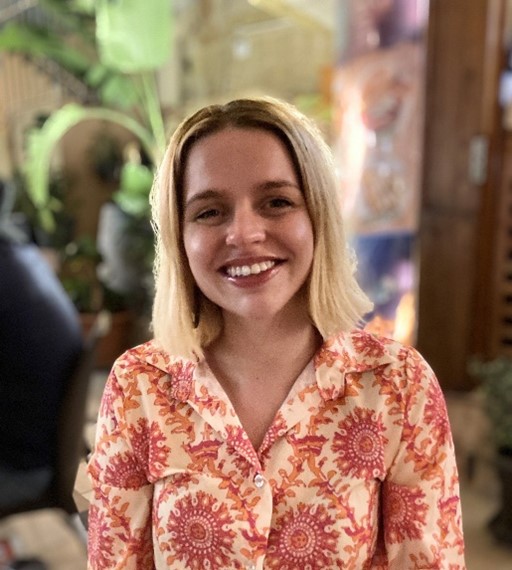
A very warm welcome to all of you wonderful Criminology students! My name is Demi King, your dedicated Careers Consultant here at UON. You will hear my name and be sick of the sight of me in no time! But, within good reason as I am here to help you help yourself. That’s right, I’m not here to do it for you but I will give you 100% in supporting you throughout your time here at UON and for life!! You heard it… for life!! Crazy right??? Nope… Here at UON we promise life long careers support. How awesome is that! Especially if you complete the Employability Plus Award whilst you’re here as if it comes to it we will find you a paid internship 12 months after you’ve left if you’re struggling. One to bear in mind!
Anyway, where were we… Ah yes! So as a fellow Criminology graduate myself, I know the feeling…. You could see me as your fairy god mother, who is here to put you in the right direction which I most certainly wish I had throughout my Uni experience.
I’m not here to scare you or anything but when you come to University, your careers starts then, not in final year when its all panic stations! If you stick with me, you’ll be sweet! I aim to raise your aspirations and uncover your skills/talents/interests by landing you that job you’ve always wanted or help you understand what job you even want to do! There is so much I can help you with, such as getting that CV looking sharp, applying for jobs, the hidden job market, where to look for volunteering & internships.. the list really does go on!
No goal or ambition is too big, and you will be incredibly surprised what you can really do with your degree. I mean look at me! Again, it’s fine if you don’t have a clue right now either but please don’t leave it until the last moment as you will miss out on some fantastic opportunities.
See you around guys, come say hello, book an appointment with me! Don’t be shy. You didn’t pay all this money to not use me! You can contact me demi.king@northampton.ac.uk or book an appointment with me here
Share this:


Meet the Team: Helen Trinder, Associate Lecturer in Criminology

My Academic Journey
Two weeks ago, I attended a university reunion. My cohort are now in our late 40s or early 50s but it is remarkable how little we had all changed. Being back in the place where we all studied together put me in reflective mood and that (combined with some timely prompting from Paula) inspired me to share my academic journey.
I was one of those annoying kids who did well at school and knew exactly what they wanted to do. As a small child, I wanted to be a nurse but I later developed an aversion to bodily fluids which made that career choice untenable. I briefly flirted with the idea of being an English teacher, but both of my parents were in education and strenuously tried to dissuade me. So, at the age of about 14, I decided that I wanted to be a prison psychologist. I was in a careers lesson at school, and we had a big green plastic box filled with cards on which were written descriptions of different jobs. I announced that I wanted to be a psychiatrist (I think I was just being provocative) but I couldn’t find “psychiatrist” in the box, so I picked the closest one that I could find: “psychologist”. I read the card and it sounded really interesting, so I decided to find out more about psychology. The more I read, the more interesting I found it, and when I looked into the sorts of settings where I could work as a psychologist, prisons called out to me.
I was very lucky to secure a place to read Experimental Psychology at University College, Oxford in 1990. People have an image of ancient universities as being elitist, but what struck me was the huge diversity of people who were there. They were all clever and had studied hard to achieve their places, but beyond that they came from an enormous range of backgrounds – a far greater variety than I had encountered in my Shropshire comprehensive school. Our tutors worked us extremely hard. We had weekly tutorials, either in pairs or one-to-one, in two modules every term and we had to prepare an essay for each tutorial (two essays a week). In tutorials, we read out, discussed and analysed our essays and the reading on which they were based. There were lectures and practical classes on top of that and we had exams at the beginning of each term to make sure that we hadn’t forgotten anything over the vacations! That’s why I’m sometimes not very sympathetic to students who struggle to read one paper in preparation for a seminar!
At the end of my undergraduate studies, I still wanted to work in prisons but I knew very little about them. My degree had given me an excellent grounding in psychology but I knew little about the study of crime. So I applied to do an M.Phil. at the Institute of Criminology in Cambridge. This gave me an extra year as a full-time student and I thoroughly enjoyed it! I was privileged to be taught by such eminent criminologists as Loraine Gelsthorpe, Alison Liebling and David Farrington. I particularly enjoyed the penology seminars with Nigel West, which I attended just out of interest – I wasn’t taking the assessment in that module! The assessments were all coursework (extended essays and a dissertation) and had to be submitted at the start of each term, so I studied hard in the vacations, and I attended my seminars in term time, but there was also plenty of time for sport and socialising and making the most of my last year as a student!
At that time, HM Prison Service recruited new psychologists once a year through a national assessment centre. I applied in 1994, just after I had submitted my M.Phil. dissertation but I was unsuccessful. I got a job instead at the University of Wales, Swansea, as a research assistant in the Department of Social Policy and Applied Social Studies. I was involved in an evaluation of drug and alcohol treatment centres, funded by the Welsh Office, which employed both quantitative measures and participant observation. When that contract ended, I obtained another contract with Swansea City Council to compile a community profile of a “problem” estate. This required knocking on doors to interview residents, and participant observation in community settings such as the youth club, old people’s bingo sessions and the local pub. It was considered a rather intimidating environment to drop a well-educated 24-year-old English girl into, but I found the residents to be remarkably warm and welcoming and it was a highly rewarding piece of work.
By the time I finished the community profile, I had re-applied to the Prison Service and passed the assessment centre – the interpersonal skills I had developed through my action research had served me well. I had, however, joined the Prison Service at an unfortunate time. There was a recruitment ban in force which meant that although I had passed the psychologist assessment centre, I couldn’t actually secure a job. I was eventually given a temporary contract to collect data at HMP Littlehey for a large-scale research project analysing effective prison regimes. After 10 months of doing this, the recruitment ban was lifted and I was taken on as a prison psychologist, sharing my time between HMP Littlehey and HMP Wellingborough. The Prison Service used to fund a part-time M.Sc. at Birkbeck University, which all newly recruited psychologists undertook. Obtaining a suitably accredited M.Sc., along with completing a satisfactory period of supervised practice, is an essential requirement of becoming a fully qualified “Chartered” psychologist. In another piece of unfortunate timing, the Birkbeck M.Sc. ceased to run just as I joined the service. At first, there was nothing to take its place. However, other universities soon noticed the gap in the market. I, and others in my prison psychology cohort, were relieved when the University of Leicester set up an M.Sc. in Forensic and Legal Psychology by Distance Learning. The Prison Service agreed to pay my fees and my manager allowed a small amount of study leave when assignments were due. Completing a post-graduate degree while working full-time in a demanding job was hard work and I vowed I would never do it again!
I moved to HMP Woodhill in 1998, completed my M.Sc. in 1999 and became a Chartered Psychologist in 2001. At some point after that, I remember receiving a phone call at work from someone called “@manosdaskalou” at, what was then, University College Northampton! I don’t know where he got my number from, but he wanted someone to talk to his third year Forensic Psychology students about the work that psychologists do in prisons. My parents had not completely succeeded in knocking a desire to teach out of me (in fact I probably inherited my urge to educate from them), and my Dad had taught at Northampton when it was Nene College, so I was keen to fulfil the request. The talk became a regular fixture and, after a few years (by which time I was Head of Psychology at HMP Woodhill), we extended it from a single guest lecture to a series of four, to allow me to cover topics such as risk assessment and offending behaviour interventions in more detail.
My son was born in 2008 and I took 12 months maternity leave from the Prison Service. At the end of that time, I didn’t feel ready to go back, so I negotiated a further 12 months career break. I wasn’t ready to return to the full intensity of managing a team in a high security prison, but I did want to keep my brain active. I asked Manos if there were any opportunities to expand my teaching commitments. The University was in the process of setting up a foundation degree in Offender Management, which was aimed primarily at custodial officers at HMP Rye Hill but was also delivered to a small cohort of full-time students. They were short of lecturers to deliver the modules and my offer to help out was eagerly accepted. The terms of my career break meant that I couldn’t earn money from another employer, but a couple of hours a week teaching suited me very well, so I gave my services for free and taught a module on Professional Practice alongside a lecturer with a background in probation, from another university, called Keith Davies.
After a year of this arrangement, HMP Woodhill were unwilling to have me back part-time, so I resigned from the Prison Service and joined the Parole Board as a part-time psychologist member. This allowed me to work much more flexibly and, with a toddler in the family, it suited me well. It also meant that I could have a proper contract with the University of Northampton and I became an associate lecturer in September 2010. Keith had moved to a different job but I continued to teach Professional Practice on the Offender Management degree. There was also a module in Offender Management on “The Psychology of Crime and Criminal Behaviour”. The person who taught this left after a couple of years and I took it over. Returning to basic psychology and teaching it every week was daunting at first, but I really enjoyed going back to what I had learned as an undergraduate and re-discovering how relevant it was to real-life criminal justice.
The arrangement with HMP Rye Hill had never really taken off and the Offender Management degree only ever attracted small numbers of full-time students, so in 2014 the course closed. Manos was keen, however, to incorporate more psychology into the B.A. Criminology course, so we adapted “The Psychology of Crime and Criminal Behaviour” into a first-year criminology module and I’ve been teaching it ever since! I’ve also taught a module on violence and I’ve covered maternity leave and sickness absence in other modules too. My students will have heard me banging on about forensic psychologists being “scientist-practitioners” and I feel that teaching at the University of Northampton has allowed me to fulfil this role. As a practitioner, I have lots of interesting real-life examples to use to illustrate points to my students, but teaching also keeps me up-to-date with research and theory which I can use to inform my practice.
My academic journey continues to take me to new places. My position on the Parole Board was a public appointment with a fixed tenure that came to an end in September 2020. I decided at that point to start a part-time Ph.D. with the University of Birmingham. I had not wanted to go into research straight from my M.Phil. because I felt that, in order to understand people who committed offences, I really needed some direct experience of working with them, but after 24 years as a practitioner, the time seemed right. I am now 18 months into a 6-year part-time degree. I am exploring the role of empathy deficits in violent and sexual offending. Trying to undertake research (which ideally requires access to prisoners) has not been easy during a pandemic and I have faced a number of obstacles but nothing insurmountable yet.
I am still keen to maintain a scientist-practitioner balance, and I need to pay my university fees and make a contribution to the family income, so in February of last year I started working as a Forensic Psychologist at St Andrew’s hospital. I am primarily based on a medium-secure ward for men with learning disabilities. Forensic mental health is a new area of practice for me and, although I have plenty of transferable skills from my previous roles, I have had to adapt to a different approach to the people we work with and a completely new set of jargon.
Reflecting on my academic journey, it is the people that stand out. I think that the most profound learning has taken place when I have been able to engage with experts who have shared their enthusiasm. In this respect, my undergraduate tutorials and M.Phil. seminars contrast with my distance learning M.Sc., which was a means of obtaining a qualification rather than an immersive learning experience. I hope that, as a practitioner who also teaches, I have been able to share some of my enthusiasm for forensic psychology with my own students. In order to benefit from this, however, students need to take up the opportunity to engage fully with teaching and not just see their university experience as a means to a qualification. Of course, COVID has not helped this, and the university’s penchant for remote learning placed it in a good position to maintain teaching when the pandemic struck. But it is very difficult to engage students when they are just names on a screen. I hope that, as we return to more face-to-face teaching, I can once again inspire my students, not just to pass their exams but to develop a life-long fascination for understanding criminal behaviour and the people that perpetrate it.
Helen Trinder, M.A., M.Phil., M.Sc., C.Psychol.
Forensic Psychologist and Associate Lecturer

Share this:


Growth comes from discomfort

Getting closer to 30 has been really difficult. I had set goals for myself and I have not accomplished most of them.
I thought I had everything all planned out and I knew what I wanted. However, life comes at you fast. I honestly wonder how our parents made this look so easy.
The pandemic has also knocked us back a couple of years. Instead of focussing on goals and thinking about the future; we are simply trying our hardest to stay sane and survive each day. Remembering to breathe became the new main task. Making our mental health a priority has become the most important thing.
Trying to balance ‘living in the moment’ and thinking about the future is hard. My plans have changed so much over the last couple of years. I have more questions than answers. But I’m slowly learning not every question has to be answered straightaway.
The pressure I feel being a first generation immigrant is enormous. I believe that every generation has to show a level of socioeconomic improvement. Finding a way to achieve this, whilst in a foreign land is extremely overwhelming. You are constantly reminded close to each day that you are an outsider and you do not belong here.
Nonetheless, my mother did not work two jobs and not have any days off for me not to make it. This has always been my driving force. My mom always tells me I am being too hard on myself. She had the support from her relatives when she was home in our home country (Zimbabwe) and I don’t have the same luxury, as such I shouldn’t penalise myself for not achieving everything I want to achieve… yet. (The key word is ‘yet’). Just because it has not happened yet doesn’t mean it will not happen in the future. Delay does not mean denial.
Facing career challenges based on your race is a hard pill to swallow. Not knowing who to turn to for advice is even more frustrating. I used to think all women regardless of race would empathise and they would want to help. As we all have one struggle in common; being a woman. At least that should unify us… (so you would think). However, I have realised at times your level of ambition can be deemed as a threat. The same people might have experienced a glass ceiling can be the very same ones who add to your oppression because you are seen as ‘competition’. One of my mentors recently told me to relax in relation to my job searching as all institutions are not used to “aggressive job searches”. I find it pretty funny that the term “aggressive” will always be the main word used to describe Black people. How can a job search ever be aggressive?! Unless I’m standing outside your office threatening you to give me a job then yes, that’s aggressive. However, sending an email reminding a company to send me the new job specification they stated over the phone is not aggressive. In that moment, I knew she is an enemy of my progress.
I used to calculate my career progression based on if I have moved up to a certain level or my pay grade has increased. But I am starting to learn the skills I have acquired over the years are far more valuable. My confidence has grown incredibly. I have found my voice. That is something that cannot be taken from me. I am proud of my level of courage and perseverance. These are qualities not a lot of people have.
I am excited to see what 30 has in store for me. I have learnt so much. But there are a lot of skills I look forward to gaining in the upcoming years. I am slowly learning not to be so hard on myself.
Note to self – do not forget who you are… You are destined for greatness. Everything you want is coming. Do not compare your journey to others. Even if others are not willing to help you; there is always a way forward. Go back to the drawing board and restrategise. No one owes you anything. So do not expect anything from anyone.
“Remember diamonds are created under pressure so hold on, it will be your time to shine soon.” – Sope Agbelisi
Share this:


Meet the Team: Hannah Smith, Associate Lecturer in Criminology

Making that choice…
As semester two is now upon us, I thought it would be a nice time to introduce myself to you all.
My name is Hannah Smith and I started at UoN in 2015, although I began my degree in Criminology in 2014. I completed my first year at Sheffield Hallam University and then transferred to UoN to complete my final two years and graduated in 2017.
To be honest, when I graduated, I was not ready to give up studying. I enjoyed reading, analysing topics, and debating for hours in seminars. I really enjoyed Criminology as it gave me the passion to ask why and look deeper into issues. Because of this, I carried on my studies and completed a Master’s degree in International Criminal Law and Security at UoN, as I wanted to learn more about the legal aspects of certain areas such as migration and I felt this was a sensible step with my knowledge from Criminology.
Since graduating from my Master’s degree, I began an internship at a local anti-poverty charity where I learned lots about voluntary sector working, governance, as well as working on some of the matters we talked about a lot in Criminology. After a year, I decided to take a leap into the world of migration and began working for a regional organisation who works in partnership with the Home Office and local authorities. I spend my days challenging practices, influencing policy, and working to try and help people who experience isolation, victimisation, discrimination and much more resettle and integrate into the UK. I also joined the UoN Criminology team at the end of 2020 and support the team as an Associate Lecturer.
One thing I have learnt along my short career journey so far is that it is not always about having the bit of paper that counts. Don’t get me wrong, it helps to have it written down on your CV, but it ultimately is about what you do with it and what you do with the skills you develop along the way. I never thought that a Criminology degree would lead me to a career in migration, but each and every day I use the skills I gained. Being analytical, being able to have the confidence to have a debate, working on my own to deadlines, working in groups, presenting to professionals and lots more.
So, if there is any advice I could give to you, it would be to focus on what you want to get from your degree rather than where you want to be. I remember being asked ‘what do you want to do when you leave university’, which was so much pressure as I just didn’t know! But there is no harm in not knowing. I would say enjoy and embrace the moment you are in and also get stuck in. Try new things, challenge yourself and enjoy learning all the new concepts and ideas that come your way. Keep using those the skills that feel natural to you as these will just strengthen and challenge yourself with the ones that need some extra attention! Because one day it will help out and pay off. You won’t know when that will be until a time of reflection in a few years’, similar to my time of reflection right now.
& When that happens – I would love to see a blog from you on this page!
Look forward to seeing you all on campus this semester!


 Thoughts from the criminology team