
Home » Bureaucracy
Category Archives: Bureaucracy

Leading with Integrity: Standing Firm Against the Echo Chamber

Sallek Yaks Musa
Truth hurts. Few appreciate it, and even fewer defend it when it threatens comfort or convention. My understanding of this reality came through personal experience, an early lesson in leadership that continues to shape how I view authority and the dangerous allure of sycophancy.
Two decades ago, my journey into education began in an unusual way. For five years, my father had spoken passionately about his dream to establish a nursery, primary, and secondary school that would help transform the state of education in our city. In 2004, we finally decided to bring that dream to life. What followed was both the beginning of my passion for education and my first encounter with the complexity of leading people and institutions.
The process of establishing the school was neither smooth nor simple. I remember every detail – the struggle to develop infrastructure that met required standards and equip it, the endless paperwork, the defence of proposals before career bureaucrats, and the scrutiny of regulatory inspections. Each stage tested our patience and resolve, yet the experience became invaluable. It offered me lessons no textbook could teach and laid the solid foundation of my leadership philosophy.
By the time we received approval to open in September 2005, I led over a hundred interviews to staff the school. That period sharpened my ability to read people and situations intuitively, a skill I have trusted ever since. The school went on to succeed beyond expectation: self-sustaining, thriving, and impacting tens of thousands of young lives. Yet, behind this success lay one central principle – truth.
My commitment to truth shaped the school’s ethos. Every decision, from recruitment to remuneration, from board meetings to relationships with parents and staff, was guided by sincerity. My academic training would later frame this conviction in philosophical terms. With leadership, I align with Auguste Comte’s positivist epistemology, rooted in the belief that truth is objective, concrete, and independent of social interpretation. This, I discovered, is easier preached than practised.
In practice, truth is disruptive. It offends vanity, challenges comfort, and exposes deception. My insistence on it often placed me in direct opposition to others on the Board, including my father. He later confided that while my defiance was difficult to bear, it forced him to confront realities he had overlooked. I further learned that the defender of truth often stands alone. My father eventually recognised what I had resisted all along: the quiet but corrosive power of flattery.
Sycophancy, though rarely discussed openly, remains one of the greatest dangers to leadership. It thrives where authority is unquestioned, and dissent discouraged. Flattery seduces leaders into believing they are infallible. It builds an echo chamber that filters information, reinforcing biases and creating an illusion of competence. Over time, this isolation from reality becomes costly as decisions are made on false premises, honest critics are sidelined, and mediocrity is rewarded over merit. But this is not a modern affliction.
The 16th-century political theorist Niccolò Machiavelli, in The Prince, warned rulers of this very danger. He cautioned that the wise Prince must deliberately surround himself with people courageous enough to speak the truth, for flatterers ‘take away the liberty of judgment.’ Centuries later, the philosopher Hannah Arendt would echo this concern, arguing that the loss of truth in public life leads to moral decay and political collapse. The persistence of these warnings shows how deeply entrenched sycophancy remains in systems of power.
The psychology behind flattery is deceptively simple. It feeds the ego, providing comfort that masquerades as respect and support. Leaders, craving affirmation, often mistake it for loyalty. But as Daniel Kahneman and other cognitive theorists have shown, human judgment is easily distorted by bias and praise. Flattery, therefore, becomes not merely a social nicety but a psychological trap, one that blinds decision-makers to inconvenient truths.
For those newly stepping into student’s course representative roles, these lessons carry special relevance. Academic leadership is often less about authority and more about stewardship, the quiet work of creating conditions where ideas can flourish, student’s voices are heard, and students can contribute honestly. Resist the temptation to surround yourself with agreeable voices. Encourage critique, invite dissent, and create a culture where questioning is not perceived as confrontation but as commitment to excellence. The strength of representation lies not in the leader’s popularity but in their willingness to confront complexity, admit limits, and make decisions grounded in truth rather than convenience.
As the once “baby school” turned twenty this year, its anniversary passed in my absence. My father’s message of appreciation reached me nonetheless, and his words reminded me why truth, though often costly, remains indispensable to authentic leadership. He wrote:
Remember, son, true leadership lies in listening attentively, sieving facts from noise, embracing unpopular voices, acting on truth, and valuing others above yourself.
That reflection closed a circle that began two decades ago. It reminded me that leadership rooted in truth is not about being right but about being realistic. It is about creating space where honesty thrives, even when it unsettles.
Flattery may offer short-term peace, but truth builds long-term strength and relationships. The leader who welcomes honesty, however uncomfortable, not only guards against failure but also nurtures a culture of integrity that outlives their term.
Twenty years after that first bold step into education, leading teams and managing academic programmes in education, I remain convinced that truth is not a luxury in leadership – it is its lifeline. Legacies are not defined by applause or position, but by the integrity to lead with sincerity, listen without fear, and act with unwavering commitment to what is right. People are ultimately remembered not for simply opposing flattery, but for the truth they championed and the courage they demonstrated to stand firm in their convictions when it mattered most.
Share this:


Policy, procedures, processes, and failure

Examine any organisation and you will find a myriad of policy and procedures that are designed to inform its processes and guide employees. On paper, these formalised ideals and directions make absolute sense but frequently they bear no relationship to reality and rather than empowering, they constrain and often demoralise. These idealistic notions of how an organisation should function facilitate the dehumanising effects of managerial diktat and engender an internalisation of failure amongst employees.
By way of an example, in the 1990s police forces began to consider notions of Standard Operating Procedures (SOPs) in respect of crime investigation. These SOPs seemed on the face of it to be a good idea. The police service, driven by government notions of New Public Management, were being measured on crime reduction and crime detection. Performance indicators were propped up by idealistic notions coming out of government supported by HMIC and the now defunct Audit Commission that catching more criminals would engender a virtuous circle resulting in crime reduction. Nothing of course, was further from the truth. But the introduction of SOPs was meant to attempt to address police failings. These, certainly in one force, were at the outset seen as a guide, a minimum standard required in an investigation. They weren’t intended to constrain.
A small department was set up in this force to measure adherence to these SOPs and to report back where there were inherent failures. For example, on attending a house burglary, the attendant officers were required to take a statement from the householder, and they were required to carry out house to house enquiries in the vicinity. At the very least, they needed to knock on doors either side of the house that had been burgled and a couple of houses across the road. Frequently the statement wasn’t taken, or the house-to-house enquiries hadn’t been completed. It became clear that the officers were failing to carry out simple procedures. Measuring adherence to SOPs and providing feedback to promote improvement soon resulted in measuring adherence in order to enforce compliance.
In hindsight, there should have been a realisation that the SOPs, far from being helpful were in fact having a detrimental effect. Where officers could have carried out further investigations based on their professional judgement, they adhered to the minimum required in the SOPs or simply failed to comply with them fully. This was partially resultant of a notion amongst officers that discretion was being curtailed, but more notably it was driven by other processes and organisational priorities. These other processes were to do with attendance at other incidents. Graded as a priority by the control room, officers were being pulled off the burglary investigation and therefore couldn’t comply with the burglary investigation SOPs. Police forces were also being measured on how quickly they responded to and arrived at various calls for service. There was clearly a direct conflict between management ideals and reality with the officers being set up to fail in one aspect or another. There were simply not enough staff to do all the work and to manage the overwhelming demands at certain times.
One way of dealing with the failures was to link these to the performance and development review (PDR) process. The development aspect was a somewhat redundant term as the PDR was all about performance. Of course, each time the PDR came around the officers had failed to achieve their objectives. This provided lots of evidence of people not doing their job properly. In the wider gamut of crime figures officers at various levels began to realise that the only way to avoid accusations of poor performance was to manipulate the crime figures. In the meantime, those driving the behaviours, washed their hands of them whenever someone was found out, often hiding behind the SOPs and policy. The misuse of the PDR process and the consistent scrutiny of performance metrics resulted in the internalising of failure by staff. Whole systems and processes had been set up to measure failure, after all how could success be measured if it could never be achieved. Of course, it could never be achieved because the ambition and driving force behind this, government’s notions of crime control, were based on ideals and rhetoric not science. But the overriding fact was that it could never be achieved because there were never enough resources to achieve it.
The failure of course wasn’t in the officers that didn’t adhere to the SOPs or those that manipulated crime figures to try to avoid overbearing scrutiny, it was the failure of managers to provide adequate resources. It was a failure of managers to try to understand what reality looked like and it was a failure of managers to deal with the dehumanising effects of policy, procedure and processes.
Having left the police, I thought higher education would somehow be different. I don’t think I need to say anymore.
Share this:


Visa by Impression, Atavism or Exploitation?
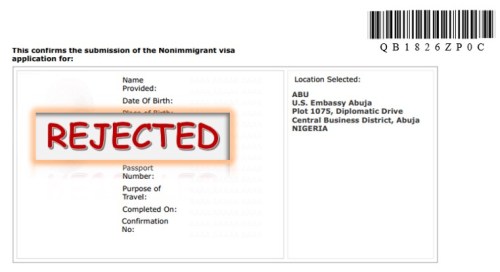
My paper, ‘beyond institutional autonomy: a quadrumvirate interaction theory of civil-military relations’ was accepted for presentation at the 2019 Biennial International Conference of the Inter-University Seminar on Armed Forces and Society scheduled for November 8-10, 2019 at the Hyatt Regency, Reston, Virginia. However, I am unable to attend the conference because I was denied visa at the US Embassy in Abuja, Nigeria. In this entry, I wish to highlight and add my voice to the concerns academics and non-academics, especially those from the ‘Global South’ face in securing visas to enable them attend conferences in the supposed ‘developed world.’ Hence, this entry is a personal reflection on the US visa regime in Nigeria, and its nexus with criminology.
Individual visas are often issued based on the merit of an application and the adequacy of the supporting documents submitted by applicants who are also required to pay certain fees and charges for the application. The issuing authorities would normally consider the criminal background record of an applicant, their previous travel history and the adequacy of funds to cover for the cost of the trip. In some cases, as typical with the US visa regime in Nigeria, applicants are required to present themselves before a consular officer for a visa interview and the decision to issue a visa is at the discretion of the consular officer.
Given this, one would expect that the consular officer would in the least, view/review the supporting documents of an applicant, in addition to asking some pertinent questions. The rationale being that the US visa web-application platform does not provide a link/option for submitting the supporting system prior to the interview. However, this was not the case when I was denied a visa. In fact, the interview barely lasted two minutes, and the following was the ‘interview’ conversation I had with the male consular officer:
Why do you want to go to Reston Virginia? To attend a conference.
What do you intend to do in the conference? I will be presenting a paper, a theory from my PhD research.
Who would pay for the conference and travel fee? The conference organisers and (he interjects with the next question, but I told him I still have another source of income, but he replied saying I had told him enough and that I should answer the next question).
What is your highest academic qualification? A PhD from the University of Stellenbosch, South Africa, I just concluded last December.
What do you do for a living? I just concluded a Postdoctoral Fellowship with the University of Stellenbosch and I have just accepted an appointment with the University of Jos as a Lecturer.
Do you have a family? Yes, a wife and a child, and we are expecting another.
For how long have you been married? 3 years
How old is your child? 1 year and 8 months
What does your wife do for a living? She is a housewife, she looks after the family
Are you travelling alone? Yeah (At this point, he faced his computer keyboard, typed some few words, then turned to me and told me, unfortunately we cannot issue you the visa while handing over a pre-printed form containing the reasons for visa denials).
From this ‘interview’ conversation, two things stood out for me. One is the fact that the consular officer made his decisions without viewing or considering any of my supporting documents and the second was the question, what did I do, say, or answer wrongly?
In terms of the latter, I found nothing wrong with my responses, but I found a huge systemic fault with regards to the former. The internet is rife with complaints from individuals, organisations and recently countries accusing the US of implementing a harsh visa regime which deliberately frustrates and traumatises visa applicants. My web application process in Nigeria is nothing short of this, in fact, I thought it was easier to make heaven than to obtain the US visa from Nigeria.
Having carefully thought about the visa regime in the light of my ‘interview,’ I concluded that the US visa regime is anachronistically atavistic, an exploitative business strategy, or both. My opinion is simply that I was denied visa not because of my responses to the questions but because the consular officer found a questionable impression through observing my face as he had not viewed or considered my supporting documents. For this, I appreciate Cesare Lombroso and one needs not be a Criminologist before knowing that facial impression and appearance are never better yardstick than considering the merits of the supporting documents.
A fair and equitable visa system will consider the merit of an application, the travel history of an applicant (which I have a reasonable one), whether the supporting documents are convincing, the criminal record background, purpose of travel, sufficiency of funds, and the existence of a strong tie with one’s origin. However, this was not the case, and this led me to the business exploitation opinion.
Customarily, when one pays for a service, the norm is to provide quality and effective service worth the value of the money paid or promised, anything short of this is clear exploitation – unfortunately, this is how the US visa regime operates in Nigeria. On the day of my interview, there were at least seventy (70) persons queuing up for theirs early in the morning, but it is not my intention to analyse how much income the US derives from this.
Share this:


The struggle is real

© Jonathan McHugh
Stephanie is a BA Criminology graduate of 2019 and was motivated to write this blog through the experience of her own dissertation.
Last year was a very important time for me, during my second year of studying Criminology I began doing a work placement with Race Act 40, which was an oral history project to celebrate 40 years of the Race Relations Act 1974. The interviews that were conducted during my placement allowed me to get a variety of in-depth stories about racial inequalities of Afro-Caribbean migration settlers in the UK. During my time with the Race Act 40 project it became clear to me that the people who had volunteered their stories had witnessed a long line of injustices from not only individuals within society, but also institutions that makeup the ‘moral fabric’ within society. When exploring whether they have seen changes post and pre-Race Relations they insisted that although the individual within society treated them better and accepted them post-Race relations, to an extent there is a long way to go to improve the hostile relationships that has been formed with politicians and police.
The notion of hostility between politicians and the Afro-Caribbean community was reinforced, as the UK was going through the Windrush scandal which affected the core of every Afro-Caribbean household within the UK. This was extremely important for me as both paternal and maternal grandparents were first generation Windrush settlers. During the scandal my father became extremely anxious and the ramifications of the Windrush scandal hit home when some of his friends that came to the UK in 1961, the same time as he did, were detained and deported on the grounds of them being ‘illegals’. The UK Government used their ‘Hostile Environment’ policy to reintroduce Section 3 paragraph 8 of the Immigration Act 1971, which puts burden of proof on anyone that is challenged about their legal status in the UK’.
The UK government was ‘legally’ able to deport Caribbean settlers, as many of them did not have a British passport and could not prove their legal right to be in the UK and the Home Office could not help them prove their legal rights because all archival documents had been destroyed. This was a hard pill to swallow, as the United Kingdom documents and preserves all areas of history yet, overnight, the memory of my family’s journey to the UK was removed from the National Archives, without any explanation or reasoning. The anxiety that my father felt quickly spread over my whole family and while I wanted to scream and kick down doors demanding answers, I used my family’s history and the experiences of other Black people under British colonial rule as the basis for my dissertation. The hostility that they faced stepping off the Windrush echoed similar hostility they were facing in 2018, the fact that the British government had started deporting people who were invited into the country as commonwealth workers to build a country that had been torn apart as a corollary of war was a slap in the face.
Under Winston Churchill’s government, officials were employed to research Black communities to prove they were disproportionately criminal as a strategy to legally remove them from the UK and although they did not have any evidence to prove this notion the government did not apologize for the distasteful and racist treatment they demonstrated. It is hard to convince Black people in 2019 that they are not targets of poor similar treatment when they have been criminalised again and documents have been destroyed to exonerate them from criminality.
A final thought:
I have outlined the reasons why this topic has been important to me and my advice to any Criminology student who is going to be writing a dissertation is, to find a topic that is important and relevant to you, if you are passionate about a topic it will shine through in your research.
Share this:


The same old rhetoric, just another place
 My sister phoned me the other day in great excitement. She’d just met a former criminology student from the University of Northampton, and she had an awful lot to say about it. She wasn’t in her hometown and had asked directions from a stranger to the river embankment. Having visited the embankment, she returned to town only to bump into the stranger again who enquired whether she managed to find it. They ended up chatting, my sister can do a lot of that, and she found out that the stranger was a police officer. My sister asked whether she knew me, why she would ask that I have no idea, it seems that she has formulated some notion in her head that all police officers must know each other or at least know of each other. This is the bit that my sister got so animated about, yes, the stranger did know me, I’d taught her at the University, and she was now in a budding police career. Apparently, I had done so much to help her. Now I don’t know about being that helpful and I suspect that many of my colleagues played a part in her success story, but it reminded me about what it is that we do and aspire to do as lecturers.
Whilst waiting to play my part in talking to school children the other day I started to read a new edition of a seminal piece of work on policing, The Politics of the Police (Bowling et al., 2019). The preface alone makes interesting reading and in ‘mentioning populist political reactions towards crime’, ‘zero tolerance of the marginalised and outsiders’ and ‘laissez-faire economics’ that promotes individual interests, my mind turned to the managerialist ideals that have dogged policing for over three decades. Those ideals saw the introduction of performance indicators, targets and the inevitable policing by objectives (Hallam, 2000), that resulted in some quite appalling manipulation of data and a diminution of service rather than an improvement. The problem was that the targets were never achievable and were simply put in place for managers to simplify the social world over which they had no control. What didn’t get measured, because it never could be, were the myriad of tasks that police officers and staff undertake daily. Dealing with people with mental illness, searching for missing persons and dealing with minor disturbances are an example of just a few such tasks. Bowling et al. (op cit.) subscribe to the notion that the job of the police is to help maintain social order, an ideal that does not lend itself to measurement. Counting the number of crimes committed in an area or the number of detected crimes is only an indication of failure, not success.
How does that policing narrative fit in with my opening paragraph? The former student was not an ideal student from a managerialist viewpoint. She didn’t attain so called ‘good grades’, I’m not even sure if she fully completed her studies. In terms of performance measurement, she doesn’t even feature and yet she, like so many others we have seen in Criminology, has flourished. Whilst concentrating on ‘retention and progression’ and ‘fails’ and ‘good grades’ we neglect the very reason we exist. Just as in policing where the figures were pored over by managerialist who had not slightest notion of the reality of the social world, so too are we in danger of simply seeking pleasing statistics to keep the wolves from the door because explanations of real success and failure are too complex for managers to understand or manage.
Imagine a world where the police just helped maintain social order, where probation were not plagued by notions of payment by results, where patients were just seen in A&E in a reasonable time and where lecturers just opened the minds of students and allowed them to think for themselves. Imagine the time and expense that could be saved and reinvested in providing real service and dare I say it ‘value for money’ if we stopped gathering meaningless data. Imagine managers casting aside the shackles of neoliberalist ideals and managing people, not using numbers as an indication of failure and impending doom. We can but dream, but my reality, as I’m sure is the reality of many of my colleagues, is the success stories that I occasionally hear and can reminisce about. No amount of number crunching can take that away and nor will it ever provide evidence of success or failure.
Bowling, B. Reiner, R. and Sheptycki, J. (2019) The Politics of the Police. (5th ed.) Oxford: OUP.
Hallam, S. (2000) Effective and Efficient Policing: Some Problems with the Culture of Performance, in Marlow, A. and Loveday, B. (eds.) After MacPherson: Policing after the Stephen Lawrence Inquiry. Lyme Regis: Russell House
Share this:


Policies for the ideal, reality for the rest.

Alpha Stock Images – http://alphastockimages.com/
This week saw the appointment of a new minister for suicide prevention announced on world mental health day (BBC), and an article in The Guardian observing that mental health resources are woefully underfunded.
My thoughts first turned to the fact that the appointment of a minister to address the problem was reminiscent of New Labour’s previous attempts to address issues with the appointment of various czars, none of which were very successful (BBC). Allied to the appointments were the inevitable plethora of new policies, many failing at the first hurdle. Nonetheless their longevity and to some extent durability lay in ministers’ and state agency managers’ egos, and inability to see beyond fantasy and media pleasing rhetoric. However, it would be disingenuous to fail to acknowledge that some policies and strategies are conceived and implemented with the best of intentions, both at the macro and micro.
The old saying that ‘no plan last[s] beyond the first encounter with the enemy’ (Hughes, 1993:14) probably explains why so many policies fail, not because the essence of the policy is wrong but because politicians and those in charge fail to take into account or to rationalise that at the very core of the policy intentions, lay people. People are unpredictable, people do not conform to ideals or preconceived ideas and, yet policies are formulated to address ideal situations and an ideal homogenous population. No one member of the public is the same, whether they are a victim of crime, an offender, a person in need of medical care or mental health services, a worker, a student or a user of a service. They can be one of these things or a combination of them, they are a product of so many differing socioeconomic influences that any one policy cannot ever hope to deal with the multitude of issues they bring. People are both complex and complicated. A plan or policy needs to be adapted and changed as it progresses, or it will inevitably fail.
That brings me very nicely to one of my favourite authors Michael Lipsky. Lipsky presents those working at the coal face of public services as street-level bureaucrats. Attempting to navigate policy and strategy implementation whilst dealing with predominately less than ideal clients. Lipsky observes that in doing so the street-level bureaucrats are faced with a number of different issues:
- Resources are chronically inadequate relative to the tasks workers are asked to perform.
- The demand for services tends to increase to meet the supply.
- Goal expectations for the agencies in which they work tend to be ambiguous, vague, or conflicting.
- Performance oriented goal achievement tends to be difficult if not impossible to measure.
- Clients are typically nonvoluntary; partly as a result, clients for the most part do not serve as primary bureaucratic reference groups.
(Lipsky 1983, 27:28)
Policies and strategies are difficult to implement, if they are formulated purely on ideals without ever having recourse to those, i.e. the street level bureaucrats, that are required to implement them, they will inevitably fail. If plans rarely survive the first contact, then they need to be adapted or ditched, those best placed to advise on changes are of course those at the coal face. Herein lies the rub, politicians and managers do not like to be told their policy is failing or that it will not work in the first place. They inevitably place the failure of policies, or reluctance to implement them, on those at the coal face with little or no knowledge of the issues that are encountered. The raising of such issues are simply seen as an excuse, laziness or a reluctance to change. More often than not, the opposite is true, street level bureaucrats want change, but for the better not for the sake of it or to be seen to be doing something.
It is difficult to see how the appointment of a new czar will make a difference to suicide rates without fundamental changes in the way that policies and strategies are conceived. Those thinking of writing policy whether at the macro or micro, would do well to get a hold of Lipsky’s book and to reimagine the ‘real’ world.
Lipsky, M (1983) Street-Level Bureaucracy: dilemmas of the individual in public services, New York: Russell Foundation.
Hughes, D (ed) (1993) Moltke on the Art of War: Selected Writings, Random House, (ebook)
Share this:


Criminology: in the business of creating misery?

I’ve been thinking about Criminology a great deal this summer! Nothing new you might say, given that my career revolves around the discipline. However, my thoughts and reading have focused on the term ‘criminology’ rather than individual studies around crime, criminals, criminal justice and victims. The history of the word itself, is complex, with attempts to identify etymology and attribute ownership, contested (cf. Wilson, 2015). This challenge, however, pales into insignificance, once you wander into the debates about what Criminology is and, by default, what criminology isn’t (cf. Cohen, 1988, Bosworth and Hoyle, 2011, Carlen, 2011, Daly, 2011).
Foucault (1977) infamously described criminology as the embodiment of utilitarianism, suggesting that the discipline both enabled and perpetuated discipline and punishment. That, rather than critical and empathetic, criminology was only ever concerned with finding increasingly sophisticated ways of recording transgression and creating more efficient mechanisms for punishment and control. For a long time, I have resisted and tried to dismiss this description, from my understanding of criminology, perpetually searching for alternative and disruptive narratives, showing that the discipline can be far greater in its search for knowledge, than Foucault (1977) claimed.
However, it is becoming increasingly evident that Foucault (1977) was right; which begs the question how do we move away from this fixation with discipline and punishment? As a consequence, we could then focus on what criminology could be? From my perspective, criminology should be outspoken around what appears to be a culture of misery and suspicion. Instead of focusing on improving fraud detection for peddlers of misery (see the recent collapse of Wonga), or creating ever increasing bureaucracy to enable border control to jostle British citizens from the UK (see the recent Windrush scandal), or ways in which to excuse barbaric and violent processes against passive resistance (see case of Assistant Professor Duff), criminology should demand and inspire something far more profound. A discipline with social justice, civil liberties and human rights at its heart, would see these injustices for what they are, the creation of misery. It would identify, the increasing disproportionality of wealth in the UK and elsewhere and would see food banks, period poverty and homelessness as clearly criminal in intent and symptomatic of an unjust society.
Unless we can move past these law and order narratives and seek a criminology that is focused on making the world a better place, Foucault’s (1977) criticism must stand.
References
Bosworth, May and Hoyle, Carolyn, (2010), ‘What is Criminology? An Introduction’ in Mary Bosworth and Carolyn Hoyle, (2011), (eds), What is Criminology?, (Oxford: Oxford University Press): 1-12
Carlen, Pat, (2011), ‘Against Evangelism in Academic Criminology: For Criminology as a Scientific Art’ in Mary Bosworth and Carolyn Hoyle, (eds), What is Criminology?, (Oxford: Oxford University Press): 95-110
Cohen, Stanley, (1988), Against Criminology, (Oxford: Transaction Books)
Daly, Kathleen, (2011), ‘Shake It Up Baby: Practising Rock ‘n’ Roll Criminology’ in Mary Bosworth and Carolyn Hoyle, (eds), What is Criminology?, (Oxford: Oxford University Press): 111-24
Foucault, Michel, (1977), Discipline and Punish: The Birth of the Prison, tr. from the French by Alan Sheridan, (London: Penguin Books)
Wilson, Jeffrey R., (2015), ‘The Word Criminology: A Philology and a Definition,’ Criminology, Criminal Justice Law, & Society, 16, 3: 61-82

 Thoughts from the criminology team