
Home » British
Category Archives: British

What society do we want to live in?

Recently after using a service, I received an email to provide some online feedback. The questionnaire was asking about the services I received and to offer any suggestions on anything that could be done to improve services. This seems to become common practice across the board regarding all types of services and commercial interactions. This got me thinking…we are asked to provide feedback on a recent purchase, but we are not asked about issues that cut through the way we live our lives. In short, there is value in my opinion on a product that I bought, where is the value in my views of how I would want my community to be. Who’s going to ask me what society I want to live in!
Consumerism may be the reason we get asked questions about products but surely before and above being consumers, aren’t we all citizens? I can make helpful suggestions on what I would like to see in services/products but not on government. We profess democratic rule but the application of vote every now and then is not a true reflection on democracy. As we can offer online surveys for virtually everything, we have ways of measuring trends and reactions, why not use these to engage in a wider public discourse on the way to organise our communities, discuss social matters and engage in a public dialogue about our society.
Our political system is constructed to represent parties of different ideologies and practices offering realistic alternatives to governance. An alternative vision about society that people can come behind and support. This ideological diversion is essential for the existence of a “healthy political democratic process”. This ideological difference seems to be less prevalent in public dialogue with the main political parties focusing their rhetoric on matters that do not necessarily affect society.
Activism, a mechanism to bring about social change is becoming a term that sparks controversy whilst special interest groups maintain and even exert their influence on political parties. This allows private special interests to take the “ear of the government” on matters that matter to them, whilst the general public participate in social discourses that never reach the seat of power.
Asking citizens to be part of the social discussion, unlike customer service, is much more significant; it allows us to be part of the process. Those who have no other way of participating in any part of the system will be castigated to cast their vote and may participate in some party political activities. This leaves a whole heap of everyday issues unaddressed. In recent years the cost of living crisis pushed more people into poverty, food, housing and transport became issues that needed attention, not to mention health, post-covid-19.
These and many more social issues have been left either neglected only to be given the overhead title of crisis but with no action plan of how to resolve them. People affected are voiceless, having to pick up the injustices they suffer without any regard to the long term effects. Ironically the only plausible explanation given now that “Brussels’ rule” and “EU bureaucracy” are out of the picture, has become that of the immigrants. The answer to various complex problems became the people on the boats!
This is a simplification in the way social problems happen and most importantly can be resolved. Lack of social discourse has left the explanation and problem solving of said problems to an old rhetoric founded on xenophobia and discrimination. Simple explanations on social problems where the answer is a sentence tend to be very clear and precise, but very rarely can count the complexity of the problems they try to explain. There is a great disservice to our communities to oversimplify causes because the public cannot understand.
Cynically someone may point out that feedback from companies is not routed in an honest request to understand customer satisfaction but a veiled lip-service about company targets and metrics. So the customer’s response becomes a tradable figure of the company’s objectives. This is very likely the case and this is why the process has become so focused on particular parts of the consumer process. Nonetheless and here is the irony; a private company has some knowledge of a customer’s views on their recent purchase, as opposed to the government and people’s views and expectations on many social issues.
Maybe the fault lies with all of us. The presumption of democratic rule, especially in parliamentary democracies, a citizen is represented by a person they elect every four years. This representation detaches the citizen from their own responsibilities and obligations to the process. The State is happy to have citizens that engage only during elections, something that can be underscored by the way in recent years that protests on key social issues have been curtailed.
That does not sound right! I can provide an opinion over the quality of a chocolate bar or a piece of soap but I cannot express my views as a citizen over war, climate, genocide, immigration, human rights or justice? If we value opinion then as society we ought to make space for opinion to be heard, to be articulated and even expressed. In the much published “British Values” the right to protest stands high whilst comes in conflict with new measures to stop any protests. We are at a crossroads and ultimately we will have to decide what kind of society we live in. If we stop protests and we ban venues for people to express themselves, what shall we do next to curtail further the voices of dissent? It is a hackneyed phrase that we are stepping into a “slippery slope” and despite the fact that I do not like the language, there is a danger that we are indeed descending rapidly down that slope.
The social problems our society faces at any given time are real and people try to understand them and come to terms with them. Unlike before, we live in a world that is not just visual, it relies on moving images. Our communities are global and many of the problems we face are international and their impact is likely to affect us all as people, irrespective of background or national/personal identity. At times like this, it is best to increase the public discourse, engage with the voices of descent. Maybe instead of banning protests, open the community to those who are willing to discuss. The fear that certain disruptive people will lead these debates are unfounded. We have been there before and we have seen that people whose agenda is not to engage, but simply to disrupt, soon lose their relevance. We have numerous examples of people that their peers have rejected and history left them behind as a footnote of embarrassment.
Feedback on society, even if negative, is a good place to start when/if anyone wants to consider, what kind of society I want and my family to live in. Giving space to numerous people who have been vastly neglected by the political systems boosts inclusivity and gives everyone the opportunity to be part of our continuous democratic conversation. Political representation in a democracy should give a voice to all especially to those whose voice has long been ignored. Let’s not forget, representation is not a privilege but a necessity in a democracy and we ensure we are making space for others. A democracy can only thrive if we embrace otherness; so when there are loud voices that ask higher level of control and suppression, we got to rise above it and defend the weakest people in our community. Only in solidarity and support of each other is how communities thrive.
Share this:


Christmas Toys

In CRI3002 we reflected on the toxic masculine practices which are enacted in everyday life. Hegemonic masculinity promotes the ideology that the most respectable way of being ‘a man’ is to engage in masculine practices that maintain the White elite’s domination of marginalised people and nations. What is interesting is that in a world that continues to be incredibly violent, the toxicity of state-inflicted hegemonic masculinity is rarely mentioned.
The militaristic use of State violence in the form of the brutal destruction of people in the name of apparent ‘just’ conflicts is incredibly masculine. To illustrate, when it is perceived and constructed that a privileged position and nation is under threat, hegemonic masculinity would ensure that violent measures are used to combat this threat.
For some, life is so precious yet for others, life is so easily taken away. Whilst some have engaged in Christmas traditions of spending time with the family, opening presents and eating luxurious foods, some are experiencing horrors that should only ever be read in a dystopian novel.
Through privileged Christmas play-time with new toys like soldiers and weapons, masculine violence continues to be normalised. Whilst for some children, soldiers and weapons have caused them to be victims of wars with the most catastrophic consequences.
Even through children’s play-time the privileged have managed to promote everyday militarism for their own interests of power, money and domination. Those in the Global North are lead to believe that we should be proud of the army and how it protects ‘us’ by dominating ‘them’ (i.e., ‘others/lesser humans and nations’).
Still in 2023 children play with symbolically violent toys whilst not being socialised to question this. The militaristic toys are marketed to be fun and exciting – perhaps promoting apathy rather than empathy. If promoting apathy, how will the world ever change? Surely the privileged should be raising their children to be ashamed of the use of violence rather than be proud of it?
Share this:


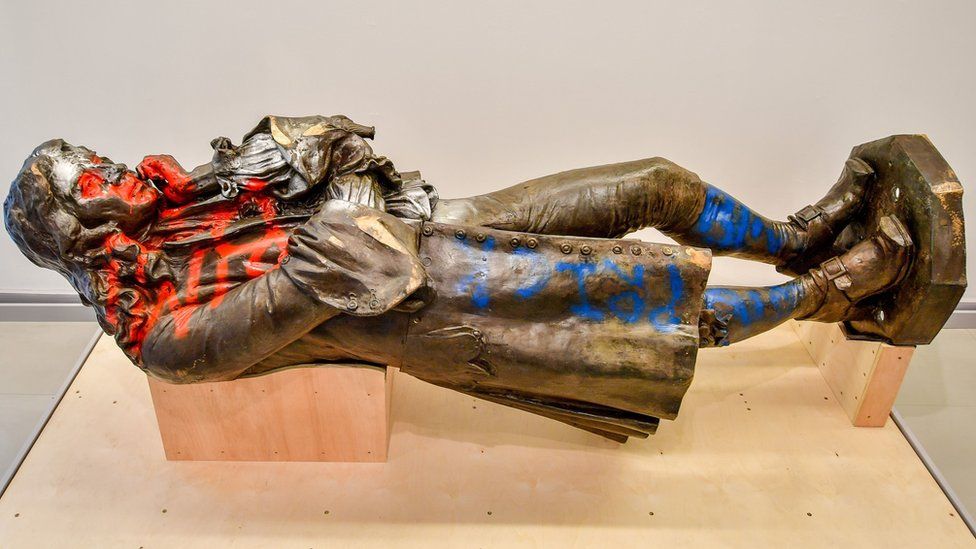
Colston, the toppling of a pejorative narrative

The acquittal of the four defendants for their role in the toppling of Edward Colston in Bristol has created an interesting debate and in some, more right-wing quarters, fury. In an interview following the verdict Boris Johnson stated we cannot seek to “retrospectively change our history“
But what history is he talking about, the one where this country was heavily involved in slavery or some other history around Empire and ‘jolly hockey sticks and all that sort of thing’?
History tells us that this country’s empire, like all empires significantly benefited from its conquests to the detriment of those conquered. Although if you watch the Monty Python film The Life of Brian, the right of the political spectrum might find some comfort in the sketch that starts with ‘What have the Romans ever done for us’? This country’s history is complex more so because it is a shared history with its own inhabits and those of other countries across most of the world. A history of slaves and slave traders. A history of rich and powerful and poor and powerless. A history of remapping of countries, redefining of borders, of the creation of unrest, uncertainty and chaos. A history of theft, asset stripping, taking advantage and disempowerment. As well as a history of standing up to would be oppressors. It is a complex history but not one that is somehow rewritten or removed by the toppling of a statue of a slave trader.
The tearing down of the statue is history. It is a fact that this country’s so called great and good of the time were tarnished by a despicable trade in human misery. The legacy of that lives on to this day. Great and good then, not so now, in fact they never were, were they? It may be questionable whether the circumstances of the removal of the statue were right, hence the charges of criminal damage. It might be questionable whether the verdict given by the jury was right, but surely this isn’t about changing history, it is about making it.
There are suggestions that the verdict may be referred to a higher authority, perhaps the Supreme Court. It appears right that there was a case to answer, and it seems right that the jury were allowed to deliver the verdict they did. There is nothing perverse in this, nothing to challenge, due process has taken place and the people have spoken. The removal of the statue was not criminal damage and therefore was lawful.
If a statue is an affront to the people of a locality, then they should be able to have it removed. If is such an affront to common decency, then the only people guilty of an offence are those that failed to remove it in the first place. Of course, it is more complex than that and perhaps the bigger question is why this didn’t happen sooner?
It would seem fitting to replace the statue with something else. Something perhaps that shows that slowly people of this country are waking up to the country’s past, well at least some of them. A statue that commemorates a new beginning, that acknowledges the country’s true past and points the way to a far more humane future for all. No Mr Johnson, we shouldn’t try to rewrite or obliterate history, we just need to change the way it written and stop ignoring the truth.
Share this:


‘White Women, Race Matters’: Fantasies of a White Nation
Chapter II: Moving Mad in these Streets
This post in-part takes its name from a book by the late Whiteness Studies academic Ruth Frankenberg (1993) and is the second of three that will discuss Whiteness, women, and racism.
If you grew up racialised outside of Whiteness in Britain or really any Anglo-European country, the chances are you will be asked “where are you from?” on a regular basis. After reading some poems on this very issue at a Northamptonshire arts and heritage festival, I was walking home only to be stopped in my tracks by a White woman probably in her late 40s / early 50s saying “people like you aren’t really British.” Whilst I have been asking myself similar questions, for a White person to do this so confidently is unsettling … they’re moving mad in these streets. In this blog post, I will discuss this racial micro-aggression, underpinned by racist epistemologies with us Black people viewed in this country as immigrant; interloper; Other, whilst simultaneously Whiteness being synonymous with “localness” (Brown, 2006). In this encounter just outside of Northampton, I was further reminded that to be Black and British in this country is to live in a perpetual state of “double consciousness” (DuBois, 1903: 1).
Rather than identify with “Black Britishness”, (a pigeon-hole in my opinion), the term ‘afropean’ (Philips, 1987; Pitts, 2020) feels much more appropriate and fluid. However, the term Karen is one I don’t particular enjoy, but the woman in question could be described as such. In using this label, I am trying to create a frame of reference for you (the audience), not allow the person in question to escape scrutiny. This woman was a Jane Bloggs, I had never seen her before and she felt entitled enough to stop me in the street and continually criticise my right to belong. For those of you local to Northampton, I was walking between that stretch of path on Wellingborough Road, between Weston Favell Centre and Aldi. This encounter reminded me of my place in Britain, where ‘British-Asianness’ (Shukla, 2016; Riz Ahmed, 2019; Shukla, 2021) and ‘Black Britishness’ have frequently been difficult to define (Rich 1986, Gilroy, 1987; Yeboah, 1988; Young, 1995; Christian, 2008; Olusoga, 2016; Hirsch, 2017, Ventour, 2020). Even amongst White subjects themselves, what it means to be British has often been a question of challenge (Fox, 2014), and when I articulated that both my parents were born in the UK (Lichfield City and Northampton), she was visiblely upset and put-out.
The term ‘Karen’ comes from a name that was frequent among middle-aged women who were born between 1957 and 1966 with its peak in 1965 (Social Security Data). The name is also the Danish rendition of Katherine associated with the Greek for pure. Yet, the meaning of the word has undergone pejoration. In sociolinguistics, ‘pejoration’ is when a positive word becomes negative over time. ‘Karen’ as it has come to be known today has uses as early as September 2016 and as we know now, Karen has become synonymous with racist middle-aged White women, often associated with their harrassment of Black people just minding their business. On my way home, this harrassment found me walking while Black. For others, it has occured shopping while Black; birdwatching while Black; jogging while Black; listening to music in their house while Black, and more. The encounters we know about are generally examples that make news headlines but there are far more examples that do not make the national press, because they are pervasive.
Writing my MA dissertation on the 1919 Race Riots, I saw even in Edwardian Britain the nationality and citizenship rights of Black people in this country were contested (Belchem, 2014: 56), both those born British subjects in parts of the British Empire and those that were in fact born and raised here (May and Cohen, 1974), in spite of their legal status under the 1914 British Nationality and Aliens Act. Today, we are asked “where you from?” underpinned by historical racist epistemologies that defined Englishness as White (Dabiri, 2021). However, even in the image of so-called multiculturalism in the UK, the Britishness of Black and Brown people still has qualifiers attached. Watching ‘Homecoming’, the finale of David Olusoga’s popular series Black and British, the historian claims “… there is one barrier that confronted the Windrush Generation that we have largely overcome, and that’s because there are few people these days who question the idea that it is possible to be both Black and British” (54:46-55:00).
My experiences as a child and as an adult still tell me that Black Britishness is an increasingly contentious question, but even more testing … to be Black and English. In August 2021, MP David Lammy defended his right to call himself Black English from a caller into his LBC show. Whilst he was later met with lots of support online, what is interesting was the numbers of Black people on Twitter that challenged him on his right to be Black and English. If English is a nationality, better yet, a “civic identity”, nobody should be argueing someone’s right to choose where they belong. Furthermore, David Olusoga’s comments in ‘Homecoming’ seem blinkered and out of touch with people on the ground that still experience this epistemic racism on a daily basis. Especially my generation navigating the superhighways of identity where as one scholar writes, “The BBC had a whole series dedicated to ‘Black Britishness’ [Olusoga’s], which essentially amounted to propaganda for the idea that we are now accepted as part of the nation …” (Andrews, 2019: xiii).
My encounter with the woman on the street is one more example of racial privilege knowing full well that her Whiteness protected her from repercussions. Furthermore, whilst the ‘Karen’ meme started as a commentary on racial privilege (Williams, 2020) and White women in histories of racism (Ware, 1992), it’s a shame that is has been co-opted by people as a catch-all term for any woman that happens to annoy them. I think my encounter is certainly definable under the remits of the original Karen mythology, but there are those out there who would also argue my thoughts as misogynistic, namely because of what the mythology has become. In the UK, this mythology is “more proof the internet speaks American” (Lewis, 2020). And how Black Lives Matter is still spoken about is a reminder of the divides between anti-Blackness in the US and anti-Blackness in Britain. Yet, discourses on “Karen spotting” online also speak an American voice even though equivalents exist in Britain – especially in schools, colleges / universities and healthcare.
Those interested in the cultures of Black and Brown people; it would be more useful to ask about heritage over the racist “where are you from?”, as for me at least the latter is underpinned by racist binaries that say POCs cannot relate to ‘Anglo-Europeanness’, whilst the former speaks to the fluidity of an individual’s relationship with Home.
References
Andrews, K (2019) Back to Black: Retelling Black Radicalism for the 21st Century. London: ZED Books.
Belchem, J (2014) Before the Windrush: Race Relations in 20th Century Liverpool. Liverpool: University Press.
Black and British (2016) Episode 4: Homecoming [BBC iPlayer]. London: BBC 2.
Brown, J.N. (2006) Dropping Anchor Setting Sail: Geographies of Race in Black Liverpool. NJ: Princeton University Press.
Christian, M. (2008) The Fletcher Report 1930: A Historical Case Study of Contested Black Mixed Heritage Britishness. Journal of HIstorical Sociology, 21(2-3), pp. 213-241.
Dabiri, E. (2021) What White People Can Do Next: From Allyship to Coalition. London: Penguin.
DuBois, W.E.B. (1903) The Souls of Black Folk. New York: Dover Thrift.
Fox, K. (2014) Watching the English: the hidden rules of English behaviour. London: Hodder & Stoughton.
Frankenberg, R. (1993) White Women, Race Matters: The Social Construction of Whiteness. MI: UoM Press.
Gilroy, P. (1987) There Ain’t No Black in the Union Jack. London: Routledge.
Hirsch, A. (2017) Brit(ish). London: Jonathan Cape.
Lewis, H. (2020) The Mythology of Karen. The Atlantic.
May, R and Cohen, R. (1974) The Interaction Between Race and Colonialism: A Case Study of the Liverpool Race Riots of 1919. Race and Class. 16(2), pp. 111-126.
Olusoga, D. (2017) Black and British: A Forgotten History. London: Pan.
Philips, C. (1987) The European Tribe. London: Faber & Faber.
Pitts, J. (2020) Afropean: Notes from Black Europe. London: Penguin.
Rich, P.B. (1986) Race and Empire in British Politics, Cambridge: Cambridge University.
Riz Ahmed (2019) Where You From? YouTube.
Shukla, N. (2016) The Good Immigrant. London: Unbound
— (2021). Brown Baby: A Memoir of Race, Family, and Home. London: Pan.
Social Security. Top 5 Names in Each of the Last 100 Years.
Ventour, T. (2020) Where Are You From? (For ‘Effing Swings & Roundabouts’ by Lauren D’Alessandro-Heath). Medium.
Ware, V. (1992) Beyond the Pale: White Women, Racism and History. London: Verso.
Williams, A. (2020) Black Memes Matter: #LivingWhileBlack With Becky and Karen. Social Media + Society. 6(4), pp. 1-14.
Yeboah, S.K. (1988) The Ideology of Racism, London: Hansib.
Young, R.J.C. (1995) Colonial Desire: Hybridity in Theory, Culture and Race, London: Routledge.
Share this:


The UK is not Innocent: “Babylon, for True” #SubnormalABritishScandal
Last December I watched the final entry of Small Axe entitled ‘Education‘, the best entry in my opinion and thus I delivered a blog on the film too. The finale articulated the history behind the schools for the ‘Educationally Subnormal’ [ESN] or ‘special schools’, and it took me back to when I was a nine year-old boy being treated as if I was intellectually inferior or incapable, by my White teachers in comparison to the White children. It turns out I was dyspraxic. The story of Maisie Barrett, however, in the recent documentary Subnormal: A British Scandal resonated. My schooling experience differs from most Black children in Britain today (since I was at private, not state) but the story of Maisie Barrett resonates because she was dyslexic (word blindness in the 1960s/1970s) and simply, like my teachers with my dyspraxia, they did not know how to teach her or me. She was placed in one of those ‘special schools’ really because she happened to be Black and her dyslexia translated as “difficult” to the teachers of the time.
In the 1960s and 1970s, hundreds of Black children in Britain were caught in an education scandal where many were sent to schools designed for the ‘educationally subnormal’. Some children were labelled as “subnormal” by the state, as they were seen to have low intelligence and not fit for the mainstream school system. A decision by the state that would see many (if not all) of these children to grow into adults traumatised by their experience with that childhood trauma impacting their adult lives. What happened in the 1960s and 1970s disproportionately to Black British children of Caribbean descent has an enduring legacy today, where battles are still being fought in the name of race and racism, from Early Years all the way up to higher education [HE] in universities. In the 1944 Education Act, the term “educationally subnormal” entered British lexicon to describe children that the state deemed intellectually deficient.
The people that we now know in the colloquial sense as the Windrush Generation (Caribbeans that came here between 1948-1970), came here to work. This scandal impacted their children and is really an aftershock of the hostility to Caribbean arrival in 1948. My own great-grandparents themselves came to this country from the Caribbean in the late 1950s, early 1960s with some of their children (including my grandmother) coming on her parents’ passports. And I know my maternal great-grandparents were factory workers when they first came. I’m told they went to work at Long and Hambly, a Northamptonshire-based plastics manufacturer. However, these ESN schools should not be relegated to history as the education sector continues to fail Black and Brown students at every level. Whilst back then the state called them ‘special schools’, now we have Pupil Referral Units [PRU] where Black students in schools continue to be placed when they become “too difficult” for the mainstream system of education.
Watching Subnormal, it struck me that whilst it claims this scandal started in the 1960s with the arrival of the Windrush Generation and whilst I earlier claimed it as an aftershock of 1948, I would take this back further. Why were / are Black students being treated as if they were / are less intelligent? In the documentary, Prof. Gus John states “there were many academics who were equating race with lack of intellectual ability [with] the reason for Black underachievement as those children were Black” … academics like Professor Hans Eysenck, a key figure in discourses around race and intelligence in the 1970s. He believed genetics played a role in influenceing intelligence and that “entire racial groups might be genetically condemned to lower intelligence” (Subnormal). These ideas lead to beliefs that Black children were not as capable of academic success as White children. With people like Prof. Eysenck leading on this, it made ESNs not really a national scandal but justifiable … essentially justifying racism with “science.”
Yet, going back to the 18th and 19th centuries we also know that similar ‘race science’ was used to used to justify colonialisms and also enslavement as well as the subjugation of Black people in the Caribbean and the African continent. In her book Superior, Angela Saini traces the origins of race really showing the racial hierachies that existed in that era with White European people at the top and Black people of African descent at the bottom and “what Europeans saw as cultural shortcomings in other populations in the early nineteenth century soon become conflated with how they looked” (p11). So-called ‘race scientists’ drew on physical differences to emphasise us and them and I believe the ideas perpetuated by the Government in constructing the ESNs do not sound too far from the pseudoscientific racial theories that underpinned colonial racial thinking of the 18th and 19th century. Very much followed by the Nazis themselves, inspired by UK-US eugenics creating policies also discriminating based on disabilities, that would have included neurodivergent conditions like dyslexia (or as they called it in the 1970s … word blindness).
Black people being seen as intellectually inferior is a stereotype that goes back to the days of White masters and Black enslaved people. The justifications made for the ESNs were simply an afterthought of the “academic reasonings” made to subjugate Black people on slave plantations. Simply, the UK government were standing on the shoulders of old stereotypes created in the slave polity. When you link this with the hostility to Caribbean arrival, we can then see that the conditions of anti-Blackness have been in Britain since the 16th century. In watching the film, what we saw is ‘race science’ playing out in a contemporary context, as well as eugenics, which was also pioneered by men like Winston Churchill, who the British public saw fit to vote as the Best Briton in 2002, and then have on the £5-note in 2016.
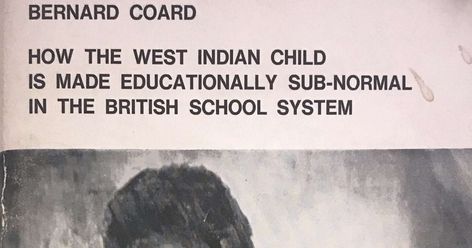
In British schools and universities, we continue to see these same stereotypes playing out (the return of race science, to put it bluntly) but more importantly, this is White supremacy in action. Whilst I enjoyed (if that’s the term), the documentary as it had lots to take away, I felt it was not critical enough. Much alike lots of the documentaries we have received from especially the BBC since the George Floyd killing, they go as far as to say ‘racism is bad and we need to talk about it’ but fall short in naming White supremacy as a social and political system (Mills, 2004). Further to the fact of how institutional Whiteness (White Spaces) allows our structures to continue to centre and frame the emotions of White people in dealing with racist incidents. The scandal that culminated in Bernard Coard’s book How the West Indian Child is Made Educationally Sub-normal in the British School System, was well articulated by the BBC as well as showing the role of Black parents, community leaders and activists, but falls short at showing the overarching system leading us to believe this as an isolated tragedy and not part of complex system that was orchestrated from dot.
We had lots of testimony from the victims as well as parents, community leaders, activists and the like but much akin to so much of the trauma narratives of late, the people that helped facilitate these crimes are nowhere to be seen … we have a victim-focussed narrative with no analysis on the mechanics of the oppression itself. 50 years on, more awareness for sure … but no accountability. The BBC is the establishment broadcaster and it shows. Babylon, for true!
References
Coard, B. (1971) How the West Indian Child is Made Educationally Subnormal in the British School System. In: Richardson, B. Tell it like it is: How our schools fail Black children. Stoke-on-Trent: Trentham Books.
Mills, C (2004) Racial Exploitation and the Wages of Whiteness. In: Yancy, G (ed). What White Looks Like: African American Philosophers on the Whiteness Question. Abingdon: Routledge.
Saini, Angela (2019) Superior: The Return of Race Science. London: 4th Estate.
Ventour, T (2021) The Alternative History Behind the Windrush Scandal. Medium [online]
White Spaces. Institutional Witnesses. White Spaces [online].
Share this:

Someday at Christmas. #BlackenAsiaWithLove
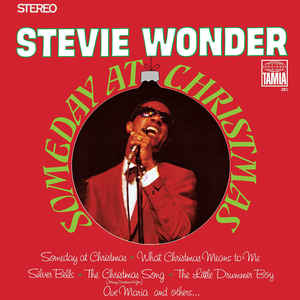
Now that folks have returned to their normal lives, and the Christmas credit card bills have arrived, let’s reflect on the reason for the season. To get you in the mood, the writer suggests listening to Stevie Wonder’s Someday at Christmas alongside this read; lyrics included here.
Someday at Christmas men won’t be boys
Playing with bombs like kids play with toys
Today’s divisions are so profound, and illiberal tribalism runs so deep, that I believe only art can speak to them – they not hearing me when people like me speak. I’m clearly not an illiberal tribe member, and as soon as I open my mouth, my ‘proper’ American English is dismissed alongside the liberal elite media, Hollywood, etc. The tribe dismisses us, I surmise, due to our training and faith in the transformative power of critical thinking.
“If Republicans ran on their policy agenda alone,” clarifies one article from a prominent liberal magazine, “they would be at a disadvantage. So they have turned to a destructive politics of white identity, one that seeks a path to power by deliberately dividing the country along racial and sectarian lines.” This is lit-er-ally happening right now as the presidential impeachment hearings follows party-not-morality lines. Conservatives are voting along their tribe to support the so-called leader of the free world. Are they free?
Words like ‘diversity’ sound threatening to today’s illiberal thinkers. Those who tout PC-culture as going too far may as well go ahead and admit that they are anti-evolution! Those who denounce implicit racial bias have little to say about any form of racism, save for its so-called ‘reverse’. Those who would rather decry ‘feminism’ as man-hating have little to say about actual misogyny. Yet, it is the liberal candidate/leader/thinker who is held to a higher standard. Are we free?
 Someday in a world where men are free
Maybe not in time for you and me
But someday at Christmastime
We are in an era of supreme conservative/illiberal tribalism. That’s the unique We are in an era of supreme conservative/illiberal tribalism. That’s the unique ties that bind America’s 45, to Britain’s BJ to Germany’s AFD, France’s infamous National Front (now in its second generation), Italy’s Lega Nord, Austria’s FPO– yes, the F is for ‘freedom’- all the way to India’s leading Islamaphobe. Let’s not forget Poland’s tiki-torch bearing PiS party that filthy-up the European Parliament joined by their brethren from Denmark to Estonia to Belgium and beyond.

EU’s Right-wingers!
Illiberal tribes are tricking masses of those inside cultures of power into voting against their own interests. This is not, as many commentators have noted, to suggest that their so-called liberal alternatives are virtuous. Of course not, but it’s clear that masses can be motivated through fear of the other, whereas organizing around widening the pool of cooperation and humane concern is simply not sexy.
Someday at Christmas there’ll be no tears
All men are equal and no men have fears
Today’s brand of conservatism is an entire illiberal ethic that clearly must be cultivated from birth. Either you get it, or you don’t. Imagine the folks they’re turning against, and tuning out in order to hold onto those values. Imagine the teacher, friend, colleague, schoolmate, neighbour of ‘foreign’ origin that a Brexiteer must wipe away from their consciousness in order to support the anti-EU migration that fueled the campaign. The ability to render folks as ‘other’ is not an instantaneous predicament. It’s well cultivated like a cash crop, say cotton, cane or tobacco! Going to the ballot box to support bigots can’t be an easy feat when we’re literally surrounded by the type of diversity we seek to eliminate.
Someday at Christmas man will not fail
Hate will be gone love will prevail
There are those who voted for Brexit under some false notion of British independence, despite clear and present evidence of British inter-dependence. Perhaps no nation has been more inter-dependent on its neighbors and former colonies than the British Isles. Yet this illiberal disease is global. Imagine the rich diversity of the Indian sub-continent, yet look squarely at the Hindu nationalism sweeping India right now (as if the Taj Mahal weren’t a global treasure that just happens to have a few mosques on board). Plus, I’m not the first to point out that the Jesus racists celebrate was Jewish and spent most of his life in what we now call the Arab world. No nativity scene without foreigners!
Maybe not in time for you and me
But someday at Christmastime
‘Someday at Christmas’ was written in 1967 for Stevie Wonder, then a 17-year-old bulwark of Motown. Wonder wasn’t yet writing all his songs, yet he was already introduced as the ‘Profit of Soul’. In 1980, he sang: “Why has there never been a holiday, yeah/Where peace is celebrated,” in a song aimed at getting Reagan to declare Rev. Dr. Martin Luther King Jr.’s birthday a national holiday. Wonder won. Happy MLK day!
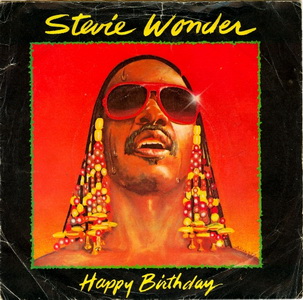
Naturally, looking back we have to wonder if one could have predicted the impact Wonder would soon have on American music. He’d dominate pop music once he set out on his own, set his fingers to funk instead of pop, and began to bare his soul.
Someday at Christmas we’ll see a Man
No hungry children, no empty hand
One happy morning people will share
Our world where people care
In the summer of ‘67, Wonder’d released another record, I Was Made to Love Her, featuring plenty of his infamous harmonica solos. ‘Someday at Christmas’ was released four years before the other most infamous Christmas message song, John Lennon’s War Is Over. SMH, I get goose-bumps hearing a kids’ chorus sing melancholically “War is over/If you want it.” Much of the world was at war then, struggling to comprehend the incomprehensible devastation meted out on the tiny southeast Asian nation of Vietnam, from where I pen this piece – a virtuoso clash of titans. It’s not surprising that those two troubadours began their careers in popcorn pop, yet had to leave the genre to deliver their most potent, fiercest messages.

Motown was decisively a Popular music machine, specifically crafted to appeal to the wider/whiter masses. Motown steered clear away from ‘message’ songs, a real keel in the heal of the likes of Stevie, Marvin Gaye and eventually Michael Jackson. Each of those Motown troubadours has penned plenty of songs of freedom and ecology, and the ethical interdependence between the two. Those guys must be liberals. Ugh!
Share this:


Black son of the south (A 2-part short story in prose). #BlackenAsiaWithLove
Pt. 1: Somewhere Over the Rainbow
As the sun rises, and over the horizon, I can see the first capital of the Confederacy, I am forced to remember that this is the south.
There’s country music blasting from the speakers in this restaurant, and the young woman serving me has such a twang, you’d think she’s about to sing…her own rendition of Achy Breaky Heart.
The waitress calls me ‘Sweetie’ though she’s clearly half my age.
I’d much rather be called ‘sweetie’ than sir, not that I’m ashamed of being middle-aged.
I appreciate coming back down south and feeling this cosy feeling from virtually everyone I meet. Plus she’s sincere, too. I can see that the staff here are mixed, and yet I have this burning feeling that there’s more here than meets the eye.
In this part of the country, we pride ourselves on our gentile ways. For years I’ve wondered if this is just how we southerners learned to cope with an excessively violent past.
My grandparents fled from here in the 40’s, just after the war, so terrorized were they of establishing a life of dignity outside the cotton fields they plucked as kids. Now, there is a localised justice initiative to mark the numerous racial hate crimes known as lynching.
The initiative has an eerie collection of jars filled with actual soil from (known) lynching sites. There’s at least one of these large pickle jars full-o-dirt from every county in this state alone. You know it’s Bama, too; there’s so much of that familiar chalky, red clay that’s still all around us. Dirt so red, you now wonder if it’s ferrous or blood!

Notoriously, lynching is NOT a practice of the antebellum south, for black labour was far too valuable to just maim, torture and burn up black bodies like what’s done in these heinous hate crimes then.
I know not every white person down here is a descendant of slave-holders, slave-drivers or slave-catchers. Many may have never owned a single slave, yet…
Yet, any white person down here benefits from white-skin-privilege. Even white immigrants have famously fallen into line, capitalising on the slave economy, commoditizing King Cotton in one way or another. Not only Stevie Wonder, but even Wikipedia can see that.
The Wiki history entry of the in-famous commodities firm Lehman Brothers’ opens dryly like this: “In 1844, 23-year-old Henry Lehman, the son of a Jewish cattle merchant, emigrated to the United States from Rimpar, Bavaria. He settled in Montgomery, Alabama, where he opened a dry-goods store…”
Henry’s brothers came over within a few years – legally, supposedly – and thus began the in-famous firm. The brothers quickly saw that the farmers were rich during harvest and broke when it came time to plant. The dry-goods store quickly began accepting raw cotton as a form of payment. They hoarded cotton when it was plentiful and cheap, selling it when stocks drew low; economics running counter-cyclical to farm life. Did it matter to the brothers that the cotton was produced by slaves?
The brothers opened their first branch in NYC in 1858. That’d be New Yawk ‘fore the Northern War of aggression, y’all. Their firm dug so deep into the commodities trading economy that the youngest Lehman brother’s son, Herbert, was eventually a senator, 4-time governor of New York, and among other accolades is quoted in the current US passports espousing the value of immigrants to the nation’s roots and success. Lehman Brothers’ 2008 bankruptcy has been called “the biggest corporate failure in history!”
Did you know there are entire regions of the United Kingdom that evolved on the back of King Kotton as a commodity? Manchester, “famed as the world’s first industrial city,” was nicknamed Cottonopolis. The Industrial Revolution was fuelled by slavery! Ironically, the liberation of one group of people depended upon the enslavement of another. His-story should tell both sides, else it’s a damn lie. Did you know those cotton mill workers were sent aid by the Union government when the Civil War curtailed these cheap exports?
But anyone down south was in one way or another entangled in the slave economy as much as all of us today can’t have a smartphone free of labour and land exploitation. The fact that I may never see a child mining tin in Indonesia, or set sights on bonded labourers toiling away for cobalt in the Congo, does not admonish me and my gadgetry from any responsibility to do better.
So, the pleasantries that we southerners find necessary are well-crafted ways of disarming one another from a past filled with mass artilleries in everyday life.
I am a Black son of the south.

@ The Equal Justice Initiative
Free from these chains, I hasten to think what life was like for my grandparents. Armed with their southern draws, having actually grown up cultivating the region’s cash crops, what life could they possibly have imagined for themselves as adults there?
What I do know, however, and I’ve heard this from my own elders, is that while they couldn’t imagine a future there for themselves, they did dream of that vision for us.
And so, here I am living my life…somewhere. Over the rainbow.
Share this:


Friday the 13th
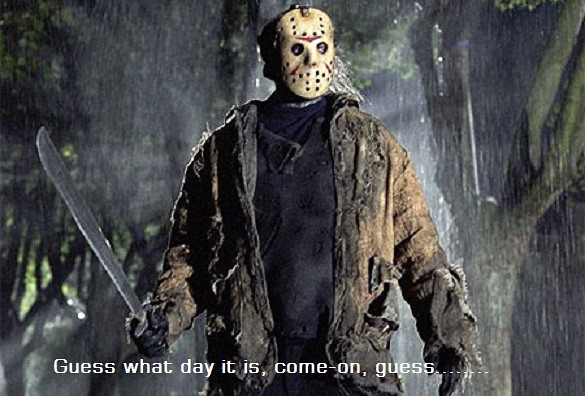
Odd thing superstition, it makes reasonable and seemingly rational people think and behave in the most irrational and inexplicable manner. Always we notice these behaviours and thoughts in other people, but so many of us carry in the back of our minds equally irrational ideas and beliefs. We hear of football club managers who always wear the same clothes at a game, athletes that engage in the same pre-game routine and of course, politicians who act in certain ways during their election campaign. For the rest of us there are ladders in the street, black cats, that we may avoid or there are dates in the calendar that we take notice. Friday the 13th is one of those Anglo-Saxon dates that people take notice of.
I am sure that some of my historian friends will be able to give a good account of the origin of the unfortunate date, but I can only go with the “official tradition” of Jesus, the 13th student, (Judas) and his subsequent arrest on the Friday before the Crucifixion. The day, somehow, became one of those that we notice, even when we are not superstitious. There is even a psychologically recognised fear of the date Triskaidekaphobia; which in Greek means the fear of 13! Of course social fears are blended with wider social anxieties, whether that is the fear of the unknown or the realisation that in life, there are things that we have little control of.
In the days leading up to this Friday the 13th we engaged with political discussions about what direction the country shall take. The health service, the justice system, the state’s responsibility, all the way to welfare and the state of the union, were all eclipsed by one topic that has dominated discourses, that of the execution of leave from the European Union commonly known as Brexit. Ironically the “exit” preface was used before for Greece (Grexit), and Italy (Italexit) but seems that Brexit has won the battle of the modern lexicon. The previous “exits” where used as a cautionary tale for the countries being forced out of the union, whilst Brexit is about leaving the Union.
Having considered all the issues, this one issue became the impetus for people to give politicians a mandate. Complete this issue before and above all the rest. It is an issue likened to a divorce, given a texture, (soft/hard) and has even been seen as the reason for generational conflicts. Therefore the expectation is clear now . Leave the European Union, and then let’s see what we can do next. The message is fairly clear and the expectation is palpable. Beliefs and hopes of the people narrowed down to one political move that shall terminate membership to the European Union. Of course there are subsequent questions and issues that this act of national defiance may come with. As for the state of the Union, that may have to be the next thing we discuss. This follow up conversation may not be as welcome, but it is definitely interesting. If joining the EU back in 1975, warranted a discussion, then the 1536 Act of Union may become the next topic for conversation. As for healthcare, justice, education and welfare, we may have to wait a little bit more longer. Whether this will mark Friday 13th December 2019 as a date of fortune or misfortune, that is yet to be decided, but that is the same for every day of the week.
Just for your records and for the Triskaidekaphobians out there, the next Friday the 13 is in March 2020 followed by the one in November 2020. Just saying…
Share this:


Those kinde of people
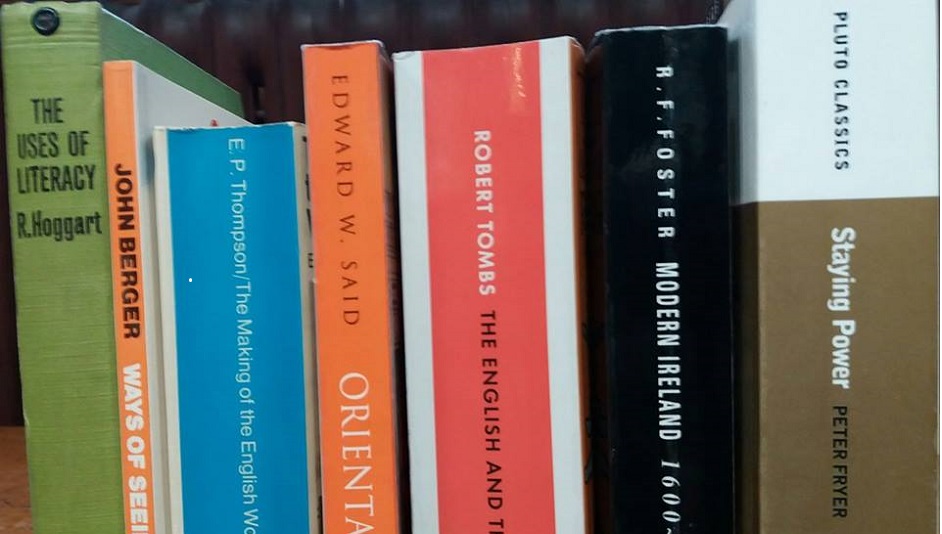
This poem is named for the first chapter of the iconic book Staying Power (1984) by historian and academic Peter Fryer. A book that talks about the history of Black people in Britain, from Roman times up to his modern-day. It’s also inspired by ‘Mathematics’ by British poet and author Hollie McNish.
Adam said:
those goddamn universities
and their goddamn books
learned people, crippling egos
with nothing but a look
he says those goddamn historians
and their god damn history
I tell them they worked hard
to get there, can’t you see?
I ask him what
he expects British history to be
he says he remembers
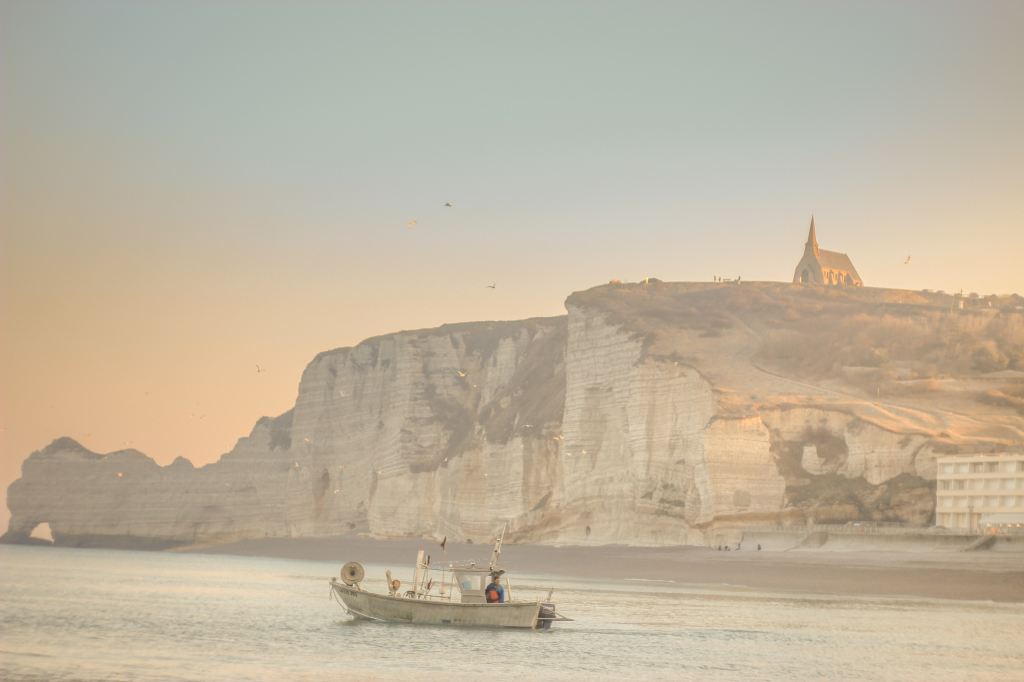
the land of Blyton and Christie
coastal wrecks, greenery
and a good wage before those people came
where people went to work, pot-bellied
national pride, stood proud before they came
now no British jobs, their kinde are to blame
I ask how he knows this to be true
he said he saw it on BBC News
every time a Pole takes a job from us
each time he hears a different language
whilst riding the bus
this divide and conquer, them and us
to me just does not add up
he makes a brew, two sugars in his tea
I say didn’t you know those granules
came from the sugar economy
he grunts, goddamn Blacks came and took our stuff
I tell him about sugar and cotton, you know
how slaves gave us indigo and tobacco – hot air to puff
I show him Brixton Road and Portobello Market
I show him rock n roll, Network Rail and the NHS
I show him the immigrant-built west
I show him straight roads and pictures of my Gran
how the Jamaican ackee comes from the Ghanaian Akan
He’s sick of history and social science
sitting all sad and smug on his island
I spent three years on a degree
did a dissertation on British identity
I geek over John Blanke
renaissance trumpeter who was Black
Oh and Ann Lister, call her Gentleman Jack
and Afro-Romans and The Slave Trade
Black Georgians, Saxons and Viking Raids
and I so want to scream when I hear folks say
goddamn immigrants taking our jobs
but how we teach history – we don’t talk
of Mrs Shah’s shop employing Bill and Bob
where people with money love to spend
employing women and men in tens,
her gift for business is self-taught
all her plans meticulously well-thought
and all your prejudice talk
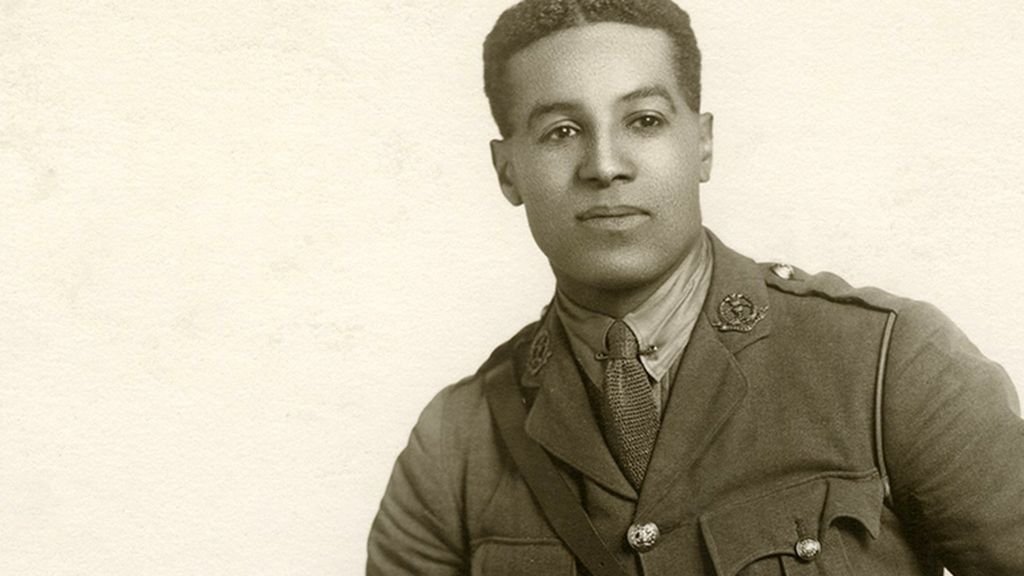
forgets the soldiers the colonies pledged
forgets the men left for dead
in Tangiers, Dunkirk and at the Somme
as the world wars went on and on
from Mr Smith to Mr Wong
and I know people love to complain
but England our name
the land of Angles is all that remains
from Saxons to Jutes
stories of migration since before WW2
and often, those kind of people
are more native than the locals.
Share this:


What the fluff

“History is not just stuff that happens by accident, we are the products of the history that our ancestors chose, if we are White. If we are Black we are products of the history our ancestors most likely didn’t choose.”
Kevin Gannon, 13th
And many of our cities in Britain are this melting pot due to the very same history our ancestors chose / didn’t choose; and the reason Britain has a variation of different faces is much to do (but not only) because of Britain’s colonial ambition.
Episode seven of the latest series of Who Do You Think You Are? was on TV entertainer Sharon Osbourne. Her family were victims of the Irish Potato Famine. Whilst the episode skirts over it, saying it occurred due to crop failures (with no real explanation), some would suggest that it was due to heavy-handed (British) colonial rule which assured those crop failures, leading to mass migration, starvation and death. For a show that is basically a series of history lectures, it does a good job of tiptoeing around uncomfortable (truths) bits of history.
As the late Jamaican philosopher and academic Stuart Hall said, “We are here because you were there” and we are now all here together, the products of our ancestors’ choices. I’ve been following this series of Who Do You Think You Are? with great interest and fascination. Almost every episode has had me hooked. And this latest episode with Sharon Osbourne was heartbreaking, with her great-grandmother Annie being the sole survivor of her six siblings, after disease and weakness took them.
The family emigrated to Massachusetts, USA in the mid-19th century and they worked in a cotton mill, the biggest in America and the second biggest in the world, only dwarfed by one in Manchester, Lancashire.
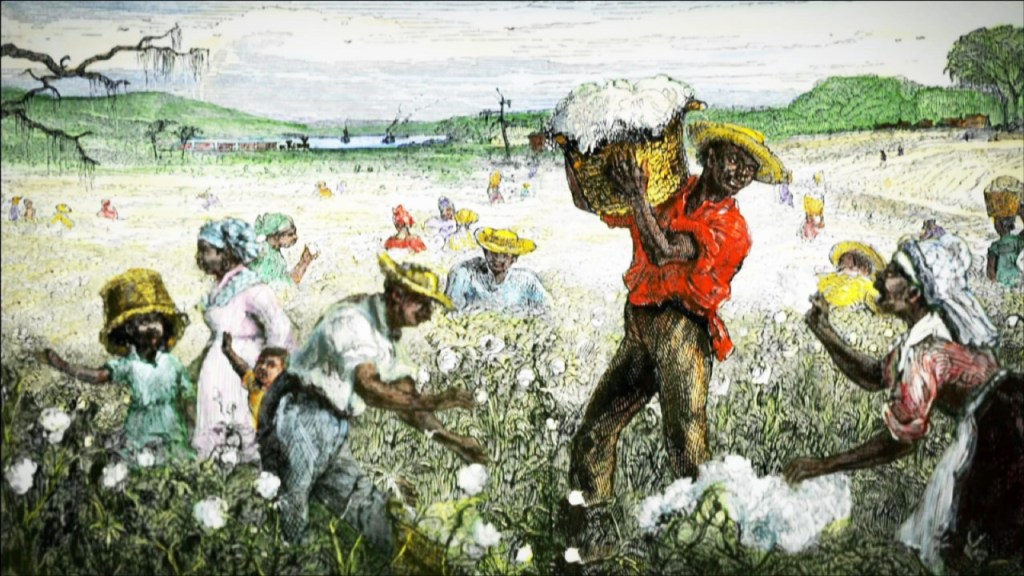
What irked me was the lack of contextual explanation around cotton during this time. Why wasn’t there any explanation regarding the history of cotton in the United States? Moreover, that relationship between American cotton and the mills of Lancashire and Cheshire (some 4500 mills in Lancashire and southern Scotland). What about the Industrial Revolution and how colonialism and the enslaved Black people that paid for it?
In a country still living in the aftermath of The Slave Trade, you cannot talk about cotton in America without talking about where the cotton came from. The same cotton made into cloth in Massachusetts would have came from cotton plantations, whether picked by African-Americans slaves (pre-1865) or “like-labour,” post-Civil War – since after abolition, the establishment entered into something called convict leasing. Prisoners loaned to plantation owners for a period, which (in itself) was legalised slavery. A loophole in the 13th Amendment stated that you could not be a slave, unless you were a criminal and imprisoned, thus America enters mass incarceration.
Black people in America were arrested for minor crimes like theft and vagrancy, and then imprisoned in mass. These prisoners were “rented” and put to work on plantations through the South – sugar, tobacco, cotton and more. The fact they didn’t feel the need to mention the context behind cotton in America is astounding, nor how the American cotton trade impacted Britain, for example the Lancashire Cotton Famine (1861 – 1865).

Yes, this episode is about Sharon Osbourne’s ancestors, but they were part of a longer story – a subtler history – the other half of cotton’s history that isn’t taught at school. And in places like Mississippi, where cotton was sailed down the Mississippi River by paddle steam, the local planters said:
“Cotton Is King.”
In Britain, we learn about spinning jennies. We learn about water frames and the Child Labour Act (1833), but not where cotton came from. This is American history and British history. It’s also working-class history. But in addition, it’s Black (British) history.
We are here because you were there; this is the history our ancestors chose, if you are White. But if you are Black, it’s the history your ancestors didn’t choose. And the least we can do is tell it right.
Bibliography
13th. Dir. Ava DuVernay. Netflix. 2016. Streaming platform.
Alexander, Michelle. The New Jim Crow. New York: The New Press, 2010. Print.
Olusoga, David. Black and British: A Forgotten History. London: Macmillan, 2016. Print.

 Thoughts from the criminology team