
Home » Border Criminologies
Category Archives: Border Criminologies

Stop the boats, Stop the visas, Meet the thresholds and You are in!
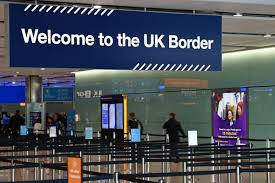
The Tory party has witnessed a number of challenges in recent years and with the appointment of Rishi Sunak, a brief sense of stability was felt amidst the chaos. As different parties look to the upcoming elections, each party have begun to move pieces on its chess board. While campaigns have unofficially begun, some commentators have argued that Sunak’s recent policy on migration could be one of his game plans.
Let’s take a closer look into this recent migration policy. Attention seemed to have slowly shifted away from the plan of redirecting boats to Rwanda to the need to suppress legal migration. To restrict LEGAL migration, Sunak’s government instituted policies limiting opportunities on student visas, banning dependents on care visas, increasing the minimum income threshold for skilled worker and family visas, and revising rules around shortage occupation lists.
Starting with the skilled worker visas, the government imposed a £38,700 minimum salary requirement to gain entry into the UK. Simply put, if you are coming to work in the UK, you must search for a job that pays nothing less than £38,700 in annual income, or else you will not qualify. For me, I think some clarification is needed here for what the government considers as skilled jobs exactly. I say this because junior doctors, nurses and train operators would be considered as being part of a skilled workforce. However, these skilled work force have undertaken multiple strike action over dispute on wages in the last few months. This leads me to another question – how many ‘skilled job’ workers earn a salary of £38,700 in the current day economy? Although the government implied that the reason for this is to force organisations to look to British citizens first rather than relying on legal migrants – which could be thought as quite commendable however, a number of UK workers earn less than the new threshold annually anyway. So this logic needs further clarity in my view.
In terms of curbing student’s visas, UK higher education has long attracted international students, yet these new policies outrightly banning postgraduate dependents and targeting post-study work visas seem quite harsh, especially given the exorbitant £13,000 to £18,000 yearly tuition fees already paid by these students. If the aim is transforming education into a type of transitory/knowledge based tourism, this should be transparent so aspiring international scholars are not misled into believing they are wanted for anything beyond their hefty bank balances.
On family visas and so forth, it is without a doubt that these new rules will tear apart families because it also imposes a £38,700 minimum income threshold on family visas from £18,600. The technicality around this is that legal migrants will not be the only ones to be affected by these new rules, British citizens will also be affected. Let us consider this scenario. Consider Linda, a British citizen working part-time in retail earning £33,000 annually. She aims to marry her long-term boyfriend from Sri Lanka next summer, but both of them fall short of the minimum income threshold. Under the current rule, Linda now faces a dilemma. It’s either she increases her earnings above the threshold by the next spring or uproot her British life to reunite with her partner abroad. Contrast her plight with Kelvin, a non British citizen who has recently secured a Band 7 physiotherapy role in the NHS. He is entering the UK from Mozambique and has managed to negotiate a £47,000 pay deal with his trust. Kevin has the right to move his family freely over to the UK without any disruption. This seems more like double standards because for the less affluent, it seems the right to create a family across borders will become an exclusive privilege reserved only for the rich under this new policy.
The clock may be running out for advocacy groups hoping to see a repeal of these new regulations by the House of Lords and it seems doubtful there is enough procedural means in the Commons to withdraw the policies.
Share this:


Au revoir Le Pen, take the rest of the far right with you!

The recent French election once again saw centrist Macron head to head with far right nationalist Le Pen. Macron won the election by a much narrower margin that the 2017 elections. I have an interest in the French elections as my parents live there and are not far away from applying for citizenship. For them, the prospect of a far right president was worrying.
The politics of much of the world has shifted to the right of late, often to the far right. Perhaps this hasn’t been a recent thing. Indeed, before this wave of Trump, Modi, and Le Pen, we had UKIP and for a while the BNP was making a lot of noise. The writing was on the wall with New Labour and their many new immigration offences, Blair’s tough on crime and it’s causes approach, and not forgetting war on Iraq and Afghanistan. This was swiftly followed with then Home Secretary Theresa May’s hostile environment agenda which has been advanced again and again by consecutive Home Secretaries until we passed the point of no return with Priti Patel and her Nationality and Borders Act 2022 (it pains me to type ‘Act’ instead of ‘Bill’ – it’s black and white now) from which not the Lords nor God nor the best lawyers in the land seem have yet been able to save us from. What we see now is a Conservative government embedded with far right ideology, and this is not an isolated island in that respect.
This current uprising of the far right, racist, and xenophobic politicians is a global phenomenon. Modi, the far right Hindu nationalist is knee deep in his campaign against Muslims, revoking autonomy in Jammu and Kashmir (ironically – or deliberately – this took place on 31st October 2019, the day Britain was supposed to leave the EU), invoking the Citizenship (Amendment) Act 2019 which disproportionately affects the citizenship of Muslims who now face the possibility of expulsion, and even outright attacks on Muslims.
Then there was Trump and the less said about him, the better. But let us return to France. This is the second consecutive election in which Macron has faced Le Pen and won. In France, elections are held in two stages. All parties and candidates go head to head in stage one and if no candidate holds a majority, a second round between the top two candidates takes place. In 2017, Macron won the second stage with 66.1% of the vote. This time around, the vote was much narrower 58.6%. Le Pen’s Rassemblement National party has ‘transformed’ since the 2017 election, with the party’s councillor for Gironde arguing that they are not the far right, and instead are localists and nationalists. Are they not one and the same?
In recent years, the rise of the far right in Europe has been fuelled by fears of refugees, terrorism, and open borders within the European Union. In addition to this, concerns over employment and poverty have contributed to this. It is not all about them, it is preservation of us.

In a globalised era, we have seen decades of erosion of the working class jobs of old combined with distorted perceptions of immigration and population changes. People living in poverty, unemployed or in insecure employment look for someone to blame and the someone tends to be them. So, parties who say they stand for the working man and oppose immigration become popular, not because voters are necessarily racist but because they are fearful and suffering. Bearing that in mind, where does that leave us now? The whole of Europe is facing a cost of living crisis, war on our doorstep. Here in the UK, inflation and interest rates are rising but wages are not. We cannot blame this on them, on people fleeing persecution, on people who come to the UK to fill the jobs nobody wants or are not qualified to do. This us and them narrative causes nothing but division and hatred, fuelling hateful politicians who – let’s face it – serve nobody’s interests but their own.
My Monday message: Choose love

 Thoughts from the criminology team