
Home » #BlackHistoryUoN
Category Archives: #BlackHistoryUoN

Black History Month 2024

We have entered Black History Month (BHM), and whilst to some it is clear that Black history isn’t and shouldn’t be confined to one month a year, it would be unwise not to take advantage of this month to educate, raise awareness and celebrate Blackness, Black culture.
This year the Criminology department is planning a few events designed to be fun, informative and interesting.
One event the department will hold is a BHM quiz, designed to be fun and test your knowledge. Work individually or in groups, the choice is yours. The quiz will be held on the 17th October in The Hide (4th floor) in the Learning Hub from 4.30-6pm.
The second event will draw on the theme of this year’s BHM which is all about reclaiming narratives. In the exhibition area (ground floor of the Learning Hub) we will be presenting a number of visual narratives. I will be displaying a series of identity trees from Black women that I interviewed as part of my PhD research on Black women in English prisons. With a focus on race and gender, these identity trees represent a snapshot of the lives and lived experiences of these women prior to imprisonment. The trees also highlight the hopes and resilience of these women. This event will be held on the 31st October between 4.30-6pm. Please do walk through and have a look at the trees and ask questions. The event is designed for you to spend as little or as much time as you would like, whether it is a brief look or a longer discussion your presence is much welcomed!
If you would like to be part of this event, whether that is sharing your own research (staff and students), or if you would like to use the space to share your own narrative as a Black individual please get in contact by the 21st October by emailing angela.charles@northampton.ac.uk or criminology@northampton.ac.uk
Lastly, I would like to put a spotlight on a few academics to maybe read up on this month and beyond:
A few suggestions for important discussions on Black feminism and intersectionality:
A few academics with powerful and interesting research that proved very important in my PhD research:
- Maria Adams
- Angela Davis
- Beth Richie
- Corretta Phillips
- Ruth Chigwada-Bailey
- Jason Warr
- Julia Chinyere-Oparah (previously Julia Sudbury)
Share this:


For Tyre’s last Five badges. (spoken word)
The badges you wear were betrayed the very instant you flashed your sights on me.
You had nothing good in mind from the start.
I was doomed from the beginning.
By the time the brutality started,
The senselessness of it all kept my body numb to the assault.
“What did I do,” I keep asking, as
Your brutal blows, strongholds and punches bend my body into painful pretzels.
While y’all’ve got me firmly pressed against the pavement, y’all yell:
“Get on the ground.”
Pressed on the ground, I say disarmingly:
“You guys are really doing a lot right now.”
My calmness stands out against all your unwavering aggressions.
Yet, you continue to play the same game: “Get on the ground.”
Beneath the ground there is only hell, and yet
My face pressed against the gravel by your hooves feels like hell, right here, right now.
‘Watching the world wake up from history.’
As if wielding your fists and batons, tasers and bullets don’t threaten me enough,
There are five of you, and
Each of you is massive.
Each of you …highly trained, experienced, and tremendously pumped up.
I am a little weasel sized up against any one of you, and
You are a mob of five.
Too weak to lift my own self, two officers hoisted me up by my limp arms, blood streaming from my head and outta ev’ry orifice, voice too weak to shout. I’m beaten badly, and yet you continue to brutalise me.
Manhandled.
I stumble up, firmly in your grasp, and all I do is plead, which gave enough time for another officer to grab a baton.
He quickly came back with the baton, screaming “give us your hands,” while the two officers still restrained me by these very same hands.
You continually scream “Stop resisting,” while
At least two if not three of you all strangling some part of my body.
The agony is immense.
You’re a pack on the hunt.
You chase me down, and
Torture and kick me more feverishly for running away.
I am in a battle for my life, you…
You are in a battle for your manhood.
“Bruh, you say, and words like these are the same words used to connect us to one another.
The words you use to abuse me could be endearing in another context.
Yet you have the nerve to call me “bruh,” and beat your brother to death.
‘I was alive and I waited, waited’
Waited for your humanity to show up,
Waited for justice to be served to me equally.
‘I was alive and I waited, waited,’ waited three days in the hospital…and
Neither justice nor your humanity ever showed up.

Share this:


Saluting Our Sisters: A Reflection on the Living Ghost of the Past
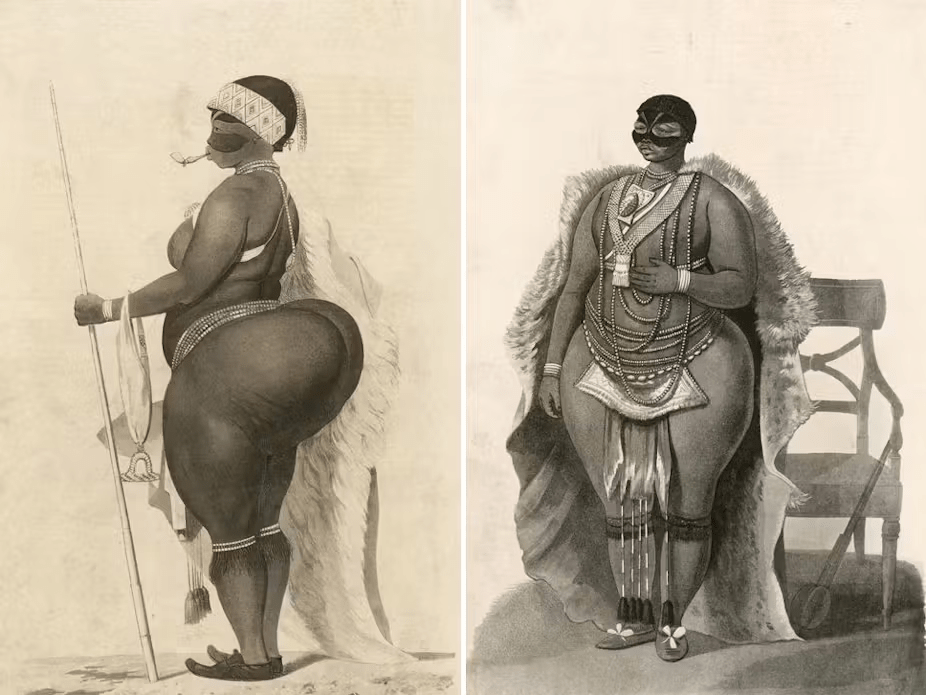
Sarah Baartman. Image source: https://shorturl.at/avLO4
In the 20th century, many groups of people who had been overpowered, subdued, and suppressed by imperialist expansionist movements under arbitrary boundaries began challenging their subjugation. These emancipation struggles resulted in the emergence of quasi-independent, self-governed African nation-states. However, avaricious socio-economic opportunists were aided into political leadership and have continued to perpetuate imperial interests while crippling their own emerging nations. Decades later, it has become clear that these ‘new states’ have become shackled under the grips of strong and powerful men who lead a backward and dysfunctional system with the majority of people impoverished while they enervate justice and political institutions.
Prior to this, the numerous nation states now recognised as African states had developed their distinct social, political, and economic systems which emerged from and reflected their distinctive norms and cultural values. Barring communal disputes and conflicts, robust inter-communal associations, interaction, and commerce subsisted amongst the nations, and paced socio-economic developments were occurring until external incursions under different guises began. Notably, the tripartite monsters of transatlantic slave trade, pillage of natural resources, and colonisation which not only lasted for centuries, disrupted the steady pace and development of these nations. It destroyed all existing social fabric and capital of the people, and forcefully installed a religious, socio-political, and economic systems that are alien to the people.
Ironically, while the transatlantic slave trade and colonialism were perpetuated under the guise of a “civilizing mission,” it took over three centuries for the “civilised” to realise that these abhorrent incursions were far from being civilising, and that they themselves required the civilisation they purported to be administering. However, while one might imagine that this awareness would lead to remorse and guilt-tripped sincere repentance for the pillage, pain, and atrocities, the abolition and relinquishing of political power to natives, the following events symbolized the contrary. Neo-colonialism was born, and international systems and conglomerates have continued the pillage on different fronts as aided by the greedy political class. Thus, it is unsurprising that yet again, strong, and powerful men are revolting against and deposing the self-perpetuating, avaricious socio-economic opportunists who wield political power against the interests of their nations in series of military coup d’état.
It is clear that the legacy of exploitation and subjugation has brought about a new set of challenges. Leaders entrusted with the responsibility of fostering prosperity in their nations often succumbed to personal gain, perpetuating a cycle of exploitation reminiscent of the imperialist era. This grim reality creates a stark contrast: while the majority of citizens are trapped in poverty, a powerful minority wields disproportionate influence, eroding the foundations of justice, economic prosperity, and political stability. As a result, for the vulnerable, seeking safety, economic freedom, and escaping from dysfunctional systems through deadly and illegal migration to other parts of the world becomes the only viable option. However, unbeknownst to many, the lands they risk everything to reach are grappling with their own challenges, including issues of acceptance and association with once labelled ‘uncivilized’ peoples.
Black History Month sheds light on these challenges faced by the black community and other marginalized ethnic groups globally. This year, the theme ‘Saluting our Sisters’ invites us to reflect on the contributions of Black women to society and the challenges they continue to face. It is also important to reflect deeply on how we consciously or unconsciously perpetuate rather than disprove, discourage, and distance ourselves from sustaining and growing the living ghost of the past. As Chimamanda urges, perhaps considering a feminist perspective in our actions, practices, and behaviour can be a powerful step toward recognizing and acknowledging how we perpetuate these problems. Dear Sister, I admire and salute you for your resilience and tenacity in making the world a better place.
Share this:


Is Criminology Up to Speed with AI Yet?
On Tuesday, 20th June 2023, the Black Criminology Network (BCN) together with some Criminology colleagues were awarded the Culture, Heritage, and Environment Changemaker of the Year Award 2023. The University of Northampton Changemaker Awards is an event showcasing, recognising, and celebrating some of the key success and achievements of staff, students, graduates, and community initiatives.
For this award, the BCN, and the team held webinars with a diverse audience from across the UK and beyond to mark the Black History Month. The webinars focused on issues around the ‘criminalisation of young Black males, the adultification of Black girls, and the role of the British Empire in the marking of Queen Elizabeth’s Jubilee.’. BCN was commended for ‘creating a rare and much needed learning community that allows people to engage in conversations, share perspectives, and contextualise experiences.’ I congratulate the team!
The award of the BCN and Criminology colleagues reflects the effort and endeavour of Criminologists to better society. Although Criminology is considered a young discipline, the field and the criminal justice system has always demonstrated the capacity to make sense of criminogenic issues in society and theorise about the future of crime and its administration/management. Radical changes in crime administration and control have not only altered the pattern of some crime, but criminality and human behaviour under different situations and conditions. Little strides such as the installation and use of fingerprints, DNA banks, and CCTV cameras has significantly transformed the discussion about crime and crime control and administration.
Criminologist have never been shy of reviewing, critiquing, recommending changes, and adapting to the ever changing and dynamic nature of crime and society. One of such changes has been the now widely available artificial intelligence (AI) tools. In my last blog, I highlighted the morality of using AI by both academics and students in the education sector. This is no longer a topic of debate, as both academics and students now use AI in more ways than not, be it in reading, writing, and formatting, referencing, research, or data analysis. Advance use of various types of AI has been ongoing, and academics are only waking up to the reality of language models such as Bing AI, Chat GPT, Google Bard. For me, the debate should now be on tailoring artificial intelligence into the curriculum, examining current uses, and advancing knowledge and understanding of usage trends.
For CriminologistS, teaching, research, and scholarship on the current advances and application of AI in criminal justice administration should be prioritised. Key introductory criminological texts including some in press are yet to dedicate a chapter or more to emerging technologies, particularly, AI led policing and justice administration. Nonetheless, the use of AI powered tools, particularly algorithms to aid decision making by the police, parole, and in the courts is rather soaring, even if biased and not fool-proof. Research also seeks to achieve real-world application for AI supported ‘facial analysis for real-time profiling’ and usage such as for interviews at Airport entry points as an advanced polygraph. In 2022, AI led advances in the University of Chicago predicted with 90% accuracy, the occurrence of crime in eight cities in the US. Interestingly, the scholars involved noted a systemic bias in crime enforcement, an issue quite common in the UK.
The use of AI and algorithms in criminal justice is a complex and controversial issue. There are many potential benefits to using AI, such as the ability to better predict crime, identify potential offenders, and make more informed decisions about sentencing. However, there are also concerns about the potential for AI to be biased or unfair, and to perpetuate systemic racism in the criminal justice system. It is important to carefully consider the ethical implications of using AI in criminal justice. Any AI-powered system must be transparent and accountable, and it must be designed to avoid bias. It is also important to ensure that AI is used in a way that does not disproportionately harm marginalized communities. The use of AI in criminal justice is still in its early stages, but it has the potential to revolutionize the way we think about crime and justice. With careful planning and implementation, AI can be used to make the criminal justice system fairer and more effective.
AI has the potential to revolutionize the field of criminology, and criminologists need to be at the forefront of this revolution. Criminologists need to be prepared to use AI to better understand crime, to develop new crime prevention strategies, and to make more informed decisions about criminal justice. Efforts should be made to examine the current uses of AI in the field, address biases and limitations, and advance knowledge and understanding of usage trends. By integrating AI into the curriculum and fostering a critical understanding of its implications, Criminologists can better equip themselves and future generations with the necessary tools to navigate the complex landscape of crime and justice. This, in turn, will enable them to contribute to the development of ethical and effective AI-powered solutions for crime control and administration.
Share this:


Tyre Nichols’ last bird’s eye view.
[Spoken Word/Read aloud]

After my death, the New York Times reported that you all gave me “at least 71 commands.”
“Many were contradictory or impossible,” the Times tweeted.
In a mob frenzy throughout the whole ordeal, y’all kept shouting at me over each other.
When I couldn’t comply – and even when I did manage to obey– you…(SMH)
“Responded with escalating force.”
Hmph!
NYT’s tweet is cleverly crafted, with a photo – a bird’s eye view of us from the street camera.
There we see 4 of you hunched down on me, pressing my whole body against the ground.
The 5th thug is lunging toward me with a weapon.
After my death, I wonder how y’all will explain this footage –
Knowing the nature of these viral tweets?
I’ve personally reposted too many posts of Black bodies in my exact position to count.
I know I didn’t have to do anything to get here,
Knowing this brings me no comfort in this moment.
All of your commands ignore my humanity.
I am powerless and yet you persist.
In the many video angles of your fatal attack, we all see that…
Each of you had so many chances to just stop!
I’ve always tried to make sense of such lethal violence.
I try to understand the who, what and why of your attack that led to my death.
You had me pinned and pressed to the ground when you kept barking:
“Get on the ground.”
When you kept yelling, one after the other, “Give me your hands,”
Two or three of you were already bending my arms backward and forward with force.
I contort myself and try to comply, yet
You keep screaming “Stop resisting,” meanwhile,
At the same time, two or three of you are manhandling some part of me, at all times.
At the end when you leaned my beaten-up, bleeding, limp body against your car,
One of you snaps-n-shares pictures of me with colleagues and friends.
He’s proud and reaching out to folks who’ll pat him on the back for his latest accomplishment.
During the whole attack, I notice this is the only time he’s cool. He smiles.
He’s clearly used to this exact same rush, this exact same thrill.
I’m more disappointed than angered by his grin.
Mine is an all-American honor killing –
Most just get shot, but many have been tortured just like me.
We see this is how too many of his brethren defend their shield.
Where was I to go?
Appeal to the other officers on the scene whose negligence is pristine?
I tried to run, you captured me, which provoked more torture; nowhere feels safe.
Why was I being terrorized?
And by you, who’ve pledged to protect us from (this) terrorism and (this) thug behavior.
What was I to do?
Flight, freeze or fight.
I am tiny compared to any one of you, y’alls combat training and y’alls five big bodies built-up for battle.
I am a fly; you act like lords.
“Bruh,” you call me, but there is no evidence of brotherliness here.
Or, does your fraternity honor and practice such sadomasochistic rituals?
I like skateboarding and photography, another magazine writes, trying to digest my senseless murder.
Yet the videos of me captured for the world to see are
“…absent all beauty and sterilized of hope.”
When would this end?
Would I have to die for you to stop.
How had I possibly provoked this attack?
Who was I to obey?
You? You’re no good, like Linda Ronstadt said:
You’re no good. You’re no good. Baby, you’re no gooooooood…..
You’re no good.
Or perhaps good in your god’s eyes?
Or, are you God?
No.
You’re not anybody’s God, but…
You play one out here on these streets.
Now, you’re playing my God… my life is keenly in your fists.
Yes! These unceasing murders that I’ve seen – not just mine now–
Is what makes this place hell on Earth in the here and now.
So perhaps y’all’re just agents of the devil,
A force unleashed from the depths upon these streets.
“Momma,” I cry out as loud as I can, and you continue to holler obscenities at me.
Momma used to say all people are fundamentally good,
But lately, I’ve felt fundamentally unsure, and now I’m convinced.
“I didn’t do anything,” I plea, rolling on the ground with my hands behind my back.
Y’all kick me.
“Mom,” I cry out again.
I will die here alone.
No mother should lose her child like this.
The agony inside now, as I call out to my momma, is not for her help,
But because I can already feel her pain once she hears how I’m dying.
Since momma fought for the public release of the videos of my attack,
My name is a hashtag and we have been written about a plenty.
“Every Black mother knows she is a split second,” one newspaper writes,
“… a quirk of chance, from joining a lineage of suffering that stretches back through Mamie Elizabeth Till-Mobley…”
When she saw y’all in court for my kidnapping, assault, oppression, and murder,
Momma said you didn’t even have the courage to look her in the face.
Cowards.
Momma said you’re gonna see her each time you are called to see the judge.
-END-
Photo:
NPR OBITUARIES: “Tyre Nichols loved skateboarding. That’s how his friends say they’ll remember him.”
Share this:

A Generation w/o real dialogue & ATT!
Share this:


No ways tired: Miss Lillie, arrested with Mrs. Parks.
12 September 2021
Visit to the Equal Justice Initiative Museum, From Enslavement to Mass Incarceration.
Near the end of the EJI’s newly expanded museum, there is a wall of slightly larger than life-size mugshots of folks arrested alongside Mrs. Rosa Parks in just another local act of civil disobedience. I’ve rarely seen a more earnest collection of everyday people, not unlike the folks around me as I get to know Montgomery today.
Mugshots.
Men in suits, ladies sporting pretty hats in their Sunday best.
Farmers in overalls and working women in neat dresses.
Learned-looking men with glasses, and fancy tiepins.
Young men in sleek fedoras and two or three older men in derbies.
Another man wears a skullcap.
Meaningful women and men of age, of reconstruction age, whom we imagine had by then seen every intimate and public side of Jim and Jane Crows’ wickedness.
They were representin’.
The only thing they seem to have in common is their determination.
(Sigh).
I found myself face-to-face and fixated with
Miss Lillie Bell Robinson.
She sat,
Framed,
With her arms,
Crossed.
Double-crossed.
With her head,
Tilted,
With her expression, tired, but
Also, a particular squint in her eye – or perhaps a gleam – that betrays her obvious fatigue,
As if saying: “No ways tired.”
I moan in tune, and
This somehow keeps my knees from buckling under the weight of it all, since
The preceding exhibits have already taken us along a long timeline where
Every glimpse of justice gets trampled upon –
Again, and again.
I sigh and see why they are tired.
On that day, did Miss Lillie know that much more violence, much more real intensified violence was yet to come?
This was the mid-50’s, and
Could Miss Lillie have imagined that:
Just 5-6 years later,
Freedom Riders from the north would arrive around the corner,
Riding federally desegregated, public coaches, and
The same local sheriffs would stand by, and
Let them get beaten, assaulted, brutally, and
Battered by white-hot mobs –
Only to arrest the so-called outside agitators?
Probably all of you, Miss Lillie, were battered by many of the same hands, and
Abandoned by many of the same actors of local justice.
I estimate Miss Lillie to be my grandparents’ age, and
By that day, they’d already fled and made their way to Kentucky.
I am wondering where Miss Lillie is now – right now?
(I take a deep sigh and realize that I’ve not yet reached the mass incarceration part of the museum, and ultimately just skimmed on by.
Graciously, the final exhibit is a “Recovery room,” a hall of walls of portraits,
which we might also call “mugshots,”
As each face had all, actively, over centuries,
Activated against oppression.
I recognized writers, musicians, poets, painters, politicians, preachers, teachers, activists of all flavors, and
After the weight of the truth shown in each timeframe, this left me feeling full of joy.
And, I moaned along with the tunes, there, too.
That day,
She’d had had enough, and
Though reluctant before,
Somehow now,
Miss Lillie could no longer stand by, and
Just wait for justice, and
Just go on about her own merry way, and
Pretend like this is ok, and
Adjust to the insanity of segregation, and
The very look on her face said this is “why we can’t wait.”
Her face calm, but
Twisted.
The mug shot ID, hanging around her neck like a shackle: #7010.
Business as usual, and for sure somebody’s gettin’ paid.
So, she not knowing.
She, not knowing if this all will work.
If getting arrested today mattered.
If any of this is worth it.
If this time change is coming,
having nothing left but Faith…
in herself, in others, and
Somehow faith in her nation… to do the right thing,
Despite this day, and
In spite of the many apparent setbacks, and
A million everyday,
Tiny little cuts.
We rise.
That day, Miss Lillie rose to the occasion.
She and all these others stepped up so we could step out, and
Step in here now,
Free to learn about each step along our legacy of peace.
I’m now in awe of Miss Lillie, and
Take a step back and
Smile at her, and
Take in the glory of this sensation.
Hats off to you, Miss Lillie.

Share this:


The Peace of ‘the Lamb with the Lion’ (Oh say, can you see?). Happy not Leap Day #BlackenAsiaWithLove
The peace of the Lamb with the Lion (Oh say, can you see?)
There is no peace between the lamb and the lion.
The lion will always feel hunger, and feast, nurture cubs, and prosper on lamb.
This becomes the lion’s nature.
The lion may grow greedy on the ease of his feed.
Wallowing on his back in the sun, him belly full o’ greed.
For the lion, none of this is the slaughter of the lambs.
🎵Them belly full but we HUNgry.
Black people were born into the American caste system hangry!
White people, on the flip side, were granted freedom to feed themselves, and
Gain capital if they agreed to cooperate – actively or passively -with the system of hate.
Many men did, many were coerced with the promises and benefits and power of whiteness.
Hunger and anger easily fester into animality, hell and hate – none of which leads to liberation. If we were determined to be free, merely mastering the masters’ tools could not be our fate. We have had to craft a culture of resistance… based on love. This is the antithesis of the Greed, Anger and Stupidity that fuels hate. In our resistance, we have forged the ‘strength to love’ ourselves, in spite of the ‘birth of the nation’. Humanists of all hues always find a way.
Early that winter after Emmett Till was executed and his Mississippi killers acquitted, the radical Mrs. Rosa Parks refused to continue to go along with riding Jim Crow in Alabama, and in so doing gave Dr. King his final cue. Down one summer from up north, apparently young Till had made some form of pass at a white woman in a shop in town. He crossed Jim Crow, for which he had to be promptly sacrificed.
Apparently, Mamie Till had sent out a powerful signal that summer by leaving the casket open for all to view her son’s dehumanized corpse – an honor killing, quite scripted and business as usual by that point in our nation’s still hopeful nascent democracy. Ms. Till resisted. She’d crossed a line by balling her fist, then pointing her accusing finger squarely at Jim Crow – that’s who’d snatched, brutally tortured, mutilated and murdered her boy. The lions had fed. “Dar he,” Till’s uncle, Moses Wright, said standing in court, pointing to the men who’d dragged the boy from his house, never to be seen alive again. They could no longer cooperate with a corrupt and deadly system.
Reading Rosa Parks’ cue, King rallied his congregation, and
Agitated the local community, and
Called for a boycott,
Not a storming of the state capital, which still sits just a stone’s throw from his church.
Teach-ins, sit-ins, rallies and marches followed.
They called them rioters-n-things just they do today.
Roaring, shouting, chanting, singing: We! Shall! Overcome (period).
They were met with guns and bayonets on bridges,
At schools, white parents mobbed Black children trying to make their way.
Now, Miss Betsy pays for her kids to go to private schools and ignores the public ones.
We were singing the blues for Mister Charlie.
This blues train was a just stop along long revolutionary tracks that have deep underground roots.
We’re talking ‘bout a revolution!
Bayard Rustin taught Martin Luther King the power and techniques of non-violent civil resistance. By 1959, MLK had assumed the rhetoric and role of Fredrick Douglas, and began
fellowshipping with Dalits while studying how Gandhi-ji had spearheaded a non-violent imperial defeat, which decolonized, yet ultimately, further splintered the sub-continent. Such solidarity still stands between oppressed and progressive peoples everywhere.
King’s call to conscience and action grew…the lambs bellowed out for solidarity.
King’s movement joined hands with people of all races, religions, all faiths, and
They marched arm-n-arm with the humanists among sinners, senators, students and sanitary workers, and
Gave the president the language of emancipation, and
Then Dr. King advocated against war,
Just as poor and Black soldiers were being disproportionately deployed to die on the front line.
They say that’s what got him shot-n-killed to death…
A casualty among many.
There are people around the world today singing “
GAS fuels hate!
This is why we can’t wait!
Progressives peacefully demonstrate to affirm our shared belief in humanism,
In spite our CONstitution’s original ill-fate.
Love is the true heart of patriotism.
Peace is what our actions illustrate.
So, get up and sing your blues today because #BLM:
🎵Get up! Stand-up!/Stand-up for your rights!/Get up! stand up!/Don’t give up the fight! [repeat infinitely]
Share this:


In Armistice, do Black lives matter?

Over a century ago in Sarajevo (Serbia), an Austrian archduke was shot. And next, millions more non-archdukes were shot, faffing about at The Front. And for what? And to me, learning about this war at school, it seemed more of a class war than anything else. Kaiser Wilhelm II being the grandson of Queen Victoria and his cousins being the monarchs of Britain and its vast empire, from India, to the Caribbean and bits of Africa.
And I never saw anyone that looked like me; I thought this war was for White people. And, I know now over four million non-Whites contributed, giving their lives, but that’s not the narrative I was sold at school. And at eleven o’clock on the 11th November 1918, screams sang into silence.
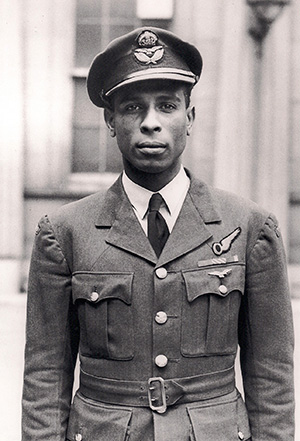
who went onto to be lawyer and instrumental
in Ghanaian independence in 1957
Knowing what I know now about history, even if it is just a basic knowledge (I’m no historian) Armistice Day does not mark peacetime. The fallout of the war to end all wars was a Pandora’s Box no signed treaty could contain. And in all conflicts it’s always the working-class who suffer most.
And it would be the archdukes of that world who would be having a jolly old time as if nothing had happened. But 1919 ushered in a wind of change: mass unemployment and uncertainty followed working-class communities from France and Belgium onto the streets of London, Cardiff and Liverpool.
When I think Armistice, I’m scratching my head as to when peacetime really does begin. 1919 brought in the Liverpool Race Riots where a one Charles Wotten was lynched at Albert Dock. Films like Doctor Zhivago depicting the Russian Civil War (1917 – 1922) remind me of the violence that occurred outside of the main narrative of the war (during and after). What of those calls for independence, Easter Risings on streets of Dublin?
HBO’s Watchmen, based on the Alan Moore comic – a vivid depiction of Tulsa, a section of American history most people haven’t heard of, including Black people. Why would people have heard of it? Vital parts of our own history have been erased, (I think) because it makes “the victors” look bad.
Tulsa, Oklahoma 1921:
Often referred to as the Tulsa Race Massacre (or Riot), this was when a White mob attacked the residents, livelihoods, homes and businesses of the majorly Black Greenwood area of Tulsa in the state of Oklahoma. This was what we’d now call a White supremacist attack and an act of domestic terrorism, or even genocide. Hundreds killed and thousands displaced.
In 1915, D. W. Griffith’s Birth of a Nation was released and has often been blamed for the resurgence of the Klu Klux Klan. After The War, there was a spike in racial tension in America, and Tulsa was basically Black Wall Street. The U. S Army was racially segregated in itself too. 1921 Greenwood was booming, a success story for Black business owners, despite high crime rates and racial segregation. However, history is a hotbed for Black excellence, but when Black people gain momentum, the establishment shoots them down, literally – from Fred Hampton to Medgar Evers.
At school, I was not taught, not once, about the four million non-Whites non-European that fought and laboured in those four years. I think if I was able to see myself in this history from when I was a child, I would have more time for Armistice. The great stage of the First and Second World War is tied up in Britain’s popular memory / national identity, and British identity is in crisis. Still, today, I’ve found to be British, is to be White.
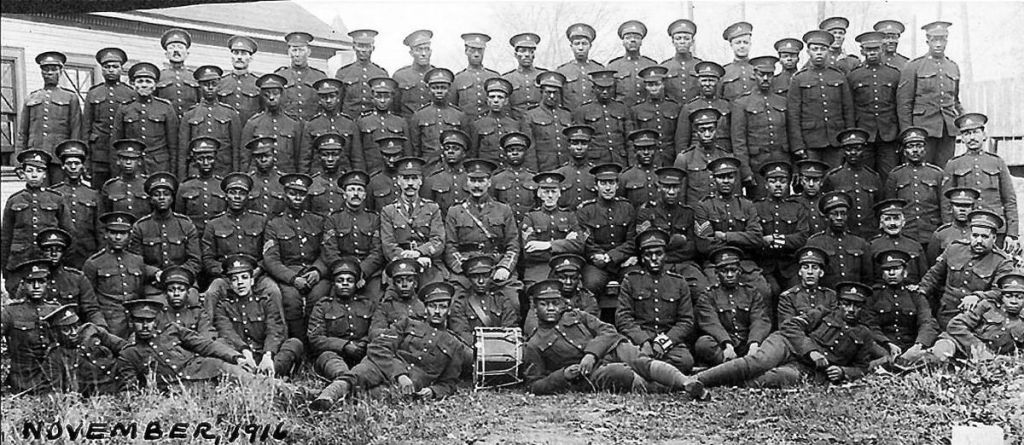
(The Black Cultural Center for Nova Scotia)
The yearly cycle of remembrance; from the procession in Northampton to interviews on BBC with veterans of the Second World War, I’ve always found it’s the voices of White British people. But there was racism at the front. The imperial mindset of European colonialism ran rampant in the British and German armies, tools of institutional racism, and by extension an instrument to whip up hate and institutional violence against colonial servicemen from places that included Senegal, China and the West Indies.
“Troops formed of coloured individuals belonging to savage tribes and barbarous races should not be employed in a war between civilised states. The enrolling, however, of individuals belonging to civilised coloured races and the employment of whole regiments of disciplined coloured soldiers is not forbidden.”
1914 Manual of Military Law
AND:
“Commissions in the special reserves of officers are given to qualified candidates who are natural-born or naturalised British subjects of pure European descent.”
1914 Manual of Military Law
Where are those stories of race at war? To be a soldier of colour, British-born or otherwise would not be the same as being a White (European) soldier, soldiers that toiled in France but also in the skirmishes of the African continent, Asia and the Middle East – erased out of our nationhood.
Over a million soldiers from what was then British India (pre-1947) fought for the allies, along with over two million from French Indo-China, as well as 100,000 Chinese labourers. But I did not have this on my history curriculum, when we looked at the stories between 1914 – 1918. But I was bludgeoned with images of White European soldiers having a great time.

To me, Armistice Day is in remembrance of a White Man’s war. And to (begrudgingly) mimic poet, colonialist and Jungle Book author Rudyard Kipling, it feels like a “White man’s burden,” even if people of colour fought too. In seeing how Britain portrays those wars in schools but also how they are represented in popular memory, can you blame activists and academics looking at the stories of race and racism on the front lines under a microscope?
Race / racial identity are massive factors in these conflicts, as historian David Olusoga talks about in his article. We would not need to keep talking about race if race wasn’t treated like a minor inconvenience and those often treating it like an that are White people, refusing to acknowledge their own whiteness and White Privilege.
However, if we really are serious about Armistice, we have to acknowledge that working-class people yet again were at the whim of the titled and the entitled. We remember the soldiers but never their victims, portraying death (murder) as honorable, as said in Wilfred Owen’s (from Horace) Dulce et Decorum Est “pro patria mori” (“it is sweet and proper to die for one’s country”). What is sweet about sending good men to the slaughterhouse?
Both wars are riddled with nationalism, and portray patriotism with grandeur. Great Britain raised at half-mast, celebrating Britain’s militarism –from Churchill to the Dreadnought (but no love for Bengal or Dresden). In how the wars are taught (popular nationalism), we encourage the living to join the dead, an ode to the Union Jack, even today in a postcolonial world.
“The colour bar on non-regular officers in the armed forces, designed and imposed by the political and military, is explicitly in the Short Guide to Observing a Commission in the Special Reserve of Officers, published by His Majesty’s Stationary Office in 1912.” – Phil Vasili
The world wars are full of people that are products of empire, in the ruins of class but also race. An archduke gets shot and millions of non-archdukes pay the price. Millions dead. After the war – widespread unemployment, uncertainty, race riots, class divides, The Depression, a grim state of affairs.
When you add the layer of race into that, it makes it more complex. Colonial soldiers coming to Britain after the First World War who were left out of the victory parades. Charles Wotten’s lynching in Liverpool. Men from British colonies who came here after the Second World War – to fill in labour shortages – White Supremacist fever and contested Britishness.

The narrative of Black soldiers goes all the way back to Roman Britain. Olusoga stated “Black soldiers were expendable – then forgotten” and I agree. In erasing Black and brown soldiers from the narrative, it’s a declaration of White lives being worth more than Black / brown lives.
And yes, we have the red poppy which is supposed to include everyone but it feels very exclusionary; and Britain’s popular memory is selective and needs to explore its colonial legacy – how imperial racial thinking played a role in both wars, otherwise we are continuing to tell stories that only include the experiences and memories of a White European majority.
“Black subjects had their actions during the war written out of history.” – Emma Dabiri
Works Mentioned
1914 Manual of Military Law
BBC Stories. “Alt History: White-washing black soldiers from WW1- BBC Stories.” YouTube. 27/06/19. Online. 10/11/19.
BBC Stories. “Alt History: A British lynching – BBC Stories.” YouTube. 13/07/19. Online. 10/11/19/
Birth of a Nation. Dir. D. W. Griffith. 1915, Epoch Producing Company. YouTube.
Channel 4 Documentary. “Dulce Et Decorum Est by Wilfred Owen: Read by Christopher Eccleston | Remembering World War 1 | C4”. Youtube. 07/11/13. Online. 08/09/19.
Doctor Zhivago. Dir. David Lean. 1965, MGM. DVD
History.com Editors. “Tulsa Race Massacre.” History.com. 2019. Web. Accessed: 10/11/19.
Lindeloff, Damien, creator. Watchmen. White Rabbit, Paramount Television, DC Entertainment, Warner Bros. Television, 2019.
Olusoga, David. “Black soldiers were expendable – then forgettable.” theguardian.com. 2018. Web. Accessed: 09/11/19
Vasili, Phil. Walter Tull, 1888 – 1918 Officer, Footballer […] Surrey: Raw Pres, 2010. Print.
Share this:


A month of Black history through the eyes of a white, privileged man… an open letter
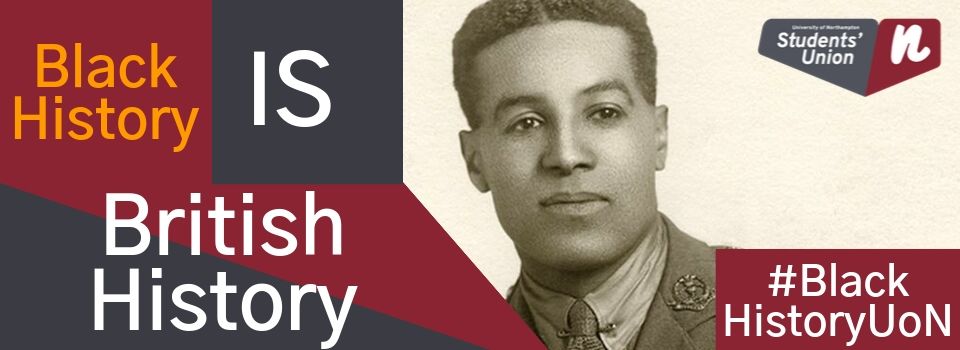
Dear friends,
Over the years, in my line of work, there was a conviction, that logic as the prevailing force allows us to see social situations around (im)passionately, impartially and fairly. Principles most important especially for anyone who dwells in social sciences. We were “raised” on the ideologies that promote inclusivity, justice and solidarity. As a kid, I remember when we marched as a family against nuclear proliferation, and later as an adult I marched and protested for civil rights on the basis of sexuality, nationality and class. I took part in anti-war marches and protested and took part in strikes when fees were introduced in higher education.
All of these were based on one very strongly, deeply ingrained, view that whilst the world may be unfair, we can change it, rebel against injustices and make it better. A romantic view/vision of the world that rests on a very basic principle “we are all human” and our humanity is the home of our unity and strength. Take the environment for example, it is becoming obvious to most of us that this is a global issue that requires all of us to get involved. The opt-out option may not be feasible if the environment becomes too hostile and decreases the habitable parts of the planet to an ever-growing population.
As constant learners, according to Solon (Γηράσκω αεί διδασκόμενος)[1] it is important to introspect views such as those presented earlier and consider how successfully they are represented. Recently I was fortunate to meet one of my former students (@wadzanain7) who came to visit and talk about their current job. It is always welcome to see former students coming back, even more so when they come in a reflective mood at the same time as Black history month. Every year, this is becoming a staple in my professional diary, as it is an opportunity to be educated in the history that was not spoken or taught at school.
This year’s discussions and the former student’s reflections made it very clear to me that my idealism, however well intended, is part of an experience that is deeply steeped in white men’s privilege. It made me question what an appropriate response to a continuous injustice is. I was aware of the quote “all that is required for evil to triumph is for good men to do nothing” growing up, part of my family’s narrative of getting involved in the resistance, but am I true to its spirit? To understand there is a problem but do nothing about it, means that ultimately you become part of the same problem you identify. Perhaps in some regards a considered person is even worse because they see the problem, read the situation and can offer words of solace, but not discernible actions. A light touch liberalism, that is nice and inclusive, but sits quietly observing history written in the way as before, follow the same social discourses, but does nothing to change the problems. Suddenly it became clear how wrong I am. A great need to offer a profound apology for my inaction and implicit collaboration to the harm caused.
I was recently challenged in a discussion about whether people who do not have direct experience are entitled to a view. Do those who experience racism voice it? Of course, the answer is no; we can read it, stand against it, but if we have not experienced it, maybe, just maybe, we need to shut up and let other voices be heard and tell their stories. Black history month is the time to walk a mile in another person’s shoes.
Sincerely yours
M
[1] A very rough translation: I learn, whilst I grow, life-long learning.

 Thoughts from the criminology team