
Home » “Black is beautiful” (Page 2)
Category Archives: “Black is beautiful”

The Euthanasia of the Youth in Asia: Milky White Skin #BlackenAsiawithLove
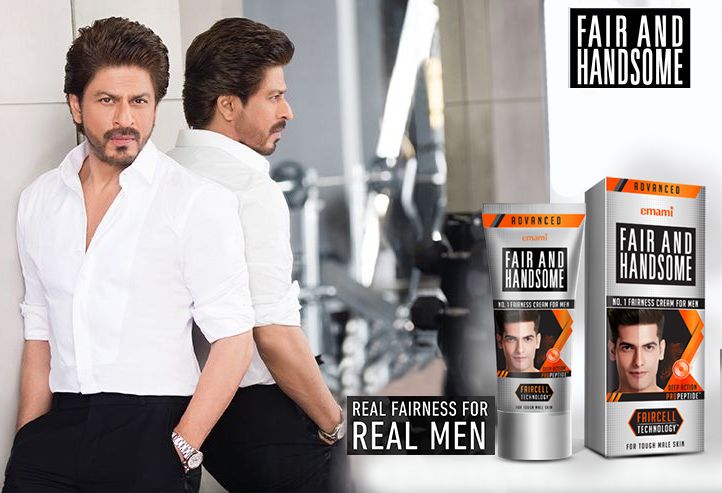
Shahrukh Khan (SRK) is arguably the Indian film industry’s biggest global star and commercial brand ambassador. In one early advertisement, he strikes a match from a dark-skinned kid’s face to show just how abhorrent it is as a trait. In another ad, ostensibly more humorous, SRK disses a group of traditional Northern Indian wrestlers for wearing skirts and make-up. The star chides them for using the feminine product instead of (converting to) the newly available male version (i.e. re-packaged in gray rather than pink). The product? The skin bleach Fair and Handsome. In both ads, the transformed, ‘fairer’ skinned consumer is pummeled with young girls virtually appearing from nowhere.
This follows the ty pical consumerist trope: The product makes users more popular and sexually appealing. Yet, things got worse. Clean and Dry’s ‘intimate’ bleaching shower gel for women (C&D). Yes, you read right: A bleaching shower gel aimed at lightening brown women’s crotches. There’s no male equivalent, save for a well-circulated spoof called Gore Gote: India’s #1 Testicular Fairness Cream (Mukherjee). In the initial shot of the C&D advertisement, a pouty-mouthed (fair-skinned) woman is ignored by her (fair-skinned) husband in their (upper-middle-class) apartment. Naturally, it seems, she bleaches her labia with C&D. After displaying the product’s virtues, the husband literally chases the wife around the fancy flat as she playfully dangles (his) keys. Her secret to happiness: A newly bleached intimate area. Is this a proxy for a white woman’s vagina?
What’s wrong with consumerism? The marketplace will not save you. As a Black person interested in self-love, it is clear that the market is murderous. There, the fetish of blackness is made widely available, as if one could bottle stereotypical ‘coolness’ and sell it to the youth in Asia, one of the largest consumer groups in the world. Fashion shops targeting youth regularly plaster posters of Bob Marley or Hip-Hop thugs to peddle goods to youth. Yet, standing in the rotunda of this mall, one could see shops of every major western cosmetics brand, including Clinique, Mac, Estée Lauder. Here in Asia, the flagship product in each shop is skin bleach! Black is cool, but white is power. Ironically, at the time I was modeling for a campaign in Vogue and Elle Décor in India, yet none of the make-up artists carried my mocha shade (shady, right).
YELLOW FEVER
 The skin bleach industry is by far the most virulent of all consumer products – even fast food. The bulk of this industry is meted out on the bodies of women…and girls who learn early that fate of darkness (just check out any Indian Matrimonials page). According to an August 2019 article in Vogue: “Per a recent World Health Organization report (WHO), half of the population in Korea, Malaysia, and the Philippines uses some kind of skin lightening treatment. And it’s even higher in India (60%) and African countries, such as Nigeria (77%).” After a 7 minutes instrumental intro to his 1976 hit, Yellow Fever, Fela Kuti chants: “Who steal your bleaching?/Your precious bleaching?…/Your face go yellow/Your yansh go show/Your mustache go show/Your skin go scatter/You go die o.”
It’s lethal, often a mercurous poison used to kill the soul. It is a fetishization of whiteness, that reveals the “internalization of the coloniser’s inferiorisation of dark skin as native and Other” (Thapan: 73). It’s euthanasia. Skin bleachers are painlessly killing themselves, willingly participating in their own annihilation. Not only does it quite literally murder the melanin in one’s skin, it symbolically kills one’s ‘dark and native’ self, giving birth to a new and improved modern identity. It requires constant application and reflects a consumerist’s self-regulation. Bleach is expensive, despite the industry’s ‘bottom of the pyramid’ approach to the marketing 4P’s – bleach sold in cheap tiny packages for the poor. Skin bleach is a form of mimesis, to actually embody modernity through crafting the ‘cultivated, developed and perfected’ self (Thapan: 70).
When I began teaching at UoN, I was asked to propose topics for business ethics modules, which were then optional. Hesitantly, I suggested skin bleach and hair weaves. Looking at the composition of the student body, this would be as familiar to them, as the products were locally available (see picture below taken in an ‘ethnic’ hair shop on Northampton’s high street). Several students have subsequently pursed these subjects in their dissertations. I was sad to learn that in colloquial Somali, ‘fair skin’ is a moniker for pretty, just as we western Blacks use ‘light skin and long hair’. Colourism makes dark-skinned people unsafe in our own homes.
I was pleasantly surprised at the support from the module leader, an older, straight white man. He said he knew little about the politics of black and brown skin and hair, yet listened with great interest and did his own research into the matter. What’s more, he stood by me both literally and figuratively. He was there when I was called to account for some negative student feedback such as “I’m a guy, I don’t wear make-up,” when asked to consider the differential impact of beauty standards on the psyches and earnings of women in business. He stood by me when I’d dropped the F-word (feminism) into the curriculum. This was before the Gender Pay Gap became more widely known or theBritish government required audits from large organisations. He is an ally. He stood by me in ways that may have been riskier for individuals outside the circles of normative power of gender, race and class. Talk about a way to use one’s privilege!

References
Kuti, F. (1976). Yellow Fever. [LP] Decca 8 Track Studios. Available at: https://genius.com/Fela-kuti-and-africa-70-yellow-fever-annotated [Accessed 13 Nov. 2019].
Mukherjee, R., Banet-Weiser, S. and Gray, H. (2019). Racism Postrace. Durham, N.C.
Thapan, M. (2009). Living the Body: Embodiment, Womanhood and Identity in Contemporary India. New Delhi: SAGE.
Share this:


A month of Black history through the eyes of a white, privileged man… an open letter
Dear friends,
Over the years, in my line of work, there was a conviction, that logic as the prevailing force allows us to see social situations around (im)passionately, impartially and fairly. Principles most important especially for anyone who dwells in social sciences. We were “raised” on the ideologies that promote inclusivity, justice and solidarity. As a kid, I remember when we marched as a family against nuclear proliferation, and later as an adult I marched and protested for civil rights on the basis of sexuality, nationality and class. I took part in anti-war marches and protested and took part in strikes when fees were introduced in higher education.
All of these were based on one very strongly, deeply ingrained, view that whilst the world may be unfair, we can change it, rebel against injustices and make it better. A romantic view/vision of the world that rests on a very basic principle “we are all human” and our humanity is the home of our unity and strength. Take the environment for example, it is becoming obvious to most of us that this is a global issue that requires all of us to get involved. The opt-out option may not be feasible if the environment becomes too hostile and decreases the habitable parts of the planet to an ever-growing population.
As constant learners, according to Solon (Γηράσκω αεί διδασκόμενος)[1] it is important to introspect views such as those presented earlier and consider how successfully they are represented. Recently I was fortunate to meet one of my former students (@wadzanain7) who came to visit and talk about their current job. It is always welcome to see former students coming back, even more so when they come in a reflective mood at the same time as Black history month. Every year, this is becoming a staple in my professional diary, as it is an opportunity to be educated in the history that was not spoken or taught at school.
This year’s discussions and the former student’s reflections made it very clear to me that my idealism, however well intended, is part of an experience that is deeply steeped in white men’s privilege. It made me question what an appropriate response to a continuous injustice is. I was aware of the quote “all that is required for evil to triumph is for good men to do nothing” growing up, part of my family’s narrative of getting involved in the resistance, but am I true to its spirit? To understand there is a problem but do nothing about it, means that ultimately you become part of the same problem you identify. Perhaps in some regards a considered person is even worse because they see the problem, read the situation and can offer words of solace, but not discernible actions. A light touch liberalism, that is nice and inclusive, but sits quietly observing history written in the way as before, follow the same social discourses, but does nothing to change the problems. Suddenly it became clear how wrong I am. A great need to offer a profound apology for my inaction and implicit collaboration to the harm caused.
I was recently challenged in a discussion about whether people who do not have direct experience are entitled to a view. Do those who experience racism voice it? Of course, the answer is no; we can read it, stand against it, but if we have not experienced it, maybe, just maybe, we need to shut up and let other voices be heard and tell their stories. Black history month is the time to walk a mile in another person’s shoes.
Sincerely yours
M
[1] A very rough translation: I learn, whilst I grow, life-long learning.
Share this:


Those kinde of people
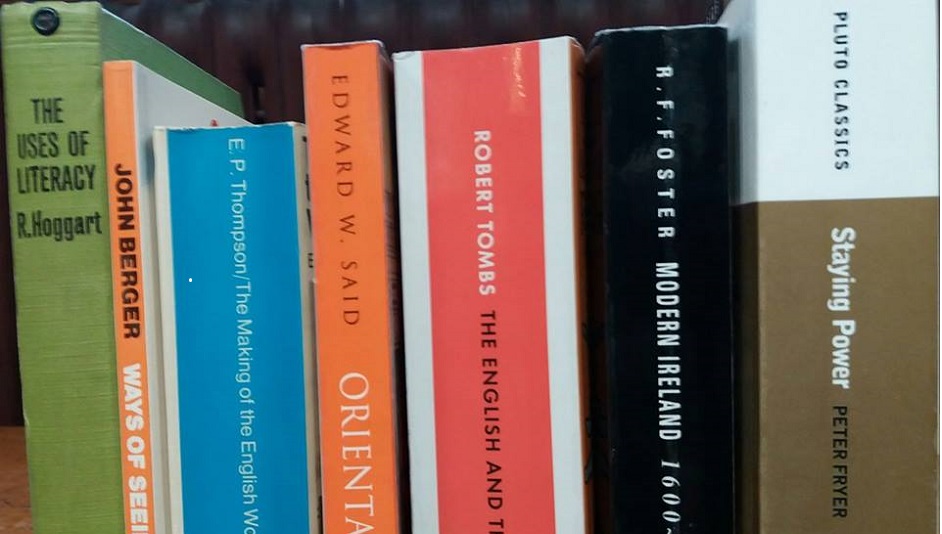
This poem is named for the first chapter of the iconic book Staying Power (1984) by historian and academic Peter Fryer. A book that talks about the history of Black people in Britain, from Roman times up to his modern-day. It’s also inspired by ‘Mathematics’ by British poet and author Hollie McNish.
Adam said:
those goddamn universities
and their goddamn books
learned people, crippling egos
with nothing but a look
he says those goddamn historians
and their god damn history
I tell them they worked hard
to get there, can’t you see?
I ask him what
he expects British history to be
he says he remembers
the land of Blyton and Christie
coastal wrecks, greenery
and a good wage before those people came
where people went to work, pot-bellied
national pride, stood proud before they came
now no British jobs, their kinde are to blame
I ask how he knows this to be true
he said he saw it on BBC News
every time a Pole takes a job from us
each time he hears a different language
whilst riding the bus
this divide and conquer, them and us
to me just does not add up
he makes a brew, two sugars in his tea
I say didn’t you know those granules
came from the sugar economy
he grunts, goddamn Blacks came and took our stuff
I tell him about sugar and cotton, you know
how slaves gave us indigo and tobacco – hot air to puff
I show him Brixton Road and Portobello Market
I show him rock n roll, Network Rail and the NHS
I show him the immigrant-built west
I show him straight roads and pictures of my Gran
how the Jamaican ackee comes from the Ghanaian Akan
He’s sick of history and social science
sitting all sad and smug on his island
I spent three years on a degree
did a dissertation on British identity
I geek over John Blanke
renaissance trumpeter who was Black
Oh and Ann Lister, call her Gentleman Jack
and Afro-Romans and The Slave Trade
Black Georgians, Saxons and Viking Raids
and I so want to scream when I hear folks say
goddamn immigrants taking our jobs
but how we teach history – we don’t talk
of Mrs Shah’s shop employing Bill and Bob
where people with money love to spend
employing women and men in tens,
her gift for business is self-taught
all her plans meticulously well-thought
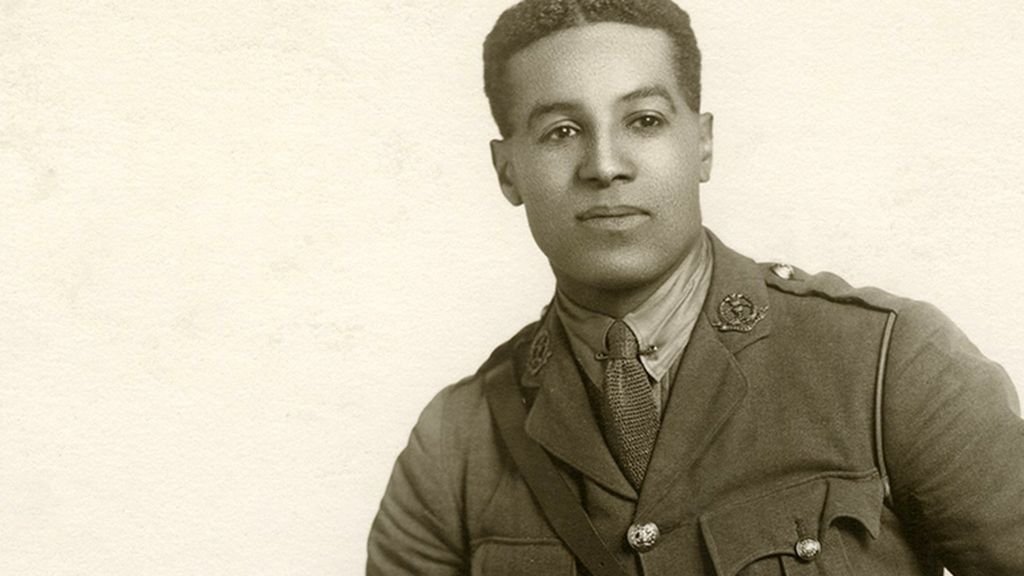
and all your prejudice talk
forgets the soldiers the colonies pledged
forgets the men left for dead
in Tangiers, Dunkirk and at the Somme
as the world wars went on and on
from Mr Smith to Mr Wong
and I know people love to complain
but England our name
the land of Angles is all that remains
from Saxons to Jutes
stories of migration since before WW2
and often, those kind of people
are more native than the locals.
Share this:


What the fluff

“History is not just stuff that happens by accident, we are the products of the history that our ancestors chose, if we are White. If we are Black we are products of the history our ancestors most likely didn’t choose.”
Kevin Gannon, 13th
And many of our cities in Britain are this melting pot due to the very same history our ancestors chose / didn’t choose; and the reason Britain has a variation of different faces is much to do (but not only) because of Britain’s colonial ambition.
Episode seven of the latest series of Who Do You Think You Are? was on TV entertainer Sharon Osbourne. Her family were victims of the Irish Potato Famine. Whilst the episode skirts over it, saying it occurred due to crop failures (with no real explanation), some would suggest that it was due to heavy-handed (British) colonial rule which assured those crop failures, leading to mass migration, starvation and death. For a show that is basically a series of history lectures, it does a good job of tiptoeing around uncomfortable (truths) bits of history.
As the late Jamaican philosopher and academic Stuart Hall said, “We are here because you were there” and we are now all here together, the products of our ancestors’ choices. I’ve been following this series of Who Do You Think You Are? with great interest and fascination. Almost every episode has had me hooked. And this latest episode with Sharon Osbourne was heartbreaking, with her great-grandmother Annie being the sole survivor of her six siblings, after disease and weakness took them.
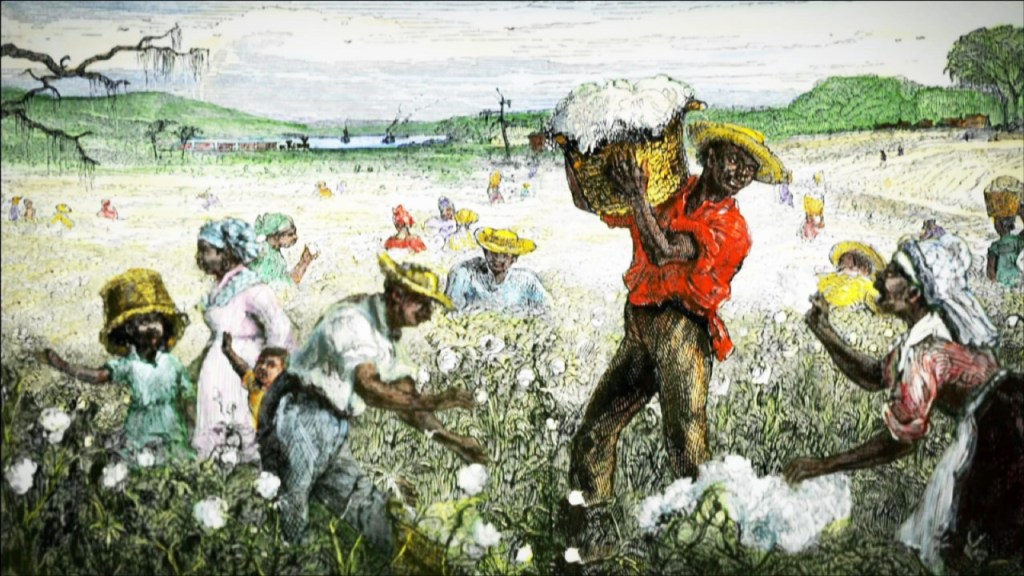
The family emigrated to Massachusetts, USA in the mid-19th century and they worked in a cotton mill, the biggest in America and the second biggest in the world, only dwarfed by one in Manchester, Lancashire.
What irked me was the lack of contextual explanation around cotton during this time. Why wasn’t there any explanation regarding the history of cotton in the United States? Moreover, that relationship between American cotton and the mills of Lancashire and Cheshire (some 4500 mills in Lancashire and southern Scotland). What about the Industrial Revolution and how colonialism and the enslaved Black people that paid for it?
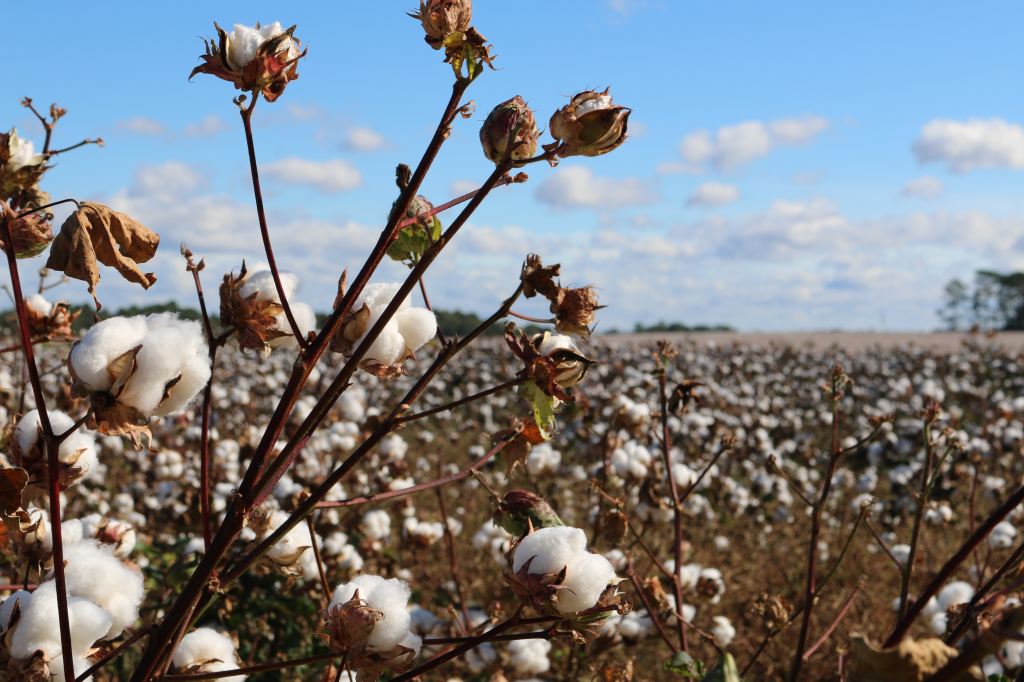
In a country still living in the aftermath of The Slave Trade, you cannot talk about cotton in America without talking about where the cotton came from. The same cotton made into cloth in Massachusetts would have came from cotton plantations, whether picked by African-Americans slaves (pre-1865) or “like-labour,” post-Civil War – since after abolition, the establishment entered into something called convict leasing. Prisoners loaned to plantation owners for a period, which (in itself) was legalised slavery. A loophole in the 13th Amendment stated that you could not be a slave, unless you were a criminal and imprisoned, thus America enters mass incarceration.
Black people in America were arrested for minor crimes like theft and vagrancy, and then imprisoned in mass. These prisoners were “rented” and put to work on plantations through the South – sugar, tobacco, cotton and more. The fact they didn’t feel the need to mention the context behind cotton in America is astounding, nor how the American cotton trade impacted Britain, for example the Lancashire Cotton Famine (1861 – 1865).

Yes, this episode is about Sharon Osbourne’s ancestors, but they were part of a longer story – a subtler history – the other half of cotton’s history that isn’t taught at school. And in places like Mississippi, where cotton was sailed down the Mississippi River by paddle steam, the local planters said:
“Cotton Is King.”
In Britain, we learn about spinning jennies. We learn about water frames and the Child Labour Act (1833), but not where cotton came from. This is American history and British history. It’s also working-class history. But in addition, it’s Black (British) history.
We are here because you were there; this is the history our ancestors chose, if you are White. But if you are Black, it’s the history your ancestors didn’t choose. And the least we can do is tell it right.
Bibliography
13th. Dir. Ava DuVernay. Netflix. 2016. Streaming platform.
Alexander, Michelle. The New Jim Crow. New York: The New Press, 2010. Print.
Olusoga, David. Black and British: A Forgotten History. London: Macmillan, 2016. Print.
Share this:


Empower like Michelle
If you go to Freshers’, you will probably think this is for White people. But you’ve got to occupy your space. Better get used to occupying your space now because you’ll have to fight wherever you go, university or otherwise. Don’t let that deter you from your goals but more vitally, don’t let anybody make you feel bad about yourself. Don’t be silent in the discussions on slavery or the prison system. Use your voice, a sonicboom in the seminar. Don’t be mute to appease the White fragility of your peers, or even your lecturers and personal academic tutors.
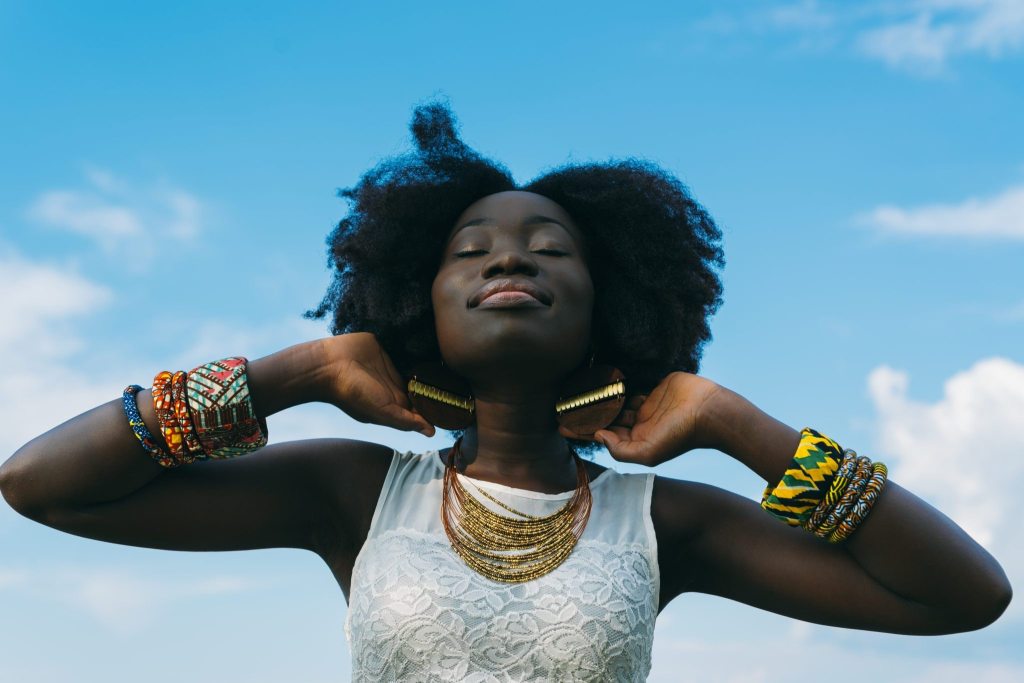
You worked hard to get here, so occupy your space. Fill these spaces with jollof rice and jerk chicken and calypso and steel drums – the guts, determination and sheer willpower your parents and grandparents had when they arrived all those years ago. Don’t ever feel that you have to dilute your opinions for White consumption, or tell bitesize histories for the masses. In that Business class, talk loud about the Cheshire and Lancashire cotton mills written in the blood of African-American slaves.
Students, you might get lecturers that call you angry, who will have a hard time coming to terms with their own prejudice and White privilege. You will see that within a few weeks of studying. But keep your head down and think about graduation. Come and speak to me at the Students’ Union if you have any worries or just want to vent. Sometimes it’s just about finding solace in someone that gets it. Cry into that cheeky Nando’s. Buy that weave. Write a damn good assignment and prove all the naysayers wrong.
You will also find lecturers that are willing to listen to your experiences of racism and prejudice. They will implore you to write a dissertation that’s personal to you. You will find lecturers that give a shit, and will stand by you to the very end – who will say it’s absolutely fine to lace your dissertation with personal history – roots, rocks, and rebellion – academic staff that are activists in their own right (but will never openly admit it!)
Write about the politics of Black hair. Write about the Windrush Scandal or the legacy of colonialism on the Black body, or even Black men and mental health. Write every assignment for your aunties, who live in headwraps, talking in Twi and give you sound advice. Write in ruthless rebellion to the White Eurocentric reading of your degree, break the colour bar in style!
You will likely not relate to your course content. You will find it reflects the experiences of White people. No Afropean stories. No love for Sarah Forbes on History, or the Slave Trade cases of the 1700s on Law – the cases that helped forge the legal profession into what it is today. Or even the racial theories of the 18th and 19th century that we living in the remnants of – not Edward Long’s History of Jamaica nor the Black writers that top bestsellers lists. Write about a decolonised curriculum and inclusive course content.
When your lecturers make no allusion to American Slavery when you study the Industrial Revolution, give them the evilest evils you can muster. And challenge them on it. Leave them shook. Educate your “woke” White friends on why this is important. And when it comes to race, don’t feel you need to talk about race just because you’re the only non-White person in the class.
When you come to university, you will feel the urge to be someone that you are not just to fit in. BE YOU. You will try studenty things. JUST DO YOU. You’ll go out drinking, even if you don’t normally drink. You will join every society at Union Day and your emails will be chocka block. You’ll change your accent and “be friends” with people you dislike to conform to social norms. You will then admit you hate going out out and prefer a good book, or one of my poetry nights or just a chat with good people in your halls.
Tell yourself “Black is beautiful.” You know it, I know it. But there are people out there that’ll try to make you feel bad about your culture, as is life. Come back to campus in January with that Angela Davis afro, or be a dreadlock rastaman. Play cricket, like Jofra Archer or play football like Raheem Sterling. And, your hair is not an exotic specimen to gawked at and touched like a museum exhibit. Remember, say no. No means no. Always.
Black students, walk with pride. YOU DO YOU. Be united. You’ll see quickly that there are forces that are waiting for you to make a mistake. To fail. To point the finger. You’ll see quickly that failure is racialised and that failure in a White person is not as bad. You’ll see that we live in a society that doesn’t include you in its definition of beauty standards. So girls, when someone says “You’re pretty for a dark-skinned girl,” pay them no mind. Find beauty in your melanin. Find your tribe. Sisterhood is paramount.
When someone asks “Where are you from?” – it’s fine to say London or Milton Keynes or any British town or city. You do not need to entertain them when they ask “Where are you really from?” You can be British and African. You can be British and Caribbean. You belong here. You can just be British. And that is also fine. Previously, you’d not have found events that represent Black people or felt inclusive. But my philosophy is “Black History Month is every month, 365 days a year.” October, November forever. See me!
Listen, you might be made to feel conscious of your otherness and not everyone will get your “I Am Proud of My Blackness” mentality. Not everyone will understand the nuanced politics of Blackness at Northampton. That even in inaction, the supposed “woke” White people are still complicit in racism. And remember it isn’t YOUR JOB to explain what is racist and what is not. Do not take on that emotional labour. You are not the mouthpiece for Black people, and you don’t have to be.
You will have days where you will say “I hate this town, I want to go home – there is no culture and nothing to do” but Northampton can work for you. There are other communities of African and Caribbean here where you will be welcomed with rice and stew. You will find family and community.
And you are not alone. There are a lot of us here. Build communities. Join the resident ACS (African-Caribbean Society). Empower yourselves. Come to see me, as your Student Union representative. Look after each other. Be good to yourselves and one another – and above all, enjoy it.
Yours,
Tré Ventour
Vice President BME
Northampton Students’ Union

 Thoughts from the criminology team