
Home » Bereavement
Category Archives: Bereavement
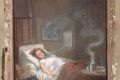
Festive Frights

The festive season is almost upon us, and for many of us this means a well-deserved break! As the calendar wraps up and the holidays beckon, why not give your criminological mind a holiday, too? It’s the perfect opportunity to let your imagination soar and dive headfirst into the thrilling world of paranormal fiction.
Taking a temporary step away from cold, hard facts allows us to explore narratives that defy easy explanation, using different parts of our investigative minds. This shift from reality to the realm of the supernatural can be a refreshing break and a wonderful way to recharge before heading into a new year.
This year, something spooky happened! The core mission of the Kids’ Criminology Club, which focuses on expanding knowledge, logic, deduction, and evidence, was temporarily suspended. For a one-off Halloween-esque special, the club transformed into the Kids Paranormal Club.
I am a senior lecturer in Law with a keen interest in the paranormal, and I took our young investigators on a journey into the inexplicable. Together, we explored theories such as the Stone Tape Theory and shared accounts of supernatural phenomena. Following our fascinating session, I challenged the kids to channel their inner storytellers and enter a paranormal story writing competition, with a strict limit of no more than 500 words. The results were chilling, creative, and certainly a departure from Criminology and the Law! All entries, including the winning entry, can be found below.
As you settle in for your holiday break, we hope you’ll find inspiration in these young authors’ terrifying tales. Whether you’re investigating a fictional haunting or simply enjoying a peaceful evening, remember to let your mind wander beyond the police tape and evidence markers. Enjoy the comfort and quiet, and maybe keep an ear out for any strange sounds in your own home…
And finally, while you’re enjoying the comfort and safety of the season and your well-earned break from reality, spare a thought for those who may be facing their own real-life terrors, or simply without the security, warmth, company and peace we often take for granted at Christmas time.
🏆 The Winning Stories
Here are those standout entries that captured our imaginations and sent shivers down our spines.
🥇 Winner: The Radio in Number 13 by Paisley G., age 10
9th October 1967 11:00 pm I have been prompted to start this journal because of an experience I have had in which I don’t feel safe, so I am creating this just in case. My first experience was at night. I was listening to the radio like I always do before bed, there was some show on, I wasn’t really listening; I never really listen, it was just something to do, I suppose. I’m sitting at my desk when I hear footsteps. I live alone and don’t have any pets, that’s when I realised the voices had stopped with a shocking realisation. I knew that the footsteps were coming from the radio. It sounded like heavy boots on stone. I live in a large house with a stone road leading up to the front door. There was a static noise and then the voices were back. I was unsettled but didn’t think much about it. My wife had died only a couple of weeks ago, and I had an odd feeling that they were connected somehow. She was a lovely woman,n and she used to always wear a pair of big black boots.
10th October 1967 11:00 pm Slept uneasy last night – I had a nagging feeling of not being alone. I went about my usual business as normal and had the same experience again: same time, same show, same footsteps.
11th October 1967 11:00 pm Uneasy sleeping again. In the morning, when I left my house, I saw my neighbour Lucy. She is usually a lovely old lady, but when I walked past he house, she ran outside and grabbed me by the hands, looked right into my eyes and said ‘Don’t do it! Don’t open the door! They’re coming!’ Then she ran back inside. It was unsettling, but again didn’t think much of it. The noises were different tonight, footsteps and again they stopped, and I thought the talking would start again, but no, not yet there was the sound of knocking on a door, then it cut back to the show.
12th October 1967 11:00 pm Decided to test it tonight I don’t know what made me do it, but I left the front door open, brought the radio down and sat on a chair by the door. The old lady’s words were ringing in my head, but I had a weird feeling of wanting to prove her wrong. I turned on the radio there was more knocking th-
3:41 am I woke up in my bed, confused about what happened. I ran downstairs to check the door, but it was closed, the chair back in its place, the radio on my desk, as if it had never happened.
13th October 1967 I just turned on the radio the footsteps were going upstairs. They stopped, then the sound of a door rattling my my my door is being shaken help help please pleas ple-
Note from the doctor: The subject had no apparent injuries; they just… died.
Note from the builder: The walls have a trace of a type of mould that could lead to possible madness.
Ghost Mary by Riddhi P., age 11
Fourteen-year-old Isabel Smith and her best friend Anna Hazel live in Riverbend town. Isabel’s twin sister Mary had died two years ago from mysterious reasons, but when Isabel and Anna begin getting chilling messages from her, they find out, she had been taken by wicked blood ghosts that can only take souls on the Day of the Dead! The girls discover a book that says they may be able to bring Mary back by going to the ghost underworld. Desperate, the girls decide to do a ritual that can teleport them to the ghost world! They lit one hundred candles in a perfect circle,e and they both sat in the middle and whispered the forbidden words. When Isabel opened her eyes, she wasn’t in her room anymore; she was in a dark, gloomy place that looked like a graveyard. Fog pressed her skin, whispering, never lifting. Isabel and Anna looked around when Isabel froze. Her heart stopped! Mary was standing just a couple of feet away from them! Mary’s face looked white, her eyes were a pit of black, her clothes were torn and filthy, a black mist surrounded her body. Mary opened her mouth to say something, but before she could, the girls grabbed her hand and pulled her in the circle of candles. “We have to chant the forbidden words backwards fifteen times,” they told her. They began chanting the words once, twice, three times…. “Wait! We have to get the book and burn it, or the blood ghosts will be able to take me and many others again,” cried Mary. Anna dashed to grab the book, but in the shadows, she saw something terrifying – the blood ghosts! Their hollow eyes oozing blood staring at her, their skeleton hands reaching out trying to catch her. Anna grabbed the book and ran towards the circle where Isabel’s voice trembled as she started to chant the words for the tenth time. “Quick, burn the book!” yelled Mary. Just then, the blood ghosts lunged at them and grabbed Mary’s arm. Mary screamed; they were pulling her away from them! Isabel quickly grabbed Mary and dragged her back into the circle. As soon as she did, Anna threw the book in the flames. There was a gust of wind, a ball of energy cloaked the circle of candles like a shield, and the blood ghosts screamed in agony, fading to dust. Isabel finished chanting, the world flippe,d and they were back in Isabel’s room. “What just happened?” Whispered Mary. “It’s over. We’re home!” answered Isabel. They hugged. No more blood ghosts, underworlds or magic words. They were safe. Or were they?.
The Towers of Terror by Quinn G., age 12
Welcome to the Towers of Terror annual story release. Ok, I’m hoping you know what the stone tape theory is. If not, here is a quick rundown: basically, it is the theory that buildings or places have a memory and can replay it, hence ghosts. But what happens at sea? Well, I can tell you that they go to the nearest lighthouse house which then replays them through its beam, and it’s my job to tell the world the stories of wrecked ships, crashed planes and fallen sailors.
Southwold Lighthouse, Norfolk 31/10/2020 Keeper John 12:30 am I’m in for a night tonight with it being Halloween and all. 6:00 pm, just some light activity, a couple of fishing boats, S.S.Mary, an unnamed skipper, a rowboat and a cliff jumper who didn’t want to come to the surface. 7:00 pm, it’s weird that the projections have just stopped. 7:30 pm still nothing. Wait! It is back. No. It’s me, I’m on shore – wait – I’m crumpling to the ground, there is a figure behi-
That’s where his lighthouse log ends, when his colleague went up to take over and found him dead with his pen still clutched in his hand. It is not unusual for things to creep out of the projections. That is why he was there in the first place, to monitor the lighthouse. Even though it is not in operation for ships, you can’t have all those stories building up in such a small space because they will find a way out. But what happened that night was different. Never before has one of the projections interacted with the world outside the projections. There are several other accounts that all go the same way: projections stop, they start again, you see yourself crumble to the floor, and … dead, so we can’t just have people dropping like flies, someone will notice! But if we leave them unattended, they will cause more destruction. So, what would you do? Well, I will tell you what I did/am doing. Finding what came out and how to stop it from coming out again.
That was 5 years ago, and now I can bring you up to date: The entity that was coming out of the projections is now known as the Siren Reaper of the drowned and lost and cannot be explained away. Believe me, I’ve tried, but to no avail. Now to get on to the solution: the one thing that connects the deaths of those keepers was that they had all had a connection with the se, old captains, anglers, sea goers and other jobs that are to do with the sea. After years of contemplation, I have a theory. I think that the Reaper has killed these people because it thinks that they have escaped from it. The solution is to make the keepers not connected with the sea, because then the Reaper will have no business with them. But this does not explain why the projections just stop beforehand, or why the Reaper shows them their death….
Share this:


Grief through art and privilege

Recently, I find myself constantly listening to Cat Burns’ (2025) new album ‘How to be Human’. An incredibly catchy, moving and soulful album. Lyrically, it navigates two types of grief; the death of a loved one (father and grandfather) and the end of a relationship. The lyrics are poignant and the melodies peaceful yet emotional. For somebody who has had this album hit too close too home, it is very much a ‘box of tissues at the ready’ type of album with some ‘get up and dance’ tracks included too.
Engaging with art (music, literature, print) which embodies and navigates grief can assist some in the healing process. Different people frame different emotions which hit in a whole new way. Music, art, literature are a necessity for human kind: but they are also a privilege. A privilege for those who can create, access and afford. Space, money, creativity are needed to create but also arguably to consume art as well. Is this fair given the unfortunate reality that we all will/have been bed fellows with grief, and these resources could help people process/address/feel?
This got me thinking about the broader collective which is grief: grieving for a previous version of yourself, grieving people, grieving a home, grieving something you want but cannot have, the ending of a relationship, loss of income. When I think about it, we grieve all sorts, yet these types of grief are not ‘mainstream’, or at least I hadn’t perceived them as such. And as I thought about grief, it made me think of those within the Secure Estate (children and adults), grieving the loss of loved ones, of relationships, of possibilities and of their liberties. Are they afforded the space to grieve? They are viewed as criminally responsible, and therefore deserving of punishment, and part of this punishment is loss but how do they process this? Do they view this loss of liberty in terms of grief? Are they afforded this privilege? I highly doubt it, and I wonder if this framing of grief and loss is something which needs deeper consideration when looking at rehabilitation. How can you rebuild and move forward if you haven’t processed, or at least begun to process, the loss. The loss of who you were, the loss of time, the loss of relationships, skills, knowledge etc.
In my humble opinion the album is beautiful and has made me deal with a new wave of feelings: but I think this is a good thing. As Burns (2025) identifies in ‘All this love’: it’s just part of the process. A process, given my positionality, I am privileged to be navigating with music, literature, family and friends. A privilege not afforded to all, or for all forms of grief. I think this should change. Grief can be all consuming, even on days when you think you’re on your feet, suddenly the rug is pulled from beneath you. And the tools you have, the space to be and to feel, are essential. So why then do we only afford them to some?
Bibliography:
Burns, C. (2025) ‘How to Be Human’. Available at Amazon Music (Accessed 31st October 2025)
Rosen, M. (2004) Sad Book. Somerville, MA: Candlewick Press
Savage, M. (2025) ‘Cat Burns’ new album shows a softer side to the Traitors star’, BBC, 31st October. Available at: https://www.bbc.co.uk/news/articles/cx2pxz14ypro (Accessed 11th November 2025)
Share this:


The coffee shop that’s worth more than its profit margin

Every morning follows the same rhythm. Finish my gym session, towel off, and head straight to the M&S café for my coffee. It’s not just about the caffeine – though God knows I need it. It’s about the ladies behind the counter who greet me with genuine warmth, who remember my order, who take pride in their work. In a world that often feels rushed and impersonal, their kindness has become my daily reset button.

But this isn’t really a story about my coffee ritual. It’s about what I’ve witnessed in that café—something far more important than any morning black americano.

The tables are always dotted with elderly faces. At first, I didn’t think much of it. But over time, as I’ve chatted with them, “I come here every Tuesday and Thursday,” one gentleman told me in the queue, staring at his menu. “Meet up with whoever’s about. Talk football, moan about the weather.” He smiled. “Beats sitting at home staring at the four walls, doesn’t it?” It’s beautiful, really. Watching strangers become friends over scones, toasties and crosswords. Seeing lonely people find their people, even if just for an hour.

The gentle hum of conversation about politics, memories, grandchildren, postwar Britain, the price of everything these days. This is what community looks like – unscripted, unglamorous, essential. I’ve become friends with some of them myself. They’ve told me about children who live too far away, partners they’ve lost, days that feel too long and too empty. For many, this café visit is their main activity. Their reason to get dressed. Their connection to the outside world.

A couple of days ago, I was at the gym when I overheard a conversation that stopped me mid-rep. They’re closing the café. The M&S café. Our café. I asked one of the staff members – one of those lovely ladies who makes this place what it is. She confirmed it quietly, almost apologetically, but couldn’t (or wouldn’t) share the details. The rumour mill says it’s about profit margins. The official line from M&S is that they’re repurposing spaces to create room for more popular products. More popular products!. And I felt something crack inside me.
If this is truly about profits, then we need to have a serious conversation about what we value as a society. Yes, businesses need to be viable. Yes, companies have shareholders and bottom lines and quarterly targets. I understand economics, I used to work in the financial services – a Bank to be precise, so I understand numbers. But when did we collectively decide that every single square foot of commercial space must justify its existence purely through revenue? This café might not be their most profitable location. But what’s the cost of closing it? Where exactly do we expect these elderly people to go?
“Just go to another café,” someone might say. But you’re missing the point entirely. This isn’t about coffee. It’s about familiarity. It’s about the staff who know your name. It’s about the community that’s been built, brick by brick, conversation by conversation, over months and years. You can’t just transplant that somewhere else. Community doesn’t work like that.
My elderly friends at the café (many of them in their 80s) represent a growing crisis we’d rather not acknowledge. Let me give you some numbers. According to a recent report on Age and loneliness in the UK, nearly 940,000 older people in the UK are often lonely – that’s one in fourteen people over 65 (Age UK 2024). And here’s the truly heartbreaking bit: 270,000 older people go an entire week without speaking to a single friend or family member.
Do you know how crazy that sounds? Not speaking to a single friend or family member!! A whole week!!
And loneliness doesn’t just make people sad—it kills. It increases the risk of depression, heart disease, stroke, dementia etc. This isn’t just about comfort or quality of life. This is a public health crisis. And yet, we’re closing the very spaces where people find connection. Where will they go? Costa? Starbucks? Even if they could afford the higher prices, those chains don’t foster the same sense of belonging. They’re designed for laptop workers and quick takeaways, not for lingering conversation and community building.
Councils cut funding for community centers – libraries operate on skeleton hours, now commercial spaces that accidentally became social lifelines are vanishing too.
I’m not naive. I know M&S isn’t a charity. I’m also aware they do good work by partnering with food banks and donating surplus food to people who need it. They clearly have a social conscience. But they brand themselves on quality, trust, and British values. Well, here’s a British value: looking after our elderly. Not abandoning them.
M&S, you have an opportunity here. An opportunity to position yourselves as a company that doesn’t just talk about community values but actually lives them. You could be the retailer that says, “We’re keeping our cafés open because we recognise they’re tackling one of the biggest health crises facing our aging population.” Imagine the goodwill. Imagine the respect. Imagine being the company that genuinely helps combat loneliness alongside all the good work you’re already doing – that’s how you truly stand tall amongst your peers.
There’s such thing as enough profit. There’s such a thing as being a responsible corporate citizen. There’s such a thing as recognising that some things – like providing a warm, safe space for lonely pensioners to find friendship – might be worth preserving even if it means slightly less room for those “more popular products.”
Our very own café will probably close. The space will be repurposed – maybe more retail shelving, maybe nothing at all. The decision-makers will never meet the people affected. They’ll never know about the Tuesday regular who’ll now have nowhere to go, or the widow who found a reason to leave the house, or the gentleman who finally made friends after his kids relocated to another country. And my morning ritual? I’ll find another coffee shop. I’ll survive.
But what about the people for whom this was so much more than coffee? What about the 270,000 older people who might go another week without speaking to anyone? What about your chance to be part of the solution instead of part of the problem?#
This is what the world is turning into: a place where community is a nice-to-have but never a must-have. Have we forgotten that sometimes the most valuable things can’t be measured on a balance sheet. We can do better than this.
What do you think? Are there spaces in your community facing similar threats? I’d genuinely love to hear your thoughts.
Reference list
Age UK (2024) Age UK’s new report shows ‘you are not alone in feeling lonely’. Available at: https://www.ageuk.org.uk/latest-press/articles/age-uks-new-report-shows-you-are-not-alone-in-feeling-lonely/ (Accessed: 27 October 2025)

 Thoughts from the criminology team
