
Home » Austerity (Page 5)
Category Archives: Austerity

“A Christmas Carol” for the twenty-first century

The build up to Christmas appears more frenetic every year, but there comes a point where you call it a day. This hiatus between preparation and the festivities lends itself to contemplation; reflection on Christmases gone by and a review of the year (both good and bad). Some of this is introspective and personal, some familiar or local and some more philosophical and global.
Following from @manosdaskalou’ recent contemplation on “The True Message of Christmas”, I thought I might follow up his fine example and explore another, familiar, depiction of the festive period. While @manosdaskalou focused on wider European and global concerns, particularly the crisis faced by many thousands of refugees, my entry takes a more domestic view, one that perhaps would be recognised by Charles Dickens (1812- 1870) despite being dead for nearly 150 years.

One of the most distressing news stories this year was the horrific fire at Grenfell Tower where 71 people lost their lives. [1] Whilst Dickens, might not recognise the physicality of a tower block, the narratives which followed the disaster, would be all too familiar to him. His keen eye for social injustice and inequality is reflected in many of his books; A Christmas Carol certainly contains descriptions of gut wrenching, terrifying poverty, without which, Scrooge’s volte-face would have little impact.
In the immediacy of the Grenfell Tower disaster tragic updates about individuals and families believed missing or killed in the fire filled the news channels. Simultaneously, stories of bravery; such as the successful endeavours of Luca Branislav to rescue his neighbour and of course, the sheer professionalism and steadfast determination of the firefighters who battled extremely challenging conditions also began to emerge. Subsequently we read/watched examples of enormous resilience; for example, teenager Ines Alves who sat her GCSE’s in the immediate aftermath. In the aftermath, people clamoured to do whatever they could for survivors bringing food, clothes, toys and anything else that might help to restore some normality to individual life’s. Similarly, people came together for a variety of different celebrity and grassroots events such as Game4Grenfell, A Night of Comedy and West London Stand Tall designed to raise as much money as possible for survivors. All of these different narratives are to expected in the wake of a tragedy; the juxtaposition of tragedy, bravery and resilience help people to make sense of traumatic events.
Ultimately, what Grenfell showed us, was what we already knew, and had known for centuries. It threw a horrific spotlight on social injustice, inequality, poverty, not to mention a distinct lack of national interest In individual and collective human rights. Whilst Scrooge was “encouraged” to see the error of his ways, in the twenty-first century society appears to be increasingly resistant to such insight. While we are prepared to stand by and watch the growth in food banks, the increase in hunger, homelessness and poverty, the decline in children and adult physical and mental health with all that entails, we are far worse than Scrooge. After all, once confronted with reality, Scrooge did his best to make amends and to make things a little better. While the Grenfell Tower Inquiry might offer some insight in due course, the terms of reference are limited and previous experiences, such as Hillsborough demonstrate that such official investigations may obfuscate rather than address concerns. It would seem that rather than wait for official reports, with all their inherent problems, we, as a society we need to start thinking, and more, importantly addressing these fundamental problems and thus create a fairer, safer and more just future for everyone.
In the words of Scrooge:
“A merry Christmas to everybody! A happy New Year to all the world!” (Dickens, 1843/1915: 138)
[1] The final official figure of 71 includes a stillborn baby born just hours after his parents had escaped the fire.
Dickens, Charles, (1843/1915), A Christmas Carol, (Philadelphia: J. B. Lippincott Co.)
Share this:


“Letters from America”: II

Having only visited Philadelphia once before (and even then it was strictly a visit to Eastern State Penitentiary with a quick “Philly sandwich” afterwards) the city is new to me. As with any new environment there is plenty to take in and absorb, made slightly more straightforward by the traditional grid layout so beloved of cities in the USA.
Particularly striking in Philadelphia are the many signs detailing the city’s history. These cover a wide range of topics; (for instance Mothers’ Day originates in the city, the creation of Walnut Street Gaol and commemoration of the great and the good) and allow visitors to get a feel for the city.
Unfortunately, these signs tell only part of the city’s story. Like many great historical cities Philadelphia shares horrific historical problems, that of poverty and homelessness. Wherever you look there are people lying in the street, suffering in a state of suspension somewhere between living and dying, in essence existing. The city is already feeling the chill winds of winter and there is far worse to come. Many of these people appear unable to even ask for help, whether because they have lost the will or because there are just too many knock backs. For an onlooker/bystander there is a profound sense of helplessness; is there anything I can do?, what should I do?, can I help or do I make things even worse?
The last time I physically observed this level of homelessness was in Liverpool but the situation appeared different. People were existing (as opposed to living) on the street but passers by acknowledged them, gave money, hot drinks, bottles of water and perhaps more importantly talked to them. Of course, we need to take care, drawing parallels and conclusions across time and place is always fraught with difficulty, particularly when relying on observation alone. But here it seems starkly different; two entirely different worlds – the destitute, homeless on the one hand and the busy Thanksgiving/Christmas shopper on the other. Worse still it seems despite their proximity ne’er the twain shall meet.
This horrible juxtaposition was brought into sharp focus last night when @manosdaskalou and I went out for an evening meal. We chose a beautiful Greek restaurant and thought we might treat ourselves for a change. We ordered a starter and a main each, forgetting momentarily, that we were in the land of super sized portions. When the food arrived there was easily enough for a family of 4 to (struggle to) eat. This provides a glaringly obvious demonstration of the dichotomy of (what can only really be described as) greed versus grinding poverty and deprivation, within the space of a few yards.
I don’t know what the answer is , but I find it hard to accept that in the twenty-first century society we appear to be giving up on trying seriously to solve these traumatic social problems. Until we can address these repetitive humanitarian crisis it is hard to view society as anything other than callous and cruel and that view is equally difficult to accept.
Share this:


Do you consent to read on?

The more eagle-eyed amongst you may have spotted that @manosdaskalou and I are due to present during ‘I Heart Consent’ Week (still plenty of time to book a space!). The topic – ‘Consent in the Classroom’ is one that is close to our hearts and something we have discussed in different environments with different people. In this week’s entry I want to consider why the subject of consent is particularly important for criminologists.
An obvious area to start is research; ethics are fundamental to all of the projects we do from undergraduate all the way through to seasoned academic. Discussions around ensuring participants are able to fully engage in the process of gaining informed consent are imperative. At times this may be viewed as procedural; simply going through the motions but given the sensitivity of much criminological research it has a primacy and an urgency necessary to avoid harm.
The last few weeks have seen a flurry of accusations directed at Hollywood’s “finest” (cf. Harvey Weinstein, Kevin Spacey, Ed Westwick et al.) and government ministers and MPs (cf. Michael Fallon, Stephen Crabb, Kelvin Hopkins et al.). These often, light on factual evidence and heavy on prurient judgement, throw the spotlight once more on the issue of sexual consent. These cases are concerning on many levels and it is apparent from much of the discussion which often ensues whether on television, radio, in the newspapers or on social media, that many people are confused around the very nature of consent. Attempts have been made to counteract these lack of knowledge, often in creative ways; for example ‘Consent: It’s as simple as tea’ but looking at many of the comments, there is still a great deal of work to do. There are also wider issues in relation to consent; the absence of the victims’ consent to have their information paraded to feed the public’s desire for detail Likewise, the nature of summary justice being dispensed (e.g. expulsion from organisations, cancellation of contracts and resignations) deprives suspects of their right to defend themselves in court; there is no option for those suspected to opt for a trial by media.
Notwithstanding, the imperative to understand sexual consent, for Criminology, there is a further complication. When much, if not all crime, criminality and criminal justice, is predicated on the absence of consent, the issue becomes even more tenacious. If we consider that victims don’t consent, offenders may not consent to what ensues; certainly the criminal justice system’s [CJS] apparatus deliberately and meticulously removes consent throughout the process. Even when it comes to the professionals who work within the CJS, they may not consent, rather they are obeying guidance/policy/instructions/orders (delete as appropriate). After all, it cannot be consent if derived at the barrel of a gun, or in a police interview suite or a prison cell or when the economic situation is so bleak you are terrified of losing your job. When there is no room for manoeuvre, there can be no consent. Institutions and individuals may decide that this is a necessary price to pay in respect of crime and punishment, but that decision should never be taken without reflection.
All of the above shows the importance of consent, not only between the sheets, but in all aspects of criminology. Whatever side of criminal justice you might find yourself on, an understanding of consent is essential.
Share this:

Surviving in a changing environment: the use of illicit drugs

Recent months have seen a rebirth in drug related news stories, often linked to the death of young people or babies or the dealing of drugs by youth and gangs. This led me to consider the place of drugs in British Society, not in terms of their distribution, production, cost, but the reasons why illicit drug use continues to be prominent in UK society. There is plenty of research on this topic and considerable political commentary on the problem, however is drug use really a problem or are we simply more aware of illicit drug use and more open to discussing it? There are certainly arguments for both sides but neither address the reason why drugs are in our society and this led me to consider the speculative argument that cocaine use is increasing, or at least shifting to a newer market.
Cocaine, historically the drug of choice for celebrities and the wealthy is now spreading across society to a wider social demographic by why? The main argument produced by the ACMD is that there is a two-tier market based on purity, the more pure and thus more expensive continues to be used by celebrities and the wealthy but a less pure, cheaper version is now available for those less affluent. I don’t doubt the validity of this argument but I think there is more to this than simply price and purity. Historically, drugs that are now illegal were widely available and staple part of people’s daily lives helping to mask the harshness of life or facilitate their functionality within working and social environments. Has much changed? The political drive to make us do more for less is certainly evident in modern society as is the harsh effects of poverty and deprivation, both of which can lead to drug use, albeit these once legal substances are now illegal.
In addition, developments in technology and globalisation have significantly increased the pace of life for most people; we work longer hours to survive or because it is demanded of us, we juggle more commitments than ever before, we are expected to absorb and process huge amounts of information instantaneously all of which has sped up our lives to the point of sensory overload but are our bodies and minds really designed to cope with this long-term? When I was at university I studied during the day and worked nights so the maximum amount of sleep I would get in any 24 hour period was about 4 hours and this was broken sleep, usually between 4pm and 8pm. At that time the drug of choice was pro plus and without it, I would not have been able to sustain this lifestyle for three years. I’d like to say this was just a small period in my life that such actions were needed to follow my dream but the reality is that as the work-life balance blurs and demands on our time increase, time to sleep erodes and our bodies are not designed to operate well on minimal sleep. This naturally leads to the inclusion of stimulants in our daily lives to help us to function, whether that be caffeine or cocaine is a personal choice but potentially a necessary evil if we wish to survive.
That is not say that I condone the use of illicit drugs but that does not mean that I can’t see the potential benefits of such substances. There are numerous documentaries highlighting the use of uppers to stay awake and downers to sleep amongst the celebrity population whose lifestyles can be chaotic. The question is, has this chaos now spread to wider society as the cost of living increases and the political momentum for us to ‘do more’ continues to grow? If it has, then illicit drugs will remain a staple part of societies coping mechanism, whether that be too dull the harshness of daily life or enable us to survive in a changing environment.
Share this:

The commodification of youth: waiting to grow up
 I find myself reflecting on the problems of youth as I watch my two lads growing up and preparing to leave school. Well I think they’ll leave school and I think they’ll grow up. The latter begs the question, when is a young person grown up, when does a young person embark on that journey into adulthood?
In the eyes of the law an adult is 18 or over and yet in certain aspects, young people are treated differently until they are 25, for example, state benefits are not equitably distributed between those that are under 25 and those that are over. Young people cannot buy alcohol or cigarettes until they are 18 and yet they can legally have sex, get married, with parental consent, and sign up to a near enough £30,000 debt as part of their commitment to higher education, a commitment that derives many a time from external social and economic pressures and expectation rather than personal choice.
At the age of 16 I left school and went to work with 5 O’ levels to my name. I had a choice and looking back, it was a good job I did; education at that time was not for me. What choice do 16 year olds have now? Stay at home and be funded by parents, an extension of childhood and then at 18 a debt that hangs over them like a Sword of Damocles, waiting to be sold off to the highest commercial bidder later on? Or simply stay at home with parents and then at 18 seek work in low paid zero hours contract jobs that belie the true state of unemployment in this country. A somewhat limited choice, I would suggest.
I have watched the manufacturing industries of the past disappear and with them the hope of jobs for many a youngster, perhaps not academically inclined to go through higher education. So the choice for young people is stark, low paid, irregular work usually in a service industry, resulting in a need to stay in the parental home, or a massive debt and some offer of freedom, albeit perhaps temporary.
Unemployment is at its lowest level and there are more people accessing higher education than ever before. On the surface a success story but delve a little deeper and it is the young that are a paying the price for the elongation and commercialisation of education. They are prevented from growing up by the restriction on school leaving age and the socio-economic pressures that seem to abound. But if the young cannot get jobs, are not allowed to grow up and develop into adults that contribute to the treasury’s coffers, then in the not too distant future they will not be the only ones to suffer as various services slowly disintegrate due to the lack of funding. It is time government rethought education but more importantly thought about the future of the young, they are after all our future and deserve better than a lifetime of debt, poverty and insecurity.
Share this:


Failing the Vulnerable
Greg is a BA Criminology graduate of 2017 and was motivated to write this blog through the experience of his own dissertation. His dissertation was on the Experiences of Homelessness, Victimisation and Criminalisation.
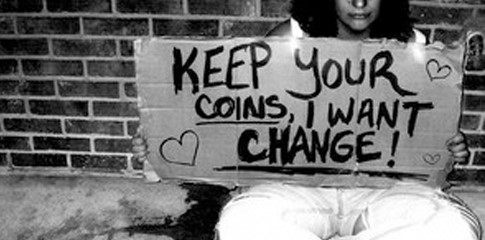
Since 2010 homelessness has more than doubled, rising each year and showing no sign of decline. Such statistics signify the governments failure to help those most in need and vulnerable as well as the government’s unsuccessful and ineffective policies. In addition to the rise in homelessness, affordable housing in London has also fallen by 98% since 2010, coinciding with the rise of homelessness. As homelessness has increased, so has victimisation. This is mainly due to their exposure and perceived vulnerability on the streets as most of their victimisation is hate crimes as they are scapegoated for the structural problems in our society.
Prior to writing my dissertation I knew there was relatively high rates of victimisation amongst the homeless, however nothing would prepare me for the participants’ experiences and stories, providing me with incite into the lives of the homeless; the despair and desperation when rough sleeping and surviving as well as the misfortune and harm they experienced throughout. Participants would explain being urinated on, spat on, verbally abused as well as feeling criminalised, stigmatised and marginalised, with all such phenomena interlinking together. What was evident in their stories was the extent of the damage to self-esteem and identity the experiences of homelessness can do to a person. After being utterly and brutally damaged by the public, council and poor services they isolate themselves further as they ‘give up’ on seeking help from services and reject any form of support as they feel ‘undeserving’ or feel it will not lead to anything. In addition participants explained how they felt like second-class citizens, that they were not treated like humans. I found that the homeless are extremely sensitive and vulnerable, much of how you treat them has extensive effects on their sense of self-worth. What was beautiful to see was the tremendous appreciation they had for services that provided them with adequate and effective support, giving them the confidence to excel as they felt they had found their identity and were not shackled to the stigma of homelessness, no longer isolating themselves.
The subject is indeed a delicate one and services and society in general must treat the homeless with compassion and empathy, and also be sensitive to their reality, interpretations and meanings of their experiences. It is not a black and white issue, it is more complex than that, and for services to work they must tailor to their subjective needs and be aware of the different experiences. Although they may experience similar phenomena, it cannot be generalised to fit a ‘one size fits all’ strategy. For example, I met addicts, refugees, victims of domestic violence and many other different pasts that led to homelessness.
Perhaps we should not question people’s individual circumstances and moral failures but instead protest and reject the never-ending austerity and terrible social and economic decisions we have had for over a decade.

 Thoughts from the criminology team