
Home » Artificial Intelligence [AI] (Page 2)
Category Archives: Artificial Intelligence [AI]

Is Criminology Up to Speed with AI Yet?
On Tuesday, 20th June 2023, the Black Criminology Network (BCN) together with some Criminology colleagues were awarded the Culture, Heritage, and Environment Changemaker of the Year Award 2023. The University of Northampton Changemaker Awards is an event showcasing, recognising, and celebrating some of the key success and achievements of staff, students, graduates, and community initiatives.
For this award, the BCN, and the team held webinars with a diverse audience from across the UK and beyond to mark the Black History Month. The webinars focused on issues around the ‘criminalisation of young Black males, the adultification of Black girls, and the role of the British Empire in the marking of Queen Elizabeth’s Jubilee.’. BCN was commended for ‘creating a rare and much needed learning community that allows people to engage in conversations, share perspectives, and contextualise experiences.’ I congratulate the team!
The award of the BCN and Criminology colleagues reflects the effort and endeavour of Criminologists to better society. Although Criminology is considered a young discipline, the field and the criminal justice system has always demonstrated the capacity to make sense of criminogenic issues in society and theorise about the future of crime and its administration/management. Radical changes in crime administration and control have not only altered the pattern of some crime, but criminality and human behaviour under different situations and conditions. Little strides such as the installation and use of fingerprints, DNA banks, and CCTV cameras has significantly transformed the discussion about crime and crime control and administration.
Criminologist have never been shy of reviewing, critiquing, recommending changes, and adapting to the ever changing and dynamic nature of crime and society. One of such changes has been the now widely available artificial intelligence (AI) tools. In my last blog, I highlighted the morality of using AI by both academics and students in the education sector. This is no longer a topic of debate, as both academics and students now use AI in more ways than not, be it in reading, writing, and formatting, referencing, research, or data analysis. Advance use of various types of AI has been ongoing, and academics are only waking up to the reality of language models such as Bing AI, Chat GPT, Google Bard. For me, the debate should now be on tailoring artificial intelligence into the curriculum, examining current uses, and advancing knowledge and understanding of usage trends.
For CriminologistS, teaching, research, and scholarship on the current advances and application of AI in criminal justice administration should be prioritised. Key introductory criminological texts including some in press are yet to dedicate a chapter or more to emerging technologies, particularly, AI led policing and justice administration. Nonetheless, the use of AI powered tools, particularly algorithms to aid decision making by the police, parole, and in the courts is rather soaring, even if biased and not fool-proof. Research also seeks to achieve real-world application for AI supported ‘facial analysis for real-time profiling’ and usage such as for interviews at Airport entry points as an advanced polygraph. In 2022, AI led advances in the University of Chicago predicted with 90% accuracy, the occurrence of crime in eight cities in the US. Interestingly, the scholars involved noted a systemic bias in crime enforcement, an issue quite common in the UK.
The use of AI and algorithms in criminal justice is a complex and controversial issue. There are many potential benefits to using AI, such as the ability to better predict crime, identify potential offenders, and make more informed decisions about sentencing. However, there are also concerns about the potential for AI to be biased or unfair, and to perpetuate systemic racism in the criminal justice system. It is important to carefully consider the ethical implications of using AI in criminal justice. Any AI-powered system must be transparent and accountable, and it must be designed to avoid bias. It is also important to ensure that AI is used in a way that does not disproportionately harm marginalized communities. The use of AI in criminal justice is still in its early stages, but it has the potential to revolutionize the way we think about crime and justice. With careful planning and implementation, AI can be used to make the criminal justice system fairer and more effective.
AI has the potential to revolutionize the field of criminology, and criminologists need to be at the forefront of this revolution. Criminologists need to be prepared to use AI to better understand crime, to develop new crime prevention strategies, and to make more informed decisions about criminal justice. Efforts should be made to examine the current uses of AI in the field, address biases and limitations, and advance knowledge and understanding of usage trends. By integrating AI into the curriculum and fostering a critical understanding of its implications, Criminologists can better equip themselves and future generations with the necessary tools to navigate the complex landscape of crime and justice. This, in turn, will enable them to contribute to the development of ethical and effective AI-powered solutions for crime control and administration.
Share this:


Rise of the machines: fall of humankind

May is a pretty important month for me: Birthdays, graduations, what feels like a thousand Bank Holidays, marking deadlines, end of Semester 2 and potentially some annual leave (if I haven’t crashed and crumbled beforehand). And all of the above is impacted by, or reliant on the use of machines. Their programming, technology, assistance, and even hindrance will all have a large impact on my month of May and what I am finding, increasingly so, is that the reliance on the machines for pretty much everything in relation to my list above is making my quite anxious for the days to come…
Employment, education, shopping, leisure activities are all reliant on trusty ol’ machines and technology (which fuels the machines). The CRI1003 cohort can vouch, when I claim that machines and technology, in relation to higher education, can be quite frustrating. Systems not working, or going slow, connecting and disconnecting, machines which need updates to process the technology. They are also fabulous: online submissions, lecture slides shown across the entirety of the room not just one teeny tiny screen, remote working, access to hundreds of online sources, videos, typing, all sorts! I think the convoluted point I am trying to get too is that the rise of the reliance on machines and technology has taken humankind by storm, and it has come with some frustrations and some moments of bliss and appreciation. But unfortunately the moments of frustration have become somewhat etched onto the souls of humankind… will my laptop connect? Will my phone connect to the internet? Will my e-tickets download properly? Will my banking app load?
Why am I pondering about this now?
I am quite ‘old school’ in relation to somethings. I am holding on strong to paper books (despite the glowing recommendations from friends on Kindles and E-readers), I use cash pretty much all the time (unless it is not accepted in which case it is a VERY RARE occasion that the business will receive my custom), and I refuse to purchase a new phone or update the current coal fuelled device I use (not literally but trying to be creative). Why am I so committed to refusing to be swept along in the rise of the machines? Simple: I don’t trust them.
I have raised views about using card/contactless to purchase goods elsewhere and I fully appreciate I am in a minority when it comes to the reliance on cash. However, what happens when the card reader fails? What happens when the machine needs an update which will take 40mins and the back up machine also requires an update? Do traders and businesses just stop? What happens when the connection is weak, or the connection fails? What happens when my e-tickets don’t load or my reservation which went through on my end, didn’t actually go through on their end? See, if I had spoken to someone and got their name and confirmed the reservation, or had the physical tickets, or the cash: then I would be ok. The reliance on machines removes the human touch. And often adds an element of confusion when things go wrong: human error we can explain, but machine error? Harder to explain unless you’re in the know.
May should be a month of celebrations and joy: Birthdays, graduations, end of the Semester, for some students the end of their studies. But all of this hinders of machines. Yes, it requires humans to organise and use the technology but very little of it is actually reliant on humans themselves. I am oversimplifying. But I am also anxious. Anxious that a number of things we enjoy, rely on and require for daily life is becoming more and more machine-like by the day. I have an issue, can I talk to a human- nope! Talk to a bot first then see if a human is needed. So much of our lives are becoming reliant on machines and I’m concerned it means more will go wrong…
Share this:


The Moral Dilemma of Using Artificial Intelligence
Background
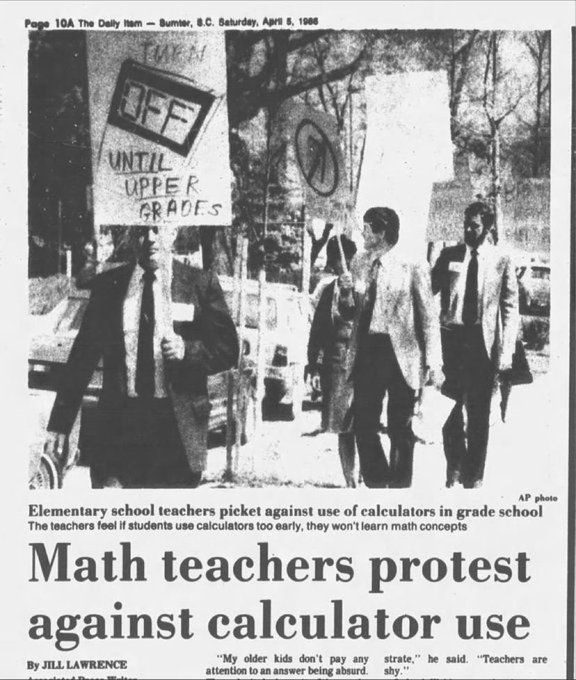
Many academics, students, and industry practitioners alike are currently faced with the moral dilemma of whether to use or apply artificial intelligence (AI) to different aspects of their work and assessments. However, this is not the first-time humans are faced with such a moral dilemma, particularly in academia. Between 2003 and 2005 when I wrote at least 3 entrance examinations administered by the Joint Admission Matriculation Board Examination for university admission seekers in Nigeria, the use of electronic or scientific calculators were prohibited. Few years afterwards, the same exam board that prohibited my generation from using calculators for our accounting and mathematics exams started providing the same scientific calculators to students registered for the same exam. Understandably, AI is significantly different from scientific calculators, but similar rhetoric and condemnation resulted from the introduction of calculators in schools, same as the emergence of Google with its search capabilities.
For the most part, ChatGPT, the free OpenAi model publicly released in November 2022 drew public attention to the use and capability of AI and is often considered as the breakthrough of AI. However, prior to this, humans have long embraced and used certain aspects of AI to perform tasks that normally require human intelligence, such as learning, reasoning, problem-solving, and decision-making. Many academics not only use reference managers, but also encourage students to do so. We also use and teach students how to use the numerous computer-aided data analysis software for statistical and qualitative data analysis given the potential and capability of these software to replicate tasks that would ordinarily take us longer to accomplish. These are but few examples of some of the AI tools we use, while many others exist.
Types and examples of AI
There are several types of AI, including machine learning, natural language processing, expert systems, robotics, and computer vision. Machine learning is the commonly used type of AI. It involves training algorithms to learn from data and improve their performance over time, typical examples include Google Bard which performs similar tasks as ChatGPT. Natural language processing allows machines to understand and interpret human language, while expert systems are designed to replicate the decision-making capabilities of human experts. Robotics involves the development of machines that can perform physical tasks, and computer vision focuses on enabling machines to interpret and analyse visual information. Other common examples of AI include virtual personal assistants like Siri and Alexa, self-driving cars, and facial recognition software. With the wide array of AI tools, it is obvious that AI can be applied in different fields of human endeavour.
Application of AI
AI is currently being used in various institutions of society, including healthcare, finance, education, transportation, and the military. In healthcare, AI is being used to develop personalized treatment plans, predict disease outbreaks, improve medical image analysis, and carebots consultations is a near possibility. In finance, AI is being used for fraud detection, risk management, and algorithmic trading. In transportation, self-driving cars and drones are being developed and currently tested using AI, while in the military, AI is being used for autonomous weapons systems and intelligence gathering. In education, AI is being used for personalized learning, student assessment, referencing, and teacher training through the help of numerous AI tools. I recently responded to reviewer feedback on a book chapter and in doing so, I noticed my reference list which was not spotted by my reviewers was not appropriately aligned with the examples provided from the publisher. It would take me 2 hours to format the list despite already having the complete information of sources I cited. Interestingly, I did not spend half of this time on the reference list of my doctoral thesis because I used a reference manager.
Benefits of AI
Clearly, AI has many potential benefits. It has the potential to improve efficiency and accuracy in various industries, leading to cost savings and improved outcomes. AI can also provide personalized experiences for users, such as in the case of virtual assistants and personalized learning platforms. More so, where properly applied, it would not only improve productivity and save time, but result in increased efficiency. Researchers would appreciate the ability to make sense of bulky data using clicks and programmed controls in graphical, visual, or even coded formats. In healthcare, AI can improve diagnosis and treatment, leading to better patient outcomes. In addition, AI can be used for environmental monitoring and conservation efforts. The benefits from the use and application of AI across human endeavours are legion and I would be understating the significance if I attempt to elaborate further.
Shortcomings of AI, Concerns, and Reactions
Nonetheless, AI evokes certain concerns. New York City education department reportedly blocked ChatGPT on school devices and networks, and in respond to a tweet on this, Elon Musk replied, ‘it’s a new world. Goodbye homework.’ Musk’s reply reflects the array of reactions and responses emanating from the understanding of society with the capability of AI tools. And without a doubt, machine learning AI tools such as ChatGPT and Google Bard can be used to generate essay contents, likewise content for academic work. I imagine students have already began taking advantage of the capabilities of these tools, including others capable of summarising articles. Some Tweeps who regularly tweet about the capability and how to use AI tools have experienced astronomical growth in the number of their followers and engagement with such tweets over the past few months.
Without a doubt, academics have reasons to be concerned, particularly because AI undermines learning and scholarship by offering easy alternatives to reading, learning, and engaging with course materials. Students could generate essays with AI and gain unfair advantage over non-users and although the machine learning models do generate false, bias, and discriminatory results, they could over time generate the capability to overcome these. Claims have also been made that automation using AI has the potential to result in job losses for academics and other professionals, but beyond this, concerns over data safety and regulation are rife.
AI Regulation
Some tech leaders including Elon Musk recently signed a statement urging that further development of AI beyond the capability of ChatGPT 4 should be halted until adequate regulations are put in place as it portends profound risks to society. The Turnitin plagiarism software provider which acclaims itself as ‘the leading provider of academic integrity solutions’ introduced and integrated the Turnitin’s AI writing detection tool for their service users. Universities and other users may likely adopt this to discourage students from using AI for assessments. However, the practicability of this enforcement is still challenging as issues around real-world false-positive report rates have been observed. An alternative approach adopted by some publishers including Taylor & Francis, Sage, and Elsevier is that authors declare the use of AI in their work with justification. Italy recently blocked ChatGPT over privacy concerns prompting the significance of AI regulation.
Conclusion
AI has the potential to improve efficiency and accuracy in various industries, leading to cost savings and improved outcomes, however, it is important to be aware of the potential risks associated with the technology. While AI has significant benefits, such as improved efficiency and accuracy, it also has drawbacks that must be considered. Academics must find ways to balance the benefits and drawbacks of AI to ensure that learning and scholarship are not undermined. It is important to recognize that AI is not a substitute for reading, learning, and engaging with course materials, and it should be used as a tool to augment human intelligence rather than replace it. Equally, it is also important to ensure that AI is used in a responsible and ethical manner. By carefully considering the pros and cons of AI, we can ensure that it is used to its full potential while minimizing the risks.
PS. Some parts of this blog were edited/generated by AI.


