
Home » Art (Page 3)
Category Archives: Art
“My Favourite Things”: Paula

My favourite TV show - I am not really one for television, but I recently stumbled upon a 1960's series, called The Human Jungle, lots of criminological and psychological insight, which I adore. I also absolutely loved Gentleman Jack (broadcast on BBC1 last summer)

My favourite place to go - Wherever I go the first thing I look for are art galleries, so I would have to say Tate Modern. Always something new and thought provoking, alongside the familiar and oft visited treasures

My favourite city - I love cities and my favourite, above all others, is the place I was born, London. The vibrancy, the people, the places, the atmosphere....need I say more?

My favourite thing to do in my free time - Read, read, read, read, read, read, read, read......

My favourite athlete/sports personality - This is tricky, sport isn't really my thing. However, I do have a secret penchant for boxing,  which isn't brilliant for someone who identifies as pacifist, so I'll focus on feminism and pick Nicola Adams

My favourite actor - (Getting easier) Dirk Bogarde

My favourite author - (Too easy) Agatha Christie

My favourite drink - Day or night? If the former, tea....

My favourite food - Chocolate, always

My favourite place to eat - So many to choose from, but provided I am surrounded by people I love, with good food and drink, I'm happy

I like people who - read!

I don’t like it when people - claim to be gender/colour blind....sorry mate, check your privilege

My favourite book - (oooh very, very tricky) Virginia Woolf's A Room of One's Own primarily because of the profound effect it had and continues to have on my understanding

My favourite book character - (Easy, peasy) Hercule Poirot

My favourite film - (Despite my inner feminist screaming nooooooooo) The original Alfie with its wonderful swinging sixties' vibe

My favourite poem - (Decisions, decisions, so many wonderful poems to choose from) I'll plump for Hollie McNish's Mathematics

My favourite artist/band - The Beatles

My favourite song - (Given the previous answer) it has to be Dear Prudence

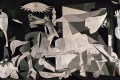
My favourite art - I love art, but hands down Picasso's Guernica is my favourite piece. To stand in front of that huge painting and consider the horror of war is profound

My favourite person from history - The pacifist, suffragette Sylvia Pankhurst, a beautiful example of the necessity to be confident in your own ethics and principles

Share this:


Never fear…. Spring is almost here

https://shop.royalacademy.org.uk/david-hockney-arrival-of-spring-poster
There is no doubt, we are living in a time of crisis. Everywhere we look there are signs of disorder, disruption and chaos, impinging on our real and virtual lives. You can see it in the faces of family, friends, colleagues, the old and the young from children to pensioners, and everyone in between. There is nothing else on anyone’s lips beyond what they’ve heard, what they’ve seen, how they’ve prepared, or haven’t for this human disaster. Scientific words like Covid-19, Coronavirus, criminological words such as isolation, criminalisation and newly minted words; social distancing are being pushed into conversations. These appear alongside the more prosaic questions, which shops have bread? toilet rolls? milk? eggs? Is this open, is that open, can I get there, am I allowed to go out?
Over the past week I have seen this fear develop, evolve and spread. It threatens to swallow us all up in our panic. Many people, myself included, are desperately trying to maintain the everyday, the mundane, some routine, some semblance of normality. My institution is trying to be supportive, lots of extra email, how to move your teaching online, what advice to give students, how to look after your mental and physical health and that of others, at a time like this. All of this advice is well-intentioned and aims to alleviate fear, after all scientia potentia est, or so we are told.
The problem with trying to recreate our real lives in a virtual environment is far more profound than simply changing our modes of operation. When people are worried, frightened and saddened, no amount of pretending that it is “business as usual” will distract them from the everyday lived experience. We can pretend, but when you are worried about your own health, that of your family, when you don’t know where you are going to be able to get the basics of life from, and for many, how on earth you will be able to pay for it with limited or no income, everything else pales into insignificance.
So far we have seen so much evidence of privilege: those that aren’t worried because they’re healthy, those that stockpile food and other essential products, because they can afford to and those that isolate themselves in the lap of luxury, because they have access to money, property and contacts. All of which feeds the fear by the second, minute and hour. Competing with this negativity are the stories around kindness, the narratives from the NHS, the police, carers, shop workers, the list goes on showing that the human spirit is still burning strong, that we have a choice about our behaviour, our thoughts and our feelings. That we can make a difference, if only we want to.
This week has felt like a nightmare, so dark, so stressed, the walls are closing in on all of us, forcing us into confinement. We look out of the window and nobody is moving outside. It has all the ingredients of my favourite genre, dystopic fiction, but this time we’re all fully immersed and we have no idea how the novel ends. How many will die, how many will find their finances, relationships, employment, education disrupted and/or destroyed?
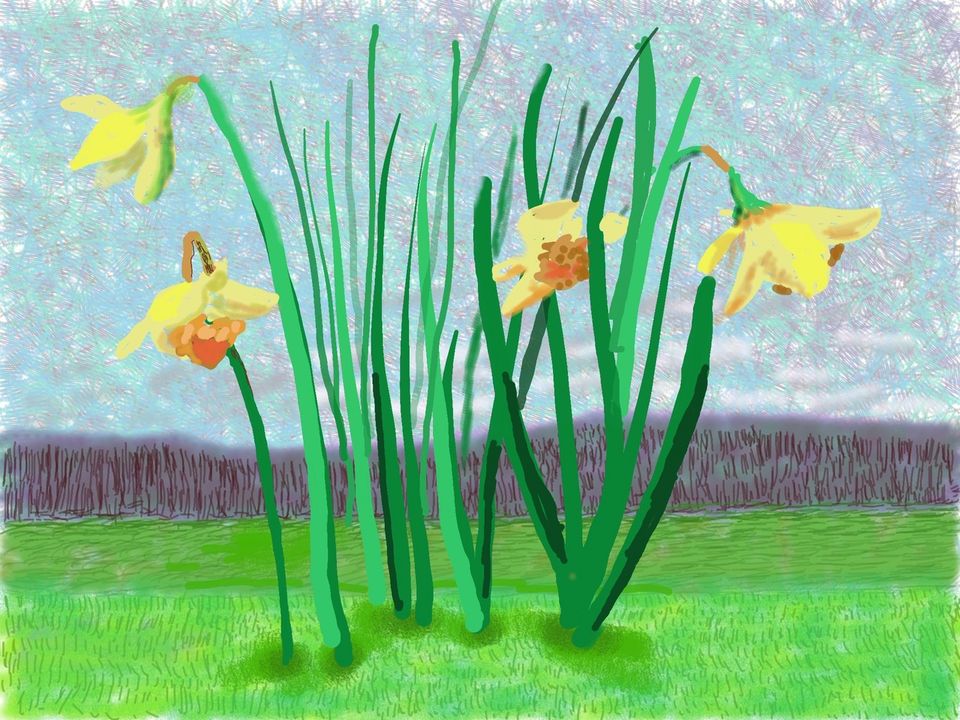
That changed for me yesterday, when I stumbled upon a message from the artist David Hockney. The message was incredibly simple ‘Do remember they can’t cancel the spring’. I should declare in advance, I am a little biased, he’s one of my favourite artists, but with Hockney’s simple statement he touched on a profound truth. We are humans, infinitely resourceful, extremely adaptable, incredibly social.
Look after yourselves and each other, if not face to face, then virtually. Check in, touch base and create a life line for each other. But also remember to take some time away from the screens, look out of the window and remember the world is still a beautiful place, filled with many wonders, including humankind.
https://www.theartnewspaper.com/comment/a-message-from-david-hockney-do-remember-they-can-t-cancel-the-spring?fbclid=IwAR2iA8FWDHFu3fBQ067A7Hwm187IRfGVHcZf18p3hQzXJI8od_GGKQbUsQU
Share this:

Someday at Christmas. #BlackenAsiaWithLove
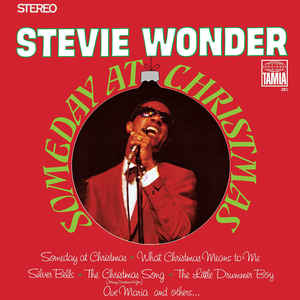
Now that folks have returned to their normal lives, and the Christmas credit card bills have arrived, let’s reflect on the reason for the season. To get you in the mood, the writer suggests listening to Stevie Wonder’s Someday at Christmas alongside this read; lyrics included here.
Someday at Christmas men won’t be boys
Playing with bombs like kids play with toys
Today’s divisions are so profound, and illiberal tribalism runs so deep, that I believe only art can speak to them – they not hearing me when people like me speak. I’m clearly not an illiberal tribe member, and as soon as I open my mouth, my ‘proper’ American English is dismissed alongside the liberal elite media, Hollywood, etc. The tribe dismisses us, I surmise, due to our training and faith in the transformative power of critical thinking.
“If Republicans ran on their policy agenda alone,” clarifies one article from a prominent liberal magazine, “they would be at a disadvantage. So they have turned to a destructive politics of white identity, one that seeks a path to power by deliberately dividing the country along racial and sectarian lines.” This is lit-er-ally happening right now as the presidential impeachment hearings follows party-not-morality lines. Conservatives are voting along their tribe to support the so-called leader of the free world. Are they free?
Words like ‘diversity’ sound threatening to today’s illiberal thinkers. Those who tout PC-culture as going too far may as well go ahead and admit that they are anti-evolution! Those who denounce implicit racial bias have little to say about any form of racism, save for its so-called ‘reverse’. Those who would rather decry ‘feminism’ as man-hating have little to say about actual misogyny. Yet, it is the liberal candidate/leader/thinker who is held to a higher standard. Are we free?
 Someday in a world where men are free
Maybe not in time for you and me
But someday at Christmastime
We are in an era of supreme conservative/illiberal tribalism. That’s the unique We are in an era of supreme conservative/illiberal tribalism. That’s the unique ties that bind America’s 45, to Britain’s BJ to Germany’s AFD, France’s infamous National Front (now in its second generation), Italy’s Lega Nord, Austria’s FPO– yes, the F is for ‘freedom’- all the way to India’s leading Islamaphobe. Let’s not forget Poland’s tiki-torch bearing PiS party that filthy-up the European Parliament joined by their brethren from Denmark to Estonia to Belgium and beyond.

EU’s Right-wingers!
Illiberal tribes are tricking masses of those inside cultures of power into voting against their own interests. This is not, as many commentators have noted, to suggest that their so-called liberal alternatives are virtuous. Of course not, but it’s clear that masses can be motivated through fear of the other, whereas organizing around widening the pool of cooperation and humane concern is simply not sexy.
Someday at Christmas there’ll be no tears
All men are equal and no men have fears
Today’s brand of conservatism is an entire illiberal ethic that clearly must be cultivated from birth. Either you get it, or you don’t. Imagine the folks they’re turning against, and tuning out in order to hold onto those values. Imagine the teacher, friend, colleague, schoolmate, neighbour of ‘foreign’ origin that a Brexiteer must wipe away from their consciousness in order to support the anti-EU migration that fueled the campaign. The ability to render folks as ‘other’ is not an instantaneous predicament. It’s well cultivated like a cash crop, say cotton, cane or tobacco! Going to the ballot box to support bigots can’t be an easy feat when we’re literally surrounded by the type of diversity we seek to eliminate.
Someday at Christmas man will not fail
Hate will be gone love will prevail
There are those who voted for Brexit under some false notion of British independence, despite clear and present evidence of British inter-dependence. Perhaps no nation has been more inter-dependent on its neighbors and former colonies than the British Isles. Yet this illiberal disease is global. Imagine the rich diversity of the Indian sub-continent, yet look squarely at the Hindu nationalism sweeping India right now (as if the Taj Mahal weren’t a global treasure that just happens to have a few mosques on board). Plus, I’m not the first to point out that the Jesus racists celebrate was Jewish and spent most of his life in what we now call the Arab world. No nativity scene without foreigners!
Maybe not in time for you and me
But someday at Christmastime
‘Someday at Christmas’ was written in 1967 for Stevie Wonder, then a 17-year-old bulwark of Motown. Wonder wasn’t yet writing all his songs, yet he was already introduced as the ‘Profit of Soul’. In 1980, he sang: “Why has there never been a holiday, yeah/Where peace is celebrated,” in a song aimed at getting Reagan to declare Rev. Dr. Martin Luther King Jr.’s birthday a national holiday. Wonder won. Happy MLK day!
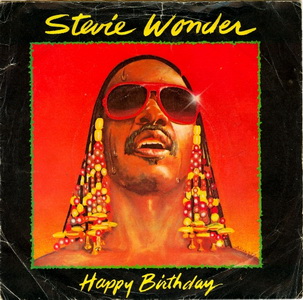
Naturally, looking back we have to wonder if one could have predicted the impact Wonder would soon have on American music. He’d dominate pop music once he set out on his own, set his fingers to funk instead of pop, and began to bare his soul.
Someday at Christmas we’ll see a Man
No hungry children, no empty hand
One happy morning people will share
Our world where people care
In the summer of ‘67, Wonder’d released another record, I Was Made to Love Her, featuring plenty of his infamous harmonica solos. ‘Someday at Christmas’ was released four years before the other most infamous Christmas message song, John Lennon’s War Is Over. SMH, I get goose-bumps hearing a kids’ chorus sing melancholically “War is over/If you want it.” Much of the world was at war then, struggling to comprehend the incomprehensible devastation meted out on the tiny southeast Asian nation of Vietnam, from where I pen this piece – a virtuoso clash of titans. It’s not surprising that those two troubadours began their careers in popcorn pop, yet had to leave the genre to deliver their most potent, fiercest messages.

Motown was decisively a Popular music machine, specifically crafted to appeal to the wider/whiter masses. Motown steered clear away from ‘message’ songs, a real keel in the heal of the likes of Stevie, Marvin Gaye and eventually Michael Jackson. Each of those Motown troubadours has penned plenty of songs of freedom and ecology, and the ethical interdependence between the two. Those guys must be liberals. Ugh!
Share this:


Those kinde of people
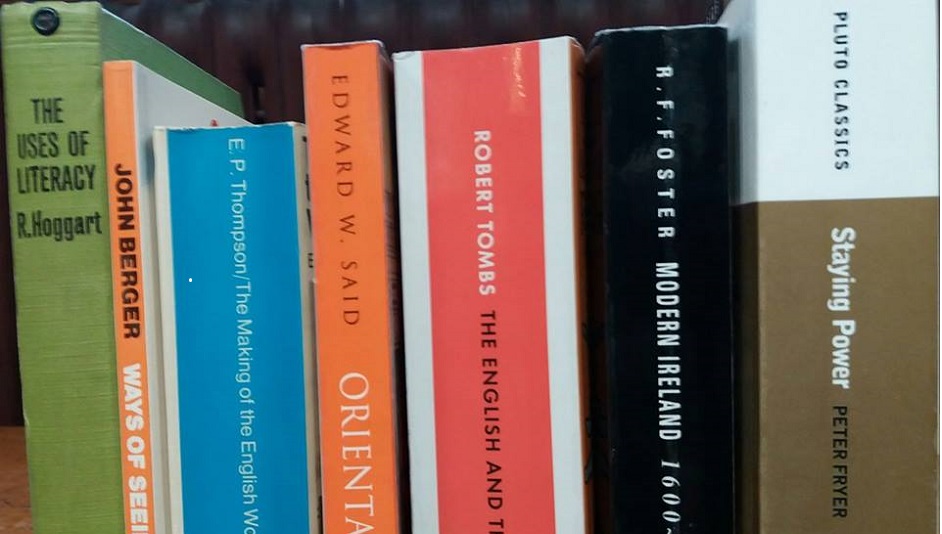
This poem is named for the first chapter of the iconic book Staying Power (1984) by historian and academic Peter Fryer. A book that talks about the history of Black people in Britain, from Roman times up to his modern-day. It’s also inspired by ‘Mathematics’ by British poet and author Hollie McNish.
Adam said:
those goddamn universities
and their goddamn books
learned people, crippling egos
with nothing but a look
he says those goddamn historians
and their god damn history
I tell them they worked hard
to get there, can’t you see?
I ask him what
he expects British history to be
he says he remembers
the land of Blyton and Christie
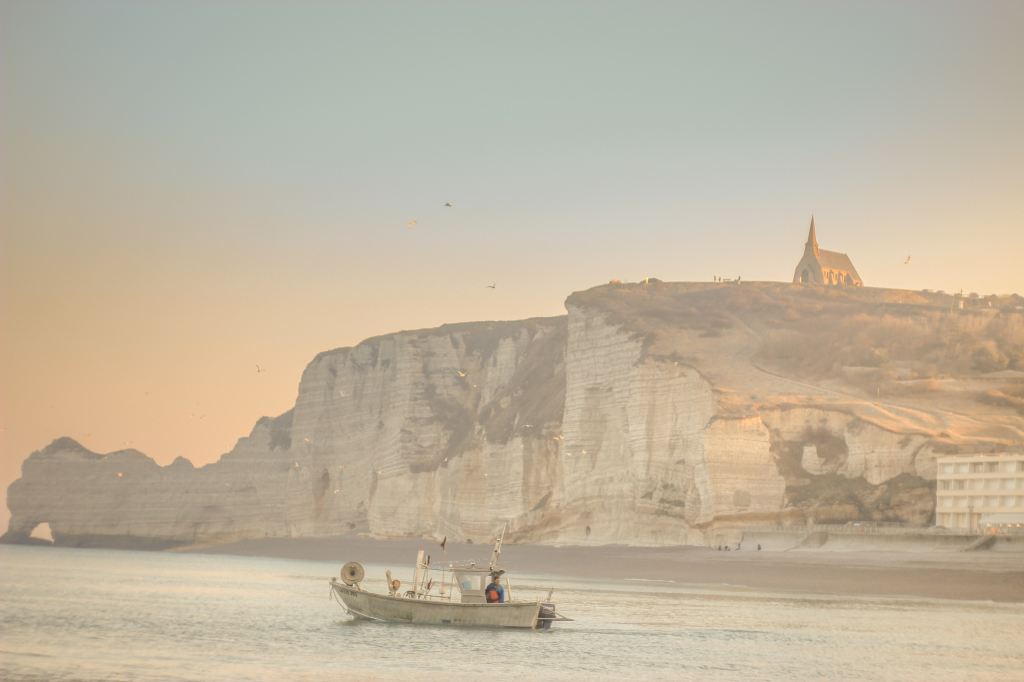
coastal wrecks, greenery
and a good wage before those people came
where people went to work, pot-bellied
national pride, stood proud before they came
now no British jobs, their kinde are to blame
I ask how he knows this to be true
he said he saw it on BBC News
every time a Pole takes a job from us
each time he hears a different language
whilst riding the bus
this divide and conquer, them and us
to me just does not add up
he makes a brew, two sugars in his tea
I say didn’t you know those granules
came from the sugar economy
he grunts, goddamn Blacks came and took our stuff
I tell him about sugar and cotton, you know
how slaves gave us indigo and tobacco – hot air to puff
I show him Brixton Road and Portobello Market
I show him rock n roll, Network Rail and the NHS
I show him the immigrant-built west
I show him straight roads and pictures of my Gran
how the Jamaican ackee comes from the Ghanaian Akan
He’s sick of history and social science
sitting all sad and smug on his island
I spent three years on a degree
did a dissertation on British identity
I geek over John Blanke
renaissance trumpeter who was Black
Oh and Ann Lister, call her Gentleman Jack
and Afro-Romans and The Slave Trade
Black Georgians, Saxons and Viking Raids
and I so want to scream when I hear folks say
goddamn immigrants taking our jobs
but how we teach history – we don’t talk
of Mrs Shah’s shop employing Bill and Bob
where people with money love to spend
employing women and men in tens,
her gift for business is self-taught
all her plans meticulously well-thought
and all your prejudice talk
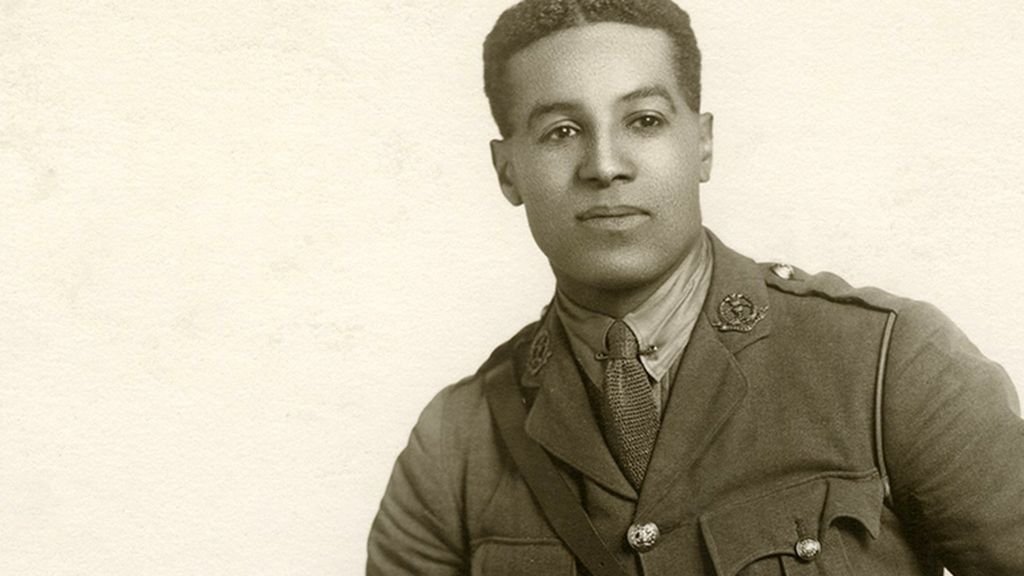
forgets the soldiers the colonies pledged
forgets the men left for dead
in Tangiers, Dunkirk and at the Somme
as the world wars went on and on
from Mr Smith to Mr Wong
and I know people love to complain
but England our name
the land of Angles is all that remains
from Saxons to Jutes
stories of migration since before WW2
and often, those kind of people
are more native than the locals.
Share this:


A Love Letter: in praise of art

Some time ago, I wrote ‘A Love Letter: in praise of poetry‘, making the case as to why this literary form is important to understanding the lived experience. This time, I intend to do similar in relation to visual art.
Tomorrow, I’m plan to make my annual visit to the Koestler Arts’ Exhibition on show at London’s Southbank Centre. This year’s exhibition is entitled Another Me and is curated by the musician, Soweto Kinch. Previous exhibitions have been curated by Benjamin Zephaniah, Antony Gormley and prisoners’ families. Each of the exhibitions contain a diverse range of unique pieces, displaying the sheer range of artistic endeavours from sculpture, to pastels and from music to embroidery. This annual exhibition has an obvious link to criminology, all submissions are from incarcerated people. However, art, regardless of medium, has lots of interest to criminologists and many other scholars.
I have never formally studied art, my reactions and interpretations are entirely personal. I reason that the skills inherent in criminological critique and analysis are applicable, whatever the context or medium. The picture above shows 4 of my favourite pieces of art (there are many others). Each of these, in their own unique way, allow me to explore the world in which we all live. For me, each illustrate aspects of social (in)justice, social harms, institutional violence and the fight for human rights. You may dislike my choices. arguing that graffiti (Banksy) and photography (Mona Hatoum) have no place within art proper. You may disagree with my interpretation of these pieces, dismissing them as pure ephemera, forgotten as quickly as they are seen and that is the beauty of discourse.
Nonetheless, for me they capture the quintessential essence of criminology. It is a positive discipline, focused on what “ought” to be, rather than what is. To stand small, in front of Picasso’s (1937) enormous canvas Guernica allows for consideration of the sheer scale of destruction, inherent in mechanised warfare. Likewise, Banksy’s (2005) The Kissing Coppers provides an interesting juxtaposition of the upholders of the law behaving in such a way that their predecessors would have persecuted them. Each of the art pieces I have selected show that over time and space, the behaviours remain the same, the only change, the level of approbation applied from without.
Art galleries and museums can appear terrifying places, open only to a select few. Those that understand the rules of art, those who make the right noises, those that have the language to describe what they see. This is a fallacy, art belongs to all of us. If you don’t believe me, take a trip to the Southbank Centre very soon. It’s not scary, nobody will ask you questions, everyone is just there to see the art. Who knows you might just find something that calls out to you and helps to spark your criminological imagination. You’ll have to hurry though…closes 3 November, don’t miss out!

 Thoughts from the criminology team