
Home » Activism
Category Archives: Activism

What society do we want to live in?

Recently after using a service, I received an email to provide some online feedback. The questionnaire was asking about the services I received and to offer any suggestions on anything that could be done to improve services. This seems to become common practice across the board regarding all types of services and commercial interactions. This got me thinking…we are asked to provide feedback on a recent purchase, but we are not asked about issues that cut through the way we live our lives. In short, there is value in my opinion on a product that I bought, where is the value in my views of how I would want my community to be. Who’s going to ask me what society I want to live in!
Consumerism may be the reason we get asked questions about products but surely before and above being consumers, aren’t we all citizens? I can make helpful suggestions on what I would like to see in services/products but not on government. We profess democratic rule but the application of vote every now and then is not a true reflection on democracy. As we can offer online surveys for virtually everything, we have ways of measuring trends and reactions, why not use these to engage in a wider public discourse on the way to organise our communities, discuss social matters and engage in a public dialogue about our society.
Our political system is constructed to represent parties of different ideologies and practices offering realistic alternatives to governance. An alternative vision about society that people can come behind and support. This ideological diversion is essential for the existence of a “healthy political democratic process”. This ideological difference seems to be less prevalent in public dialogue with the main political parties focusing their rhetoric on matters that do not necessarily affect society.
Activism, a mechanism to bring about social change is becoming a term that sparks controversy whilst special interest groups maintain and even exert their influence on political parties. This allows private special interests to take the “ear of the government” on matters that matter to them, whilst the general public participate in social discourses that never reach the seat of power.
Asking citizens to be part of the social discussion, unlike customer service, is much more significant; it allows us to be part of the process. Those who have no other way of participating in any part of the system will be castigated to cast their vote and may participate in some party political activities. This leaves a whole heap of everyday issues unaddressed. In recent years the cost of living crisis pushed more people into poverty, food, housing and transport became issues that needed attention, not to mention health, post-covid-19.
These and many more social issues have been left either neglected only to be given the overhead title of crisis but with no action plan of how to resolve them. People affected are voiceless, having to pick up the injustices they suffer without any regard to the long term effects. Ironically the only plausible explanation given now that “Brussels’ rule” and “EU bureaucracy” are out of the picture, has become that of the immigrants. The answer to various complex problems became the people on the boats!
This is a simplification in the way social problems happen and most importantly can be resolved. Lack of social discourse has left the explanation and problem solving of said problems to an old rhetoric founded on xenophobia and discrimination. Simple explanations on social problems where the answer is a sentence tend to be very clear and precise, but very rarely can count the complexity of the problems they try to explain. There is a great disservice to our communities to oversimplify causes because the public cannot understand.
Cynically someone may point out that feedback from companies is not routed in an honest request to understand customer satisfaction but a veiled lip-service about company targets and metrics. So the customer’s response becomes a tradable figure of the company’s objectives. This is very likely the case and this is why the process has become so focused on particular parts of the consumer process. Nonetheless and here is the irony; a private company has some knowledge of a customer’s views on their recent purchase, as opposed to the government and people’s views and expectations on many social issues.
Maybe the fault lies with all of us. The presumption of democratic rule, especially in parliamentary democracies, a citizen is represented by a person they elect every four years. This representation detaches the citizen from their own responsibilities and obligations to the process. The State is happy to have citizens that engage only during elections, something that can be underscored by the way in recent years that protests on key social issues have been curtailed.
That does not sound right! I can provide an opinion over the quality of a chocolate bar or a piece of soap but I cannot express my views as a citizen over war, climate, genocide, immigration, human rights or justice? If we value opinion then as society we ought to make space for opinion to be heard, to be articulated and even expressed. In the much published “British Values” the right to protest stands high whilst comes in conflict with new measures to stop any protests. We are at a crossroads and ultimately we will have to decide what kind of society we live in. If we stop protests and we ban venues for people to express themselves, what shall we do next to curtail further the voices of dissent? It is a hackneyed phrase that we are stepping into a “slippery slope” and despite the fact that I do not like the language, there is a danger that we are indeed descending rapidly down that slope.
The social problems our society faces at any given time are real and people try to understand them and come to terms with them. Unlike before, we live in a world that is not just visual, it relies on moving images. Our communities are global and many of the problems we face are international and their impact is likely to affect us all as people, irrespective of background or national/personal identity. At times like this, it is best to increase the public discourse, engage with the voices of descent. Maybe instead of banning protests, open the community to those who are willing to discuss. The fear that certain disruptive people will lead these debates are unfounded. We have been there before and we have seen that people whose agenda is not to engage, but simply to disrupt, soon lose their relevance. We have numerous examples of people that their peers have rejected and history left them behind as a footnote of embarrassment.
Feedback on society, even if negative, is a good place to start when/if anyone wants to consider, what kind of society I want and my family to live in. Giving space to numerous people who have been vastly neglected by the political systems boosts inclusivity and gives everyone the opportunity to be part of our continuous democratic conversation. Political representation in a democracy should give a voice to all especially to those whose voice has long been ignored. Let’s not forget, representation is not a privilege but a necessity in a democracy and we ensure we are making space for others. A democracy can only thrive if we embrace otherness; so when there are loud voices that ask higher level of control and suppression, we got to rise above it and defend the weakest people in our community. Only in solidarity and support of each other is how communities thrive.
Share this:


A response to the Government’s plans to address ‘Mickey-mouse degrees’.

The Government’s latest plans to scrap university courses that are being considered as ‘under-achieving’ through poor graduate outcomes and progression should deeply concern all of us who work in and who have a passion for the Social Sciences, Arts and Humanities across Higher Education. It is no secret that Rishi Sunak and his Government have traditionally favoured apprentices in replacement of graduates. It is a truth that university and higher education is not for everyone, so whilst the value of undertaking an apprentice should be unequivocally un-challenged, this moment of rupture and insecurity for the Higher Education Sector should provoke us to think about how the culture of Higher Education has changed, and why people come to university in the first place. Engaging in these perspectives will put us in a stronger position to contribute to these debates occurring across the chambers of Parliament and at dinner tables across the country. So too should we as academics be actively challenging these attacks on the disciplines that we have passion for.
Before the awakening of neoliberalism, higher education was a vocation and a pursuit for those seeking to climb the ladder of ‘social mobility’. It is without question, that UK universities, particularly in the inter-war and the early post-war period were filled with young people with pre-existing economic fortune and privilege. Universities were not spaces for the working classes, nor for individuals achieving low grades outcomes. However, we can acknowledge that the class-based, gender and racial barriers into Higher Education have improved, yet we still have progress to make moving forward. Since the 2008 Global Financial Crash and the series of events that have followed, the motivations for coming to university have largely changed. Seemingly, it is predicated on a mode of response to economic re-structuring, particularly when the opportunities in the labour markets erode and become increasingly competitive, university seems for some as a suitable option to both buy time and up-skill to ‘stand out’. A sad truth remains however that these gravitations to university have contributed to degree inflation that has changed the way we see and value a degree. These changes have partially allowed the Government to play loose and fast with degrees that they consider ‘worthless’. However, those of us who actively teach and research in the social sciences will know that these degrees are invaluable…. Invaluable through teaching students to critically think about the seemingly ‘normal world’ around them- to question the logic of everyday practices, attitudes, norms and values that are engrained into our social fabric. To work with communities and organisations to identify and respond to issues of criminal and social injustice…. Be that austerity, homelessness, poverty, miscarriages of justice, and inequality. With this in mind, as educators in the social sciences, arts and humanities, we have a duty to show-case the momentous impact of our disciplines. To show-case movements of activism, government lobbying and social change. This emphasises the importance of research, knowledge exchange and adopting pedagogies enabling students to develop these works. Only then, can we put forward cases for impacts that at a government level could challenge these narratives. So too can we utilise these cases to infuse a passion for the discipline that with luck would enable a student to make a choice of coming to university that is right for them.
As a sector, we have numerous challenges facing us…. we need to think like and be activists…. We need to embody what we teach and speak out against those who reduce our work as a ‘worthless’ or ‘Mickey-Mouse’ degree. We may not change the Government’s approach but at least if departments do get shut down…. We went with a fight.
Share this:


Meet the Team: Liam Miles, Lecturer in Criminology

Hello!
I am Liam Miles, a lecturer in criminology and I am delighted to be joining the teaching team here at Northampton. I am nearing the end of my PhD journey that I completed at Birmingham City University that explored how young people who live in Birmingham are affected by the Cost-of-Living Crisis. I conducted an ethnographic study and spent extensive time at two Birmingham based youth centres. As such, my research interests are diverse and broad. I hold research experience and aspirations in areas of youth and youth crime, cost of living and wider political economy. This is infused with criminological and social theory and qualitative research methods. I am always happy to have a coffee and a chat with any student and colleague who wishes to discuss such topics.
Alongside my PhD, I have completed two solo publications. The first is a journal article in the Sage Journal of Consumer Culture that explored how violent crime that occurs on British University Campuses can be explained through the lens of the Deviant Leisure perspective. An emerging theoretical framework, the Deviant Leisure perspective explores how social harms are perpetuated under the logics and entrenchment of free-market globalised capitalism and neoliberalism. As such, a fundamental source of culpability towards crime, violence and social harm more broadly is located within the logics of neoliberal capitalism under which a consumer culture has arisen and re-cultivated human subjectivity towards what is commonly discussed in the literature as a narcissistic and competitive individualism. My second publication was in an edited book titled Action on Poverty in the UK: Towards Sustainable Development. My chapter is titled ‘Communities of Rupture, Insecurity, and Risk: Inevitable and Necessary for Meaningful Political Change?’. My chapter explored how socio-political and economic moments of rupture to the status quo are necessary for the summoning of political activism; lobbying and subsequent change.
It is my intention to maintain a presence in the publishing field and to work collaboratively with colleagues to address issues of criminal and social justice as they present themselves. Through this, my focus is on a lens of political economy and historical materialism through which to make sense of local and global events as they unfold. I welcome conversation and collaboration with colleagues who are interested in these areas.
Equally, I am committed to expanding my knowledge basis and learning about the vital work undertaken by colleagues across a breadth of subject areas, where it is hoped we can learn from one another.
I am thoroughly looking forward to meeting everyone and getting to learn more!
Share this:

Freedom From Torture

Two weeks ago, we marked Refugee Week. The Freedom From Torture Northampton local group put on a showing of Matar, and a short documentary about making the film. Whilst the attendance was small, the showings were powerful and there was some heartful discussion around the importance of raising awareness, compassion and understanding around refugees and asylum seekers. And the importance of giving space to those voices who have lived these realities rather than being spoken for, and often over. The importance of space and empowerment is something all Criminologists and Criminology students will be familiar with.
One week ago we were witness to the Court of Appeal ruling that it was not safe to send asylum seekers to Rwanda, despite Suella Braverman’s ‘dream’ for the Conservative Party to ‘stop the boats’ via this unethical and inhumane migration bill. And whilst a huge sigh of relief leaves my body, I can’t help but feel anxious and angry at what is to come next. These people (the Government) have come from positions of power, comfort, security, wealth, and education- all their lives. They have no lived experience regarding why people flee from their home countries, the desperate need to run from unlawful prosecution, to want a safer life for themselves and their loved ones. So how are they best placed to decide on what response, (if there should be one), the country takes to immigration? There is also a racial element in relation to this: refugees from Ukraine were not met with the hostility and hate from this country, unlike asylum seekers and refugees from Syria or Afghanistan. Why is that? Well, for one thing the structural inequalities around ‘Whiteness’ is a place to start. The Government seems to have forgotten that people are running from harm, torture, and death. Running for their lives for the hope of a kinder, safer life.
Three weeks ago I signed up to run the Royal Parks’ Half Marathon on 8th October 2023. I am fundraising for Freedom From Torture which, whilst specific to fundraising, supporting and providing treatment for torture survivors, also work to campaign against the hatred and harmful policies being spouted by the Government against refugees and asylum seekers. I usually run 2-3 times a week, providing my body is playing ball which frustratingly appears to be less and less the case, but never more than 10km. A half marathon is just over 21km! So I’ve got a long way to go. But this distance is nothing compared to the miles and miles people fleeing harm, unlawful prosecution and/or torture have to endure. All support, be it financial or sharing blog posts and raising awareness on social media is highly appreciated. The link to my JustGiving Page can be found at the bottom of the blog alongside a very pink picture of me after a 5.58km ‘recovery run’.
Fair warning: my social media and blog posts will be dedicated to how I’m getting on in relation to the training, distance, blisters and will be accompanied by unflattering pictures of myself after various runs! But it’s important to remember WHY I’m running and WHO I’m running for.
Thanks for the support: I’ll keep you posted! JustGiving Link.

Share this:


Is Easter relevant?

What if I was to ask you what images will you conjure regarding Easter? For many pictures of yellow chicks, ducklings, bunnies, and colourful eggs! This sounds like a celebration of the rebirth of nature, nothing too religious. As for the hot cross buns, these come to our local stores across the year. The calendar marks it as a spring break without any significant reference to the religion that underpins the origin of the holiday. Easter is a moving celebration that observers the lunar calendar like other religious festivals dictated by the equinox of spring and the first full moon. It replaces previous Greco-Roman holidays, and it takes its influence for the Hebrew Passover. For those who regard themselves as Christians, the message Easter encapsulates is part of their pillars of faith. The main message is that Jesus, the son of God, was arrested for sedition and blasphemy, went through two types of trials representing two different forms of justice; a secular and a religious court which found him guilty. He was convicted of all charges, sentenced to death, and executed the day after sentencing. This was exceptional speed for a justice system that many countries will envy. By all accounts, this man who claimed to be king and divine became a convicted felon put to death for his crimes. The Christian message focuses primarily on what happened next. Allegedly the body of the dead man is placed in a sealed grave only to be resurrected (return from the death, body and spirit) roamed the earth for about 40 days until he ascended into heavens with the promise to be back in the second coming. Christian scholars have been spending time and hours discussing the representation of this miracle. The central core of Christianity is the victory of life over death. The official line is quite remarkable and provided Christians with an opportunity to admire their head of their church.
What if this was not really the most important message in the story? What if the focus was not on the resurrection but on human suffering. The night before his arrest Jesus, according to the New Testament will ask “Father, if thou be willing, remove this cup from me” in a last attempt to avoid the humiliation and torture that was to come. In Criminology, we recognise in people’s actions free will, and as such, in a momentary lapse of judgment, this man will seek to avoid what is to come. The forthcoming arrest after being identified with a kiss (most unique line-up in history) will be followed by torture. This form of judicial torture is described in grim detail in the scriptures and provides a contrast to the triumph of the end with the resurrection. Theologically, this makes good sense, but it does not relate to the collective human experience. Legal systems across time have been used to judge and to punish people according to their deeds. Human suffering in punishment seems to be centred on bringing back balance to the harm incurred by the crime committed. Then there are those who serve as an example of those who take the punishment, not because they accept their actions are wrong, but because their convictions are those that rise above the legal frameworks of their time. When Socrates was condemned to death, his students came to rescue him, but he insisted on ingesting the poison. His action was not of the crime but of the nature of the society he envisaged. When Jesus is met with the guard in the garden of Gethsemane, he could have left in the dark of the night, but he stays on. These criminals challenge the orthodoxy of legal rights and, most importantly, our perception that all crimes are bad, and criminals deserve punishment.
Bunnies are nice and for some even cuddly creatures, eggs can be colourful and delicious, especially if made of chocolate, but they do not contain that most important criminological message of the day. Convictions and principles for those who have them, may bring them to clash with authorities, they may even be regarded as criminals but every now and then they set some new standards of where we wish to travel in our human journey. So, to answer my own question, religiosity and different faiths come and go, but values remain to remind us that we have more in common than in opposition.
Share this:


When This is Over: Reflections on an Unequal Pandemic
This week a book was released which I both co-edited and contributed to and which has been two years in the making. When This is Over: Reflections on an Unequal Pandemic is a volume combining a range of accounts from artists to poets, practitioners to academics. Our initial aim of the book was borne out of a need for commemoration but we cannot begin to address this without considering inequalities throughout the pandemic.
Each of the four editors had both personal and professional reasons for starting the project. I – like many – was (and still is) deeply affected by the COVID-19 pandemic. When we first went into lockdown, we were shown the data every day, telling us the numbers of people who had the virus and of those who had died with COVID-19. Behind these numbers, I saw each and every person. I thought about their loved ones left behind, how many of them died alone without being able to say goodbye other than through a video screen. I thought about what happened to the bodies afterwards, how death rites would be impacted and how the bereaved would cope without hugs and face to face social support. Then my grandmother died. She had overcome COVID-19 in the way that she was testing negative. But I heard her lungs on the day she died. I know. And so, I became even more consumed with questions of the COVID-19 dead, with/of debates. I was angry at the narratives surrounding the disposability of people’s lives, at people telling me ‘she had a good innings’. It was personal now.
I now understood the impact of not being able to hug my grandpa at my grandmother’s funeral, and how ‘normal’ cultural practices surrounding death were disturbed. My grandmother loved singing in choirs and one of the traumatic parts of our bereavement was not being able to sing at her funeral as she would have wanted and how we wanted to remember her. Lucy Easthope, a disaster planner and one of my co-authors speaks of her frustrations in this regard:
“we’ve done something incredibly traumatising to the families that is potentially bigger than the bereavement itself. In any disaster you should still allow people to see the dead. It is a gross inhumanity of bad planning that people couldn’t’t visit the sick, view the deceased’s bodies, or attend funerals. Had we had a more liberal PPE stockpile we could have done this. PPE is about accessing your loved ones and dead ones, it is not just about medical professionals.”
The book is divided into five parts, each addressing a different theme all of which I argue are relevant to criminologists and each part including personal, professional, and artistic reflections of the themes. Part 1 considered racialised, classed, and gendered identities which impacted on inequality throughout the pandemic, asking if we really are in this together? In this section former children’s laureate Michael Rosen draws from his experience of having COVID-19 and being hospitalised in intensive care for 48 days. He writes about disposability and eugenics-style narratives of herd immunity, highlighting the contrast between such discourse and the way he was treated in the NHS: with great care and like any other patient.
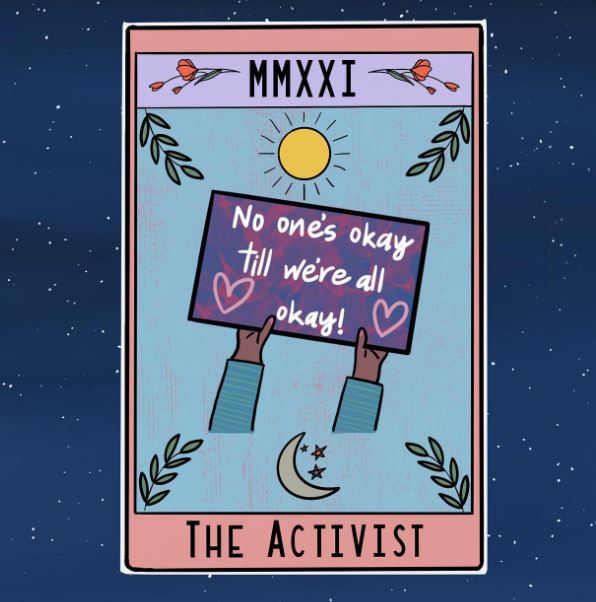
The second part of the book considers how already existing inequalities have been intensified throughout the pandemic in policing, law and immigration. Our very own @paulsquaredd contributed a chapter on the policing of protests during the pandemic, drawing on race in the Black Lives Matter protests and gender in relation to Sarah Everard. As my colleagues and students might expect, I wrote about the treatment of asylum seekers during the initial lockdown periods with a focus on the shift from secure and safe self-contained housing to accommodating people seeking safety in hotels.
Part three considers what happens to the dead in a pandemic and draws heavily on the experiences of crematoria and funerary workers and how they cared for the dead in such difficult circumstances. This part of the book sheds light on some of the forgotten essential workers during the pandemic. During lockdown, we clapped for NHS workers, empathised with supermarket workers and applauded other visible workers but there were many less visible people doing valuable unseen work such as caring for the dead. When it comes to death society often thinks of those who cared for them when they were alive and the bereaved who were left to the exclusion of those who look after the body. The section provides some insight into these experiences.
Moving through the journey of life and death in a pandemic, the fourth section focusses on questions of commemoration, a process which is both personal and political. At the heart of commemorating the COVID-19 dead in the UK is the National COVID Memorial Wall, situated facing parliament and sat below St Thomas’ hospital. In a poignant and political physical space, the unofficial wall cared for by bereaved family members such as Fran Hall recognises and remembers the COVID dead. If you haven’t visited the wall yet, there will be a candlelit vigil walk next Wednesday, 29th March at 7pm and those readers who live further afield can digitally walk the wall here, listening to the stories of bereaved family members as you navigate the 150,837 painted hearts.

The final part of the book both reflects on the mistakes made and looks forward to what comes next. Can we do better in the next pandemic? Emergency planner Matt Hogan presents a critical view on the handling of the pandemic, returning to the refrain, ‘emergency planning is dead. Long live emergency planning’. Lucy Easthope is equally critical, developing what she has discussed in her book When the Dust Settles to consider how and what lessons we can learn from the management of the pandemic. Lucy calls out for activism, concluding with calls to ‘Give them hell’ and ‘to shout a little louder’.
Concluding in his afterword, Gary Younge suggests this is ‘teachable moment’, but will we learn?
When This is Over: Reflections on an Unequal Pandemic is published by Policy Press, an imprint of Bristol University Press. The book can be purchased directly from the publisher who offer a 25% discount when subscribing. It can also be purchased from all good book shops and Amazon.
Share this:


No ways tired: Miss Lillie, arrested with Mrs. Parks.
12 September 2021
Visit to the Equal Justice Initiative Museum, From Enslavement to Mass Incarceration.
Near the end of the EJI’s newly expanded museum, there is a wall of slightly larger than life-size mugshots of folks arrested alongside Mrs. Rosa Parks in just another local act of civil disobedience. I’ve rarely seen a more earnest collection of everyday people, not unlike the folks around me as I get to know Montgomery today.
Mugshots.
Men in suits, ladies sporting pretty hats in their Sunday best.
Farmers in overalls and working women in neat dresses.
Learned-looking men with glasses, and fancy tiepins.
Young men in sleek fedoras and two or three older men in derbies.
Another man wears a skullcap.
Meaningful women and men of age, of reconstruction age, whom we imagine had by then seen every intimate and public side of Jim and Jane Crows’ wickedness.
They were representin’.
The only thing they seem to have in common is their determination.
(Sigh).
I found myself face-to-face and fixated with
Miss Lillie Bell Robinson.
She sat,
Framed,
With her arms,
Crossed.
Double-crossed.
With her head,
Tilted,
With her expression, tired, but
Also, a particular squint in her eye – or perhaps a gleam – that betrays her obvious fatigue,
As if saying: “No ways tired.”
I moan in tune, and
This somehow keeps my knees from buckling under the weight of it all, since
The preceding exhibits have already taken us along a long timeline where
Every glimpse of justice gets trampled upon –
Again, and again.
I sigh and see why they are tired.
On that day, did Miss Lillie know that much more violence, much more real intensified violence was yet to come?
This was the mid-50’s, and
Could Miss Lillie have imagined that:
Just 5-6 years later,
Freedom Riders from the north would arrive around the corner,
Riding federally desegregated, public coaches, and
The same local sheriffs would stand by, and
Let them get beaten, assaulted, brutally, and
Battered by white-hot mobs –
Only to arrest the so-called outside agitators?
Probably all of you, Miss Lillie, were battered by many of the same hands, and
Abandoned by many of the same actors of local justice.
I estimate Miss Lillie to be my grandparents’ age, and
By that day, they’d already fled and made their way to Kentucky.
I am wondering where Miss Lillie is now – right now?
(I take a deep sigh and realize that I’ve not yet reached the mass incarceration part of the museum, and ultimately just skimmed on by.
Graciously, the final exhibit is a “Recovery room,” a hall of walls of portraits,
which we might also call “mugshots,”
As each face had all, actively, over centuries,
Activated against oppression.
I recognized writers, musicians, poets, painters, politicians, preachers, teachers, activists of all flavors, and
After the weight of the truth shown in each timeframe, this left me feeling full of joy.
And, I moaned along with the tunes, there, too.
That day,
She’d had had enough, and
Though reluctant before,
Somehow now,
Miss Lillie could no longer stand by, and
Just wait for justice, and
Just go on about her own merry way, and
Pretend like this is ok, and
Adjust to the insanity of segregation, and
The very look on her face said this is “why we can’t wait.”
Her face calm, but
Twisted.
The mug shot ID, hanging around her neck like a shackle: #7010.
Business as usual, and for sure somebody’s gettin’ paid.
So, she not knowing.
She, not knowing if this all will work.
If getting arrested today mattered.
If any of this is worth it.
If this time change is coming,
having nothing left but Faith…
in herself, in others, and
Somehow faith in her nation… to do the right thing,
Despite this day, and
In spite of the many apparent setbacks, and
A million everyday,
Tiny little cuts.
We rise.
That day, Miss Lillie rose to the occasion.
She and all these others stepped up so we could step out, and
Step in here now,
Free to learn about each step along our legacy of peace.
I’m now in awe of Miss Lillie, and
Take a step back and
Smile at her, and
Take in the glory of this sensation.
Hats off to you, Miss Lillie.

Share this:

DIE in Solidarity with Diversity-Inclusion-Equality
As an associate lecturer on a casual contract, I was glad to stand in solidarity with my friends and colleagues also striking as part of UCU Industrial Action. Concurrently, I was also glad to stand in solidarity with students (as a recent former undergrad and masters student … I get it), students who simply want a better education, including having a curriculum that represents them (not a privileged minority). I wrote this poem for the students and staff taking part in strike action, and it comes inspired from the lip service universities give to doing equality while undermining those that actually do it (meanwhile universities refuse to put in the investment required). This piece also comes inspired by ‘This is Not a Humanising Poem’ by Suhaiymah Manzoor-Khan, a British author-educator from Bradford in Yorkshire.
Some issues force you to protest
the way oppression knocks on your front door
and you can’t block out the noise
“protest peacefully, non-violently”
I have heard people say
show ‘the undecided’, passive respectability
be quiet, leave parts of yourself at home
show them you’re just as capable of being liked
enough for promotion into the canteen,
protest with kindness and humour
make allusions to smiling resisters in literature
they’d rather passive images of Rosa Parks all honestly
but not her politics against racism, patriarchy, and misogyny
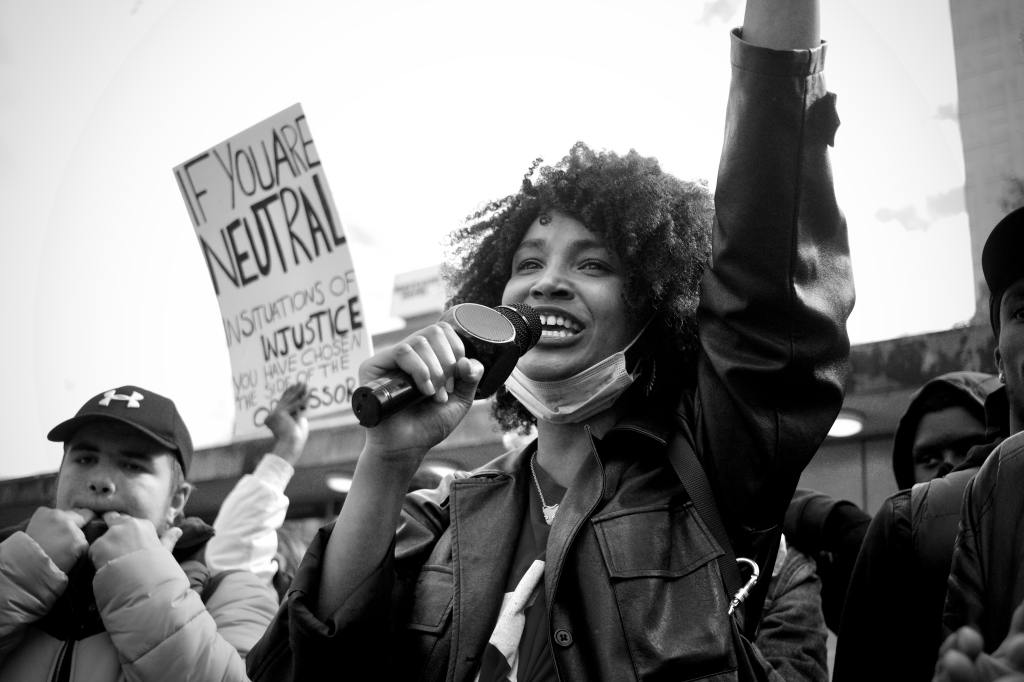
but I wanna tell them about British histories of dissent
the good and the bad – 1919 Race Riots
the 1926 general strikes, and the not so quiet
interwar years of Caribbean resistance to military conscription
I wanna talk about how Pride was originally a protest
I wanna talk about the Grunwick Strike and Jayaben Desai
and the Yorkshire miners that came to London in solidarity
with South Asian migrant women in what was 1980s austerity
I want to rant about Thatcherism as the base
for the neoliberal university culture we work in today
I want to talk about the Poll Tax Riots of 1990
and the current whitewashing of the climate emergency
they want protesters to be frugal in activism,
don’t decolonise the curriculum
they say decolonise
they mean monetise, let’s diversify …
but not that sort of diversity
nothing too political, critical, intellectual
transform lives, inspire change?
But no,
they will make problems out of people who complain
it’s your fault, for not being able to concentrate
in workplaces that separate the work you do
from the effects of Black Lives Matter and #MeToo
they make you the problem
they make you want to leave
unwilling to acknowledge that universities
discriminate against staff and students systemically
POCs, working-class, international, disabled, LGBT
but let’s show the eligibility of staff networks
while senior leaders disproportionately hire TERFs

staff and students chequered with severe floggings
body maps of indenture and slavery
like hieroglyphics made of flesh
but good degrees, are not the only thing that hold meaning
workers rights, students’ rights to education
so this will not be a ‘people are human’ poem
we are beyond respectability now
however, you know universities will DIE on that hill
instead,
treat us well when we’re tired
productive, upset, frustrated
when we’re in back-to-back global crises
COVID-19, Black Lives Matter, femicide,
failing in class, time wasting, without the right visas,
the right accents; Black, white, homeless, in poverty,
women, trans, when we’re not A-Grade students, when we don’t
have the right last name; when we’re suicidal
when people are anxious, depressed, autistic
tick-box statistics within unprotected characteristics
all permeates through workers’ and student rights
When you see staff on strike now,
we’re protesting things related to jobs yes,
but also, the after-effects
as institutions always protect themselves
so sometimes I think about
when senior management vote on policies…
if there’s a difference between the nice ones ticking boxes
and the other ones that scatter white supremacy?
I wonder if it’s about diversity, inclusion, and equality [DIE],
how come they discriminate in the name of transforming lives
how come Black students are questioned (under caution) in disciplinaries
like this is the London Met maintaining law and order …
upholding canteen cultures of policing
Black and Brown bodies. Decolonisation is more
than the curriculum; Tuck and Yang
tell us decolonisation is not a metaphor,
so why is it used in meetings as lip service –

why aren’t staff hired in
in critical race studies, whiteness studies, decolonial studies
why is liberation politics and anti-racism not at the heart of this
why are mediocre white men failing upwards,
they tell me we have misunderstood
but promotion based on merit doesn’t exist
bell hooks called this
imperialist heteropatriarchal white supremacy
you know Free Palestine, Black Lives Matter, and the rest
we must protest how we want to protest
we must never be silenced; is this being me radical, am I radical
Cos I’m tired of being called a “millennial lefty snowflake”, when I’m just trying not to DIE?!
Further Reading
Ahmed, Sara (2012) On Being Included: Racism and Diversity in Institutional Life. London: Duke.
Ahmed, Sara (2021) Complaint. London: Duke.
Bhanot, Kavita (2015) Decolonise, Not Diversify. Media Diversified [online].
Double Down News (2021) This Is England: Ash Sakar’s Alternative Race Report. YouTube.
Chen, Sophia (2020) The Equity-Diversity-Inclusion Industrial Complex Gets a Makeover. Wired [online].
Puwar, Nirmal (2004) Space Invaders: Race, Gender and Bodies Out of Place. Oxford: Berg.
Read, Bridget (2021) Doing the Work at Work What are companies desperate for diversity consultants actually buying? The Cut [online].
Ventour, Tré (2021) Telling it Like it is: Decolonisation is Not Diversity. Diverse Educators [online].
Share this:


Jimmy Carr and Acceptable Racism
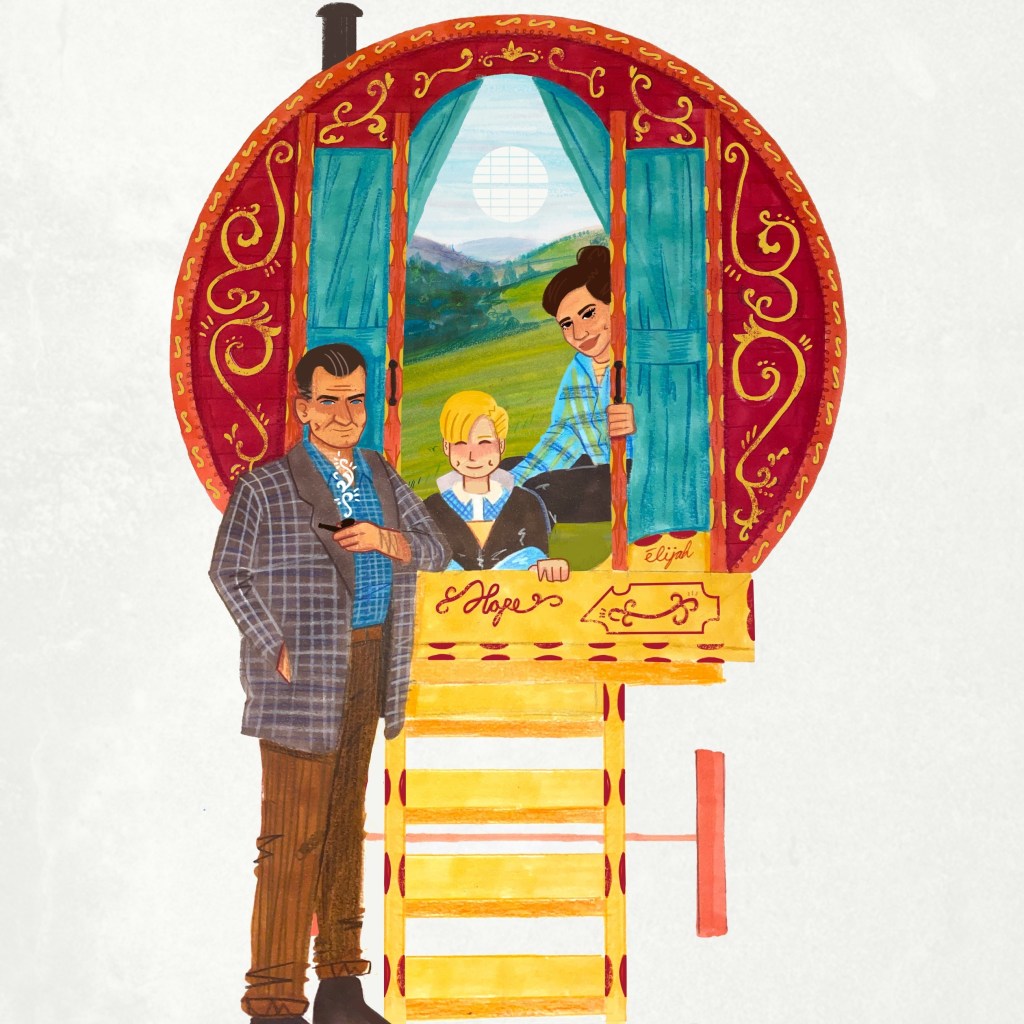
Jimmy Carr’s Dark Material stand-up comedy is the latest in a long line of everyday racism that has been subjected to a trial by Twitter. The context in which the joke is told is as follows:
A wealthy white gorger man mocks Roma and Sinti people because of who they are. His mostly white gorger audience than laughs and finds this hilarious. This man’s stand-up is so successful that it is endorsed by Netflix, of which the CEO appears to be a rich white gorger man. Both Jimmy Carr and Netflix profit from dehumanising a marginalised group of people.
If the joke had been delivered to audiences which were predominantly Gypsy Roma and Traveller people this would not have been viewed as funny. To adapt Emma Dabiri’s (2021, p. 98) work, ‘a ‘joke’ in which the gag is that the person is [a Gypsy, Roma or Traveller] isn’t a joke, it’s just racism disguised as humour’ (2021, p. 98).
Carr’s joke should not be surprising as he prides himself on his use of homophobic, racist and misogynistic ‘career ending’ jokes and these jokes are enjoyed by many.
The anti-racist Twitter reactions to this joke could provide some hope that many people are becoming more willing to challenge racism. Some Tweets were aimed at increasing the awareness and calling-out racism. Many Tweets were kind, and others were asking for Jimmy to provide a genuine apology. Although, Carr’s words (plus the support of the audience and Netflix) are a symptom of a racist society, so does the focus on Carr’s interpersonal actions mean that people are being distracted from the broader structural issues of racism and white supremacy?
After scrolling though Twitter there was a clear divide between those claiming to be ‘anti-racist’ and those claiming that ‘the freedom of speech’ is more important than combating racism. This left me thinking,
How do we get to a point where people are willing to recognise that oppressive systems impact us all, but differently, in some way shape or form?
And;
How could people be encouraged to fight against unequal and damaging systems in a way that encourages social change and forgiveness rather than hate and division?
It seems that online activism might be useful for raising awareness and giving voices to those pushed out of mainstream media. However, if focused on just ‘calling out’ individual acts of racism whilst online there is a danger of being caught up in an online culture war and not actually doing much to change structural issues in the offline world.
Whilst the Jimmy Carr Twitter debates continue, the Police, Crime, Sentencing and Courts Bill which could further damage Gypsy Roma and Traveller lives is in the final stages of Bill passage. As well as this, inequality and misery is set to become further entrenched with the impending surge in energy bills. All of this is thanks to a government which is a mess, corrupt and devoid of any sense of morality. Even so, maybe Jimmy Carr should stick to making jokes about his own experiences of upper class tax avoidance next time.
Note: Thank you to Emma Dabiri’s What White People Can Do Next (2021) for helping me to articulte my frustrations with online Twitter debates.
Share this:


The Peace of ‘the Lamb with the Lion’ (Oh say, can you see?). Happy not Leap Day #BlackenAsiaWithLove
The peace of the Lamb with the Lion (Oh say, can you see?)
There is no peace between the lamb and the lion.
The lion will always feel hunger, and feast, nurture cubs, and prosper on lamb.
This becomes the lion’s nature.
The lion may grow greedy on the ease of his feed.
Wallowing on his back in the sun, him belly full o’ greed.
For the lion, none of this is the slaughter of the lambs.
🎵Them belly full but we HUNgry.
Black people were born into the American caste system hangry!
White people, on the flip side, were granted freedom to feed themselves, and
Gain capital if they agreed to cooperate – actively or passively -with the system of hate.
Many men did, many were coerced with the promises and benefits and power of whiteness.
Hunger and anger easily fester into animality, hell and hate – none of which leads to liberation. If we were determined to be free, merely mastering the masters’ tools could not be our fate. We have had to craft a culture of resistance… based on love. This is the antithesis of the Greed, Anger and Stupidity that fuels hate. In our resistance, we have forged the ‘strength to love’ ourselves, in spite of the ‘birth of the nation’. Humanists of all hues always find a way.
Early that winter after Emmett Till was executed and his Mississippi killers acquitted, the radical Mrs. Rosa Parks refused to continue to go along with riding Jim Crow in Alabama, and in so doing gave Dr. King his final cue. Down one summer from up north, apparently young Till had made some form of pass at a white woman in a shop in town. He crossed Jim Crow, for which he had to be promptly sacrificed.
Apparently, Mamie Till had sent out a powerful signal that summer by leaving the casket open for all to view her son’s dehumanized corpse – an honor killing, quite scripted and business as usual by that point in our nation’s still hopeful nascent democracy. Ms. Till resisted. She’d crossed a line by balling her fist, then pointing her accusing finger squarely at Jim Crow – that’s who’d snatched, brutally tortured, mutilated and murdered her boy. The lions had fed. “Dar he,” Till’s uncle, Moses Wright, said standing in court, pointing to the men who’d dragged the boy from his house, never to be seen alive again. They could no longer cooperate with a corrupt and deadly system.
Reading Rosa Parks’ cue, King rallied his congregation, and
Agitated the local community, and
Called for a boycott,
Not a storming of the state capital, which still sits just a stone’s throw from his church.
Teach-ins, sit-ins, rallies and marches followed.
They called them rioters-n-things just they do today.
Roaring, shouting, chanting, singing: We! Shall! Overcome (period).
They were met with guns and bayonets on bridges,
At schools, white parents mobbed Black children trying to make their way.
Now, Miss Betsy pays for her kids to go to private schools and ignores the public ones.
We were singing the blues for Mister Charlie.
This blues train was a just stop along long revolutionary tracks that have deep underground roots.
We’re talking ‘bout a revolution!
Bayard Rustin taught Martin Luther King the power and techniques of non-violent civil resistance. By 1959, MLK had assumed the rhetoric and role of Fredrick Douglas, and began
fellowshipping with Dalits while studying how Gandhi-ji had spearheaded a non-violent imperial defeat, which decolonized, yet ultimately, further splintered the sub-continent. Such solidarity still stands between oppressed and progressive peoples everywhere.
King’s call to conscience and action grew…the lambs bellowed out for solidarity.
King’s movement joined hands with people of all races, religions, all faiths, and
They marched arm-n-arm with the humanists among sinners, senators, students and sanitary workers, and
Gave the president the language of emancipation, and
Then Dr. King advocated against war,
Just as poor and Black soldiers were being disproportionately deployed to die on the front line.
They say that’s what got him shot-n-killed to death…
A casualty among many.
There are people around the world today singing “
GAS fuels hate!
This is why we can’t wait!
Progressives peacefully demonstrate to affirm our shared belief in humanism,
In spite our CONstitution’s original ill-fate.
Love is the true heart of patriotism.
Peace is what our actions illustrate.
So, get up and sing your blues today because #BLM:
🎵Get up! Stand-up!/Stand-up for your rights!/Get up! stand up!/Don’t give up the fight! [repeat infinitely]

 Thoughts from the criminology team