
Home » Academia (Page 11)
Category Archives: Academia

Modern University or New University?

As I am outside the prison walls on another visit I look at the high walls that keep people inside incarcerated. This is an institution designed to keep people in and it is obvious from the outside. This made me wonder what is a University designed for? Are we equally obvious to the communities in which we live as to what we are there for? These questions have been posed before but as we embark in a new educational environment I begin to wonder.
There are city universities, campuses in towns and the countryside, new universities and of course old, even, medieval universities. All these institutions have an educational purpose in common at a high level but that is more or less it. Traditionally, academia had a specific mandate of what they were meant to be doing but this original focus was coming from a era when computers, the electronic revolution and the knowledge explosion were unheard of. I still amuse my students by my recollections of going through an old library, looking at their card catalogue in order to find the books I wanted for my essay.
Since then, email has become the main tool for communication and blackboard or other virtual learning environments are growing into becoming an alternative learning tool in the arsenal of each academic. In this technologically advanced, modern world it is pertinent to ask if the University is the environment that it once was. The introduction of fees, and the subsequent political debates on whether to raise the fees or get rid of them altogether. This debate has also introduced an consumerist dimension to higher education that previous learners did not encounter. For some colleagues this was a watershed moment in the mandate of higher education and the relationship between tutor and tutee. Recently, a well respected colleague told me how inspired she was to pursue a career in academia when she watched Willy Russell’s theatrical masterpiece Educating Rita. It seems likely that this cultural reference will be lost to current students and academics. A clear sign of things moving on.
So what is a University for in the 21st century? In my mind, the university is an institution of education that is open to its community and accessible to all people, even those who never thought that Higher Education is for them. Physically, there may not be walls around but for many people who never had the opportunity to enjoy a higher education, there may be barriers. It is perhaps the purpose of the new university to engage with the community and invite the people to embrace it as their community space. Our University’s relocation to the heart of the town will make our presence more visible in town and it is a great opportunity for the University to be reintroduced to the local community. As one of the few Changemaker universities in the country, a title that focuses on social change and entrepreneurship, connecting with the community is definitely a fundamental objective. In this way it will offer its space up for meaningful discussions on a variety of issues, academic or not, to the community saying we are a public institution for all. After all, this is part of how we understand criminology’s role. In a recent discussion we have been talking about criminology in the community; a public criminology. One of the many reasons why we work so hard to teach criminology in prisons.
Share this:


Thank f**k it’s Christmas!

Jessica is an Associate Lecturer teaching modules in the first year.
We have arrived at that time of the year once again: CHRISTMAS! ‘Tis’ the season to celebrate, party, give and receive gifts, catch up with friends and family, and most importantly… catch up on some much needed sleep. We have arrived at the end of the first term of the academic year, and all I can think is: Thank f**k it’s Christmas. The first term always feels the longest: whether you are first years beginning your academic journey, second and third years re-gathering yourselves after the long summer, or staff getting back into the swing of things and trying to locate and remember all the new and old names. But now is the time to kick back, relax and enjoy the festive season: ready to return to academic life fresh faced and eager come the New Year, ready to start it all over again. Well not quite…
According to Haar et al., (2014) work-life balance is something which is essential to all individuals, in order to ensure job satisfaction, life satisfaction and positive mental health. If Christmas is as needed as it feels; perhaps we are not managing a good work-life balance, and perhaps this is something we can use the Christmas break to re-consider. Work-life balance is subjective and relies on individual acceptance of the ‘balance’ between the commitments in our lives (Kossek et al., 2014). Therefore, over the Christmas break, perhaps it would be appropriate to re-address our time management skills, in order to ensure that Easter Break doesn’t feel as desperately needed as Christmas currently does.
Alongside an attempt to re-organise our time and work load, it is important that we remember to put ourselves first; whether this be through furthering our knowledge and understanding with our academic endeavours, or whether it is spending an extra 15 minutes a day with a novel in order to unwind. Work-life balance is something we are (potentially) all guilty of undermining, at the risk of our mental health (Carlson, et al., 2009). I am not suggesting that we all ignore our academic responsibilities and say ‘yes’ to every movie night, or night out that is offered our way. What I am suggesting, and the Christmas break seems like a good place to start, is that we put the effort in with ourselves to unwind, in order to ensure that we do not burn out.
Marking, reading, writing and planning all need to be done over the Christmas break; therefore it is illogical to suggest taking our feet off the pedals and leaving academia aside in order to have the well needed break we are craving. What I am suggesting, is that we put ourselves in neutral and coast through Christmas, without burning out: engaging with our assignments, marking and reading, therefore still moving forward. BUT, and it is a big but, we remember to breathe, have a lie in, go out and socialise with friends and family, and celebrate completing the first term of this academic year. And with this in mind, try to consider ways, come the new term, where you can maintain a satisfying work-life balance, so that when Easter comes, it doesn’t feel so desperately needed.
However, it is highly likely that this will still be the case: welcome to the joys and stresses of academia.
Merry Christmas everyone!
References:
Carlson, D.S., Grzywacz, J.G. and Zivnuska, S. (2009) ‘Is work family balance more than conflict and enrichment?’ Human Relations. 62(10): 1459-1486.
Haar, J.M., Russo, M., Sune, A. and Ollier- Malaterre, A. (2014) ‘Outcomes of work-life balance on job satisfaction, life satisfaction and mental health: A study across seven cultures’. Journal of Vocational Behaviour. 85: 361-373.
Kossek, E.E., Valcour, M. and Kirio, P. (2014) ‘The sustainable workforce: Organizational strategies for promoting work-life balance and well-being’. In: Cooper, C. and Chen, P. (Eds) Work and Well-being. Oxford: Wiley-Blackwell. Pp:295-318.
Bibliography:
Ashurst, A. (2014) ‘How to… Manage time and resources effectively’. Nursing and Residential Care. 16(5): 296-297.
Kuhnel, J., Zacher, H., De Bloom, J and Bledow, R. (2017) ‘Take a Break! Benefits of sleep and short breaks for daily work engagement’. European Journal of Work and Organization Psychology. 26(4): 481-491.
Logan, J., Hughes, T. and Logan, B. (2016) ‘Overworked? An Observation of the relationship Between Student Employment and Academic Performance’. Journal of College Student Retention: Research, Theory and Practice. 18(3): 250-262.
Lyness, K.S. and Judiesch, M.K. (2014) ‘Gender egalitarianism and work-life balance for managers: Multisource perspectives in 36 countries’. Applied Psychology. 63(1): 96-129.
Mona, S. (2017) ‘Work-life Balance: Slow down, move and think’. Journal of Psychological Nursing and Mental Health Services. 55(3):13-14.
Share this:


Driving value for money: My fairy tale

A few years ago I had the good fortune of being able to go to a driving experience event where I was able to drive an Aston Martin (my dream car) around a race track.
I arrived on the day and presented my provisional driving licence, a full licence was required really, but the nice people there said I could have a go as I said I loved Aston Martin cars and I would try really hard to learn to drive them.
There was a briefing about car safety that I went to and I listened but don’t think I took that much in, it was a bit boring, just some chap talking really. Then we were given the opportunity to be driven, in groups of three, around the track by an experienced driver. He would show us how to drive and the best lines to take so that we could take the corners at speed. I was a bit nervous about this and I didn’t want to be in the car with others so I missed this bit. Another nice driver took me out on my own and showed me what to do.
After that I got to drive my first Aston Martin, I took it steady because the driver kept telling me to do things and I wanted to stop because my phone was pinging and I needed to look at it. Anyway we did the track about ten times, it got a bit boring in the end. After the drive I was told to go to the briefing room and get further instructions about a time trial. I went and got some coffee and looked at Facebook on my phone, I didn’t need to go to the briefing because I’ve done the track anyway and it’s not very exciting. I did the time trial thingy, I didn’t do very well, and I don’t think they taught me much about driving or about Aston Martins.
Three weeks later I was asked by a research company what I thought about my driving experience. I said it wasn’t very good. I remember one of the questions was about value for money. The whole day cost me a lot of money and I don’t think it was value for money at all.*
Anyway I’m off to read that National Audit Office report on universities, I’m thinking about going to one sometime soon.
*The reality was that my driving experience in an Aston Martin was both frightening and exhilarating. I learnt so much on the day but it was hard work concentrating on the instructions being given and pushing myself to the limit in respect of my driving capabilities. The staff were brilliant and in the end I think I got it but there is so much more to do and as for value for money – I want to go back, that should say it all.
Share this:


Why Volunteer?

Bethany is an Associate Lecturer teaching modules in the first year.
Before I started lecturing at the university, unsurprisingly, I also once attended university as a criminology student. Very similar to the current university experience, I had deadlines, money stress and at times a lack of direction of what I wanted to do. Therefore, firstly, if you have experienced this or if you currently are, then you can find some comfort in knowing that you are not alone.
About 2 months into my first year, my seminar leader mentioned a volunteering opportunity for a mentor role at Milton Keynes Probation Office. I contemplated the idea for a couple of weeks; I was interested in the idea of volunteering, mainly because I had near enough zero work experience at all. I was however complacent in the idea of working for free, which is a common issue for students. However, when I took the plunge and put myself forward for it, it was honestly one of the best decisions and jobs I have ever had.
After getting out of my comfort zone in the first few weeks, In which I had some training about general health and safety and data protection. I suddenly found myself helping out in classes for English, maths, stress management, ICT and even a construction class! In these classes, there were ‘students’ who were issued to attend as part of a court order or had it suggested to them following a meeting with their probation officer. It was very rewarding and made me understand a lot of what I was doing in my modules.
The most important points from this for me that I feel should be shown more to all students is that:
- Time: You can give as much time as you want: I started only helping out in 1 class which lasted less than 2 hours every other week. I increased this to every week when I started my second year and more so again in my third year.
- Money: No, you will not make money, you will however 99% of the time be able to claim your expenses from the company running the volunteer group. I was able to claim for all my train tickets and any lunch I had while volunteering. Also mimicking the above point on time, I was able to still do volunteering alongside university and a part-time
- Experience: This was not only a good experience because I was able to do both my 2nd-year criminology placement at the probation office, but I was also able to interview offenders for my dissertation. But also you have great hands-on experience in the criminal justice field and you might actually help someone who is vulnerable and needs your patience and support.
This post is therefore in no way to make people feel bad for not volunteering or to say its’ easy, as it has many challenges and we are not all in the same position to give up time. However, If you are considering volunteering, whether that be to build up your CV, prepare for placement or you just want to give back for an hour or so. Below are some places currently looking for volunteers and I am sure your criminology expertise will be of use:
SOVA: Probation Volunteering
https://www.sova.org.uk/search-roles
Victim Support
https://www.victimsupport.org.uk/get-involved/volunteer
Safe Families For Children
Step Together ( Supporting Rehabilitation of Ex-Offenders)
Share this:


Tattoos: deviance or individualism?
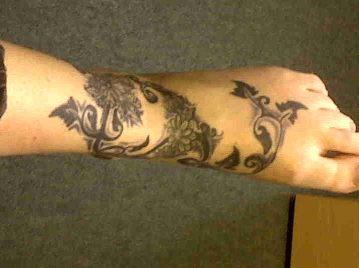
For my blog this week I thought I’d follow up on @charlottejdann’s blog on tattoos and add some personal experiences to the discussion. The media certainly have had their part to play in the negative connotations surrounding tattoos and the types of people with them, however I question the extent to which the media influence those perceptions today. Based purely on my own experience and opinion I believe that tattoos have become relatively common and as we saw in Charlotte’s blog the rise in tattoo studios would certainly seem to support this assumption. In fact, I think a process of normalisation has occurred whereby it is more surprising when someone hasn’t got a tattoo than when they have. Furthermore, the negative connotations and ‘expressed shock’ at the increase in tattooing is, in my humble opinion, typically associated to those of the older, more traditional generation for whom tattooing was a symbol of deviance, rebellion and/or disrepute.
I got my first tattoo when I was just 14; a small black panther discreetly placed on my thigh. My choice of phrase here is not accidental, being just 14 and below the age of legal consent the placement of this tattoo had to be discrete to hide it from my mother. The intentional law breaking and deception of this act would certainly look like deviance to an outside observer. Since then I added two more tattoos to my collection and have another one planned for the near future. Reflecting on this notion of deviance and my own motivation I arrive at a number of conclusions. My first tattoo was, without doubt, an act of rebellion against the expectations placed upon me by family and peers to be a ‘good girl’ and a ‘high achiever’. I don’t in any way regret that tattoo but I can recognise the reason for getting it. My second tattoo was more daringly placed on my upper arm and in hindsight was not thought through or carefully picked but at the same time it was not an act of rebellion. Those of you with tattoos may understand when I say that getting tattoos is like an addiction, you either love them or hate them but once you’ve got one, you want more. It was this ‘addiction’ so to speak that led to my second tattoo. My third tattoo which covers my foot and spreads up my ankle, symbolises the changing direction of my life after the birth of my first child and is by far my favourite to date. In short, the meaning or motivation for each tattoo has shifted over time reflecting my growth as a person and my life experiences.
At the point of my third tattoo I’d entered the world of academia and was establishing my professional identity; an identity that was in some ways at odds with my tattooed body. Wearing a professional suit and heels with a tattoo on my foot and ankle certainly led to some raised eyebrows and disapproving looks from older colleagues. This reaction was nothing compared to the openly disapproving judgements I later encountered from fellow magistrates; not only was I young to be a magistrate but I was also tattooed and had the audacity to display them in court! Linking this reaction back to my earlier statement about deviance, rebellion and disrepute, the simplest thing would be for me to wear a trouser suit in court and hide my tattoos, in essence, conforming to societies expectations of that position. However, my reasons for not doing so are twofold, firstly I am a bit of rebel at heart and secondly, I do not see my tattoos as an act of deviance but one of self-expression. In all other areas of life, I conform to the norms and values of society, I have a career and present myself as a professional, I’m trying to raise my children to be good law-abiding citizens, I pay my bills on time, I put out my rubbish when asked and I try to treat others with compassion and respect. In short, I’ve joined the collective, blended into society and accepted the expectations of me as a woman, a mother, a daughter and so forth. My tattoos therefore are a reflection of self-expression, my little rebellious side that says, “I’m more than one of the collective, I’m an individual”. Each tattoo reflects my journey, where I have come from, what I have experienced, who I am and where I am going. They tell the reader that I am more than just a number, I am an individual embracing self-expression through body art because to me tattoos are not just ink, they are pieces of art symbolising your life journey. For this reason, I agree with Charlotte’s argument that tattooed people cannot be stereotyped as a homogeneous group because tattoos by their very nature make us unique individuals.
Share this:


Perceptions of tattooed bodies

Charlotte Dann is a psychology lecturer in the Faculty of Health and Society, researching women’s tattooed bodies. You can find out more and get in touch via Twitter – @CharlotteJD
Whenever I discuss my tattoo research, I always frame it historically, because I think it’s important to consider how we have come to the point we are at with how tattoos are perceived and understood. And you know, it’s good for a laugh.
In the late 1800s, Lombroso researched deviancy and criminality, and as part of this, came to the conclusion that people who had tattoos were criminals and prostitutes. However, this research was conducted on – you guessed it – criminals and prostitutes. Despite the poor correlation that was presented, his research was influential in how we perceive deviancy and deviant bodies, to the point that those negative connotations towards tattooed bodies still ring true today. Tattoos may be ever rising in popularity (figures indicated one in five has a tattoo, and the number of studios rose by around 170% in the last decade in the UK), but tattooed bodies can still be found to be associated with deviancy.
Let’s consider the influence of the media in this. Over the past few years, there has been a flurry of articles that express shock for the fact that ‘normal’ people are getting tattoos, and why tattoos are becoming more popular for women. It only takes a quick gander at the comments left on these articles to see that public opinion hasn’t changed that much, and that these articles perpetuate negative perceptions about tattoos (i.e. they’re not meant for ‘normal’ people). Newspaper articles such as this often make reference to the ‘normal’ people who are now adorning their bodies – normal being white, middle-class, ‘respectable’ people. The narrative of such newspaper articles often seems to rely on a discourse that positions tattooing as the proper domain of ‘the other’, associated with deviant, problematised, and generally male bodies. Newspaper articles often reflect a certain moral panic about the rise of tattoos among so called ‘normal’ people, whilst at the same time, normalise the practice of tattooing itself.
The media does not do a good job in quelling negative connotations regarding tattooed people, as they tend to focus more on the extremes – the eye-catching headlines, the things that make you wince and tut, not the everyday person who is tattooed. In recent years, newspapers have reported on tattooed teachers as being ‘inappropriate’ for children, on young adults who get cheap ‘joke’ tattoos on holidays in Magaluf, and present morality tales such as those who regret their tattoo choices. In addition, they also frame our understandings of ‘who’ this ‘normal’ tattooed person is (look – even Samantha Cameron and David Dimbleby have them!)
I think what we need to do is question the idea of what a ‘normal’ body is, and really think about the assumptions we make about that body based on frankly outdated perceptions. There is no longer one particular type of person who is tattooed – the availability and accessibility of tattoo studios, designs, and techniques, has meant that you cannot stereotype all tattooed people as one homogenous group.
Share this:


Just good business or theft?

In October the Citizens Advice Bureau published a report about overcharging by mobile phone companies for mobile phones (CAB 2017). In short, a mobile phone contract usually includes the price of the mobile phone as well as the service. ‘Many people take out a mobile phone contract with the cost of the new handset included in the overall price of the fixed term deal – the majority of which are paid off on a monthly basis for a period of 2 years’ (CAB 2017). The companies often notify the consumer that the contract is coming to an end and offer an upgrade and new contract. If you are too busy or forgetful or naïve and leave the contract running, you will continue to pay for the phone even though it is paid up. According to CAB this can be as much as £38 a month.
Now consider this scenario, you enter a shop and hand over £10 for goods purchased and receive change for £20. Realising the mistake, you pocket the money despite having knowledge of the mistake.
Sections 1-7 of the Theft Act 1968 are very clear and Section 1 states:
“(1) A person is guilty of theft if he dishonestly appropriates property belonging to another with the intention of permanently depriving the other of it; and “thief” and “steal” shall be construed accordingly.
(2) It is immaterial whether the appropriation is made with a view to gain, or is made for the thief’s own benefit.
Section 5 is also very clear in defining whether property belongs to another and subsection 4 states:
Where a person gets property by another’s mistake, and is under an obligation to make restoration (in whole or in part) of the property or its proceeds or of the value thereof, then to the extent of that obligation the property or proceeds shall be regarded (as against him) as belonging to the person entitled to restoration, and an intention not to make restoration shall be regarded accordingly as an intention to deprive that person of the property or proceeds.”
In the case of the wrong change being provided at the shop, it is very clear that theft has occurred. So why not so for mobile phone overcharging? It is clear that you have handed over more money than you should through your bank account and this is an error, unless of course you wanted to pay more for your phone than it’s worth. The company keeps the money, knowing that they have overcharged you. Does that not sound like theft too? I don’t think a contract is worded in such a way that you give permission to be overcharged, nor can the company rely on the fact that the contract represents the whole package, otherwise how else would they maintain a pricing differentiation between different models? Maybe they can argue that all transactions are automated and therefore nobody forms any intent. To the latter I would suggest to those that are overcharged, ask for your money back from a person in the company and when they refuse…. Is it good business or theft?
Citizens Advice Bureau (2017) Mobile phone networks overcharging loyal customers by up to £38 a month, [online] available at www.citizensadvice.org.uk/about-us/how-citizens-advice-works/media/press-releases/ [accessed 24 November 2017].
Share this:


“Letters from America”: Why do we even bother?

As I sit in one of those busy hotel cafés writing these lines, worrying that someone will spill their double decaf latte with a dash of hazelnut, over my laptop, I wonder. What is the point to a conference? Why seemingly normal academics will spend any time in hotels next to noisy honeymooners or loud party people who like to play their tunes at 03:00?
As we finished our first session the other day, in keeping with our own tradition, we overran, we sat and had a long discussion of the key points we got out of the session. The discussion was very interesting to talk to people who may do something similar to you, but so very different. “Comparing notes” has always been one of those processes in academia that promote understanding and enhance the way we learn.
The conference for any discipline is a mass gathering of professionals that do just that; exchange ideas and engage in discussions about the discipline and its practices away from all the other less academic endeavours of the profession.
Usually conferences carry a theme, our conference the theme this year is “Crime, Legitimacy and Reform”. I found it interesting, considering the sessions we are presenting, focus on subverting facets of an established penal institution into providing higher education classes and altering ever so slightly some of its founding principles. Reform? Perhaps, but definitely an attempt to address a profound disciplinary question what are prisons for? This is a question that considers if prison is a relevant institution for a 21st century society. Education in prisons is not a novel idea, but introducing HE education inside a carceral environment provides a new suggestion of what prisons might be for. Clearly this is something worth debating and this week we have been exploring some of the aspects of our work and research.
In a group discussion after one session, we identified the principle ideas of our approach to HE in prisons. The notions of mutual respect, equity for all and educational purpose are the things we identify as the most important. It was interesting to hear the responses from other delegates who seemed to have slightly different views about who ought to participate in such an educational initiative. Sessions such as these allows me to reflect also on what we do. One of the thoughts, I have had regarding the educational approach we have taken, is whether we “normalise” incarceration in a way that justifies/legitimises its hold as an established penal institution rather than challenging its authority (as @paulaabowles asks, quite graphically, is it better to be inside the tent and pissing outside than be outside the tent pissing in?!) Leaving colourful metaphors to one side, the question of what is the obligation/duty of a modern day criminologist regarding criminal justice institutions remains. In essence, should it be different from before; what Liebling calls; a critical friend towards all those institutions of control or not?
Finally the conference is where trends and ideas come to be tested, explored and debated. I remember being in one session back in 2000, when one colleague said; looking into the new century and predicting that the main concern for criminology will be youth crime and initiatives to control it. A year later, 9/11 made terrorism an emerging priority and the collective discussion shifted quite dramatically.
What are conferences for? A great deal of academic discourse…and an interaction that reaffirms why we care so deeply for our discipline
Share this:


Tackling Firearms Trafficking: Follow the Gun!

Dr Helen Poole is Deputy Dean in the Faculty of Health and Society and Lead for University of Northampton’s Research Centre for the Reduction of Gun Crime, Trafficking and Terrorism
Last week I attended the 4th Interpol Firearms Forensics Symposium in Dubrovnik, Croatia. This was the second I have attended, having presented the interim findings of the EU Project EFFECT in Singapore in 2015. EFFECT, which I co-lead with Professor Erica Bowen, looked at many aspects of gun crime, but the focus on trafficking became the predominant area of interest from our findings and recommendations following the Paris attacks, and was a strong focus of this year’s event. In particular, the links between organised firearms trafficking and terrorism were a key focus.
The UK is landlocked and has some of the most rigorous firearms licensing regulations and criminal legislation in the World which helps to keep us relatively safe from this threat, but still we are seeing rising rates of gun related crime in the UK, and some of the guns in use are moving from post-conflict areas such as the Balkan region. In 2015 The Shilling Gang were intercepted smuggling a large haul of military grade firearms into the UK via boat, a number of which emanated from Eastern Europe, and we know that firearms, their parts and accessories, are being imported from the US and Africa via both the dark web and the open net. The threat from junk, antique, converted and 3D printed weapons also present a threat.
Approximately 200 law enforcement officers, forensics experts and academics were present at the event, which highlighted two issues above all else: the importance of investigating officers to ‘follow the gun’; and the need for international cooperation to reduce the threat posed by small arms and light weapons. All too often officers will seize a firearm and identify the suspect, and close the case as detected. However, such an approach risks losing valuable intelligence in terms of where the gun came from, where else it might have been used, and the identification of trafficking routes. By using ballistics comparison technology, such as the International Ballistics Intelligence Network (IBIN), it is possible to compare ballistics intelligence to match crime scenes and, when combined with other forms of evidence and intelligence, identify the individuals or organised groups behind the supply of weapons. This may also lead to the detection of more crimes. However, this requires cooperation between nations to share information in a timely way, facilitated in many cases by Interpol, as well as a change in the mindset of detectives. Following the gun may be regarded as merely creating more work for the individual officer or department, and the detection of the individual crime may be required as the only positive outcome required. However, in terms of harm reduction, following the gun is more likely to reduce the number of future victims, and the serious harm caused to families and communities as a result of the number of crime guns in circulation.
Share this:


Is freedom too great a price to pay?

The 1st of October was a bad day, I watched the news on television in dismay, as I seem to frequently do these days. Fifty eight people killed and hundreds injured by a gunman in Las Vegas. Over a few days I thought about this and continued watching news bulletins and the discussion on gun control and the right to bear arms. I recall previously seeing Barak Obama on television, lamenting the illegal use of guns in the United States and attempting to convince people that gun possession needed to be controlled. He failed, but from news reports not for the want of trying. The gun lobby and politics were a powerful block on any movement in that direction.
The present incumbent Donald Trump does not seem to have much to say about the matter other than the usual platitudes that come out at a time of national disaster. So my thoughts turned to politics and ideology. I can’t profess to know much about American politics or the American Constitution but as I understand it, the right to bear arms is written into the Constitution. The debate about whether the Second Amendment intended that ordinary citizens had the right to bear arms or the right to bear arms was intended for the militia is one that has continued for many a decade and it seems the courts, not without some dissent, fell on the side of the citizen.
As I continue to try to make sense of it all, I question what was intended by those great people that drafted and redrafted and finally agreed the American Constitution. If the very people that debated and drafted the constitution were to consider the matter now, in contemporary society, knowing the advanced technology and the damage that firearms have caused across America, including the illegal use of firearms in the name of the law, would they have drafted the second amendment in such a way?
Of course we can think about this concept a little wider and apply it to various ideologies across the world. Take the concept of free speech, would those that drafted the various constitutions and rights in many a country have foreseen that the concept of free speech would be used to spread hate against various groups of people? Did they intend that free speech would be used to adulterate and twist religious texts so that hate could be espoused and acted upon?
These rights were drafted and agreed in a different era. Those that espoused them could perhaps not have conceived that they would be abused to the extent they are now or that the concepts would cause so much damage and misery. If we could bring all those great minds together now, would they amend those rights perhaps putting some stipulations on them?
I have a feeling that many a great mind would turn in their graves at these notions and of course I understand it is not quite so simple but I do just wonder? Is freedom too great a price to pay?

 Thoughts from the criminology team