
Home » Articles posted by Tré Ventour-Griffiths (Page 2)
Author Archives: Tré Ventour-Griffiths
RACIST BRITAIN – ‘Uncommon Wealth’: Colonialism in the Present Tense
The main title for this piece comes from a book of the same namesake by Kojo Koram.
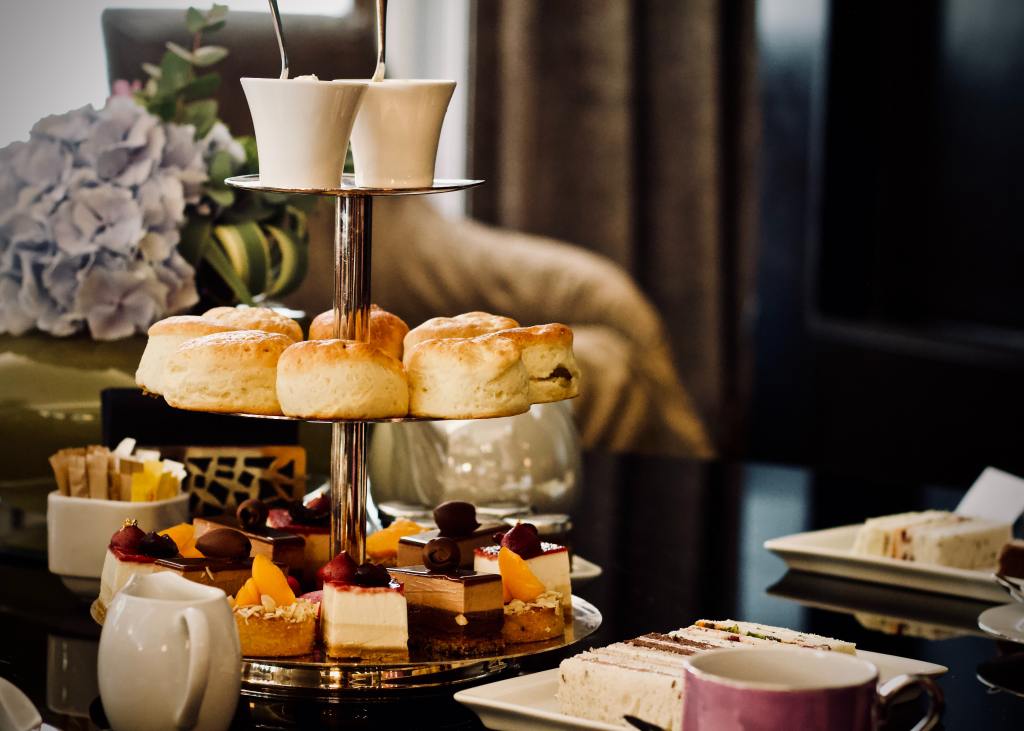
Plantations and pub gardens; afternoon tea, cakes, caps, graduation gowns and colonial statues; white supremacist symbols upon symbols. An (in)visible web of arcane history blurring the lines between chants for anti-racism in schools and schools of white thought celebrating the Queen’s Platinum Jubilee and the ‘Best of British’. No politician, no lawyer, no academic could keep up with such walking contradictions, even the Tories and their wine and cheese soirées or a university vice chancellor mired in scandal! These entanglements even make the Prime Minister look modest.
Who wants consistency in anti-racist commitments when you can have fantasy? Who wants to talk of motifs to enslavers when you can munch on crumpets? Who wants punishment collars when there’s a national holiday and a pint in the sunshine? Pull away the veil and what are we left with? A country that boasts about multiculturalism and anti-racism in one breath, and the seemingly unconnected Platinum Jubilee in the next. Tell a story with the bite of Ozymindias, and even the most staunch anti-racists will be sitting down for a nice sherry come the Jubilee. What these narratives do, is “spectacularise” individuals and that is the power of storytelling. It turns human beings into gods and this is mass media marketing to the very extreme. Her name is Elizabeth Queen of Queens, look upon this mighty charade and despair.
Following anti-colonial resistance in the Caribbean to royal visits, current Jubilee celebrations on the British side of the Atlantic appear insensitive (these visits are simply a catalyst, not an exclusive … they were always problematic). However, as I wonder the Northampton streets I grew up on, admiration for The Crown does not seem to waiver amid local and chain businesses, seemingly having learned nothing from the 2020 Black Lives Matter protests. The same institutions who posted solidarity statements that summer … colonisations of the mind remains ever-present (wa Thiong’o, 1986) in Northampton’s pubs, shops, theatres, and other institutions. While the Queen’s neck grows crooked under stolen loot, hypocrites swarm to the announcement of a national holiday. What short memories human beings have.

During a pandemic that has had a devastating impact on business (especially independent businesses), one cannot blame them taking every chance they get to recuperate losses. Yet, to do so with empire and colonialism still kicking is just not cricket. Neoliberalism, better known as neoliberal capitalism trumps all with a back-handed flag-waving jingoistic holiday while more activists will run to Buckingham Palace this summer when they get called for their gong. Arising … superficially validated by the same empire project that sustains “equal access to unjust systems” (Manzoor-Khan, 2019: 81). They need a gong over the head! I can feel this to be another long summer, full of actions that undermine pushes for lasting change. Admittedly, I am not beyond critique, but claiming to be anti-racist while peddling support for the Queen’s Jubilee is the baseline for what not to do.
Seeing numbers of organisations and people who were posting black squares and the like that summer in 2020, to now be celebrating the Jubilee, clearly their commitment was temporary.
With civil unrest in the Caribbean and anti-racism debates on this side of the Atlantic still growing strong, the level of cognitive dissonance must be astronomical to peddle anti-racism while celebrating the Queen’s Jubilee. It appears many people and their dogs have jumped on the imperial carriage to celebrate someone whose very existence undermines the best of Britain. In the same year the Colston Four were acquitted by a public jury for dispatching the Bristolian enslaver into the river, we celebrate someone in much the same symbol of pillage and plunder. Deplorable does not begin to describe it.
While I see people saying that the Queen did not benefit from colonialism in her lifetime, I remind you colonialism isn’t over. Moreover, historic events like the Mau Mau Uprisings (1952-1960) and the Suez Crisis (1956) are well within her reign, further to violent fights for independence within Caribbean Black Power movements. The British Monarchy is a constitutional monarchy, so the Queen has little power as an individual, yet the institution is no less violent than policing, prisons, the Church and others. For all Britain’s flag-waving, we know very little British history. While I do not claim to know all, I remain curious. Though, curiosity to see what lurks in the closet many would rather not know. As I frequent my favourite local venues, my spirit weeps at the sight of union jacks and St George’s flags (a symbol of violence I associate with racism and white supremacy).
The red and white … amid this nationalist fever in the regalia of Brexit, it is a reminder I am unwelcome in the country I have always called home. The acceptance of racist symbols is common in our mainstream, but worse when you see it condoned by your friends. While popularised by Lord Macpherson in the Stephen Lawrence Inquiry, the term institutional racism in practice goes back centuries. Queen Elizabeth I introduced the Royal Proclomation in 1603 which could be cited as the second act of institutionalised racism on British soil, demanding “Blackamores” be expelled from her kingdom (Fryer, 1984: 12). This was precedented by the 1193 expulsion of the Jews, where Simon DeMontfort (from whom the DeMontfort University gets its name) expelled the Jews from Leicester City (DeMontfort Students’ Union, 2021).
Every monarch from Elizabeth I to George III subsequently gave their blessing to the human trafficking of Black Africans (Hirsch, 2017: 51), thus before British independent traders broke into enslavement the original beneficiaries were the monarchy. As the ‘royal’ in Royal African Company for example, is more than an honorific, but a namesake. The late Tudors and early Stuarts were up to their necks in the blood of Black people (Olusoga, 2017: 22), as were the Georgians and Victorians. Furthermore, the wealth of the monarchy we see now was largely necessitated by colonial ambition. Heck, Victoria was donned Empress of India and Elizabeth I granted the royal charter to the East India Company (Sanghera, 2021: 12).
In his 1916 book Why Men Fight, Bertrand Russell writes how “All our institutions have their historic basis in Authority.” The Crown sits among them, like bloodsucking parasites who gained most of their wealth from stealing from others including the Global South. Yet, Scotland and Wales and Ireland also have their own reasons to dislike the Crown, including the history of the Prince of Wales title which I talked about in an earlier blog (and were still up in the Caribbean doing their colonial nonsense). You have to hand it to the British state, they have perfected the art of brainwashing … convincing large swathes of the oppressed to support the monarchy while also getting the working-class to vote Conservative.
However, with the Platinum Jubilee looming I am disgusted to see numbers of organisations who were posturing Black Lives Matter statements and black squares in the long summer of 2020 now bootlicking the empire itself. It is a reminder to me that within the British Isles that there is still very little public knowledge on the history of The Crown, both as the original colonisers but also as wielders of violence against working-class communities. Those who perfected social murder. Performance and vanity.
For example, after the Murder of George Floyd in June 2020 the University of Northampton posted a BLM statement (nonetheless weak). This statement came from pressure via Twitter (after eleven days of silence, the University posted a statement). This also came with a blog entry, as it was my last as a sabbatical officer. Now, they are holding events in the image of whiteness, colonialism, and racism for the Queen’s Platinum Jubilee celebrations. This sits adjacent to UON’s “efforts” to decolonise the university (recolonise may be a more fitting term). Concurrently, the University held a week-long thread of events about the climate emergency in November 2021 which was a study in whitewashing fitting under the wider banner of whitewashing COP26. And in April 2022, they were voted among the top 25 universities for tackling inequalities in spite of repeated strike action from staff since 2021 over fair pay, pensions, and race / gender pay gaps as part of UCU industrial action nationwide. Make this make sense!!
As someone that was very active that summer and has been since, I have been tested lately thinking about the many people that claim to be anti-oppression while also supporting the Queen and thus, the institution of the monarchy. Discrimination against Harry and Meghan is also of note amid the Royal Family itself, as well as from British media. If you’re a monarchist by all means stand by your beliefs, but don’t try to be so while claiming to be anti-oppression. Worse, as Prishita Maheshwari-Aplin wrote about UK Honours: “when those who have made their names from challenging the lingering evils of the empire jump at the chance of being superficially validated by it, the hypocrisy is extremely grating.”
For a university to pontificate about its place on a list of twenty-five universities for tackling inequality, while numbers of staff are on strike during a cost of living crisis … that’s Priti Patel levels of evil. Who were the judges, Dr Strangelove and Darth Vader?
So, if you consider yourself remotely pro-human rights, I would consider thinking about your stance on the monarchy … some of the biggest hoarders of wealth and the epitome of whiteness as ownership (Harris, 1993). The pulling down of Edward Colston; the National Trust audit into stately homes and their links to enslavement and colonialism; anti-colonial uprisings in the Caribbean; the Windrush Scandal and decolonising education are all entangled in this web amid the Jubilee’s nationalist (colonialist white supremacist) fever. Whilst it may be considered British to support the Queen, it is just as British to dissent.
The fight against capitalism certainly includes ‘wealth-hoarders’ pertinently inherited wealth (and those who got it through dubious means). To be anti-racist, we must also be anti-capitalist which fundamentally underpins many intersectional movements. For example, anti-capitalism is vital to disability justice, the class struggle, and LGBT+ rights. And while everyday folks have hopped on to this jubilee band-carriage, I would really question if we should. Abolishing the monarchy is just the starting the point.
Share this:


International Women’s Day should be a protest
Don’t know, might delete this later!
As to not be a mansplainer, this blog entry will not explain ‘women’s issues’ (unlike a certain institution enjoys doing), more highlight some of the discontent I feel with commemoratory days, weeks and months for people who colour outside lines set by the state. Institutional equality statements will say ‘underrepresented groups’ when we have actually have been consciously excluded by patriarchy, white supremacy and other intersectional matrixes of oppression. While I have titled this blog “International Women’s Day should be a protest”, I admit this was for ‘clickbait’ effect. The title also acts as symbolic for other tokenistic occassions where institutions “celebrate” their marginalised employees while also resuming white supremacist, patriarchal, cisheteronormative violence. Just business as usual, isn’t it?
To slightly rephrase a quote by Malcolm X,
‘The oppressor will keep on granting tokenism; a few of the oppressed may get big jobs, but the marginalised majority will catch hell as long as they stay in the his house.’
Whether we are talking about International Women’s Day / Women’s History Month, Pride Month, LGBT+ History Month, Autism Acceptance Week and others, the fact remains institutions use tokenism and co-opt these occassions to present the image of ‘diversity as marketing’ (Ahmed and Swann, 2006).
Pride started as a protest in response to police harrassment of gay and lesbian people. Margaret Thatcher’s government further introduced Section 28 prohibiting “the promotion of homosexuality” by local authorities which had a devestating impact on education. Institutions will use their LGBT+ staff members as diversity bunting, but will not use these times of year to talk about how eugenics for example, is a big talking point in contemporary autistic advocacy circles – pertinently with Applied Behavourial Analysis [ABA] which is heavily contested by autistic activists as eugenics in the twenty-first century. Black History Month is also frequently centred around Black excellence, which ultimately centres whiteness and capitalist takes on what success looks like (Kinouani, 2021: 162). The politics of existing and expressing yourself authentically even while institutions say “they want diversity” (but not that sort of diversity), has been gutted in many institutional responses in favour of a shiny diversity agenda.

Guy DeBord’s book Society of the Spectacle may be one vessel for which to discuss how institutions celebrate marginalised people without discussing how that marginalisation occurs. Though even in this regard, I would tread carefully as Marxism does often centre the Male Gaze. His book was written in the aftermath of WW2 and is centred in the 1960s’ fever of antiestablishment Paris. It is a critique of a society that cares more about images and appearances than reality, truth, and experience. It resonates today with the contemporary world’s addiction to social media and TikTok trends, but it came out of a Europe gripped by consumerism following 1945: “In societies dominated by modern conditions of production, life is presented as an immense accumulation of spectacles” (DeBord, [2021] 1967: 1). Yet, that society’s aim was to curate a passive population of watchers rather than participatory actors (very very familiar).
In our present-day if we consider protest as art, we might think how numerous activist movements to the everyday-eye, are looked at as devoid from their historical, political, or any economic contexts many sprouted from – but rather just “nice things” to look at, watch, or listen to. The euphoria of the Black Lives Matter protests two summers ago is an example of something that was treated by institutions as just about one man – George Floyd – but not about the anti-Blackness that pervades worldwide – via white people “doing racism” and some Black and non-Black people of colour who have internalised it. In many cases we have been conditioned to hate ourselves and both these things go back centuries. Yet, following performative statements done by numerous institutions this International Women’s Day (including Northamptonshire Police), I am reminded of the hypocrisy of how institutions rarely do what they say!
The neoliberal university is a testament to this where they present themselves in marketing as beacons of Diversity and Inclusion, and then discriminate against their students and staff. This sounds like any institution. However, the added bonus of so-called commitments to ‘decolonising the curriculum’ adds insult to injury where diversity and decolonisation are often conflated. As Gurminder Bhambra and colleagues (2018) write:
“Taking colonialism as a global project as the starting point, it becomes difficult to turn away from the Western university as a key site through which colonialism – and colonial knowledge in particular – is produced, consecrated, institutionalised and naturalised. It was in the university that colonial intellectuals developed theories of racism, popularised discourses that bolstered support for colonial endeavours and provided ethical and intellectual grounds for the dispossession, oppression and domination of colonised subjects. In the colonial metropolis, universities provided would-be colonial administrators with knowledge of the peoples they would rule over, as well as lessons in techniques of domination and exploitation. The foundation of European higher education institutions in colonised territories itself became an infrastructure of empire, an institution and actor through which the totalising logic of domination could be extended; European forms of knowledge were spread, local indigenous knowledge suppressed, and native informants trained. In both colony and metropole, universities were founded and financed through the spoils of colonial plunder, enslavement and dispossession” (p3).
From: ‘Decolonising the University’ (2018)
International Women’s Day should be a protest (what protest looks like is up for debate). Universities still hide behind the Athena Swan gender equality charter which we know centres white privileged women (Bhopal and Henderson, 2019). All while Black and Biracial writers have long discussed intersectionality before Kimberlé Crenshaw (1989) conceptualised it (Anon,1808; Prince,1831; Truth,1851; Jacobs,1861; Hurston,1926; Hansberry,1968; Angelou,1969; Giovanni,1970; Emecheta,1979; hooks,1981; Walker,1982; Davis,1983; Lorde,1984; Hill Collins,1986). Yet, to the exclusion of Black and Brown women, (white) feminism still presents itself as universal. Today, many people fail to realise if there is no equality for ethnic minorities, there is no equality. There is a long history of white women and racism (Ware, 1992), when white feminism is simply ‘white supremacy in heels.’ In more recent times influencers like The Guilty Feminist have made attempts to use their white privilege to platform systemically excluded voices, those voices that sit on the fault lines considered ‘too radical’ or ‘too difficult’ for mainstream discourse.
When you see the plethora of issues that exist across intersectional lines, ‘girlboss representation politics’ is not robust enough. Of course celebrate, but exclusively celebrating under institutional definitions of success also ties ‘worth’ to capital and this toxic productivity culture we live in. The fact that women and people in general exist should be enough, and the need to contribute to the economy should be by the by. Diversity and Inclusion ultimately centres captialism because these institutions do not care about people as people, just what bodies can do for the organisation. As Nirmal Puwar (2004) further writes:
“In policy terms, diversity has overwhelmingly come to mean the inclusion of different bodies. It is assumed that, once we have more women and racialised minorities, or other groups, represented in the hierarchies of organisations … especially in the élite positions … then we shall have diversity” (p1).
From ‘space invaders’ by nirmal puwar
The ongoing UCU strikes are testament to that, where universities appear to care more about bodies as capital rather than the human rights of their employees. Former PM-Margaret Thatcher said there is no such thing as society but “there are individual men and women and there are families.” This was the start of what we now call neoliberalism or more commonly – neoliberal capitalism where this political ideology says that connections between people are purely economic more than anything else (i.e more than social, cultural, political etc etc). The term liberal was meant not in the modern sense, but in the context of the 18th and 19th century amid classical liberalism of promoting economic liberty – to do what you want with your money including the trafficking and subjugation of human beings under the British Empire!
Neoliberalism claims that our very existence in relation to one another is driven on self-interest and how each individual seeks to gain economically from each interaction (or simply human relationships as transactional). This sentiment is underpinned by what bell hooks called ‘imperialist white supremacist heteropatriarchy’ where whiteness in particularly is tied to property and ownership (Harris, 1993).

For Britain’s institutions, these acts of tokenism are like property. They think they own the people doing DIE* work and thus the institutions thinks they own The Work too – LGBT History Month, Pride Month, BHM, Autism Awareness Week, IWD, Women’s History Month, Disability Awareness Month.
Ownership is at the basis of whiteness, and people who speak out are turned into problems. Imagine neoliberal institutions thinking they can put limits on social justice advocacy structures … i.e anti-racism, femnism etc etc; imagine them thinking they can own activist struggles by slapping them on their marketing. In concept International Women’s Day makes sense (and I’m here for it), but in reality institutions that benefit from ‘imperialist white supremacist heteropatriarchy’ are not going to help smash those systems of domination. Especially in the perfect storms of Black Lives Matter, COVID-19, and the reinterest in discourses into violence against women (after the murders of Sarah Everard, Sabina Nessa, Bibba Henry, Nicole Smallman and others) – where to performative institutions “it is cool to be an activist.”
International Women’s Day should be a protest and call to action. By all means celebrate women for their achievements, but those achievements need not centre capitalism. And for God’s sake, let’s stop glorifying billionaires … they are part of the problem and somebody is always being exploited. Always.
*Diversity, Inclusion, Equality (or DIE)
Share this:


DIE in Solidarity with Diversity-Inclusion-Equality
As an associate lecturer on a casual contract, I was glad to stand in solidarity with my friends and colleagues also striking as part of UCU Industrial Action. Concurrently, I was also glad to stand in solidarity with students (as a recent former undergrad and masters student … I get it), students who simply want a better education, including having a curriculum that represents them (not a privileged minority). I wrote this poem for the students and staff taking part in strike action, and it comes inspired from the lip service universities give to doing equality while undermining those that actually do it (meanwhile universities refuse to put in the investment required). This piece also comes inspired by ‘This is Not a Humanising Poem’ by Suhaiymah Manzoor-Khan, a British author-educator from Bradford in Yorkshire.
Some issues force you to protest
the way oppression knocks on your front door
and you can’t block out the noise
“protest peacefully, non-violently”
I have heard people say
show ‘the undecided’, passive respectability
be quiet, leave parts of yourself at home
show them you’re just as capable of being liked
enough for promotion into the canteen,
protest with kindness and humour
make allusions to smiling resisters in literature
they’d rather passive images of Rosa Parks all honestly
but not her politics against racism, patriarchy, and misogyny
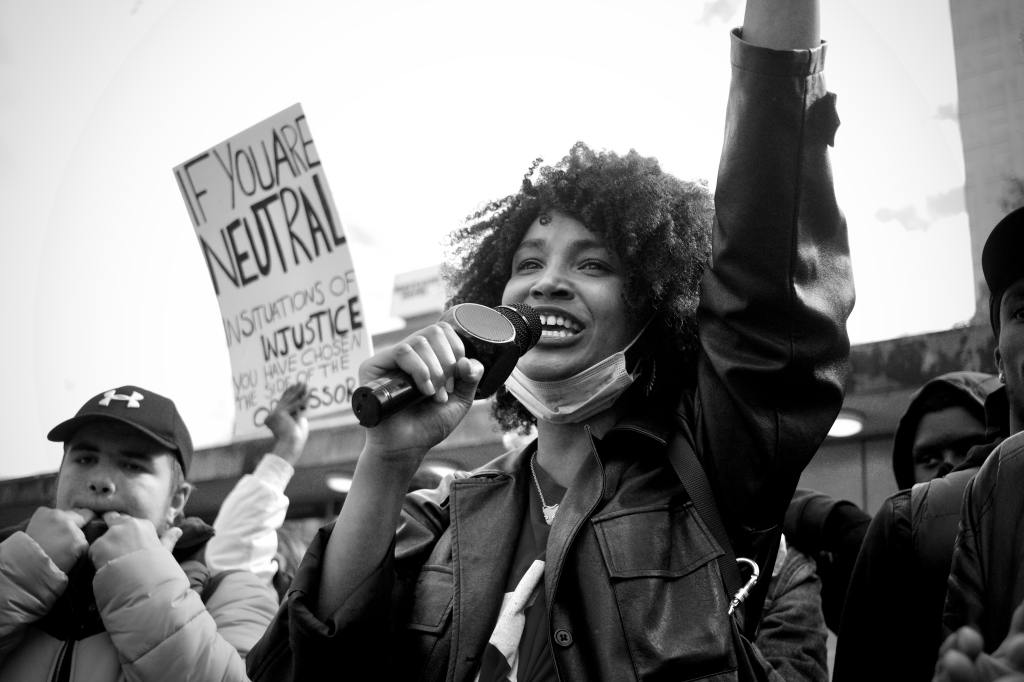
but I wanna tell them about British histories of dissent
the good and the bad – 1919 Race Riots
the 1926 general strikes, and the not so quiet
interwar years of Caribbean resistance to military conscription
I wanna talk about how Pride was originally a protest
I wanna talk about the Grunwick Strike and Jayaben Desai
and the Yorkshire miners that came to London in solidarity
with South Asian migrant women in what was 1980s austerity
I want to rant about Thatcherism as the base
for the neoliberal university culture we work in today
I want to talk about the Poll Tax Riots of 1990
and the current whitewashing of the climate emergency
they want protesters to be frugal in activism,
don’t decolonise the curriculum
they say decolonise
they mean monetise, let’s diversify …
but not that sort of diversity
nothing too political, critical, intellectual
transform lives, inspire change?
But no,
they will make problems out of people who complain
it’s your fault, for not being able to concentrate
in workplaces that separate the work you do
from the effects of Black Lives Matter and #MeToo
they make you the problem
they make you want to leave
unwilling to acknowledge that universities
discriminate against staff and students systemically
POCs, working-class, international, disabled, LGBT
but let’s show the eligibility of staff networks
while senior leaders disproportionately hire TERFs

staff and students chequered with severe floggings
body maps of indenture and slavery
like hieroglyphics made of flesh
but good degrees, are not the only thing that hold meaning
workers rights, students’ rights to education
so this will not be a ‘people are human’ poem
we are beyond respectability now
however, you know universities will DIE on that hill
instead,
treat us well when we’re tired
productive, upset, frustrated
when we’re in back-to-back global crises
COVID-19, Black Lives Matter, femicide,
failing in class, time wasting, without the right visas,
the right accents; Black, white, homeless, in poverty,
women, trans, when we’re not A-Grade students, when we don’t
have the right last name; when we’re suicidal
when people are anxious, depressed, autistic
tick-box statistics within unprotected characteristics
all permeates through workers’ and student rights
When you see staff on strike now,
we’re protesting things related to jobs yes,
but also, the after-effects
as institutions always protect themselves
so sometimes I think about
when senior management vote on policies…
if there’s a difference between the nice ones ticking boxes
and the other ones that scatter white supremacy?
I wonder if it’s about diversity, inclusion, and equality [DIE],
how come they discriminate in the name of transforming lives
how come Black students are questioned (under caution) in disciplinaries
like this is the London Met maintaining law and order …
upholding canteen cultures of policing
Black and Brown bodies. Decolonisation is more
than the curriculum; Tuck and Yang
tell us decolonisation is not a metaphor,
so why is it used in meetings as lip service –

why aren’t staff hired in
in critical race studies, whiteness studies, decolonial studies
why is liberation politics and anti-racism not at the heart of this
why are mediocre white men failing upwards,
they tell me we have misunderstood
but promotion based on merit doesn’t exist
bell hooks called this
imperialist heteropatriarchal white supremacy
you know Free Palestine, Black Lives Matter, and the rest
we must protest how we want to protest
we must never be silenced; is this being me radical, am I radical
Cos I’m tired of being called a “millennial lefty snowflake”, when I’m just trying not to DIE?!
Further Reading
Ahmed, Sara (2012) On Being Included: Racism and Diversity in Institutional Life. London: Duke.
Ahmed, Sara (2021) Complaint. London: Duke.
Bhanot, Kavita (2015) Decolonise, Not Diversify. Media Diversified [online].
Double Down News (2021) This Is England: Ash Sakar’s Alternative Race Report. YouTube.
Chen, Sophia (2020) The Equity-Diversity-Inclusion Industrial Complex Gets a Makeover. Wired [online].
Puwar, Nirmal (2004) Space Invaders: Race, Gender and Bodies Out of Place. Oxford: Berg.
Read, Bridget (2021) Doing the Work at Work What are companies desperate for diversity consultants actually buying? The Cut [online].
Ventour, Tré (2021) Telling it Like it is: Decolonisation is Not Diversity. Diverse Educators [online].
Share this:


Complaint! (For Sara Ahmed)
This poem comes inspired from the recent UCU strikes, and also the underpinning arguements of Complaint by Sara Ahmed. The institution protects itself, while removing those who complain (or in many cases, they remove themselves). It is also inspired by ‘Testimony’ by Irish poet Seamus Heaney.
As higher education burns,
they blame white lecturers who picket,
and the Black and Brown lecturers
no longer willing to be ‘paid in exposure’
to the hull of slave ships. Colonialism’s hot mouth
at the nucleus of HE’s epistemes,
so senior leaders blame lecturers
for neglect. Meanwhile, the upper echelons
play Monopoly with staff pay checks
students left to grieve assignment
work revolving around conveyer belts
like undead corpses between indenture and slavery
it’s a Tuesday morning
a fever of claret runs riot
across picketing lines
turn cloaks to justice and equality,
there’s just ice behind the scab
where hearts used to beat. Back in the 80s,
gay and lesbian activists stood in solidarity
with the miners; and Arthur Scargill
and co scurried to Jayaben Desai at Grunwick
from the main road, you can still hear the screams
of comradery, and ‘we see yous’ …
yet behind picket tea and biscuits,
there are teary smiles –
death behind the bags,
and behind the pyre …
smoke could be seen for miles.
Share this:


Who’s to blame, Jimmy Carr or the system that feeds him?

NB: The term ‘white’ in this blog is being used to describe those racialised as white within the dominant culture of the UK, and those that benefit the most from white privilege. Though Gypsy Roma Traveller [GRT] communities may in cases be racialised as white, their culture sits juxtaposed to the dominant thus ‘not white enough’, so may not always be seen as white by white British people (see Bhopal, 2018: 29-47).
“Extending the gaze to whiteness enables us to observe the many shades of difference that lie within this category – that some people are ‘whiter’ than others, some are not white enough and many are inescapably cast beneath the shadow of whiteness” (Nayak, 2007).
Following Haley’s excellent blog on the Jimmy Carr debacle, I would like to bring another perspective. For those of us racialised outside of whiteness, I know I do not need to describe the litany of examples where those racialised as white portray racist hatred as humour on and off social media. Haley continues in writing, “Jimmy Carr’s [His] Dark Material stand-up comedy is the latest in a long line of everyday racism that has been subjected to a trial by Twitter.” When we challenge these “jokes”, at least in my experience I was told iterations of “stop being so sensitive”; “it’s just a joke”; “lighten up” and so on …
In her long-essay What White People Can Do Next: From Allyship to Coalition, Irish author-academic Emma Dabiri (2021) writes:
“I grew up in a culture of bantering and, ngl, I love a caustic riposte. And while in certain ways I resent the current policing of language, there is a distinction. I hate to break it to you, but a “joke” in which the gag is that the person is black isn’t a joke, it’s just racism disguised as humor. A joke told to a white audience where the punch line is a racist stereotype isn’t a joke, again it’s just racism; if there is only one black person present, it’s also cowardly and it’s bullying. Jokes of this nature probably aren’t funny for black people.”
Emma Dabiri (2021: 98)

Whilst in my time writing for Thoughts I have engaged with many issues, one I have not yet written on is the ‘canteen culture’ of bantering I grew up in amid the English private school system. So, I am quite familiar with the culture of private schools having gone to them myself (aged 5-16) where racism (specifically anti-Blackness) against me was passed off as “a ‘joke’ in which the gag is … just racism disguised as humour”(Dabiri, 2021: 98). As a boy, Carr went to sixth form at Royal Grammar School, a selective boys’ school in High Wycombe in the image of a posh state school famous for projecting its boys into Oxbridge. Thus Jimmy Carr passed into Gonville and Caius College, Cambridge.
If there was to be a culture of ‘banter’ where Carr learned such behaviours, these selective schools and universities are a good place to start. For people not racialised as white, these places can be a new-kind of hell very much in the image of colonial-style racism. At school, in my experience there existed a toxic human concotion of racism (as banter) which infected not only the students but also the staff. It’s this sort of thing that may sit under the thinking behind Carr’s “joke”, and why he thought it was okay to make it in the first place. However, as much as I would like make this about him, this isn’t really about him at all.
Carr has had a very successful career of punching down on the marginalised and historically excluded, profiting from their suffering. For me, this is more about how large institutions like Netflix give platforms to people they know are bad news and let them espouse hatred anyway. Professor Sunny Singh tweeted how it is a “reminder that Jimmy Carr’s joke went through a whole production process in order to appear on @netflix.” When we consider how any piece of media goes through a rigorous editing / production process, the fact nobody questioned a Holocaust “joke” about Roma and Sinti people is a stark reminder of how white supremacy functions in media.
Here a white man makes a “joke” to an audience of mostly white people backed by a production team (largely white, let’s be honest) at a white institution Netflix … with ‘institutional whiteness’ hardening (Ahmed 2006; 2007; 2012; 2014; Hunter, 2015; 2019; White Spaces). Simply affirming what the late Charles Mills (2004) wrote where “… white supremacy implies the existence of a system that not only privileges whites but is run by whites, for white benefit” (p31).
The uproar to Jimmy Carr’s “joke” follows #ClanchyGate where author-schoolteacher Kate Clanchy was criticised for perpetuating racism and ableism in her 2019 memoir Some Kids I Taught and What They Taught Me. She used descriptions like “chocolate-coloured skin” and “almond-shaped eyes.”Moreover, she referred to autistic children as “unselfconsciously odd” and “probably more than an hour a week” around them “would irriate me, too, but for that hour I like them very much.”
Like Netflix, her publisher Picador did not spot these in the editing process. Or they did spot them, and said nothing … reiterating the ableism, racism, and white supremacy that exists in publishing where rather than hold Kate Clanchy accountable, her colleagues like Philip Pullman berated women of colour who challenged her taking to Twitter and comparing them to the Taliban. The same three women of colour who have been erased from this discourse. The issue with Picador is a reminder of how predominantly white artists (not always … like Dave Chappelle in his Netflix special The Closer) with power are then platformed with no accountability when they cause harm (intended or not). Kate Clanchy has since gone on to find another publisher for her book after she was required to rewrite!!
Jimmy Carr follows Chapelle, Clanchy as well as Joe Rogan and his racist rhetoric. Not only is Carr’s just horrific, but it also reinforces the the discrimination Gypsy, Roma, and Traveller [GRT] people face in Britain where their cultures will be erased should the government’s crime, policing and sentencing bill reach fruition. The conversation around Carr’s “joke” reminds me how general opinion is still comfortable with racism so long as it is wrapped in ‘humour’. With the ‘free speech’ champions following behind. It’s also showing me the number of people that think racism only happens to those racialised as Black or Brown.
It is not so simple. The way we define racism is worthy of further discussion and analysis when we consider the racism that happens because of cultural belongings. As Emma Dabiri writes:
“The myth of a unified white ‘race’ makes white people, from what are in truth distinct groups, better able to identify common ground with each other and to imagine kinship and solidarity with others racialized as ‘white’, while at the same time withholding the humanity of racialized others. The ability of whiteness to create fictive kinships where differences might outweigh similarities, or where one ‘white’ group thrives and prospers through the exploitation of another ‘white’ group, all united under the rubric of whiteness constructs at the same time a zone of exclusion for racialized ‘others’, where in fact less expected affinities and even cultural resonances might reside.
In truth, this is the work of whiteness, who invention was to serve that function. Saying that all “white” people are the same irrespective of say, culture, nationality, locatioin, and class literally does the work of whiteness for it. But despite the continuities of whiteness – the sense of superiority that is embedded in its existence – we cannot disregard the differences that exist. This demands a truthful reckoning with the fact that the particulars of whiteness, as well as the nature of the relationship between black and white, will show up differently in different countries and require the crafting of different responses.”
(Dabiri, 2021: 45-46)
Emma Dabiri’s What White People Can Do Next (2021) follows David Roediger’s Wages of Whiteness (1991), Noel Ignatiev’s How the Irish Became White (1995), Matthew Jacobson’s Whiteness of a Different Color (1998) and Nell Irvin Painter’s The History of White People (2010), all of which in some way show how different white groups have modifiers attached when talking about “white people.” This must be discussed interlocking with other factors including culture, place/geography, and class. Through Roediger, Ignatiev, Jacobson, Painter, Dabiri, and other scholars, we can see how whiteness splits and mutates to serve its purpose of divide and rule, and really how white supremacy may also negatively impact against those read as white and ‘not white enough’ in different ways.

The late archbishop Desmond Tutu believed that our quest for liberating the oppressed must also come with liberating the oppressor too. He saw how white South Africans during Apartheid had become bitter and hateful as a result of the racism that pervaded through their lives on a daily basis. Visiting Israel as well, he saw the same thing in the Israeli state’s dehumanisation of the Palestinian people. As Tutu himself states:
“Part of my own concern for what is happening there [Israel] is in fact not what is happening to the Palestinians, but is what the Israelis are doing to themselves. When you go to those checkpoints and you see these young soldiers behaving abominably badly, they are not aware when you carry out dehumanising policies, whether you like it or not those policies dehumanise the perpetrator.”
Demond Tutu
That ‘dehumanisation of the Other’ is central to any system of oppression, and we see this again in Britain with the police’s treatment of Black people going all the way back to 1919. However, we also see it in the state’s treatment of GRT people, compounded by the policing and sentencing bill. On a local level, the dehumanisation of GRT communities can be seen again when we observe the comments sections of local news. The comments of everyday people reflect the racist policymaking of politicians. In the continuous persecution of racialised minorities more generally in Britain, we must also consider what racism does to the perpetrators and what this ‘dehumanisation of the Other’ has done to the cultural majority. Even scarier, what has this dehumanisation done to the people that do not even realise they are racist?
When that ‘dehumanising’ appears on big public platforms like stand-up “comedy” shows, we have a problem – essentially giving racism the green light underpinned by violent policymaking in government. So, the discussions around Jimmy Carr not only show me that there needs to be more conversation about how whiteness impacts those read as Black or Brown, but also how whiteness impacts those read as white or not white enough (GRT, Eastern Europeans and so forth). We have work to do and lots of it.
Share this:


Yanking the Lion’s tail: Sir-Prized, not

With the announcement of the Queen’s New Years Honours, it’s that time of year where I do my (sometimes) twice yearly blog on the Honours system. In this round (like every round), we have seen many recieve accolades simply for being famous! Yet, a gong for former-PM Tony Blair is something that upset many, with over half a million people signing a petition to revoke it. However, is Tony Blair’s appointment as a ‘Knight Companion of the Most Noble Order of the Garter’ so terrible? When we look at the sorts of people that have recieved this historically, his name sits alongside the likes of Sir Winston Churchill. And whilst he was voted the Greatest Briton by the British public in 2002, his name is tainted against histories of colonial brutality in the Global South. As Shashi Tharoor writes:
“… by the time [The Bengal Famine] ended, nearly 4 million … starved to death … Nothing can excuse the odious behaviour of Winston Churchill, who deliberately ordered the diversion of food from starving Indian civilians to well-supplied British soldiers and even to top up European stockpiles in Greece and elsewhere. ‘The starvation of anyway underfed Bengalis is less serious’ than that of ‘sturdy Greeks’, he argued. Grain for the Tommies, bread for home consumption in Britain (27 million tonnes of imported grains, a wildly excessive amount), and generous buffer stocks in Europe (for yet-to be-liberated Greeks and Yugoslavs) were [his] priorities, not the life or death of his Indian subjects. When reminded of the suffering of his victims his response was typically Churchillian: The famine was their own fault, he said, for ‘breeding like rabbits’ . When officers of conscience pointed out in a telegram to the prime minister the scale of the tragedy caused by his decisions, Churchill’s only reaction was to ask peevishly: ‘why hasn’t Gandhi died yet?'” (p160).
Extracted from: Inglorious Empire by Shashi Tharoor
King Leopold II of Belgium most famous for using Congo as his own private playground (violently so with an estimated 5-15 million dead Congolese), recieved the same knighthood. Rewarding statesmen, diplomats and the like who have violently checkered pasts is completely and unequivocally in character for the British state. However, while I do understand the outrage to Blair’s knighthood, I question why there is not as much outrage to the system at large that glorifies the British Empire and colonialism? Sure, be outraged, but the same anger is a little quiet at the Honours system in general.
Concurrently, the arrival of COVID-19 and the allocation of senior COVID jobs is a reminder to me of how power is transferred in the UK. The shredding of the NHS by the government in favour of an American-style system that puts profit ahead of access to healthcare is unshocking when we see the relationship between Honours and big jobs, and who gets projected into them. For example, at the start of the pandemic former-TalkTalk CEO Dido Harding was tasked by PM Boris Johnson to lead the Track-and-Trace system. Harding was a good friend of former-PM David Cameron who made her a life peer in 2014, and her grandfather Sir John Harding was knighted for quashing anti-colonial insurgencies in the 1950s.
An acceptance or declination of a state honour will always be politicised, but it warrants saying that numerous legitimate achievements are also interlocked with an alleged corrupt system of merit. For Global Majority people, in my opinion, it still feels that being included into the establishment is an indicator of how our Britishness is temporary – while being included into white proximities of power is viewed as the ‘magnum opus’ of achievement. And for people like me with immigrant grandparents and great-grandparents that moved from those English colonies (as they were at the time), colonial honourifics allow whiteness to harden. As Guilaine Kinouani writes:
“Although [respectability and assimilation] may provide temporary escape and possibly material gain and conditional access to structures of power, they produce white supremacy and such breed further shame and self-alienation. Self-contempt, disdain and scorn were not merely accidental by-products of colonialism – they were manufactured, deliberate colonial weapons to fortify whiteness and reduce resistance” (p56).
Extracted from: Living White Black by Guilaine Kinouani (2021)
While there is the fact of ordinary people’s social investment into the monarchy and empire via Honours, the rewarding of people like Tony Blair revisits how colonial footsoldiers have been rewarded by the British state. Historically, Blair sits alongside not only King Leopold II and Churchill, but also … Lord Kitchener following his ‘services‘ during the Boer conflict in South Africa. Further to Sir Evelyn Baring who was Governor of Kenya during the Mau Mau Uprisings in the 1950s. Baring is the grandfather-in-law of PM Boris Johnson’s former-aid Dominic Cummings. Thus when I think about Honours, Blair’s knighthood is very in character for a country that has rewarded those that serve the inhumanity of the state.

In a broadcast for Double Down News, Byline Times editor Peter Jukes said “it is illegal to solicit Honours / peerages in return for donations but … you are highly likely to get [one] – in fact 55% of those who donated more than £1.5m [to the Conservative Party] get an honour or a peerage.” Meanwhile both Tony Blair and David Cameron were previously challenged for tapping their mates for Honours, showing this system is intertwined with political dynamics across parties. And while educators that have taken empire medals pontificate about whiteness, decolonising the curriculum, and the rest (ahem), one must ask if we will ever have lasting change. What was it Audre Lorde said about masters’ tools and masters’ houses?
So, I think equity would be to go further than curriculum. That means ordinary folks will need to let go of some of those privileges … including honourifics to those days of pillage and plunder. Are we ready for that?
Share this:


Meet the Team: Tré Ventour, Associate Lecturer in Criminology
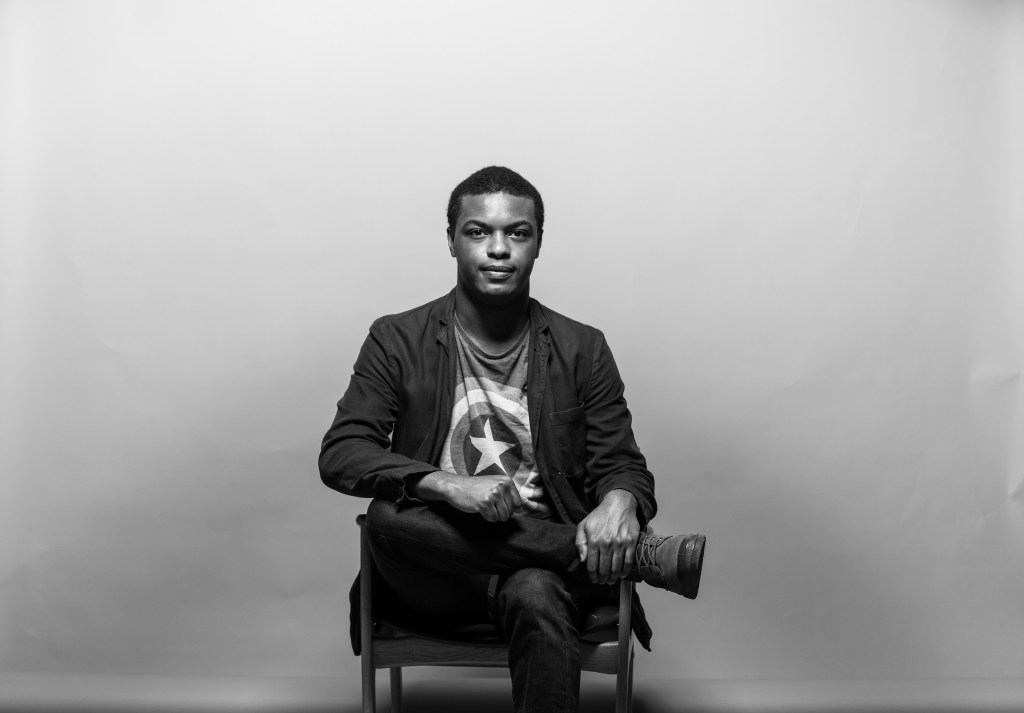
Hello everyone. My name is Tré and I will be one of the student success mentors [SSMs] starting from December 2021. Some of the now third-year criminology students reading this may remember me from when I attended some sessions within my role as a student union sabbatical officer (2019-2020) in their first year. However, as an SSM, I have previously been in some of the same situations many students have as I was also a student at the university (2016-2019).
The BTEC / A-Level-to-University pipeline can be challenging, but not impossible to navigate while the transition from school to university, is a social and cultural change that takes getting used to. Particularly the codes of acting and being so ingrained in university learning and working cultures.
I did my undergraduate degree in Creative Writing at Northampton. But I did my postgraduate degree in a completely different area of study — reading Race, Education, and Decolonial Thought within Leeds Beckett’s Centre for Race, Education, and Decoloniality. My academic interests are in race and social inequalities (but I previously used creative writing to discuss it), with my undergraduate dissertation being Permission to Speak: On Race, Identity, and Belonging. Furthermore, lots of my experience comes from the many talks I have done on Black history and race (including whiteness), further to the social investments I have in the local Northampton community where I grew up. Most recently, I am co-leading a Windrush project with a charity called NorFAMtoN built off an earlier largely Black community-led response to inequalities exasperated from issue relating to the COVID-19 pandemic (a project that is ongoing).
In 2018, I started using my knowledge on race to help organisations and that started with a theatre company called Now and Then Theatre where I was consultant on their play about Walter Tull. This took place in Buckingham and Northants. I became a student union sabbatical officer for Global Majority students in June 2019 where more questions about race occured. Leaving that role in July 2020, the overlap with the murder of George Floyd also saw more questions. And though I had done this sort of work prior to that summer, this time saw me and many of my colleagues being asked to do things where I have been freelancing as a race and Black history educator more consistently since September 2020.
Yet, I fell into criminology (as a sabbatical officer) when criminology programme leads @manosdaskalou and @paulaabowles contacted me to discuss my SU role, possibly in the July or August 2019. Unknown to me then, lots of the work I had done in the community including the types of poetry events I did (could be considered criminological). Over my year in the student union, I did think a lot about what my life would have been like had I done a creative writing-criminology joint honours degree rather than single honours creative writing. Anyhow, enough of whatifs. My life with the team since meeting Paula and Manos has not been the same, as they and Stephanie (@svr2727) convinced to go for my MA.
I didn’t study criminology in a formal capacity, but in terms of understanding crime — race and thus whiteness certainly have roles (which is my area). Criminology via many conversations with the team, pertinently interacting with Paula’s module on violence (and engaging with these students when I was sabb), showed me a context for my institutional experiences at university and elsewhere. Criminology simply added more layers to my understandings of the world. As an artist, I find criminology to be multidisciplinary informing some of my poetry as what happened when I went to Onley Prison in February 2020 showing criminology’s relevance in life beyond theory (as valuable as theory is).
As an artist, I try to approach as much as possible with an open-mind. Yet, as an academic as well, I also try my best to think how the issues we teach also have a human cost. For example, we must not only talk about violence as a purely academic matter. The decisions we make can have consequences. So, here then in your study time, I encourage you to think about the human cost of research (as there is both good and bad). Remember, there is no such thing as ‘being objective’ (there’s always a perspective or an agenda … see what I did there?). Debate with your lecturers, but more importantly debate with each other.
As an SSM, my role is about helping all students. Those that are just starting and also students that have been here for a while. I am here to help students that study at Northampton, including those who came straight from school all the way to those that came to university after a working career before going back to study. However, as an associate lecturer, I’m here specifically for criminology students.
My name is Tré and will be back at the university on a part-time basis starting from December 2021, and I look forward to meeting you all very soon! 😀
More on me here – https://linktr.ee/treventoured
Share this:


On doing a Masters degree in a year that felt like the last level of Jumanji
For the short time I have been writing on this blog (thanks @paulaabowles and @manosdaskalou for the first invite), I am certain I have said before that I never expected to go to university. At school, I was not particularly ‘academically gifted’ and was treated differently to the other children. Not only because I was a Black child in an almost homogenously white mass, but also because I was neurodivergent. Back then, I did not know terms like ‘neurodiversity’ or ‘disability‘ but I knew I was different because the teachers went out of the way to treat me differently (and not in the best way). It was only recently that I saw my school experience was intersectional, and how I was treated was traumatisingly ableist. At sixteen, I was forced to go to college to retake my GCSEs (or the equivalent), where I retook English and Maths while doing a BTEC Level 2 qualifiaction. Going on to do A-Levels at seventeen years old, I realised I did not exam well.
There, I saw I did well in coursework which I could do at home in an environment I was comfortable in, with time to mull things over and think. I also realised I did well in things I enjoyed. When it came to coursework, I almost sailed through it all, but exams that relied on memory tests … here, I struggled exponentially. Particularly as my dyspraxia impacts memory. As part of a longer thread on children’s education, Professor David Bowles tweeted
“Do you want kids to learn?
Here’s something we’ve discovered.
Kids learn things that matter to them, either because the knowledge and skills are “cool,” or because …
… they give the kids tools to liberate themselves and their communities.
Maintaining the status quo? Nope.”
@DavidOBowles (2020)
When people talk to me now, they have this belief that I have always been collected and together. And when people come to my sessions, or even came to see me when I was an SU sabbatical officer, they did not believe that I got into my undergraduate course (Creative Writing) via clearing. The fact I struggle (and still struggle) with exams is unbelievable to them. To them, I do not fit the picture (built on media-made stereotypes) of what is now called Special Educational Needs [SEN]. As a child, I had a Maths and English tutor in school (Mrs Thomas) and outside of school (JJ, who I’m still in contact with now … great human). It’s only now that I’m seeing that due to the institutionalisation of education, seeing students as individual learners is a challenge for many. One size does not fit all, and now I’m imagining that if autistic children, for example, were able to learn in the system via our special interests, how different things would be for those of us that learn in less conventional ways.
Doing my undergraduate degree, then graduating in July 2019 (mere months prior to the outbreak of COVID in March 2020), I am seeing I did well because I was in a discipline I liked. But more than that, because I was writing about things that mattered to me. The university’s creative writing course did not show me anything about Black British writing, so just as I recommend to all students I meet now (particularly those from historically excluded backgrounds), make two sets of notes: do your own reading as well as those your lecturer gives you. From late summer of 2019, I was in conversation with Criminology’s Stephanie Richards @svr2727 about masters programmes and she of course had all the solutions! Off the back of years of being interested in issues pertaining to racial inequalities and like-issues, I signed on to Leeds Beckett University’s MA in Race, Education, and Decolonial Thought.
Since then, my life has not been the same. Unknown at the point of signing up in the January/February of 2020 for the coming autumn, that we would be in intermittent lockdowns during my study time, I guess this worked out in the end. Yet, following Bowles’ points about learning, I was in an academic discipline that mattered to me (Critical Race/Whiteness Studies) and my final grades reflected the passion I have for these subjects and how courses like mine give students some of the tools to liberate themselves and their communities. My modules were in Research Methods; Decolonial Thought and Critical Race Theory; Race, Identity, and Culture in the Black Atlantic; Children’s Cultural Worlds (elective); Diverse Childhoods (elective), and Critical Whiteness Studies. They also offered Critical Ethnic Studies and Critical Discourses as electives. These modules (minus Research Methods) gave students free reign to write what they wanted as long as it tied into the topic in some way. e.g., in Children’s Cultural Worlds I wrote a postcolonial analysis of the classic C.S Lewis Narnia text The Horse and His Boy, with further comments on how the implementation of canonical texts on the English curriculum is not the problem, the issue is our gaze (later turning the essay into an online talk, which helped teachers inside and outside of my community).
The Coronavirus pandemic was stated to be ‘unprecedented’ but I would argue otherwise, as many generations before us all experienced pandemics. From the Plague to the Spanish Flu, there is a precedent. Yet, when disease has impacted countries in the Global South, countries like Britain have turned the other cheek. Ironically, it is also some of the countries in the Global South that have showed better preparation in fighting COVID-19. Doing my MA, the events of the last 18+ months are also things that lend themselves so appropriately to the course content. In discussions about colonialism and empire, this is not a conversation one can have without thinking about disease historically nor current climate change or capitalism. The nature of my masters was not only relevant to COVID, disproportionality, and others, but also the events in society following the Murder of George Floyd and the subsequent discourses around race equity/equality and anti-racism. One cannot pioneer anti-racism whilst ignoring the destructive nature of capitalism and how racial capitalism functions in our society.
Between September 2020 and September 2021, I did this degree online without setting foot in Leeds. Our lectures were pre-recorded and our seminars were on Microsoft Teams. There was something lost online, but the nature of the discussions was excellent. The fact I was the youngest in my cohort (25) was also welcome, so I was happy to learn from those often over ten years older than me, with many of them doing this course whilst also working in schools as teachers and senior leaders. Listening to their lives and stories was as sombre as they were enlightening. Teachers doing this degree whilst being treated ambominably in schools, we must consider how personal experience is also researchable (as I found doing an autoethnographic dissertation)

As someone that is neurodivergent, my ability to hyperfocus on subjects that interest me (even to the point where I forget to eat/sleep … quite typical of many neurodivergents I know), whilst previously was stigmatised in school, with Leeds it was actually encouraged. Not the not sleeping/eating part, but the critical analysis and taking those ideas further part. To overanalyse in my essays and take it that step further was a real boost for my confidence, to then be invited to make contributions to the primary education teacher training course as well. With lots of my colleagues being based in the North of England, it struck me when I also visited Manchester and Lancaster this year to meet two of my new friends, that there’s something in the northern air that quite agrees with me. It’s something that does not exist in the Midlands or the South. I cannot place it, but I want to inquire! My lockdown experience is very different to most students as my course was previously designed to be mixed-mode. Furthermore, my introverted nature means I can also be happy in my own space for long periods. Whilst my extroverted friends get their dopamine from being around others, those encounters when I do have them require me to be alone for long periods to get the same feelings.
What I do miss is the feeling of being on campus, while simultaneously being in a solitary corner of the library. However, our MA WhatsApp chat has bee invaluable, further to discourses on #AcademicTwitter. Whilst my undergrad often positioned lecturers as a bit more ‘us and them’ (almost like the schoolteacher-student relationship), my MA lecturers positioned themselves as mentors and more human who also love to tweet. Frequently, particularly Shona, would be tagging us in things useful to our interests which I still greatly enjoy. On my MA, I also got the opportunity to write a book chapter on empire, racism, corruption, and COVID-19 for an upcoming anthology (to be published by June 2022) in addition to be part of Leeds Beckett’s CRED paper series where I wrote a paper on how we can better teacher Black history as something that is multidisciplinary. Not looking at history through a tunnel.
In a year or nearly two years, that has felt like fourth level of Jumanji, my masters experience has been invaluable in keeping me grounded. Leeds Beckett gave me something that Northamptonshire (the place I grew up in) has not, and is still unable to give me, and it did so without even having to go there. I have still never been to Leeds, but hopefully I get to visit for graduation next year.
As this level of Jumanji continues, who knows what the future holds? Both COVID-19 and the reinterest in Black Lives Matter have shown us that society needs to be redesigned in a way that benefits the many not the few. The lockdowns have shown that those of us with disabilities were needlessly suffering under institutional violence from employers and education providers, and post-lockdown many employers are shifting back to those ableist ways of functioning. And doing my MA in one of the most interesting (yet bleak) years since 1919 is a reminder of what I am capable of. I just needed some coaxing into it!
Share this:


‘White Women, Race Matters’: The White Man’s Burden
This post in-part takes its name from a book by the late Whiteness Studies academic Ruth Frankenberg (1993) and is the final of three that will discuss Whiteness, women, and racism.
Chapter III: Your Problem but not Your Problem
Despite women’s investment in football, at least socially, in terms of Women’s Football (much better than the men’s game in my opinion), it was interesting to observe the reactions of White men that positioned themselves as progressives when I challenged the national response to racism in the game. When we realise that ‘football hooligans’ all have jobs across sector, I would bring people to consider this is not just a working-class issue, as football is a game that transcends socioeconomic lines. This post isn’t necessarily about the violence White women have commited against me but is certainly their problem, and they could have a deciding voice of how White men act at football matches. When we consider racial hiearchies, I am reminded of the gendered components of colonialism where White men are at the top of that hierachy followed by the White woman. In spite of White women’s complicity in those histories of racism (Ware, 1992), logic dictates that White women’s privilege will have some sway when White men act in hostility to people of colour. That said, still today I find White women all too happy to take on misogyny / patriarchy but not racism / White supremacy. In this blog, I will start with a Twitter encounter where I dared to say there isn’t a “racism-in-football-problem” but a more societal issue of White supremacy. Until we start thinking about White supremacy as a political system, just as women have done patriarchy (DeBeavoir, 1949; Friedan, 1963; Davis, 1981; hooks, 1991; Adichie, 2014) and others have done class (Marx and Engles, 1848; Chomsky, 1999; Tom Nicholas, 2020), we will never solve this racism issue.
When I challenged the concept of “racism in football” in July 2021, a local BBC journalist claimed I could make it both about ‘racism in football’ and in society. The problem with this is, dominant media discourses have already stitched it all up by relegating racism to specific spaces somewhat divorced from a global system of violence. At this time as well, I saw the term ‘football hooliganism’ being used as double talk for ‘working-class thuggery’. However, to understand how football got to where it is today, we need to know how football was not originally made by the working-class.
Much alike my favourite sport cricket (Tre Ventour Ed, 2021), football started as a sport for characteristically ‘English gentlemen’. It was made for the rich by the rich to really celebrate themselves. Their game by their rules. When the working-class started to advocate for players playing for money, in its day (so the late nineteenth century), it was thought controversial. Yet, the rich controlled the boards and they could afford to play for free, taking days off for matches. The proleterians could not. Here, then you see that it came down to money, where a game made by the wealthy for them and their friends was then changed forever by working people, no less than mill and factoryworkers.

Actions that society most associates with the working-class majority today – including public fights, vandalism, brawls, and riotting in Britain are not new phenomena but has a long history going back to even before 1900 uncoincidentally coinciding with the construction of London Metropolitan Police Service in 1829 (Storch, 1975). Following the signing of the Armistice in November 1918, for example, so-called ‘race riots’ took place in no fewer than nine port communities between January and August 1919 (Jenkinson, 1996: 92). However, media footage and pictures of British riots before the Second World War have rarely been seen by the public but “…individual memories of civil disorder [in those days were] surprisingly widespread” and when riotting did happen, “governments often denied they had, and censored the newsreel pictures” (Forbidden Britain). Historically speaking, these uprisings grew out of a response to state-sanctioned violence frequently mass unemployment and poverty. Under the threat of poverty, homelessness, or even death, groups will attack shops and other structures to acquire food where “the turbulence of the colliers is, of course, to be accounted for by something more elementary than politics: it was the instinctive reaction of virility to hunger” (Ashton and Sykes, 1967: 131). Yet, the male violence that occured at the England v Italy Euro finale football match in London July 2021 has a precedent going back to the days of Walter Tull where his biographer historian Phil Vasili writes:
“In 1919, working-class Britain was in a rebellious state. Whether the war created the mood of revolt among workers – sometimes taking a horribly distorted and misguided form as we saw with the race riots – or merely speeded up the process that had been years in fermentation, is not for debate here. The fact is it happened. Families, individuals, veterans were changed by the war, including Tull, his eagerness to enlist souring to a hatred for carnage.”
Vasili, 2010: 229
On the morning of the final, I saw evidence of local Northamptonians heading to the pubs to get their fill as early as 8AM before the game that evening at 8PM (@cllrjameshill). In London, however, White (let’s be honest of course dominantly heterosexual cisgendered) patriarchal violence, was in full swing on Leicester Square, described as a “fanzone for thousands of England fans” before even two o’clock. Furthermore, according to Hutchinson (1975), “riots, unruly behaviour, violence, assault and vandalism, appear to have been a well-established, but not necessarily dominant pattern of crowd behaviour at football matches, at least from the 1870s” (p11). Whilst football today has united people across racial and class lines, many Black men of my dad’s generation (born 1971) would not find themselves anywhere near a match when they were my age or even as teenagers purely for the fact that these crowds were frequently racist and the risk of violence was significant. Today, while racism in football is largely in response to the actions of White people against Black players, there is a further history of White racism against Black fans too.
As I do not doubt that there is racism in women’s football (there is racism at every level of society), I wonder why women’s sports (especially football) is not associated with violence. Heck, other men’s sports do not have these connotations attached. We do not see it in cricket, nor do we see it in rugby to these extremes or tennis. Looking at the conversations in what happened following the game, it seemed to me that people were trying so hard to divorce this male violence from the rest of society, as if it is only specific to football. I would argue this is Britain’s soul, an unfiltered and grandiose example of the gendered racial privilege that comes with being a White man in the UK. It is very easy to stigmatise the working-class in this instance and call them “thugs”, but when we know football unites across class divides, it would do us well to consider how lots of the perpetrators were also probably middle-class as well, with jobs that permeate every level of British society: from accounting to education to sports, unions and more. That while it is incredibly easy to scapegoat them as there are histories of working-class responding with riots against state violence (no less than sports riots), we must think about how for some reason, football in particular, turns lots of men feral.
I was talking to one family member who claimed this is where men get to claim their base instincts, that violence seems to come naturally. I would need to think more on this, but it must be said that many social settings condition violence out of us, from school to the workplace. Even so, that in schools violence is punished, many students (especially boys) being placed pupil referral units. Whilst society brutalises in many ways, the pugilistic scenes we are witness to at football matches is one that is considered unsavoury by most. Men gathering together at the football … does this flick a switch? In the late nineteenth century, polymath Gustave LeBon writes about what he called “the collective mind” (1896: 2) whilst another scholar later states “the natural crowd is the open crowd; there are no limits … it does not recognise houses, doors, or locks and those that shut themselves in are suspect” (Canetti, 1962: 16). Football matches may be an apt site to discuss what the psychology profession now calls ‘crowd theory’ which was further developed on by psychologist Neil Smelser analysing the American ‘race riots’ in the first half of the last century (1962: 253, 260-61).
In my last post, I talked about ‘Karen’ in relation to racist middle-aged White women that harrass Black people minding their business. Yet, one does not see White women congregating like this together in mass as instigators of violence, where if at all in my experience violence from White women has been more individualistic or covert. Though, if women friends/colleagues disagree and know more, I’m happy to be put right from their personal experience (and do more reading). Rioting, however, is frequently often hypermasculine (Gary Younge in: DDN, 2020) and so is the violence around football. The role of White women in racism can be more insidious but my encounter on Twitter with this White man comes after my many encounters with White men that think they know more than Black people about racism.
Both White men and women are complicit in White supremacy as aggressors and bystanders. To keep this on topic, every time a White woman watches a White man’s racism but stays silent, they are as bad as they are really showing how White supremacy is the symptom and racism is the problem.
Now, you have three entries. Have a think on them.
Reference
Adichie, C.N. (2014) We Should All Be Feminists. London: 4th Estate.
Ashton, T. S., and Sykes, J. (1967). The Coal Industry of the Eighteenth Century. 2nd ed. New York: A. M. Kelley.
Canetti, E. (1962) Crowds and Power. London: Gollancz.
Chomsky, N (1999) Profit over People. New York: Seven Story Press.
Davis, A. (1981) Women, Race, and Class. London: Penguin.
DeBeauvoir, S. (1949) The Second Sex. London: Vintage.
[DDN] Double Down News (2020) Black Lives Matter & The Question of Violence | Gary Younge. YouTube [online].
Forbidden Britain (1994) Riots Episode 3 [via YouTube]. London: BBC 2.
Frankenberg, R. (1993) White Women, Race Matters. MI: University Press.
Friedan, B (1963) The Feminine Mystique. London: Penguin.
hooks, b (1991) All About Love: New Vision. London: HarperCollins.
Hutchinson, J. (1975) Some aspects of football crowds before 1914. In. The Working Class. University of Sussex Conference Report.
Jenkinson, J (1996) The 1919 Riots. In: Panayi, P (ed) Racial Violence in Britain in the Nineteenth and Twentieth Centuries. Leicester: University Press, pp. 92-111.
Le Bon, G (1896) The Crowd: A Study of the Popular Mind. London: T. Fisher Unwin.
Marx, K and Engels, F. (1848/1967) The Communist Manifesto. London: Penguin.
Smelser, N. (1962/2011) Theories of Collective Behaviour. New Orleans, LA: Quid Pro.
Storch, R.D. (1975) The Plague of the Blue Locusts: Police Reform and Popular Resistance in Northern England, 1840–57. International Review of Social History, 20 (1), pp.61-90
Tom Nicholas (2020) Whiteness: WTF? White Privilege and the Invisible Race. YouTube.
Tre Ventour Ed. (2021) 22 Yards of Whiteness: ‘You Don’t Have to be Posh to be Privileged’. YouTube.
Vasili, P. (2010) Walter Tull, (1888-1918), Officer, Footballer: All the Guns in France Couldn’t Wake Me. London: Raw.
Ware, V. (1992/2015) Beyond the Pale: White Women, Racism, and History. London: Verso.
Share this:

‘White Women, Race Matters’: Fantasies of a White Nation
Chapter II: Moving Mad in these Streets
This post in-part takes its name from a book by the late Whiteness Studies academic Ruth Frankenberg (1993) and is the second of three that will discuss Whiteness, women, and racism.
If you grew up racialised outside of Whiteness in Britain or really any Anglo-European country, the chances are you will be asked “where are you from?” on a regular basis. After reading some poems on this very issue at a Northamptonshire arts and heritage festival, I was walking home only to be stopped in my tracks by a White woman probably in her late 40s / early 50s saying “people like you aren’t really British.” Whilst I have been asking myself similar questions, for a White person to do this so confidently is unsettling … they’re moving mad in these streets. In this blog post, I will discuss this racial micro-aggression, underpinned by racist epistemologies with us Black people viewed in this country as immigrant; interloper; Other, whilst simultaneously Whiteness being synonymous with “localness” (Brown, 2006). In this encounter just outside of Northampton, I was further reminded that to be Black and British in this country is to live in a perpetual state of “double consciousness” (DuBois, 1903: 1).
Rather than identify with “Black Britishness”, (a pigeon-hole in my opinion), the term ‘afropean’ (Philips, 1987; Pitts, 2020) feels much more appropriate and fluid. However, the term Karen is one I don’t particular enjoy, but the woman in question could be described as such. In using this label, I am trying to create a frame of reference for you (the audience), not allow the person in question to escape scrutiny. This woman was a Jane Bloggs, I had never seen her before and she felt entitled enough to stop me in the street and continually criticise my right to belong. For those of you local to Northampton, I was walking between that stretch of path on Wellingborough Road, between Weston Favell Centre and Aldi. This encounter reminded me of my place in Britain, where ‘British-Asianness’ (Shukla, 2016; Riz Ahmed, 2019; Shukla, 2021) and ‘Black Britishness’ have frequently been difficult to define (Rich 1986, Gilroy, 1987; Yeboah, 1988; Young, 1995; Christian, 2008; Olusoga, 2016; Hirsch, 2017, Ventour, 2020). Even amongst White subjects themselves, what it means to be British has often been a question of challenge (Fox, 2014), and when I articulated that both my parents were born in the UK (Lichfield City and Northampton), she was visiblely upset and put-out.
The term ‘Karen’ comes from a name that was frequent among middle-aged women who were born between 1957 and 1966 with its peak in 1965 (Social Security Data). The name is also the Danish rendition of Katherine associated with the Greek for pure. Yet, the meaning of the word has undergone pejoration. In sociolinguistics, ‘pejoration’ is when a positive word becomes negative over time. ‘Karen’ as it has come to be known today has uses as early as September 2016 and as we know now, Karen has become synonymous with racist middle-aged White women, often associated with their harrassment of Black people just minding their business. On my way home, this harrassment found me walking while Black. For others, it has occured shopping while Black; birdwatching while Black; jogging while Black; listening to music in their house while Black, and more. The encounters we know about are generally examples that make news headlines but there are far more examples that do not make the national press, because they are pervasive.
Writing my MA dissertation on the 1919 Race Riots, I saw even in Edwardian Britain the nationality and citizenship rights of Black people in this country were contested (Belchem, 2014: 56), both those born British subjects in parts of the British Empire and those that were in fact born and raised here (May and Cohen, 1974), in spite of their legal status under the 1914 British Nationality and Aliens Act. Today, we are asked “where you from?” underpinned by historical racist epistemologies that defined Englishness as White (Dabiri, 2021). However, even in the image of so-called multiculturalism in the UK, the Britishness of Black and Brown people still has qualifiers attached. Watching ‘Homecoming’, the finale of David Olusoga’s popular series Black and British, the historian claims “… there is one barrier that confronted the Windrush Generation that we have largely overcome, and that’s because there are few people these days who question the idea that it is possible to be both Black and British” (54:46-55:00).
My experiences as a child and as an adult still tell me that Black Britishness is an increasingly contentious question, but even more testing … to be Black and English. In August 2021, MP David Lammy defended his right to call himself Black English from a caller into his LBC show. Whilst he was later met with lots of support online, what is interesting was the numbers of Black people on Twitter that challenged him on his right to be Black and English. If English is a nationality, better yet, a “civic identity”, nobody should be argueing someone’s right to choose where they belong. Furthermore, David Olusoga’s comments in ‘Homecoming’ seem blinkered and out of touch with people on the ground that still experience this epistemic racism on a daily basis. Especially my generation navigating the superhighways of identity where as one scholar writes, “The BBC had a whole series dedicated to ‘Black Britishness’ [Olusoga’s], which essentially amounted to propaganda for the idea that we are now accepted as part of the nation …” (Andrews, 2019: xiii).
My encounter with the woman on the street is one more example of racial privilege knowing full well that her Whiteness protected her from repercussions. Furthermore, whilst the ‘Karen’ meme started as a commentary on racial privilege (Williams, 2020) and White women in histories of racism (Ware, 1992), it’s a shame that is has been co-opted by people as a catch-all term for any woman that happens to annoy them. I think my encounter is certainly definable under the remits of the original Karen mythology, but there are those out there who would also argue my thoughts as misogynistic, namely because of what the mythology has become. In the UK, this mythology is “more proof the internet speaks American” (Lewis, 2020). And how Black Lives Matter is still spoken about is a reminder of the divides between anti-Blackness in the US and anti-Blackness in Britain. Yet, discourses on “Karen spotting” online also speak an American voice even though equivalents exist in Britain – especially in schools, colleges / universities and healthcare.
Those interested in the cultures of Black and Brown people; it would be more useful to ask about heritage over the racist “where are you from?”, as for me at least the latter is underpinned by racist binaries that say POCs cannot relate to ‘Anglo-Europeanness’, whilst the former speaks to the fluidity of an individual’s relationship with Home.
References
Andrews, K (2019) Back to Black: Retelling Black Radicalism for the 21st Century. London: ZED Books.
Belchem, J (2014) Before the Windrush: Race Relations in 20th Century Liverpool. Liverpool: University Press.
Black and British (2016) Episode 4: Homecoming [BBC iPlayer]. London: BBC 2.
Brown, J.N. (2006) Dropping Anchor Setting Sail: Geographies of Race in Black Liverpool. NJ: Princeton University Press.
Christian, M. (2008) The Fletcher Report 1930: A Historical Case Study of Contested Black Mixed Heritage Britishness. Journal of HIstorical Sociology, 21(2-3), pp. 213-241.
Dabiri, E. (2021) What White People Can Do Next: From Allyship to Coalition. London: Penguin.
DuBois, W.E.B. (1903) The Souls of Black Folk. New York: Dover Thrift.
Fox, K. (2014) Watching the English: the hidden rules of English behaviour. London: Hodder & Stoughton.
Frankenberg, R. (1993) White Women, Race Matters: The Social Construction of Whiteness. MI: UoM Press.
Gilroy, P. (1987) There Ain’t No Black in the Union Jack. London: Routledge.
Hirsch, A. (2017) Brit(ish). London: Jonathan Cape.
Lewis, H. (2020) The Mythology of Karen. The Atlantic.
May, R and Cohen, R. (1974) The Interaction Between Race and Colonialism: A Case Study of the Liverpool Race Riots of 1919. Race and Class. 16(2), pp. 111-126.
Olusoga, D. (2017) Black and British: A Forgotten History. London: Pan.
Philips, C. (1987) The European Tribe. London: Faber & Faber.
Pitts, J. (2020) Afropean: Notes from Black Europe. London: Penguin.
Rich, P.B. (1986) Race and Empire in British Politics, Cambridge: Cambridge University.
Riz Ahmed (2019) Where You From? YouTube.
Shukla, N. (2016) The Good Immigrant. London: Unbound
— (2021). Brown Baby: A Memoir of Race, Family, and Home. London: Pan.
Social Security. Top 5 Names in Each of the Last 100 Years.
Ventour, T. (2020) Where Are You From? (For ‘Effing Swings & Roundabouts’ by Lauren D’Alessandro-Heath). Medium.
Ware, V. (1992) Beyond the Pale: White Women, Racism and History. London: Verso.
Williams, A. (2020) Black Memes Matter: #LivingWhileBlack With Becky and Karen. Social Media + Society. 6(4), pp. 1-14.
Yeboah, S.K. (1988) The Ideology of Racism, London: Hansib.
Young, R.J.C. (1995) Colonial Desire: Hybridity in Theory, Culture and Race, London: Routledge.

 Thoughts from the criminology team