
Home » Articles posted by manosdaskalou (Page 4)
Author Archives: manosdaskalou

Days to mark on our calendar!

It is common practice to have a day in the year to commemorate something. In fact, we have months that seemed to be themed with specific events. I look at the diary at the days/months which are full of causes, some incredibly important, others commemorating and then there are those more trivial. Days in a year to make a mark to remind us of things. An anniversary of events that brings something back to a collective consciousness. Once the day/month is over, we busily prepare for the next event, month and somehow between the months and days, I cannot help but wonder; what is left after the day/month?
When International Women’s Day was originally established, at the beginning of the 20th century, socialism was a driving political movement and women’s suffrage was one of the main social issues; since then other issues have been added whilst the main issue of equality remains on the cards. Has women’s movement advanced through the commemoration of International Women’s Day? Debatable if it had an impact. Originally the day was a call for strikes and the mobilisation of women workers. Today it is a day in the calendar that allows politicians to utter platitudes about how important the day is, and of course how much we respect and love women these days! It is hardly a representation of what it was or set out to be. Like so many, numerous other events are marked on our calendar, but wehave lost sight of what they were originally set out to be.
Consider the importance of a day to commemorate the Nazi Holocaust. Never again! The promise that such a mass crime should never happen; the recognition that genocide has no place in our respective societies. Since that genocide, numerous others have taken place, not to mention the mass murder, violent relocations, and the massacres and ethnic cleanings that have happened since. Somehow the “never again”, to people in Biafra, East Timor, Rwanda, Darfur, former Yugoslavia, Afghanistan, Iraq, Syria, Libya, and many other places simply sounds ironic! We commemorate the day, but we do not honour the spirit of that day.
In this mixture of days and months we also have days for mothers, fathers, lovers, friends, hugs, happiness, and many other national and international events. To commemorate or to offer a moment of reflection. Somehow the reflection is lost and for some of these days, millions of people are required to purchase something to demonstrate that they care or worst still, to make something! How many mothers worldwide have had to admire badly made pottery or badly drawn cards from kids who wanted to say “I love you” on one specific day. Leaves me to wonder what they would want to say on all other days!
So, is it better to forget them? Get rid of these days and if anyone suggests the creation of another, we feed them to crocodiles? It would have been easy from one point to end them all. Social issues are never easily resolved so we can recognise that a day or a month does not resolve them! It raises awareness but it’s not the solution. In the old days when the Olympics started there was a call for truce. They did not allow for the games to take place whilst a war was happening. Tokenism? Perhaps, but also the recognition that for events to have any credibility they need to go beyond words; they must have actions associated with them. What if those actions go further than the day/month of the commemoration? Imagine if we respect and honour women, not only on IWD but every day, imagine if we treat people with the respect, they deserve beyond BHM, LGBTQ+ months? Maybe it is difficult but if we recognise it to be right, we ought to try. We know that the Holocaust was a bad thing so lets not just remember it…lets avoid it from happening …Never again!
Share this:


Merry Christmas

“Merry Christmas”, a seasonal greeting dating back in 1534 when Bishop John Fisher was the first on record to write it. Since then across the English-speaking world, Merry Christmas became the festive greeting to mark the winter festive season. Although it marks a single day, the greeting relates to an entire season from Christmas Eve to the 12th night (eve of the epiphany). The season simulates the process of leading to the birth, circumcision and the baptism of Jesus. Like all births, there is an essential joy in the process, which is why in the middle of it there is the calendar change of the year, to mark more clearly the need for renewal. At the darkest time of the year, for the Northern hemisphere the anticipation of life and lights to come soon. Baby Jesus becomes an image of piety immortalised in numerous mangers in cities around the world.
The meaning is primarily religious dating back to when faith was the main compass of moral judgment. In fact, the celebrations were the last remnants of the old religion before the Romans established Christianity as the main faith. The new religion brought some changes, but it retained the role of moral authority. What is right and wrong, fair and unfair, true and false, all these questions were identified by men of faith who guided people across life’s dilemmas. There is some simplicity in life that very difficult decisions can be referred to a superior authority, especially when people question their way of living and the social injustice they experience. A good, faithful person need not to worry about these things, as the greater the suffering in this life, the greater the happiness in the afterlife. Marx in his introduction to Hegel’s philosophy regarding religion said, “Die Religion ist das Opium des Volkes”, or religion is the opium of the people. His statement was taken out of context and massively misquoted when the main thrust of his point was how religion could absorb social discontent and provide some contentment.
Faith has a level of sternness and glumness as the requirement to maintain a righteous life is difficult. Life is limited by its own existence, and religion, in recognition of the sacrifices required, offers occasional moments for people to indulge and embrace a little bit of happiness. When religious doctrine forgot happiness, people became demoralised and rebellious. A lesson learned by those dour looking puritans who banned dancing and singing at their own peril! Ironically the need to maintain a virtuous life was reserved primarily for those who were oppressed, the enslaved, the poor, the women, many others deemed to have no hope in this life. The ones who lived a privileged life had to respond to a different set of lesser moral rules.
People, of course, know that they live in an unjust society regardless of the time; whether it is an absolute monarchy or a representative republic. Regardless of the regime, religion was there to offer people solace in despair and destitution with the hope of a better afterlife. Even in prisons the charitable wealthy will offer a few ounces of meat and grain for the prisoners to have at least a festive meal on Christmas Day. Traditionally, employers will offer a festive bonus so that employees can get a goose for the festive meal, leaving those who didn’t to be visited by the ghosts of their own greed, as Dickens tells us in a Christmas carol. At that point, Dickens concerned with dire working conditions and the oppression of the working classes subverts the message to a social one.
By the time we move to the age of discovery, we witness the way knowledge conflicts with faith and starts to question the existence of afterlife…but still we say Merry Christmas! There is a recognition that the message now is more humanist, social and even family focused rather than a reaffirmation of faith. So, the greeting may have remained the same, but it could symbolise something quite different. If that is the case, then our greeting today should mean, the need to embrace humanity to accept those around us unconditionally, work and live in the world fighting injustices around. “Merry Christmas” and Speak up to injustices. Rulers and managers come and go; their oppression, madness and tyranny are temporary but people’s convictions, collectivity and fortitude remain resolute.
Christmas is meant to be a happy time full of joy, wonder and gifts. Lights in the streets, cheerful music in the shops, a lot of good food and plenty of gifts. This is at least the “official” view; which has grown to become such an oppressive event for those who do not share this experience. There are people who this festive season live alone, and their social isolation will become even greater. There are those who live in abusive relationships. There are children who instead of gifts will receive abuse. There are people locked up feeling despair; traditionally in prisons suicide rates go rocket high at the festive season. There are those who live in such conditions that even a meal is a luxury that they cannot afford every day. There are who live without a shelter in cold and inhuman conditions. These are people to whom festivities come as a slap in the face, in some cases even literal, to underline the continuous unfairness of their situation.
Most of us may have read “the little match girl” as kids. A story that let us know of the complete desperation of those people living in poverty. A child, like the more than a million children every year that die hoping until the very end. The irony is that for many millions of people around the world conditions have not changed since the original publication of the story back in mid-19th century. During this Christmas, there will be a child in a hospital bed, a child with a family of refugees crossing at sea, or a child working in the most inhuman conditions. Millions of children whose only wish is not a gift but life. The unfairness of these conditions makes it clear that “Merry Christmas” is not enough of a greeting. So, either we need to rebrand the wish or change its meaning!
The Criminology Team would like to wish “Social Justice” for all; our colleagues who fight for the future, our students who hope for a better life, our community that wishes for a better tomorrow, our world who deals with the challenges of the environment and the pandemic. Diogenes the Cynic used to carry a lantern around in search of humans; we hope that this winter you have the opportunity (unlike Diogenes) to find another person and spend some pleasant moments together.
Share this:


#CriminologyBookClub: Dying in Brighton
As you know by now, a small group of us decided the best way to thrive in lockdown was to seek solace in reading and talking about books. Hence the creation of #CriminologyBookClub! Building on on what has quickly become standard practice, we’ve decided to continue with all eight bloggers contributing! This title was the second chosen by @manosdaskalou and is our 14th book. Read on to find out what we thought….
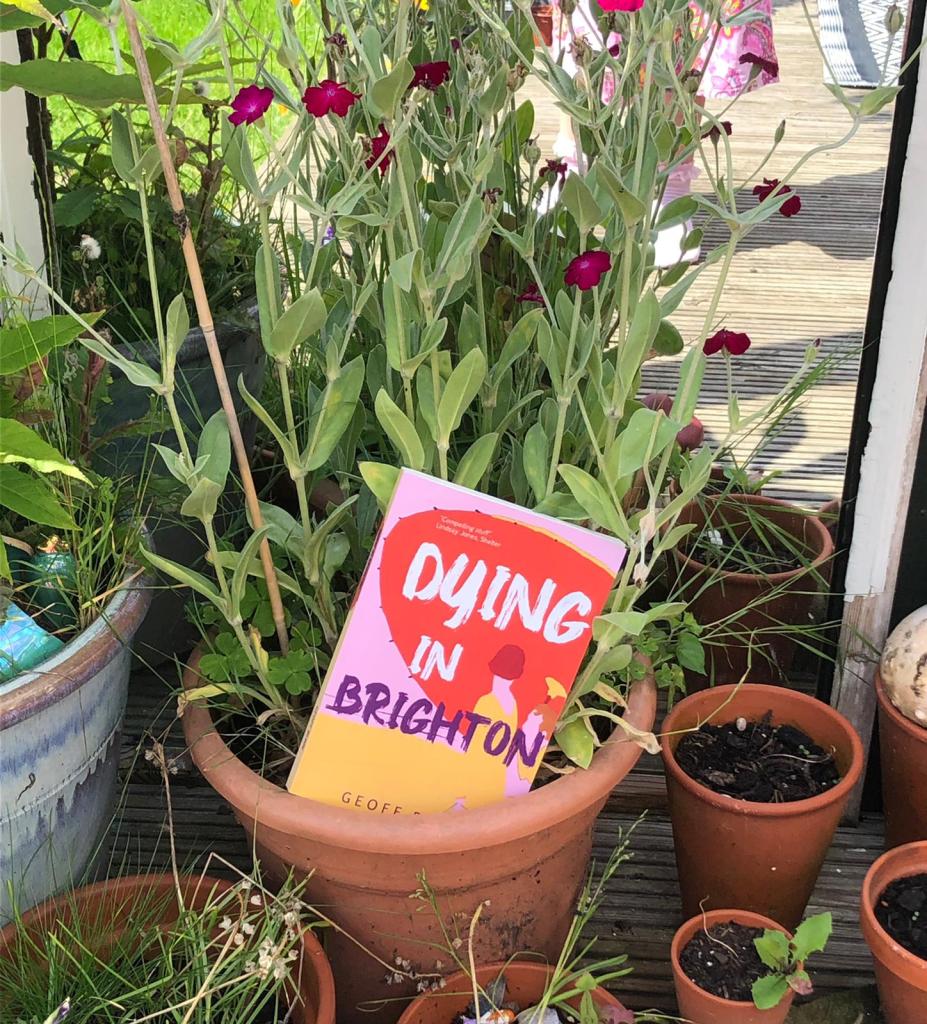
I have no profound objection to self-published books but have read only one other. The rationale for reading the first one was to proof-read/copy edit for the author. That can’t really be called reading, because you miss the story by studying the text so closely. However, I digress. The blurb for this book sounded fascinating, individual narratives heading toward one place: Brighton. Unfortunately, whilst the idea for the book was clever, the writing was overly descriptive and at times, turgid. There is no space for the reader to imagine the characters or the places, everything is told in minute detail. There is a clear attempt to be inclusive with the choice of characters, but they are largely one-dimensional and lack authenticity. The final character talks about his supposed lack of representation as a white man in Brighton (with a white population of 90%) and at that point, I lost what little interest remained. In feminist circles, the question “what would a mediocre white man do?” is prevalent, a possible response could be; write this book. The only positive I have to offer is the support offered by sales to Shelter.
@paulaabowles
The format and style of the book was unlike anything I had read before: and I really liked it. The characters were full of life: a life riddled with inequalities, harm and pain. Unlike other reads where I have failed to feel anything for the characters (or anything other than a serious dislike), Dying in Brighton evoked a number of emotions from myself towards the people in the book. However these emotions were left in a sort of vacuum, with myself feeling very ‘meh’ at the end of the book. I was disappointed with the final chapter. Whilst I can appreciate the ending and the manner in which it is told, I did not like it. I wanted to know more about how Akeem, Nicola, Wasim, Lori and Paul got to the end they got to. Considering the ‘end result’ and my emotions from the previous chapters, I feel I should have had a more powerful response to the end: but I did not. The short snippets were not enough for me: and I feel that the last chapter does not do their stories or their lives justice. Despite this, I would recommend!
@jesjames50
The title Dying in Brighton does not leave much to the imagination. I am glad that the purchase of this book supports a charity. Unfortunately, I found this book to be problematic. I did not understand his selection of characters or how their stories linked. The book reads as though a heterosexual white man who is not disabled is congratulating the white men characters within the book for being friends with people who are migrants or LGBT. There is even a point where a character feels ‘underrepresented’ as a white man…I skimmed the book as I am sick of hearing similar to this in reality.
@haleysread
This is a book that definitely divided the book club and I have to say the comments were by far more negative than positive. For my part, I found the narrative interesting in a strange sort of way. I didn’t find myself labouring on the description and attributes of the characters but rather took in an overall sense of ordinary people that were troubled and in trouble for some reason or another and therefore found themselves gravitating to Brighton; in fairness they could have gone anywhere. The book didn’t take long to read, and the narrative ends rather abruptly but I think that is probably the point. The book left me with a sense of sadness, and it reminded me that homeless people are real people with real lives and yet are very often invisible in our society. Would I read something from the same author again, probably not? Would I recommend the book, probably not, but it did hit a mark somewhere along the line?
@5teveh
This book was a very quick read. Each chapter presented a very stereotypical view of a member of every marginalised group you can think of – a refugee, a trans woman, a troubled teenage girl. The book ended with a chapter about a rich white man with houses all over the world, finding himself feeling like he wasn’t represented. It turns out – spoiler alert – that all the marginalised people went to Brighton, became homeless and died. At the end a woman was selling craftwork with each of the dead, marginalised homeless person’s face. Now I can see how, to a critical criminologist, all this is problematic to say the least. However, the book carried a message that homeless people are invisible. People walk past them every day without a second glance. The author also donated profits of the book to Shelter so it was for a good cause. So, although the book was heavily criticised during our discussion, for people in many walks of life I’d like to think the book would quite literally open their eyes and say hello to a person living on the streets.
@amycortvriend
This book centres around 5 different characters and their life experiences and choices that lead them to Brighton. When I first read the blurb, I assumed this book would take me on a thought-provoking journey about individuals that could be seen as outsiders within society, and how their stories are interwoven. What was thought provoking for me was how the representation of individuals can be so wrong. Throughout the book I was distracted by the problematic ways in which the characters were portrayed. I didn’t like the hyper sexualisation of Lori, I felt like this was an attempt to explore transgender issues without any understanding of transgender issues… it was tasteless and done from a male gaze. I also didn’t like the lack of context and understanding of refugees, this exploration was very tone deaf and seemed informed by how the ‘Western world’ views refugees. Usually when reading a book I have some emotion to the characters, however I felt far removed from all the characters and their stories. At the end of the book I also felt like the stories of the five individuals were rushed, there was no back story to why or how they had died in Brighton just that they were dead. I don’t know what angle the author was going for but for me the ending fell flat.
@svr2727
This book sounded very promising and I usually really enjoy short stories about very different characters and their experiences and how they converge but this book was disappointing in so many ways. Obviously being self-published meant that it wasn’t as polished as it could’ve been and I find little mistakes to spelling and punctuation really distracting from a story. I wish this was my only complaint! The characters were badly written caricatures – you got the sense that the author had never spent any time with anyone from those backgrounds and that perhaps he wasn’t the right person to be telling these stories. The most authentic chapter of the book was the final one where the narrator (a successful white man) feels that he isn’t represented! Easily the worst book I’ve ever read.
@saffrongarside
This is an anthology of different stories of people in very adverse circumstances all of whom are heading to Brighton. In most cases it is not clear why they are heading that way and what they hope from their move there. The short stories are independent from each other and there is no obvious connection between them. Each story explores a different character faced with different issues from abuse, sexuality and substance use. It sends out a signal of some of the social vulnerabilities people are exposed; this however is done as a matter of fact not exploring the social dimensions of the situation. The end brings the stories together but for me this was unsatisfactory. This book has a great idea, an interesting layout but its execution does not meet the goal. The stories are interesting but some of them feel a bit rushed; more character development would have allowed the reader to get closer to the situation and the social issues the author wants to alert people to. As I read it, I thought that some of the stories read more like vignettes that we use in exercises or training for making people aware of certain problems. In terms of literary merit, these are not quite there.
@manosdaskalou

Share this:


Prison education: why it matters?

Five year ago, Dame Sally Coates released an independent report on prison education. Recently the Chief Inspector for Ofsted, Amanda Spielman and The HM Inspectorate of Prisons, Charlie Taylor, made a joint statement reflecting on that report. Their reflections are critical on the lack of implementation of the original report, but also of the difficulties of managing education in prison especially at a time of a global pandemic. The lack of developing meaningful educational provision and delivering remote teaching led to many prisoners without sufficient opportunity to engage with learning.
In a situation of crisis such as the global pandemic one must wonder if this is an issue that can be left to one side for now, to be reviewed at a later stage. At the University of Northampton, as an educational institution we are passionate about learning opportunities for all including those incarcerated. We have already developed an educational partnership with a local prison, and we are committed to offer Higher Education to prisoners. Apart from the educational, I would add that there is a profound criminological approach to this issue. Firstly, I would like to separate what Dame Coates refers to as education, which is focused on the basic skills and training as opposed to a university’s mandate for education designed to explore more advanced ideas.
The main point to both however is the necessity for education for those incarcerated and why it should be offered or not. In everyday conversations, people accept that “bad” people go to prison. They have done something so horrible that it has crossed the custody threshold and therefore, society sends them to jail. This is not a simple game of Monopoly, but an entire criminal justice process that explores evidence and decides to take away their freedom. This is the highest punishment our society can bestow on a person found guilty of serious crimes. For many people this is appropriate and the punishment a fitting end to criminality. In criminology however we recognise that criminality is socially constructed and those who end up in prisons may be only but a specific section of those deemed “deviant” in our society. The combination of wrongdoing and socioeconomic situations dictate if a person is more or less likely to go to prison. This indicates that prison is not a punishment for all bad people, but some. Dame Coates for example recognises the overrepresentation of particular ethnic minorities in the prison system.
This raises the first criminological issue regarding education, and it relates to fairness and access to education. We sometimes tend to forget that education is not a privilege but a fundamental human right. Sometimes people forget that we live in a society that requires a level of educational sophistication that people with below basic levels of literacy and numeracy will struggle. From online applications to job hunting or even banking, the internet has become an environment that has no place for the illiterate. Consider those who have been in prison since the late 1990s and were released in the late 2010s. People who entered the prison before the advancement of e-commerce and smart phones suddenly released to a world that feels like it is out of a sci-fi movie.
The second criminological issue is to give all people, regardless of their crimes, the opportunity to change. The opportunity of people to change, is always incumbent on their ability to change which in turn is dependent on their circumstances. Education, among other things, requires the commitment of the learner to engage with the learning process. For those in prison, education can offer an opportunity to gain some insight that their environment or personal circumstances have denied them.
The final criminological issue is the prison itself. What do we want people to do in them? If prison is to become a human storage facility, then it will do nothing more than to pause a person’s life until they are to be released. When they come out the process of decarceration is long and difficult. People struggle to cope and the return to prison becomes a process known as “revolving doors”. This prison system helps no one and does nothing to resolve criminality. A prison that attempts to help the prisoners by offering them the tools to learn, helps with the process of deinstitutionalisation. The prisoner is informed and aware of the society they are to re-join and prepares accordingly. This is something that should work in theory, but we are nowhere there yet. If anything, it is far from it, as read in Spielman and Taylor’s recent commentary. Their observations identify poor quality education that is delivered in unacceptable conditions. This is the crux of the matter, the institution is not really delivering what it claims that is does. The side-effect of such as approach is the missed opportunity to use the institution as a place of reform and change.
Of course, in criminological discourse the focus is on an abolitionist agenda that sees beyond the institution to a society less punitive that offers opportunities to all its citizens without discrimination or prejudice. This is perhaps a different topic of conversation. At this stage, one thing is for sure; education may not rehabilitate but it can allow people to self-improve and that is a process that needs to be embraced.
References
Coates, S. (2016), Unlocking Potential: A review of education in prisons, https://www.gov.uk/government/publications/unlocking-potential-a-review-of-education-in-prison
Spielman, A. and Taylor, C. (2021), Launching our Prison Education Review, https://www.gov.uk/government/speeches/launching-our-prison-education-review
Originally published here
Share this:


The crime of war

a depiction of Troy
Recently after yet another military campaign coming to an end, social media lit all over with opinions about what should and should not have been done as military and civilians are moving out. Who was at fault, and where lies the responsibility with. There are those who see the problem as a matter of logistics something here and now and those who explore the history of conflict and try to explain it. Either side however does not note perhaps the most significant issue; that the continuation of wars and the maintenance of conflict around the world is not a failure of politics, but an international crime that is largely neglected. For context, lets explore this conflict’s origin; 20 years ago one of the wealthiest countries on the planet declared war to one of the poorest; the military operations carried the code name “Enduring Freedom”! perhaps irony is lost on those in positions of power. The war was declared as part of a wider foreign policy by the wealthy country (and its allies) on what was called the “war on terror”. It ostensibly aimed to curtail, and eventually defeat, extremist groups around the world from using violence and oppressing people. Yes, that is right, they used war in order to stop others from using violence.
In criminology, when we talk about violence we have a number of different ways of exploring it; institutional vs interpersonal or from instrumental to reactive. In all situations we anticipate that violence facilitates more violence, and in that way, those experiencing it become trapped in a loop, that when repeated becomes an inescapable reality. War is the king of violence. It uses both proactive and emotional responses that keep combatants locked in a continuous struggle until one of them surrenders. The victory attached to war and the incumbent heroism that it breeds make the violence more destructive. After all through a millennia of warfare humans have perfected the art of war. Who would have thought that Sun Tzu’s principles on using chariots and secret agents would be replaced with stealth bombers and satellites? Clearly war has evolved but not its destructive nature. The aftermath of a war carries numerous challenges. The most significant is the recognition that in all disputes violence has the last word. As we have seen from endless conflicts around the world the transition from war to peace is not as simple as the signing of a treaty. People take longer to adjust, and they carry the effects of war with them even in peace time.
In a war the causes and the motives of a war are different and anyone who studied history at school can attest to these differences. It is a useful tool in the study of war because it breaks down what has been claimed, what was expected, and what was the real reason people engaged in bloody conflict. The violence of war is different kind of violence one that takes individual disputes out and turns people into tribes. When a country prepares for war the patriotic rhetoric is promoted, the army becomes heroic and their engagement with the war an act of duty. This will keep the soldiers engaged and willing to use their weapons even on people that they do not know or have any personal disputes with. Among wealthy countries that can declare wars thousands of miles away this patriotic fervour becomes even more significant because you have to justify to your troops why they have to go so far away to fight. In the service of the war effort, language becomes an accomplice. For example they refrain from using words like murder (which is the unlawful killing of a person) to casualties; instead of talking about people it is replaced with combatants and non-combatants, excessive violence (or even torture) is renamed as an escalation of the situation. Maybe the worst of all is the way the aftermath of the war is reflected. In the US after the war in Vietnam there was a general opposition to war. Even some of the media claimed “never again” but 10 year after its end Hollywood was making movies glorifying the war and retelling a different rendition of events.
Of course the obvious criminological question to be asked is “why is war still permitted to happen”? The end of the second world war saw the formation of the United Nations and principles on Human Rights that should block any attempt for individual countries to go to war. This however has not happened. There are several reasons for that; the industry of war. Almost all developed countries in the world have a military industry that produces weapons. As an industry it is one of the highest grossing; Selling and buying arms is definitely big business. The UK for example spends more for its defence than it spends for the environment or for education. War is binary there is a victor and the defeated. If a politician banks their political fortunes on being victorious, engaging with wars will ensure their name to be carved in statues around cities and towns. During the war people do not question the social issues; during the first world war for example the suffragettes movement went on a pause and even (partly) threw itself behind the war effort.
What about the people who fight or live under war? There lies the biggest crime of all. The victimisation of thousands or even millions of people. The civilian population becomes accustomed to one of the most extreme forms of violence. I remember my grandmother’s tales from the Nazi occupation; seeing dead people floating in the nearby river on her way to collect coal in the morning. The absorption of this kind of violence can increase people’s tolerance for other forms of violence. In fact, in some parts of the world where young people were born and raised in war find it difficult to accept any peaceful resolution. Simply put they have not got the skills for peace. For societies inflicted with war, violence becomes currency and an instrument ready to be used. Seeing drawings of refugee children about their home, family and travel, it is very clear the imprint war leaves behind. A torched house in a child’s painting is what is etched in their mind, a trauma that will be with them for ever. Unfortunately no child’s painting will become a marble statue or receive the honours, the politicians and field marshals will. In 9/11 we witnessed people jumping from buildings because a place crashed into them; in the airport in Kabul we saw people falling from the planes because they were afraid to stay in the country. Seems this crime has come full circle.
Share this:


Do we have to care?

In recently published The end-to-end rape review report on findings and actions the responsible minister admitted that “victims of rape [are] being failed”. This stark admission is based on data that indicates that the current situation on dealing with rape is far worst than 5 years ago. The ministers are “ashamed” of the data but luckily in their report they offer some suggestions on how to improve things; what to do to bring the conviction rates to the 2016 level and to move more cases forward for trial, leading to successful convictions. At that point, the report presents the Criminal Justice System [CJS] as a singular entity that needs to address the issue collectively. This, in part, is a fair assessment although it ignores the cultural differences of the constituent parts of the system. Nonetheless, the government has identified a problem, commissioned a report and has a clear “ambitious” plan of how to address it.
The report indeed presents some interesting findings and I urge people to review it whenever they can (https://www.gov.uk/government/publications/end-to-end-rape-review-report-on-findings-and-actions). We know for example already that the number of cases that went into prosecution were low; in the last years this has become even lower. That despite the prevalence rate remaining more or less the same. Victims report that they are treated poorly, not believed arguing that the investigative model needs changing. No wonder the ministers appear apologetic of the situation. A headline crime category that is likely to cause an uproar and whilst thinking of the political fallout they come out in support of the victims! Who wouldn’t? Supporting a victim of crime, any crime is one of the main objectives of the CJS; once they have handed out retribution and prioritised on making an example of specific crimes and focusing on particular criminals, then their focus is on the victims! The findings were expected, but even so when reading about the higher vulnerability of disabled women to rape and sexual abuse, underscores the systemic failure to deal with this crime. It does not read like care!
If I was an agitator, I would say that a criminal committing rape has less chance (statistically) to be convicted than someone who commits theft; but then I will be making a criminological cardinal sin; conflating criminalities and confusing the data. In our profession we deal with data all the time. Many of them come in the form of metrics looking at the way different crimes are reported, recorded etc. We also know that context gives a perspective to these data. Numbers may look the same, but that is arguably part of the problem. It does not take into account the source of the data and their circumstances. Not all numbers are the same and most importantly they do not measure similar trends. The way the success rates are to be measured is not dissimilar from before and without owning a magic ball, it can be foreseen that rape will remain as is. Of course, the metrics may change colour to signal improvement, but that will not alter the fundamental issues.
On the day, one may have their car broken into, to report the incident can be a requirement from their insurance if they are to cover the cost. On the day, the said person got raped by a current/former partner the matter is not about insurance. These acts are not similar and to treat criminality as a singularity draws up uneven comparisons. In this case we have a list of recommendations trying to ameliorate the bad metrics. What are the recommendations? The focus is again on the police and the Crime Prosecution Service [CPS] and the court experience the victims will have. Again, indicates that these institutions have been criticised before for similar failings. The change of practices in the police does not go as far as exploring the institutional culture. The CPS’s requirement to do more is tied with the successful cases they will prosecute. The need for the two organisations to work together more closely has been a discussion point for the last 20 years; as for the better experience in courts, it is definitely welcomed but in recent years, Victim Support as an organisation was stripped bare, the additional services cut and the domestic violence shelters disappearing. The call for more services was continuously met with the offer of voluntary organisations stepping in, into such a complex area to provide help and support. One may think that if we are to prioritise on victim experience these services may need to become professional and even expand the current ones.
Lastly in this document the tone is clear; the focus yet again is reactionary. We have some bad data that we need to change somehow; we have got some clear action plans and we can measure them (as the report intimates) at regular times. This approach is the main problem on dealing with rape! It does not offer any interventions prior to the crime. There is nothing to deal say with rape culture, the degradation of women, the inequality and the rape myths that women are still subjected to. Interestingly there are mention of empathy toward the rape victim but there is not a plan to instil empathy for people more widely. No plan to engage the educational system with respect for the other (whoever the other is; a woman, a person of colour, disability, different origin) regarding sexual behaviours. The report tenuously mentions consent (or lack of understanding it) instead of making plans how it can be understood across. Unfortunately, this crime reveals the challenges we face in the discipline but also the challenges we face as a society that has traded care for metrics and the tyranny of managerialism.
Share this:


#CriminologyBookClub: Bad Day at the Vulture Club
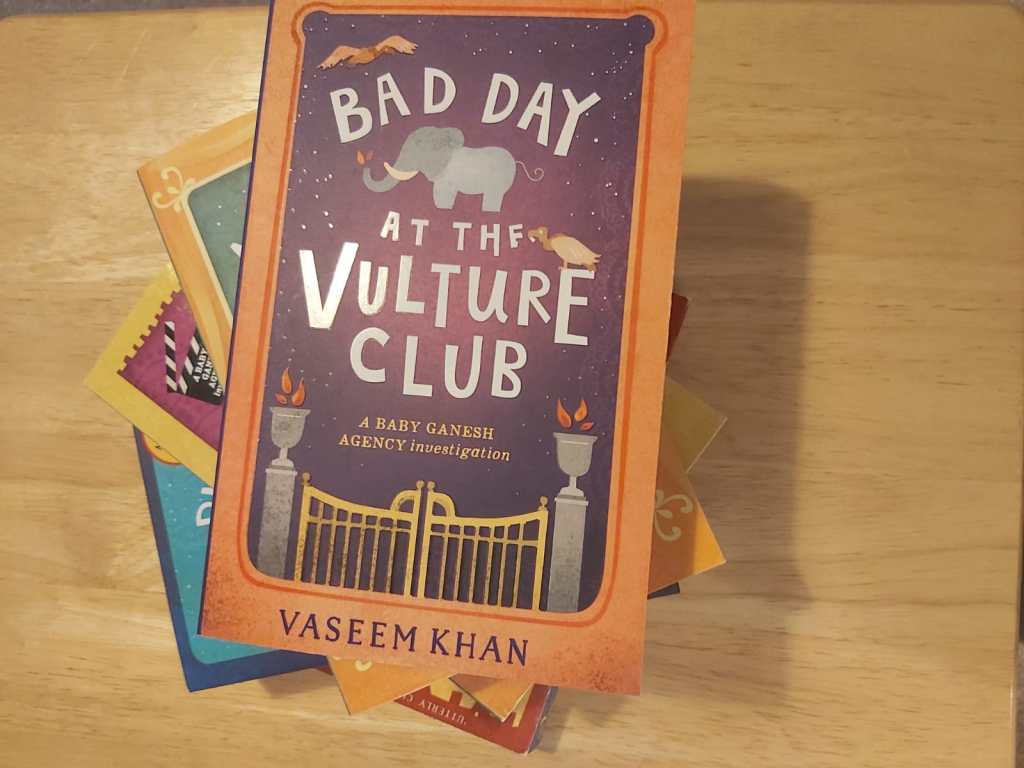
As you know by now, a small group of us decided the best way to thrive in lockdown was to seek solace in reading and talking about books. Hence the creation of #CriminologyBookClub! Building on on what has quickly become standard practice, we’ve decided to continue with all eight bloggers contributing! Our latest book was chosen by all of us (unanimously) after we fell in love with the first instalment. Without more ado, let’s see why we all adore Inspector Chopra (retired) et al. and why we’re all so very sad to reach the (temporary, we hope!) end of @vaseemk2‘s wonderful series:
The final of the Chopra series was delightful. As with the previous books, the story is a crime novel but there is a continuance of a broader (and arguably) more damaging topic, social harm. I found this book so interesting to read as Vaseem shines a light on Parsee culture that was unknown to myself until reading this book. Although this is a series of fictional books, parts of these books are based on real life events and I think this allows for a lot of reflection. I finished the book thinking about the plight of the vultures and the impact that this has on humans. Book Club is yet to find another book that we all collectively enjoy, let alone a series. This series is wonderful.
@haleysread

The fifth book of the series introduces us to the community of the Parsees. Inspector Chopra is exploring a world full of secrecy, hidden messages and innuendos. Is it a family dispute gone wrong or an attack on a small community that is flickering away? The victim is powerful, well respected and without any obvious foes. Maybe the death is an accident or one of those unfortunate events? Chopra doesn’t think so! With the help of his pet elephant he uncovers the truth, despite the authorities’ incompetence collecting evidence and the need of many in the circle of suspects to withhold information. This is a more mature outing of the detective as the case makes him question his own mortality when he is faced with ancient customs. The team remains the same although the addition of a recovering vulture makes the group as surreal as ever. The dialogues are lively and the exchanges are sharp but in the end, what is the truth? Who is going to crack when Inspector Chopra reveals “whodunit”?
@manosdaskalou
As a latecomer to book club, this was my second of the Chopra series and once again I loved it. @vaseemk2 writes in such a way that he brings everything to life with vibrancy. This book featured a vulture who developed a personality of its own and just like the previous book, I enjoy the characters of the animals. Aside from the characters, the author is very good at introducing real life events or people. This book introduced the Parsee community which I had not heard of and it encouraged me to go away and learn more. I am looking forward to playing Chopra catch up over summer.
@amycortvriend
I approached this book with mixed feelings. I desperately wanted to immerse myself into the sunshine and colour of India. However, I also was very aware this was the (current!) last book in Vaseem Khan’s awesome series (I am seriously hoping for many more, take note @vaseemk2!). Fortunately, I forgot the latter, as I immersed myself in the former. As with previous Inspector Chopra cases there is the theme of institutional violence, of ordinary people, elephants and vultures subjected to the vagaries of powerful people. In 1967, Howard Becker asked “whose side are we on? and answered, the powerless. Vaseem’s series takes the same approach, there is a sense of camaraderie and empathy towards those who are different, those who are outside of mainstream society, the underdogs. Whether they are eunuchs, Parsees or even vultures, compassion is present in Chopra et al.’s responses and actions. Although gutted that the series has come to a (temporary!) halt, this book was a joy to read. I’m going to miss all the characters but will simply pretend they’ve gone on a holiday!
@paulaabowles
Bad Day at the Vulture Club was yet another wonderful investigation involving the Book Club’s favourite motley crew! The story was intriguing, the characters charming (although some of them not so much), scenery vivid and as always, overall utterly brilliant! This is the last book in the Inspector Chopra series, so far, and if I’m being overly critical it did not feel like an ending. Maybe there will be more to come? Hint Hint @vaseemk2!
@jesjames50
Having read the previous books in the series and having become embroiled in the Baby Ganesh Agency’s quirky and endearing machinations, I picked up this final book with eagerness, anticipation and dread in equal measure. Why dread, well it’s the last in the series (I know I’ve already said that but its worth restating), no more Insp. Chopra (Retd), no more Ganesha, Poppy, Irfan or the erstwhile Rangwalla. As we have become accustomed to, the book paints a colourful and wonderful picture of Mombai and its inhabitants whilst also providing saddening detail of the darker side of corruption and desperate poverty. With the usual twists and turns, injections of humour and triumph coupled with some interesting historical backdrops the story line is both intriguing and captivating. Another page turner, but as each page disappears, so too is the recognition that it is all going to come to an end. Whilst all the characters deserve a well-earned rest, it would seem a travesty for the redoubtable Insp. Chopra and his less than ordinary sidekick Ganesha to permanently retire
@5teveh
Goodbye for now, Inspector…….
Another great addition to the inspector Chopra series. More wacky characters, great comedy, and a great mysterious plot. I have also learned some interesting things about India’s culture, which has encouraged me to do further reading.
Reflecting on my time reading this series, I have enjoyed every single book. Like the other 4 books prior, Bad Day at the Vulture Club gives you delightful excitement and adventure which is far from what has been present in real life. During uncertain times and difficult lockdowns these books have provided much need escapism. During the final chapters I did feel a wave of sadness, as I knew this was the last book in the series. But I hopeful we will see a return of baby Ganesh, Poppy and Inspector Chopra, as we have still not unlocked the mystery of Ganesh. I recommend the complete series, if you like courageous elephants and want a light hearted page turner.
@svr2727
It goes without saying that I loved this book. I’ve so enjoyed following the exploits of Chopra and Ganesha over the last year and a half and there’s definitely a bit of a hole in my life now! I’ll admit that I read it with trepidation – worried that something awful would befall the characters I had come to care about, given that it’s the final book in the series. But I needn’t have worried! I found myself once again immersed in a mystery and following the threads through India – learning loads about the country and the culture on the way. I almost loved the vulture as much as I love the elephant. I really hope this isn’t the last we hear from these characters!
@saffrongarside
We shall leave the final thought to some younger fans of Baby Ganesha and the Vulture….thanks to Quinn and Paisley for their fabulous artistry

Vulture (Quinn Age 8) 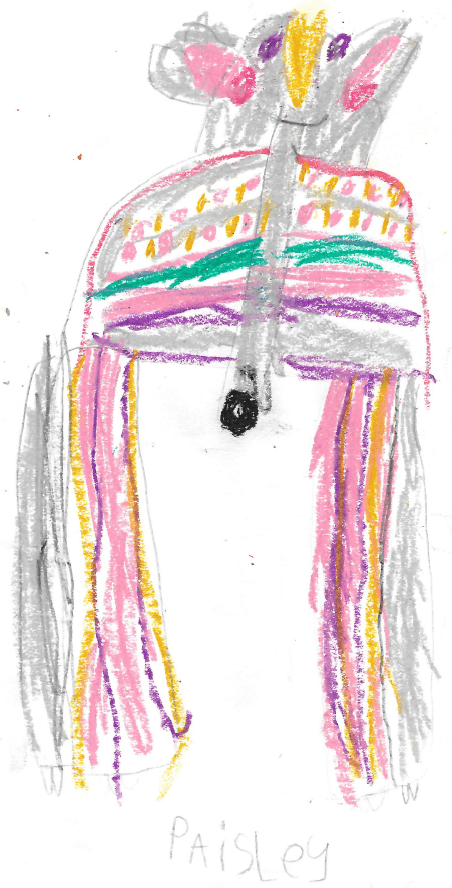
Baby Ganesha (Paisley (Age 6) 
Vulture (Paisley Age 6) 
Baby Ganesh (Quinn Age 8)
Share this:


Making a Criminal: A game on criminology
Summer is here and as we try to destress from another annus horribilis …let us play a game. This is one of the mental games we play in a way to understand a discipline shrouded in mystery and speculation. You will need no pen, nor paper, just your imagination and a few minutes.
Clear you mind, isolate your thoughts and give yourself 5 minutes of time to complete. It is all about your imagination.
Think of a criminal. Try to think of their face first. What do they look like? Imagine their face, their eyes, the nose and the cheekbones. Hair colour and style. How’s the neck, the body type, the hands, the legs. Can you tell their gender, age and their race? Any other features? What are they wearing?
Now try to keep that image in your mind. You have conjured your criminal and you ought to give them a crime. What crime has this person committed? Was it their first crime or have they done the same crime before? What made them do the crime(s) they did?
How do you feel about them? What do you wish to be done about them? What is your solution to your imaginary villain? Do you think there are others like them, or was this the one that once removed from your imagination will become unable to generate more images?
Our mind is truly wonderous. It can conjure all sorts of images and for those of you, who, managed to engage and to get through the questions and to develop your criminal, well done.
This approach was used when investigators tried to help people to recall events following a crime, usually involving violence. The questions are reasonable, and it allowed you, at least those who tried, to form an image and a backstory. This approach was later discredited, purely because it allowed our stereotypes and prejudices to come to the surface. You see this game is not about crime; it is about your perception of crime. It is not about those who do crime, it is simply about you.
Bring back to mind your criminal. Your details and characteristics are the projections that you make on what you think about the other, the criminal. For example, did you think of yourself when asked to imagine a criminal? What you don’t think you are a criminal? Ah, you are one of those who think they have never committed a crime. Ever! Are you sure? Not even drinking in the park in your teen years, or a little bit of speeding away from speed cameras?
Still you do not consider yourself as a criminal, but as a person. Which is why criminality takes such a hold of people’s imagination. Criminals are always other people. Crime is something unthinkable. Our representation of crime is to evoke our fears and insecurities, as when we were kids entering a dark room. The mind is truly wonderous, but it can also make us imagine the most horrible things. Not that horrible things do not happen, but the mind reinforces what it hears, what is sees and what it experiences. If any of you have experienced crime before, the face of the person who victimised you may become traumatically etched in your consciousness. Part of that trauma will become fear; it is interesting to note that similar fear is experienced from those who have never been victims of crime.
Previously, I mentioned investigative processes. Our fear of crime and our desire to control crime has generated a number of approaches in crime investigation that have tried to unmask the criminal. Unfortunately, many of those were based on imagination rather than fact. Why? Because of how we feel about crime. Crime causes harm and pain and invokes a lot of our emotions. Those emotions when tapped by investigators blind us and release our darker stereotypes about the others!
Share this:


Let it be Light

You may have probably heard of the title before and you may or may not be able to place it. It is a quote from the bible! It is profoundly creationist proclaiming the world created in days; from the 1st for the light and the 6th for the people and animals. A seemingly busy week for an almighty being who needed a day of rest afterwards. The contribution of organised religion to everyday life, the realisation that people need rest and recuperation from the labours of work. This however is not the reason I chose this dive into scriptures. I am not a theologian so I will not examine the religious content.
Instead there are two different reasons I have chosen to start with this quote; the first is the positive affirming message it conveys, the second is its immediacy. What we have here is light and brightness that is instant gratification. This message feels like a piece of chocolate melting in your mouth, releasing sweet sensations, as a flooding of smooth cocoa disintegrates, releasing its sensual solids. Therefore, the command on creating light resonates; we rejoice because unlike reality we find pleasure in immediate gratification.
Would we care that light was not created but emerged after the Big Bang and took billions of years to form in the way we now recognise it as our sun? Does it matter that progress is long and arduous and not immediate as the command suggests? Our sense of time dwarfs in the time required for events to happen. It is astonishing that we still try to comprehend the vastness of time through human lifetime. The command is also palatable because it happens without virtually any real effort. It does not represent the labours, pains of creation and development. In short, evolution is painful, long but here is presented as something immediate and effortless. In that a series of commands completing complex processes seems preferable to the reality of evolution. Maybe it is pertinent to point out that the command reveals the “majestic totalitarianism” of the divine against the great equalizer of nature and progression.
In life however, big creations cannot happen by command. “Let it be Baby!” I wonder how many mothers would favour this one, or in our line of work “let it be knowledge” how many will choose this option. This is when we realise that this pleasant message is shielding us from the reality of the process and the nature of reality itself. We may want things to happen immediately, but this is not necessarily the best option. In parenting, if you could more forward into having a baby, why not move further past the terrible twos or even further into the dreadful adolescent years of having your authority challenged. Essentially have a child created fully functioning and obedient to parental will. Maybe because this is not parenting. The stories that remain are those of growing pains; without growth there is no parenting. Let’s explore it in knowledge; can we find shortcuts in the way we learn a trade, an education, a professional identity? Maybe skipping the first parts on getting to know how to write in the appropriate conventions; perhaps we can skip on the tedious referencing process that only anally retentive individuals apparently enjoy. What if instead of books and hours of reading different texts we got laminated sheets with terms and conditions and whenever we embark on writing we are told step by step what we write. Because this will not be knowledge. The slow and arduous process has an exceptional trait within it; insight! After reading my books, making notes on my articles, going over my notes and trying to make sense of what it the point I am trying to make; in a moment after hours and hours of studying, suddenly and unexpectedly, the “penny drops”! This moment of insight is like a lightbulb moment…and that is light! A light, not by magic or immediate gratification, but the sustained understanding that comes from knowledge. It has been a difficult year for all of us but please remember that light comes from inside and to quote a great teacher Goethe, “more light”.
Share this:


Keep Calm and Forget the Pandemic or What to do in a pandemic? Take advantage of the situation
Eleven months now and there is a new spectre haunting Europe; a plague that has taken hold of our lives and altered our lifestyles. Lockdowns, the r rate, viral transmission, mutations are new terms that common people use as if we are experienced epidemiologists. Masks, made of cloth or the surgical ones, gloves and little bottles of antiseptic have become new fashion accessories. Many people report mental fatigue and others a state of confinement inside their own homes. Some people have started complaining that there is no light in this long tunnel, in country after country face with overwhelmed medical staff and system.
The optimist in me is unequivocal. We can make it through. Life is far more powerful than a disease and it always finds a way to continue, even in the most hostile of conditions. In my view however this is not going to be a feat of a great person; this is not going to be resolved by one solution. The answer is in us as a collective. Humanity thrived when it gets together and the ability to form meaningful bonds that is the backbone of our success to survival.
Imagine our ancestors making their first communities; people that had no speed like the felines, no strength like the great apes and no defensive shell to protect them. Coming out of Africa thousands of years ago, this blood creature had no offensive nor defensive structures to prevail. Our ancestors’ survival must have been on the brink. Who could imagine that some thousands of years ago, we were the endangered species? Our endurance lies on the ability to form a group that worked together and understood each other, carried logic, used tools and communicated with each other.
The current situation is a great reminder of the importance of society and its true purpose. People form societies to protect each other and advance their opportunity for success. We may have forgotten that and understandably so, since we have had people who claimed that there is no such thing as a society, only the individual. The prevailing economic system focuses on individual success, values individual recognition and prioritises individual issues. In short, why worry about others, miles away, feet away, steps away from us if we are doing well.
It is interesting to try to imagine a society as a random collection of indifferent individuals, but more people begin to value the importance of the other. After years of austerity and the promotion of individualism, more people live alone, make relationships through social networking and mostly continue to live a solitary life even when they live with others. Communities, as an ex-prime minister claimed as broken and so people waste no time with them. We take from our communities, the things we need, and we discard the rest. Since the start of the pandemic, deliveries, and online companies have been thriving. Whilst physical shops are facing closure, online ones can hardly cope with the demand. As a system, capitalism is flexible enough to retune the way wealth is made. Of course, when you live alone, there are things you cannot have delivered; intimacy, closeness, intercourse. People can fulfil their basic needs apart from the one that makes them people; their socialisation. We will have to address it and perhaps talk about the need to be a community again.
In the meantime, what happens at the top? In the Bible there was the story of the pool of Siloam. This miraculous pond blessed by an angel offered the opportunity for clemency for those who swam in the waters. Wipe the slate clean and start again. So, what do governments do? Interestingly not as much. Right now, as people try to come to terms with loss, isolation and pain, different governments try to address other political issues. One country is rocked by the revelations that its head of state has created a palace to live in. Another one, has finished construction of his summer palace. In another country they are bringing legislation to end abortions, in another they propose the introduction of police on campuses. Others are restricting the right to protest, and in a country famed for its civil rights, legislation is being introduced not to take pictures of police officers in public, even if they may be regarded in violation of duties. It seems that it is open season for the curtail of civil liberties through the back door. In an island kingdom the system has ordered and moves forward with the construction of more and bigger prisons. A sign that they anticipate public upheaval. Maybe; whatever the reason this opportunity to supress the masses may be tantalising, but it is wrong. When ever we come out of this we need to reconnect as a community. If this becomes an opportunity for some, under the suppression of civic rights, things will become problematic. For starters, people will want to see their patience and perseverance rewarded. My advice to those who rule, listen to your base.

 Thoughts from the criminology team