
Home » Articles posted by kayleighwillis21
Author Archives: kayleighwillis21

To be a keeper of these stories. A collector of trust.

I think this will be somewhat of a poem; I guess.

About all the tears I’ve held space for lately.

There has been quite a lot. Is it any surprise?

Big ones, small ones. Happy and sad ones. Not really sure why ones.

‘cept it’s the happy ones I want to share today.

They’ve got me thinking. Reflecting.

A proper headshake, actually.
It’s not the best space for sensitive conversations but it’s what we’ve got.

I wait and I wait. Sometimes a flurry. Sometimes not.

The enthusiasm is sometimes hard to muster.

If I’m really being honest.

But wait I do. And wait I shall.

Oftentimes it’s a woman, who needs another.

It’s a gift I’ve got, I suppose.

“I’ve never seen her sit and talk with someone like this”

An aura, someone once said.

Lures people in and their story they are compelled to tell.

I’ve tried to teach it. We give and we take from every interaction.

You just have to be aware enough to see it.

There’s been some big ones just lately.

And what a pleasure it’s been.
She’s a ‘do it all’ Black mother.

A woman of incredible resilience.

We’ve been speaking for months now. Bit of this. Bit of that.

A call from the school one day, her son has self-harmed.

What do I say, she asks.

Everything is money. Money I don’t have.

She checks her sugars. Low again.

I can’t afford this canteen food.

Have to make a poster. Sustainable practice or something like that.

All this technology she says, I’m too slow.

I do what I can. Build her up. See her again.

I do what I can. Build her up. See her again.

There’s a little bit more brightness every time I do.

It’s Friday before last, how was your session I ask.

I was in a room with women doctors she says.

Little old me. I could never. Right at the start…and I don’t think I’m going to make it.

Can you believe it? she says. Women…with PhDs. Not me.

“Back home women get no such thing.” No no. Daren’t even dream.

Days roll on until a week's gone by.

She prances across the library. Beaming.

She’s come to share her joy with me.

A 60 she says. A 60!

My boys are so proud of me. Maybe I’ll make it after all.
Another. Working, studying, working, studying.

Mum needs the money. Physio for the cancer in her bones, she says.

She’s avoiding my questions about rest and nourishment.

Surviving on Mum’s joy receiving another ‘Look what I’ve done.’

This is just a flying visit though. Easy fix, I thought.

We’ve been here a while. Lingering.

I think I’ve said something wrong. She’s welling up again.

No. I’m so grateful to be here she says...with all you kind people.

I ask what she needs. Its courage, she says.

I write it out. A post-it note. Just the trick.

What would my most courageous self do?

Stick it to the fridge I say.

Mine is bravery. I share.

An inspiration! she cries. An inspiration? I cry.

I’m going to make it across that stage one day, she says. Yes, I am.
Her story. Quite overwhelming actually.

Though not easily shaken. I’m taken aback.

Intimate partner violence a divorce did not remedy.

A home of her own, apparently not to be.

In the hospital every other week.

The victim of a scam I realise as we speak.

Held up at every angle.

Yet she shows up. She shows up. She shows up.

It’s what we do, isn’t it?

It’s too much. Quitting. she says. Though I can’t say I believe it.

We’re here for 90 minutes. It’s all out on the table.

I hardly say a word really. I’m all ears, kind eyes and the occasional shoulder pat.

A breakthrough.

Look at me here laughing with you now.

What a relief. To be heard.  Maybe I’ll be able to sleep tonight.
Its all stuck with me, a sort of niggle.

I thought I knew what I was doing. I thought I was grateful for it all.

But to be a keeper of these stories. A collector of trust. I realise I was nothing of the sort.

So, on my own journey, I start anew, and that’s thanks to all of you.
This healing thing. Tricky business, really.
Reader, if you find yourself saying I HAVE TO this week.

That meeting, That essay. That commute.

Consider I GET TO

Because not everyone does and some that do give more than we can imagine, even just to be in the room with us.
Share this:


Changing the Narrative around Violence Against Women and Girls

For Criminology at UON’s 25th Birthday, in partnership with the Northampton Fire, Police and Crime Commissioner, the event “Changing the Narrative: Violence Against Women and Girls” convened on the 2nd April. Bringing together a professional panel, individuals with lived experience and practitioners from charity and other sectors, to create a dialogue and champion new ways of thinking. The first in a series, this event focused on language.
All of the discussions, notes and presentations were incredibly insightful, and I hope this thematic collation does it all justice.
“A convenient but not useful term.”
Firstly an overwhelming reflection on the term itself; ‘Violence Against Women and Girls’ – does it do justice to all of the behaviour under it’s umbrella? We considered this as reductionist, dehumanising, and often only prompts thinking and action to physical acts of violence, but perhaps neglects many other harms such as emotional abuse, coercion and financial abuse which may not be seen as, or felt as ‘severe enough’ to report. It may also predominantly suggest intimate partner or domestic abuse which may too exclude other harms towards women and girls such as (grand)parent/child abuse or that which happens outside of the home. All of which are too often undetected or minimised, potentially due to this use of language. Another poignant reflection is that we may not currently be able to consider ‘women and girls’ as one group, given that girls under 16 may not be able to seek help for domestic abuse, in the same way that women may be able to. We also must consider the impact of this term on those whose gender identity is not what they were assigned at birth, or those that identify outside of the gender binary. Where do they fit into this?
To change the narrative, we must first identify what we are talking about. Explicitly. Changing the narrative starts here.
“I do not think I have survived.”
We considered the importance of lived experience in our narratives and reflected on the way we use it, and what that means for individuals, and our response.
Firstly, the terms ‘victim’ and ‘survivor’ – which we may use without thought, use as fact, particularly as descriptors within our professions, but actually these are incredibly personal labels that only individuals with such experience can give to themselves. This may be reflective of where they are in their journey surrounding their experiences and have a huge impact on their experience of being supported. It was courageously expressed that we also must recognise that individuals may not identify with either of those terms, and that much more of that person still exists outside of that experience or label. We also took a moment to remember that some victims, will never be survivors.
Lived experience is making its way into our narratives more and more, but there is still much room for improvement. We champion that if we are to create a more supportive, inclusive, practical and effective narrative, we must reflect the language of individuals with lived experience and we must use it to create a narrative free from tick boxes, from the lens of organisational goals and societal pressure.
Lived experience must be valued for what it is, not in spite of what it is.
“In some cases, we allow content – which would otherwise go against our standards – if its newsworthy.”
A further theme was a reflection on language which appears to be causing an erosion of moral boundaries. For example, the term ‘misogyny’ – was considered to be used flippantly, as an excuse, and as a scapegoat for behaviour which is not just ‘misogynistic’ but unacceptable, abhorrent, inexcusable behaviour – meaning the extent of the harms caused by this behaviour are swept away under a ‘normalised’ state of prejudice.
This is one of many terms that along with things like ‘trauma bond’ and ‘narcissist’ which have become popular on social media without any rigour as to the correct use of the term – further normalises harmful behaviour, and prevents women and girls from seeking support for these very not normal experiences. In the same vein it was expressed that sexual violence is often seen as part of ‘the university experience.’
This use of language and its presence on social media endangers and miseducates, particularly young people, especially with new posting policies around the freedom of expression. Firstly, in that many restrictions can be bypassed by the use of different text, characters and emoji so that posts are not flagged for certain words or language. Additionally, guidelines from Meta were shared and highlighted as problematic as certain content which would, and should, normally be restricted – can be shared – as long as is deemed ‘newsworthy.’
Within the media as a whole, we pressed the importance of using language which accurately describes the actions and experience that has happened, showing the impact on the individual and showing the extent of the societal problem we face… not just what makes the best headline.
“We took action overnight for the pandemic.”
Language within our response to these crimes was reflected upon, in particular around the term ‘non-emergency’ which rape, as a crime, has become catalogued as. We considered the profound impact of this language for those experiencing/have experienced this crime and the effect it has on the resources made available to respond to it.
Simultaneously, in other arenas, violence toward women and girls is considered to be a crisis… an emergency. This not only does not align with the views of law enforcement but suggests that this is a new, emerging crisis, when in fact it is long standing societal problem, and has faced significant barriers in getting a sufficient response. As reflected by one attendee – “we took action overnight for the pandemic.”
“I’ve worked with women who didn’t report rape because they were aroused – they thought they must have wanted it.”
Education was another widely considered theme, with most talk tables initially considering the need for early education and coming to the conclusion that everyone needs more education; young and old – everything in between; male, female and everything in between and outside of the gender binary. No-one is exempt.
We need all people to have the education and language to pass on to their children, friends, colleagues, to make educated choices. If we as adults don’t have the education to pass on to children, how will they get it? The phrase ‘sex education’ was reflected upon, within the context of schools, and was suggested to require change due to how it triggers an uproar from parents, often believing their children will only be taught about intercourse and that they’re too young to know. It was expressed that age appropriate education, giving children the language to identify harms, know their own body, speak up and speak out is only beneficial and this must happen to help break the cycle of generational violence. We cannot protect young people if we teach them ignorance.
Education for all was pressed particularly around education of our bodies, and our bodily experiences. In particular of female bodies, which have for so long been seen as an extension of male bodies. No-one knows enough about female bodies. This perpetuates issues around consent, uneducated choices and creates misplaced and unnecessary guilt, shame and confusion for females when subjected to these harms.
“Just because you are not part of the problem, does not mean you are part of the solution.“
Finally, though we have no intention or illusion of resolution with just one talk, or even a series of them – we moved to consider some ways forward. A very clear message was that this requires action – and this action should not fall on women and girls to protect themselves, but for perpetrators for be stopped. We need allies, of all backgrounds, but in particular, we need male allies. We need male allies who have the education, and the words necessary to identify and call out the behaviour of their peers, their friends, their colleagues, of strangers on the bus. We asked – would being challenged by a ‘peer’ have more impact? Simply not being a perpetrator, is not enough.
Share this:


Meet the FBL Student Experience Assistant Team – Kayleigh
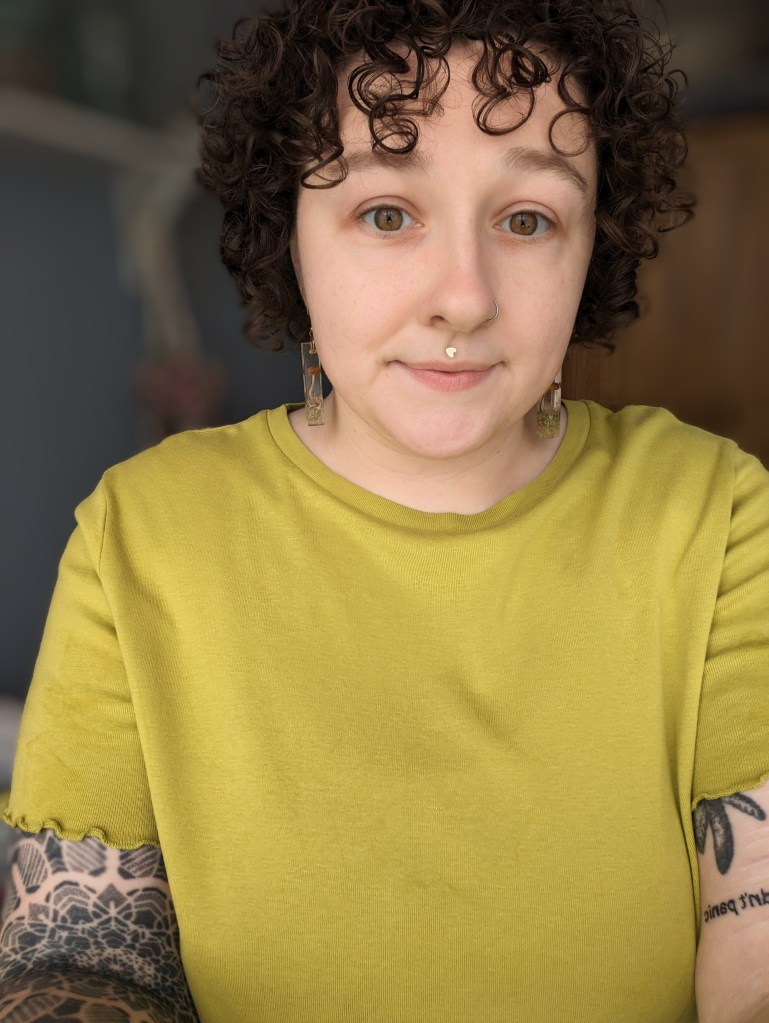
My name is Kayleigh, and I am one of the Student Experience Assistants (SEAs) for the Faculty of Business and Law at UON.
I graduated from UON in 2024 with a BA in Psychology with Criminology, and alongside this role I have just started a Master of Research degree. I also work in mental health for the NHS at the weekends. My academic and professional interests are largely around peer support, diversity and inclusion; particularly around the value of lived and living experience, forensic mental health, and neuroscience.
I came to UON in 2021 as a mature student having worked and volunteered within various forensic mental health settings, and I assumed this would be the area I went back into when I finished my degree, but now I’m not so sure… Despite a lot of adversity, university was overall a hugely positive and pivotal experience for me and so I am currently exploring a more academic path. I have a lot of experience to call upon and to share and I’m hopeful that I can support you so that your time at university is positive too.
I am here to support both students and staff in the Faculty of Business and Law by meeting with teams to identify their needs and ensuring students get the right help. As a recent UON graduate, I understand the challenges you might be facing and can offer guidance, connect you with the right people, or just have an informal chat. I have been assigned to support Criminal Justice Studies and Strategy & International Business teams, but support to students is not necessarily limited to these subjects. You can reach out to any of the SEAs for help.
Contact the team at fblseat@northampton.ac.uk, or me directly at kayleigh.willis@northampton.ac.uk. We also hold a drop-in outside LH201, Monday to Friday, 10am-4pm, no booking needed.
Share this:


Highlights and Hindsight: Reflections from a Final Year Student

Whilst I hope to continue writing beyond graduation, for my last blog post as a UON student, I’d like to share, for those at the beginning or early stages of their degree, some of the things I’m glad I did, and the things I wish I had done, maybe something will resonate with you.
I’m glad I…
Found opportunities to prove myself: Although I worked before doing my degree, being course representative, student voice as well as a research assistant have helped me build confidence and skills and given me so much more to talk about when I’m selling myself in both professional and academic applications.
Maintained my routine: I’ve never pulled an all-nighter or found myself regularly submitting at 11:58pm (just one exception!) I knew I couldn’t give my best when stressfully counting down the minutes to midnight and being sleep deprived. I tried different ways and routines of studying and found something that was sustainable. As far as possible I maintained boundaries so as not to put myself in a position where sacrificing sleep was a necessity.
Didn’t compare myself (often!): It’s easy to see other people getting higher grades, doing more things, doing ‘harder’ topics, and to feel inferior. We’re all on our own journeys, have our own interests, our own barriers and limitations and that’s ok. I never have been and probably never will be a ‘straight A’ student, but I’ve worked incredibly hard for the grades I have got. And truly, in all the interviews I’ve done in the last 4 months (lots), they’ve been more interested my grit and compassion than everything else!
I wish I had…
Connected more: I wish I’d pushed a little harder to make some friends or some more familiar faces. University can be really lonely, for so many reasons, and I think lots of students feel this way! Perhaps pushing through that fear of the unknown, and the social anxiety to talk to people on my course, having joined a society or attended more events might have alleviated some of this.
Taken what I needed: I spent years one and two determined not to use extensions, mitigating circumstances or office hours, anything that I perceived to be a setback or a silly question. This resulted in me running out of an exam before finishing, and completing a timed assignment the day after discharge from psychiatric hospital. I turned this around in year three and used what I needed, used extensions, booked in to office hours even if it was just for reassurance and actually felt like I had given my work my best (and this reflected in higher grades!)
Last Nuggets of Advice
Pay attention to what you enjoy: It’s easy to see it all as just hard work, rush to get it done and then feel lost in the end. I’ve now started on a masters degree towards a career path I never thought I’d pursue, focussing on something that isn’t even my strongest skill, but I’ve decided its worth the challenge for something I’m going to enjoy.
Reflect, reflect, reflect: I’ve learned so much by taking the time to reflect on what I’m experiencing or learning, how it makes me feel and why, why I do or don’t want to do it, where my thoughts are coming from. I wholeheartedly recommend regularly thinking about these things (or writing about them!) The ability to be reflective is assessed more than you might think, and you never know what it might reveal to you.
You are more than this: No matter what grades you get, how you handle uni life, if you make friends or not, do ‘extra’ stuff or not, do a masters, or not. You’re still… you, with so many good qualities, values and goals that are not tied to your achievements, it may or may not always be the life changing experience you hoped it would be. This is an important time, sure, but it’s not more important than your health, your values, your sense of self.
Remember, you can only do what you can, with what you have at the time. Take care.
Share this:


What’s stopping us from rehabilitating mentally ill offenders?
I wanted to share with you some key takeaways from the findings of my dissertation; “Understanding Positive Risk-Taking and Barriers to Implementation in Forensic Mental Health.”
For context, positive risk taking is the process of supporting recovery and rehabilitation by actively and carefully engaging service users in decisions and activities that have previously posed a risk, in full acknowledgement of that risk, in the hope it has a positive outcome and builds new skills.
My thematic structure from 5 interviews with forensic healthcare professionals is below for reference.
| Theme | Subtheme |
| Engaging the Service User | – Offering, Accepting, Assessing – Staffing Safe Opportunities |
| Professional Development and Confidence in Practice | – Specialised Training and Professional Development – Confidence in Practice and Taking Responsibility – Challenging Anti-Progressive Attitudes |
| Navigating the Unique Needs of the Service User Group | – Acknowledging and Communicating Risk – Severe, Enduring and Fluctuating Conditions – Stuck in the System – The Juxtaposition of Justice |
Engaging the service user is around the safe engagement of the service user within this process:
- Service users are not being engaged in their own risk assessment which would allow them to build up skills in identifying and managing their own risk.
- Seclusion is being used for more ‘difficult’ to manage service users to compensate for low staffing which is detrimental to service user progress and a huge ethical problem.
Professional Development and Confidence in Practice discussed the complexities of training to work in forensic care and the fear around being responsible for decisions that could go very wrong.
- My participants expressed concerns that primarily clinical practitioners (i.e. clinical psychologists over forensic psychologists) may not be able to work as sufficiently with forensic clients as their training backgrounds and treatment models may favour either the judicial process or the therapeutic outcome, and whilst both are needed, it is unlikely to be available.
- Healthcare professionals also battle with colleagues who are not on board with the approach of offering positive risks, sometimes due to fear, others to not believing that the experience should positive due to the reasons a person is there.
Navigating the Unique Needs of the Service User Group discusses the nuances of forensics and what makes this service different to others.
- It is identified that some professionals find it more difficult to engage in and justify positive risks when it involves certain (overrepresented) conditions, such as psychosis, and certain offenses (sexual), particularly if there are vulnerable victims, which may impact treatment opportunities regardless of other ‘good’ factors.
- Information handed over from the criminal justice system to healthcare system is often dehumanising, reductionist and causes exaggerated risk levels which increases fear and safety behaviours from healthcare staff.
- Service users are subject to the conditions and restrictions of both the healthcare services and the criminal justice system which can present conflicting interests and outcomes from each institution. Additionally, the decisions made by the criminal justice system are often done so despite caseworkers never having met or worked directly with the service user, inhibiting healthcare professionals from using their professional judgement to offer positive risk-taking opportunities.
- Service users are very often ‘in the system’ for a long time, so much so that they may begin to fear life outside of an institution and may sabotage their own progress in order to stay within a familiar institution and possibly even to go back to prison.
Much more needs to be done, and needs to change to improve this increasingly prevalent service. It is my hope that more research within this area will help to support the recovery and rehabilitation of those who are cared for in forensic mental health settings and that my findings might inspire anyone who goes on to work with mentally ill offenders to make improvements to what they find in their workplace. Whilst my study was primarily within the secure healthcare space, much is transferrable to other areas of the criminal justice system.
Share this:


Headlines and Happiness: Balancing News Consumption and Wellbeing

As part of my reflective diary assessment for my third-year module ‘Critiquing Criminalistics’, I reflected on the importance of being up to date with world events to be able to apply criminological knowledge to them. I also reflected on the fact that I have avoided much of the news and media to manage my despair at the current state of the world. However, in order to further my academic knowledge and its application, I decided I just needed a safe way to keep on top of these things, so I compiled some tips and reminders for myself, and I’d like to share them with you.
Choose wisely: Choose reputable news sources, academic reports or reviews from trusted organisations, some will be better balanced, and much less sensationalised than others.
Practice media literacy: Be critical of the information you find; don’t believe everything you see and hear. Verify news stories from multiple sources before accepting them and remember what the media is designed to do. Plus, social media is full of misinformation and sensationalism and largely speaking, not a good resource!
Need to know basis: Consider which topics are most important for you to stay informed about, and limit exposure to news that is not relevant to your wellbeing or interests. It’s very easy to fall down the rabbit hole!
Limit your consumption: Put some boundaries in place that work for you, whether that’s setting an allotted time frame to catch up like to only listen to the radio on your drive into campus, taking a break from social media, or making sure those notifications are turned off so you’re not ambushed by breaking news.
Managing Traumatic Topics: If you are avoiding any particular topic, it might be helpful to have a trusted person read/watch for you first. Additionally, for any recommended films or series, try finding them on ‘Does the Dog Die?’ https://www.doesthedogdie.com/ to check for triggering content.
Find the happy stuff too: There is so much good happening in the world as well as all the bad, make sure you feed your brain some of that too, whether that’s in the news, or on social media.
Here are some other sources:
Look after yourself: Further to those things, take a break every once in a while, prioritise whatever it is that makes you see your world positively and seek support if you need it, that might be support from a professional, or talk to a trusted person, colleague, or staff member to air out those thoughts – go and ‘talk to a criminologist!’ If you’re particularly prone or you are a chronic catastrophiser (guilty!) – a perspective from someone else can be a useful tool.
Lastly, there is a quote I heard years ago, and while over time, there are some thoughts and applications of it that are less than favourable, I occasionally find it comforting; Fred Rogers passed along a message from his mother who said ‘Look for the helpers. You will always find people who are helping.’
If you are able to manage the discomfort, sometimes it is good to find what makes you feel, and listen to it, let it fire you up! Perhaps you’ll become the helper.
Share this:

Exams and Chronic Illness.

As we approach the exam period, I’ve been anxiously thinking about what exams are like for those, like me, with chronic illnesses.
You work the whole semester through, battling your mind and body, doing your best, doing it from your bed, through tears, winning some and losing some, and the apex of what you have managed to achieve boils down to one single day.
There is absolutely no guarantee that single day is going to be a good one.
Perhaps you have a chronic mental health condition, which is only exacerbated by the pressures of an exam. Maybe you had another panic attack on the way in and you can’t take your medication and be coherent enough to sit or be safe to drive home again afterward. It’s the first day of your period and you’ve got endometriosis so just standing to shower is agony. Maybe you have IBS and you’ve stumbled on yet another trigger food with terrible timing, maybe it’s chronic fatigue, the throes of menopause, PCOS, Epilepsy, Crohn’s, Cerebral Palsy, Asthma, Diabetes; a non-exhaustive list of course. Whatever it is, it isn’t going anywhere fast, and you know it, you spend your days waiting and worrying for the next flare up and hoping it isn’t on the morning of that exam.
In my second year, I sat a Time Constrained Assessment the day after being discharged from psychiatric hospital. I had to leave halfway through my cognitive psychology exam because symptoms of my illnesses were too much; forgoing the chance to show what I’d learned and worked on and earn the credit for it.
Of course, as I was, you will be advised to use Mitigating Circumstances, (which is totally ok if that’s what you feel is best) but with chronic illness you know that your symptoms aren’t going to be gone in a week like a bug you picked up, it will persist and the next time might be just as bad or even worse, and you don’t get another go. So inevitably, when you do sit down to take the exam, on a rough day, you sit knowing the whole way through that this is not your best work, this does not reflect the insurmountable effort you’ve put in the rest of the year, but right now it is all that you have.
I don’t know that I have much more of a point other than exams are hard for everyone, and that maybe their application needs a rethink, but it’s that bit more so for those with chronic conditions.
In any case, if you see yourself in this situation, remember that all you can do is what you can, with what you have at the time, or if you know of others, know that they are giving their all.
Take care.
Share this:


The Importance of Lived Experience in Making Change

***There is a content warning for this post as it briefly mentions self-harm***
I am a mature student entering the 3rd year of my degree, joint honours psychology and criminology. My choice in academic study (and hopeful career path) is largely informed by my own life experiences which have and will continue to be one of my biggest strengths. I have been in mental health services as a patient since my pre-teens and I have worked in a variety of mental health settings including inpatient forensic mental health and rehabilitation. My criminological interest was piqued after being a victim to violent crimes as an adult. All of this, as well as some conversations I have had with lecturers and peers over the last 2 years, has me thinking about the influence and importance of lived experiences in our academic and career choices, and the opportunities that lived experiences create for making change and battling adversity.
When we experience anything in life, big or small, positive or negative, we can gain incredible insight about ourselves and the world around us in a way that we would never have done if we didn’t have those experiences. It can change or set the trajectory of our lives. When we are in the correct place in our lives, our recovery, our minds to be able to pour from a cup that isn’t empty, we can find ourselves in an amazing place where we can help others and inspire change for those who have experienced or are likely to experience what we have. Perhaps even the ones who never have and never will. All equally as important.
Every system, service, or organisation needs to have the input from those who have experienced it from the other side. We need to know how the work is being perceived at the other end. It can be really difficult to collate feedback, especially the positive stuff, or see end-to-end results and we find that if no-one speaks up, what will be done is the easy thing, the cheap thing, or the well-intentioned but mismatched thing. Of course, we may be able to go beyond advice and become a part of a service or a voice ourselves and ‘be the change.’ We can inspire change by instilling more trust in others that we truly understand their predicament and that we have moved or are moving through it, showing them that it is possible or that they’re not alone. It can be refreshing and a huge learning experience for others in the service, as a user or provider, who may be stuck, going through the motions unequipped with knowledge of how to make change for the better, especially in sectors that can be particularly challenging day-to-day.
If I may give a personal example from when I worked on a psychiatric ward for forensic rehabilitation. I worked with many patients who felt as though it was staff vs patients, that we couldn’t possibly know what it was like for them, that we were only there because we were paid, and because they were detained against their will, we had to keep them there. I didn’t hide my personal experiences, my real reasons for being there, but no one really asked so I didn’t shout about them either. When the COVID-19 pandemic hit, for reasons of infection control, I had no choice but to obey a rule, ‘‘bare-below-the-elbow.’’ That meant I had to wear short sleeves on the ward. It meant revealing to my patients the scars I bear from self-harm. This prompted lots of questions, some less awkward than others, but it opened up so many wonderful conversations and breakthroughs. I spoke with my patients about knowing how that feels, that I’ve been on the medication they’re struggling with, and I’ve done the therapy they’re reluctant to try. It connected me to my patients and my work in such a wonderful way and meant my patients trusted me more, trusted the process more and engaged in ways they haven’t before. It meant that when decisions were made about patient care or ward processes, I could advocate from a place of empathy and understanding and in cases where people have their rights reduced or taken away, detained against their will, are vulnerable, are disadvantaged, we can’t do it enough.
Being loud about our experiences means raising awareness, breaking down stigma and stereotypes to create more inclusive and accepting societies, building supportive communities, and helping people along their path. It can serve as inspiration for people who may never have even given a thought to their experiences, things they witness or people who experience hardship and keep it under wraps.
Perhaps this even serves as a little nudge to be open to the experiences of others, to recognise and challenge your own biases, the things you may or may not understand. If you find yourself in a position to decide who to hire, interact with, which project to run; find the lived experience, consider the people who just need a little more support and feel like a little risk, because you never know what it could do. We can apply this to healthcare, criminology, charity, or anything that feels like it is our calling.
It can be such a tough and slow process, it won’t always be welcomed, it might not always work out. There may be people, services and societal norms or stigma that have an agenda or goals that don’t align with yours, not everybody likes change or will be willing to put in the effort. We may not always get the answers we are looking for because of the complex world we live in. But that doesn’t mean we shouldn’t try, right?

 Thoughts from the criminology team