
Home » 2024 (Page 2)
Yearly Archives: 2024

What makes a good or bad society?: III

As part of preparing for University, new students were encouraged to engage in a number of different activities. For CRI1009 Imagining Crime, students were invited to contribute a blog on the above topic. These blog entries mark the first piece of degree level writing that students engaged with as they started reading for their BA (Hons) Criminology. With the students’ agreement these thought provoking blogs have been brought together in a series which we will release over the next few weeks.
Introduction
Everyone has a different view on whether our society is good or bad or what they perceive a good society to be. Especially individuals who come from different backgrounds and diverse cultures, people experience different societies, cultures and childhoods which can affect everyone’s versions of what a good society is.
Requirements of a good society
My perception of a good society would be a multicultural and diverse civilisation where crime, racism, misogyny, sexism, ableism and so on is at an all time low or doesn’t exist. I only say an all time low because where people are concerned some kind of deviant behaviour will always exist. I believe a society where men could be able to walk the street without the fear of being assaulted or women could walk the streets without the fear of being sexually assaulted is ideal. Also I believe a good society would have no hierarchy, not to the extreme of communism but in the sense that no one should look down on a job individuals have. No job, car or house is valued more because everyone is trying to improve their quality of life. Everyone no matter what race, ethnicity and gender should have the same amount of respect and in the same sense if someone commits a crime no matter who they are they should be held with the same accountability. Women should be paid the same as men, when they are completing the same tasks and doing the same job there should be no reason for them to have different pay. Another requirement I believe in is easy access to education for everyone. Growing up in a deprived area I understand the struggles with getting an education and I personally believe that helping with funds for students, creating more schools or helping support parents who would rather homeschool their children should be more accessible. Absence of corruption is also another, for a society to work and be the best it can be there should be no corruption. No one should be able to use their power, money or any form of blackmail to get out of situations they have caused. Society would be so much smoother if corruption never existed, leading to there should be no attentiveness to power. People who do have power should not be able to use it to their advantage, I do not believe in removing power however, there should never be a situation where an individual who values themselves to have more ‘power’ then another should feel they can control another.
Good Society?
It’s extremely hard to define and work out all requirements of a good society as it could be never ending to work out everyone’s belief of what a good society is as well as my own. I believe we can all have our own opinion of what a good society would require or how it would function. But I will leave you with this, I always say a good society would be one where my younger siblings and the next generations can walk the street and I will not have to worry about their safety. When we reach that point I believe that’s what a good society would be.
Share this:


A Love Letter: in praise of board games
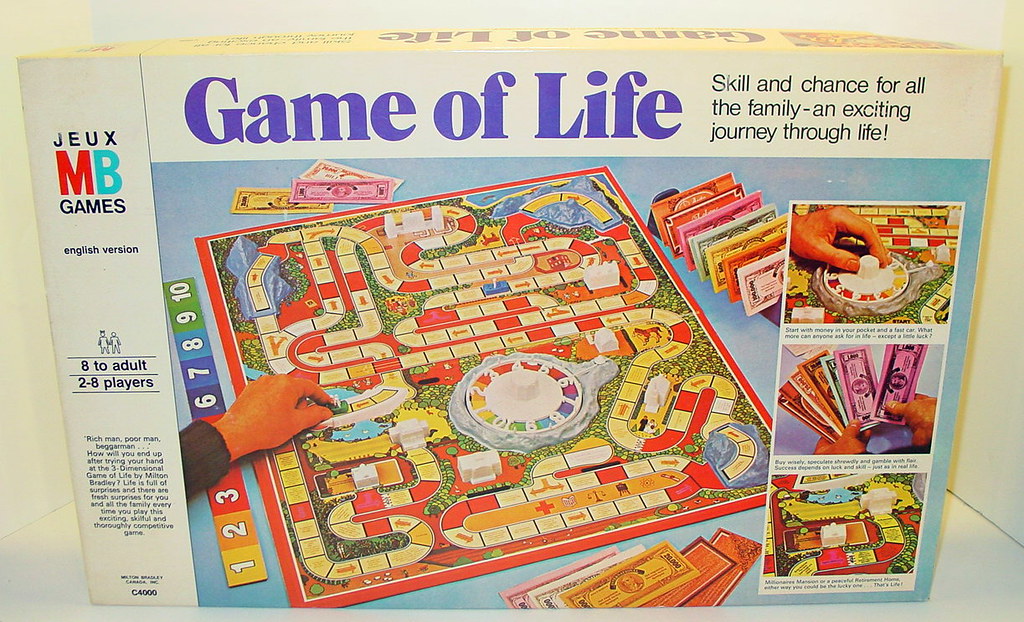
This my fifth love letter, previously I have written in praise of poetry, art, Agatha Christie and the Thoughts from the Criminology Team blog. Since early childhood, I have loved playing games and today’s entry is dedicated to this form of media. In the early years, the focus on fun is paramount, after all who wants to play a dull game? Equally important, the educational aim of games is sometimes explicit, other times less so. Nevertheless, they help us learn to match and sort colours and shapes, to develop our counting skills in an applied setting and improve our memory recall, as well as spelling. Games likes Snap, Happy Families, Hungry Hippos, Snakes and Ladders, Guess Who, Junior Scrabble offer a variety of different ways for children to learn important skills whilst playing. These games enable even very small children to share space, develop important interpersonal skills like taking turns and learn to deal with winning, and of course, losing. Often the latter is a very slow and painful lesson to learn….and one that isn’t always remembered into adulthood!
Of course, one of the most explicit part of playing games is learning the rules of the game, and of course, what happens when we deviate from those rules. It might lead to the loss of a turn or even forfeiture of the entire game. People interpret rules in different ways and families often develop their own “house” rules, but nevertheless there is always an agreed upon set of rules and a way of policing and punishing those who break them.
But once these lessons have been learned, what do games have to teach us as adults? I would say plenty! On a surface level, they offer an opportunity to relax and do something outside of our humdrum lives. Once the games have been purchased, they generally cost nothing to play unlike other forms of leisure time.1 Some can be played alone, others require competitors or even teams. They can aid our thinking, concentration and develop skills of strategy and tactics. They also have the general benefit of not being all consuming (unless at competition level), allowing for conversation to flow. The latter, conversing whilst doing something else, can often be useful for difficult emotional conversations, allowing people to open up without pressure (known colloquially as “health by stealth”).
But do board games have anything to offer to Criminology? Again, I would argue yes! Most games involve chance or luck, will you get the numbers you need, will you have the right pieces/cards in your hand, will the other person play their game in a way that benefits you? It is easy to recognise the role that luck or chance plays in games, but are we equally aware of their role in our lives. More importantly, as criminologists do we fully understand and acknowledge the role played by both in relation to criminality and victimisation?
We have no choice about whether we are born or not, when and where we arrive on the earth, who our parents are. These are all down to forces outside our individual and collective control. Our upbringing, our education, our employment opportunities are largely constrained by geography, money and influence. Compare the opportunities available to a baby born today in Sudan, with one born in the UK, another born in Palestine, and another born in Finland. Compare again, thinking about race, sex, class, disability, sexuality and so on. Very quickly you begin to understand the role played by chance and luck.
So if all of the above are imponderables, how much of a role does luck play in relation to criminality and victimisation? The regular publication of data relating to crime in postcodes, towns/cities and globally show huge diversity in the chance of victimisation. Lucky you, if you were born and live in the ‘Nordic countries of Europe (Norway, Sweden, Denmark, Iceland, and Finland) who rank among the 25 safest globally, most of them also being among the top 10 happiest nations worldwide’. Less fortunate, if you were born in Haiti, Ukraine, Palestine, Sudan or Iraq identified as some of the most dangerous places on earth currently. It is not very difficult to imagine the difference in opportunities in fundamental human rights; food, shelter, healthcare, education and so on. In war ridden nations it is incredibly difficult to separate different typologies of victimisation and for the individuals living under these conditions, it makes no meaningful difference who is/are the perpetrators.
Even if you are living in a “peaceful” state2 such as the UK, there are vast differences in the opportunities available. If you have money you can buy a car to get to work in your evening/night job, if you don’t, maybe you can take a bus, failing that you can walk. Each of those journeys carries its own risks. Your sex, your race, your ethnicity, your sexuality, your abilities/disabilities, your age add the aggravating/mitigating factors and see your risk increase/decrease. All a matter of chance and luck
What about criminality, is this, as the Classical School of Criminology would have us accept, a matter of free will, weighing up the pros and cons and making a deliberate and calculating choice to commit crime? Or can we also identify the same issues of luck and chance as shown above? If your family is loving, everyone has good health, housing is secure, food is plentiful and there are plenty of educational and employment opportunities in your area, would you still choose a life of crime? If there is violence at home, poverty impacts health, housing and regular meals, making it challenging to study or work, would you perceive crime to be a choice?
And what of those board game rules and consequences, real life has its own rules, some written in the forms of laws, others engrained via family, friends, institutions; the norms of our society. In the board game, these rules apply equally (aside from luck and chance) but in real life, not so much. Consider racial and ethnic disproportionality and the treatment of vulnerable women in the CJS, as just two examples. We may all be playing in the same “Game of Life”, but luck, chance and the rules we are subjected to are very different when it comes to criminality and victimisation.
- I appreciate that there are some very expensive board games out there, as well as expansion packs to enhance play. ↩︎
- There are lots of academic arguments around what constitutes a peaceful state, most agree that it more than just the absence of war. Whilst the UK has not seen active warfare on its shores for decades, its military has been involved in conflict throughout the world for more than a century. ↩︎
Share this:

What makes a good or bad society?: II
As part of preparing for University, new students were encouraged to engage in a number of different activities. For CRI1009 Imagining Crime, students were invited to contribute a blog on the above topic. These blog entries mark the first piece of degree level writing that students engaged with as they started reading for their BA (Hons) Criminology. With the students’ agreement these thought provoking blogs have been brought together in a series which we will release over the next few weeks.
Does a good society need morality? A successful criminal justice system? A strong economic system?
What are the requirements for a good society? Personally, I believe the answer to that question depends on the person it is being proposed to, so in this entry you will hear about my own opinion on what a society truly needs to be regarded as “good” and several other outlooks.
Some would argue including myself that a good society must depend on virtues to provide its foundations. Underpinning all values is a firm belief in being respected, regardless of background, age, ethnicity, or gender. Thus, tolerability is a key moral in modern day as the world is constantly progressing into a more diverse, expressible place therefore it is essential people tolerate the qualities that make everyone unique. For society to improve it is vital people listen and reflect on what they have heard, as conflicting opinions do not essentially mean either one is right- a concept that has been lost in today’s society but is a key requirement of a good one.
Respect promotes mutual understanding and contributes to effective communication. It also builds trust between individuals which is imperative to society, a good society must include elements of trust. Trust is found in relationships, friendships and within the work/education setting. It is the key to social harmony as people who trust one another are more willing to cooperate and work productively. Furthermore, research has linked trust with economic growth, democracy, tolerance, charity, community, health, and happiness therefore showing the widespread effects a simple belief can have. With trust comes honesty. In a world that thrives on trust, honesty serves as the ethical foundation upon which a trustworthy society is built. It is through honesty that we establish a social fabric of integrity, reliability, and transparency which are all key values needed for a good society to flourish.
I personally believe along with many others these virtues have the ability to at the very least improve society as they pave the way for cooperation, teamwork and a happier life.
Other people may focus on an effective criminal justice system when they view the requirements of a good society. Why is the Criminal Justice System Important? The criminal justice system is designed to deliver justice for all which means protecting the innocent, convicting criminals, and providing a fair justice process to help keep order across the country. In other words, it keeps our citizens safe. In order for justice to be served the police, the courts, the CPS and probation services all must work together to achieve the common goal, building a better society.
A stable economy may also be seen as a requirement for a good society due to the widespread positive effects it has such as how it improves peoples living standards and contributes to economic growth and development. It also provides people with more employment opportunities and increases public expenditure.
In conclusion, a good society cannot be determined by just one factor but by many.
Share this:


Let’s talk about sex!

Very few topics receive attention as much as sex. A very primal human behaviour that gets people talking. In Criminology any discussion on sex contains those elements that make it less than appealing, abuse, exploitation and violation. Our focus on the criminal dimensions of sexual behaviour can disfigure the way we talk about it and misrepresent the joys of sex. It can be argued however that outlining the negatives gives way to a positive outlook to sex in a similar way to health professional’s focus on avoiding sexually transmitted diseases, leading to a healthy sexual life.
Sex is about affirming social relations, as part of our own intimacy. There is a variety on sex from feelings, practices and expressions that is as wide as humanity itself. It is a language we talk that needs no translation. This is why that abusive behaviours are regarded such a violation of the person. Rape, legally, is as serious as murder. The person victimised is losing something so intimate that it may never be recovered; one of the many reasons why people who suffered abuse are called survivors.
Our perspectives on sex changes and our society tried to accommodate them. Some years ago, Holland decided to include some scenes on “public liberal expressions on sexuality” as part of their material for their immigration test. This is a marked difference from the UK who decriminalised homosexuality but only behind closed doors.
Criminologically speaking there are certain elements that safeguard sexual behaviours. Age, relation, location and consent. The age of consent is recognising the minimum age any person can be legally responsible to engage in sexual relations. Under that age and it is statutory rape. Any relationship between close relatives in the UK can lead to imprisonment. Any sexual acts in public are regarded illegal, including sex in public toilets (cottaging) so sex remains behind closed doors. The final point is the most controversial; consent is paramount to any sexual relations. The important thing in sex is that we choose to engage with others or not.
Part of the criminological process is to ascertain how we understand consent and disseminate it to others. Academically there are several issues to consider and to investigate. This is one of criminology’s strengths to tap into the sociological and philosophical discourses offering some practical perspectives. In recent years the discussion about sex on campus for example has been one that raised awareness on consent. In criminology we discuss it in ways to amplify the importance of consent in sex and in relationships in general.
For a long time now, we have talked about safe spaces as a mechanism of allowing people to talk without judgement. We focus on educational practices that are focused on inclusion and empathy and disseminate work that challenges established notions that mythologise sexual relations and minimise the importance of consent.
Let’s explore some of the key points we disseminate. Sex is an individual right for all regardless of origin or identity, which makes it also a universal right. Law safeguards sexual relations, but the lack of reporting of sexual violence, the low conviction rate of those processed cases and the volume of unknowns underscore that we cannot resolve sexual violence legally. We cannot police sexual relations when our community does not prioritise the importance of safeguarding human rights. What we can do instead is to change that social discourse on sex. In one of my previous posts, I underscored the irony of proliferating legal interventions, whilst culturally we seem happy to receive expressions on misogyny, abuse and exploitation as legitimate expressions on sexuality. Policing sexual behaviours for example comes with a long history of retaining the straight man’s privilege of pleasure over all others. A privilege long retained unchallenged making the work of current and future criminologists even more pressing! At the end of this month, it is International Day of Consent in November 30, so from today until the end of the month, ask yourself what you have done to change the established narrative to make your own space more inclusive.

Share this:

What makes a good or bad society?: I
As part of preparing for University, new students were encouraged to engage in a number of different activities. For CRI1009 Imagining Crime, students were invited to contribute a blog on the above topic. These blog entries mark the first piece of degree level writing that students engaged with as they started reading for their BA (Hons) Criminology. With the students’ agreement these thought provoking blogs have been brought together in a series which we will release over the next few weeks.
I will start off by saying it is difficult to say whether we live in a good society or not because there are a lot of factors to take into consideration before making such a claim.
I believe the justice system, despite what anyone says is still as racist and sexist as ever.
In 2022, out of police officers whose ethnicity was known, white people made up 91.9% of the police force. (gov.uk, 2023), this number shows that the police force is predominantly white, which does not represent diversity, especially because currently society are trying to change to become more diverse and represent equality, that is why we see movements like Black Lives Matter blowing up.
In 2023, 36.8% of police officers were females, (statista, 2023), making the overall police force predominantly, white males. This does not represent the general population at all. It is easy to understand why people often have negative views on the police force and why people feel as though the police are working against them rather than for them, This can reduce the authority people believe the police have over them, thus increasing the rates of crimes.
Another take could be that because of the rise in social media and video games, kids and young adults who have accessed these materials for most of their lives start to forget real life consequences. The aims of some of the most popular video games, such as (Grand Theft Auto, Fortnite and Call of Duty) involve the killing of other characters, whilst some are worse than others, they all present one thing in common, when you kill a character, they come back to life. From when we are young, we understand that when someone passes it is irreversible, However, what the younger generation lack now is the knowledge that consequences have actions. In a video game and on social media people are constantly faced with death, real or not, it is desensitising us and numbing our understanding of how delicate human life is.
I also think that the fact that there is a consequence to every action needs to be taught to the kids of our generation, as more and more kids are being manipulated into selling drugs, by the idea that they will get money out of it, but also that they will be protected and wouldn’t get into trouble for it, also raising the crime rates.
I believe that the society we live in now is corrupted, with people lacking humanity and authority. I believe the world could be better if we gained these things back. It is important for us as humans to feel safe and secure, and with the raising crime rates, I certainly do not feel safe.
Share this:


Just semantics?

This summer has seen the opening of the first secure school in England and Wales. The idea of secure schools was first introduced in 2016 in line with reforming the youth secure estate given a wide range of failings across institutions and harms experienced by children placed in there. The original proposed date for opening one of the schools was 2020; but what is a four-year delay? In 2022 the National Audit Office reported the refurbishment of Medway Secure Training Centre (closed down in March 2020 following the harrowing findings by Panorama), where the new secure school would be, was costing approximately £36.5 million (National Audit Office, 2022). But will this new secure school actually change something within the youth secure estate, or this is more of the same but with a new sparkly name?
Oasis Restore (the first secure school in England and Wales) opened this summer and can hold up to 49 children. It is registered jointly as a Secure Children’s Home (SCH) and a secure academy which has raised concerns by Ofsted due to difference in size of Oasis Restore in comparison to other SCHs. Education is central to the secure school (although haven’t we heard this before with Secure Training Centres), with comments from Youth Justice Board (YJB) Chief Executive Steph Roberts-Bibby comparing Oasis Restore with University accommodation (Youth Justice Board, 2024). Apparently, the new secure school is a far cry from the unsafe, violent, prisons which already exist in the youth secure estate (SCT and YOIs). On a tour of the secure school earlier in the year, the Chief Executive was very positive about the physical environment and philosophies underpinning Oasis Restore where ‘strong relationships between staff and children are at the heart of the Oasis model’ and the importance of ‘having a space promoting learning, togetherness and care’ as being essential in line with rehabilitation (Youth Justice Board, 2024). So far, so good. The right words are being uttered, changes appear to have been made, but… we have been here before. The same rhetoric of the child’s best interests being promoted and being seen as ‘children first’: which is good. But is this round of reform just more of the same with different semantics?
End Child Imprisonment (2024) demonstrates how child imprisonment, which Oasis Reform still is, is beyond reform. There are ample examples of how the Youth Secure Estate has historically, and remains, a harmful unsafe environment which does not address the needs of the children they come into contact with. Missing from the positive comments from the Chief Executive of the YJB is the highlighting that the children who come into contact with the YJS are incredibly vulnerable and have often experienced traumas before their incarceration. The language is still all wrong: the myriad of challenges these children have already faced and will face within the YJS remain overlooked. In 2023 the United Nations Committee on the Rights of the Child urged the UK to introduce legislation directly prohibiting the use of solitary confinement, due the continuing harms/findings of its use: but so far, no comment from the UK Government. Time and time again, we see reforms brought in but with little to no actual change or improvement. Will Oasis Restore be the face of change of just another failure in a long line of failing reforms?
Something which rings true: “A recurrent theme in the history of child imprisonment is that evidence of failure and maltreatment is met with promises of reform which too frequently involve semantic amendment rather than changes of substance” (End Child Imprisonment, 2024, p.28). And as John Rawls argues when thinking about justice, if an institution cannot be reformed then it should be abolished. Is it finally time to abolish the child prisons which exist within society?
References:
End Child Imprisonment (2024) Why child imprisonment is beyond reform: A review of the evidence August 2024. [online] Available at: https://article39.org.uk/wp-content/uploads/2024/08/Why-child-imprisonment-is-beyond-reform.-A-review-of-the-evidence-August-2024.pdf [Accessed 14th October 2024].
Monster Ztudio/Shutterstock (2017) Change. [Online] Available at: https://ziplinelogistics.com/blog/navigating-change/ [Accessed 21.10.24].
National Audit Office (2022) Children in custody: secure training centres and secure schools. [online] London: National Audit Office. Available at: https://www.nao.org.uk/wp-content/uploads/2022/04/Children-in-custody-secure-training-centres-and-secure-schools.pdf [Accessed 17.10.24].
Rawls, J. (1971/1999) A Theory of Justice. Oxford: Oxford University Press
Youth Justice Board (2024) Inside the Oasis Restore Secure School. GOV.UK [online]. Available at: https://www.gov.uk/government/news/inside-the-oasis-restore-secure-school [Accessed 17.10.24]
Share this:


Realtopia?

I have recently been reading and re-reading about all things utopic, dystopic and “real[life]topic” for new module preparations; Imagining Crime. Dystopic societies are absolutely terrifying and whilst utopic ideas can envision perfect-like societies these utopic worlds can also become terrifying. These ‘imagined nowhere’ places can also reflect our lived realities, take Nazism for an example.
In CRI1009 Imagining Crime, students have already began to provide some insightful criticism of the modern social world. Questions which have been considered relate to the increasing use of the World Wide Web and new technologies. Whilst these may be promoted as being utopic, i.e., incredibly advanced and innovative, these utopic technological ideas also make me dystopic[ly] worry about the impact on human relations.
In the documentary America’s New Female Right there are examples of families who are also shown to be using technology to further a far right utopic agenda. An example includes a parent that is offended because their child’s two favourite teachers were (described as being) ‘homosexuals’, the parents response to this appeared to be taking the child out of school to home school the child instead, but also to give their child an iPad/tablet screen to use as a replacement for the teachers. Another example consisted of a teen using social media to spread far right propaganda and organise a transphobic rally. In the UK quite recently the far right riots were organised and encouraged via online platforms.
I would not advise watching the documentary, aside from being terrifying, the report and their team did very little to challenge these ideas. I did get the sense that the documentary was made to satisfy voyeuristic tendencies, and as well as this, it seems to add to the mythical idea that far right ideology and actions only exists within self identified far right extremist groups when this is not the case.
Mills (1959) suggests that people feel troubled if the society in which they live in has wide scale social problems. So might the unquestioning and increased use of technologies add to troubles due to the spreading of hate and division? And might this have an impact on our ability to speak to and challenge each other? Or to learn about lives different to our own? This reminds me of Benjamin Zephaniah’s children’s book titled People Need People (2022), maybe technologies and use of the internet are both connecting yet removing us from people in some way.
References
Mills, C. W. (2000) The Sociological Imagination. Fortieth anniversary edition. Oxford: Oxford University Press.
Zephaniah, B. (2022) People Need People. (London: Orchard Books)
Share this:


Meet the FBL Student Experience Assistant Team – Kayleigh
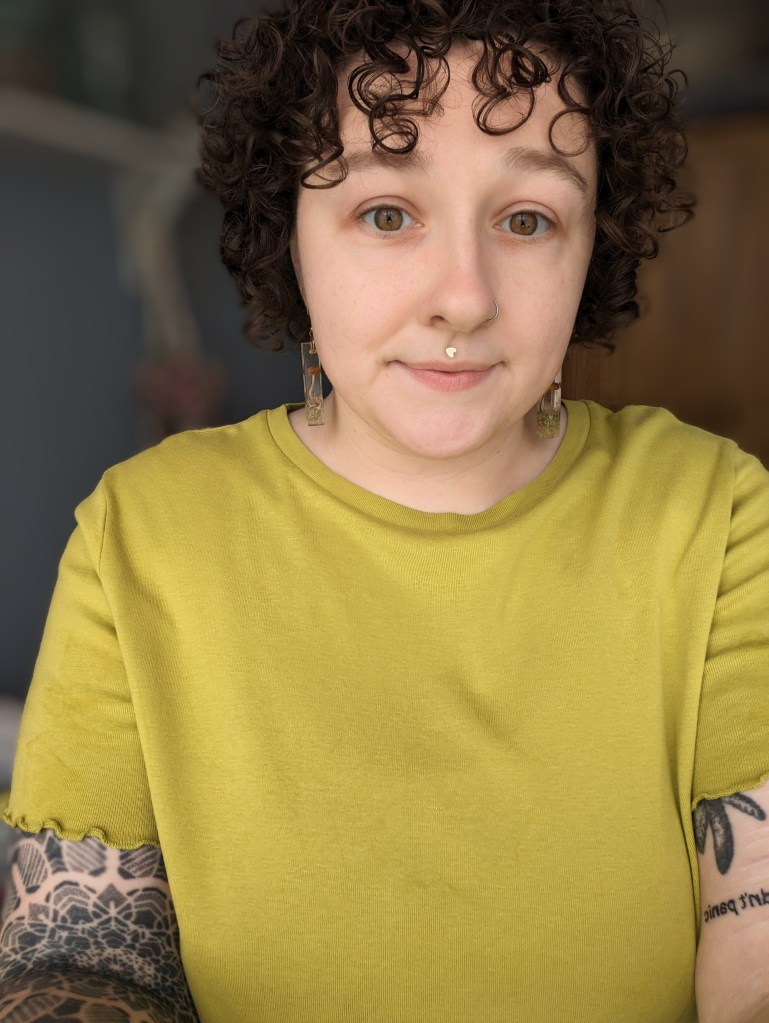
My name is Kayleigh, and I am one of the Student Experience Assistants (SEAs) for the Faculty of Business and Law at UON.
I graduated from UON in 2024 with a BA in Psychology with Criminology, and alongside this role I have just started a Master of Research degree. I also work in mental health for the NHS at the weekends. My academic and professional interests are largely around peer support, diversity and inclusion; particularly around the value of lived and living experience, forensic mental health, and neuroscience.
I came to UON in 2021 as a mature student having worked and volunteered within various forensic mental health settings, and I assumed this would be the area I went back into when I finished my degree, but now I’m not so sure… Despite a lot of adversity, university was overall a hugely positive and pivotal experience for me and so I am currently exploring a more academic path. I have a lot of experience to call upon and to share and I’m hopeful that I can support you so that your time at university is positive too.
I am here to support both students and staff in the Faculty of Business and Law by meeting with teams to identify their needs and ensuring students get the right help. As a recent UON graduate, I understand the challenges you might be facing and can offer guidance, connect you with the right people, or just have an informal chat. I have been assigned to support Criminal Justice Studies and Strategy & International Business teams, but support to students is not necessarily limited to these subjects. You can reach out to any of the SEAs for help.
Contact the team at fblseat@northampton.ac.uk, or me directly at kayleigh.willis@northampton.ac.uk. We also hold a drop-in outside LH201, Monday to Friday, 10am-4pm, no booking needed.
Share this:


Uncertainties…
Sallek Yaks Musa

Who could have imagined that, after finishing in the top three, James Cleverly – a frontrunner with considerable support – would be eliminated from the Conservative Party’s leadership race? Or that a global pandemic would emerge, profoundly impacting the course of human history? Indeed, one constant in our ever-changing world is the element of uncertainty.
Image credit: Getty images

The COVID-19 pandemic, which emerged in late 2019, serves as a stark reminder of our world’s interconnectedness and the fragility of its systems. When the virus first appeared, few could have foreseen its devastating global impact. In a matter of months, it had spread across continents, paralyzing economies, overwhelming healthcare systems, and transforming daily life for billions. The following 18 months were marked by unprecedented global disruption. Lockdowns, travel restrictions, and social distancing became the new norms, forcing us to rethink how we live, work, and interact.
The economic fallout was equally staggering. Supply chains crumbled, unemployment surged, and entire industries teetered on the brink of collapse. Education was upended as schools and universities hastily shifted online, exposing the limitations of existing digital infrastructure. Yet, amid the chaos, communities displayed remarkable resilience and adaptability, demonstrating the need for flexibility in the face of uncertainty.
Beyond health crises, the ongoing climate and environmental emergencies continue to fuel global instability. Floods, droughts, erratic weather patterns, and hurricanes such as Helene and Milton not only disrupt daily life but also serve as reminders that, despite advances in meteorology, no amount of preparedness can fully shield us from the overwhelming forces of nature.
For millions, however, uncertainty isn’t just a concept; it’s a constant reality. The freedom to choose, the right to live peacefully, and the ability to build a future are luxuries for those living under the perpetual threat of violence and conflict. Whether in the Middle East, Ukraine, or regions of Africa, where state and non-state actors perpetuate violence, people are forced to live day by day, confronted with life-threatening uncertainties.
On a more optimistic note, some argue that uncertainty fosters innovation, creativity, and opportunity. However, for those facing existential crises, innovation is a distant luxury. While uncertainty may present opportunities for some, for others, it can be a path to destruction. Life often leaves little room for choice, but when faced with uncertainty, we must make decisions – some minor, others, life-altering. Nonetheless, I am encouraged that while we may not control the future, we must navigate it as best we can, and lead our lives with the thought and awareness that, no one knows tomorrow.
Share this:


Meet the FBL Student Experience Assistant Team – Kezia

Hello everyone! My name is Kezia Asante, and I’m part of the Student Experience Assistance Team [SEAT]. I’ll be working with the Criminology and Law departments and am looking forward to meeting you all and providing necessary support wherever it’s needed.
My primary objective in this role is to enhance your overall student experience, and as a recent graduate of the university myself, I understand how overwhelming student life can be. Challenges like balancing coursework, managing deadlines, and navigating university resources can feel daunting, but I’m here to help guide and support you through all of it. Feel free to reach out whenever you need assistance or just a friendly chat!
Choosing criminology to study was a great decision, and if you allow yourself to, you can gain a wealth of knowledge and a fresh perspective on the world. I’ve developed a genuine passion for the subject, particularly because I believe it encourages us to examine the complexities in grey areas that others might view as simply black and white. Criminology has so many different aspects that stem from various fields such as sociology, psychology, law, policing, and forensics. It delves into the root causes of crime, the workings of the criminal justice system, and the societal impacts of crime and punishment and much much more! Moreover, pursuing a degree in criminology can lead you down numerous career paths. For instance, I will be starting my MSc in Cyber Security and Forensics in January, inspired by my interest in the digital realm initiated by my criminology studies.
Overall, what I’m trying to say is to make the most of your criminology studies. Immerse yourself in the subject, engage with your peers and professors, and take advantage of all the resources available to you. Attend workshops, research, and read up on areas of the subject you enjoy and participate in relevant events to deepen your understanding and broaden your perspective. The more actively you engage, the more you’ll get out of it.
Please don’t navigate the university experience on your own. There are many people like me and various support systems available to help you and make your journey easier.
Look forward to meeting you all!
Kezia Asante
kezia.asante-nkansa@northampton.ac.uk

 Thoughts from the criminology team