
Corruption: A Very Noble Pastime

Only a couple of months ago there was a furore about the current prime minister Sir Keir Starmer receiving gifts from Lord Alli. He wasn’t the only one to benefit but it rather tainted the Labour Party’s victory in the election and made a mockery of promises to clean up politics. Let’s not get too hung up about political parties though, there is plenty of previous evidence of other parties dabbling in, let’s call them, immoral practices that benefit the individual.
I shouldn’t have been surprised then to hear about some research carried out by Tortoise that suggested a quarter of the members of the House of Lords do two thirds of the work in the upper chamber. They found that approximately 210 members of a total of 830 are actively involved in the business of the upper chamber and the rest well, your guess is as good as mine. So what you might ask, we have some rather lazy nobles, but they don’t get paid unless they turn up. Well true, but then if you read some other research, it becomes apparent that there are vast sums of money being paid for doing nothing. Turning up is one thing, working is quite something else.
‘Over the course of the last parliament, £400,000 has been paid to 15 peers who have claimed attendance for at least 80 per cent of days in at least one month without any discernible activity in that time. Some have made repeated claims of this kind over the parliament’ (Tortoise, 2024).
Up till now I’ve always had a begrudging respect for the upper chamber, particularly when they have knocked back poor, ill thought out or inappropriate legislation conjured up by the government. That’s not to say I haven’t questioned the manner in which the chamber is constituted but I have felt a sense of relief when government have had a hard task railroading through some of their legislation. But it doesn’t seem to matter which chamber it is in parliament, there are a significant number of individuals in both houses whose actions can only be described as corrupt. From the expenses scandal in 2009 to the latest failures to declare interests, it becomes clear that corruption is endemic.
It seems to me during an era of cuts in public services, the withholding of funds to the most vulnerable designed to help them keep warm, and job losses in sectors where past and present policies make organisations unsustainable, the disregard for proper financial management and constraint in government is immoral. I will leave the debate about whether we should have governance in its current format to others who probably know better than I do but there is clearly a need to abolish the policies and processes that allow for what can only be described as a corrupt noble gravy train.
The Nolan Principles setting out the standards that those involved in public life should adhere to are still in existence and expected to be complied with and yet I fail to see how so many members of our great institutions have even come close to adherence. In case you are unsure what those principles are, I have listed them below and I will leave you to judge whether the nobility stand up to scrutiny.
- Selflessness
- Integrity
- Objectivity
- Accountability
- Openness
- Honesty
- Leadership
References
BBC (2019) MPs’ expenses: The Legacy of a Scandal [online] Available at https://www.bbc.co.uk/news/uk-politics-48187096 Accessed: 22/11/2024.
BBC (2024) Keir Starmer received more clothes worth £16,000 [online] Available at https://www.bbc.co.uk/news/articles/cdd4z9vzdnno Accessed: 22/11/2024.
Information Commissioner’s Office (ND) MP’s expenses scandal [online] Available at https://ico.org.uk/for-the-public/ico-40/mp-expenses-scandal/ Accessed: 22/11/2024
Tortoise (2024a) Lording it: some peers claim £400,000 for little discernible work, [online] available at https://www.tortoisemedia.com/2024/11/20/lording-it-some-peers-claim-400000-for-little-discernible-work/, Accessed: 22/11/2024
Tortoise (2024b) The Lords’ work: Tortoise’s Peer Review [online] available at https://www.tortoisemedia.com/2024/11/20/the-lords-work-tortoises-peer-review/, Accessed: 22/11/2024.
UK Parliament (ND) Standards, [online] available at https://www.parliament.uk/about/mps-and-lords/members/standards/, Accessed: 22/11/2024.
Share this:


What makes a good or bad society?: V

As part of preparing for University, new students were encouraged to engage in a number of different activities. For CRI1009 Imagining Crime, students were invited to contribute a blog on the above topic. These blog entries mark the first piece of degree level writing that students engaged with as they started reading for their BA (Hons) Criminology. With the students’ agreement these thought provoking blogs have been brought together in a series which we will release over the next few weeks.
Our society is created up by a system that fails it from the beginning it is supposed to make our society better, but in fact creates conflict and frustration and this would be the justice system. The justice system is put in place to allow people to live in a world that has rules and control to create this good society, however, is overwhelmed by the amount of crime.
A good society in my eyes would be one where people took accountability for their wrong doings, because as humans its unrealistic to ask there to be no mistakes we all are living life for the first time and therefor are bound to get things wrong, but being able to take accountability for our actions would be the first step to being able to have a good society. I don’t think it’s possible to ever have no crime or this pitch perfect world, but I believe that there’s things that can be put into place to make society better.
In my eyes change requires there to be understanding and accountability, we as people find it very easy to judge and come to assumptions instead of taking time to understand the issues at hand, and if we would just take a step back and try and see the bigger picture we may be able to come to a mutual ground of seeing why issues occur instead of simply judging. Helping us to understanding why things happen and reduce the resent that occurs is certain situations.
For a society to flourish and grow it needs to be nurtured in the right way this would include, having a fair justice system, things put into place to help guide those who have lost their way a bit and to provide a constant support system. I strongly think a society depends on the nurture around it and that widely impact the impact those are going to have on others.
An ideal good society would involve everyone coming together to support one and another being each other’s community instead of creating big segregations between races and cultures if we as human could learn to live and work together as one, we would solve a lot of issues across the world. War would not exist as our system would result in aiding everyone.
I still believe a good society needs a hierarchy system in terms of rules in place to ensure everyone’s safe as without a foundation of what’s right and wrong it allows people to think they can do as they please. Rules help put into perspective what’s not allowed as a collective thing that are unacceptable by knowledge and provide a punishment to fall upon if those rules are broken.
Overall, a good society needs to be built up of basic foundations of nature, understanding and accountability in my opinion to reduce the conflict that occurs in some cases. A good society needs to be open minded.
Share this:


A review of In-Extremis: The Life of War Correspondent Marie Colvin
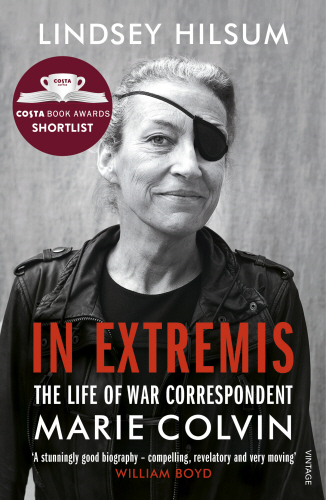
Recently, I picked up a book on the biography of Marie Colvin, a war correspondent who was assassinated in Syria, 2012. Usually, I refrain from reading biographies, as I consider many to be superficial accounts of people’s experiences that are typically removed from wider social issues serving no purpose besides enabling what Zizek would call a fetishist disavowal. It is the biographies of sports players and singers, found on the top shelves of Waterstones and Asda that spring to mind. In-Extremis, however, was different. I consider this book to be a very poignant and captivating biography of war correspondent Marie Colvin, authored by fellow journalist Lindsey Hilsum. The book narrates Marie’s life before her assassination. Her early years, career ventures, intimate relationships, friendships, and relationships with drugs and alcohol were all discussed. So too were the accounts of Marie’s fearless reporting from some of the world’s most dangerous conflict zones, including Sri-Lanka, Iraq, Lebanon, and Syria. Hilsum wrote on the events both before Marie’s exhilarating career and during the peak of her war correspondence to illustrate the complexities in her life. This reflected on Marie’s insatiability of desire to tell the truth and capture the voices of those who are absent from the ‘script’. So too, reporting on the emotions behind war and conflict in addition to the consistent acts of personal sacrifice made in the name of Justice for the disenfranchised and the voiceless.
Across the first few chapters, Hilsum wrote on the personal life of Marie- particularly her traits of bravery, resilience, persistence, and an undying quest for the truth. Hilsum further delved into the complexities of Marie’s personality and life philosophies. A regular smoker, drinker and partygoer with a captivating personality that drew people in were core to who Marie was according to Hilsum. However, the psychological toils of war reporting became clear, particularly as later in the book, the effects of Marie’s PTSD and trauma began to present itself, particularly after Marie lost eyesight in her left eye after being shot in Sri-Lanka. The eye-patch worn by Marie to me symbolised the way she carried the burdens of her profession and personal vulnerabilities, particularly between maintaining her family life and navigating her occupational hazards.
In writing this biography, Hilsum not only mapped the life of one genuinely awesome and inspiring woman, but also highlighted the importance of reporting and capturing the voices of the casualties of war. Much of her work, I felt resonated with my own. As an academic researcher, it is my job to research on real-life issues and to seek the truth. I resonated with Marie’s quest for the truth and strongly aligned myself to her principles on capturing the lived experiences of those impacted by war, conflict, and social justice issues. These people, I consider are more qualified to discuss these issues than those of us who sit in the ivory towers of institutions (me included!).
Moreover, I considered how I can be more like Marie and how I can embed her philosophies more so into my own research… whether that’s through researching with communities on the cost-of-living crisis or disseminating my research to students, fellow academics, policymakers, and practitioners. I feel inspired and moving forward, I seek to embody the life and spirit of Marie and thousands of other journalists and academics who work tirelessly to research on and understand the truth to bring forward the narratives of those who are left behind and discarded by society in its mainstream.
Share this:

What makes a good or bad society?: IV
As part of preparing for University, new students were encouraged to engage in a number of different activities. For CRI1009 Imagining Crime, students were invited to contribute a blog on the above topic. These blog entries mark the first piece of degree level writing that students engaged with as they started reading for their BA (Hons) Criminology. With the students’ agreement these thought provoking blogs have been brought together in a series which we will release over the next few weeks.
A good society can be defined as one with social cohesion with a safe, secure environment and a bad society as one lacking these qualities, when using this definition, we can look at if society is good or bad.
In the media there has been an increase in crimes reported, including individuals being caught and charged for their actions, which would have previously escaped the public eye. With an increase in media use from youths, it puts them at a risk to exploitation due to their vulnerability as young people. Social influencers have been able to exploit their own children through sexualising their actions to attract paedophiles and earn profit from these views. In this situation, parents fail to protect their children from the harmful environment the media can attract. Thus, social media is growing in its dangerous nature making it unsafe.
There has been an increase in violence in all aspects of society, such as shootings and wars. America holds the highest rate of school shootings and has failed to make schools a safe place for children. America suffers from violence due to the legalisation of guns which can be seen with many attempted assassinations of presidents, some of which have been successful. The latest attempt being Donald Trump in 2024, which shows how America has failed to provide people with security no matter their status in society.
Even outside of America there has been a failure to make society safe as seen in East Europe. The Russo Ukrainian war gained attention in 2022 over Russia’s failure to capture Ukraine. This caused anxiety as other countries could not fight due to being part of NATO, instead they provided aid for Ukraine. Despite this the war has continued, making Ukraine unsafe to live in, forcing many to immigrate. The Israel-Hamas war started in 2023 and as a result of this war, businesses who supported Israel were boycotted, which demonstrates the interests between businesses and the public not aligning, resulting in protests over powerful figures’ failure to speak up against the violence, thus there is a lack of social solidarity.
Human rights are not consistent within the world. This can be seen in Islamic countries making homosexuality forbidden, whereas in the West homosexuality can be acted upon in public without punishment. With women’s rights there has been recent debates about abortion and its legalisation within America. 17 states have banned abortion, which shows a lack of consensus between the states as the laws are not consistent throughout America. There has been widespread protests to bring back the right to an abortion to women. Additionally, in some countries women have fewer rights due the ideology of men as being superior. The exclusion to rights means women cannot work or get an education predominantly in the Middle East and Africa, whereas the West aim for equal opportunities, showing how politics between countries are not in agreement as to what is a human right.
Therefore, when looking at these events, there is a lack of social cohesion and safety between countries, and even within the same country there is little agreement, this results in a bad society.
Share this:


A final salute to our graduating Criminology students!!

Source: Image by Paul Michael Hughes
As we gather in anticipation, amidst the last-minute preparations, our Criminology Class of 2024 will soon walk across the stage this evening to receive their degrees – and I’d like to use this medium to extend a heartfelt congratulations to each and every one of them.
To our Class of 2024, completing a degree in Criminology is no small feat – the discipline itself confronts society’s most difficult, complex, and sensitive matters. Remember when you first encountered Lombroso’s atavistic principles? Take that critical lens with you as you challenge such outdated thinking in your future careers. Think back to how you deconstructed the social construction of crime in Crime and Society – these analytical skills will serve you well. Recall the rigour of doing Research, where you learned that truth must always be backed by evidence. Remember your engagement with the institutions of the Criminal Justice System, where you examined every aspect from courts to prisons and your examination of contemporary policing challenges. Your studies in Race and Gender, I hope, opened your eyes to the complexities of intersectionality and how different forms of inequality and discrimination intersect. You’ve questioned the purpose of prisons, critiqued ‘criminalistics’, and examined institutional violence with keen insight – all of which culminated in your dissertation work. So you see, each step of this journey has shaped you into the thoughtful criminologists you are today.
To our Black and Ethnic Minority graduates, you have defied statistics and overcome additional challenges with grace and resilience. Your achievement today is particularly meaningful, not just for yourselves but for future generations who will see in you what is possible. You’ve proven that determination and talent know no boundaries.
As you all step into the world beyond our campus, you carry with you not just a degree, but the power to effect real change. Whether you pursue careers in the criminal justice institutions, research, policy-making, private institutions, or social services, remember to take your compassion, intelligence, and integrity to your chosen path.
Though our formal educational journey together ends here, I hope our paths will cross again, and I look forward to hearing about your future successes and contributions to the field.
Once again, congratulations on this magnificent achievement. You have done yourselves proud.
Grab yourselves a glass of whiskey, champagne or a pint (in moderation obviously) in celebration today, and wishing you all the very best for your future endeavours,
Paul F!
Share this:

What makes a good or bad society?: III
As part of preparing for University, new students were encouraged to engage in a number of different activities. For CRI1009 Imagining Crime, students were invited to contribute a blog on the above topic. These blog entries mark the first piece of degree level writing that students engaged with as they started reading for their BA (Hons) Criminology. With the students’ agreement these thought provoking blogs have been brought together in a series which we will release over the next few weeks.
Introduction
Everyone has a different view on whether our society is good or bad or what they perceive a good society to be. Especially individuals who come from different backgrounds and diverse cultures, people experience different societies, cultures and childhoods which can affect everyone’s versions of what a good society is.
Requirements of a good society
My perception of a good society would be a multicultural and diverse civilisation where crime, racism, misogyny, sexism, ableism and so on is at an all time low or doesn’t exist. I only say an all time low because where people are concerned some kind of deviant behaviour will always exist. I believe a society where men could be able to walk the street without the fear of being assaulted or women could walk the streets without the fear of being sexually assaulted is ideal. Also I believe a good society would have no hierarchy, not to the extreme of communism but in the sense that no one should look down on a job individuals have. No job, car or house is valued more because everyone is trying to improve their quality of life. Everyone no matter what race, ethnicity and gender should have the same amount of respect and in the same sense if someone commits a crime no matter who they are they should be held with the same accountability. Women should be paid the same as men, when they are completing the same tasks and doing the same job there should be no reason for them to have different pay. Another requirement I believe in is easy access to education for everyone. Growing up in a deprived area I understand the struggles with getting an education and I personally believe that helping with funds for students, creating more schools or helping support parents who would rather homeschool their children should be more accessible. Absence of corruption is also another, for a society to work and be the best it can be there should be no corruption. No one should be able to use their power, money or any form of blackmail to get out of situations they have caused. Society would be so much smoother if corruption never existed, leading to there should be no attentiveness to power. People who do have power should not be able to use it to their advantage, I do not believe in removing power however, there should never be a situation where an individual who values themselves to have more ‘power’ then another should feel they can control another.
Good Society?
It’s extremely hard to define and work out all requirements of a good society as it could be never ending to work out everyone’s belief of what a good society is as well as my own. I believe we can all have our own opinion of what a good society would require or how it would function. But I will leave you with this, I always say a good society would be one where my younger siblings and the next generations can walk the street and I will not have to worry about their safety. When we reach that point I believe that’s what a good society would be.
Share this:


A Love Letter: in praise of board games
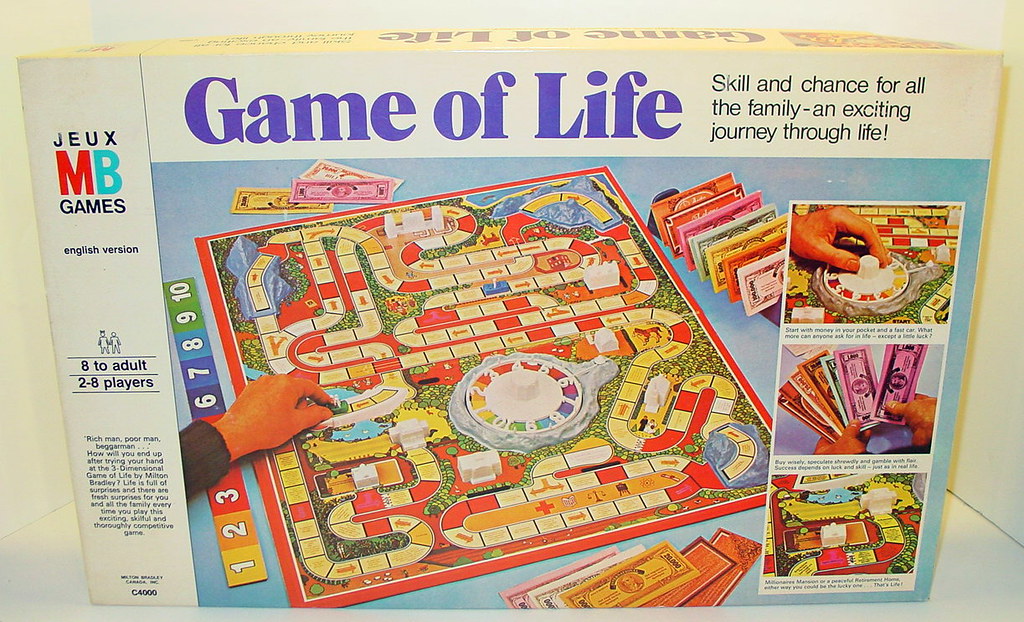
This my fifth love letter, previously I have written in praise of poetry, art, Agatha Christie and the Thoughts from the Criminology Team blog. Since early childhood, I have loved playing games and today’s entry is dedicated to this form of media. In the early years, the focus on fun is paramount, after all who wants to play a dull game? Equally important, the educational aim of games is sometimes explicit, other times less so. Nevertheless, they help us learn to match and sort colours and shapes, to develop our counting skills in an applied setting and improve our memory recall, as well as spelling. Games likes Snap, Happy Families, Hungry Hippos, Snakes and Ladders, Guess Who, Junior Scrabble offer a variety of different ways for children to learn important skills whilst playing. These games enable even very small children to share space, develop important interpersonal skills like taking turns and learn to deal with winning, and of course, losing. Often the latter is a very slow and painful lesson to learn….and one that isn’t always remembered into adulthood!
Of course, one of the most explicit part of playing games is learning the rules of the game, and of course, what happens when we deviate from those rules. It might lead to the loss of a turn or even forfeiture of the entire game. People interpret rules in different ways and families often develop their own “house” rules, but nevertheless there is always an agreed upon set of rules and a way of policing and punishing those who break them.
But once these lessons have been learned, what do games have to teach us as adults? I would say plenty! On a surface level, they offer an opportunity to relax and do something outside of our humdrum lives. Once the games have been purchased, they generally cost nothing to play unlike other forms of leisure time.1 Some can be played alone, others require competitors or even teams. They can aid our thinking, concentration and develop skills of strategy and tactics. They also have the general benefit of not being all consuming (unless at competition level), allowing for conversation to flow. The latter, conversing whilst doing something else, can often be useful for difficult emotional conversations, allowing people to open up without pressure (known colloquially as “health by stealth”).
But do board games have anything to offer to Criminology? Again, I would argue yes! Most games involve chance or luck, will you get the numbers you need, will you have the right pieces/cards in your hand, will the other person play their game in a way that benefits you? It is easy to recognise the role that luck or chance plays in games, but are we equally aware of their role in our lives. More importantly, as criminologists do we fully understand and acknowledge the role played by both in relation to criminality and victimisation?
We have no choice about whether we are born or not, when and where we arrive on the earth, who our parents are. These are all down to forces outside our individual and collective control. Our upbringing, our education, our employment opportunities are largely constrained by geography, money and influence. Compare the opportunities available to a baby born today in Sudan, with one born in the UK, another born in Palestine, and another born in Finland. Compare again, thinking about race, sex, class, disability, sexuality and so on. Very quickly you begin to understand the role played by chance and luck.
So if all of the above are imponderables, how much of a role does luck play in relation to criminality and victimisation? The regular publication of data relating to crime in postcodes, towns/cities and globally show huge diversity in the chance of victimisation. Lucky you, if you were born and live in the ‘Nordic countries of Europe (Norway, Sweden, Denmark, Iceland, and Finland) who rank among the 25 safest globally, most of them also being among the top 10 happiest nations worldwide’. Less fortunate, if you were born in Haiti, Ukraine, Palestine, Sudan or Iraq identified as some of the most dangerous places on earth currently. It is not very difficult to imagine the difference in opportunities in fundamental human rights; food, shelter, healthcare, education and so on. In war ridden nations it is incredibly difficult to separate different typologies of victimisation and for the individuals living under these conditions, it makes no meaningful difference who is/are the perpetrators.
Even if you are living in a “peaceful” state2 such as the UK, there are vast differences in the opportunities available. If you have money you can buy a car to get to work in your evening/night job, if you don’t, maybe you can take a bus, failing that you can walk. Each of those journeys carries its own risks. Your sex, your race, your ethnicity, your sexuality, your abilities/disabilities, your age add the aggravating/mitigating factors and see your risk increase/decrease. All a matter of chance and luck
What about criminality, is this, as the Classical School of Criminology would have us accept, a matter of free will, weighing up the pros and cons and making a deliberate and calculating choice to commit crime? Or can we also identify the same issues of luck and chance as shown above? If your family is loving, everyone has good health, housing is secure, food is plentiful and there are plenty of educational and employment opportunities in your area, would you still choose a life of crime? If there is violence at home, poverty impacts health, housing and regular meals, making it challenging to study or work, would you perceive crime to be a choice?
And what of those board game rules and consequences, real life has its own rules, some written in the forms of laws, others engrained via family, friends, institutions; the norms of our society. In the board game, these rules apply equally (aside from luck and chance) but in real life, not so much. Consider racial and ethnic disproportionality and the treatment of vulnerable women in the CJS, as just two examples. We may all be playing in the same “Game of Life”, but luck, chance and the rules we are subjected to are very different when it comes to criminality and victimisation.
- I appreciate that there are some very expensive board games out there, as well as expansion packs to enhance play. ↩︎
- There are lots of academic arguments around what constitutes a peaceful state, most agree that it more than just the absence of war. Whilst the UK has not seen active warfare on its shores for decades, its military has been involved in conflict throughout the world for more than a century. ↩︎
Share this:

What makes a good or bad society?: II
As part of preparing for University, new students were encouraged to engage in a number of different activities. For CRI1009 Imagining Crime, students were invited to contribute a blog on the above topic. These blog entries mark the first piece of degree level writing that students engaged with as they started reading for their BA (Hons) Criminology. With the students’ agreement these thought provoking blogs have been brought together in a series which we will release over the next few weeks.
Does a good society need morality? A successful criminal justice system? A strong economic system?
What are the requirements for a good society? Personally, I believe the answer to that question depends on the person it is being proposed to, so in this entry you will hear about my own opinion on what a society truly needs to be regarded as “good” and several other outlooks.
Some would argue including myself that a good society must depend on virtues to provide its foundations. Underpinning all values is a firm belief in being respected, regardless of background, age, ethnicity, or gender. Thus, tolerability is a key moral in modern day as the world is constantly progressing into a more diverse, expressible place therefore it is essential people tolerate the qualities that make everyone unique. For society to improve it is vital people listen and reflect on what they have heard, as conflicting opinions do not essentially mean either one is right- a concept that has been lost in today’s society but is a key requirement of a good one.
Respect promotes mutual understanding and contributes to effective communication. It also builds trust between individuals which is imperative to society, a good society must include elements of trust. Trust is found in relationships, friendships and within the work/education setting. It is the key to social harmony as people who trust one another are more willing to cooperate and work productively. Furthermore, research has linked trust with economic growth, democracy, tolerance, charity, community, health, and happiness therefore showing the widespread effects a simple belief can have. With trust comes honesty. In a world that thrives on trust, honesty serves as the ethical foundation upon which a trustworthy society is built. It is through honesty that we establish a social fabric of integrity, reliability, and transparency which are all key values needed for a good society to flourish.
I personally believe along with many others these virtues have the ability to at the very least improve society as they pave the way for cooperation, teamwork and a happier life.
Other people may focus on an effective criminal justice system when they view the requirements of a good society. Why is the Criminal Justice System Important? The criminal justice system is designed to deliver justice for all which means protecting the innocent, convicting criminals, and providing a fair justice process to help keep order across the country. In other words, it keeps our citizens safe. In order for justice to be served the police, the courts, the CPS and probation services all must work together to achieve the common goal, building a better society.
A stable economy may also be seen as a requirement for a good society due to the widespread positive effects it has such as how it improves peoples living standards and contributes to economic growth and development. It also provides people with more employment opportunities and increases public expenditure.
In conclusion, a good society cannot be determined by just one factor but by many.
Share this:


Let’s talk about sex!

Very few topics receive attention as much as sex. A very primal human behaviour that gets people talking. In Criminology any discussion on sex contains those elements that make it less than appealing, abuse, exploitation and violation. Our focus on the criminal dimensions of sexual behaviour can disfigure the way we talk about it and misrepresent the joys of sex. It can be argued however that outlining the negatives gives way to a positive outlook to sex in a similar way to health professional’s focus on avoiding sexually transmitted diseases, leading to a healthy sexual life.
Sex is about affirming social relations, as part of our own intimacy. There is a variety on sex from feelings, practices and expressions that is as wide as humanity itself. It is a language we talk that needs no translation. This is why that abusive behaviours are regarded such a violation of the person. Rape, legally, is as serious as murder. The person victimised is losing something so intimate that it may never be recovered; one of the many reasons why people who suffered abuse are called survivors.
Our perspectives on sex changes and our society tried to accommodate them. Some years ago, Holland decided to include some scenes on “public liberal expressions on sexuality” as part of their material for their immigration test. This is a marked difference from the UK who decriminalised homosexuality but only behind closed doors.
Criminologically speaking there are certain elements that safeguard sexual behaviours. Age, relation, location and consent. The age of consent is recognising the minimum age any person can be legally responsible to engage in sexual relations. Under that age and it is statutory rape. Any relationship between close relatives in the UK can lead to imprisonment. Any sexual acts in public are regarded illegal, including sex in public toilets (cottaging) so sex remains behind closed doors. The final point is the most controversial; consent is paramount to any sexual relations. The important thing in sex is that we choose to engage with others or not.
Part of the criminological process is to ascertain how we understand consent and disseminate it to others. Academically there are several issues to consider and to investigate. This is one of criminology’s strengths to tap into the sociological and philosophical discourses offering some practical perspectives. In recent years the discussion about sex on campus for example has been one that raised awareness on consent. In criminology we discuss it in ways to amplify the importance of consent in sex and in relationships in general.
For a long time now, we have talked about safe spaces as a mechanism of allowing people to talk without judgement. We focus on educational practices that are focused on inclusion and empathy and disseminate work that challenges established notions that mythologise sexual relations and minimise the importance of consent.
Let’s explore some of the key points we disseminate. Sex is an individual right for all regardless of origin or identity, which makes it also a universal right. Law safeguards sexual relations, but the lack of reporting of sexual violence, the low conviction rate of those processed cases and the volume of unknowns underscore that we cannot resolve sexual violence legally. We cannot police sexual relations when our community does not prioritise the importance of safeguarding human rights. What we can do instead is to change that social discourse on sex. In one of my previous posts, I underscored the irony of proliferating legal interventions, whilst culturally we seem happy to receive expressions on misogyny, abuse and exploitation as legitimate expressions on sexuality. Policing sexual behaviours for example comes with a long history of retaining the straight man’s privilege of pleasure over all others. A privilege long retained unchallenged making the work of current and future criminologists even more pressing! At the end of this month, it is International Day of Consent in November 30, so from today until the end of the month, ask yourself what you have done to change the established narrative to make your own space more inclusive.


 Thoughts from the criminology team
