

State Crime

A year ago, on this day a terrible accident took place. Two trains collided head on: a passenger and a cargo train. The crash was ferocious, following a massive bright explosion, that was heard for miles. The official count of fatalities are 57 dead and over 100 injured, some of whom very seriously, one of whom at least on a medically-induced coma. The term accident implies something that happened unintentionally and unexpectedly. As the story emerged, different elements came to the surface which indicated that what happened, was not unexpected. The people who worked in the train service raised the alarm months, if not years in advance, sending official statements to the relevant departments and the minister for transport. There were several accidents months before the disaster and there were calls to correct the infrastructure, including the signalling system. Several politically motivated appointments in key positions also meant that the people in the organisation at certain levels lacked the expertise and knowledge to work with the complexities of the railways. The employees’ protests were largely ignored as they never received an official response. So, was it an accident, a disaster, or a crime?
I have left the details, names and even the country of the disaster out, for one reason only. This tragedy can happen in any place at any time and for any kind of people. The aftermath leaves people wondering why it happened and if it was preventable. The pain of those who lost loved ones transcends borders, race, and origin. The question posed earlier remains. Worldwide we have seen similar disasters some of which have permanently marked the local and international community. It is the way we deal with the aftermath that will partially answer the question of what this tragedy was. A disaster goes in deep highlighting questions such as; what do people pay taxes for, what is the role of the State and how important is human life?
People in position of power were warned about it beforehand. There were similar incidents that should have signalled that something wasn’t right. There was underfunding and lack of staffing. All of these may have happened separately, but considered together, they cannot support this being an accidental event. It was a disaster waiting to happen. Then the question is whether this event is a crime or not. Crime is usually seen as a social construction of individual behaviour in conflict with social conventions. This focuses crime onto an action by an individual and therefore the motivations and intent focus on the usual gains, opportunity and other personal rewards. This approach largely ignores an entire section of criminology that deals with harm and social injustices. A crime of this magnitude has individual actors who for their own motivations contributed to the disaster. Nonetheless this is something bigger; it encompasses, services, organisations, departments, and ministries. This is a State crime. Different parts of the State contributed to the disaster and once it happened, they tried to provide a harried response on an individual’s fault…human error.
Years ago, in another place the toxic gases of a plant killed and blinded thousands of people; a nuclear cloud was released in another incident and people were made to evacuate their homes for ever. Some years ago, a fault in a type of plane grounded an entire fleet after a couple of crashes. A terrible earthquake which revealed errors in construction and design. Boats full of people sinking and no one seems to take any notice. A similar picture in most disasters: people looking for their loved ones, feeling powerless in front of a State that took decisions to ignore the risk and the calls of the experts. So, what does this train disaster, the plane crashes, the boat sinkings and the earthquake destruction have in common? They are all State crimes. In modern literature we have learnt to recognise them, identify the commonalities, and explain what a State crime is. What we haven’t done as effectively is to find a way to punish those responsible. Each State, like in this train disaster, recoils into providing all necessary information and changing its mechanisms; maybe because for some countries profit is above people, providing of the main intentions behind State crime. Whilst the State delays, the dead await justice.
In memoriam to the 57 and to the millions of victims of state crimes.
Share this:


Are my interests childish or are you missing the bigger picture?
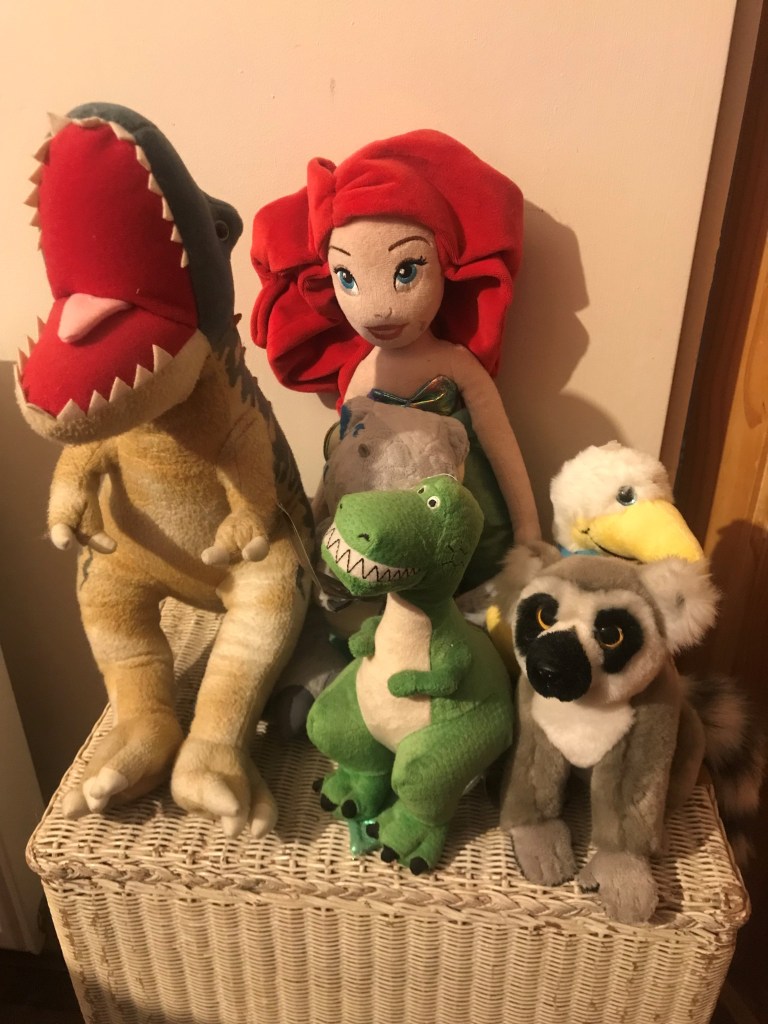
In semester 2, the level 4 BA Criminology students have been navigating different forms of socialisation for children, and thinking critically about where standards, assumptions and pressures on our children come from. Its been an interesting few weeks full of discussions building on personal experiences, documentaries and the wider academic literature. Now, whilst I could write a detailed reflection on the classroom discussions, what instead I want to, shockingly, moan about in the blog this week are the labels applied to young adults and adults implying being ‘childish’ is something to be ashamed of.
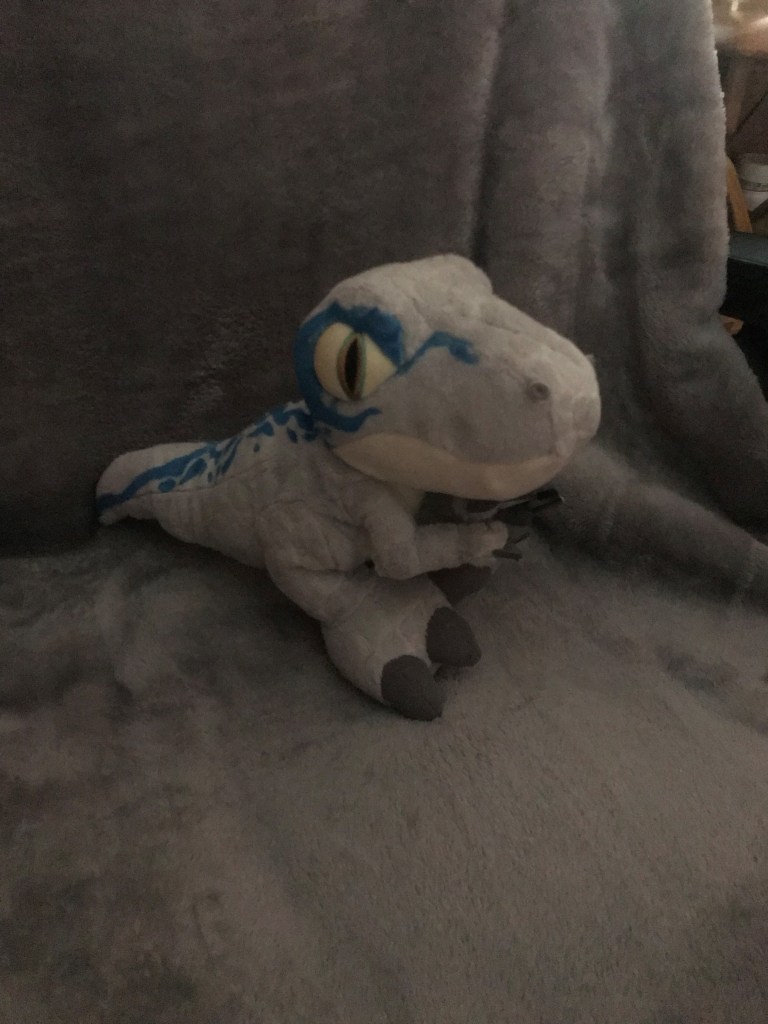
Many who know me will be aware I am a huge Disney fan, particularly Disney and Disney Pixar animations, which includes watching, gaming, clothing and accessories which all match my love for these films. I am also a big, big, big fan of dinosaurs, although if I’m being honest, its more so the Jurassic Park/World franchise. Again, books, films, toys, stuffed dinosaurs (shout out to my Beta stuffed toy – pictured above) from the Natural History Museum) and also a tattoo. These things bring me joy and also peace. Many a times when I’m overwhelmed, the go to is a Disney animation or Jurassic Park (much to my partner’s pain) for familiarity, comfort and relaxation. Yet despite the comfort and joy it brings me, often I am met with commentary about my ‘childish’ interests and questions around ‘when will I grow up’.
Now for clarity, most of these comments (but not all) are from friends and loved-ones who are saying so (I presume) in jest. There is no malice behind the comments, but still it has given me food for thought. Lots of people of all ages share the same joys as myself (social media fan pages are many), but is there any harm in pressing people to justify and commenting on their pastimes? Possibly. I am in a fortunate position to be able to afford various Disney-themed items of clothing (huge shout out to Primark and their Stitch section), Jurassic Park official merchandise, POP! Figures, clothes, posters etc whereas when I was younger, this was not something we could afford. Being in a privileged position and having a disposable income means I get to explore interests from my childhood, and have them develop into passions. Something which wasn’t available to me as a child, or even as a young adult at University. Being older and engaging with interests from childhood also uncovers new ways of appreciating the messages, artwork, and stories.
The presumption that my interests are ‘childish’ is not clearly explained by those who comment. What is meant by ‘childish’ and why is it presumed to be negative is not clear. But there appears to be some stigma around it. There is a push, as we are slowly uncovering in classroom discussions, for everyone to ‘grow-up’, but is this what is best for the individual? Or does this serve some greater purpose for society? I’m not sure what the point of the above ramblings are for, other than it might be best to keep opinions to yourself if you do not share the same interest. In a word that is full of harm and disadvantage, especially for children, let people enjoy their interests and passions, commentary free, if they aren’t harming you!
Share this:


The racialised cost of e-waste
We are in a climate where electronic goods are the norm and the way ‘forward’ for the modern society in which we live. But what of the effects of living in a world with so much technology and a constant need to replace and upgrade our electrical goods? One of these effects is toxic waste and pollution. According to the Global E-Waste Monitor, of the 53.6 million metric tons of e-waste generated in 2019, only 17.4% was collected and recycled properly (ITU, 2020)
When you get rid of an old phone or laptop, where does it go? In some cases, it may be reused or recycled safely, but for many, they may end up in parts of Asia or on a site like Agbogbloshie in Accra, Ghana.

Agbogbloshie was one of the largest e-waste sites in the world, hundreds of thousands of tons of waste were dumped at this site. Workers at this site spent hours looking through the waste site for valuable parts and scrap metal they could sell. Doing this on a daily basis for years had adverse effects on the health of these workers: skin problems, headaches, stomach ulcers, and those are the health effects that are more easily identified, but what of those health defects not yet visible.
In July 2021, the Agbogbloshie site was demolished suddenly and without warning. Whilst some have heralded this as a great move, the way it was done was arguably inhumane and irresponsible. Workers at the site were not notified of the demolition and were forcibly removed from the site without time to take their belongings with them. They were not given the time or support to find alternative employment arrangements, leaving many in financial difficulty. For many, they have now moved to smaller waste sites, or they bring scrap metal into their homes and around their families as they no longer have a site to work from. Is this better? It could be argued that if the aim was to help these individuals minimise the health risks associated with working on the scrapyard, then they have failed. If the claim is that human rights were being violated by allowing individuals to work on the scrapyard, what of the human rights violations when the workers were forcibly removed?
I draw similarities to the aerial destroying of coca crops in countries such as Colombia. Hidden under the guise of the greater good and supporting the impoverished, why is it always those at the bottom of the ladder who are adversely affected. It is time for governments to be held accountable for the harms they cause and to start supporting and investing in their citizens.
To find out more: https://africanarguments.org/2022/07/agbogbloshie-a-year-after-the-violent-demolition/
Share this:


I’m not Black; my Friends and I are Brown, not Black

I recently began the process of preparing my child for the imminent transition to a new school situated in a diverse community. Despite being born into a similarly diverse environment, his early educational exposure occurred in an ethnically varied setting. Venturing into this new chapter within a racially diverse community has sparked a keen interest in him.
My child soon articulated a perspective that challenged conventional racial labels. He asserted that he and his friend Lucien are not accurately described as ‘black,’ rather he believes they are ‘brown.’ He went further to contest the classification of a lady on TV, who was singing the song “Ocean” by Hillsong, as ‘white.’ According to him, his skin is not black like the trousers he was wearing, and the lady is not white like the paper on my lap. This succinct but profound statement held more critical significance than numerous conversations I’ve encountered in my over five years of post-PhD lecturing.
The task at hand, guiding an under seven-year-old questioning the conventional colour-based categorisation, proved challenging. How do I convince an under seven-year-old that his knowledge of colours should be limited to abstract things and that persons with brown toned skin are ‘black’ while those with fair or light toned skinned are ‘white’? I found myself unprepared to initiate this complex conversation, but his persistent curiosity and incessant ‘why prompts’ compelled me to seek creative ways to address the matter. Even as I attempted to distract myself with a routine evening shower and dinner, my mind continued to grapple with the implications of our conversation.
Post-dinner, my attempt to engage in my usual political news catch-up led me to a YouTube vlog by Adeola titled ‘How I Almost Died!’ where she shared her pregnancy challenges. One statement she made struck a chord: ‘if you are a black woman and you are having a baby in America, please always advocate for yourself, don’t ever keep quiet, whatever you are feeling, keep saying it until they do something about it’ (18:39). This sentiment echoed similar experiences of tennis star Serena Williams, who faced negligence during childbirth in 2017.
The experiences of these popular ‘black’ women not only reminds me that the concept ‘black’ and ‘white’ are not only symbolic, but a tool for domination and oppression, and disadvantaging the one against the other. Drawing inspiration from Jay-Z’s ‘the story of O.J’, the song drew attention to the experiences of race, success, and the complexities of navigating the world as a ‘black’ individual. In the song, two themes stood out for me, the collective vulnerability to prejudice and the apparent bias in the criminal justice system towards ‘black’ people. In the UK, both proportional underrepresentation in staff number and proportional overrepresentation of minoritized groups in the criminal justice system and the consequences therefrom is still topical.
Jay-Z’s nuanced understanding of ‘black’ identity rejects simplistic narratives while emphasising its multifaceted nature. The verse, “O.J. ‘like I’m not black, I’m O.J.’ Okay” underscores the challenges even successful ‘black’ individuals face within racial systems. As criminologists, we recognize the reflection of these issues in daily experiences, prompting continuous self-reflexivity regarding our values, power positions, and how our scholarly practice addresses or perpetuates these concerns. Ultimately, the question persists: Can a post-racially biassed world or systems truly exist?
Share this:


Aspiration and Independence: A tale of Lego, Learning and Universities

A couple of year’s ago to mark the completion of my PhD, my husband presented me with a Lego kit, a Lego typewriter to be precise! This was an incredibly thoughtful gift, a nod to the start of my working life where I had used a very similar typewriter daily at the Magistrates’ Court. It was also recognition of the years I had spent writing the thesis. Simultaneously, it was also rather a surprising kit, my only other foray into Lego as an adult was building a Lego Yellow Submarine some years before. That kit had taken me considerable hours to build, which I had enjoyed, in part because of my love for the Beatles. However, I digress….
I embarked upon building the typewriter, which looked rather big and scary in its box, and even more daunting when I saw the huge instruction manual and lots and lots of bags of pieces. Nevertheless, how difficult can it be to build a Lego kit? I started with confidence, working my way through the step-by-step instructions, occasionally accidentally missing a step and having to go back through the booklet. However, about halfway through, I got completely stuck, I couldn’t make sense of the diagram and turned to google. Here I found lots of articles and videos, each of which seemed to stress that this was an extremely challenging kit, one of the most complex produced to date and not for the faint hearted. Regardless, I found some information about my particular hurdle and carried on working my way through the steps.
As time went on, I found the idea that what I was doing was difficult, playing across my mind. Increasingly, as I found a part challenging, rather than working my way backwards and forwards through the instructions, trying pieces one way and another, in trial and error, I turned again and again to google. Of course, each time I did this, as well as the answer, I was confronted by the continual narrative of challenge and difficulty. As I went on, I felt as if I could not complete this kit. Then disaster struck! As I fought to put in a moving part, a part of the model collapsed, I obviously hadn’t pressed the pieces in hard enough. I found myself facing what had been almost complete model (only one bag of pieces to go) but was now a complete mess. Now, remember this is just a model, not a matter of life and death, but I felt this mistake deeply. All of the commentators, self-proclaimed Lego “experts” were right, this was not a kit for me, a mere amateur.
This anecdote, really ends there, the kit is still in pieces in its box. I haven’t been able to bring myself to dismantle what’s left and start again. The fact that I haven’t completed the kit, plays on my mind. I don’t give up on anything (my work, education and family history attest to this), but here I am defeated by a toy![i] This “failure” got me thinking about learning and teaching and the role self-belief (or the lack of it) plays in the academic journey. This chimes with recent thoughts around independence and aspiration when it comes to excelling in study.
First a proviso, this is not about my institution, but seemingly every educational establishment and more broadly society. Everywhere I look it seems that young people are being told that they are incapable, that they need support in all aspects of their lives, including studying. That university study is incredibly difficult and probably not something that can done without enormous support. Sometimes this is an implicit message absorbed on daily basis, other times more explicit, posters, advertisements advising how to defer assessments, how to get in touch with support services, where to go for financial guidance, people you can talk to and so on. Now all of these are really important, but they are not the primary purpose of a university. That purpose is to provide a space for education, for thinking, for reading, for intellectual discourse, a place full of challenging ideas, allowing individuals to develop themselves in a variety of different and sometimes, surprising ways. It is also a place to make mistakes on that learning journey. After all, if we knew everything before we started studying for a degree, there would be little point in studying.
Nevertheless, in the modern university, there is little tangible evidence that this is what a university is for. To quote Nike (1988) where is the “Just do it”. Where does it remind us, that humans are powerful, resourceful, adaptable, that we can learn anything we put our minds to, we can succeed? Where are the messages designed to build self-confidence, self-esteem, and aspiration. Yes, there is help available, don’t be afraid to ask for support! There is no stigma, you are paying for every part of your university experience. Yes, studying is challenging, but so are lots of things in life; learning to drive, holding down a job, caring responsibilities, many of which we rely upon others for support.
Obviously, there is a big difference between Lego and an academic qualification, nevertheless they both (comparatively) require a big financial outlay, levels of dedication, concentration, aspiration and a desire for successful completion. I have three degrees, each has cost me financially, temporally and emotionally. This studying has given me the lowest of lows and the highest of highs along the way, but I have grown in ways I could never have imagined at the beginning of my studies. Along the way I have utilised support from academics and university professional services, for which I am very thankful, but the hard work is mine. Even better, those three pieces of paper belong to me and me alone, they are proof of my stamina, my perseverance and my ability to bounce back again and again. Nobody, can take those away from me!
It is for all these reasons that I will complete that Lego set! But I also recognise that I may need some expert help to build up my confidence again. This time I won’t call upon academics for support, but another expert, my 11 year old grandson, who has proved time and again, that no Lego kit will defeat him! With perseverance and an expert who will gently guide and enable me, that Lego kit will be complete in no time. Watch this space for the finished article!
EDIT Sunday 18 February: Mission Accomplished

[i] Apologies to all Lego aficionados, I fully recognise that Lego is so much more than a toy.

 Thoughts from the criminology team