
Home » 2023
Yearly Archives: 2023

Christmas Toys

In CRI3002 we reflected on the toxic masculine practices which are enacted in everyday life. Hegemonic masculinity promotes the ideology that the most respectable way of being ‘a man’ is to engage in masculine practices that maintain the White elite’s domination of marginalised people and nations. What is interesting is that in a world that continues to be incredibly violent, the toxicity of state-inflicted hegemonic masculinity is rarely mentioned.
The militaristic use of State violence in the form of the brutal destruction of people in the name of apparent ‘just’ conflicts is incredibly masculine. To illustrate, when it is perceived and constructed that a privileged position and nation is under threat, hegemonic masculinity would ensure that violent measures are used to combat this threat.
For some, life is so precious yet for others, life is so easily taken away. Whilst some have engaged in Christmas traditions of spending time with the family, opening presents and eating luxurious foods, some are experiencing horrors that should only ever be read in a dystopian novel.
Through privileged Christmas play-time with new toys like soldiers and weapons, masculine violence continues to be normalised. Whilst for some children, soldiers and weapons have caused them to be victims of wars with the most catastrophic consequences.
Even through children’s play-time the privileged have managed to promote everyday militarism for their own interests of power, money and domination. Those in the Global North are lead to believe that we should be proud of the army and how it protects ‘us’ by dominating ‘them’ (i.e., ‘others/lesser humans and nations’).
Still in 2023 children play with symbolically violent toys whilst not being socialised to question this. The militaristic toys are marketed to be fun and exciting – perhaps promoting apathy rather than empathy. If promoting apathy, how will the world ever change? Surely the privileged should be raising their children to be ashamed of the use of violence rather than be proud of it?
Share this:


Festive messages, a legendary truce, and some massacres: A Xmas story

Holidays come with context! They bring messages of stories that transcend tight religious or national confines. This is why despite Christmas being a Christian celebration it has universal messages about peace on earth, hope and love to all. Similar messages are shared at different celebrations from other religions which contain similar ecumenical meanings.
The first official Christmas took place on 336 AD when the first Christian Emperor declared an official celebration. At first, a rather small occasion but it soon became the festival of the winter which spread across the Roman empire. All through the centuries more and more customs were added to the celebration and as Europeans “carried” the holiday to other continents it became increasingly an international celebration. Of course, joy and happiness weren’t the only things that brought people together. As this is a Christmas message from a criminological perspective don’t expect it to be too cuddly!
As early as 390 AD, Christmas in Milan was marked with the act of public “repentance” from Emperor Theodosius, after the massacre of Thessalonica. When the emperor got mad they slaughtered the local population, in an act that caused even the repulson of Ambrose, Bishop of Milan to ban him from church until he repented! Considering the volume of people murdered this probably counts as one of those lighter sentences; but for people in power sentences tend to be light regardless of the historical context.
One of those Christmas celebrations that stand out through time, as a symbol of truce, was the 1914 Christmas in the midst of the Great War. The story of how the opposing troops exchanged Christmas messages, songs in some part of the trenches resonated, but has never been repeated. Ironically neither of the High Commands of the opposing sides liked the idea. Perhaps they became concerned that it would become more difficult to kill someone that you have humanised hours before. For example, a similar truce was not observed in World War 2 and in subsequent conflicts, High Commands tend to limit operations on the day, providing some additional access to messages from home, some light entertainment some festive meals, to remind people that there is life beyond war.
A different kind of Christmas was celebrated in Italy in the mid-80s. The Christmas massacre of 1984 Strage Di Natale dominated the news. It was a terrorist attack by the mafia against the judiciary who had tried to purge the organisation. Their response was brutal and a clear indication that they remained defiant. It will take decades before the organisation’s influence diminishes but, on that date, with the death of people they also achieved worldwide condemnation.
A decade later in the 90s there was the Christmas massacre or Masacre de Navidad in Bolivia. On this occasion the government troops decided to murder miners in a rural community, as the mine was sold off to foreign investors, who needed their investment protected. The community continue to carry the marks of these events, whilst the investors simply sold and moved on to their next profitable venture.
In 2008 there was the Christmas massacre in the Democratic Republic of Congo when the Lord’s Resistance Army entered Haut-Uele District. The exact number of those murdered remains unknown and it adds misery to this already beleaguered country with such a long history of suffering, including colonial ethnic cleansing and genocide. This country, like many countries in the world, are relegated into the small columns on the news and are mostly neglected by the international community.
So, why on a festive day that commemorates love, peace and goodwill does one talk about death and destruction? It is because of all those heartfelt notions that we need to look at what really happens. What is the point of saying peace on earth, when Gaza is levelled to the ground? Why offer season’s wishes when troops on either side of the Dnipro River are still fighting a war with no end? How hypocritical is it to say Merry Christmas to those who flee Nagorno Karabakh? What is the point of talking about love when children living in Yemen may never get to feel it? Why go to the trouble of setting up a festive dinner when people in Ethiopia experience famine yet again?
We say words that commemorate a festive season, but do we really mean them? If we did, a call for international truce, protection of the non-combatants, medical attention to the injured and the infirm should be the top priority. The advancement of civilization is not measured by smart phones, talking doorbells and clever televisions. It is measured by the ability of the international community to take a stand and rehabilitate humanity, thus putting people over profit. Sending a message for peace not as a wish but as an urgent action is our outmost priority.
The Criminology Team, wishes all of you personal and international peace!
Share this:


Stop the boats, Stop the visas, Meet the thresholds and You are in!

The Tory party has witnessed a number of challenges in recent years and with the appointment of Rishi Sunak, a brief sense of stability was felt amidst the chaos. As different parties look to the upcoming elections, each party have begun to move pieces on its chess board. While campaigns have unofficially begun, some commentators have argued that Sunak’s recent policy on migration could be one of his game plans.
Let’s take a closer look into this recent migration policy. Attention seemed to have slowly shifted away from the plan of redirecting boats to Rwanda to the need to suppress legal migration. To restrict LEGAL migration, Sunak’s government instituted policies limiting opportunities on student visas, banning dependents on care visas, increasing the minimum income threshold for skilled worker and family visas, and revising rules around shortage occupation lists.
Starting with the skilled worker visas, the government imposed a £38,700 minimum salary requirement to gain entry into the UK. Simply put, if you are coming to work in the UK, you must search for a job that pays nothing less than £38,700 in annual income, or else you will not qualify. For me, I think some clarification is needed here for what the government considers as skilled jobs exactly. I say this because junior doctors, nurses and train operators would be considered as being part of a skilled workforce. However, these skilled work force have undertaken multiple strike action over dispute on wages in the last few months. This leads me to another question – how many ‘skilled job’ workers earn a salary of £38,700 in the current day economy? Although the government implied that the reason for this is to force organisations to look to British citizens first rather than relying on legal migrants – which could be thought as quite commendable however, a number of UK workers earn less than the new threshold annually anyway. So this logic needs further clarity in my view.
In terms of curbing student’s visas, UK higher education has long attracted international students, yet these new policies outrightly banning postgraduate dependents and targeting post-study work visas seem quite harsh, especially given the exorbitant £13,000 to £18,000 yearly tuition fees already paid by these students. If the aim is transforming education into a type of transitory/knowledge based tourism, this should be transparent so aspiring international scholars are not misled into believing they are wanted for anything beyond their hefty bank balances.
On family visas and so forth, it is without a doubt that these new rules will tear apart families because it also imposes a £38,700 minimum income threshold on family visas from £18,600. The technicality around this is that legal migrants will not be the only ones to be affected by these new rules, British citizens will also be affected. Let us consider this scenario. Consider Linda, a British citizen working part-time in retail earning £33,000 annually. She aims to marry her long-term boyfriend from Sri Lanka next summer, but both of them fall short of the minimum income threshold. Under the current rule, Linda now faces a dilemma. It’s either she increases her earnings above the threshold by the next spring or uproot her British life to reunite with her partner abroad. Contrast her plight with Kelvin, a non British citizen who has recently secured a Band 7 physiotherapy role in the NHS. He is entering the UK from Mozambique and has managed to negotiate a £47,000 pay deal with his trust. Kevin has the right to move his family freely over to the UK without any disruption. This seems more like double standards because for the less affluent, it seems the right to create a family across borders will become an exclusive privilege reserved only for the rich under this new policy.
The clock may be running out for advocacy groups hoping to see a repeal of these new regulations by the House of Lords and it seems doubtful there is enough procedural means in the Commons to withdraw the policies.
Share this:


Meet the Team: Angela Charles, Senior Lecturer in Criminology

I would like to take this opportunity to say a warm hello to my colleagues and to the students at the University of Northampton.
I am Angela Charles, a senior lecturer in criminology. I have a passion and deep interest in this discipline for a number of reasons. Firstly, criminology is such a fascinating and thought-provoking subject that is constantly evolving and expanding. Secondly, criminology is a subject where I believe social justice can be fought for and in many cases achieved, through researching and gaining evidence to push for change, and through perseverance. Thirdly, criminology requires us to discuss, debate, analyse and build on what has been previously argued and discussed; thereby strengthening, tweaking or dismantling and rebuilding previous theoretical knowledge and criminological concepts.
My research interests are within prisons and penology, and race and gender. My most recent research explored and analysed the experiences of Black women in English prisons, paying particular attention to the intersections of race, class and gender. Black women are at the margins of society and face multiple intersecting oppressions. The prison is arguably a microcosm of society and perpetuates the same oppressive structural inequalities. It is often these racialised and gendered pains of imprisonment that are rarely discussed or mentioned both within scholarly literature and the public realm more widely. I hope to disseminate my research in the coming years and amplify some of the voices of Black women in UK prisons.
I’m also keen to explore research methods that arguably move away from traditional research methods and instead aim to decolonise research methods. Criminologists need to adapt the methods they use to suit the differing backgrounds and cultures of the participants that we research, and we need to incorporate different cultural aspects into the research process. I believe this not only will create richer data, but will also increase participant engagement as they become co-producers of knowledge.
Lastly, I look forward to working closely with my colleagues to learn about their research interests, passions and to collaborate on ensuring that studying criminology is enjoyable, rewarding and insightful at the University of Northampton!

Share this:


Journeys Through Time: From British Empire’s Transportation Punishment to Contemporary Immigration Challenges
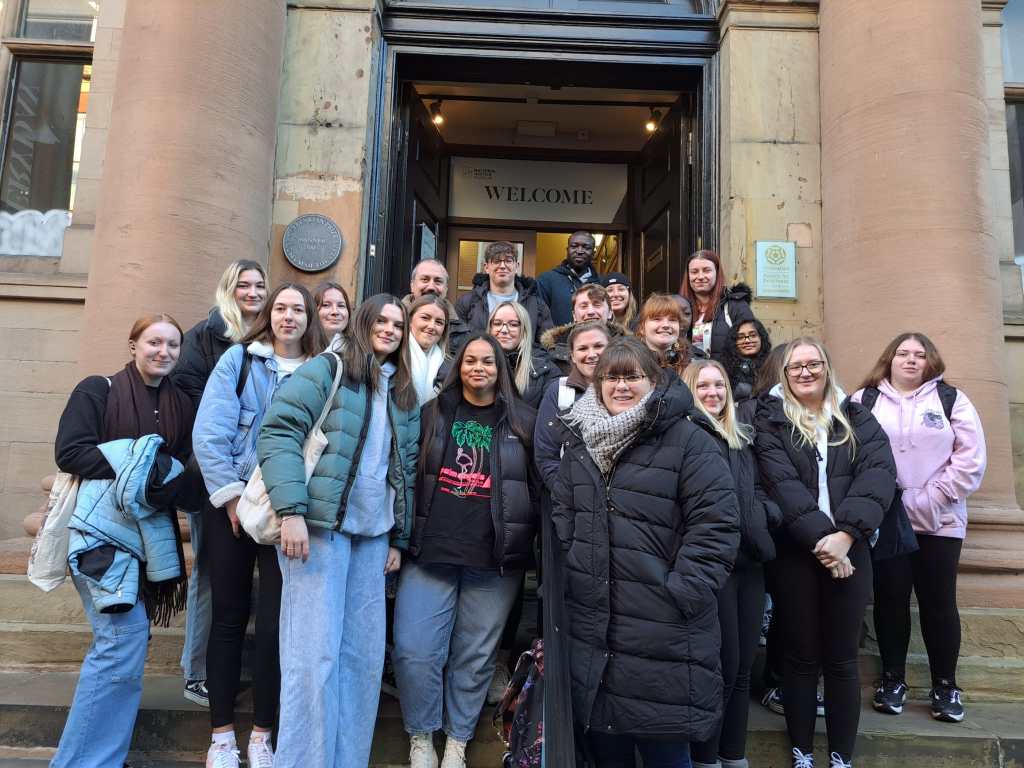
On November 29, 2023, our level 5 criminology students embarked on a visit to the National Museum of Justice in Nottingham. The trip had multiple objectives, including providing students with an out-of-classroom understanding of archives, immersing them in the crime and justice model in Britain from the 1840s to the 1940s, exposing them to rich historical records, deepening their understanding of archival research materials, and offering them first-hand experience on the treatment and conditions of suspected and convicted individuals in the past.
The museum, a vital historical site, not only facilitates reflection on the history of crime and justice in Britain but also offers an opportunity to ponder the trends and trajectory of changes since 1614.
Among the myriad opportunities for learning and research, transportation stood out for me. This form of punishment, prevalent in the British Empire from the 17th to the mid-19th centuries, forcibly removed convicted individuals from Britain to penal colonies, primarily in North America and later in Australia. This severe punishment involved separating convicts from their families and homeland, subjecting them to harsh and unfamiliar environments. Notably, individuals as young as nine were sent to America in 1614, with sentences ranging from 7 to 14 years or life. In addition to its punitive aspect, transportation provided forced cheap labour for the British government in exploited colonies, contributing to the expansion of the British Empire.
The deplorable conditions during transportation, its impact on the history of Australia and other colonies, and its role in the development of a unique convict society underscore its harsh and brutal nature. Despite its significant role, transportation was gradually abolished in the mid-19th century due to growing unpopularity and expense.
The historical context of transportation as a punitive measure serves as a backdrop for understanding current immigration and eviction plans in the UK, particularly concerning refugees and asylum seekers arriving in small boats. Though transportation was phased out in the mid-19th century, the echoes of forcibly moving individuals can be juxtaposed with contemporary immigration policies.
The British Empire’s transportation punishment, involving forced removal to distant penal colonies, parallels the challenges faced by today’s refugees and asylum seekers. While historical transportation was driven by criminality, current immigration plans involve vulnerable populations seeking refuge and safety, raising uncertainties about the safety they can find in Rwanda.
Examining the deplorable conditions of transportation provides a lens to scrutinize the humanitarian aspects of current immigration policies, emphasizing the toll on human life, challenges during migration, and impacts on indigenous populations.
Both transportation and the Rwanda plan share a common objective of removing unwanted individuals from British society, albeit for different reasons. Transportation aimed to punish criminals, while the Rwanda plan intends to deter dangerous journeys across the English Channel.
However, both policies face criticism from human rights groups, asserting their cruelty and violation of international law. Despite this, steps to implement the Rwanda plan are underway, indicating a willingness to sacrifice the well-being of vulnerable individuals for political expediency. The parallels between transportation and the Rwanda plan serve as a stark reminder of the dark side of British history, with asylum seekers and refugees sent to Rwanda facing the prospect of indefinite detention and potential persecution upon return to their countries of origin.
While transportation was abolished in the mid-19th century, exploring its historical significance encourages reflection on the complexities of modern immigration and eviction plans. This analysis highlights how punitive measures, whether historical or contemporary, shape societies, impact individuals, and contribute to a nation’s broader narrative.
Share this:


A visual walk around a panopticon prison in the city of “Brotherly Love”
Conferences…people even within academia have views on them. This year the American Society of Criminology hosted its annual meeting in Philadelphia. In the conference we had the opportunity to talk about course development and the pedagogies in criminology. Outside the conference we visited Eastern State Penitentiary one of the original panopticon prisons…now a decaying museum on penal philosophy and policy.

The bleak corridors of a panopticon prison

the walls are closing in and there is only light from above

these cells smell of decay; they were the last residence of those condemned to death

the old greenhouse; now a glass/concrete structure…then a place to plant flowers. Even in the darkest places life finds a way to persevere

isolation: a torture within an institution of violence. The people coming out will be forever scared as time leaves the harshest wounds

a place of worship: for some the only companion to abject desperation; for those who did not lose their minds or try to end their lives; faith kept them at least alive.

the yard is monitored by the guards at the core; the chained prisoners will walk outside or get some exercise but only if they behave. To be outside in here is a privilege

the corridors look identical; you become disoriented and disillusioned

everything here conjures images of pain

an ostentatious building, build back in the 19th century to lock in criminals. It housed a new principled idea, a new system on penal reform. the first penitentiary of its kind. Nonetheless it never stopped being an institution of oppression…it closed in 1970.
The role of the criminologist (among others) is to explain, analyse and discuss our responses to crime, the systems we use and the strategies employed. So before a friendly neighbour tells you that sending people to an island or arming the police with guns or giving juveniles harsher penalties, they better talk to a criminologist first.
As a final thought, I leave you with this…there are people who left the prison broken but there are those who died in this prison. Eleven people tried to escape but were recaptured. Once you are sent down, the prison owns you.
Share this:


Navigating the Realm of Harm Reduction in the Midst of Chaos
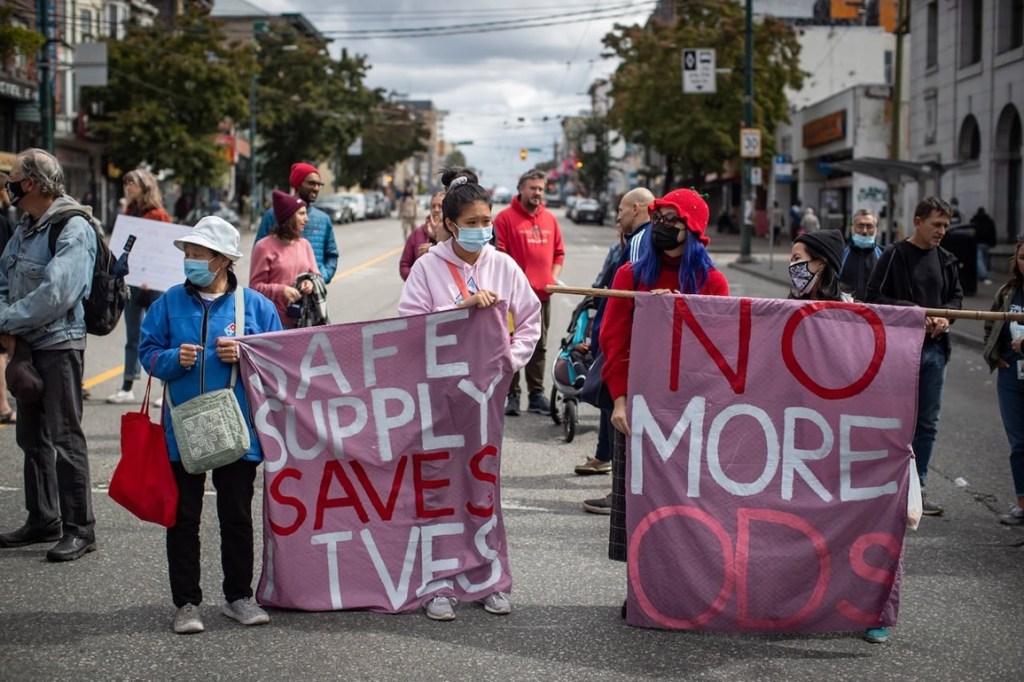
In recent years, Canada has emerged as a trailblazer in progressive drug policy by embracing a bold approach to decriminalization. This paradigm shift represents a departure from the traditional punitive stance toward drug offenses, instead prioritizing harm reduction strategies. As the nation navigates the complex terrain of drug policy reform, it becomes evident that this move holds the promise of addressing public health issues more effectively.
The decriminalization of drugs in Canada is rooted in a recognition of the failure of punitive measures to curb substance abuse. Rather than treating drug addiction as a criminal issue, the emphasis is now on approaching it as a public health concern. By lifting criminal penalties for possession of small amounts of drugs, the Canadian government aims to break the cycle of imprisonment and provide individuals struggling with addiction access to the help they need.
At the core harm reduction is a guiding principle in Canada’s evolving drug policy. Instead of focusing solely on preventing drug use, the emphasis has shifted to minimizing the negative consequences associated with it. This approach includes the distribution of clean needles, supervised injection sites, and access to overdose-reversing medications. By adopting harm reduction strategies, Canada aims to protect the well-being of both individuals using drugs and the broader community.
The decision to decriminalize drugs draws inspiration from the success of Portugal’s approach. In 2001, Portugal decriminalized the possession and use of all drugs, opting for a health-focused model. Over the years, Portugal has witnessed a decline in drug-related deaths, HIV infections, and problematic drug use. Canadian policymakers are eager to replicate these positive outcomes and shift the narrative around drug use from punishment to rehabilitation.
Despite the potential benefits, the decriminalization of drugs in Canada has sparked debates and concerns. Many people have argued that lenient drug policies may contribute to increased drug use, while others worry about the potential strain on public resources for addiction treatment. Furthermore, investigative reporter Tyler Oliveira has demonstrated the damaging effects of drug misuse and homelessness in Vancouver. From watching his investigation, I wonder whether the Canadian government could better use their resources to tackle issues pertaining to homelessness, rather than creating a wider problem of social ills. While there are calls to treat people with issues of addiction more humanely in Canada, Oliveira’s documentary is shocking and, in many ways, frightful. With images of large amounts of methamphetamine users unable to walk and becoming extremely violent to healthcare workers and the general public I wonder if this more towards progressive policy has gone too far (I don’t know how I would feel inhaling meth fumes on my way to my local shop).
Striking a balance between personal freedom and public welfare remains a challenge, but advocates believe that the emphasis on harm reduction will ultimately lead to better outcomes for everyone….
Decriminalization opens the door for more community involvement in addressing drug-related issues. Local initiatives, grassroots organizations, and community outreach programs gain significance as they become crucial players in the broader strategy of harm reduction. By empowering communities, Canada aims to foster a collaborative and compassionate approach to tackling the complex issue of drug addiction.
Canada’s journey toward the decriminalization of drugs represents a paradigm shift in the global war on drugs. By embracing harm reduction as a cornerstone of its strategy, the nation aims to prioritize the health and well-being of its citizens over punitive measures. The lessons learned from Portugal and other progressive models underpin the potential for positive change. As Canada continues to navigate the complexities of drug policy reform, the emphasis on harm reduction holds the promise of transforming the narrative around drug use and addiction. Only time will tell if this bold approach will lead to a healthier, more compassionate society.
Share this:


In Praise of Howard S. Becker (1928-2023)

Three months ago, Howard S. Becker died at the age of 95, some of the Criminology Team reflect below on his impact.
I re-read Becker’s Outsider’s during the covid-19 pandemic. It reminded me of how Becker’s critical take on criminology helped me to understand and articulate the world in which I grew up in. Yes, street crime happens, and yes it causes victims to suffer but street crime seemed to be a survival response from the powerless aka ‘the deviants’ who were oppressed by the disciplining State and its police force. Becker’s work must have been groundbreaking at the time that it was published, and it continues to resonate within more contemporary critical theories surrounding intersectional oppressions that I am most interested in today…what a game changer!
@haleysread
I first encountered Becker’s (1963) Outsiders as an undergraduate, since then I have revisited many times. The book and the ideas within are so well-written, so accessible, allowing the reader to see criminality and criminal justice from an entirely different perspective. Although profound, it is not this Becker text which is closest to my heart, for that we go to 1967 and the publication of his article ‘Whose Side Are We On?‘ It is this succinct piece of writing that allowed me to understand that criminologists can never be neutral, they have to take a side. Furthermore, they must always be on the side of the powerless and never the powerful. The Criminal Justice System [CJS] and all of the agents within it, are working within and for the State and thus have plenty of supporters. Individuals in their engagement with the CJS, do not have the same support or protection, they are always outnumbered and out resourced. If we truly want to gain a holistic understanding of deviance and criminality, Becker (1967) is very helpful.
Alongside, his writing around crime and deviance, Becker also identifies the importance of language and writing style, to research practice. In Writing for Social Scientists (1986) and Tricks of the Trade (1998) and Telling About Society (2007) offers clear, practical guidance and comfort for uncertain scholars (whatever level of study).
Finally, we need to mention Becker’s music, his beloved jazz which provides the soundtrack to a scholarly life well lived, which means you can study his life’s work (both written and aural) simultaneously. A unique man, whose impact will be felt by criminologist and other social scientists for a very long time.
@paulaabowles
In 2006, during my undergraduate studies in sociology, I was introduced to Howard Becker’s labelling theory. While it marked a significant departure from the traditional explanation of deviance, it sparked lively debates among my peers. I distinctly recall vehemently opposing the theory’s practical application in Nigeria, my home country. Some of my peers argued passionately, citing numerous examples of deviance, including instances of crimes of the powerful. They contended that corruption and the misappropriation of public funds in Nigeria were products of eroding social values, driven by immense societal pressure on political officeholders to maintain an image of ‘big men.’ No doubt, Becker had a point on this and despite my initial reservations about labelling theory, Becker’s scholarly contributions have undeniably been influential in shaping both my sociological imagination and my criminological lenses. So long to a respected scholar!
@sallekmusa
It is impossible to list eminent criminologists without at least giving a nod to Howard Becker, although I would suggest a nod is far from sufficient. Becker it seems to me had the ability to write meaningful texts that could be understood by all. Of course his narrative in Outsiders is a product of its time but much of it is still applicable today. I first read Outsiders as part of my undergraduate degree and much of resonated and yet as with all great work, it doesn’t explain everything. What it does though is provide a very different perspective on deviance and society as a whole. In his later work Becker discussed labelling stating it wasn’t a theory. Well worth returning to the book then just to understand that statement alone.
@5teveh
This August 16, 2023, Howard Becker died. He was a 95 years old social scientist/sociologist (depending on who you will ask) with a long and significant legacy on his tome of work. My colleagues above predictably chose Outsiders as representative sample of his work. Not surprising really considering this was one of his seminal pieces of work that articulated the basis of theories that sociologists, criminologists and other social scientists based their own theories and understanding on social reality. His work on labelling theory became a significant influence on criminologists who tried to understand the relationship between postmodernity and deviance. It comes as no surprise that his influence to those who followed him in academia was so important.
What I thought most fitting was to concentrate on one of his latest papers written a few years ago when he was 91. In the midst of the pandemic with the lockdown and the great uncertainty it ensued Howard retreats to what he knows best; to be a social scientist and contextualise his observations the best way he knows. The paper in a praise of neighbourhood spirit and collective consciousness under the guise of urban sociology. Howard Becker is very reflective of his location, the history of the place and its social development and it is a testament of the importance of interactionism and positionality.
Using personal experience his paper “In San Francisco, when my neighborhood experiences pandemics” Becker retains his criticality as a social scientist, using observations and personal narratives to humanise an inhuman and repressive situation. People around him become actors in the crisis especially to those who as more in need and his impressions give us a snapshot of the time. In his own words “Those of us who do social science to be ready to observe life around us” a legacy to all of us that social situations continuously challenge us to explore things differently. That is because “social life does the experiment for us”. One of his last lessons on “life goes on” is so important to the sociology of everyday life.
This paper may not have the significance of some of his earlier work but it is a testament of what a restless mind can produce. He was able to record a situation that in years, decades to come, people will write about it and its impact. Yet, despite his age, his writing remained fresh, current and relevant. In academic terms he was the eternal teenager. Solon of Athens once said “Γηράσκω αεί διδασκόμενος” “I grow old while always learning” projecting that the pursue of knowledge is continuous and lifelong. In Howard Becker this seemed to have been the case. Thank you for your company all those years in the libraries, the seminars, the essays that we read you, thought of your ideas and talk about them. Goodbye to the social scientist, the thinker, the philosopher, the person.
@manosdaskalou
Share this:


What value life in a far-off land?

Watching the BBC news and for that matter any other news broadcast has become almost unbearable. Over the last three weeks or so the television screen has been filled with images of violence, grief, and suffering. Images of innocent men, women and children killed or maimed or kidnapped. Images of grieving relatives, images of people with little or no hope. And as I watch I am consumed by overwhelming sadness and as I write this blog, I cannot avoid the tears welling up. And I am angry, angry at those that could perpetuate such crimes against humanity. I will not take sides as I know that I understand so little about the conflict in Israel, Gaza, and the surrounding area, but I do feel the need to comment. It seems to me that there is shared blame across the countries involved, the region, and the rest of the world.
As I watch the news, I see reports of protest across many countries, and I see a worrying development of Islamophobia and Antisemitism. The conflict is only adding fuel to the actions of those driven by hatred and it provides plenty of scope for politicians in the West and other countries, to pontificate, and partake in political wrangling and manoeuvring before showing their abject disregard for morality and humanity. The fact that Hamas, as we are constantly reminded by the BBC, is a proscribed terrorist organisation, proscribed by most countries in the west, including the United Kingdom, seems to give carte blanche to western politicians to support crimes against humanity, to support murder and terrorism. How else can we describe what is going on?
The actions of Hamas should and quite rightly are to be condemned, any action that sees the killing of innocent lives is wrong. To have carried out their recent attacks in Israel in such a manner was horrendous and is a reminder of the dangers that the Israeli people face daily. But the declaration by Israel that it wants to remove Hamas from the face of the earth would, and could, only lead to one outcome, that being played out before our very eyes. The approach seems to be one of vengeance, regardless of the human cost and regardless of any rules of war or conflict or human dignity. How else can the bombing and shelling of a whole country be explained? How else can the blockading of a country to bring it to the brink of disaster be justified? How do we explain the forced migration of innocent people from one part of a country to another only to find that the edict to move led them into as dangerous a place as that they moved from? There seems to be a very sad irony in this, given the historical perspectives of the Israeli nation and its people.
We don’t know what efforts are going on behind the scenes to attempt to bring about peace but the outrageous comments and actions or omissions by some western politicians beggar belief. From Joe Biden’s declaration ‘now is not the time for a ceasefire’ to our government’s and the opposition’s policy that a pause in the conflict should occur, but not a ceasefire, only demonstrates a complete lack of empathy for the plight of Palestinian people. If not now, at what time would it be appropriate for a ceasefire to occur? It seems to me, as a colleague suggested, politicians and many others seem to be more concerned about accusations of antisemitism than they are about humanity. Operating in a moral vacuum seems to be par for the government in the UK and unfortunately that seems to extend to the other side of the house. Just as condemning the killing of innocent people is not Antisemitic nor too are the protests about those killings a hate crime. Our home secretary seems to have nailed her colours to the mast on that one but I’m not sure if its xenophobia, power lust or something else being displayed. Populism and a looming general election seems to be far more important than innocent children’s lives in a far off land.
The following quote seems so apt:
‘…. politicians must shoulder their share of the blame. And individuals too. Those ordinary citizens who allowed themselves to be incited into hatred and religious xenophobia, who set aside decades, sometimes centuries of friendship, who took up sword and flame to terrorise their neighbours and compatriots, to murder men, women, and children in a frenzy of bloodlust that even now is difficult to comprehend (Khan, 2021: 323).’[1]
If you are not angry, you should be, if you do not cry, then I ask why not? This is not the way that humanity should behave, this is humanity at its worst. Just because it is somewhere else, because it involves people of a different race, colour or creed doesn’t make it any less horrendous.

Khan, V. (2021) Midnight at Malabar House, Hodder and Stoughton: London.
[1] Vaseem Khan was discussing Partition on the Indian subcontinent, but it doesn’t seem to matter where the conflict is or what goes on, the reasons for it are so hard to comprehend.
Share this:


For Tyre’s last Five badges. (spoken word)
The badges you wear were betrayed the very instant you flashed your sights on me.
You had nothing good in mind from the start.
I was doomed from the beginning.
By the time the brutality started,
The senselessness of it all kept my body numb to the assault.
“What did I do,” I keep asking, as
Your brutal blows, strongholds and punches bend my body into painful pretzels.
While y’all’ve got me firmly pressed against the pavement, y’all yell:
“Get on the ground.”
Pressed on the ground, I say disarmingly:
“You guys are really doing a lot right now.”
My calmness stands out against all your unwavering aggressions.
Yet, you continue to play the same game: “Get on the ground.”
Beneath the ground there is only hell, and yet
My face pressed against the gravel by your hooves feels like hell, right here, right now.
‘Watching the world wake up from history.’
As if wielding your fists and batons, tasers and bullets don’t threaten me enough,
There are five of you, and
Each of you is massive.
Each of you …highly trained, experienced, and tremendously pumped up.
I am a little weasel sized up against any one of you, and
You are a mob of five.
Too weak to lift my own self, two officers hoisted me up by my limp arms, blood streaming from my head and outta ev’ry orifice, voice too weak to shout. I’m beaten badly, and yet you continue to brutalise me.
Manhandled.
I stumble up, firmly in your grasp, and all I do is plead, which gave enough time for another officer to grab a baton.
He quickly came back with the baton, screaming “give us your hands,” while the two officers still restrained me by these very same hands.
You continually scream “Stop resisting,” while
At least two if not three of you all strangling some part of my body.
The agony is immense.
You’re a pack on the hunt.
You chase me down, and
Torture and kick me more feverishly for running away.
I am in a battle for my life, you…
You are in a battle for your manhood.
“Bruh, you say, and words like these are the same words used to connect us to one another.
The words you use to abuse me could be endearing in another context.
Yet you have the nerve to call me “bruh,” and beat your brother to death.
‘I was alive and I waited, waited’
Waited for your humanity to show up,
Waited for justice to be served to me equally.
‘I was alive and I waited, waited,’ waited three days in the hospital…and
Neither justice nor your humanity ever showed up.


 Thoughts from the criminology team