
Home » 2022 (Page 8)
Yearly Archives: 2022

Rule makers, rule breakers and the rest of us
There are plenty of theories about why rules are broken, arguments about who make the rules and about how we deal with rule breakers. We can discuss victimology and penology, navigating our way around these, decrying how victims and offenders are poorly treated within our criminal justice systems. We think about social justice, but it seems ignore the injustice perpetrated by some because we can somehow find an excuse for their rule breaking or point out some good deed somewhere along the line. And we lament at how some get away with rule breaking because of their status or power. But what is to be done about people that break the rules and in doing so cause or may cause considerable harm to others; to the rest of us?
Recently, Greece imposed a new penalty system upon those over 60 that are not vaccinated against Covid. Pensioners who have had real reductions in their pensions are now to be hit with a fine, a rolling fine at that, if they do not get vaccinated. This is against a backdrop of poor vaccination rates which seem to have improved significantly since the announcement of what many see as draconian measures by a right-wing government. There are those that argue that vaccination ought to be a choice, and this has been brought into focus by the requirements for health workers and those in the care profession to be vaccinated in this country. And we’ve heard arguments from industry against vaccination passports which would allow people to get into large venues and a consistent drip-drip effect of how damaging the covid rules are to the leisure industry and aviation, as well as the young people in society.
So, would it have been far more acceptable to have no rules at all around Covid? Should we have simply carried on and hoped that eventually herd immunity would kick in? Let’s not forget of course that the health service would have been so overwhelmed that many people will have died from illnesses other than Covid (they undoubtedly have to some extent anyway). The fittest will have survived and of course, the richest or most resourceful. Businesses will have been on their knees as workers failed to turn up for work, either because they were too ill or have moved on from this life and few customers will have thought about quaffing pints, clubbing, or venturing off to some faraway sunny place (not that they’d be particularly welcome there coming from plague island). It would have felt more like some Darwinian evolutionary experiment than civilised society.
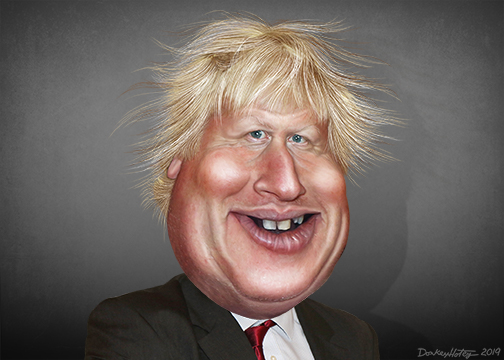
It seems that making some rules for the good of society is necessary. Of course, there will be those that break the rules and as a society, we struggle to determine what is to be done with them. Fines are too harsh, inappropriate, draconian. Being caring, educating, works for some but let’s be honest, there are those that will break the rules regardless. Whilst we can argue about what should be done with those that break the rules, about the impact they have on society, about victims and crimes, perhaps the most pressing argument is about equality of justice. The rest of us, those that didn’t break the rules, might question how draconian the rules were (are) and we might question the punishments meted out to those that broke the rules. But what really hurts, where we really feel hard done by, let down, angry is to see that those that made the rules, broke the rules and for them we don’t get to consider whether the punishment is draconian or too soft. There are no consequences for the rule makers even when they are rule breakers. It seems a lamentable fact that we have a system of governance, be that situated in politics or business, that advocates a ‘do as I say’ rather than ‘do as I do’ mentality. The moral compass of those in power seems to be seriously misaligned. As the MP David Davis calls for the resignation of Boris Johnson and says that he has to go, he should look around and he might realise, they all need to go. This is not a case of one rotten apple, the whole crop is off, and it stinks to high heaven.
Share this:


Colston, the toppling of a pejorative narrative

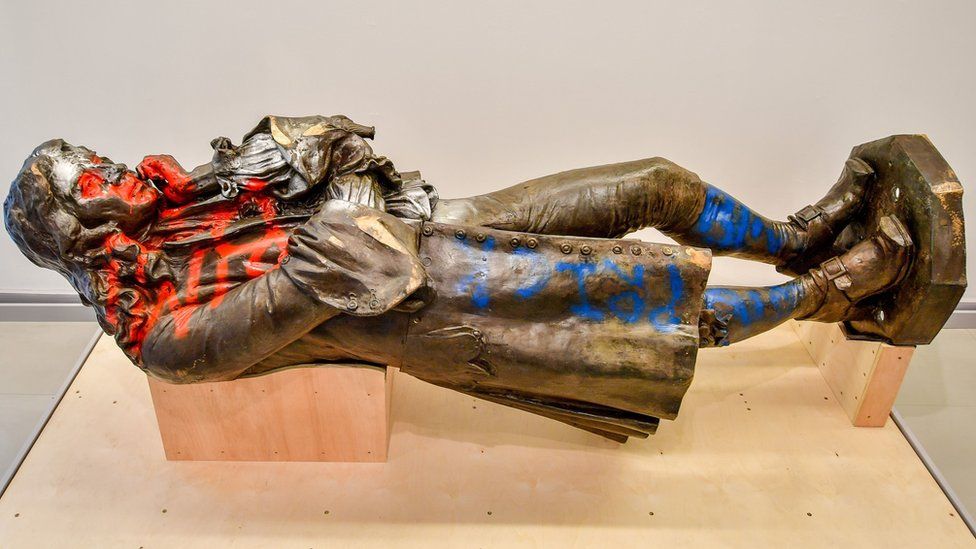
The acquittal of the four defendants for their role in the toppling of Edward Colston in Bristol has created an interesting debate and in some, more right-wing quarters, fury. In an interview following the verdict Boris Johnson stated we cannot seek to “retrospectively change our history“
But what history is he talking about, the one where this country was heavily involved in slavery or some other history around Empire and ‘jolly hockey sticks and all that sort of thing’?
History tells us that this country’s empire, like all empires significantly benefited from its conquests to the detriment of those conquered. Although if you watch the Monty Python film The Life of Brian, the right of the political spectrum might find some comfort in the sketch that starts with ‘What have the Romans ever done for us’? This country’s history is complex more so because it is a shared history with its own inhabits and those of other countries across most of the world. A history of slaves and slave traders. A history of rich and powerful and poor and powerless. A history of remapping of countries, redefining of borders, of the creation of unrest, uncertainty and chaos. A history of theft, asset stripping, taking advantage and disempowerment. As well as a history of standing up to would be oppressors. It is a complex history but not one that is somehow rewritten or removed by the toppling of a statue of a slave trader.
The tearing down of the statue is history. It is a fact that this country’s so called great and good of the time were tarnished by a despicable trade in human misery. The legacy of that lives on to this day. Great and good then, not so now, in fact they never were, were they? It may be questionable whether the circumstances of the removal of the statue were right, hence the charges of criminal damage. It might be questionable whether the verdict given by the jury was right, but surely this isn’t about changing history, it is about making it.
There are suggestions that the verdict may be referred to a higher authority, perhaps the Supreme Court. It appears right that there was a case to answer, and it seems right that the jury were allowed to deliver the verdict they did. There is nothing perverse in this, nothing to challenge, due process has taken place and the people have spoken. The removal of the statue was not criminal damage and therefore was lawful.
If a statue is an affront to the people of a locality, then they should be able to have it removed. If is such an affront to common decency, then the only people guilty of an offence are those that failed to remove it in the first place. Of course, it is more complex than that and perhaps the bigger question is why this didn’t happen sooner?
It would seem fitting to replace the statue with something else. Something perhaps that shows that slowly people of this country are waking up to the country’s past, well at least some of them. A statue that commemorates a new beginning, that acknowledges the country’s true past and points the way to a far more humane future for all. No Mr Johnson, we shouldn’t try to rewrite or obliterate history, we just need to change the way it written and stop ignoring the truth.
Share this:


Yanking the Lion’s tail: Sir-Prized, not

With the announcement of the Queen’s New Years Honours, it’s that time of year where I do my (sometimes) twice yearly blog on the Honours system. In this round (like every round), we have seen many recieve accolades simply for being famous! Yet, a gong for former-PM Tony Blair is something that upset many, with over half a million people signing a petition to revoke it. However, is Tony Blair’s appointment as a ‘Knight Companion of the Most Noble Order of the Garter’ so terrible? When we look at the sorts of people that have recieved this historically, his name sits alongside the likes of Sir Winston Churchill. And whilst he was voted the Greatest Briton by the British public in 2002, his name is tainted against histories of colonial brutality in the Global South. As Shashi Tharoor writes:
“… by the time [The Bengal Famine] ended, nearly 4 million … starved to death … Nothing can excuse the odious behaviour of Winston Churchill, who deliberately ordered the diversion of food from starving Indian civilians to well-supplied British soldiers and even to top up European stockpiles in Greece and elsewhere. ‘The starvation of anyway underfed Bengalis is less serious’ than that of ‘sturdy Greeks’, he argued. Grain for the Tommies, bread for home consumption in Britain (27 million tonnes of imported grains, a wildly excessive amount), and generous buffer stocks in Europe (for yet-to be-liberated Greeks and Yugoslavs) were [his] priorities, not the life or death of his Indian subjects. When reminded of the suffering of his victims his response was typically Churchillian: The famine was their own fault, he said, for ‘breeding like rabbits’ . When officers of conscience pointed out in a telegram to the prime minister the scale of the tragedy caused by his decisions, Churchill’s only reaction was to ask peevishly: ‘why hasn’t Gandhi died yet?'” (p160).
Extracted from: Inglorious Empire by Shashi Tharoor
King Leopold II of Belgium most famous for using Congo as his own private playground (violently so with an estimated 5-15 million dead Congolese), recieved the same knighthood. Rewarding statesmen, diplomats and the like who have violently checkered pasts is completely and unequivocally in character for the British state. However, while I do understand the outrage to Blair’s knighthood, I question why there is not as much outrage to the system at large that glorifies the British Empire and colonialism? Sure, be outraged, but the same anger is a little quiet at the Honours system in general.
Concurrently, the arrival of COVID-19 and the allocation of senior COVID jobs is a reminder to me of how power is transferred in the UK. The shredding of the NHS by the government in favour of an American-style system that puts profit ahead of access to healthcare is unshocking when we see the relationship between Honours and big jobs, and who gets projected into them. For example, at the start of the pandemic former-TalkTalk CEO Dido Harding was tasked by PM Boris Johnson to lead the Track-and-Trace system. Harding was a good friend of former-PM David Cameron who made her a life peer in 2014, and her grandfather Sir John Harding was knighted for quashing anti-colonial insurgencies in the 1950s.
An acceptance or declination of a state honour will always be politicised, but it warrants saying that numerous legitimate achievements are also interlocked with an alleged corrupt system of merit. For Global Majority people, in my opinion, it still feels that being included into the establishment is an indicator of how our Britishness is temporary – while being included into white proximities of power is viewed as the ‘magnum opus’ of achievement. And for people like me with immigrant grandparents and great-grandparents that moved from those English colonies (as they were at the time), colonial honourifics allow whiteness to harden. As Guilaine Kinouani writes:
“Although [respectability and assimilation] may provide temporary escape and possibly material gain and conditional access to structures of power, they produce white supremacy and such breed further shame and self-alienation. Self-contempt, disdain and scorn were not merely accidental by-products of colonialism – they were manufactured, deliberate colonial weapons to fortify whiteness and reduce resistance” (p56).
Extracted from: Living White Black by Guilaine Kinouani (2021)
While there is the fact of ordinary people’s social investment into the monarchy and empire via Honours, the rewarding of people like Tony Blair revisits how colonial footsoldiers have been rewarded by the British state. Historically, Blair sits alongside not only King Leopold II and Churchill, but also … Lord Kitchener following his ‘services‘ during the Boer conflict in South Africa. Further to Sir Evelyn Baring who was Governor of Kenya during the Mau Mau Uprisings in the 1950s. Baring is the grandfather-in-law of PM Boris Johnson’s former-aid Dominic Cummings. Thus when I think about Honours, Blair’s knighthood is very in character for a country that has rewarded those that serve the inhumanity of the state.

In a broadcast for Double Down News, Byline Times editor Peter Jukes said “it is illegal to solicit Honours / peerages in return for donations but … you are highly likely to get [one] – in fact 55% of those who donated more than £1.5m [to the Conservative Party] get an honour or a peerage.” Meanwhile both Tony Blair and David Cameron were previously challenged for tapping their mates for Honours, showing this system is intertwined with political dynamics across parties. And while educators that have taken empire medals pontificate about whiteness, decolonising the curriculum, and the rest (ahem), one must ask if we will ever have lasting change. What was it Audre Lorde said about masters’ tools and masters’ houses?
So, I think equity would be to go further than curriculum. That means ordinary folks will need to let go of some of those privileges … including honourifics to those days of pillage and plunder. Are we ready for that?

 Thoughts from the criminology team